
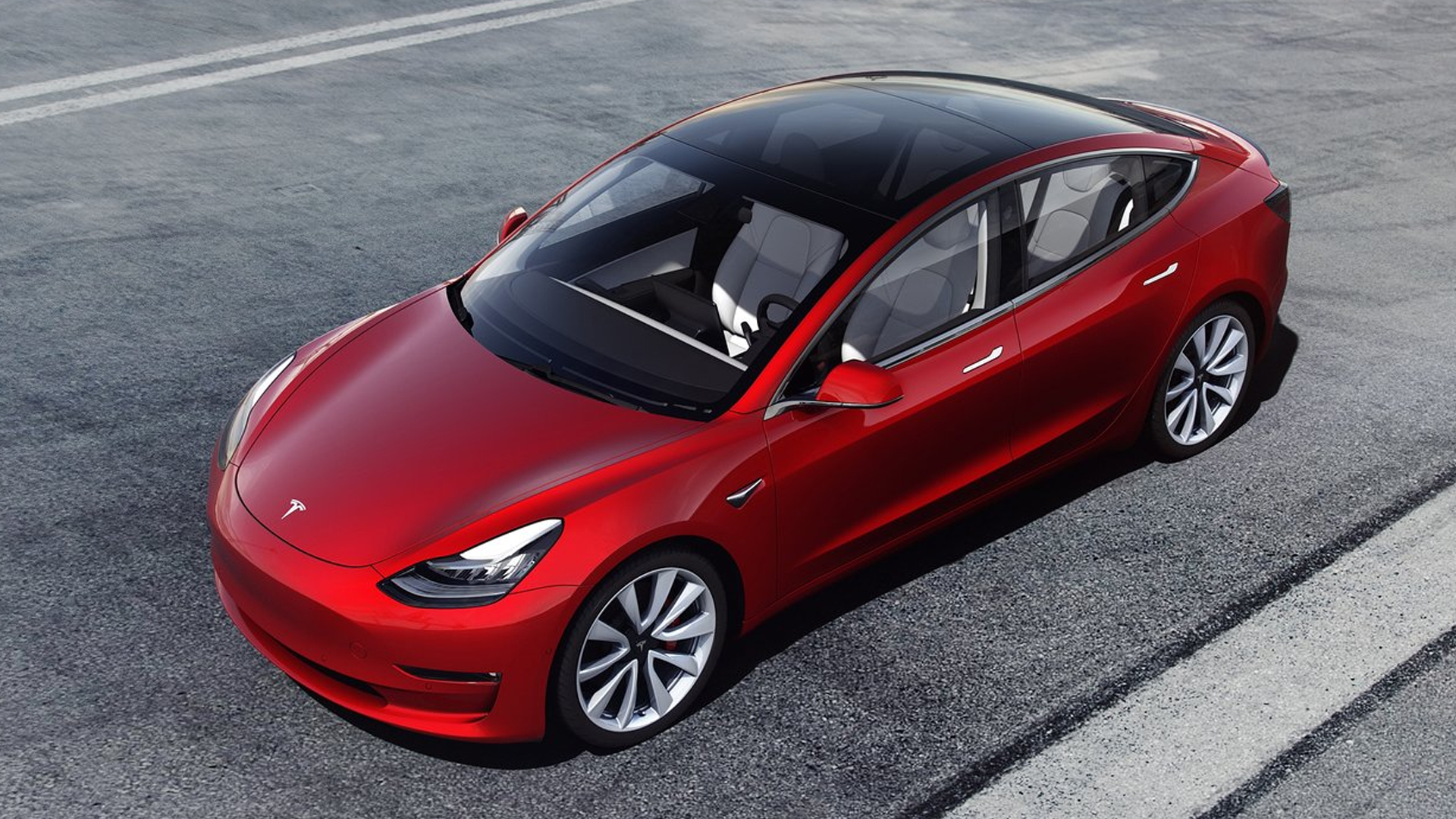
Consumer Reports just published a new used-car reliability leaderboard, ranking 26 popular car brands from “most” to “least reliable,” based on survey results. The top of the list won’t surprise anyone. The bottom is a different story—Tesla is dead last, suffering the particularly harsh indignity of getting beaten by Jeep in the reliability survey.
According to CR’s latest study, Lexus topped the list with a “77” (out of 100) score, then Toyota was closely behind in second at “73.”
Third was Mazda, but the gap widened considerably: It scored “58.” Most mainstream Euro and Japanese brands appeared in the middle of the list, scoring around “50.”
The bottom of the list, brands scoring below “40,” were dominated by American OEMs and Kia.
All the way at the very bottom is Tesla, with the worst score of “31.”
How could a car with so few moving parts have so many issues reported by owners? I know we’ve all seen plenty of stories about Tesla’s inconsistent build quality, but even having covered that for years now, I have to admit, I was surprised to read that big T had the most owner complaints.
Consumer Reports is considered a bastion of truth when it comes to in-depth and objective car reviews. It’s the only car-testing outfit I’m aware of that buys the cars it reviews and also has a well-equipped private testing facility to consistently evaluate them on.
This used-car reliability survey is great and draws on a lot of data. “Every year, Consumer Reports asks its members about problems they’ve had with their vehicles in the previous 12 months,” writes CR Managing Editor Jeff S. Bartlett. “For this analysis, we focused on the problems reported on cars from the 2016 to 2021 model years from a survey sample of more than 140,000 vehicles.”
To score reliability and create a ranking, CR compares “a car’s number of problems to the average number of problems for cars of that model year,” focusing on 20 potential “trouble areas.” The publication’s analysts then weighed those reported problems, according to their severity, to calculate a score.
“The overall reliability (verdict) ratings from those six model years were averaged to create the used-brand reliability score. These ratings are based on owner-reported problems. We required at least five years of data for each brand,” Bartlett explains.
Consumer Reports’ survey analysis weighs big-expense repairs (transmission, EV batteries) more heavily than small things like loose trim. Here are the systems, or “trouble areas,” that CR’s survey evaluates, verbatim as they’re stated on CR’s methodology-explanation page:
- Powertrain: A composite of engine, transmission, drive system, fuel system, and exhaust for any vehicle with an internal combustion engine. It is a composite of electric motor, EV battery, EV charging, and drive system for electrified vehicles. In cases of hybrids/PHEVs, it is a composite of a combination of these.
- Build quality: A composite of electric accessories, body hardware, paint/trim, and noises/leaks.
- Engine, major: Engine rebuild or replacement, cylinder head, head gasket, turbocharger or supercharger, timing chain or belt.
- Engine, minor: Accessory belts and pulleys, engine computer, engine mounts, engine knock or ping, fuel leaks, oil leaks.
- Engine, cooling: Radiator, cooling fan, water pump, thermostat, antifreeze leaks, overheating.
- Electric motor: Electric drive motor rebuild, replacement, or malfunction.
- EV battery: Hybrid/electric battery replacement, hybrid/electric battery malfunction, hybrid/electric battery cooling problems.
- EV charging: Charge connection problem, problem with onboard inverter, problem with the charging cable/cord that came with the vehicle. (Note: Charging problems reported by members are with the vehicle, not with home or public chargers.)
- Transmission, major: Transmission rebuild or replacement, torque converter, premature clutch replacement.
- Transmission, minor: Gear selector and linkage, transmission computer, transmission sensor or solenoid, clutch adjustment, rough shifting, slipping transmission, leaks.
- Drive system: Driveshaft or axle, CV joint, differential, transfer case, four-wheel-drive/all-wheel-drive components, driveline vibration, electrical failure, traction control, electronic stability control.
- Fuel system: Sensors (includes O₂, or oxygen, sensor), emission-control devices (includes EGR), fuel-injection system, fuel gauge/sender, fuel pump, problems filling up the tank.
- Electrical system: Alternator, starter, battery cables, coil or coil pack, ignition switch, electronic ignition, spark plugs and wires failure, auto stop/start.
- Climate system: AC compressor, blower (fan) motor, condenser, evaporator, heater system, automatic climate system, electrical failure, refrigerant leakage.
- Suspension: Shocks or struts, ball joints, tie rods, wheel bearings, alignment, steering linkage (includes rack and pinion), power steering (pumps and hoses, leaks), wheel balance, springs or torsion bars, bushings, electronic or air suspension.
- Brakes: Antilock system, parking brake, master cylinder, calipers, rotors, pulsation or vibration, squeaking, brake failure, premature wear, regenerative braking.
- Exhaust: Muffler, pipes, catalytic converter, exhaust manifold, heat shields, leaks.
- Paint/trim: Paint (fading, chalking, peeling, or cracking), loose interior or exterior trim or moldings, rust.
- Noises/leaks: Squeaks, rattles, wind noises, seals and/or weather stripping, air and water leaks.
- Body hardware: Windows, locks and latches, doors or sliding doors, tailgate, trunk or hatch, mirrors, seat controls (power or manual), heated or cooled seats, heated steering wheel, seat belts, sunroof, convertible top, glass defect, door handle, fuel door or charge port door.
- Electrical accessories: 12-volt battery, cruise control, warning lights, body control module, keyless entry, wiper motor or washer, tire pressure monitor, interior or exterior lights, horn, gauges, 12-volt power plug, USB port, alarm or security system, remote engine start, headlights, automatic headlights, automatic wipers, wireless charging pad.
- In-car electronics: CD player, rear entertainment system (rear screen or DVD player), radio, speakers, in-dash GPS, display screen freezes or goes blank, phone pairing (e.g., Bluetooth), voice control commands, steering wheel controls, portable music device interface (e.g., iPod/MP3 player), backup or other camera/sensors, Android Auto/Apple CarPlay, infotainment hardware replacement, software over-the-air fixes, head-up display.
Steven Elek, CR’s program leader of auto data analytics, shared: “Taking this longer view, looking at reliability over five to 10 years, gives a clear picture of what used-car buyers can expect.”
That sounds like a good way to consider a whole lot of data that’s hard to aggregate. But studies like this can’t be quite as ironclad as CR’s normal on-track comparisons—relying on owner-reported issues is always going to introduce inconsistencies. Still, these are interesting insights into the performance of five to 10-year-old cars, and it’s hugely helpful for people who are looking for rational data to make a used-car purchase with.
As for how this reflects on new cars, at least when it comes to Tesla, Consumer Reports was a bit more charitable, stating: “… the American automaker has made significant strides, and its latest models have demonstrated better-than-average reliability, placing the brand in the top 10 of our new car predicted reliability rankings.”
Update, 3:30 p.m. EST, Dec. 9, 2025: I added details about what specific “trouble areas” (vehicle systems) Consumer Reports takes into account when conducting these reliability surveys, which I realized was valuable context.
Got a tip? Send us a note at tips@thedrive.com.
Loading comments…
Comments couldn’t be loaded. Please refresh the page.