
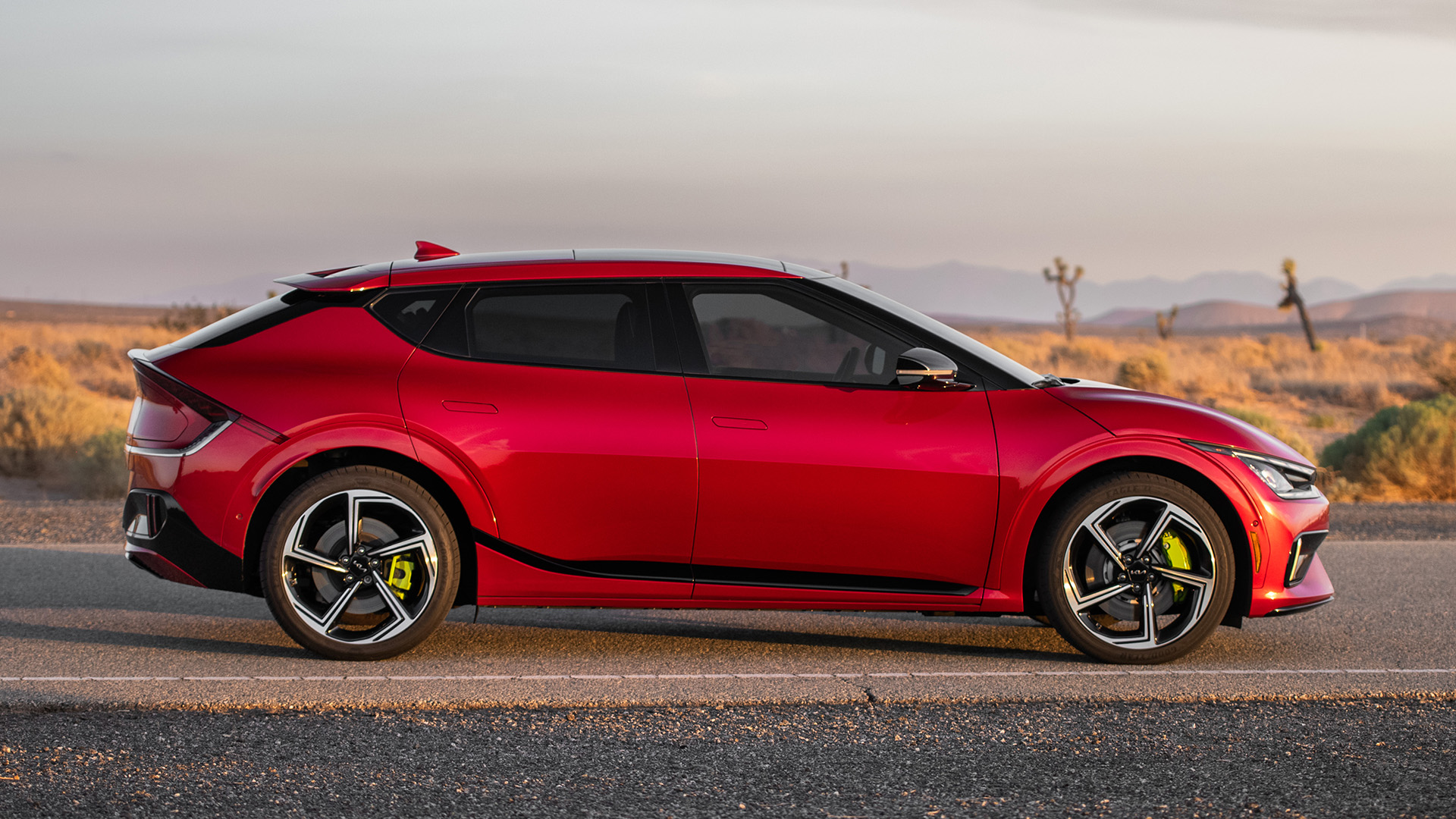
Car audio can be seriously complex—far more so than most people could ever imagine. That’s especially true of premium sound systems in new vehicles, which are assembled and tuned by companies like Bose, Klipsch, and other manufacturers that know a lot more about sound than everyday drivers do. Attempting to fix or improve one of these systems yourself without any training is rarely a good idea because you’re likely to make a bigger mess than you started with. That isn’t stopping Kia EV6 owners, though, as they’re getting way better sound out of their Meridian audio setups by simply rearranging four wires that power the trunk-mounted subwoofer.
This DIY mod caught some traction on the r/KiaEV6 subreddit in late September. Since then, YouTuber Technically Jeff has posted a video showing how to do it in about five minutes with nothing more than a tiny screwdriver. The trick is to locate the Meridian subwoofer underneath the EV’s false floor out back, remove an orange clip, and swap the corresponding pairs of wires so it shows black-red-black-red from top to bottom rather than the red-black-red-black pattern you’ll find in unmodified examples.

The Kia EV6 Sound System Doesn't Suck… It's Just Wired WRONG!
All this does is tweak the subwoofer’s power polarity and adjust the audio phasing. The video host and several EV6 owners in the Reddit thread alike report that the bass is drastically better than before. Better yet, it’s improved without sacrificing any other sound quality.
I was somewhat amazed to see—or, rather, hear—such a straightforward swap make an actual improvement in sound. How could that actually be a problem on a roughly $50,000 EV? Did Kia or Meridian really hook up the subwoofer backward?
I got in touch with a couple of high-end audio experts to find out. First, I called Matt Figliola, owner of Ai Design in Tuckahoe, New York. His company handles some of the most comprehensive and involved audio upgrades in the world. Then, I spoke with Ken Ward, technical marketing manager for Elettromedia SpA. He literally creates entire courses on car audio to train dealers in the way of high-fidelity sound.
Both Figliola and Ward offered differing perspectives on what’s going on here, but they agreed on one thing: It’s a rookie mistake that the manufacturer should have caught.
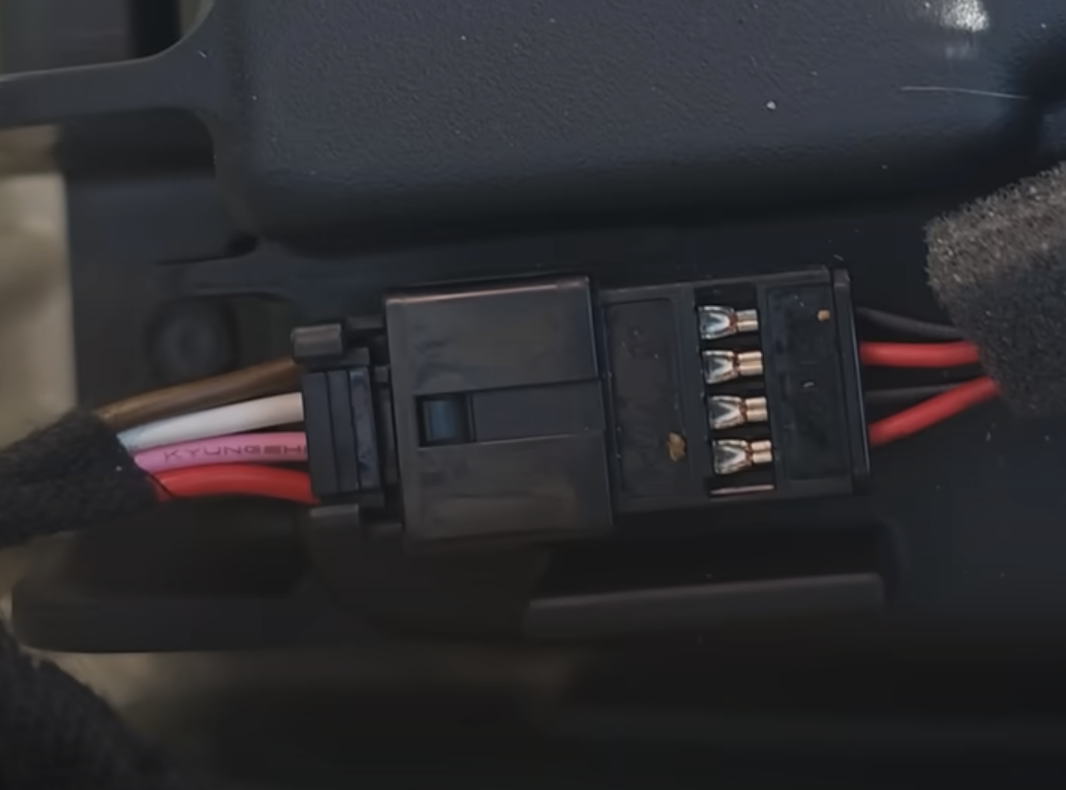
The fact that EV6 owners are getting better sound from their systems by reversing the polarity means that there’s a problem with sound cancellation. It’s not that the subwoofer in the factory Meridian setup is making no bass; it’s just being canceled out by equal and opposite frequencies from other speakers inside the car. Unplug every other sound device and you’ll hear the trunk-mounted sub thud. Plug them back in, though, and they counteract the output from the device.
In this way, it’s effectively recreating the technique that Bose pioneered with noise-canceling headphones.
“They’re literally taking what’s happening on the outside of your headphones, feeding that in as a signal to their amplifier in the headphone, inverting the phase of it, and voila, they’ve canceled most of the noise,” Figliola explained.
Ward elaborated on this point some more:
“Once you have more than one speaker, and those two speakers are playing the same sounds, they can add together to get louder, which is our intuitive expectation: Two speakers are louder than one speaker. But they might not [add together]. They might cancel each other out to some degree. And when you hear phrases like ‘in phase’ and ‘out of phase,’ they sound binary, like black and white, right? But they’re not binary black and white phrases. It’s a spectrum.”
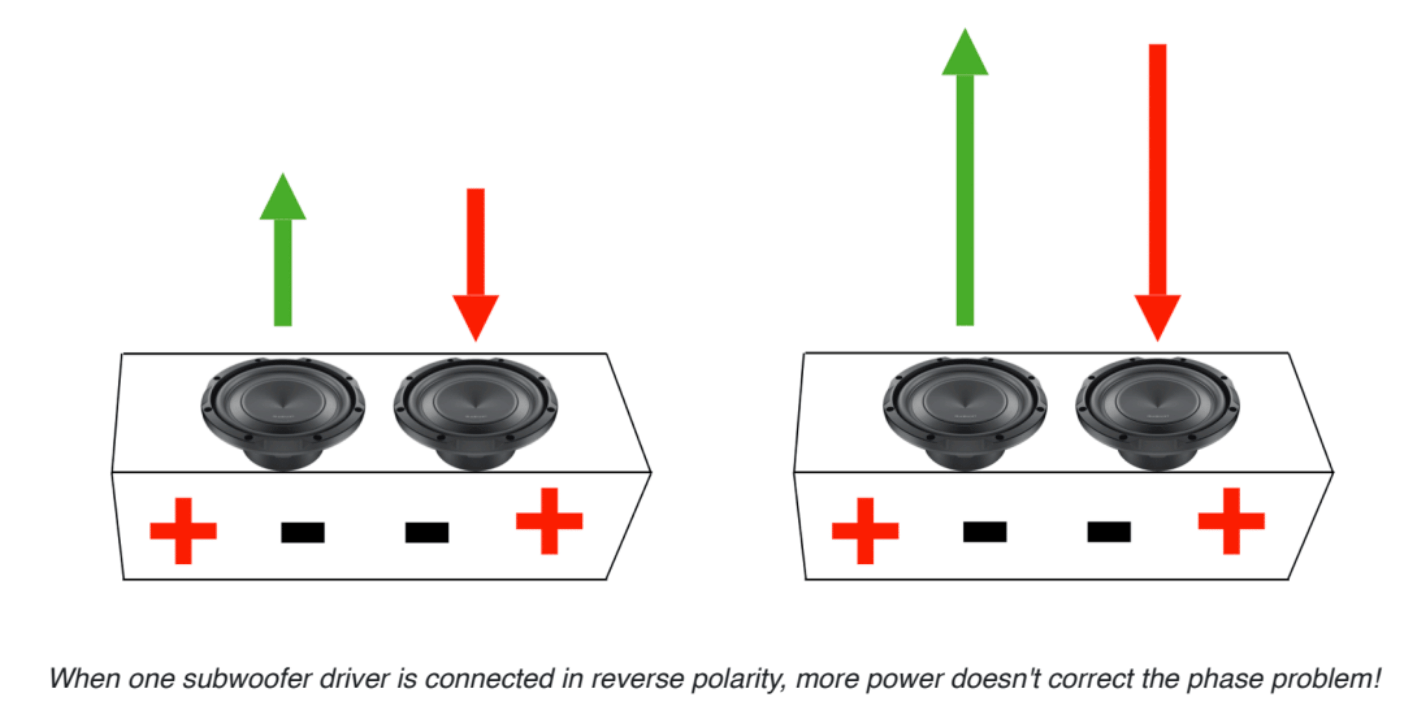
Ward continued to say that there must be some overlap between speakers in audio phasing. It’s not a clean, sharp handoff where one speaker drops out and the other one picks back up. Instead, it involves a smooth transition where both play the same sounds and they add together.
This is why EV6 owners who have made the wiring mod notice that their Meridian system’s bass is not only stronger at the back of the car, but it’s also stronger at the front. The tweak enables the audio phasing to add sound together rather than cancel out the frequencies. It’s a win-win. However, one can’t help but feel like it should have been right before Kia ever shipped EV6s to customers.
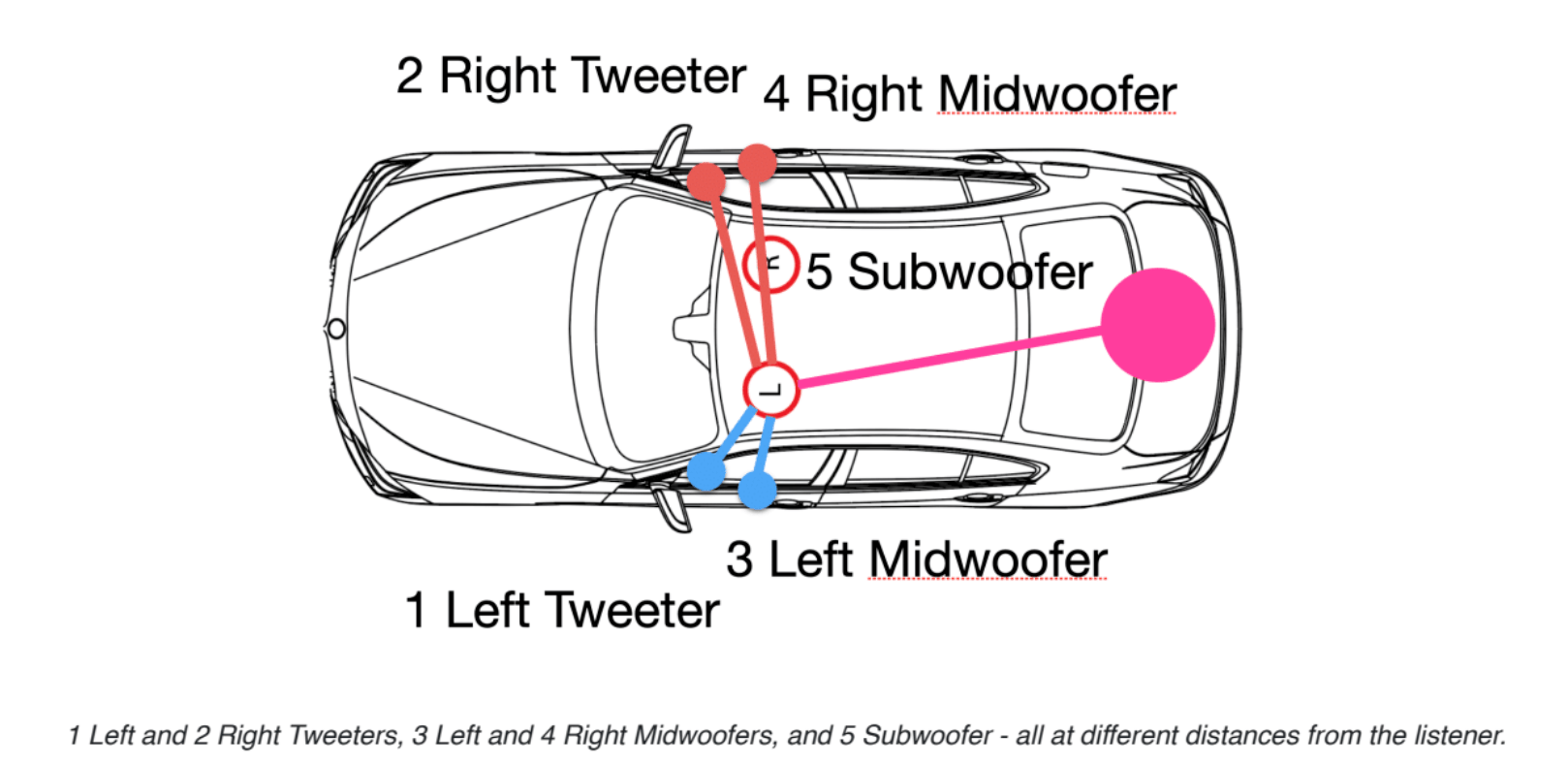
Figliola explained that there are three ways to manipulate audio phasing: through electrical changes, like EV6 owners are doing here; through Digital Signal Processing (or DSP) software; and through speaker location. The latter is more of a constant in this case, as nobody is modifying the physical location of any speakers. Rather, because there are speakers in so many places inside the EV6, Figliola explains that this creates a “cacaphony of phase issues” that must be addressed through the other methods.
While it’s impossible to say for sure without further investigation and an up-close look, Figliola told me, “It looks like a manufacturing mistake. Somebody made an error and it got produced the wrong way.”
“[Meridian] is an incredible high-end audio company that’s not really like many of the others. They have this incredible capacity—they delve deeply into psychoacoustics and all sorts of things to manipulate the sound via DSP. They do a really good job of it,” Figliola continued. “I think they make amazing products. I have clients that have Meridian systems in their homes, and I have a friend who is a Meridian dealer, and you know, this stuff is amazing. They’re building stuff on a budget for a car manufacturer, so there’s that big difference. But Meridian wouldn’t have made such a mistake, because phasing is at the heart of what Meridian knows how to work with.”
Meanwhile, Ward believes it’s ultimately Meridian’s flub.
“This is a real problem,” he said. “This is a concrete problem. And I blame Meridian. One of the reasons I blame Meridian is if it’s their business to make these cars sound good, and these cars shipped, and they didn’t sound good, you know… I know who was getting paid to make those cars sound good, and it wasn’t me, right? So, I’m going to blame Meridian. I’m going to say that Meridian didn’t make sure that these systems were getting out into the world the way that they thought they should work, or they just didn’t know.”
For what it’s worth, Ward thinks some software manipulation would do the trick. “This is a pretty rookie mistake,” he said. “And even if Hyundai had wired the cars backward, rather than fix the wiring, they could have asked Meridian to fix it in the DSP software, issue an update, and that would have fixed it.”
“Now, you can say the wiring should have been different or you can say the tune should have been different, but it’s six in one and half-a-dozen in the other,” Ward concluded.

When The Drive reached out to Kia for comment, a company spokesperson responded, “Kia America is proud to partner with suppliers like Meridian, Bose, and Harmon/Kardon offering audiophiles a rich cabin experience. We are aware of the reports of owners experiencing sound quality issues in some models. Our engineers and our supplier engineers are always looking for ways to improve the sound experience across our vehicle lineup.”
Got a tip or question for the author? Contact them directly: caleb@thedrive.com
Loading comments…
Comments couldn’t be loaded. Please refresh the page.