
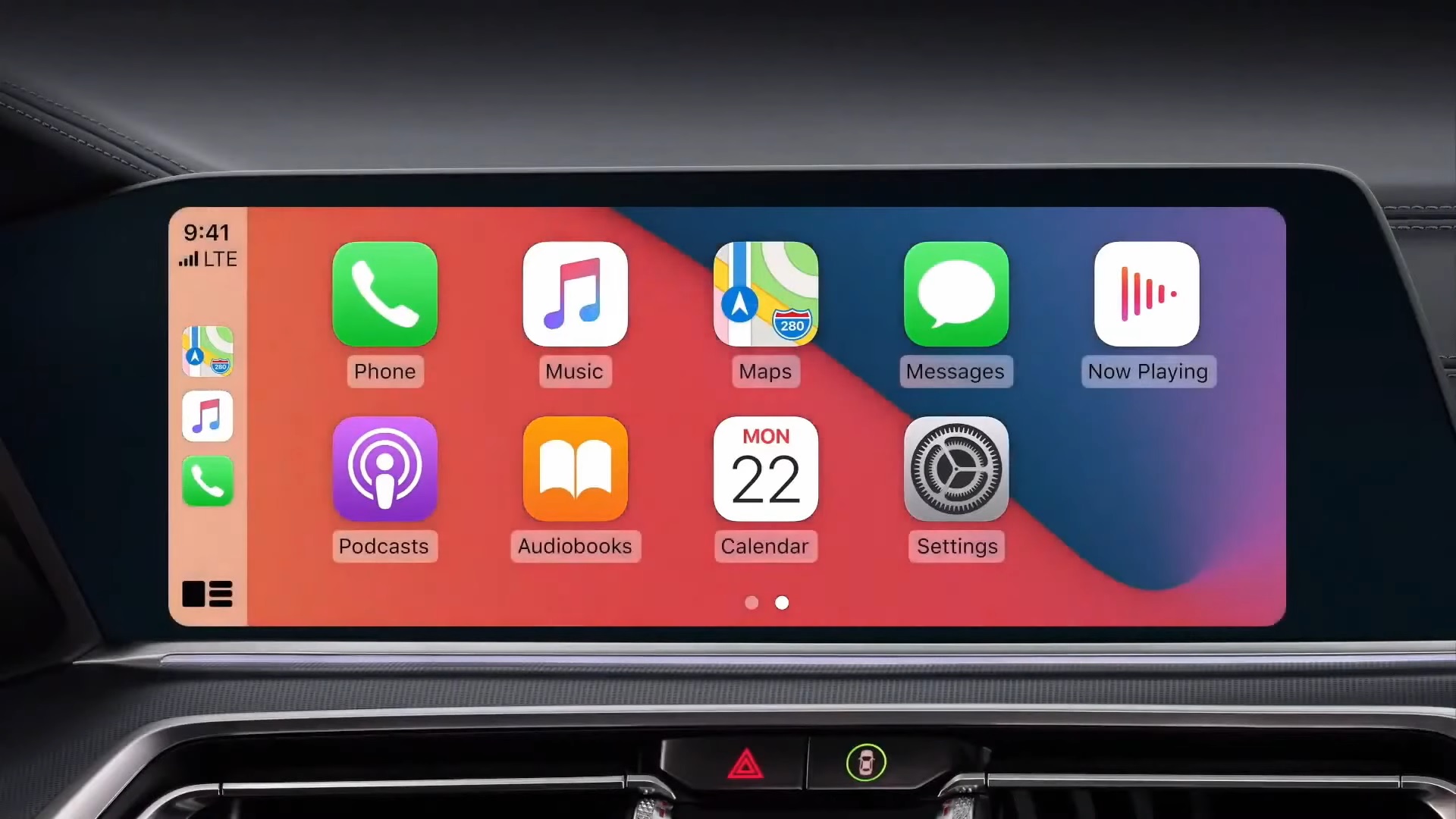
If you’re a stickler for high-quality smartphone integration in your new cars, your world is about to be upended. According to Rivian’s Chief Software Officer, Wassym Bensaid, dedicated app integration is about to become a thing of the past thanks to everybody’s favorite tech buzzword: AI.
Bensaid’s argument is pretty simple: Screen mirroring may be great, but it’s very invasive, often taking over the entire screen (though that has become less of a thing with the current generation of tile-based infotainment UIs) and essentially side-stepping the experience that was engineered by its design and software teams.
With AI, Bensaid argues, an automaker like Rivian can offer all the same functionality provided by a dedicated app without the need to sidestep the factory interface. And to make that integration as clean as possible, Rivian will have to rely heavily on voice commands, as its current assistant already does for text messaging and other basic functions.
Going forward, Bensaid says, AI will further hone that experience for users in a way that can take full advantage of the automotive environment:
“I really believe that the way you interact with apps which are mono-threaded, single buttons, single icons, a lot of that will be now completely reshaped into a world where it will become an agentic integration that presents itself into a wholesome user experience to the user,” Bensaid told The Verge’s Decoder podcast (h/t to MacRumors).
“With the level of features that we have shipped to customers, with the level of end-to-end integration, with the level of convenience that we are bringing, CarPlay is, or Android Auto to that extent, is no longer the topic of discussion,” he said.
In other words, where we’re going, we don’t need apps.
This is highly appealing to automakers, of course, because it gives them more control over the customer experience, which every automaker with a marketing budget (that’s all of them) is finding more and more opportunities to exploit, whether via subscriptions, integrated e-commerce, or straight-up ads. It can’t happen right away; the necessary agentic tools aren’t yet ready for prime time.
On the other hand, Android Auto and Apple CarPlay fans will argue, the apps work. Not only that, but their publishers have incentive to keep them working with new phone platforms, unlike automakers, who work in product cycles that average about seven years. Just ensuring that a new car launches with current tech at that cadence still trips up many automakers; can you imagine how rough that picture will look in another five or ten years, when the earliest smartphone-mirroring infotainment systems are old enough to legally drink?
Supporting cars that are no longer sold becomes much more attractive to automakers when it comes with a revenue stream. Android Auto and Apple CarPlay compatibility updates don’t offer such an opportunity… that is, of course, unless you’re willing to pay to make sure your phone remains compatible.
Hey, where’d you go?
In addition, a single-app solution essentially guarantees near-universal phone compatibility (less so with some older Android devices, granted). Both automakers and phone manufacturers rely on the software itself to do all the handshaking, meaning they only need to validate compatibility once. That typically results in both easy integration for the automaker and a good experience for the customer.
Unfortunately, a platform that “just works” makes it difficult to up-sell you on something “better.”
Got a news tip? Let us know at tips@thedrive.com!
Loading comments…
Comments couldn’t be loaded. Please refresh the page.