
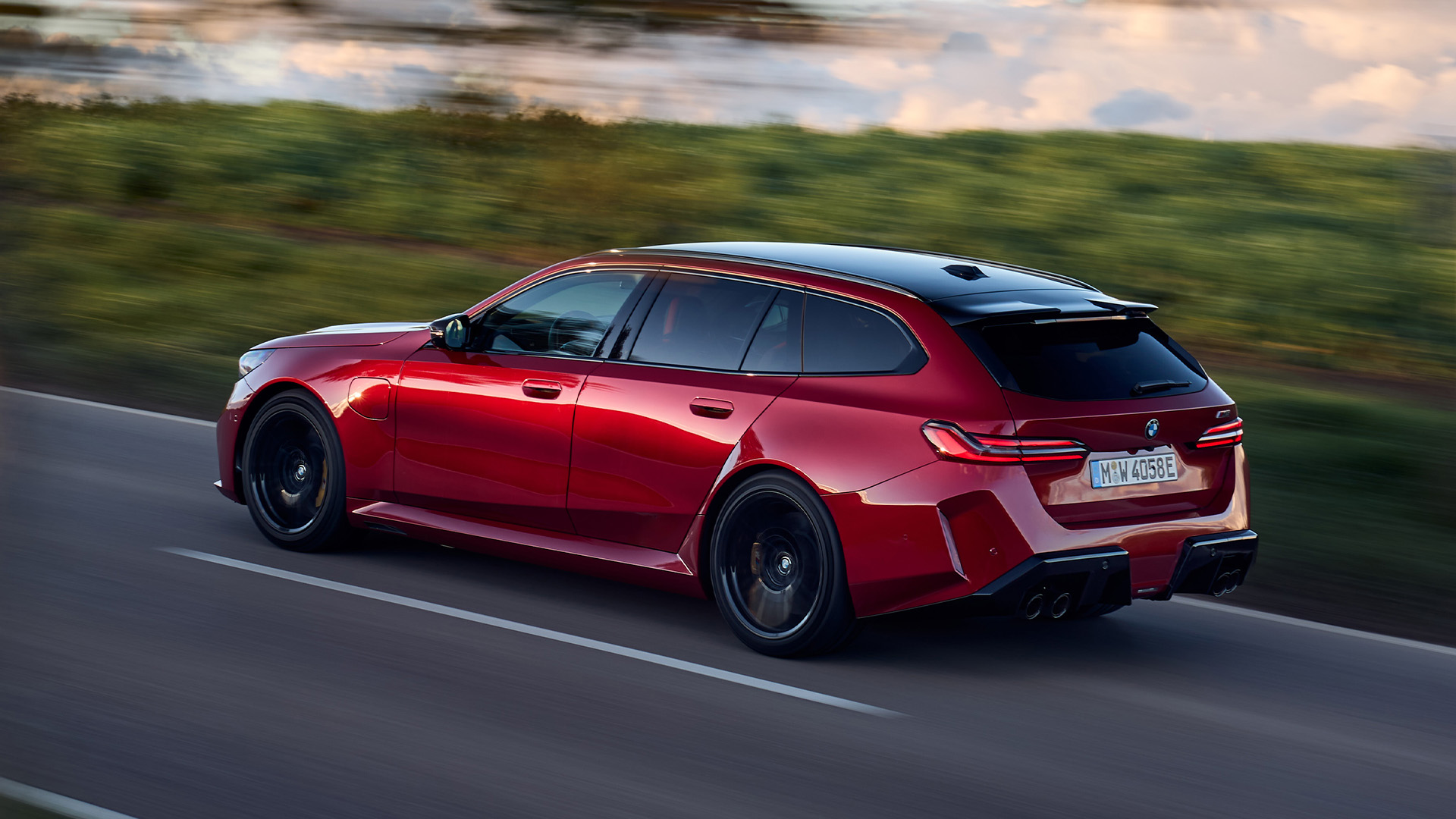
Few things draw the ire of car people like piped-in exhaust sound. Maybe my perception is skewed since I spend so much time online, but I’m not sure I’ve ever met someone who liked engine noise blasted through their speakers. And on top of feeling phony or fake, the feature that car companies call Active Sound Design can make it a major pain to upgrade something as simple as a subwoofer.
I didn’t know this until I spoke with Ken Ward, technical marketing manager for Elettromedia SpA. By my estimation, Ward is a car audio wizard, as he designs entire courses to train dealers and installers on the intricacies of sound production. He also co-founded Musicar Northwest, a shop that’s still doing some of the best work out there. Ward first mentioned the trouble with fake exhaust noise during a previous conversation we had, and I called him back to get the whole scoop.
“The fundamental thing that I start with when I explain this is that automakers have three things they want to do with the audio system,” Ward told me. “The least important of the three is to make it not suck to listen to. That’s the least important thing to them.
“The most important thing for them is to use the speakers to play non-entertainment sounds.”
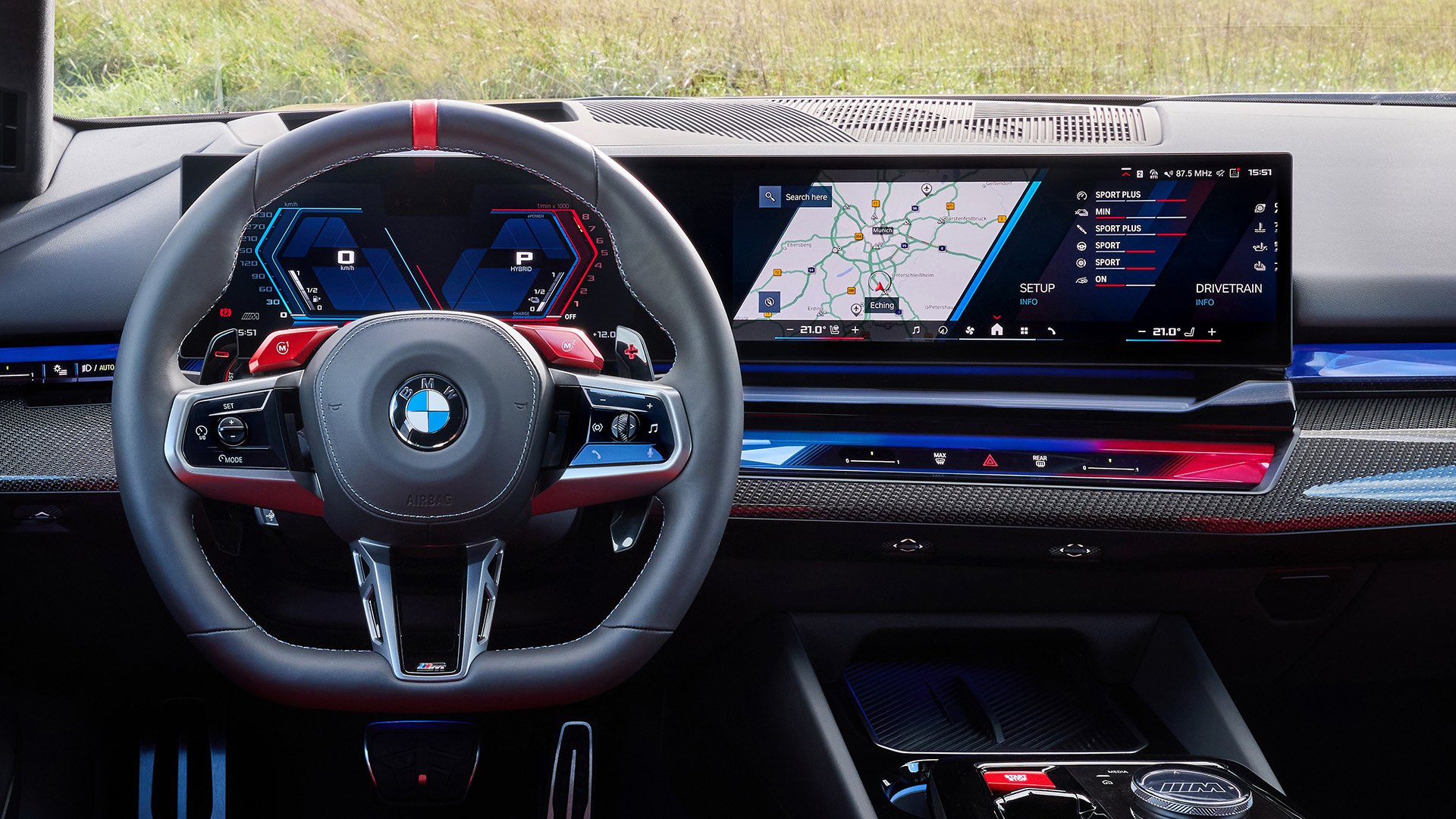
Ward explained that “non-entertainment sound” is a pretty broad category. Whether we’re talking about seatbelt dings, open-door chimes, or hands-free phone calls, they are the main focus of OEMs when it comes to car audio systems. Fake exhaust noise also finds itself in that bucket, meaning the companies that build these components worry more about maintaining those functionalities than producing a high-quality sound system for music, spoken word content, or what have you.
This is where the car audio aftermarket steps in, but OEMs don’t make it easy. Third-party installers, whether they be high-end sound designers or more mainstream specialty shops, have to play nice with features like ASD as well as ANC, or Active Noise Cancellation. The latter is akin to your favorite over-ear headphones, which use mics to pick up noise from your surroundings and feed sounds into your ear that cancel it out.
Both ASD and ANC use a network of microphones that tell a car’s stereo what sounds to play, be it the raspy growl of a GR Corolla’s turbo three-cylinder or an out-of-phase hum to help eliminate road noise. They serve different purposes, but oftentimes, there’s a lot of overlap between the two systems. That overlap becomes obvious when an audio installer cracks into a car’s wiring harness and finds that one small change screws up a whole list of functions.
“The first-generation Cadillac Escalade was the first Cadillac with noise-cancelling microphone technology built in,” Ward told me. “If you had a window down or a door open, the ANC system wouldn’t kick in. So when the customer arrived, you went to pull the car around, you rolled up the window, and you closed all the doors. Suddenly, [it’s like] a jet plane is taking off inside the cabin of the vehicle.
“It was upsetting for everyone because now, the car’s not ready, and you have to figure out what to do. Turns out, what you had to do was track down the individual microphones that Bose installed in the headliner. Each of those microphones went back to the amplifier, and we had to disconnect those microphones. Then everything was fine.”
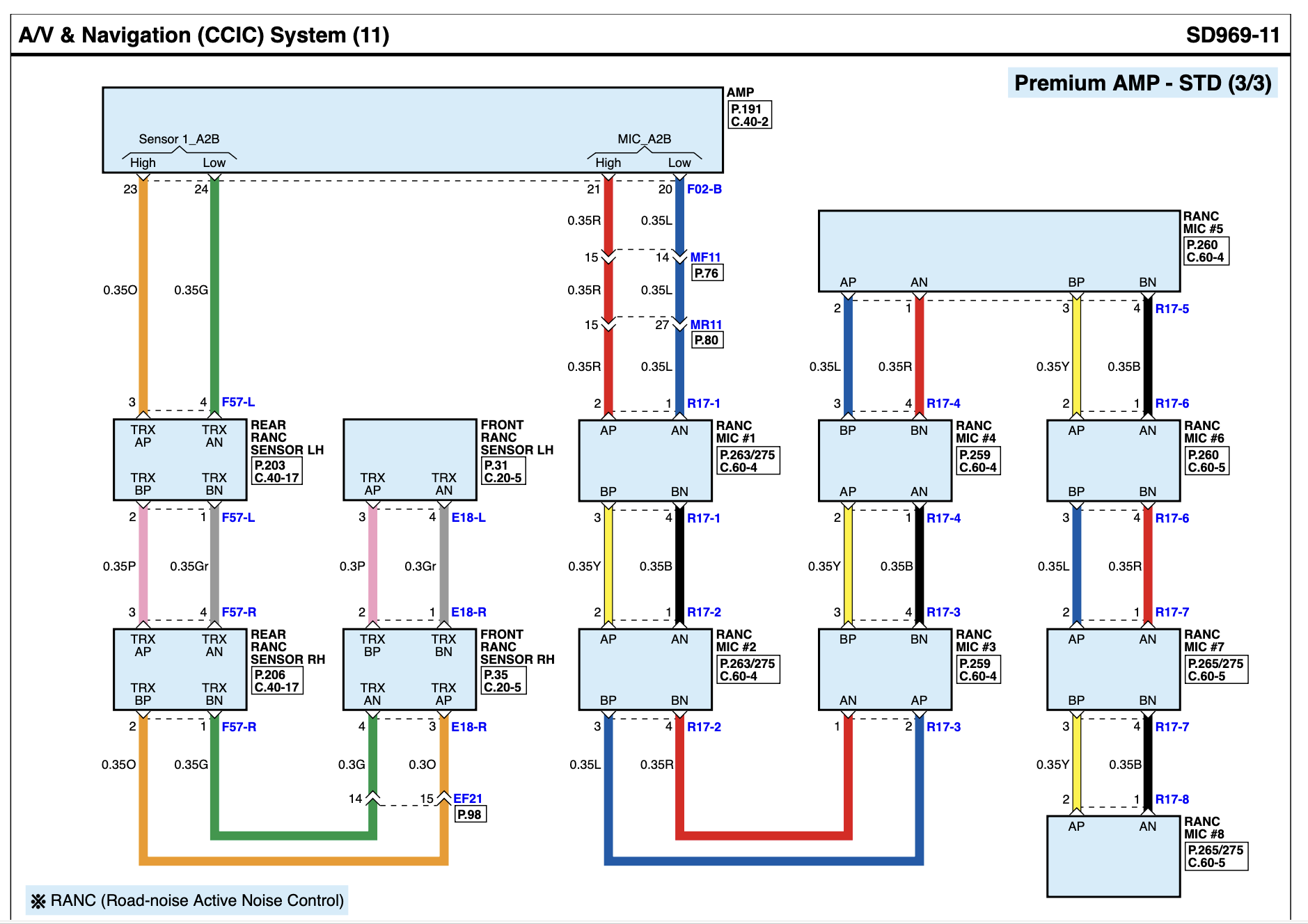
ANC systems have only grown more complex since the early Escalade’s. Ward forwarded one example to my inbox, a wiring diagram depicting a Genesis GV80 with not one, not two, but eight microphones. He told me that this was a recent conundrum he helped a dealer solve:
“Those microphones did not run back individually to the amplifier. Generally, microphones plug into the soundboard. And in this case, the amplifier is like the soundboard. In the Genesis, each microphone is on a little circuit board, and that circuit board has a little network chip on it, and they are daisy-chained to each other. They’re in a loop network.
“If you unplug one microphone, you take them all down. Now, that’s fine. And in this case, it was fine because the only microphones on that network were for ANC.”
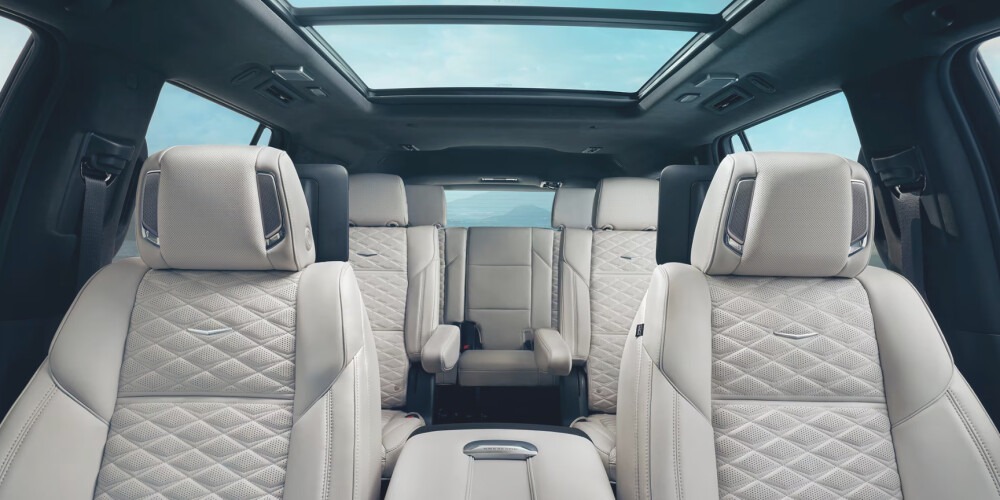
Others still are more infuriating. Ward pointed to the new Escalade, which repurposes ANC microphones for hands-free calling. You can’t simply disconnect the ANC microphones in a scenario like that, because then, you’re eliminating safety features. And while Escalade owners can turn off some of these features with a toggle on the infotainment screen, it doesn’t solve it completely, as some mics remain in use.
Now, it’s important to note that these headaches aren’t reserved for the well-off. Ward used the new Chevrolet Silverado with the no-name, non-Bose sound system as another example. It has piped-in exhaust sound, too, and Ward said, “I don’t know how to turn it off. I don’t know anybody who knows how to turn it off. And that car, the factory audio system has no bass.” That one is especially irritating since people with no intentions of keeping the factory stereo would surely go for the non-premium, non-Bose option.
On the ASD side of things, singular adjustments can screw with the whole system, too.
“When we add a subwoofer that can play bass better and a little bit louder without straining, then the fake exhaust gets louder and more annoying,” Ward explained. “Most exhaust systems have a spike at around 50 hertz. And that’s right in subwoofer territory. If you add a subwoofer that plays 50 hertz, suddenly that fake exhaust note might rip your head off and not be subtle at all.”
Car audio professionals used to make quick work of those obstacles by disconnecting a wire at the amplifier. Older setups used a crankcase position pulse wire that corresponded to engine rpm. With that wire no longer hooked to the amplifier, it couldn’t pick up any rpm data, and the fake engine noise would go away.
“On current cars, that wire is no longer present,” Ward explained. “The rpm data is carried on the network.”
Ward said that, if he were king for a day, he’d require all car companies to make it easy to disable ASD and ANC; a simple switch or toggle would do. That would save independent shops and owners alike a lot of time as well as money if they decided to upgrade their car’s sound. But don’t forget: Audio quality is at the bottom of car companies’ lists, and everything in this article serves as proof.
Got a tip or question for the author? Contact them directly: caleb@thedrive.com
Loading comments…
Comments couldn’t be loaded. Please refresh the page.