
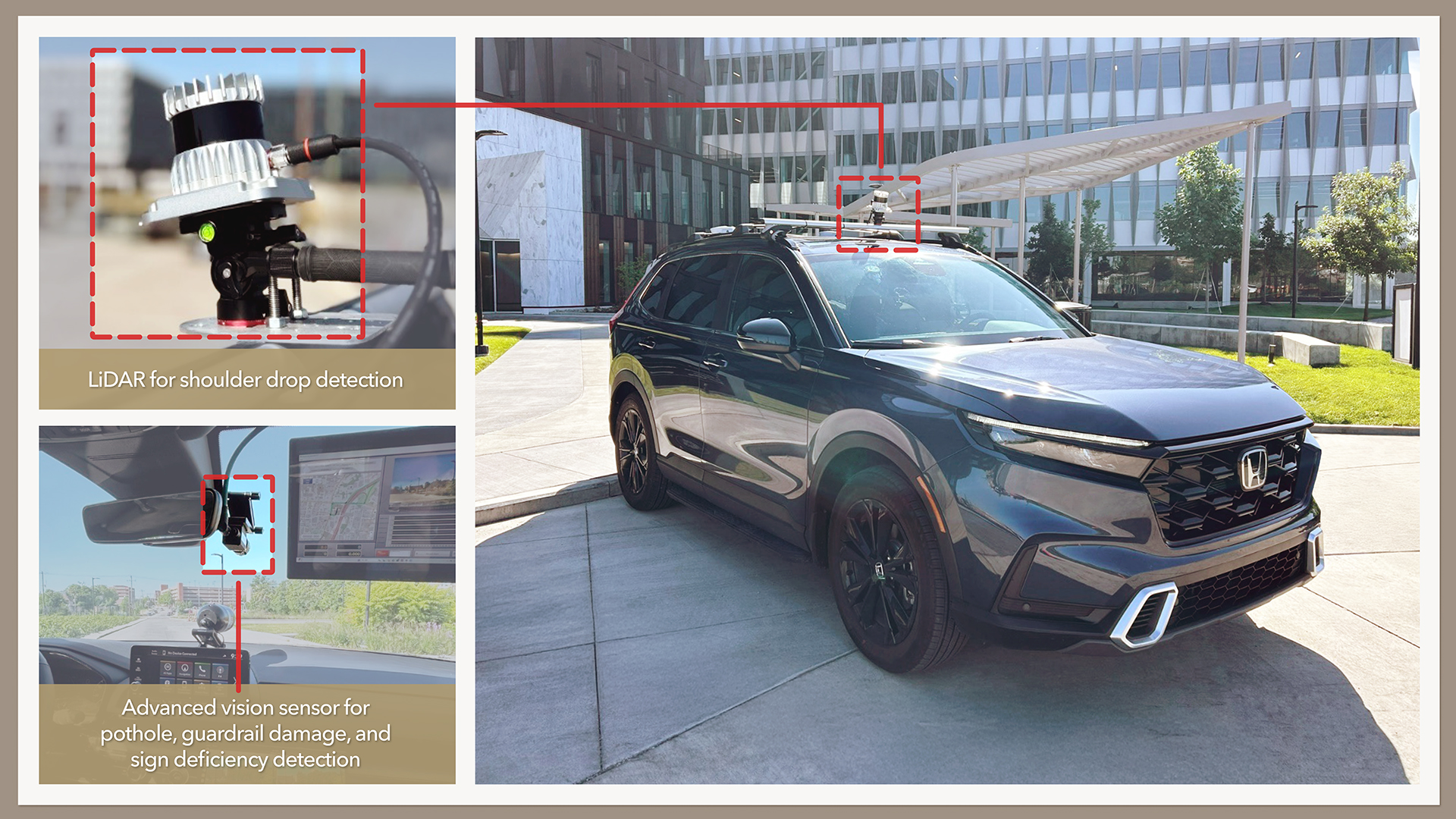
New cars are studded with sensors for safety and driver-assist systems. Honda is using these sensors to make roads not only safer, but better to drive on. The automaker just completed a two-year pilot of its Proactive Roadway Maintenance System, which uses cameras and lidar to flag potholes, worn signs, damaged guardrails, and other potential problems for highway departments to deal with (whether they actually do is another matter).
Conducted in partnership with DriveOhio, a unit of the Ohio Department of Transportation (ODOT), the University of Cincinnati, and tech firms i-Probe and Parsons, the pilot program covered approximately 3,000 miles of roads in central and southeastern Ohio. Test vehicles were driven by ODOT employees over these roads, in both rural and urban areas, through varying weather and daylight conditions, Honda said in a press release.
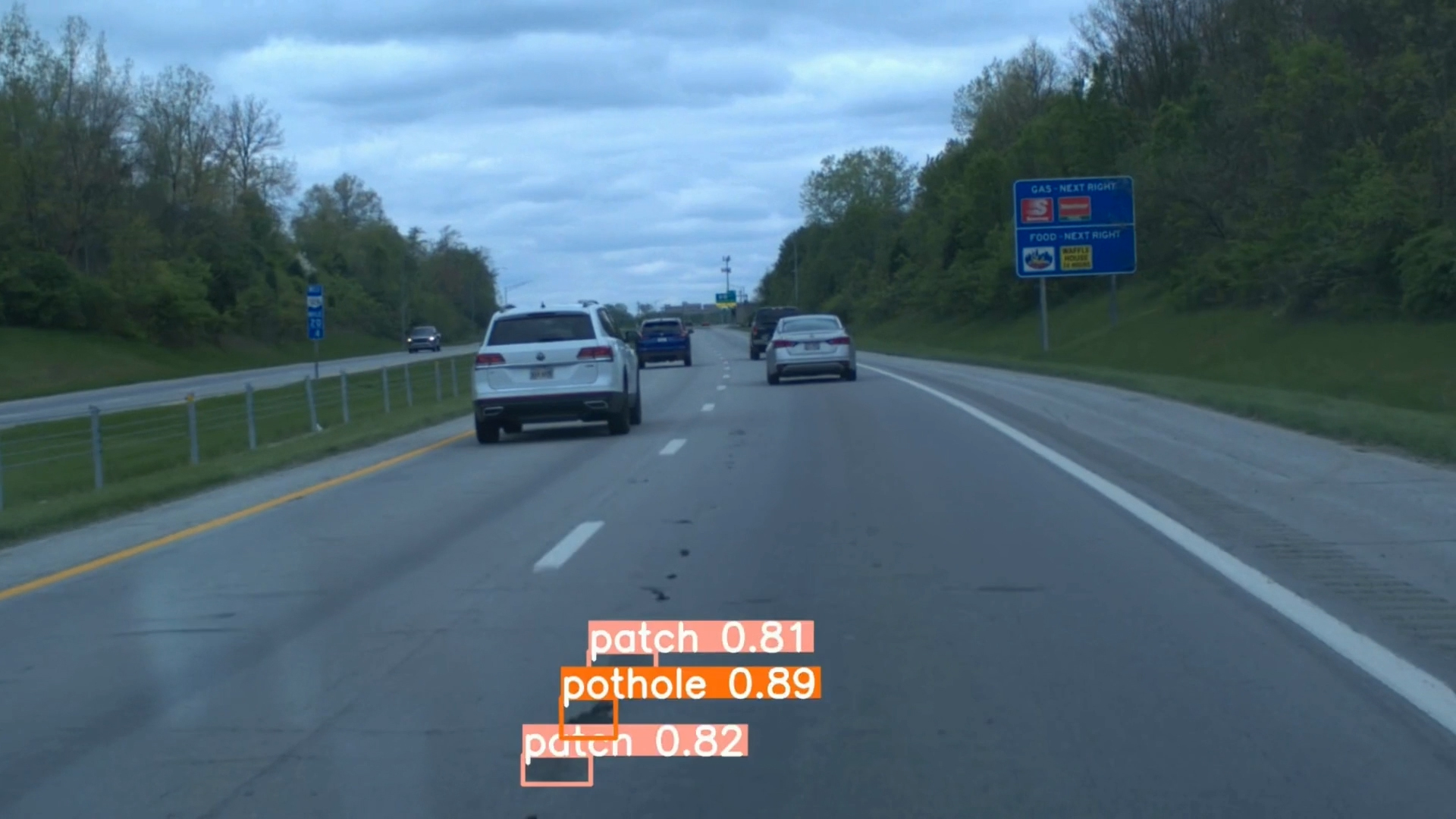
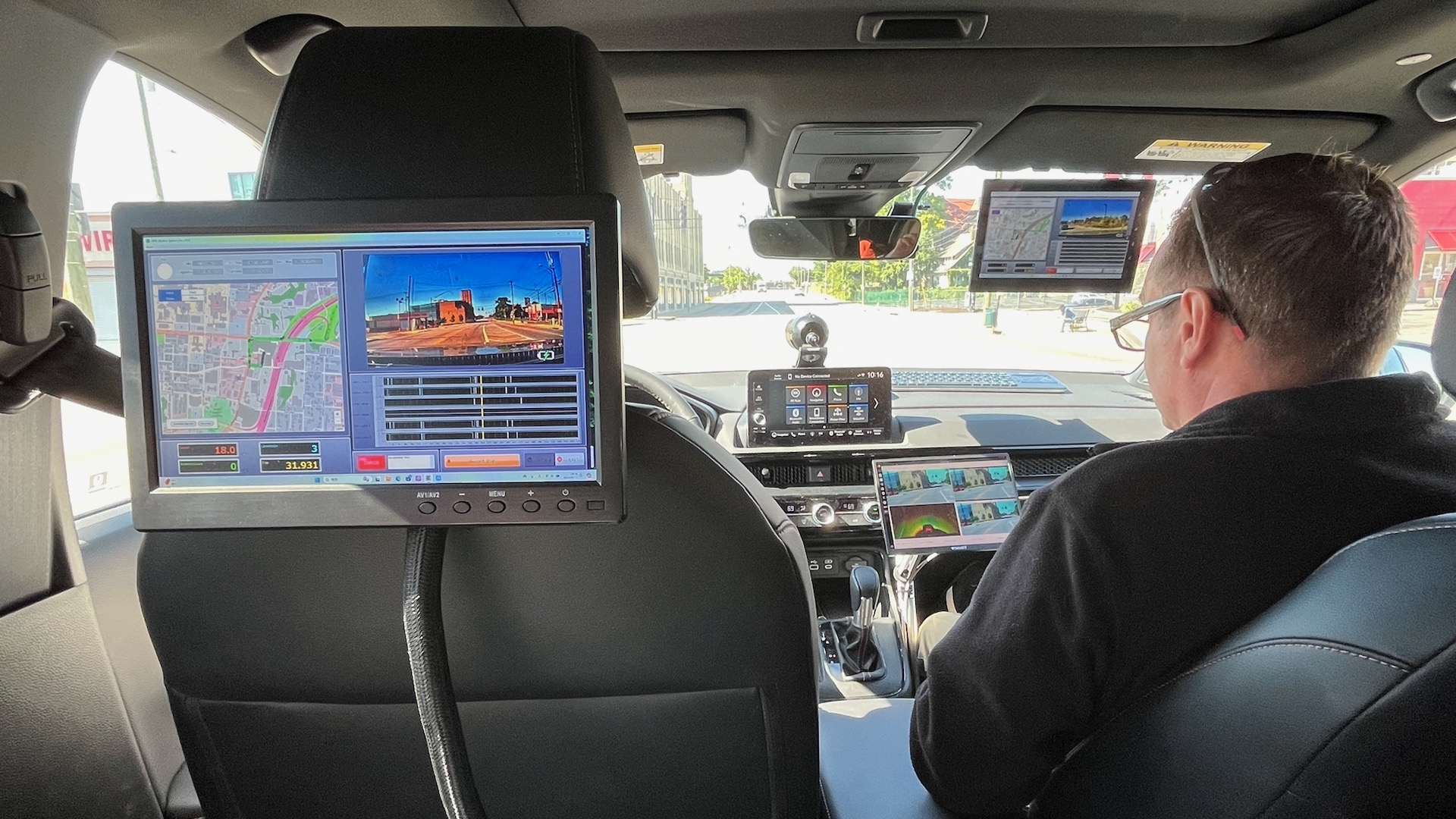
Potential maintenance issues flagged by the sensors were uploaded to an online portal, where ODOT employees could review them in real time, cross-referencing the automated reports with the agency’s own visual inspections. An AI model was used to help process the data, with a feedback loop that allowed ODOT employees to flag errors, enabling the model to learn and improve over time, according to Honda.
As one can probably guess from Honda’s trumpeting of this program in PR copy, the results were encouraging. Honda claims the prototype system detected damaged or obstructed signs with 99% accuracy, spotted damaged guardrails with 93% accuracy, and detected potholes with 89% accuracy.
Honda hopes to scale up the Proactive Roadway Maintenance System in a second phase of testing, with the ultimate goal of commercializing this tech. In Ohio alone, that could save $4.5 million annually from reduced manual inspection time, optimized maintenance schedules, and proactive maintenance that avoids more costly repairs later. It also improves safety for road workers, who wouldn’t have to spend as much time dicing with traffic, Honda notes. But it would also require customers to share data from their vehicles.
“In the future, Honda aims to empower its customers to contribute to safer, better roads through anonymized data sharing from their vehicles,” the release said. “This community-focused approach creates a sense of shared ownership at the road operation level, enabling drivers from simply using the roadways to actively improving them.”
Whether drivers will agree to participate in sufficient numbers remains to be seen, although sharing anonymized data is likely a more agreeable option for many people than paying higher taxes to fund road maintenance. It’s also remarkable to see an automaker take such an uncharacteristic interest in the infrastructure that supports its products, though, unlike electric vehicle charging infrastructure, the potential for revenue from selling data likely outweighs the upfront cost here.
Loading comments…
Comments couldn’t be loaded. Please refresh the page.