
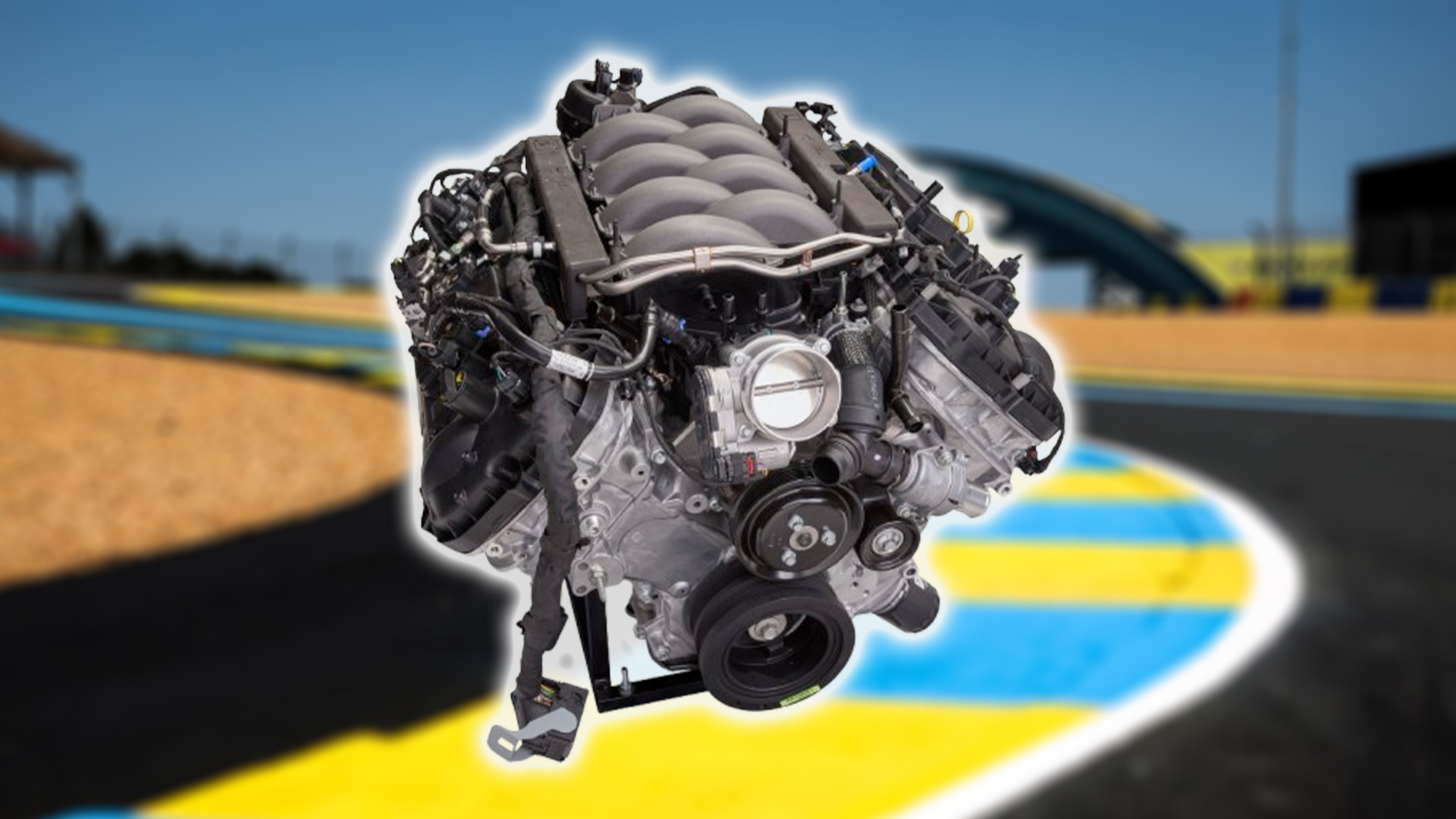
Ford confirmed today that its upcoming Hypercar, which will race at the 2027 24 Hours of Le Mans, will be powered by a Coyote-based, 5.4-liter V8 fitted with the series’ standard-issue hybrid system.
The internal combustion side of the powertrain, handled in-house by Ford, will be paired with the Bosch hybrid system currently deployed across the Hypercar class. Performance specs were not shared, as it’s still very early in the development cycle. However, WEC typically restricts total output between 650 and 700 hp via Balance of Performance rules. Oreca is handling all chassis work as well as some aero and design work for the Ford prototype.
When asked why they went with a naturally aspirated V8 over a turbocharged or supercharged unit, Dan Sayers, Ford WEC program manager, told The Drive that it all came down to simplicity and reliability.
“We looked at turbocharged or normally aspirated—and again, with the normally aspirated, if you can achieve the performance parameters, the mass or the power, and the torque control, then the simplicity of not having turbos, not having intercoolers, makes the installation simpler,” said Sayers. “There are fewer things to go wrong with endurance racing, and we like to just keep things simple. Simple is good for endurance racing.”
The two powertrain components, the combustion and electric, have yet to come together for testing. Sayers explained that the two should be married by the end of Q1, after which they will be put on a dyno and thoroughly tested for short, medium, and long runs.
“We will fire the [combustion] engine up next month and also the hybrid system without the combustion engine,” added Sayers.
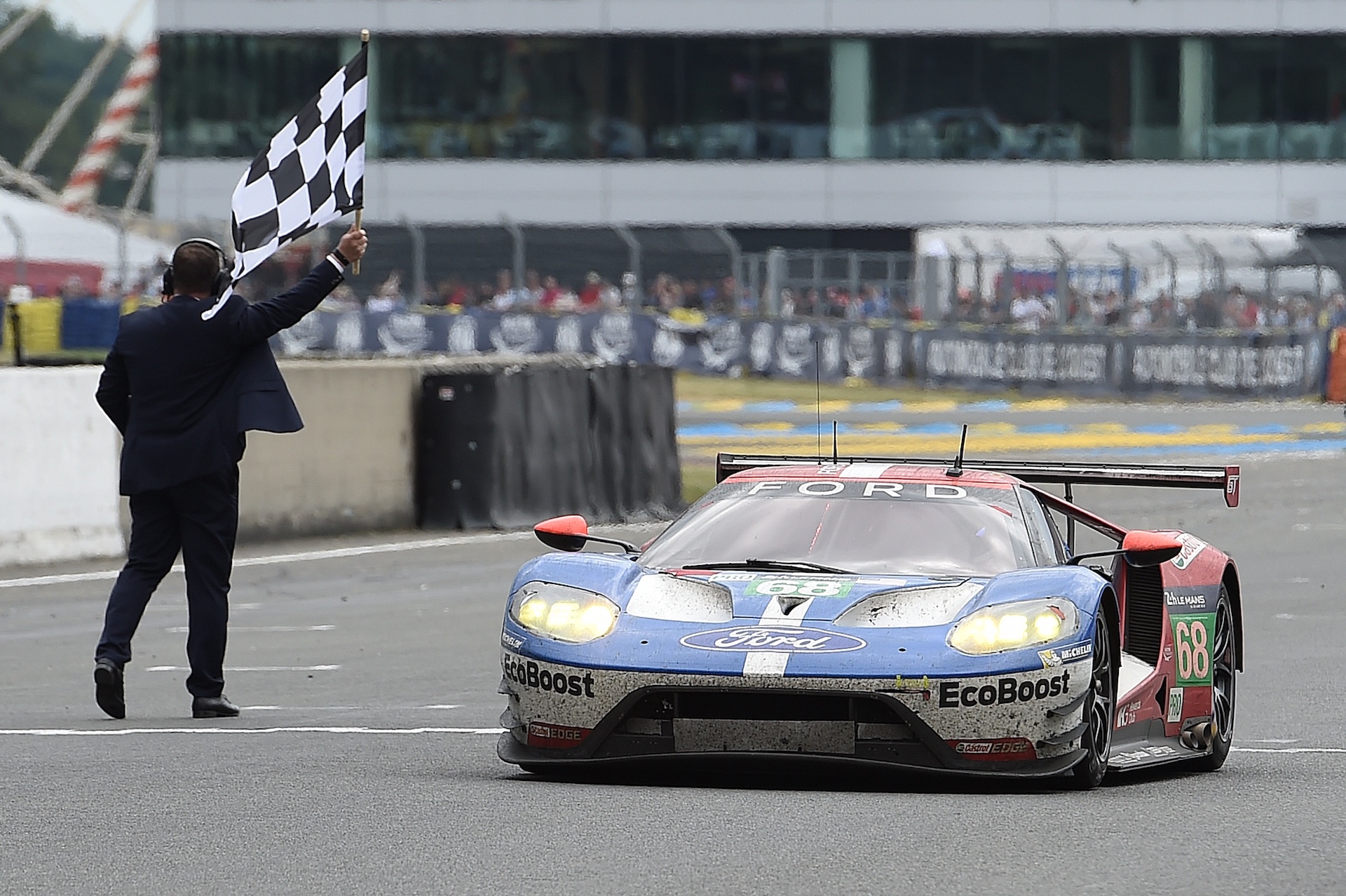
Ford previously won the GTE class at the 2016 Le Mans with an EcoBoost V6-powered Ford GT, and before that in 1966 with a 7.0-liter big-block V8 in the original GT40.
Ford expects to put the first few laps on its new Le Mans challenger in Q3, several months before the team’s maiden race in Qatar in March 2027. Three drivers were also confirmed for 2027 today: Veterans Sebastian Priaulx and Mike “Rocky” Rockenfeller, as well as former American Formula 1 driver Logan Sargeant.
Got a tip? Email us at tips@thedrive.com
Loading comments…
Comments couldn’t be loaded. Please refresh the page.