
As Ford shrugs off a $19.5 billion loss on its electric car push Volvo’s standing tall claiming success.
In Stockholm, Sweden Volvo CEO Håkan Samuelsson told reporters during a briefing, “I think if you look five years ahead I would say an electric car will most probably be lower in cost than a combustion car.” This was minutes after stating Volvo’s EVs are profitable and “our company’s more profitable now as we have EVs.”
Samuelsson continued and said, “if we did not have EVs we would be less profitable.”
Without EVs Samuelsson said Volvo would have lower volume, which would translate to lower profits. While EVs might have slimmer margins for the automaker today, the extra volume despite slimmer margins makes a business case without losing money.
“So far, our present electric cars have a lower margin, I think, that’s no secret, but they are profitable,” Samuelsson said.
Samuelsson was quick to note, “we are not paying to get them” referring to building and selling electric cars at a loss like some competitors.
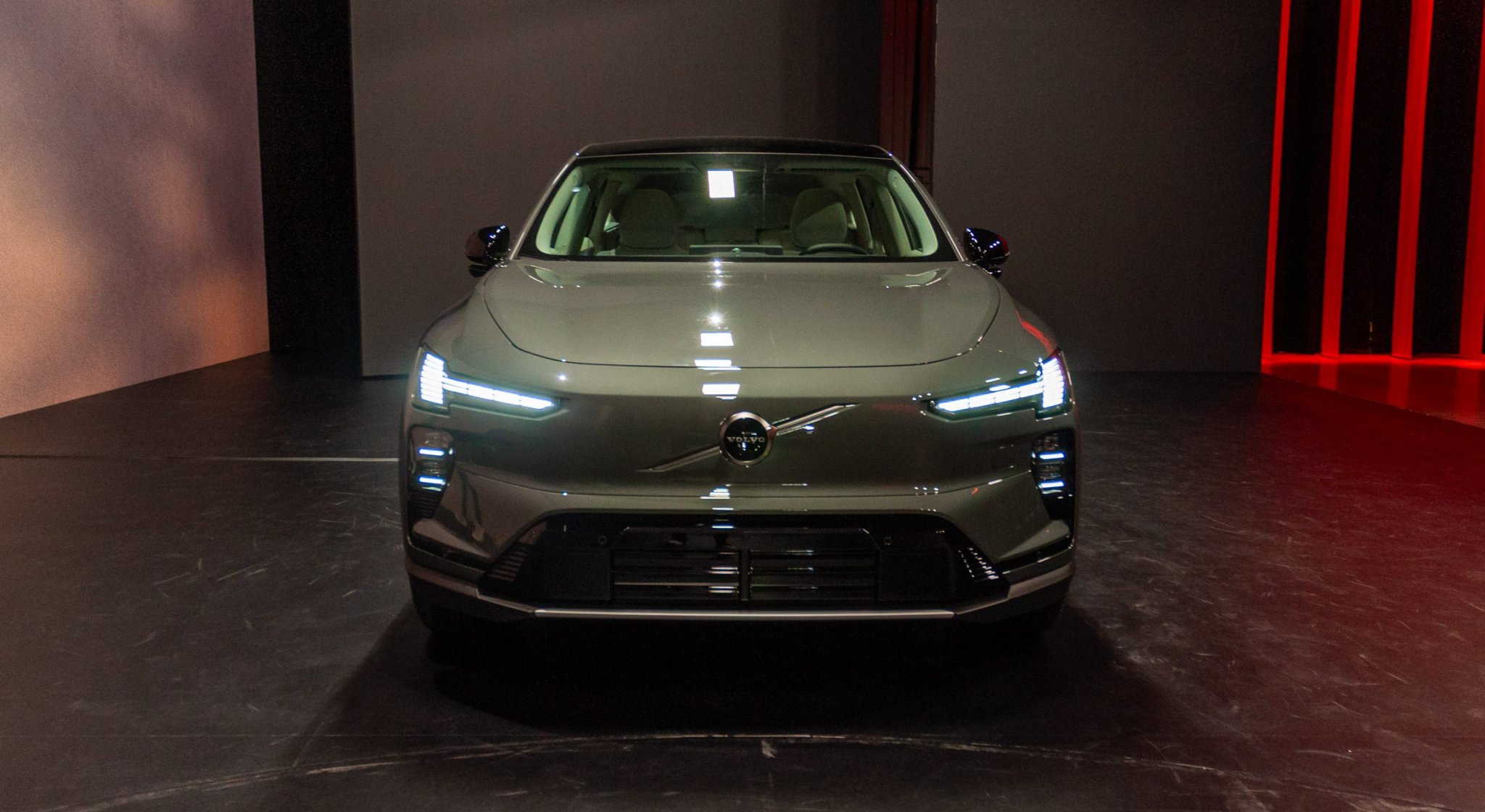
With the latest electric Volvo, the 2027 EX60, the automaker introduces new manufacturing methods including cell-to-body integration and mega castings. The EX60 also brings forth new hardware including motors that were developed in-house. All of this will bring down the cost of the EV itself for Volvo to further improve margins and profitability, according to Samuelsson.
Samuelsson said these changes are bringing forth more parity on the margins for vehicles like the electric EX60 and the gas-powered sibling sold today known as the EX60. The larger EX90 does not have the same margins in terms of profits as the gas-powered XC90, Samuelsson noted, but it’s still turning a profit.
The largest thing to make EVs more profitable are lower battery costs and a no-compromise vehicle architecture. “I mean, if you have compromises and, I mean, battery, for example, if you put in the battery in an extra aluminum box and the battery modules are is also in a battery box, so you have, like, a Russian doll. For a small deal, in one box, you put those boxes in a bigger box and the box you put in the chassis, you hear it doesn’t sound very cost efficient. So now we put the cells directly into the body of the vehicle, that is going to bring down the cost,” Samuelsson said.
Samuelsson said while everyone claims solid-state batteries are the holy grail, “there is always a grass greener on the other side, but I think if you wait for that you probably will not be in the market anymore. Everything gets better, but you can not wait for it, wait for the ideal car. You have to be in business and learning. Right now I think it’s a long, long wait for solid-state batteries to come, and there’s a lot of potential to lower the cost of today’s batteries.”
“But the chemistry develops, do you need these expensive, NMC batteries? I mean, it will be more LFP, lower raw material cost in those batteries, and sacrificing a bit on the range, but on the range, you will reach a level where you stop talking about it, and then you could instead lower the cost. It’s like now the fuel tank is big enough, so maybe now I can make the fuel tank cheaper with plastic tank,” Samuelsson said.
Got a tip? Send us a line at tips@thedrive.com
Loading comments…
Comments couldn’t be loaded. Please refresh the page.