
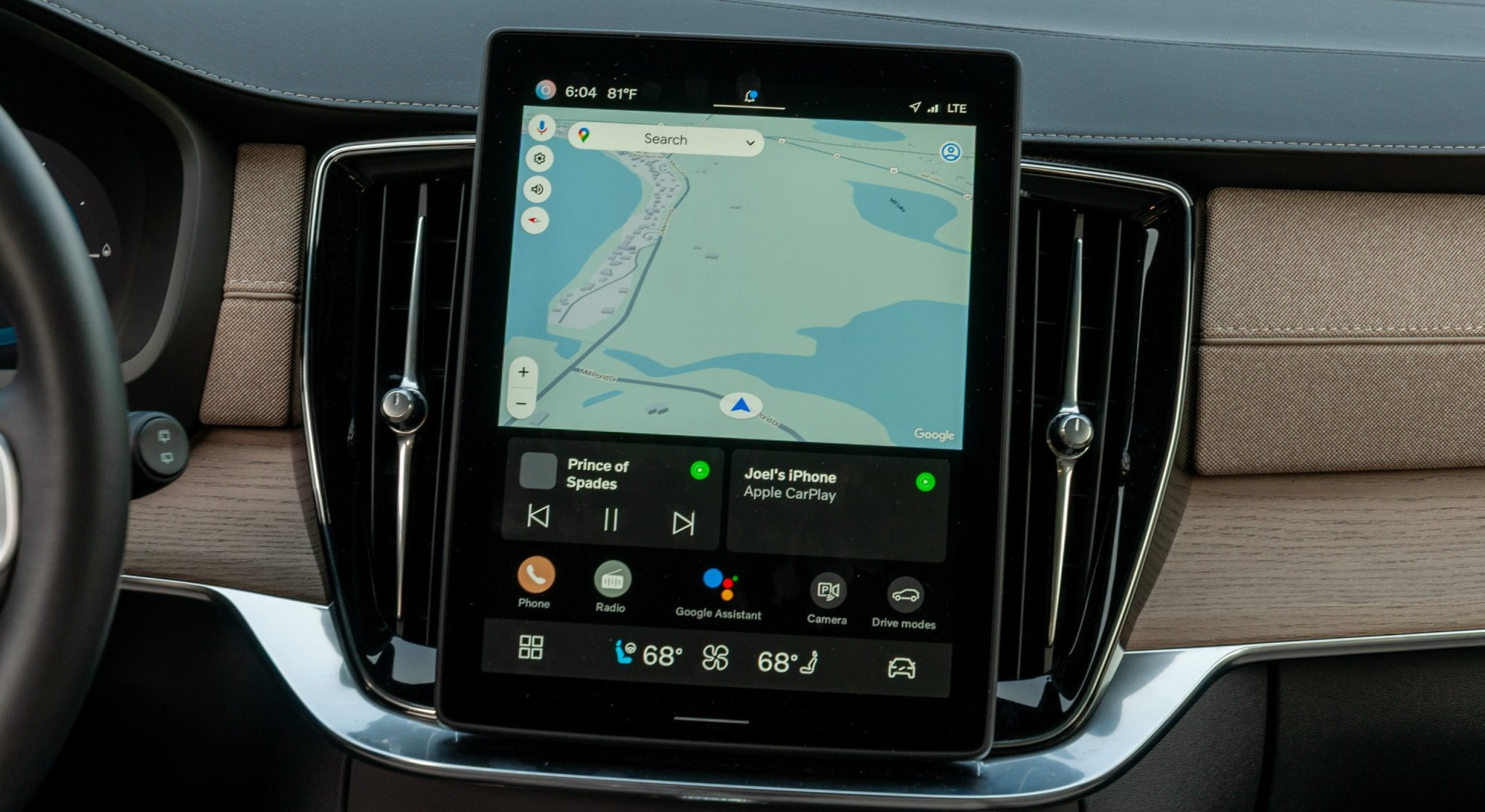
Remember back in 2024 when Volvo announced all its cars from 2021 and newer would receive a new Google-based infotainment system that matched its new EVs for free via an over-the-air software update? Turns out that was just the beginning and we all just didn’t know it yet.
On Wednesday, in Stockholm, Sweden, Anders Bell, Chief Engineering and Technology Officer at Volvo Cars, told media during a round table that all 2021 and newer Volvos will be getting Google’s Gemini AI assistant in the coming months.
Those older cars, some of which were actually built in 2020 even though they were 2021 model year, launched originally with Volvo’s older infotainment system. This will be the second major upgrade owners receive bringing the older cars in-line to give them parity with the newer models.
The Gemini upgrade will be released via a free over-the-air software update in the coming months, according to Bell.
This update will add Gemini to over 2.5 million eligible Volvos already on the road today and it’s actually being delivered by Google, not Volvo.
Volvo’s latest infotainment system, which runs the automaker’s OS now called HuginCore after the bird in Norse mythology, debuted in 2027 EX60 and runs off an in-house developed electrical architecture, core computer, and zone controllers. The older cars do not, but yet this is still going to work.
“This of course, always been true in consumer electronics, but now the car is very much a technology platform. You launch capable hardware and then you keep on scaling and brilliant functionality with software over time,” Bell said.
The man in charge of these systems for Volvo noted that the team had no clue five years ago that AI would be a thing or it was going to be added to their cars. This wasn’t planned, which is part of the challenge.
“This is the new dimension as well in automotive engineering,” Bell said, comparing how engineering cars today is now like the smartphone for Apple with continuous software upgrade cycles despite the hardware remaining static. The team now has to plan for what the system needs today but also might need five years from today, according to Bell.
The inverse is now true as well. While the team designs software to work on today’s hardware and that hardware has to be capable five years from now, the team has to figure out how today’s software can operate on yesterday’s hardware from five years ago.
“It’s that upgradeability. And that the whole constant, being able to evolve, which has been the kind of religion for this program,” Bell said.
Got a tip about an automaker adding new tech to an older car? Send us a line at tips@thedrive.com
Loading comments…
Comments couldn’t be loaded. Please refresh the page.