
Key Takeaways
- Rivian R2 enters the compact SUV market. With a competitive price and over 300 miles of range, it’s targeting popular models like the Tesla Model Y.
- Impressive balance of features. Combines on-road dynamics and off-road capability with advanced technology and a premium feel.
- Innovative design and interior. Features like a drop-down rear window, dual glove boxes, and 40:20:40 split-folding rear seats set it apart.
- Performance and efficiency. Offers multiple powertrain options with fast charging and a range up to 330 miles.
Bottom line: The Rivian R2 is poised to capture significant market share with its blend of style, technology, and performance at a competitive price.
The 2027 Rivian R2 is the startup’s entry into what another brand’s CEO called a “blood bath” segment on The Drivecast two weeks ago: the compact crossover SUV thunderdome. With a starting price of $46,485 and topping out at $59,485, more than 300 miles of range, and all the technology anyone could ever want, the R2 has everything from the Tesla Model Y to the Toyota RAV4 in its sights.
It takes a lot to make me speechless—ask anyone on the team, or my wife. I was shocked after spending a day with the R2. Rivian figured out how to strike an unbelievable balance of on-road driving dynamics and off-road capability in a premium-feeling and looking package—at a competitive price.
The Basics
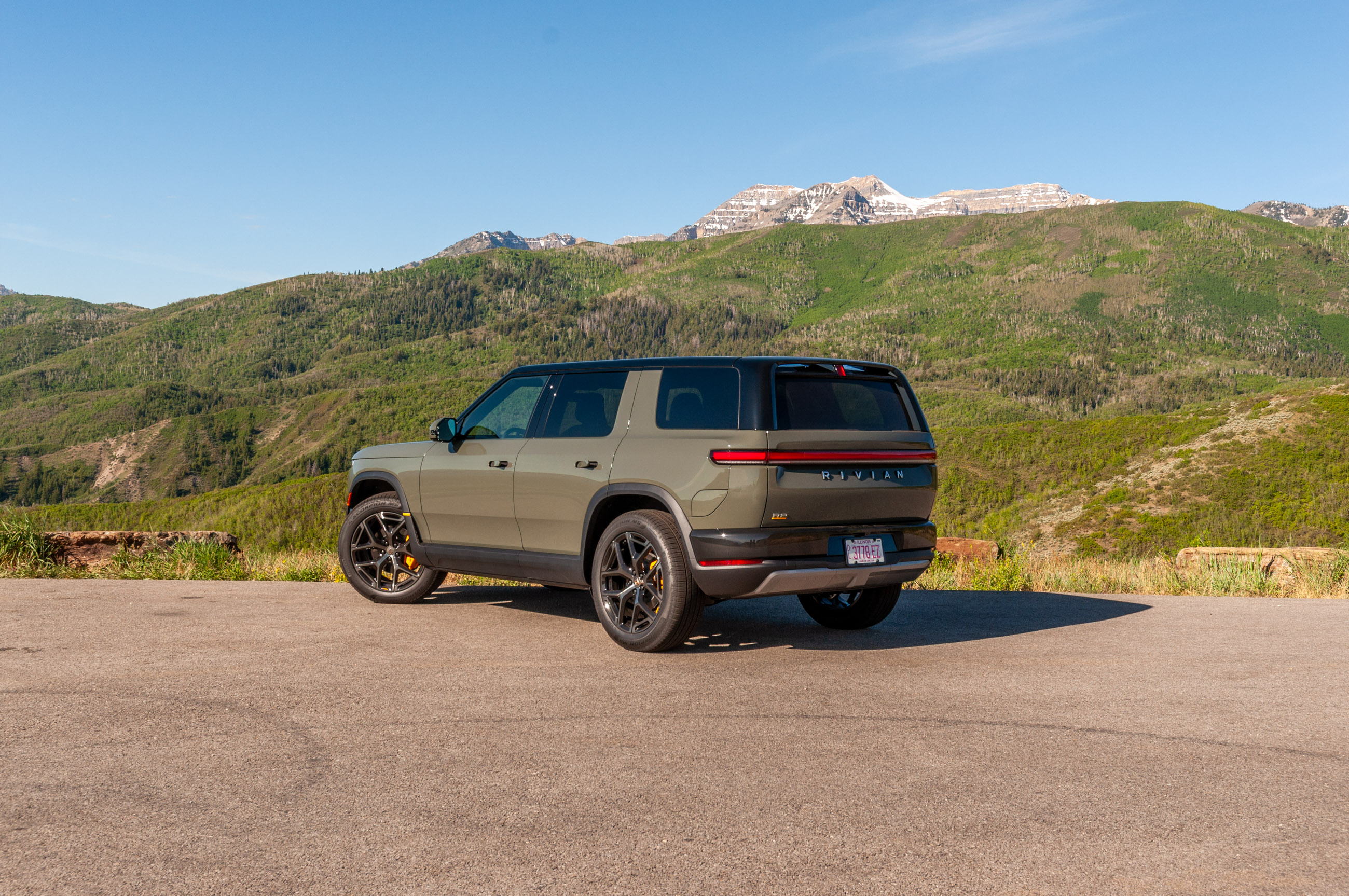
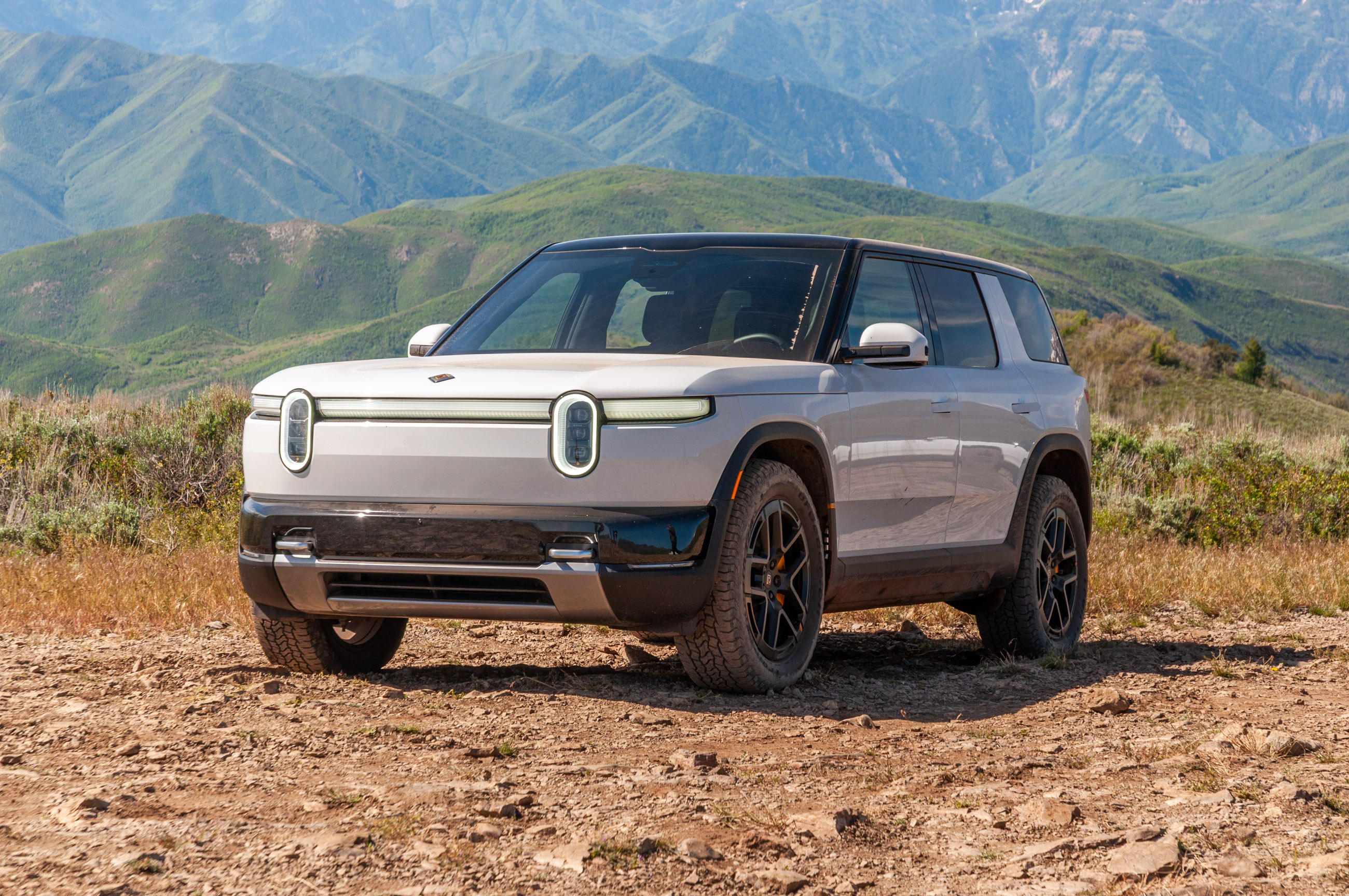
The Rivian R2 is the follow-up act to the larger R1S. It’s a two-row crossover SUV that is cheaper, less complicated in some ways and (ironically) more advanced in others. It’s also an opportunity for Rivian to play in the heart of the market. The most popular vehicle type and size in America is the compact crossover SUV, with the Toyota RAV4, Tesla Model Y, and others setting sales charts on fire. It’s no coincidence the R2 is 185.9 inches long, making it just the right size for most buyers.
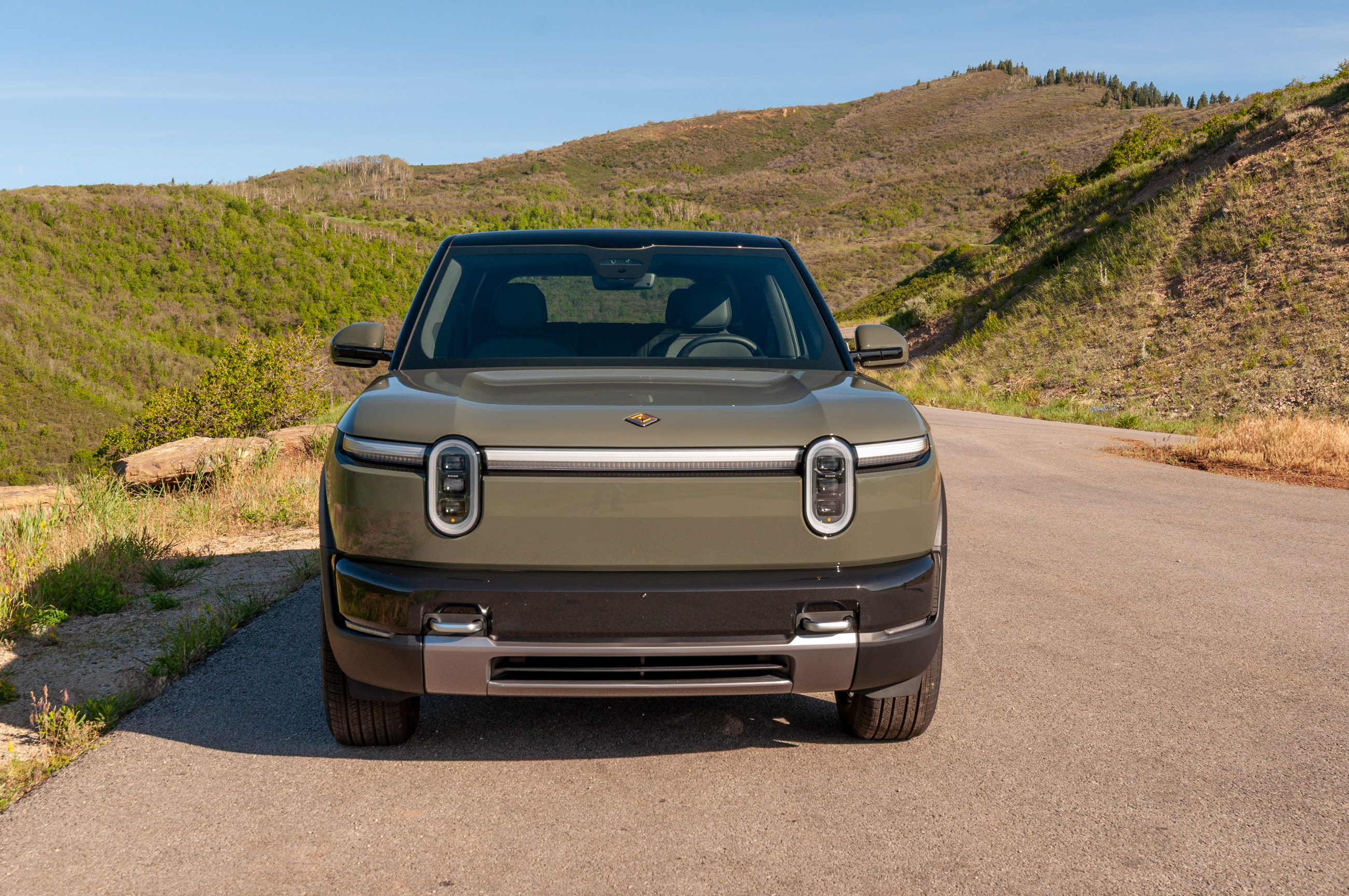
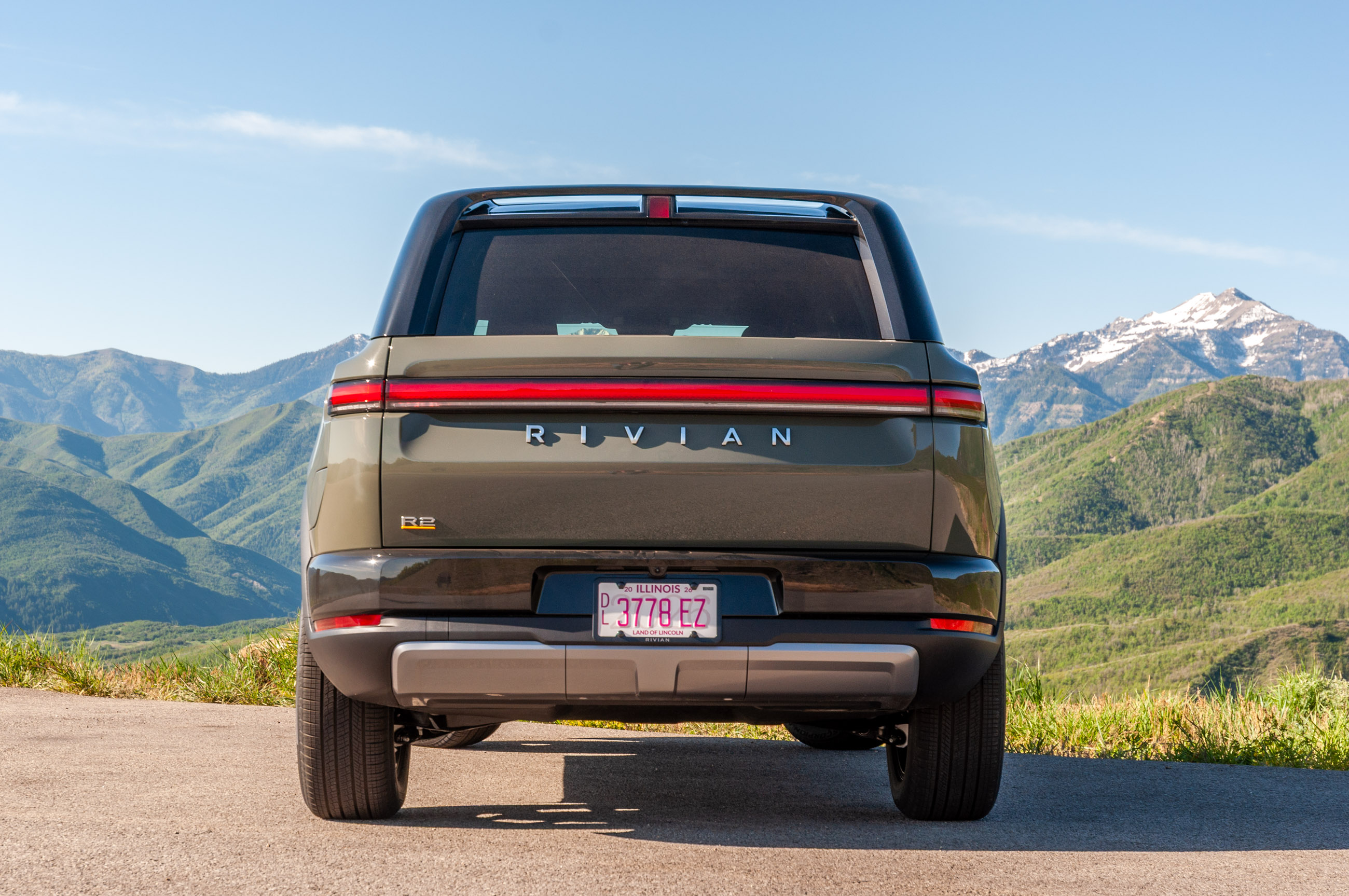
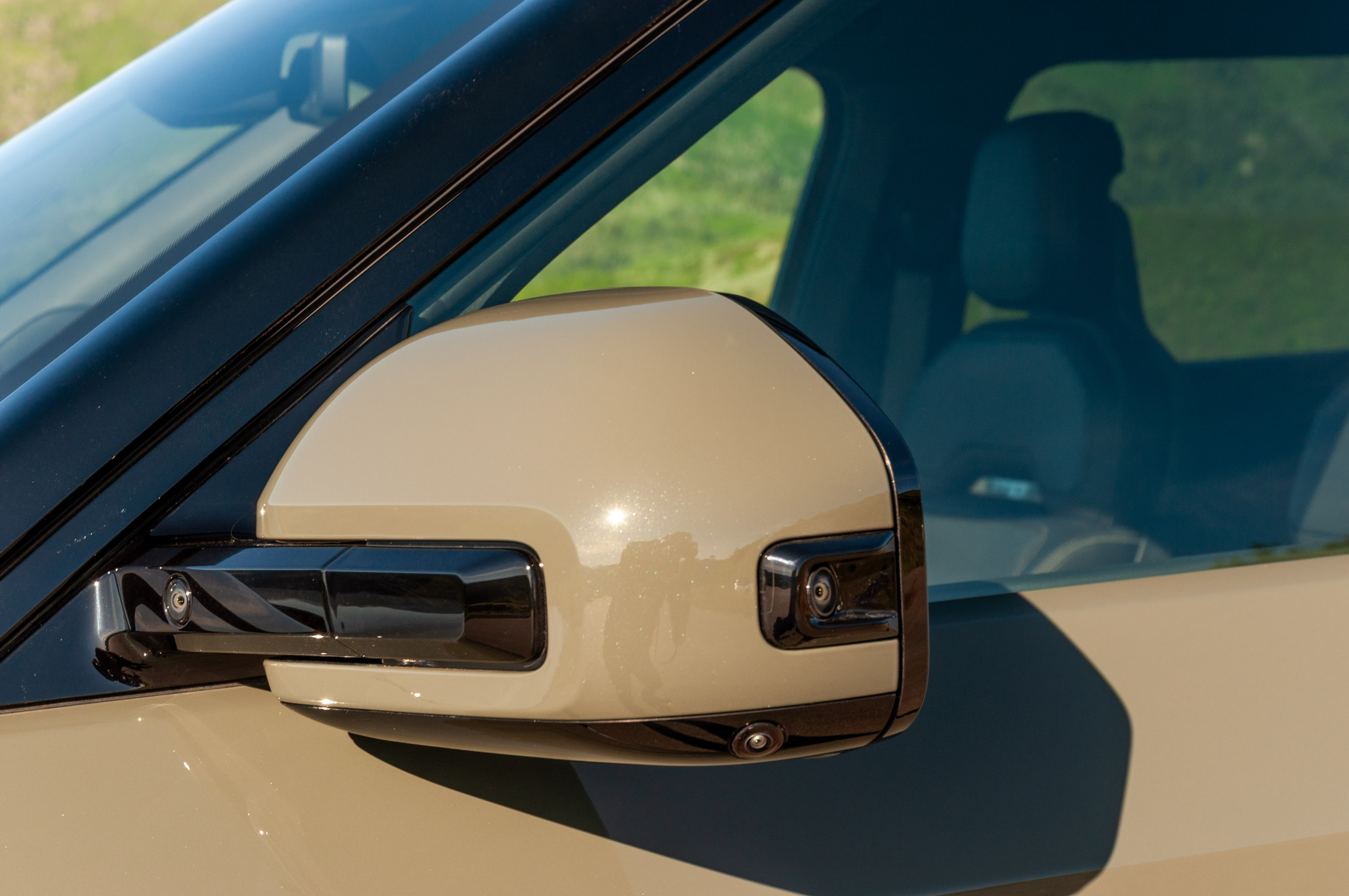
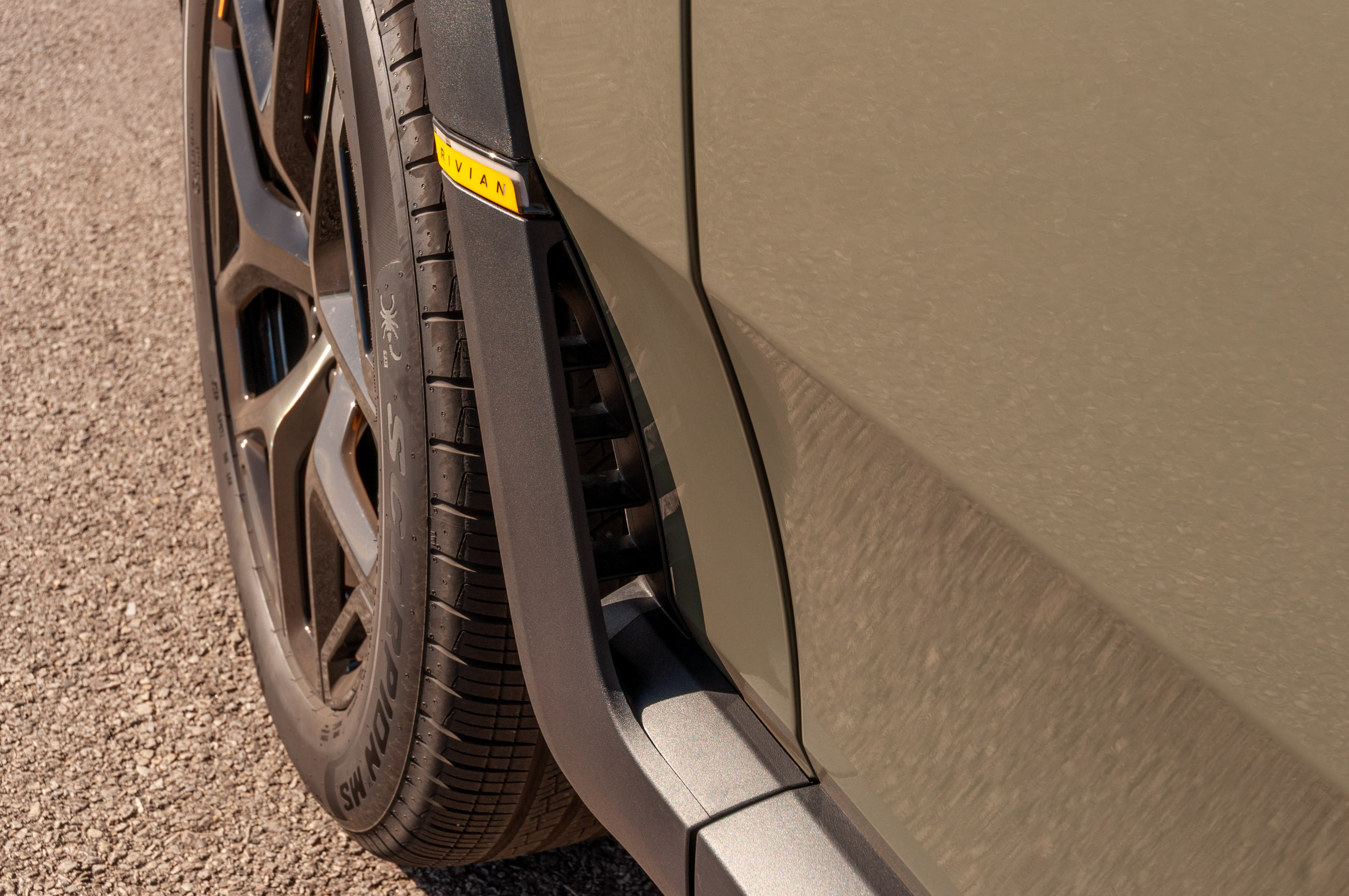
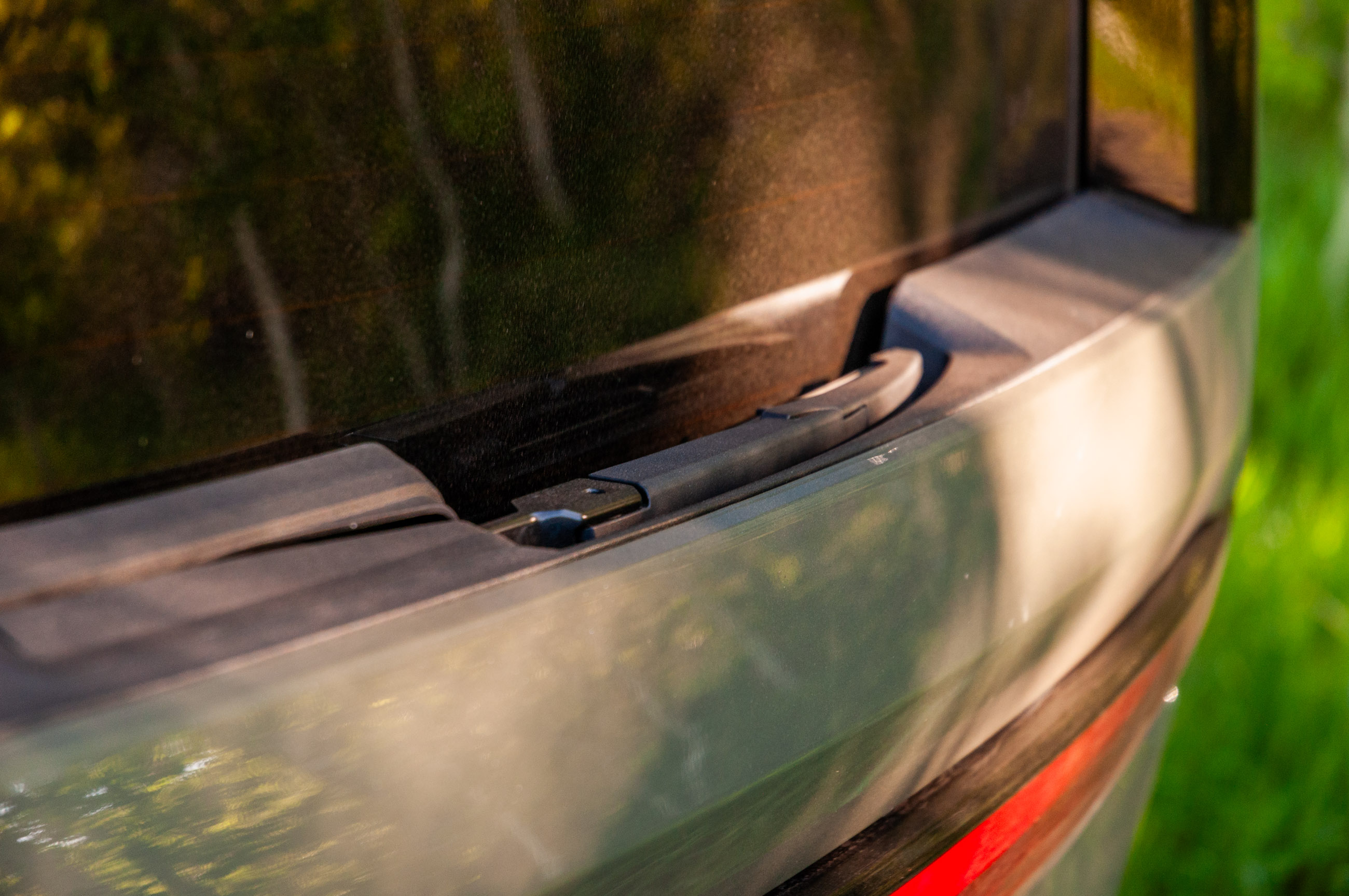
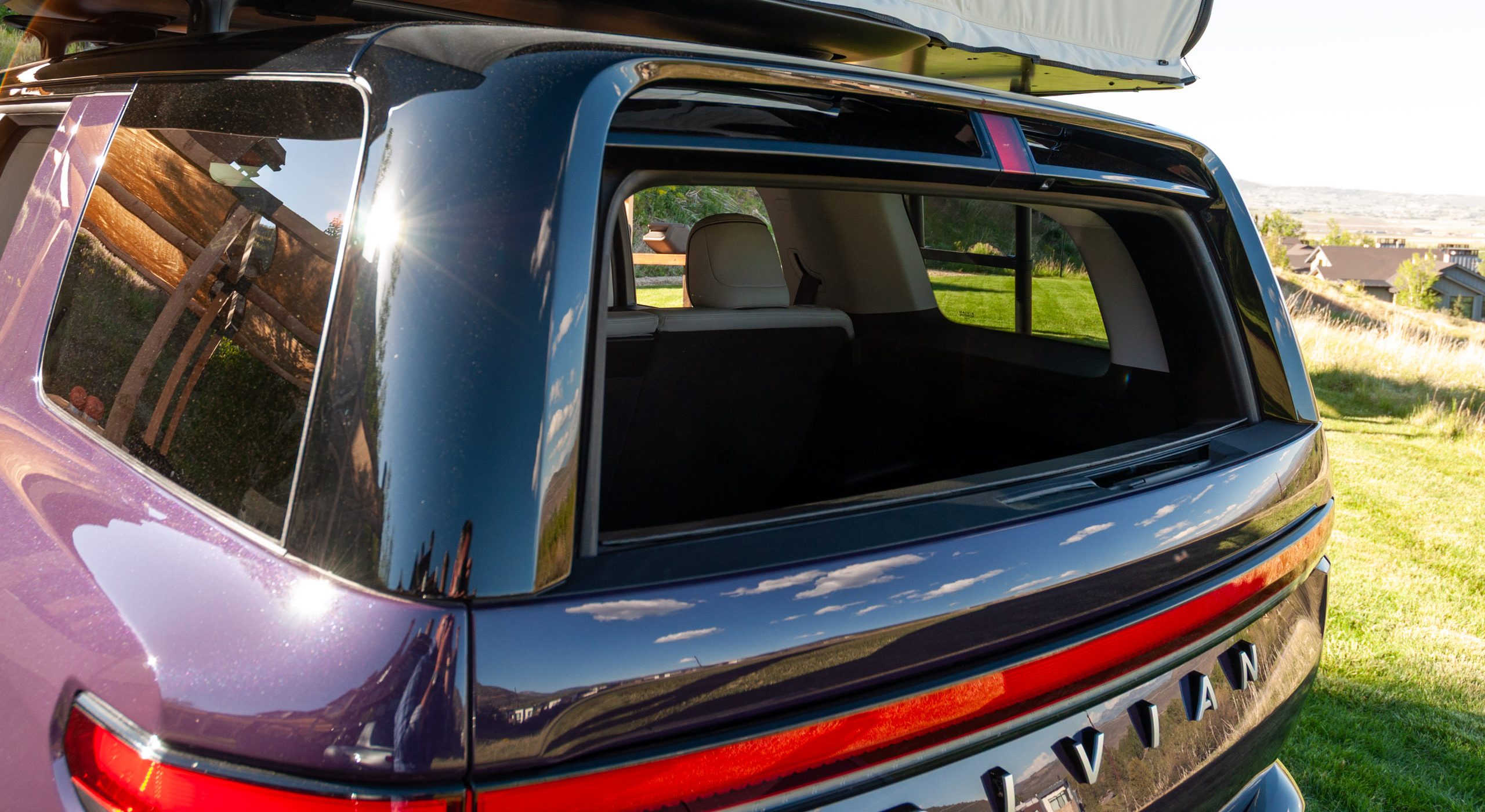
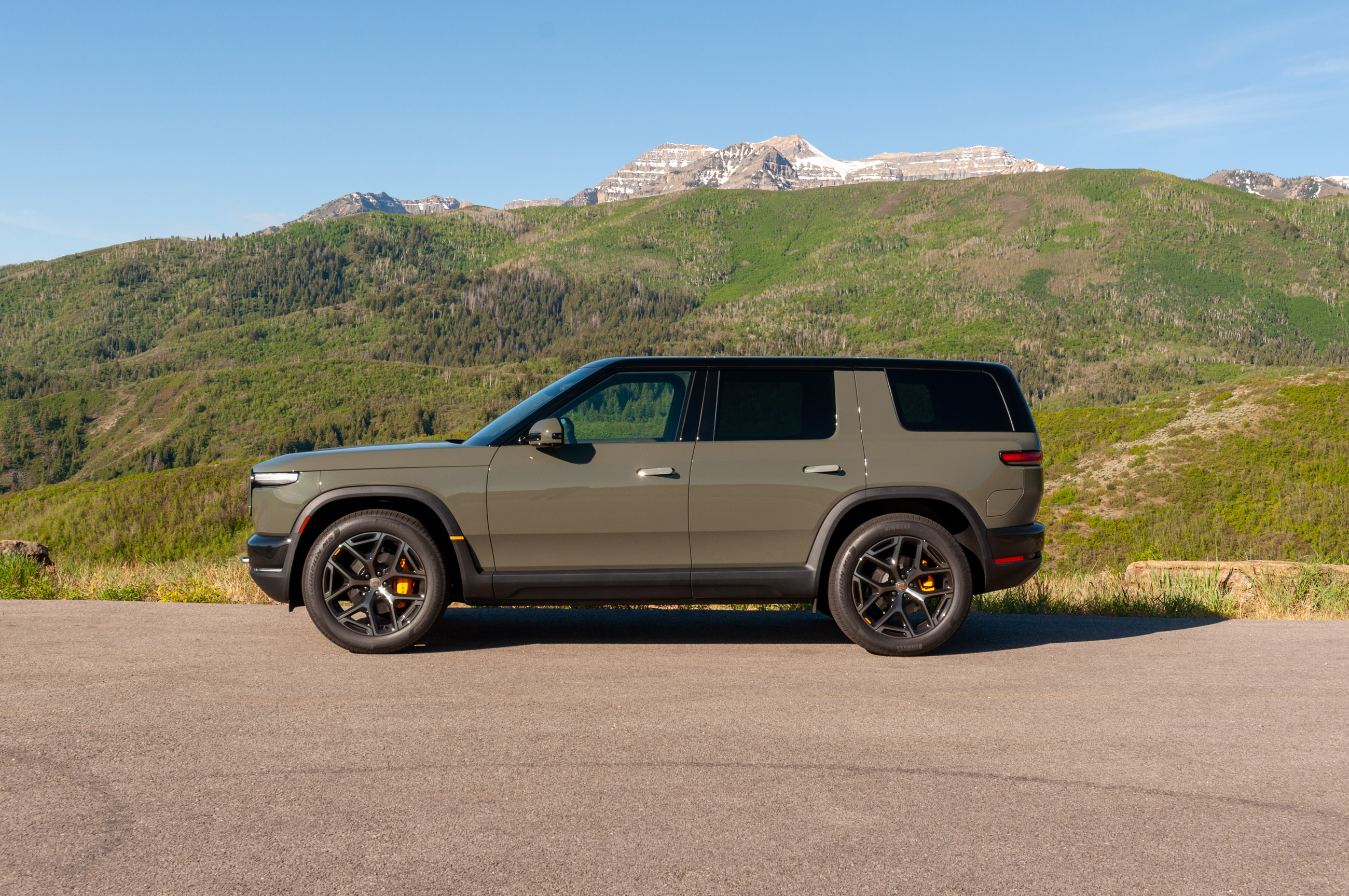
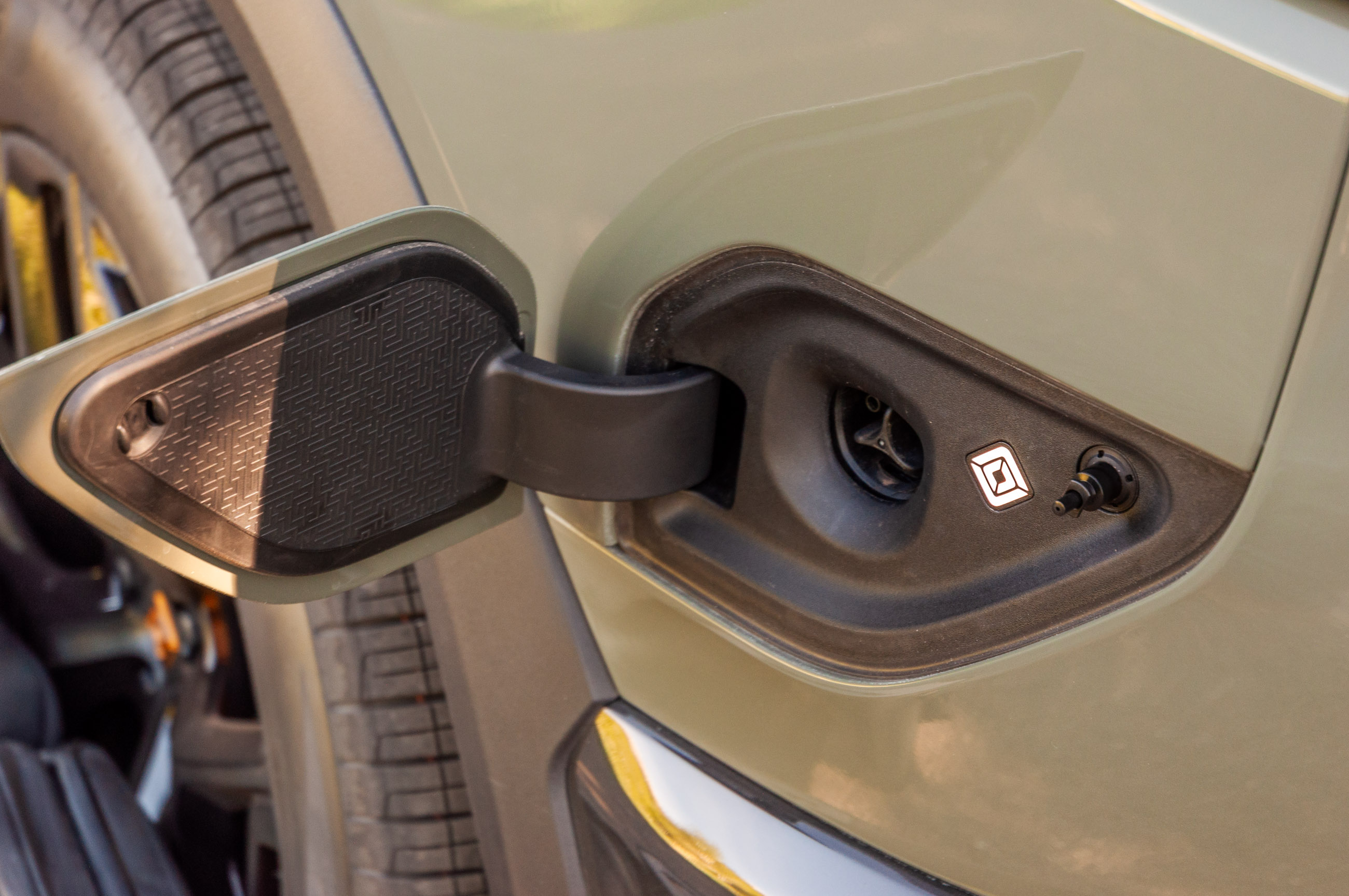
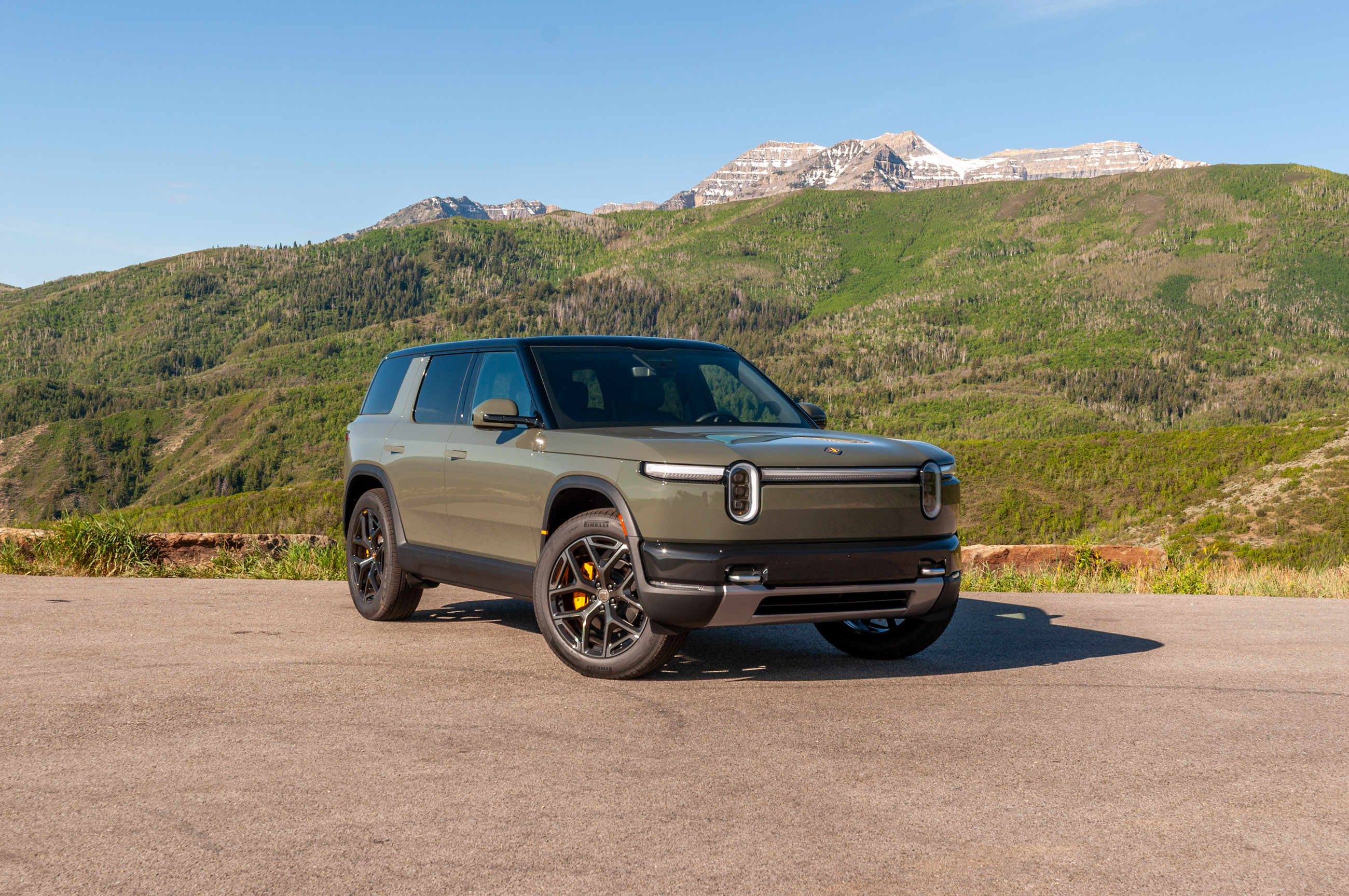
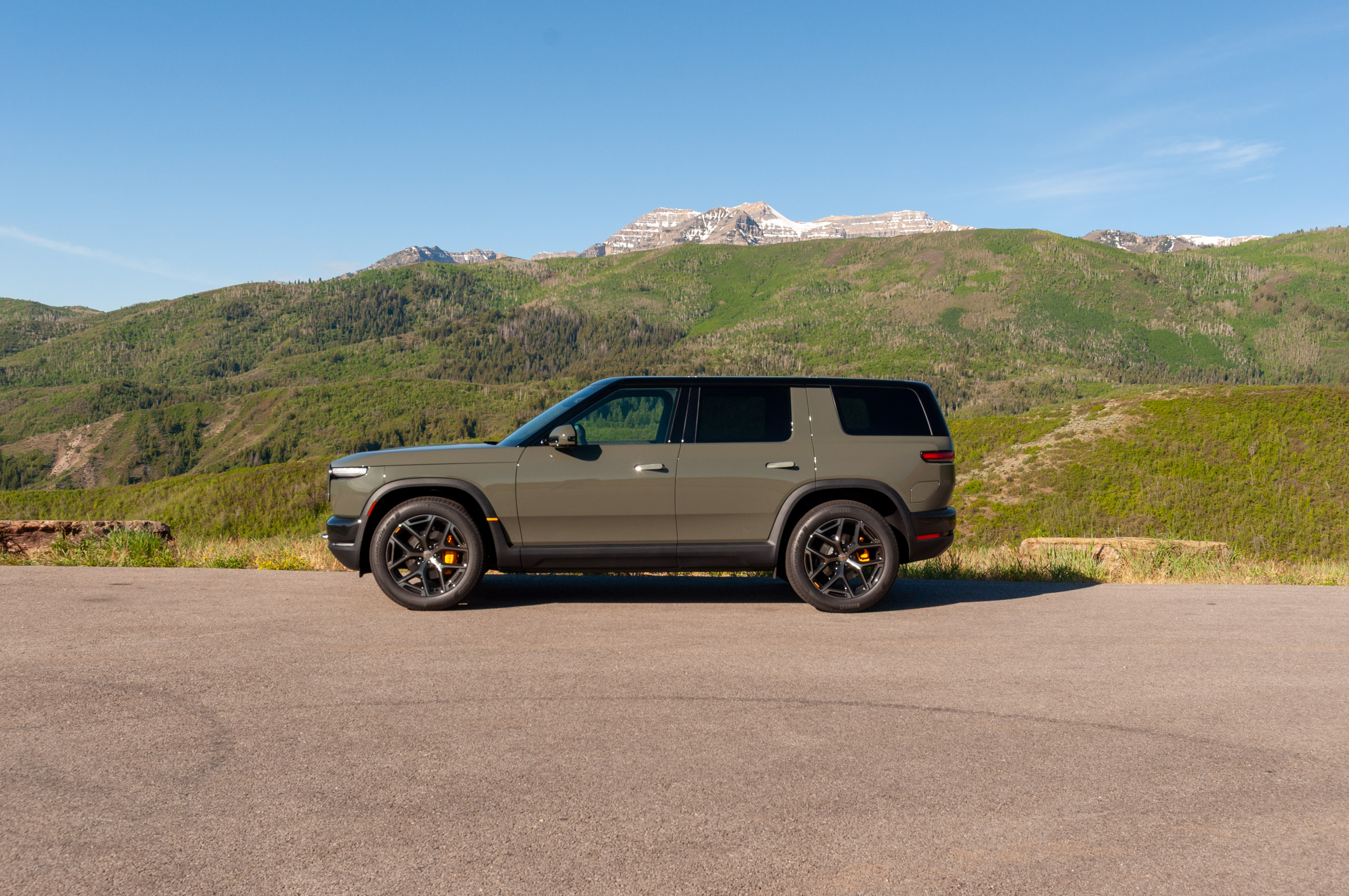
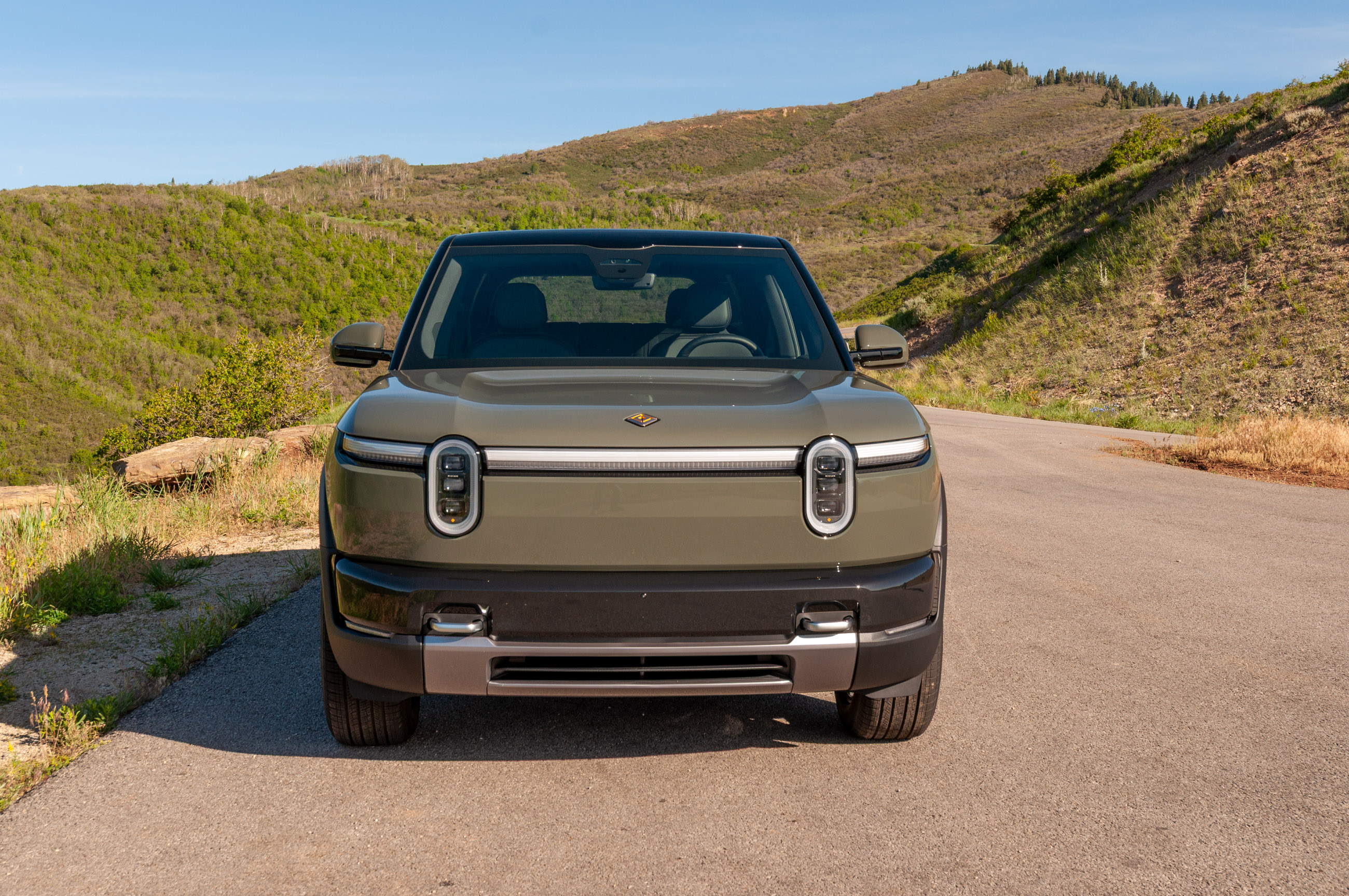
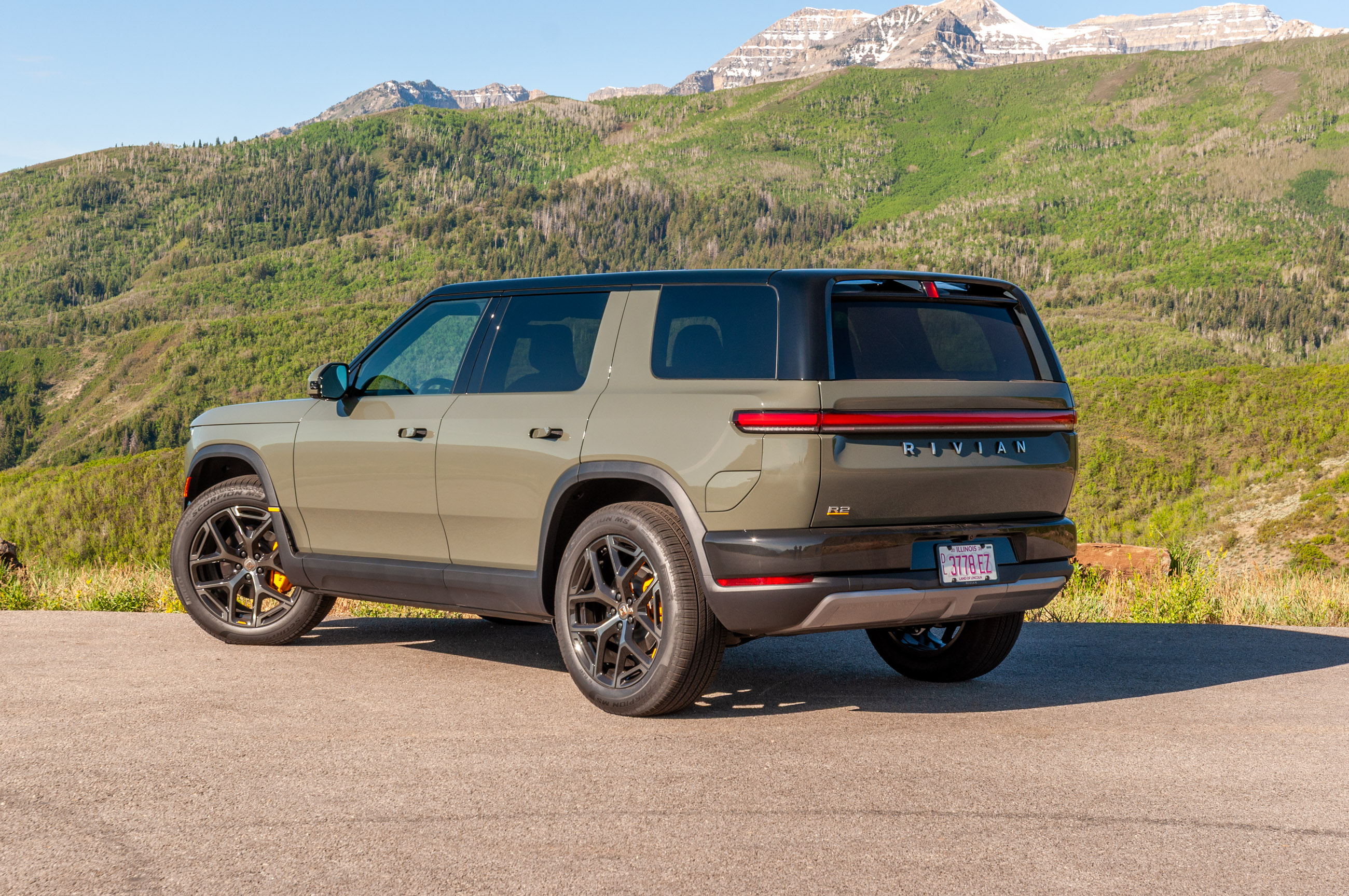
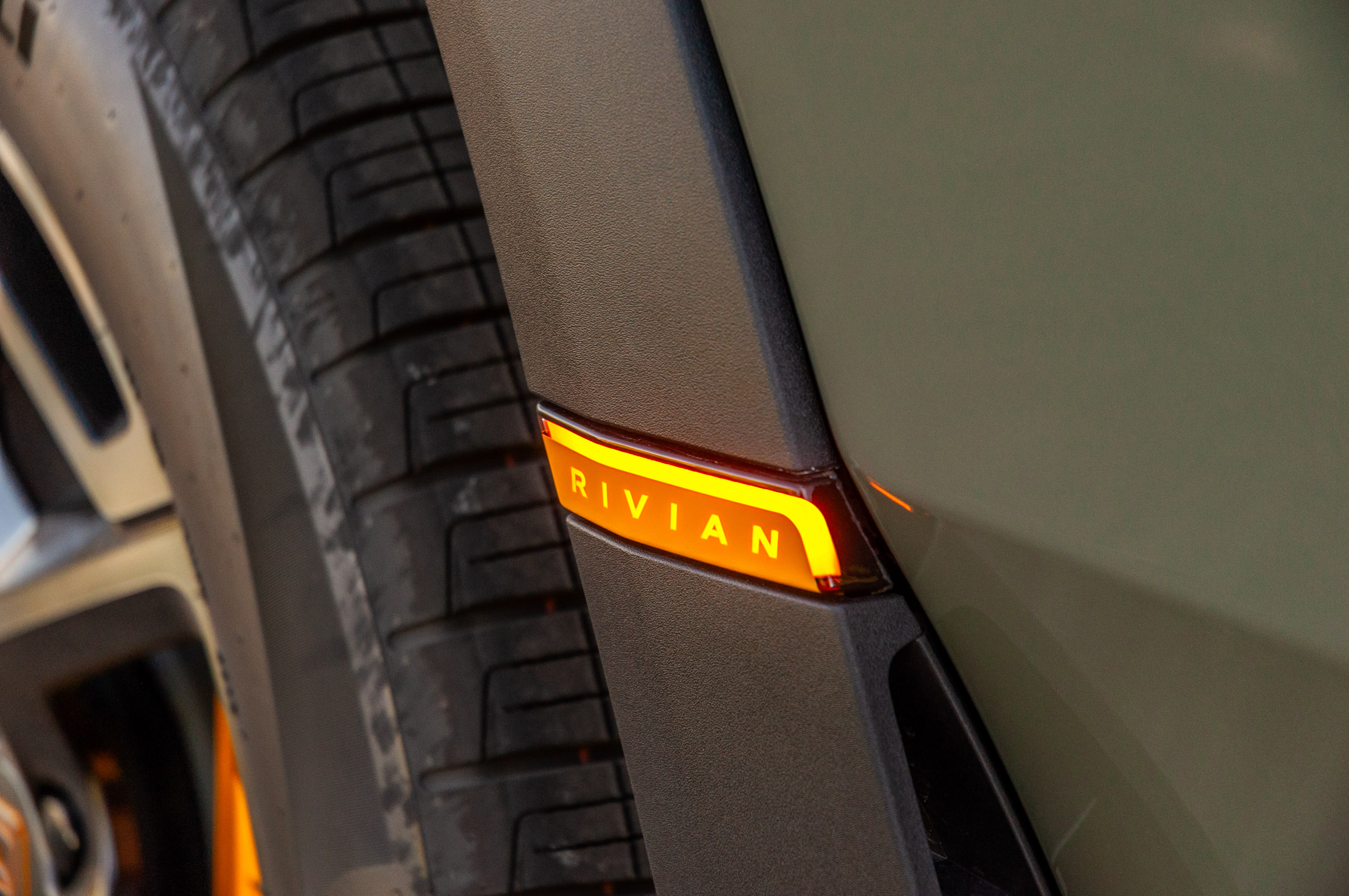
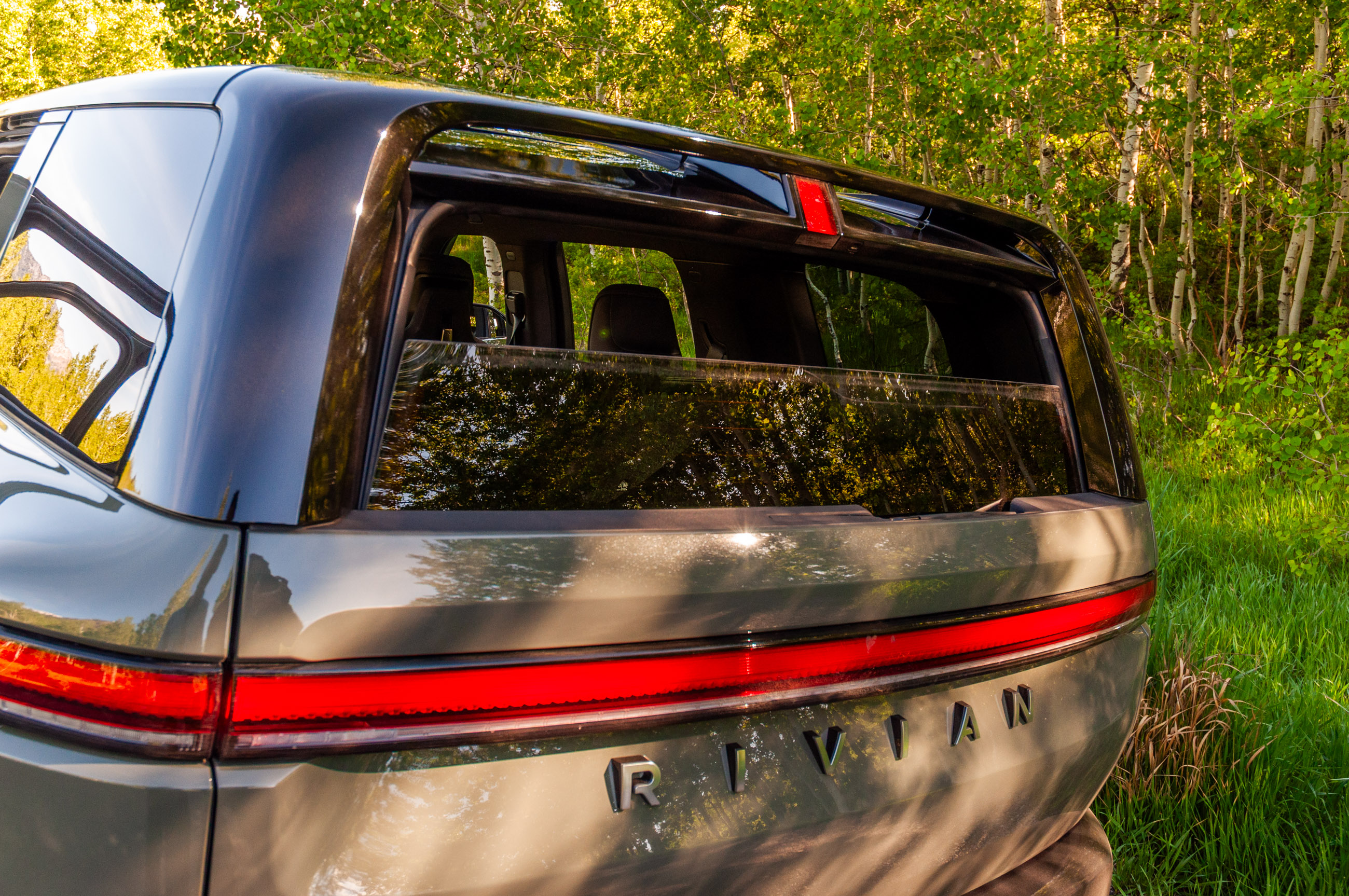
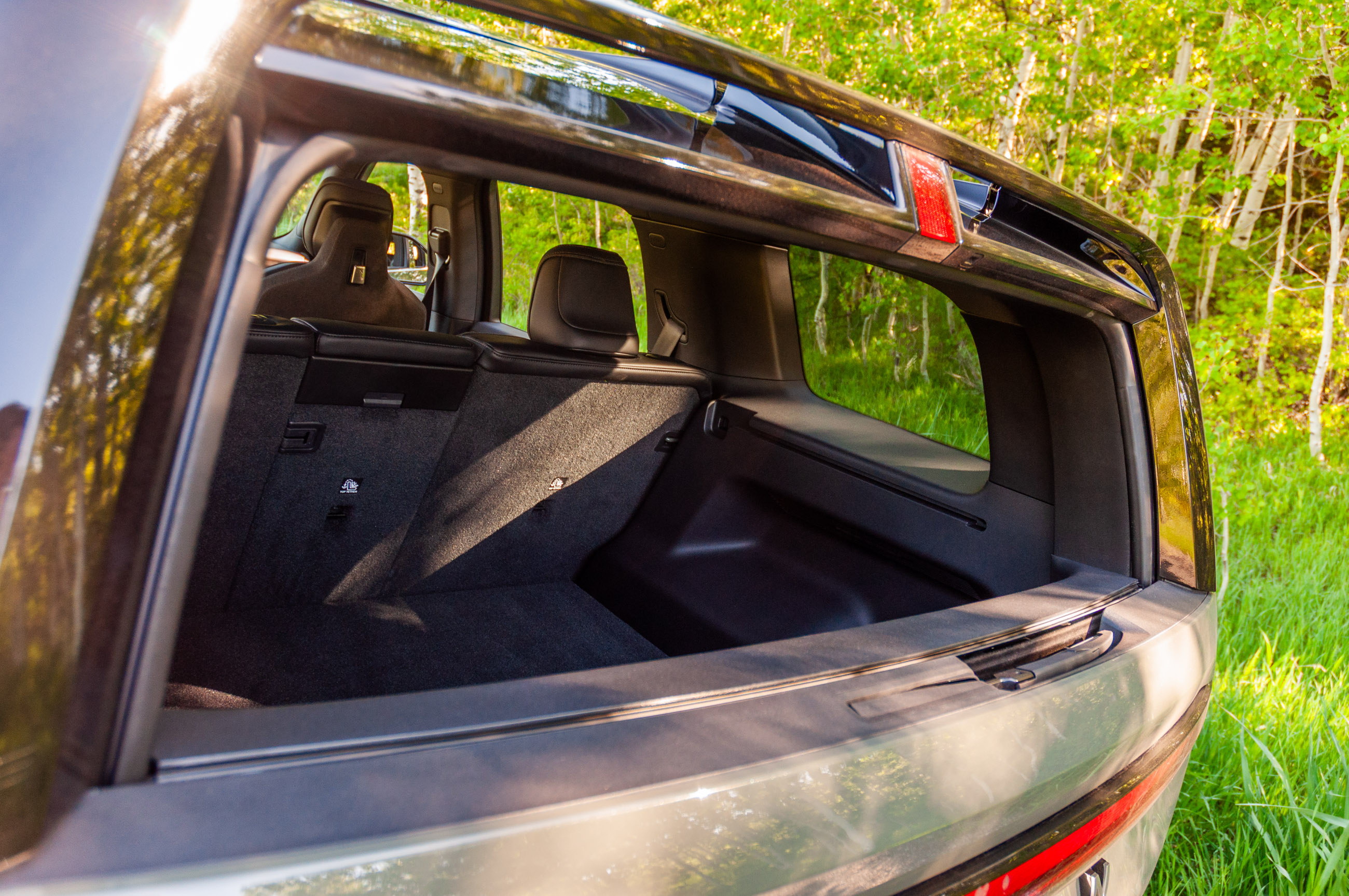
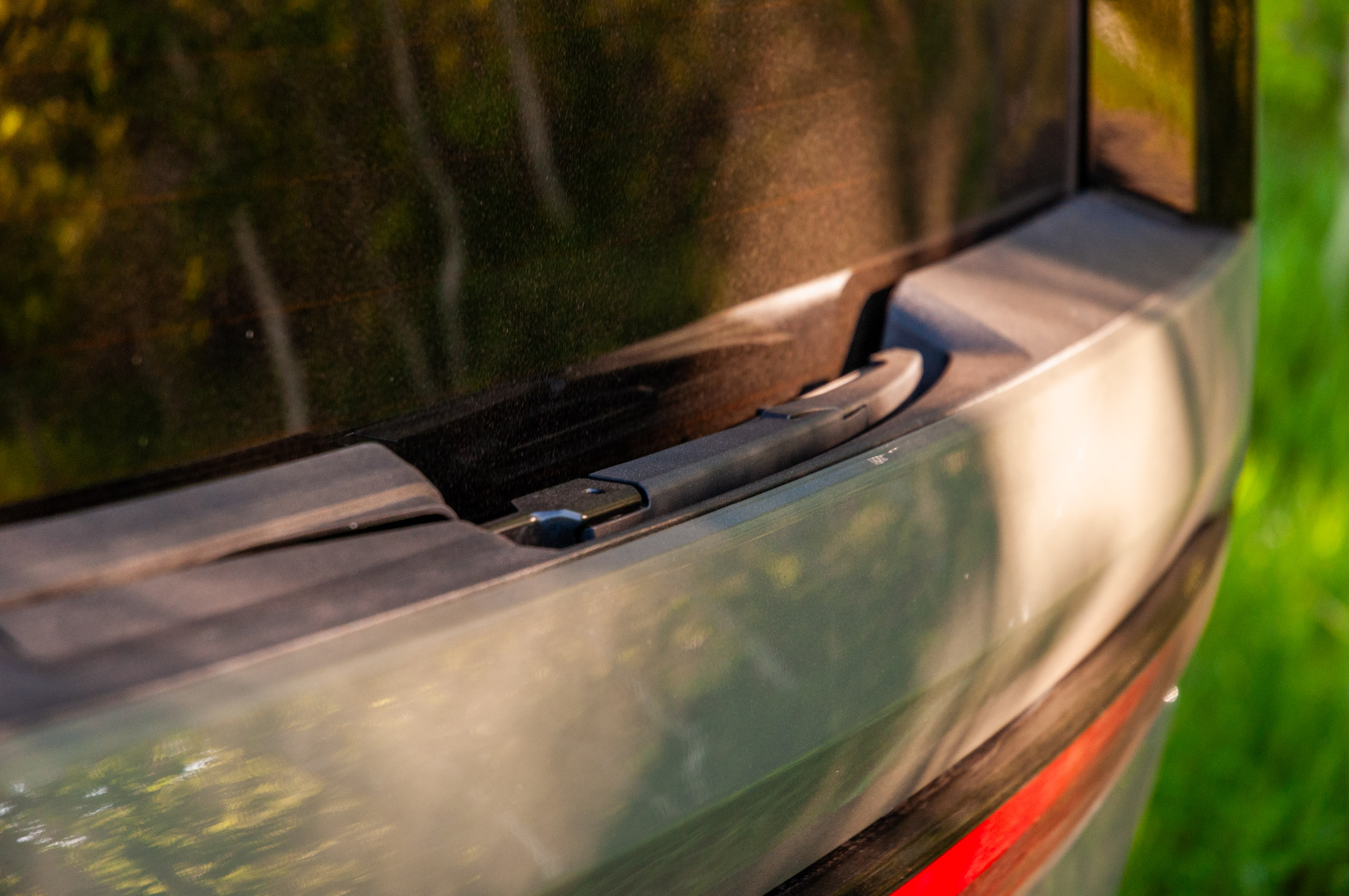
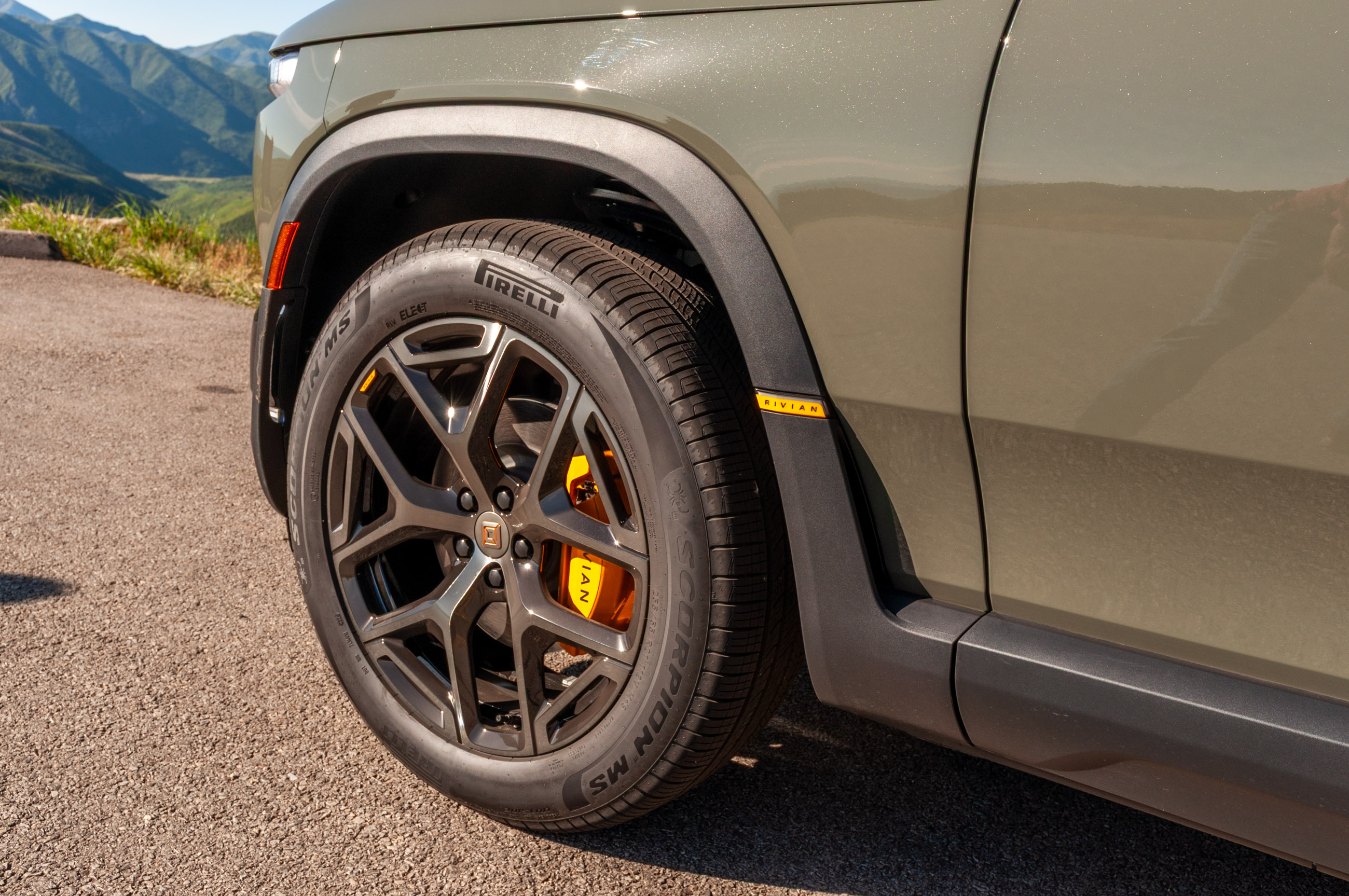
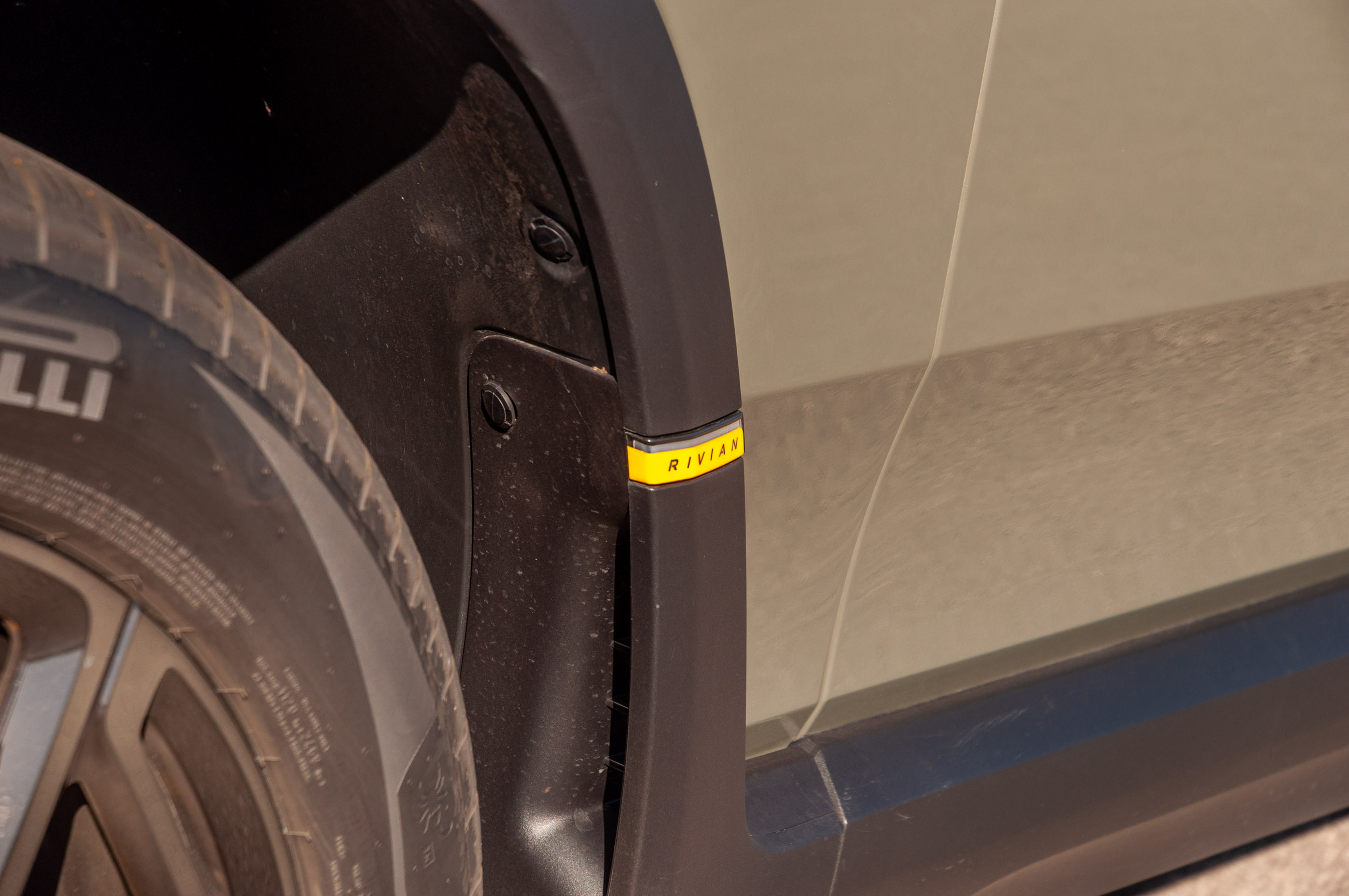
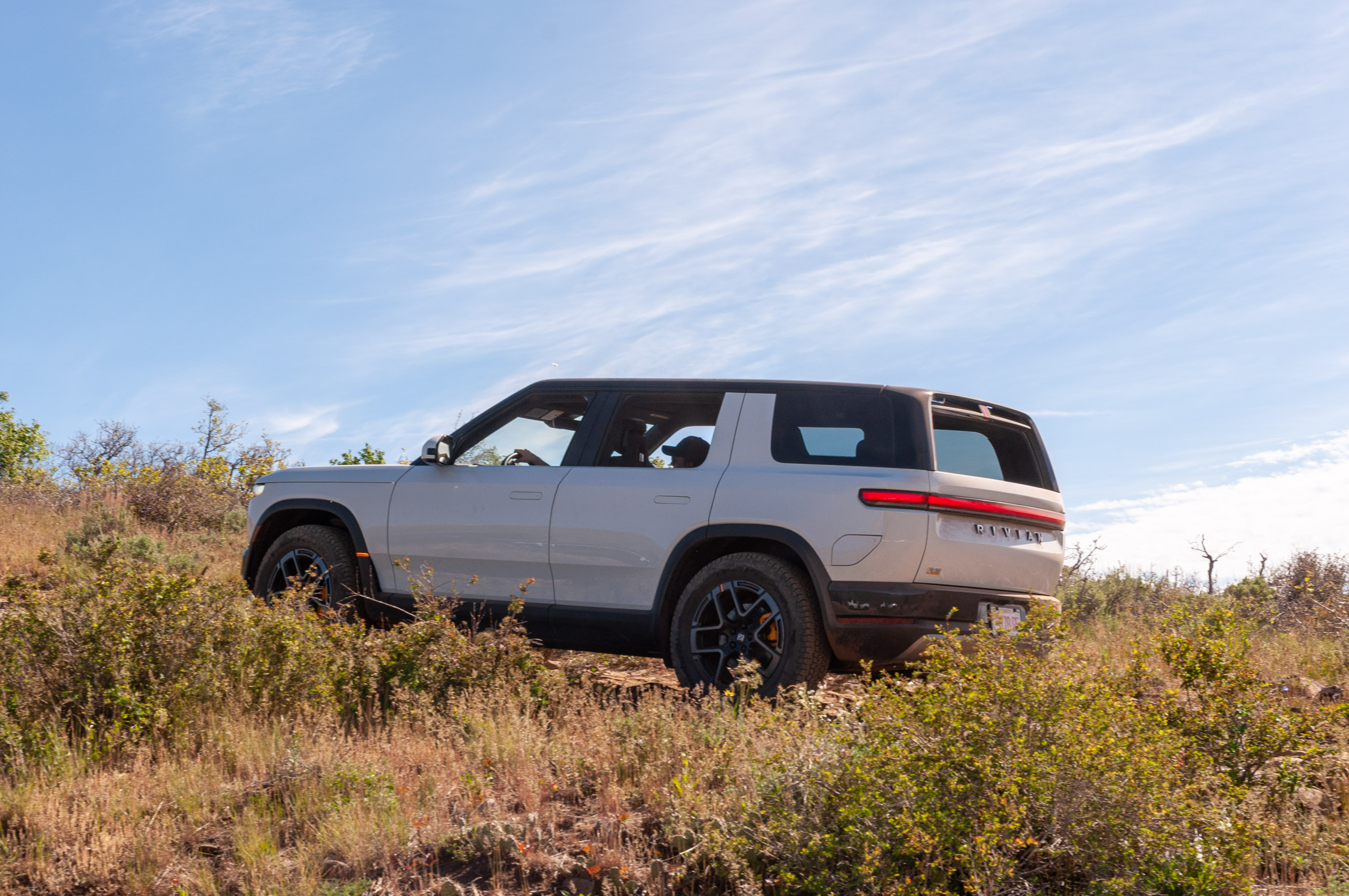
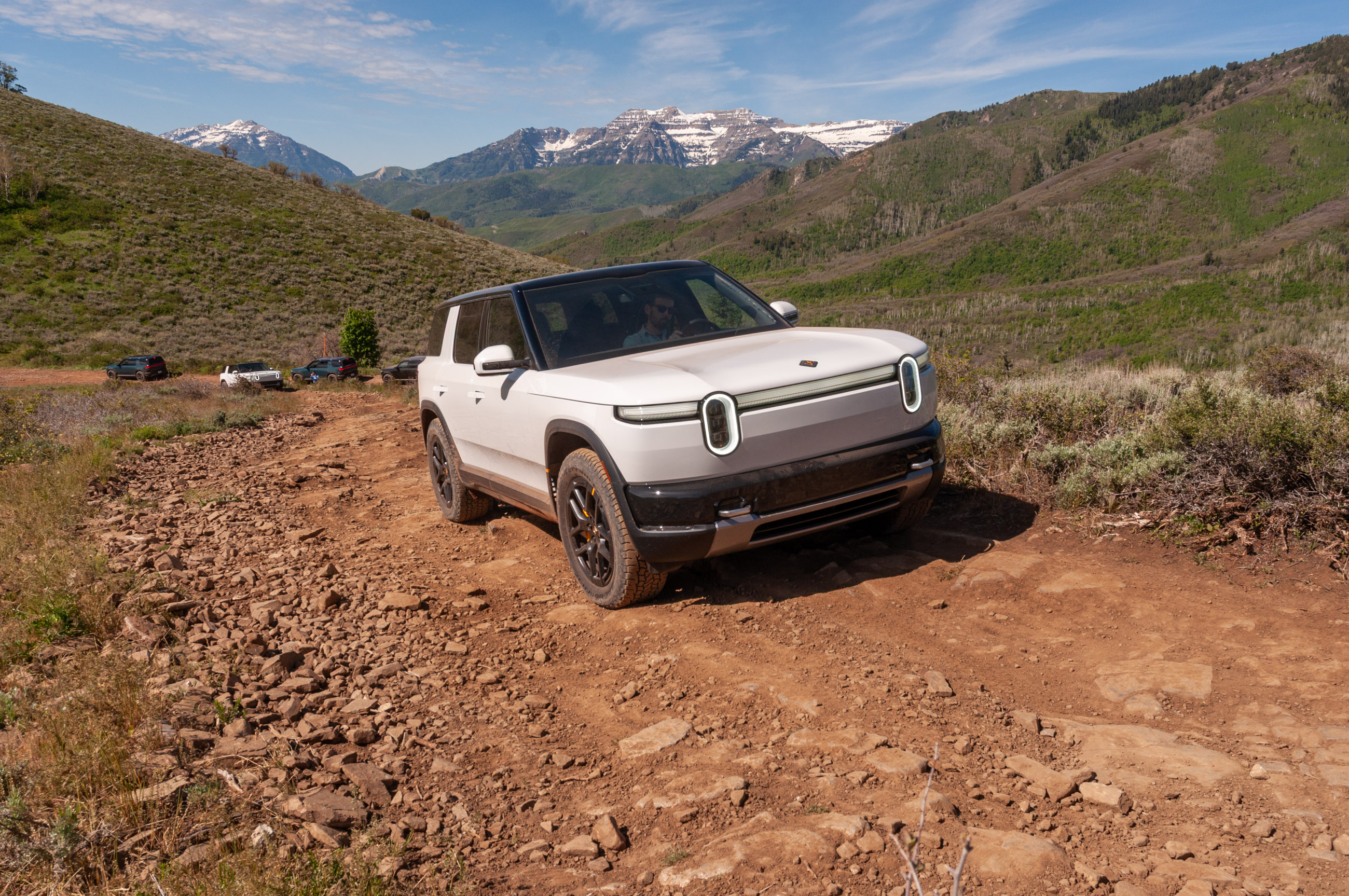
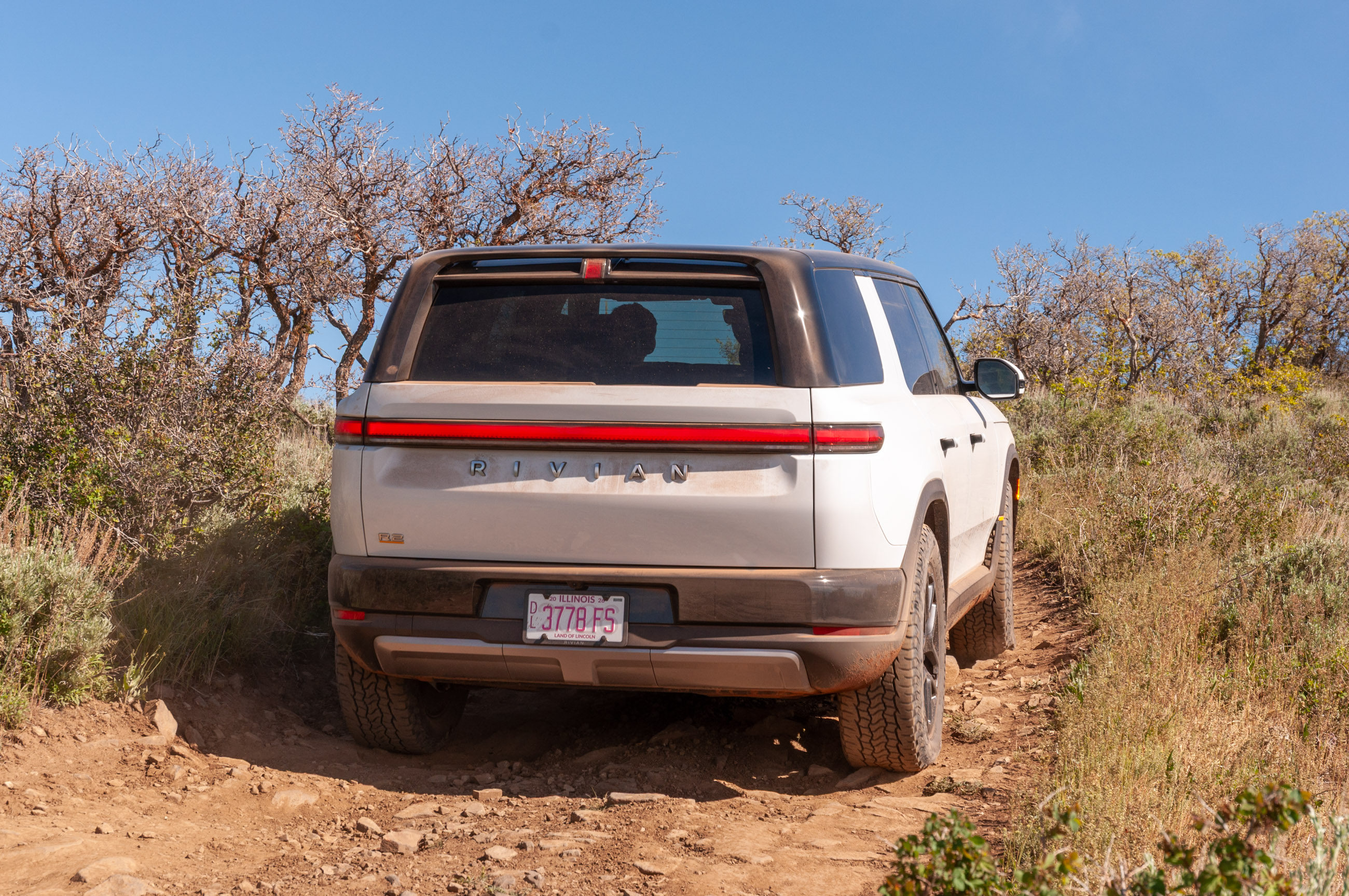
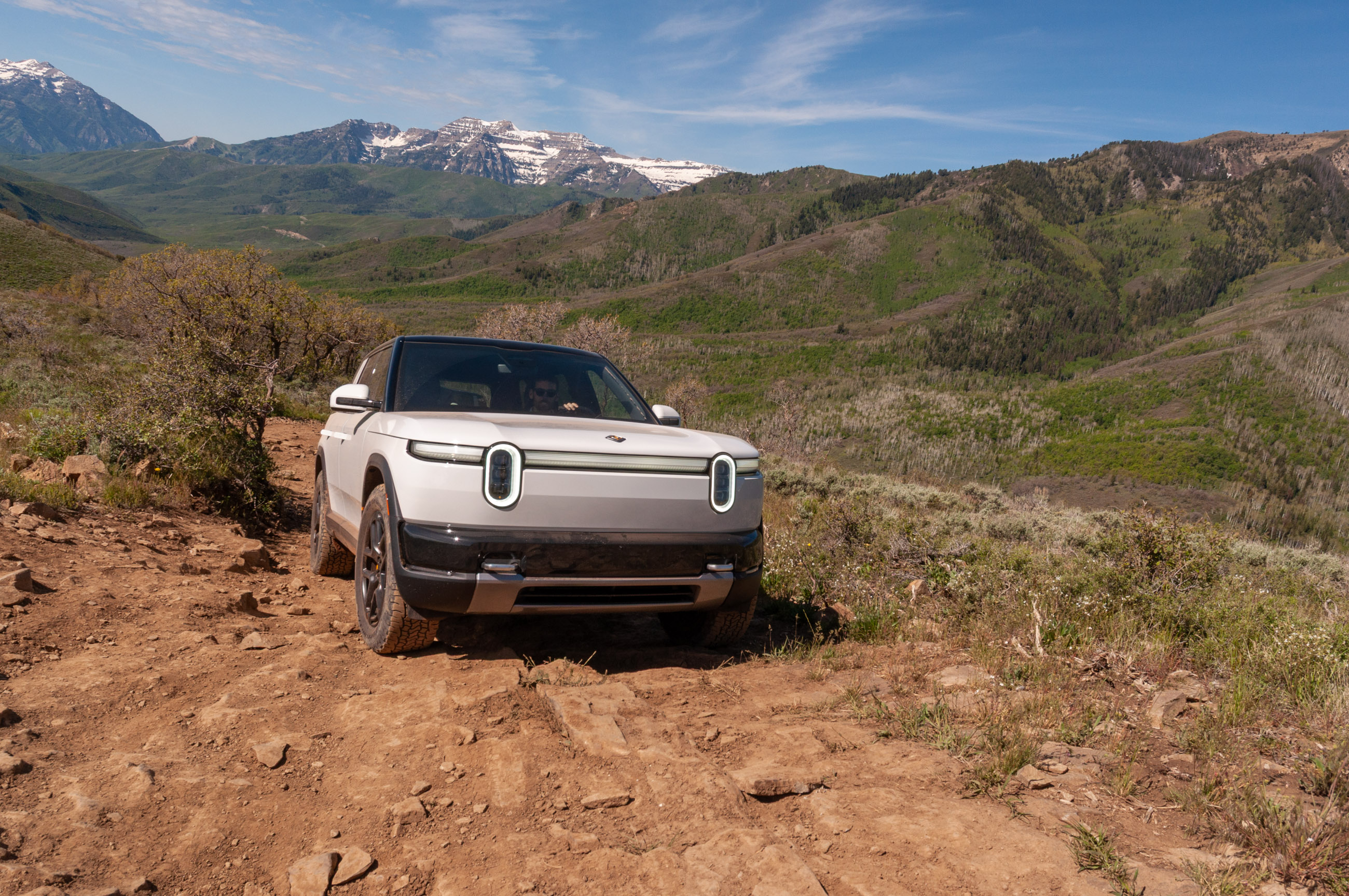
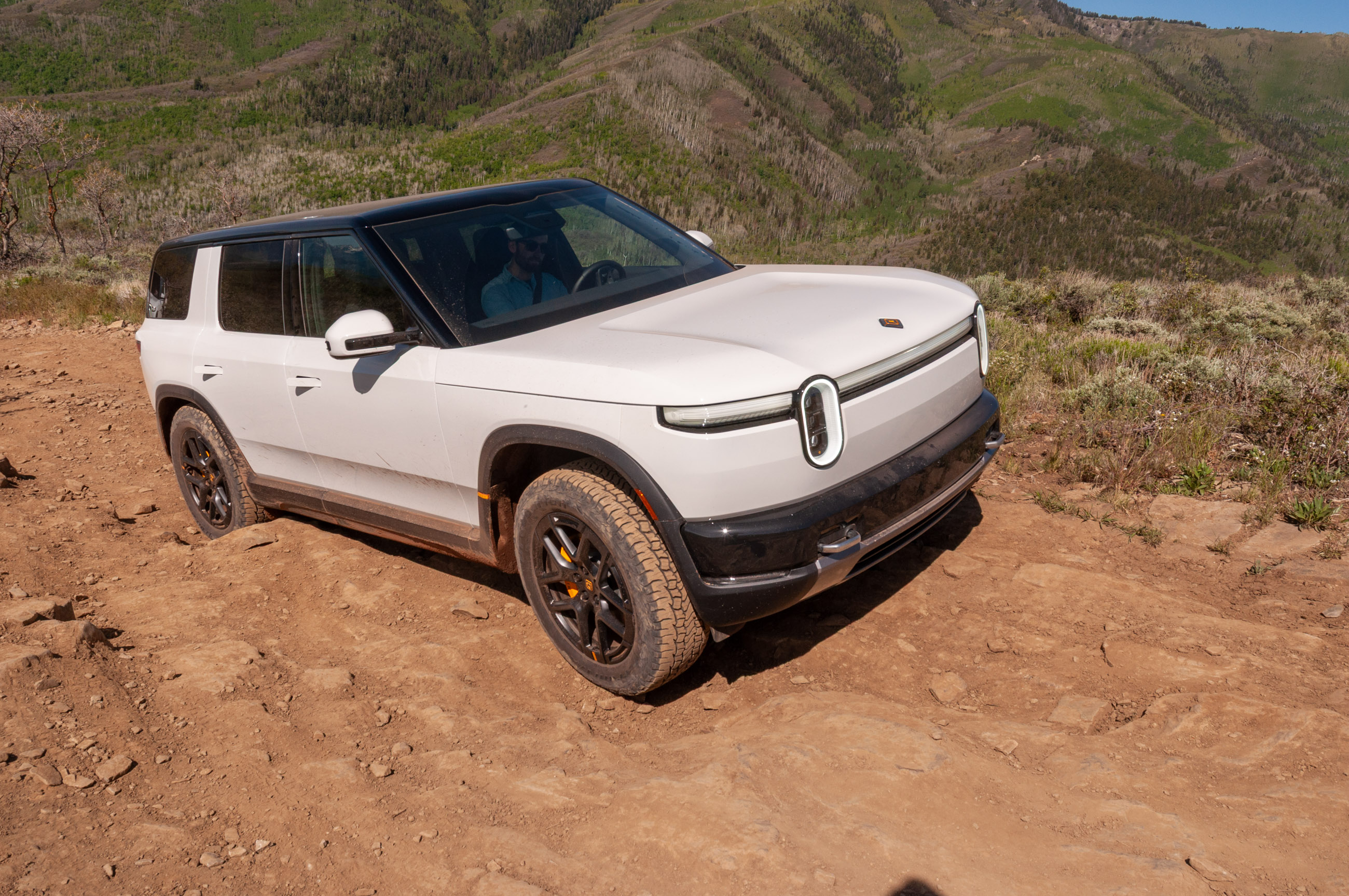
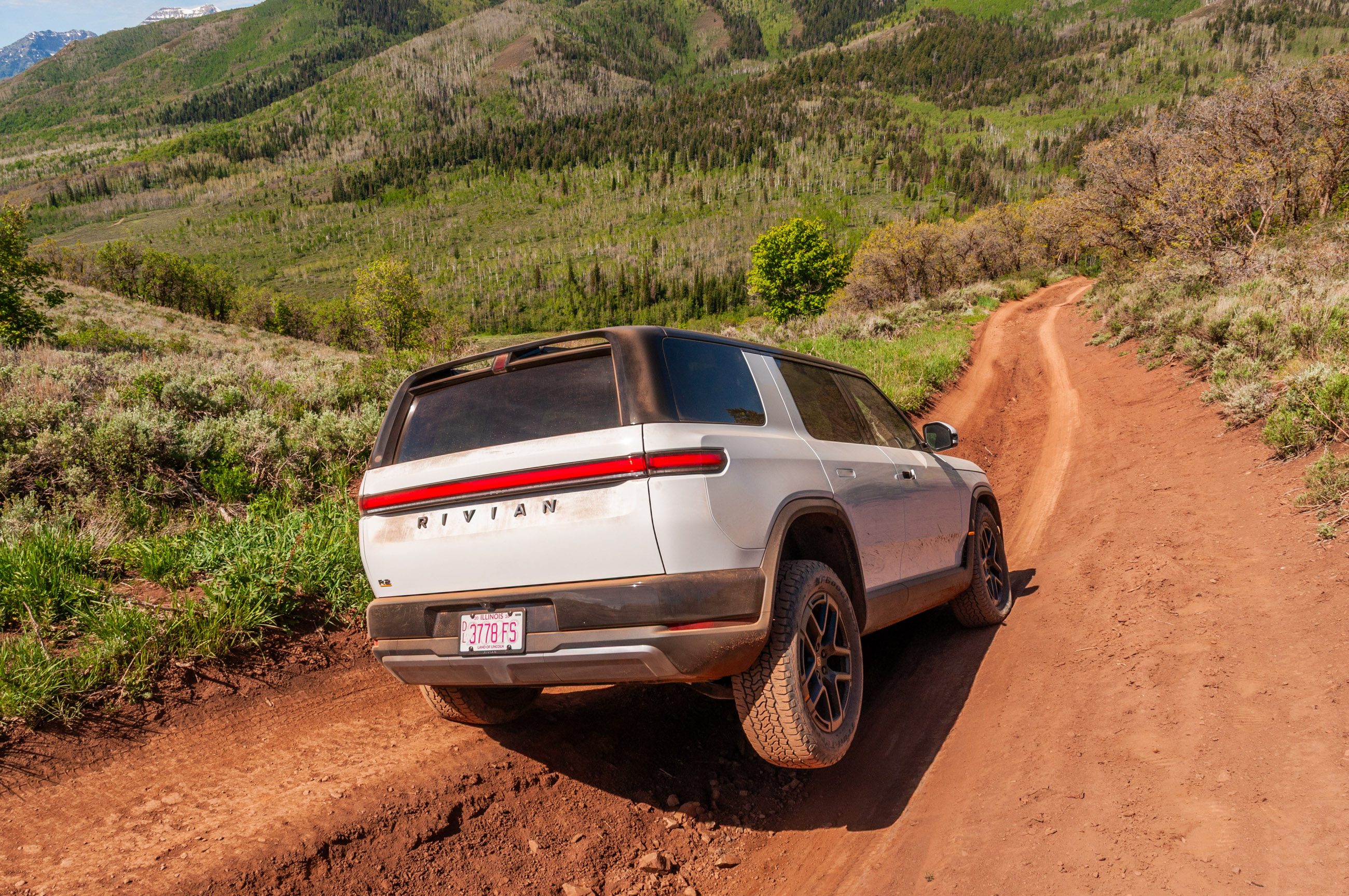
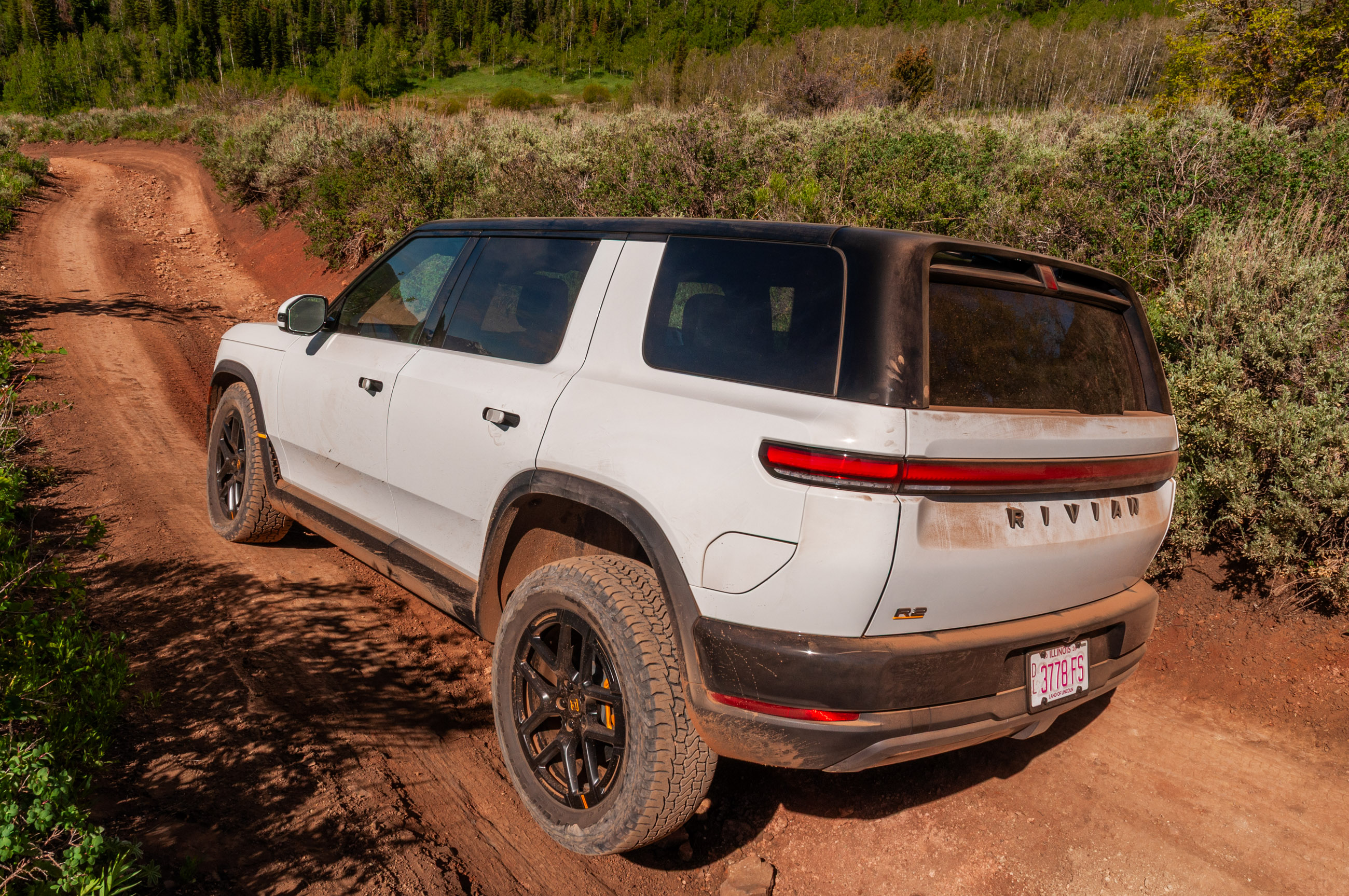
Look at the R2 quickly, and you might confuse it for the larger R1S. That’s on purpose. They are clearly related. Yes, Rivian’s signature front-and-back lighting is in full force, but the elements are more refined, and the vertically oriented headlights are smaller and shorter. The front fenders have Rivian-branded turn signal indicators instead of being embedded in the sideview mirrors, and there’s no trim around the door glass or roof. It’s all seamless, more aerodynamically efficient, and less expensive. The glass on the rear doors doesn’t have a second fixed panel because the doors are smaller. The charge port is on the driver’s-side rear fender, like on a Tesla (not a coincidence), rather than on the front driver-side bumper corner, as on the R1S. This makes it less likely to get damaged while also making it easier to charge at a Tesla Supercharger with its standard NACS charge port. The rear glass on the hatch drops down into the tailgate like in a Toyota 4Runner—an absolute killer feature. And the rear wiper for the tailgate is hidden in the tailgate itself, an industry first. All minor, but distinct and important changes. It’s clearly a Rivian, but it’s smaller while still keeping the tight overhangs and SUV-like appearance that won’t be mistaken for a jelly bean.
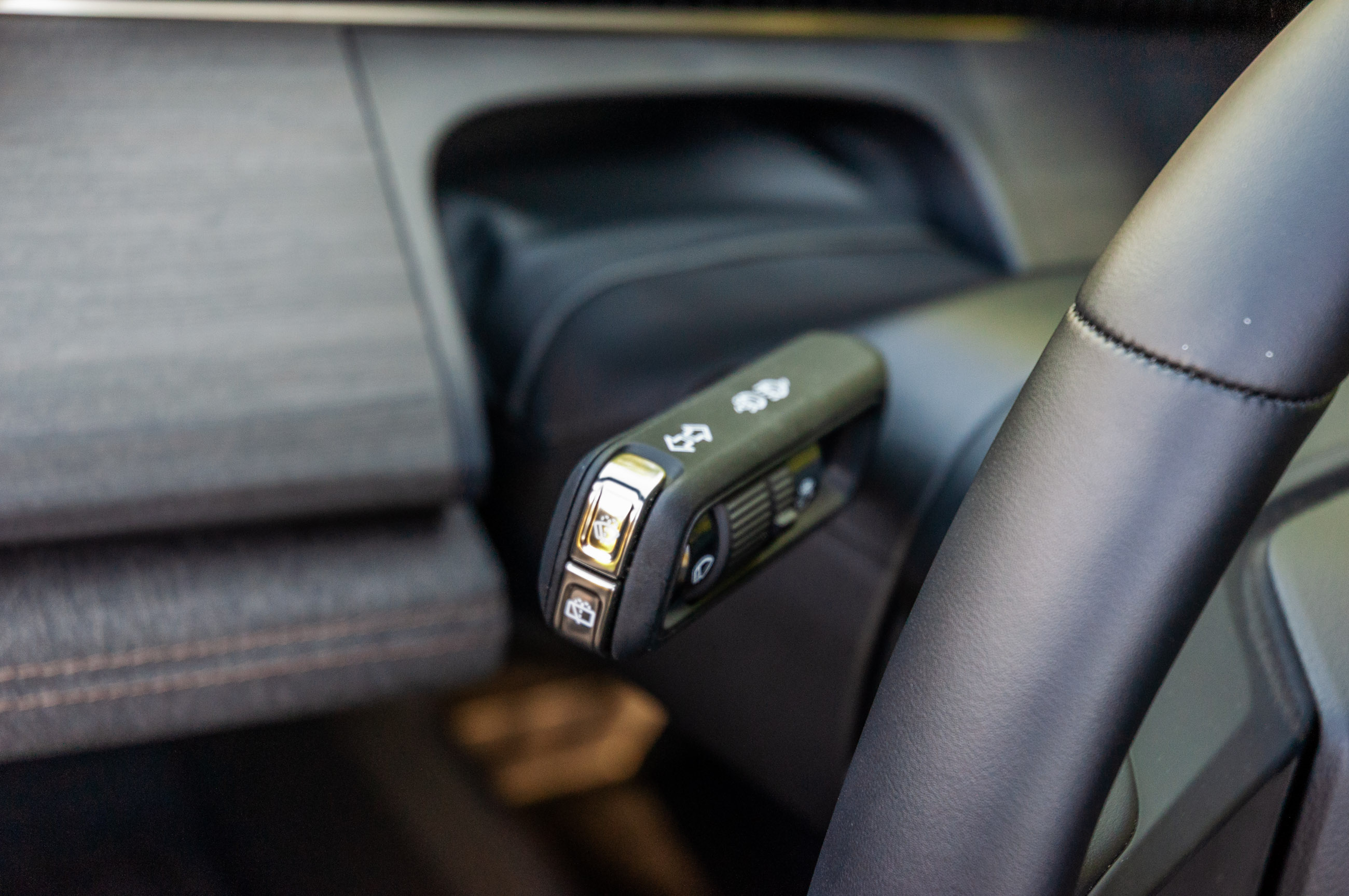
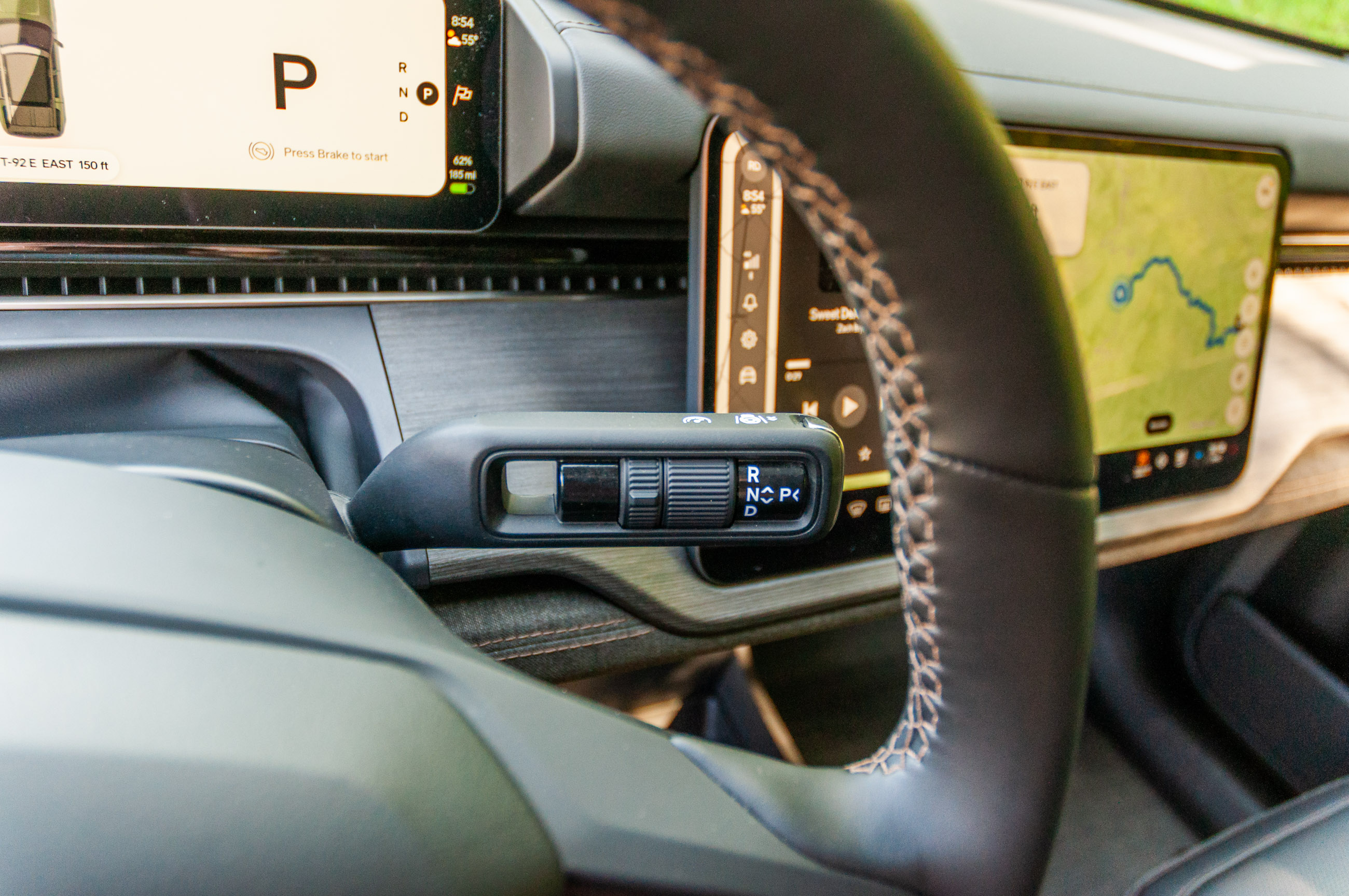
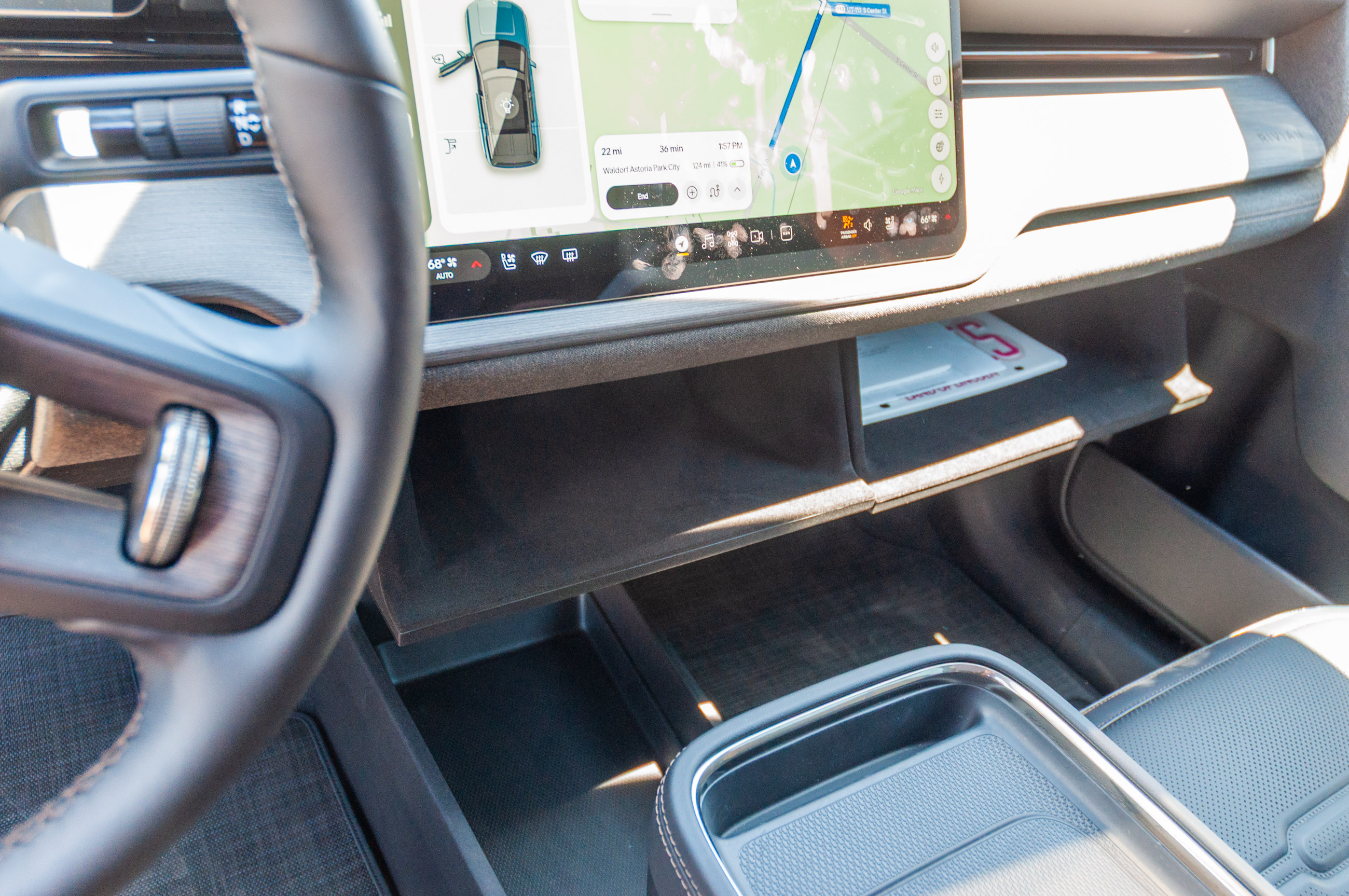
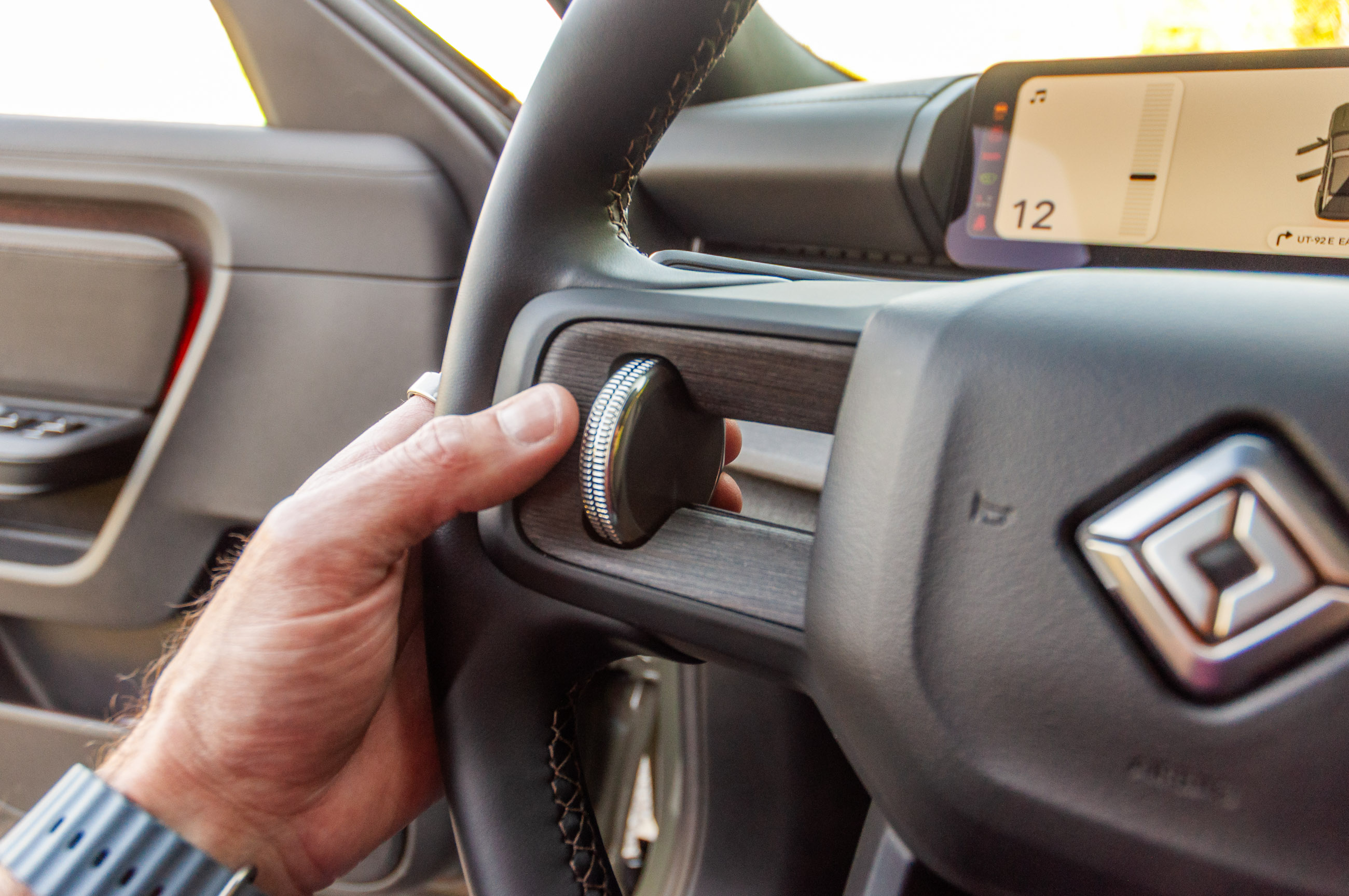
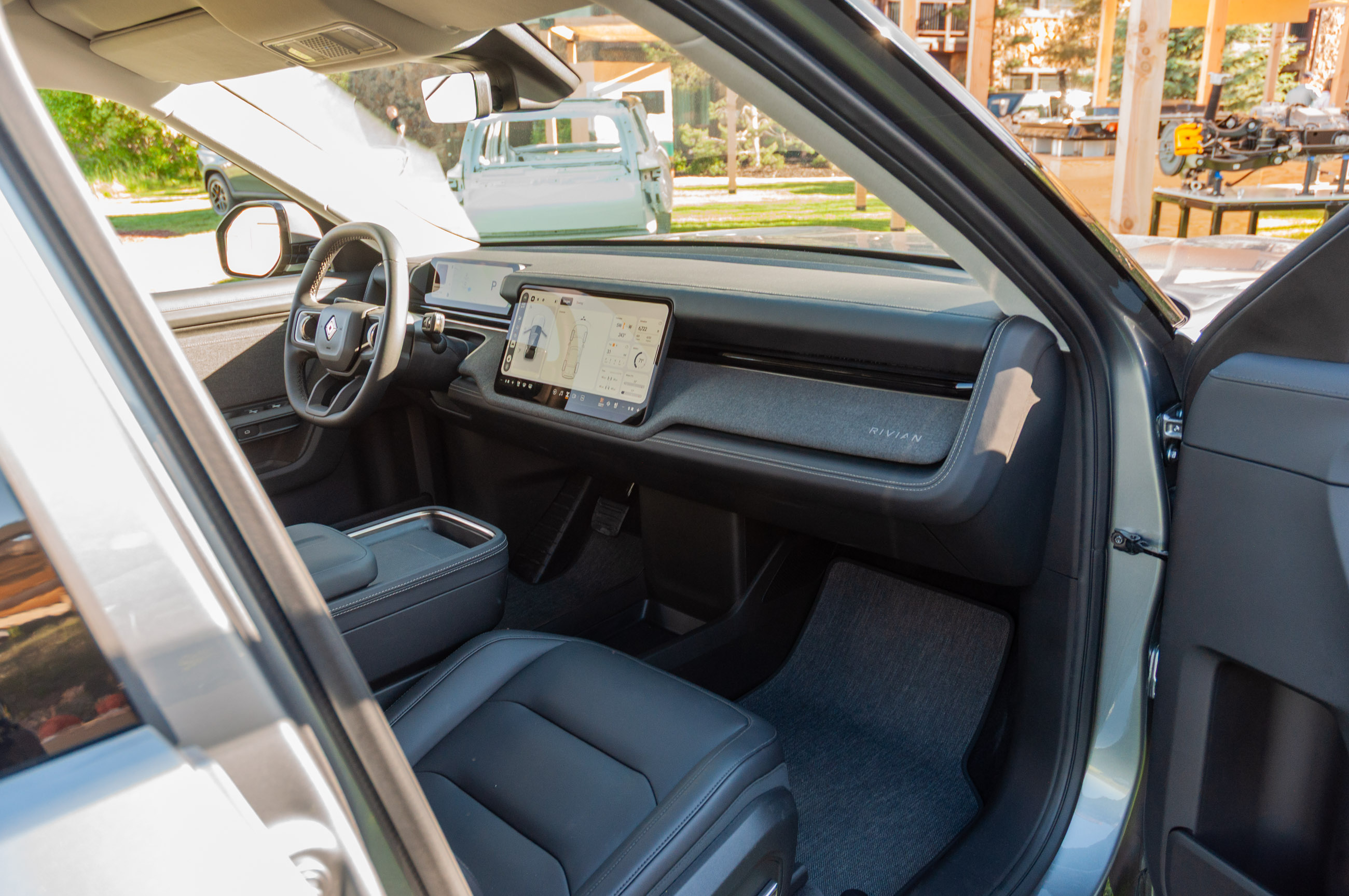
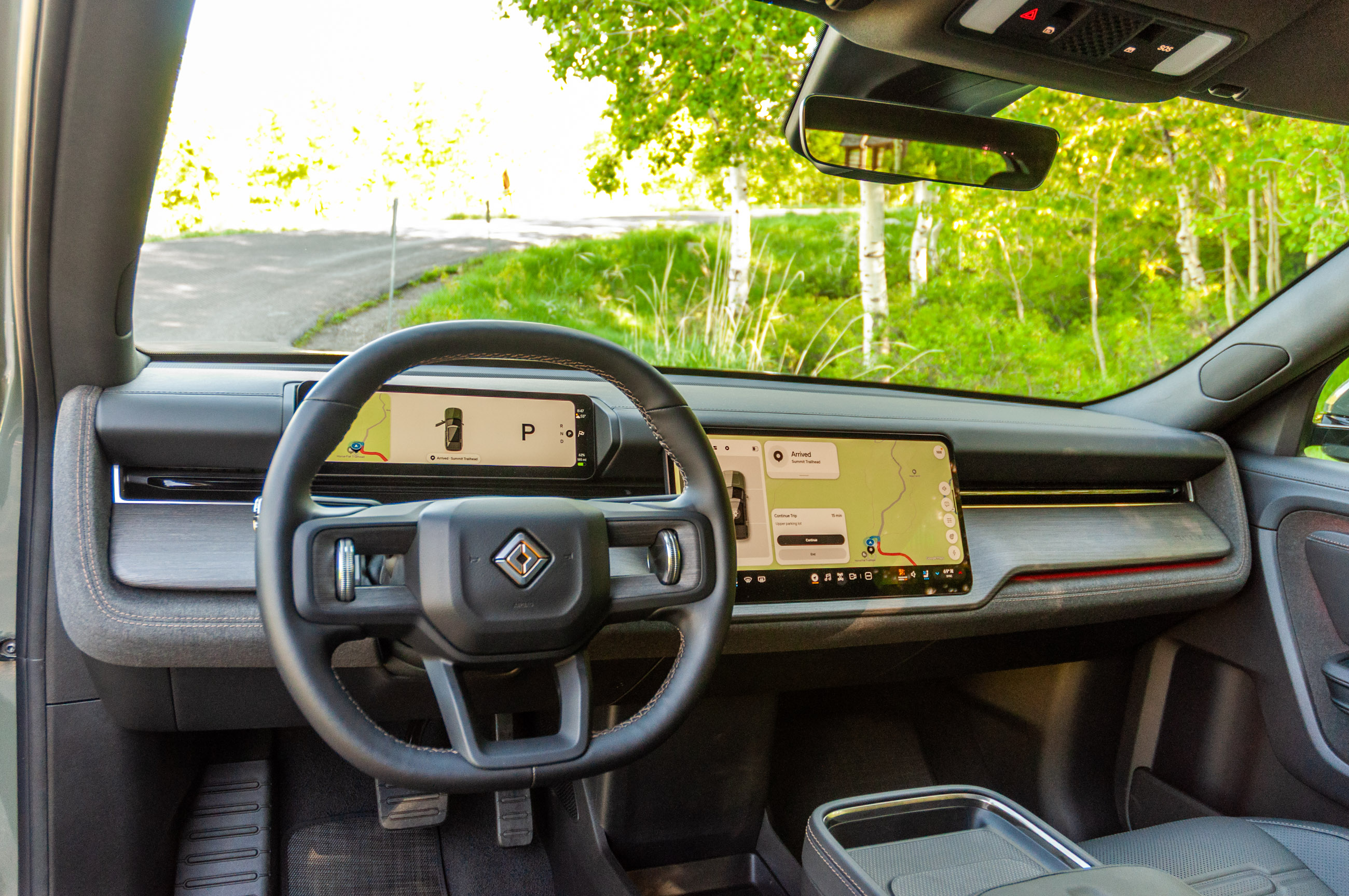
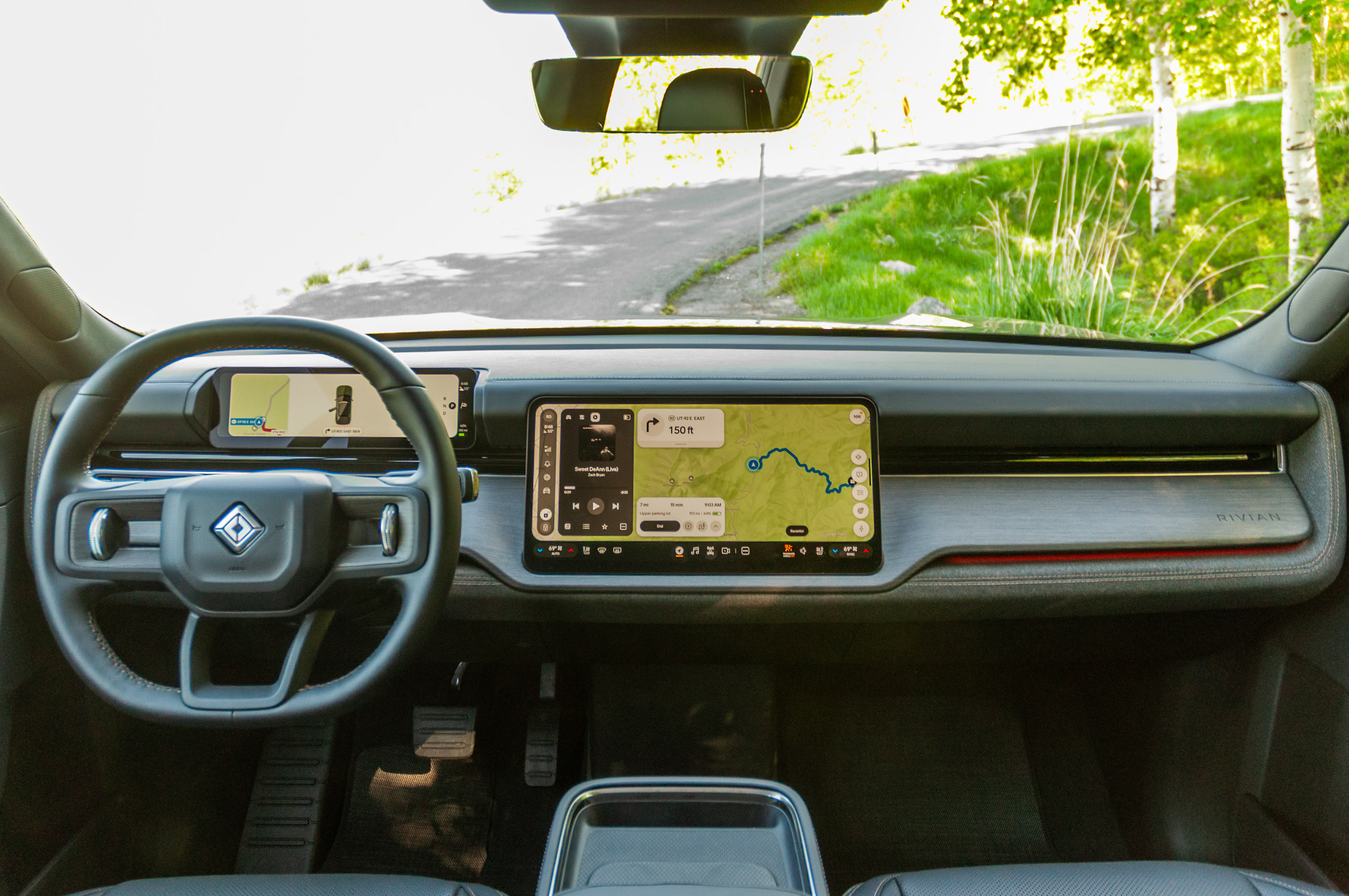
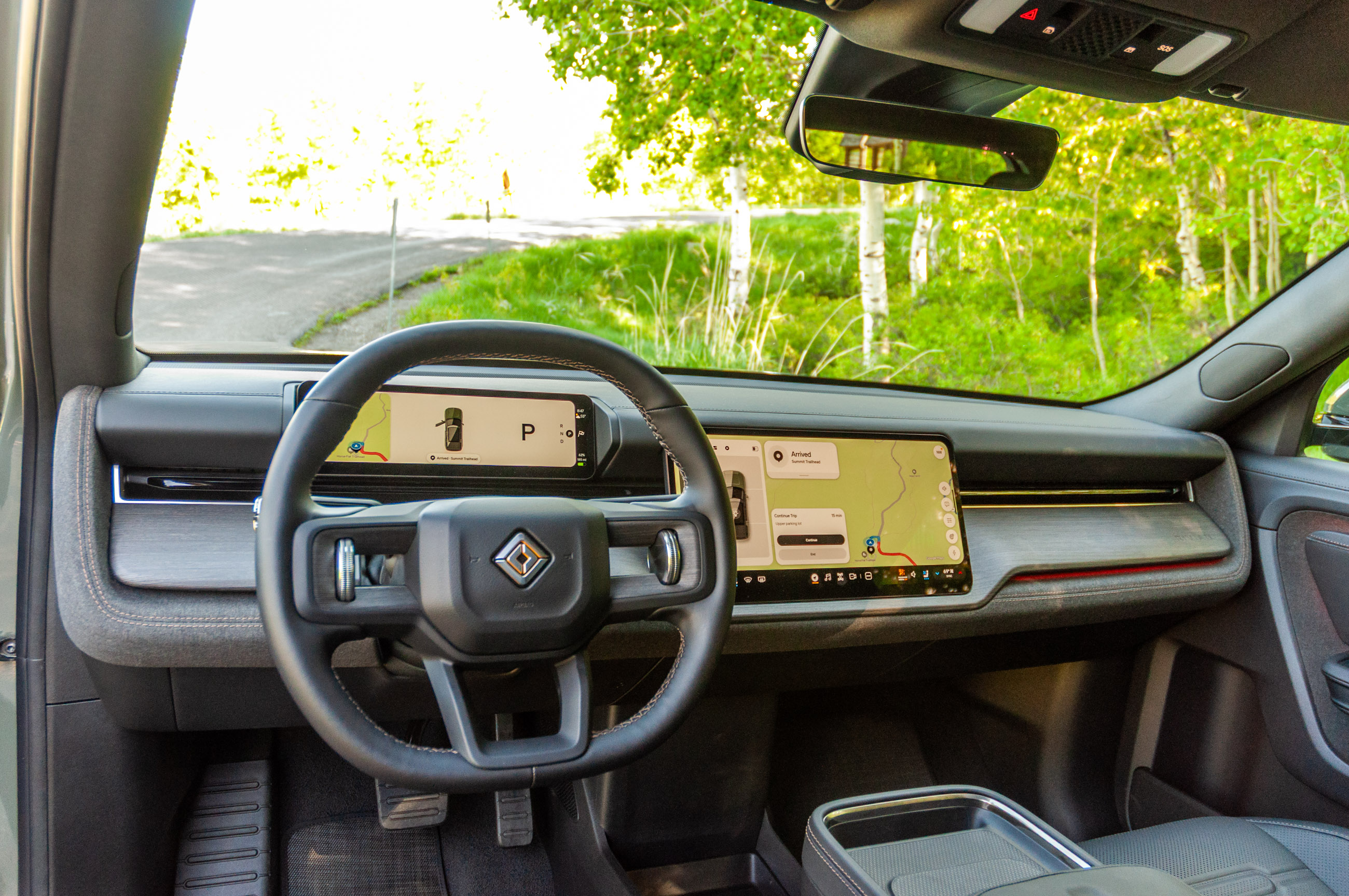
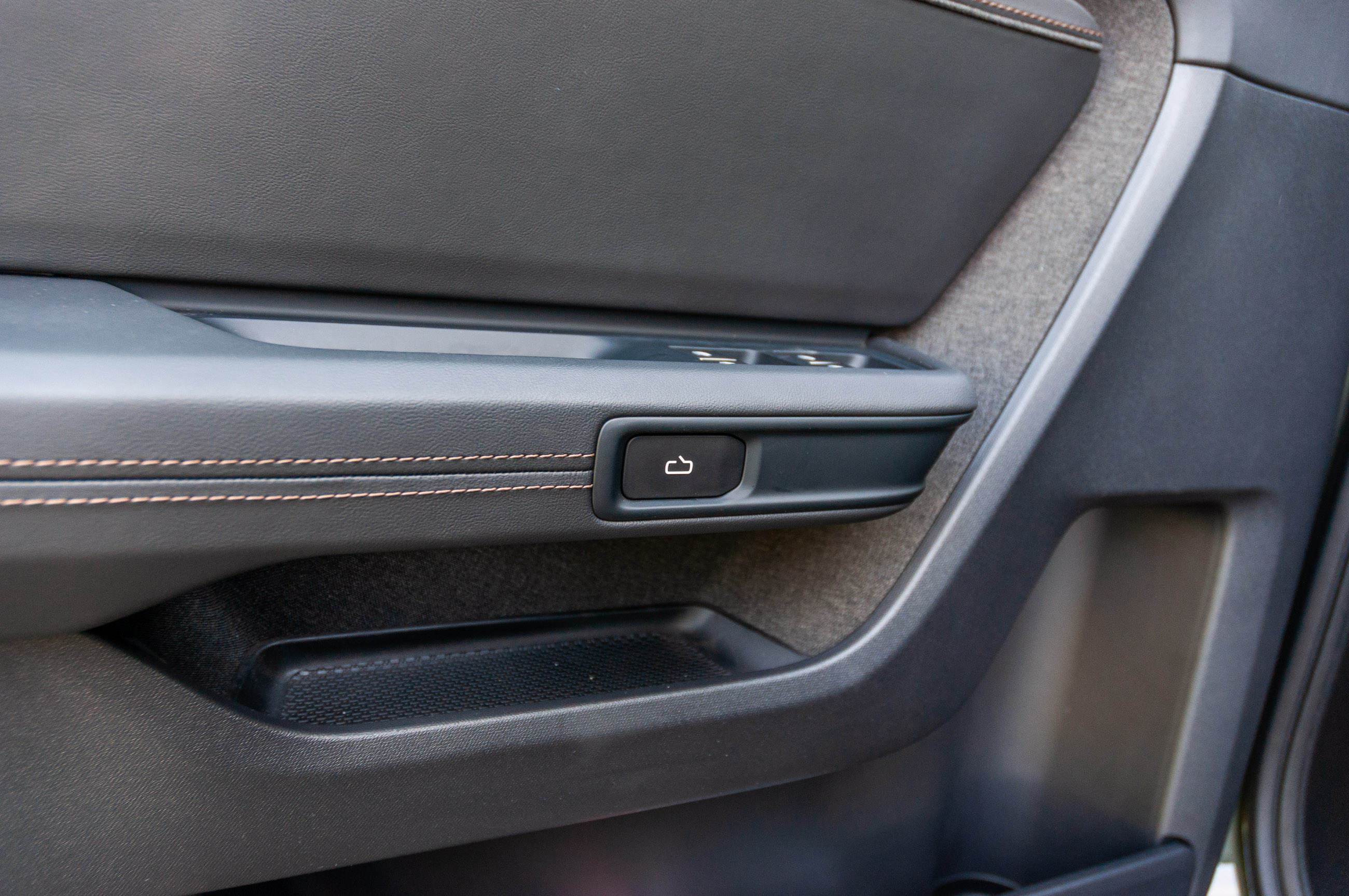
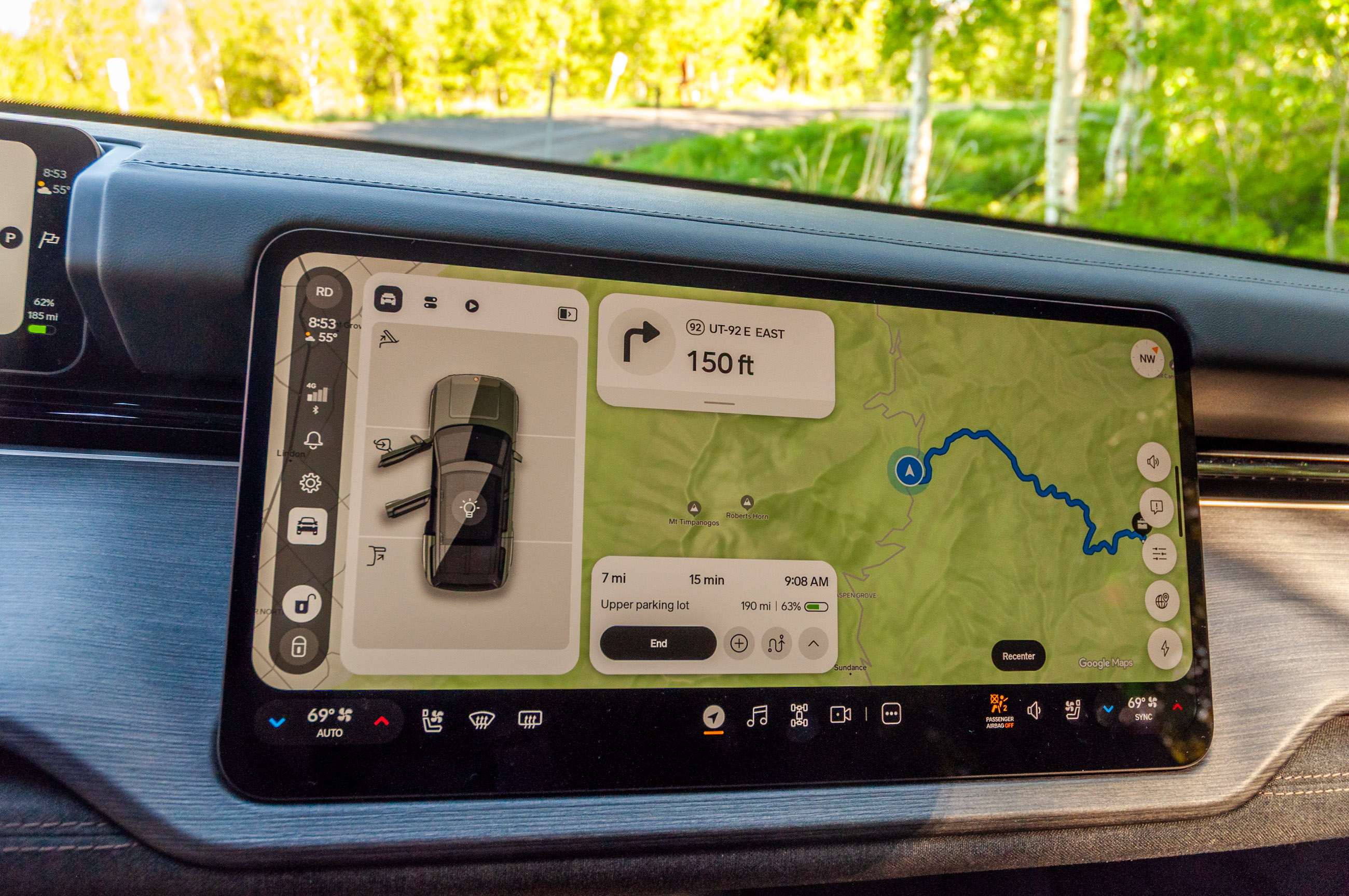
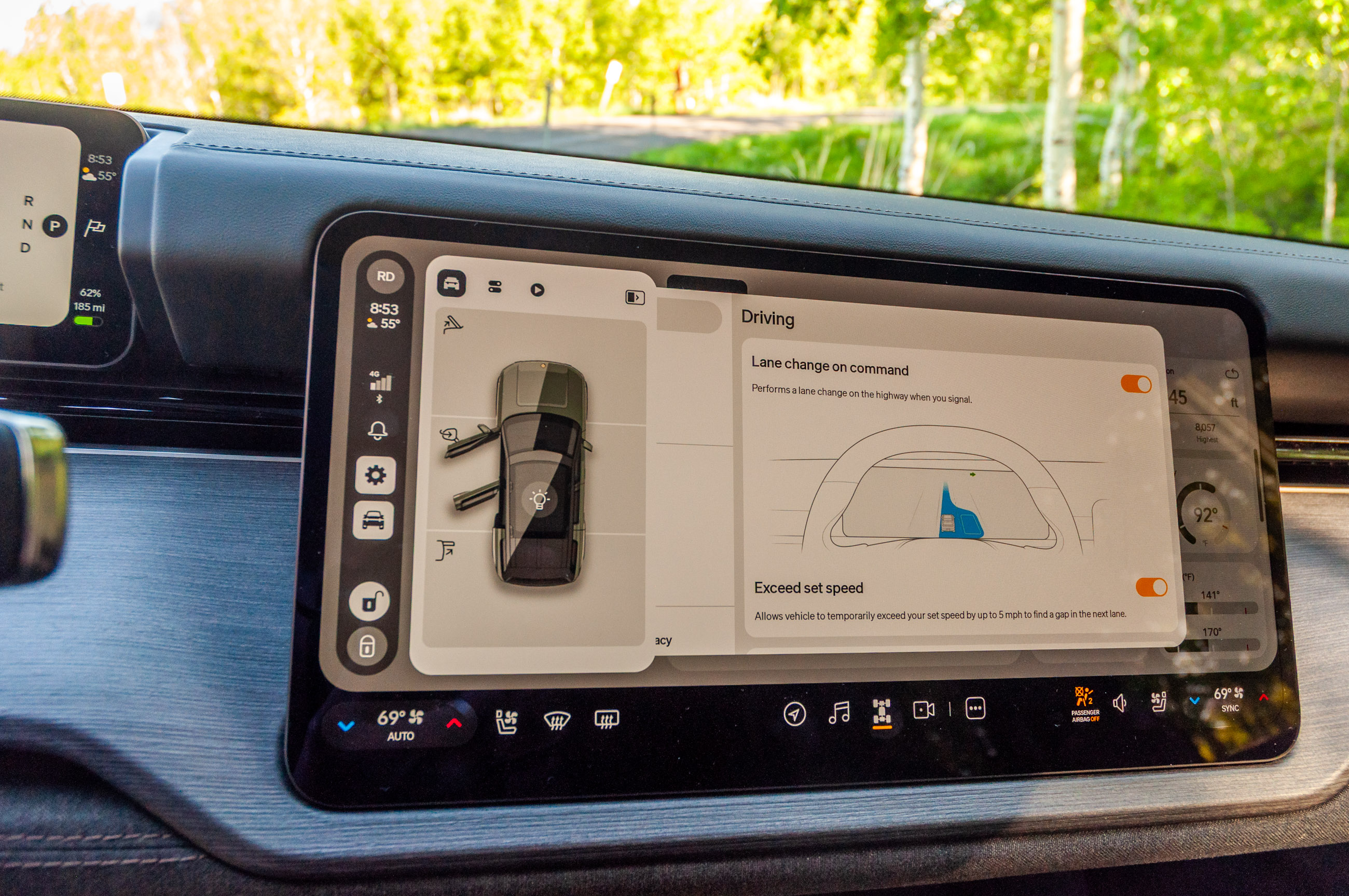
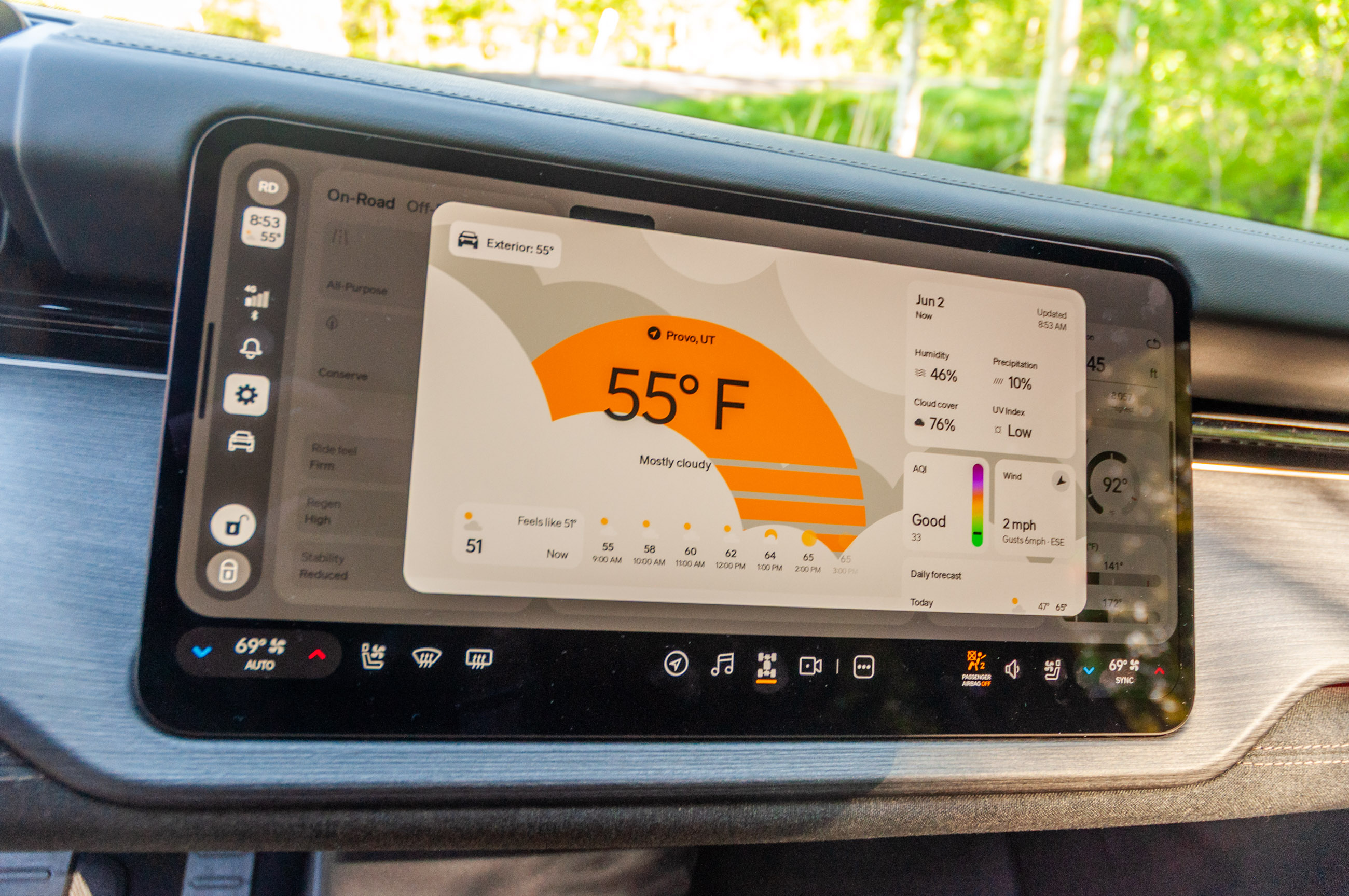
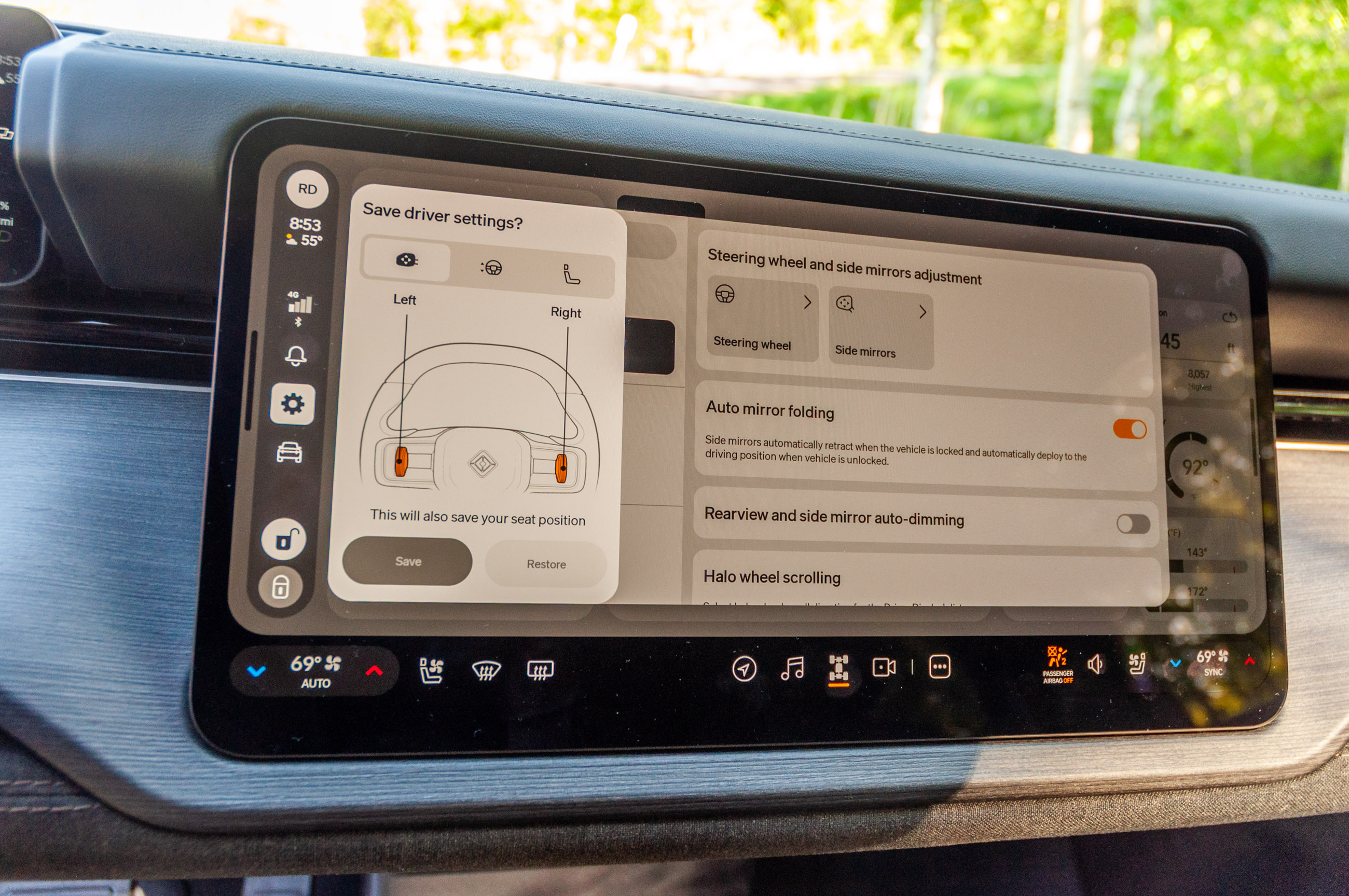
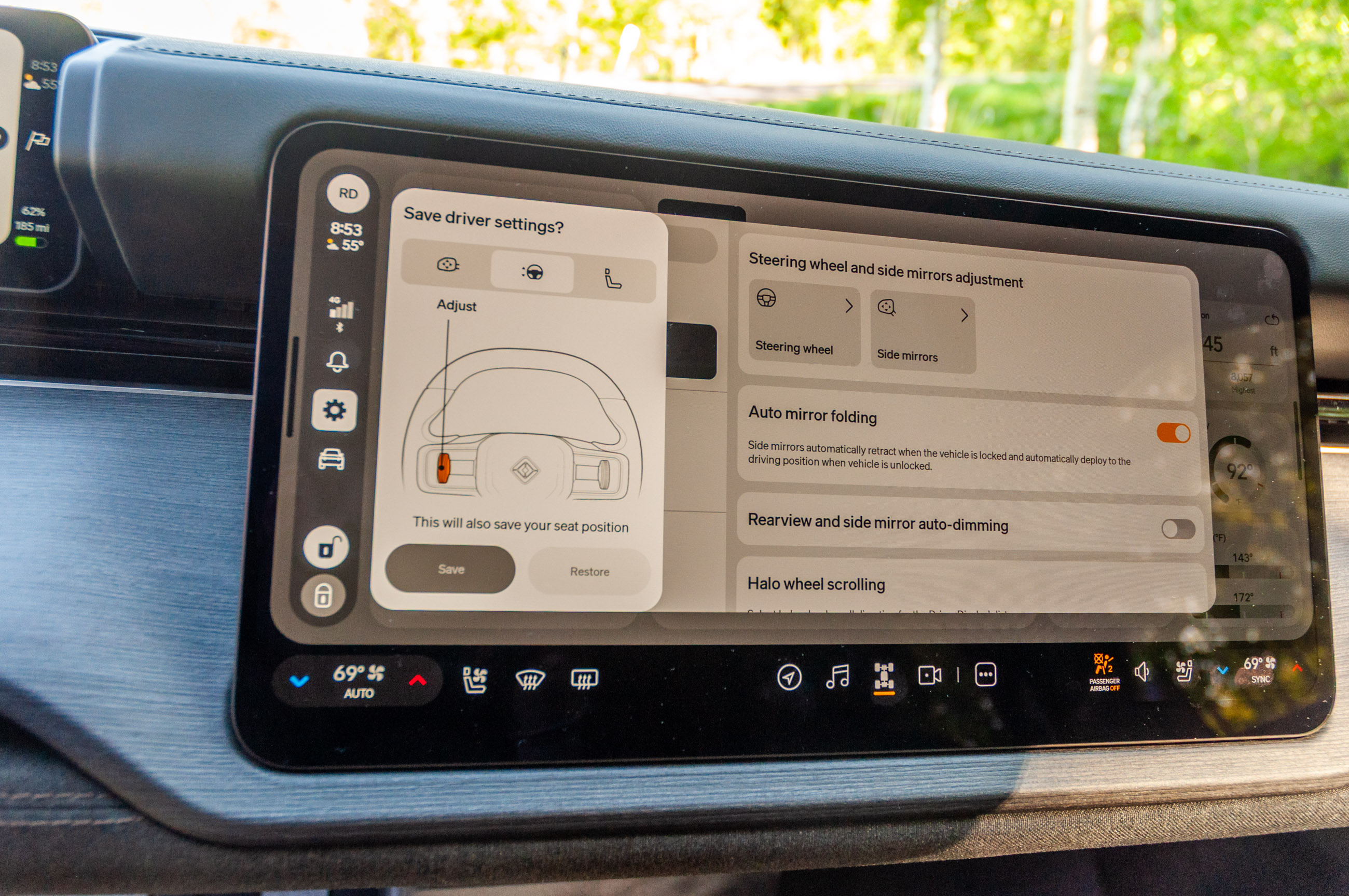
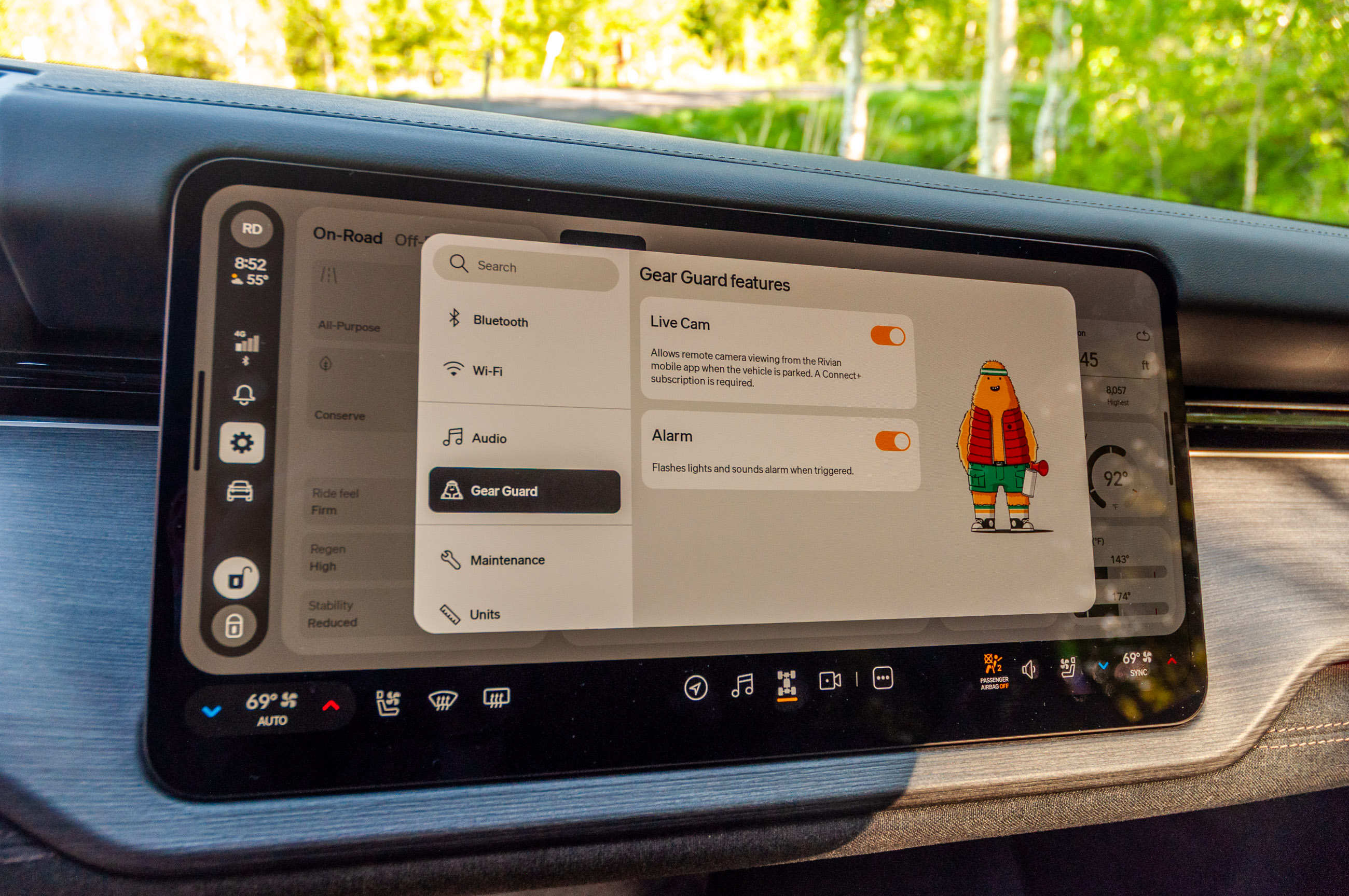
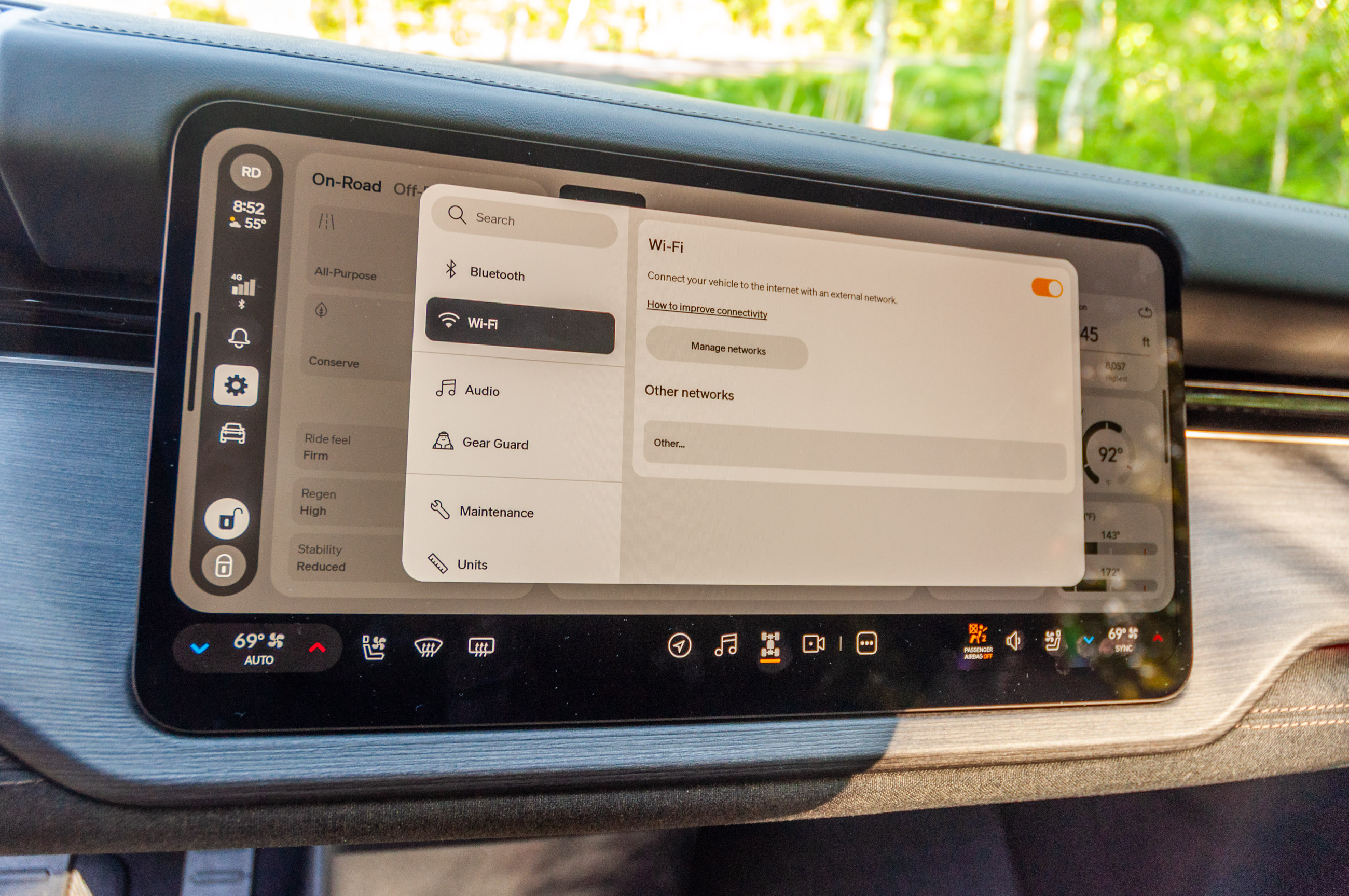
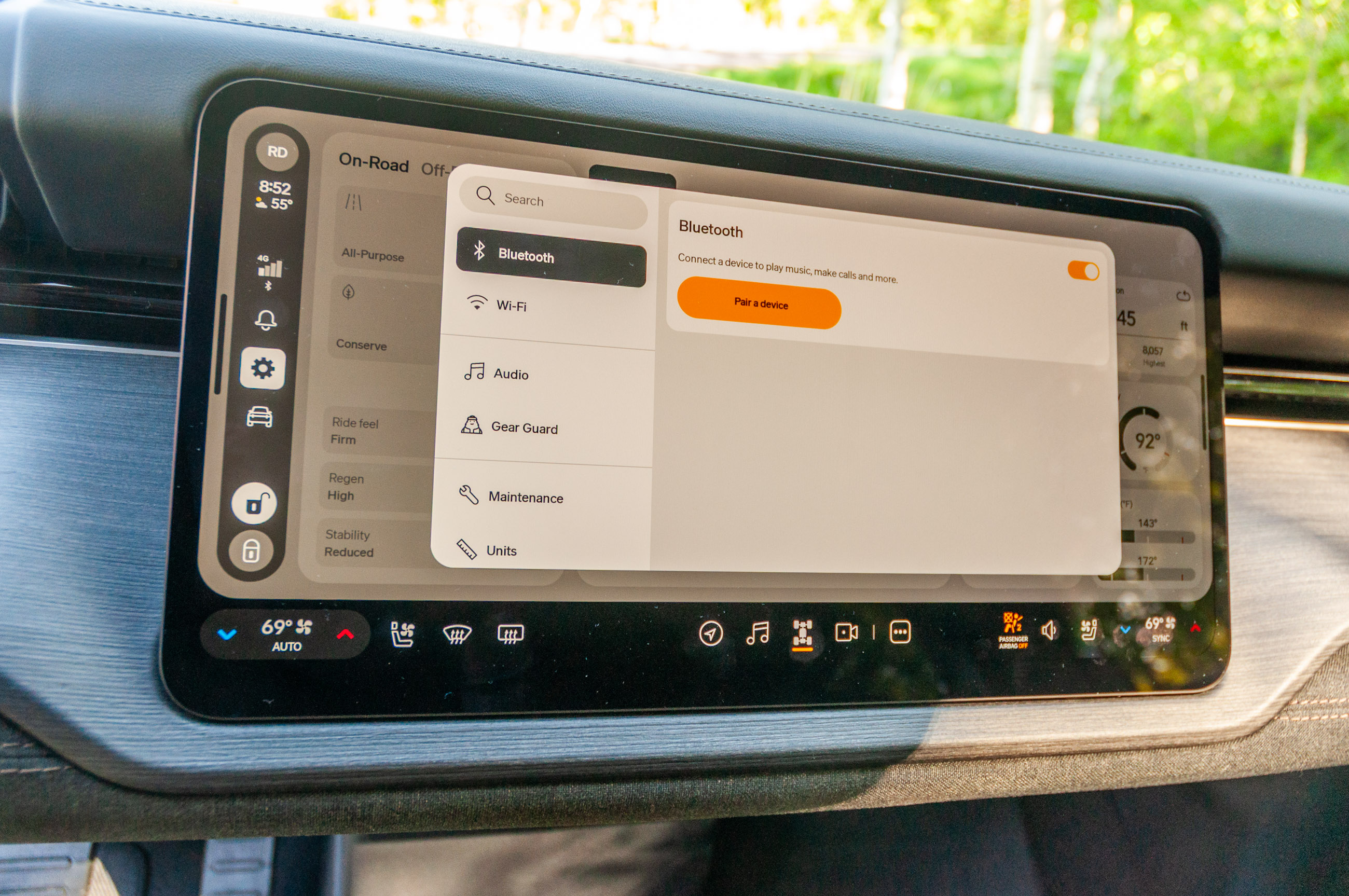
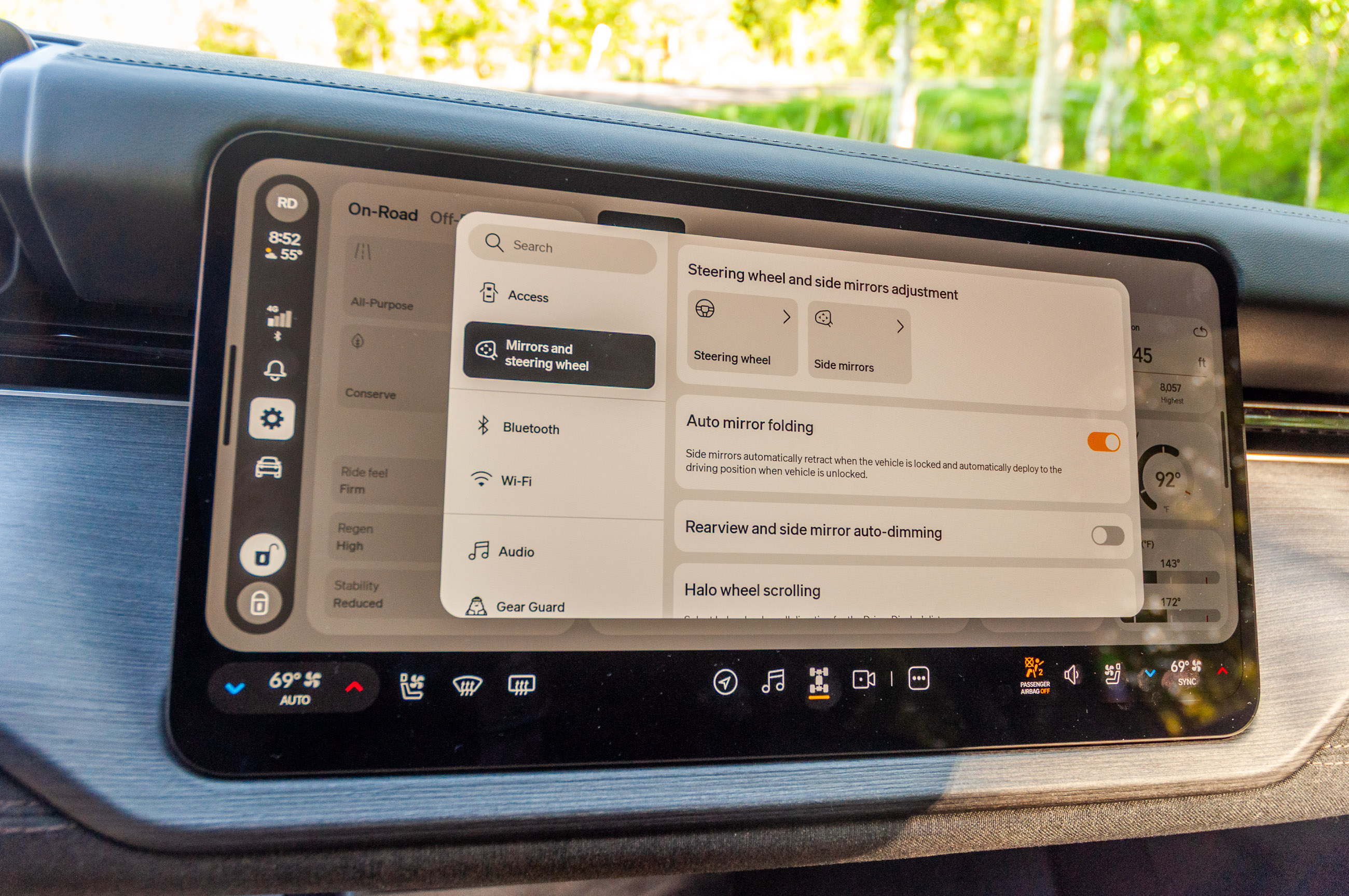
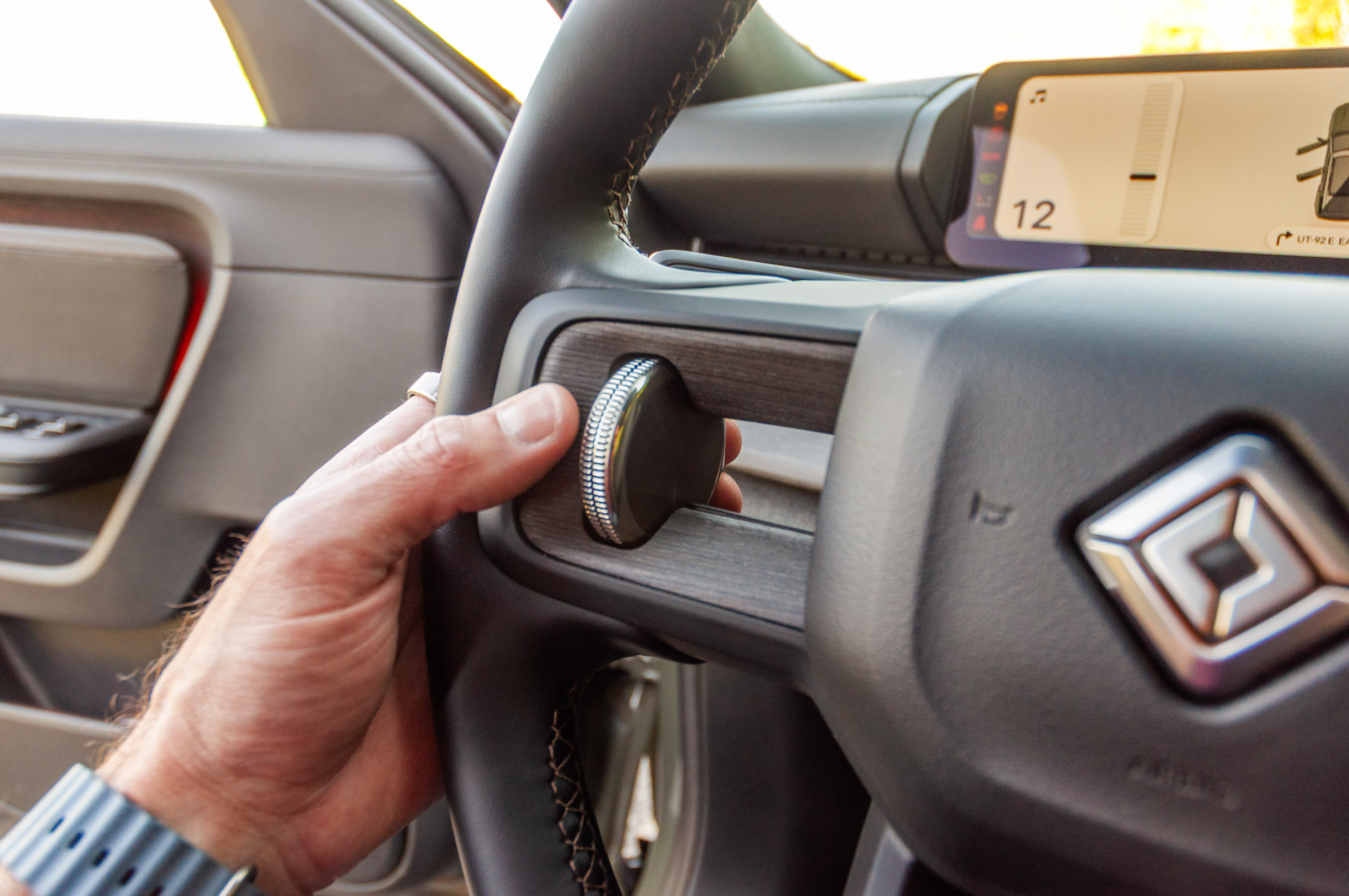
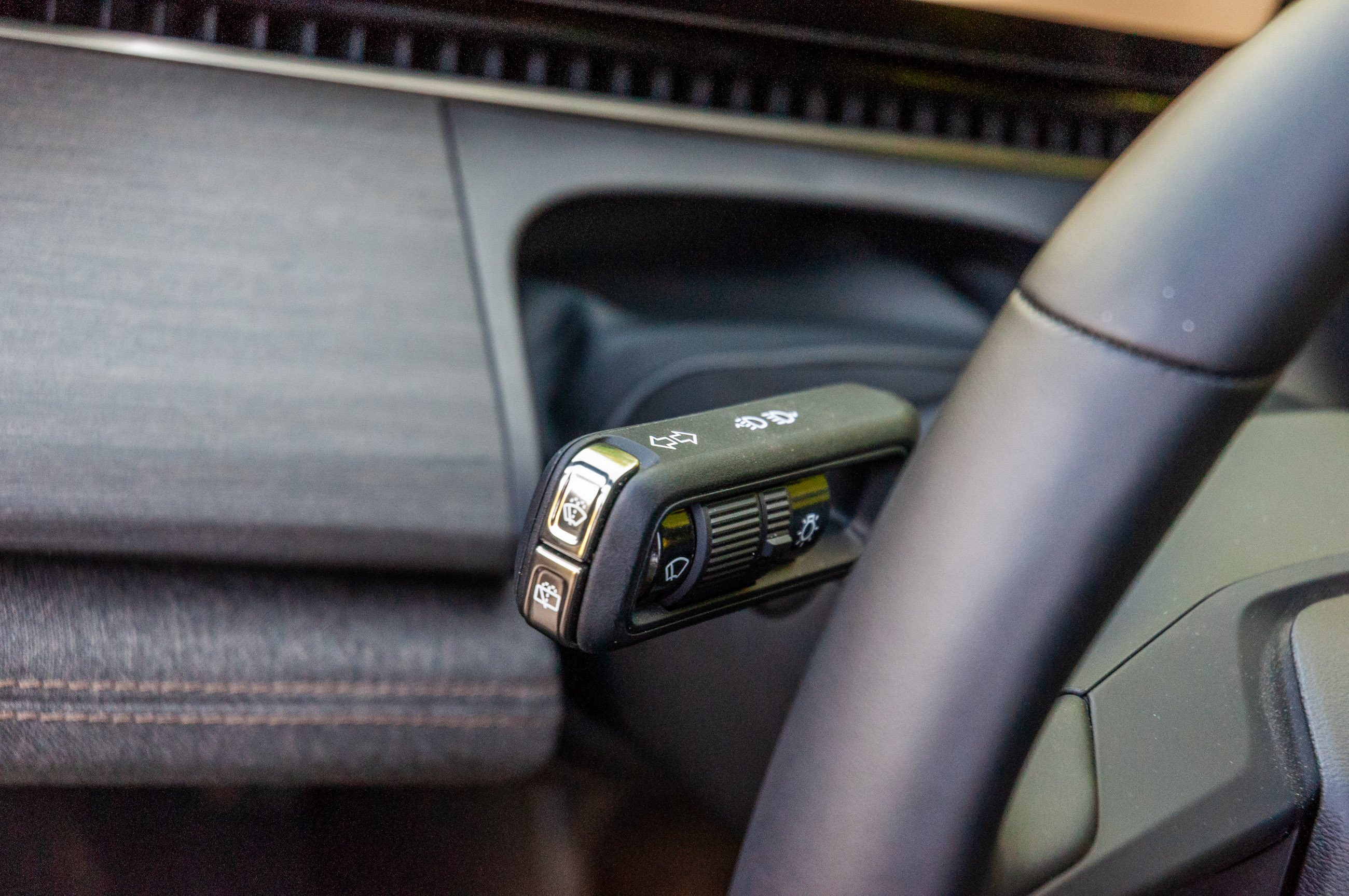
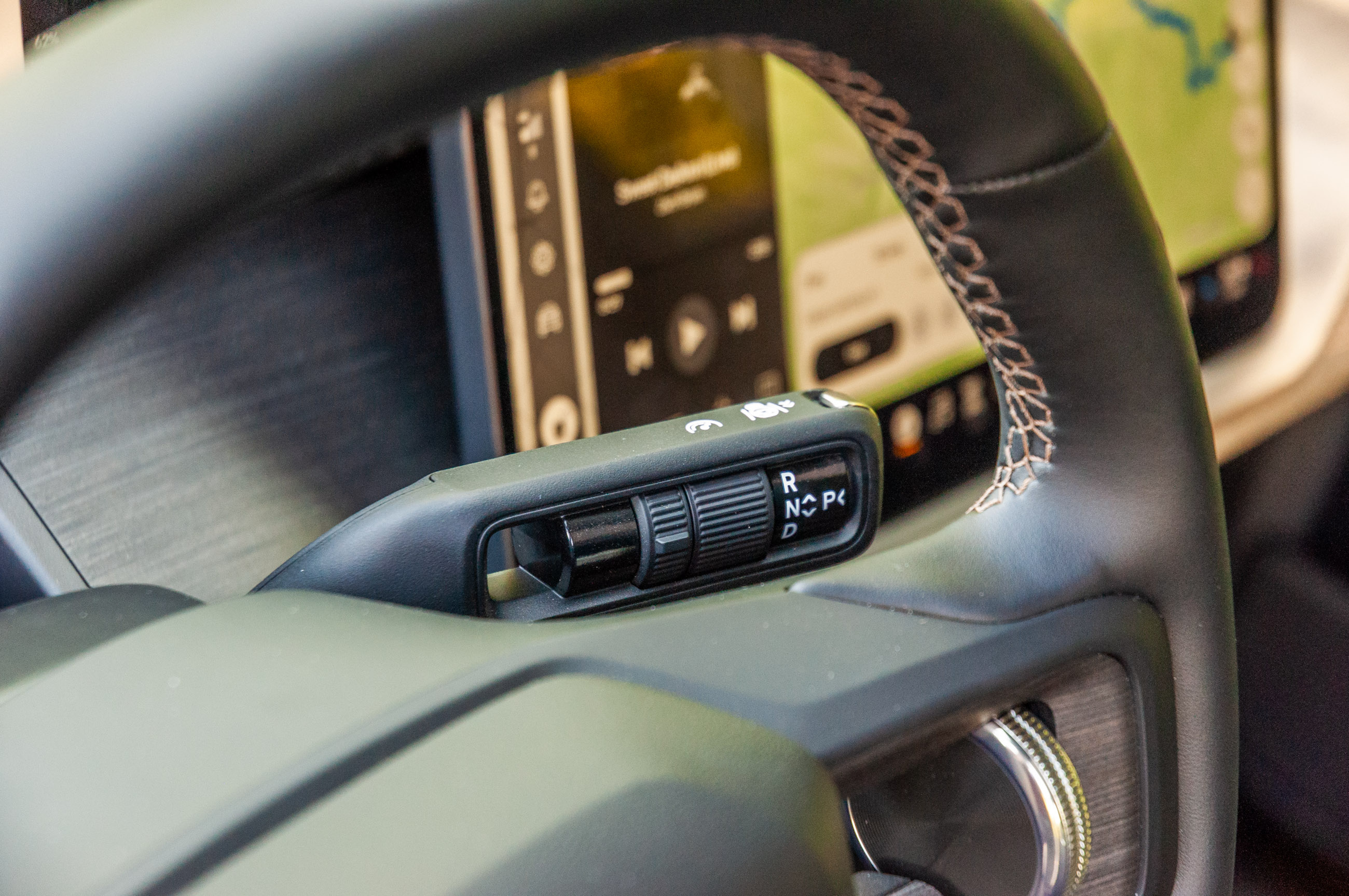
Interior changes were made during the transition from R1S to R2, but much of it was done based on feedback from current owners. The dashboard is still a simple affair, with a 12.0-inch digital gauge cluster augmented by a 15.6-inch touchscreen that houses most of the controls. There are two stalks, and they are chock-full of buttons and knobs for everything from the windshield wipers to the (physical) headlight controls, the drive gear selector, and even the speed control for the adaptive cruise control and Universal Hands Free driver-assist system. There are Halo Wheels on the steering wheel now. These are mounted on an axis, enabling them to rotate, move side-to-side, and be pushed or pulled to do everything from changing the audio volume and toggling between drive modes to adjusting both the climate control temperature and fan speed. More features and controls seem likely to come to these at a later date, but as they are, it’s an impressive roster of controls from the steering wheel. Things are still missing, however: real door handles (still have the electronic pushbuttons out of the R1S), much to the chagrin of Editor-In-Chief Kyle Cheromcha, manual air vent controls (still in the touchscreen), and, there are no grab handles mounted on the headliner for those “oh crap” moments.
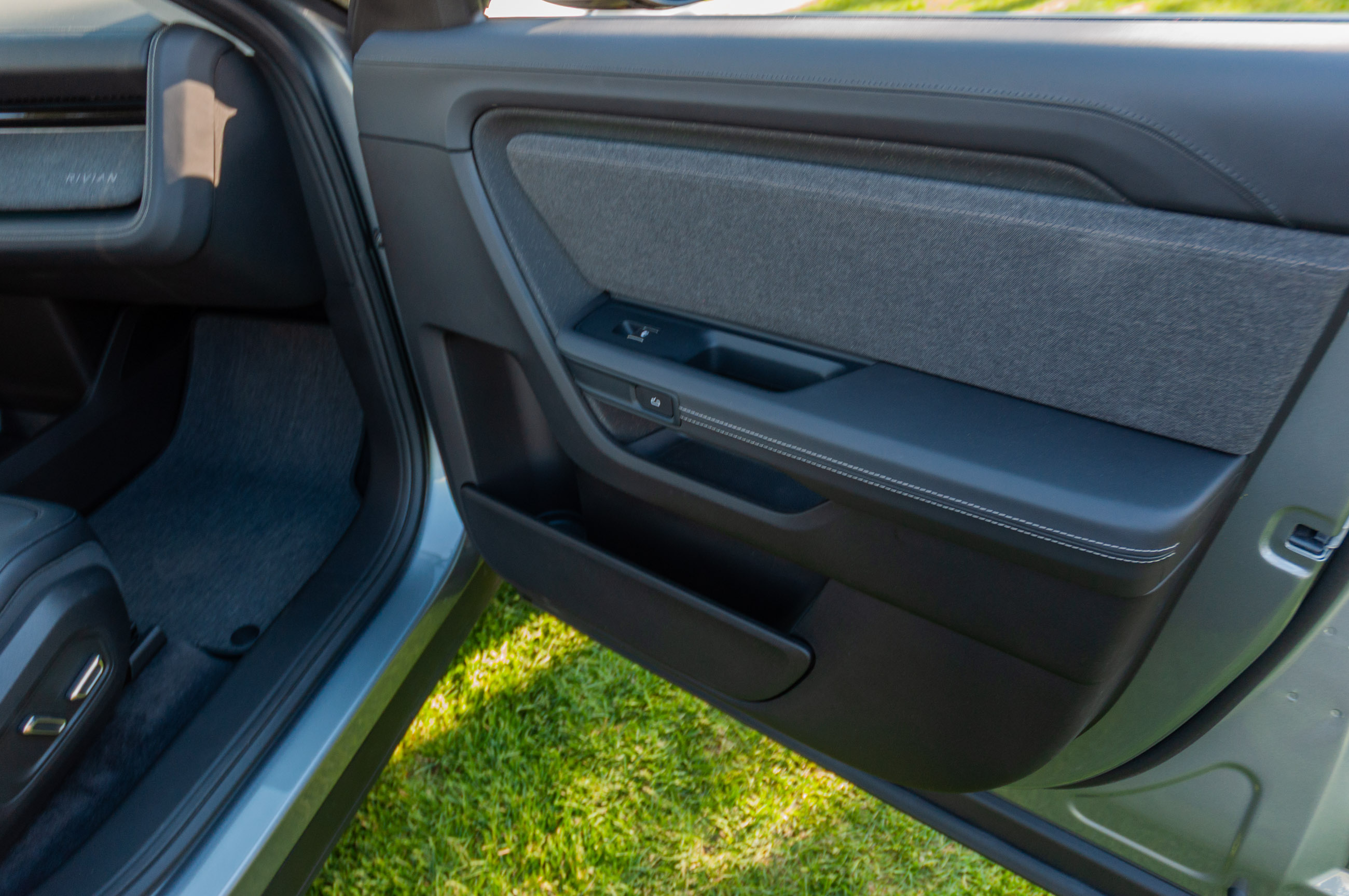
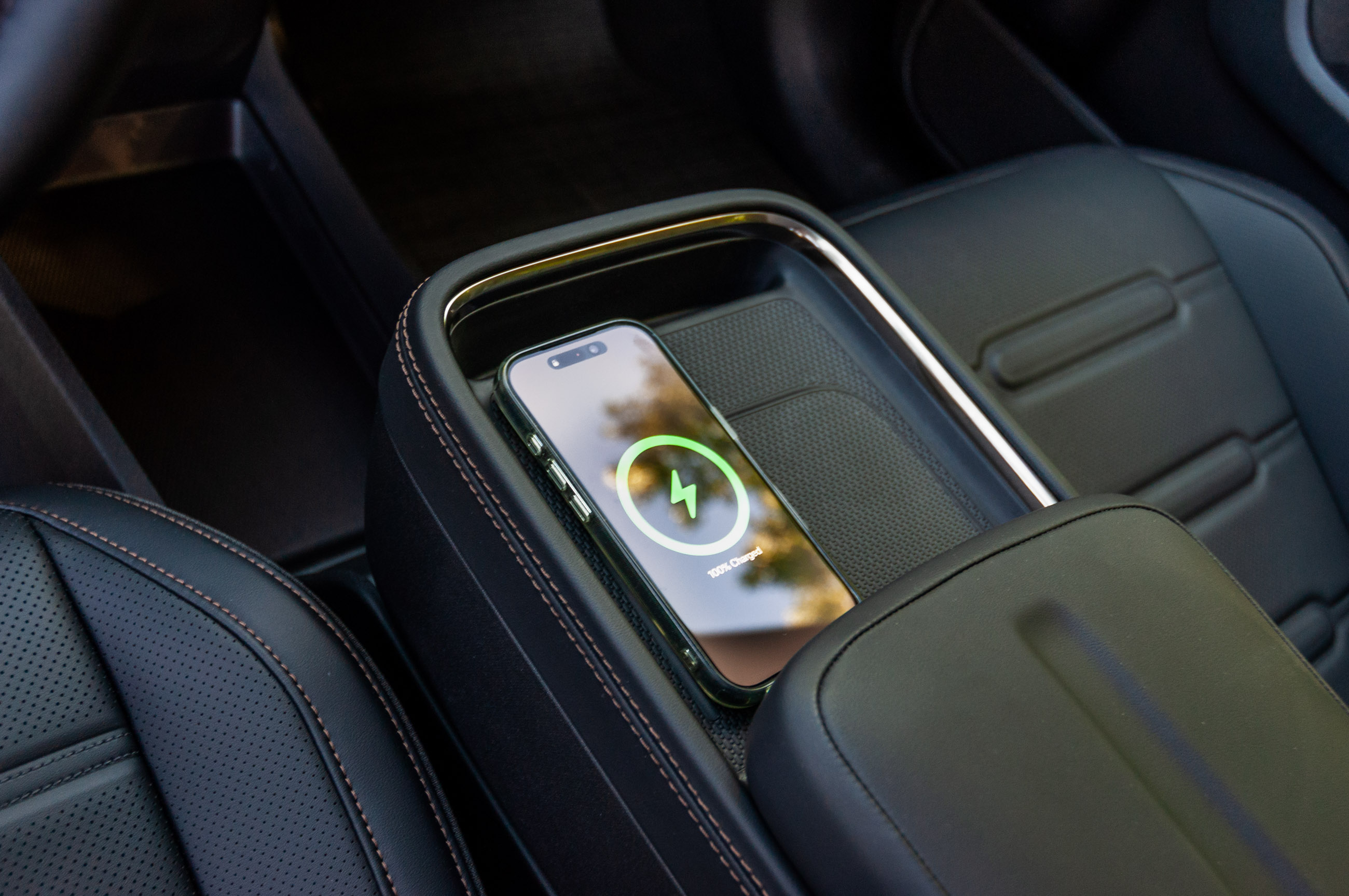
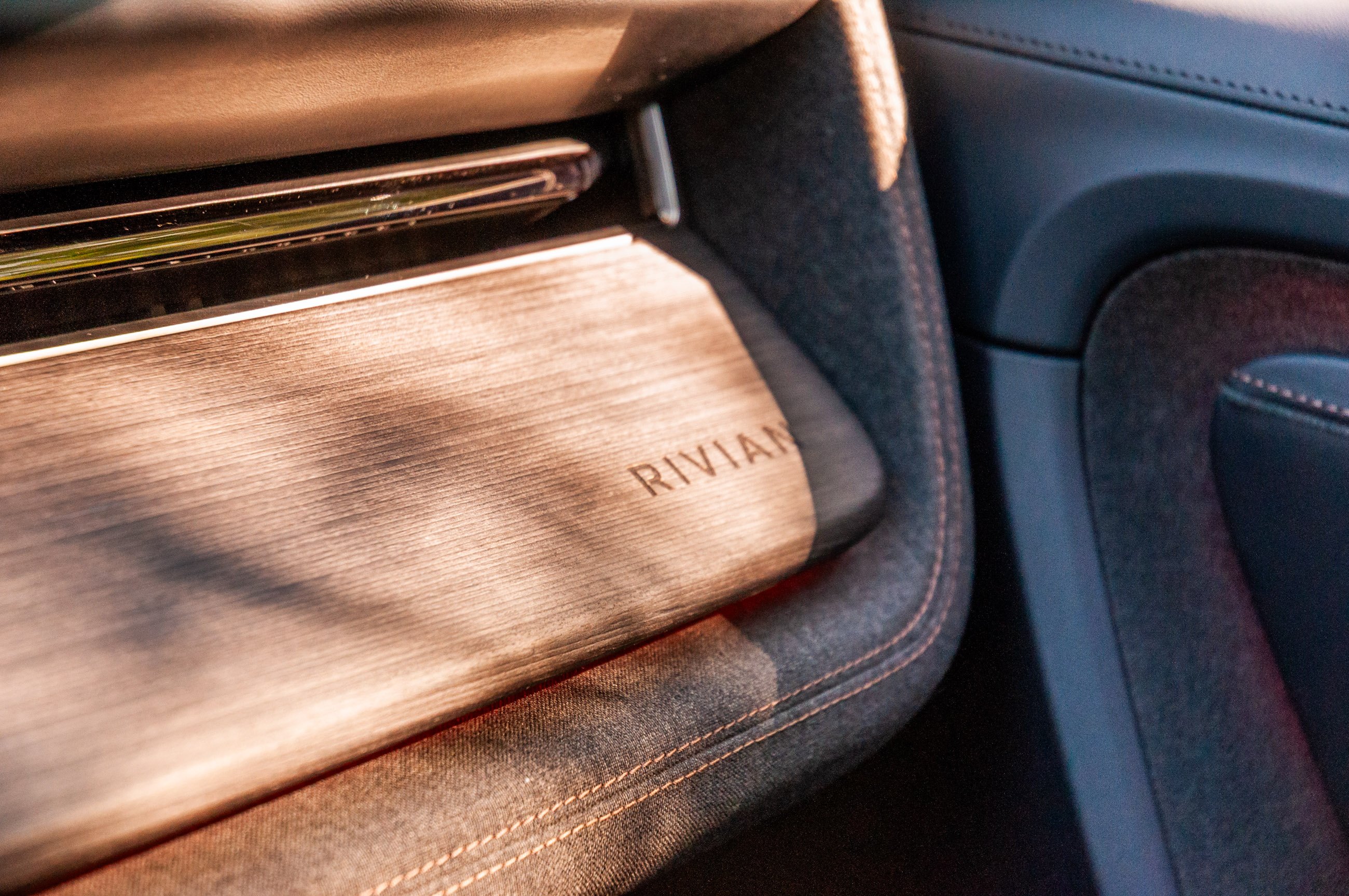
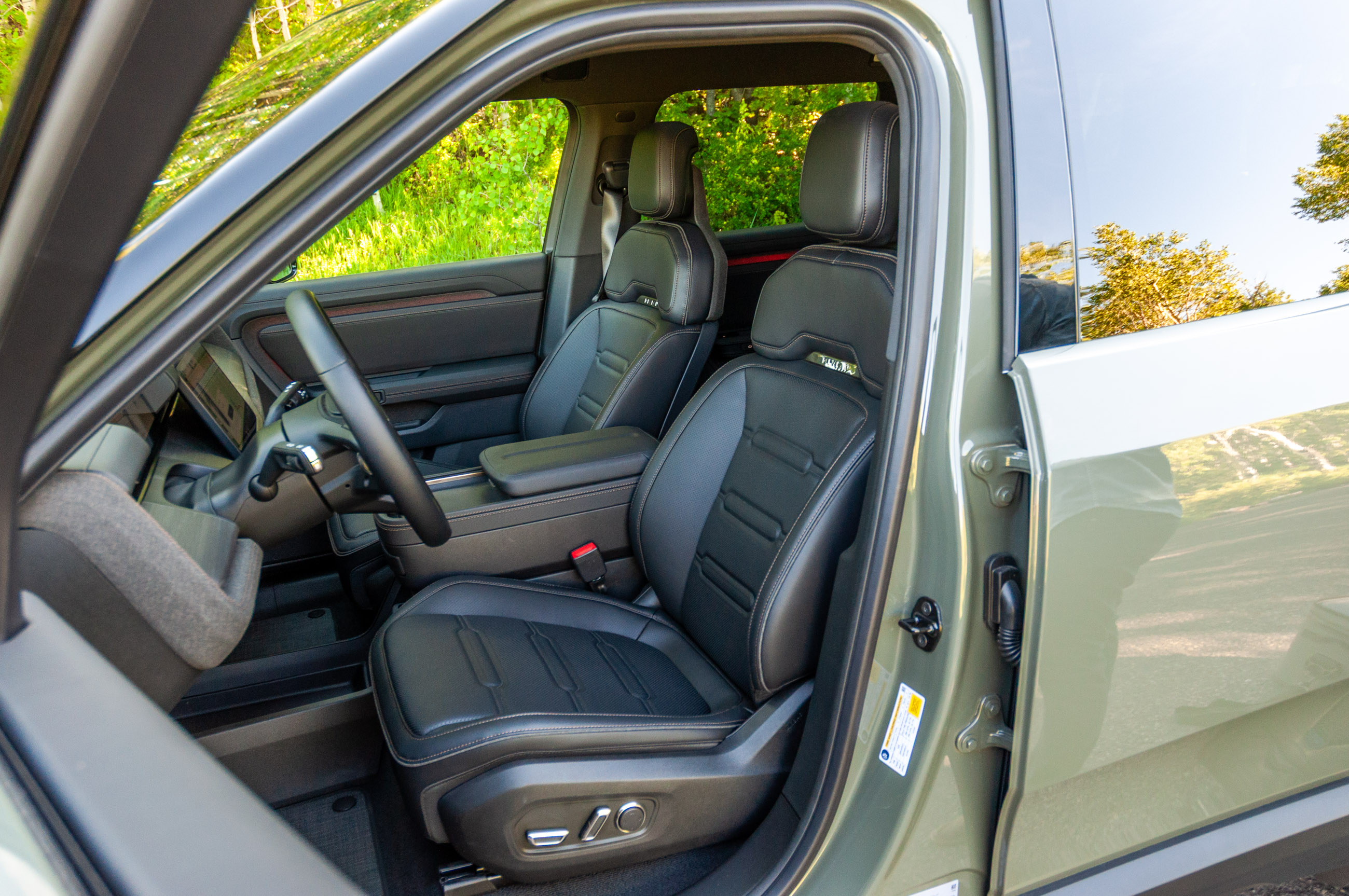
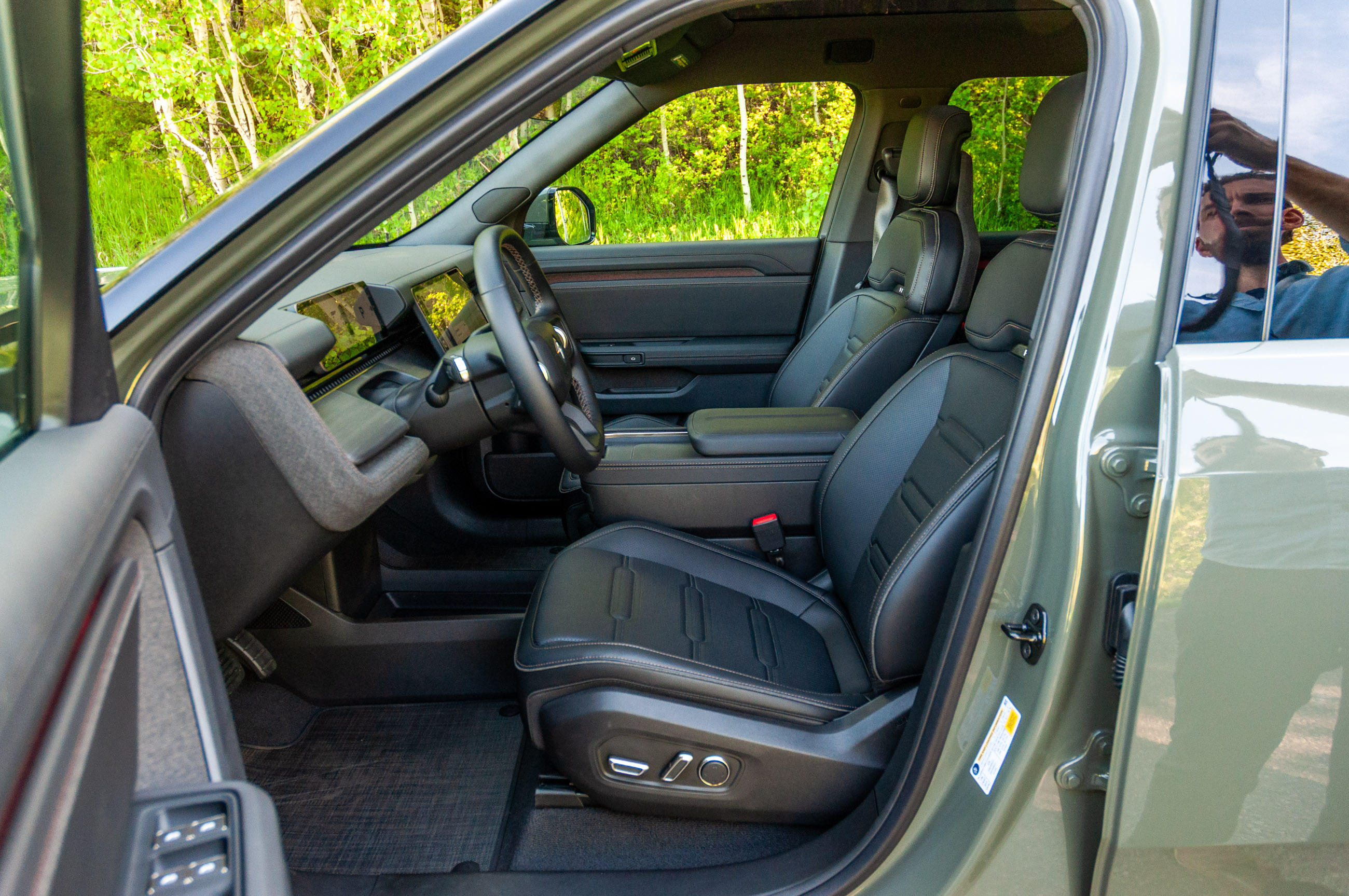
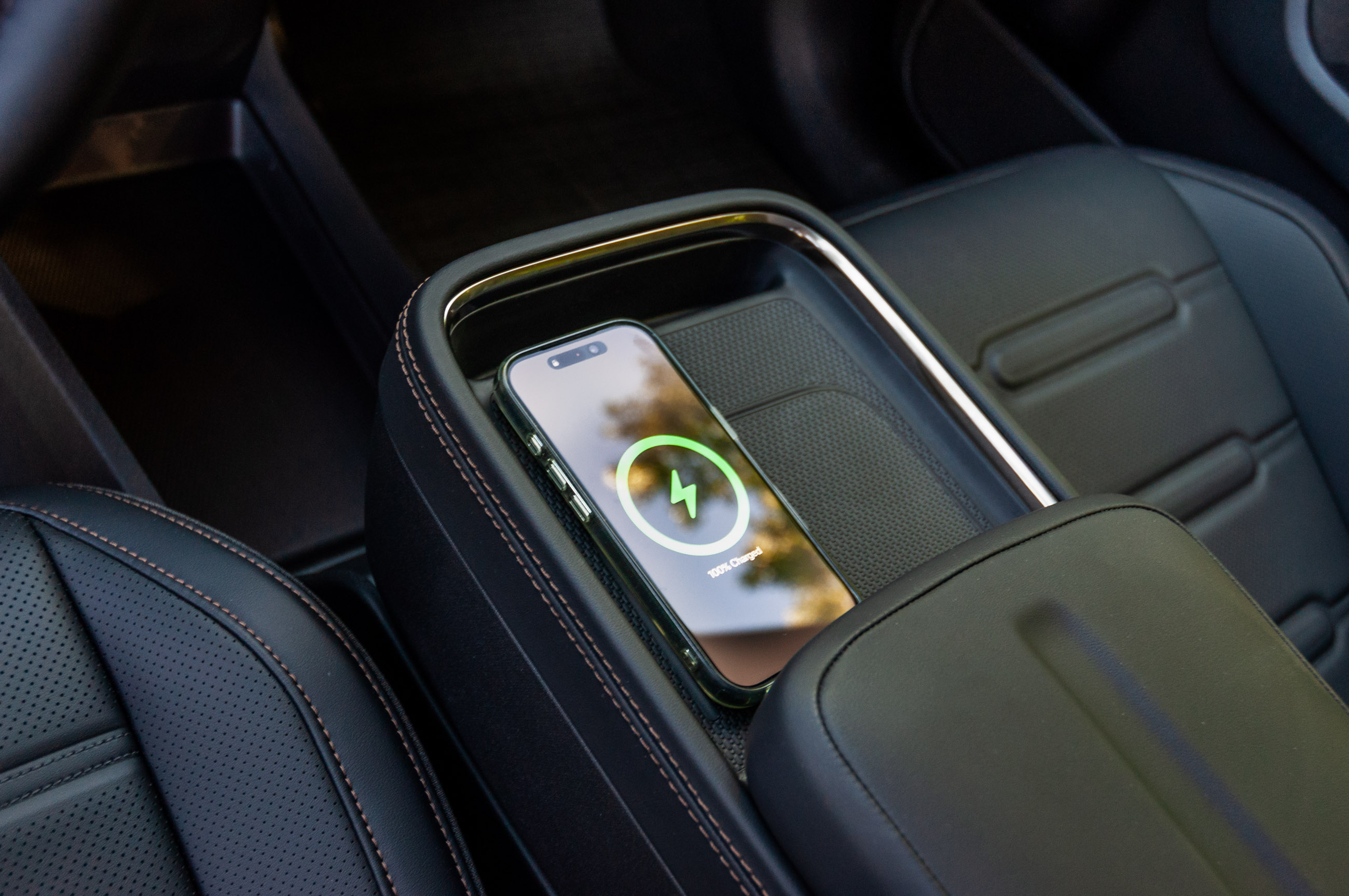
The dashboard’s wrapped in soft-touch material, with most models featuring wood trim. Base models will have cloth trim, though these don’t feel or look cheap. Rivian moved the front speakers to the center of the car and out of the door panels, leaving space to store huge water bottles in the door. This was driven by R1S customer feedback. So too was the fact that the R2 has not one but two glove boxes. The R1S has none. The wireless charging pad up front has space for two phones and is MagSafe-compatible, which worked as intended during my test.
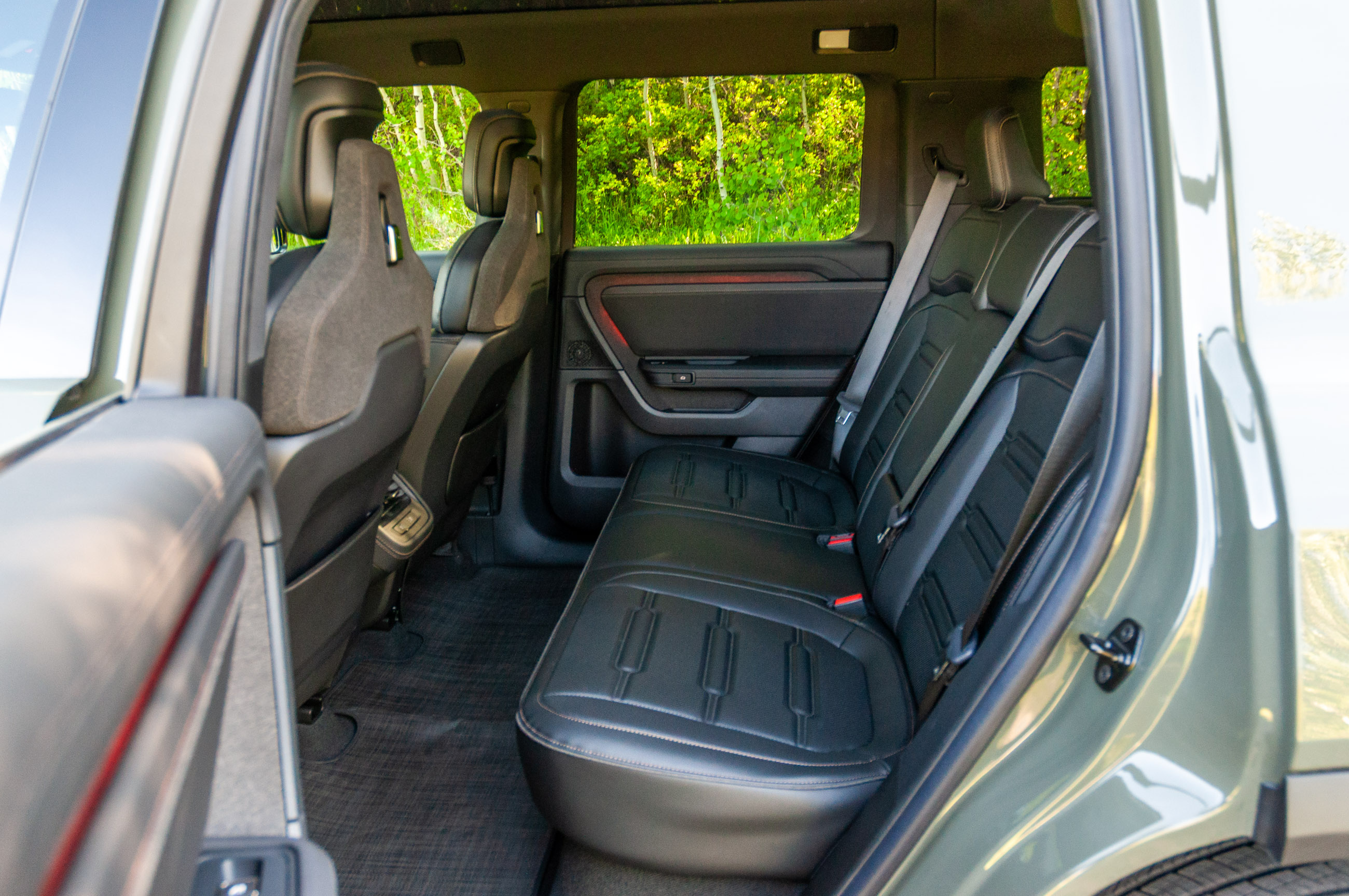
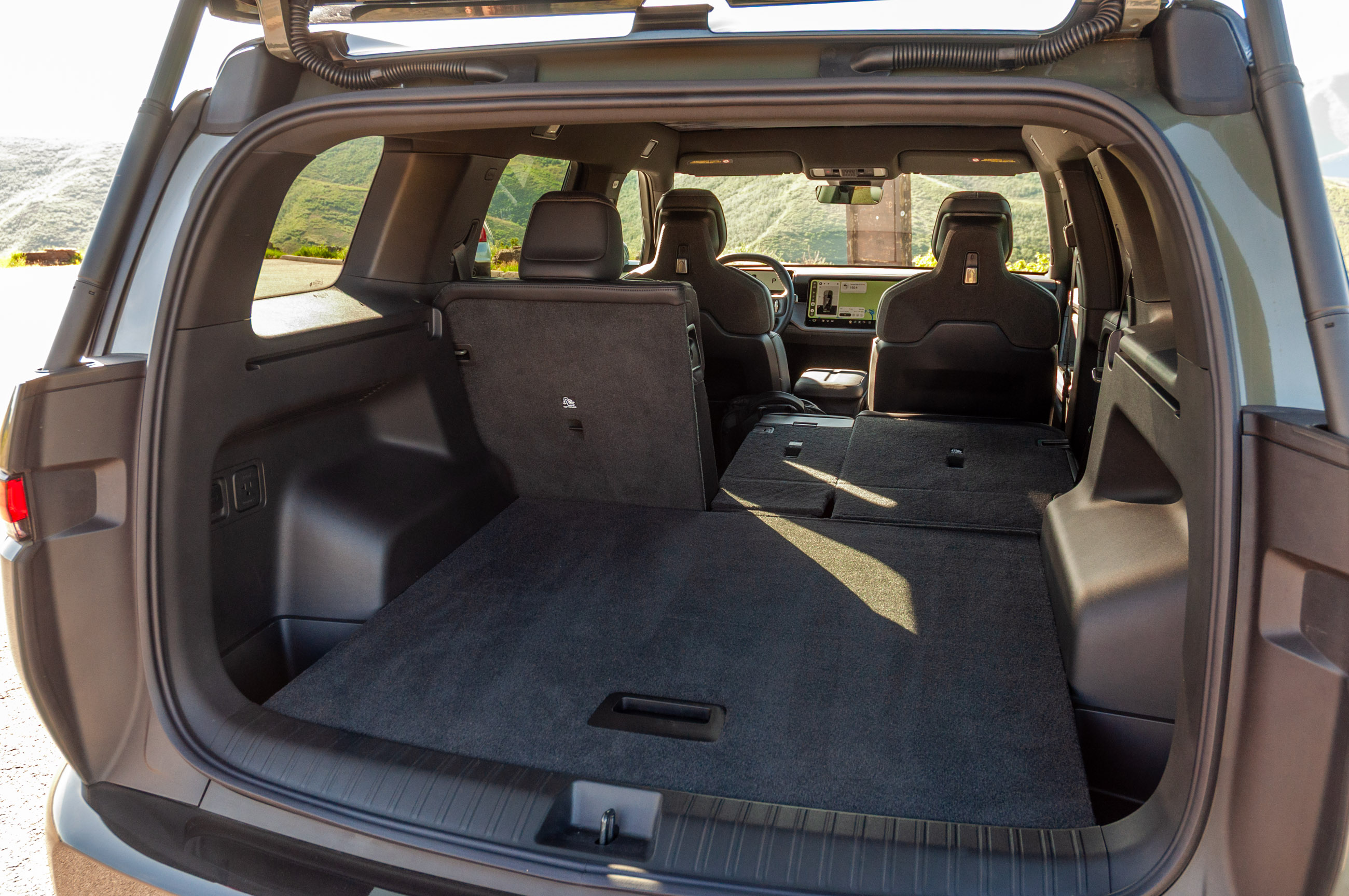
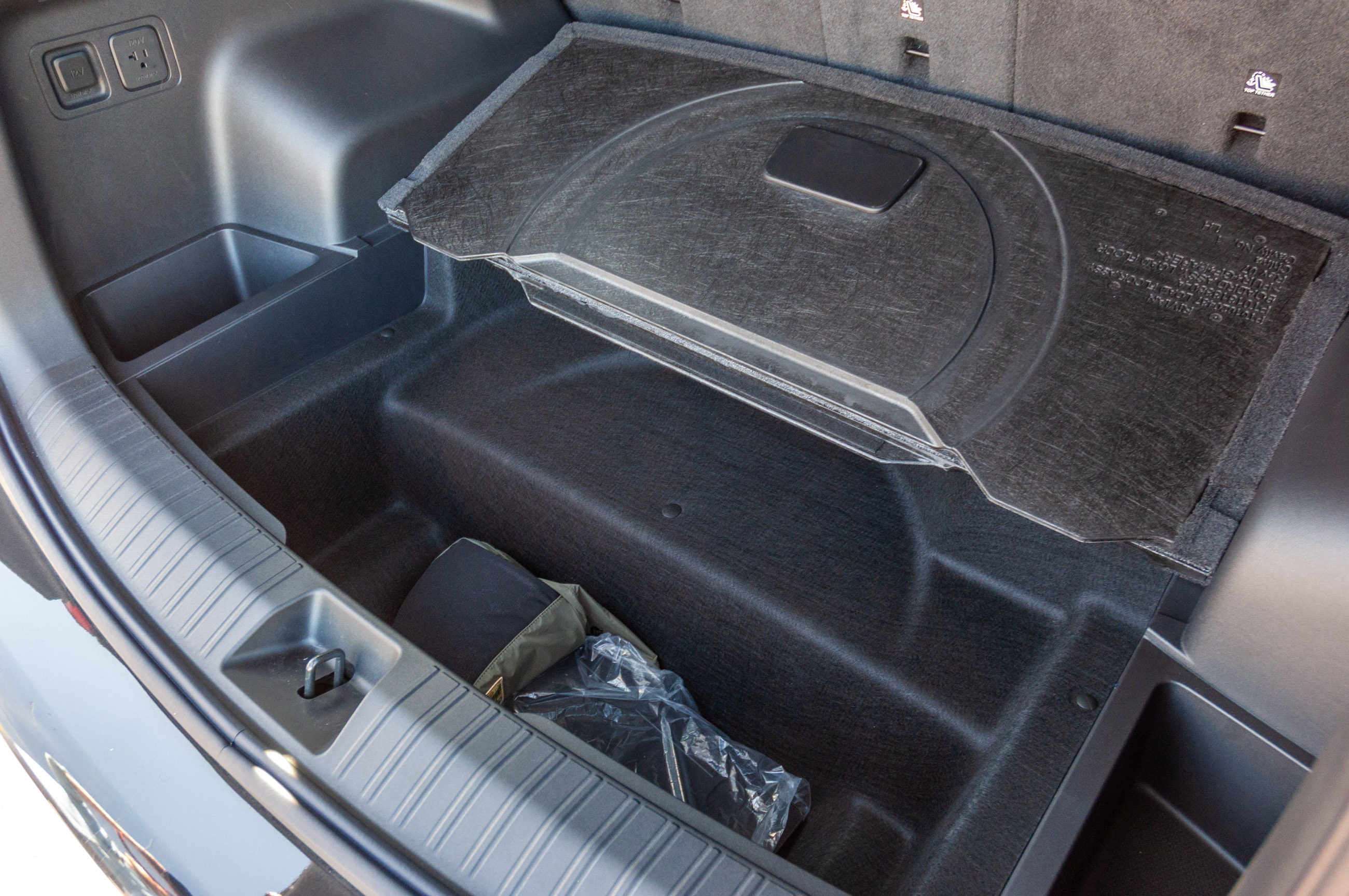
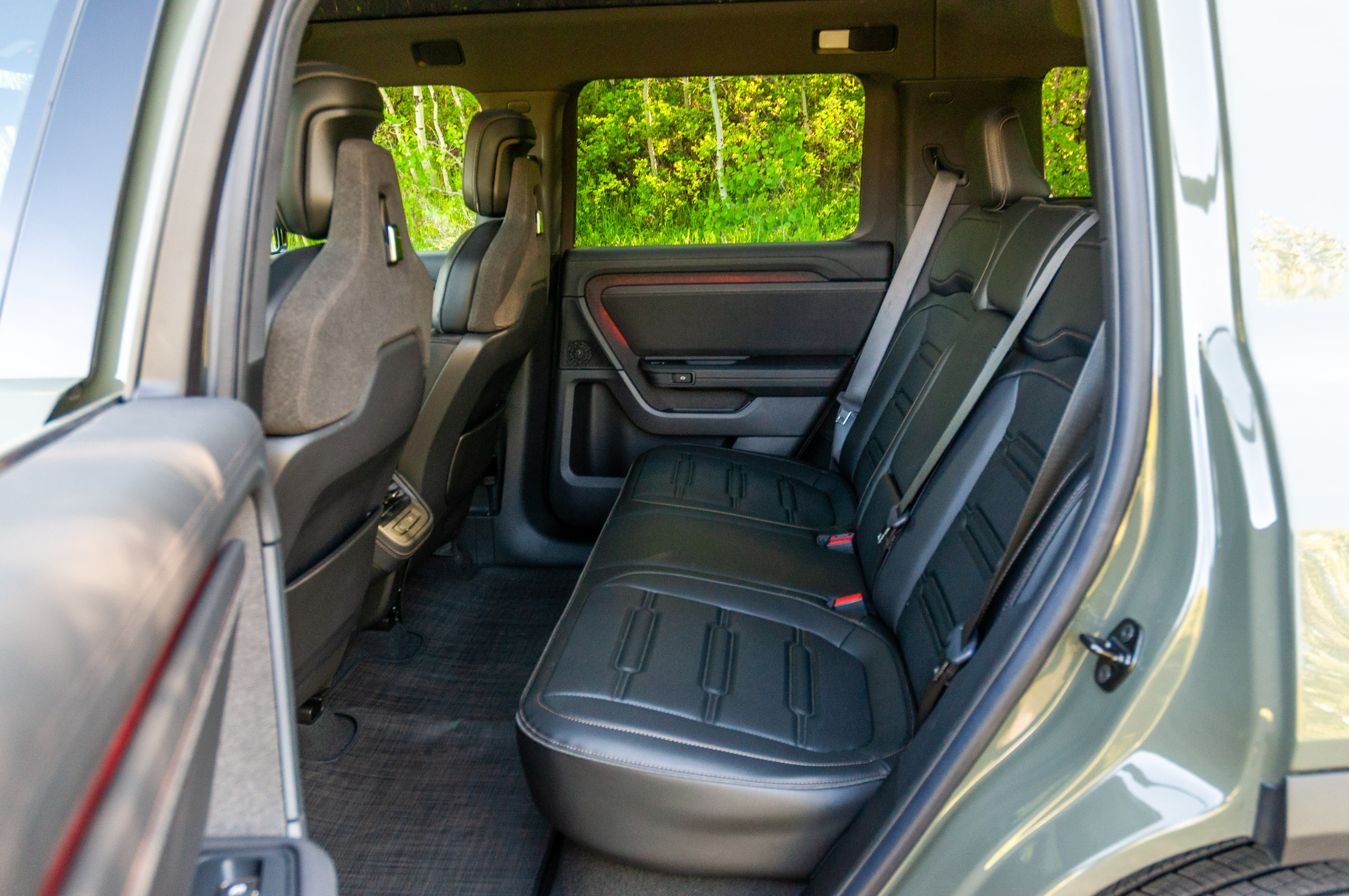
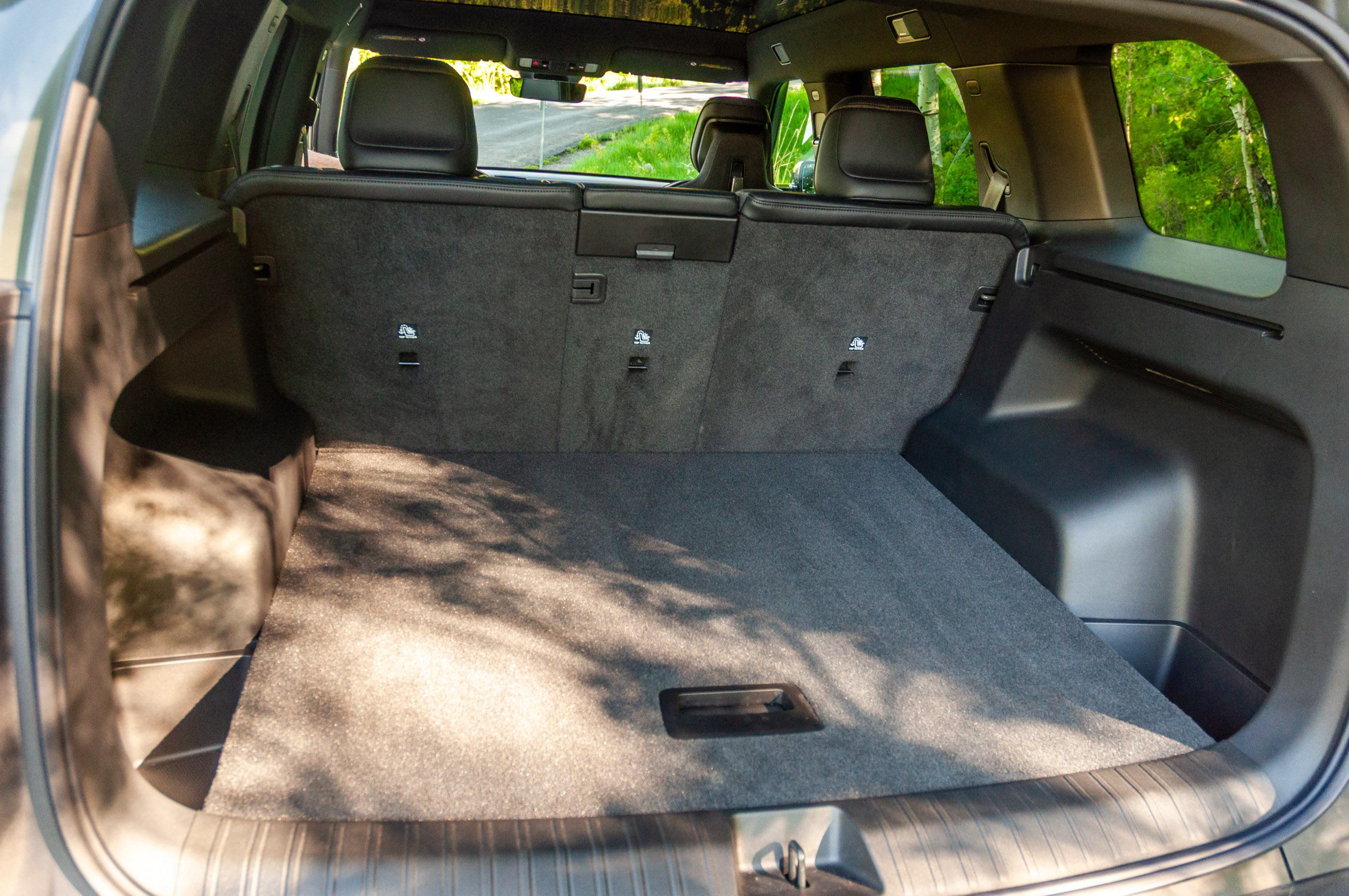
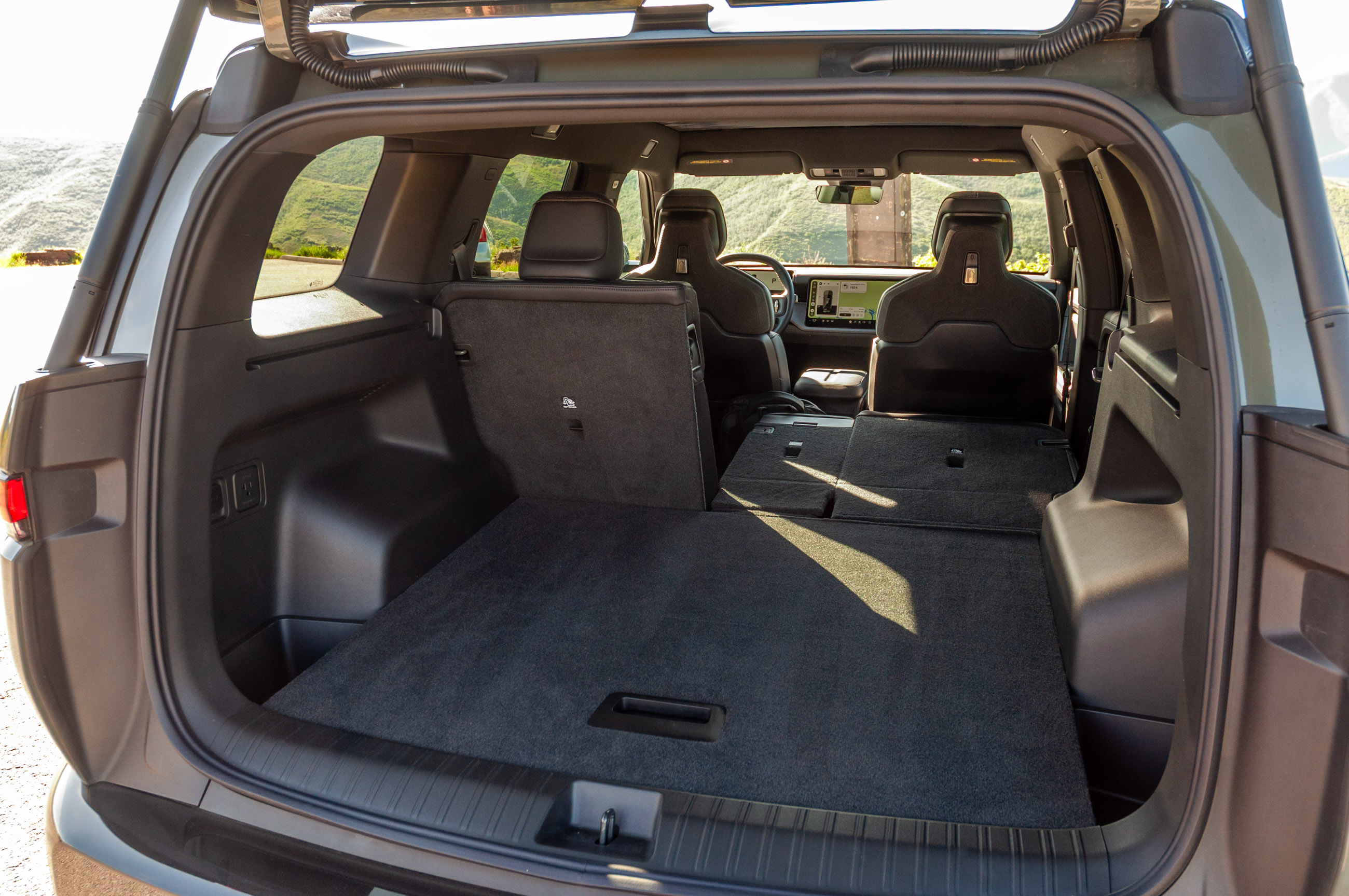
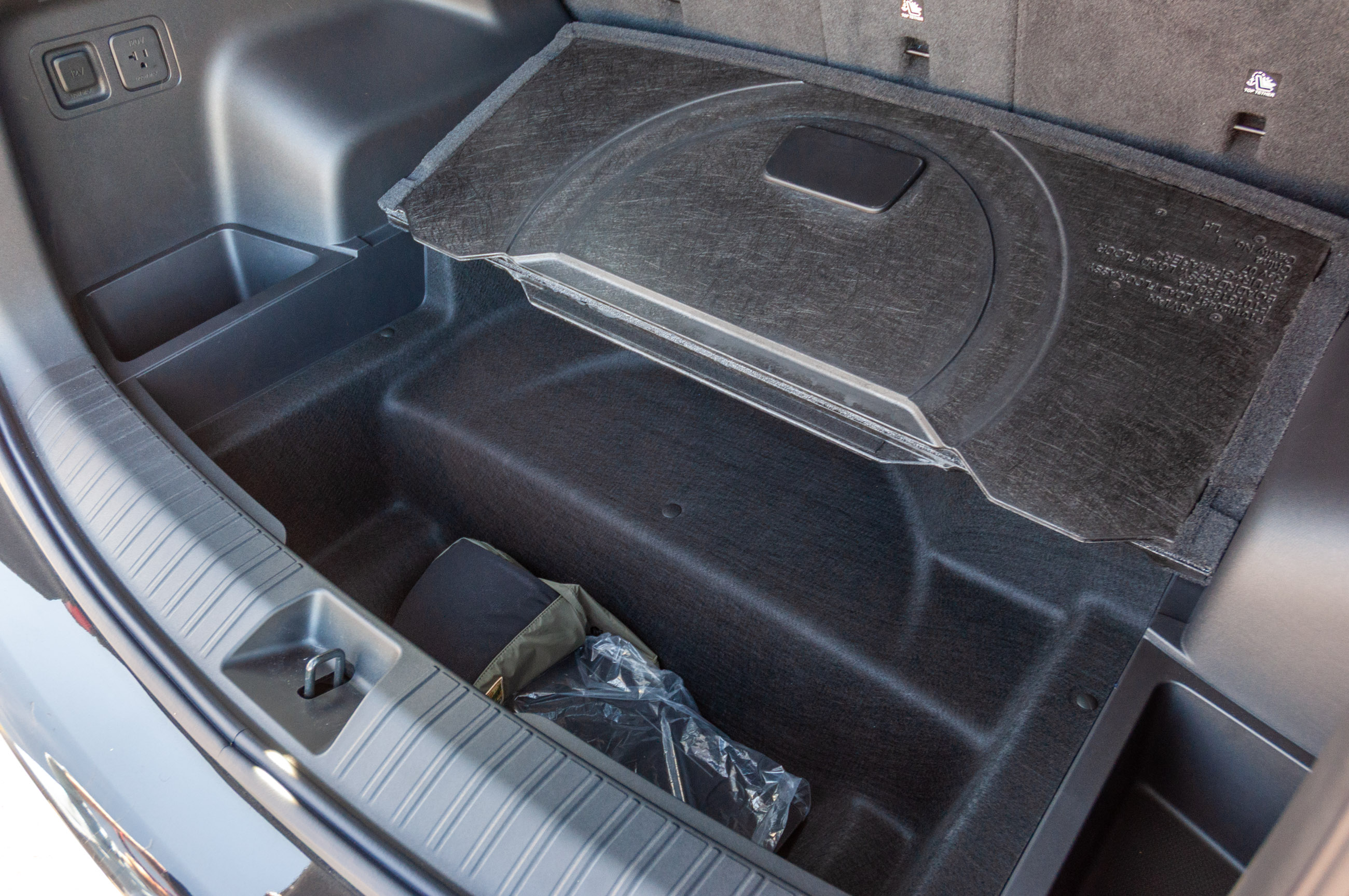
The rear seats fold in a 40/20/40 configuration, which is rare in this segment. It enables you to fold down the rear seat back in sections for various situations and hauling needs, both for people and cargo balancing. In the cargo area, there’s underfloor storage with enough space for a space-saver spare (which is an extra charge), but it can’t fit a full-size spare.
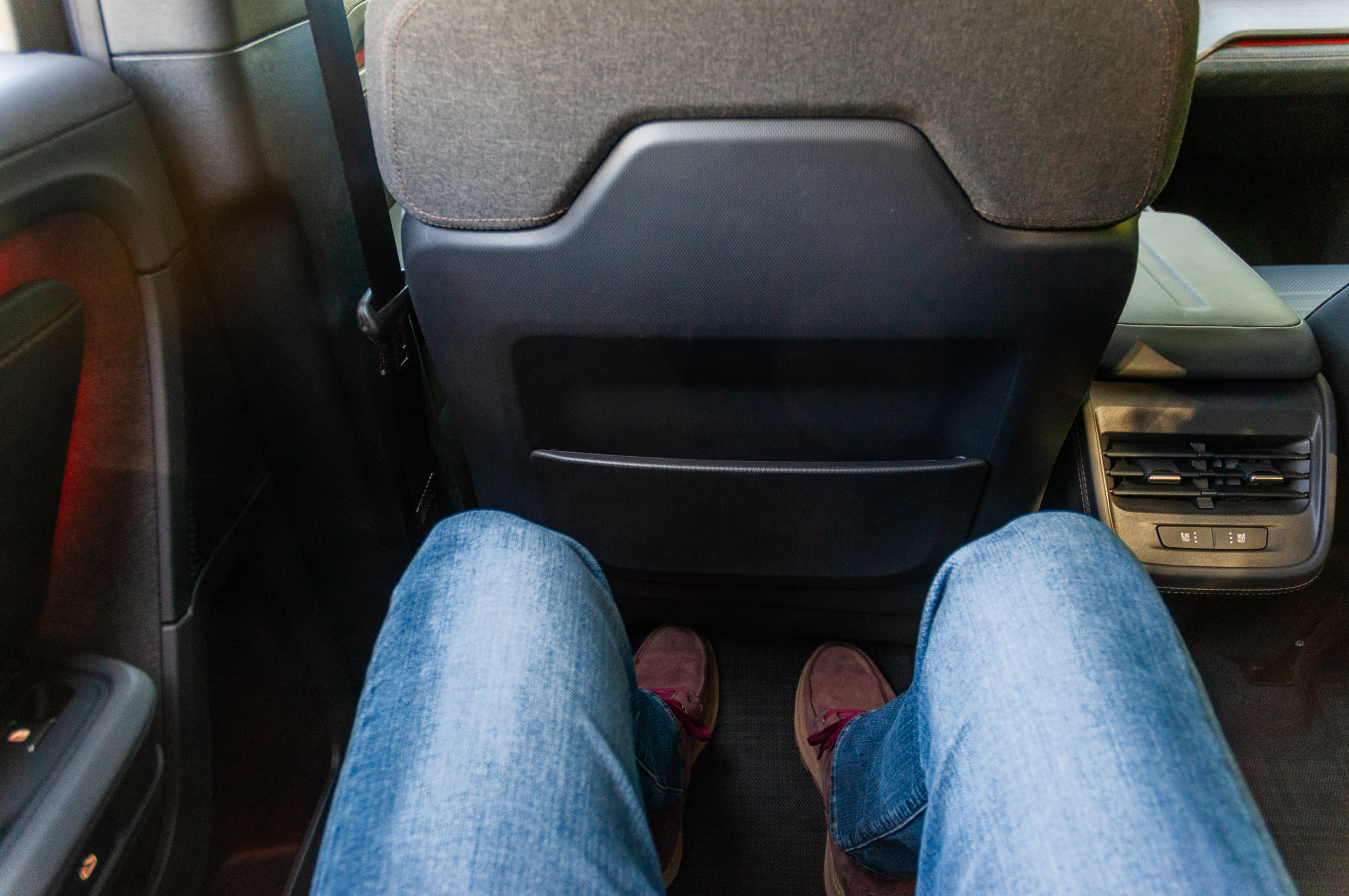
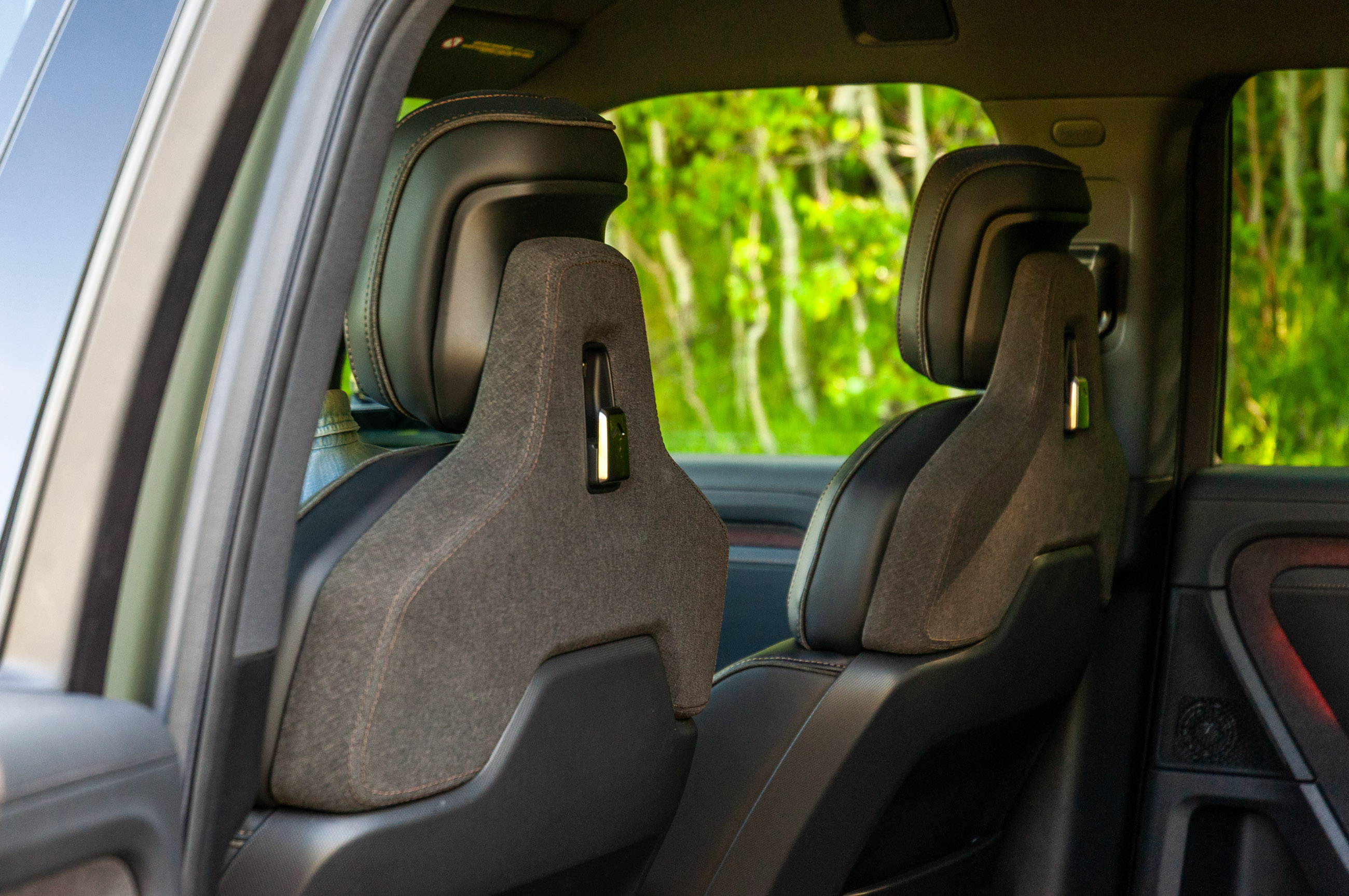
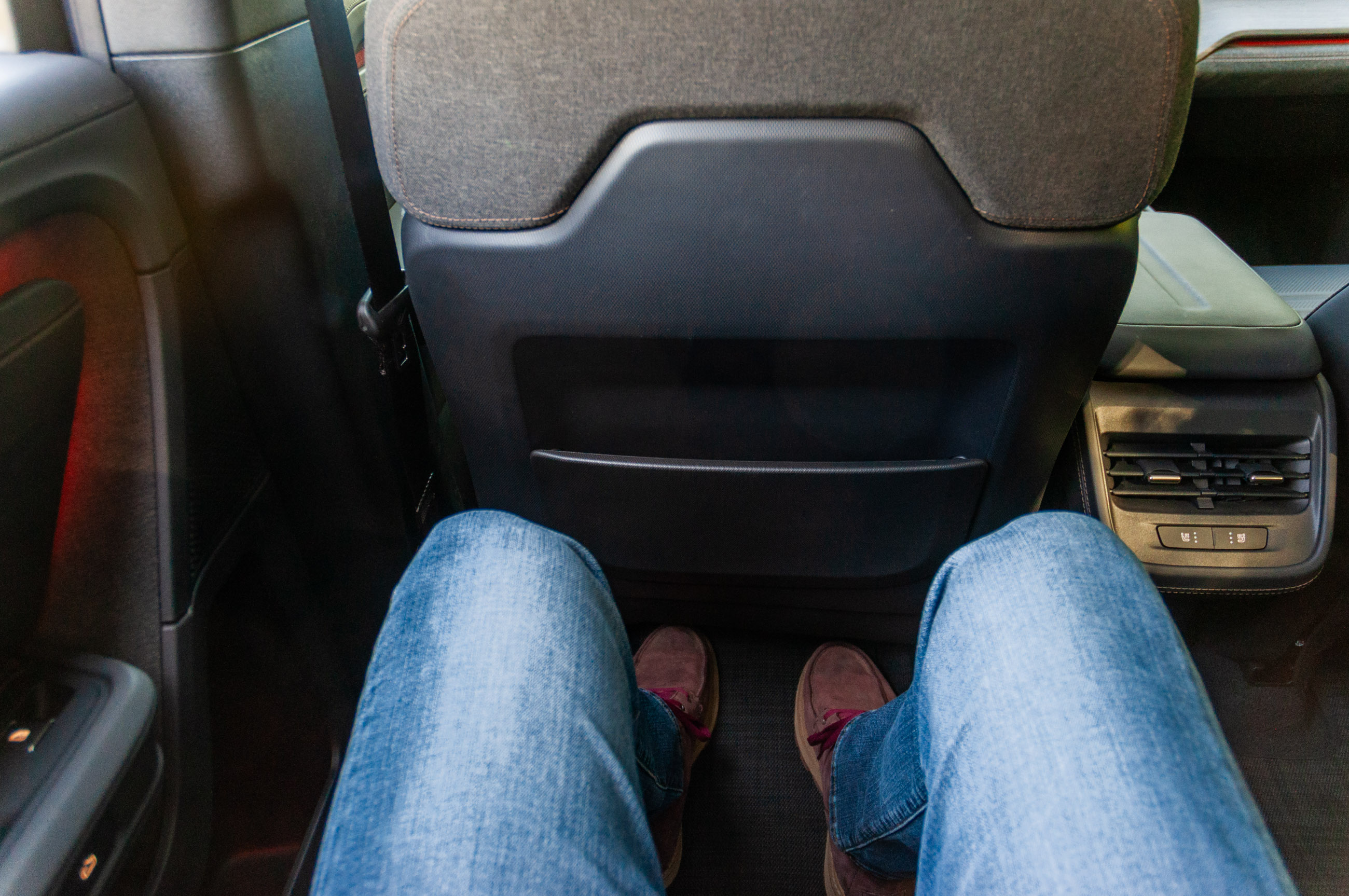
What’s really astonishing is all the space inside, specifically for humans, but the creative storage spaces are notable too. Every R2 has a huge panoramic glass roof that eats up headroom—and while it’s tinted, it’s not electrochromatic, and there’s no sunshade. Tall adults won’t have an issue, and there’s space in every direction for all four main seats. Particularly notable is the rear seat, which left me with plenty of leg and foot space despite my 5-foot-10 frame sitting behind a 6-foot-1 driver with long legs. The rear seating position is better than in the R1S, specifically due to platform packaging, with a longer seat bottom cushion and 3.8 inches more legroom than in the R2’s larger sibling.
On the Road
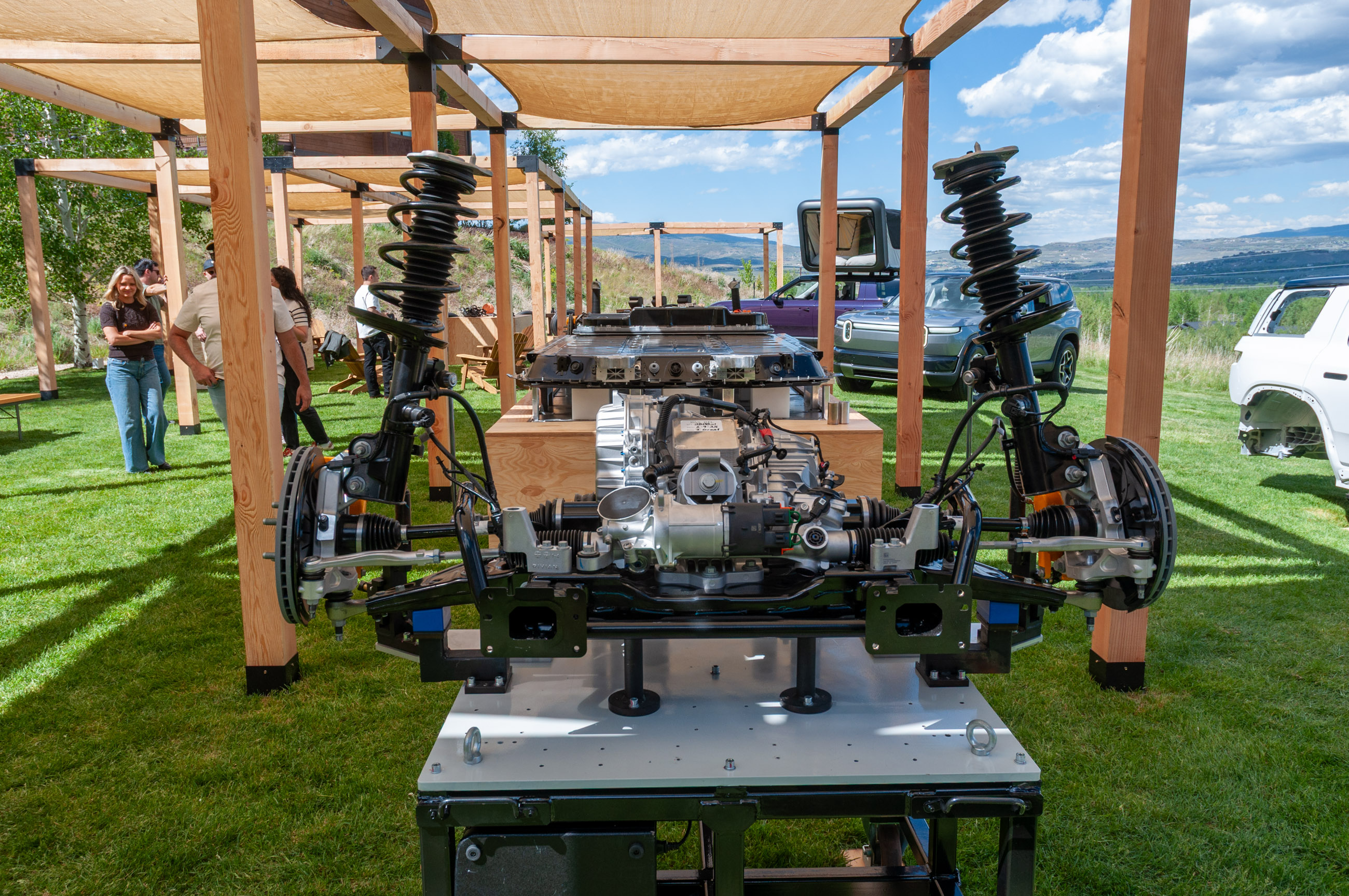
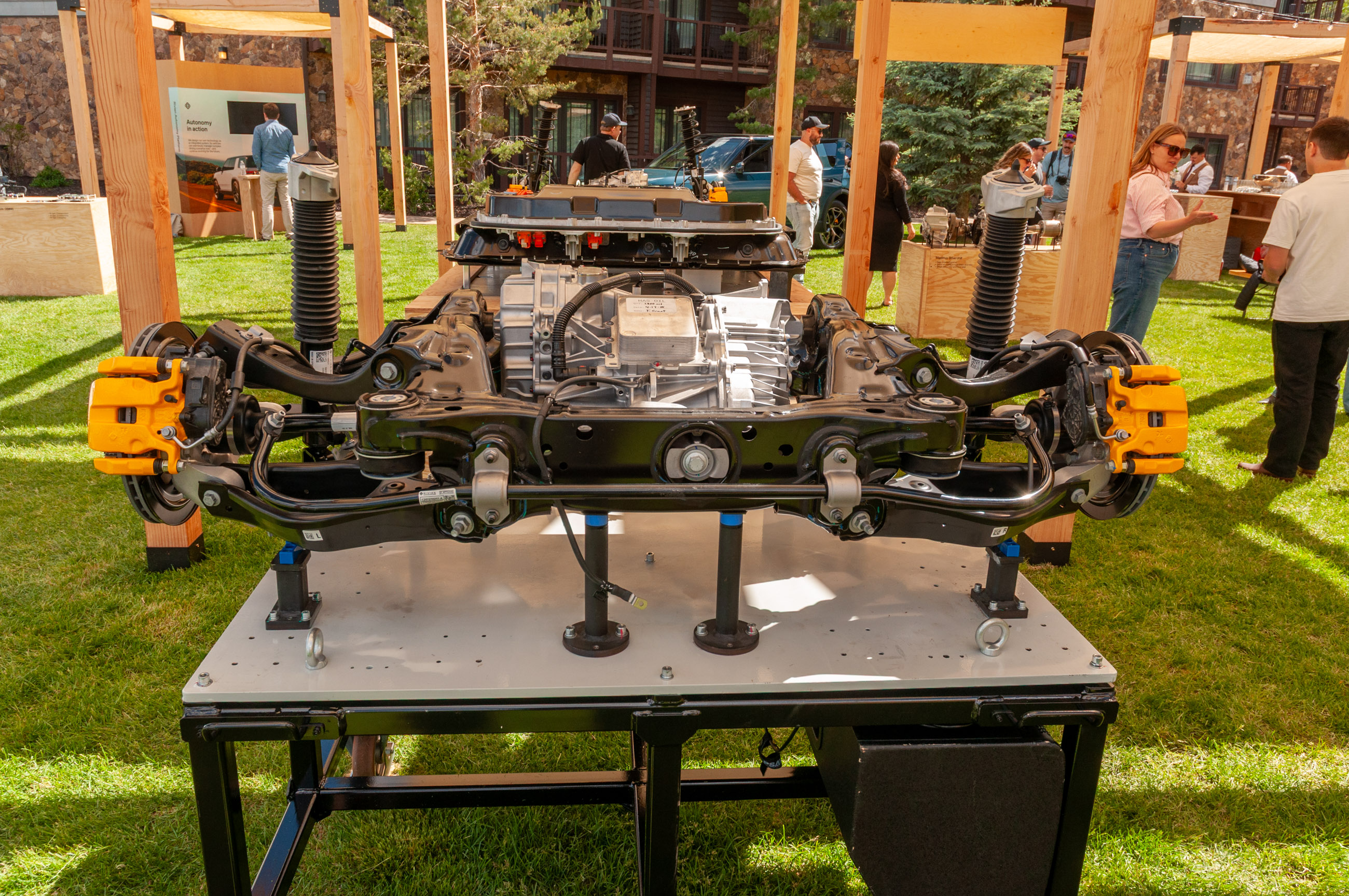
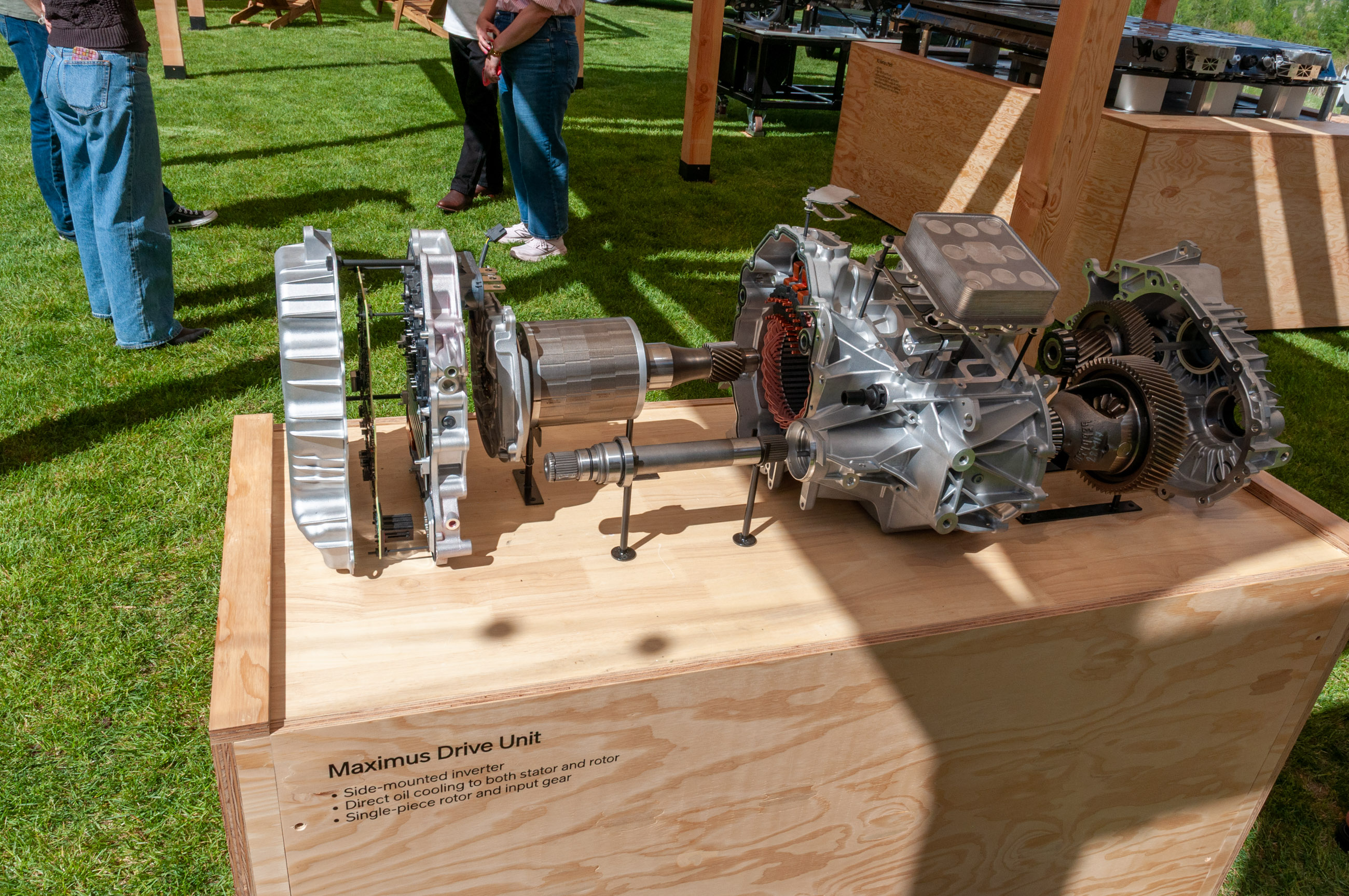
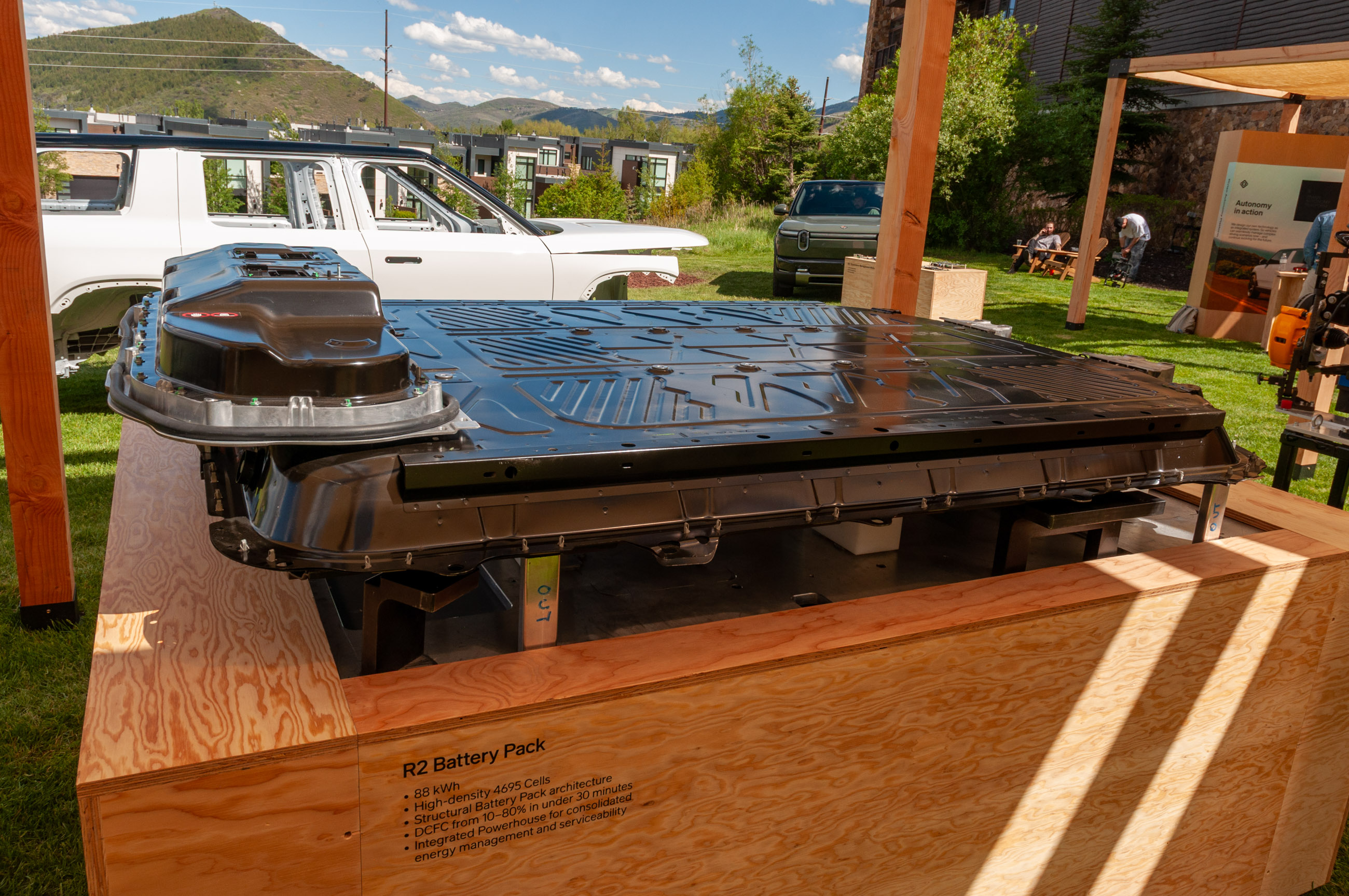
For now, every R2 will be a Performance trim, powered by a dual-motor powertrain with Rivian’s Maximus motors at each axle, delivering 656 horsepower and 609 lb-ft of torque to all four wheels. The motors are powered by an 88.0-kWh lithium-ion battery pack operating on a 400-volt electrical architecture. Rivian said this translates to a 0-60 mph sprint of 3.6 seconds.
A less powerful Premium model arrives later this year with 450 hp and 537 lb-ft of torque and the same battery pack. A 0-60 mph sprint will take a second longer with this model. Early next year, the Standard Long Range model arrives with the same battery pack but a single rear motor rated at 350 hp and 355 lb-ft of torque, and a 5.9-second 0-60 mph. It precedes the base Standard model, which will arrive next summer with an unknown battery size but still does 0-60 mph in 5.9 seconds, thanks to the same single rear motor as the Standard Long Range model.
On the road, the R2 immediately felt familiar and like a shrunken R1S. The hood design and tall glass provided a similar view out from the cabin. While in All-Purpose driving mode and with full stability control turned on, I mashed the throttle at a roundabout. The front end launched me forward and right, while the rear end immediately swung out, and the entire car entered a controlled slide. The body movements are even similar, but the suspension is quieter in the smaller R2.
Entering the highway, I brought the R2 up to a cruising speed of about 65 mph, then floored the accelerator. It’s not as quick as the Lucid Air Sapphire, but this EV doesn’t lose steam even as the speedo climbs.
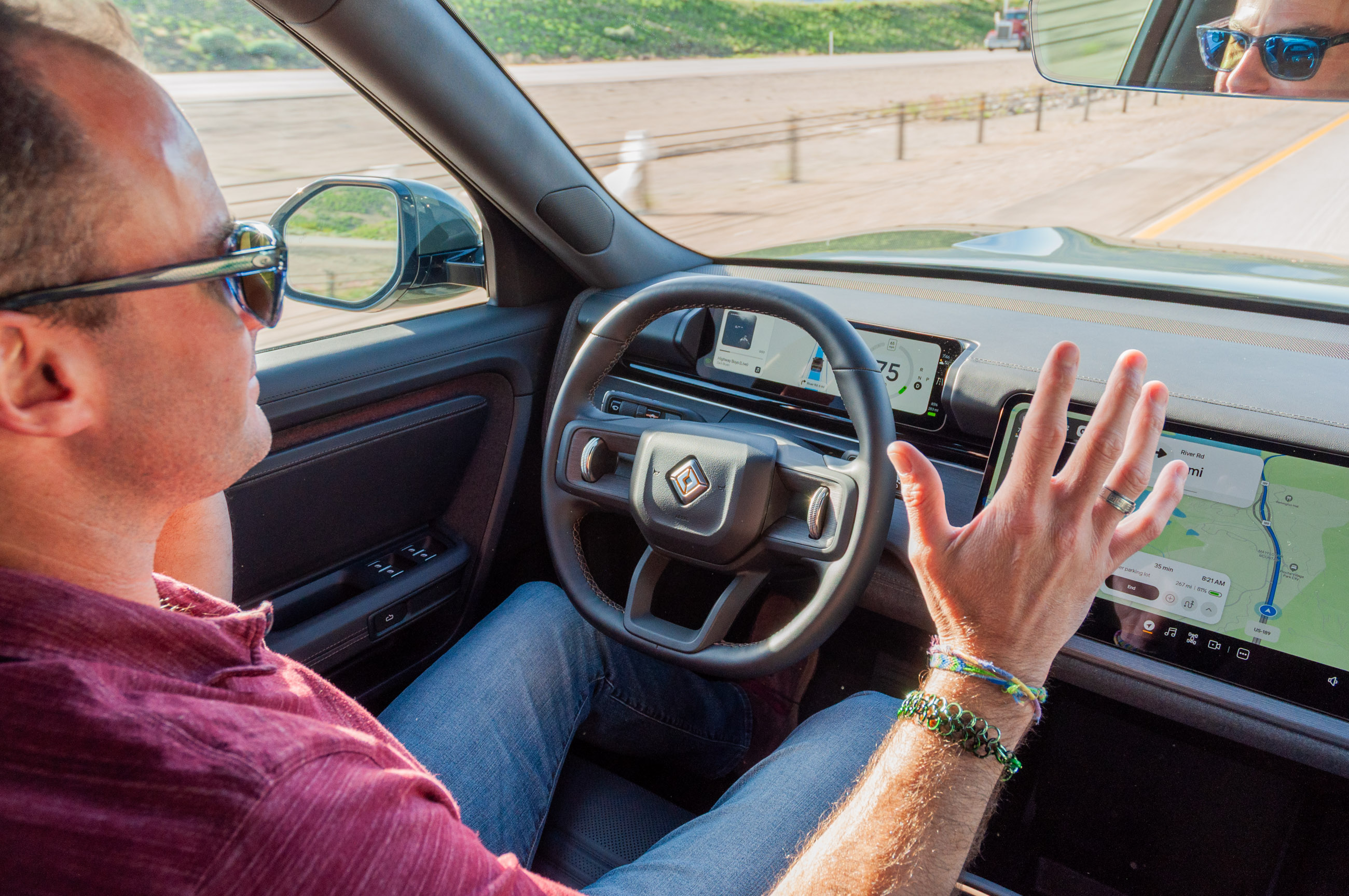
After slowing back down to normal speeds, I pulled the gear selector stalk towards me twice and turned on Rivian’s Universal Hands-Free driver-assist system. In the (all-too-short) time on the highway, it performed flawlessly, keeping the R2 centered in the lane, never ping-ponging, and never giving me a reason not to trust the system. Automatic lane-change capability wasn’t in our early-build R2 software, but it will be available shortly after launch.
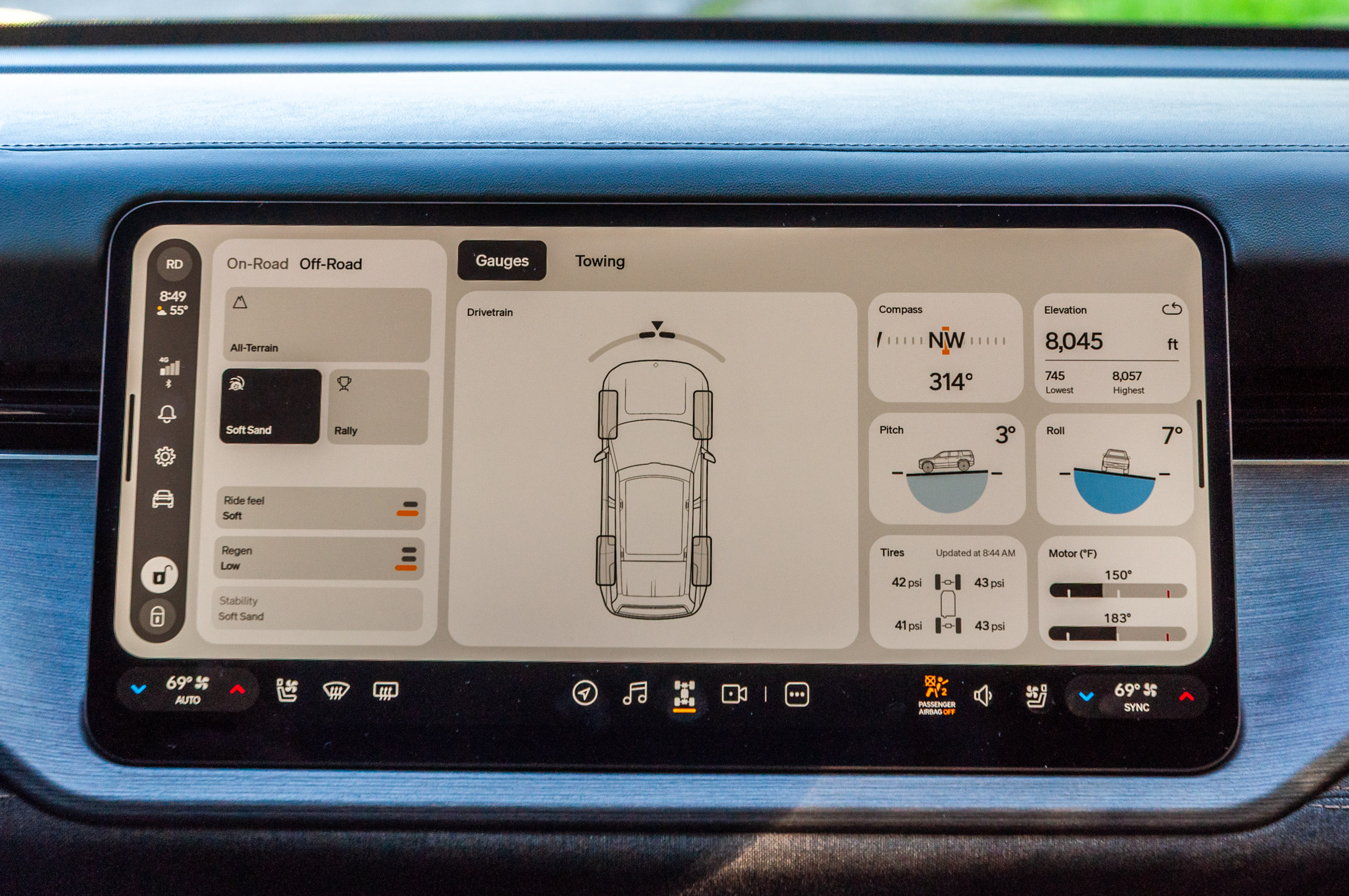
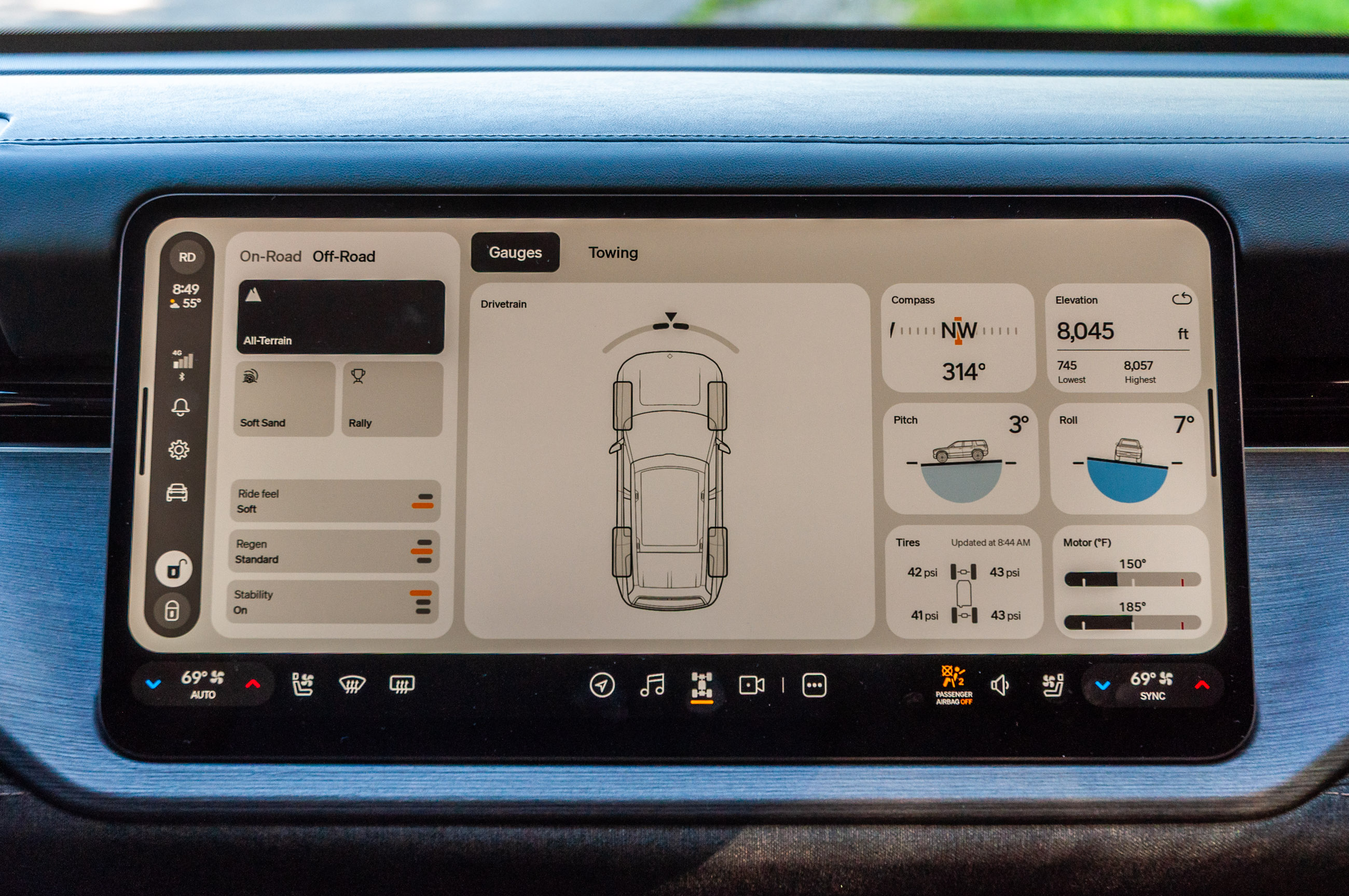
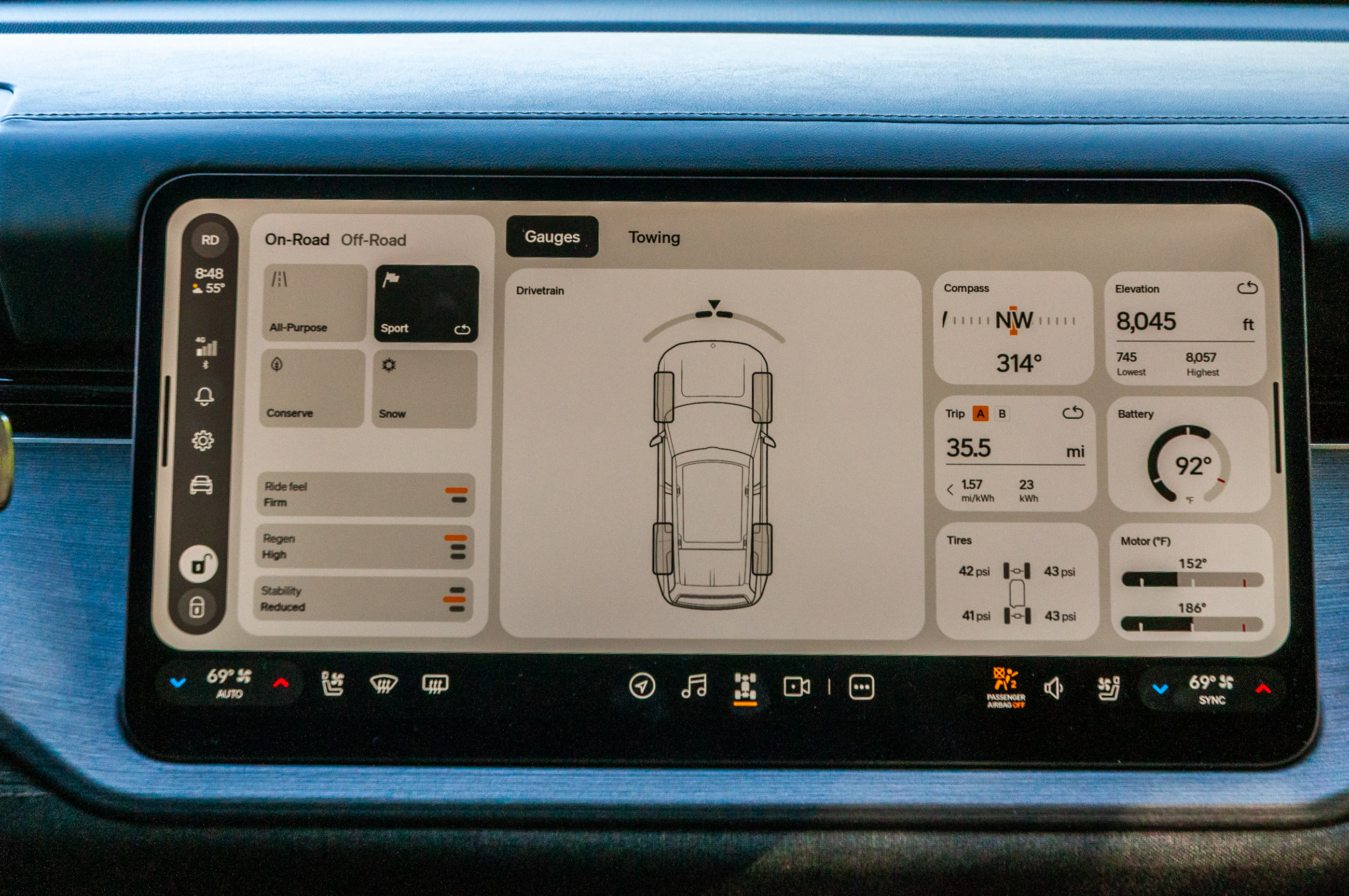
On the twisty mountain roads that head up to Park City, I double-tapped the touchscreen—one to get to the drivetrain page and one to change drive modes (which I could’ve done via the Halo wheels had I been thinking about it) to enable Sport mode. The 16:1 steering ratio and the squircle-ish steering wheel provide proper nine-and-three-hand placement without being awkward. In the right mode and with the right boxes checked, it was evident that the R2 possessed some rally-car traits. It happily strung together tight corners and rotated with ease, as the MacPherson-strut front suspension and multi-link rear end worked to keep the Pirelli all-seasons in contact with the asphalt.
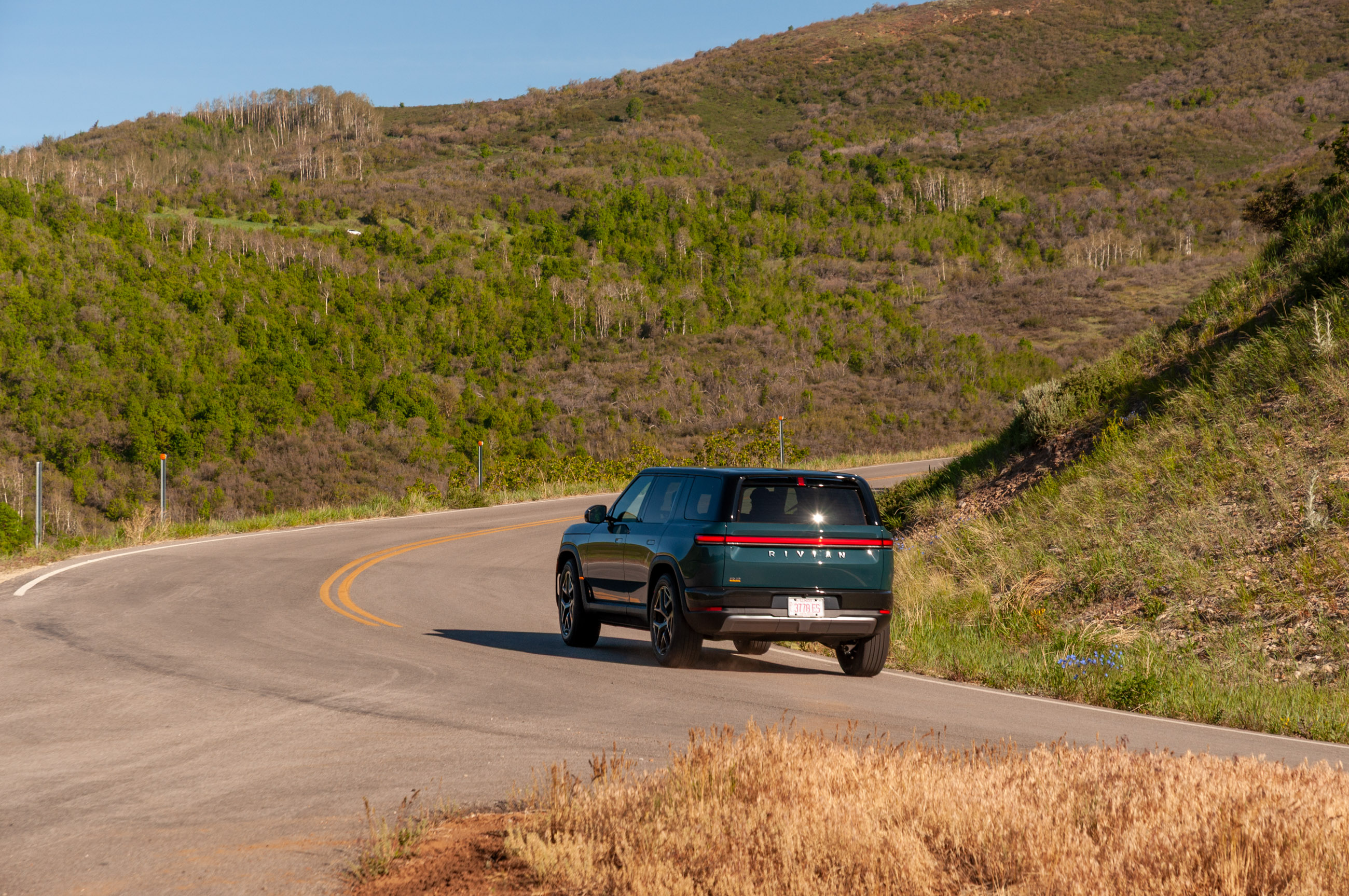
The R2’s 4,998 pounds are well hidden, but when the weight transfer occurs in a corner, it occurs about a second later than initially expected on those semi-adaptive dampers. Once you realize this, you can easily plan for it and take it into account. The ride is always controlled, comfortable, less firm than the larger R1S, but definitely not soft.
When using one-pedal driving, about 90% of braking is regenerative, except when the battery is cold or has too much energy. But when you hit the brake pedal, it’s all mechanical, and despite being an electromechanical-hydraulic setup like the Corvette Z06 and the Alfa Romeo Giulia, this system is well-tuned. The pedal travel isn’t overly long or soft, as in the R1S. The brakes feel natural, progressive, and as desired.
The steering resistance wasn’t overtly heavy, was precise, and never gave me a reason to think twice about the inputs being delivered. Those who prefer heavier steering will be disappointed, but the Porsche Macan Electric has light steering, and it’s delightful on both back roads and racetracks alike.
Off-Road
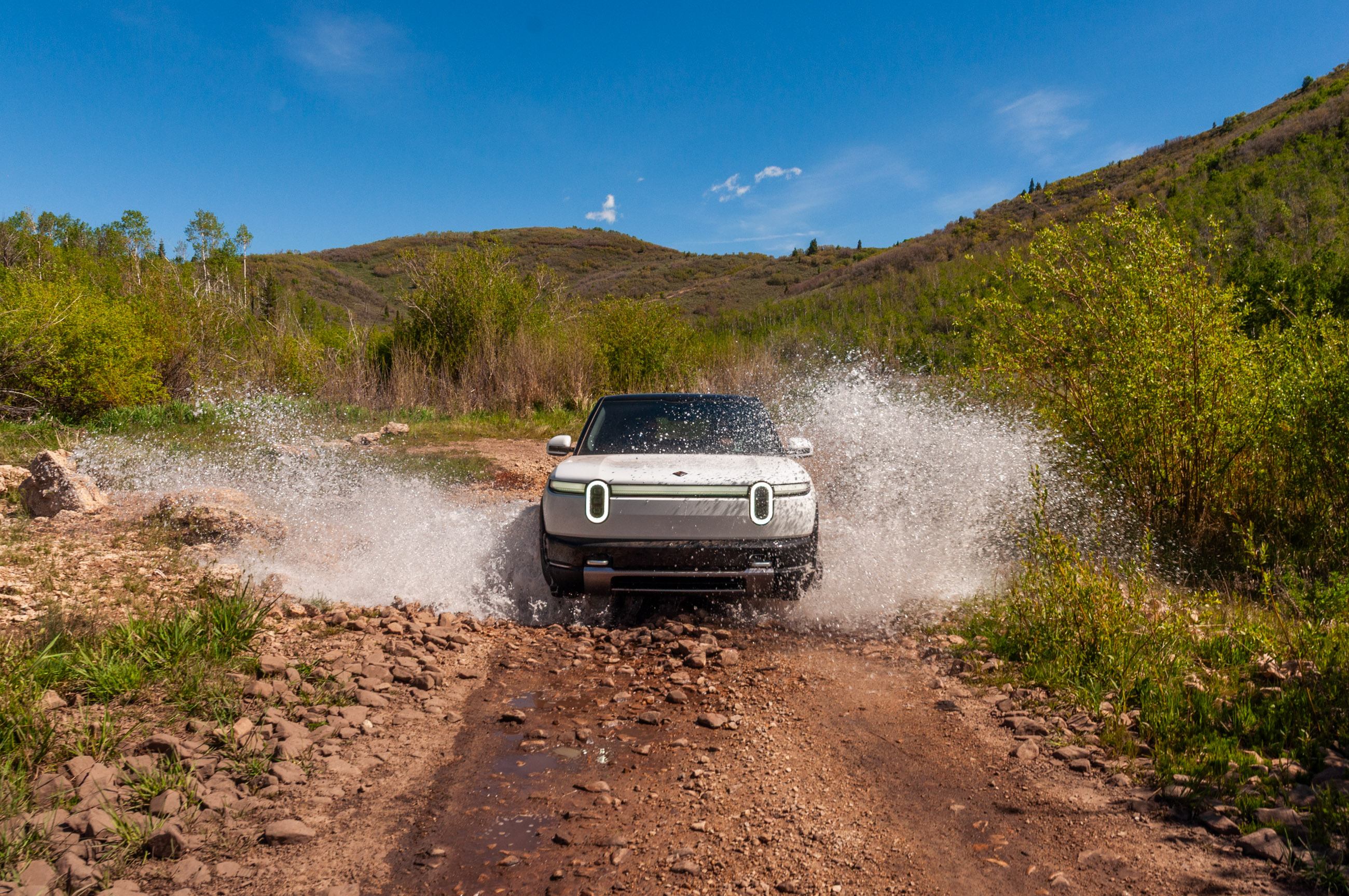
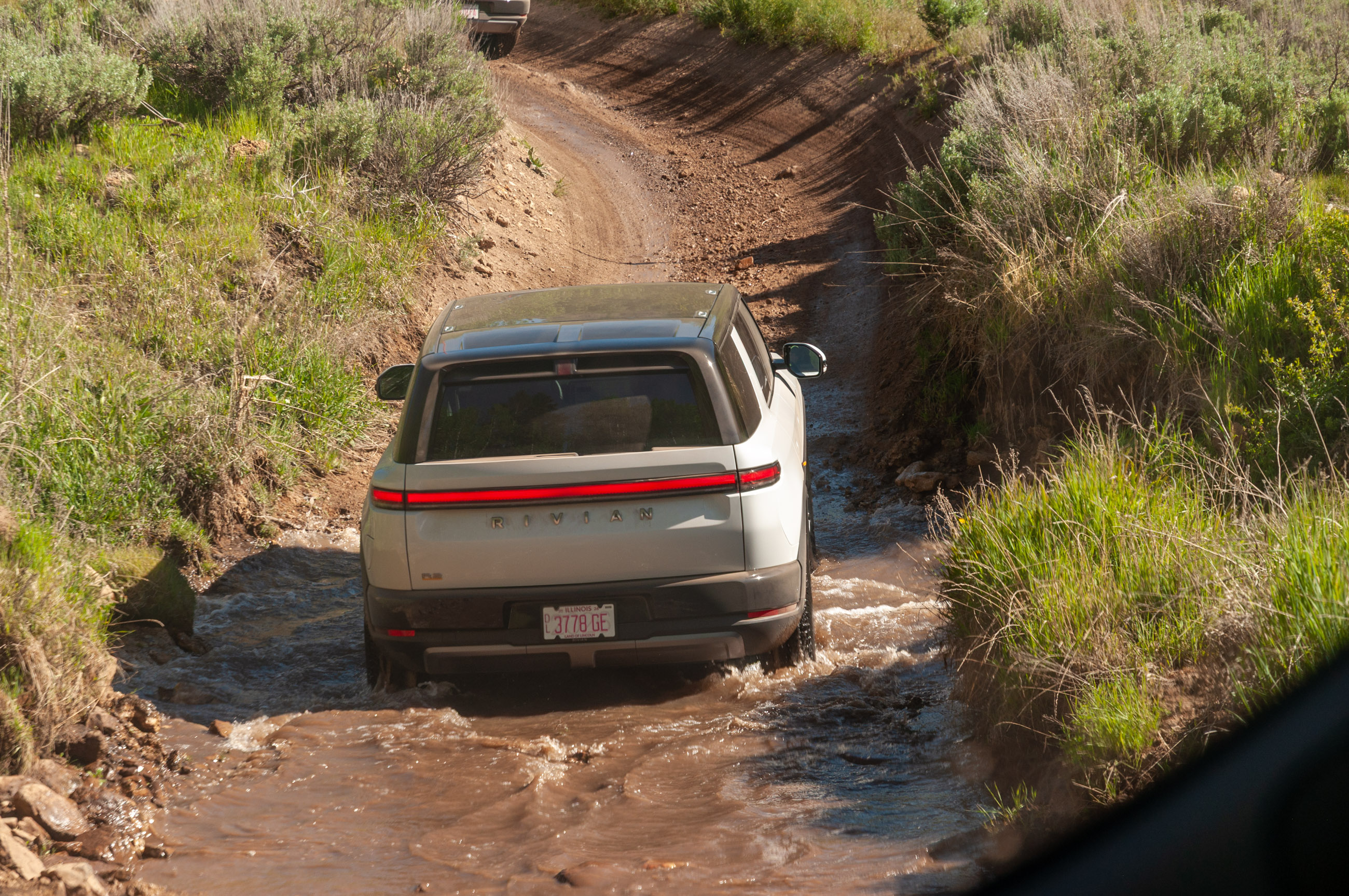
Off-road, the R2 has All-Terrain mode along with Rally and Soft Sand. I didn’t get to test the last one, though I toggled into Rally mode to test its handling characteristics on gravel fire roads.
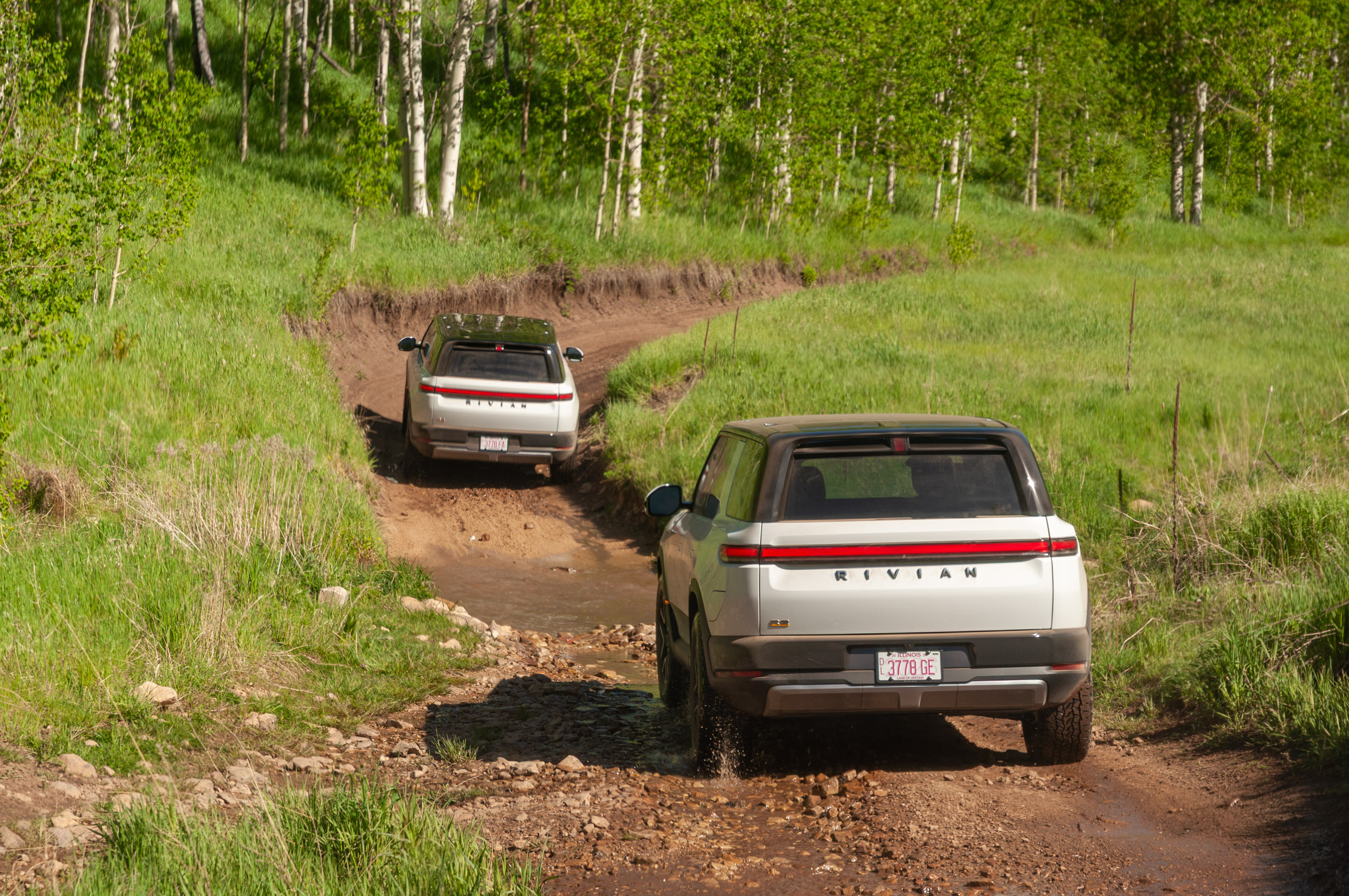
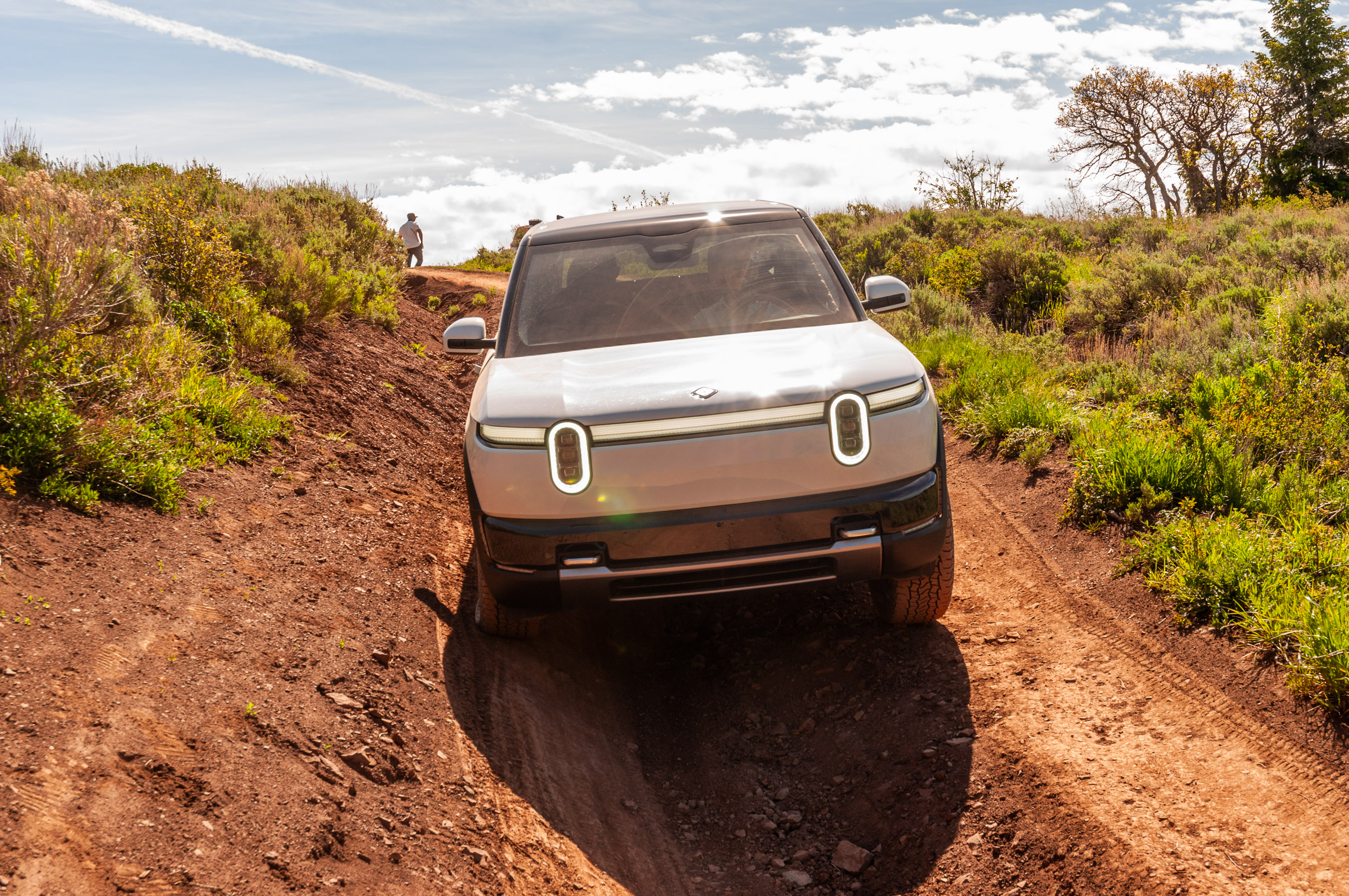
During off-road time, the R2 had a single tire slip: the front driver’s-side tire. The mapping for the accelerator pedal, one-pedal driving with regenerative braking, fine motor control, and steering all faded to the background, and never once did I think about them.
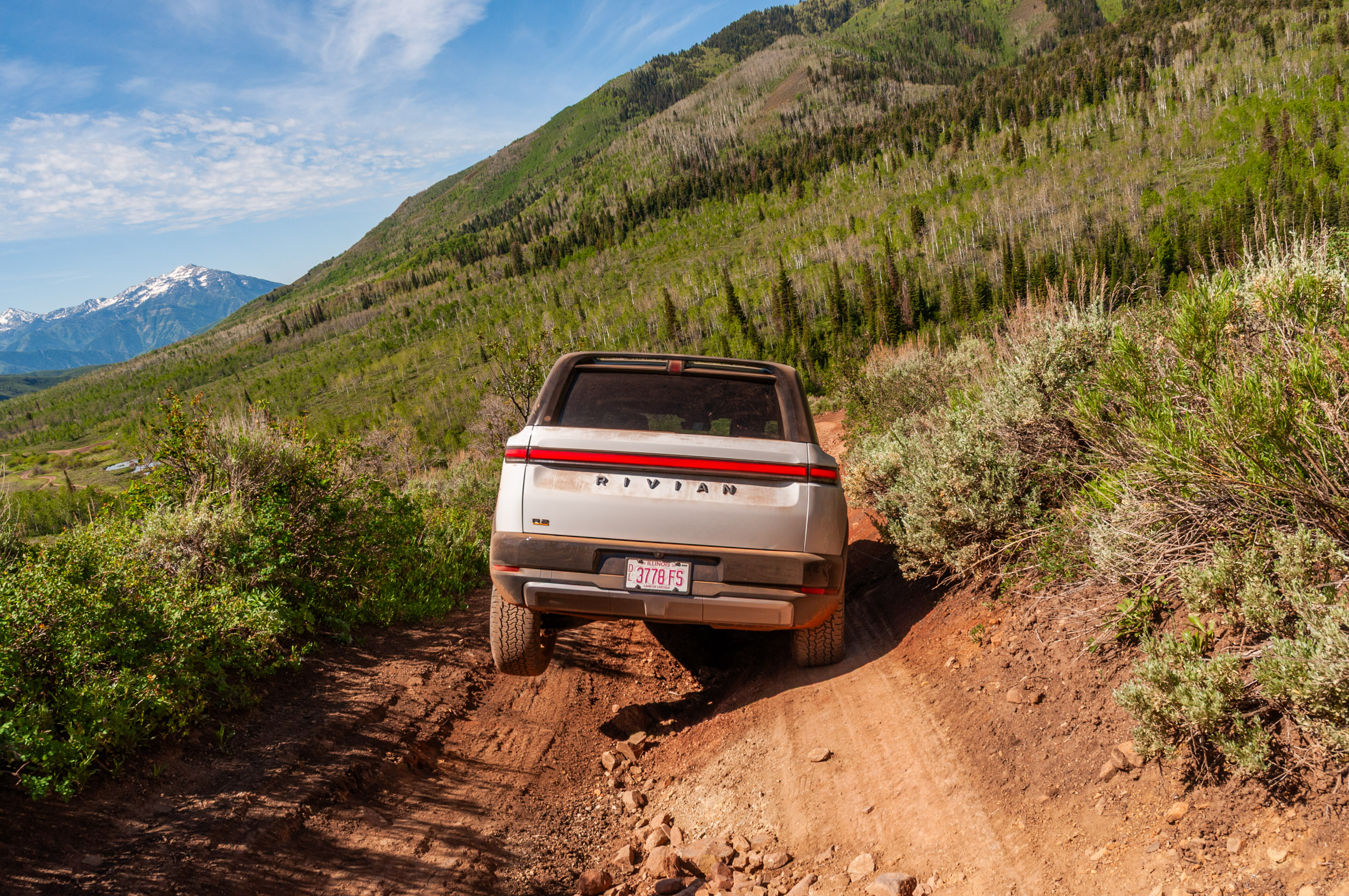
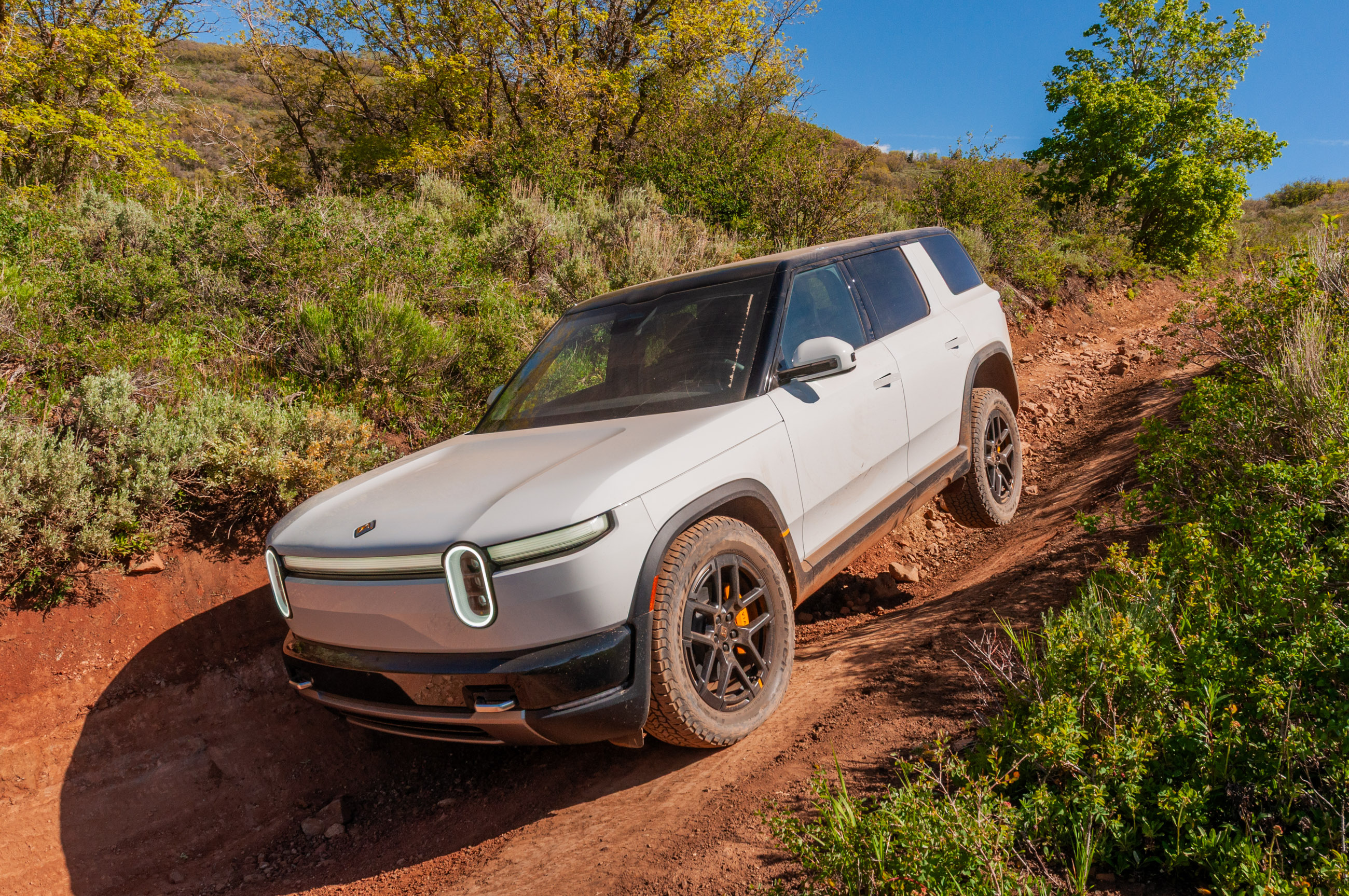
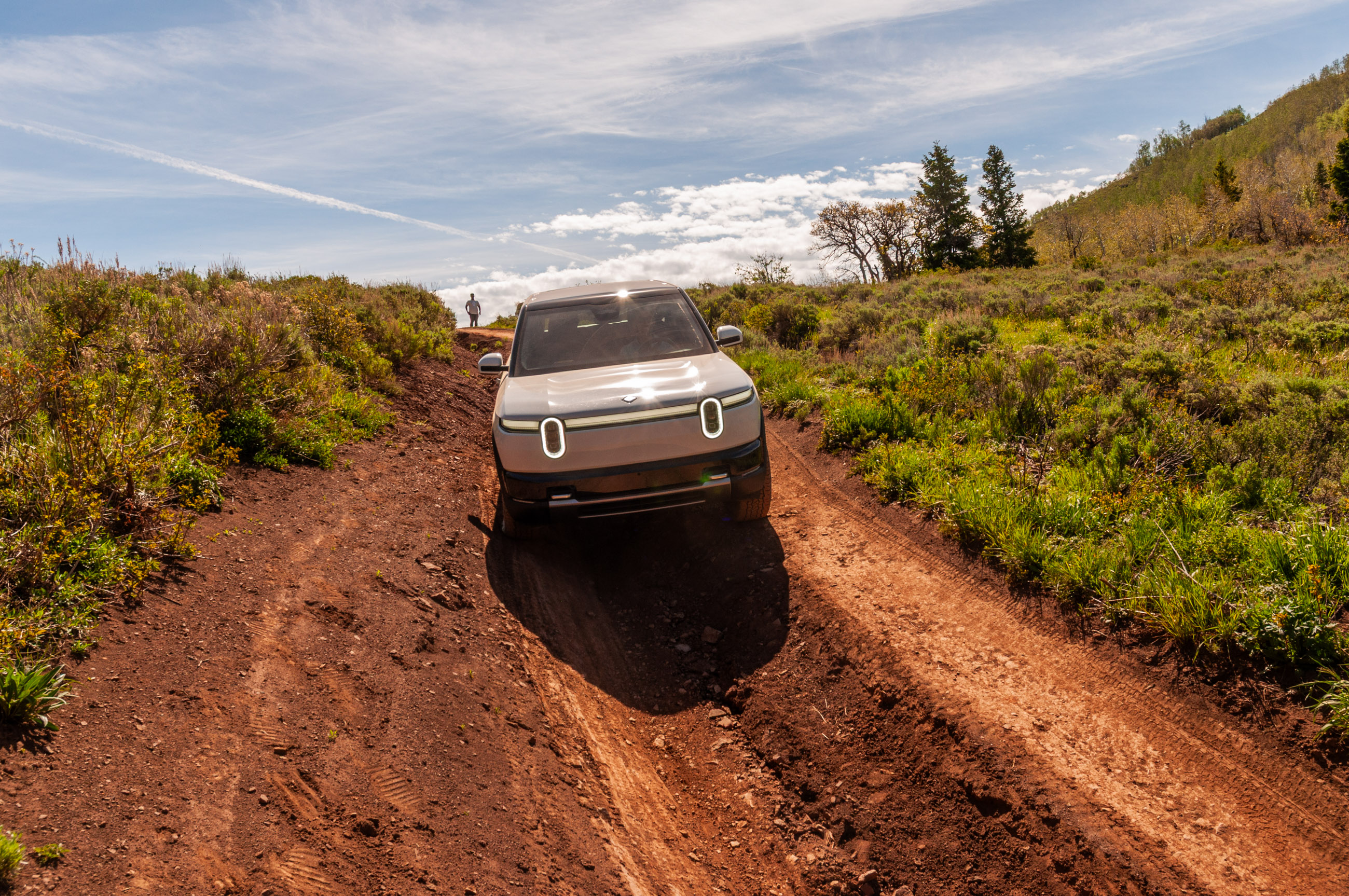
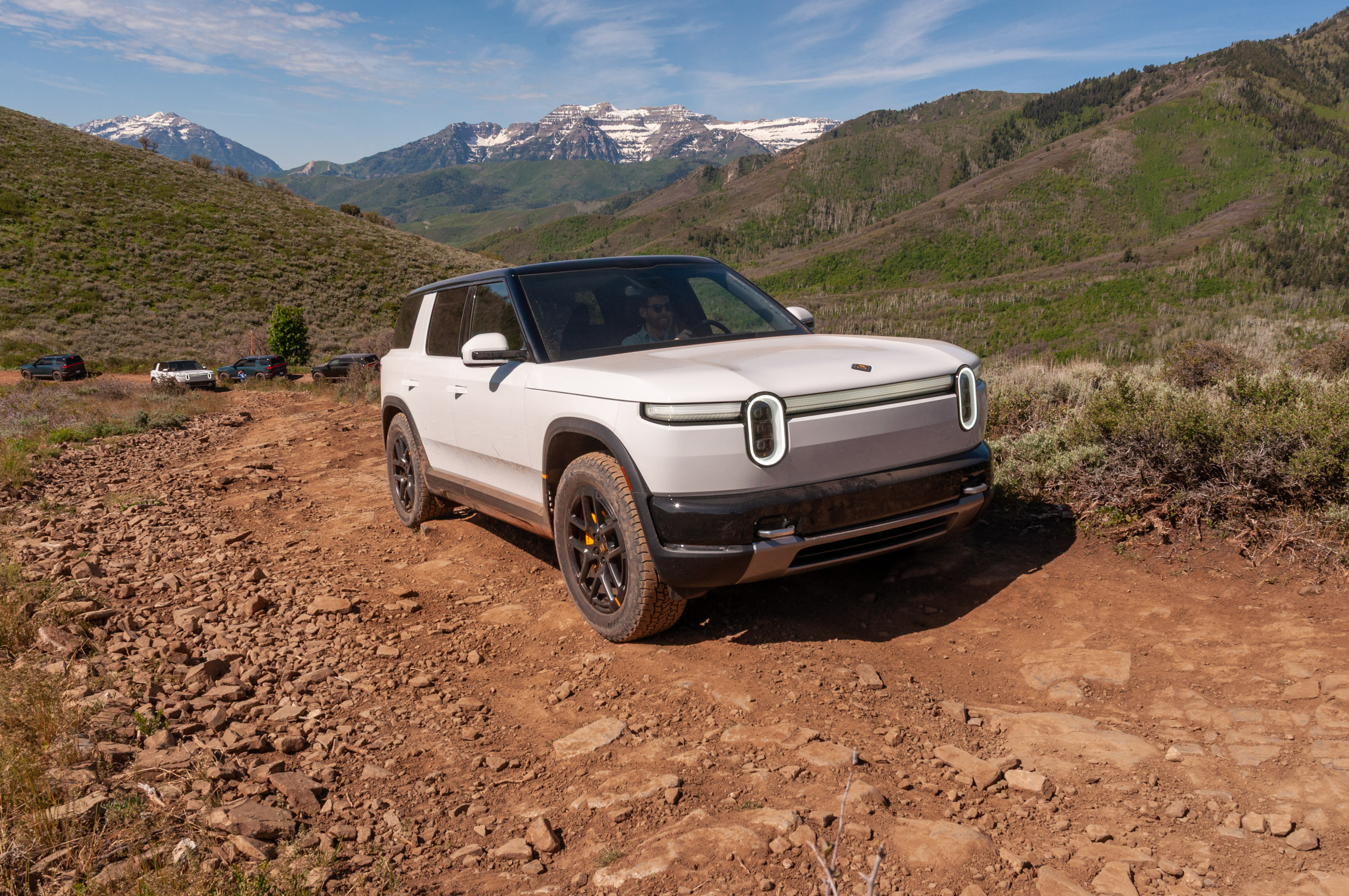
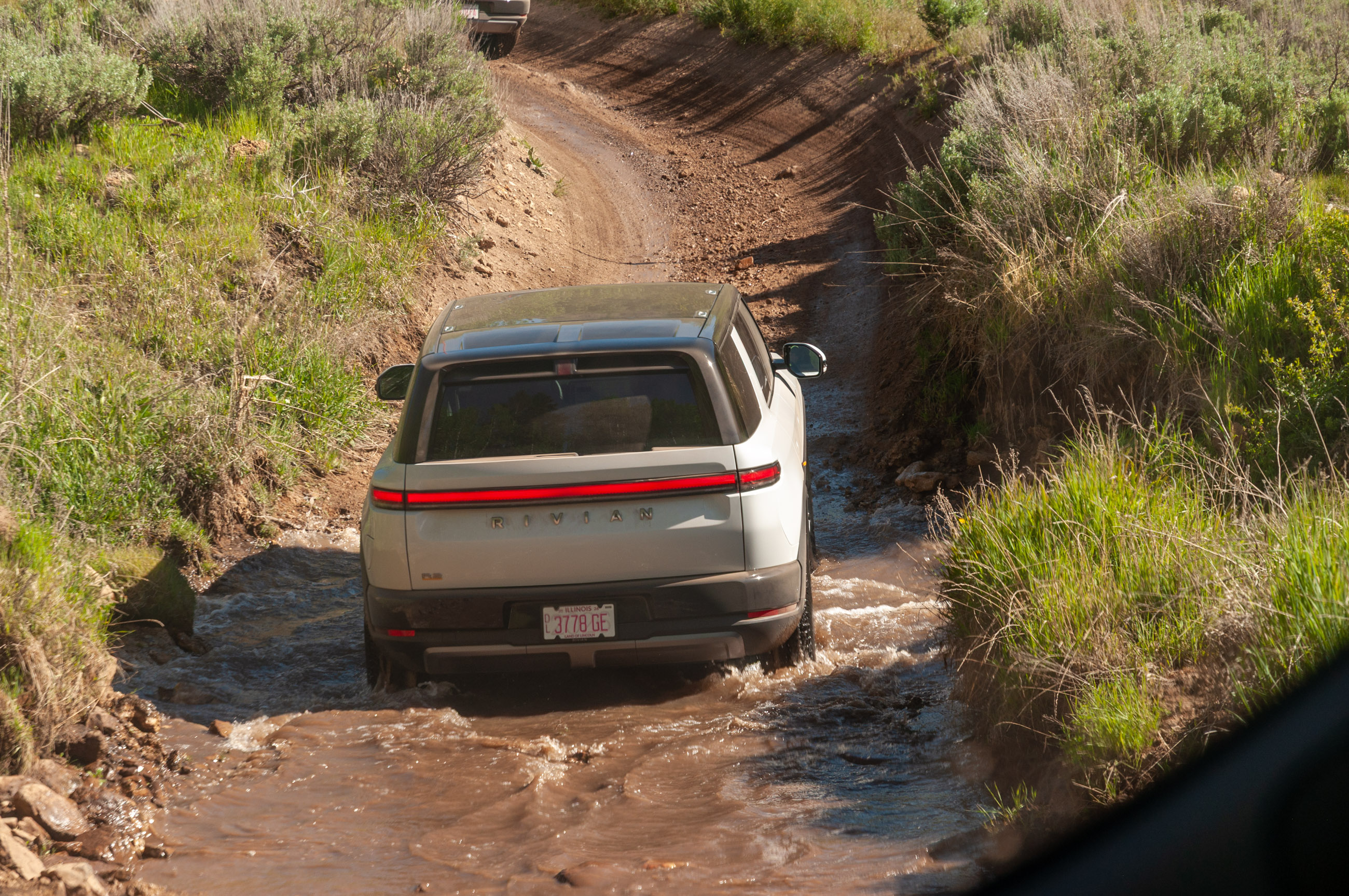
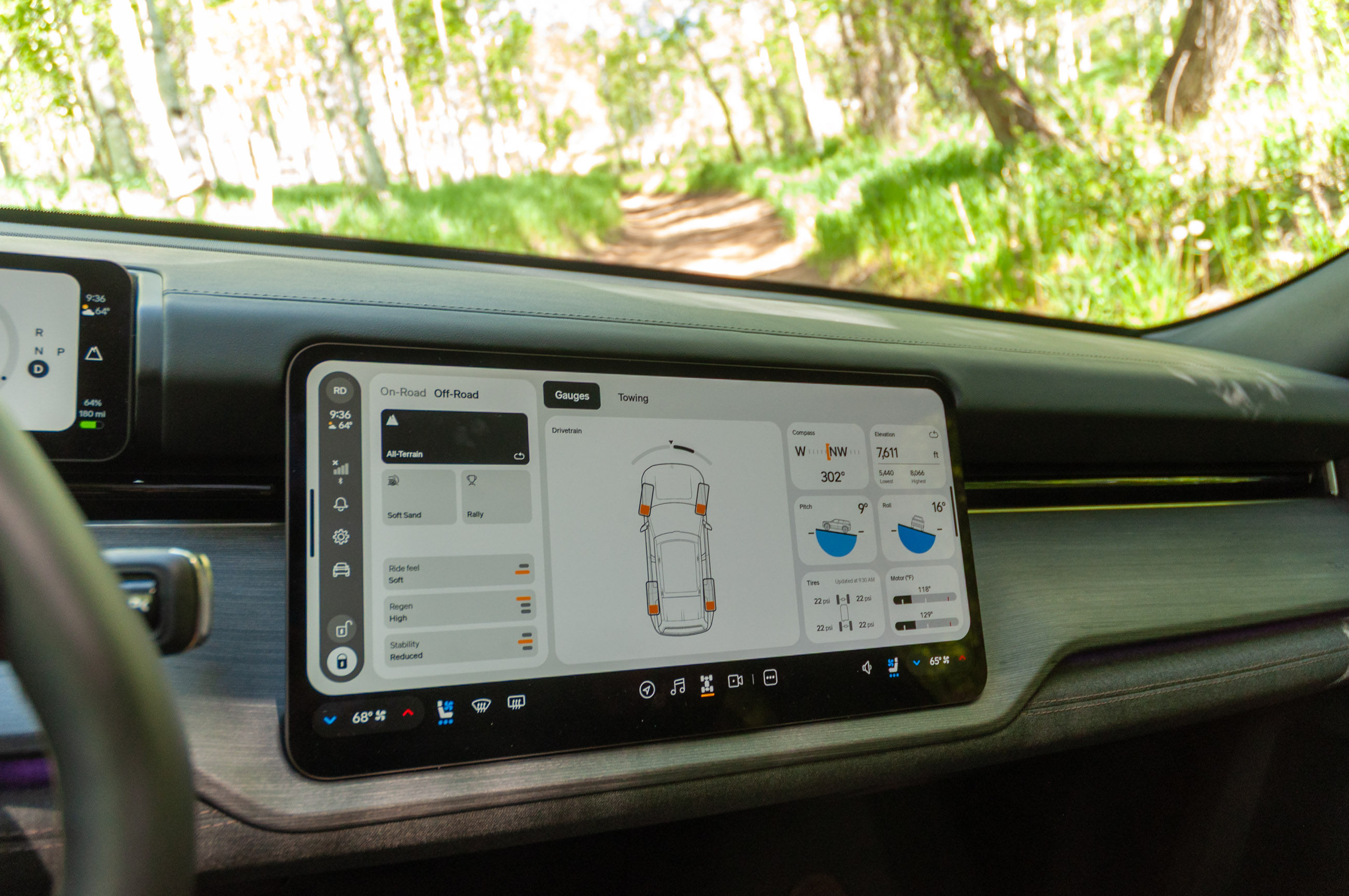
The R2 has 9.6 inches of ground clearance, which few competitors can match, but it lacks the metal skid plates found on the larger R1S when equipped with the off-road package. Hardened composite panels hide the entire underside of the R2 and are said to be enough for what it can handle. Vehicle Dynamics Director Werner Naegeli said the reinforced panels can take a beating, and I’ll note I did make contact once without him wincing.
The R2 is far simpler and arguably less capable off-road than the R1S. There’s no air suspension, no hydraulic roll control system, and less ground clearance because of the former. The simple suspension and 20-inch BFGoodrich Trail Terrain tires ate up the dirt and soaked up the bumps without a lot of head tossing. My driving partner, who had hip surgery three weeks ago, didn’t complain once (and he complains about everything). While we hung a wheel up in the air multiple times while crawling up rocks, down steep grades, and more, the R2 never flinched. It seems one step above and more capable than a Subaru Wilderness model, which is to say, far more than most consumers will need when buying one of these.
Range and Charging
The R2 Performance will have up to 330 miles of range. The same goes for the less expensive Premium model, which will arrive later in the year. The Standard RWD Long-Range and Standard RWD models arriving next year will have 345 and 275 miles of range, respectively.
During my brief test, I observed a mixed number of 4.54 mi/kWh over 15 minutes, and 2.27 mi/kWh after driving with down the highway and then up twisty roads. If real-world efficiency falls somewhere between all this, then those range ratings will be accurate. The R2 can reportedly fast-charge from 10% to 80% in 29 minutes and has a peak charging rate of 230 kW.
Features, Options, and Competition
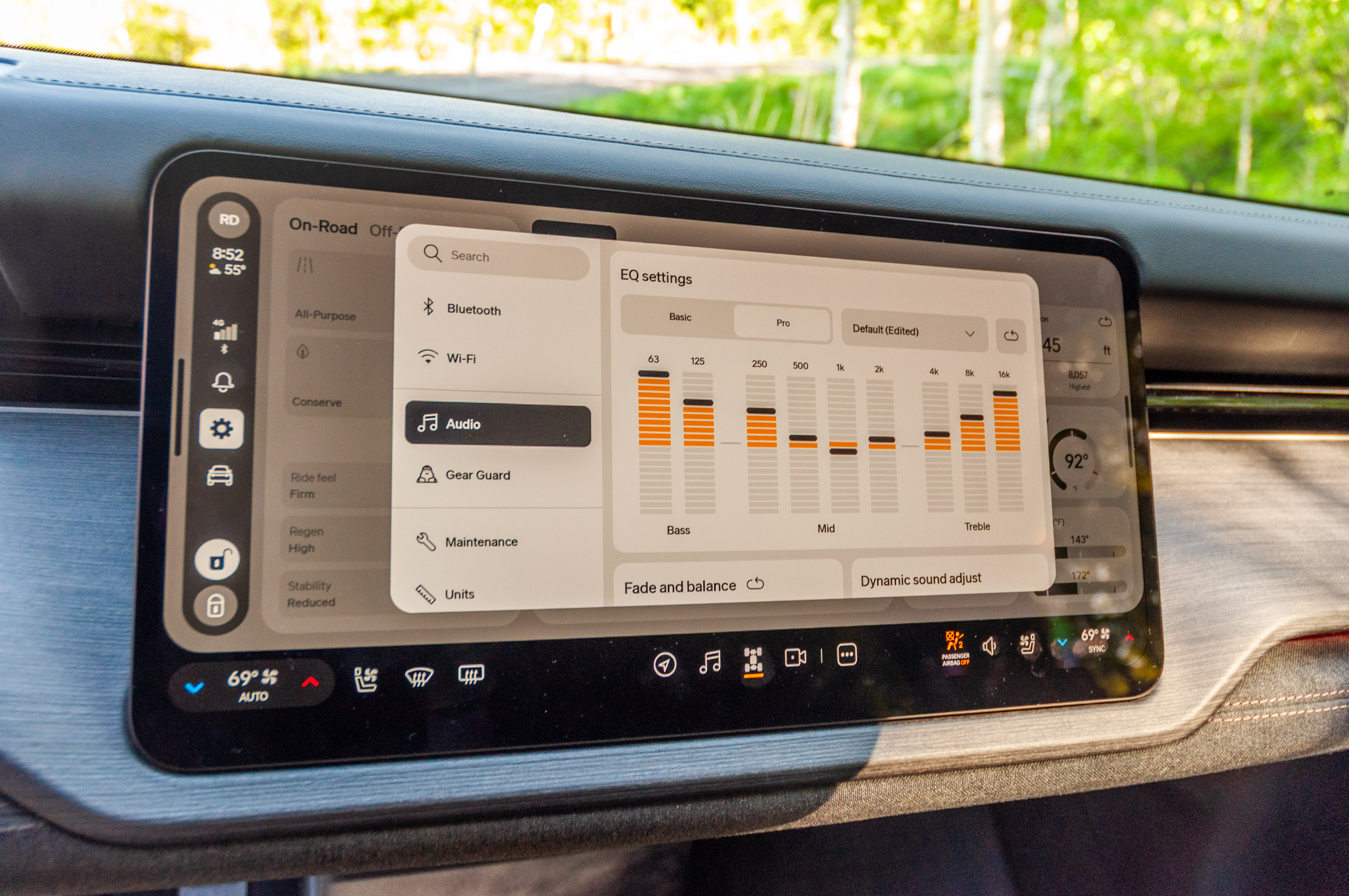
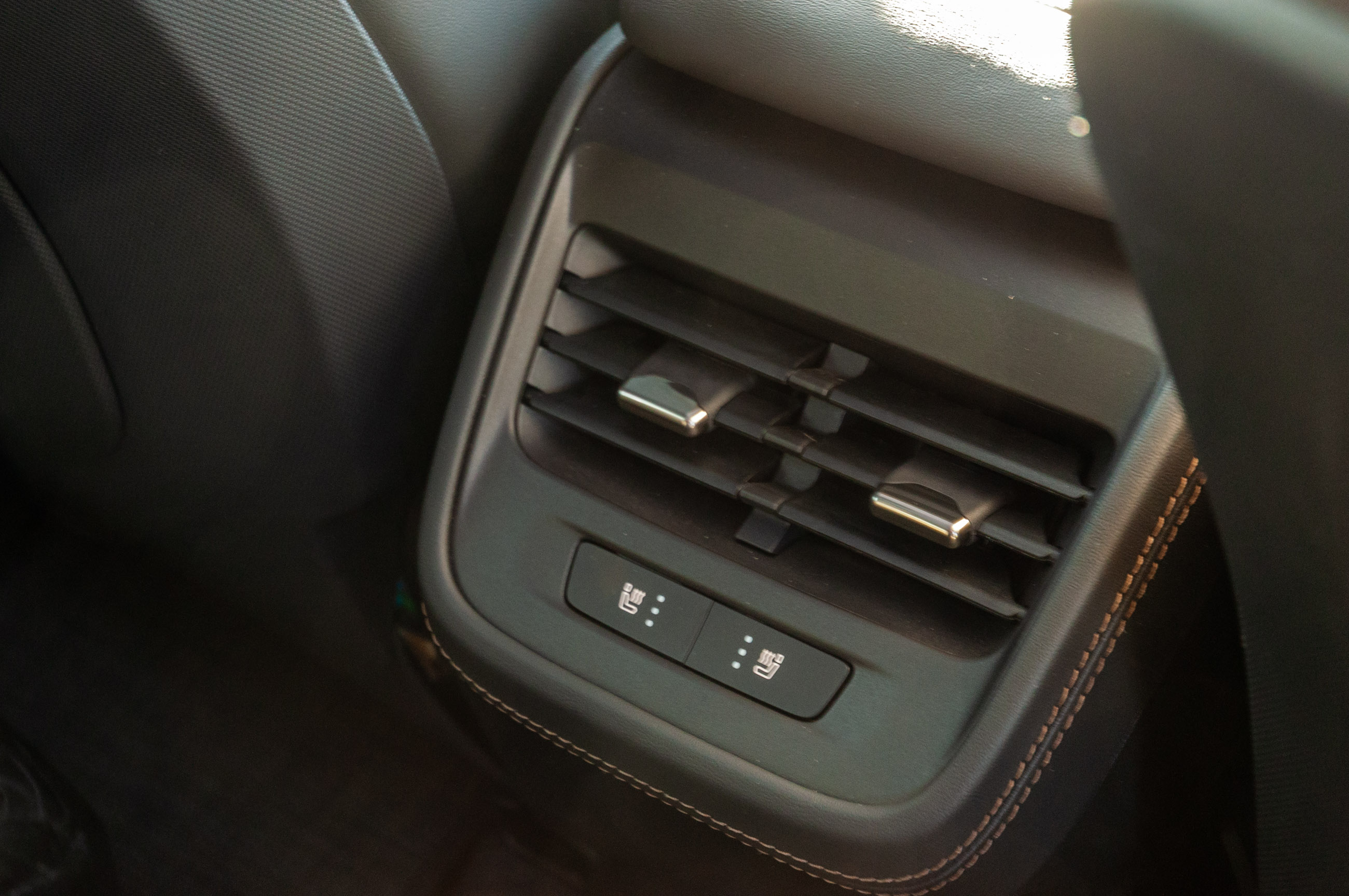
Base R2s will cost $46,485, including a $1,495 destination charge. They’ll be equipped with heated front and rear seats, synthetic leather, LED lighting, power-operated front seats, a five-speaker audio system with 525 watts and two subwoofers, and a full suite of active safety equipment including 11 cameras and five radar units. Let’s not forget about the upcoming Pet Cam feature, which is exactly what it sounds like. The top-spec Performance Models landing in customers’ hands today cost $59,485 and add everything from a nine-speaker audio system with 975 watts to heated and ventilated front seats, heated rear seats, semi-active dampers, front tow hooks, the drop-down rear window, and dynamic Matrix beam adaptive LED headlights.
The pricing, features, range, and overall package delivered by the R2, not to mention the wide range of capabilities, set it apart from everything else. It costs less than the Volvo EX60, BMW iX3, Mercedes-Benz GLC Class Electric, and Porsche Macan Electric, but more than a Ford Mustang Mach-E, Hyundai Ioniq 5, Kia EV6, and Tesla Model Y, aside from the new, stripped-down base model. As a point of reference, Tesla sold over 357,000 Model Ys in the U.S. in 2025 while Toyota sold nearly 480,000 RAV4s. The average transaction price of a vehicle on sale in the U.S. today hovers just below $50,000. It’s hard to imagine a world where I would recommend someone buy a loaded Chevrolet Equinox EV for just under $55,000 over a Rivian R2.
The Verdict
In 2022, I drove an early-production Rivian R1T Quad with a colleague, an engineer, and a spokesperson. After talking over every inch of it, hammering on it on- and off-road in the dry and wet, and while squinting really hard, I looked at the spokesperson and said, “So this is the first car you all have ever made?” “Yes,” they said. I turned to my colleague and said, “Everyone should be terrified if this is what they can do on day one.” Fast forward to today, and I was right. Other automakers have grossly underestimated Rivian.
Rivian came to win, and at first blush, it just might. If nothing else, it’s poised to steal a serious chunk of market share. This is the car that will be ideal for a large swath of the public thanks to a combination of driving dynamics, styling, advanced technology, driving range, and a price point that hits in the heart of the market.
If the Tesla Model Y is the best-selling EV in America (by a wide margin) right now, it’s time for Elon, or at least Tesla’s board, to get nervous. You don’t have to drive a jelly bean to be in one of the best EVs, and you don’t have to spend six figures either.
Rivian provided The Drive with travel, accommodations, dirt in my hair, and access to the vehicle for the purpose of writing this review.
2027 Rivian R2 Specs
| Base Price (Performance) | $46,485 ($59,485) |
| Powertrain | Dual-Motor | single-speed automatic | all-wheel drive |
| Horsepower | 656 |
| Torque | 609 lb-ft |
| Seating Capacity | 5 |
| Curb Weight | 4,998 pounds |
| Towing Capacity | 4,400 pounds |
| Cargo Volume | 28.7 cubic feet behind third row | 79.4 cubic feet behind first row | 5.2 cubic foot trunk |
| Ground Clearance | 9.6 inches |
| 0-60 mph | 3.6 seconds |
| Top Speed | 130 mph |
| Off-Road Angles | 25° approach | 20.6° breakover | 26° departure |
| EPA-Estimated Range | 330 miles |
| Score | 9.5/10 |

Quick Take
Rivian seems to have created the ideal car for most people with its second act.
Loading comments…
Comments couldn’t be loaded. Please refresh the page.