
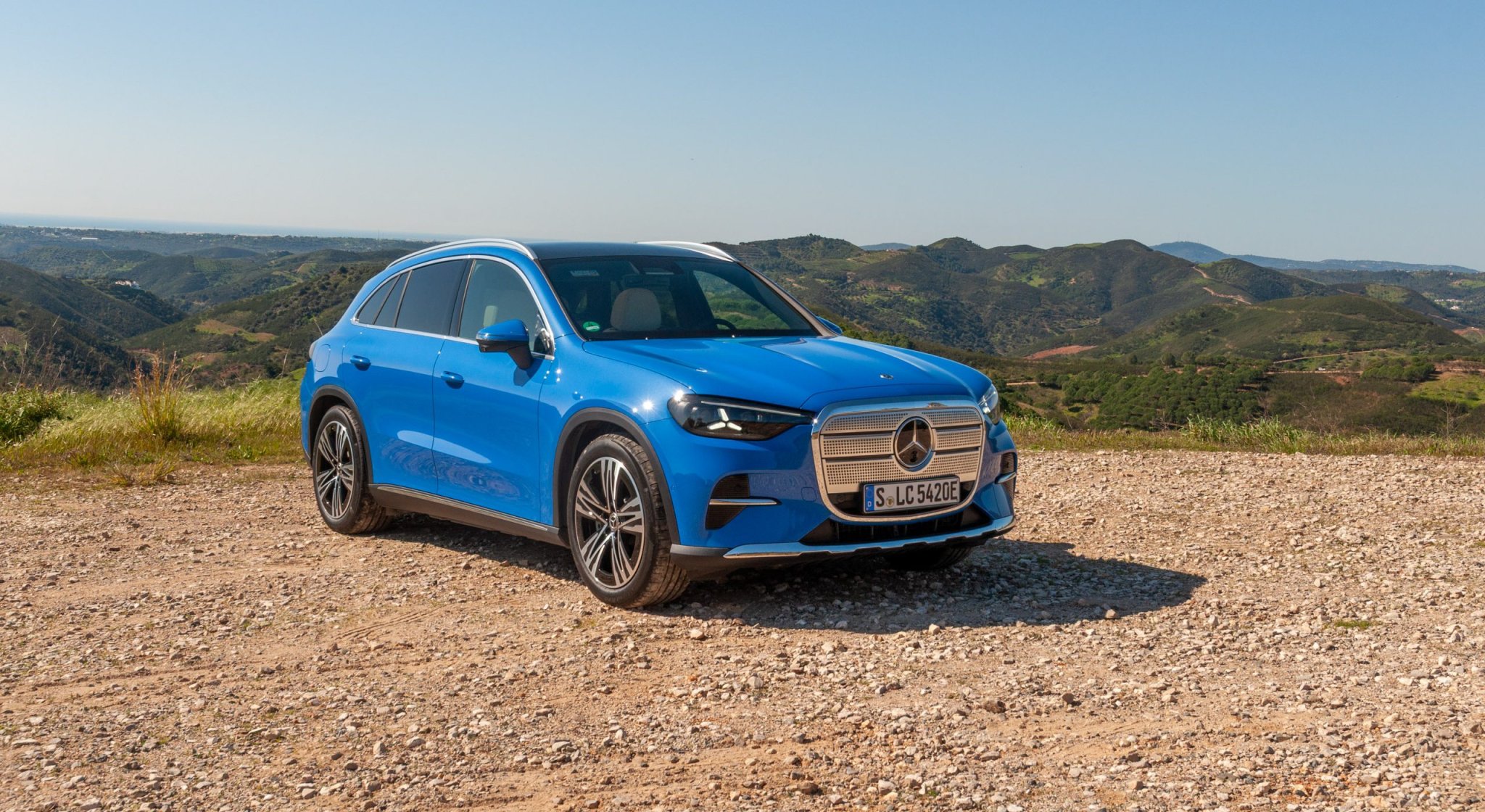
As automakers across the board walk back and kill their electrification plans, Mercedes is standing its ground. The German automaker plans to offer electric, hybrid, and, in some cases, plug-in hybrids across its lineup. The proof that it’s serious about the electric future? It’s preparing to launch the electric version of its best-selling vehicle, the GLC-Class, amidst the industry-wide pivot.
Set to arrive this fall, the electric 2027 Mercedes-Benz GLC is the next generation of the nameplate with a new electric powertrain, fresh design language, and spiffy technology that aims to push into the future without forgetting the past.
Mercedes tossed me the keys to a blue 2027 GLC for a day just outside of Faro, Portugal, to get a taste of what’s to come. It’s an impressive package with some great nods to the past, and neat integration of tech for the future, but hopefully, engineers get a little more time to fine-tune the suspension before it arrives across the ocean later this fall. Here’s what I learned.
The Basics
This is technically the new GLC—just the GLC—to the point Mercedes just calls it that here and there in its press release, as well as its marketing materials. In another timeline, it’s as if a new gas-powered model wouldn’t even exist, but we aren’t in that timeline, and a gas-powered model will arrive to live alongside the EV in showrooms.
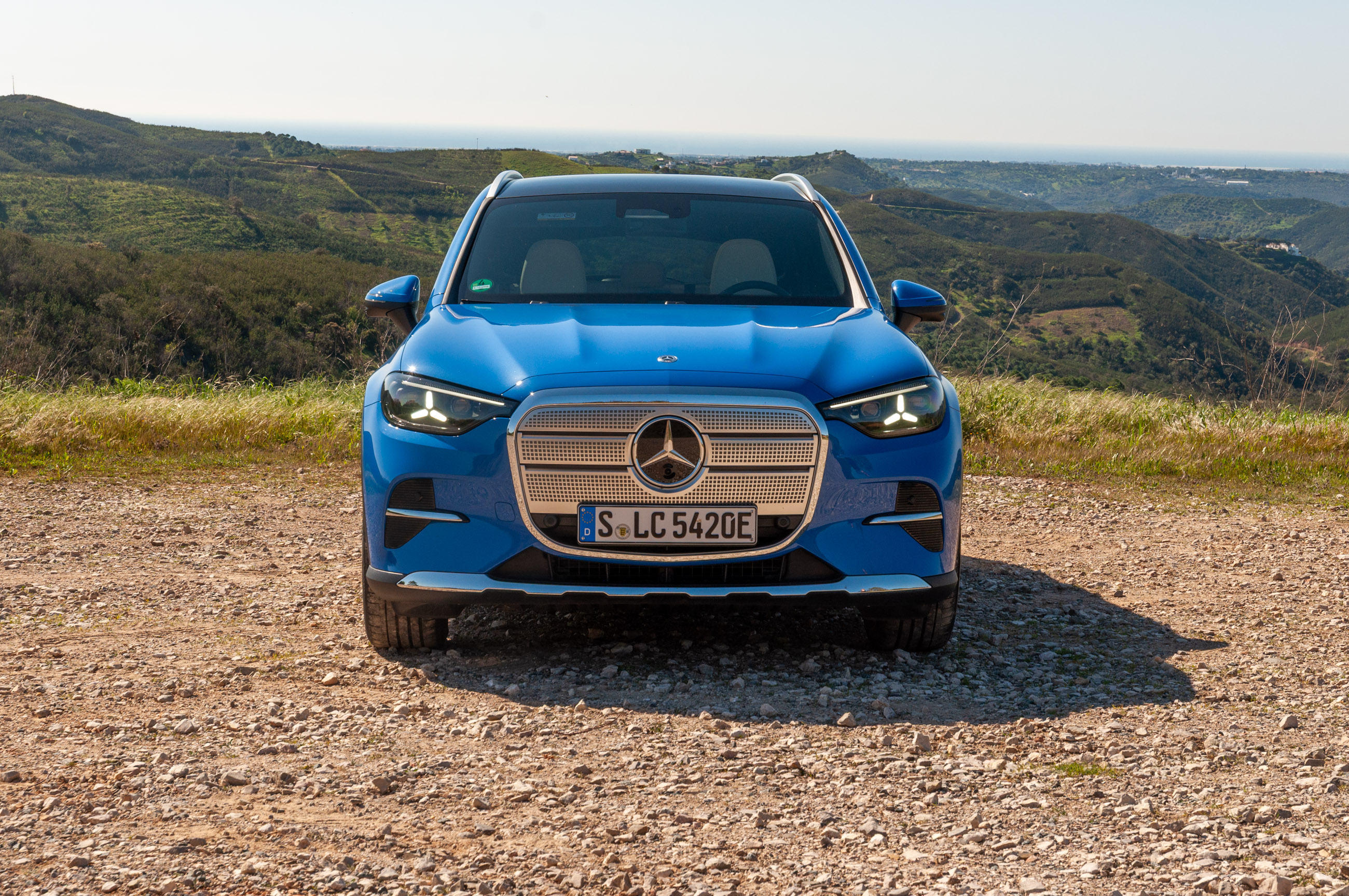
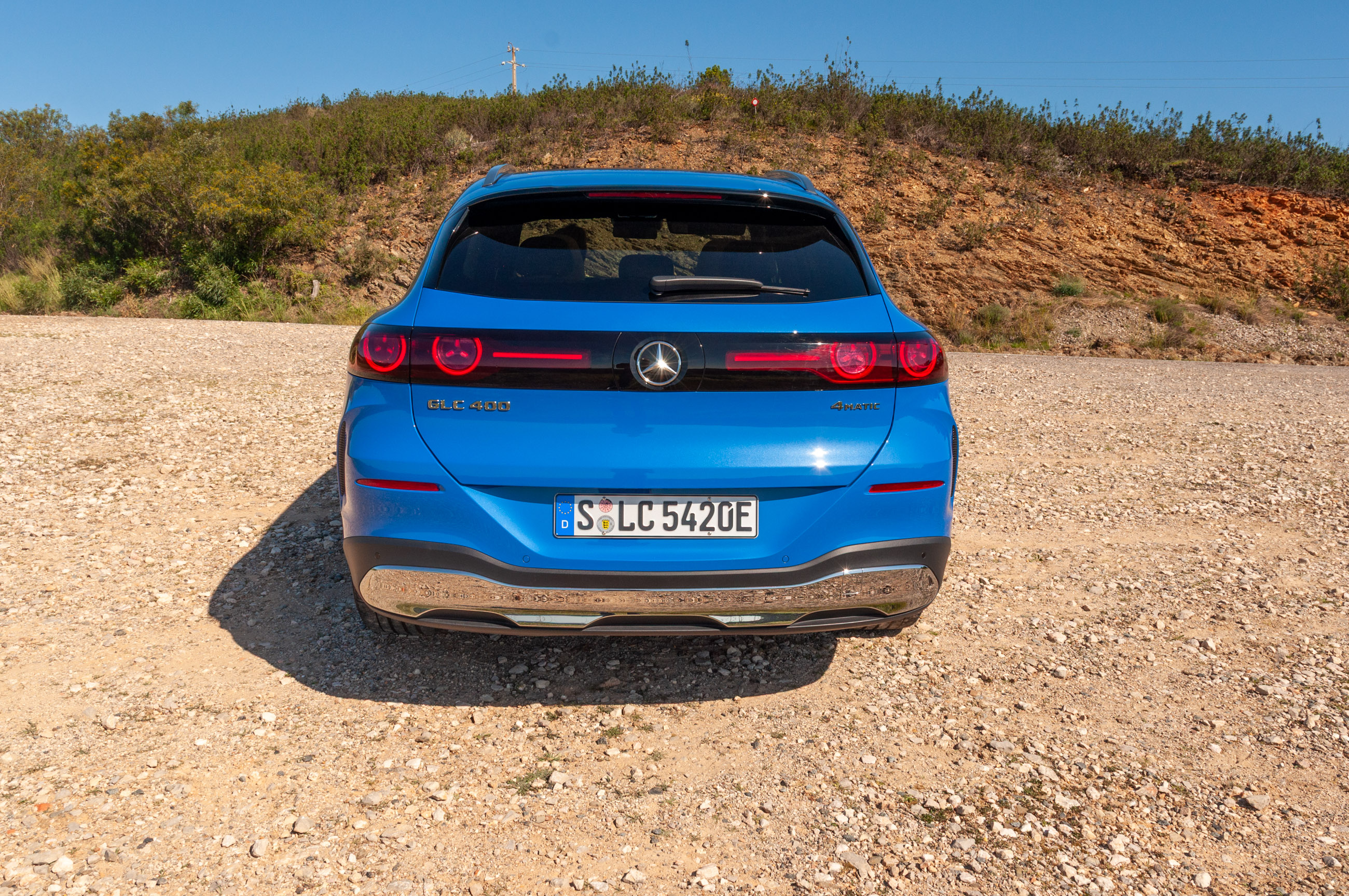
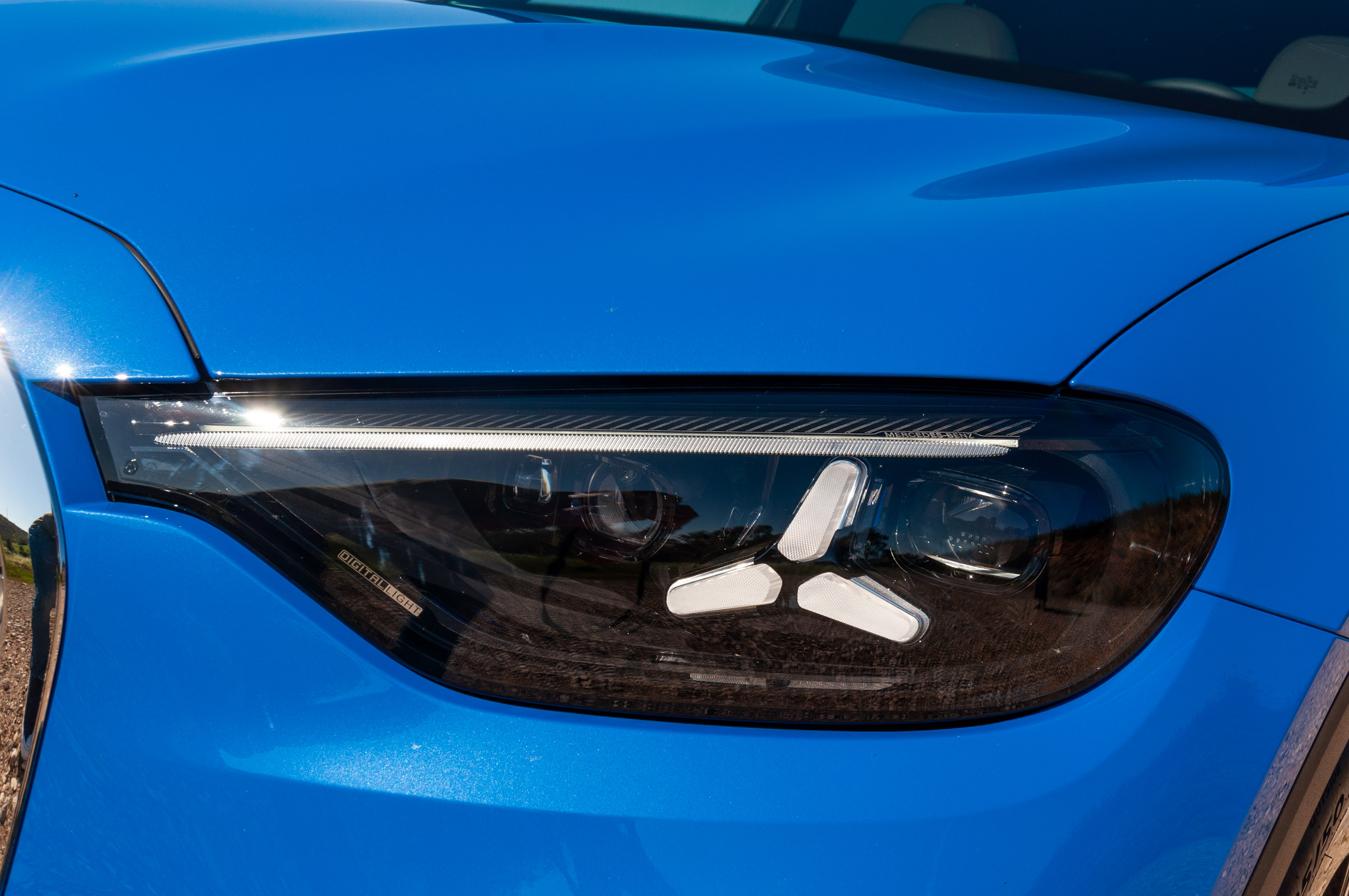
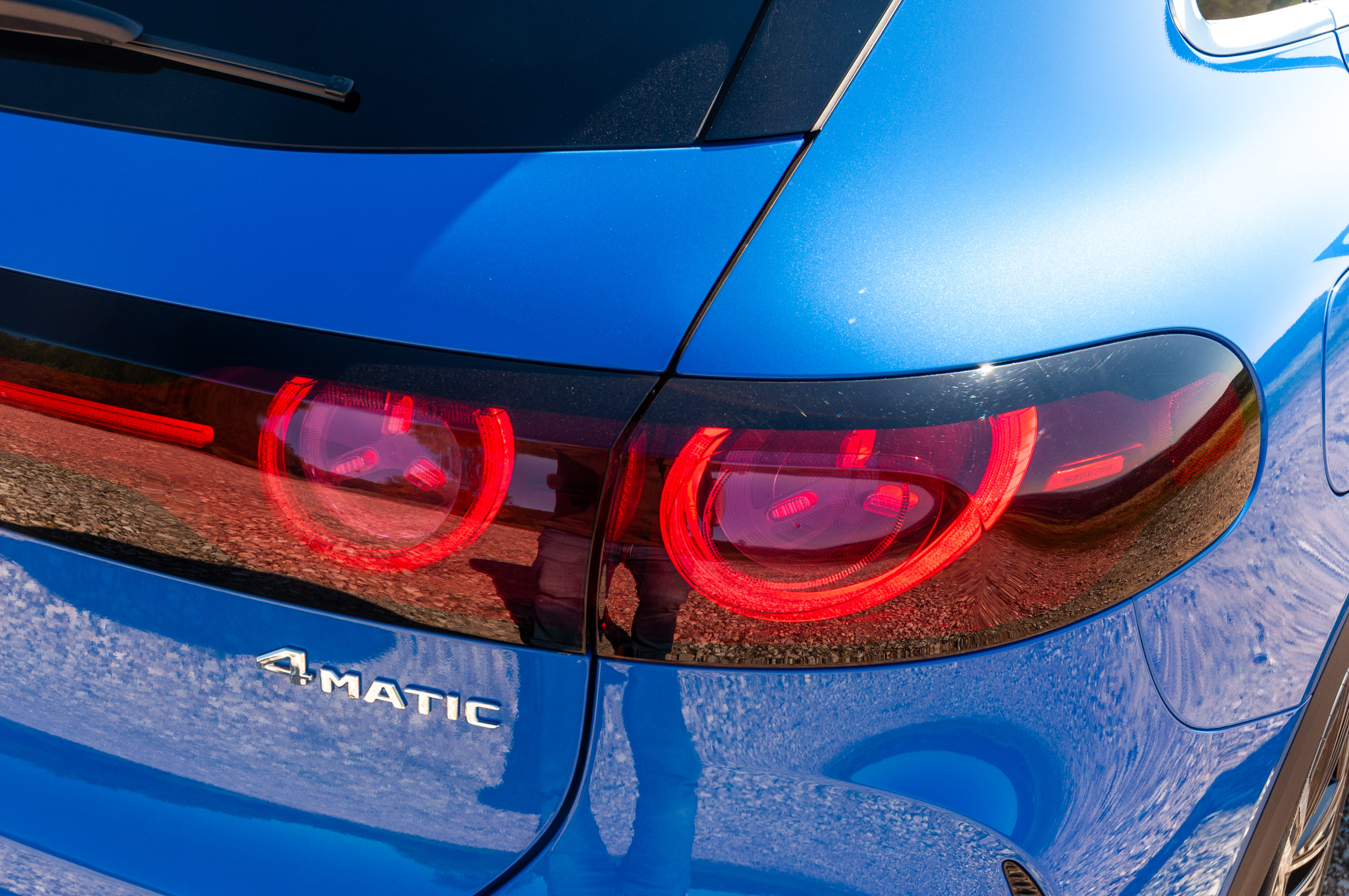
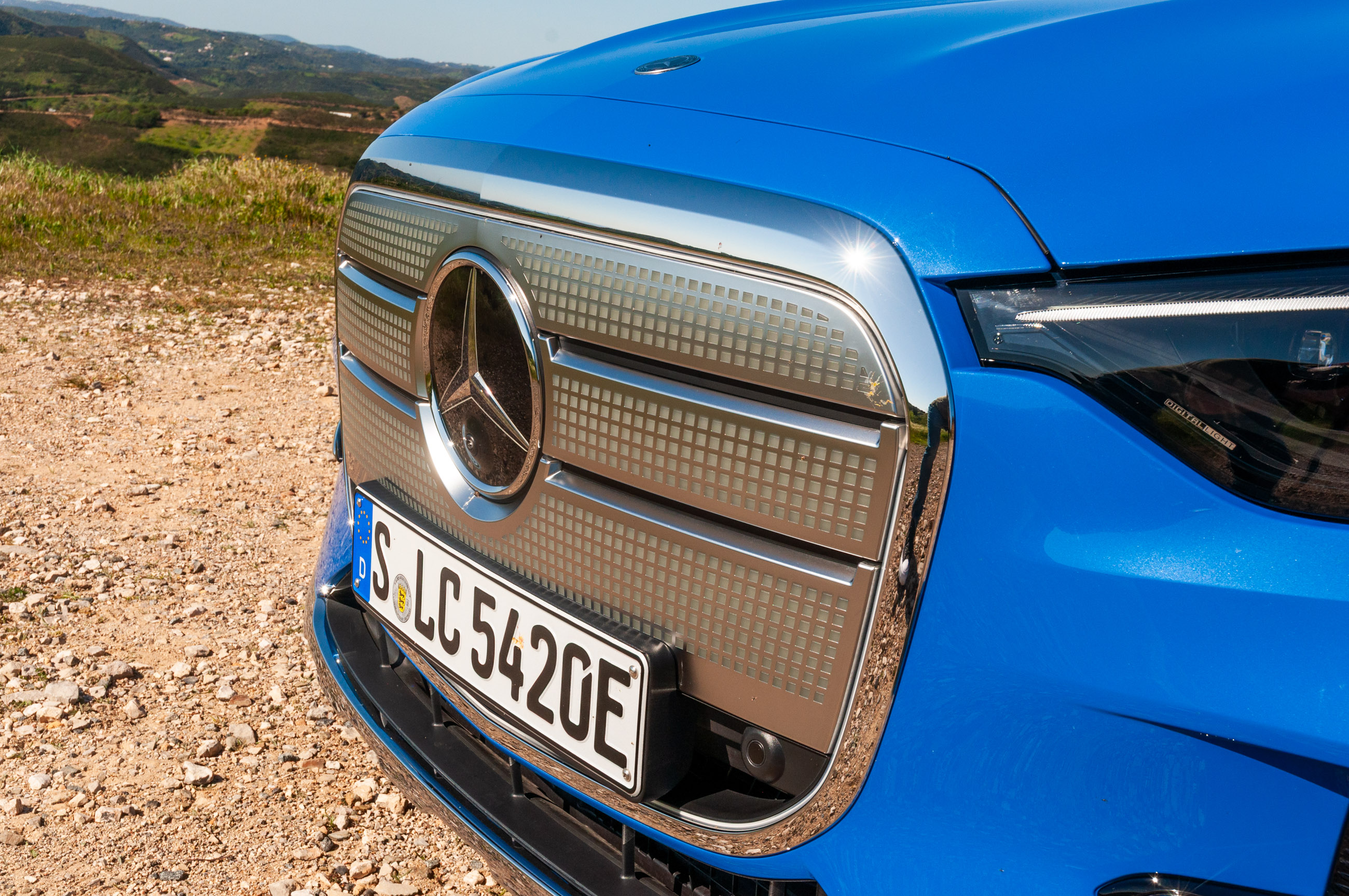
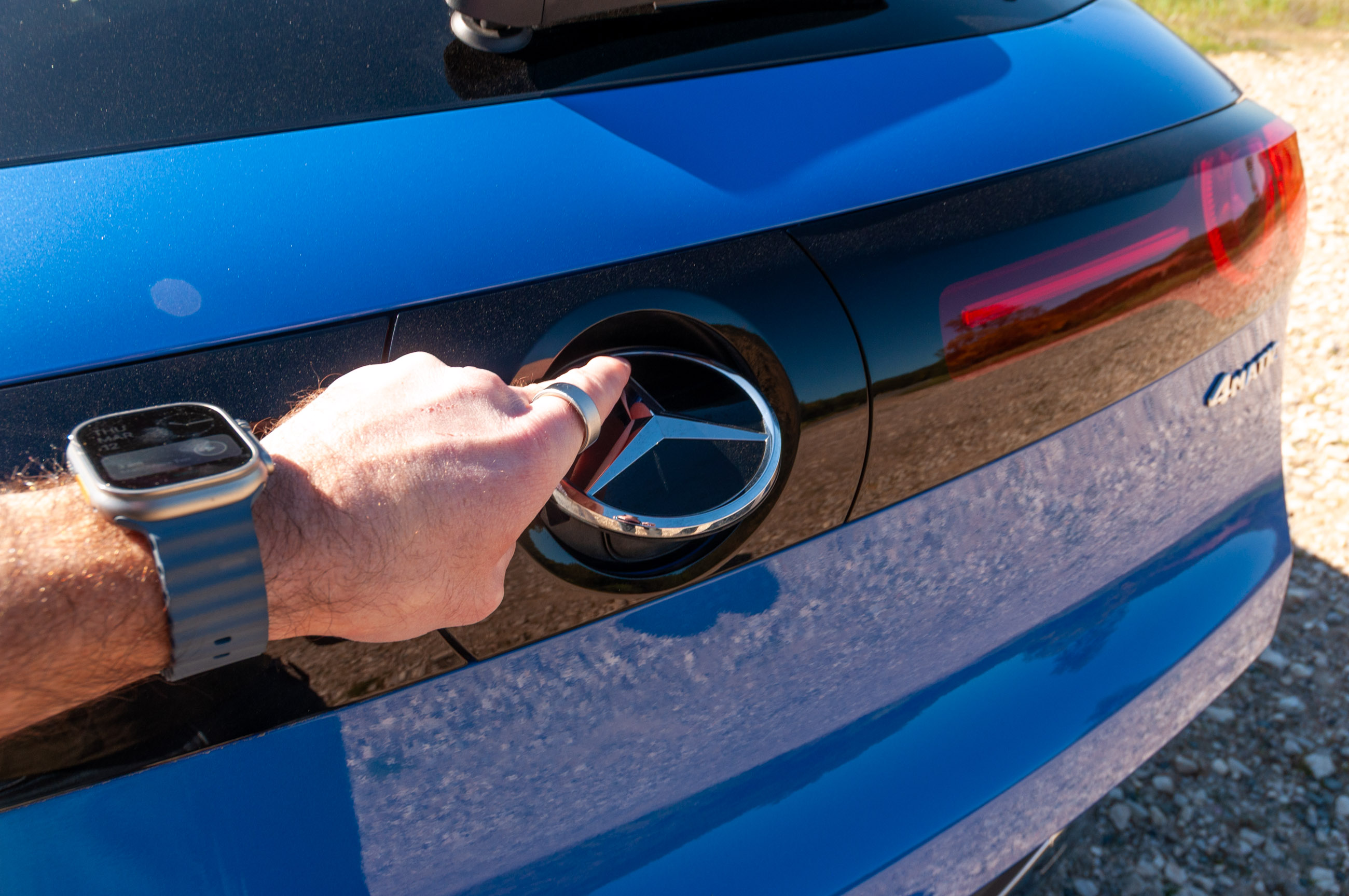
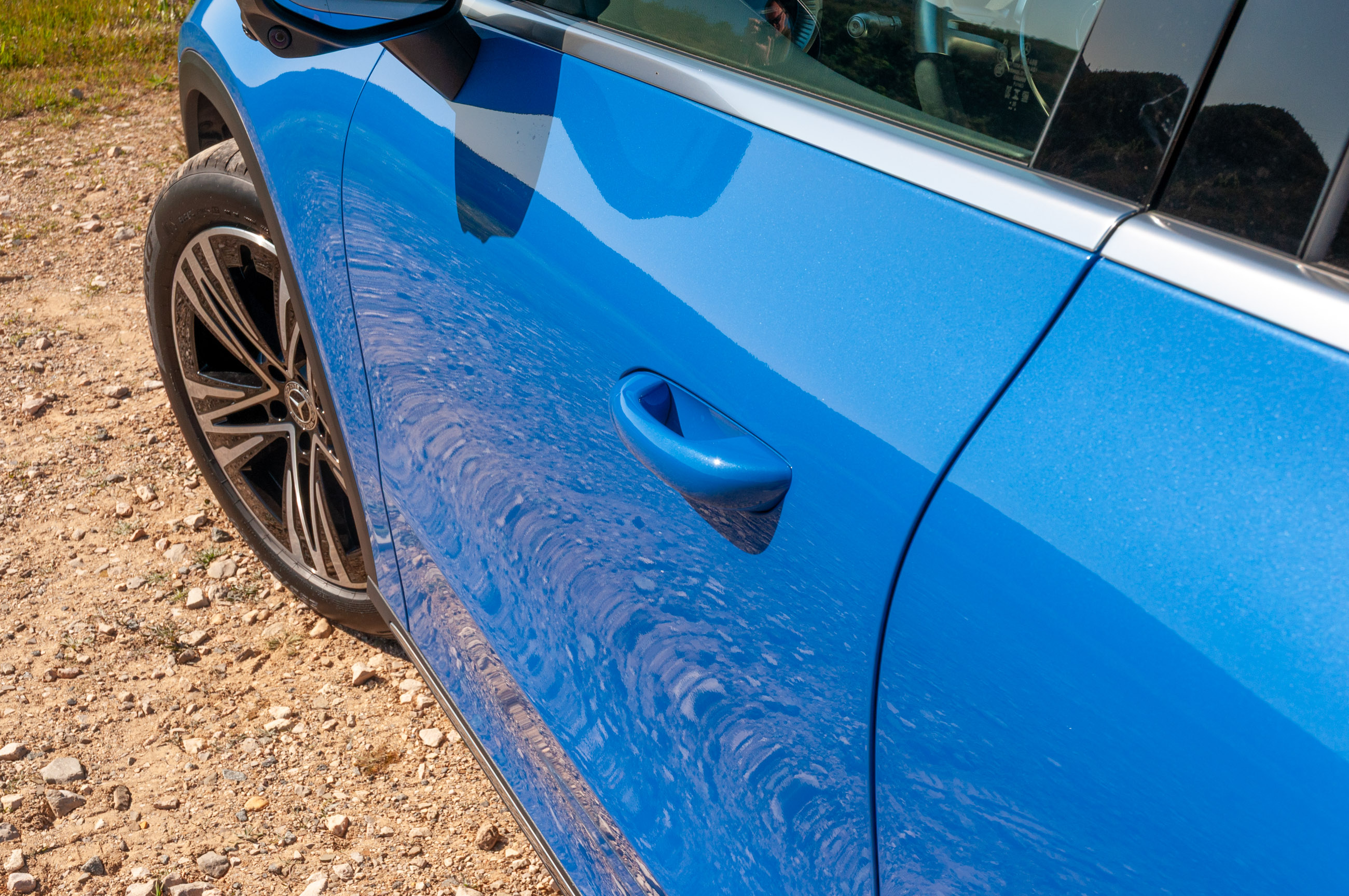
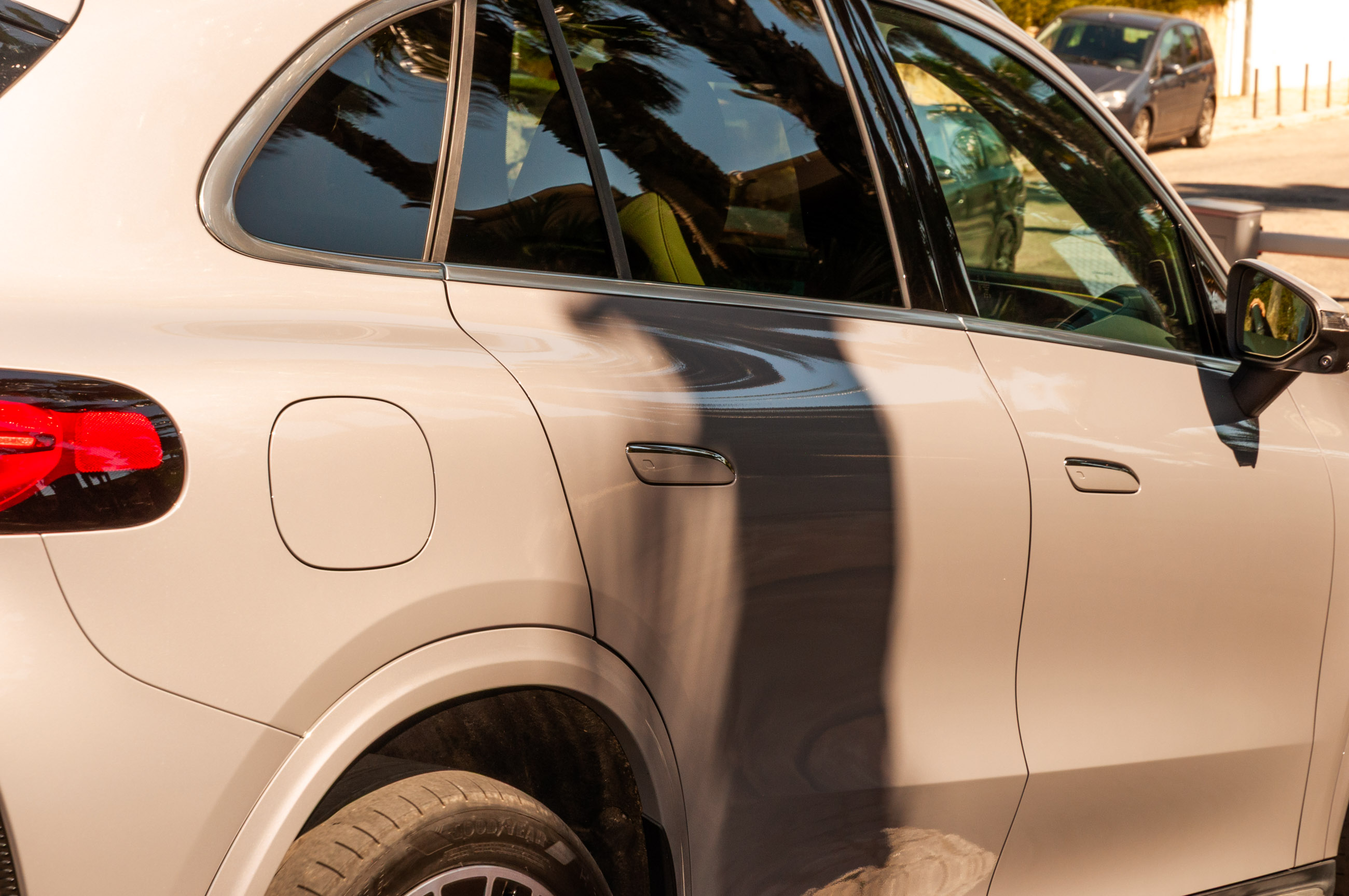
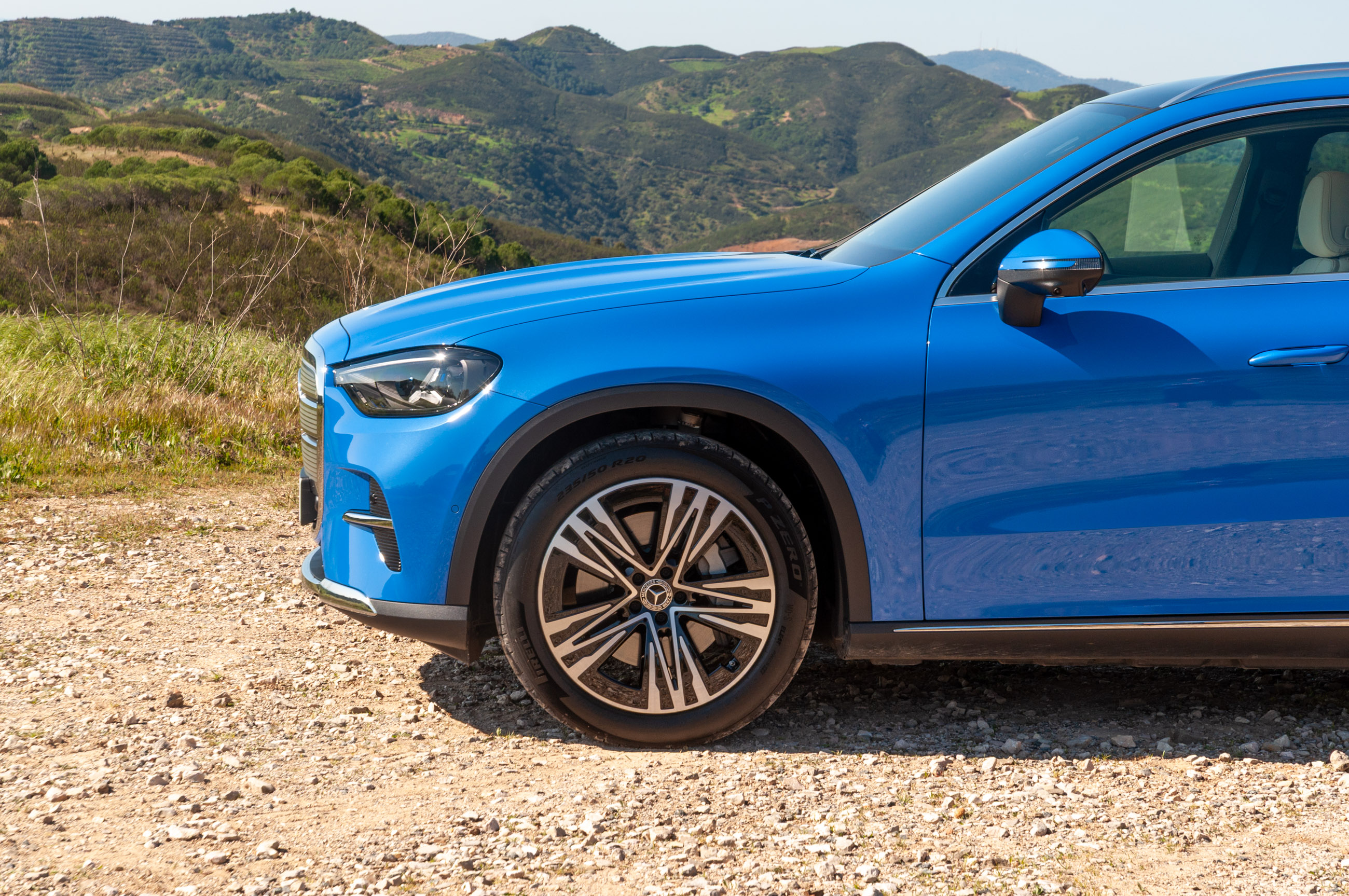
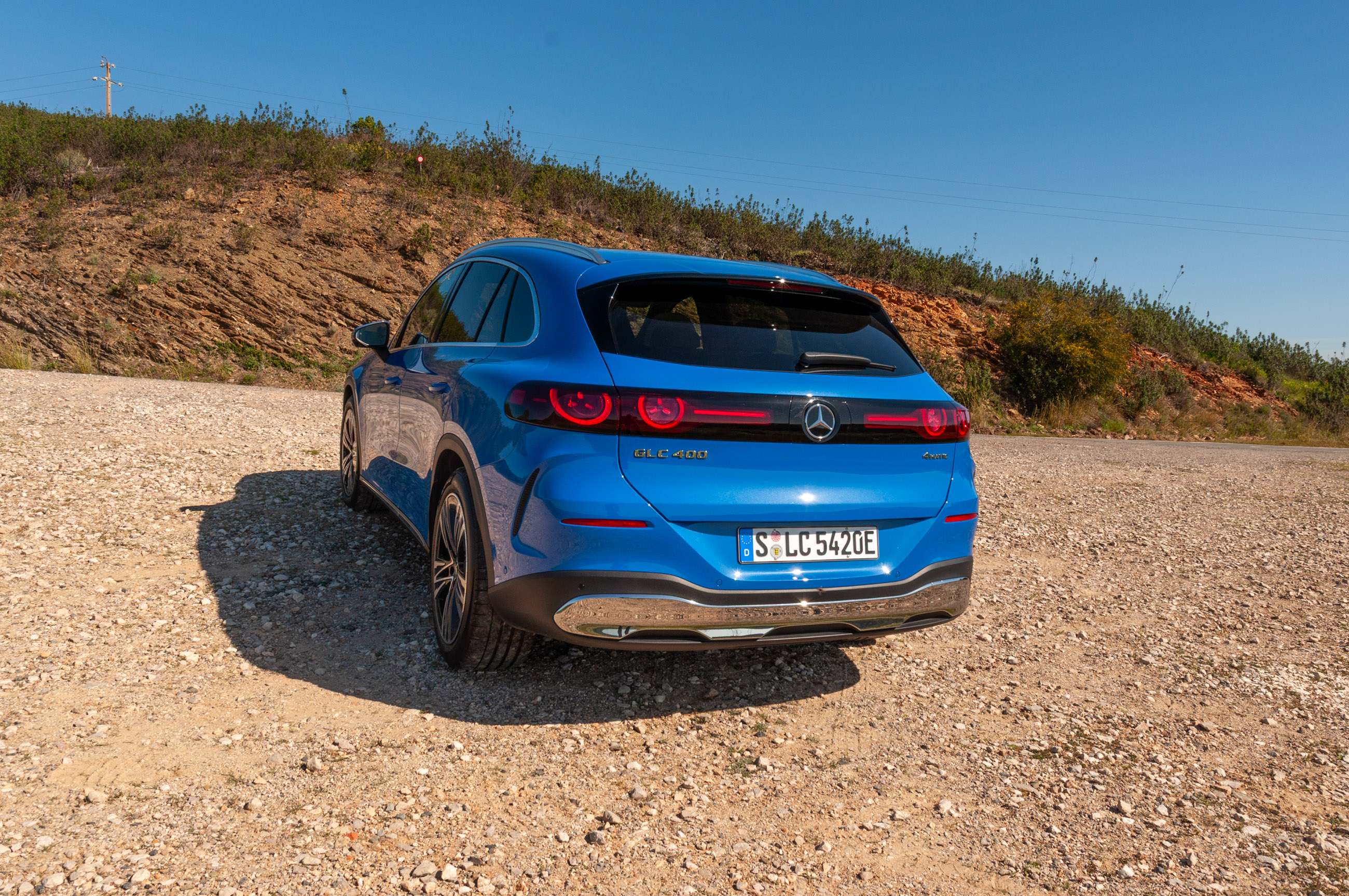
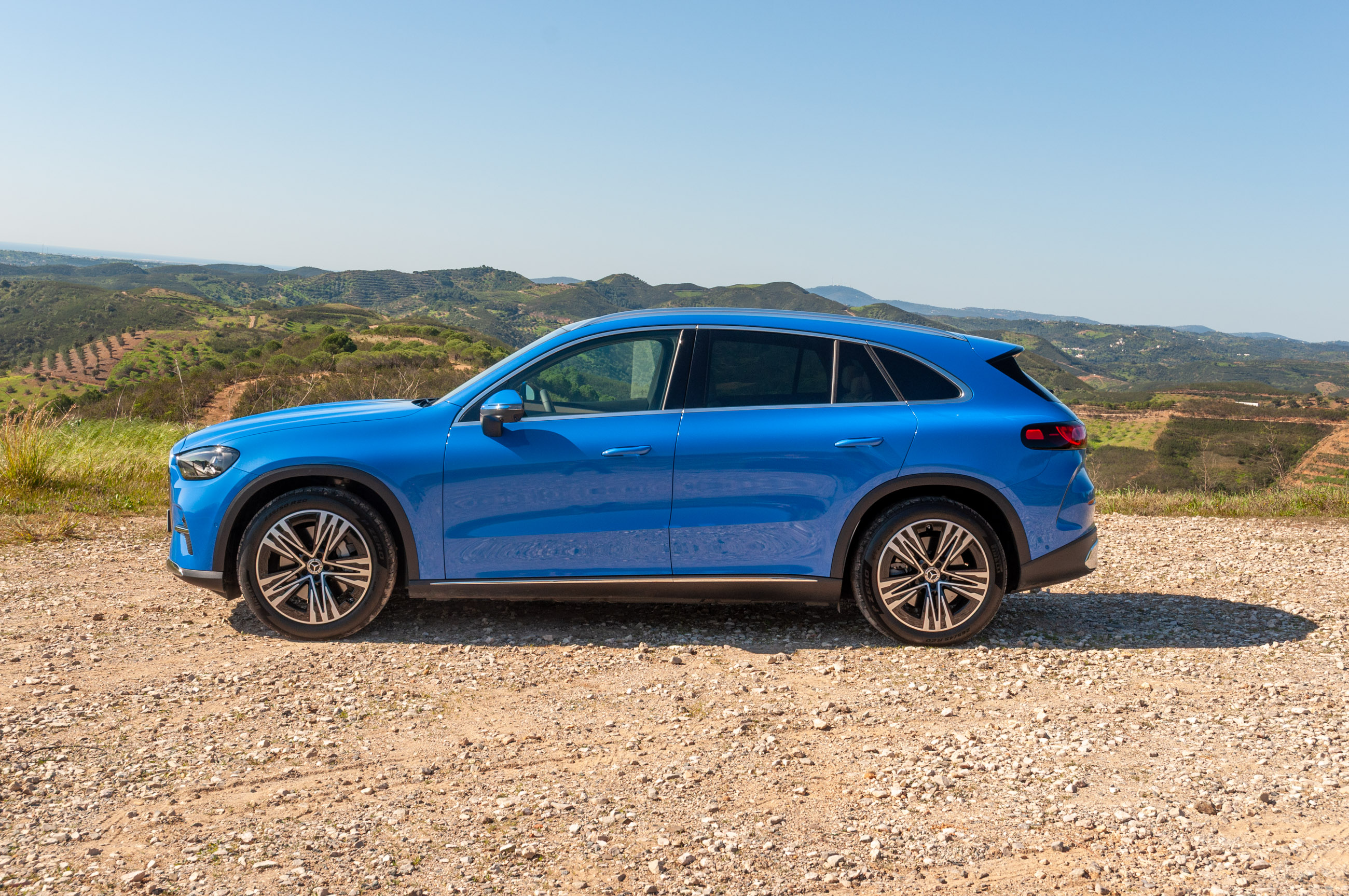
The GLC blends old with new. The front and rear ends will have you seeing stars with Benz-like LED tri-points (they are not 100% Mercedes logos) as the daytime running lights up front and taillights in back. The front grille has 942 illuminated points, and the egg-crate-like design harkens back to the W126 era in the best way possible. I love it. The front and rear overhangs are tight, there’s a similar dash-to-axle ratio as today’s gas-powered GLC, and the tidy rear end features a thick full-width red plastic panel that houses the round star-shaped taillights. It’s overall an attractive package and doesn’t scream, “Look at me! I’m an EV! I’m the future!” Though, the electronic pop-out door handles our U.S. models will get instead of the traditional pulls the European pre-production cars we drove had are irritating and unfortunate.
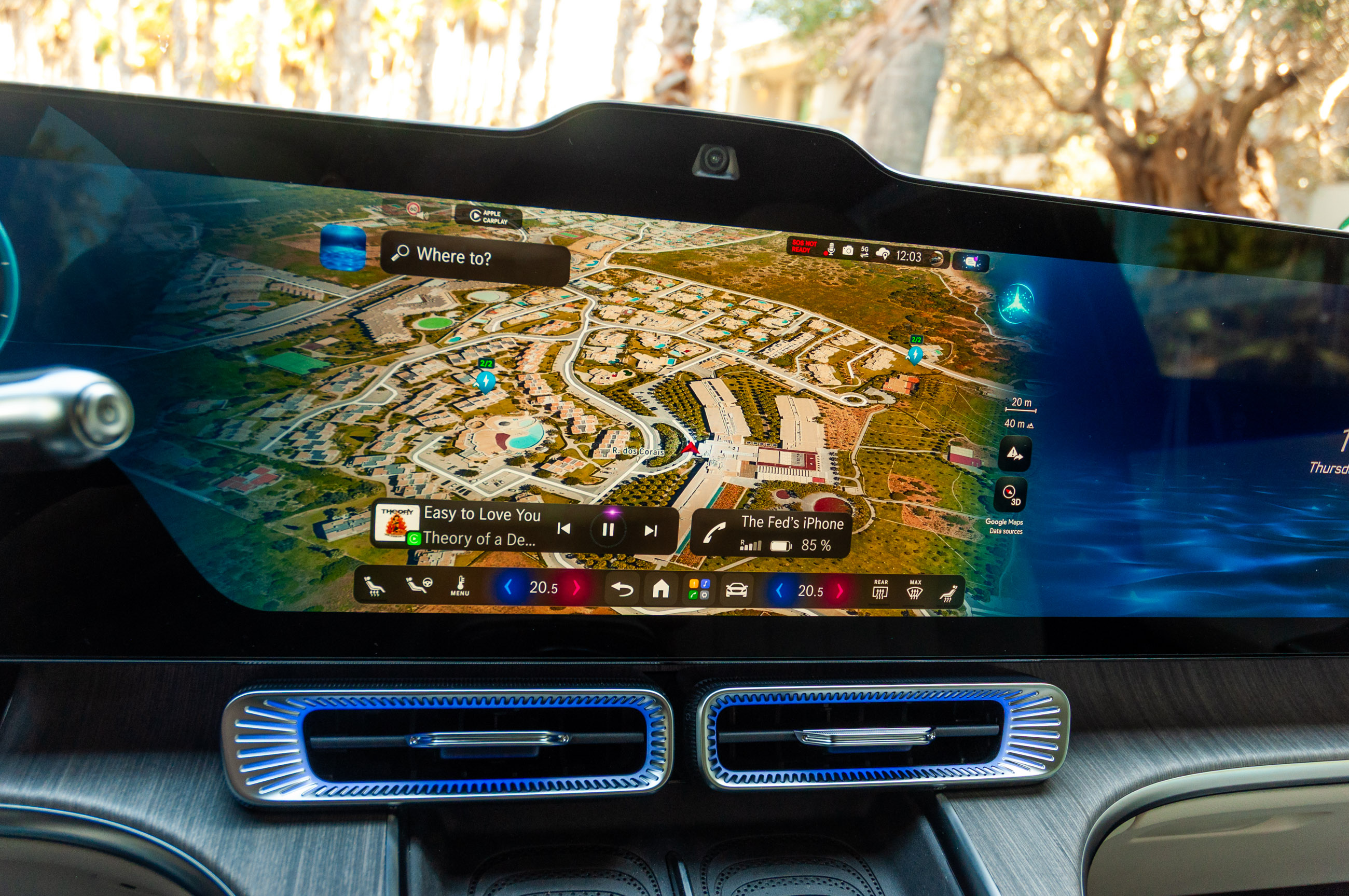
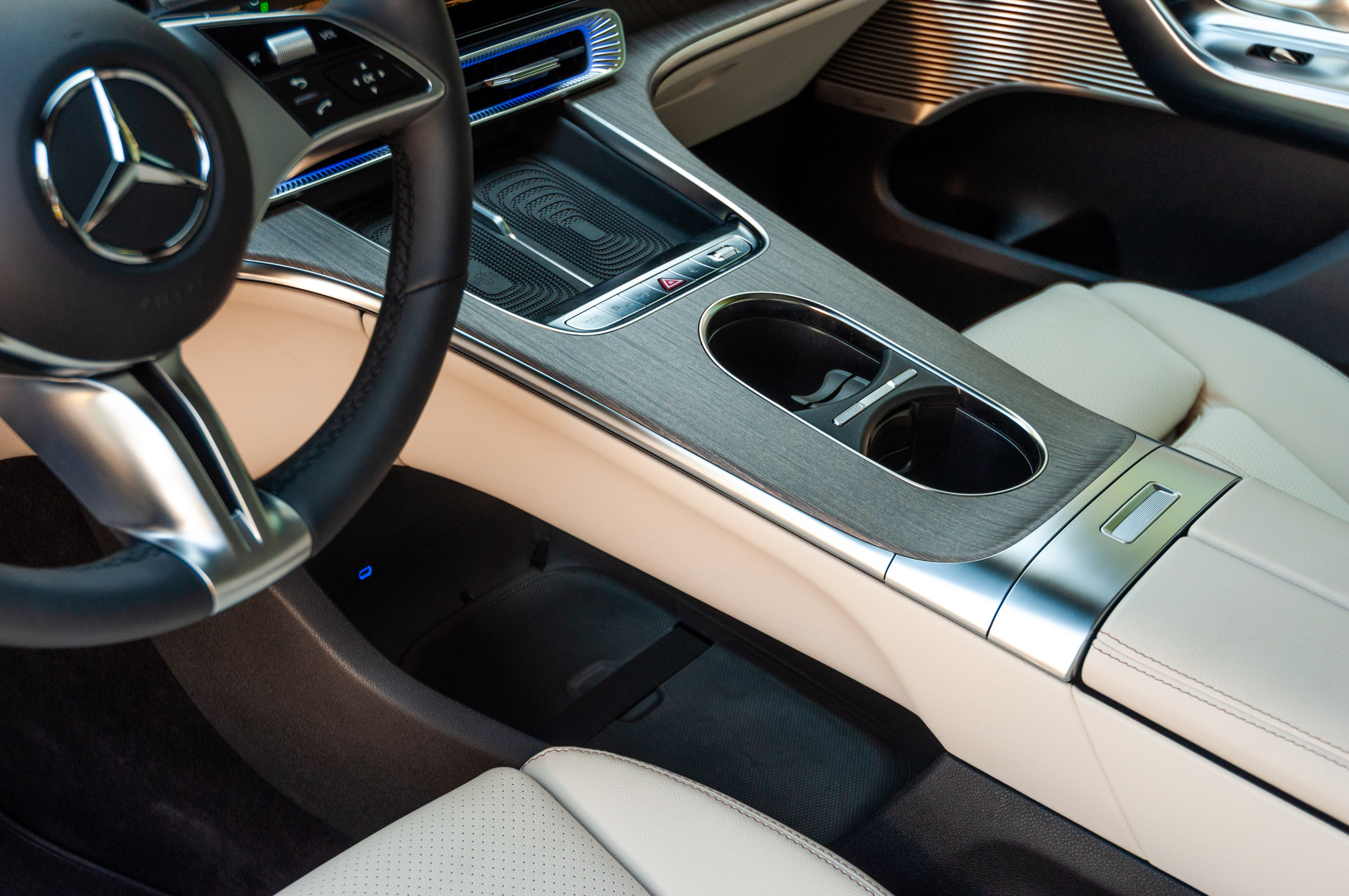
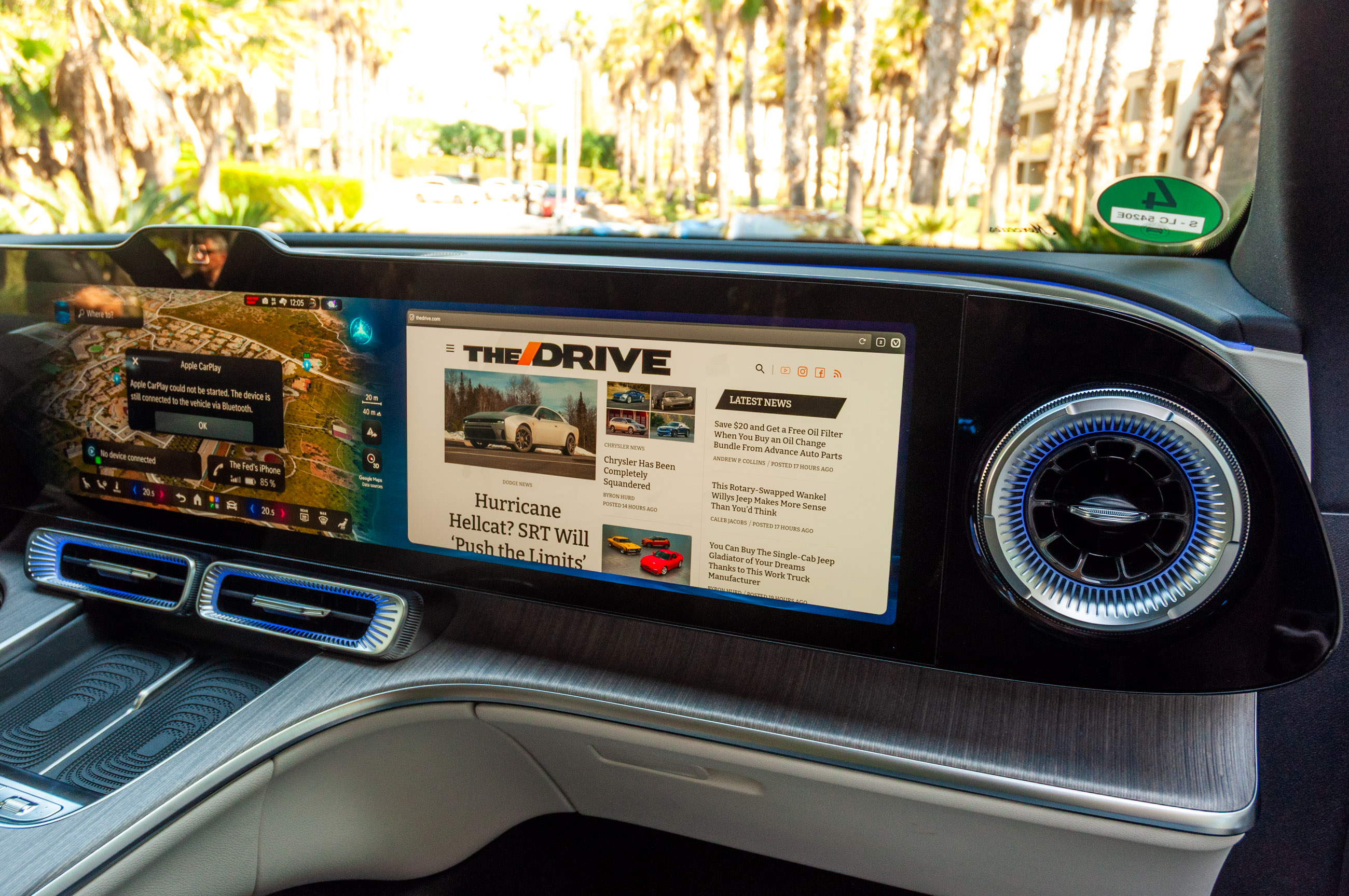
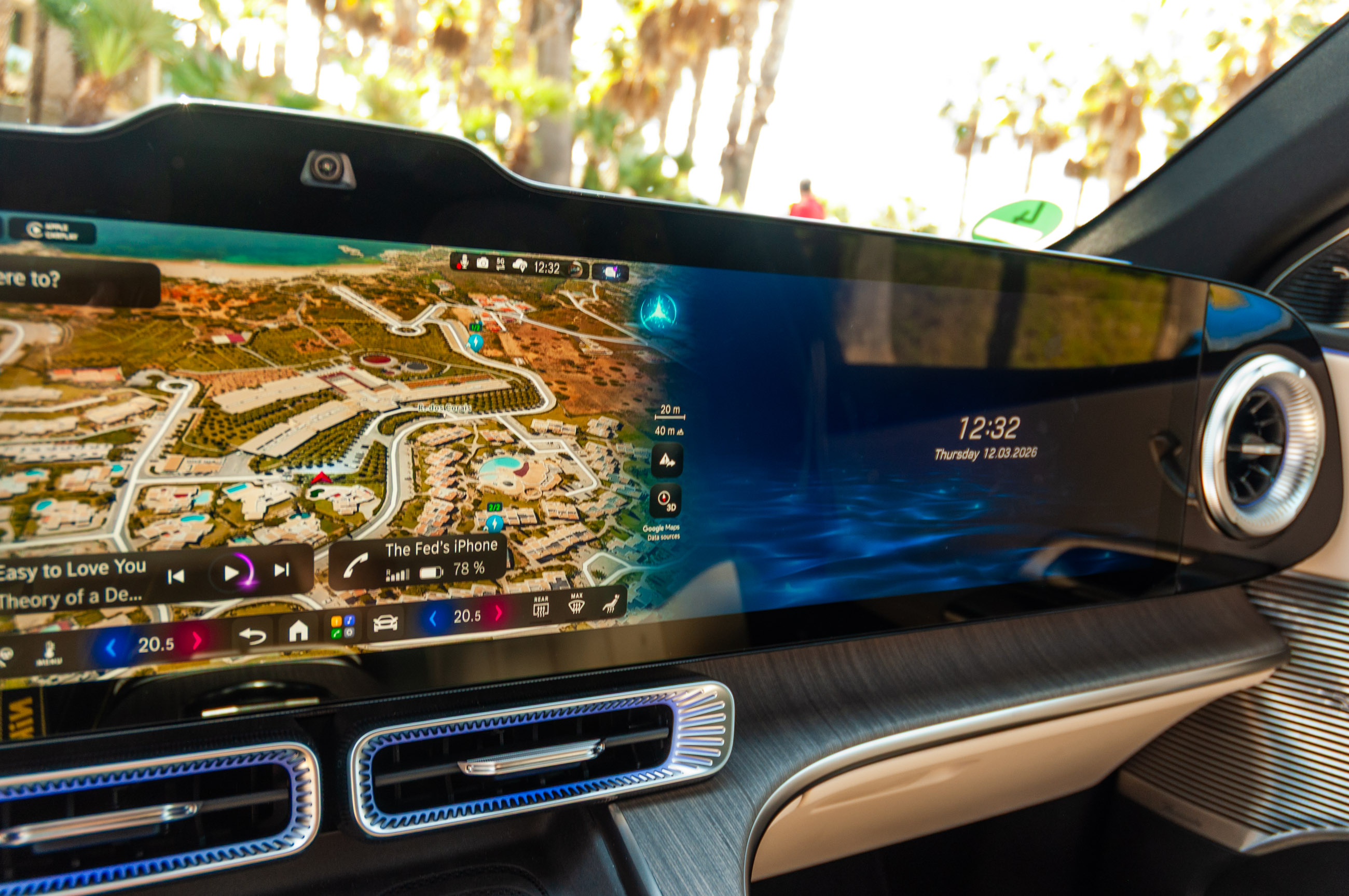
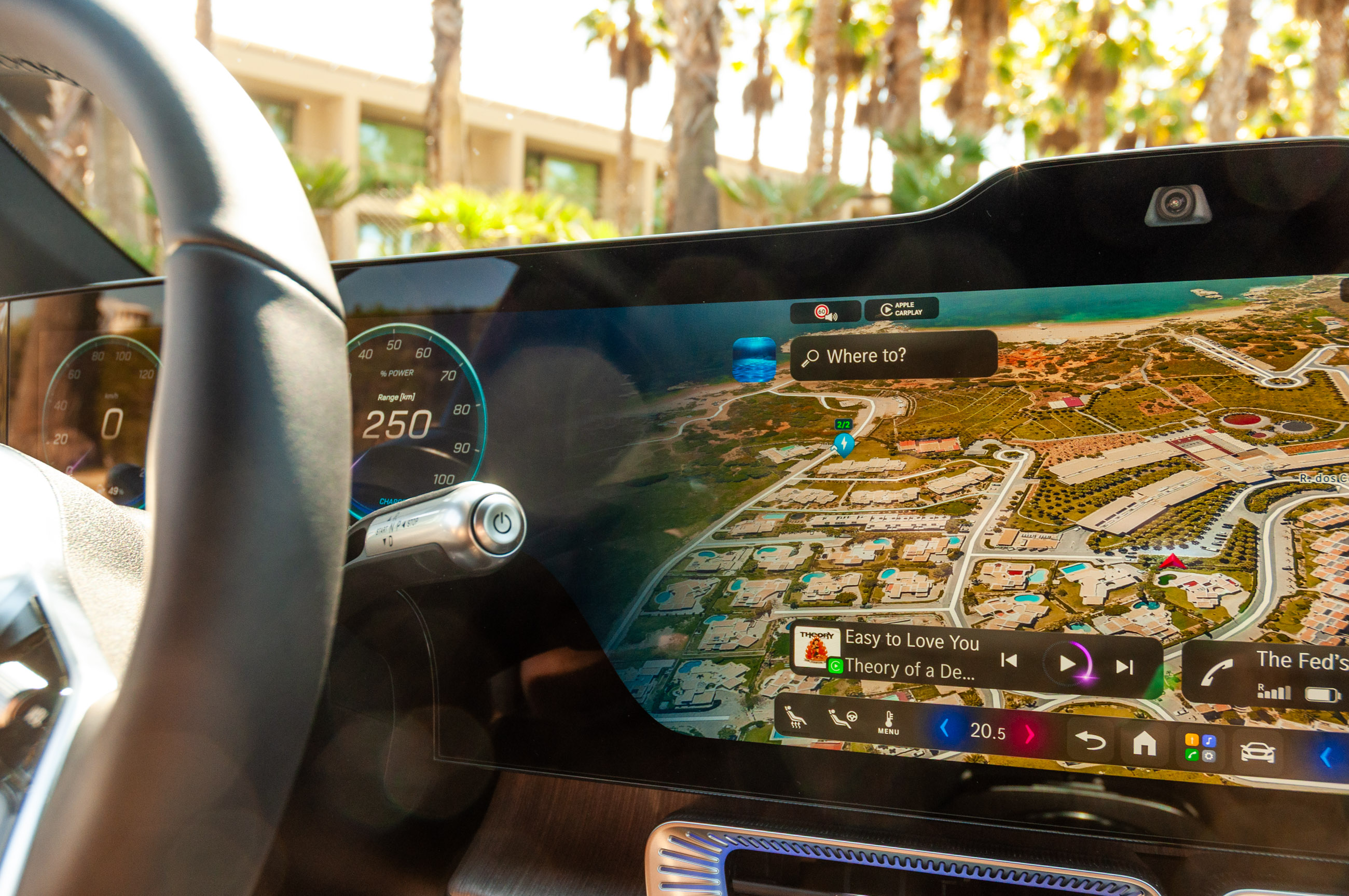
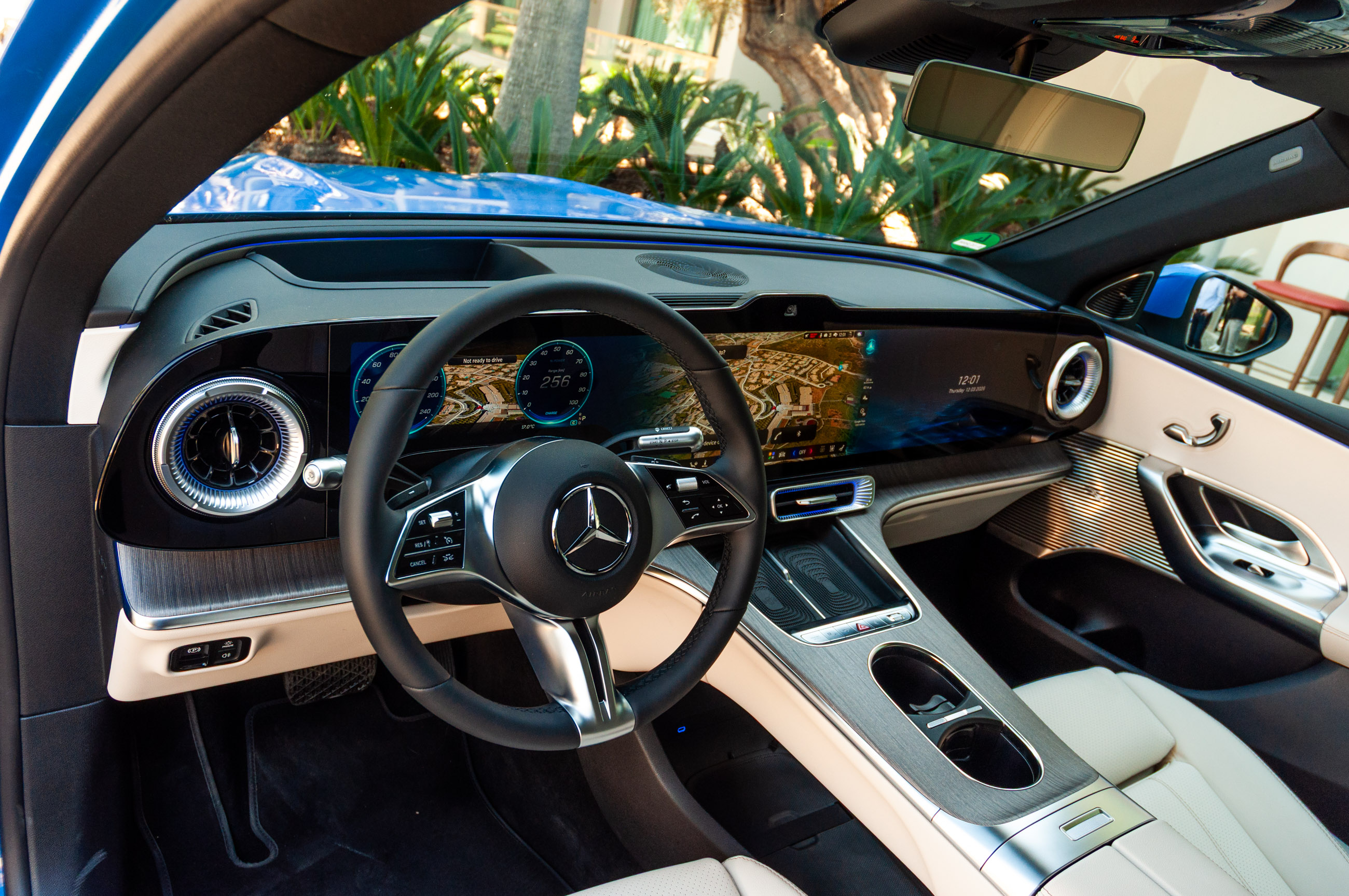
Inside, the star of the show is an available pillar-to-pillar, 39.1-inch screen under a single piece of glass with no break points that Mercedes has dubbed Hyperscreen. The in-house designed and developed software interface, dubbed MB.OS, is layered, easy to use, and navigable with large digital buttons, and has an AI assistant powered by Google Gemini baked right in. Wireless Apple CarPlay and Android Auto are also on board.
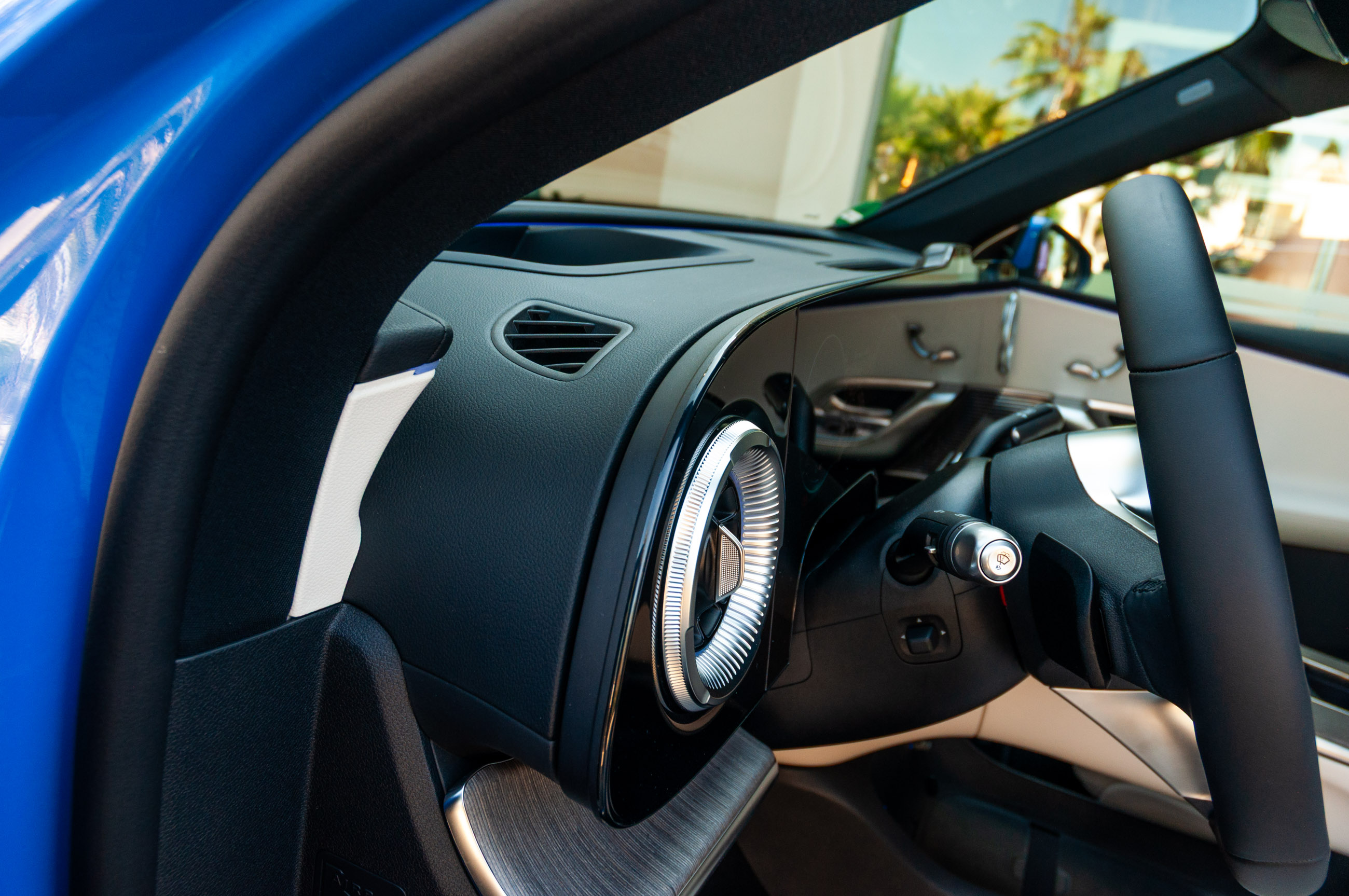
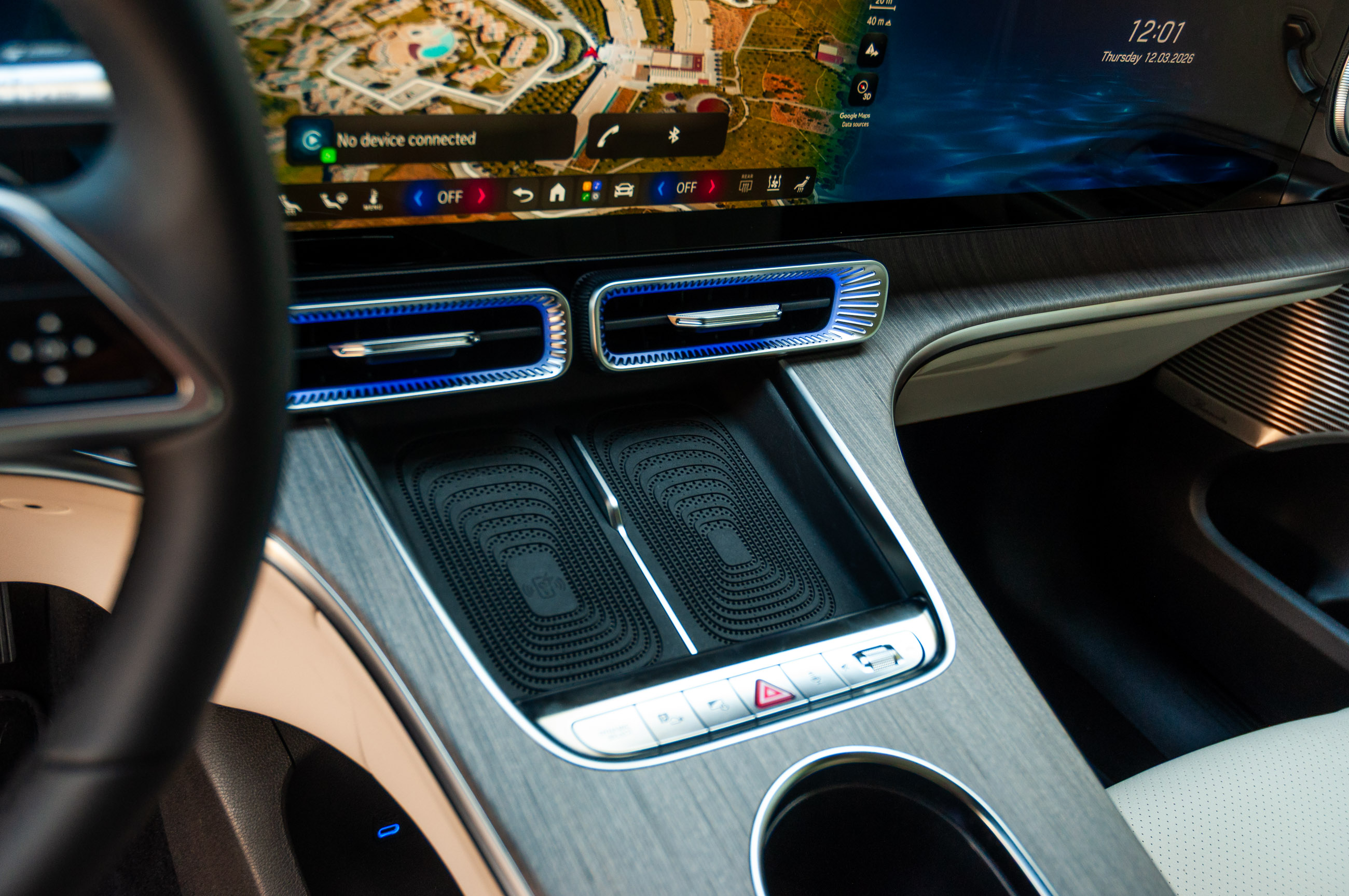
Electric GLCs without a Hyperscreen have three separate screens under a single pane of glass, dubbed Superscreen, with a 10.25-inch digital gauge cluster, 14-inch touchscreen infotainment system, and 14-inch front passenger touchscreen. The horizontal dashboard almost appears to be short and tight, but this is no G-Class. This lack of depth somewhat reminded me of the W126 era, again, like that grille. The center console rises to meet the air vents that sit between it and the screen while floating above an open storage space along with two USB-C ports. Those vents? They have real nubs to move the airflow, no screen nonsense. There are even real stalks, some dedicated buttons for key functions like parking assist and cameras, and a volume knob. It’s the little things.
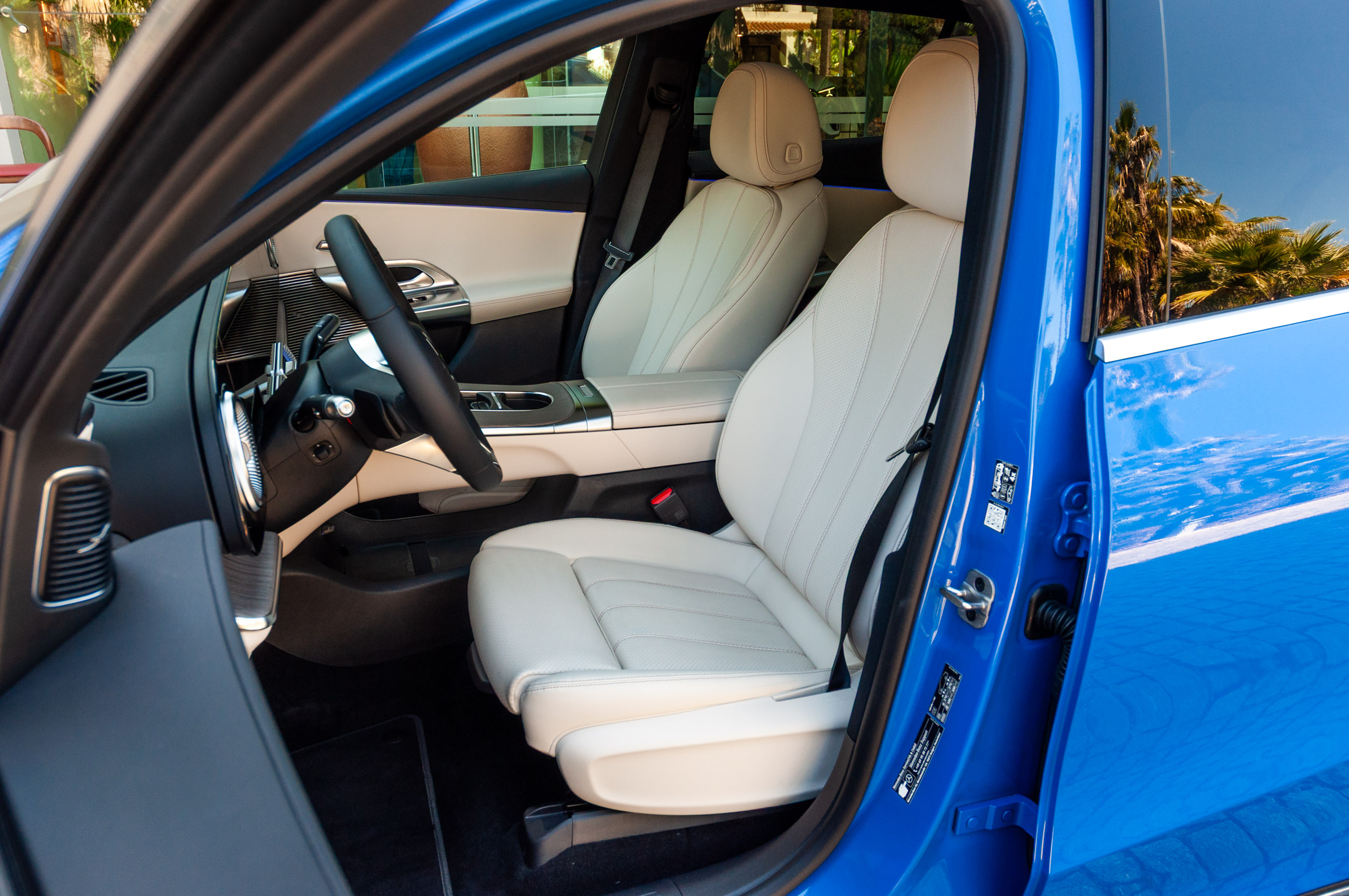
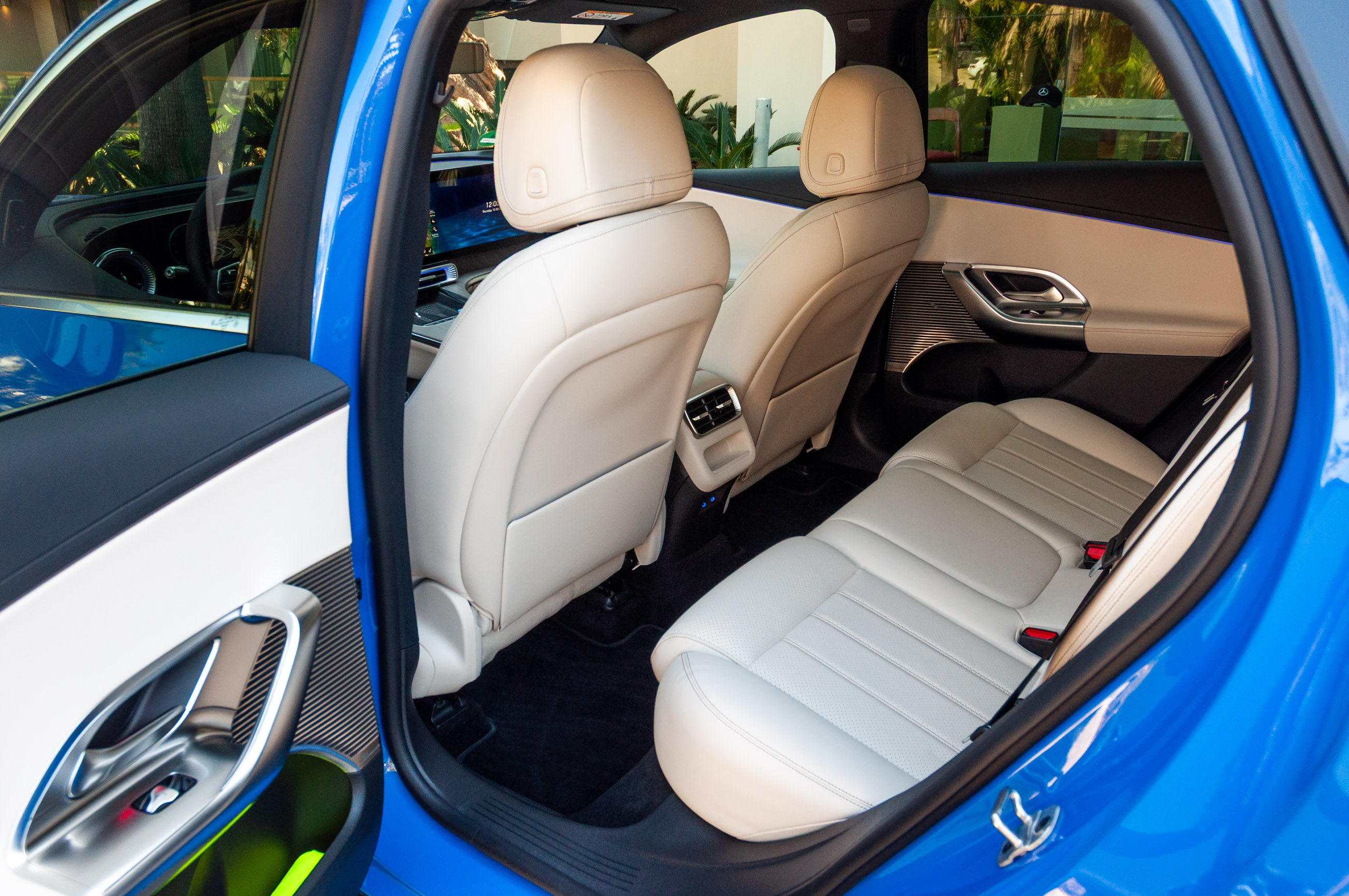
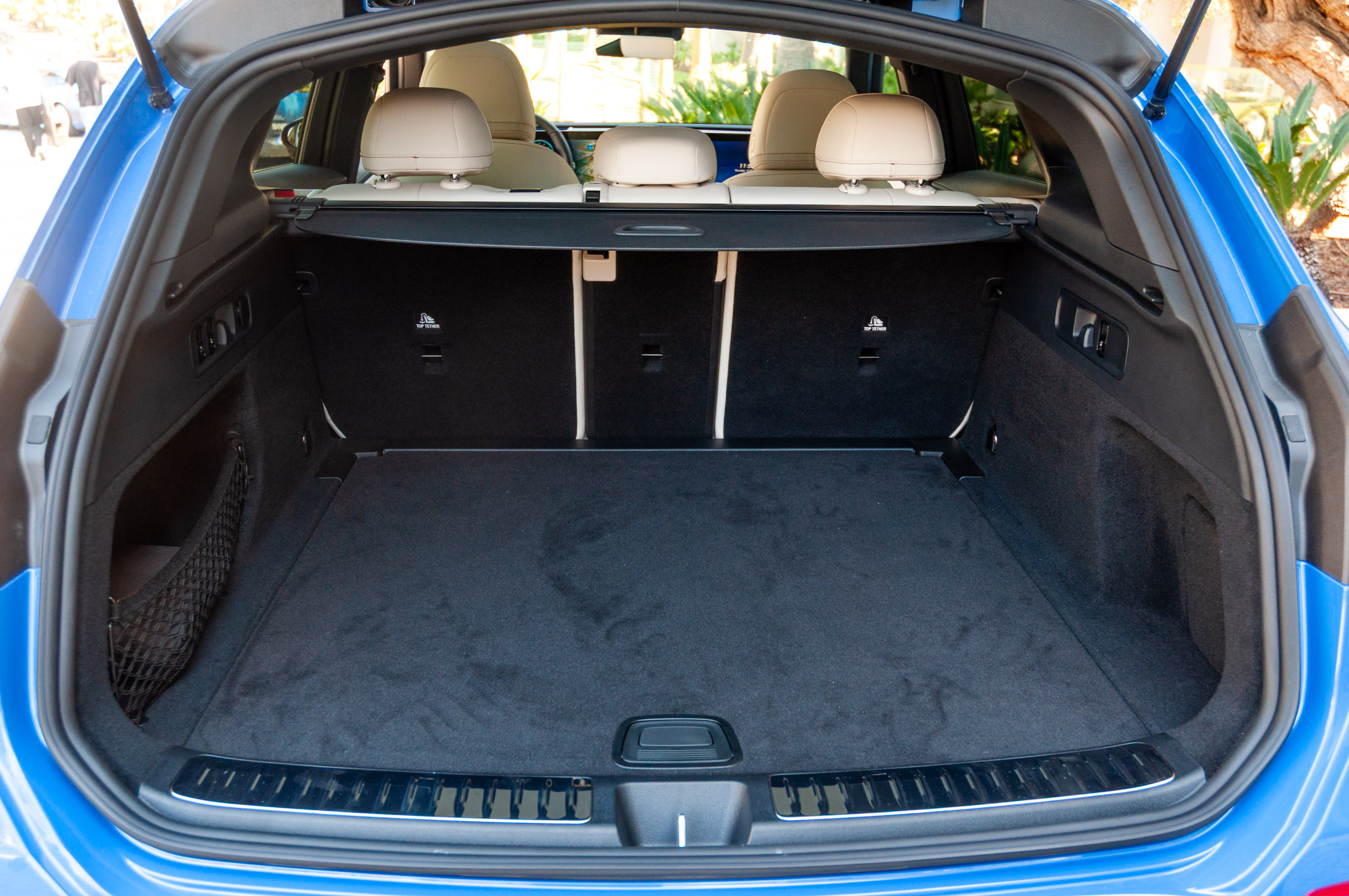
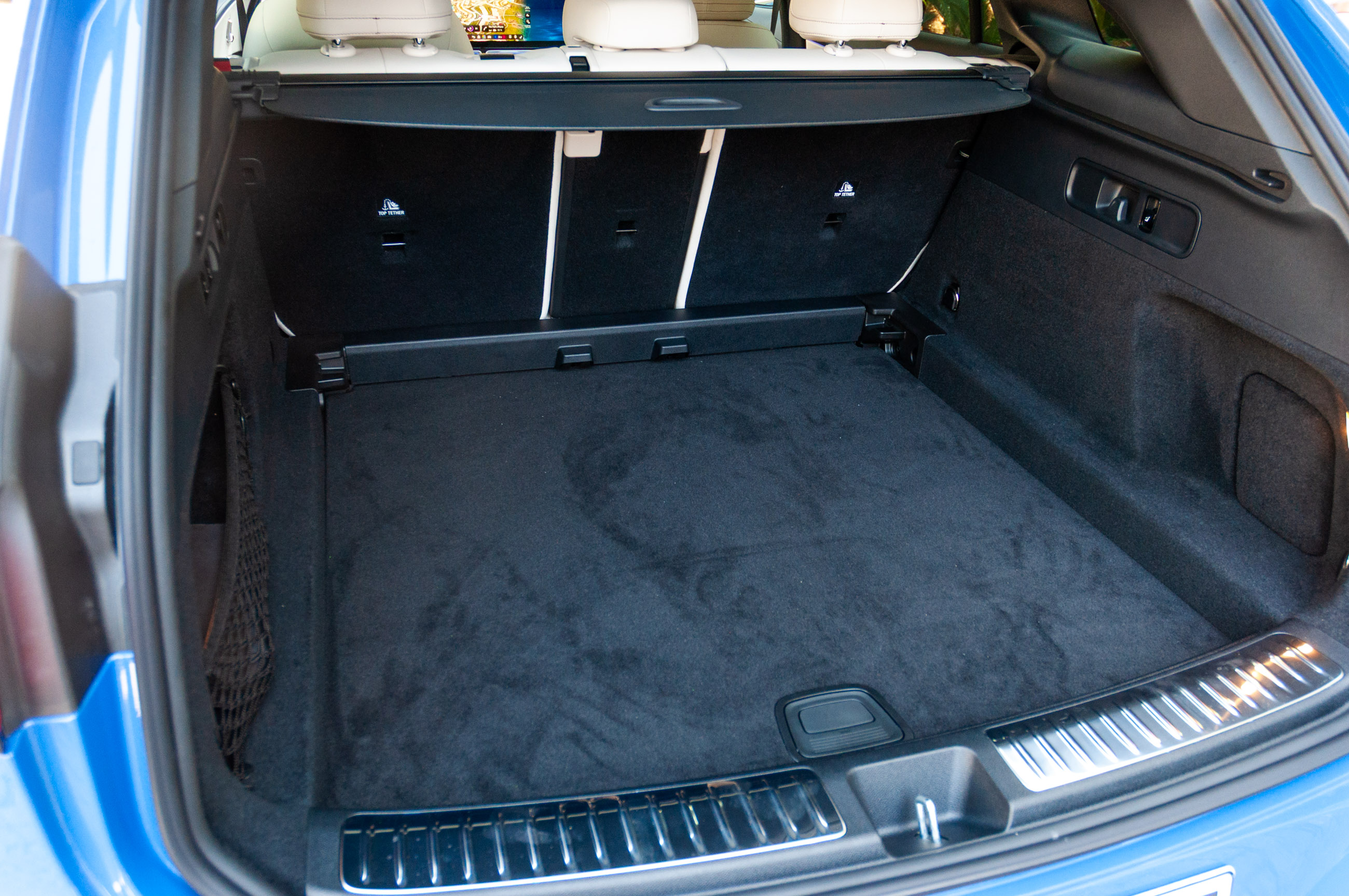
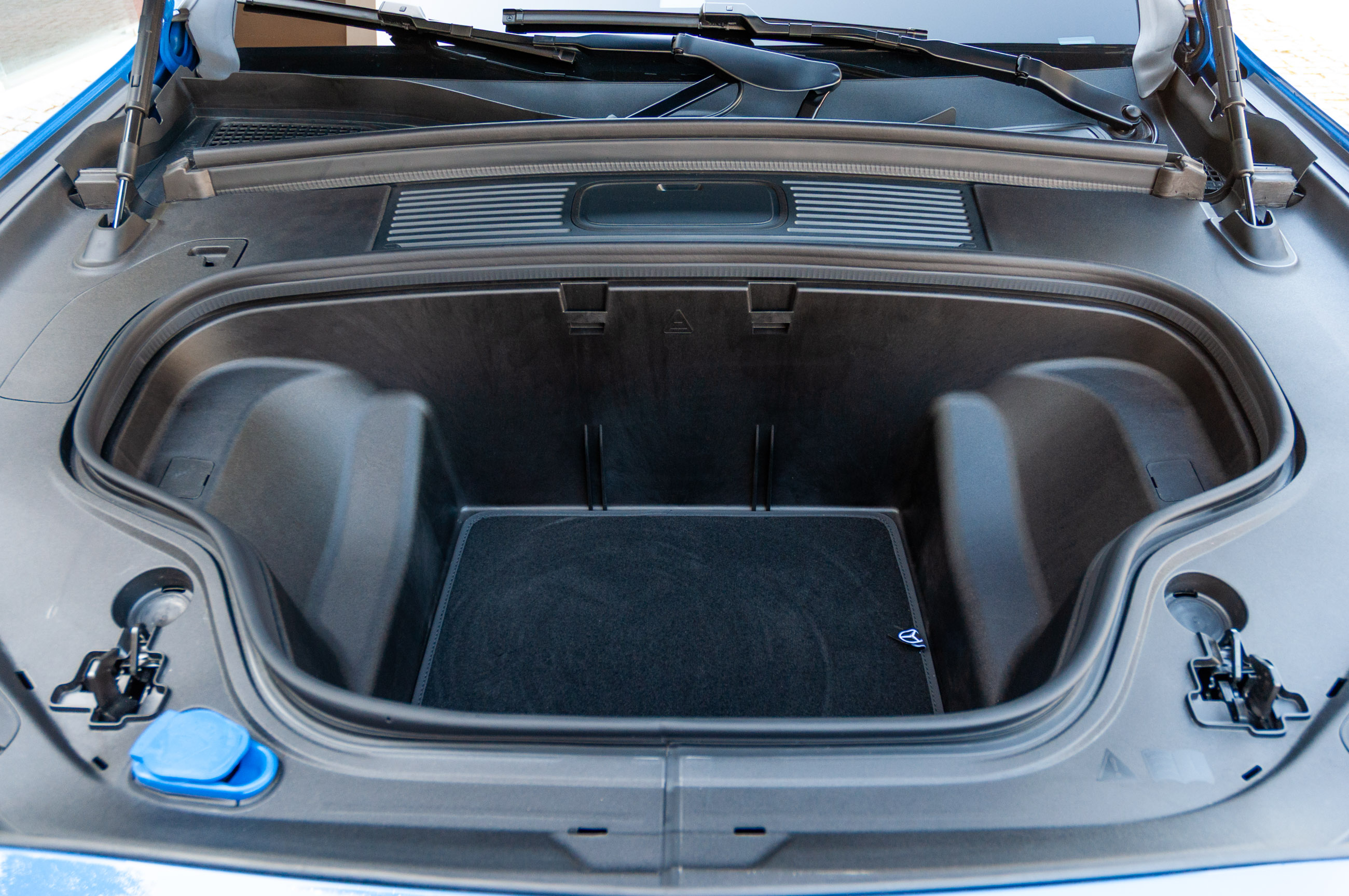
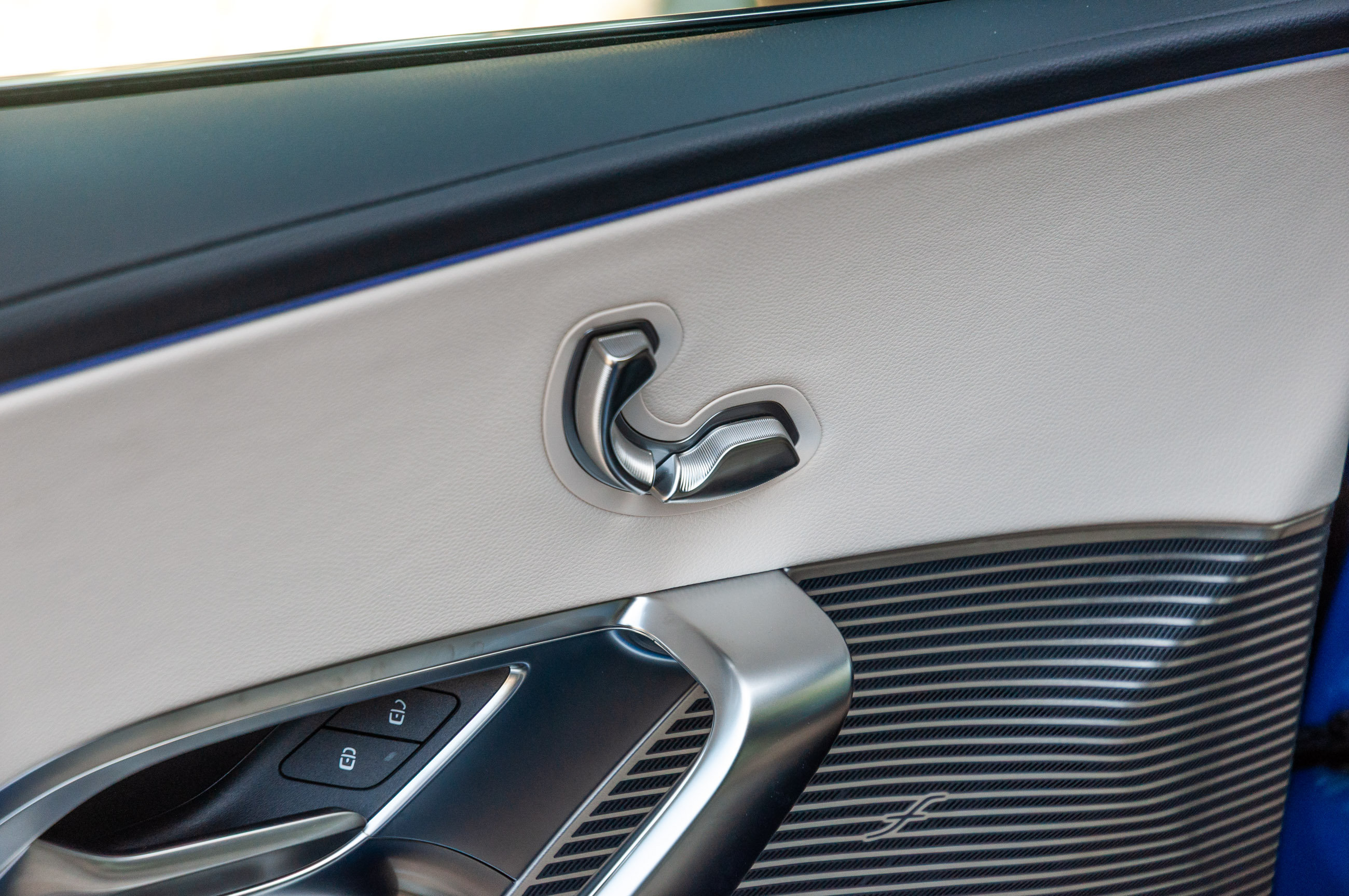
Up front, occupants will be comfortable with supportive seats, which are controlled via new door-mounted controls that no longer look like a human. They look like a curved seat. The rear seats have about half an inch more legroom than today’s gas-powered GLC thanks to the electric model having a longer wheelbase. There’s plenty of foot and headroom in back, and the seat bottom angle is comfortable. The cargo area is spacious and has a floor panel that can be dropped down a level to add an inch or two of sunken depth. There’s even a real frunk with a usable 4.5 cubic feet of space for a backpack or two.
Driving Experience
Initially, every GLC will be a 400 4Matic model in the U.S. market. This translates to a dual-motor powertrain delivering 483 horsepower and 590 lb-ft of torque to all four wheels via a two-speed transmission. It’s all fed by a 94-kWh (usable) battery pack running on an 800-volt electrical architecture. The most interesting bit of that kit? The two-speed transmission, but more on that in a bit.
Mercedes said the electric GLC does 0-60 mph in 4.2 seconds and is electronically limited to 130 mph. I believe both of those things. No one’s going to call this car slow, but it’s not neck-snappingly quick. That’s in the V8-powered GLC territory back in the day, which did the deed in just under four seconds, though it didn’t have 100% of its torque come on instantly off the line.
The steering isn’t too light in comfort mode, but expecting feedback might be a stretch. When paired with the optional rear-wheel steering, which dials in up to 4.5 degrees of angle, things never feel twitchy like in larger models with up to 10 degrees of angle.
But the optional, and as-tested, air suspension is an issue. I don’t get motion sick, but within minutes of being on the highway in the electric GLC it became clear the car was pogoing with lots of up and down motion as the road undulated. Clicking over into Sport mode calmed the body, and it settled into a controlled state. Pulling off the highway and heading up twists and turns outside of Faro, I flicked the system back into Comfort mode. Within minutes, my passenger was getting motion sick and noted we needed to switch back to Sport mode.
Theoretically, one could solve these issues by dialing Sport mode suspension with their choice of other powertrain settings in Individual mode, but the system will always revert to Comfort upon restarting with a key cycle. An engineer at Mercedes said the system is all electronic and taps into the car’s electrical architecture, meaning if enough customers (or journalists) complained, Mercedes could simply release a new calibration via an over-the-air software update and remap the suspension tuning.
Let’s hope.
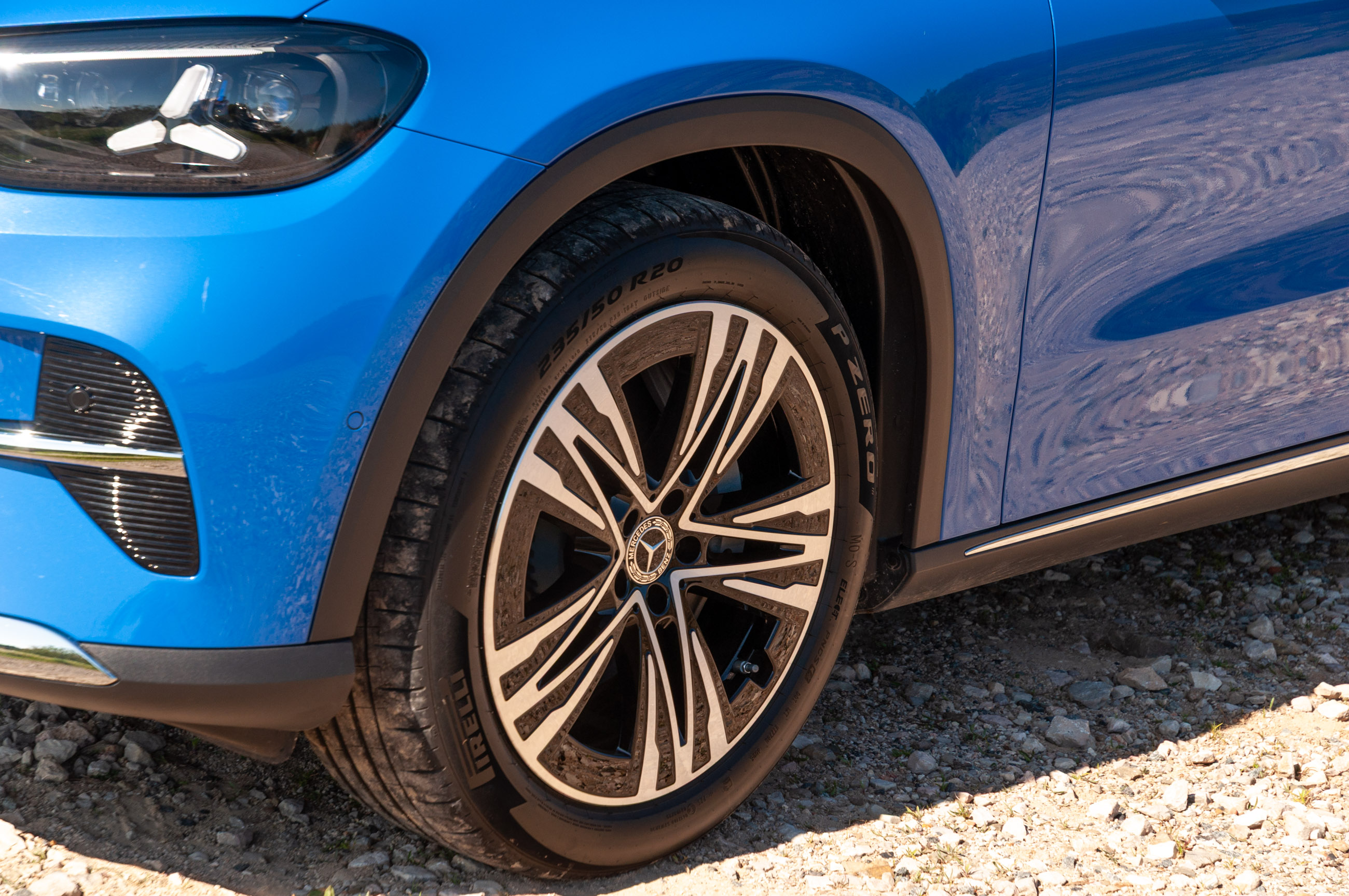
Mercedes learned its lesson with the EQS and its two-stage regenerative braking system. The same redeveloped regenerative braking system that debuted on the CLA electric is on the GLC. This translates to 99% of braking being regenerative and rarely, if ever, using the friction-based brakes. There are four levels of braking controlled via the wheel-mounted paddle shifters, and the strongest, D-, is a full one-pedal setup. It worked flawlessly. But move into just D, which is more like traditional engine braking but with the regenerative braking system doing the work, and the brake pedal lacks travel. It’s a bit on-off, making it hard to be smooth. That’s also something that could be recalibrated via an over-the-air software update based on feedback. The GLC will key cycle and retain the last used regenerative brake setting, meaning you can leave it in D- for one-pedal driving forever if desired.
The two-speed transmission, which is the same unit that debuted with the CLA electric but has new ratios for the heavier and larger GLC, is used in the name of efficiency. The gear change takes place from 1-2 at about 74 mph and changes from an 11:1 ratio to 5:1 for higher speeds. If Mercedes didn’t mention that there was a two-speed transmission, it’s unlikely you would ever know. The gear changes and ratio changes can’t be felt or heard unless someone is truly paying attention and listening for them. Even then, they’re smooth and barely noticeable.
I had no need, and no real opportunity, to recharge the GLC electric during my limited time with the European pre-production model. But Mercedes has quoted some impressive specs, including a max DC fast-charging rate of 330 kW and a somewhat less impressive AC Level 2 charge rate of 9.6 kW all through a Tesla-like NACS charge port. This translates to the ability to fast-charge from 10-80% in 22 minutes and add about 189 miles of range in 10 minutes.
EPA-estimated range isn’t available yet, but it should check in with about 373 miles of range, which is competitive with the upcoming BMW iX3 and Volvo EX60. Over the course of 109 miles of mixed driving, I saw an average of 3.0 mi/KWh, which is efficient, though that would translate to 282 miles of range. We’ll reserve judgment for more real-world testing later this year.
2027 Mercedes-Benz GLC Electric Features, Options, and Competition
Mercedes hasn’t talked pricing yet, but has been clear that the GLC electric should cost about the same as today’s GLC plug-in hybrid, which would translate to a starting price of just over $60,000. That’s probably right in line with what the BMW iX3 and Volvo EX60 will clock in at, neither of which has been priced for the U.S. market yet.
Every GLC electric will come standard with 20-inch alloy wheels, an illuminated grille surround and Mercedes-Benz front logo, and a panoramic roof. They’ll also have the triple screen setup on the dashboard under a single piece of glass, two wireless smartphone chargers, Apple CarPlay and Android Auto, heated front seats, and a laundry list of active safety tech. Features like blind-spot monitors, lane-keep assist, and automatic emergency braking are included, though a surround-view camera system is not standard, as it’s a “digital extra” meaning you’ll be paying an unknown amount of money to unlock that function. The hardware’s there.
Like other Mercedes models, the options package list is long, ranging from a sportier AMG Line (which adds no performance, just AMG-designed styling bits), blackout package, luxury packages, and the aptly named Agility & Comfort Package that adds air suspension and the rear-wheel steering as tested. Of course, a Burmester 3D surround sound system with 16 speakers is available. None of this has a price associated with it yet, but referencing a gas-powered GLC today will get you in the ballpark.
All of this lines up neatly against the inbound European competition.
The Early Verdict
At first blush—or first drive, if you will—it seems the electric GLC that will arrive later this year in the U.S. won’t have extreme downsides that came with the first round of EVs. It’ll probably cost similar to what an electrified GLC costs today, have about 370 miles of driving range, charge pretty darn quickly, and do it all with V8-like power. A refined design inside and out that doesn’t scream “look at me, I’m the electric future,” is the cake topper here.
It’s early, but initial impressions indicate the electric GLC could be a winner. The fact that it’s arguably just a next-generation GLC-Class that happens to be electric is a win, and for those who aren’t interested, a gas-powered model will arrive as well. All that said, here’s hoping Mercedes takes the time before this EV launches in the U.S. to remap the brake pedal travel and available air suspension tuning.
If those two things get updated, Mercedes seems to have a strong competitor for the iX3 and EX60.
Mercedes-Benz provided The Drive with travel, accommodations, and access to the vehicle for the purpose of writing this review.
2027 Mercedes-Benz GLC 400 4Matic Electric Specs
| Base Price | TBD |
| Powertrain | 20.1 cubic feet behind second row | 61.4 cubic feet behind first row | 4.5 cubic feet front trunk |
| Horsepower | 483 |
| Torque | 590 lb-ft |
| Seating Capacity | 5 |
| Curb Weight | TBD pounds |
| Towing Capacity | 5,291 pounds |
| Cargo Volume | 20.1 cubic feet behind second row | 61.4 cubic feet behind first row | 4.5 cubic foot front trunk |
| 0-60 mph | 4.2 seconds |
| Top Speed | 130 mph |
| EPA-Estimated Range | TBD |
| Score | 7.5/10 |

Quick Take
Mercedes has given us the next-gen GLC that just happens to have an electric powertrain, but hopefully it’ll polish the suspension and brake pedal tuning before launching.
Loading comments…
Comments couldn’t be loaded. Please refresh the page.