
If you’re a child of the 1990s, a V6 is probably part of the soundtrack to your youth, just like the Backstreet Boys. These engines were once the default choice when automakers needed a little extra power in sedans, SUVs, minivans—you name it. There have been many notable V6-powered performance cars as well, from the Buick GNX to the R35 Nissan GT-R. But V6s just don’t inspire the same passion as other engine formats. V6-powered cars have their fans, but the engine itself really doesn’t.
The Drive explored why that is in a new YouTube video, and it starts with engineering compromises. Companies started experimenting with V6 engines before World War II, and Lancia brought the V6 to mass production in the Aurelia in 1950, but the story of the V6 as a truly mainstream engine begins in 1962 with General Motors. Looking to economize, the automaker’s Buick division lopped two cylinders off one of its smaller V8s to create the “Fireball” V6. It was all about saving engineering costs since, aside from the different number of cylinders, everything else was the same.
The Buick V6 was noteworthy for its longevity (its descendants were produced until 2008), and a turbocharged 3.8-liter version famously powered the aforementioned GNX. But this engine was meant to be cheap first and foremost, and so GM ignored the inherent roughness caused by adapting a 90-degree V8 block to a V6, which lacks the inherent balance of a V8 because it has an odd number of cylinders in each bank. Lancia chose a 60-degree V-angle for its engine, and that proved to be the winning solution for other automakers as well. It cost more money to engineer a bespoke V6, but these engines were more refined, more power-dense, and more compact to boot. Compactness in particular helped V6s achieve dominance as transverse, front-wheel drive configurations became the norm.
Even GM, which never met a cost it didn’t want to cut, developed its own 60-degree V6, which debuted in the 1980 Chevrolet Citation. The Citation was an ambitious attempt to build a modern compact car that was both space- and fuel-efficient, but none of these things made it interesting. That contributed to the V6’s image problem, as did the Citation’s utter failure in the marketplace. The V6 became associated with downsizing, economizing, and moving away from a golden age of V8, rear-wheel-drive performance cars.
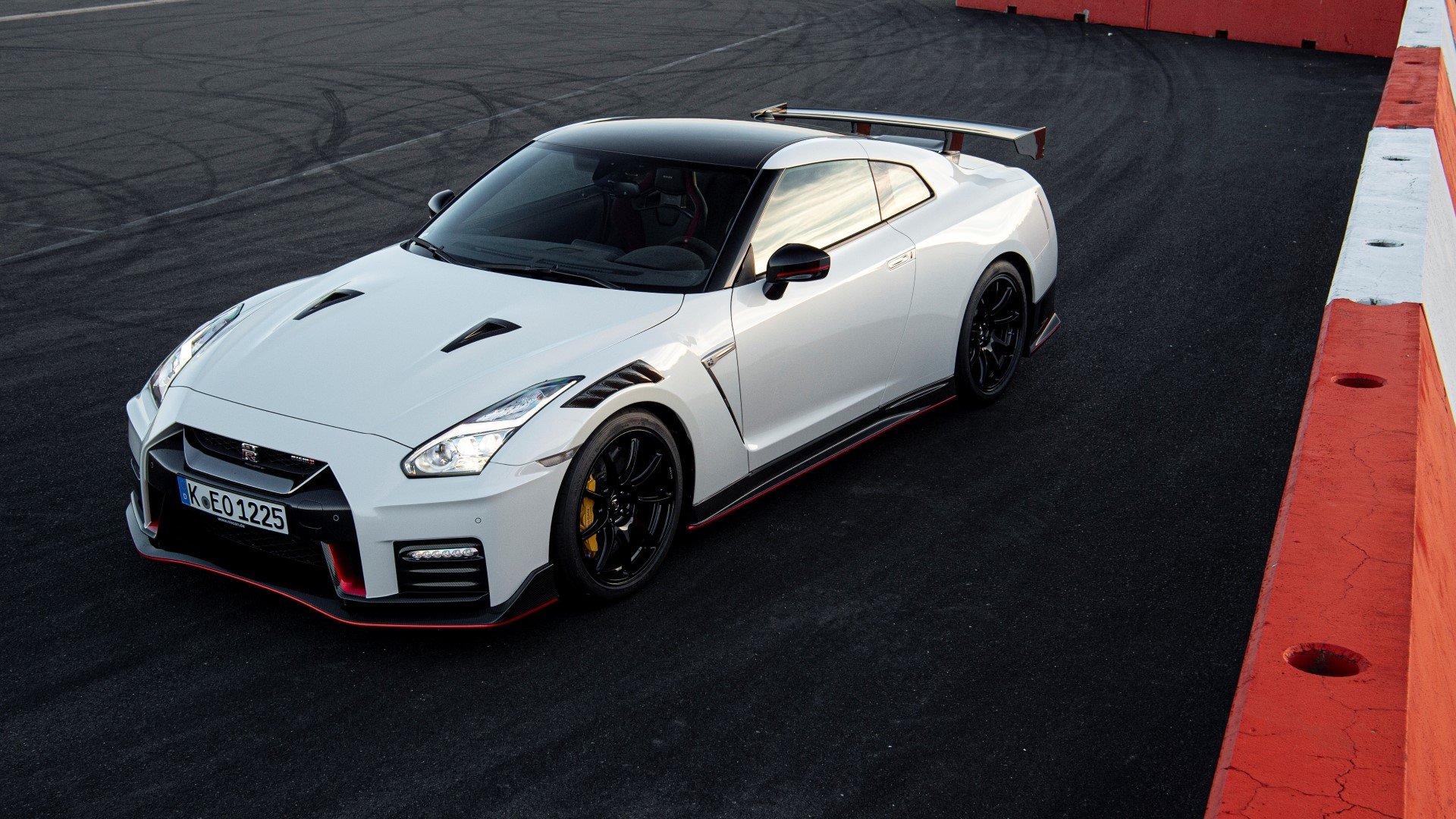
No V6 has effectively countered that narrative. Most of the great ones—like the R35’s VR38DETT or the second-generation Ford GT’s EcoBoost engine—rely on turbocharging to achieve their greatness. The Maserati Nettuno—a clean-sheet V6 with F1-style pre-chamber ignition developed for the MC20 supercar (now the MC Pura)—was met with indifference. In the half-ton truck world, V6s are often the most capable engines, but they’re so uncool that automakers are bringing V8s back for aesthetic reasons.
The V6 hate definitely isn’t rational, but it is tied to the clash between the passion of car enthusiasts and the dispassion with which the industry is often run. Watch the full video to find out more.