
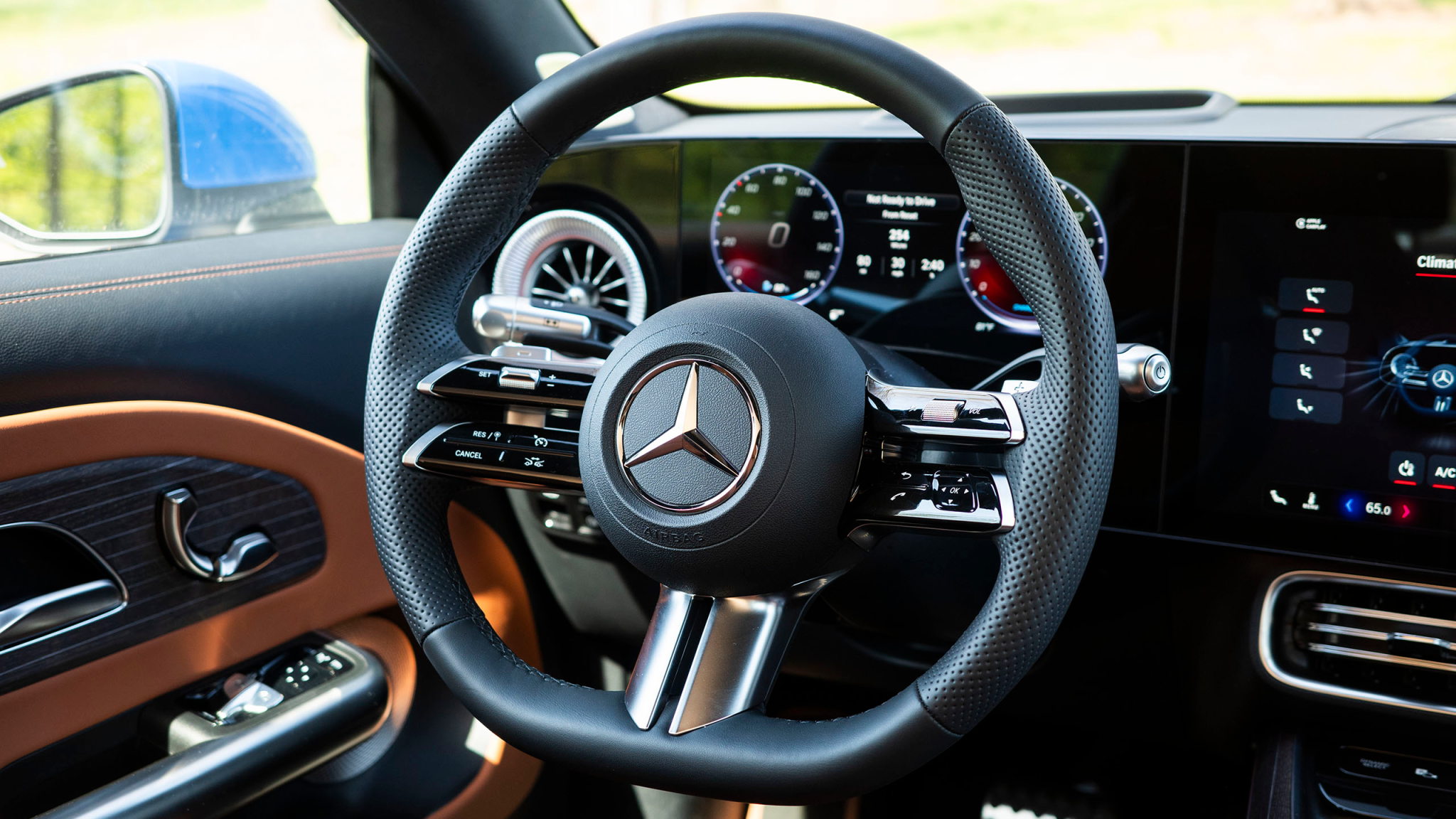
Last week, I shared my thoughts on the Mercedes-Benz CLA350, a small electric sedan that has plenty going for it mechanically but is undermined by ergonomic and usability quirks that lack common sense, and by a very high price tag. In that review, I mentioned the quirk that bothered me the most without going into too much detail, and I think it really ought to be highlighted—if, for no other reason, then to encourage Mercedes to reconsider its choice, and other automakers never to do the same.
The CLA350 incorporates the latest edition of the company’s MB.OS infotainment software, and in some respects, it is fairly straightforward and nice to use. The interface as a whole, from the digital instrument cluster to the center screen, feels less cluttered than before and is pretty snappy. Mercedes also pared down the quantity of capacitive controls on the steering wheel and added physical up/down toggle switches, which is always a plus. In this rethinking of the wheel controls and media system, though, there has been a glaring casualty: the ability to skip songs or radio presets using the wheel controls.
In other words, the only way to skip through media in this car is either by tapping playback buttons on the infotainment screen—which, at least on the default home/map view, are very tiny—or through voice commands. Since I started reviewing cars for a living around eight years ago, I have never driven anything that lacked that capability through the steering wheel.
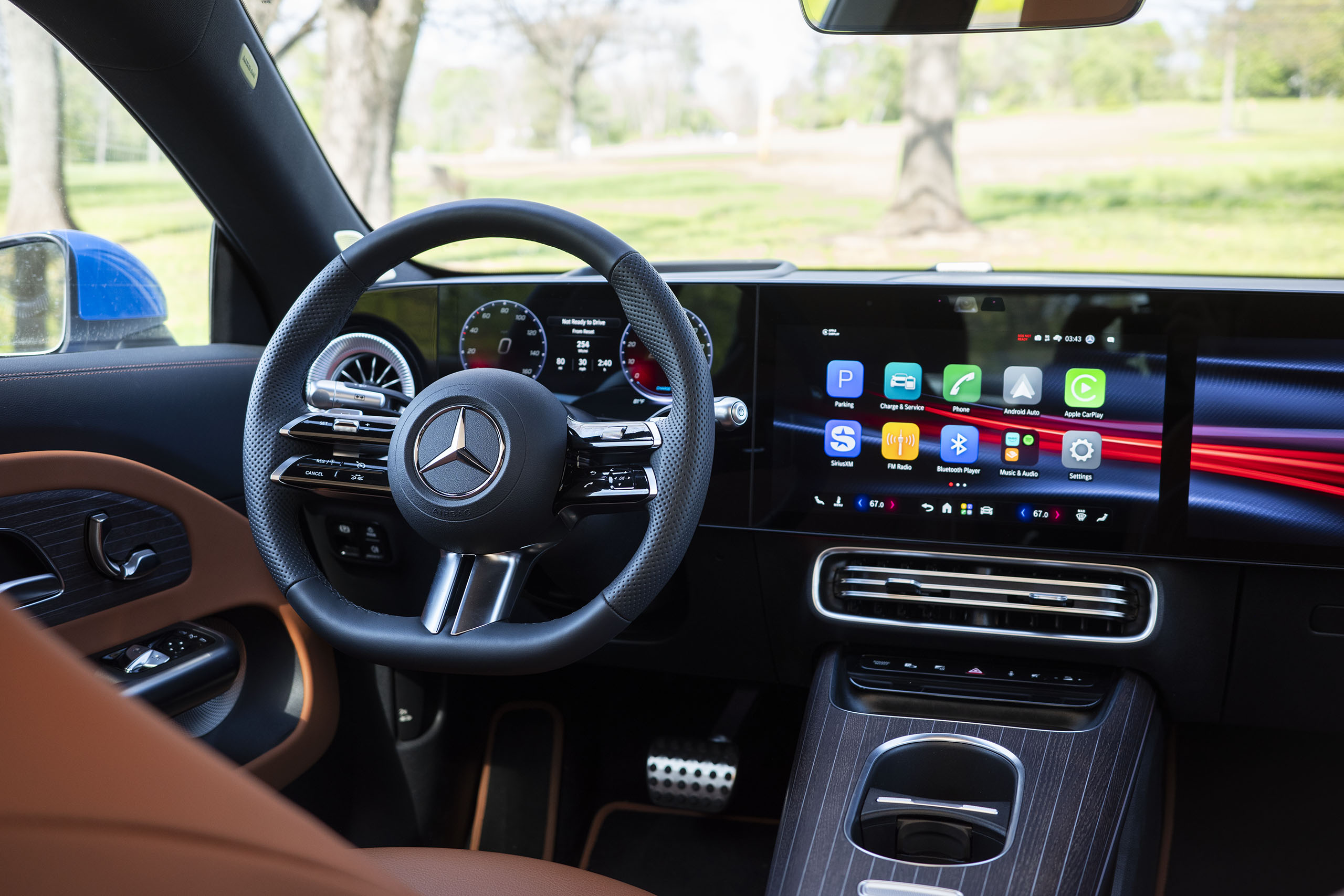
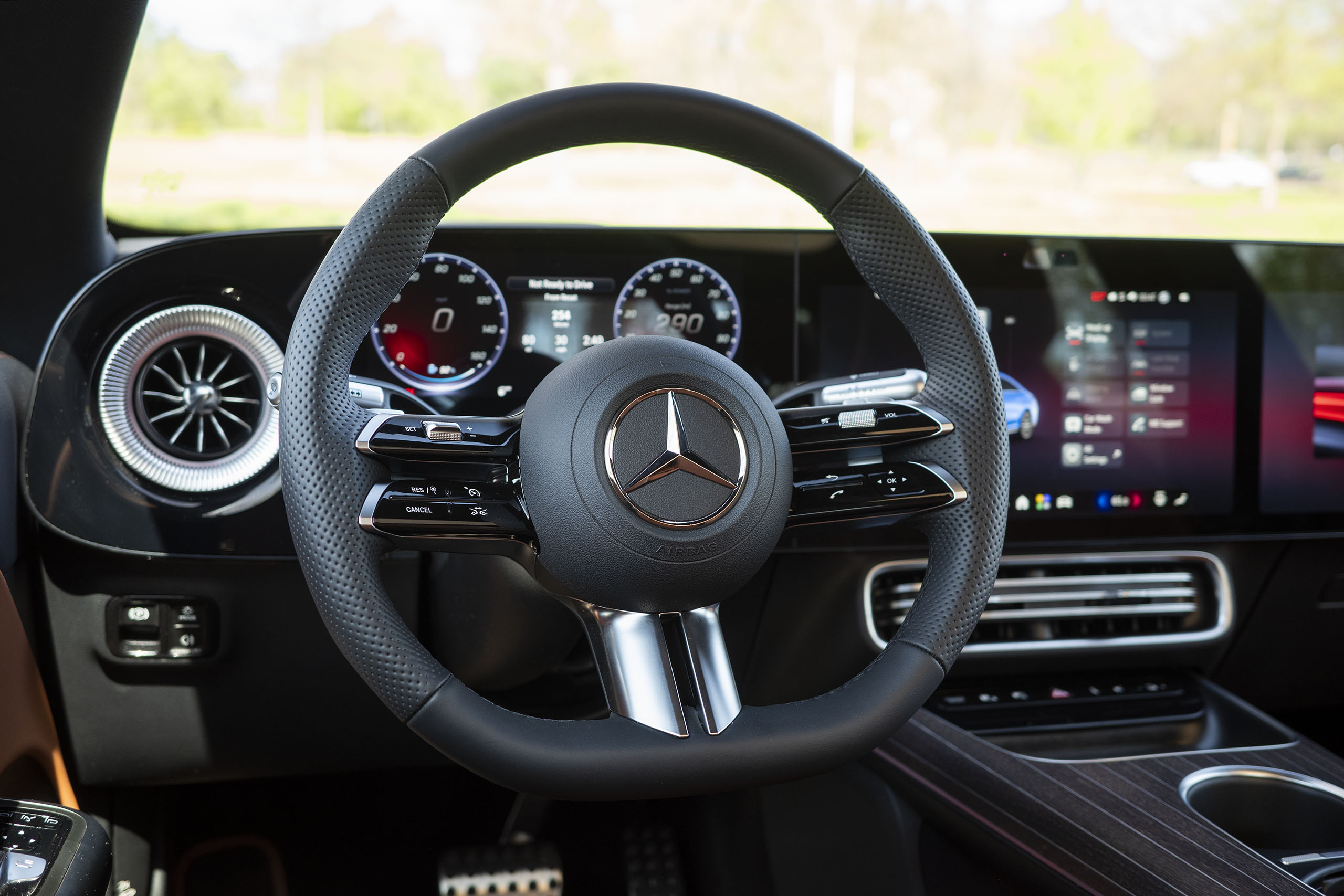
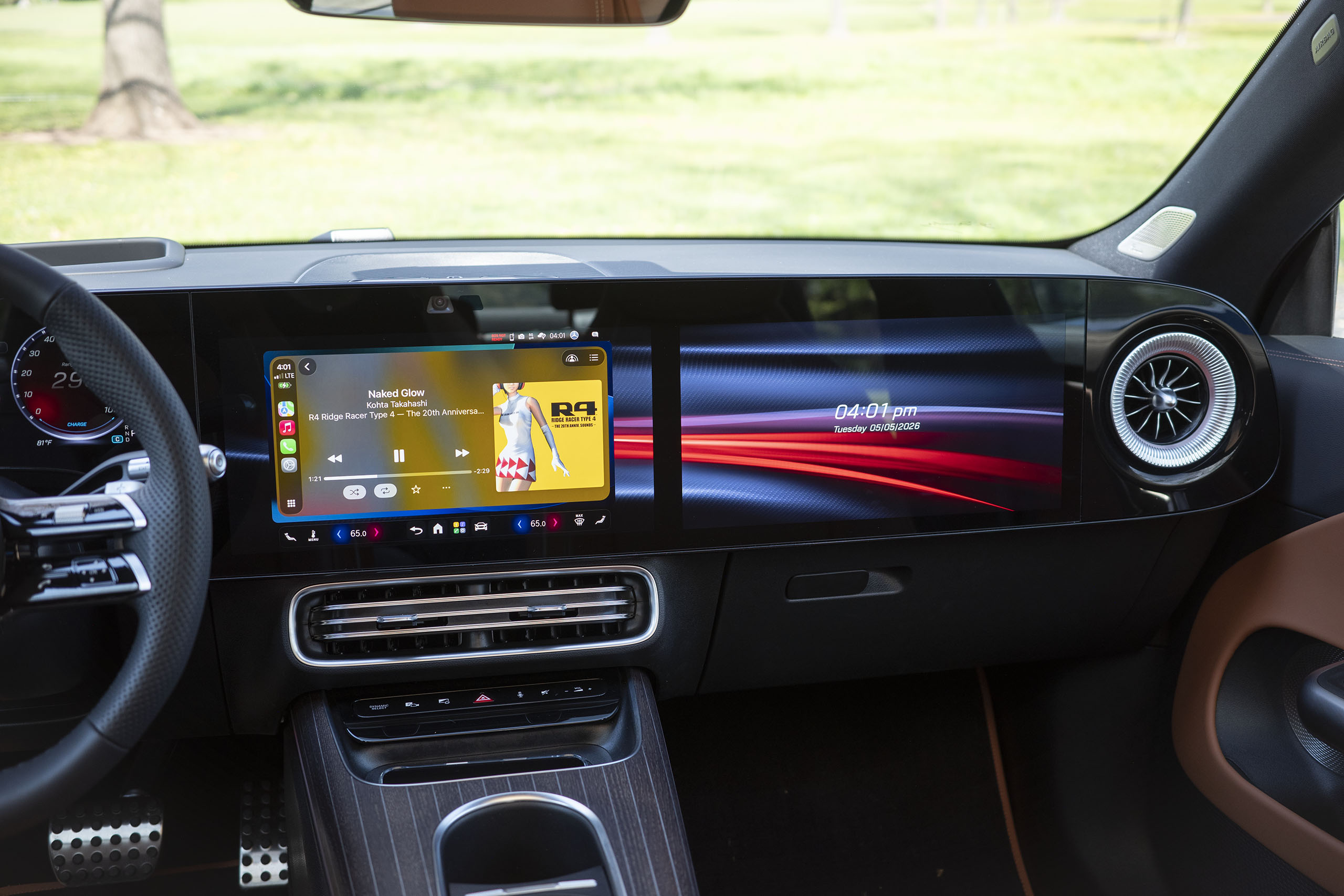
It surprised me so much that I was positive I’d been doing something wrong until I flipped through the manual (which was totally unhelpful), poked around Reddit, and finally got confirmation from Mercedes itself.
Of course, it wasn’t always this way. Two years ago, I reviewed a 2024 Mercedes E350, another very tech-forward sedan. The E350’s wheel playback controls were limited as well, insofar as the media widget needed to be active on the instrument cluster if you wanted to skip songs through the capacitive directional pad on the wheel. Weird and annoying, but hey—at least there was a way. Evidently, Mercedes thought even that was more than required.
Who knows specifically why this decision was made? Maybe the designers wanted to encourage owners to use voice commands, which I did not do for this purpose. I wouldn’t be surprised; Mercedes, like many automakers, has invested tons of money and development into its digital voice assistant, equipping it with AI so it can handle tasks in a more conversational manner.
To that, I’d only say there’s no technical reason Merc’s software couldn’t be updated to bring this behavior back to models that lack it via an over-the-air update. I hope the company considers it, because I truly don’t want this to be the start of a trend.

Got a news tip? Reach out to tips@thedrive.com
Loading comments…
Comments couldn’t be loaded. Please refresh the page.