
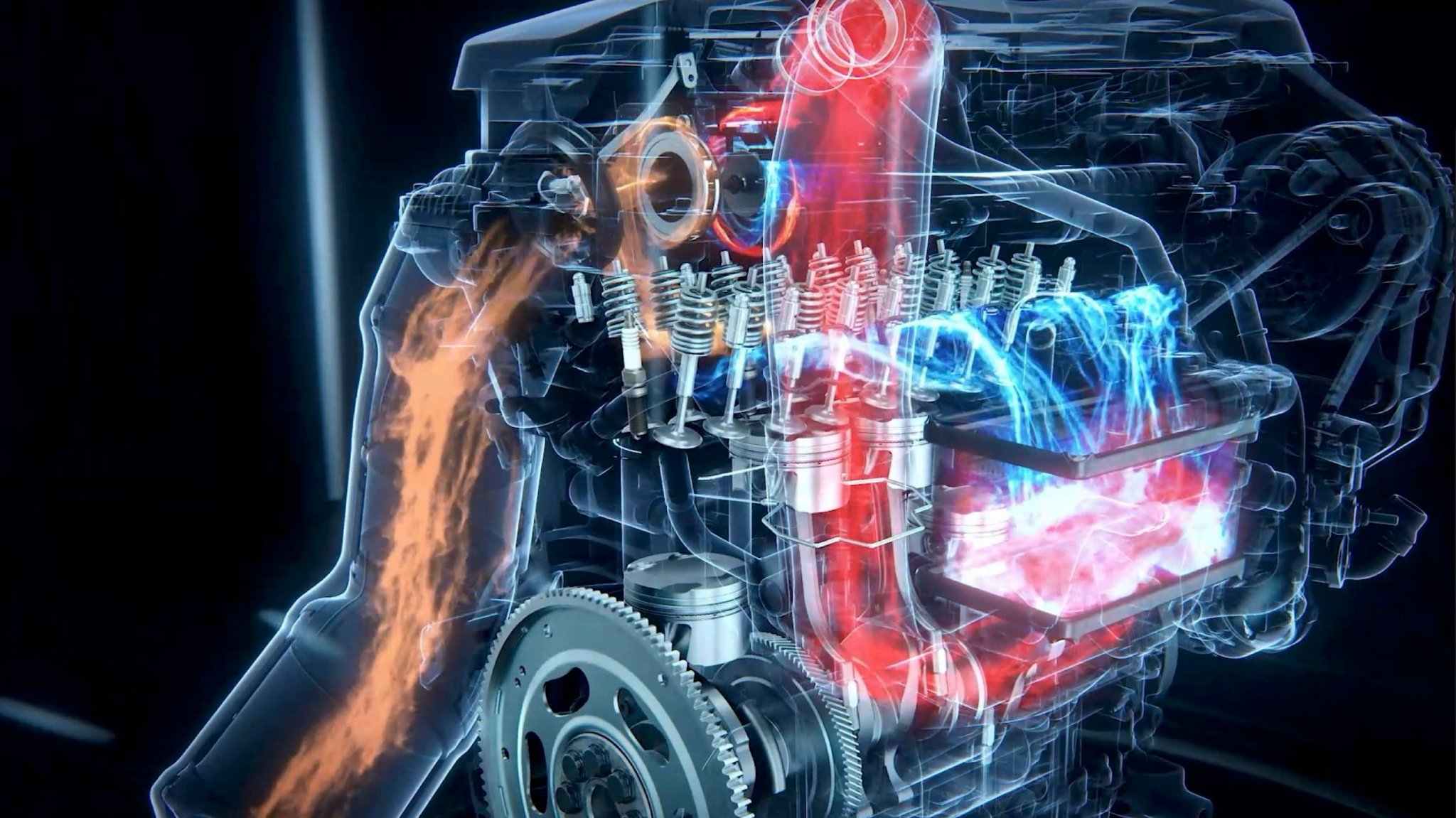
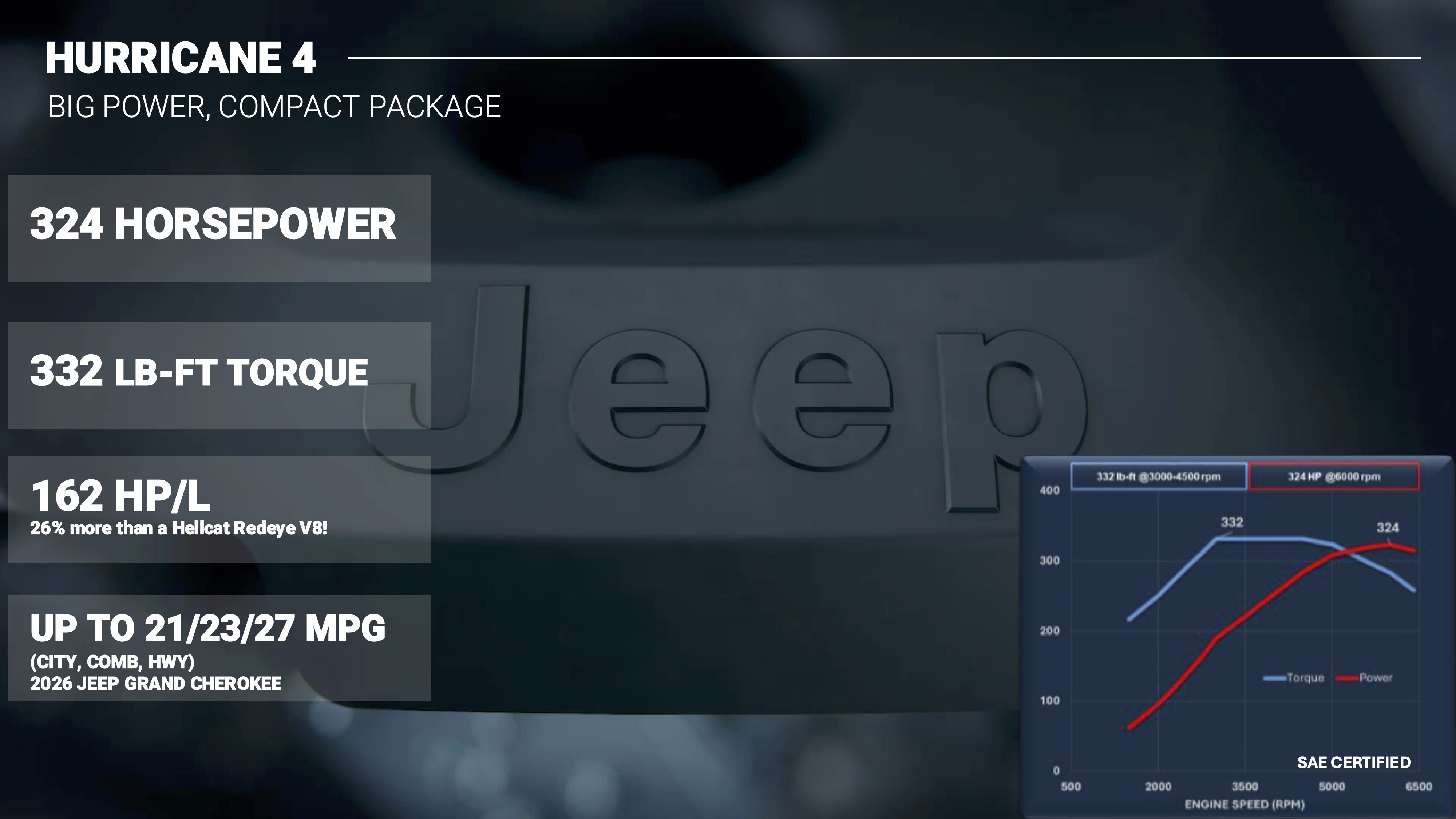
The new 2026 Jeep Grand Cherokee will not have a V6 or V8 like you might expect. Instead, the large SUV will be powered by an ambitious 2.0-liter four-cylinder turbo cranked up to a substantial 324 horsepower and 332 lb-ft of torque. We spent some time with its chief engineer, Ashish Dubey, to learn how the automaker squeezed that much juice out of such a small engine and why he’s confident it will be stout enough for daily driving.
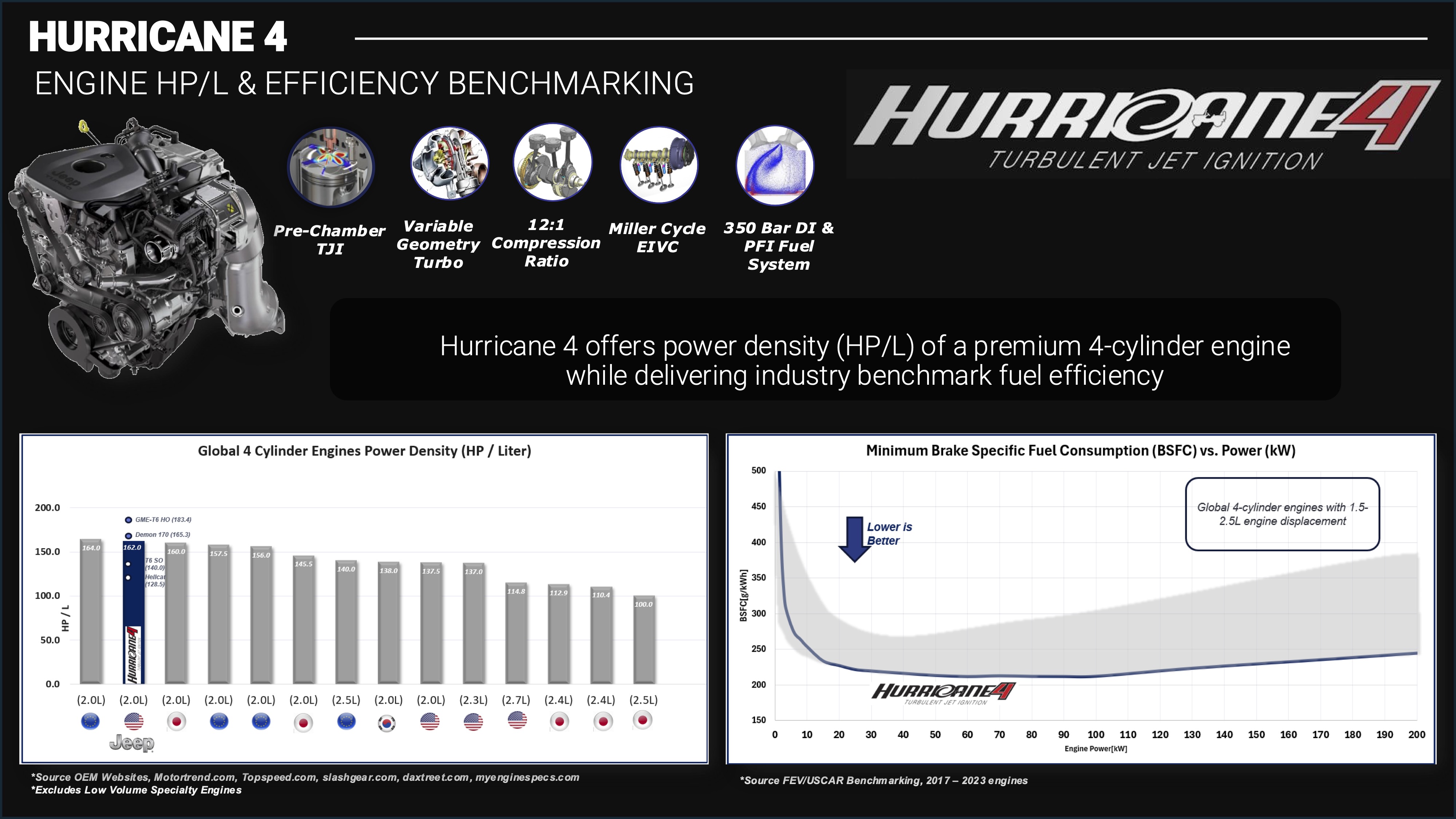
For context, a Civic Type R claims 315 hp and 310 lb-ft of torque with its 2.0-liter turbocharged engine. The Honda K Series under the hood of that thing is widely regarded as among the best of its type, so hearing that Jeep is planning to push the same displacement even further, and saddle it with a much heavier vehicle, I mean, I won’t deny I’m somewhat skeptical of the new Grand Cherokee engine’s realistic lifespan.
Nevertheless, the new Hurricane 4 has some interesting features and, at least on paper, seems quite impressive. And it’s really cool to see the company that’s most known for archaic V8s meaningfully advance small-displacement engine technology.
Turbulent Jet Injection: What It Actually Means
Stellantis has been using terms like “F1-inspired” regarding this engine, and the Turbulent Jet Injection system is what’s being referenced there. Basically, TJI means there’s a tiny sub-chamber, with its own spark plug, in each cylinder above the piston, where air and fuel are super compressed and ignited with a greater degree of efficiency than you’d have without this system. At least, that’s how it’s pitched.
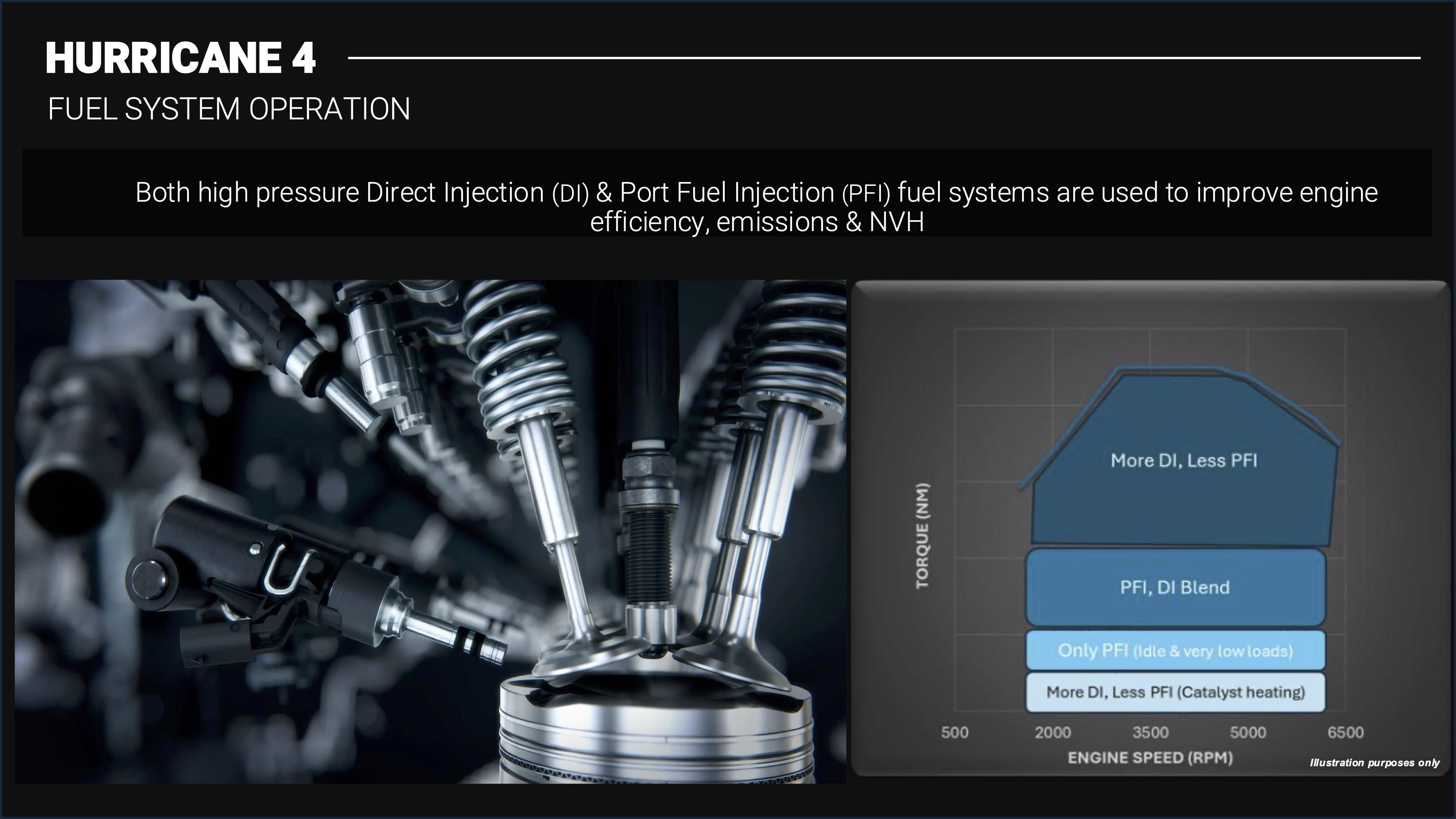
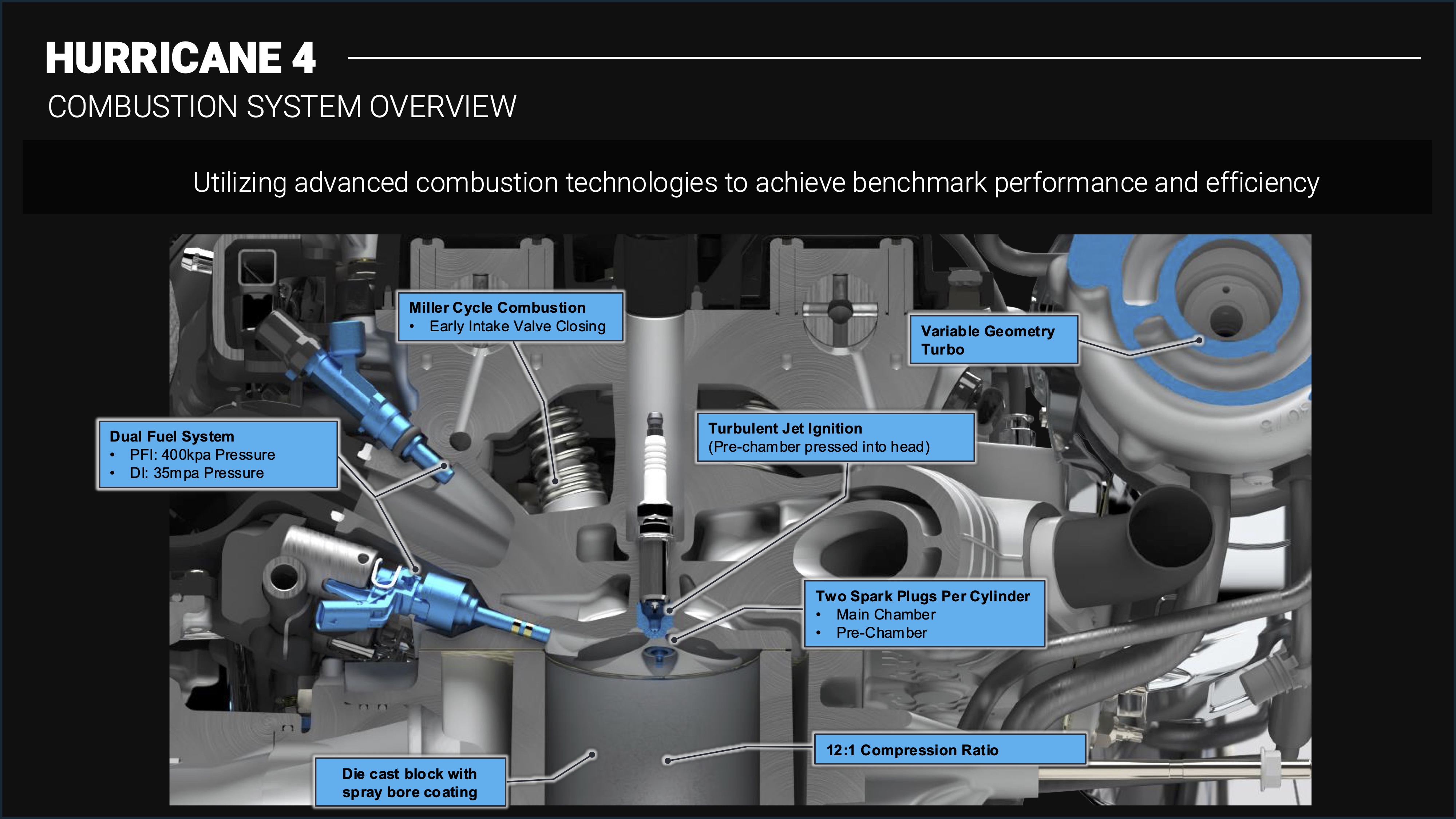
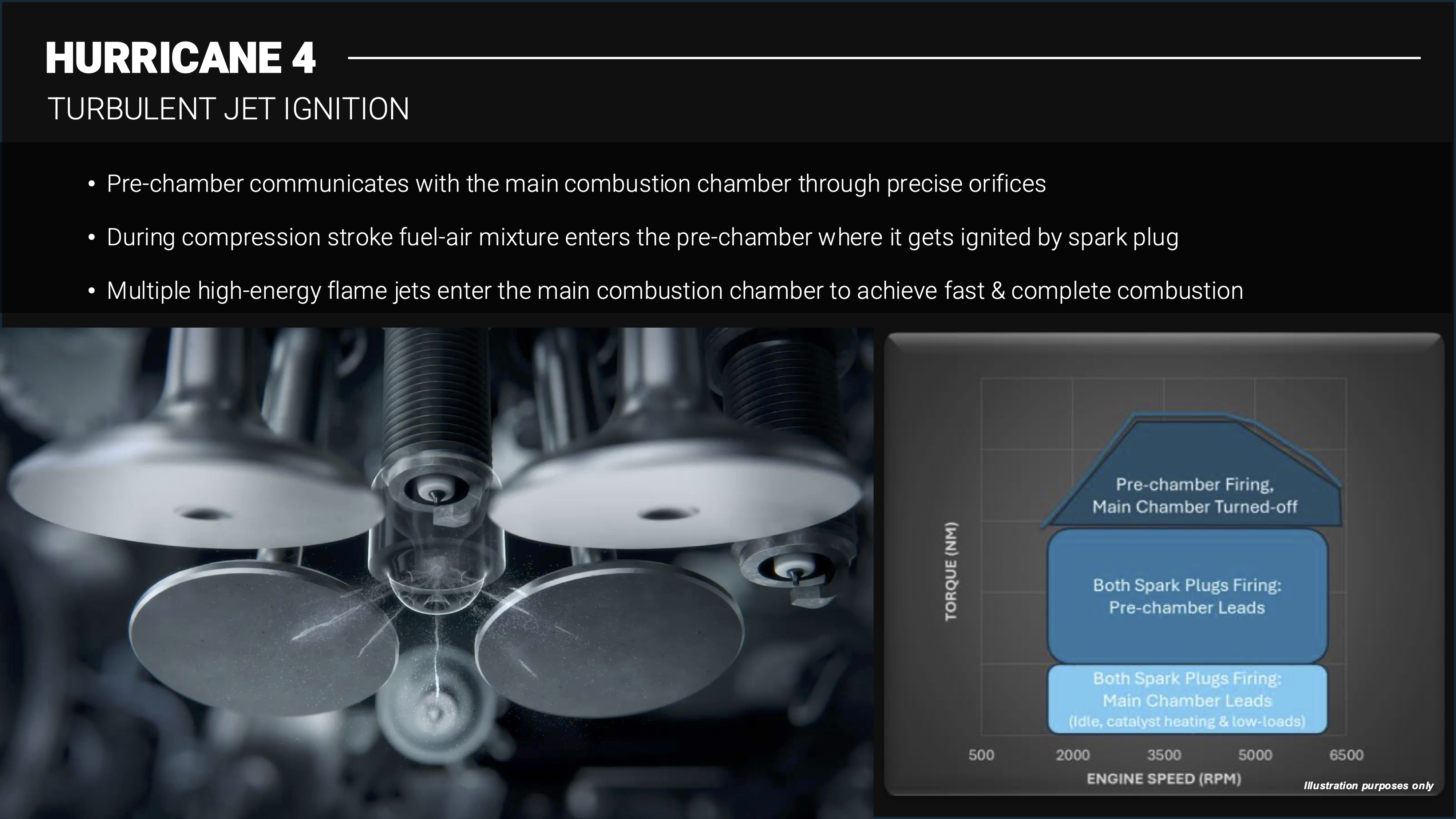
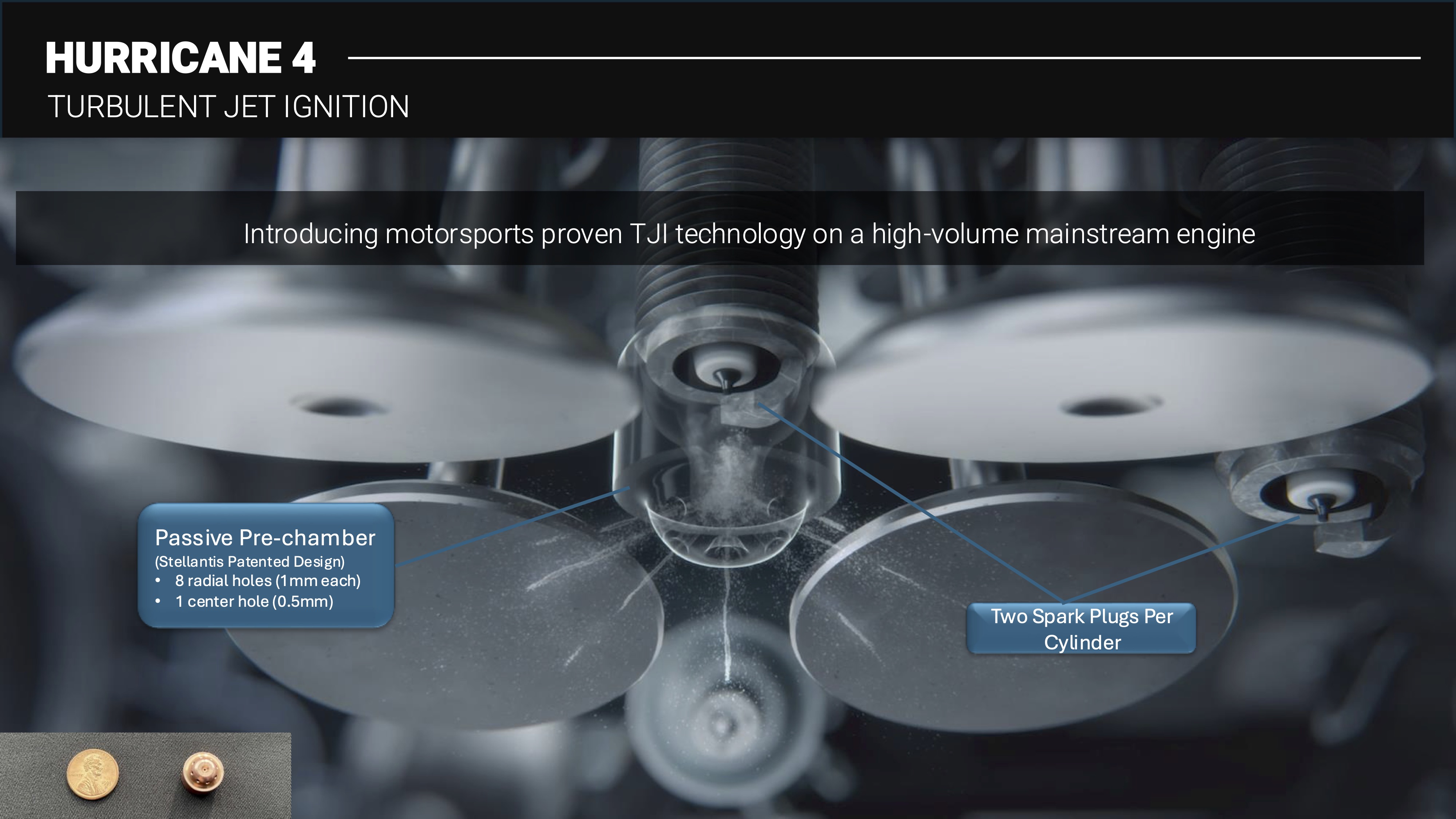
There’s another spark plug (so two per cylinder), which can be brought into the process when an even bigger explosion is desired (towing, hard acceleration). Fuel is fed in through two channels as well—the Hurricane 4 has both direct injection and port injection, which come into play to different degrees depending on power demands. So while most fuel comes directly into the combustion chamber (direct injection), it can also be added the intake side (port injection).
If you can picture a combustion chamber, the void above the piston in each cylinder, imagine a little thimble at the top with a spark plug where air, fuel, and spark can mix to get a sort of head-start on the combustion process. That’s the main piece of hardware that distinguishes the TJI system.
But the most important thing to understand is that it’s not really a “one state for performance, one for efficiency” concept. The whole magic of this engine is that it lives in a constant state of variability.
Small Engine, Big Degree of Variability
TJI allows for a huge degree of precision in controlling the combustion process. By having two different styles of both fuel and spark within each cylinder available, the Hurricane 4’s ECUs can theoretically optimize fuel usage for power and efficiency beyond what most gasoline-burning engines can do.
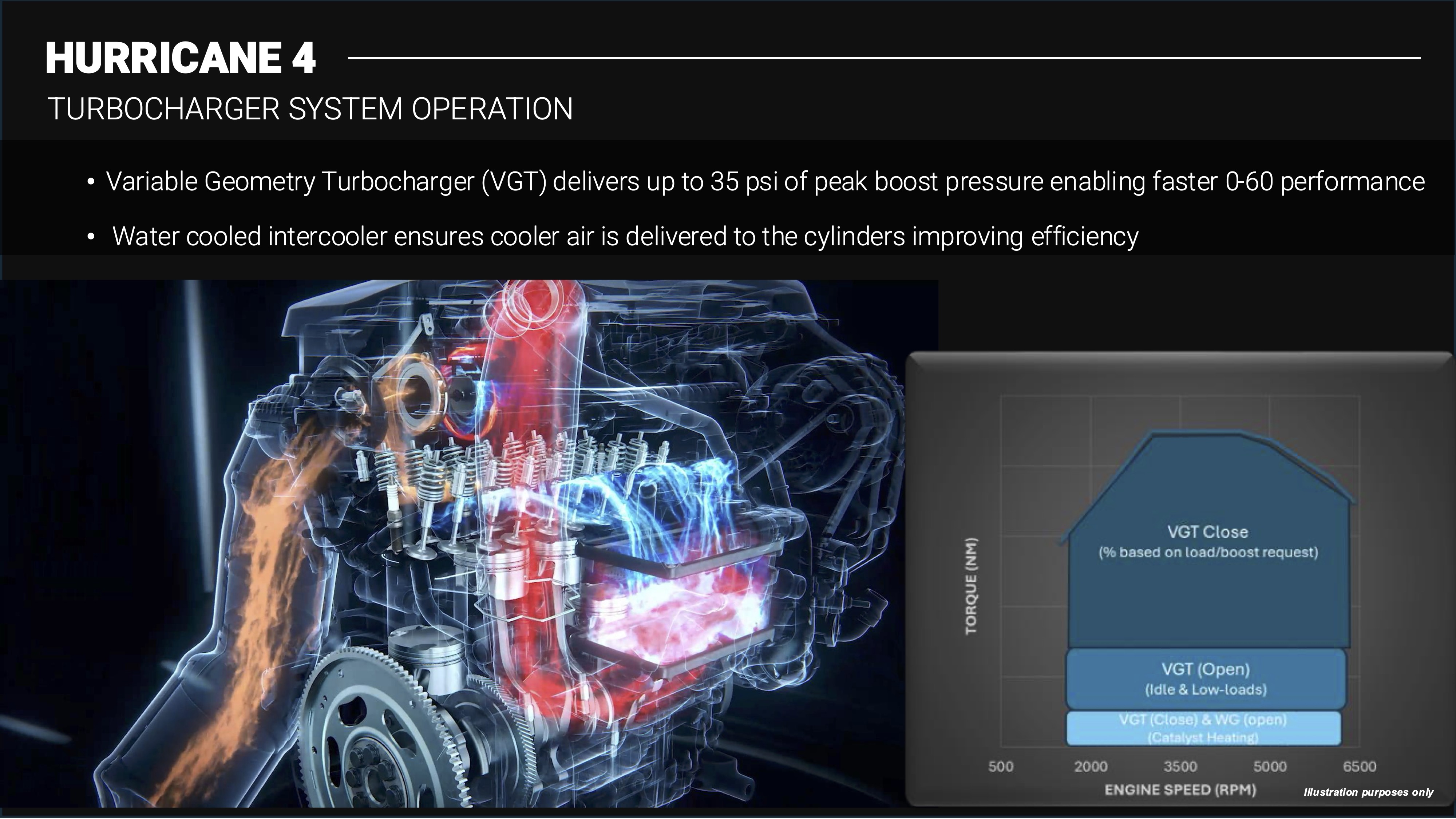
And Stellantis’ engineers did not forget the third, equally important member of the combustion engine holy trinity: Air. This engine has a variable geometry turbocharger with active vanes, allowing specific control over airflow. The idea is that the turbo can act like both a large and a small turbo by constricting and releasing its internal plumbing as needed. Naturally, you need that level of control to make the most use of that fancy fuel and spark system.
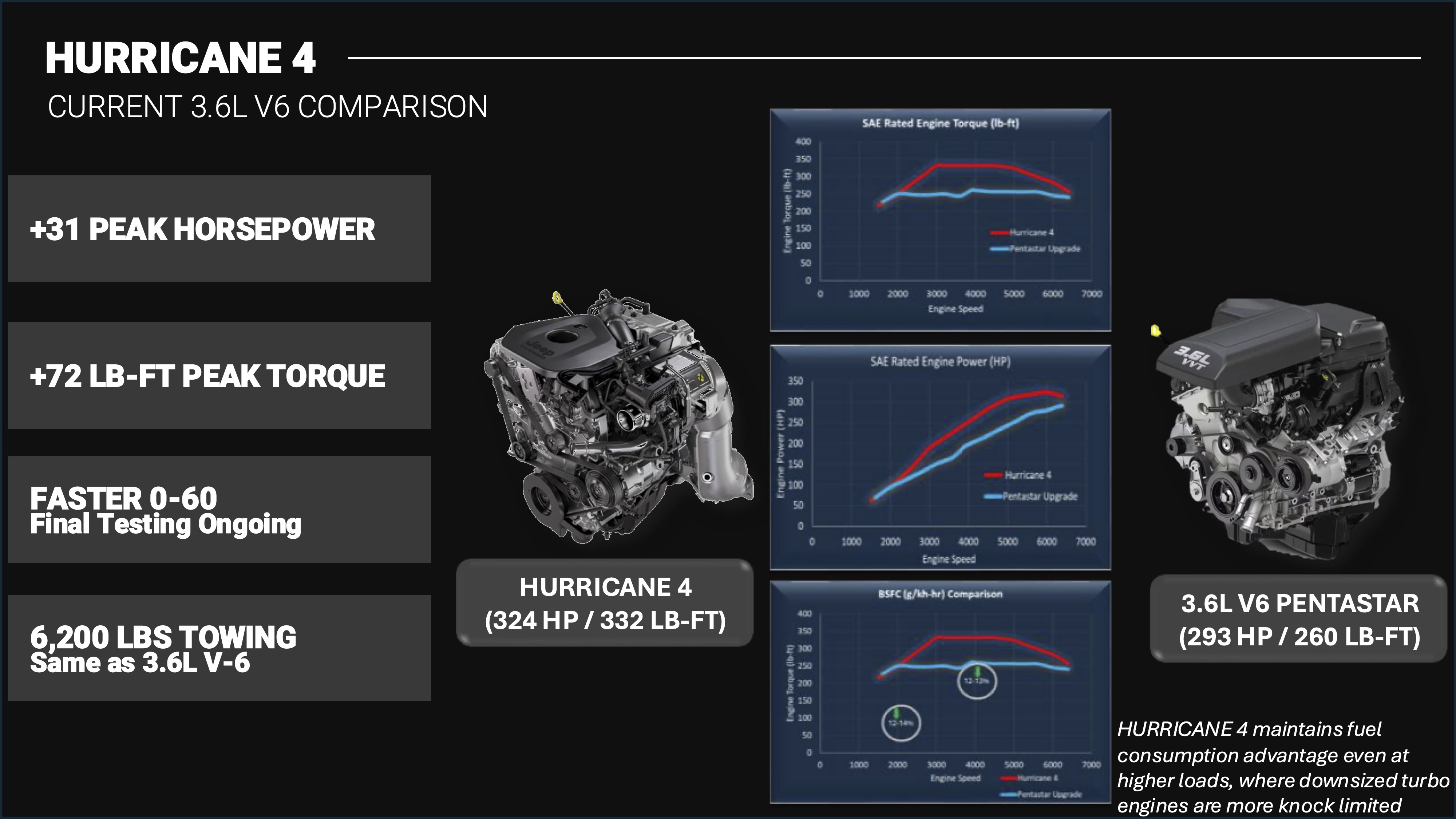
The turbocharger can reportedly create as much as 35 psi of peak boost, though perhaps more impressively, Stellantis says it helps the engine create “90 percent of peak torque from 2,600 rpm,” giving you a nice and fat power curve. Air is cooled (and densified) on its way to the combustion chamber by a liquid-to-air charge-air cooler.
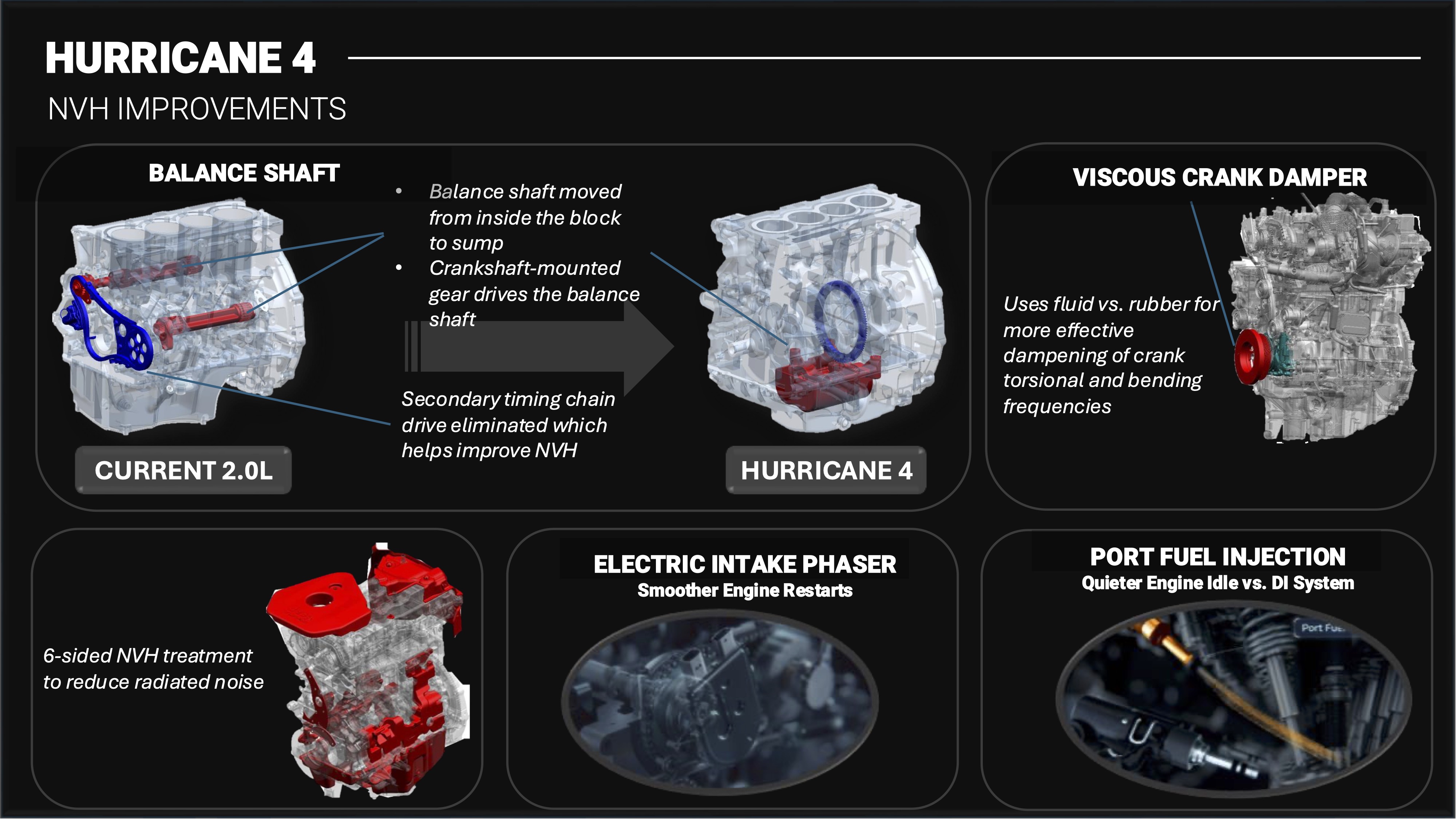
An electric cam phaser manages variable intake timing. An electric water pump and variable displacement oil pump support the engine’s cooling and lubrication, with, as the company claims, minimal parasitic loss.
Strength To Handle All This Boost
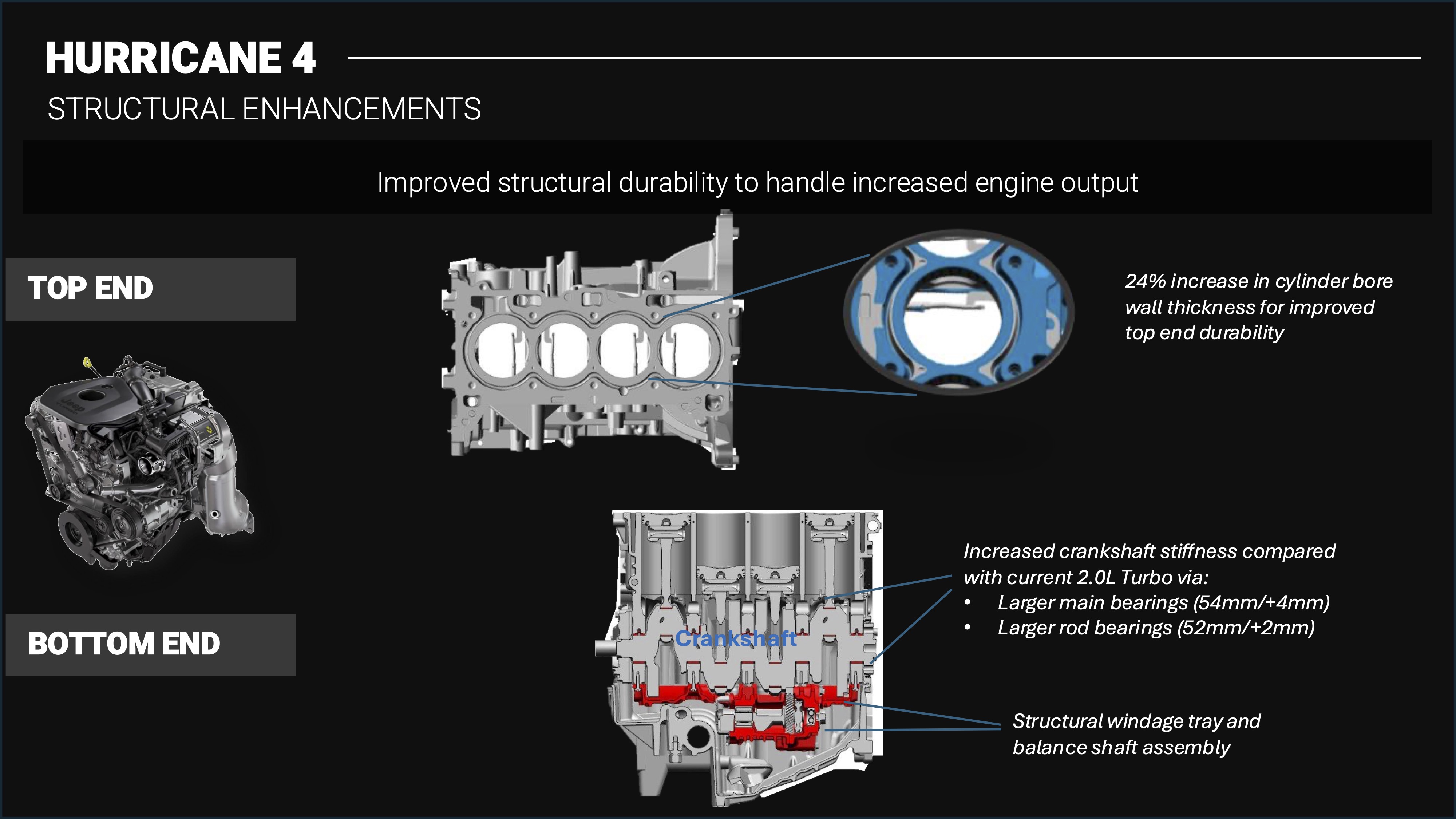
The Hurricane 4 Turbo has an aluminum block made from a single-piece casting. The oil pan and timing cover are die-cast aluminum. Cylinder bore walls are reportedly 24 percent thicker than those in Stellantis’ outgoing 2.0-liter I4 turbocharged engine, while the new engine also has large main and connecting rod bearings. But the new Hurricane 4 is not an evolution of the last four-banger; this is a clean-sheet design that just has the same displacement.
I mentioned concerns about the long-term viability of pushing so much power out of such a small engine, but Dubey shrugged it off, citing hundreds of thousands of miles driven in validation testing.
At first glance, 35 psi of boost and an aluminum engine, in a heavy SUV that’s expected to tow things, sounds like it’s asking a lot. But I guess it’s not going to be running that peak boost level for sustained periods of time. And the block is meatier than Stellantis’ previous turbo fours (and I never heard of widespread issues with those popping).
My Take
Talking to a Stellantis engineer made it really easy to get excited about this engine. The specs speak for themselves—being able to get as much as 324 hp and 27 mpg from the same 2.0-liter powerplant is really pretty amazing. And of course, the company’s reps are completely confident in the engine’s ability to survive when talking to journalists. I guess my main concern about owning one of these would be the same thing that’s got me enamored with it—with so many systems working together to maintain such a high degree of precision, you have more potential failure points than you would with other engines. Twice the spark plugs. Twice the injectors. And lord forbid if you get a wiring issue or sensor failure that confuses the ECU—obviously, there will be failsafes and limp modes, but with so many possible conditions of fuel, spark, and airflow, there are a lot more variables for the engine’s computer to manage.
But for the most part, based on what I’ve heard so far, the Hurricane 4 seems super cool and impressive. At least on paper, it’s a far more interesting accomplishment to me than a big honking Hellcat motor with a huge supercharger.
Before parting ways, I asked Engineer Dubey if he thought we’d hit the limit on what was possible with a combustion engine this size, and I loved his answer. I’ll paraphrase, but he basically said, “Ten years ago I might have said yes,” but it’s a good thing he didn’t, because look how much farther we’ve come.
Got a story tip? Drop us a line at tips@thedrive.com!
Loading comments…
Comments couldn’t be loaded. Please refresh the page.