
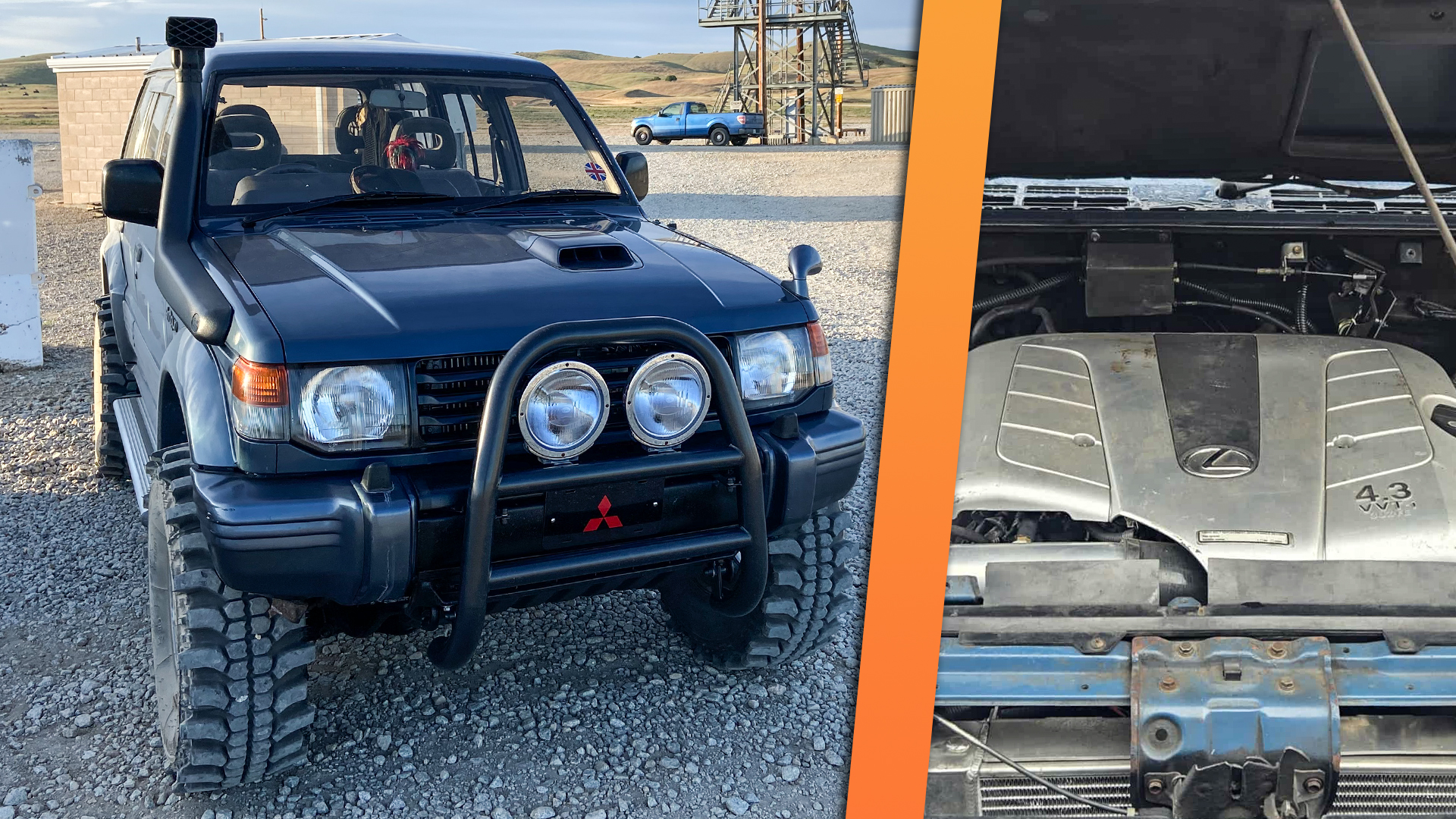
People who are into Mitsubishi Monteros tend to have other commonalities, too. We like to be different, we like what’s old-school, and we like to collaborate. Angelo Ram’s Lexus V8-powered 1995 Montero is a great example of all the above—a unique, anachronistic vehicle made possible thanks to the expertise of people all over the world.
I saw a post about this build in one of the Montero Facebook groups I like to chat in, and Ram was kind enough to share the backstory and some images of the build, all of which I think you’ll appreciate.
This vehicle got my attention because it’s a cool solution to one of the Montero’s biggest shortcomings— how comically slow the truck feels, especially today, especially when we’re talking about an imported diesel model. That’s what Ram had been driving, and it just wasn’t cutting it on Pacific Northwest mountain passes where he drives to see his family. That, and a desire to drive something unusual, maintained his motivation to make this unique beast of a truck come to life.

Lexus-Powered Montero
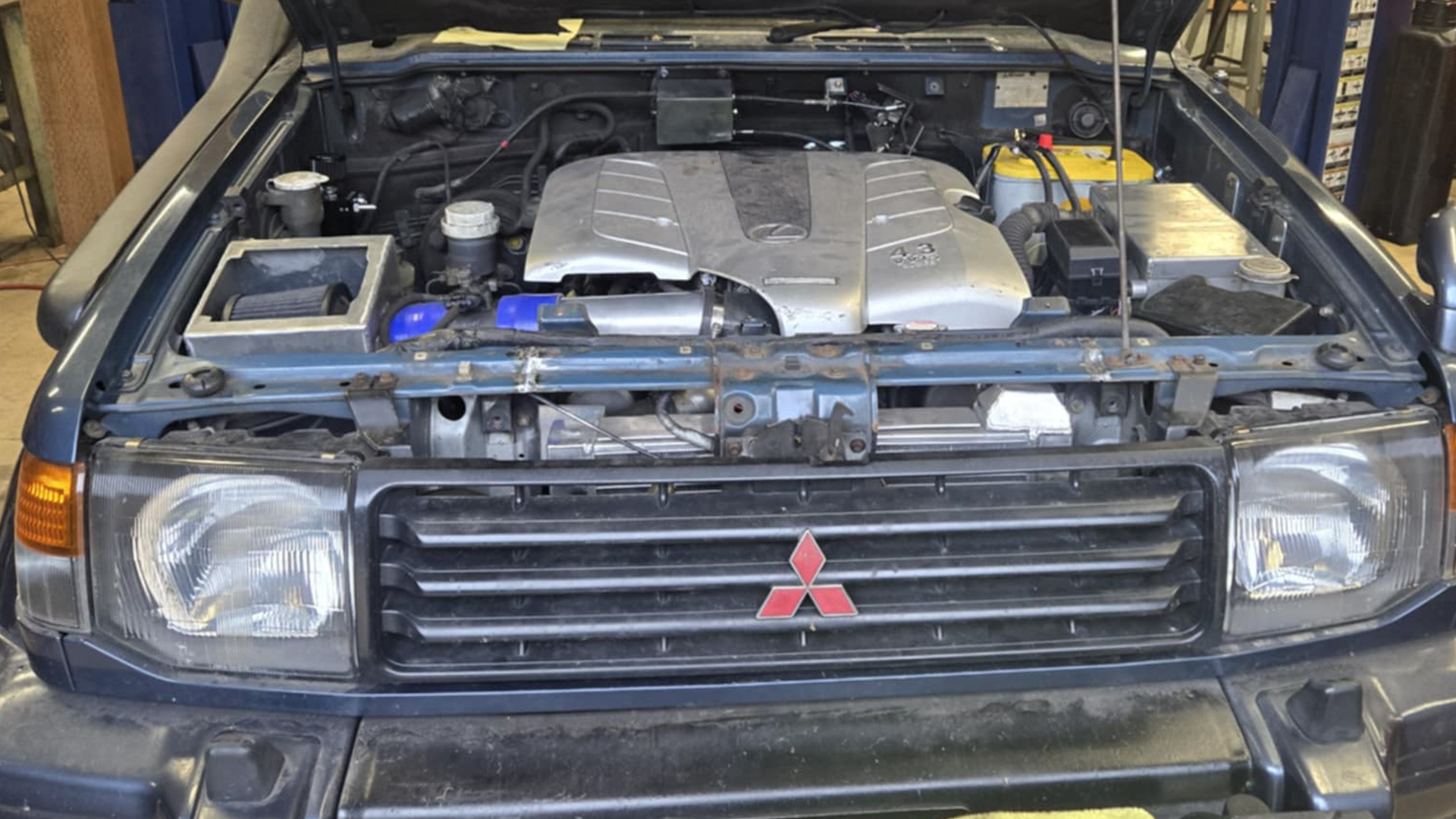
Custom mounts, custom cooling (the stock Lexus radiator didn’t fit in the engine bay), a transfer case adapter, and ECU tuning were all it took to transform an anemic diesel Montero into an ultimate ’90s Japanese adventure rig.
“It was all holiday-driven,” Ram told me. “Spending time with family … I would want to have the ability to just still power through and make it safe. That’s really my intention with all of this … I had to be able to maintain 70 mph, AC on and everything, while going to Spokane during the winter when my wife and I would go there for Christmas and Thanksgiving.” But, to be fair, he also built the truck the way he did because people told him he couldn’t.
“I just was not satisfied with the diesels,” he explained. “When you go up the mountains, I cannot maintain 70 miles an hour going uphill, and I felt like I always had to go to the right side of the highway. I felt that I’m doing, you know, I’m causing traffic and all this stuff, and I didn’t feel comfortable in it.”
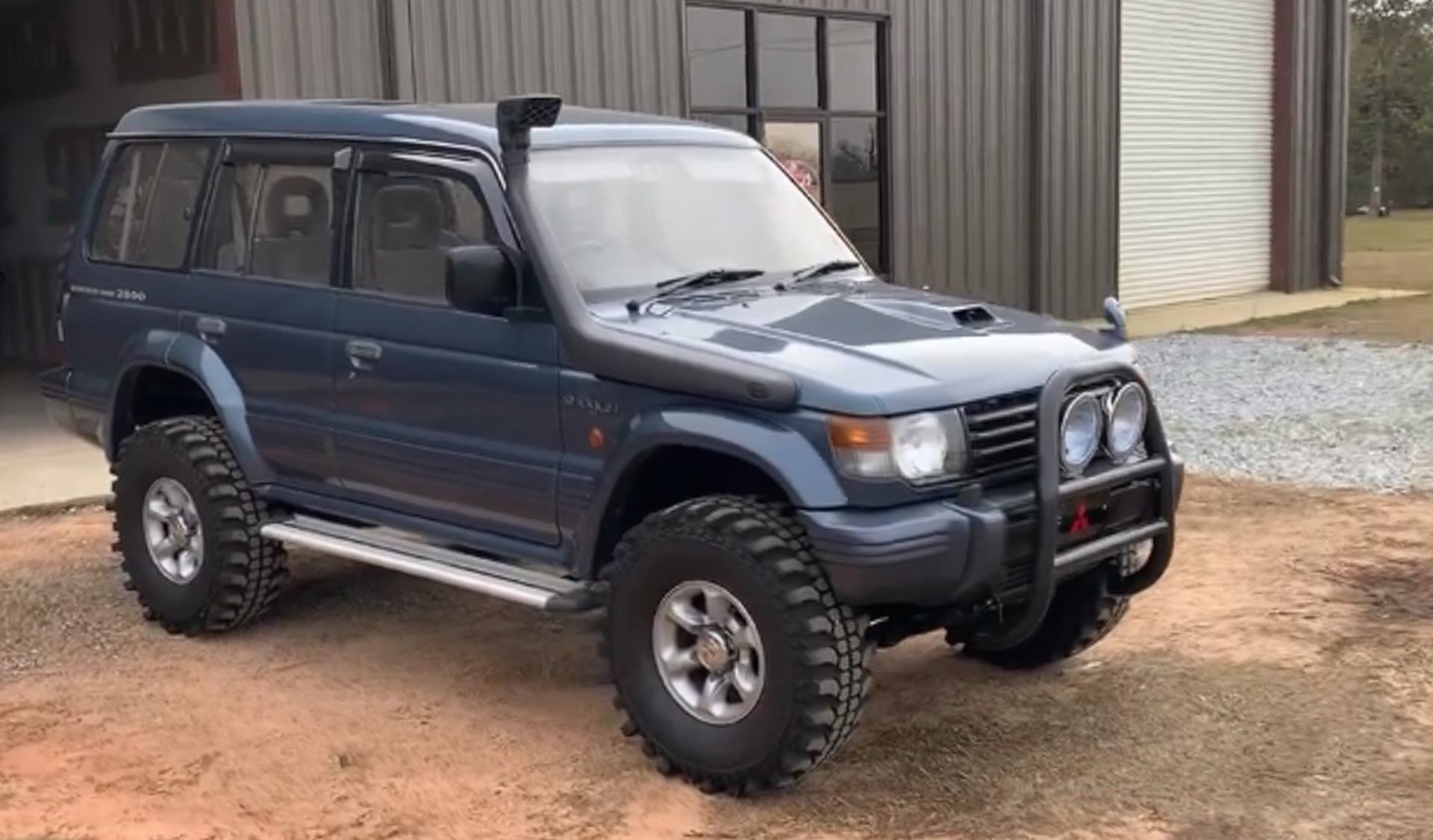
Naturally, he could have bought a newer truck. But like I said—Montero people are built differently.
Ram first got into Monteros in the military. Not in a combat vehicle context; when he was stationed in Southern California, transitioning from active duty to the National Guard, another soldier had one and took him wheeling around San Bernardino. “…that was kind of my introduction to this whole Montero thing,” Ram explained to me. “And then I always thought, dude, I want one. One day. And then a buddy of mine who got out of the military and settled down in Alabama started importing cars. And he texted me. He was like, ‘hey dude, remember that car? I have one in stock. Um, do you want it?'”
While we got three generations of Monteros here in the U.S. (and the first-gen even had a Dodge clone called the Raider), none of the American-marked models got diesel engines—Ram’s is an unusual import. In fact, it’s technically a “Shogun,” one of the names given to this model in other markets (it was also called “Pajero” in other parts of the world). And while the diesel is conceptually very cool and offers a good combo of low-speed oomph and fuel economy, high-elevation highway speeds are not really its forte.
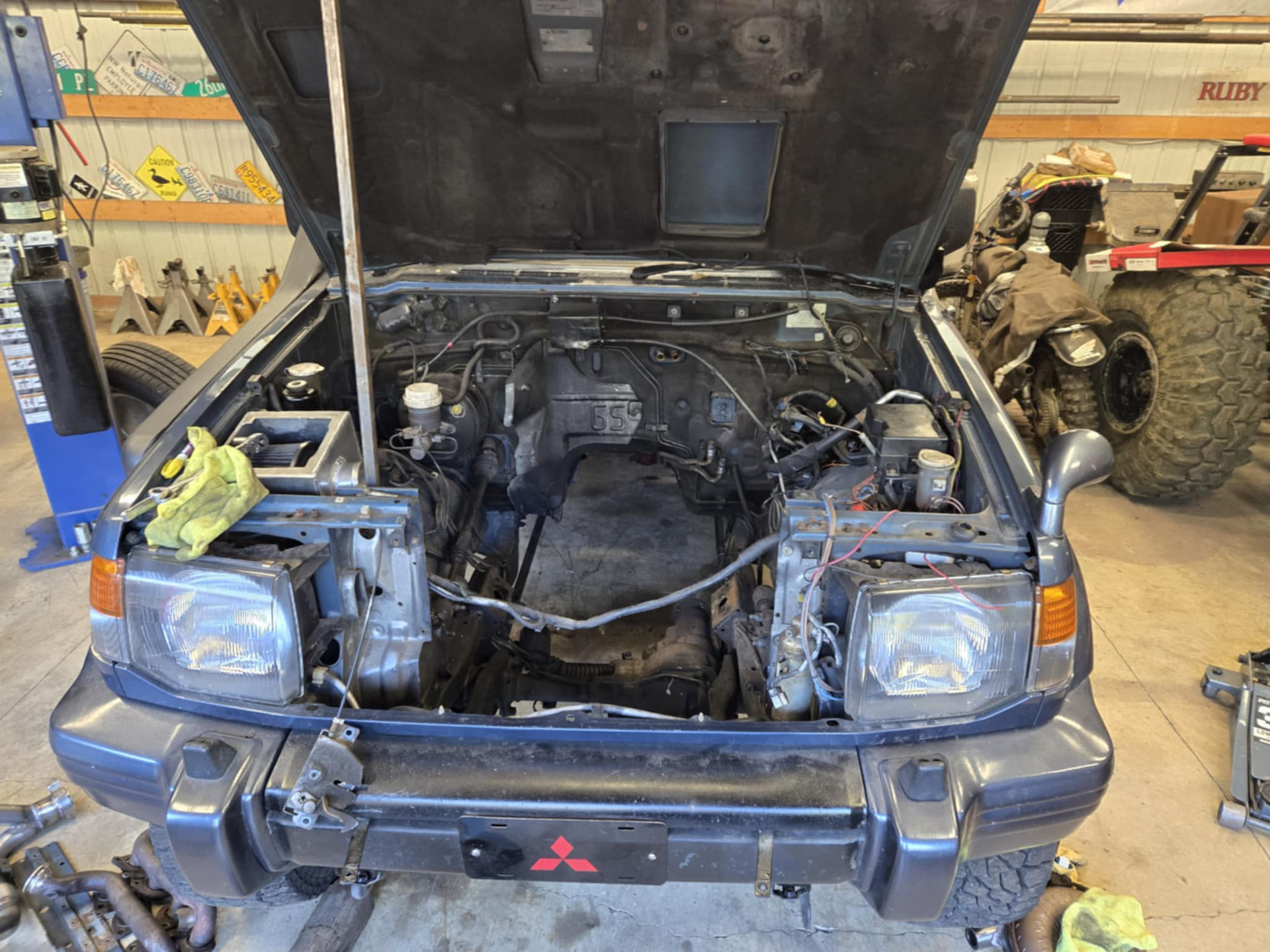
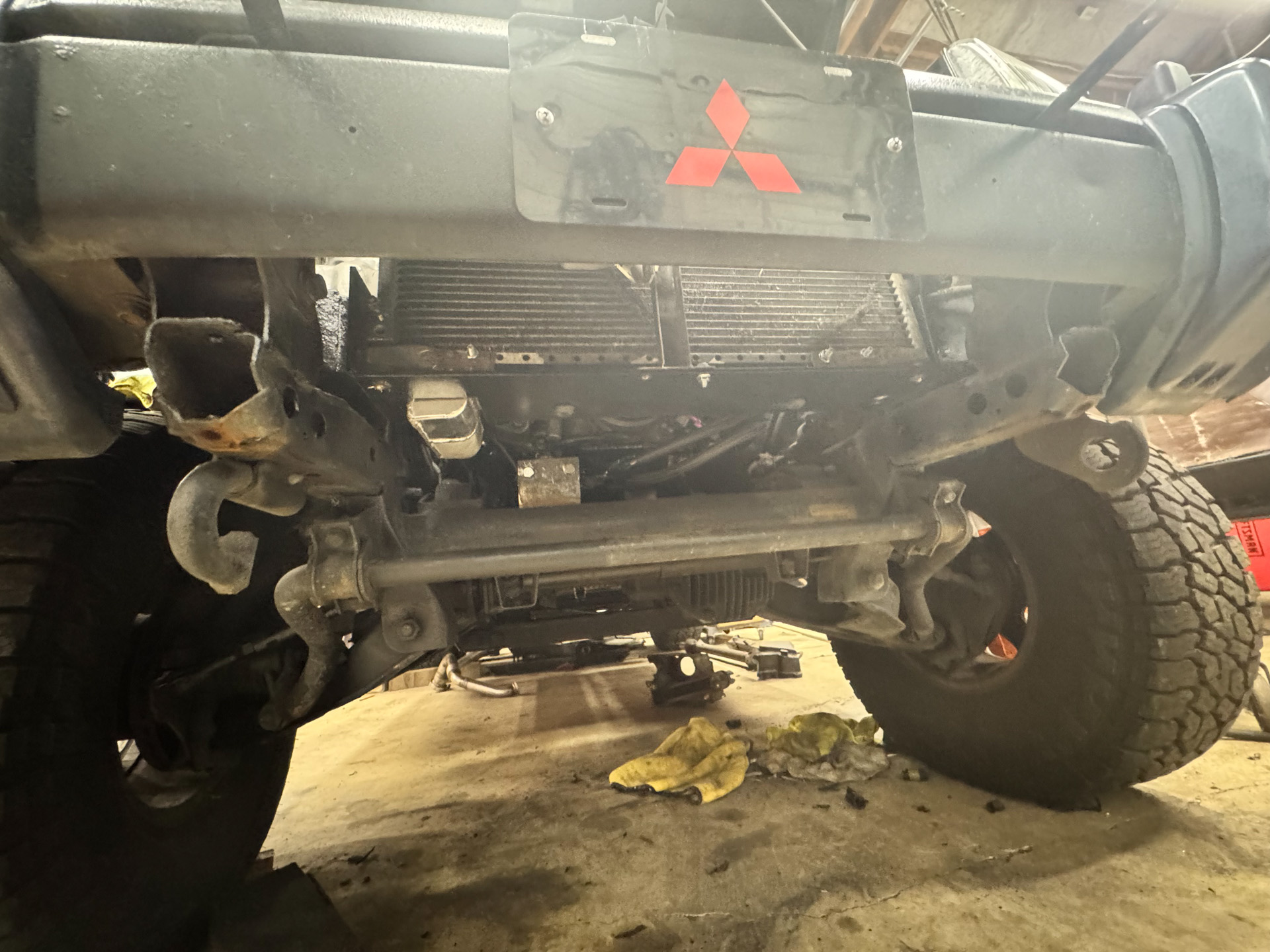
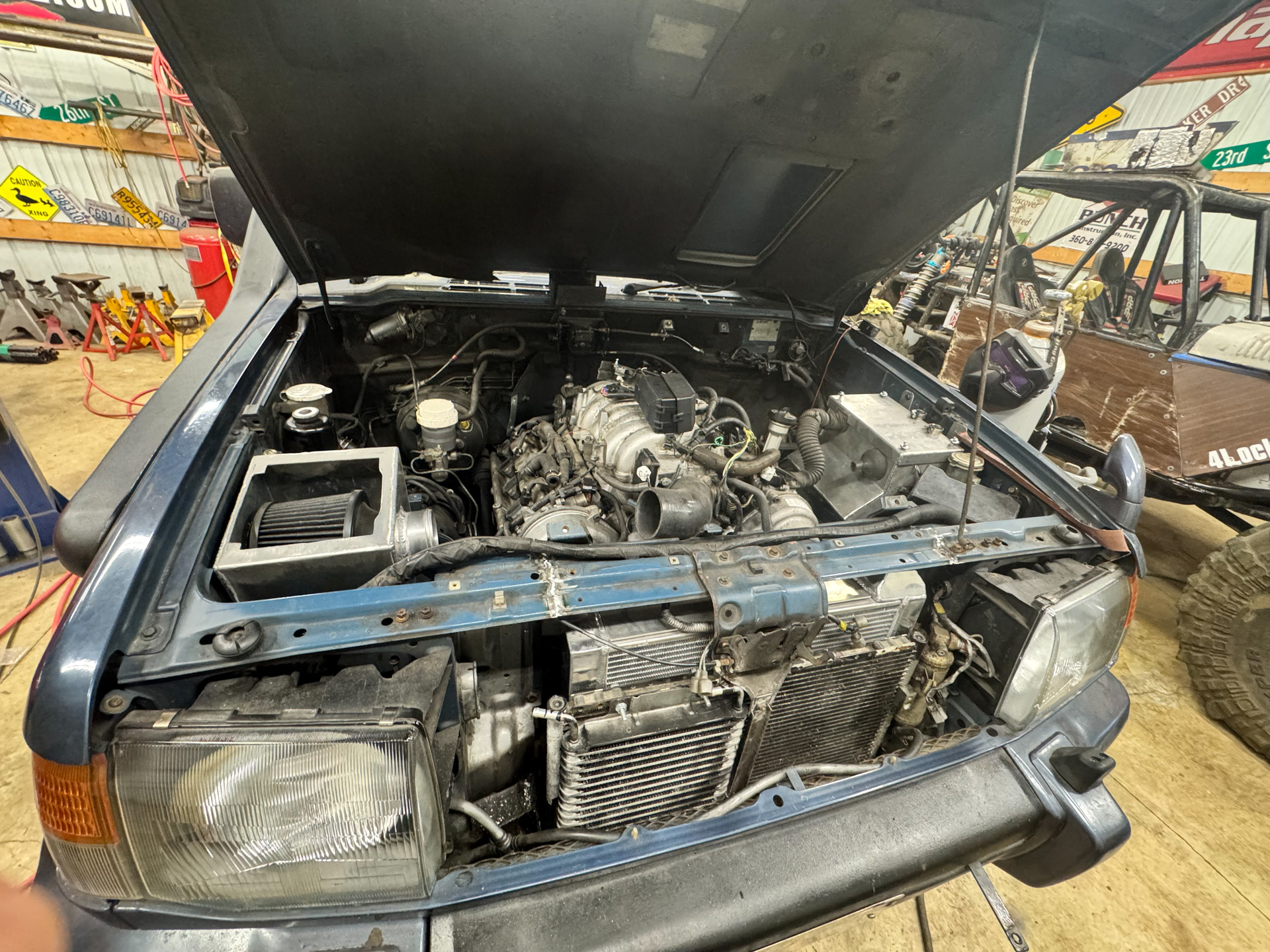
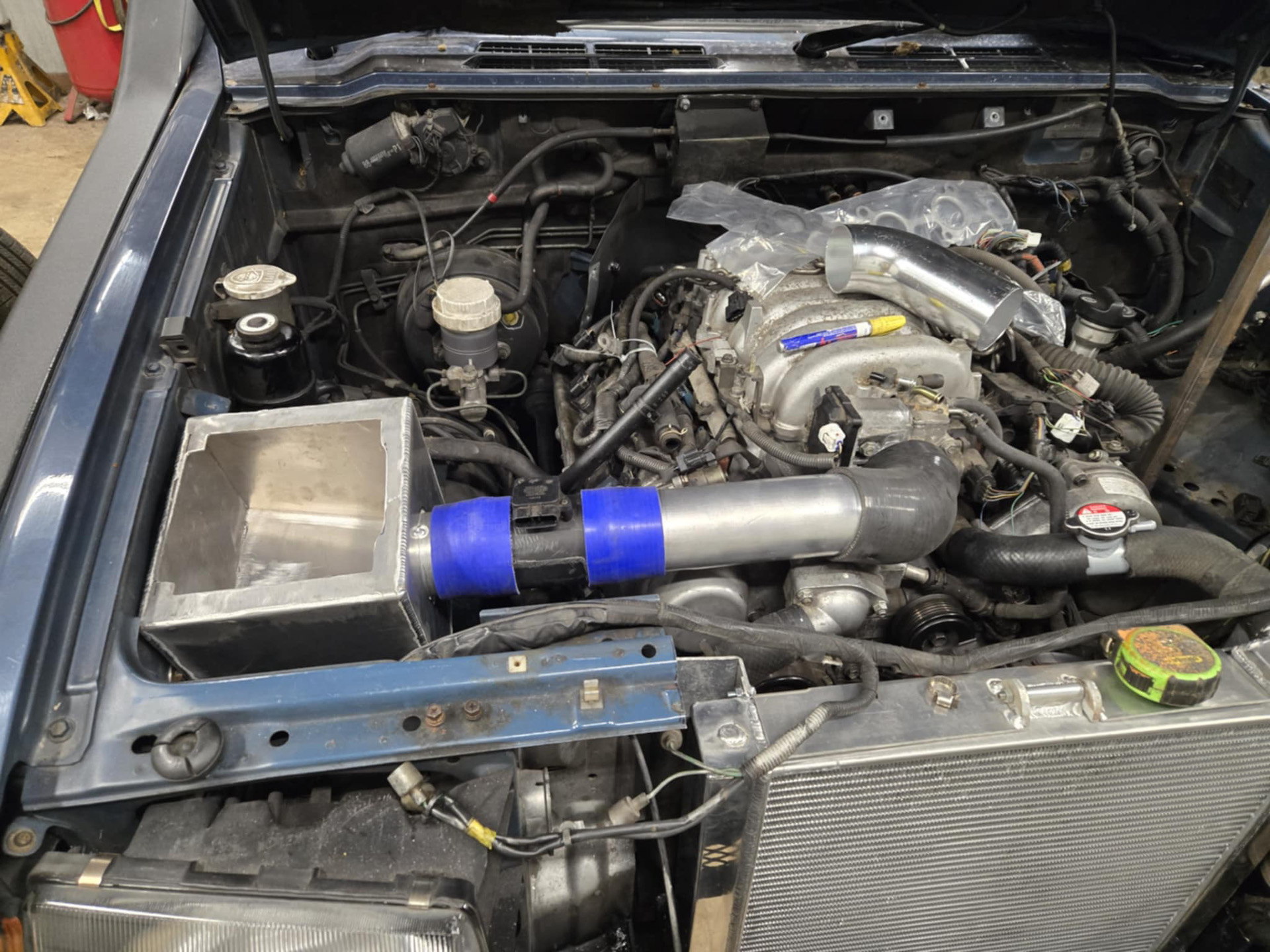
So the diesel-powered Montero migrated west, where Ram quickly realized it needed more power. After chatting with another owner who tried to convince him to put a compound turbo system on his diesel engine, “I just said, screw it, I’m going to go V8.”
Ram got in touch with a mechanic friend to help with the engineering and assembly. He knew it wasn’t the kind of project any old shop would be willing to take on. “He was kind of hesitant at first, and I was like, ‘Look, man. I need trustworthy people … I need honest work … This is really important because you’re close to me, and there’s already a face-to-face, you know, handshake.'”
Ram and I actually spent a long time talking about how cool Montero people are, and all the folks who had come together to help him out—but this post is already getting long, and we’ve got to get back to the build!
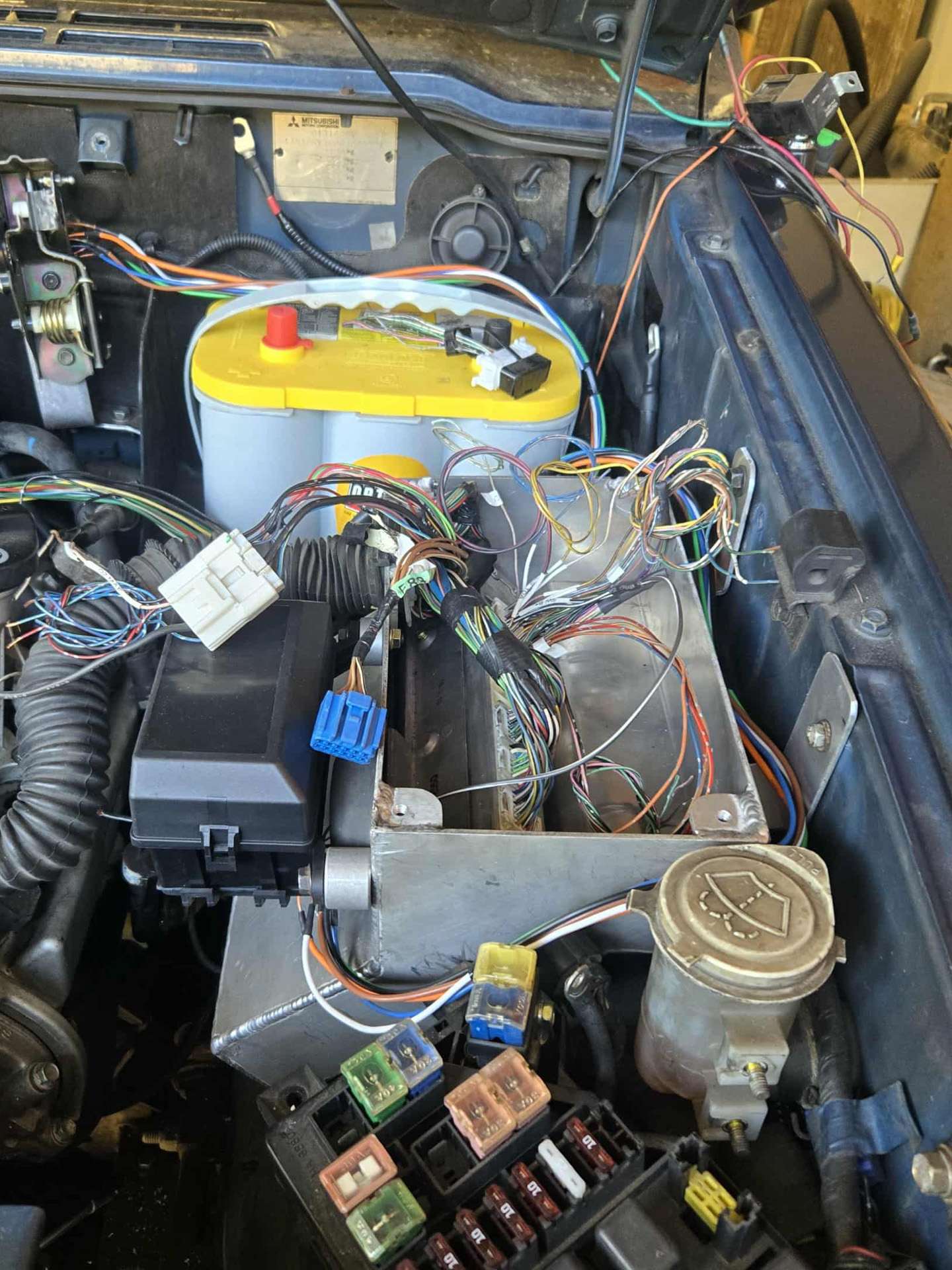
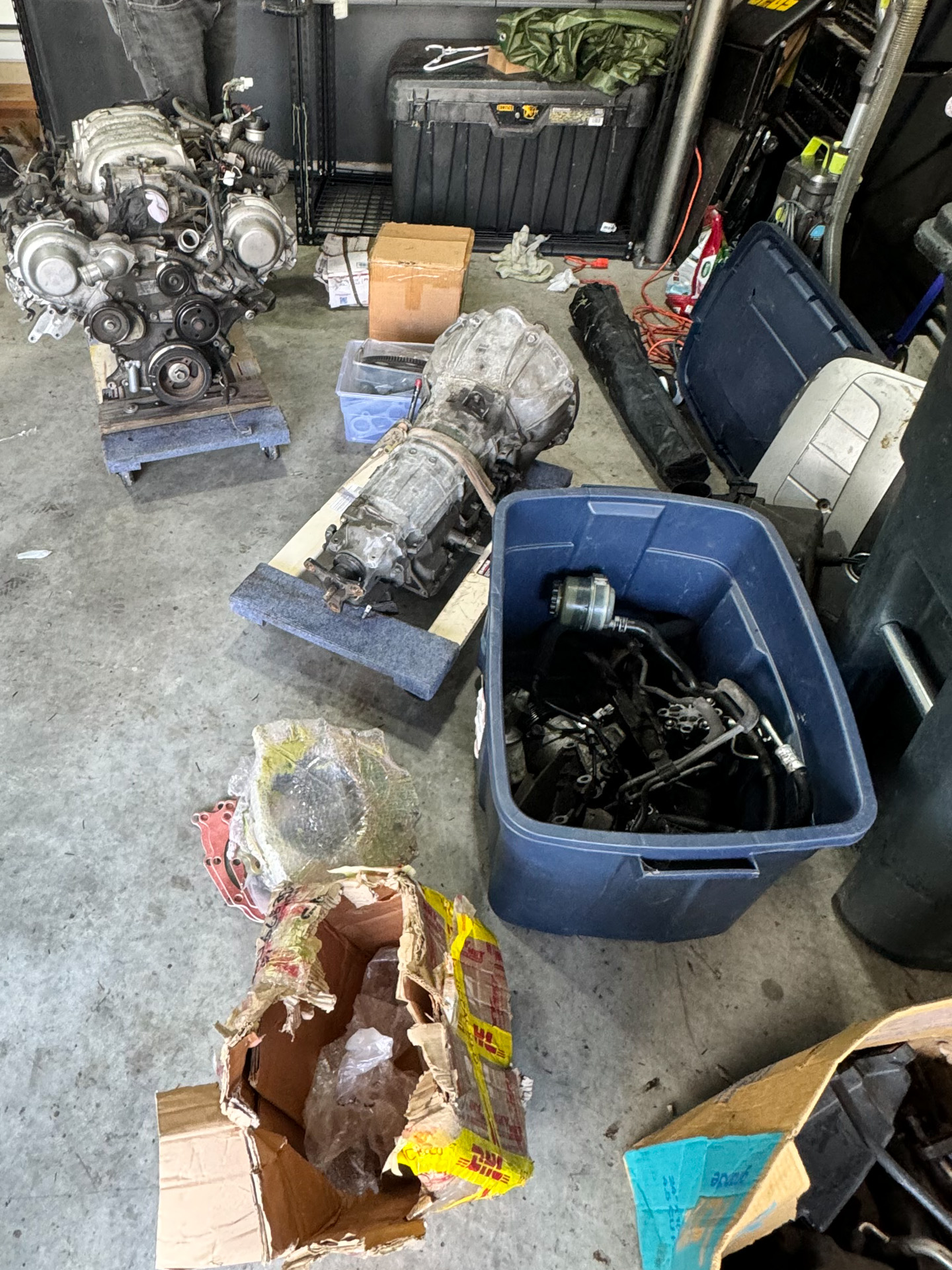
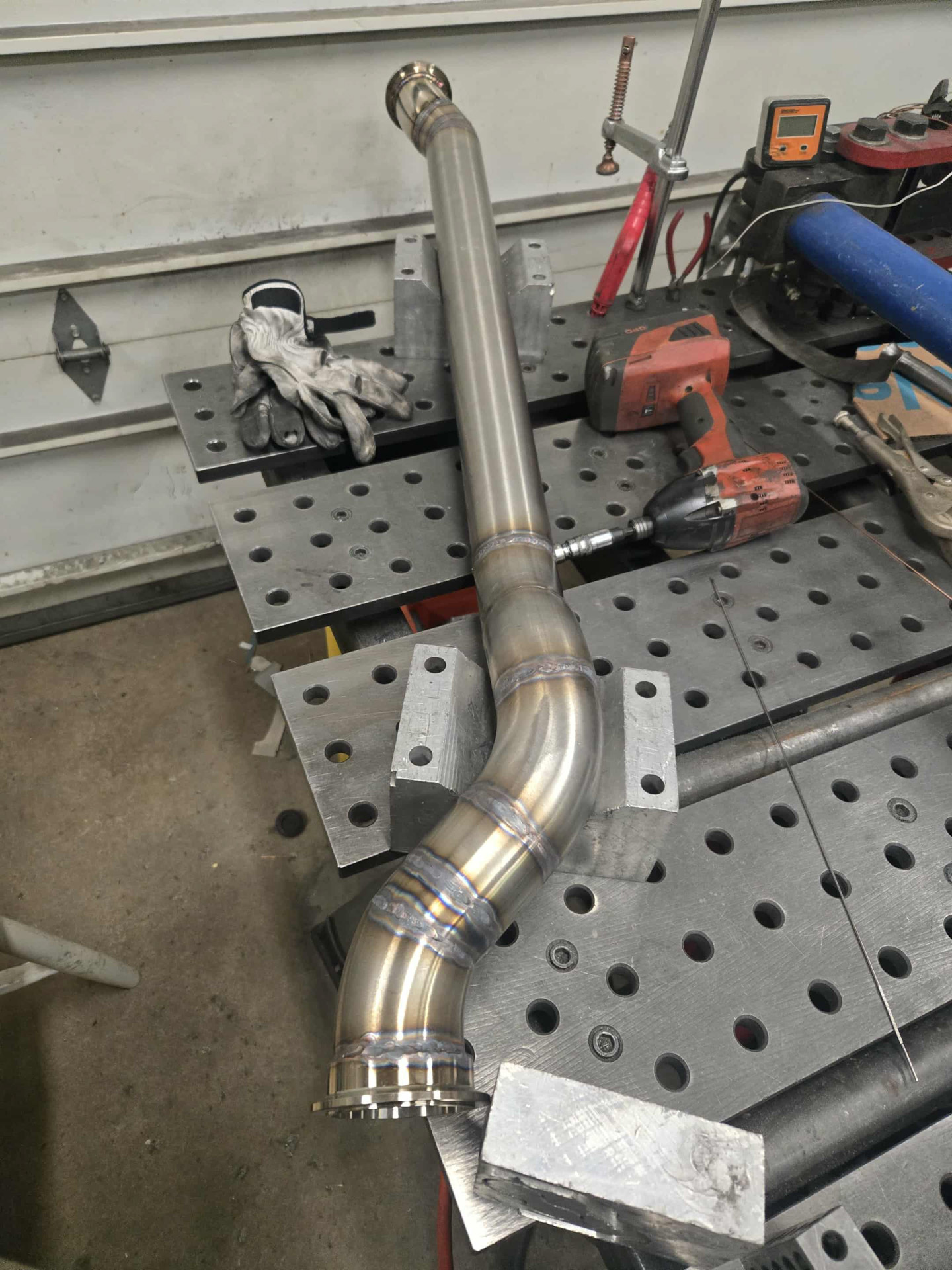
Initially, Ram thought about doing a BMW M57 engine, but he couldn’t get his head around everything that would be needed to make it work right. After weighing various engine options, a 3UZ out of a Lexus SC430 was picked as the new motor. Those engines are great—reliable, powerful, and available. Moving to that from a Mitsubishi diesel basically doubles the power (and expands parts availability considerably).
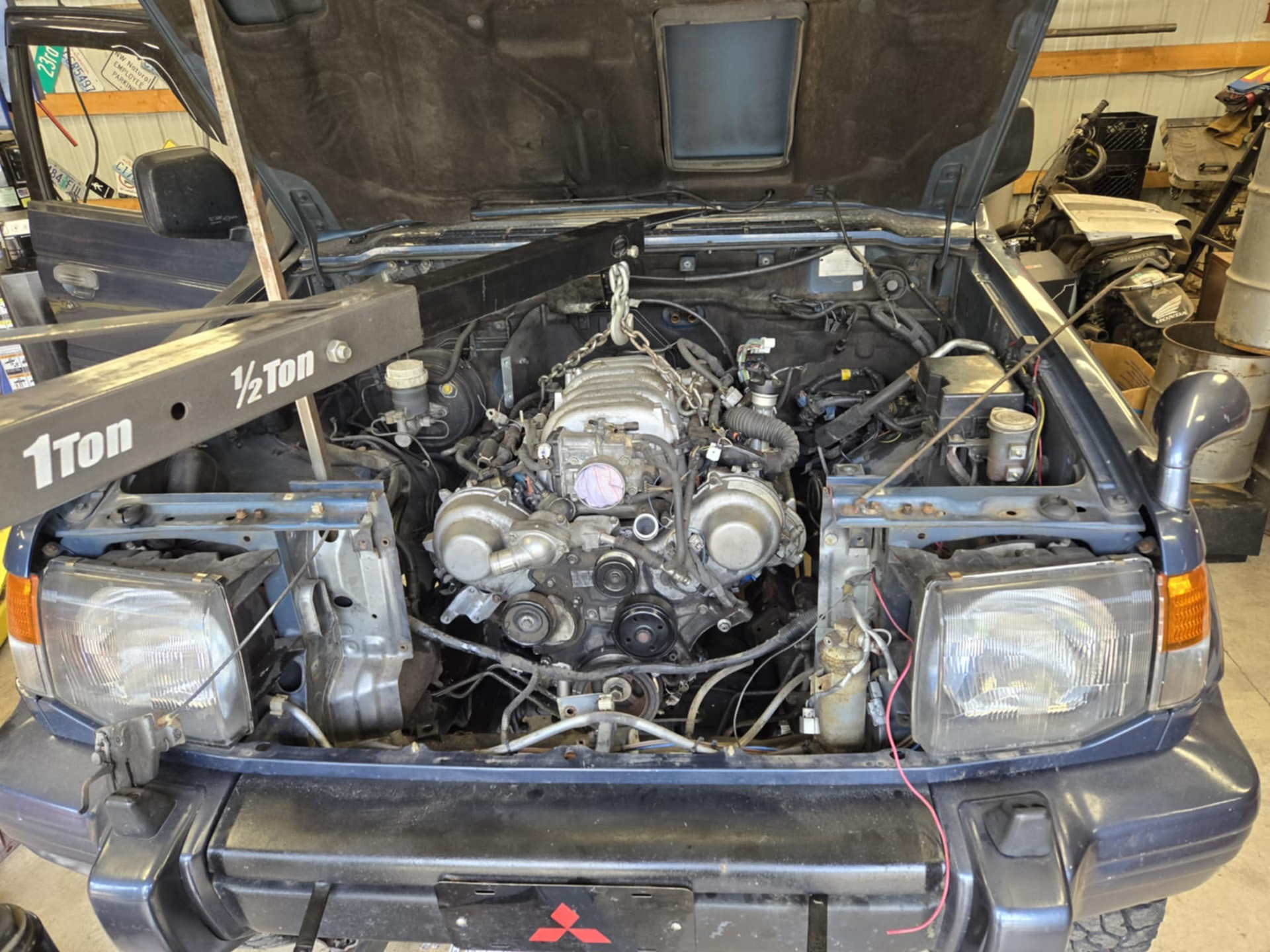
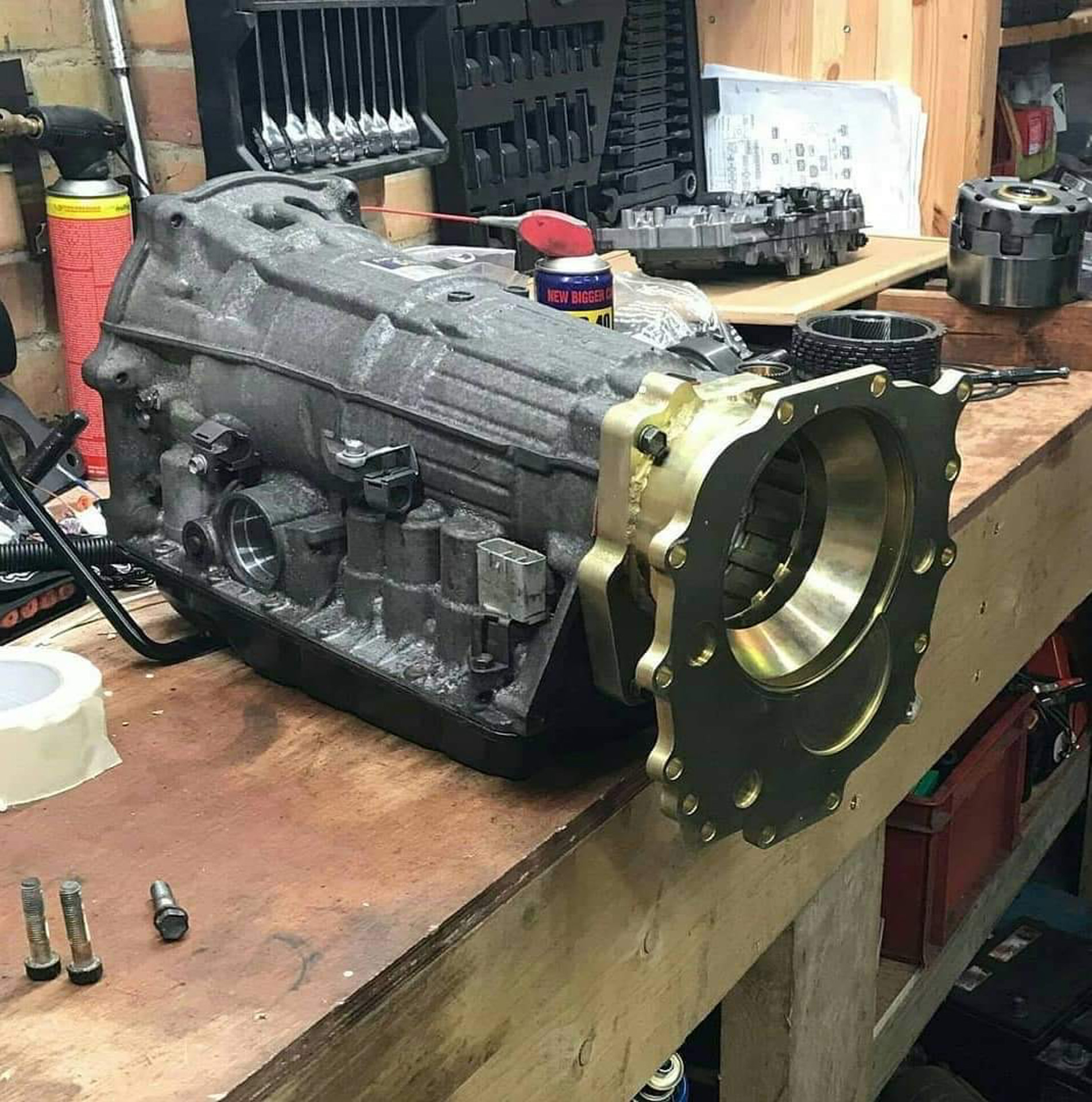
An outfit called Northwest Toys was able to supply adapters for connecting the Lexus (Toyota) engine to the Mitsubishi transfer case. “…it’s literally a straight swap,” Ram told me (meaning the engine was mated to a Lexus gearbox while keeping the original Mitsubishi transfer case). But as you can see from the project pictures, this was a more complicated project than most weekend DIYs.
“…we did not touch anything from the Mitsubishi T-case back.” Custom mounts and a front crossmember, however, were required to accommodate the non-standard engine. That right there is the main foundation of the swap.
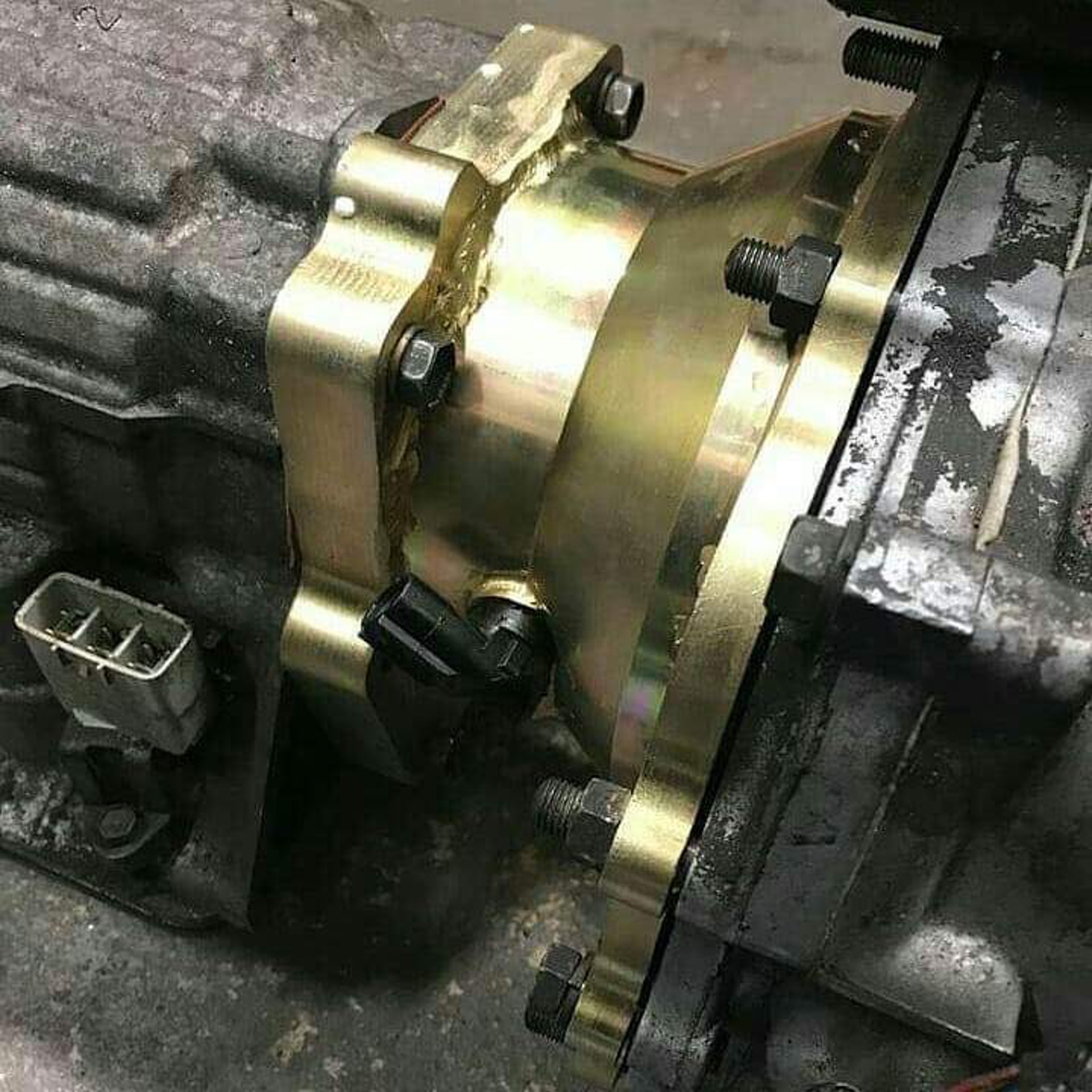
Then there’s the matter of engine control. Unless you’re running a carburetor-era engine and vehicle, you’ve got to do ECU tuning if you want a modern(ish) engine to play nice with a modern(ish) car it wasn’t supposed to be in. For that, Ram connected with Quantum Auto out of Fresno, California. Ultimately, the tuner ended up working with an ECU guy in Russia who was able to set the Toyota ECUs to work in the Montero.
As of today, the truck’s fully functional and zooming across Washington state mountains any given week on a family visit road trip.
Ram says the build, as it sits, took about 18 months. Like any custom build, it’s an ongoing experience. The last time we talked, Ram explained he was still optimizing the truck for his uses (aren’t we all!) and it sounded like air conditioning still required some troubleshooting.
But to me, the project is particularly awesome because it marries one of the most robust Japanese powertrains (a Toyota V8) with one of the best-looking SUV bodies (the second-gen Montero) of all time. I’ll stop short of calling this rig perfect, but conceptually, I think it’s pretty darn primo.
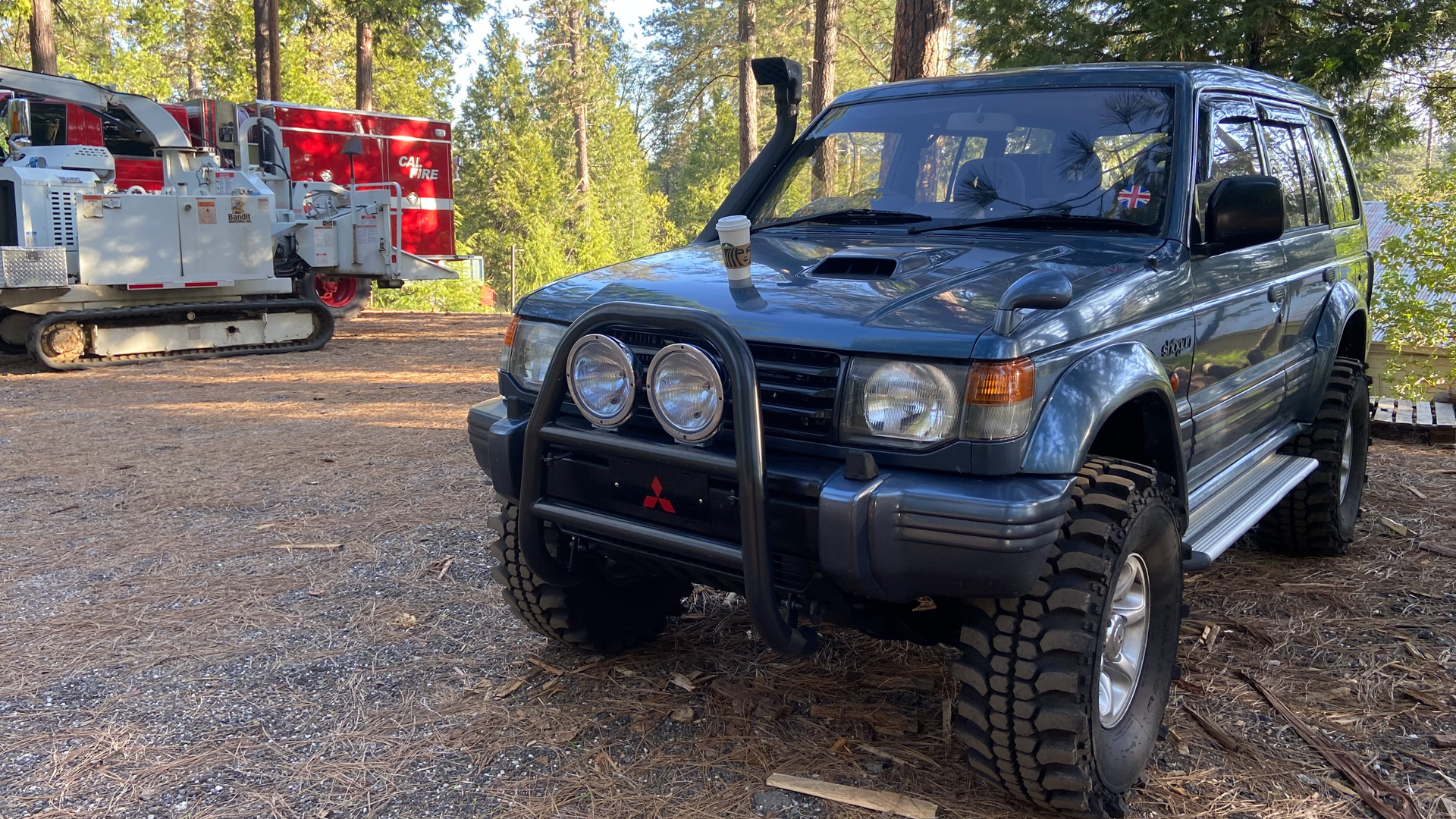
We talked a little bit about making a kit to make these swaps more common—Ram didn’t have an exact price in mind, but he did say a kit could be a real possibility if the guy who makes the adapters was on board. I feel like it’d be a great alternative to rebuilding a regular Montero engine. I’m reasonably happy with the 6G74 V6 in my own ’98 Montero—it’s surprisingly good on fuel economy, after all. But damn if it ain’t slow as molasses on a cold morning. And as I’m approaching a quarter-million miles, I have to admit I’d be really interested in moving to a 3UZ myself for power, reliability, and parts availability.
As for innovation, Ram’s not planning to stop with this V8 swap—he’s got plans percolating for portal axles and more refinements on this beast of a build.
Got another cool build to share? Drop me a line at andrew.collins@thedrive.com.
Loading comments…
Comments couldn’t be loaded. Please refresh the page.