
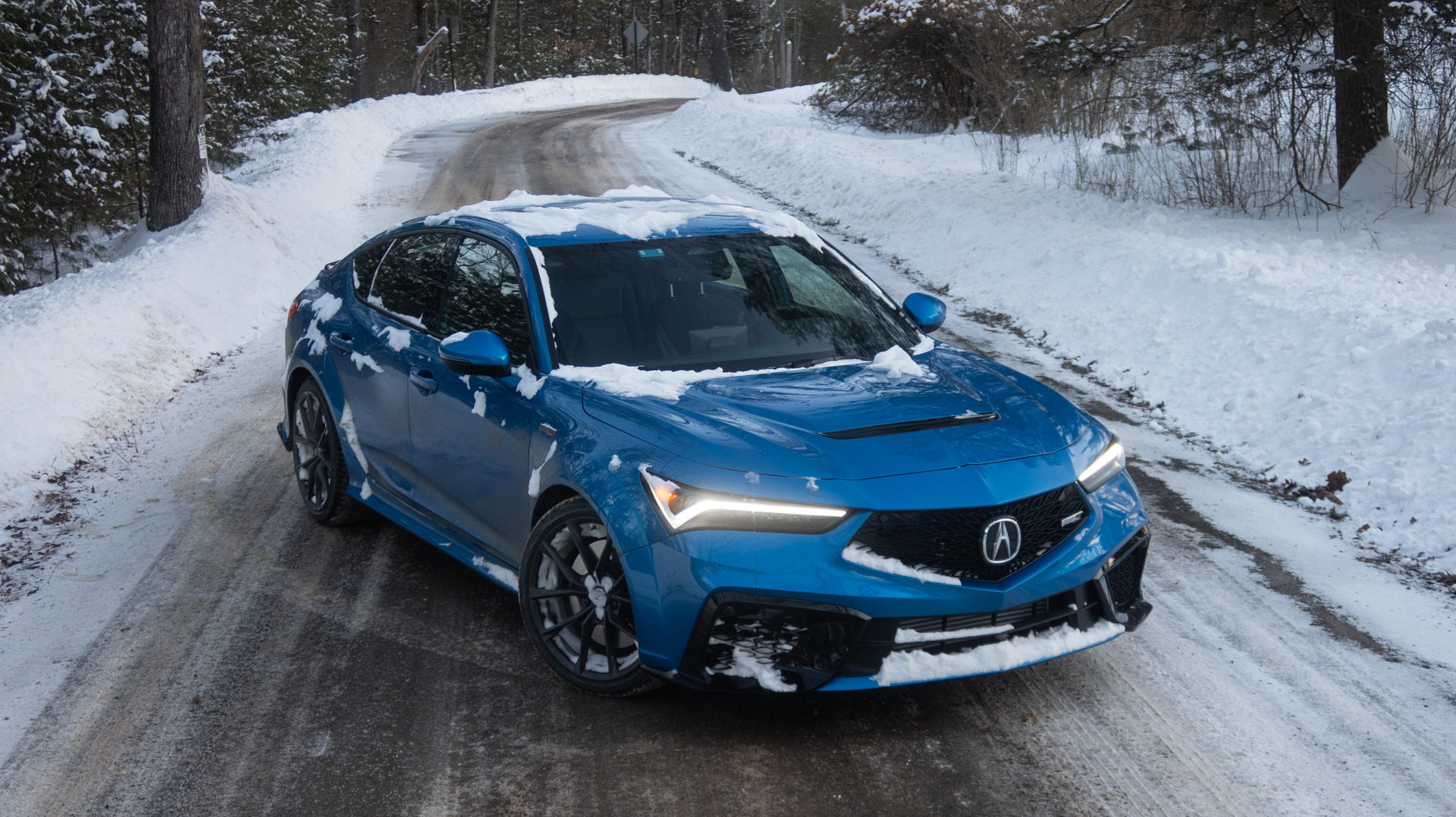
I was recently lucky (or unlucky, depending on how you see it) to test a 2026 Acura Integra Type S on Bridgestone Blizzak winter tires for a week. “Gee, I sure hope we get some weather to test this setup properly,” I told myself when I got the car. Welp, Kuraokami must have heard me, because my little corner of the country got absolutely slammed with snow over the next few days.
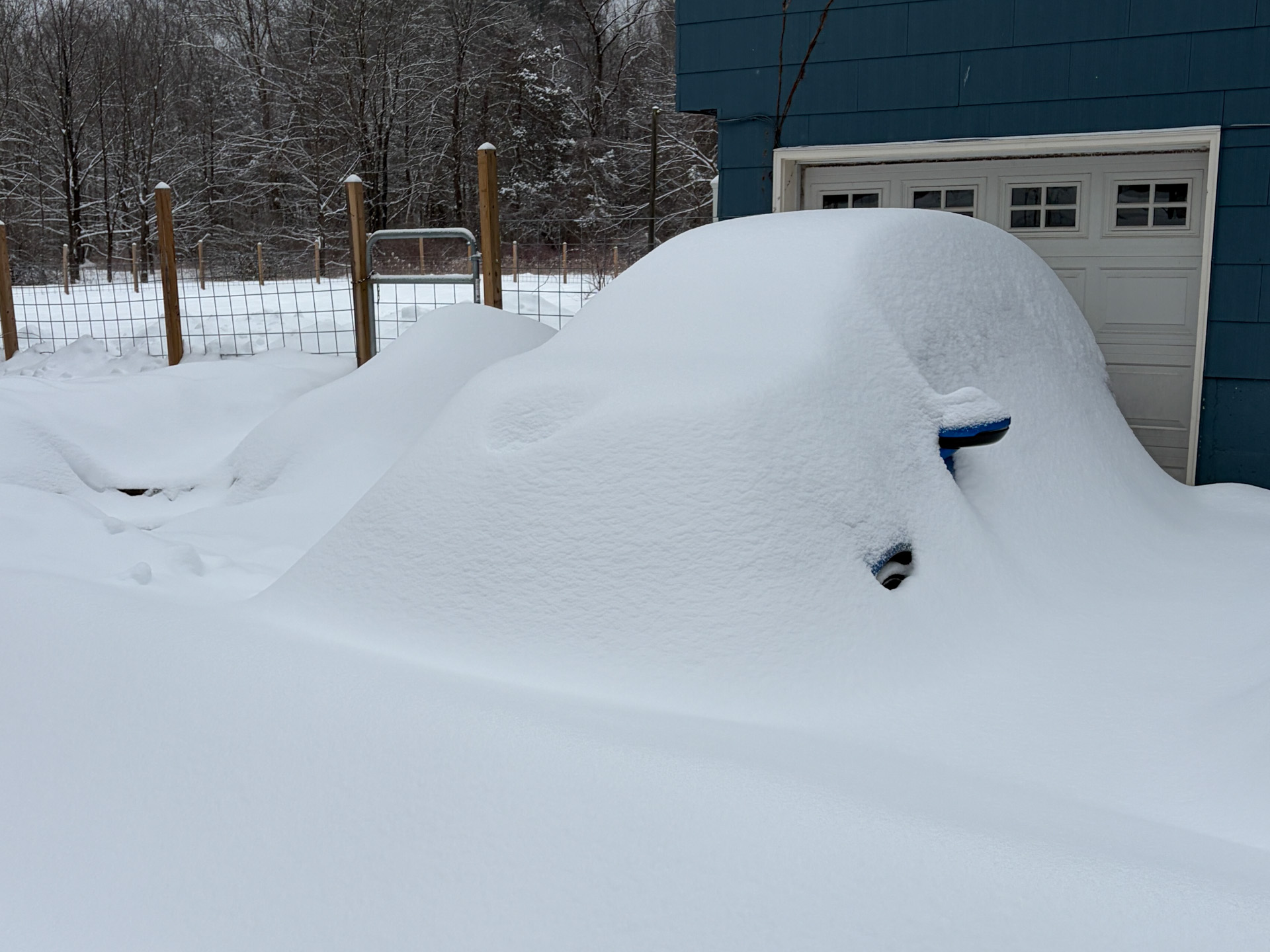
After hours of shoveling, I dug this blazing blue ITS out of Frosty’s death grip and went for a rip to see how it held up against the elements.
I enjoyed the last-gen FK8 Honda Civic Type R immensely on backroads—more than at the track, while the 2024 Acura Integra Type S gave me one of my all-time favorite driving experiences. Whipping it around the Möbius-strip roads in the highlands outside Santa Barbara when that car came out, man, it was an absolute blast. The car felt perfect.
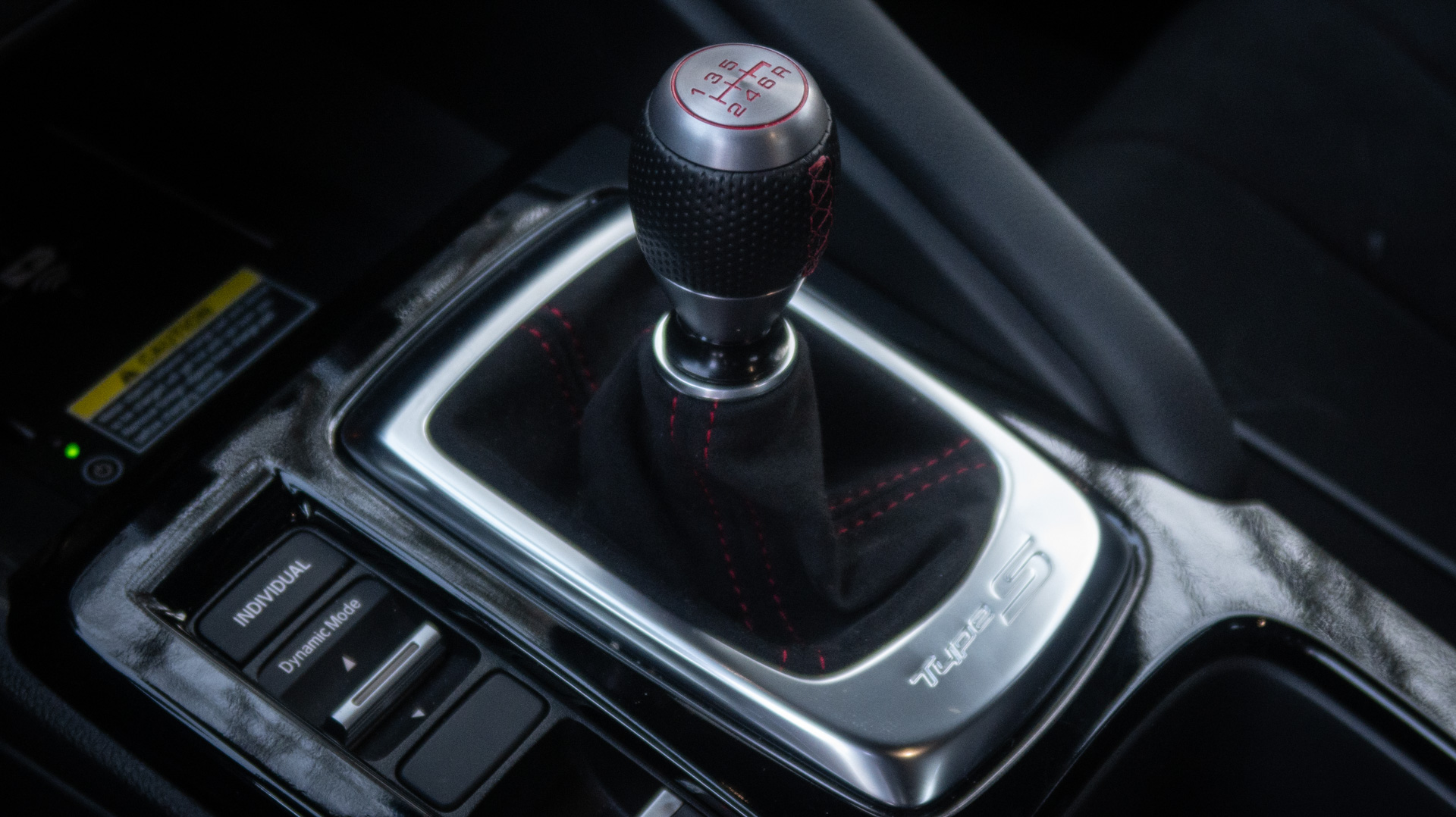
The current DE5 Integra Type S hasn’t really changed since that drive a few years ago; it’s still the same great front-drive platform, hosting a venerable K20C8 2.0-liter DOHC VTEC turbo engine that claims 320 horsepower and 310 lb-ft of torque, paired to a close-ratio six-speed manual transmission.
Revisiting the ITS a few years later has led me to refine my opinions of the vehicle. It’s still, essentially, an extremely well-executed sport compact car with an exceptional manual transmission and great handling. But looking around the cockpit this time, the ambiance felt a lot more “compact” than “sport.” And “luxury” barely even registers. It’s not that the car feels cheap, but it’s almost aggressively unfancy.
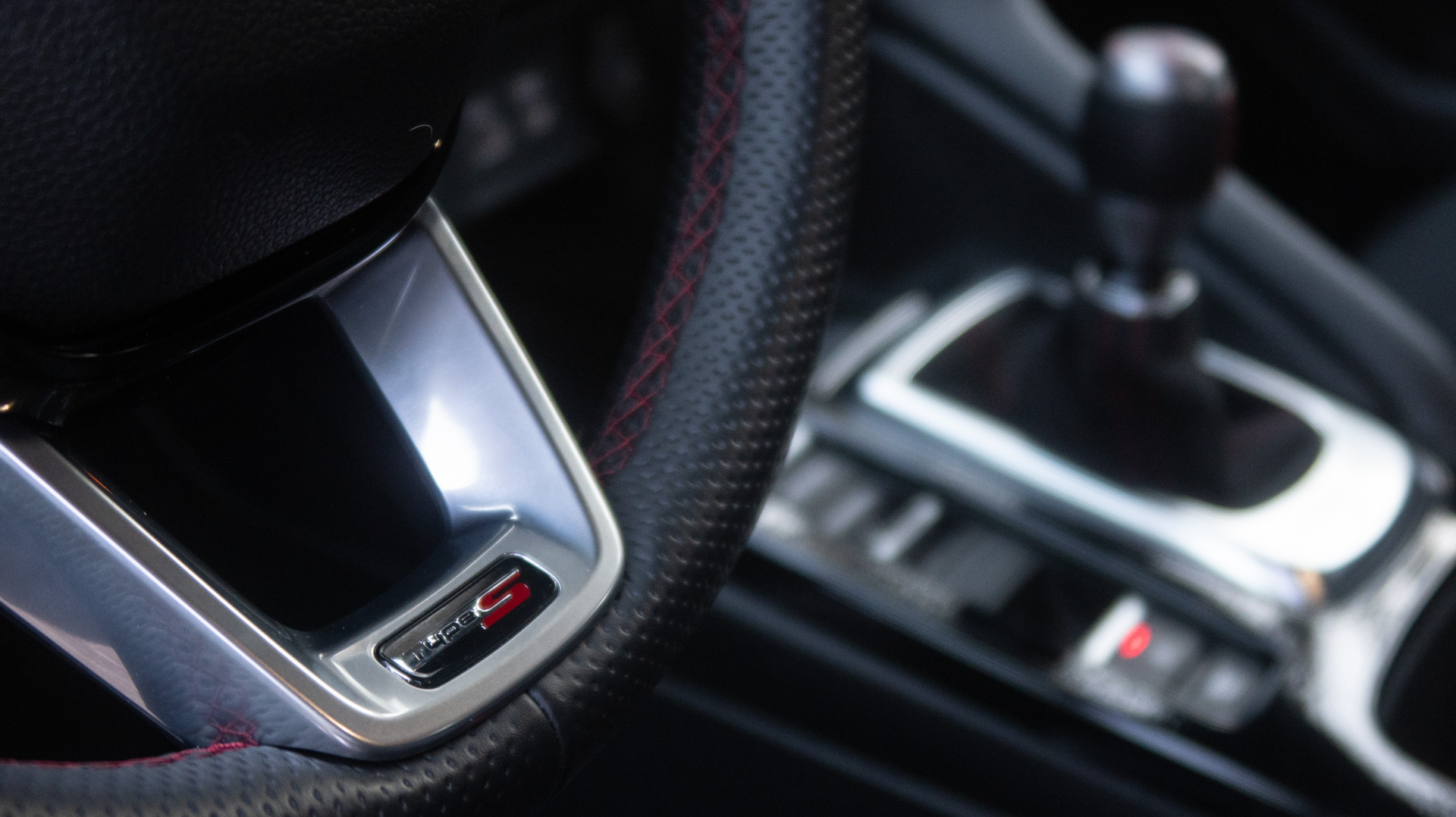
As far as cold-weather creature comforts inside, you can get a heated steering wheel ($485 option) if you skip the Alcantara steering wheel, and an OEM engine block heater ($92) if you live somewhere particularly frigid. You might also want to skip the very cool $209 titanium shift knob—even the top of the aluminum one on this test car felt intensely cold in the morning! The cabin heater itself is adequate, and the heated seats work nicely with three warmth settings. Sadly, the seats are really not all that comfortable. I find this surprising, because Acura’s people made a big deal of how they toiled over seat design, and the seats in the last-gen Civic Type R were genuinely great.
Having a basic cockpit is not inherently a problem for the ITS. In some ways, a Spartan interior makes sense for the performance variant of a normie car like this. But at the prices Acura wants for these—list is about $55,000—you should understand that there are many more luxe alternatives.
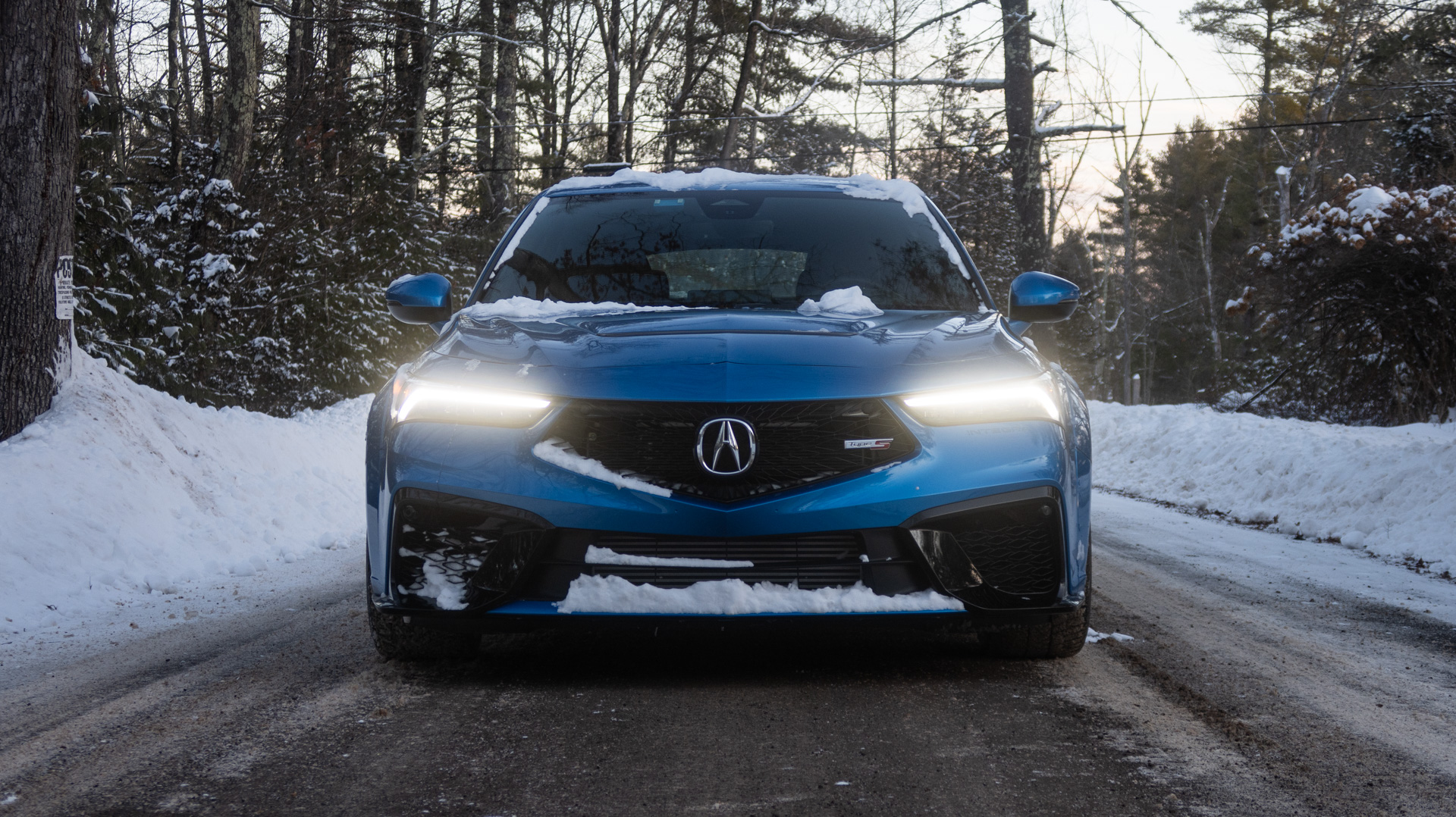
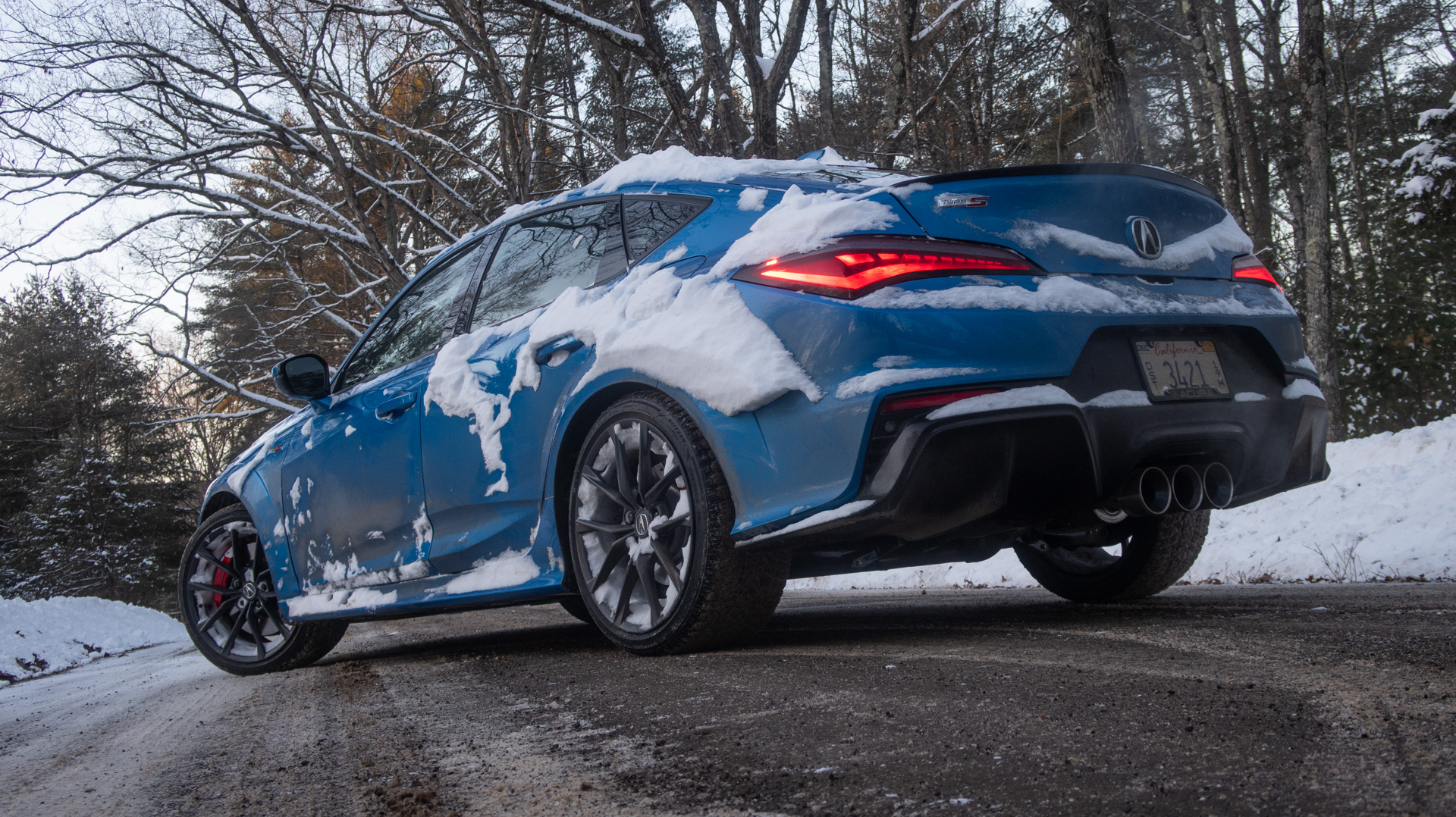
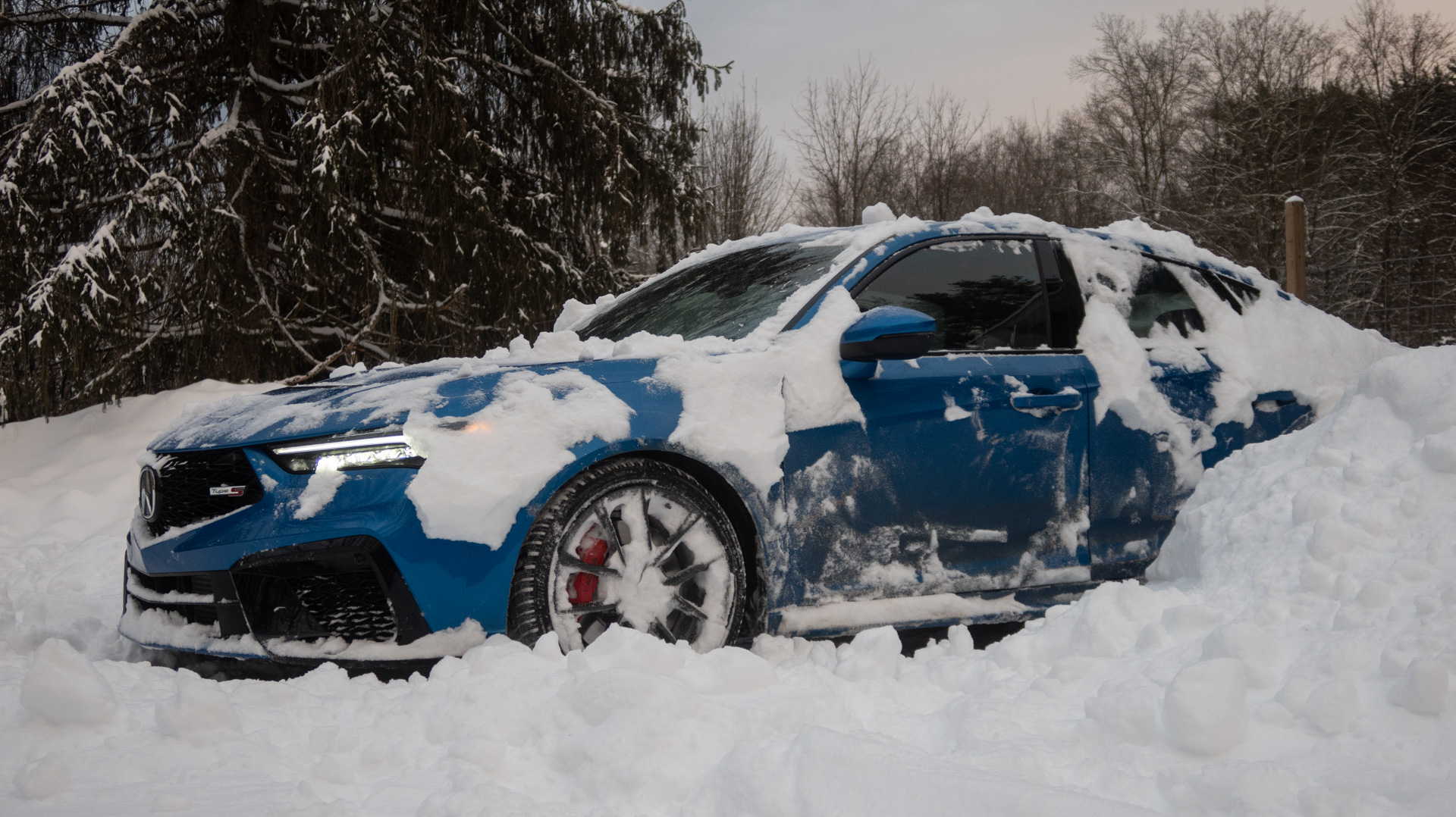
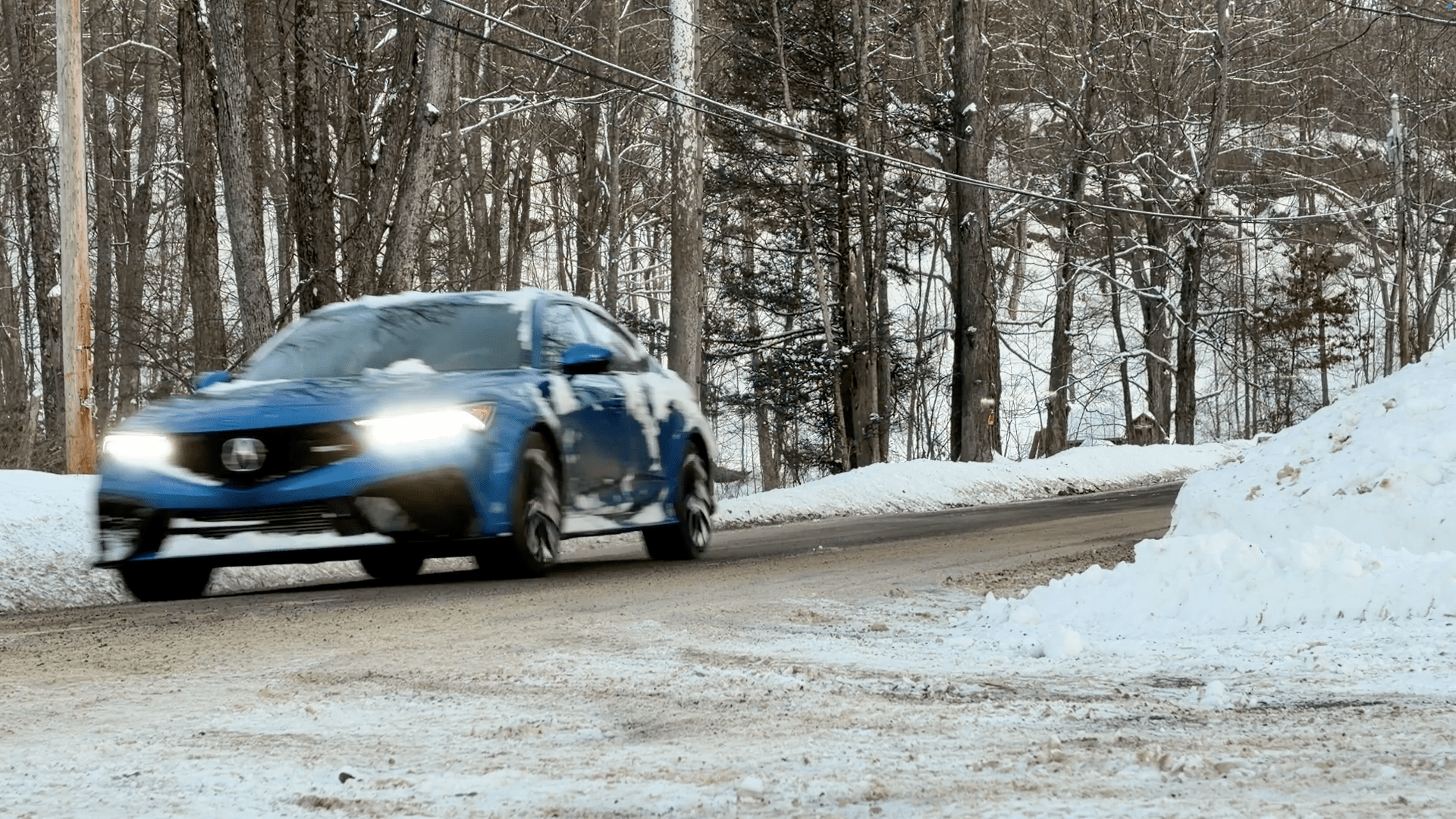
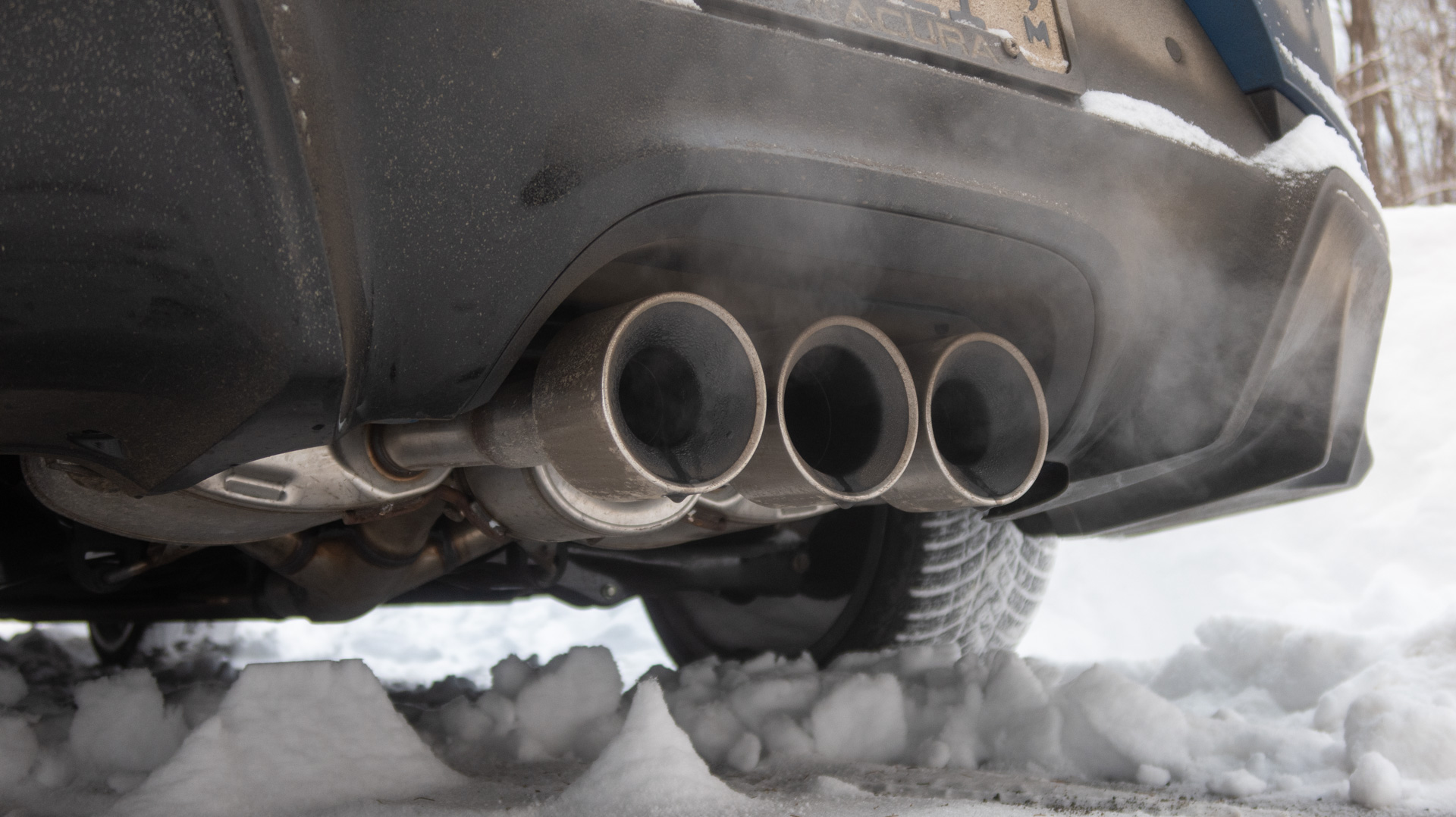
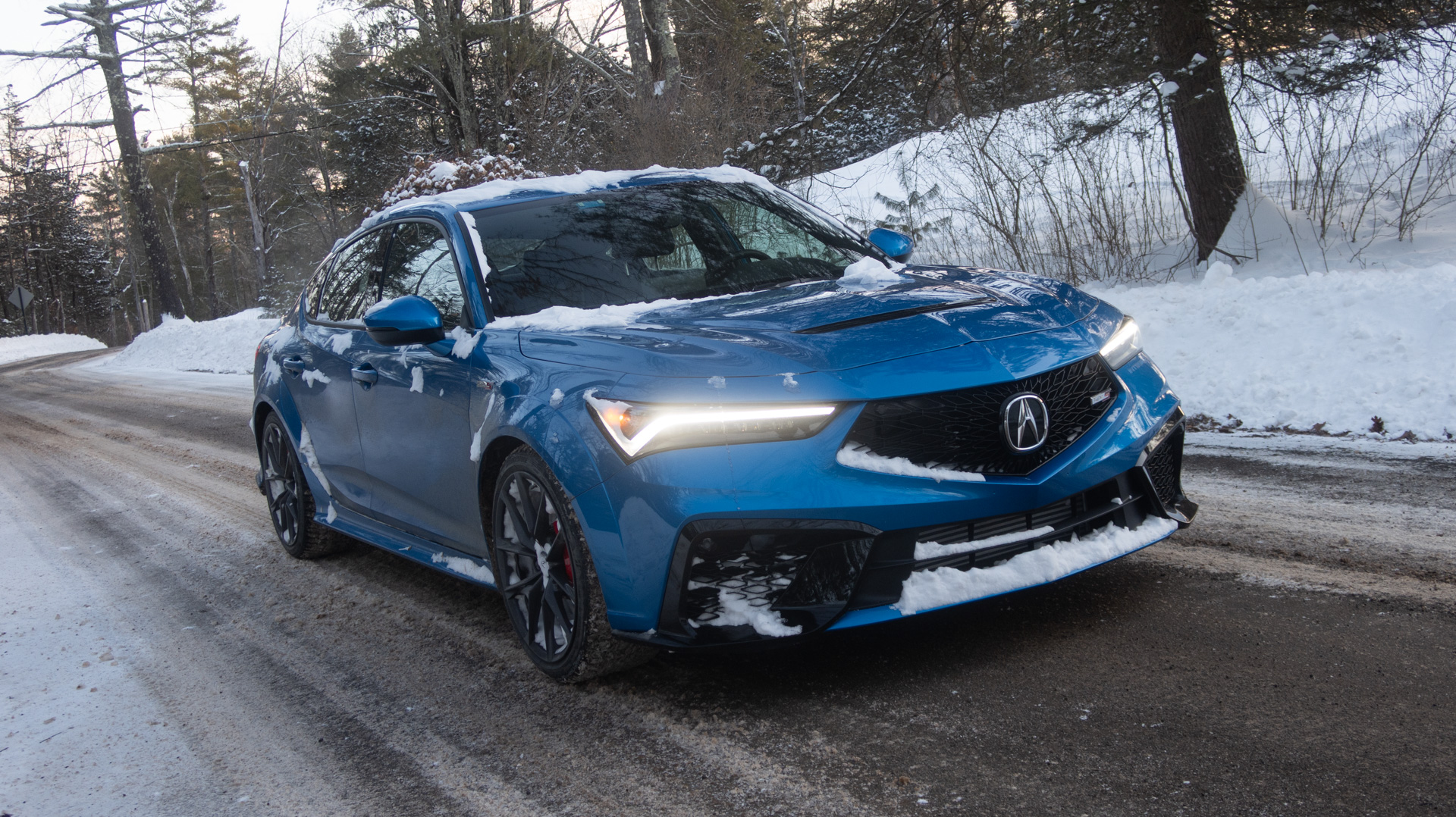
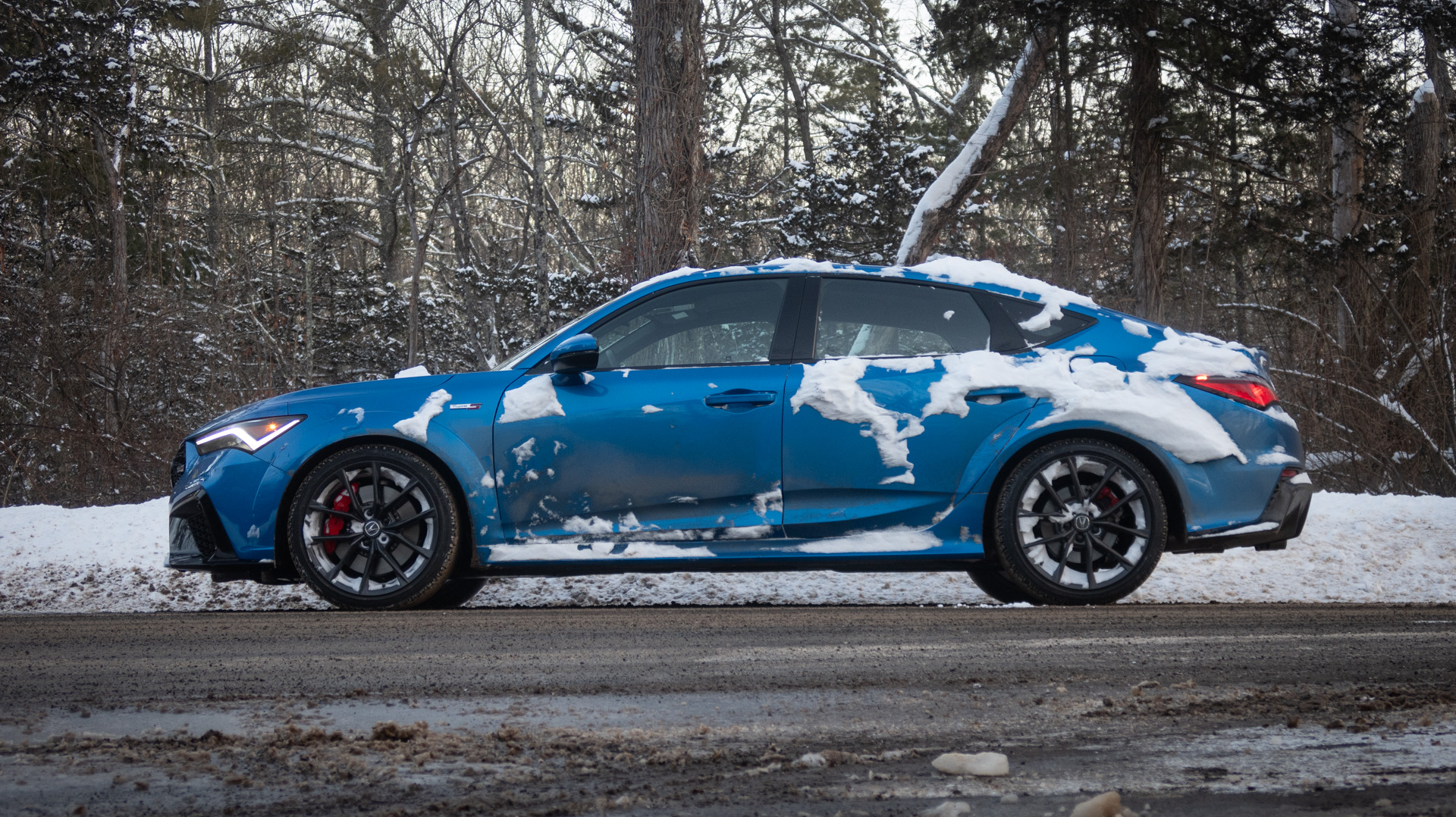
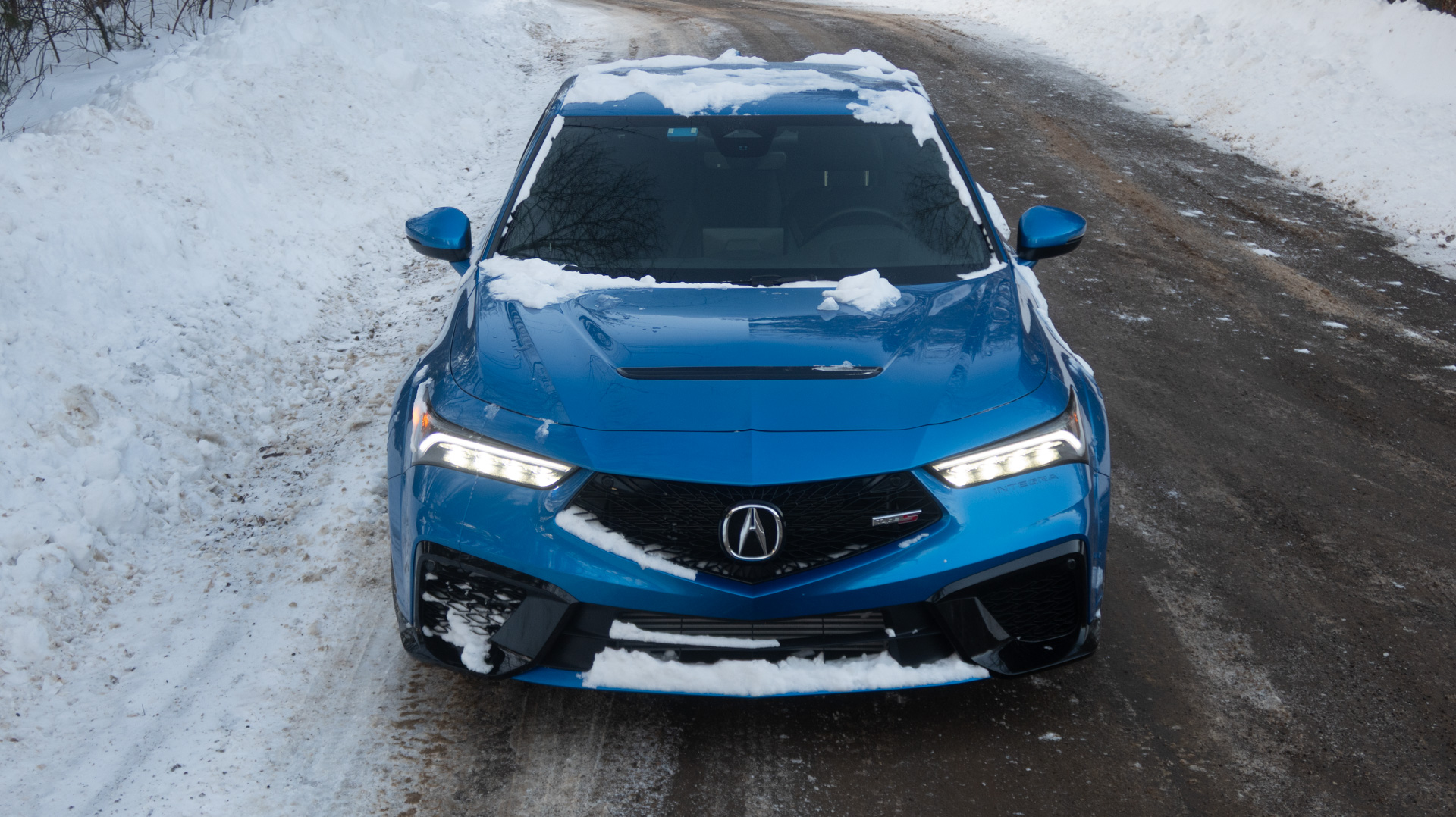
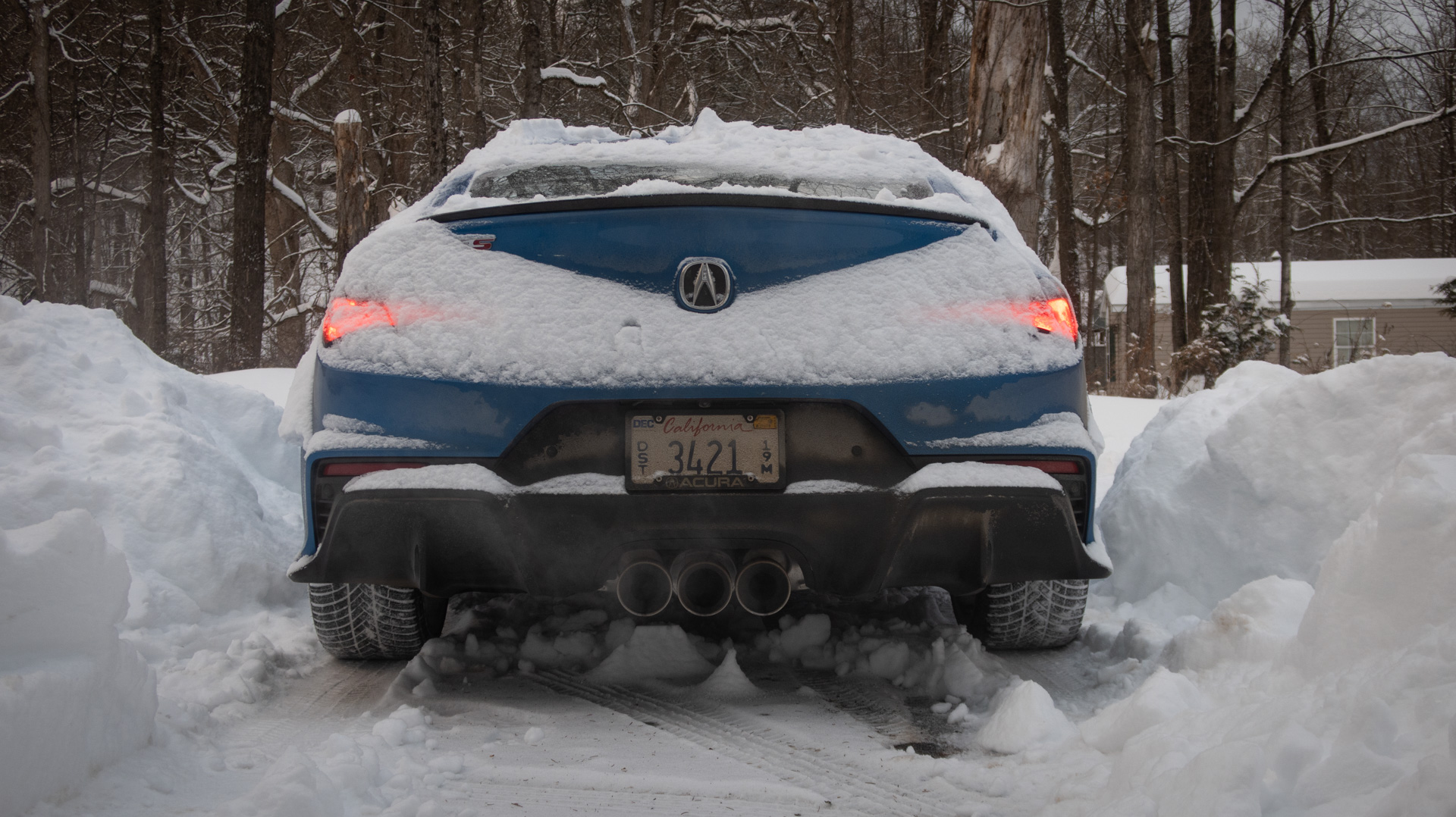
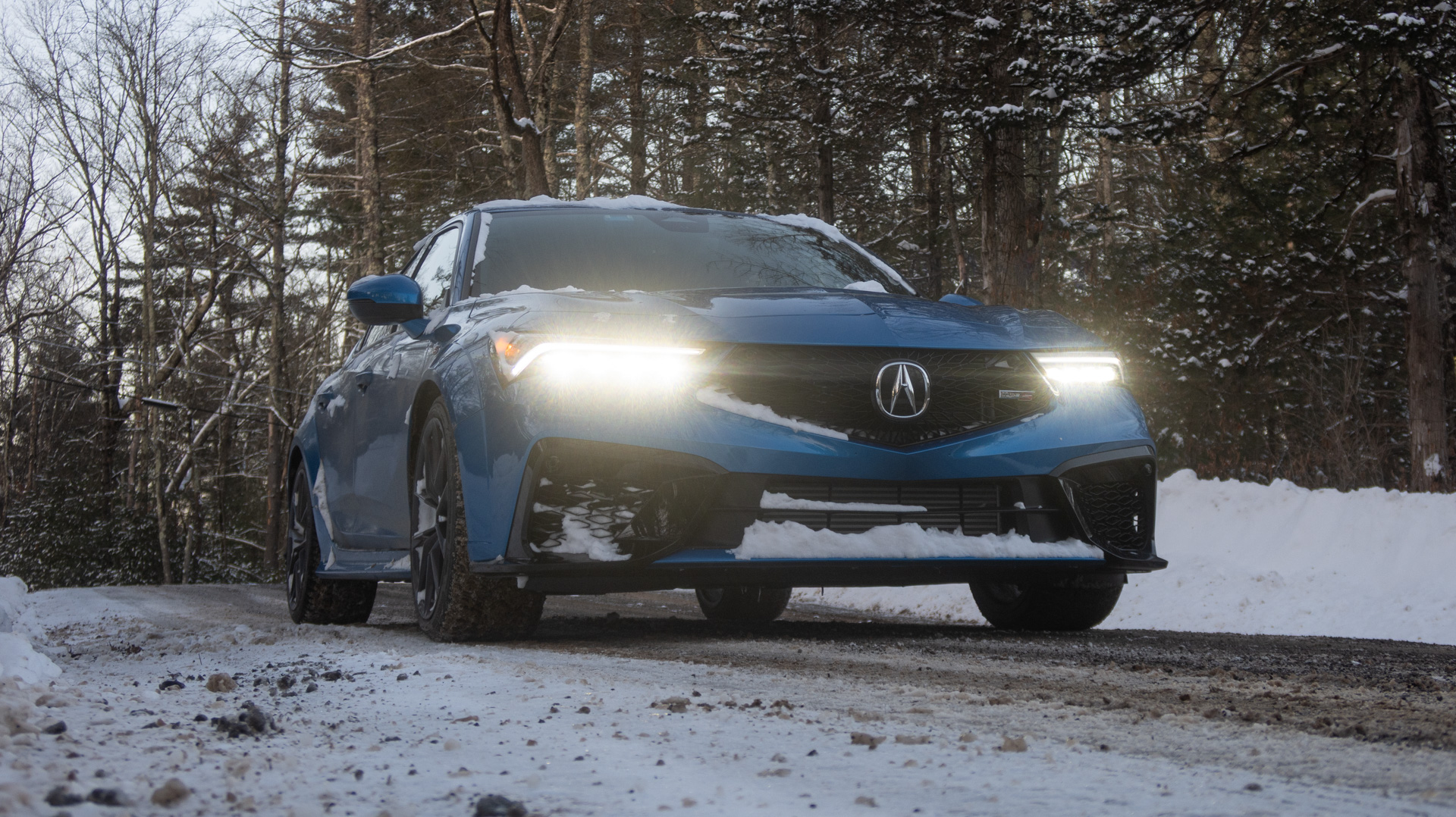
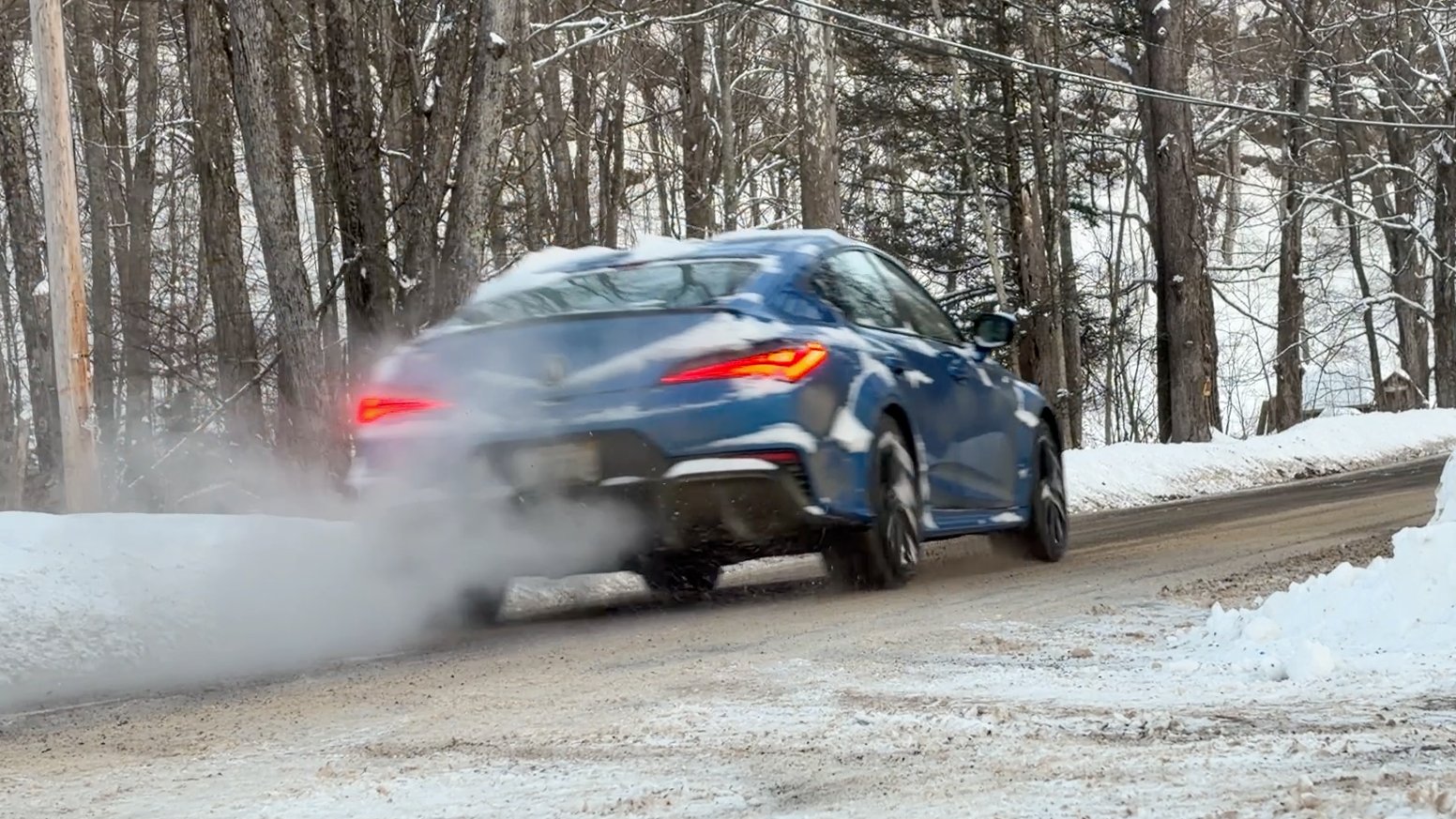
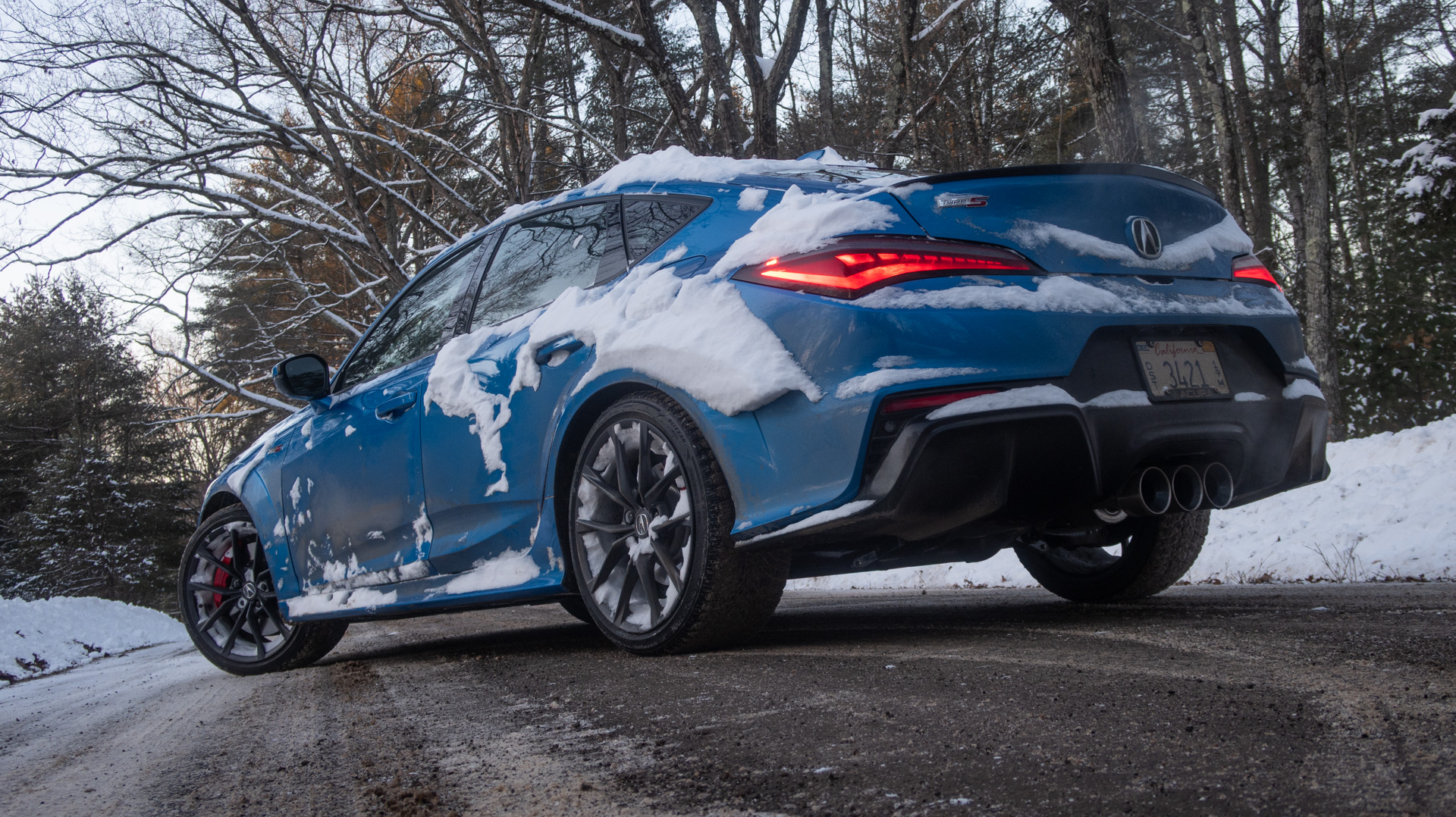
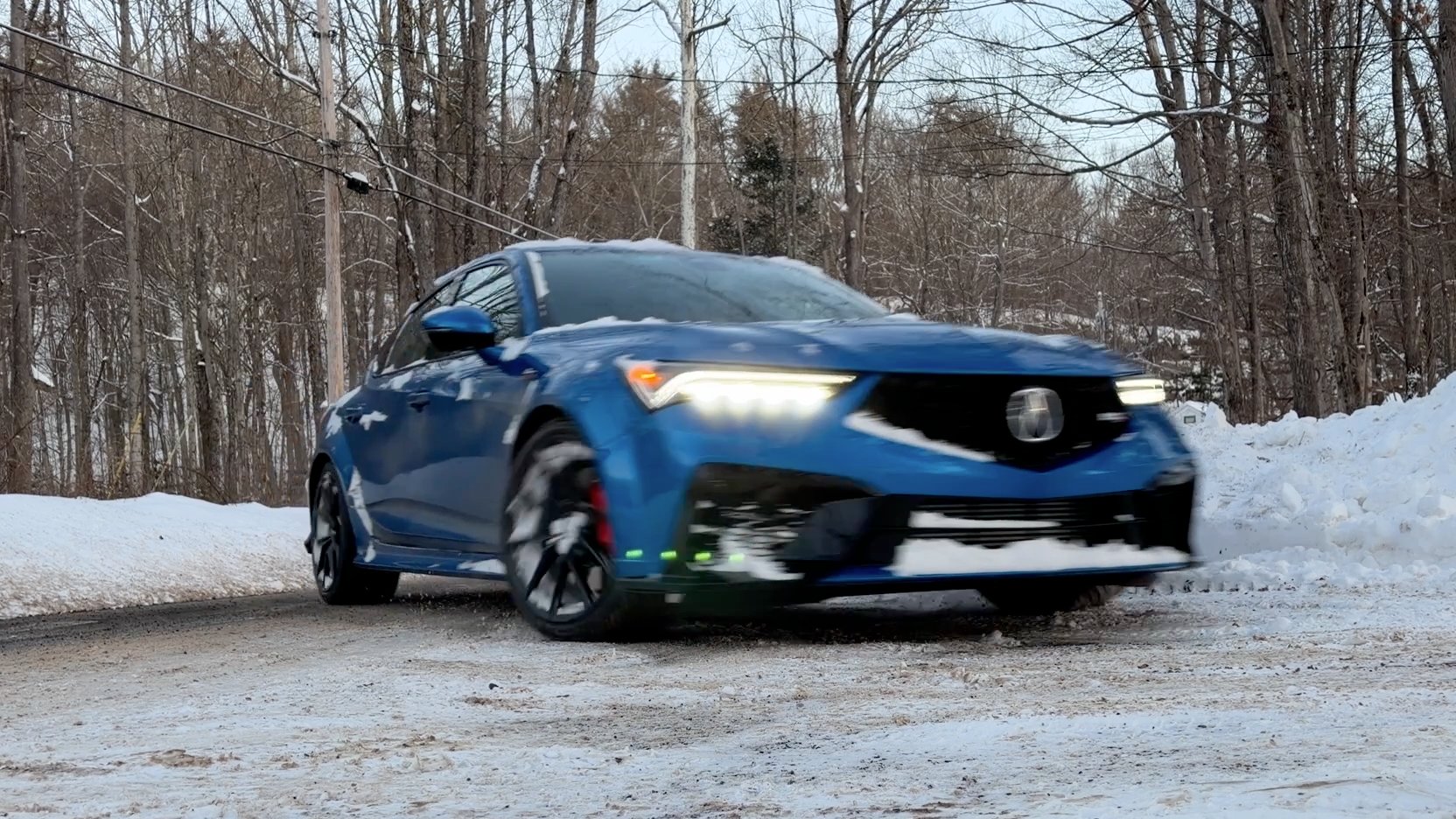
As for the drive itself, on snow-drenched roads with winter tires, the results were kind of a mixed bag. And yes, we were out in much fouler weather than you see in these photos; I was not about to leave the protection of the heated seat in the worst of the storm to snap more photos.
Initially, the car felt good. At what I considered a reasonable speed for the conditions (occasionally below the limit), I felt excellent traction, turning, gentle acceleration, and polite braking. The ITS has a good balance of responsiveness and comfort for what it is, but it certainly rides a little stiffer than your average Acura. That hurt a little more on the potholed wintry roads of New York than it did on the smooth, sweeping drives of California.
At a more spirited pace, I still felt fairly confident that I wouldn’t be swallowed into the outside of a corner by understeer. Following the most basic rules of winter driving, the car was willing to press on through powder. Handling still felt good when braking and steering were considered with appropriate care.
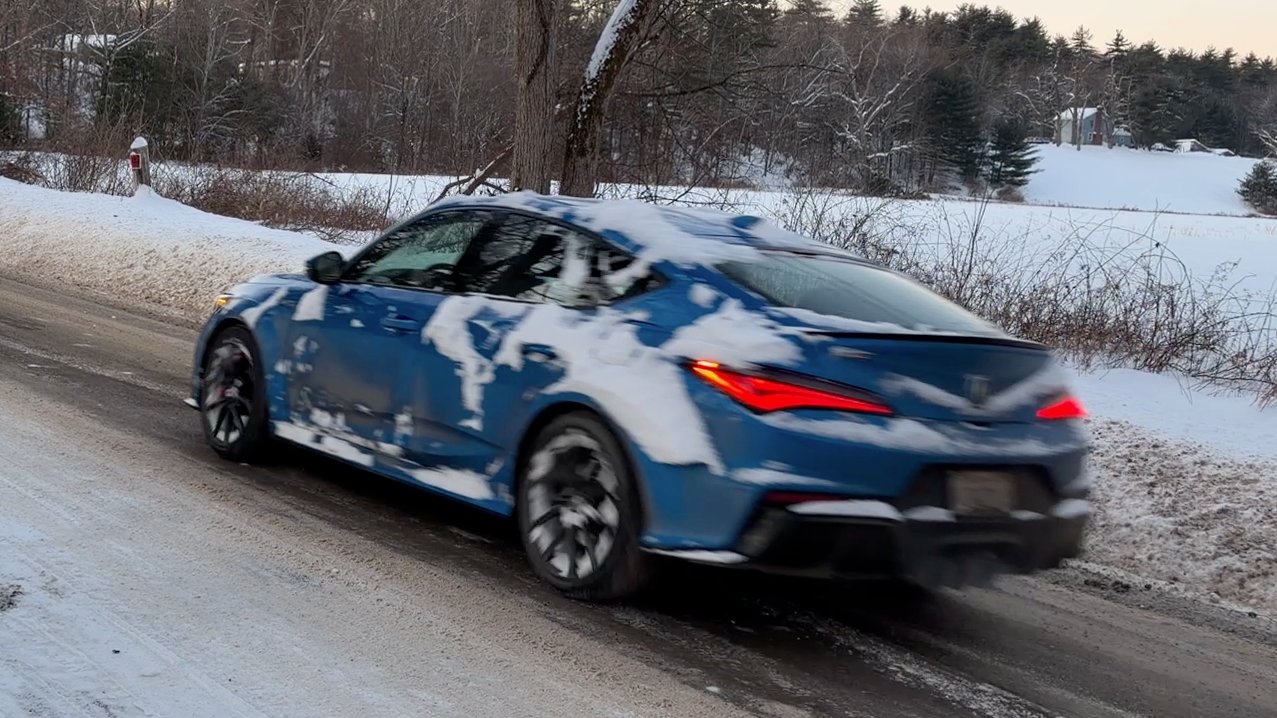
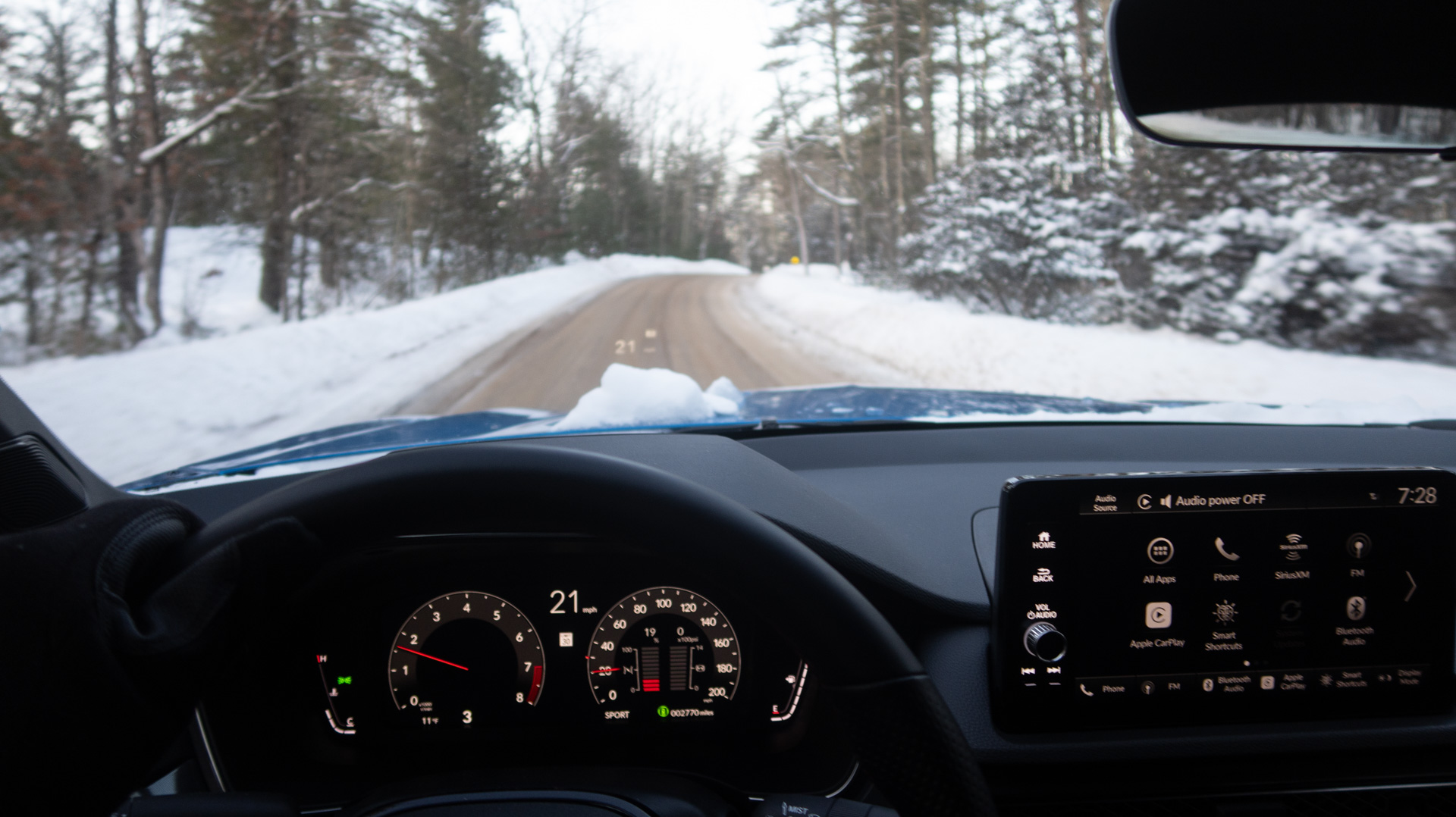
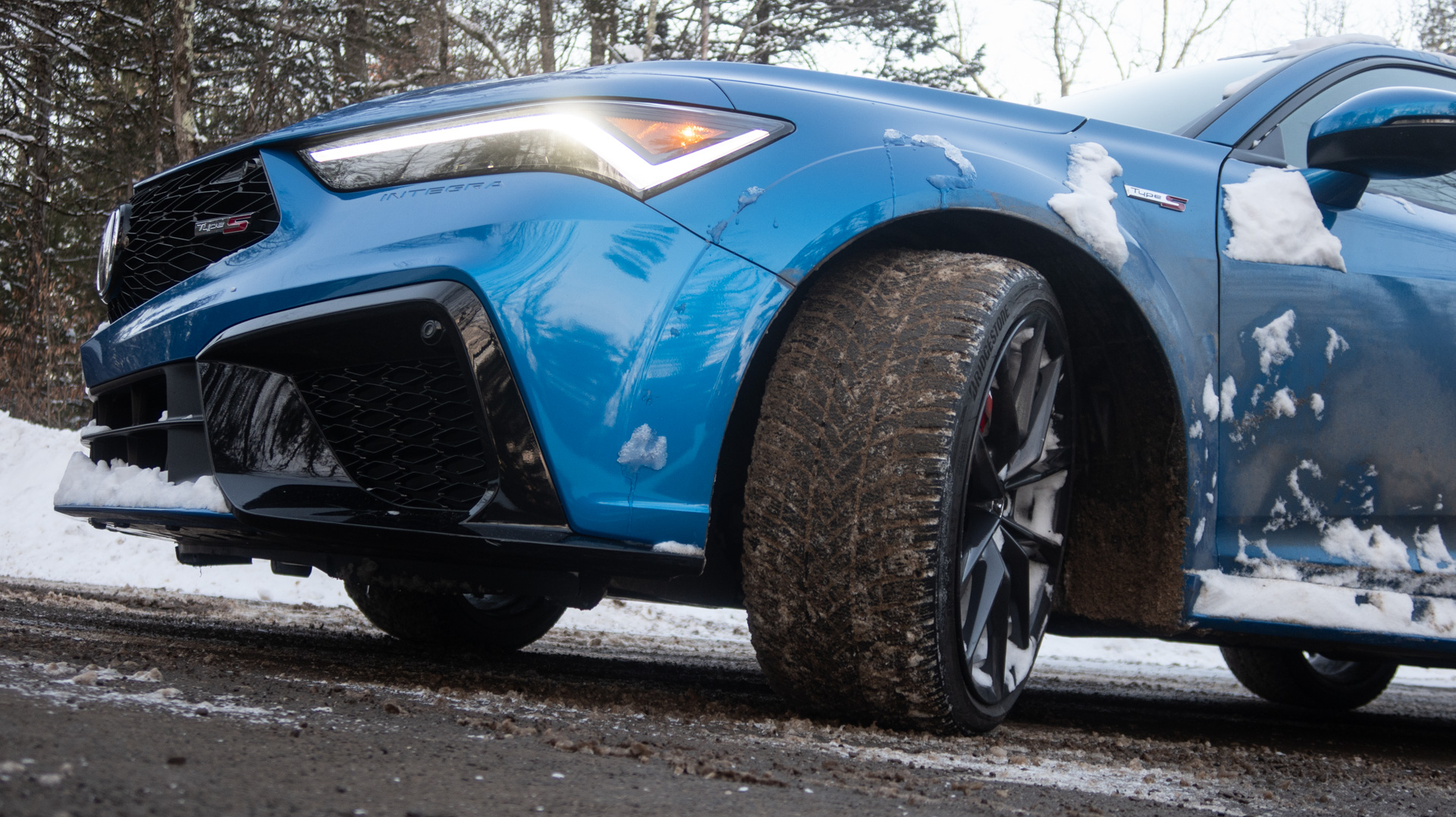
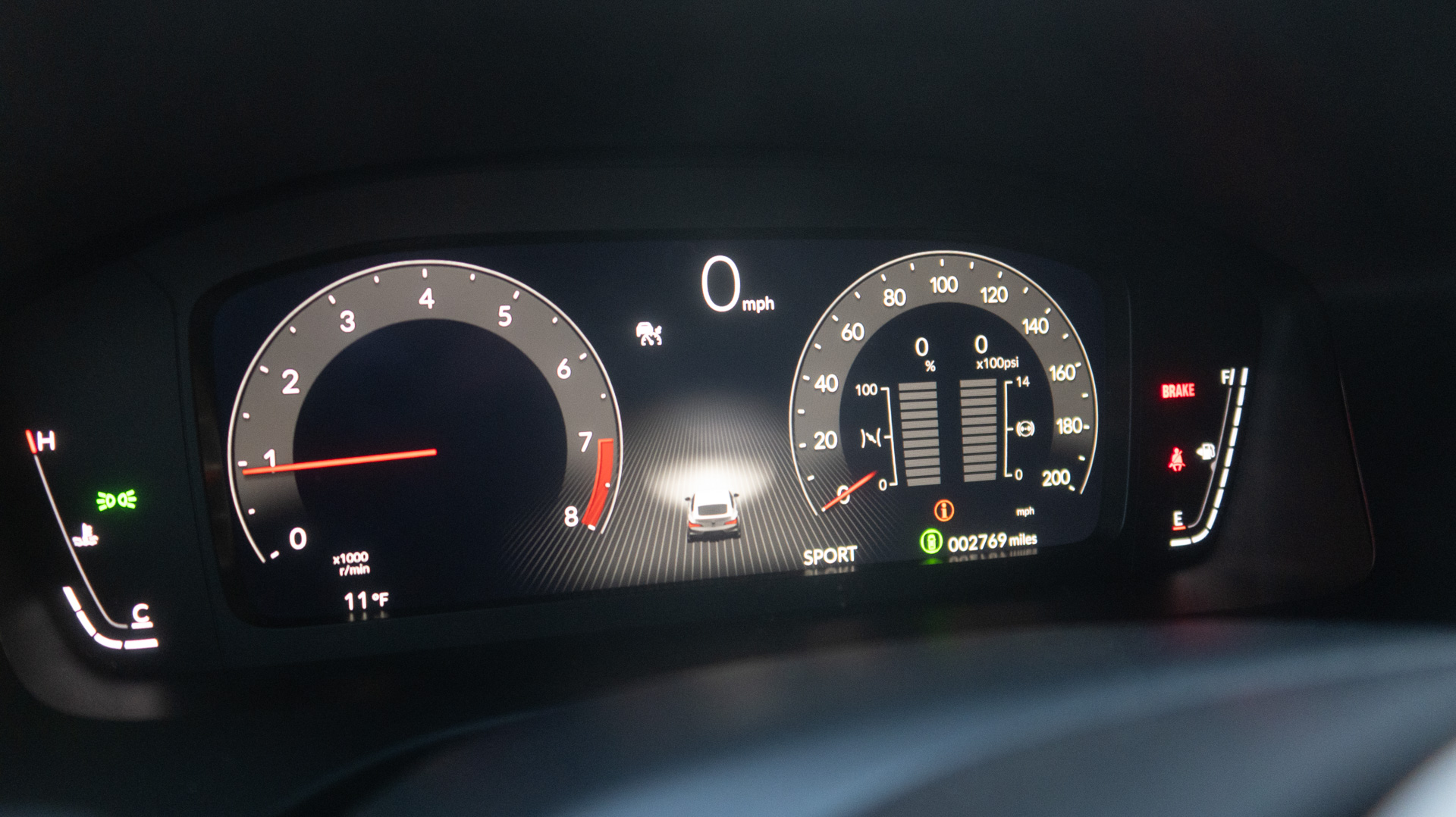
Hard-charging into boost and VTEC territory, things fell apart a little bit. The Blizzak tires, as much as I love them, spun into oblivion in first gear in a launch. I’d get to about 3,000 rpm, and then the tach would just surge as the front tires lost traction. And that was on dry road patches—I wasn’t willing to exhibit such behavior in the worst of the weather. If I were really going for it, which I tried a few times, I could get wheelspin in second, too.
That made me a little gun-shy about pushing the limits of cornering cohesion, but in a big, empty parking lot, I prodded the car a bit and felt mostly good. For a 320-hp front-drive car, it felt pretty composed as I flung it around. But if you go searching for understeer, you’ll find it.
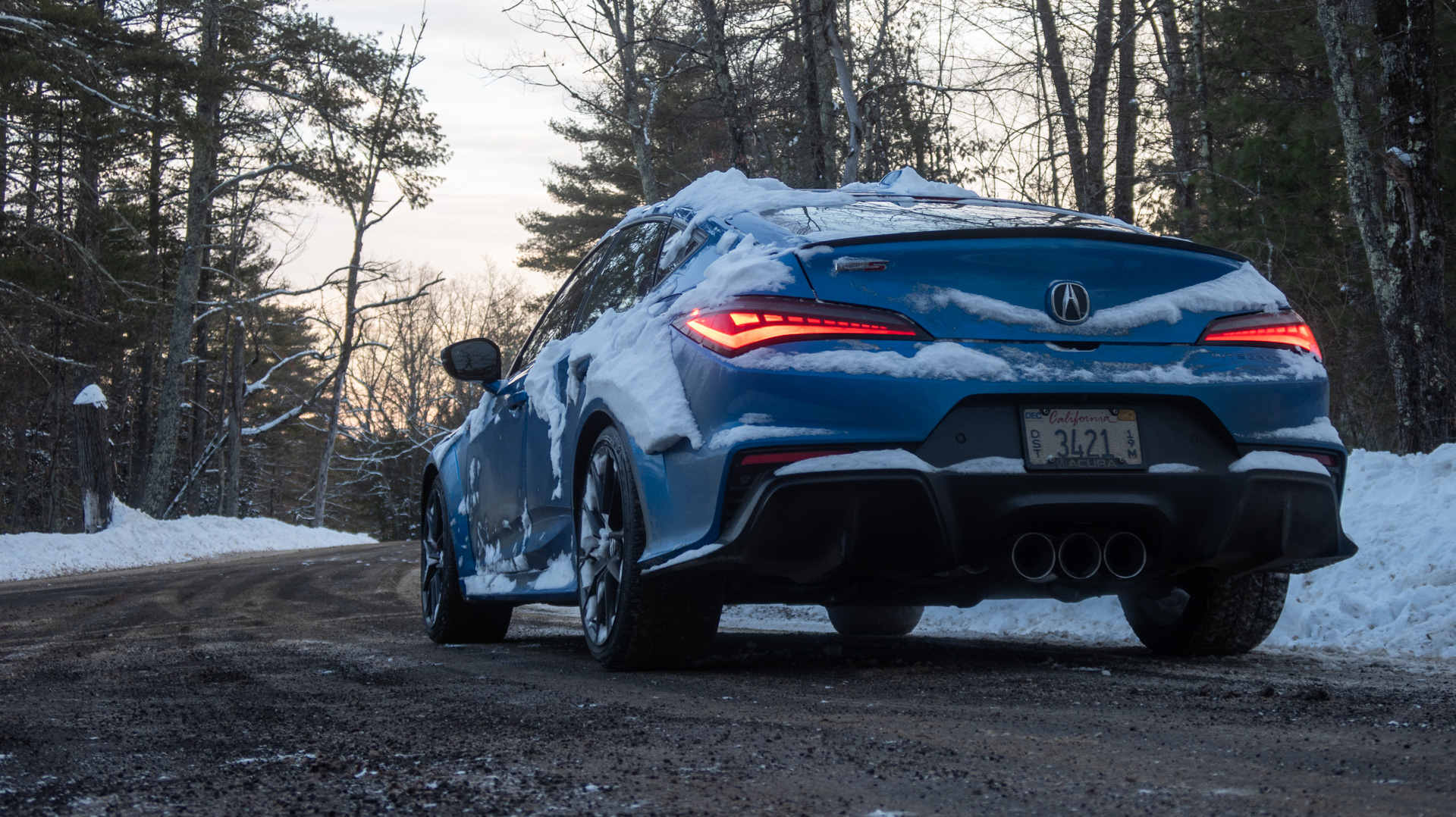
While acceleration traction was probably the most disappointing, winter braking on Blizzaks was solid. The ITS has some mean-business Brembo four-piston monobloc aluminum calipers clamping 13.8-inch rotors on the front axle, and even in low traction, the Bridgestone tires helped the car reel itself in quickly and consistently in a straight line, which I appreciated immensely.
There’s a lot to like about the Integra Type S. Exterior styling’s still great, and it drives delightfully well, especially if you appreciate shifting your own gears. Its snow performance was OK. Fine enough for daily driving—you can confidently own one of these in a climate that gets snow, but it’s far from the snow-beast status of something like an all-wheel drive Audi RS3 or Subaru WRX. And a longer, more mature look at the car has tempered my initial gaga reaction. The ITS is a great sport compact car, it’s just kind of annoyingly expensive for how it feels.
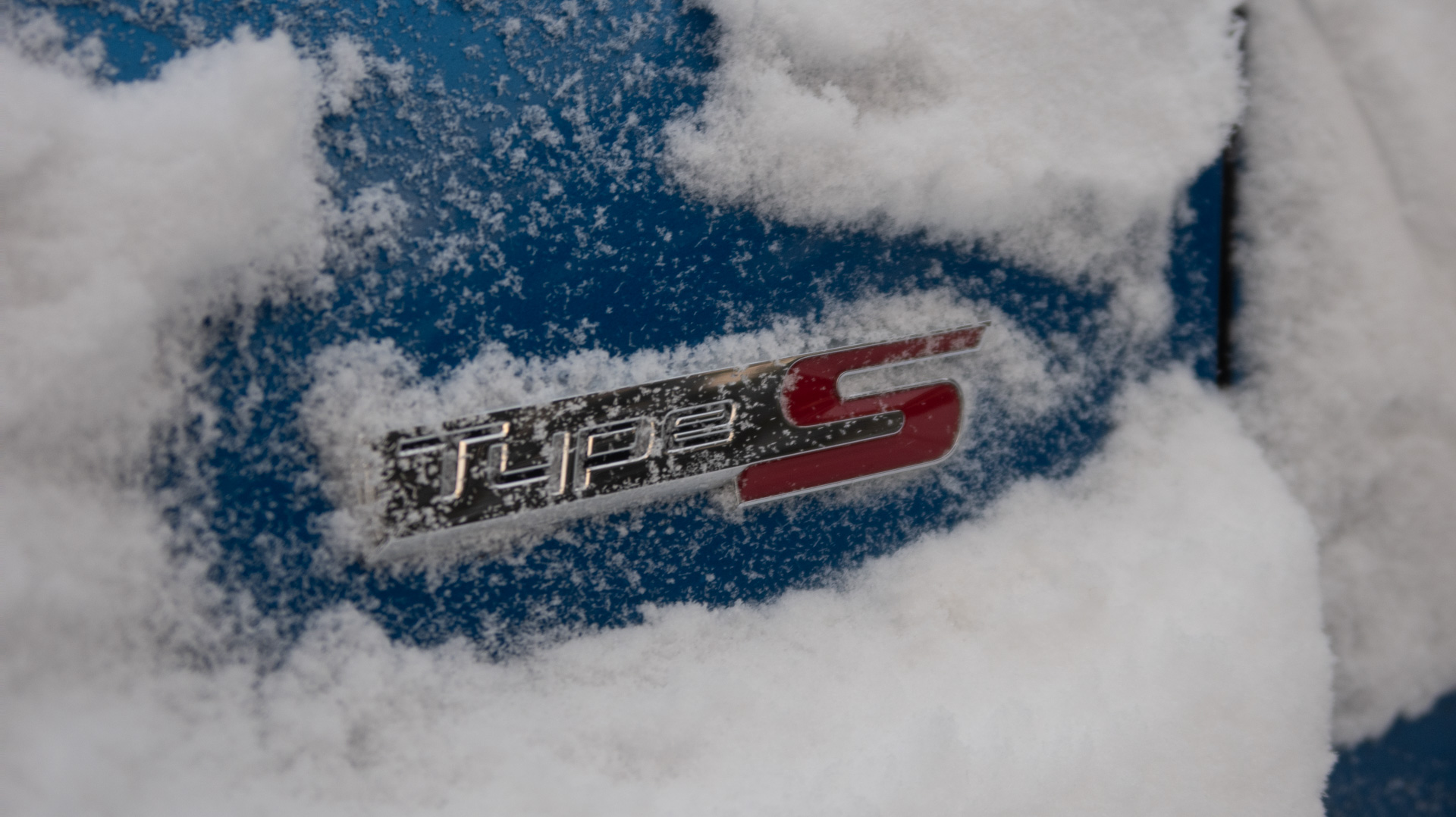
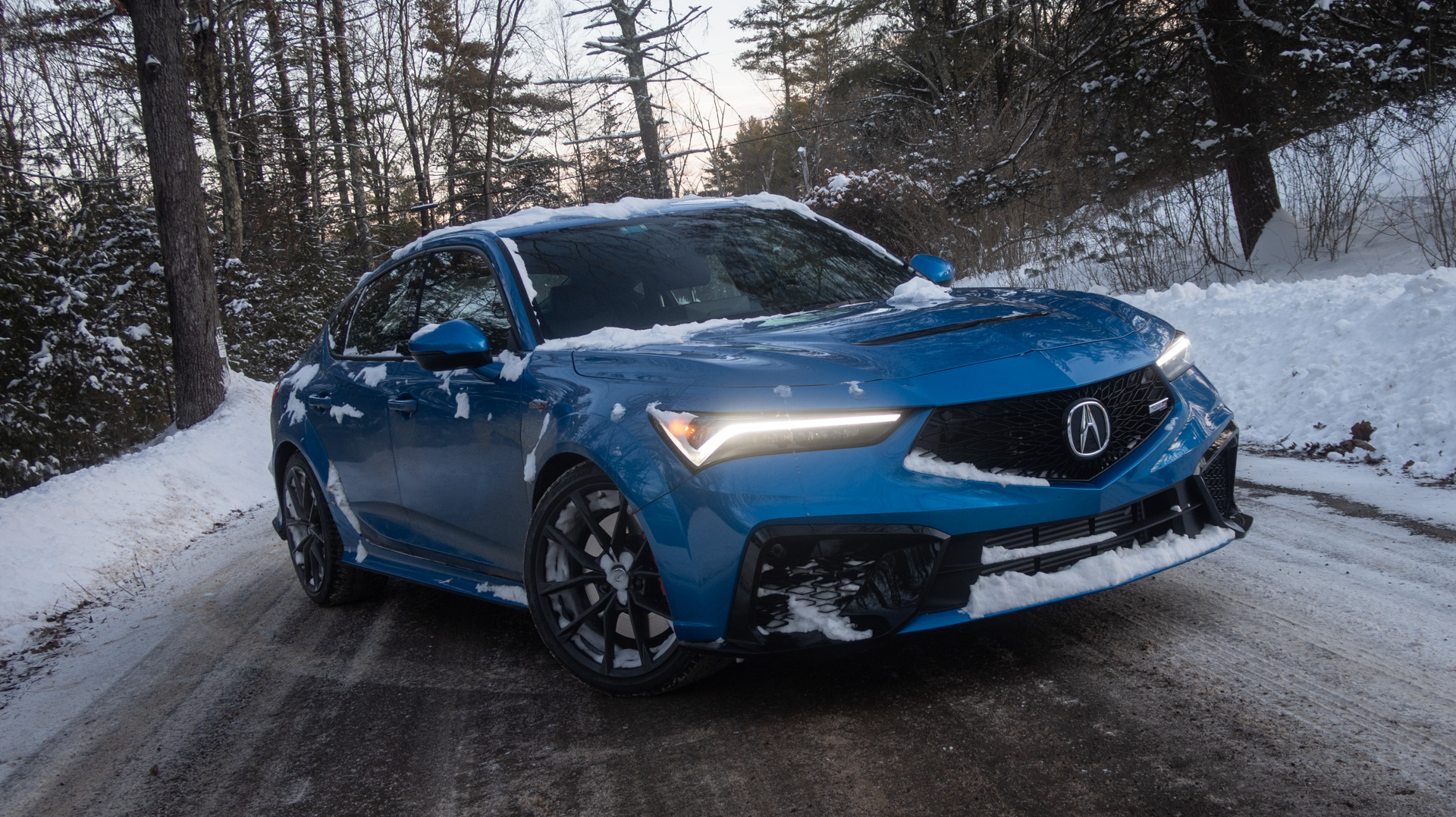
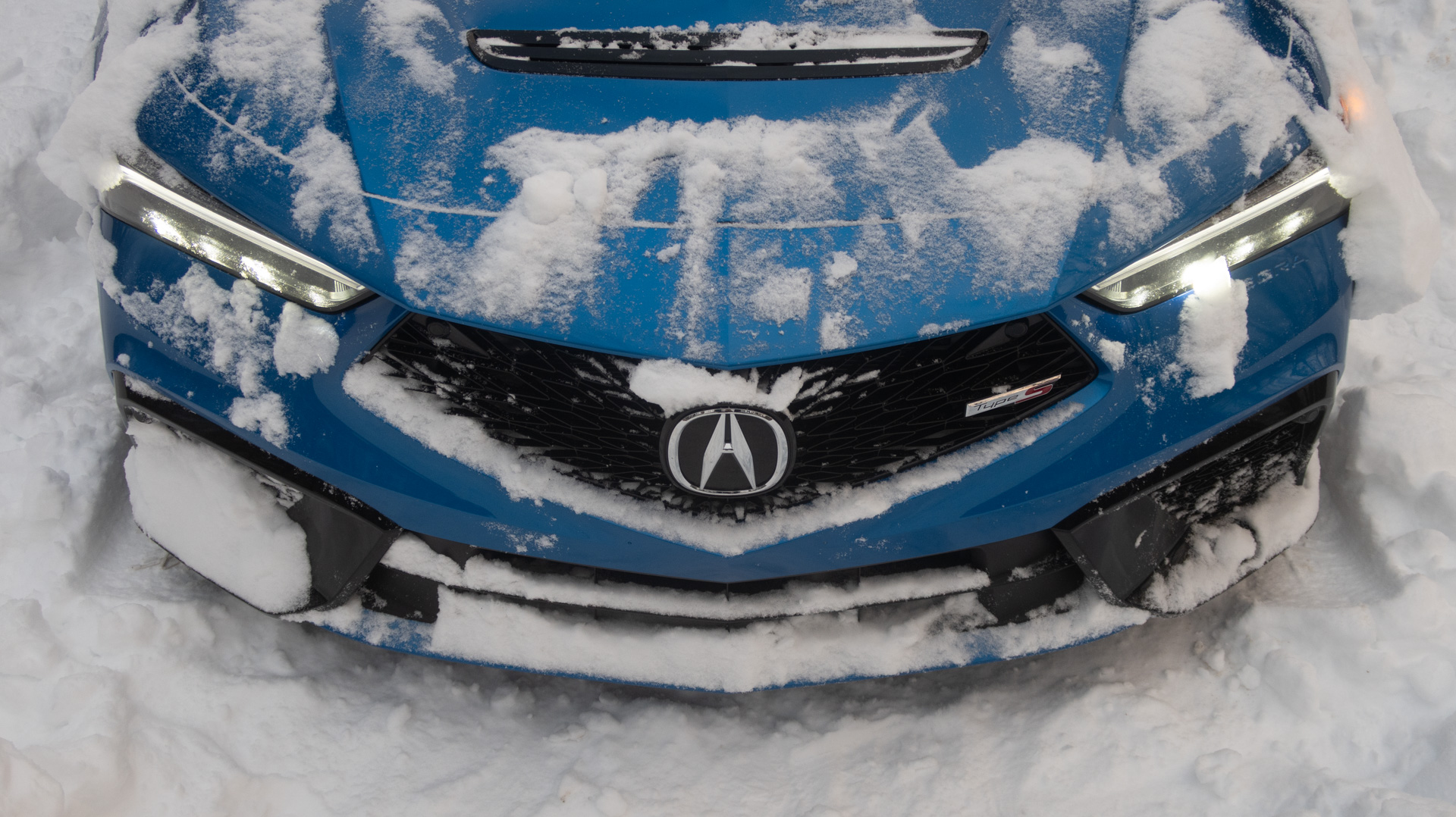
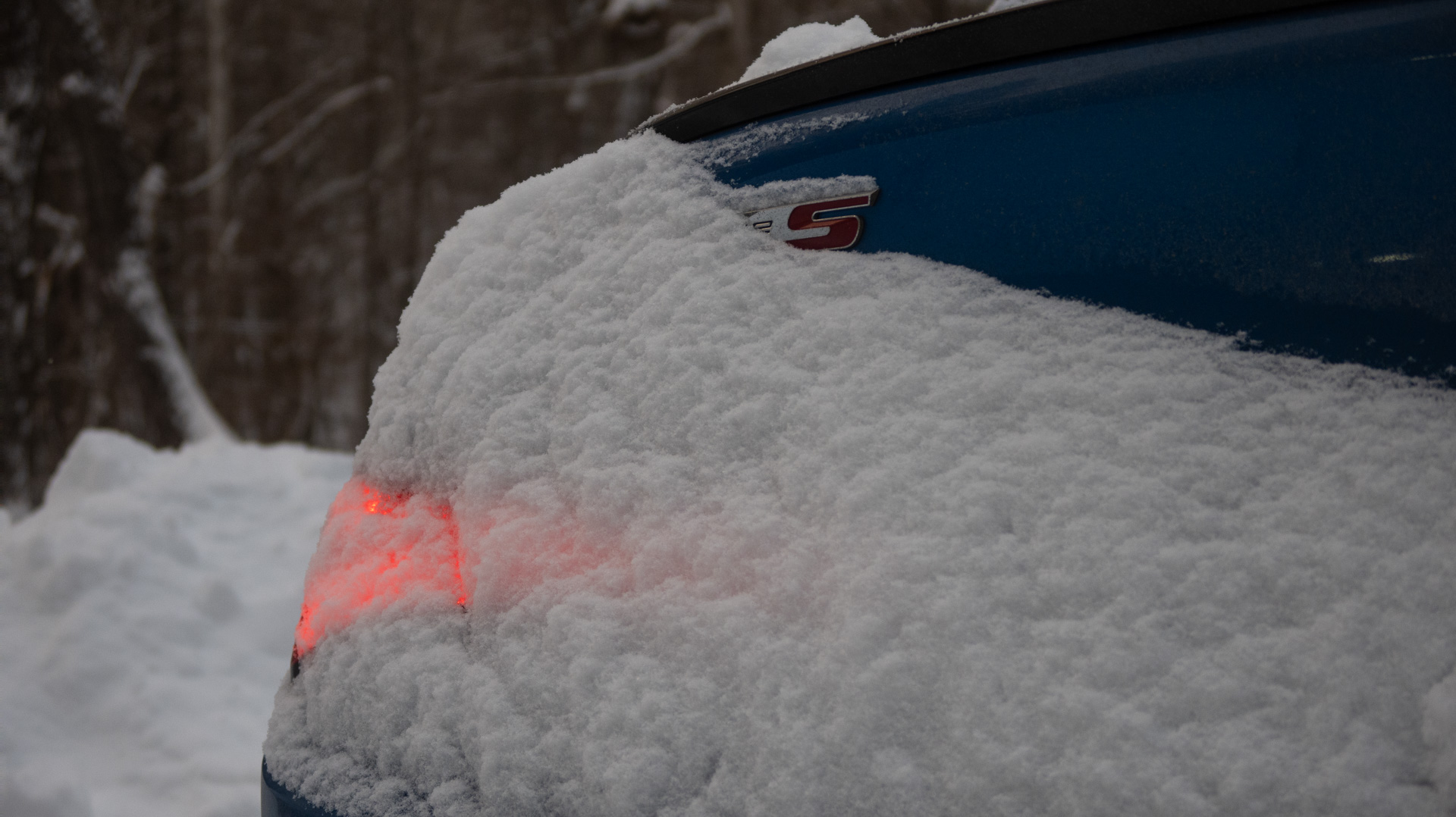
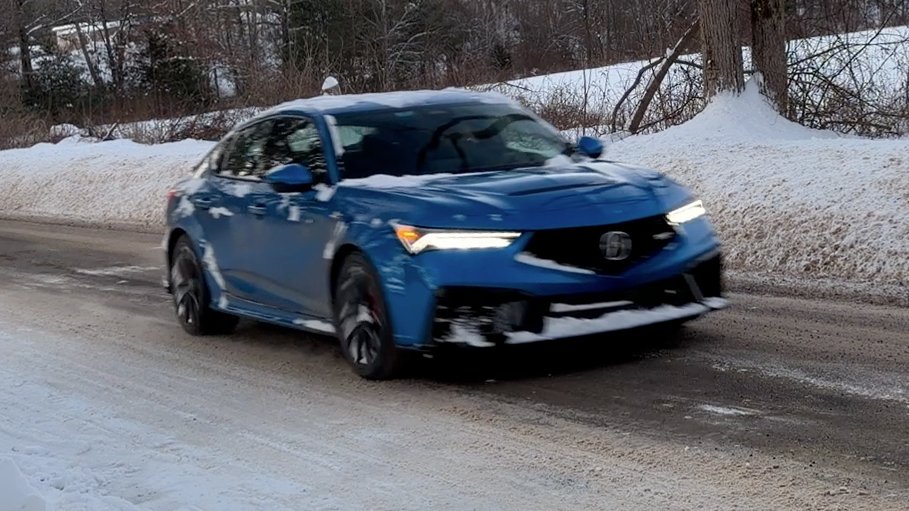
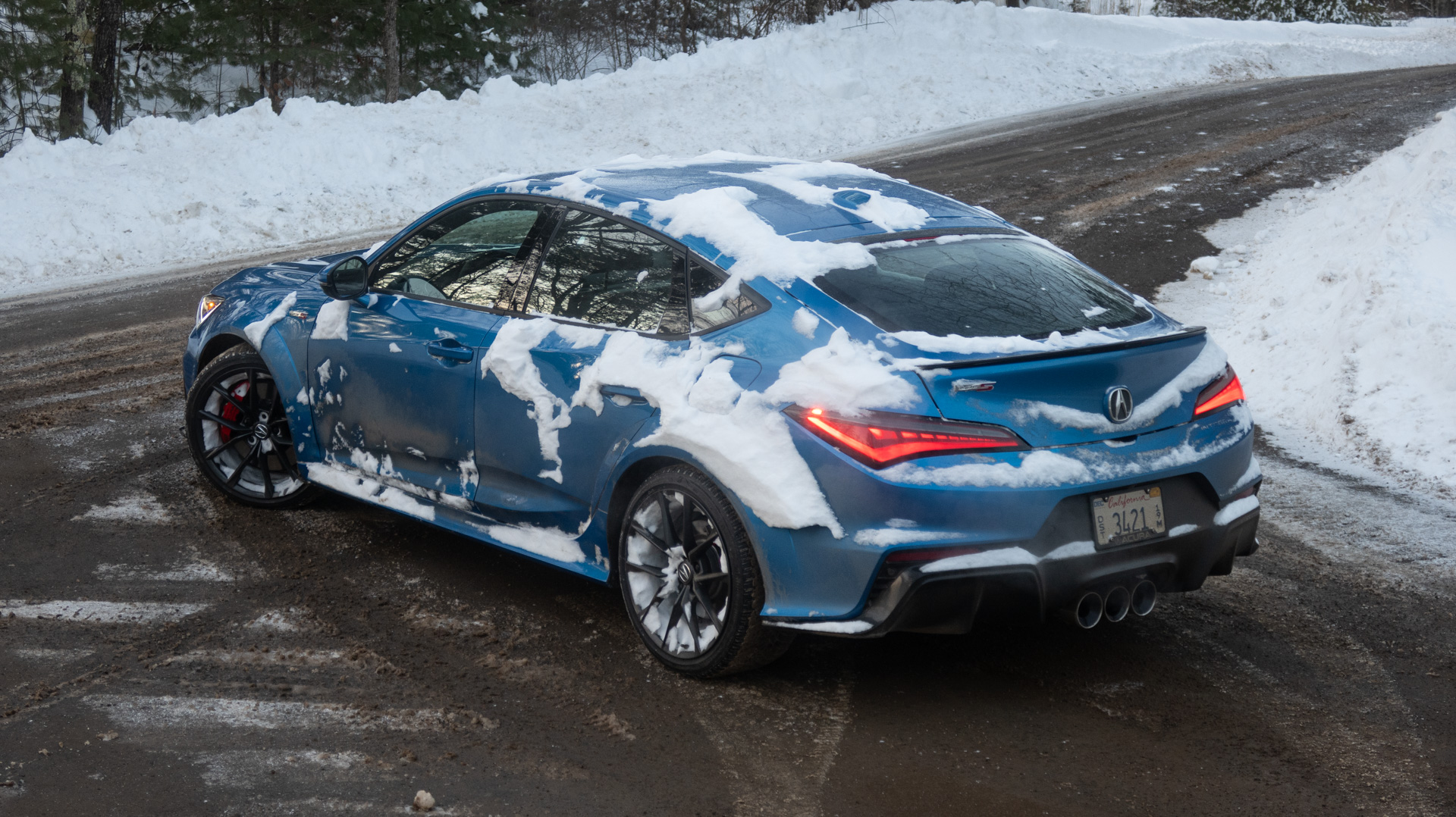
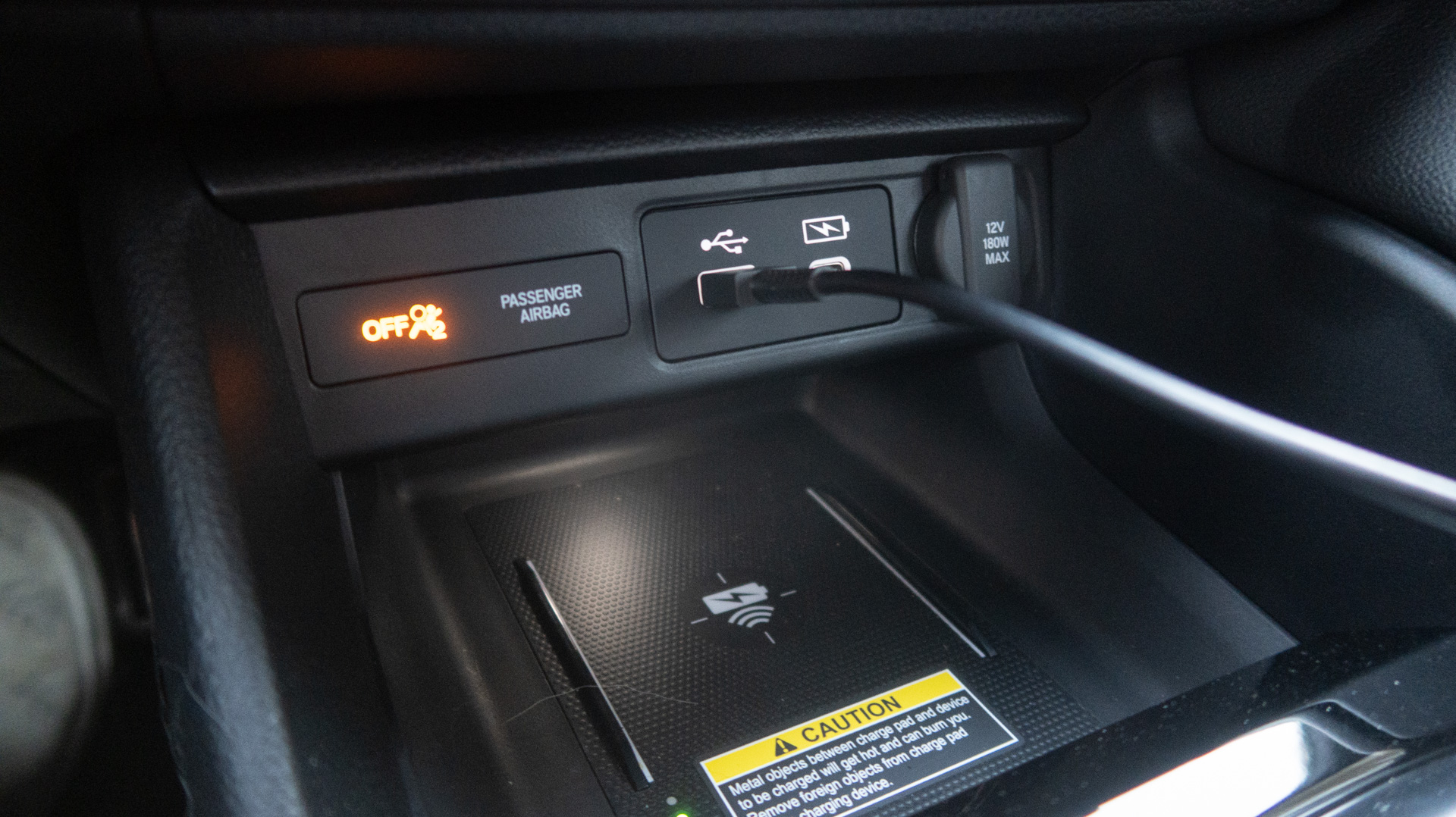
The Double Apex Blue Pearl paint job did look sweet in the snow, though. Swipe through here to see the rest of my pics of the car in cold conditions:

Acura provided The Drive with a seven-day loan of this vehicle for the purpose of writing this review.
Loading comments…
Comments couldn’t be loaded. Please refresh the page.