
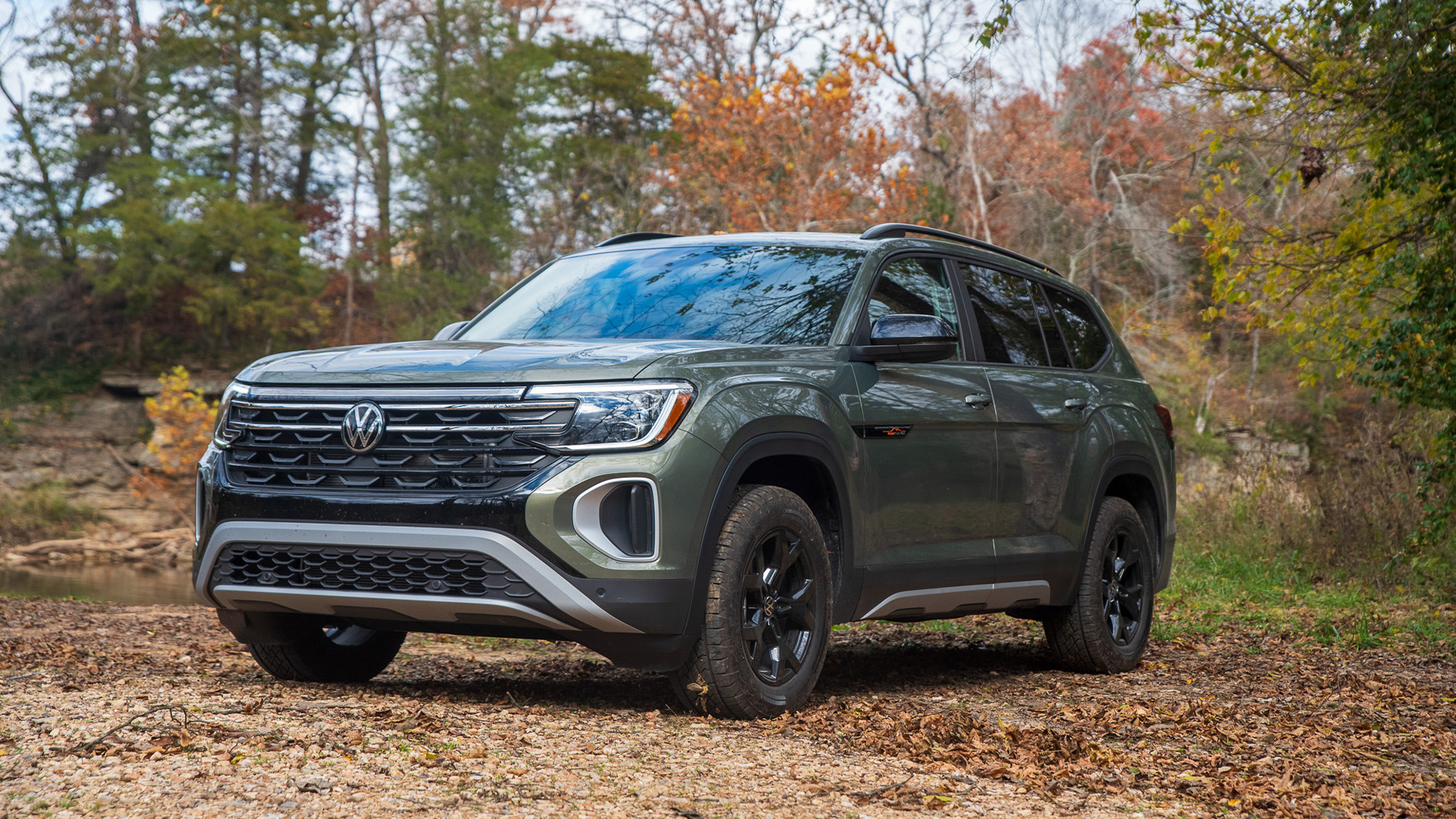
Unlike many crossovers, I’m not sure many people buy a Volkswagen Atlas by accident. What I mean is, drivers who need a new car that just goes well will probably end up with something domestic or Japanese. The mass-market German family hauler is a bit quirkier than the average car buyer might like, but for those who are about it, the Atlas is very much a VW made bigger.
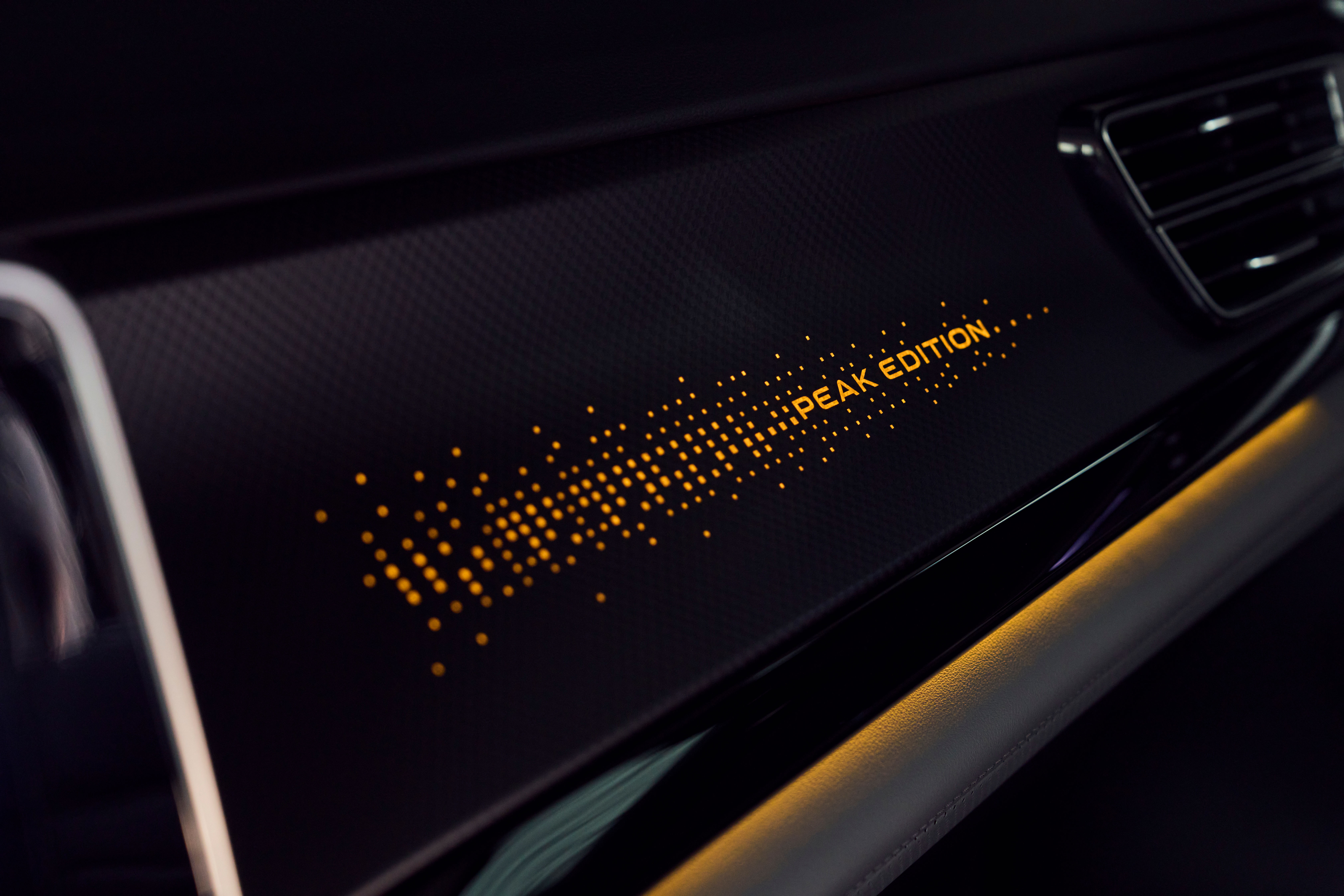
I liked some of the quirks, like the dashboard that’s actually transparent enough for a backlit badge to shine through, but not all of them. I’ve never been so bewildered by touch-capacitive controls in a new car, for example. It was a stark contrast for me since I’d just tested a string of Toyotas, though overall, I can appreciate (most of) the intentional decisions to be different.
I’m just not sure I’d spend my money on one of these instead of a Highlander or a Telluride.

The Basics
VW launched the Atlas in 2017 and has given it two significant makeovers since: One in 2021 and another in 2024. That said, it’s still largely the same underneath. The current Atlas and its two-row Cross Sport variant ride on an updated version of the MQB platform that’s shared with smaller cars like the Golf hatchback and Audi A3.
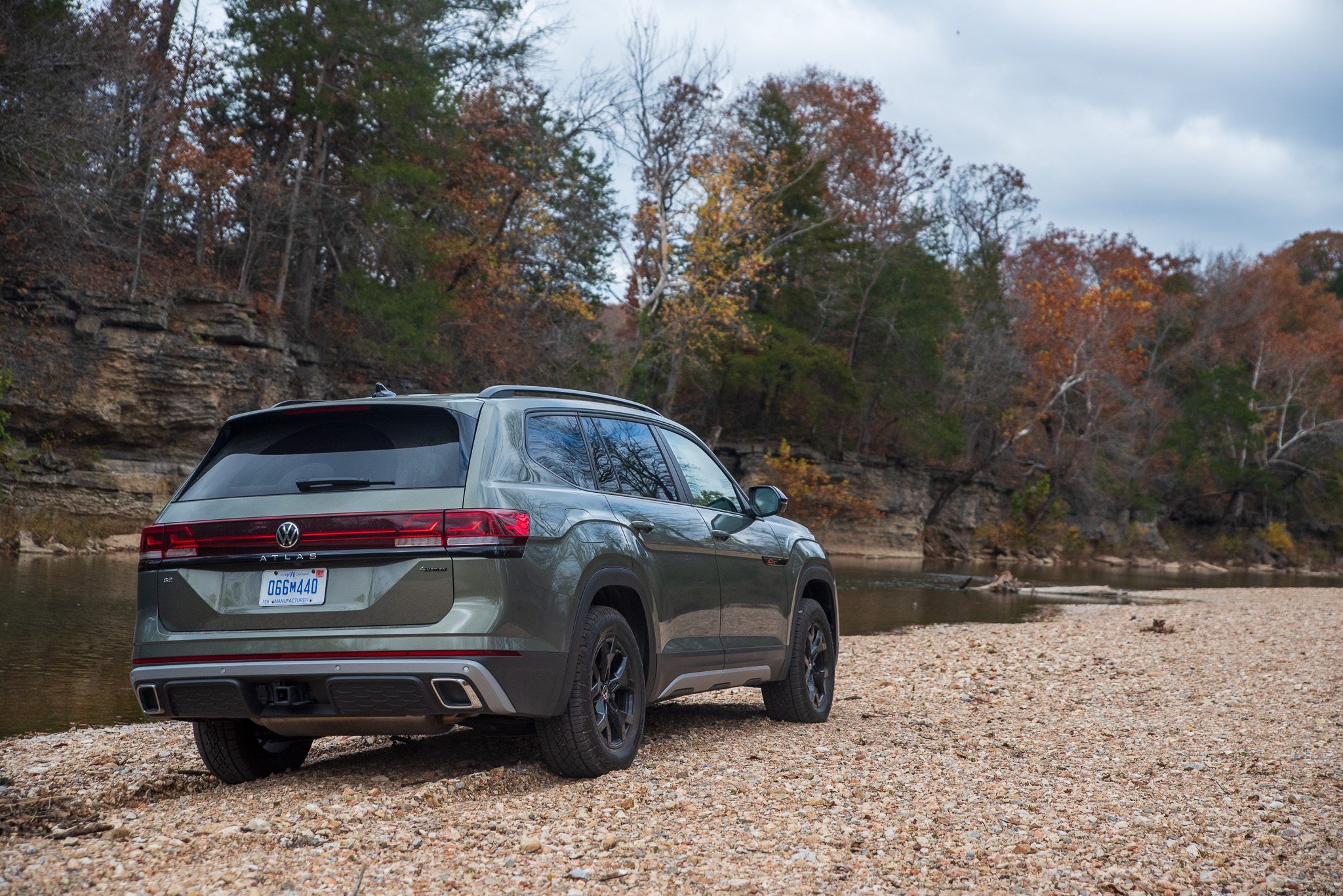
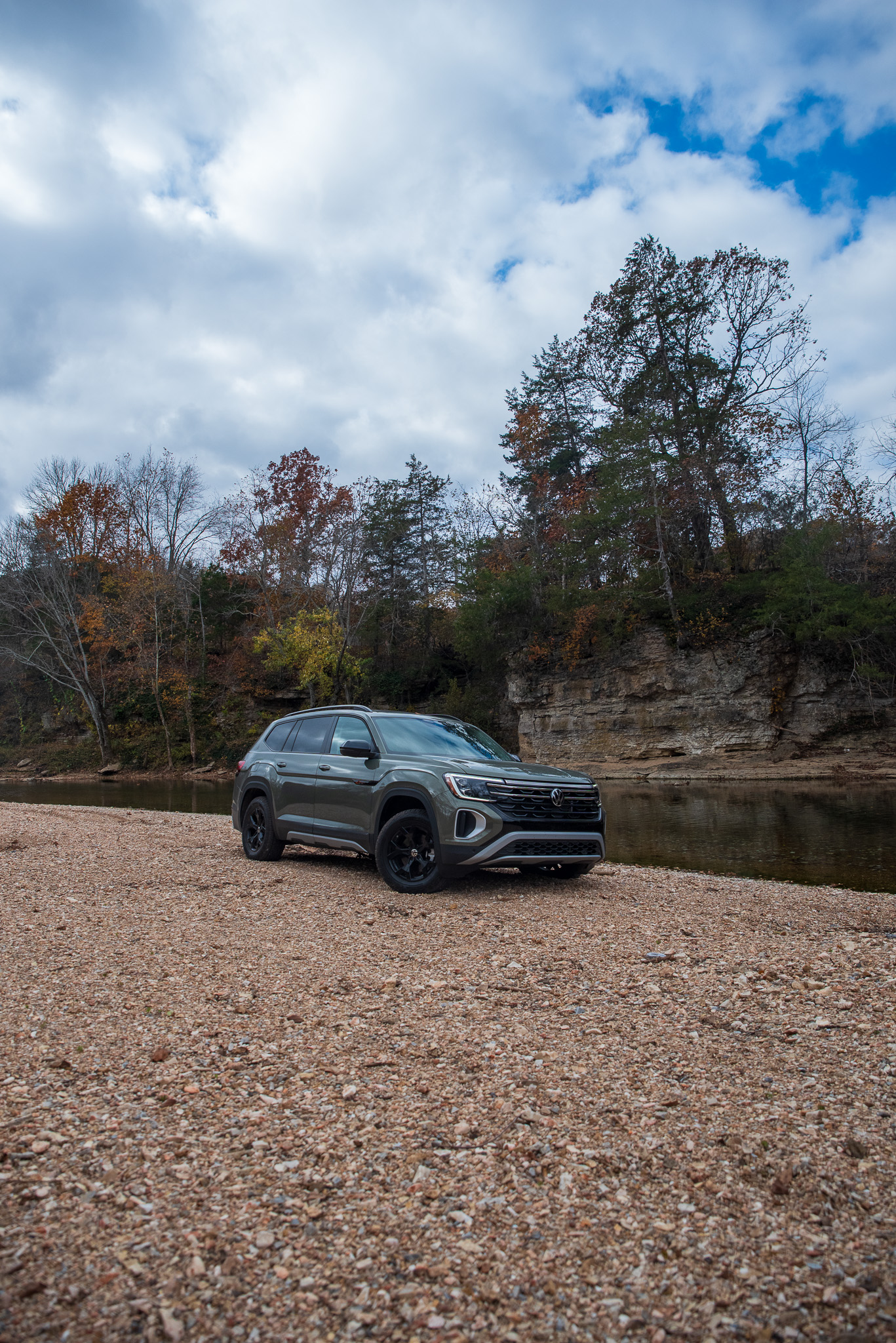
The recent design facelift is only in its second year, and while it seems to be aging OK, I prefer the looks of the 2021-2023 Atlas. Up front, it’s not as sleek as before, with more prominent DRLs and a full-width LED bar spanning both headlights on higher trims. That said, I don’t mind the LED taillight bar on the newer car, and I really dig the Avocado Green Pearl paint on my tester.


Inside, the Atlas aims to be tech-forward, featuring a 12-inch infotainment display and an available 10.25-inch Digital Cockpit gauge cluster. VW and Audi were some of the first brands with in-cluster maps and so on, and I think it still looks good. My tester also had quite a bit of orange accent stitching because it was a Peak Edition—essentially, a soft-road special.
These days, the VW Atlas comes with just one engine option: a 2.0-liter turbocharged TSI four-cylinder producing 269 horsepower and 273 lb-ft of torque. Used to, you could get an Atlas with a VR6, but that lump is gone now. An eight-speed automatic transmission sends that output to all four wheels on most models, although the base SE has standard front-wheel drive.
Driving the 2025 VW Atlas Peak Edition
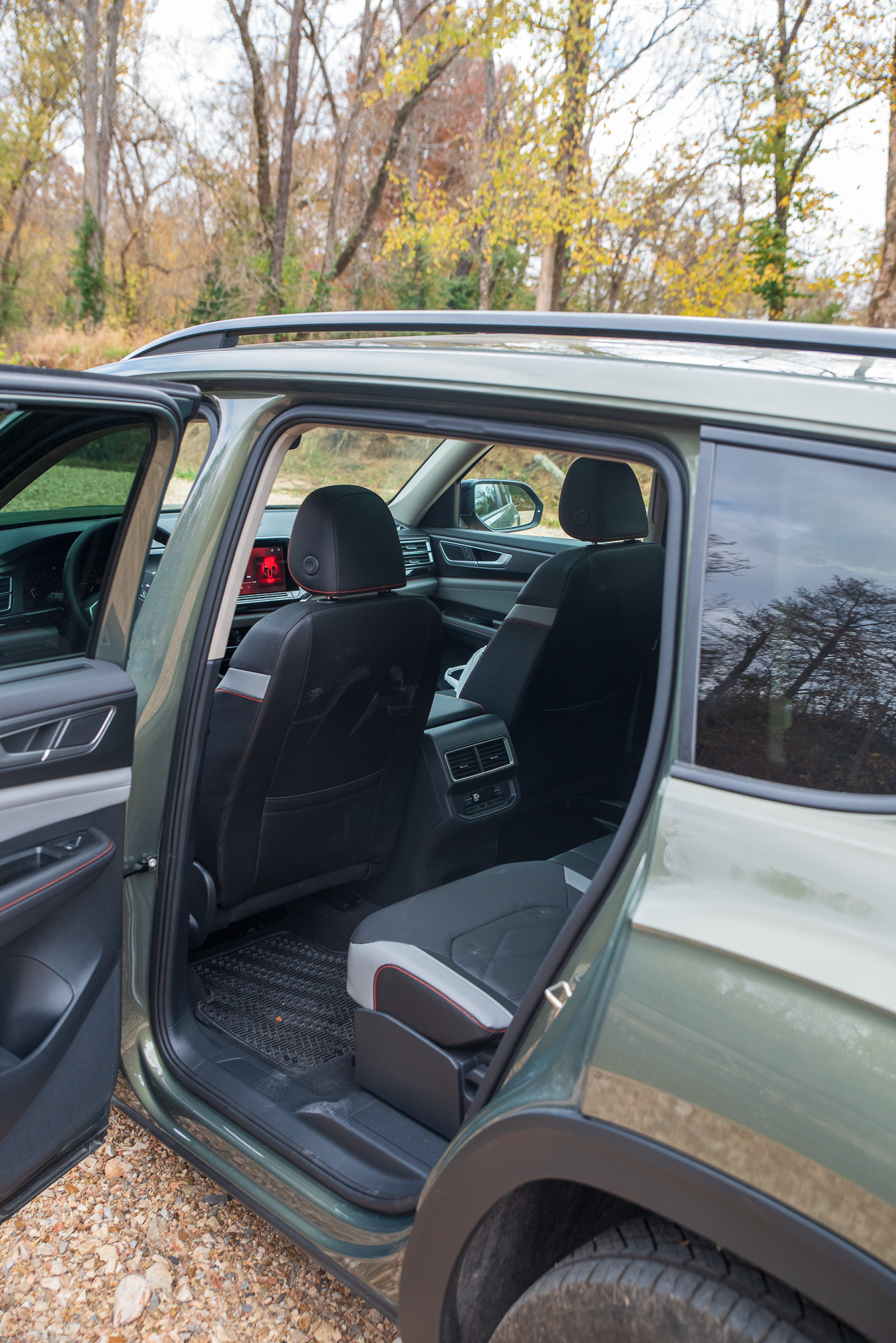
First things first, before hopping in the driver’s seat and starting the car, I fastened my daughters’ car seats—one rear-facing, the other front-facing. We were all happy to find plenty of room, even after I adjusted the seat to my driving position. I’m a pretty big feller at 6’5″ and 290 pounds, but I’m pleased to report that the VW Atlas is big enough for a feet-swinging three-year-old to sit behind a guy like me without any woes.
Now, don’t expect the same out of the third row. That’s more of a problem with all midsize crossovers, though, so it’s not as much of a knock against VW. People can’t help but buy cars like this, so automakers keep making them with too little room for real humans to sit back there.
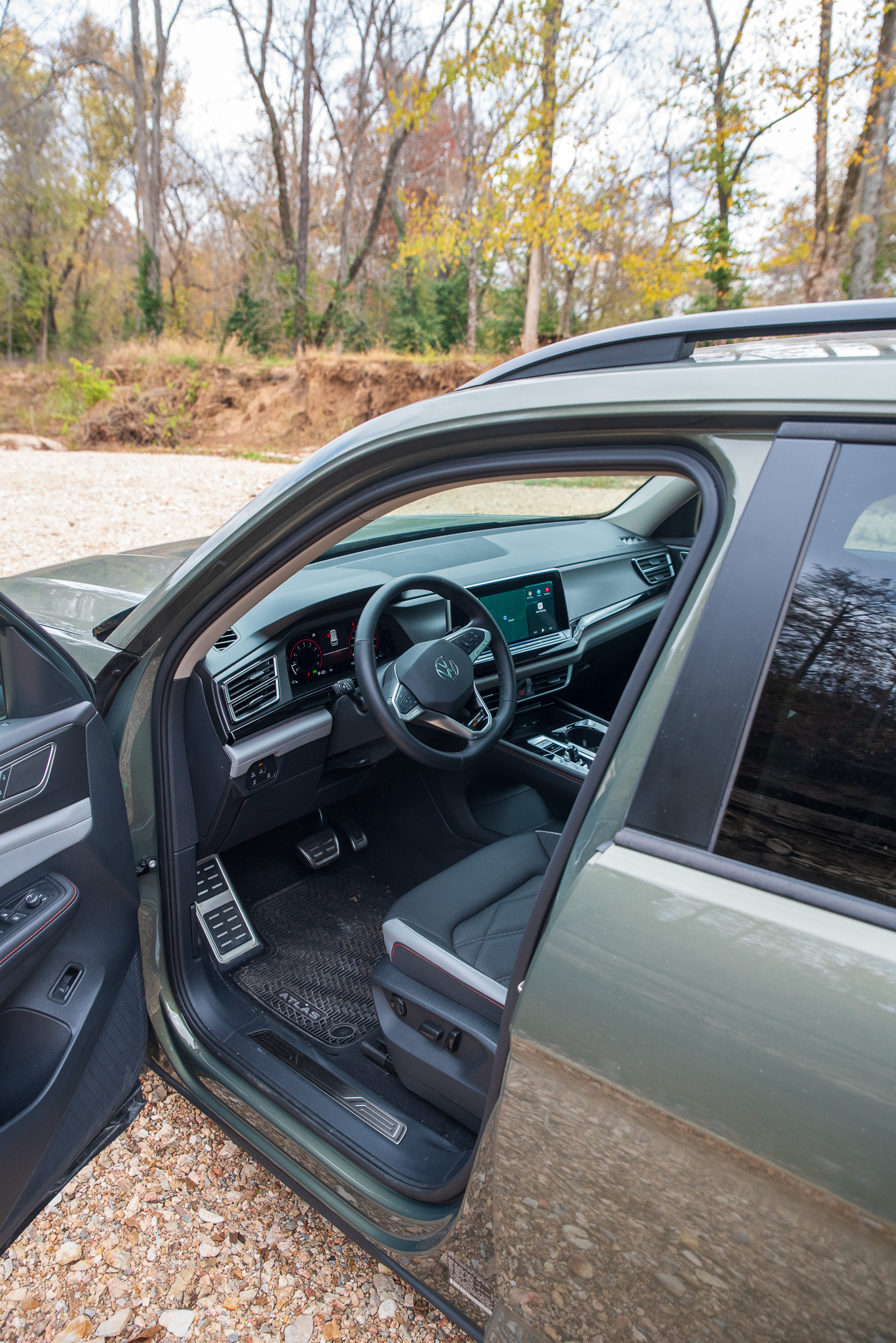

It was then time to drive the dang thing. What I thought was an issue with the VW’s Apple CarPlay turned out to be a problem with my cord. Once I replaced it, I didn’t have any problems connecting my phone. What I did have issues with was easily controlling the volume and HVAC with the dashboard controls. I’m far from the first car critic to gripe about these, so I’ll save some ink and say that these suck. Real bad. I’m glad VW brought physical buttons back to the steering wheel, and I quickly learned to use those controls instead. I was left fiddling with the touchscreen to adjust the heat and air.
OK, one more gripe about the user interface because I don’t want to dwell on it: Who in the world thought the sunroof should open by swiping your finger where you’d normally find a button, a rocker switch, or literally anything else? It’s like opening an iPhone 3G. It feels wack.

Moving on. The Atlas seems like a pretty big rig to make do with a turbo four-cylinder, but it moves swiftly on the low end. Crossing lanes while leaving a stop sign is no problem. Acceleration plateaus toward the top, as it does on so many engines like this, but you’re never left wondering if you can make a pass or not.
Really, if you listen to the car and not your senses, you might think you can do anything. The Atlas pipes in so much fake engine noise when you’re in Sport mode that you might mistake the SUV for a GTI… until it’s time to park somewhere tight. It makes me think of the old “Drivers Wanted” VW ads that I was so fond of as a 17-year-old with a VR6 Corrado. (Heck, it was even green like this thing.)
I won’t heap too much praise on the Atlas’ cornering abilities, but it’s not bad. I think it strikes a decent balance between feeling sporty and comfortable, even though it’s not extremely one or the other. The word “unremarkable” feels too harsh, but it’s certainly closer to that than “outstanding” or even “exceptional.”
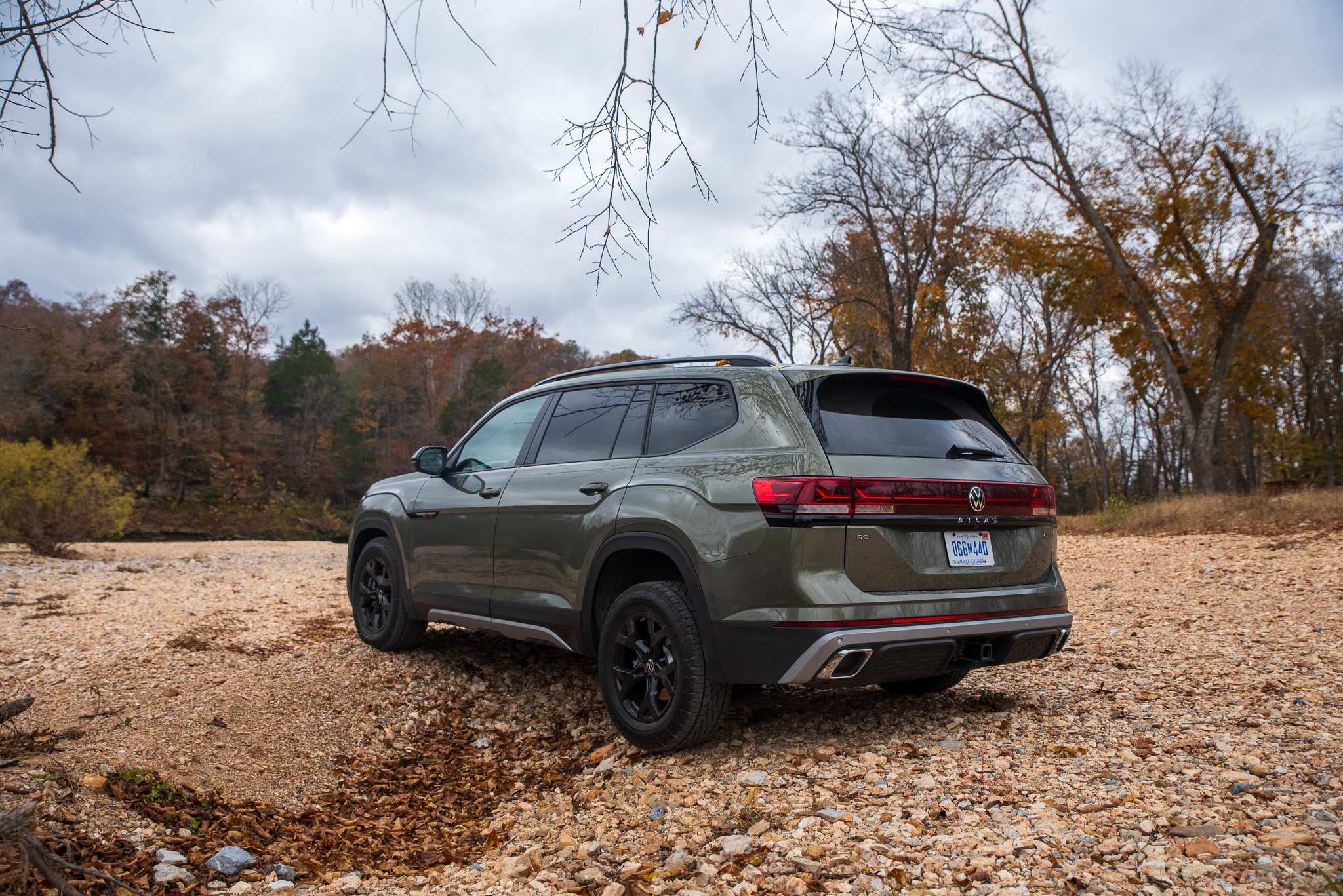
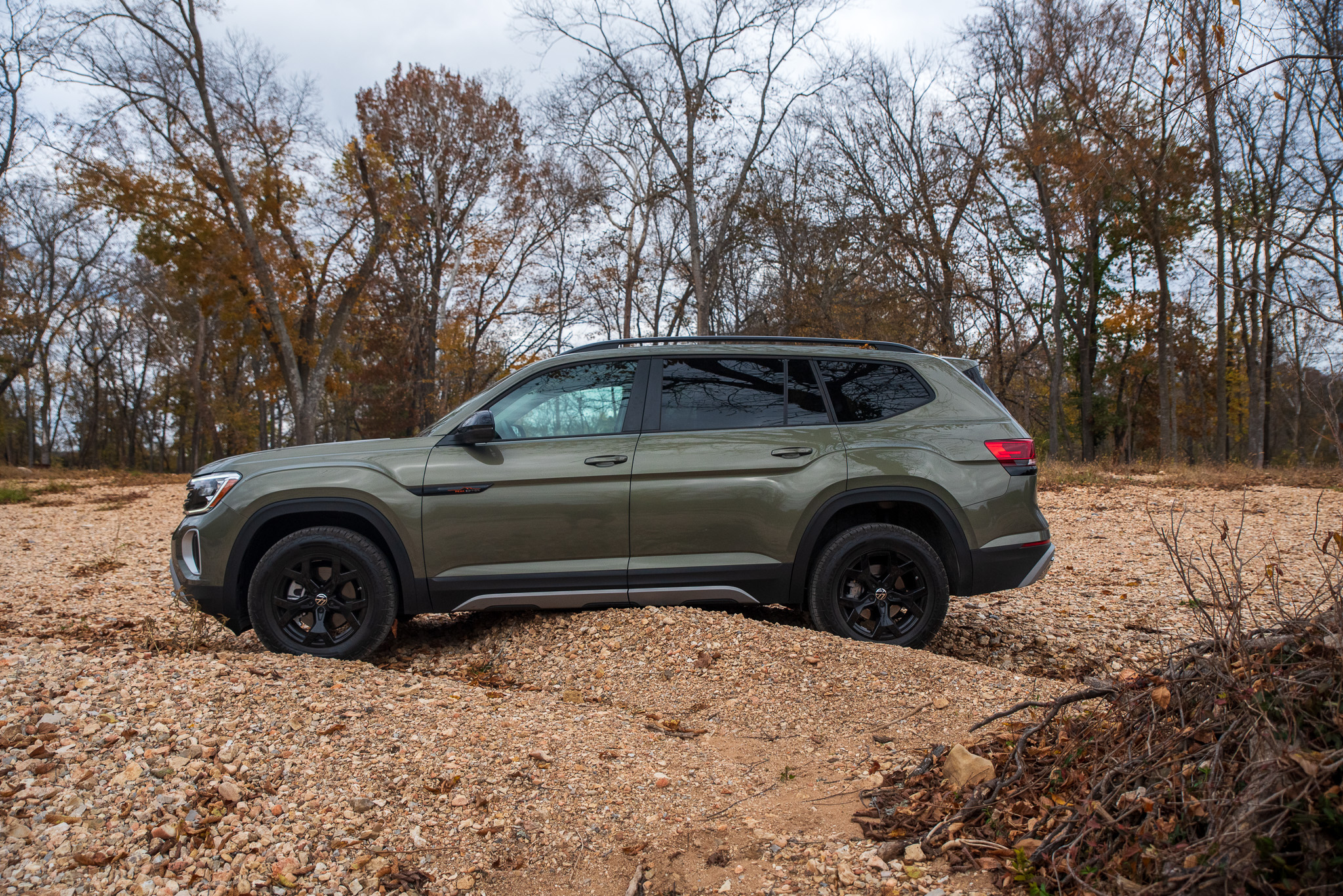
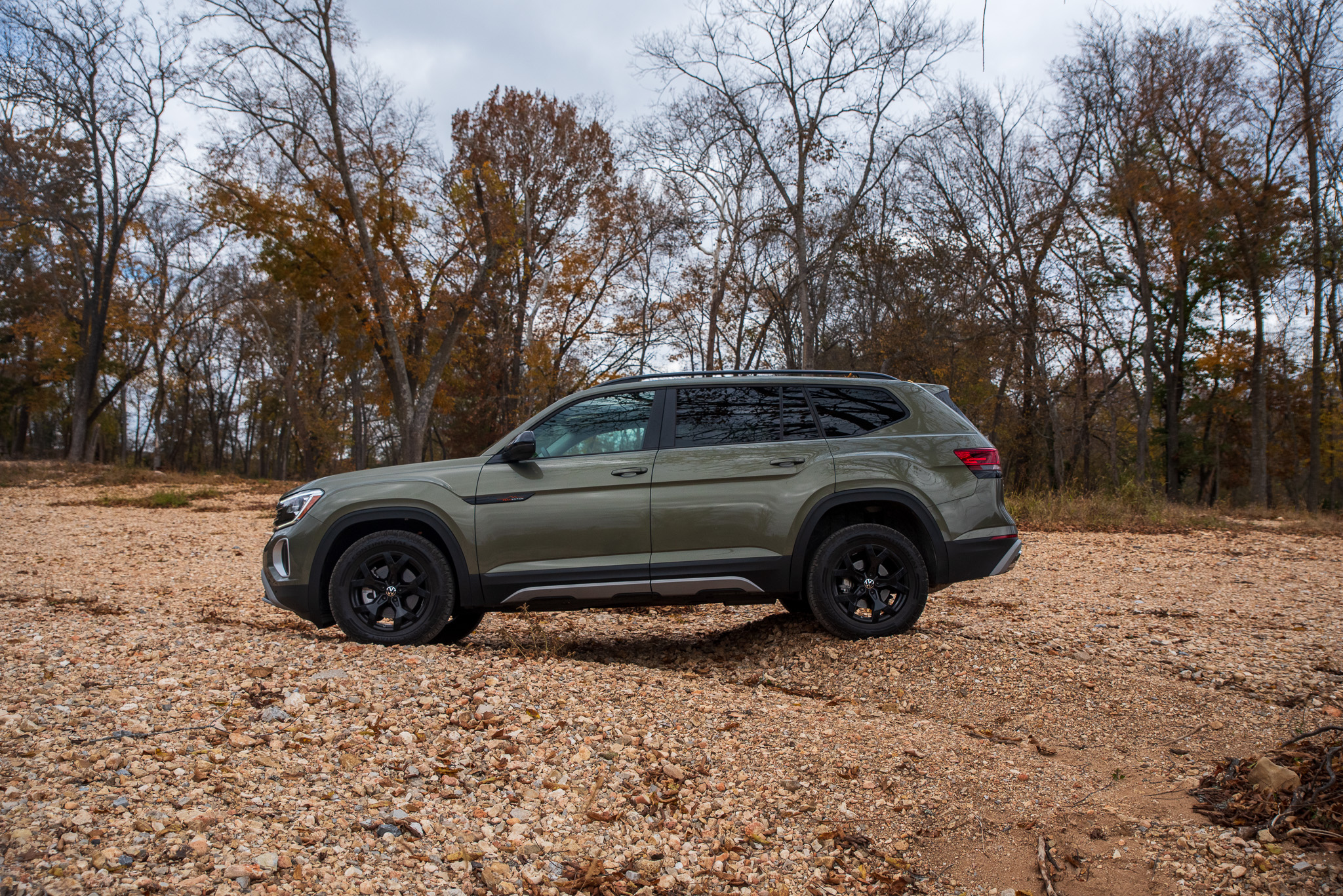
I also tooled around on some loose gravel since I was in the Peak Edition. The 30-inch Continental CrossContact tires did A-OK in terms of traction, but the Atlas’ heft and low ground clearance meant that its underside met plenty of creek rocks. Still, I never got stuck despite being the first car to drive down there after a flood, and it was able to power out of whatever situation, even as it dragged its belly.
The Highs and Lows
While not every decision VW made with the Atlas was the right one, I still consider its personality a high point since precious few other crossovers care to stand out. It leans into the schtick, so to speak. The ambient lighting is so prominent that my kids likened it to a spaceship; the sound when you stomp on the throttle is hilariously corny in the most VW type of way; and it’s happy to pretend it’s an off-roader if that’s what makes you smile.
If only it didn’t unnecessarily reinvent the wheel with user interface controls: that’s what comes to mind as the Atlas’ number one low point. And while it’s handy that VW lets you select “warm hands” or “cool feet” through its Smart Climate screen, I’d rather be able to push a button or twist a knob. It’s not like it takes any more time.
VW Atlas Features, Options, and Competition
You can get into a new Atlas for $40,735, provided you’re OK with the front-wheel-drive SE model. The base Atlas still offers LED headlights with dynamic cornering, the full-size 12-inch infotainment screen, digital gauge cluster, and three-zone climate control. All in all, the standard equipment is solid, and you can still tack on AWD for $1,900.
If you want a Peak Edition, as I tested, you’ll pay quite a bit more: it now costs $49,485 for 2026. There was a healthy price increase, as the Monroney on my 2025 press vehicle shows a price of $48,080. Regardless, the Peak Edition adds all-terrain tires, Titan Black interior with orange stitching, brushed aluminum pedals, and some other rough-and-tumble aesthetics.
The Atlas exists in a highly competitive segment, if not in quality, then in quantity. American counterparts include the Chevrolet Traverse and GMC Acadia, as well as the Ford Explorer. Similarly sized Japanese crossovers like the Toyota Highlander and Honda Pilot are mighty popular, too. Arguably, the kings of this category, however, are the Kia Telluride and Hyundai Palisade twins, which are fresh for 2026.
Fuel Economy
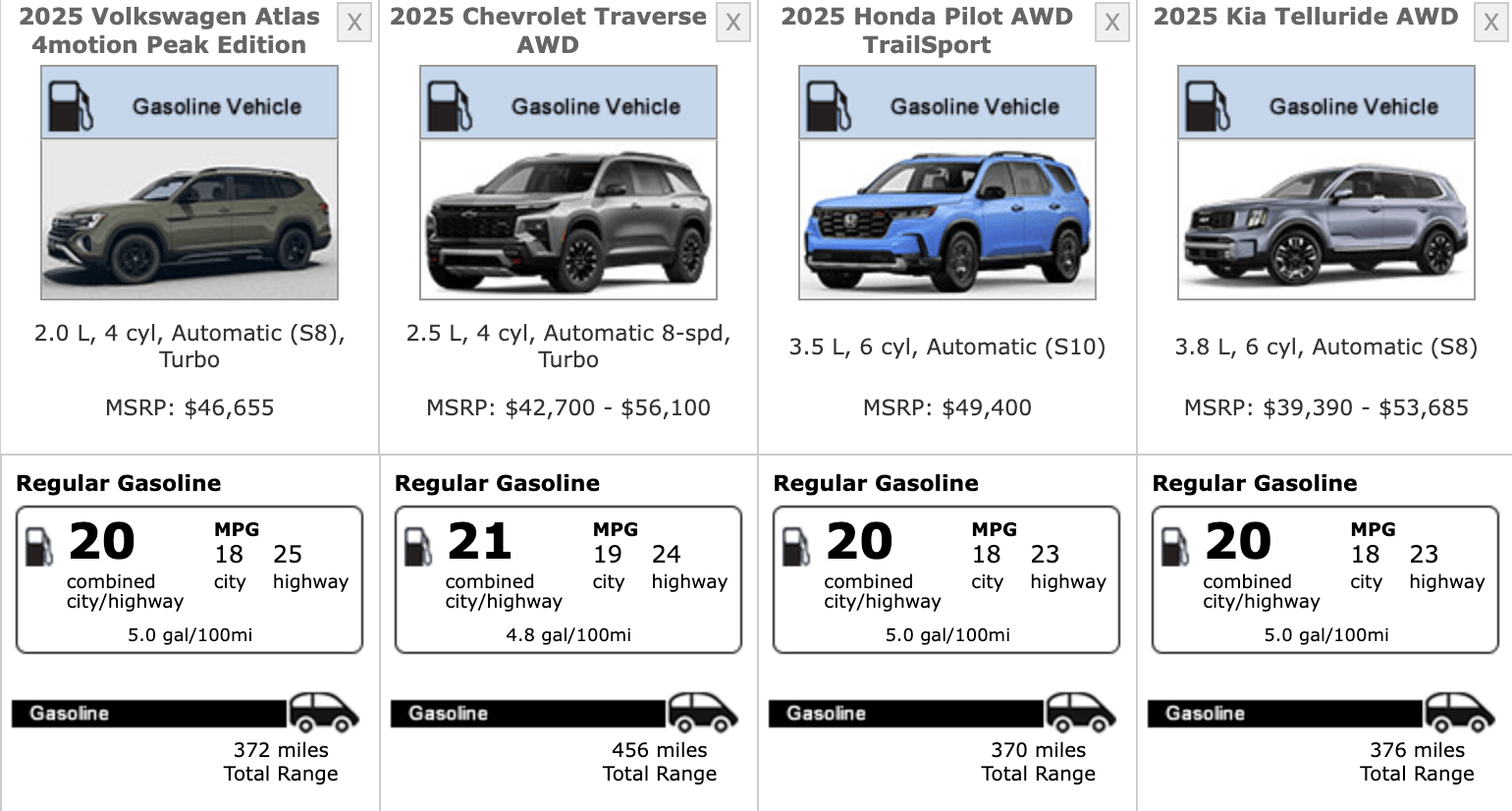
The 2025 VW Atlas Peak Edition essentially matches its all-wheel drive crossover rivals on fuel economy with 18 mpg city / 25 mpg highway / 20 mpg combined. It’s bested slightly by the Chevy Traverse, which is also powered by a turbo four-cylinder, while turning in near-identical numbers to the V6-powered Honda Pilot TrailSport and Kia Telluride.
Value and Verdict
Reflecting on my week with the VW Atlas, I feel like it would make some people really happy. It’s cheerful in a way that the competition often isn’t. It’s also not as livable as the Japanese and domestic options in several others. As I start to treasure practicality above novelty, I worry that the Atlas would never be the pick for me.
It has its audience, no doubt. I would never call anybody a dummy for getting one. But I would secretly wonder how much it pains them to operate the HVAC when it’s cold enough to cuss. Or maybe you get used to it! I don’t think I’d ever spend my own money to find out.
VW provided The Drive with a seven-day loan of this vehicle for the purpose of writing this review.
2025 Volkswagen Atlas Specs | |
|---|---|
| Price as Tested | $48,080 |
| Powertrain | 2.0-liter turbocharged four-cylinder | 8-speed automatic | all-wheel drive |
| Horsepower | 269 |
| Torque | 273 lb-ft |
| Seating Capacity | 7 |
| Max Towing | 5,000 pounds |
| Curb Weight | 4,601 pounds |
| Cargo Volume | 20.6 cubic feet behind third row | 55.5 cubic feet behind second row | 96.8 cubic feet behind first row |
| Ground Clearance | 6.3 inches |
| Off-Road Angles | 20.8° approach | 21.1° departure |
| EPA Fuel Economy | 18 mpg city | 25 highway | 20 combined |
| Score | 6/10 |

Quick Take
The Atlas isn’t the most powerful, efficient, or livable crossover—but it’s very likely the most light-hearted.
Got a tip or question for the author? Contact them directly: caleb@thedrive.com
Loading comments…
Comments couldn’t be loaded. Please refresh the page.