
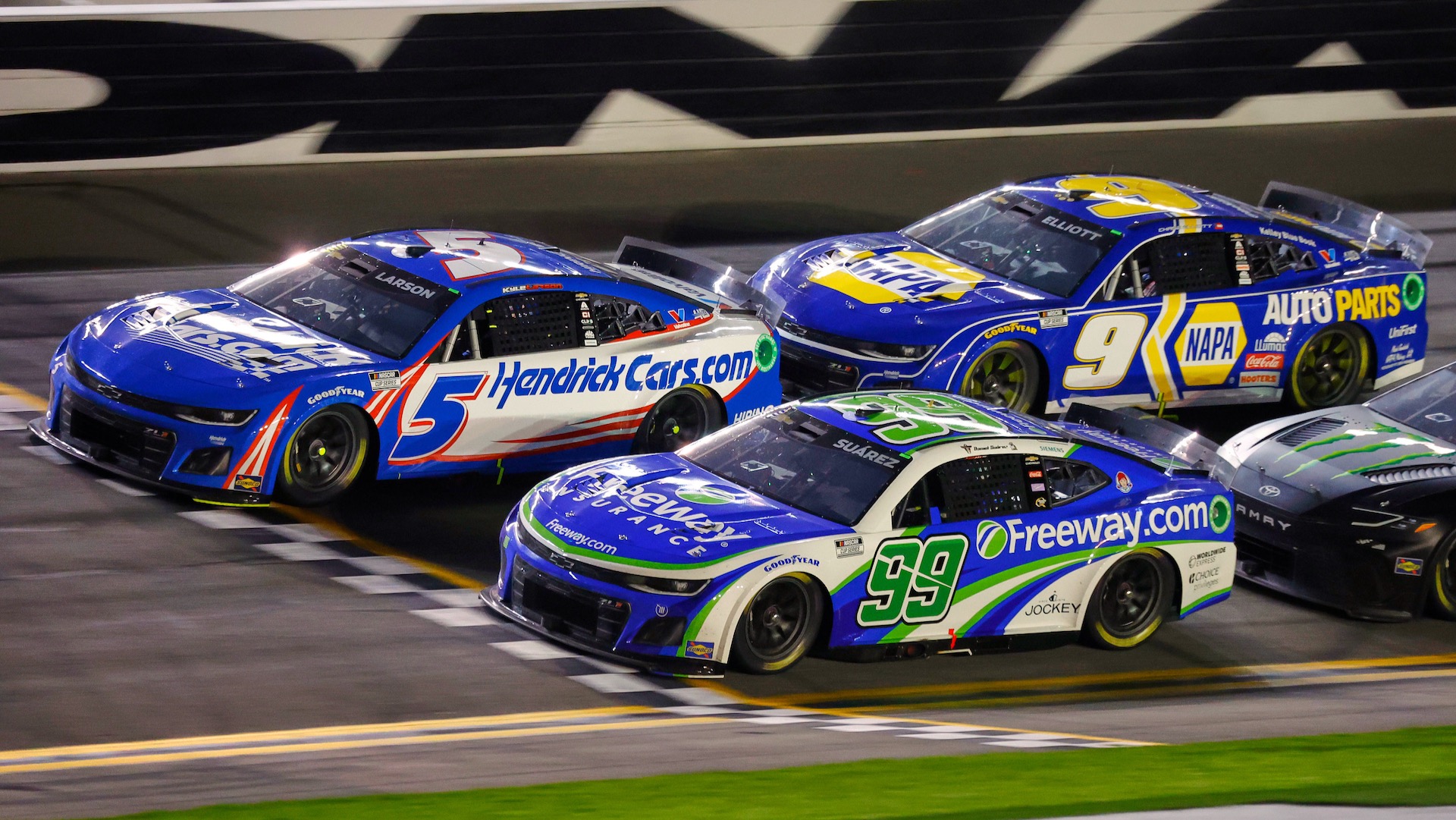
When the NASCAR Cup Series returns to Daytona on August 29 for the Coke Zero Sugar 400, the cars will be making just 465 horsepower. This 45-hp reduction from the previous Superspeedway package means that the Ford Mustang Dark Horse-branded Cup car will have less power than a stock Mustang GT, which is rated at 480 hp, and will be 35 hp down on the (non-supercharged) Dark Horse road car. But there’s a reason for that.
The horsepower reduction compensates for reduced downforce, which NASCAR is implementing in the hope of improving the spectacle. For the next Daytona race, rear spoilers will be reduced from 7 inches to 4 inches, NASCAR said earlier this week. The lower spoiler height—the same currently used at intermediate tracks like Atlanta—is expected to allow single cars to run up to 3 mph faster and thus allow for easier overtaking. It follows a trend of de-emphasizing horsepower in the Next-Gen era.
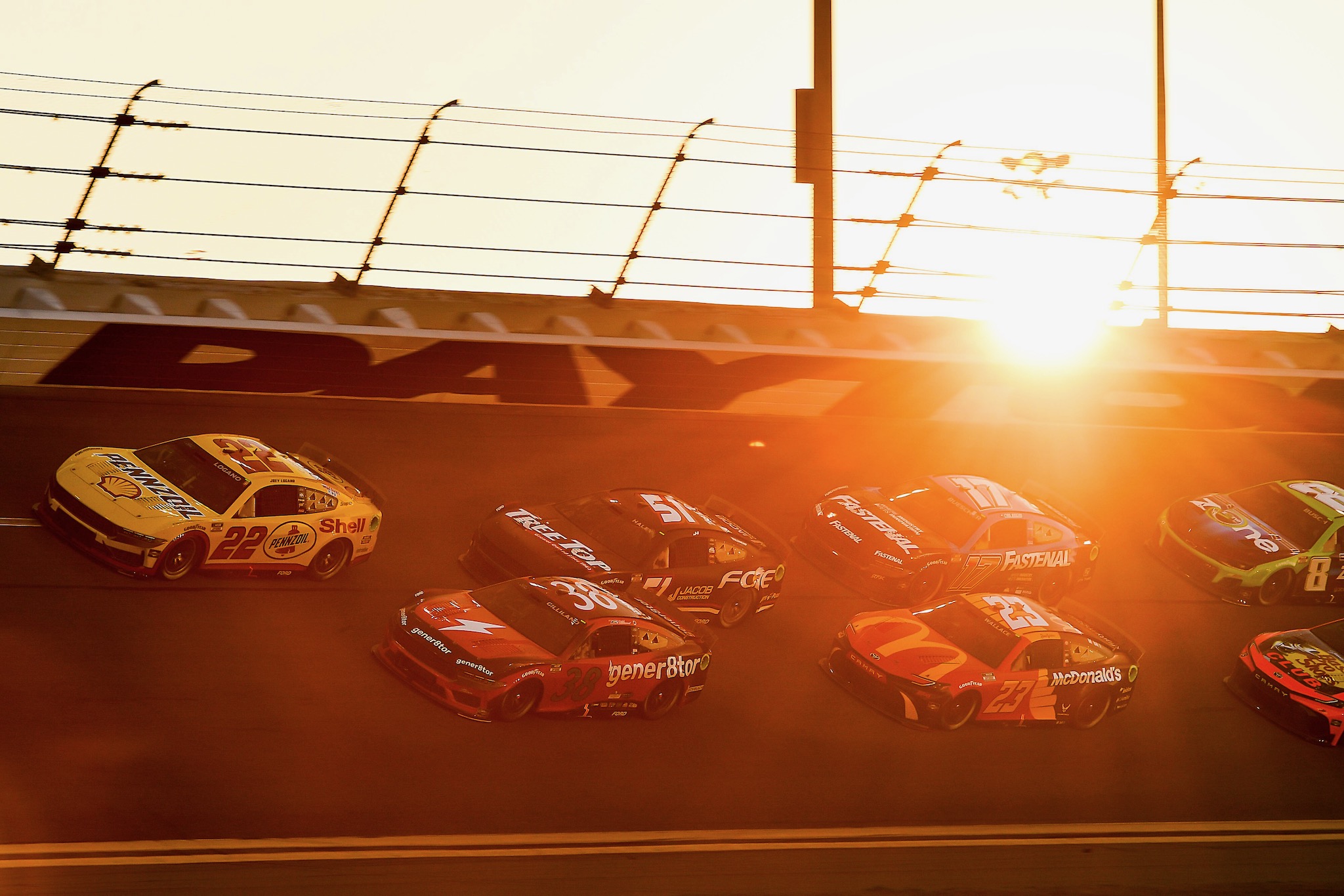
The change—which isn’t expected to affect the speed of cars running in packs—is the latest attempt by NASCAR to improve Superspeedway racing, where track position is often earned in the pits because cars simply aren’t as fast on their own as they are in a pack. Flipping things around and giving individual cars a speed advantage over the surrounding pack should hopefully prevent drivers from getting stuck in the middle of the field and having to ride around until a caution shakes things up, or the final pit window arrives.
“I can tell you from the driver’s seat what happens for us is that we spend the entire race fuel-mileage saving all for that last pit stop,” driver and team owner Denny Hamlin, part of a working group that came up with these rule tweaks, said on NASCAR’s Inside the Race this week. “We basically know you have to be in the top four inside that last fuel window, unless there’s a big wreck, to have a shot at winning. I mean, if you come out 10th, you are log-jammed; you’re not going anywhere.”
Hamlin said the shorter spoiler should make it easier for drivers to get out of the pack when they get a run, while creating more space between cars so they have a place to slot back in after they’ve made a move, “so it’s not going to make them so apprehensive to go make that bold move with 30 to go.” He cited the more-aggressive racing during the Cup Series’ most recent visit to EchoPark Speedway, the shorter oval formerly known as Atlanta Motor Speedway, as the model. But he noted that “this is our first bite of the apple,” and that the numbers so far indicate that “it’s going to be roughly a 33% gain in the right direction.”
The lower-horsepower, lower-downforce superspeedway package will be introduced for the last race of the regular season. A postseason race at Talladega is scheduled for October 25, so there’ll be one opportunity to use the revised package with a championship in play. The postseason remains a playoff-style tournament for the top 16 drivers of the regular season, but this year, NASCAR brought back the Chase branding previously used from 2004 to 2016 and changed the rules so that drivers no longer earn a spot simply by winning a race.
Loading comments…
Comments couldn’t be loaded. Please refresh the page.