

According to a new report, more than 25% of new-car buyers in the United States are underwater on their existing car loans. While that may sound alarming to financially responsible consumers, that’s only part of the story. Of those who are underwater, more than a quarter of those customers rolled $10,000 or more in previous debt into their new loans—a new record high—pushing the average amount of negative equity rollover north of $7,000 for the first time ever, Automotive News says. And it looks like things are going to continue on this track for the foreseeable future.
Negative-equity trade-ins have been steadily creeping upward since 2005, apart from two stark exceptions, according to data shared with Automotive News by Edmunds. The first was the onset of the Great Recession; the second was the onset of COVID. What do both of those things have in common? A dramatic drop in new-car sales.
In the immediate aftermath of both events, new-car sales plummeted. In the former case, it was driven largely by the economic downturn itself—buyers simply couldn’t afford new cars in a shrinking economy with tightening credit requirements. In the latter case, the issue was driven more by a lack of new-car supply, as dealers closed their doors during the early months of COVID.
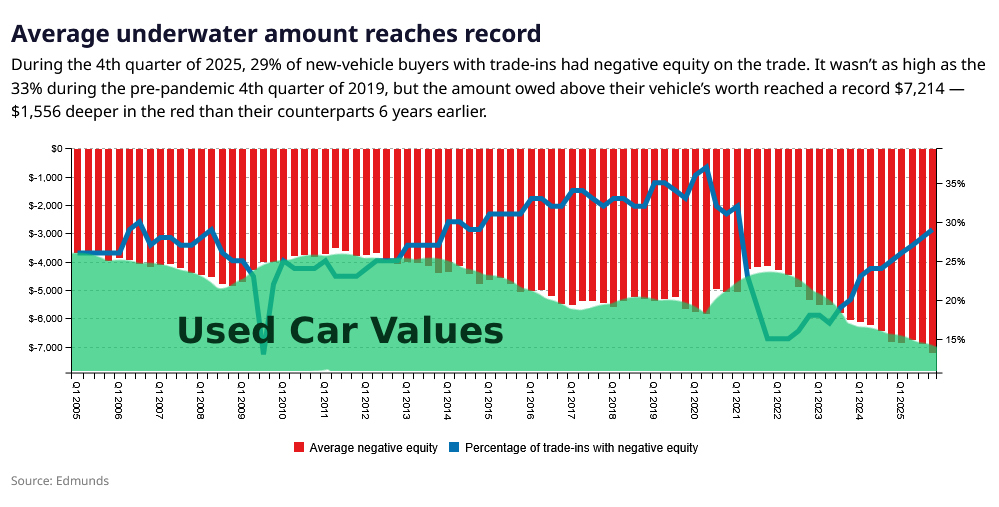
Both the frequency and magnitude of underwater trades can be seen in the chart above, which was originally produced by Automotive News using data from Edmunds. The negative space correlates with yet a third element, which your author modified the graphic to include: used car values.
While buyers are carrying larger balances on their underwater loans than they did after the Great Recession, the number of underwater loans has only caught back up to the percentages we saw in 2014-2015. Rates peaked in 2019-2020—just prior to the COVID crash—but the average amount being carried has been in record territory since late 2023 or early 2024.
In both instances, we can see the relationship between the number of underwater new-car loans, the amount of negative equity carried, and the resulting influence on used-car prices. With cheap, accessible financing, buyers trade in their underwater loans more frequently (and with more debt carried). When the economy shifts or supply shrinks, demand shifts to used cars, which then experience their own spike in values. We saw this happen after COVID; this was the mechanism that nearly bankrupted Carvana—the first time, anyway.
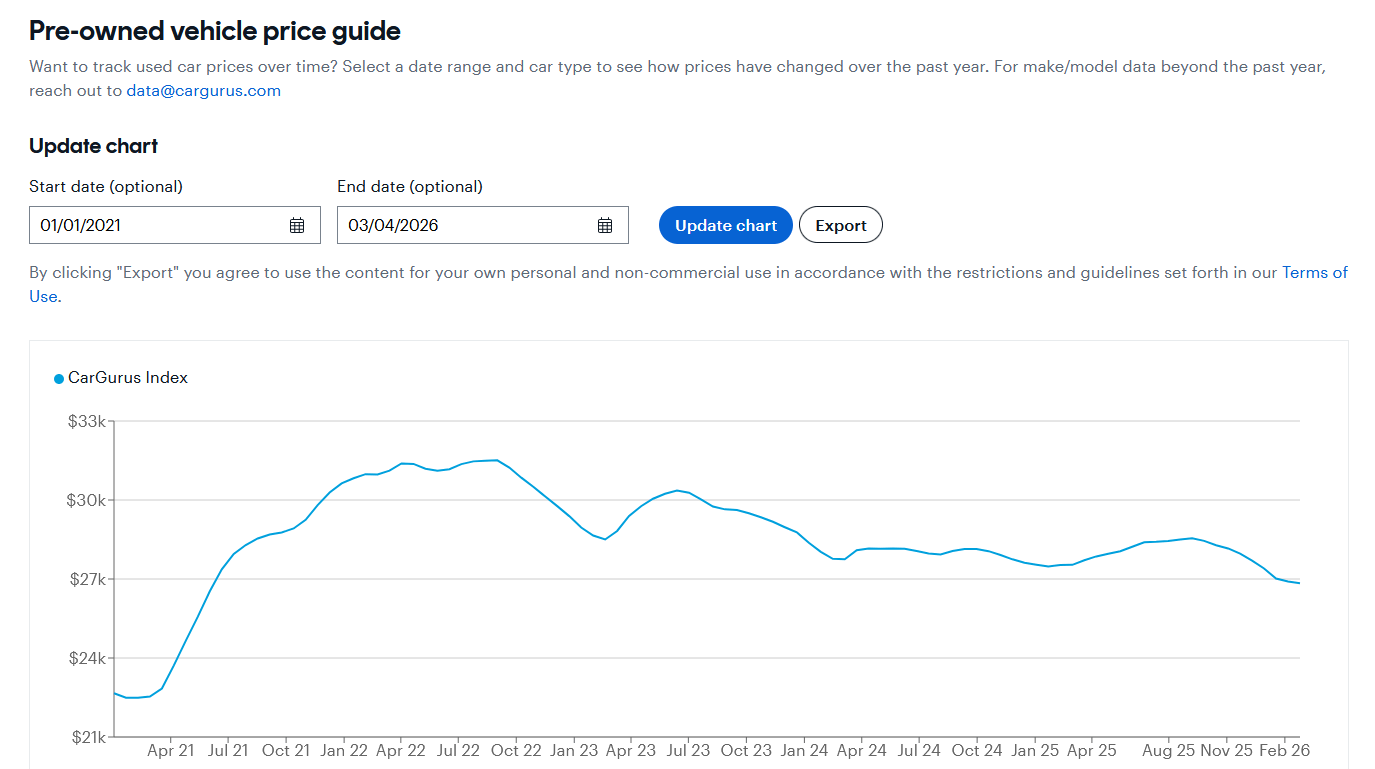
The above is from the CarGurus used-car price index going back to January of 2021. If you’ll note, this curve fits neatly into the tail end of the graphic from Automotive News. And indeed, used car prices have been falling, though not to the levels we previously saw in the years leading up to COVID, when used-car values were relatively flat.
And there’s some good news on that front, at least if you’re open to alternative powertrains. While the very tail end of the CarGurus index shows a recent uptick in used-car values, we’re about to see a tsunami of used EVs and plug-in hybrids hit the market as their leases expire. So long as the rest of the economy holds together, we may see some relief on that front, even if inflation continues at its current pace.
Got a news tip? Let us know at tips@thedrive.com!
Loading comments…
Comments couldn’t be loaded. Please refresh the page.