
We may earn revenue from the products available on this page and participate in affiliate programs. Learn more ›
Ever since I set up shop in rural NY, I’ve been blood-feuding with rodents who are trying to eat my cars. I’ve had limited success with popular deterrents like peppermint oils and repellent sprays, but I’m optimistic that my new CoverSeal car cover might be the real solution I’ve been searching for.
Mice can be particularly problematic for car owners in the winter, as they like to sneak anywhere they might find warmth (like a recently shut-down engine). Once they’re in the guts of your car, they love eating fluid lines and wires, which creates issues that are equal parts annoying and expensive. Rodents ate the wiring to my BMW E46’s thermostat a couple of years ago, and chewed holes in the car’s fuel lines twice.
Ken Huening, an electrical engineer and self-described serial entrepreneur, had the same problem not too long ago. Actually, he had the much more expensive version: His Bimmer was an i8, and after the second time that mouse damage required a five-figure repair job on the car, he got inspired to invent a new cover style.

The signature feature of Huening’s covers, sold under the brand name CoverSeal, is a weighted “belt” sewn into the cover itself, keeping the cover firmly in contact with the ground all the way around the vehicle.
Basically, it’s a car cover, but when it’s resting on your vehicle, a heavy snake running the full outer perimeter keeps the material held down.
To me, this is the perfect solution. Not only does it do away with the need to mess with annoying straps, guy ropes, or external weights normally needed to keep a car cover in place, but it creates a fixed physical barrier between your vehicle and the realm of rodents. In my experience, that is the only completely effective way to keep mice out.
I spent some time chatting with Huening about his cover, and besides the anecdote about his i8 getting eaten, he shared some insights about the invention.
From his perspective, the weighted periphery is a superior cover-securing method because it solves two specific mechanical failures found in traditional covers: The tendency for wind to turn covers into parachutes, and the accumulation of abrasive dust. “… even normal wind blowing dust that gets underneath the covers, which blow up and then it settles underneath the cover … lays down. And if you get any dew or moisture, then that solidifies onto the car. So you get really, you know, you pull [normal] covers up, and you see swabs of dirt, and you know, hardened dust … So mine don’t do that.”
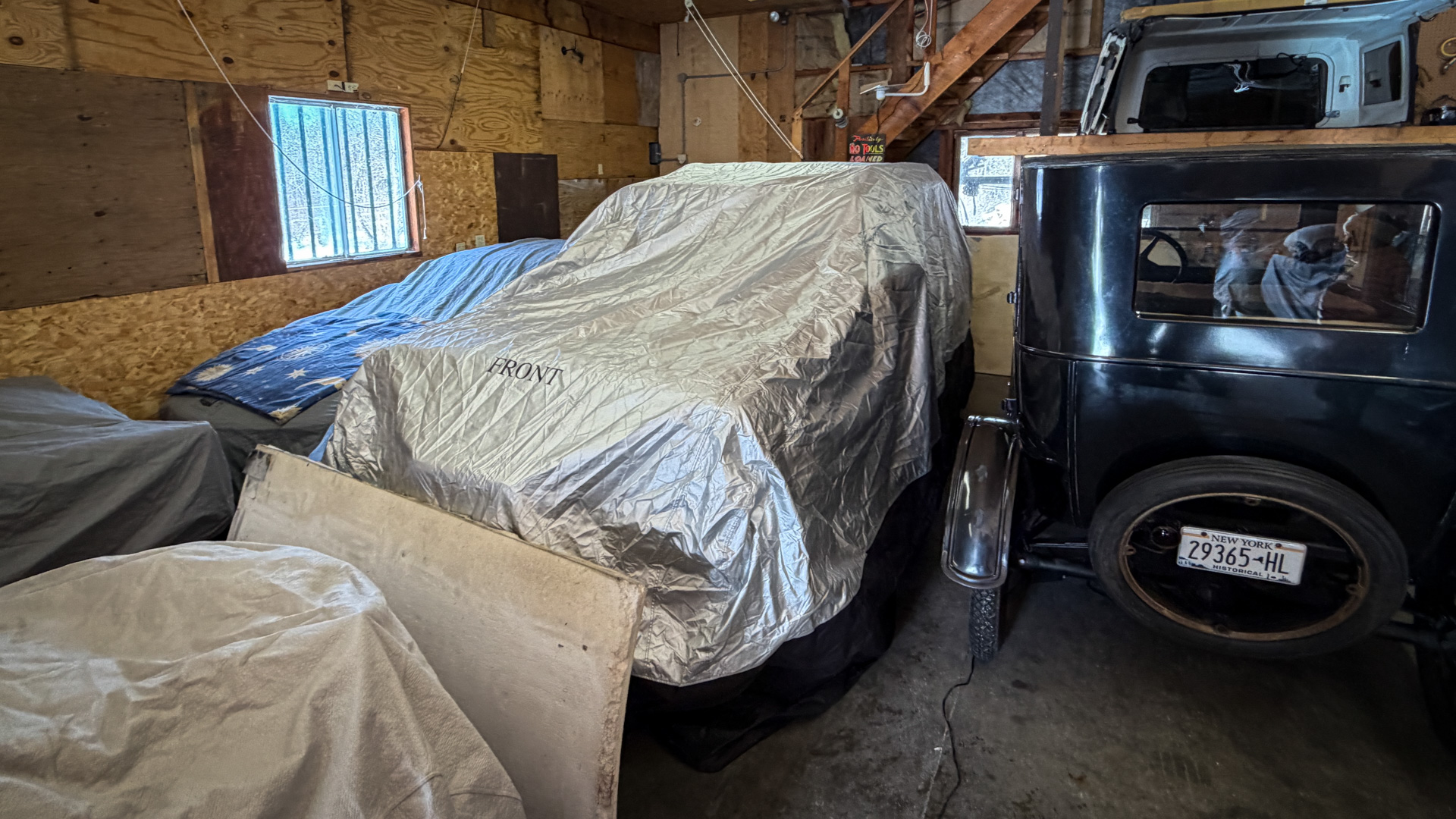
CoverSeal’s PR outfit sent me an XL SUV-sized cover to put on my Scout, which is currently hibernating for the winter, and it’s quite heavy. Like, over 40 pounds. That made it a little challenging to carry through the very crowded barn my Scout’s being stored in right now, but apparently it’s a lot easier to toss on with the right technique.
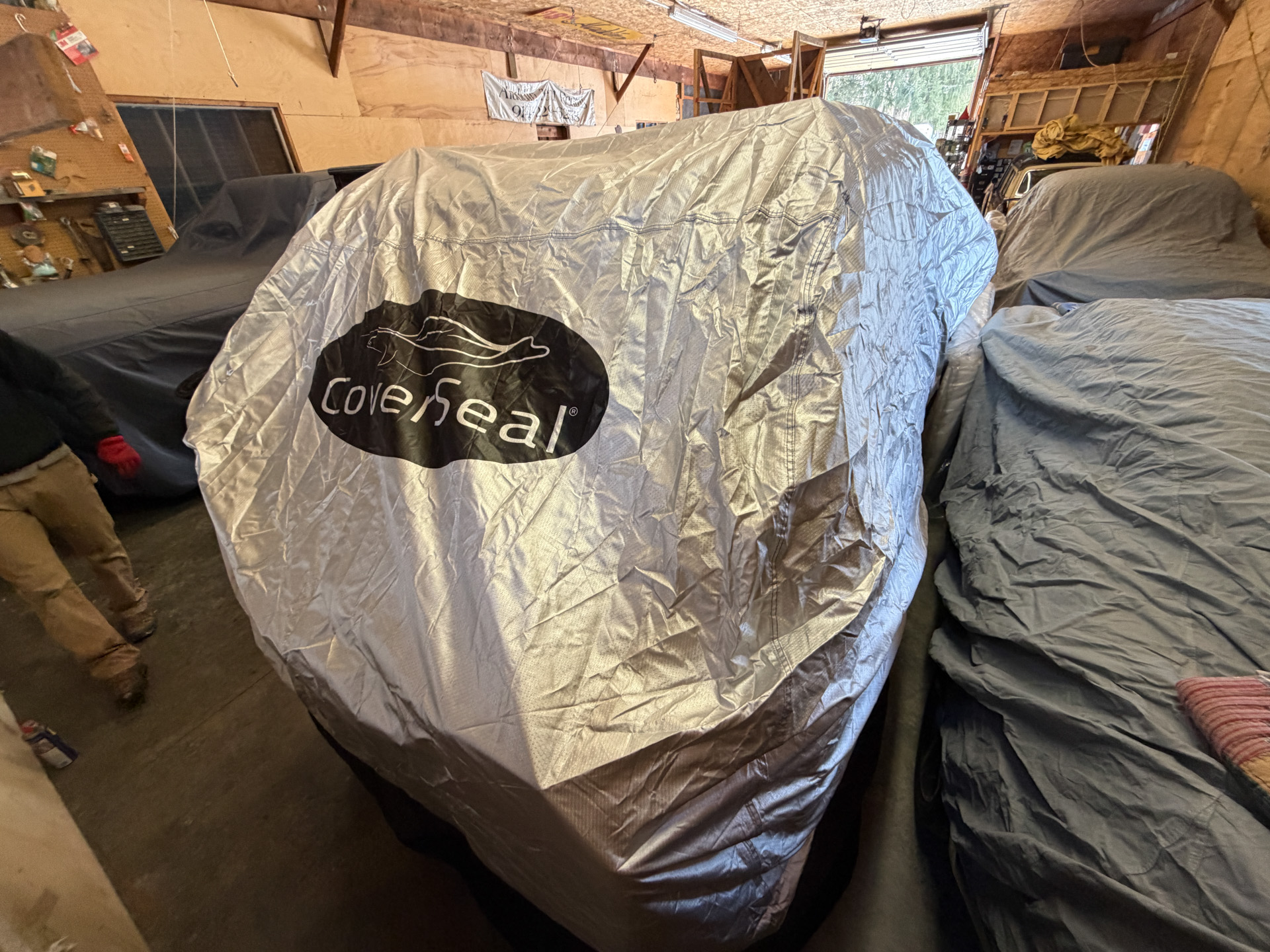
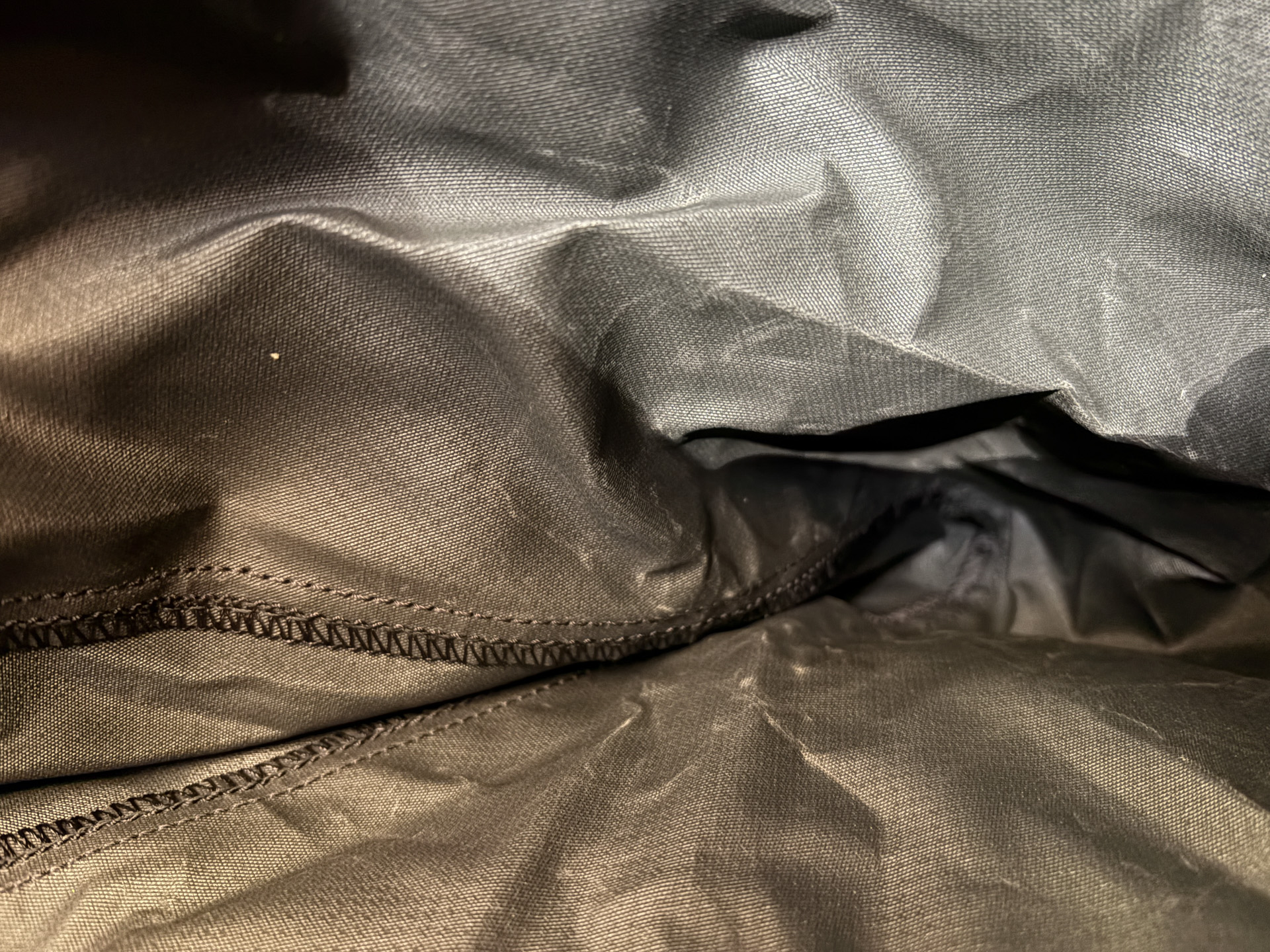
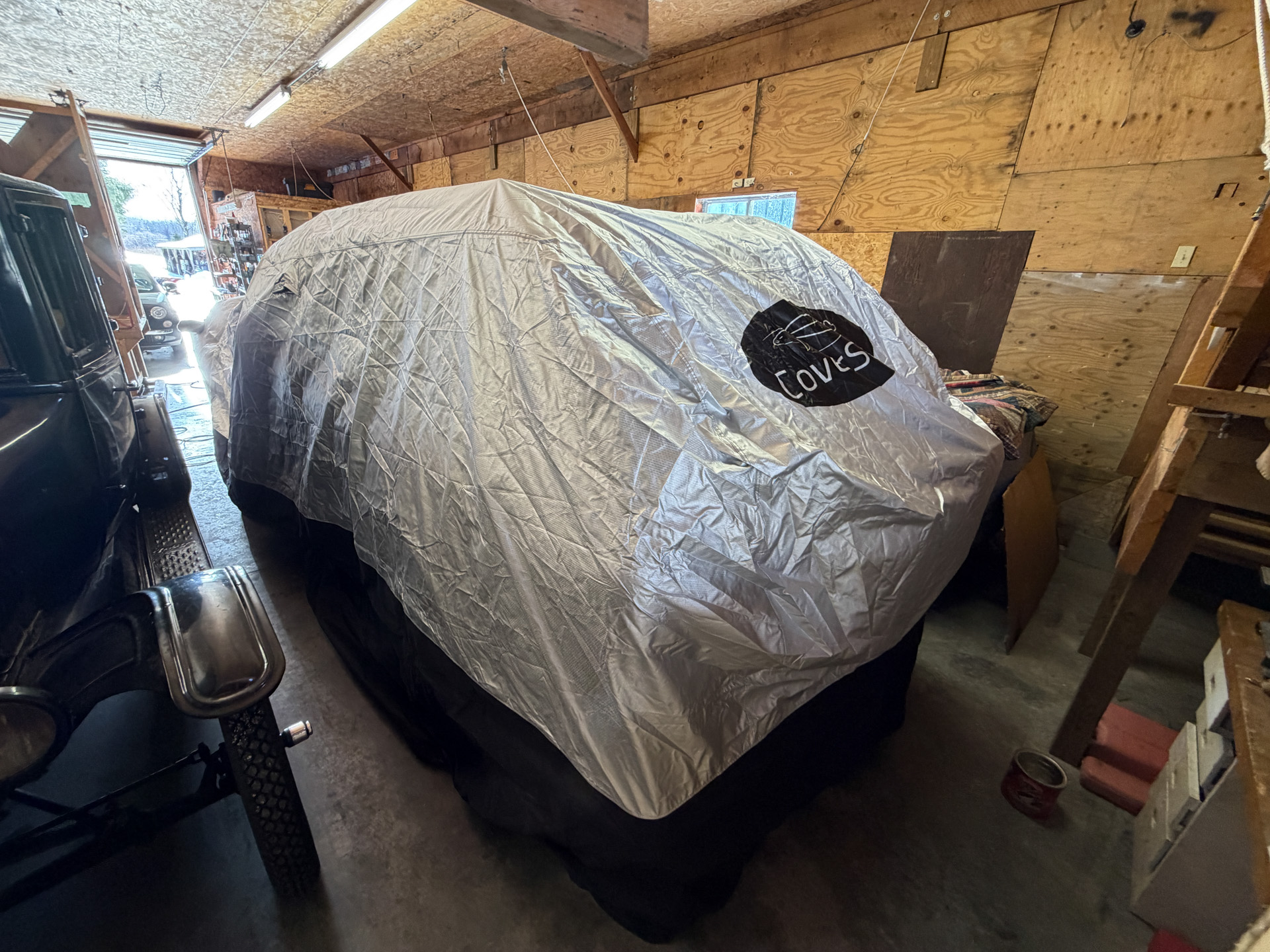
“Let gravity be your friend,” Huening said, running me through his quick-deployment method: “… take the edge of it and you stick it on the window … and then you walk to the other side, and just give it a tug, and the weight will drop it over the other side. So there’s no real lifting at all to it, and then it goes on way easier.”
My first application wasn’t quite so quick—even just getting the cover onto my truck’s roof was a bit of a heave. But once it was in place, it felt extremely secure while leaving plenty of breathing room between the material and paint.
“I don’t want a car cover that is tight-fitting … It chafes the paint, especially around the tight areas … So, we got rid of the intimate contact as a as a one of our provisions,” Huening told me.
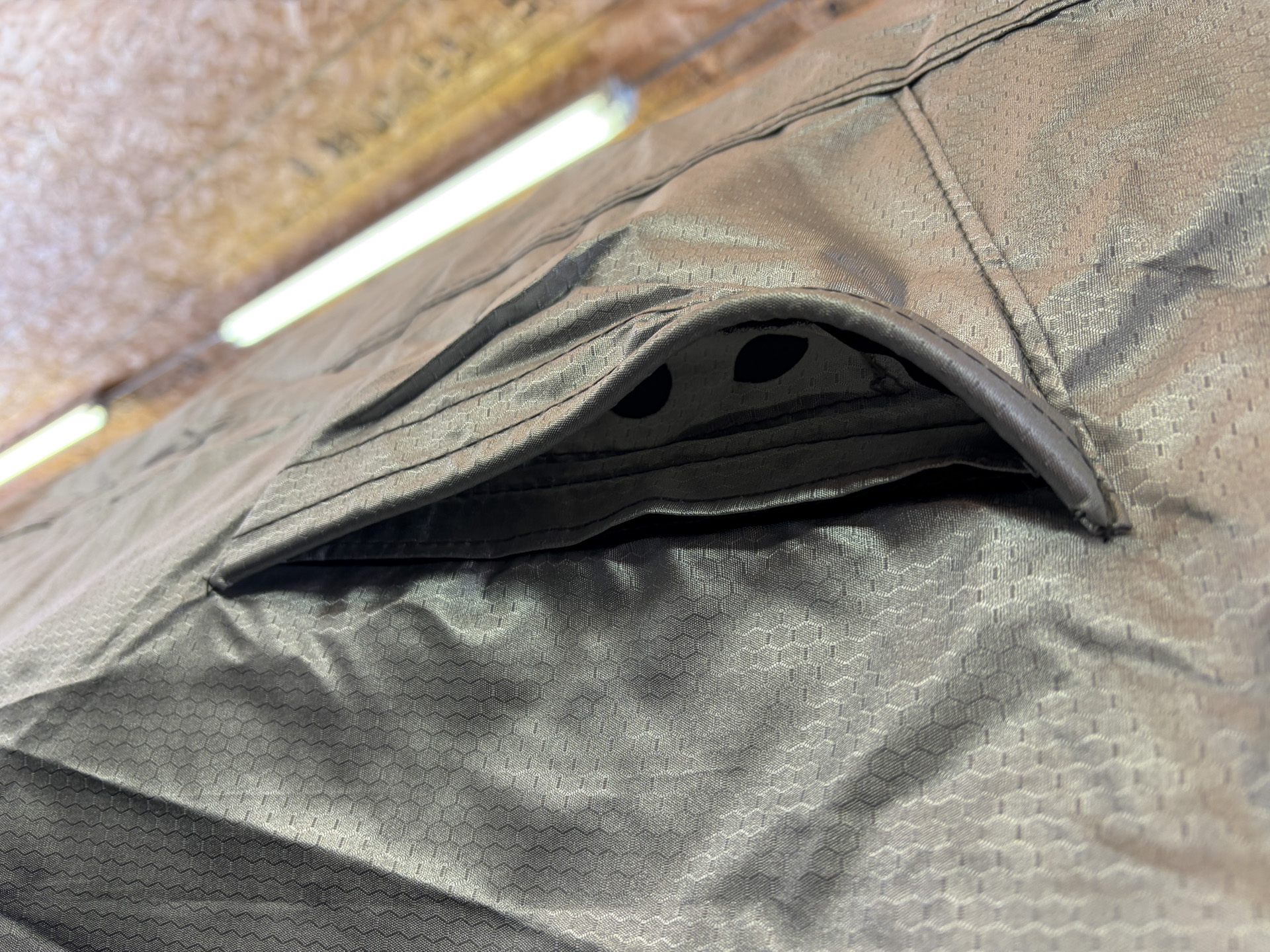
While there’s no airflow below the cover, there is a little ventilation up near the top to prevent moisture from building up inside the vehicle.
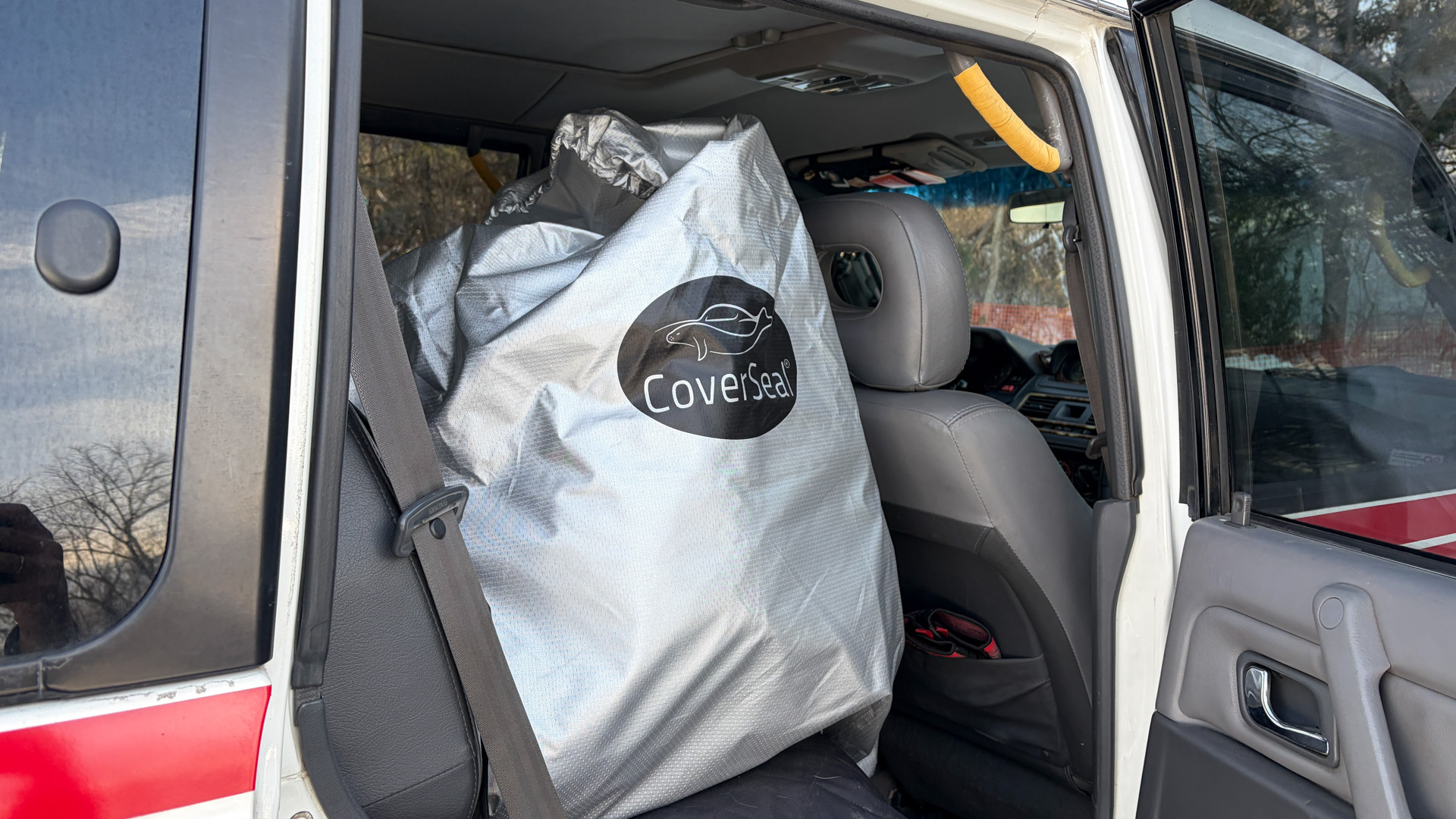
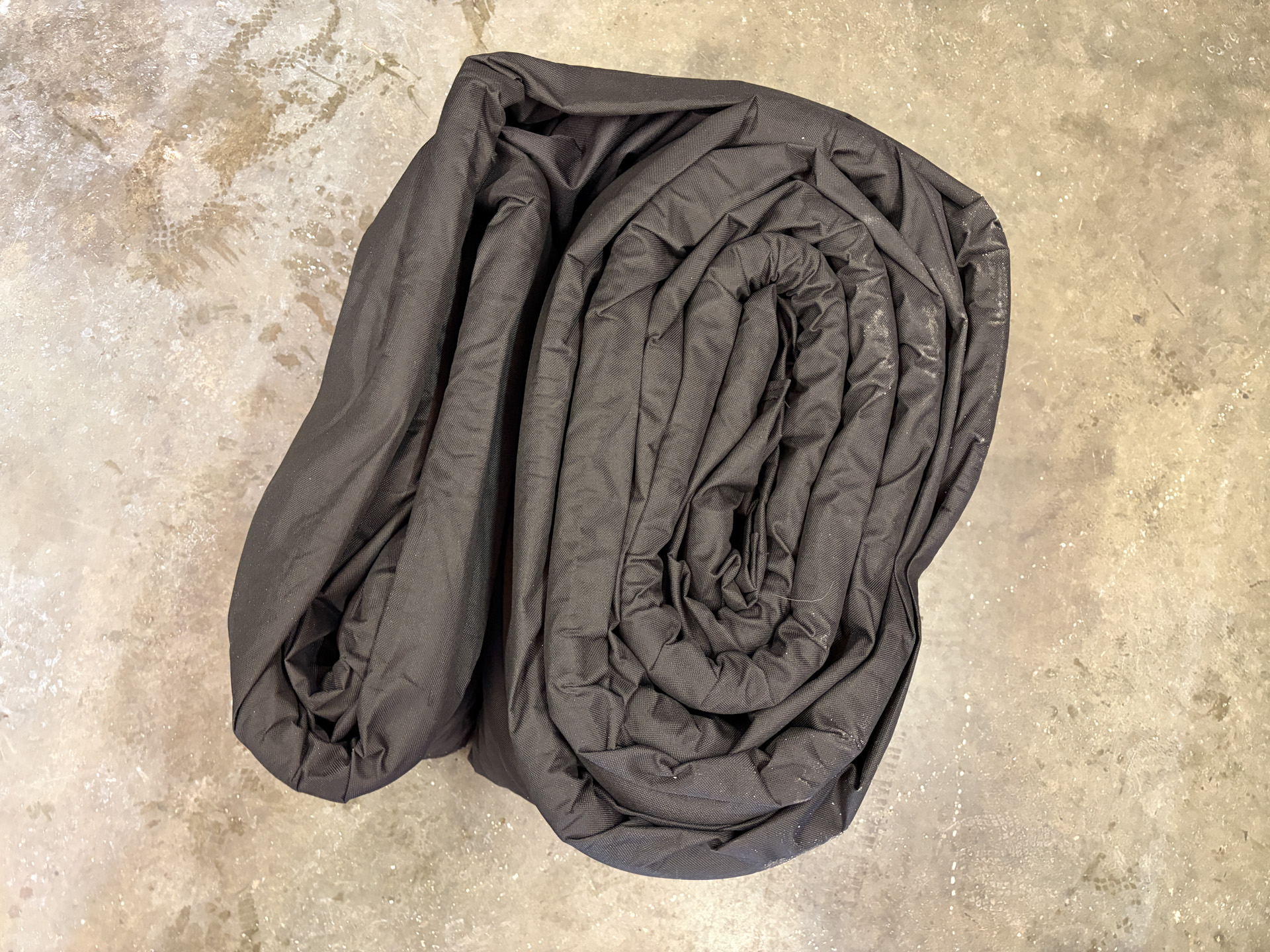
Despite it being a pain to lift over my head, I was impressed with the build quality of the cover, and the weighted bottom is no joke—it’s rated to withstand 40 mph winds.
There’s no wind at all where my Scout’s stashed right now, but there’s never a shortage of mice in an old upstate NY barn. You can bet I’ll be revisiting this post in the spring to report back on whether or not there’s evidence of mouse move-ins when the truck comes out of its slumber.
CoverSeal also does patio furniture and grille covers using the same weighted bottom concept. Next, Huening is working on some kind of hail protection system to protect cars from the pelting of heavy percipitation.
These covers are a lot more expensive than something you’d grab off the rack at a Walmart or auto parts store—the big one I put on my Scout is almost $500. But it seems to do a nice job splitting the difference between a low-end portable carport and a mid-level car cover. It’s far easier to set up than one of those awning-style car huts which wouldn’t do jack against mice anyway), and I’m much more confident in the CoverSeal’s ability to protect the car than a regular-old tarp or even a decent cover that doesn’t stretch all the way to the ground.
I installed the CoverSeal cover in January and plan to remove it in April. Expect an update on how well it kept mice out of my machine around then.
CoverSeal Car Covers

Loading comments…
Comments couldn’t be loaded. Please refresh the page.