
Toyota’s V6 recall situation just seems to keep getting murkier. Eric, the on-screen dismantler behind the “I Do Cars” YouTube channel, has been tearing down examples of Toyota’s troublesome V35A V6 for a year now. This is the third engine he’s broken down for a video, and the second engine that was a replacement for an already-failed V6—and it may finally give us some insight into how these engines are actually failing.
The first two engines he tore down had obvious signs of damage from debris in the oiling system. In fact, by the time Eric got around to removing the oil pump idler pulley from the first failed V6 he tore down, there were clear-as-day signs of severe internal damage; his second teardown revealed a similar situation. Here? Not so much. This engine’s cooked; it wouldn’t be on Eric’s stand for a tear-down otherwise. But for the first time, he may have an example of this V6 that hasn’t catastrophically self-destructed (ahem, again) quite yet.
But even though it may appear relatively intact, there are early signs of some sort of cooling system issue. The water pump is full of crust, and we continue to see that as more components of the cooling system are exposed. It’s not until he begins to remove the cams that we start to see signs of what may be abnormal internal wear, but even at that point, there’s no conclusive evidence as to what blew this engine.

Tearing down the 3rd FAILED Toyota Tundra V35A Engine. Will this give us the answers we need?
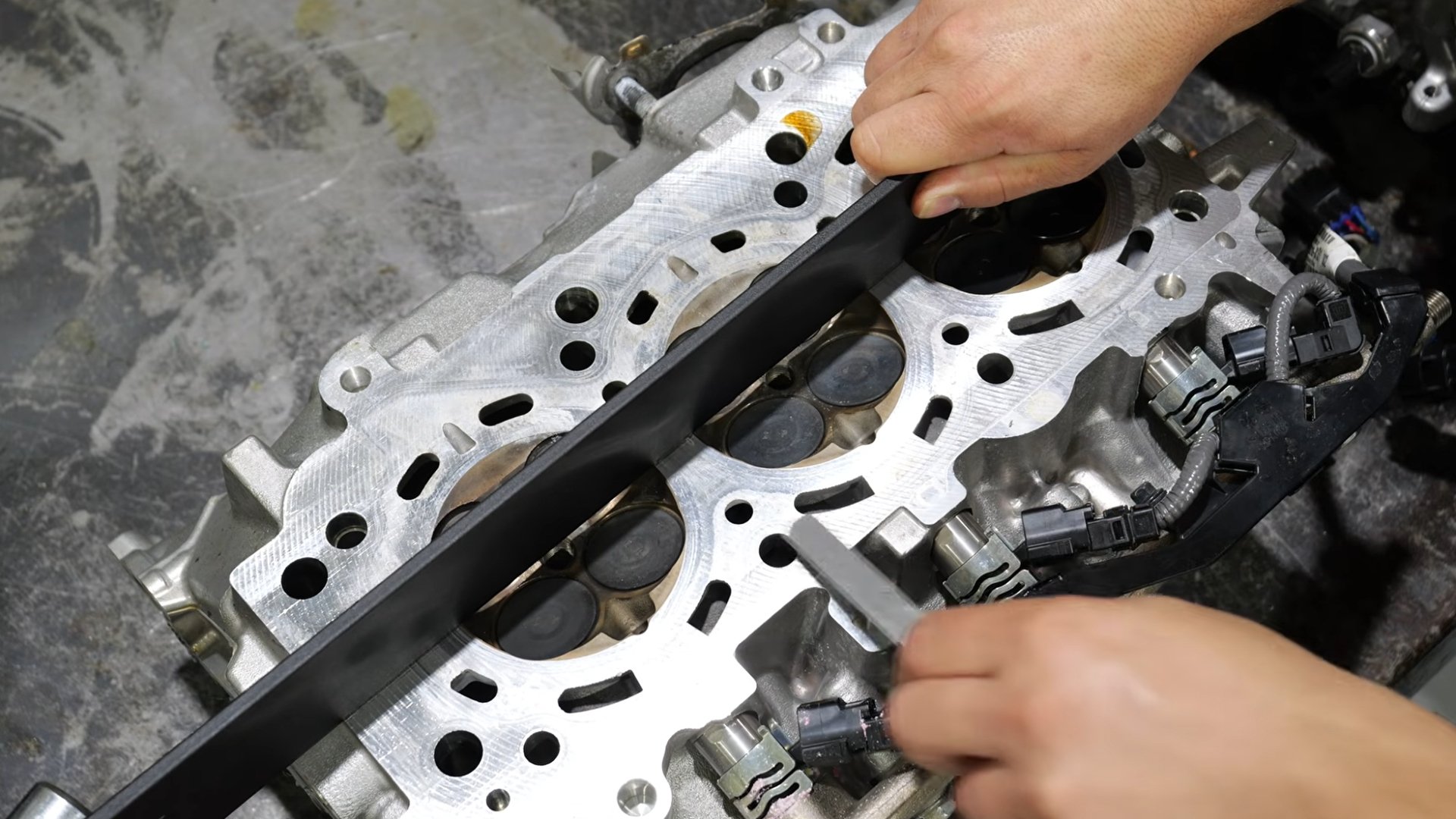
Once he begins to remove the heads, things get interesting. There’s resistance from some of the inner bolts (one bad enough to break a socket), along with evidence of coolant intrusion at the gaskets. Sure enough, a straight-edge measurement reveals a warped head. Our culprit? Seems likely. But is this a cause or merely a symptom? Once he gets the oil pan off, we see some signs of both debris and coolant in the oiling system.
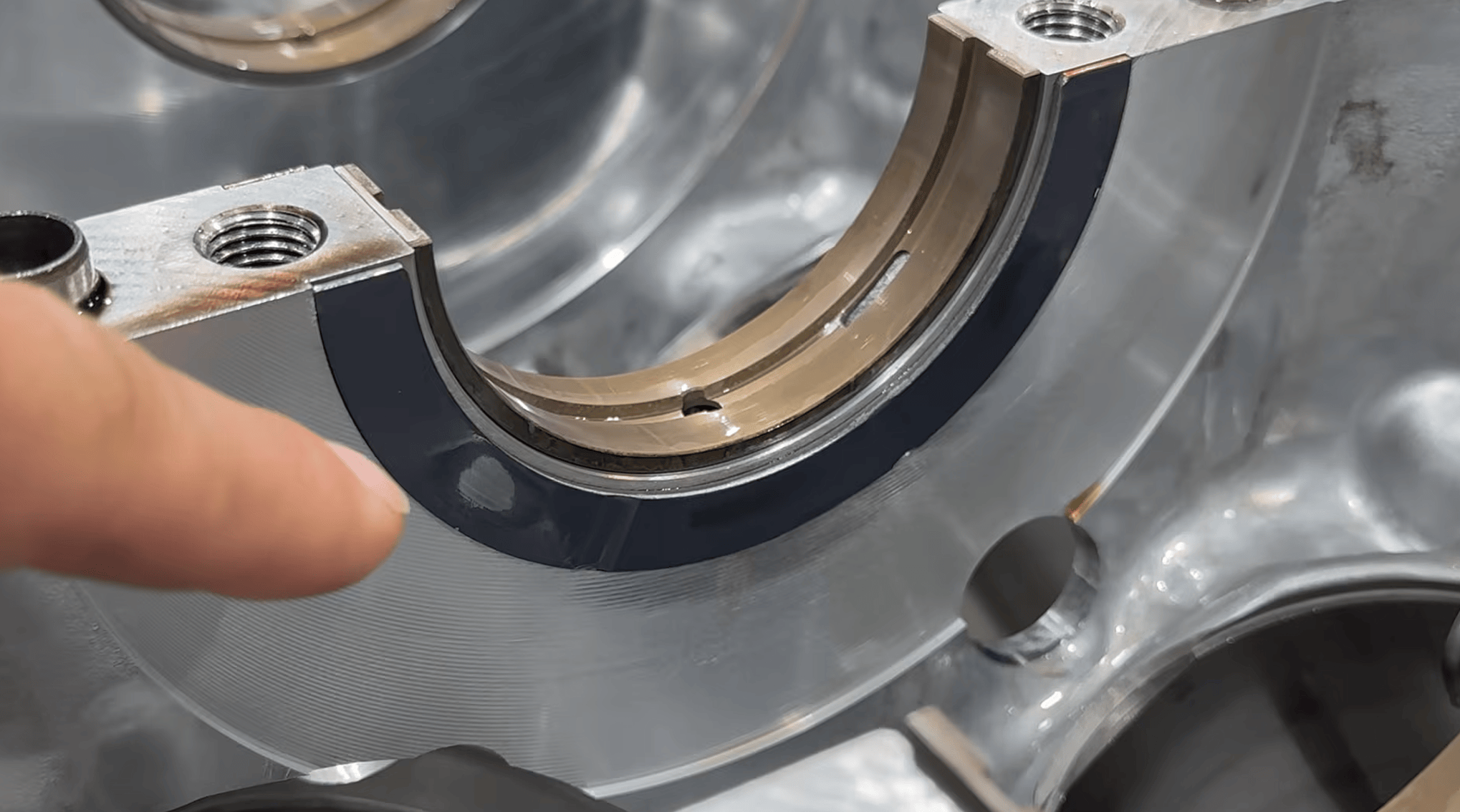
But despite all this, cracking the block reveals a relatively clean crankshaft. There are signs of abnormal/uneven wear on some of the crank bearings, but still no signs of a catastrophic failure. That may seem like a letdown, but as Eric points out, that makes it possible that this engine is still harboring whatever defect is ultimately killing these V6s that simply hasn’t yet manifested itself.
Up next? The borescope, which reveals far cleaner oiling passageways than the previous dead engine. The huge machining burrs found during previous scopings aren’t present this time around.
Could that mean Toyota finally has its issues under control? Not so fast, Eric says. This engine came out of a 2025; the previous engine, which had failed catastrophically, came out of a 2026 and had machining debris visible in its oiling system. And while overheating could explain some of this particular engine’s odd wear patterns, we’re once again without a smoking gun, even if it may yet linger somewhere inside this hunk of metal. Eric says he has two more locked-up V35As on the way in, and he’s looking to bring in an expert on Toyota’s V6s, so stay tuned. This saga is far from over.
Got a story tip? Let us know at tips@thedrive.com!
Loading comments…
Comments couldn’t be loaded. Please refresh the page.