
We may earn revenue from the products available on this page and participate in affiliate programs. Learn more ›
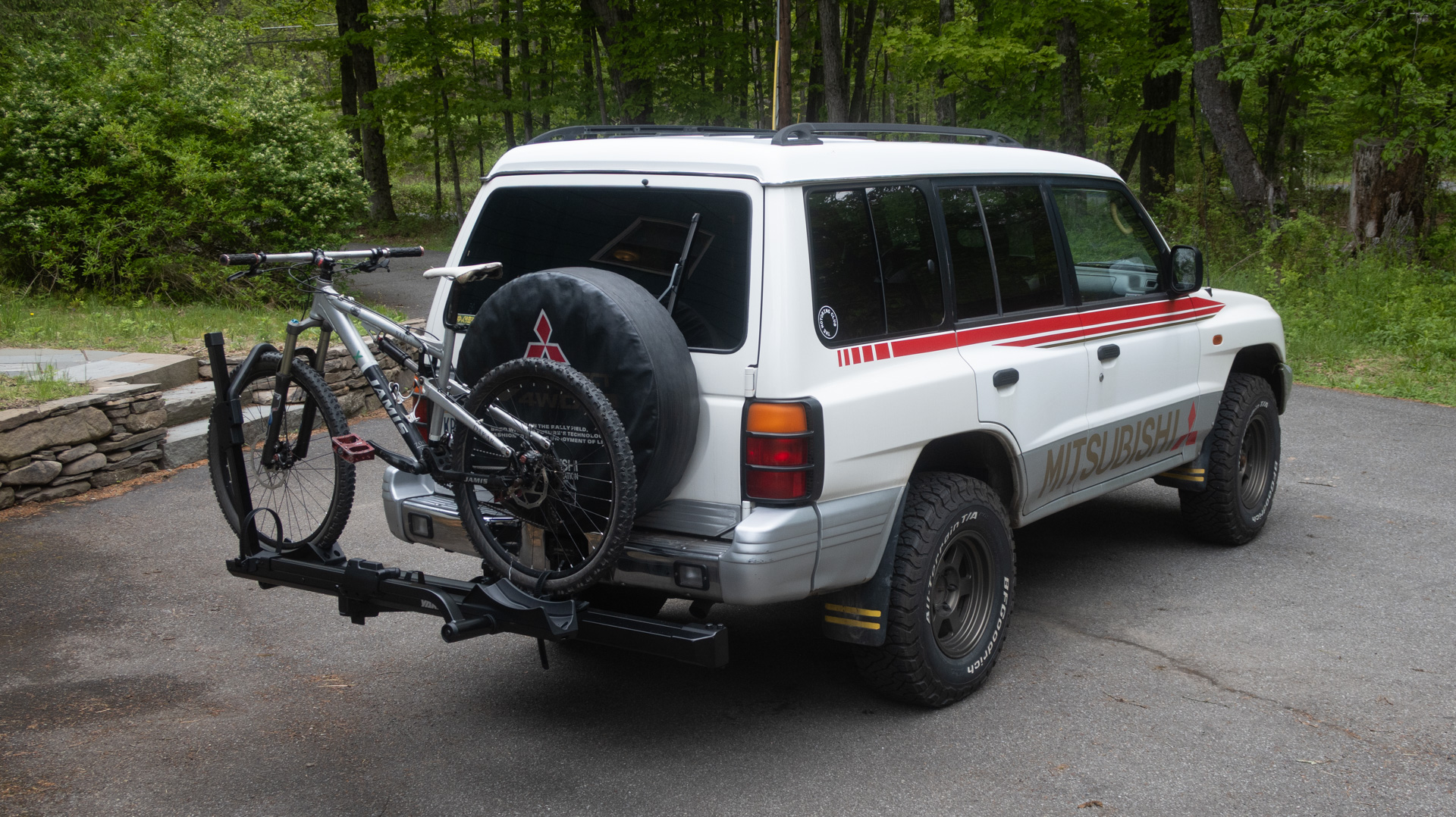
This weekend, I replaced the secondhand Thule bike rack I’d been running for years with a $999 Yakima StepUp Swing. I was initially skeptical—could it really be 10 times better than something you could grab off FB Marketplace? Well, the best value-for-dollar bike rack is still whatever you can snag out of your dad’s garage or at a yard sale. But it just took one trip with this brand-new beauty for me to appreciate that if you can afford a new swing-out rack, it really is a game changer.
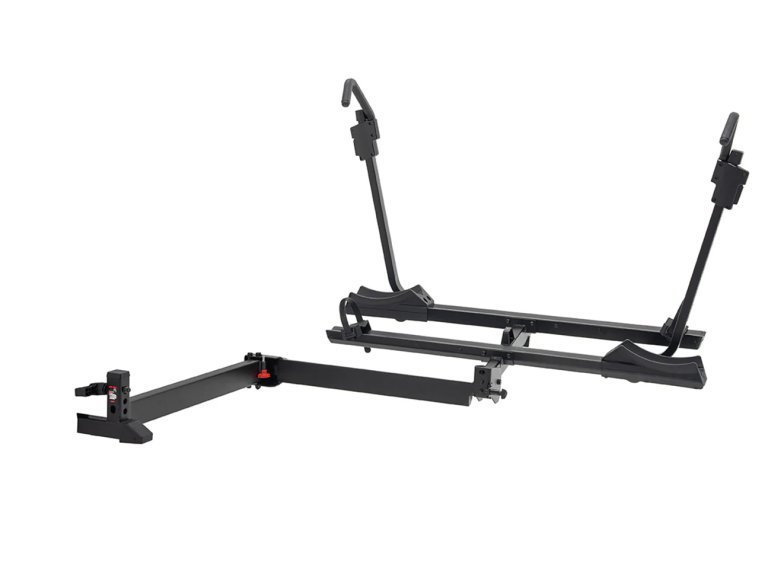
This version of the StepUp Swing is new this year, along with two other new Yak racks, StepUp and refreshed HoldUp. The names describe the slightly different bike-holding styles each rack utilizes. The non-swing options are considerably less money than the one I’m showcasing here with the hinge function, but if you have a drop-down or door-style tailgate, the bike rack swing-ability is really what makes an upgrade worth doing at all.
All three of these Yakima racks use trailer hitches for mounting, rather than suction, roof racks, or your rear door.
Yakima StepUp Swing Rack ($999.00)
Specs and Features
- MSRP: $999.00
- Weight: 70 lbs
- Dimensions Shipped: L: 39 in x W: 14 in x H: 61 in
- Length From Bumper (Tucked): ~16 in
- Length From Bumper (Deployed): ~33 in
- Warranty: Limited Lifetime Warranty against manufacturing defects
- Carries two bikes, including mountain, road, hybrid, BMX, youth, fat-tire, and E-bikes up to 65 lbs / 29.5 kg each
- StrongArm hook secures bikes at the front tire, with a flip-away rear wheel strap for quick loading/unloading
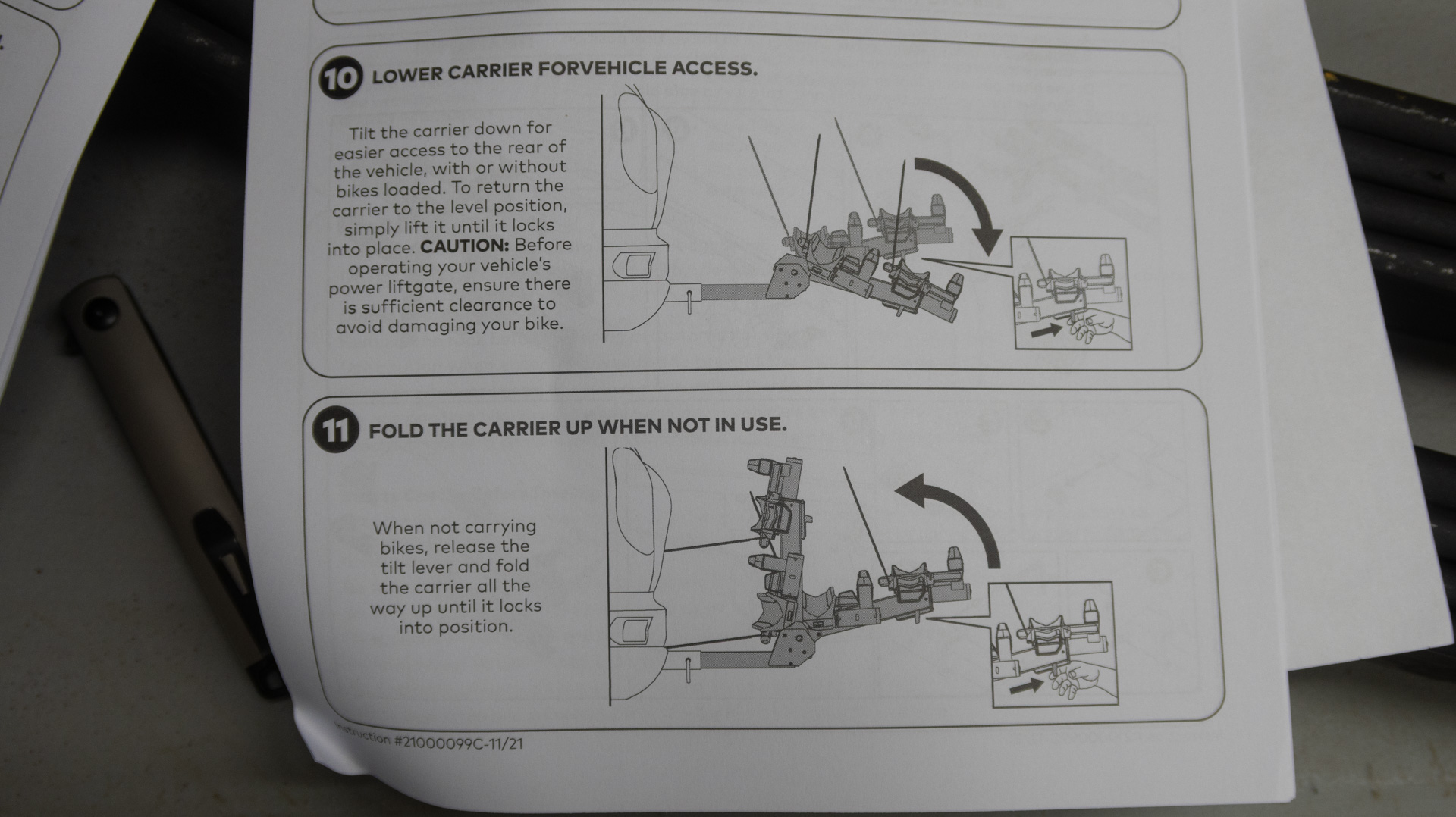
- Convenient remote 3-position tilt lowers for trunk access with bikes loaded and folds flat when unloaded
- Integrated swing-away feature provides rear vehicle access with or without bikes
- Streamlined, compact profile ensures tailgate clearance and minimizes space behind the vehicle
- Secures to a 2″ hitch receiver with a threaded bolt for secure installation
- Optional offset tray positions reduce bike-to-bike interference for a custom fit
- Fits 16″ to 29″/700c wheel sizes and tires up to 4.5″ wide
- Accommodates wheelbases from 32″ to 52″ / 813–1321 mm
- StadiumSeating™ tiered spine reduces bike interference and increases ground clearance
- Included locking cable safely fastens bikes to the rack
- Built-in bottle opener
- Add your own bike lock to the integrated lock loop for enhanced bike security
- HitchLock included to secure the rack to the vehicle receiver
- SKS locks included to secure both bikes to the rack and the rack to the vehicle receiver
- RampUp-compatible V-shaped trays allow roll-on loading and stow neatly on the rack
- Swing available exclusively for 2″ hitch receivers
- Road tested and approved up to 65 lbs / 29.5 kg per bike
- Off-road rated up to 43.5 lbs / 19.75 kg per bike
- RV tested and approved up to 43.5 lbs / 19.75 kg per bike
- Compatible with the Yakima StraightShot hitch accessory (to lengthen distance between rack and bumper) up to 43.5 lbs / 19.75 kg per bike
Assembly and Installation
Opening up the StepUp shipping box is momentarily intimidating—there are a lot of little hardware pieces, and none of them are labeled. However, each bolt, nut, and washer is unique enough to each assembly step that you’ll be able to figure out what’s what without second-guessing yourself if you’ve ever built anything before.
It took me about 90 minutes to go from opening the Yakima shipping packaging to my truck being bike-load ready. And that includes a coffee break, an Instagram scroll break, and three play-fetch-with-my-dog breaks. Yakima publishes torque specs in the assembly instructions, which I’m guessing most installers will ignore. Personally, I think a calibrated elbow is fine to use here. But if you want maximum peace of mind, break out your torque wrench and follow Yakima’s figures. The assembly wrenches the brand includes are surprisingly nice, though I found it far easier to use my own 15/16″ socket (for the main rack-to-hitch bolt) and 6mm hex head socket.
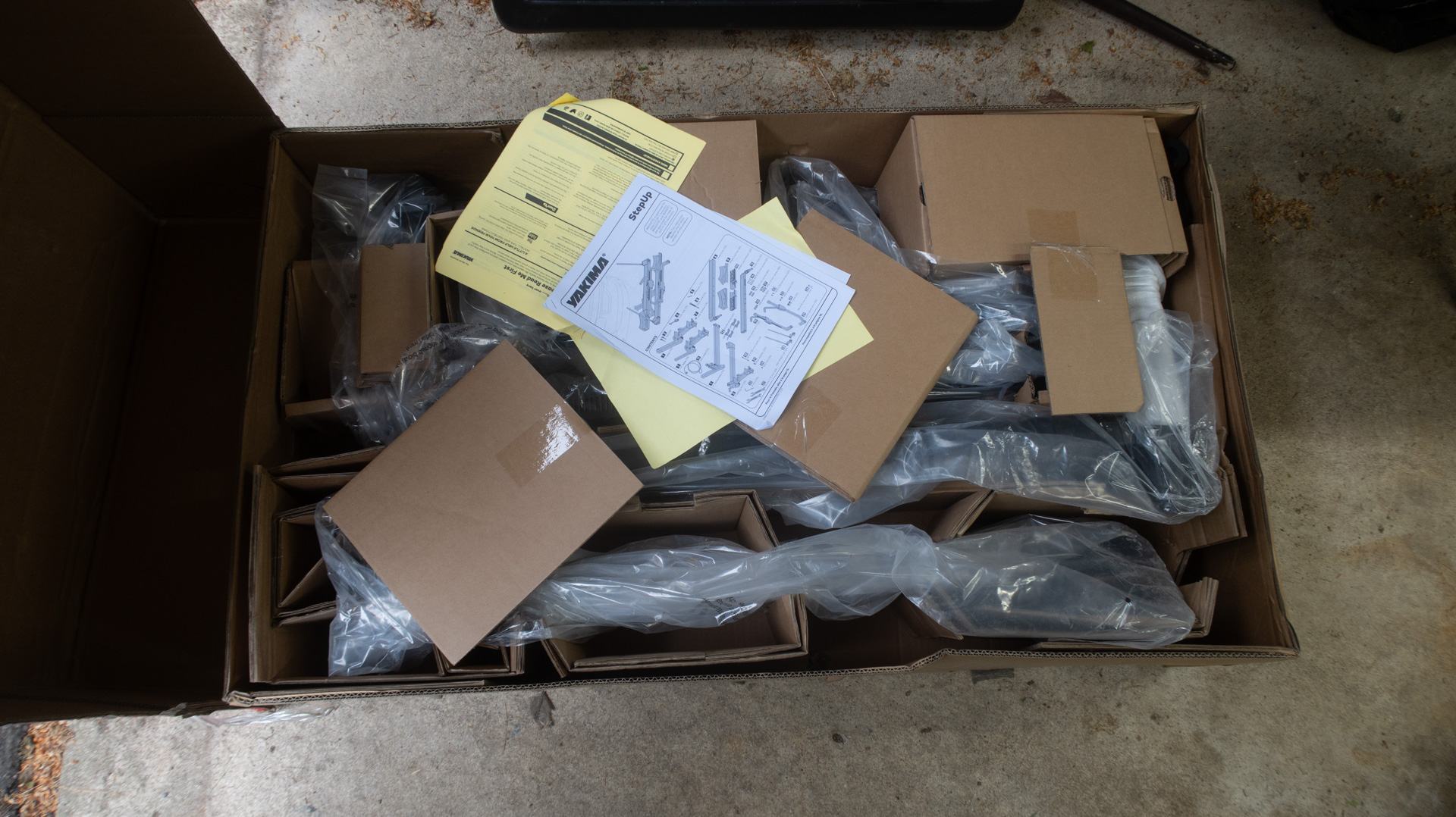
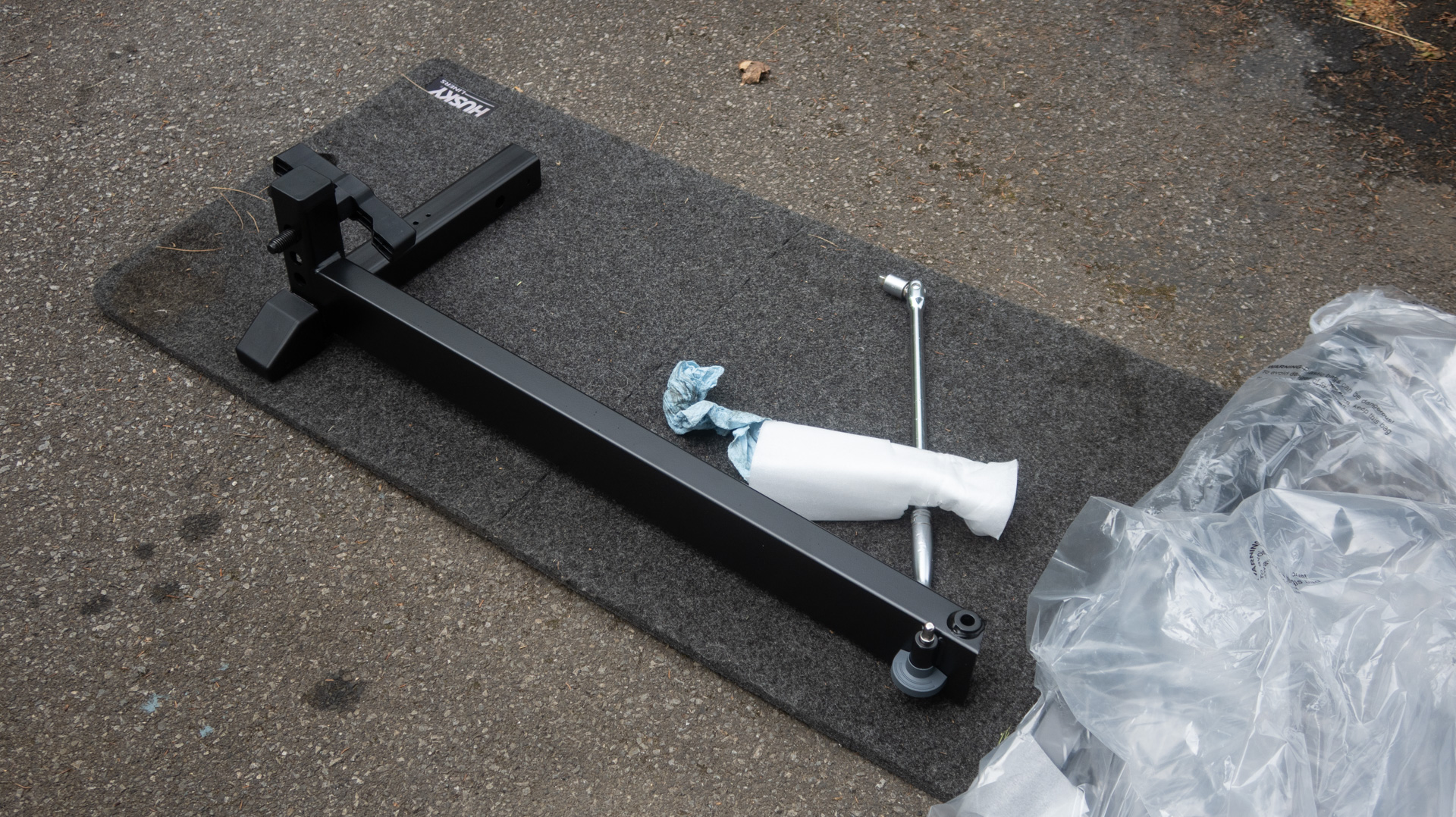
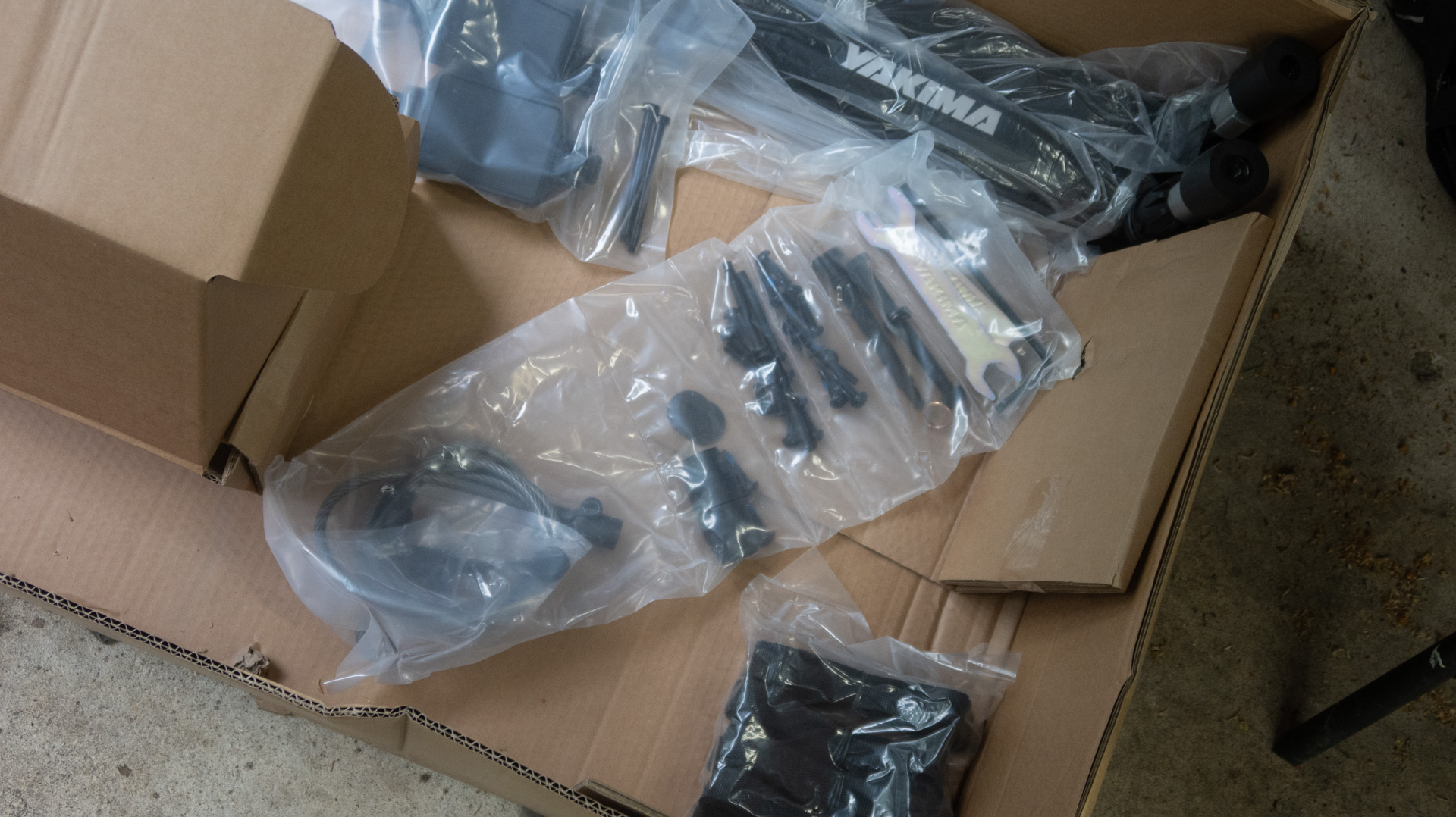
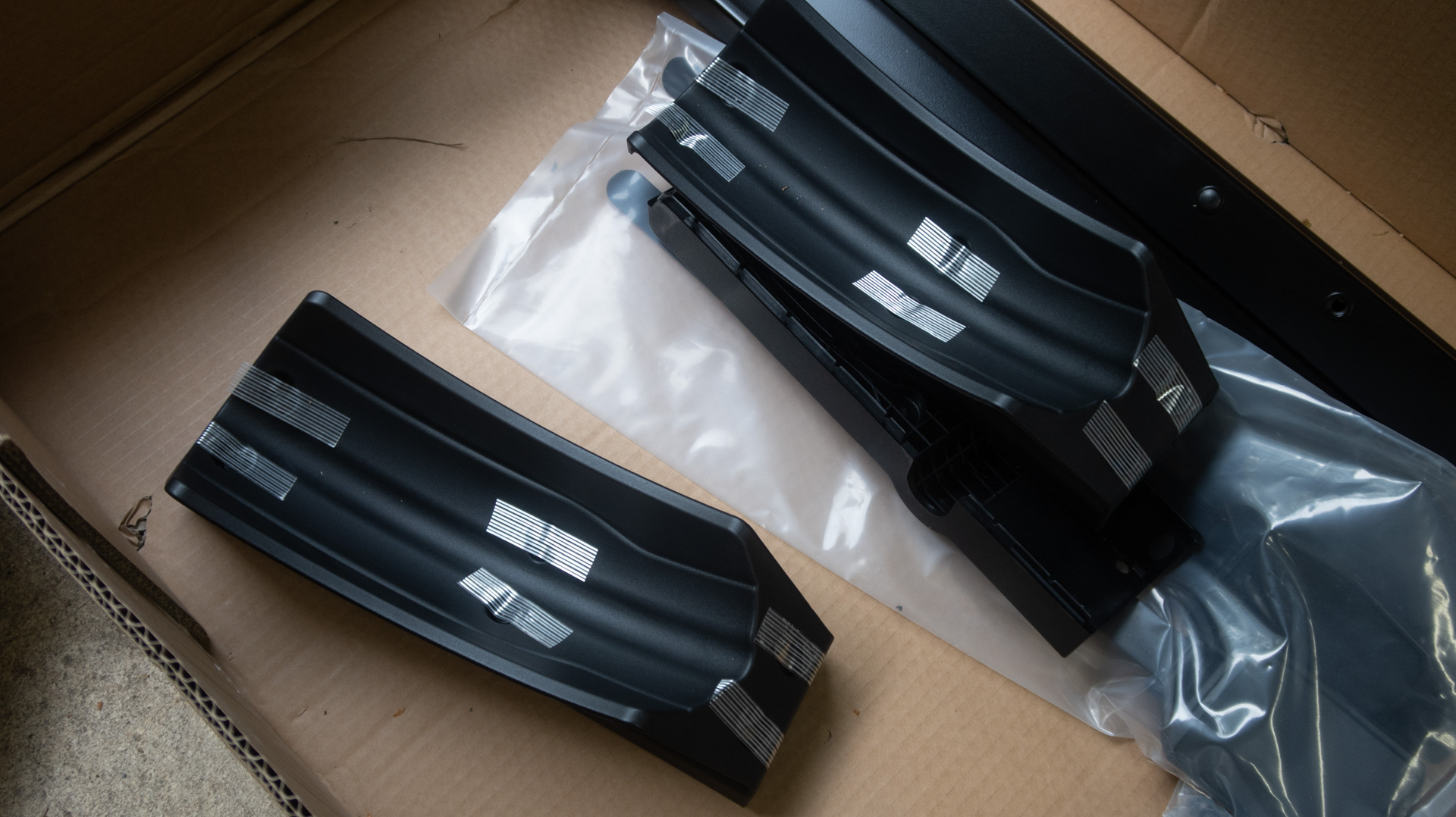
Words to the wise: Open one hardware packet at a time (prevents pieces from being lost), and when you find nuts taped into their mounting spots, leave them taped until it’s time to tighten.
Because you can assemble the rack while effectively installing it on your vehicle, one piece at a time, you don’t need to be able to lift 70 pounds to put it together, per se. But if and when you want to pull the thing off, you will need a little oomph.
Loading and Security
Bicycles are held in place with a rear-tire strap and a big loop that grabs the front tire. Both are quite ergonomically friendly, but you do have to lift your bike about two feet off the ground to get it up into the mounting slot. No problem for me with my old mountain bikes, but it could be a little challenging if you have a heavy e-bike. Yakima’s thought of that, though—you can get a ramp! If you have an exceptionally tall vehicle, you will definitely want a hitch adapter that drops the receiver height (readily available from various retailers).
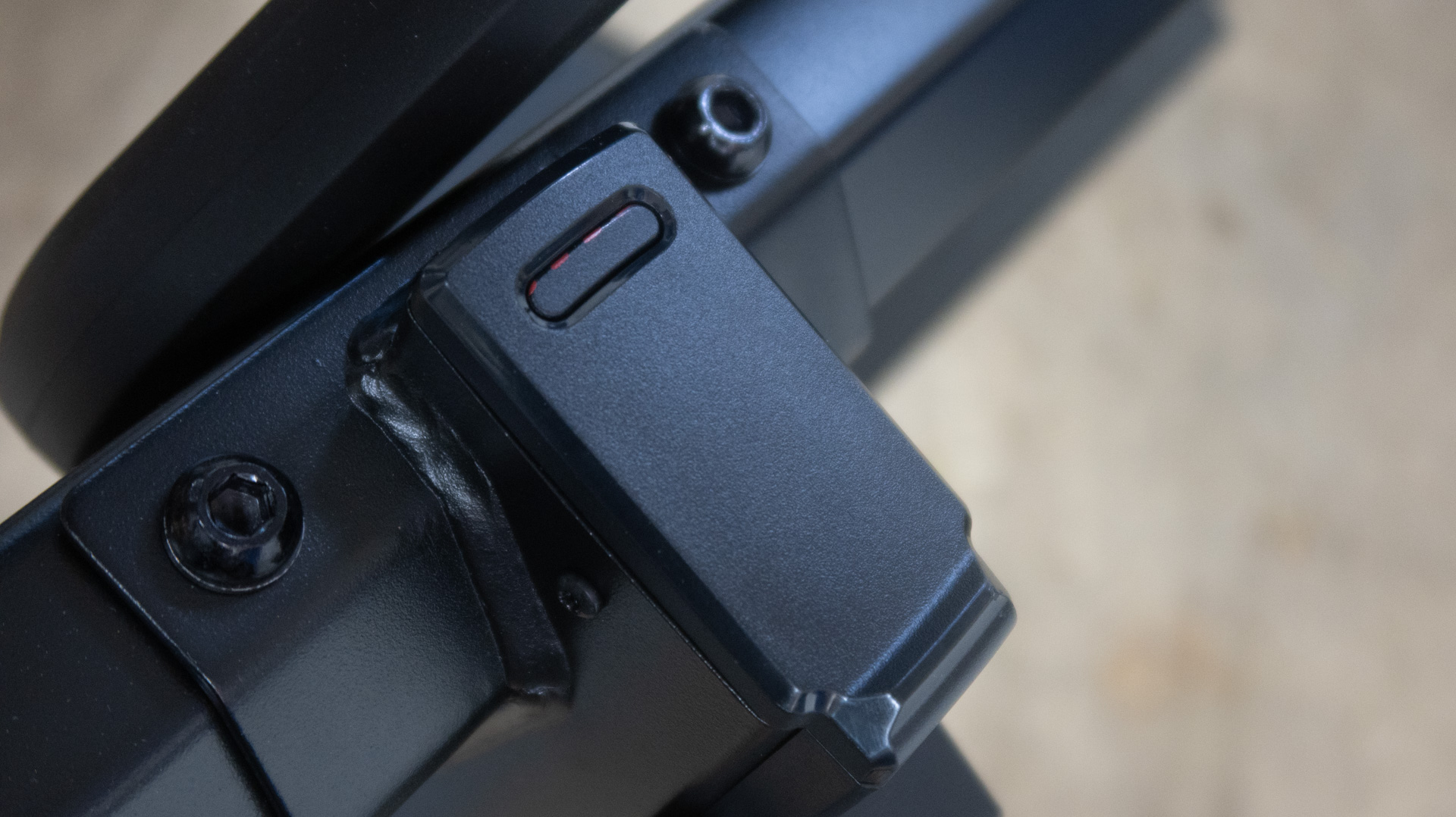
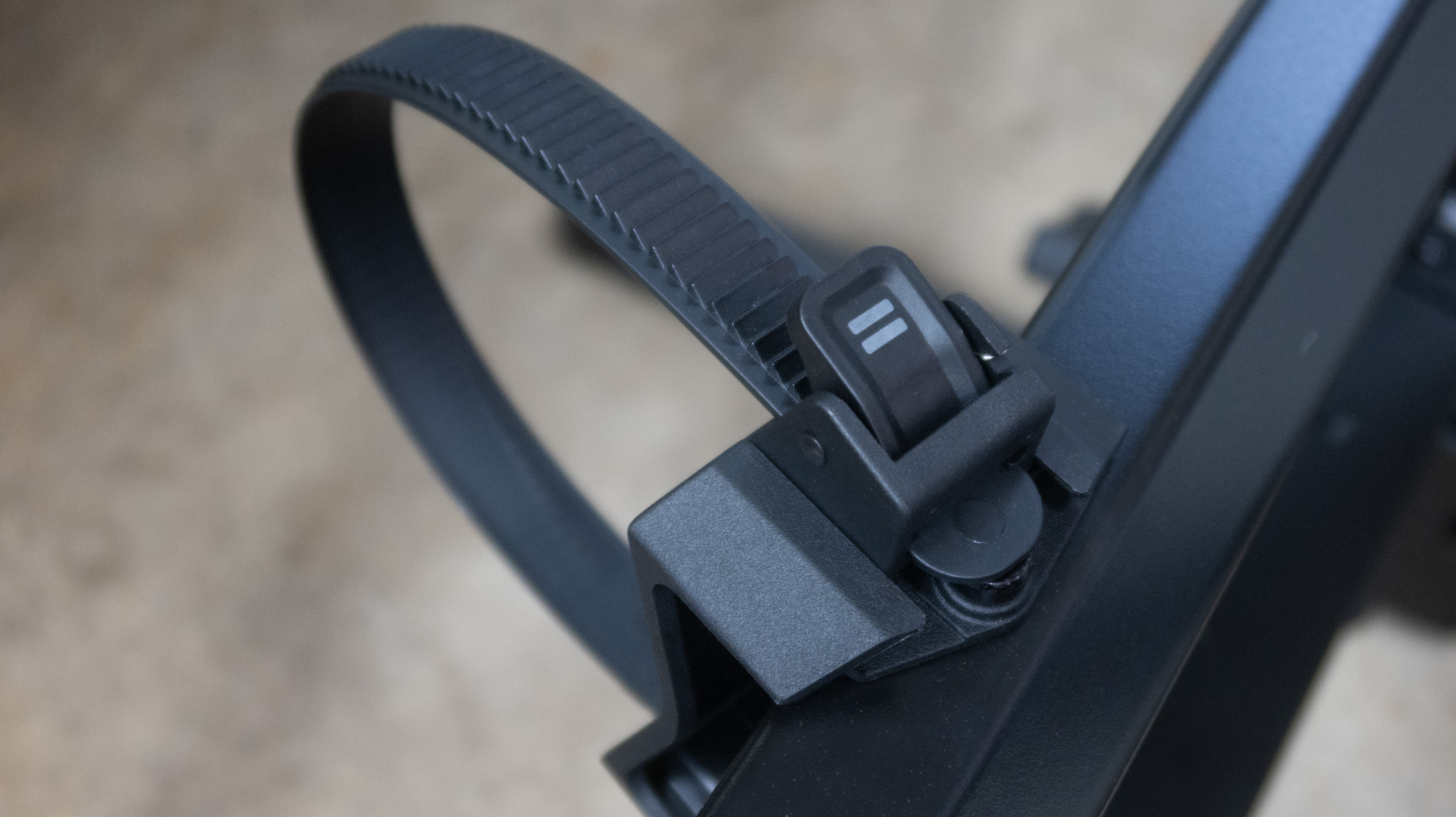
The StepUp comes with a cable-style bike lock and, critically, a steel loop you can run that cable through easily. That keeps your bikes from walking away at a rest stop. To keep the entire rack secure, there’s also a clever little lock that goes over the tip of the bolt holding the rack to your hitch. Both those locks use the same key, which gives you one last thing to lose. Speaking of which—make sure you take a photo of your rack keys as soon as you open the box they’re in, because they have a little number that Yakima can reference to send you replacements if you do misplace yours.
Clips and Hinges
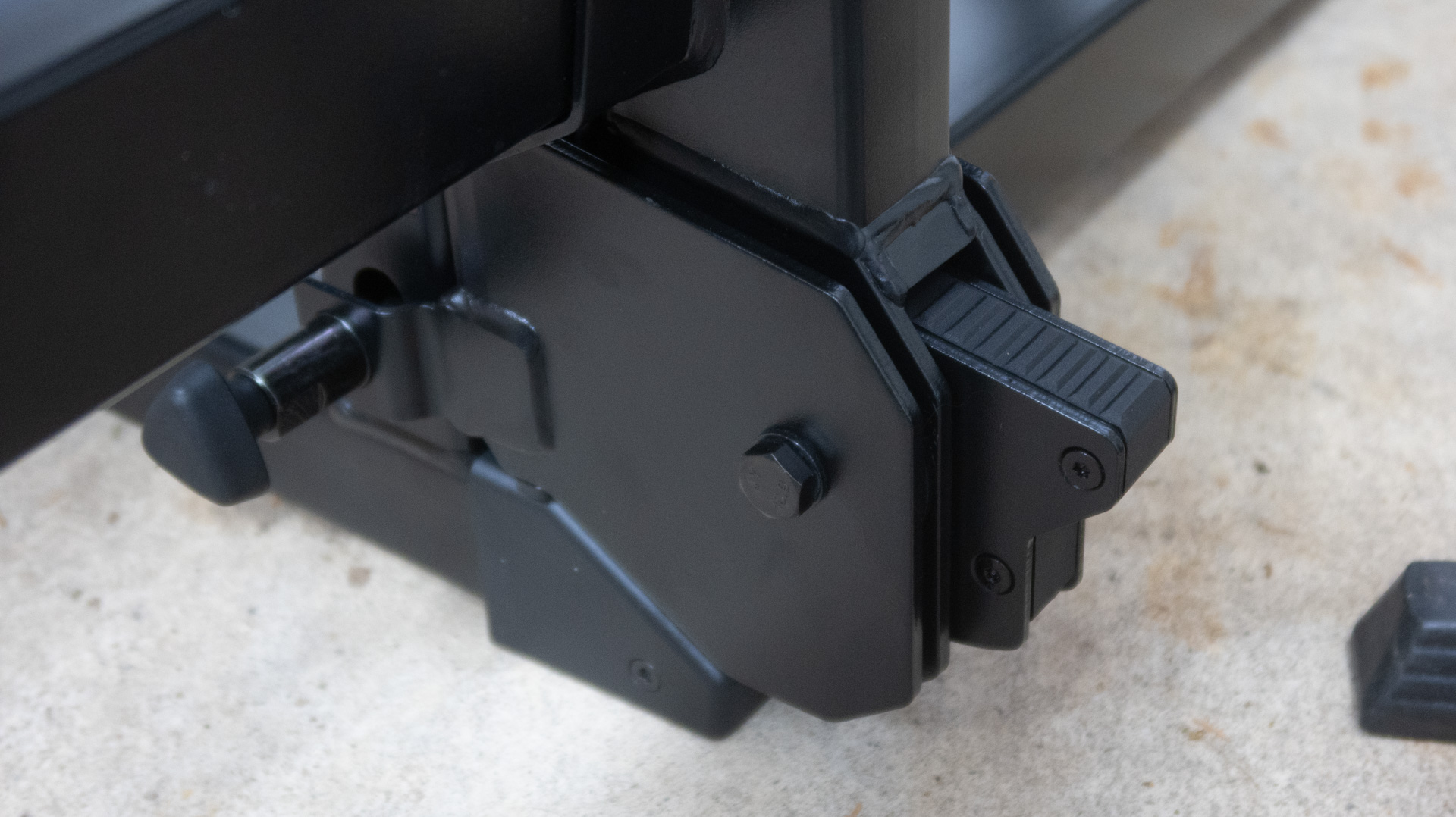
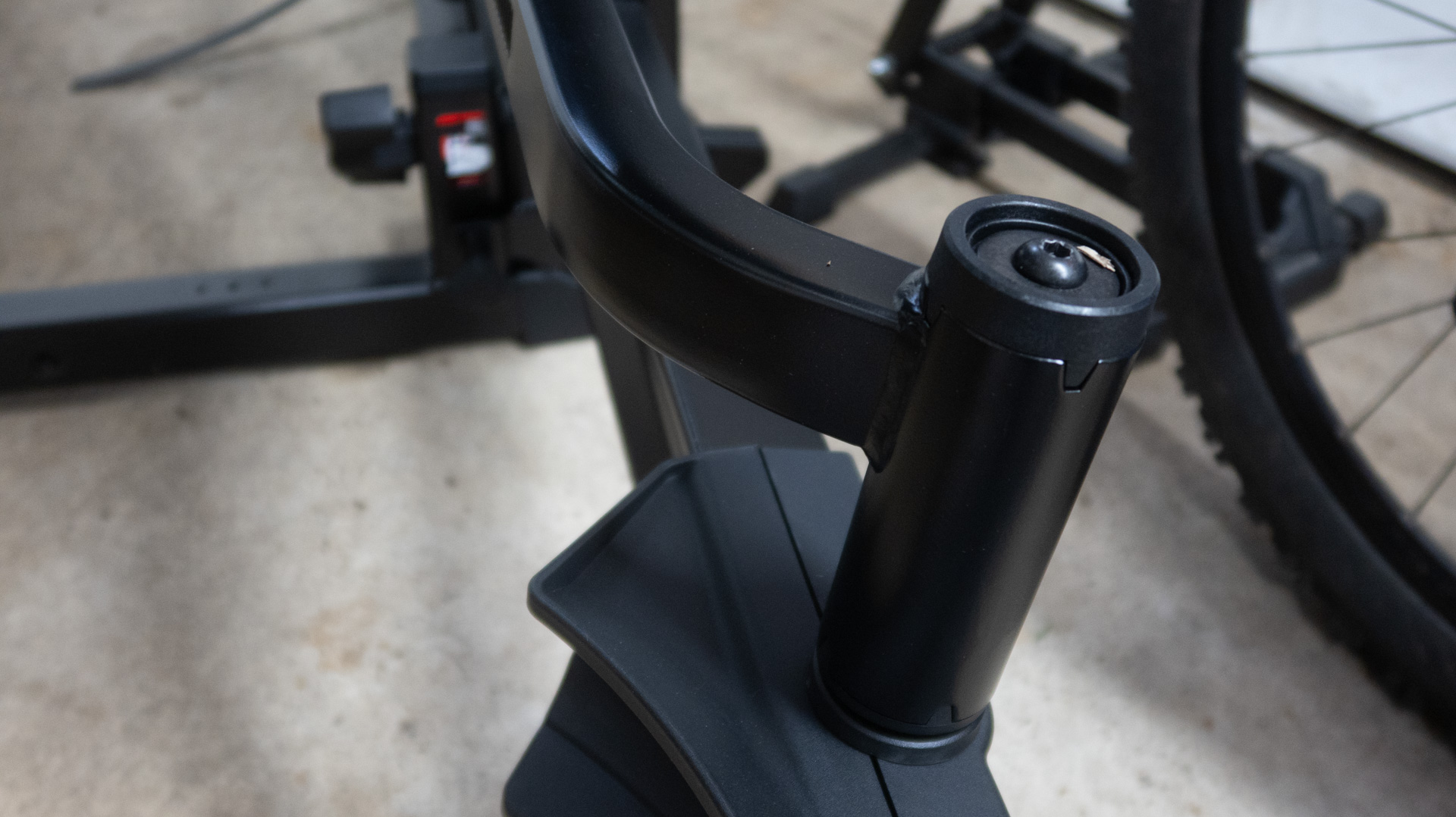
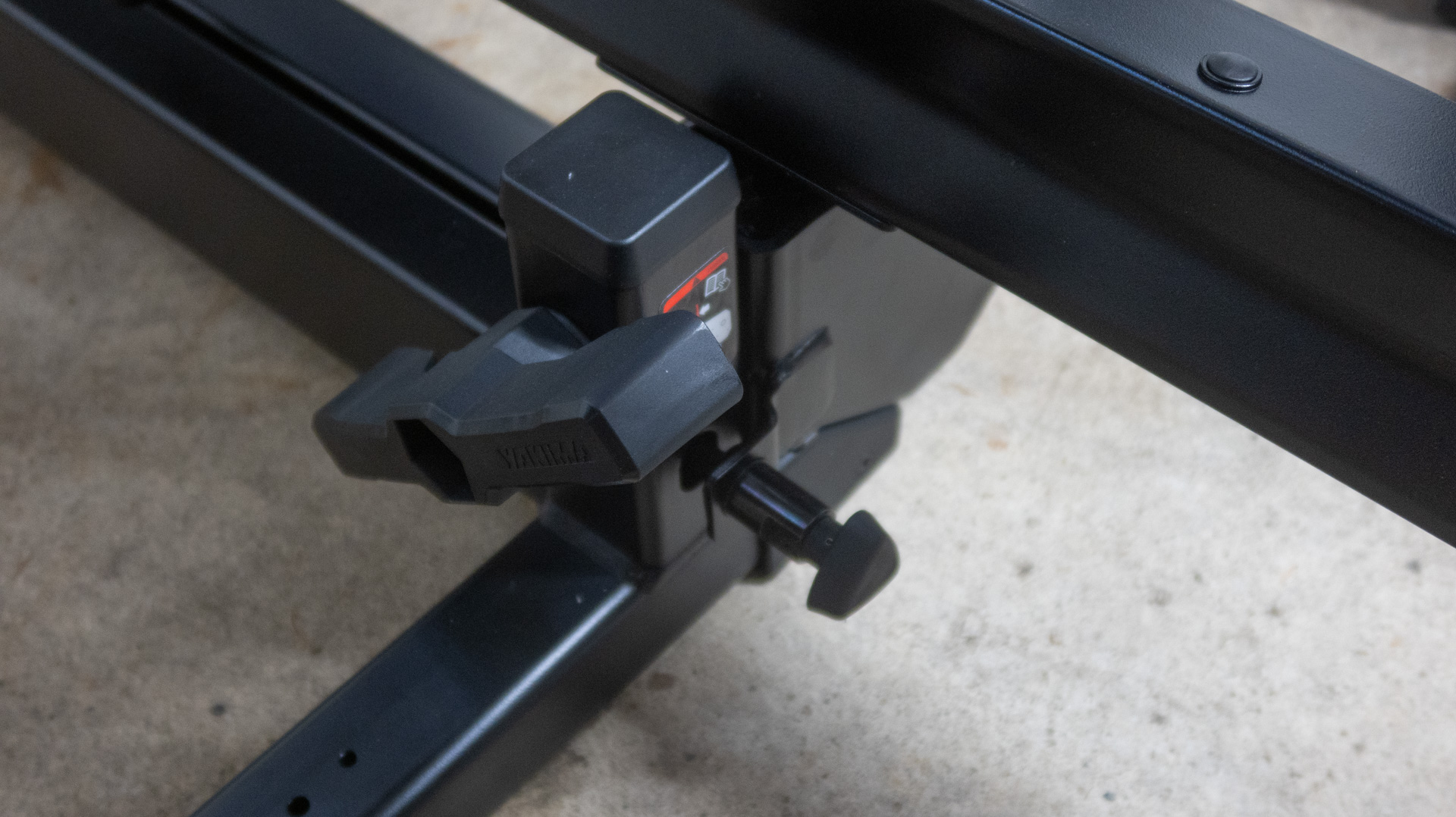
If you’re serious about buying one of these, this is where the “why get this when there are cheaper options” is addressed. The Yakima StepUp Swing has really nice ergonomics, heavy clips, and robust hinges. It swings super smoothly, and locks into place extremely decisively with a huge screw you spin on with what is basically a gigantic wing nut. It takes a little effort to get it lined up, but it puts a kung-fu grip on itself when secured; there’s no unwanted movement at all if you screw it in all the way.
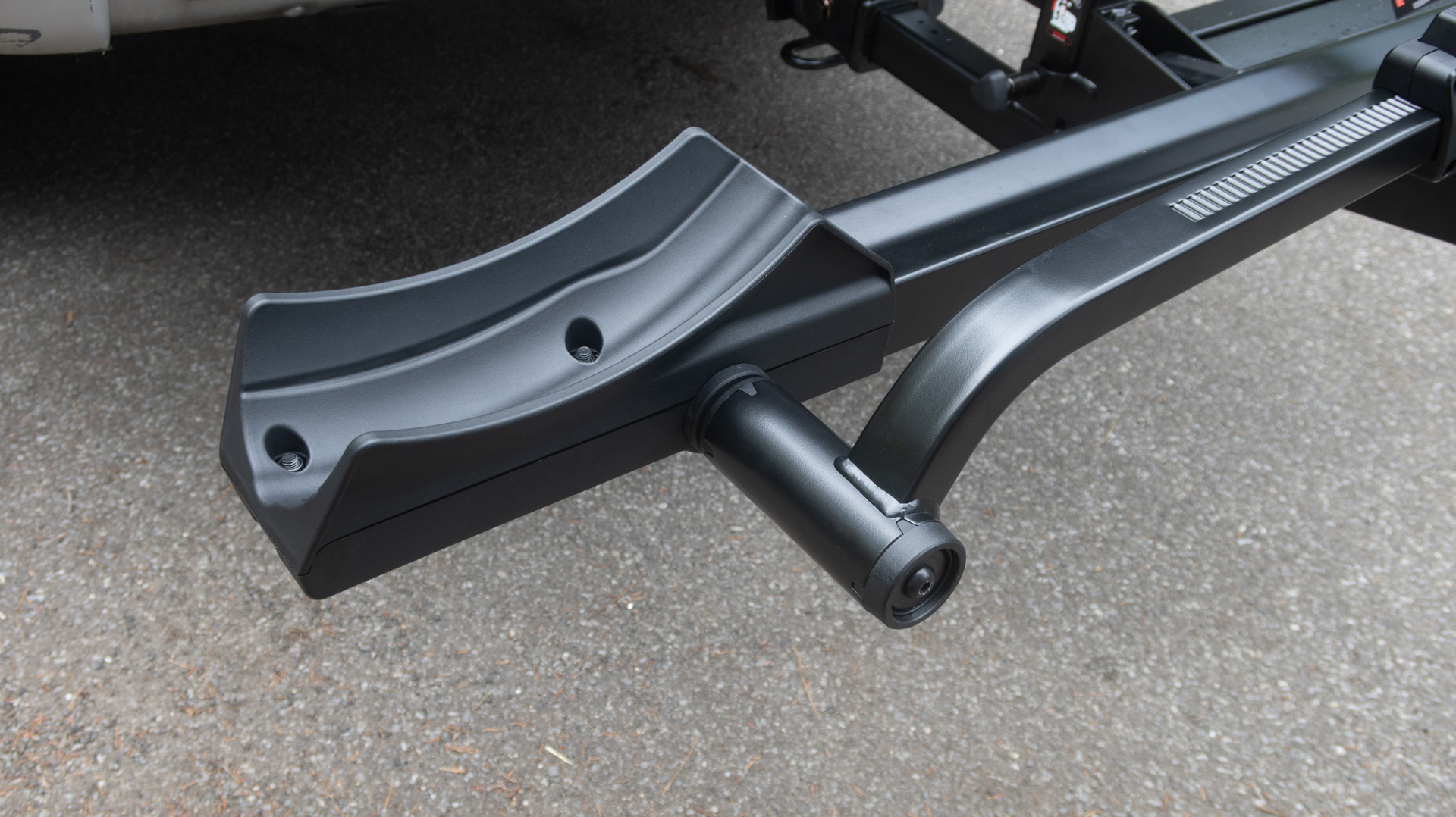
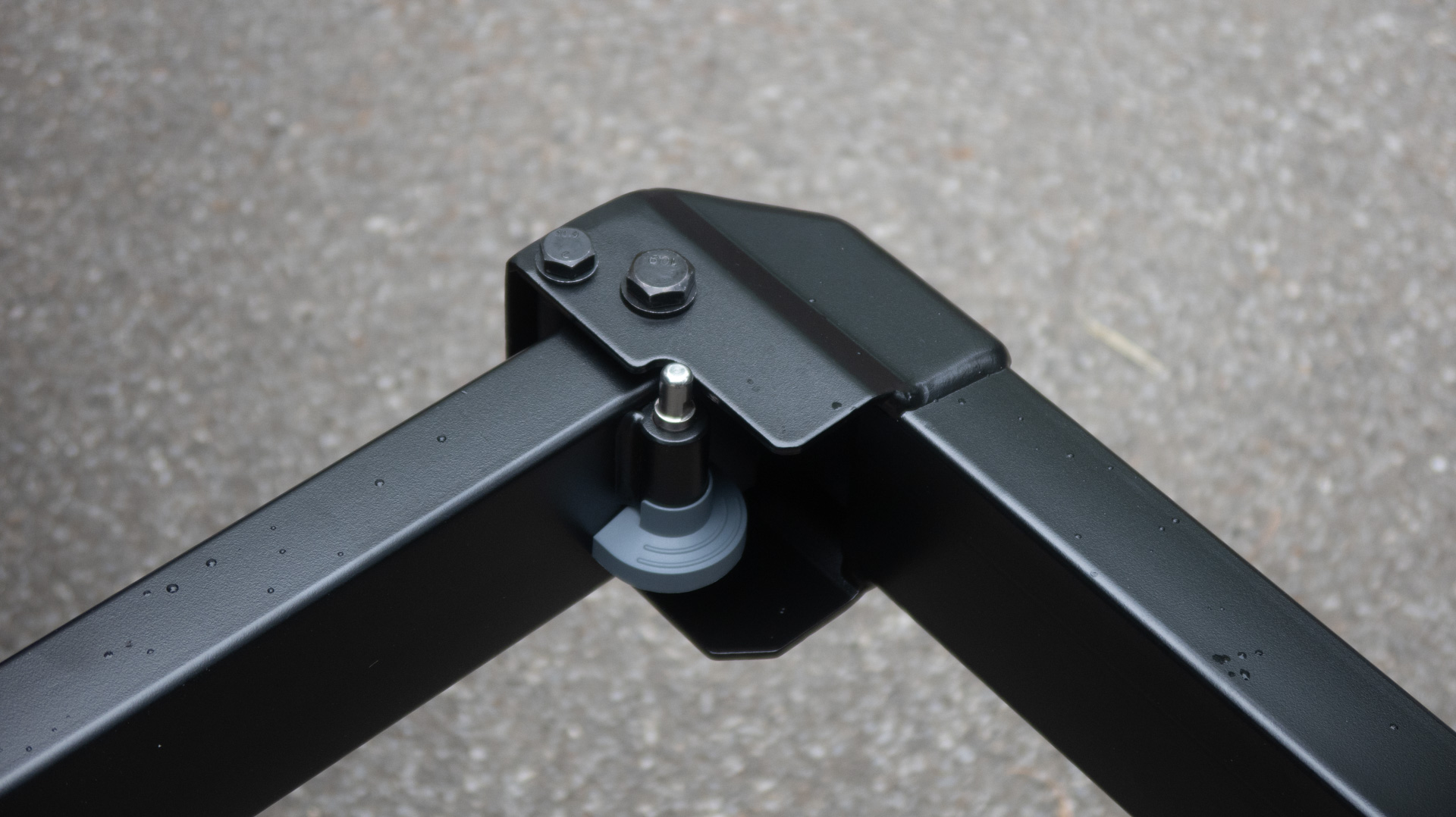
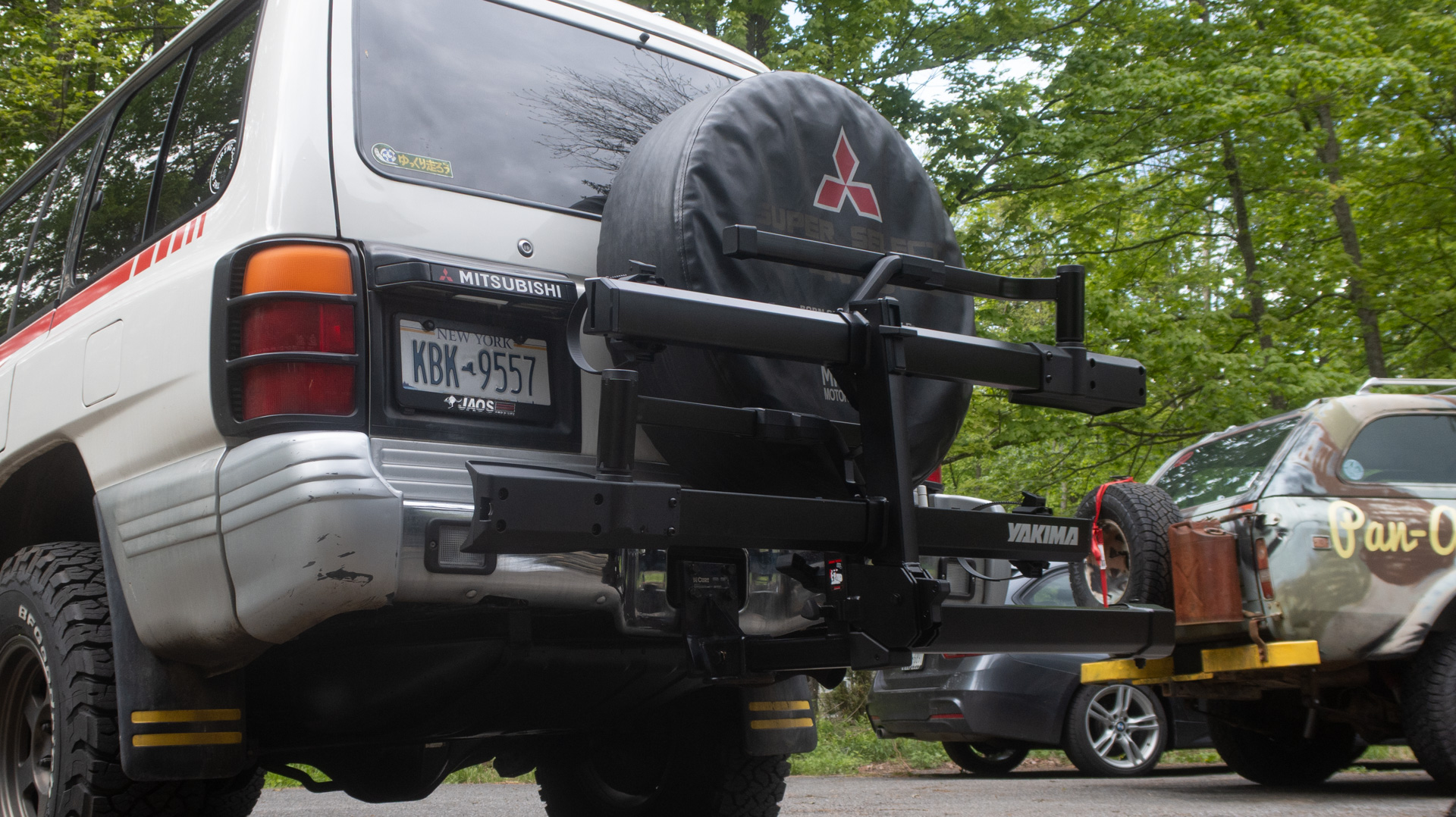
All the motion-action bits have the same nice combo of “feels heavy” and “glides nicely” you see in good office furniture. It’s a real pleasure to operate, and once all the straps and nuts are secure, it really doesn’t feel like it’s going anywhere. Unwanted wiggles are virtually nonexistent if you put it together correctly.
That nice level of execution and ergo are what you’re paying the Yakima premium for.
On the Road
The Yakima StepUp Swing rode nice and quietly on the back of my Montero. The bolt that holds the rack to the trailer hitch receiver gets nice and tight, eliminating the wiggle and clang-and-bang that an old hand-me-down rack tends to have.
With local low-speed driving, I didn’t notice any movement with a bicycle attached just with the Yakima’s front and rear tire-securing provisions. But the StepUp also comes with four big cinch-straps (two per bike) so you can secure them more comprehensively if you’re going for a longer trip.
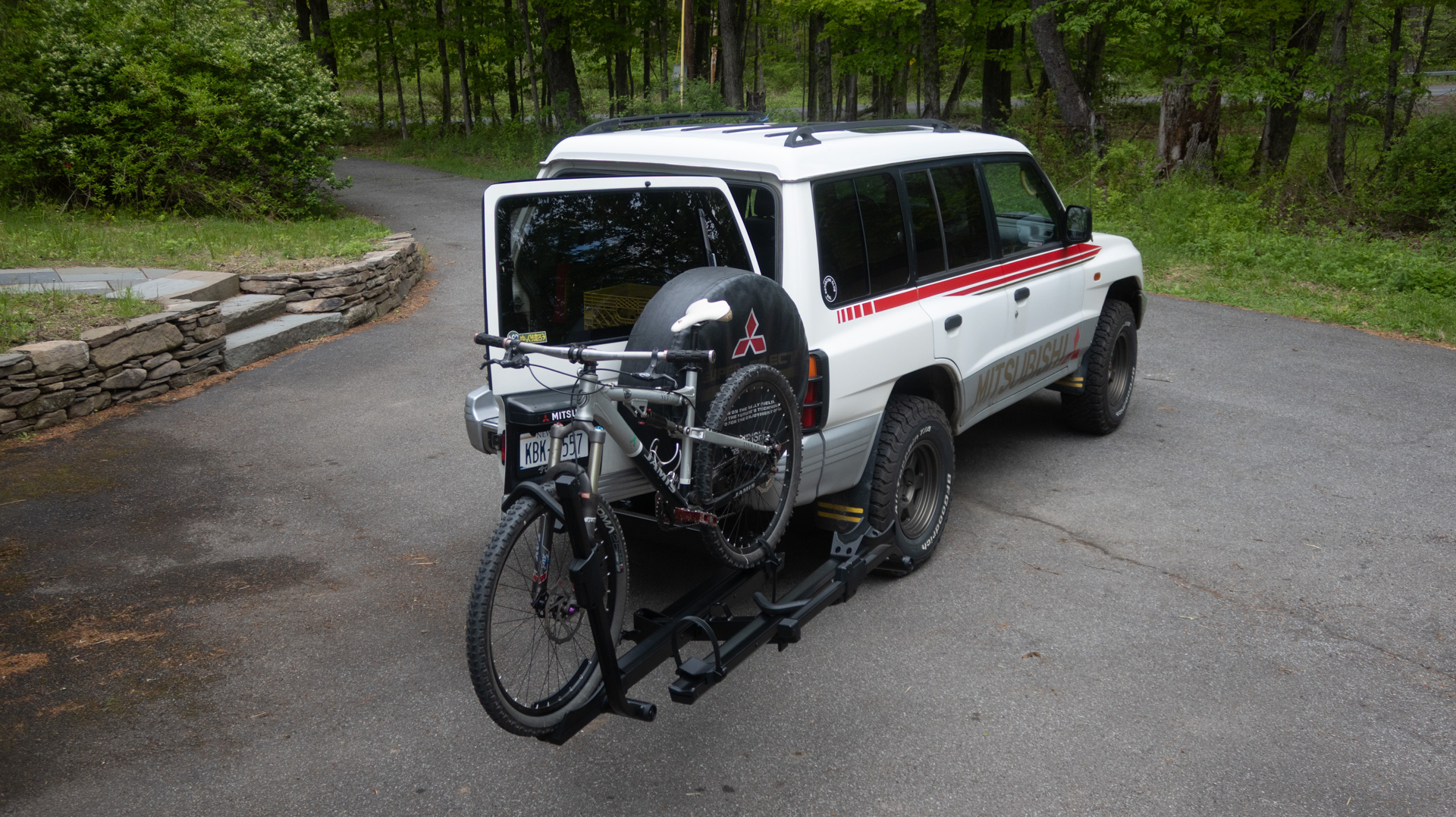
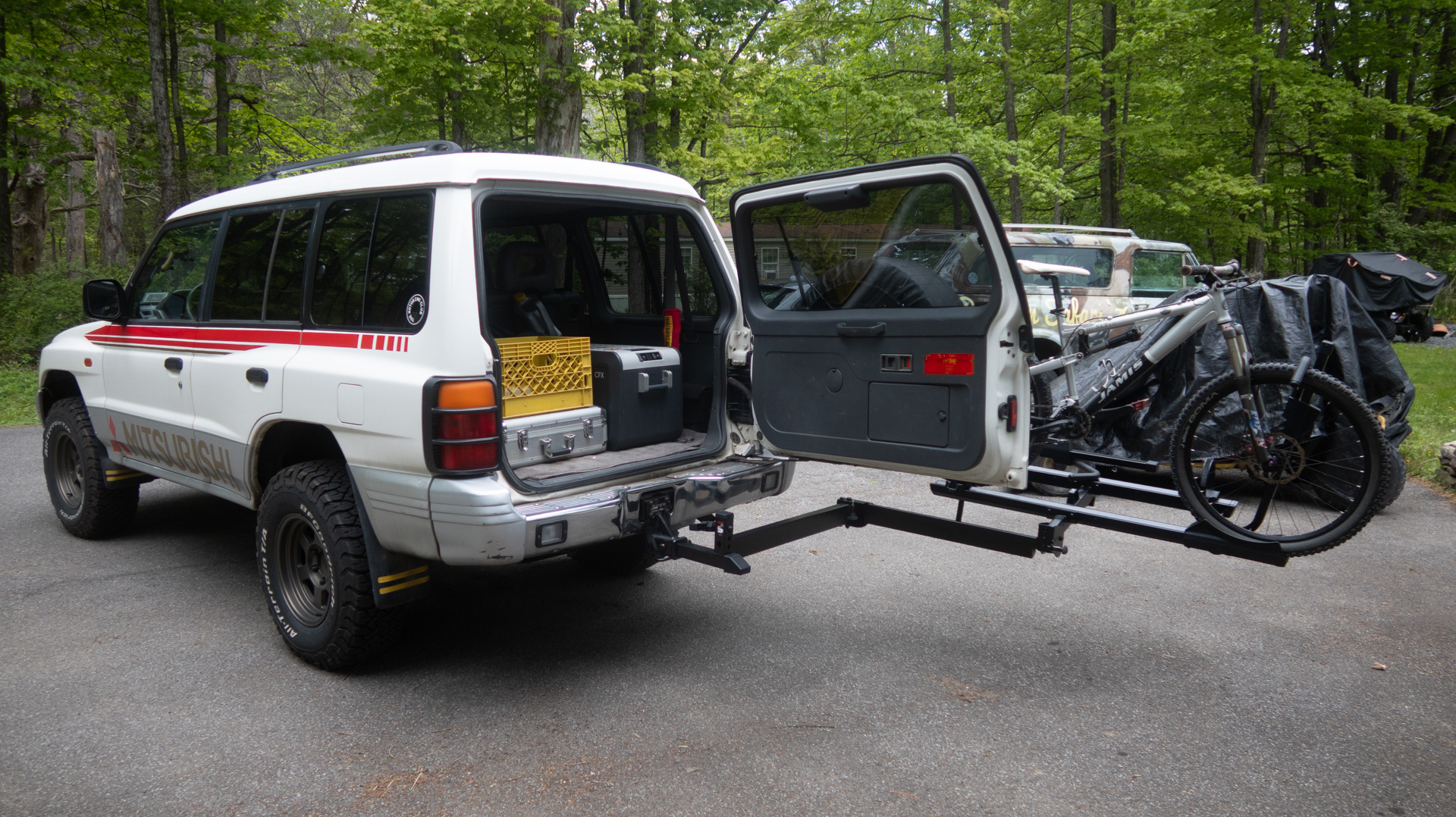
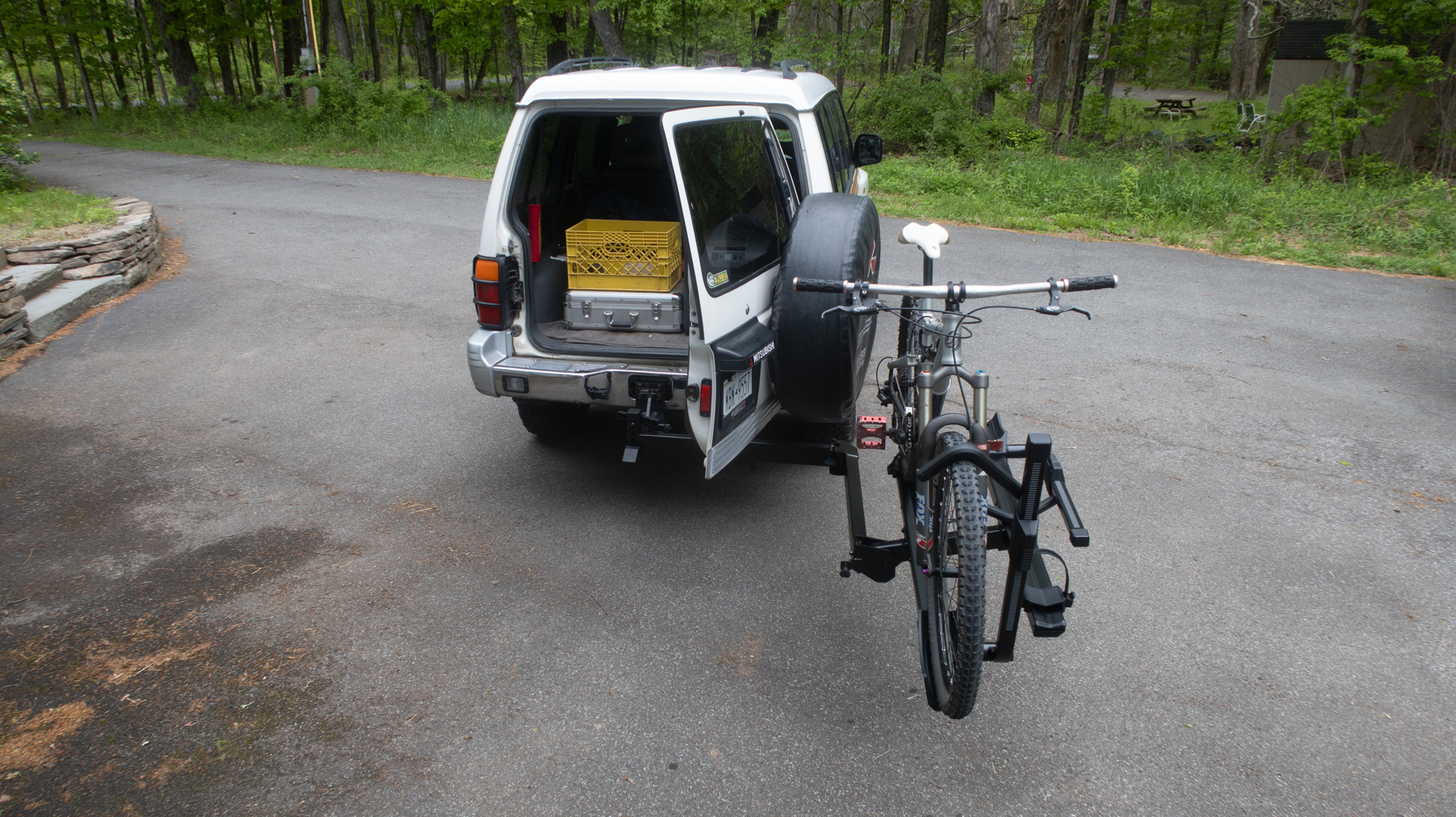
There’s quite a bit of ground clearance on this thing. I wouldn’t take it wheeling, but I would have no concerns about scraping it on a curb in town.
Removal and Storage
The key and cotter pin holding the main receiver bolt in place are easy to operate. But in this context, reusing the Yakima-provided wrench to remove the bolt is extremely annoying. You really need to throw a ratchet with a 24mm or 15/16″ socket on it in your truck as part of your biking kit so you can easily pull this thing off if you want to.
Though it is heavy, it’s actually easier to handle than I expected. The abundance of long flat surfaces gives you plenty of hand-holds, and while I wouldn’t want to lug it across a football field or anything, you don’t need to be strong to get it from your trailer hitch to a resting place in your garage or driveway.
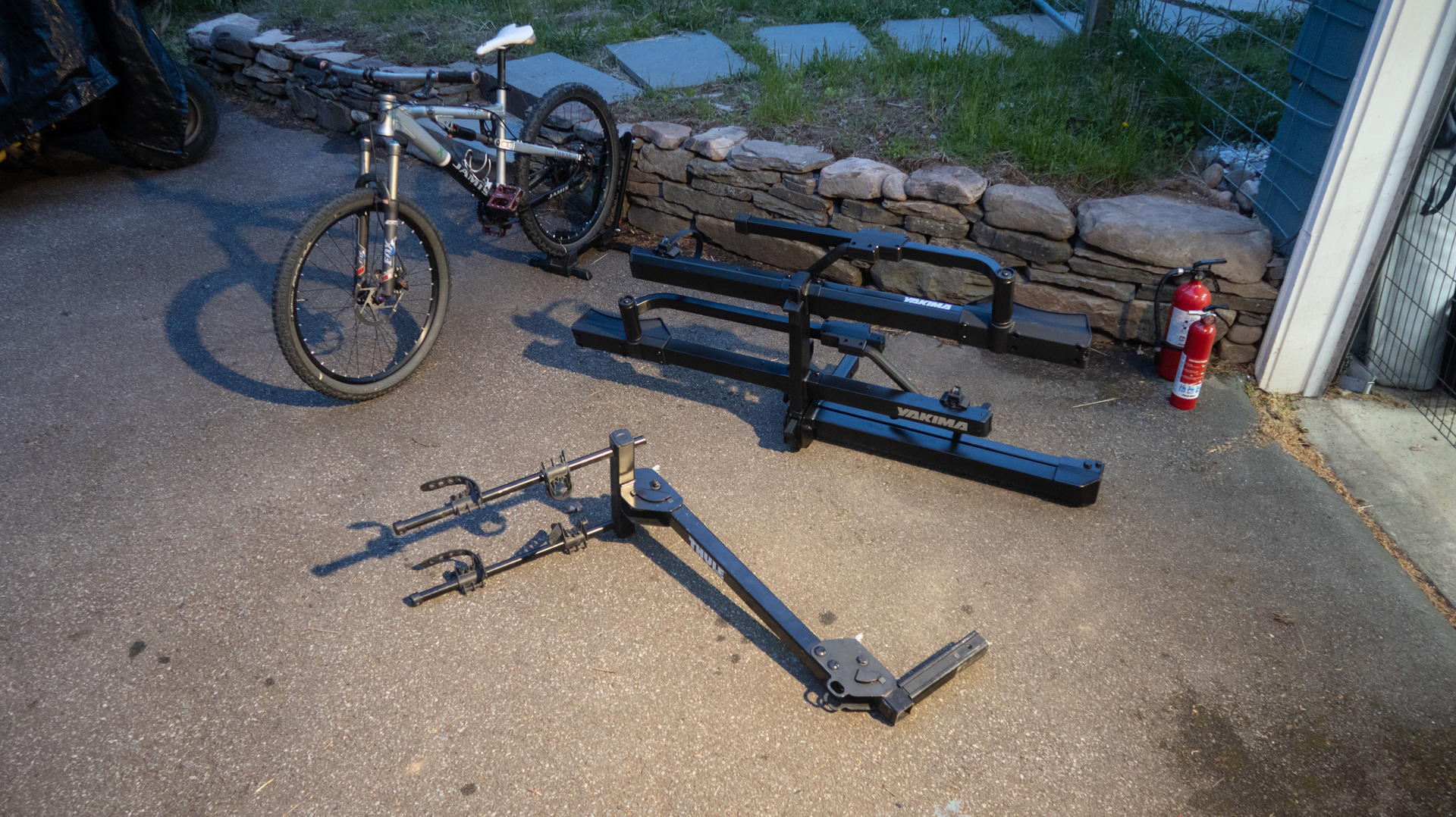
It does take up a good chunk of room, though. You’ll need to clear a place about the size of a large TV for this thing to live while you’re not using it.
Verdict
The Yakima StepUp Swing bike rack is ergonomically enjoyable and performs well mechanically. It’s priced competitively against other name-brand swing-out carriers (they all range from about $800 to $1,200). The swing-out function itself is where all these products jump in price—but frankly, it’s also the best part. Being able to swing bikes completely clear of a side- or bottom-opening tailgate is a huge boon and will definitely make you ride more often.
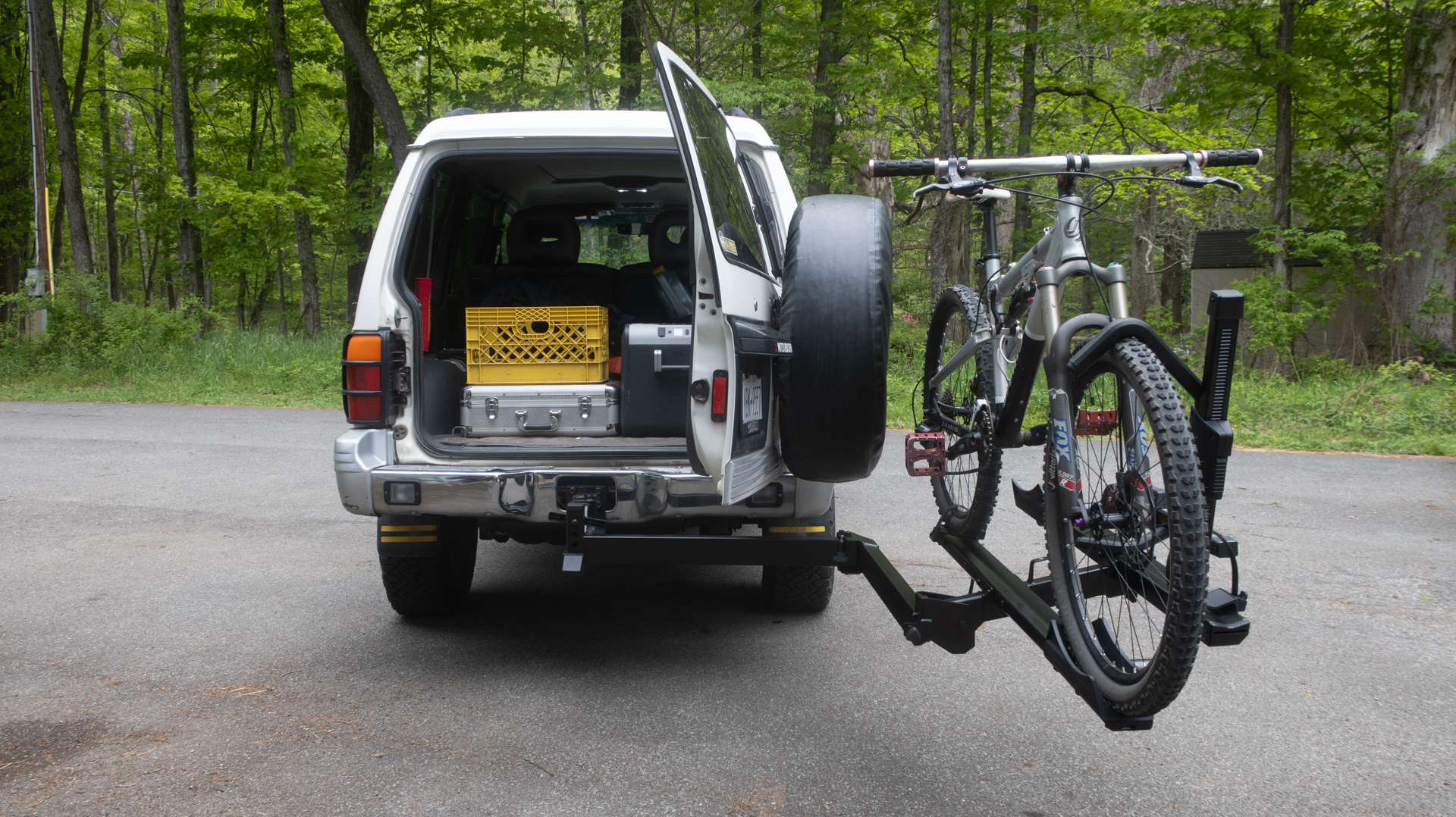
It’s a luxury, not a necessity, but it’s a luxury with a real practical benefit. Put another way: There are far cheaper ways to get bikes onto a car. If you can’t find something on Facebook Marketplace, there’s a good chance one of your friends, family members, or neighbors has a rack in a garage you could use for free.
But once you start looking at racks in the $500-and-up range, and you’re wondering if the swing functionality is worth the splurge, my answer is yes. If your tailgate opens as my Montero’s does in these pictures, absolutely, future you will definitely be glad you spent the extra money.
Yakima sent us this StepUp Swing rack for the purpose of this review. We’ll hang onto it and update this review periodically as we put miles on the product.
Are there any automotive accessories you’d like us to take a closer look at? Drop me a line at andrew.collins@thedrive.com.
Loading comments…
Comments couldn’t be loaded. Please refresh the page.