
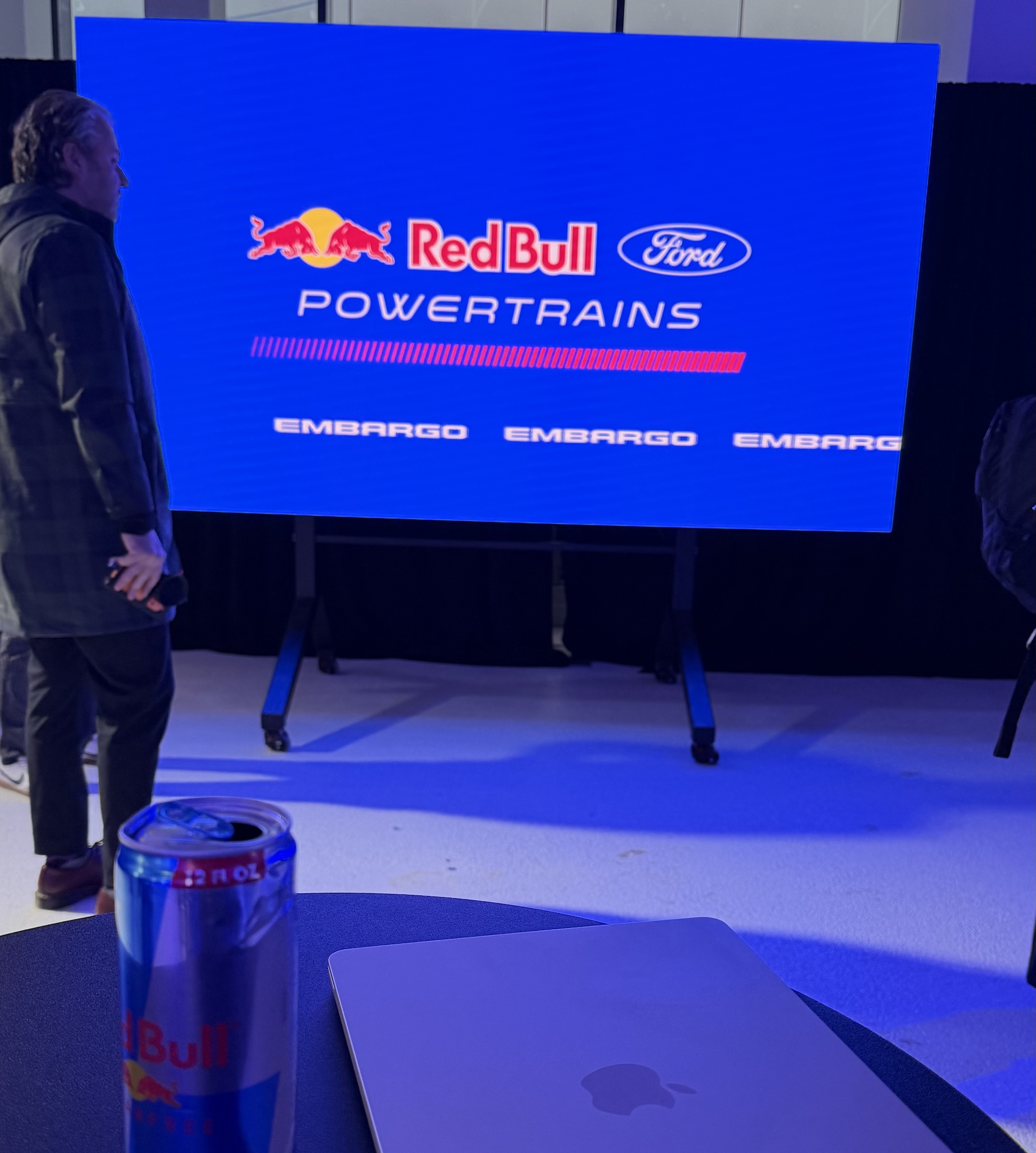
Thursday morning, I walked into a room with a large screen displaying “Red Bull Ford Powertrains,” followed by a dozen mentions of “Embargo.” Next to it was an engine block on a stand, along with a few other mechanical components scattered around the room. It was time to learn more about how Ford is working alongside Red Bull to propel the Milton Keynes outfit back to greatness for the 2026 Formula One World Championship.
But there was an elephant in the room. Earlier that day, Cadillac F1 Team CEO Dan Towriss told The Athletic that Ford’s involvement in F1 was merely “a marketing deal with very minimal impact, while GM is an equity owner.” He added that the “two deals couldn’t be more different.”
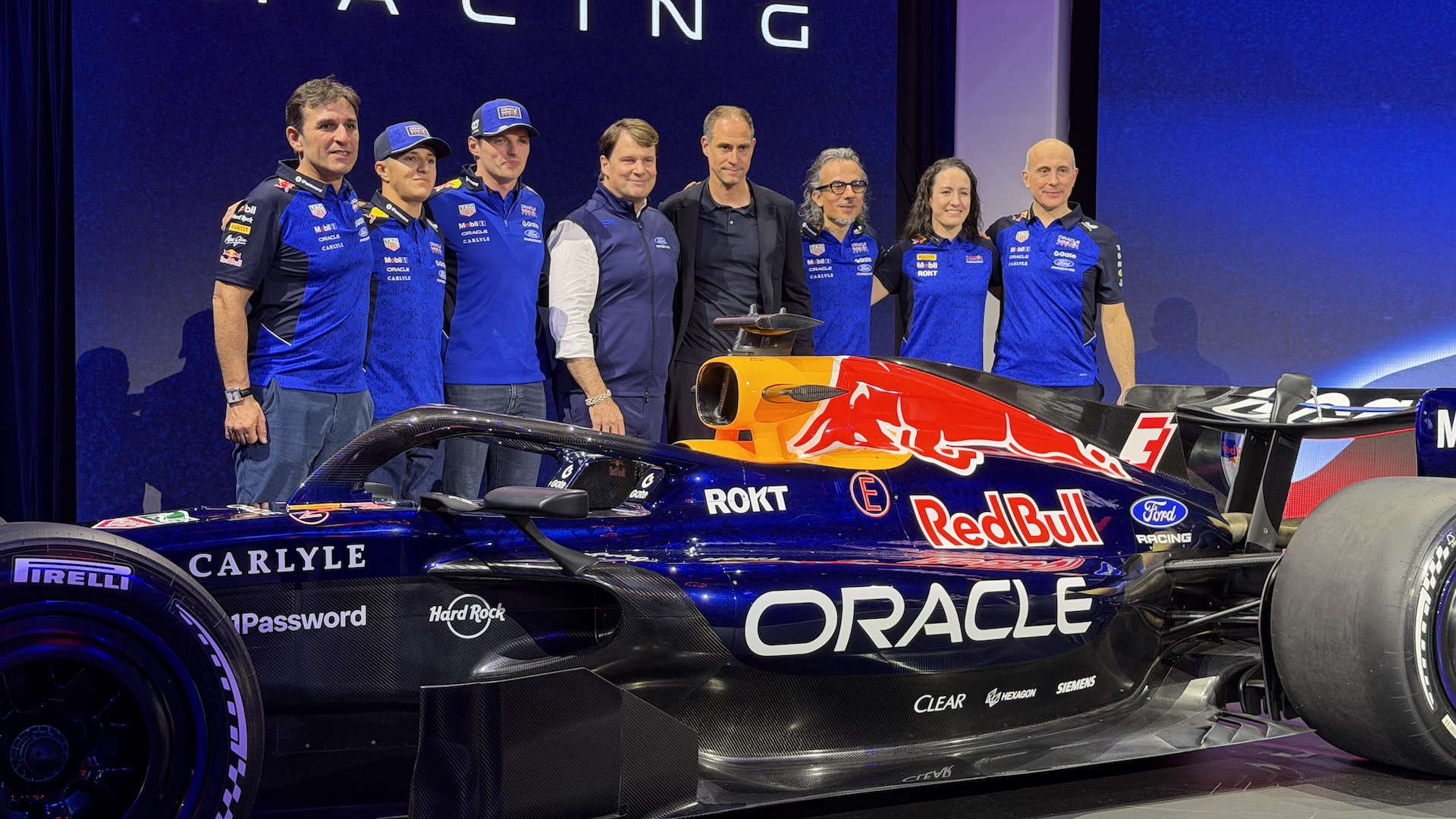
During the debrief, Philip Prew, technical operations director at Red Bull Powertrains, and Christian Hertrich, powertrain chief engineer at Ford Racing, explained how the 2026 rules will affect powertrain design and how the Blue Oval is leveraging its deep racing knowledge and manufacturing might to enhance the team’s performance. Furthermore, they did their best to prove that their partnership goes beyond stickers on a race car or cool videos of F1 drivers flogging Ford vehicles for social media.
When asked specifically about Towriss’ comments, Hertrich simply said they were “sad.”
“I mean, it’s sad,” Hertrich told me. “I sometimes wish it were a stickering exercise because I would get a lot more sleep, but it’s not true. Can I say that we’re manufacturing the power unit? Absolutely not. And if anyone told you that, it’s a lie.
“We are actively contributing. We have multiple Ford team members sitting at Red Bull. We have team members back here in Detroit working. We’re producing parts. When you have parts come out of southeastern Michigan and go to the U.K. and go into a Formula 1 car, I don’t think it’s fair to say it’s a stickering and a marketing exercise,” he added.
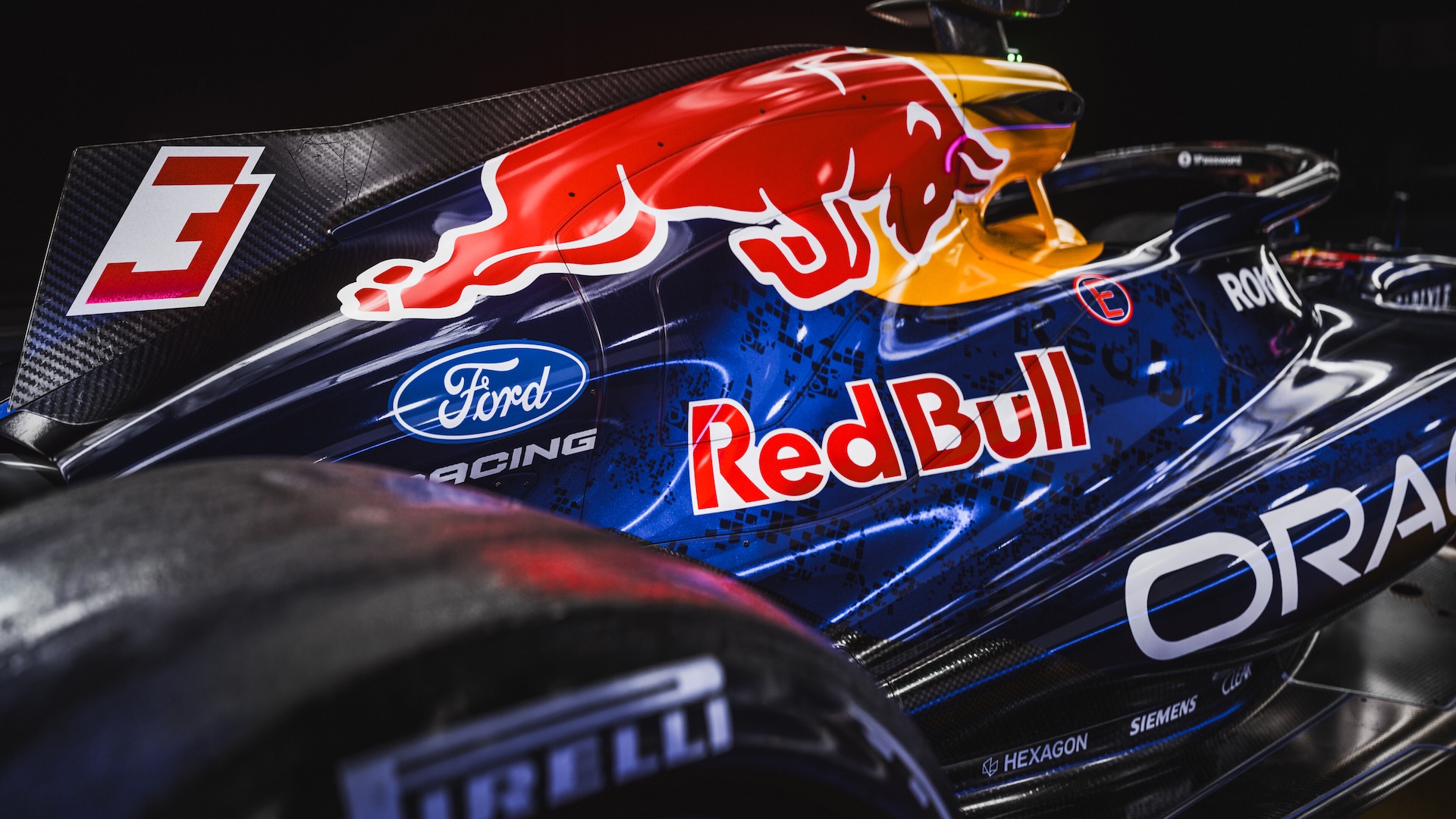
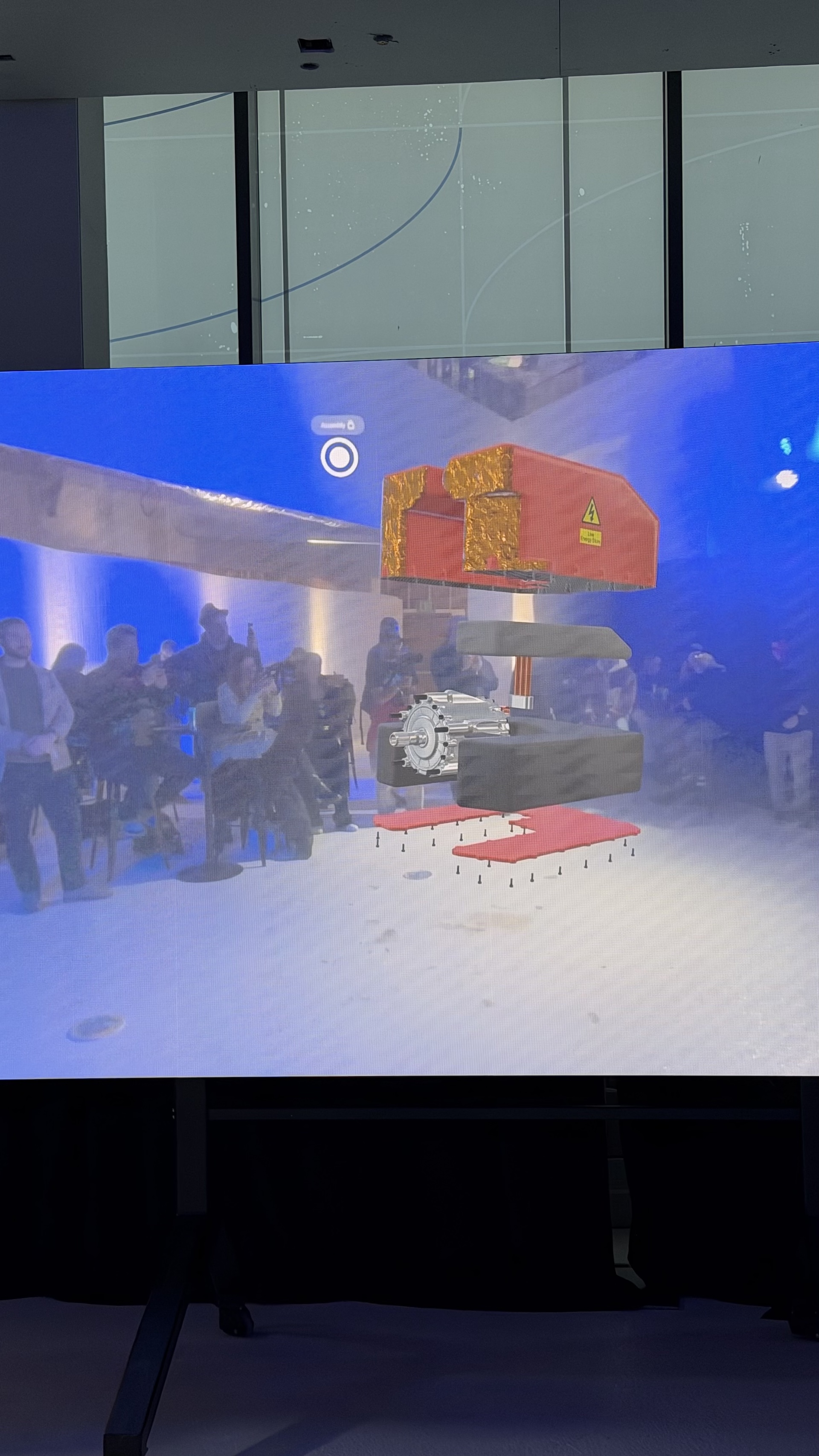
Specifically, Ford is responsible for designing, developing, testing, and manufacturing 12 unique parts for the Red Bull powertrain. Some are small, while others are as large and crucial as the turbocharger turbine housing. That may not sound like a considerable amount, especially in a machine with thousands of components, but it’s the human intellect and R&D that go into those 12 components that make this much more than just a marketing ploy. And according to the powertrain team’s top brass, Ford’s expertise and manufacturing agility in the face of a massive rules change are its biggest assets.
“Ford is contributing with manufacturing, including 3D printing,” he added. “When there isn’t a design for something, Ford can start designing and trying parts over and over again. Quick manufacturing is key. We’re providing 12 parts to the power unit program; MGUK, electronic, and other parts throughout the rest of the combustion engine.”
“2026 will be all about the balance of power,” Red Bull’s Philip Prew told The Drive. The rules dictate a 50/50 power distribution between electric and combustion, so that comes with its own challenges to integrate and manage. Ford is handling a small percentage of the powertrain operation and contributing to manufacturing.
“Having two separate teams doesn’t work; they have to be together. They have dropped Ford engineers into Milton Keynes to integrate them into one team,” added Prew.
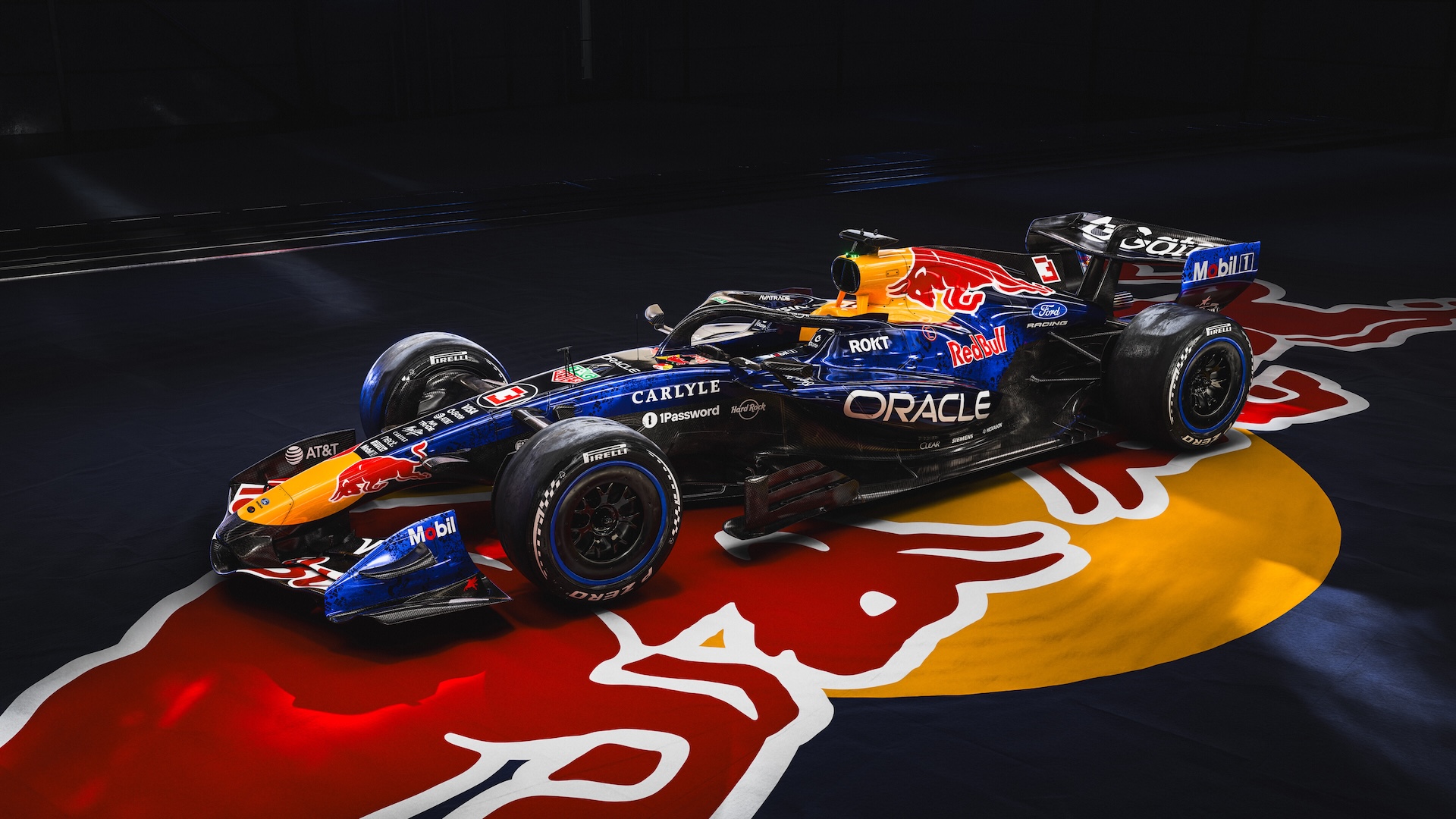
It’s not hard to see how Ford can leverage what it’s learned in its 125-year history to help a team like Red Bull get back to the top step of the podium. And after McLaren ate its lunch last year (though that almost didn’t happen toward the end of the season), new team principal Laurent Mekies will be extra motivated to do so, just like he’ll be pushing like hell to step out of his predecessor’s shadow and build his own legacy at RBR. And Max Verstappen, too, because that guy doesn’t like coming in second.
Hertrich listed the first and last names of Ford employees in Milton Keynes and what they’ve been working on for nearly 2.5 years. They’re all vital roles, of course, but some of the most complex work Ford is handling for Red Bull involves engine modeling. There is one engineer whose only job is to write software code to simulate an engine’s performance and life cycle throughout a hypothetical racing season. That model is then accelerated to 1,000 times real speed, so the research process can be completed 1,000 times faster than in real life. The goal is to identify the optimal tuning and parameters so the model can be uploaded to the sim and Verstappen can get to work.
“These models are added to the simulator, so when Max jumps in, he can try different models and get a feel for the car. We’re also working with predictive software and AI to enhance these engine models. All of this is necessary because F1 moves at an incredible pace. If we thought developing a part in six weeks was fast, Red Bull wants it 50% faster,” Hertrich told me.
Another key focus for Ford, given the 2026 regulation changes, is energy management. Energy health is paramount, so there is a dedicated engineer who oversees energy cycles, ensuring a battery is as good in the last race of the season as it was in the first. As we all know, because we all carry smartphones, extreme temperatures can degrade battery performance and lifespan, so energy usage and management need to be controlled.
At the end of the day, Ford is focusing on speed, accuracy, and insight. Whether it’s 12 parts or 1,200, it’s more than a marketing exercise. It’s time, effort, it’s personnel uprooting their lives to move abroad, it’s dozens of calls and emails every day about some urgent matter that needs to be resolved ASAP. Hearing some of the anecdotes Hertrich shared with me, you begin to understand the long days, sleepless nights, and endless trips across the pond to work together as one.
“We’ve gotten pretty good at shipping things to each other, and we can have parts here or there in two days at most, but a lot of times it’s just better to hop on a plane and handle things in person,” he said.
Email the author at jerry@thedrive.com
Loading comments…
Comments couldn’t be loaded. Please refresh the page.