
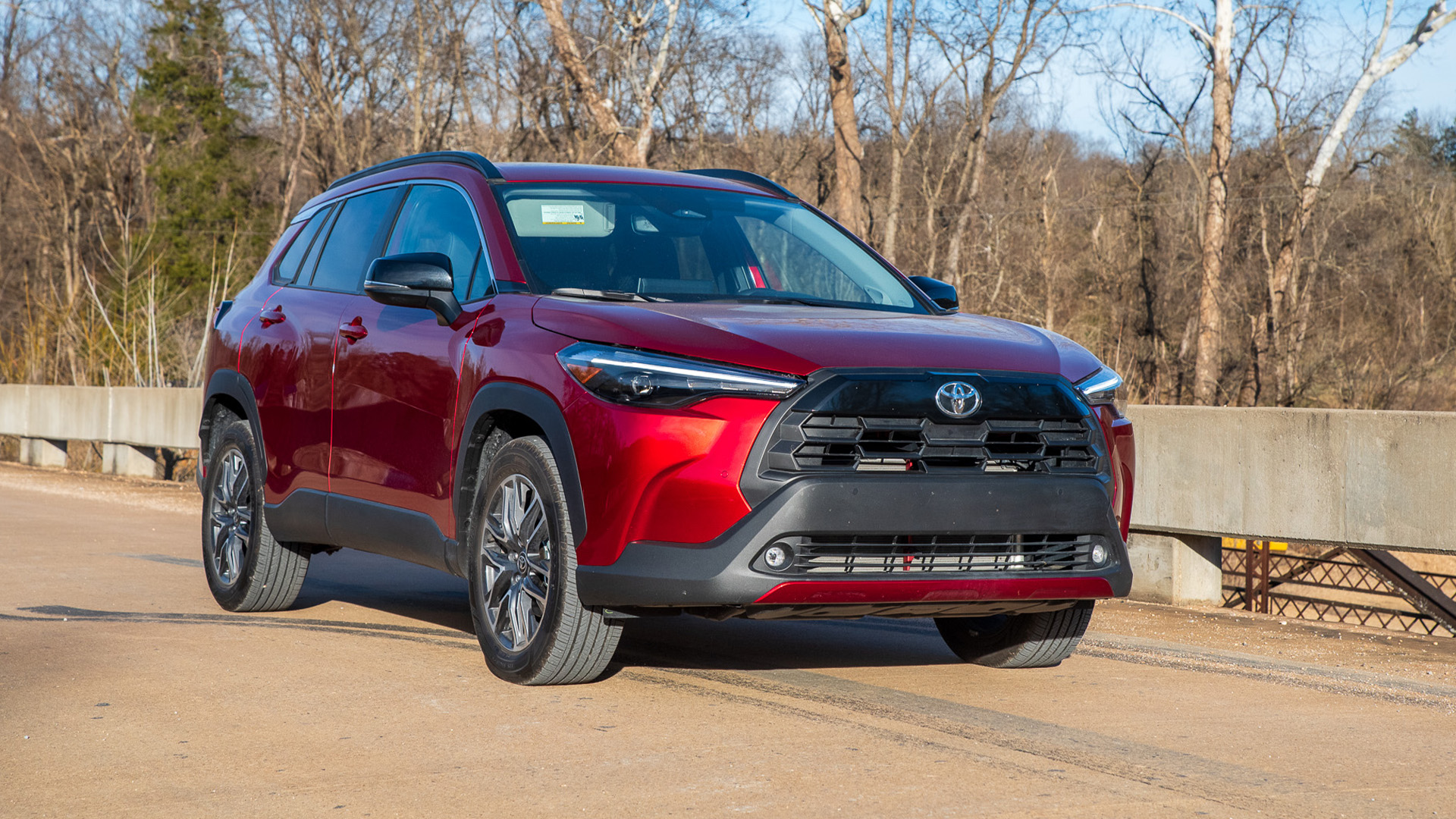
If someone said to me, “Hey, Caleb. Who makes a great, small car?” I’d say, “Toyota, duh.” Now, I’m not saying that’s the only correct answer, but Toyota has a strong track record there. And if you want an economical crossover? Shoot. The RAV4 is it. But what about the Corolla Cross? Where does that land? After spending a week with it, I’m still not sure.
It’s smaller, less powerful, and less fuel-efficient than a RAV4. I also found the Corolla Cross to be pretty noisy and not all that comfy. Those factors aren’t such a problem if you’re in a $26,450 base model, but when you’re looking at an XLE AWD like the one I tested, the MSRP soars above $35,000. At that price, and in my eyes, it’s a non-starter.
So what does it do well? And what does it do … not so well? Let’s run through it so you can decide if I’m a big fat idiot or if you’d rather buy a RAV4 (or a Chevy Trax, or a Mazda CX-30, or something else altogether).
The Basics
The Corolla Cross is Toyota’s smallest gas crossover (the CH-R is even littler, but it’s an EV). Also, it’s the least expensive, with only the Corolla sedan and hatchback starting at lower prices. No matter how you shake it, it’s an entry-level daily runaround meant to be practical and economical.
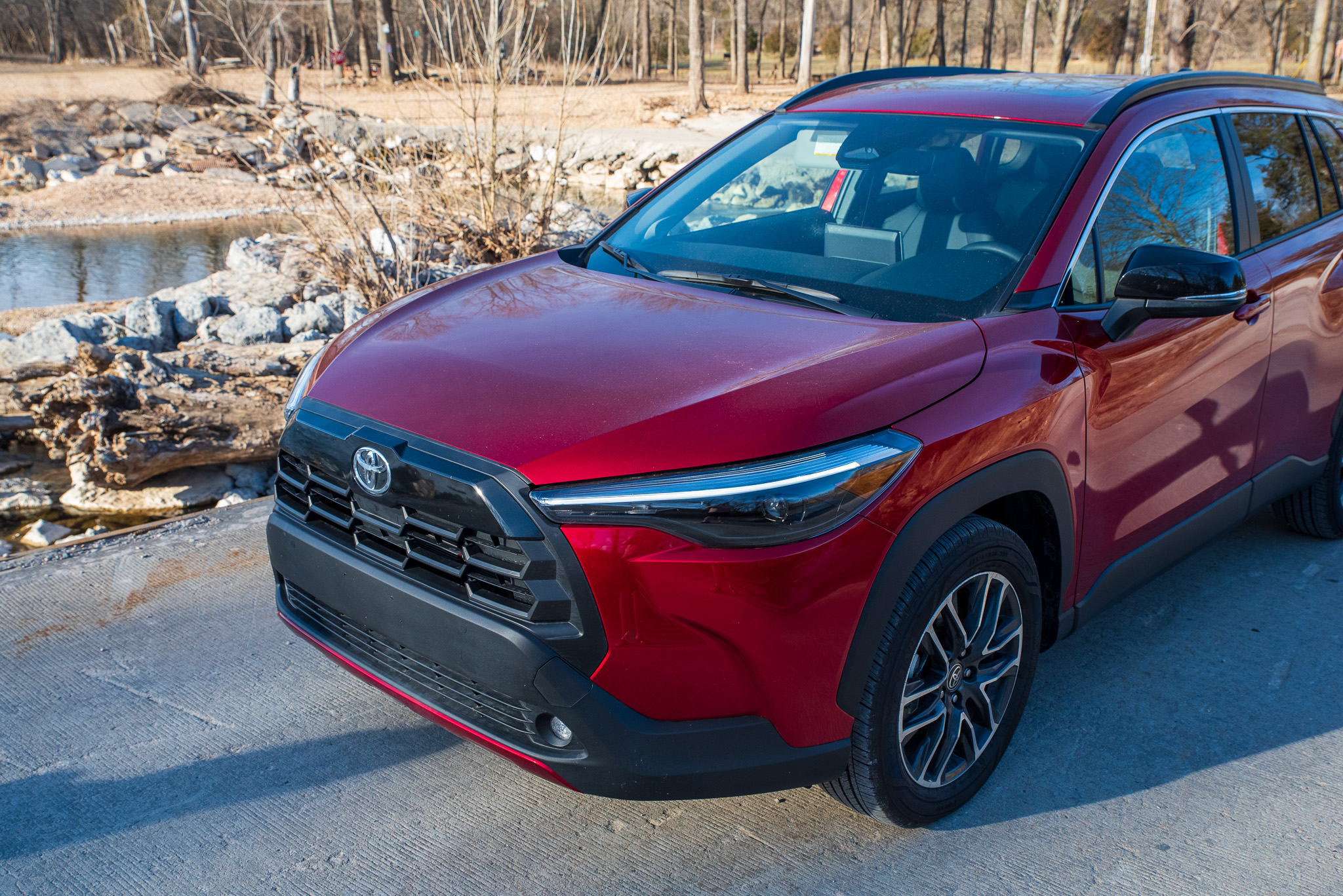
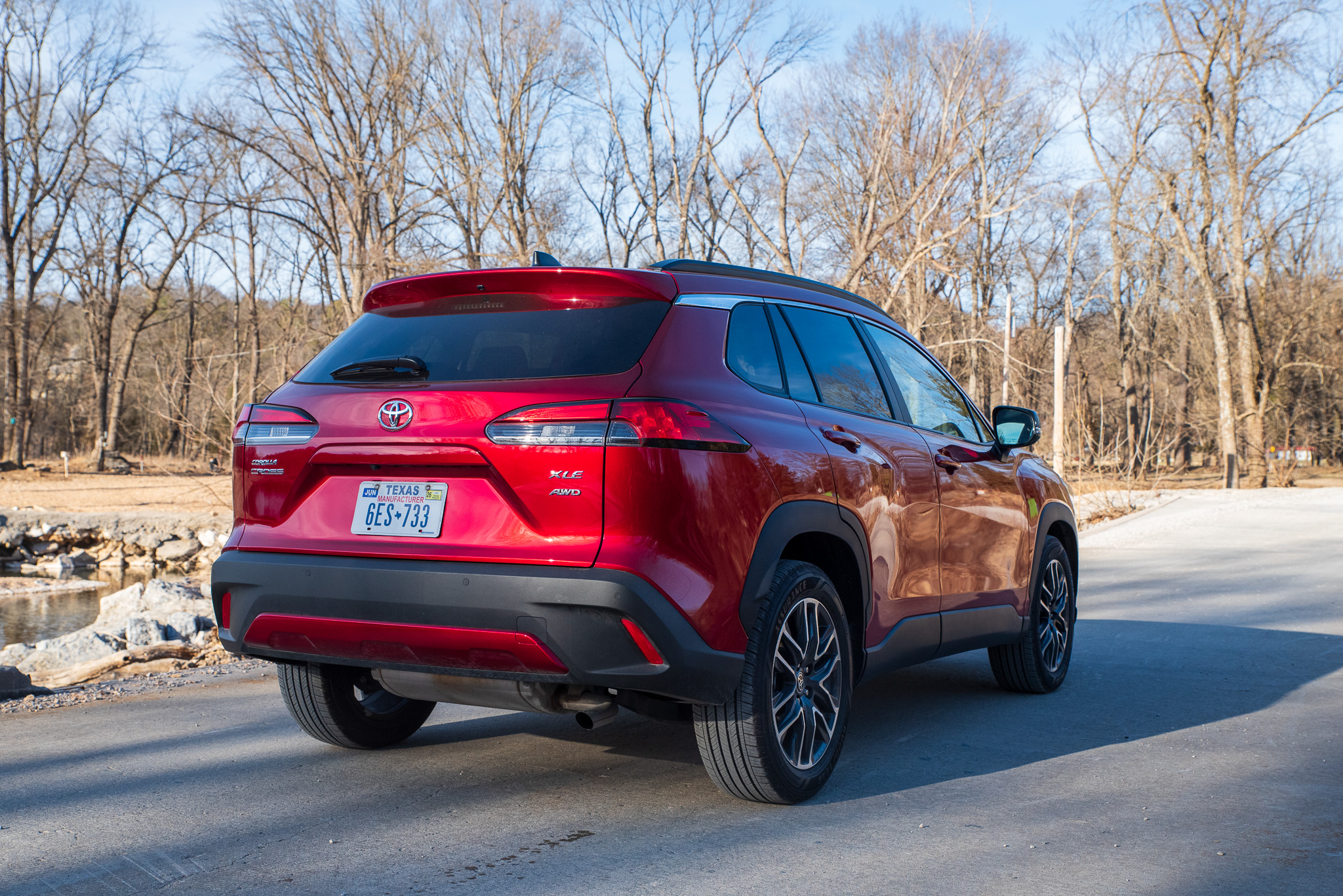
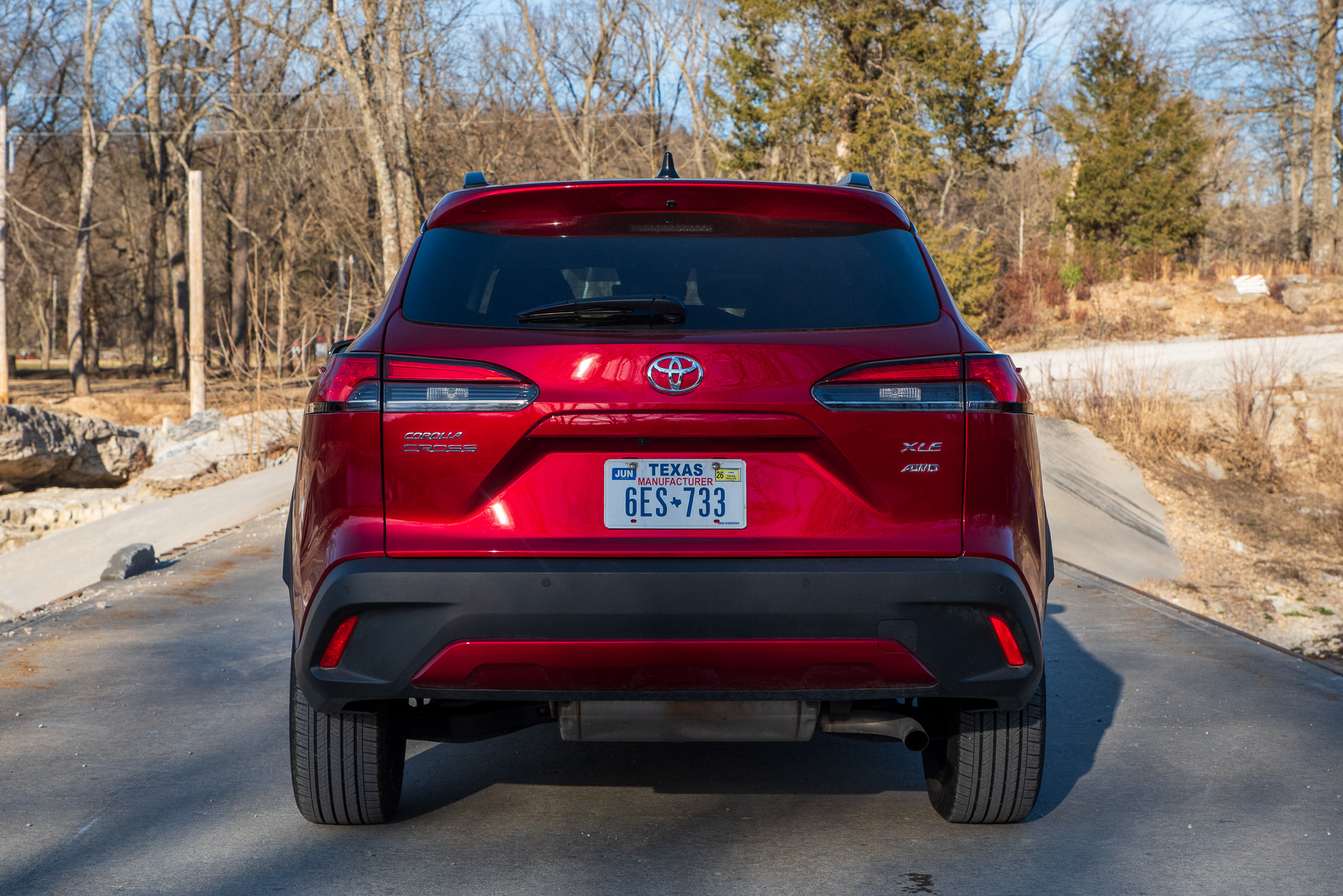
Design-wise, it’s clearly related to the other Corolla models, albeit a bit more blobby. The grille takes up a lot of the front end, but that’s par for the course these days. I actually don’t mind the back end, either—the big suitcase muffler underneath is almost a styling element in itself. Importantly, the Corolla Cross doesn’t pretend to be more premium than it is.
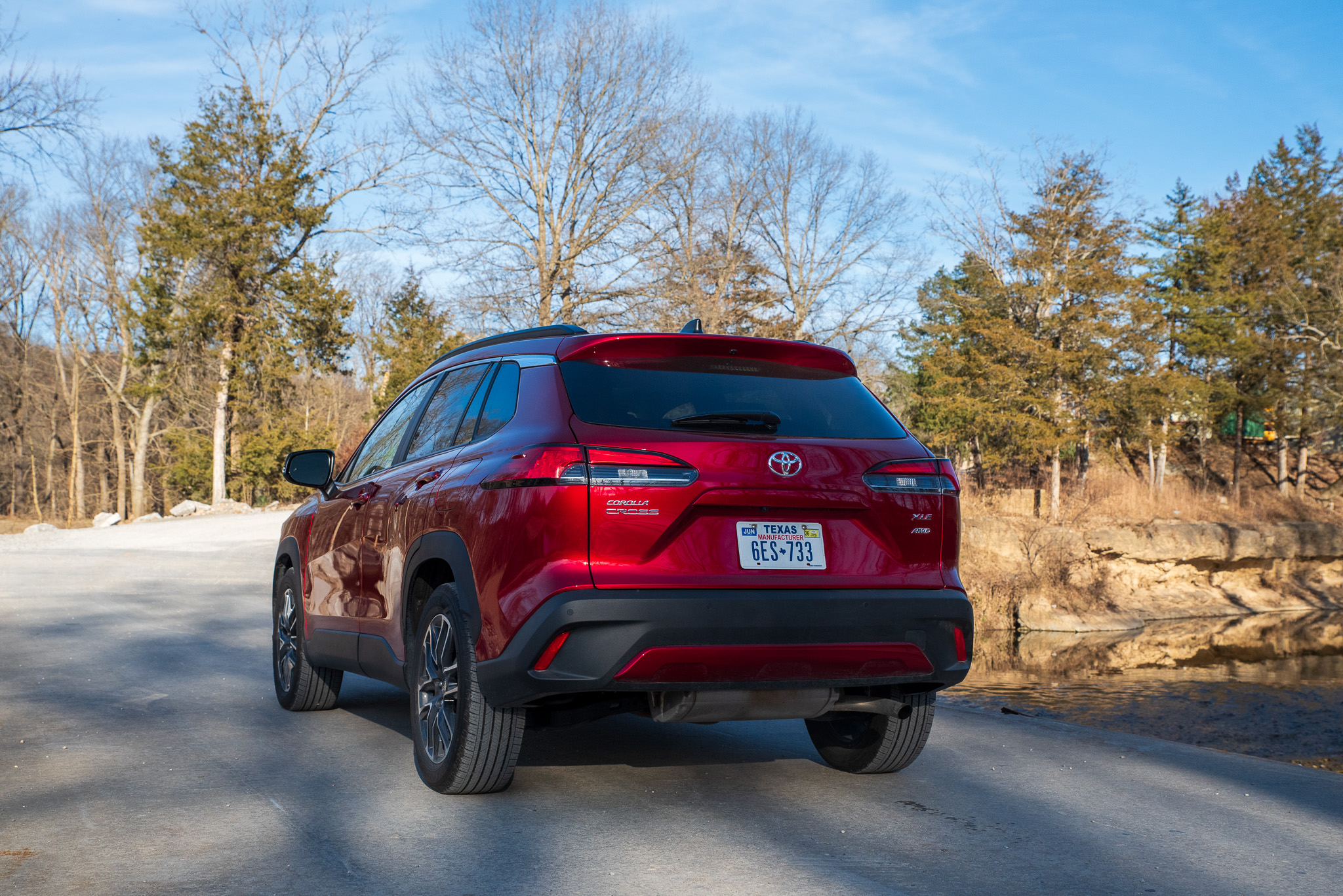
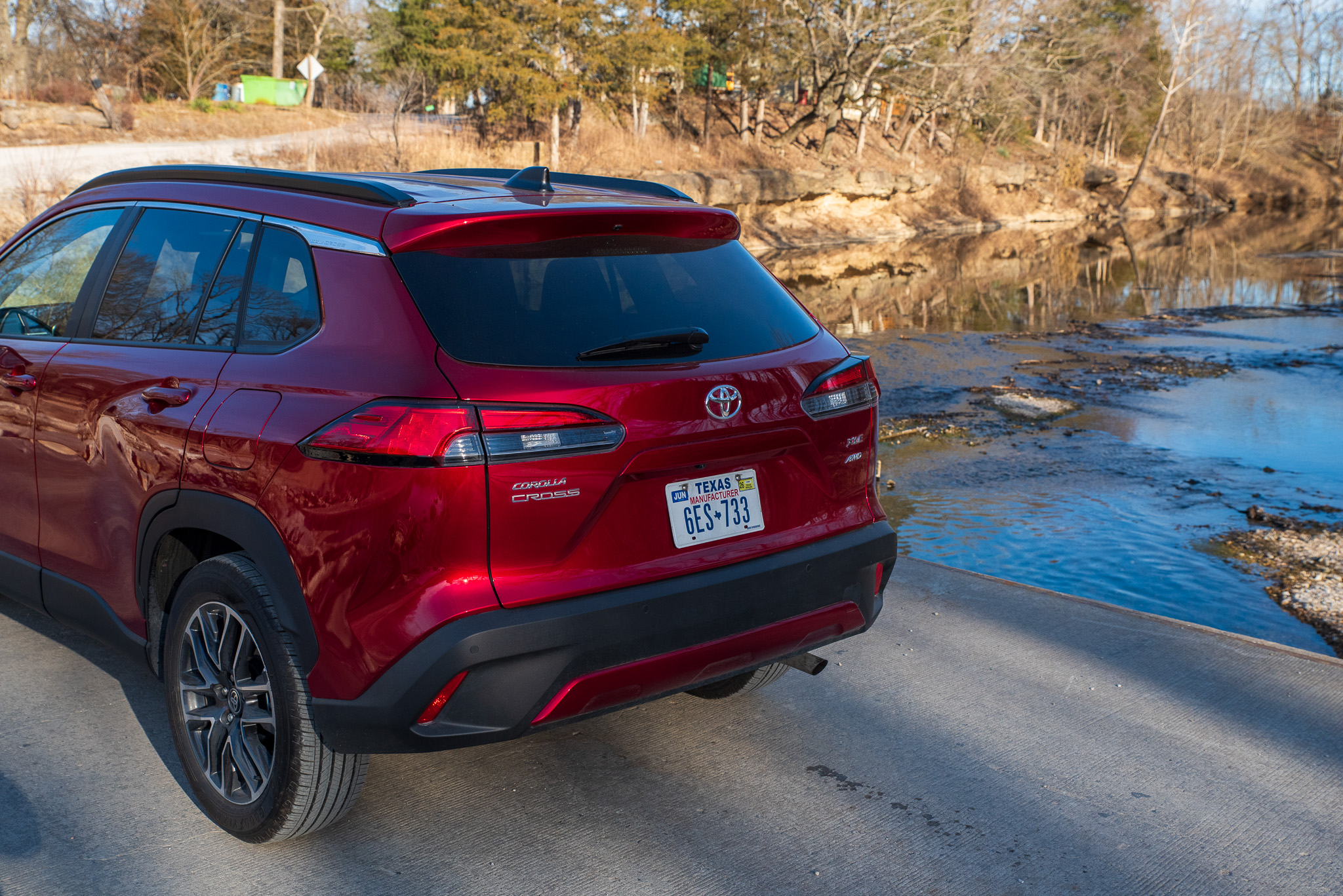
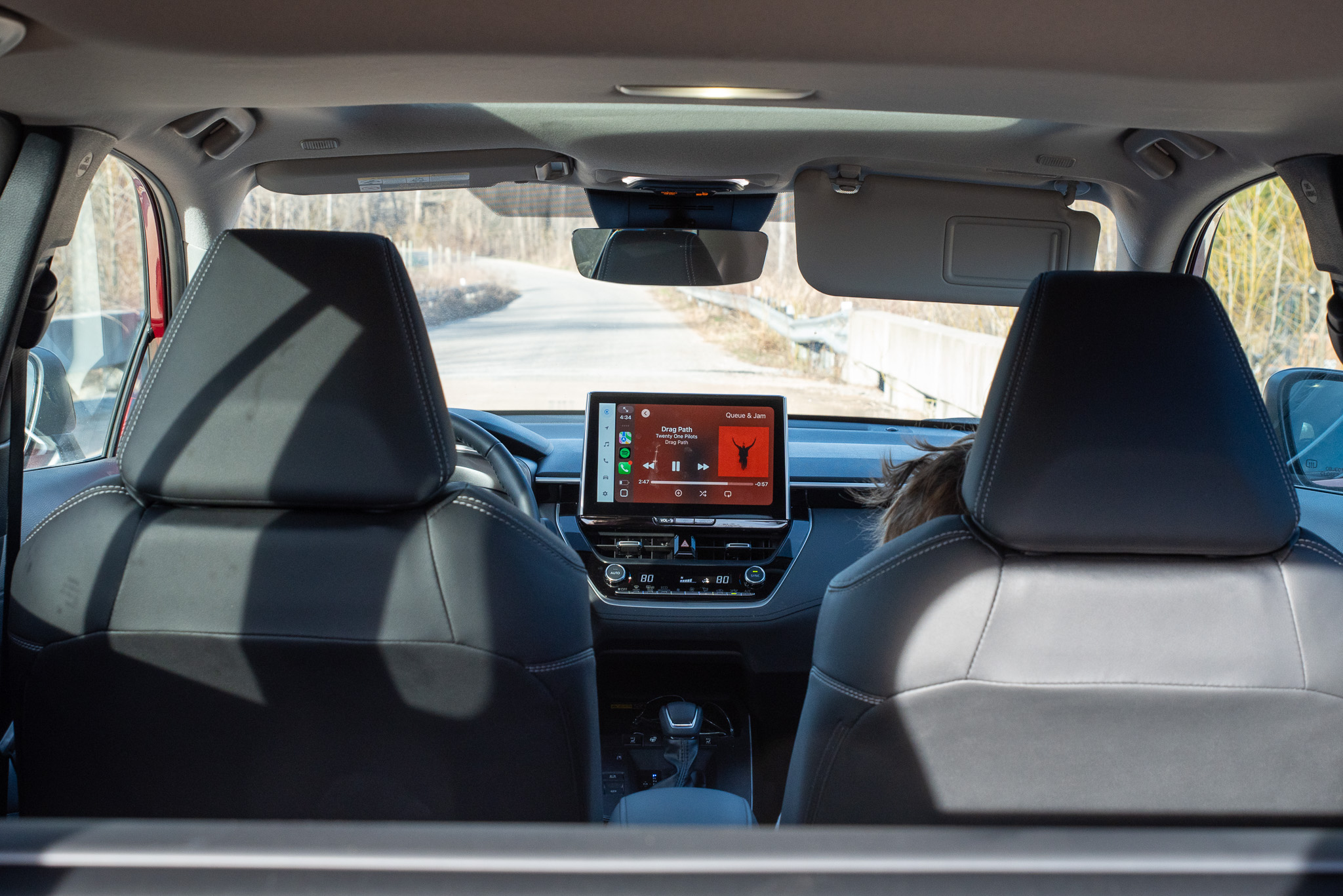
The low-frill theme is especially apparent inside the car. Even in the top XLE trim, it feels like a budget model. The Corolla Cross still offers everything you’d ever need, from a 10.5-inch infotainment display with wireless Android Auto and Apple CarPlay to heated seats, dual-zone climate control, and a power liftgate out back. In short, the appointments are there—the vibe is cheap but mostly cheerful.
While Toyota makes a Corolla Cross hybrid, the one I tested was a gas-only model with the 2.0-liter four-cylinder and continuously variable transmission. This powertrain combo makes a humble 169 horsepower and 151 lb-ft of torque. Front-wheel drive is standard, though all-wheel drive is available, and my press loaner was equipped with it.
Driving the Toyota Corolla Cross
I’m a big guy at 6’5″ and 290 pounds, so I didn’t expect to fit all that well in this particular ‘Yota. My expectations were mostly accurate. I didn’t have any issues with stretching my legs out; rather, it was the width that bothered me. Maybe I’m more bow-legged than I thought, but both of my knees rested on plastic panels constantly. That gets old pretty quickly, but not everybody is my size, either.
The Corolla Cross’s engine is unremarkable, which will be totally OK with most people in the market for one. It does what you need it to: Get up to interstate speeds, pass a slow-moving car here and there, and drive you around without any problems. In AWD guise, it’s still decently efficient, but the juxtaposition with Toyota’s hybrid models makes its 30 mpg combined rating less impressive.
This 2.0-liter runs on the Atkinson cycle rather than the more typical Otto cycle, which is a nerdy way of saying it prioritizes efficiency over performance. Toyota uses this tactic on its hybrids, too, but they have an electric motor to help fill in the gaps. This one doesn’t, so you have to be patient with it while also accepting that it’s going to really wind up when you hammer it.
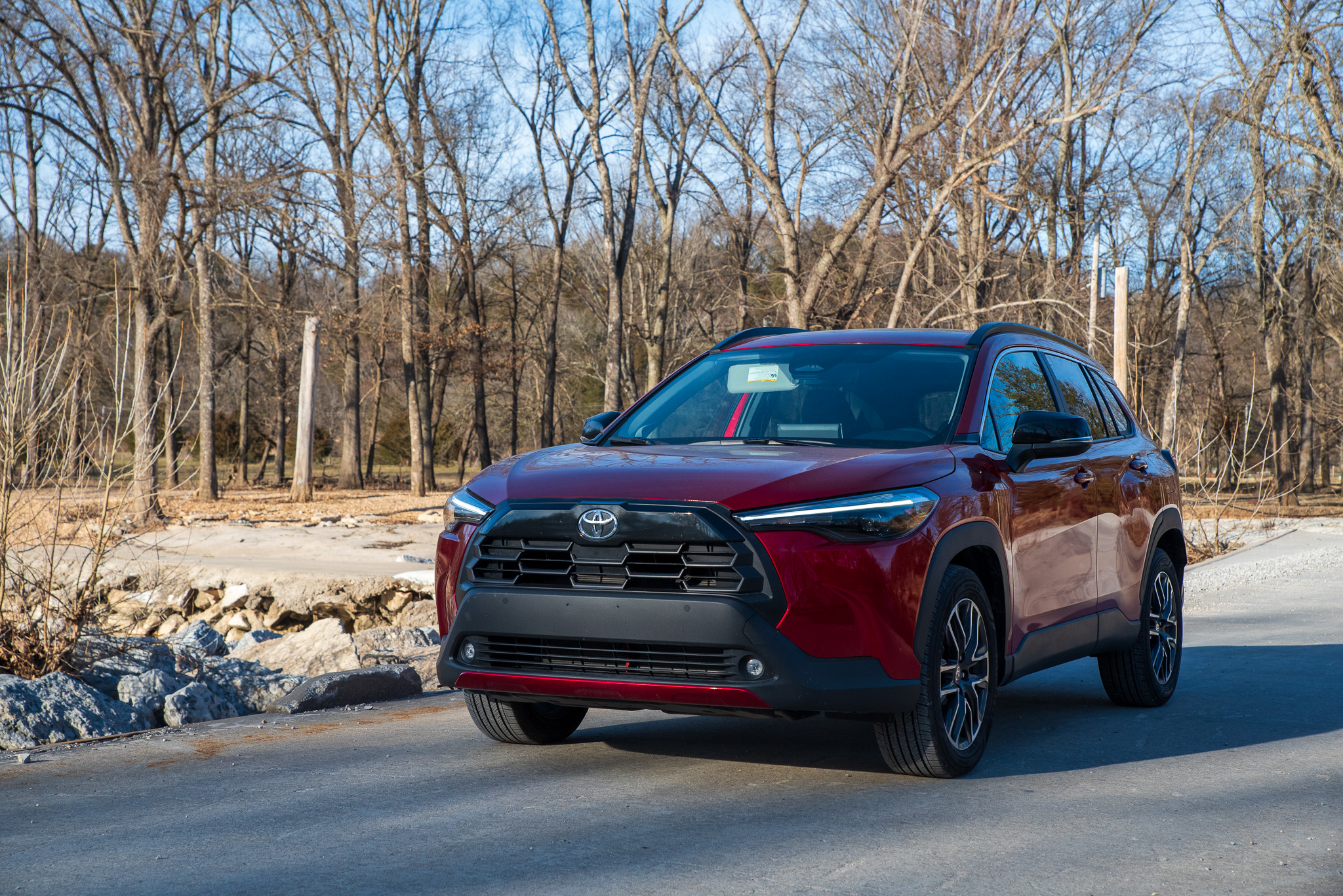
You’ll like how compact the Corolla Cross is if you need to maneuver it around a city or a suburb. It steers like a small crossover, which is to say, there’s little feedback and little effort. Visibility is good to boot.
You won’t like how compact it is if you need to fit a rear-facing car seat. It’s fine if no one has to sit in front of it, but my wife and I couldn’t have sat comfortably in the car with our kids (ages seven, three, and one). Again, Toyota makes plenty of crossovers and SUVs that will fit a family of five, but the Corolla Cross ain’t one.
Ultimately, the driving experience here is just as it is in almost every other car that’s similarly sized, similarly shaped, similarly powered, and similarly equipped. There’s precious little character in this segment, and although a small spark could help set the Corolla Cross apart, it doesn’t have it. If anything, I think it’s guilty of relying too much on brand recognition and reputation. It’s like Toyota knows people recommend its cars to anyone who just needs a cheap, reliable daily driver and decided to stop there.
The Highs and Lows
The Corolla Cross does what it says on the tin. In that sense, everyday livability for people with one kid (or no kids) is pretty solid, and you can fit a lot behind the front seats if you fold down the rear bench. Really, the high point is how little thought you have to put into driving it every day. Get in, turn the key, travel wherever you need to, and have peace of mind that there’s a warranty to backstop you in case anything goes wrong.
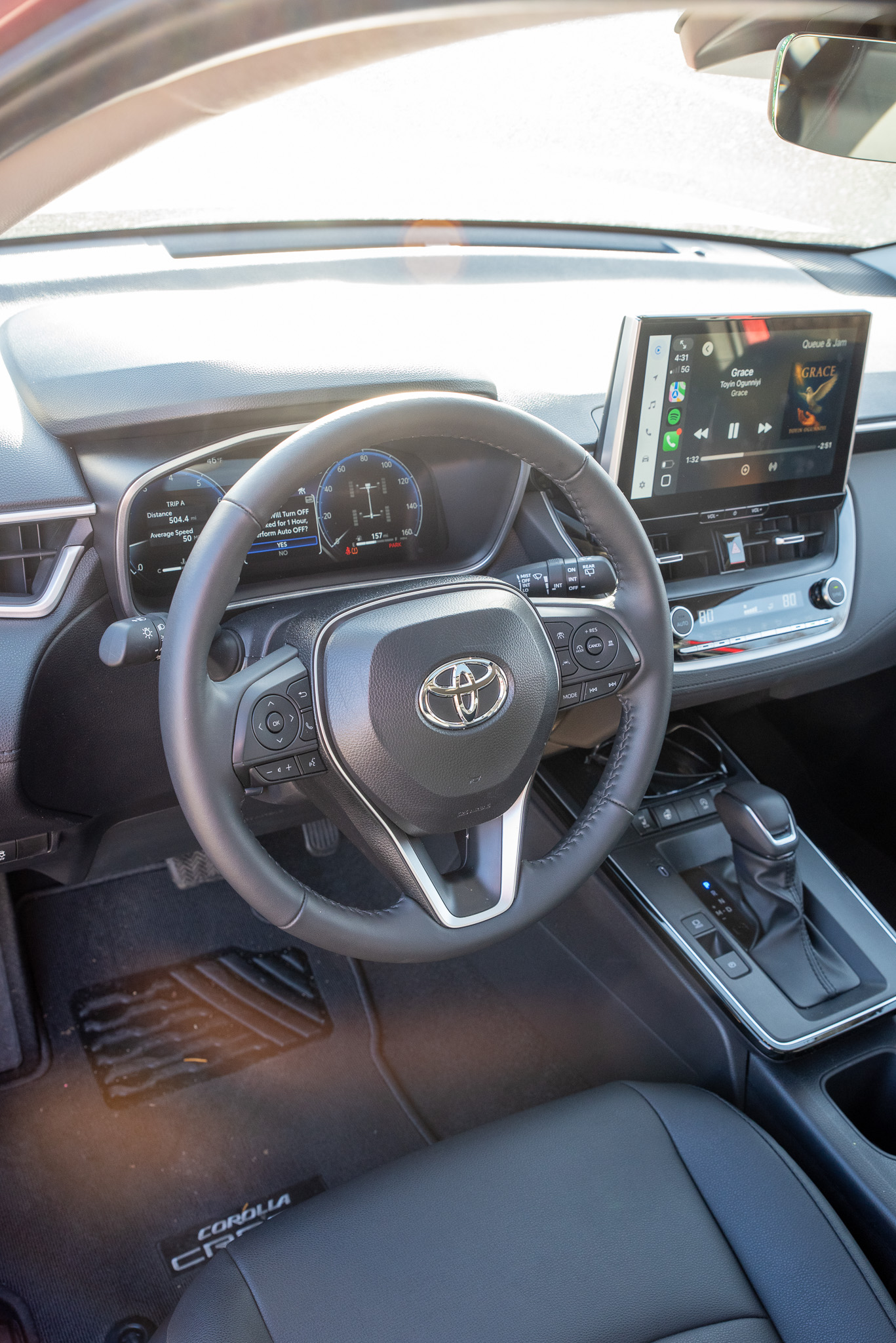
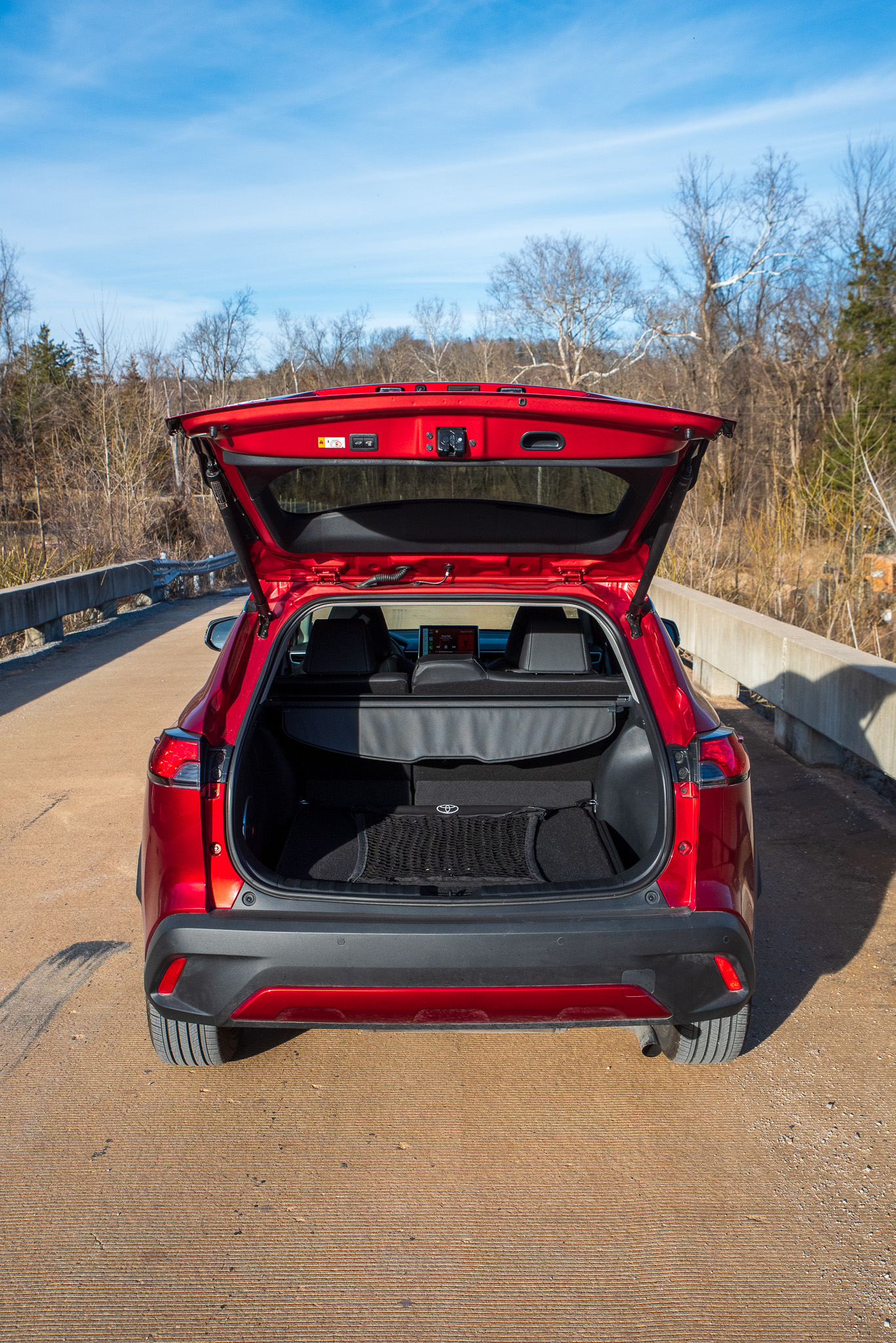
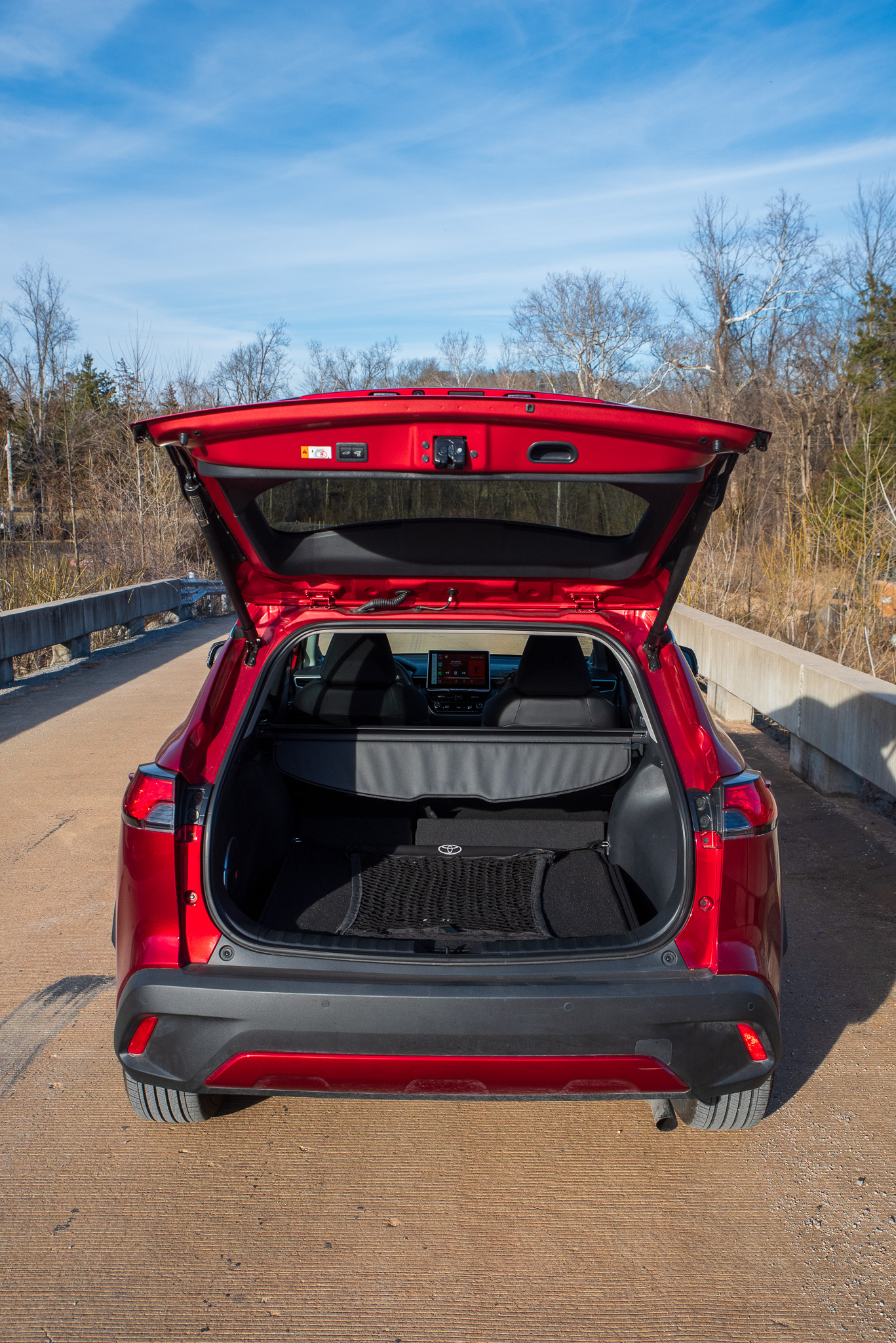
The low point is that it’s boring. Boring, boring, boring. And the car I drove cost too much.
Toyota Corolla Cross Features, Options, and Competition
Every Toyota Corolla Cross comes standard with features that young people and their parents care about. Wireless Android Auto and Apple CarPlay are there, as is Toyota Safety Sense 3.0. That means they all have automatic high beams, radar cruise control, land departure alert, and a pre-collision system that provides audio and visual warnings as well as brake assist under certain conditions. It’s basically the college kid special.
Folks can option the Corolla Cross with AWD ($1,400), a convenience package with a power liftgate and moonroof ($1,250), JBL premium audio ($800), and snazzy paint like my tester’s Soul Red Crystal ($475).
This Toyota competes with approximately 100 other cars in the subcompact segment. OK, that’s a joke, but there genuinely are a lot. The Mazda CX-30 and FWD-only Chevy Trax that I mentioned earlier are some key players, as are the Kia Seltos, VW Taos, and Honda HR-V. In terms of pricing, the Corolla Cross is in the middle of the pack. I think that sums up the car pretty well.
Fuel Economy
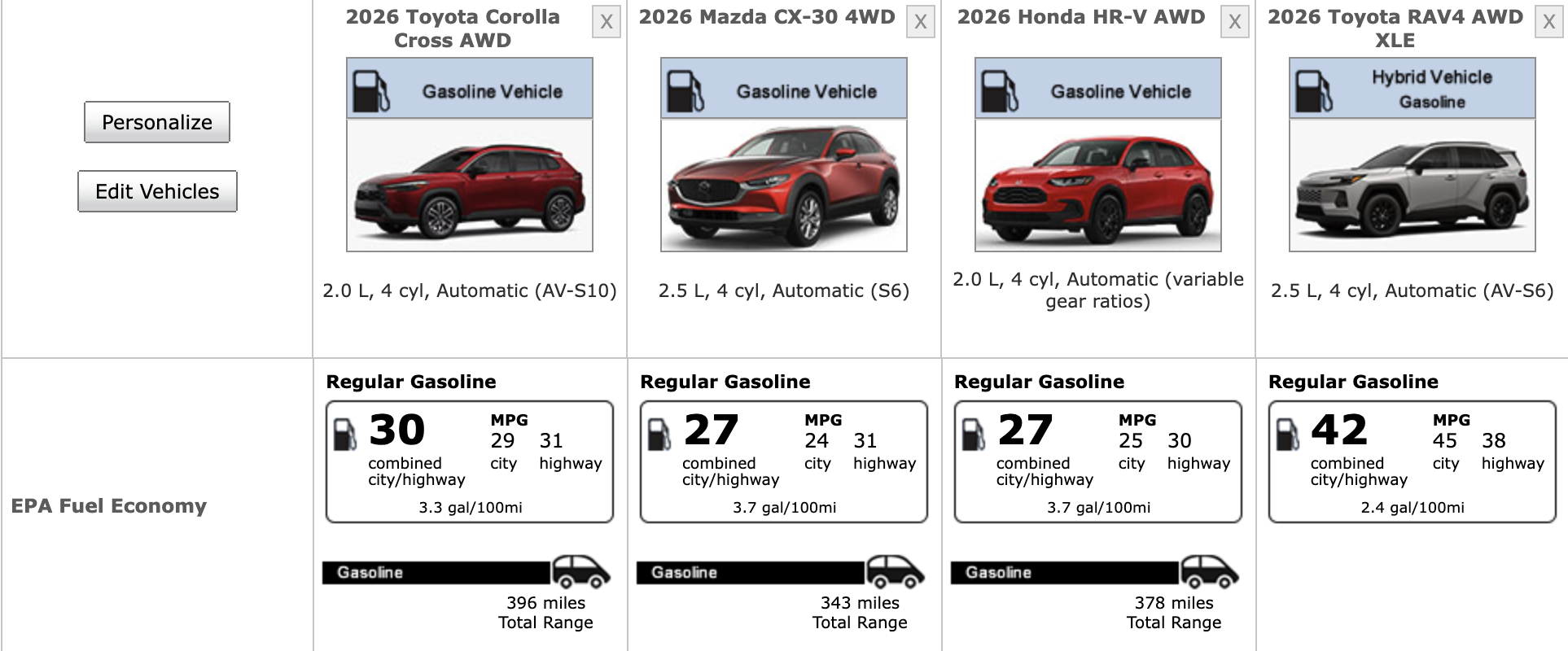
Among the cars in its class, the Corolla Cross AWD is actually one of the most efficient at 29 mpg city / 31 mpg highway / 30 mpg combined. It beats the Mazda (24 mpg city / 31 mpg highway / 27 mpg combined) as well as the Honda (25 mpg city / 30 mpg city / 27 mpg combined), and not by just a little. Where I struggle is knowing that you can get an all-wheel drive RAV4 for a skosh under $35,000 and hit 45 mpg city / 38 mpg highway / 42 mpg combined. I know they’re in different segments, but still.
Verdict and Value
I’m glad the Corolla Cross exists for people who need an affordable car that’s slightly bigger than a hatchback. That said, I would never buy a top trim model knowing that I could get a RAV4 for the same money. Having tested them both, the RAV4 is better all around, and the added complexity of the hybrid system isn’t such a concern to me since Toyota has proven them to be reliable over the last 20 years.
New parents and older ones will continue buying these to haul their babies, whether they be in carseats or in college. I don’t blame them; it’s a Toyota, after all. But if you’re a single person at least halfway interested in enjoying what you drive every day, there are better options.
Toyota provided The Drive with a seven-day loan of this vehicle for the purpose of writing this review.
Got a tip or question for the author? Contact them directly: caleb@thedrive.com
2026 Toyota Corolla Cross Specs
| Base Price (XLE AWD as Tested) | $26,450 ($35,404) |
| Powertrain | 2.0-liter four-cylinder | continously variable transmission | all-wheel drive |
| Horsepower | 169 |
| Torque | 151 lb-ft |
| Seating Capacity | 5 |
| Towing Capacity | 1,500 pounds |
| Cargo Volume | 24 cubic feet behind second row | 46.9 cubic feet behind first row |
| EPA Fuel Economy | 29 mpg city | 31 highway | 30 combined |
| Score | 6.5/10 |

Quick Take
Toyota knows how to build a cheap car, but there’s no reason to buy this one if you option it up.
Loading comments…
Comments couldn’t be loaded. Please refresh the page.