
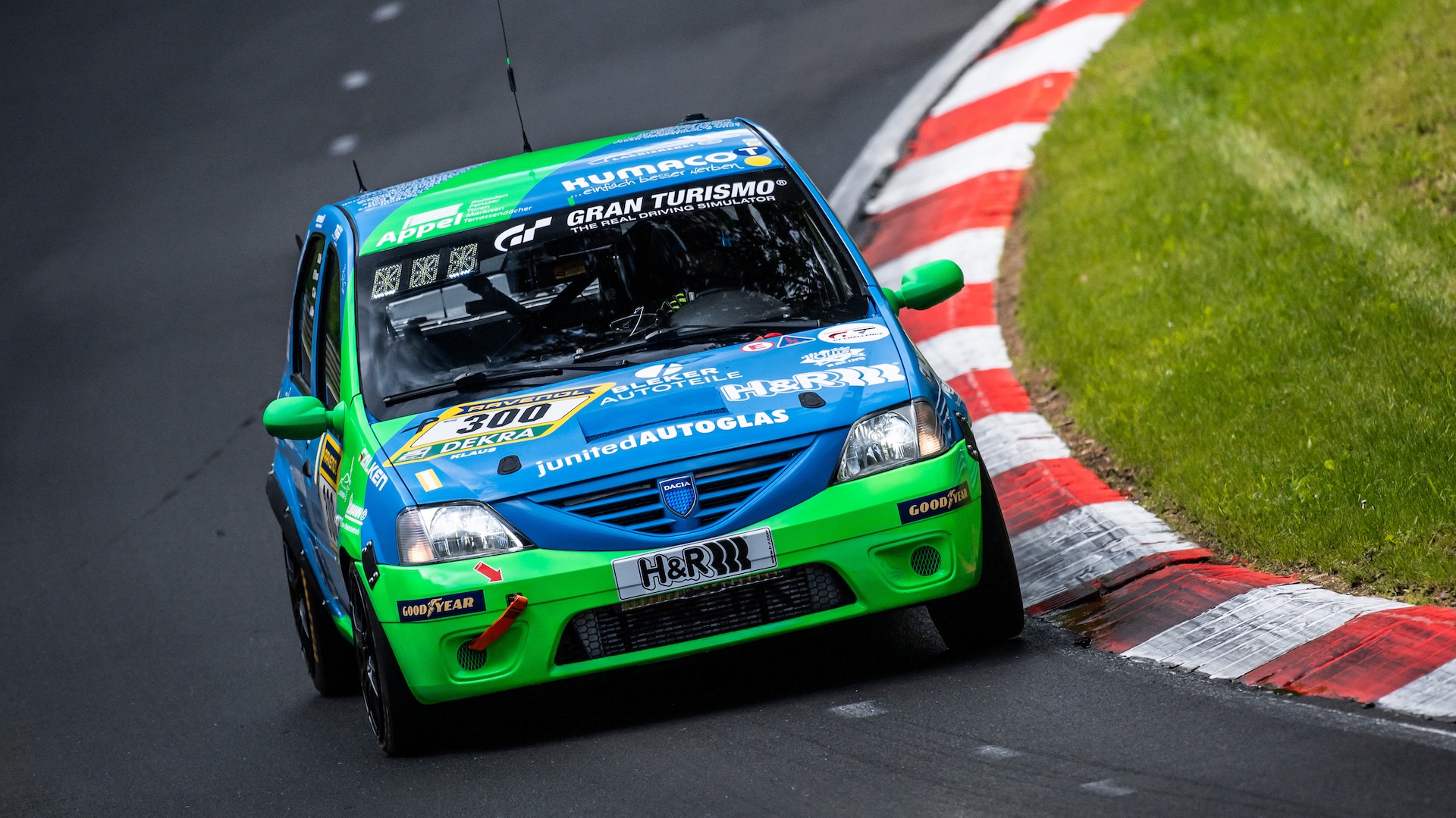
The world is full of contradictions; some of them funny, most of them not. One of the particularly good ones, however, manifested itself this weekend at the 2026 Nurburgring 24 Hours. Always a big race on many enthusiasts’ bucket lists, it was even more so this year because of the participation of a little-known driver named Max Verstappen. Photos and videos from the track show tidal waves of fans having an absolute riot on the Eifel mountains, but despite the outpour of support for the Dutch F1 champion, there was an unexpected hero; a hero of the people: a little Dacia Logan econobox.
The No. 300 Romanian machine fielded by Olli’s Garage stole the show on social media right away, becoming a sensation quite literally overnight, almost around the same time that Eurovision crowned another Eastern European country the winner of the famous song contest. Sure, Verstappen was getting loads of coverage, most of it due to his daring passes, brief off-track excursions, and just the fact that his overall domination of the Nurburgring Nordschleife looked to be just another virtual race for him. He made it look easy.
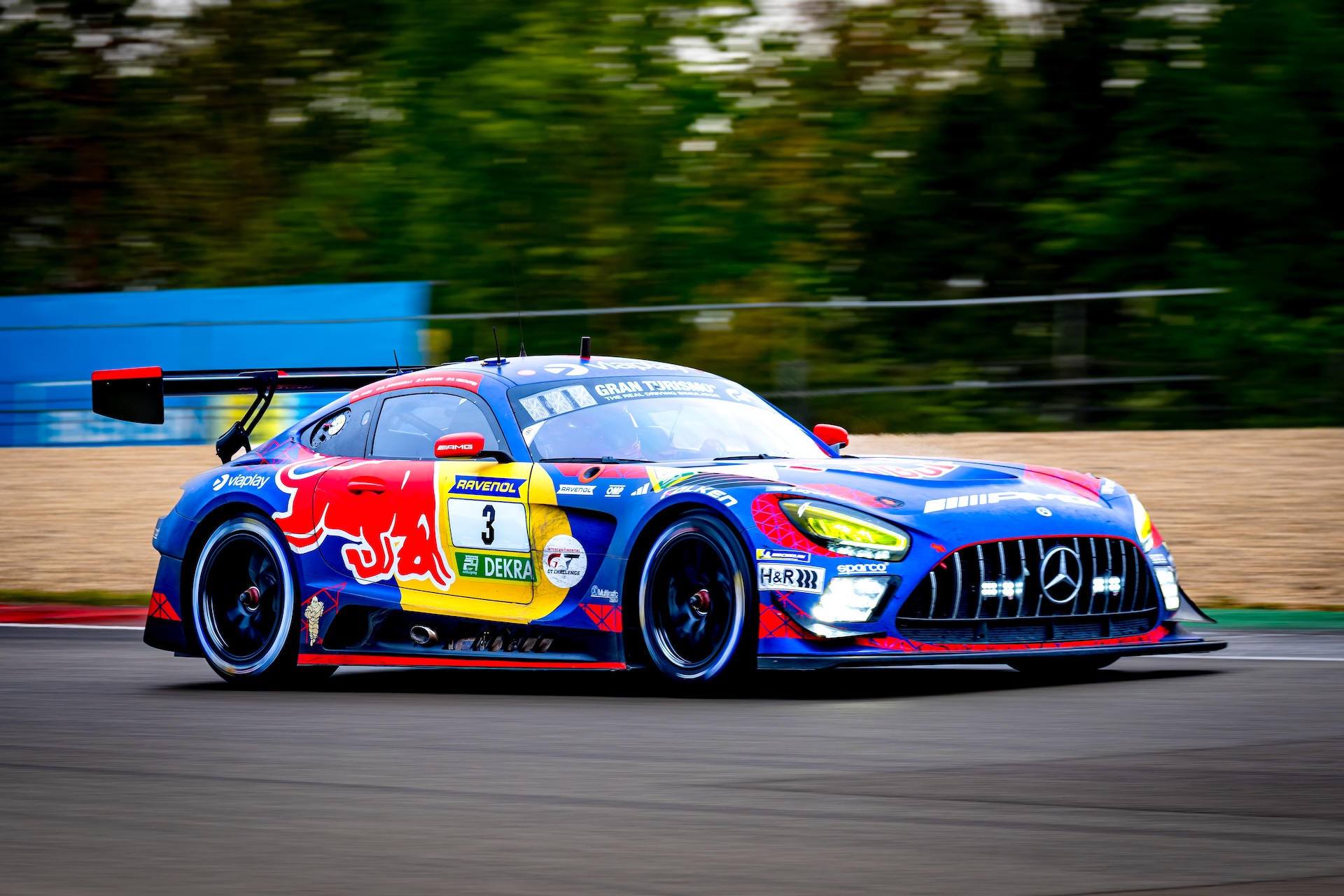
At some point, Verstappen encountered the 280-horsepower Dacia in the back part of the circuit, and the four-time F1 champ had to flash his lights more than a few times to get through the little commuter car. Just seeing the Logan in the same photos or videos as Verstappen’s Mercedes-AMG GT3 wrecks your brain a bit. But really, that’s the beauty of a race like the Nurburgring 24.
As I was saying above, it’s an example of a beautiful contradiction. Racing diehards go to these events to see the fastest, most advanced race cars in the world, piloted by the best drivers competing for glory. It’s safe to say that Verstappen’s Mercedes was probably the best-prepped GT car in the world that weekend. No expense was spared to make sure he had the best tool for the job. Yet the underdog, the relatable, the “blue collar” storyline almost always wins.

Dacia Logan Nürbergring 24H highlights🔥#Nürbergring #dacialogan #24hours

DACIA LOGAN HERO – Survives The 24h Nürburgring Race #f1 #shorts #nürburgring #endurance
When the Dacia, which was one of just seven cars in the SP3T category, crashed and lost its left-front wheel with just three hours left on the clock, there was an outpour of support online from people all around the world who were cheering on the No. 300. The Dacia was towed off the track and eventually made its way to the garage, where it was fixed. Even before this happened, the Olli’s Garage crew had to deal with an engine misfire, and then there were a couple of spins due to driver error.
By this point, even the race’s official Instagram account was posting more content of the Dacia than any other car or driver, and very promptly shared a clip of the blue-and-green sedan triumphantly returning to the track to finish the race, which it absolutely did—in 107th place—despite a long list of time penalties due to shenanigans like an illegal u-turn on track, and exceeding the speed limit on a slow zone. Meanwhile, Verstappen retired due to a mechanical issue, reportedly a broken driveshaft.
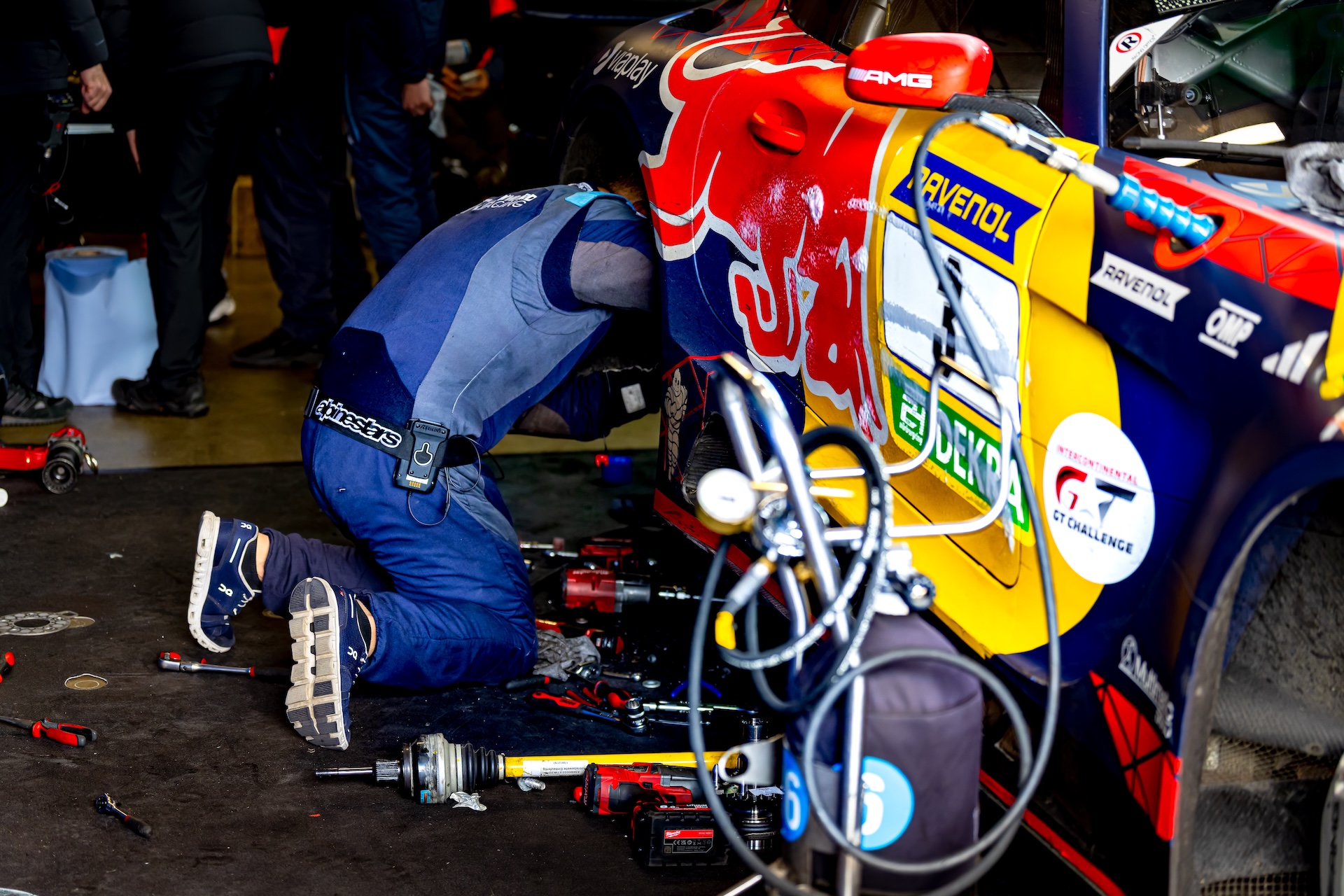
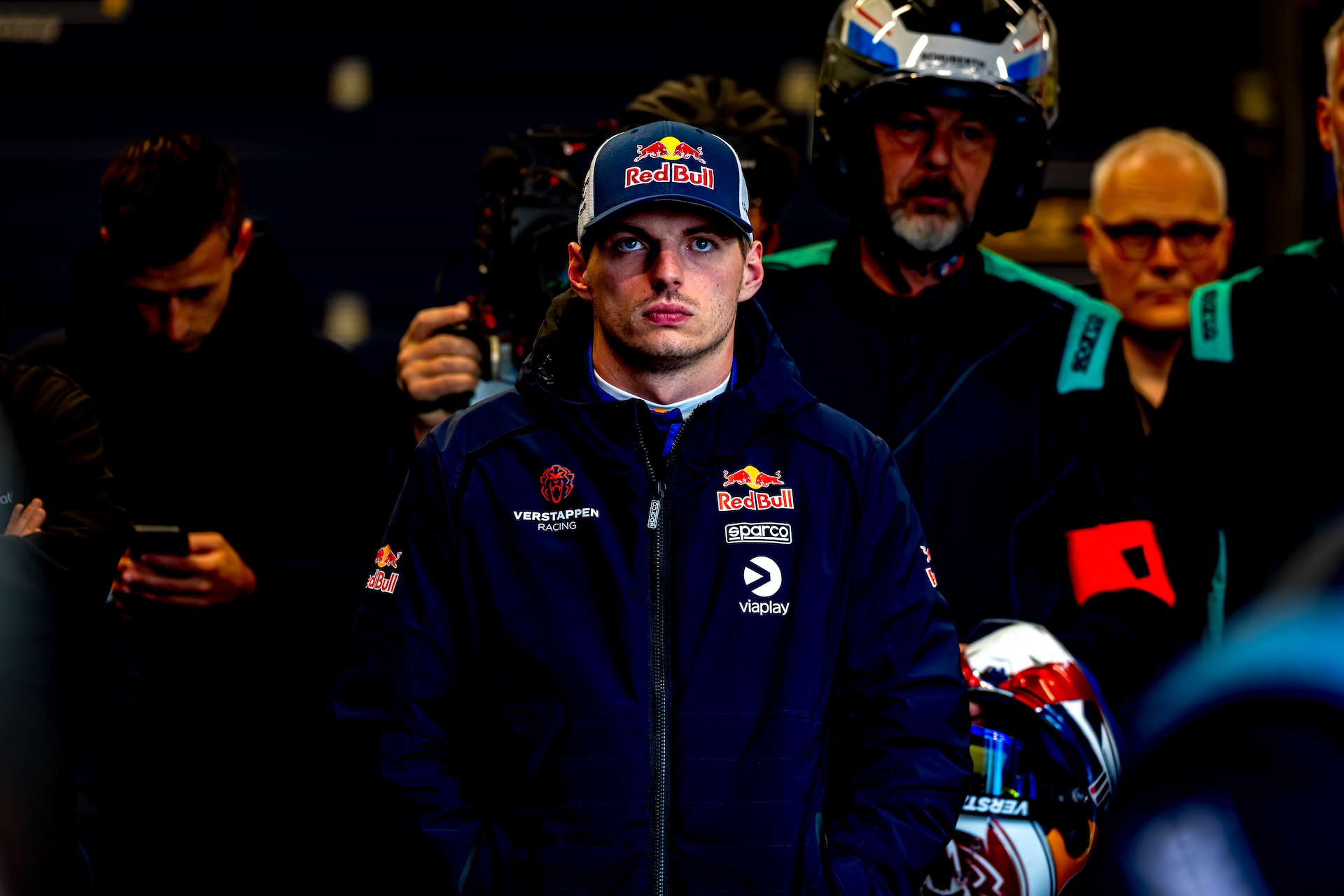
Loving a cheap little Dacia in a field full of high-dollar pro race cars reminds me a bit of the fact that, driving a slow car fast is much more enjoyable than driving a fast car slow. Not to take anything away from Verstappen’s showstopping performance, but as it turns out, watching a slow car race its heart out can be more satisfying than watching the world’s best F1 driver charge his way through the field in state-of-the-art machinery.
Godspeed, little Dacia Logan. You are a hero.
Got a tip? Email us at tips@thedrive.com
Loading comments…
Comments couldn’t be loaded. Please refresh the page.