
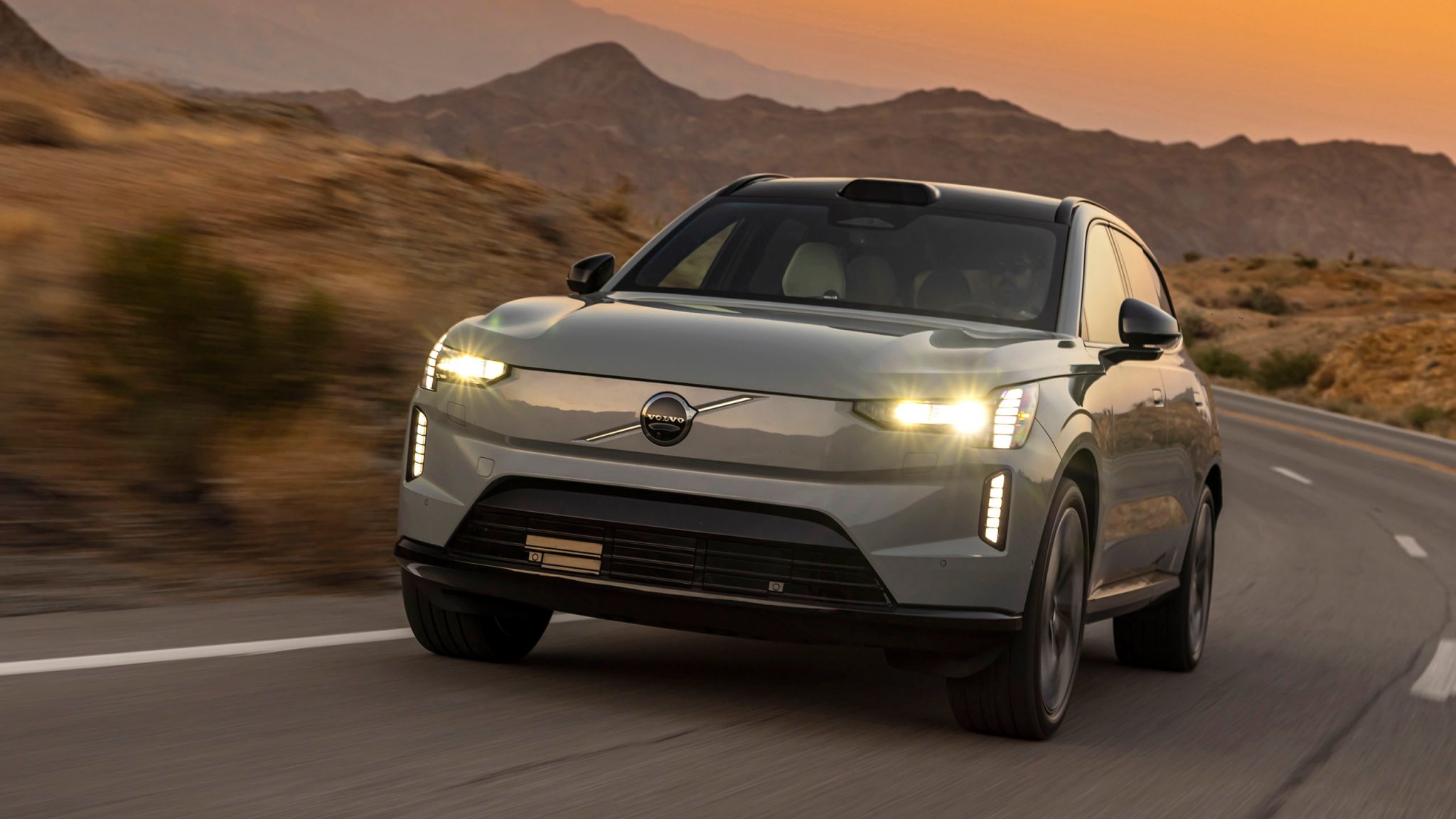
If safety is what first comes to mind when you think of Volvo, dependability is a close second. In advertisements, the automaker once touted the indestructible nature of its cars as often as it did safety innovations. But in the benchmark J.D. Power rankings, Volvo has slid nearly to the bottom.
In J.D. Power’s 2026 Vehicle Dependability Study, which measures dependability of new cars and trucks by the number of owner-reported problems per 100 vehicles, Volvo was ranked next-to-last. Owners surveyed reported 296 problems per 100 vehicles, just ahead of Volkswagen (301), but behind perennial problem children Jeep (267) and Land Rover (274). The average across all brands was 204 problems per 100 vehicles.
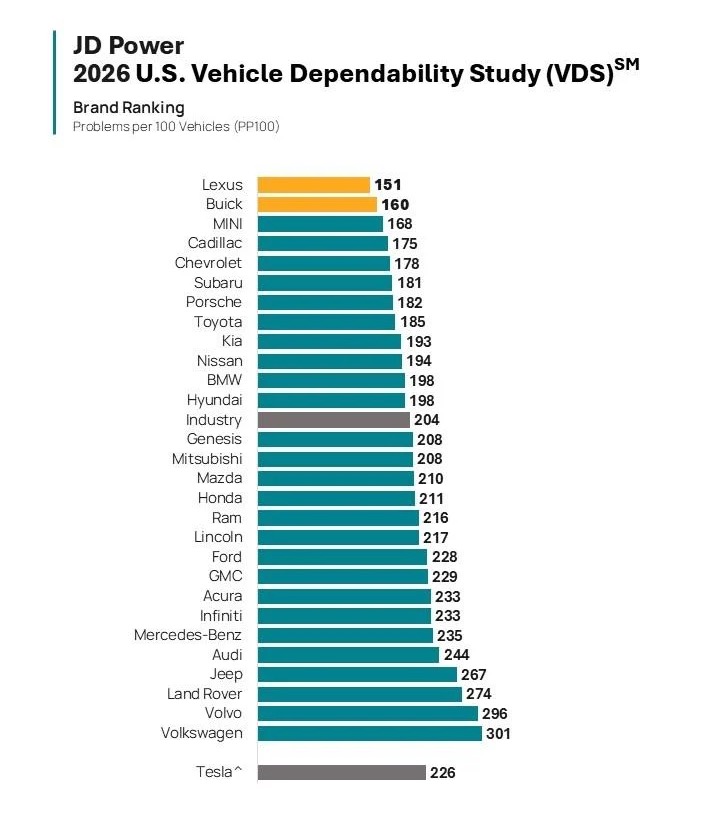
Volvo was ranked ahead of all of those brands in the 2025 study, albeit still far from the top. Last year, Volvo owners reported 242 problems per 100 vehicles, putting the Swedish automaker 23rd among 31 ranked brands, and worse than the industry average of 202 problems per 100 vehicles.
The decline for 2026 aligns with overall industry trends highlighted by J.D. Power. Analysts noted a high level of frustration with over-the-air (OTA) software updates, and found that vehicles with plug-in hybrid and all-electric powertrains had more reported problems than those with hybrid and conventional gasoline powertrains. Volvo has struggled to deliver reliable software in recent years, while filling its lineup with plug-in hybrids and EVs.
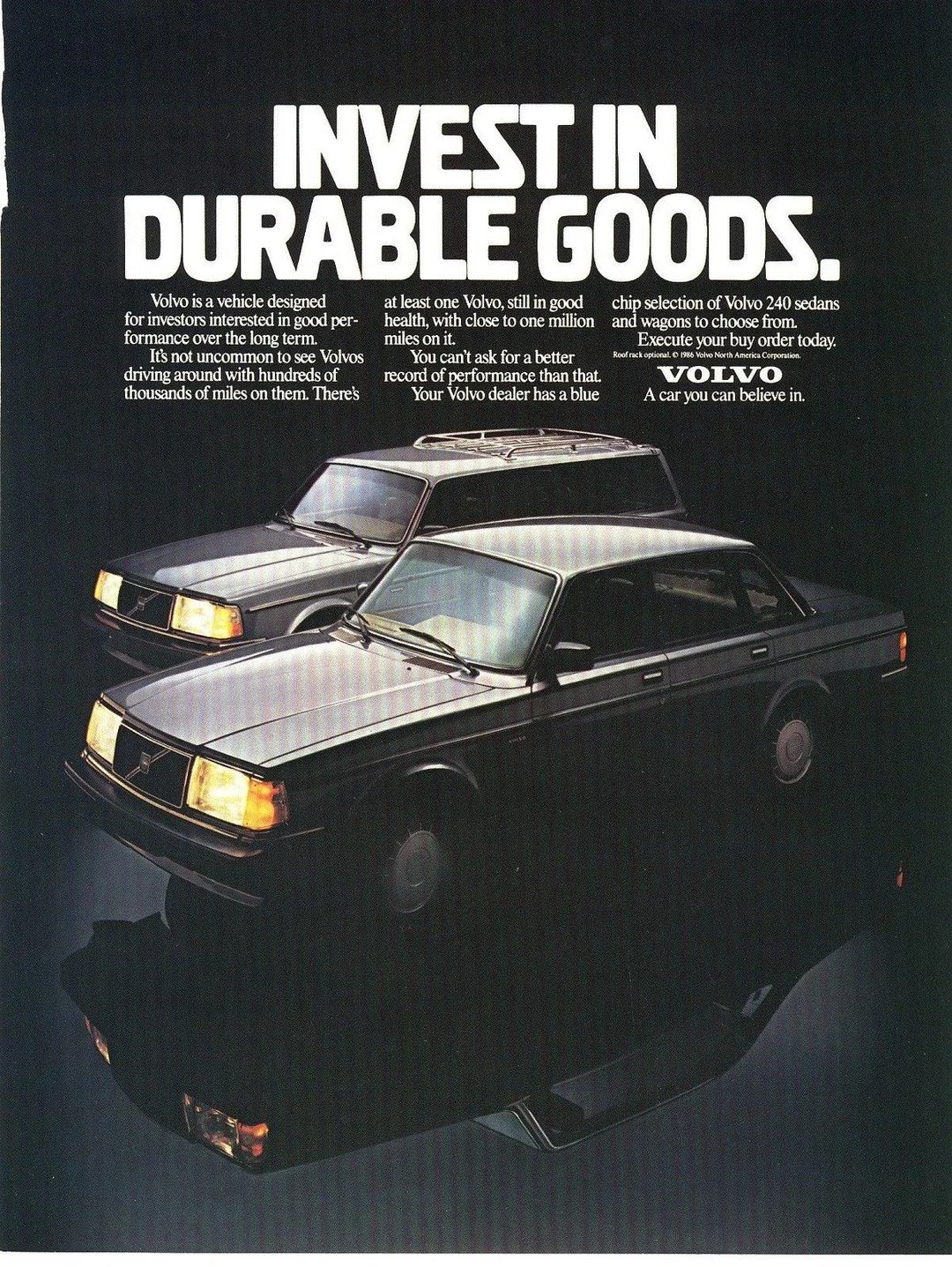
New cars are more complicated than ever, which can have a negative impact on long-term reliability. But loyal customers have a reason to be disappointed in Volvo’s poor performance. As a poster in the r/Volvo Reddit forum pointed out, the automaker’s ads used to feature taglines like “invest in durable goods” and “drive your Volvo like you hate it.”
Like the prestige German brands, however, Volvo has shifted from emphasizing dependability and engineering to emphasizing technology and design as justification for price premiums. Volvos are no longer “durable goods”; they’re luxury goods. On top of that, Volvo has made some missteps recently, embarking on a software-feature crusade that went poorly, and taking a step downmarket with the EX30 that was undone by policy changes. It’s now trying to turn all that around with its next-generation EVs.
Loading comments…
Comments couldn’t be loaded. Please refresh the page.