
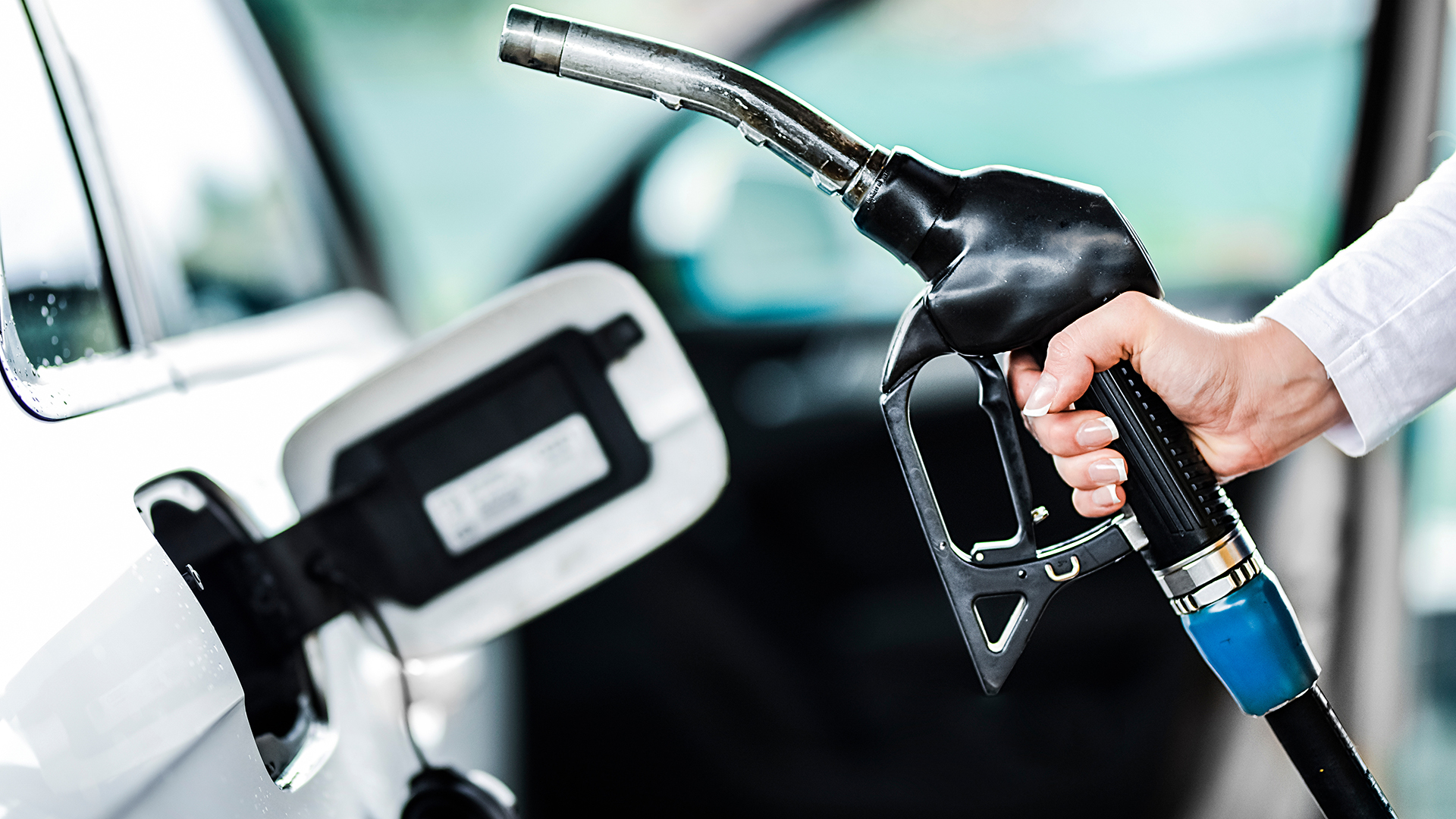
This week, Lee Zeldin’s EPA announced “approving nationwide E15,” pitching it as “fortifying the domestic fuel supply.” What that means exactly is that the federal government will allow more stations to cut gasoline with ethanol, which, yes, makes it cheaper, but it also yields less power and worse fuel economy in your engine.
Quick Download on the May 2026 E15 Gas Waiver
Here’s a really quick contextual download for those of you wondering what “E15” means and why it’s popping up in mainstream news this week.
- What is E10? Most gas in America is 10% ethanol (distilled corn alcohol) and 90% gasoline. It’s the “Standard Edition” fuel.
- What is E15? It’s the “Value Pack.” It’s 15% ethanol. It’s usually about 25 cents cheaper per gallon, but because it has more alcohol, it’s slightly less powerful.
- Why is there a “waiver”? Normally, the EPA bans E15 from June to September because ethanol evaporates faster than gas. In the summer heat, that extra 5% of corn juice turns into smog-forming pollution faster than standard gas.
- The timeline: This waiver is in effect from May 1 to May 20. Theoretically, the condition will return to normal after that.
- The catch: The government is basically saying, “We know this causes more smog, but there are wars where a lot of oil comes from, so we’re going to look the other way on the smog rules so you can have cheaper corn-gas.”
- The pitch: War in the Middle East (and the prevailing war in Ukraine) has caused what the EPA is calling a “National Energy Emergency,” creating the opportunity for fuel companies to raise prices. High gas prices make Americans angry at the government, and the government doesn’t want that.
- The precedent: This is not the first time an E15 waiver has been in the news—it came up in 2022, too.
- The truth on the ground: Most late-model (post-2001) cars can run E15 no problem, but old vehicles don’t like it, and small carbureted engines (chain saws, mowers, boats, buggies, etc.) really don’t—it can play havoc on old seals and rubber. Use extra caution when buying gas for such vehicles to make sure you’re using what’s advertised as E10 (or E0, which is sometimes available).
‘Boutique Fuel’ and ‘Unleaded 88’ Explained
The EPA press release talked about “removing boutique fuel markets”—we’re not talking about farmers’ market fuel.
Some states (California and Illinois, for example) have special recipes for gasoline to meet local smog regs. The EPA is temporarily sidestepping that to create a “Single National Gasoline Pool” to (probably) the delight of oil companies (less work for them to do).
But no matter what state you’re in, you usually see fuel options categorized by octane, not ethanol content. “Unleaded 88″ is typically how E15 is advertised—”88” refers to the octane rating, not ethanol percentage. Because ethanol is 114 octane, that extra 5% of corn juice bumps a standard 87-octane “Regular” up to 88. So if you’re trying to avoid E15, don’t pick up an Unleaded 88 pump.
The Context for Your Car
Most of the gas you get at American pumps is E10—10% ethanol. Ethanol is the fuel diluter of choice because it’s an oxygenator. It helps fuel burn and cuts carbon monoxide in tailpipe emissions. Decades ago, we used to use lead (which turned out to be toxic), then MTBE (which poisoned groundwater). But ethanol (corn juice) works and has fewer negative societal side effects.
And ethanol does indeed help make gas cheaper. It has an octane rating of about 114, so refiners can take lower-grade gasoline, splash in 10% ethanol, and bring it up to the standard knock-resistance rating of 87 octane for regular gas. Without it, your pump price would definitely be higher.
E10 is the current status quo because that’s the most the government could get away with without the auto industry rioting. And the Renewable Fuel Standard (RFS) actually mandates a legal quota of how many billions of gallons of corn juice are sold, which also factors in.
While ethanol is cheap and abundant, it also has about 33% less energy than gasoline. By reducing the energy density of fuel, the EPA says most cars will see a 1.5% to 2% drop in fuel economy moving from E10 to E15. The reality is a little more variable. Cars.com did a post explaining the numbers back in 2018:
“Ethanol’s lower energy density leads to worse gas mileage, which is why using E85 (E85 is 85 percent ethanol) in cars with a fuel system that accommodate it is usually a bad idea,” auto editor Kelsey Mays wrote. “The math carries to E10, which has up to 10 percent ethanol. A gallon of E10 has 96.7 percent of the energy in one gallon of gasoline, according to the DOE’s Alternative Fuels Data Center.”
Ethanol is also a solvent. It’s hygroscopic, meaning it sucks water out of the air. In high concentrations, it eats through standard rubber seals, plastic fuel lines, and even certain aluminum alloys in older engines.
Some engines are tuned to run E85—even more ethanol than gasoline. There are some high-performance applications of this, but the most common usage of it is in GM’s FlexFuel engines, which have special sensors and tuning to be able to run cheap corn-flavored fuel.
But higher concentrations of ethanol start to get a lot more attractive as the price of petrol heads to the moon.
The prevailing wisdom is that E15 is safe in vehicles made after 2001—a stat you might have seen in mainstream media stories about this fuel waiver announcement. The model year 2001 is called out because the EPA and DOE conducted a 6-million-mile test on a fleet of vehicles to see where the “break point” was for ethanol damage. Those studies determined that 2001-and-newer vehicles had the hardware (fluoropolymer linings) and the software (advanced oxygen sensors) to handle the extra oxygen without “leaning out” and melting valves.
Even if your car is newer, there are reasons to be skeptical about E15. Cases in point:
- The “Lean” Condition: High-performance engines (namely, anything with a turbo or high compression) are tuned to a specific air-fuel ratio. Ethanol contains more oxygen than gasoline. When the computer detects that “lean” condition, it doesn’t just spray 5% more fuel—it often has to dump significantly more fuel into the cylinder to keep temperatures down and prevent “knock” or “pinging.”
- The “Closed-Loop” Lag: While cars from 2001-and-up have the brains to adjust, they aren’t always 100% efficient at it. In city driving (stop-and-go), the computer is constantly chasing the right mixture as you tip in and out of the throttle. This “hunting” for the right mix is where that extra 1% or 2% of efficiency vanishes.
- Stoichiometric Hit: Ethanol burns cooler, which is great for power, but because it’s less energy-dense, you simply have to move more volume of liquid through the engine to get the same work done. For a truck towing a trailer or a sports car on a canyon run, that 1.5% theoretical drop can balloon to 4% in practice.
The thing that sucks the most about fuel science is how opaque it is. You see “up to 10% ethanol” and (usually) options for 87, 89, and 93 octane at the pump, but it’s all coming out of the same nozzle—there’s no way of validating what’s going into your tank in real time. Theoretically, we’ve got to count on federal and local regulators to keep fuel companies honest.
Got a story tip? Drop us a line at tips@thedrive.com.
Loading comments…
Comments couldn’t be loaded. Please refresh the page.