
Games like Screamer just don’t exist anymore. Here’s a narrative-heavy, cyberpunk-flavored, anime-inspired arcade racer with a totally bonkers control scheme and no open world, from the team best known for Hot Wheels Unleashed and countless motorcycle simulators. It’s suited perfectly for competitive play, yet has a lengthy single-player campaign; its cars are stunning characters in their own right, but aren’t licensed. Have I mentioned the soundtrack kicks ass? Screamer isn’t just good—it’s the biggest surprise racing games have seen in too many years to count, and I’m so glad that it exists.
Screamer’s strong art direction, combat gameplay elements, and deep lore that I entirely expect to give rise to a whole fanfiction community might make it out to be more complicated than or something other than what it is at its core, which is an arcade racer. Real ones remember the original Screamer from the mid-’90s: A PC-exclusive, 3D polygonal racing game that effectively gave folks without a PlayStation something to ease the pain of missing out on Ridge Racer. That game was developed by the same company as this one—then known as Graffiti, now known as Milestone, based in Milan. And that’s precisely where any similarities between them end.
The new Screamer’s most obvious distinguishing factor is its control scheme: You drive with both left and right analog sticks, as well as gas and brake on the triggers, where you’d expect to find them. The left stick steers normally, but the right one sends you into a drift, regardless of throttle position. We’ll get into how that feels a bit later on.
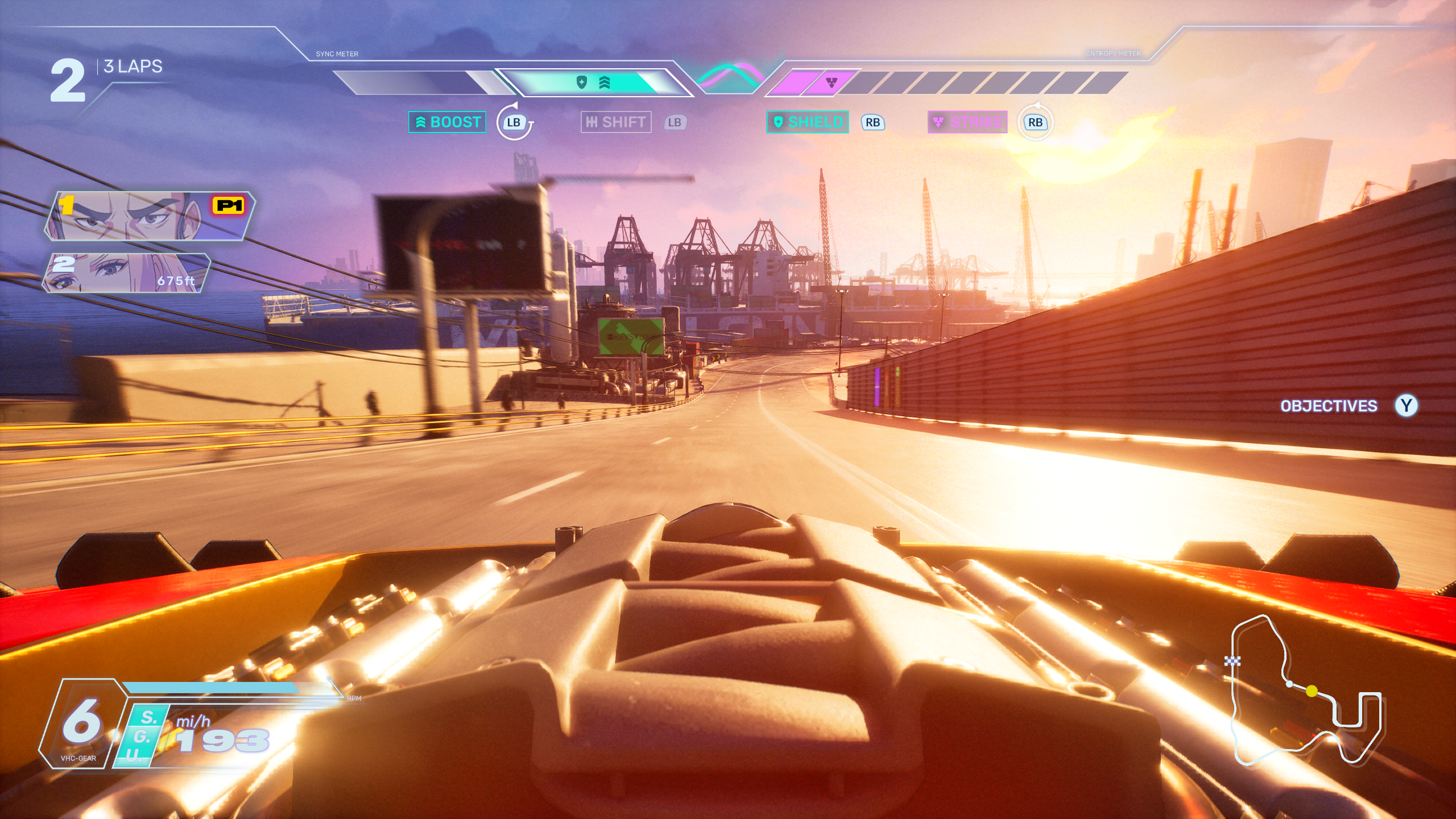
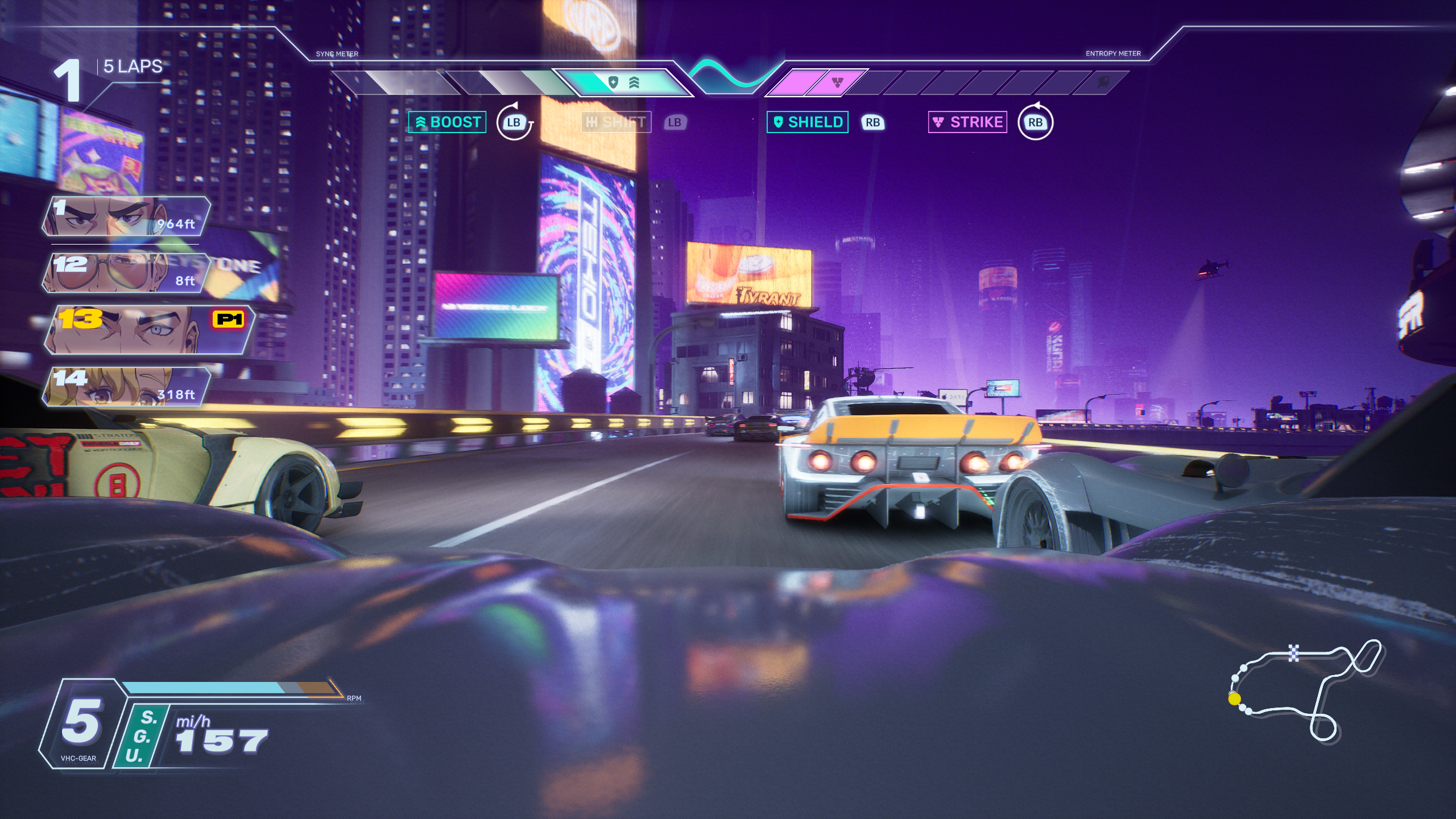
This being a video game in the year 2026, though, pure driving alone might not hold everyone’s attention, so you have two meters to manage during races: Sync and Entropy. Sync is effectively the Screamer universe’s name for boost, and it’s accumulated not by drifting, but instead by shifting up at proper times and driving at top speed. Entropy, which isn’t introduced in the story mode until a bit later on, contributes the combat side of the racing. By burning your Sync to boost, you gain Entropy, which can be spent to very briefly turn your car into an invincible battering ram that can knock out opponents (they respawn). When you do knock them out, you gain back some Sync, leading to a satisfying gameplay loop when you’ve got everything clicking as it should.
Entropy can also be spent to briefly shield yourself from attacks—called Strikes—and you’re alerted to any incoming offensive moves via the HUD. But Strikes can also be canceled just before they’re launched, since they’re triggered by a button hold. A clever trailing driver might start winding up a Strike to goad their rival into using their shield, call off the attack, then wreck ’em when the shield fades and they become vulnerable again.
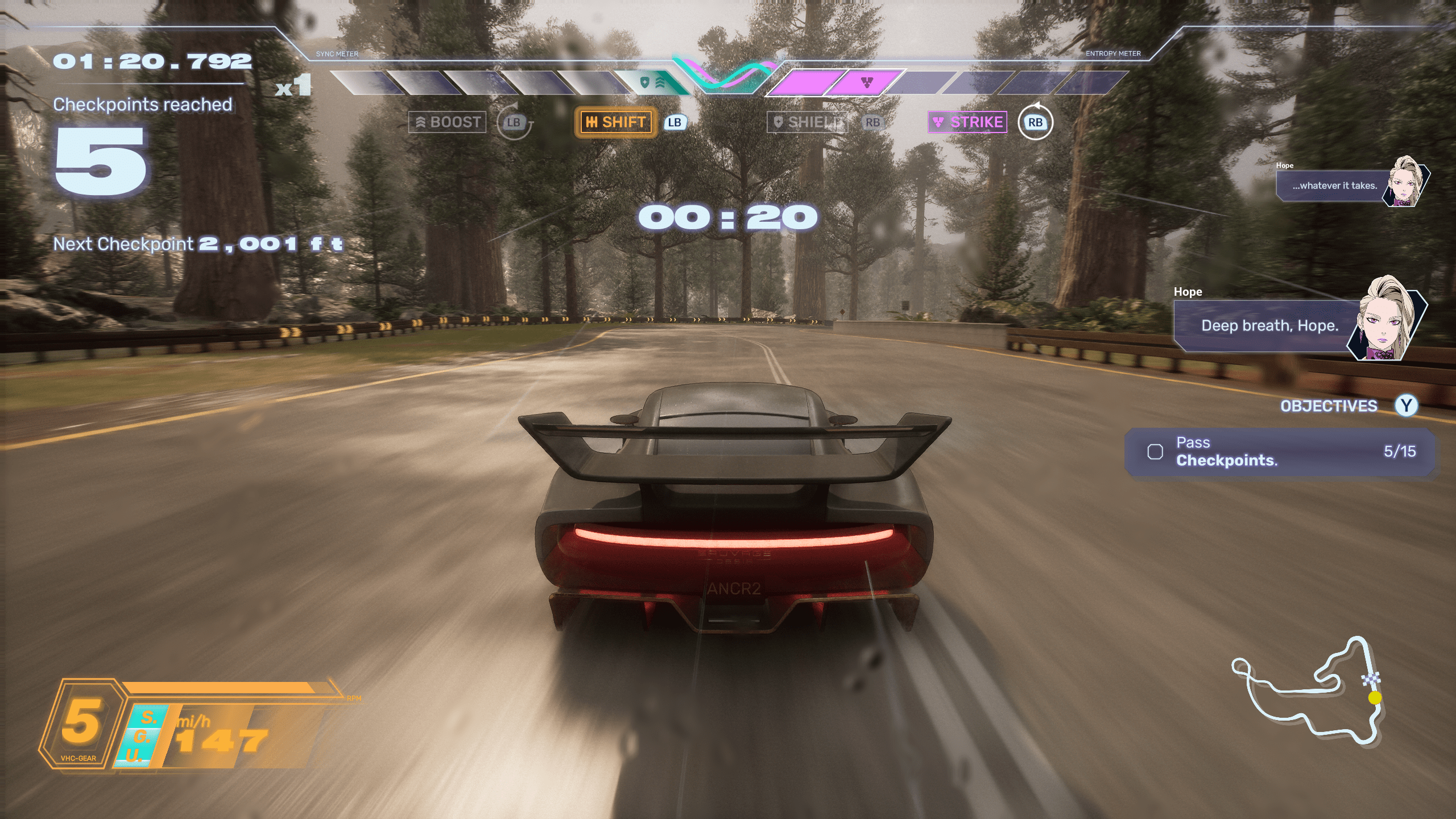
With all of these systems—not to mention ways in which specific characters and their cars subvert them—it’s easy to see how Screamer becomes a game of strategy as much as one of classic racecraft. The slight problem with that is that to make it all possible, you’re tasked with managing gas, brake, two sticks, and two shoulder buttons that do different things depending on whether you press or hold them. Look, I grew up on Sega Rally. I believe that the act of driving itself can be fulfilling alone, and Nintendo’s recent tweaks to make Mario Kart more vertical fall about as flat to me as the first time I tried to build a shack in the middle of a firefight in Fortnite.
But even I, a dinosaur, enjoy this. Yes, it’s a lot, and particularly during my first few hours with the game, I got my inputs crossed up more times than I could count. You never get a single moment’s rest in Screamer; computer-controlled opponents rubberband with Burnout-like resilience, and if you aren’t nailing those shifts, you generate Sync so slowly that you’re sure to fall back into the following driver’s clutches. But it does feel rhythmic to pull everything off as you’re sliding from corner to corner.
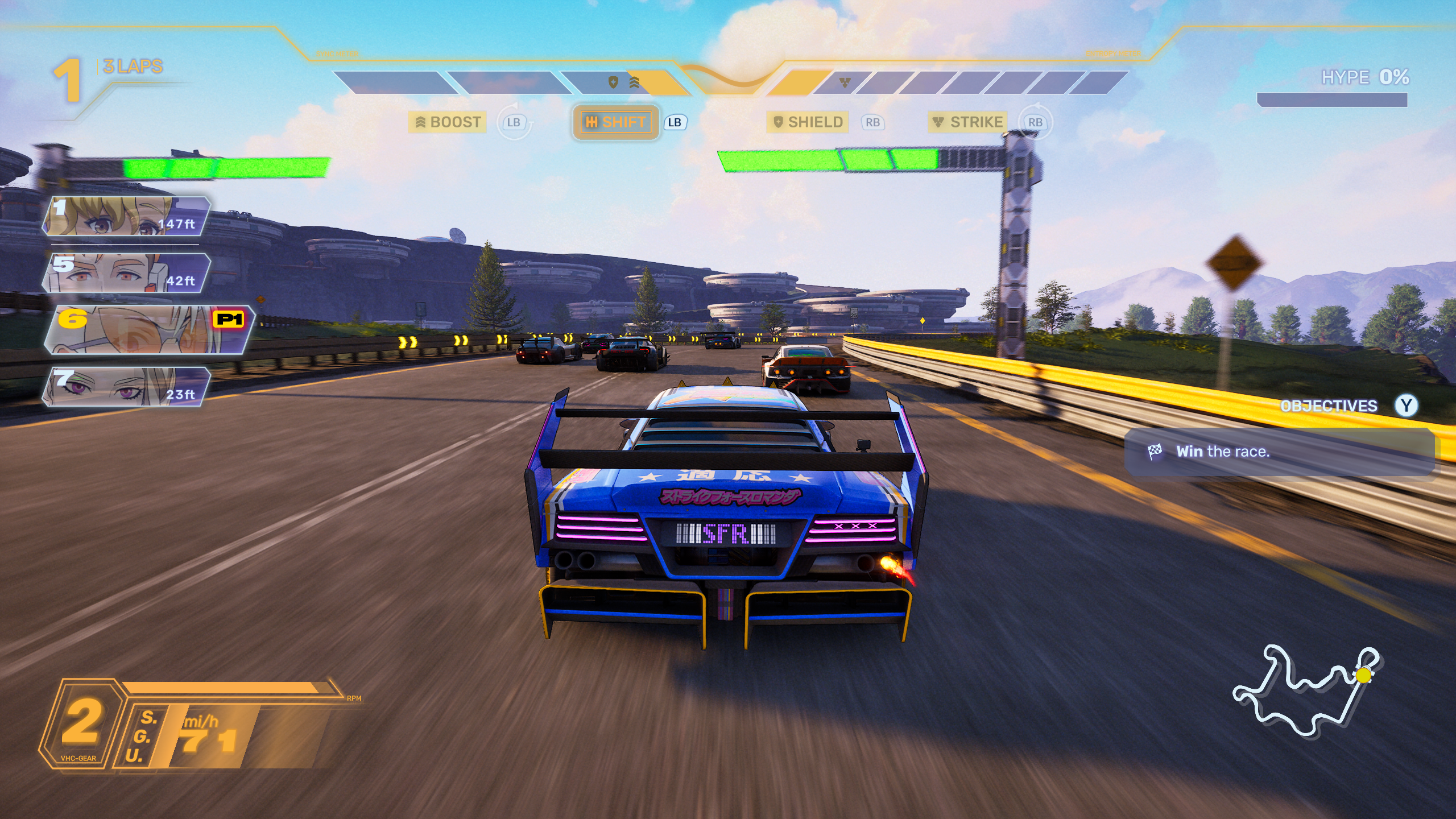
Which brings us back to the physics. At first, I couldn’t stand the way Screamer handled. Left-stick “normal” steering is heavy and laborious—think Criterion’s Need for Speed Hot Pursuit if you replaced the tires with cinderblocks. That pushes you to rely more on the right “drift” stick to place the car in most scenarios. At the same time, the left stick isn’t totally useless, as it can help fine-tune the angle of a drift. Once you get comfortable using both sticks together, and pick up how braking and easing off the throttle make a world of difference in helping you corner sharper, it all begins to make sense. But I still wasn’t exactly getting it.
Then I found the view change button. Turns out, I cannot play Screamer from the default behind-the-car view; it’s completely unlocked to the back of the car, which is poison for me in racing games. Despite how often you’re hanging the tail out, I found the physics far more intuitive and enjoyable from the hood or bumper perspectives. I would love to try it with a serviceable chase cam, though, because the cars look phenomenal, so maybe Milestone could throw in some camera tweaking options in a future update.
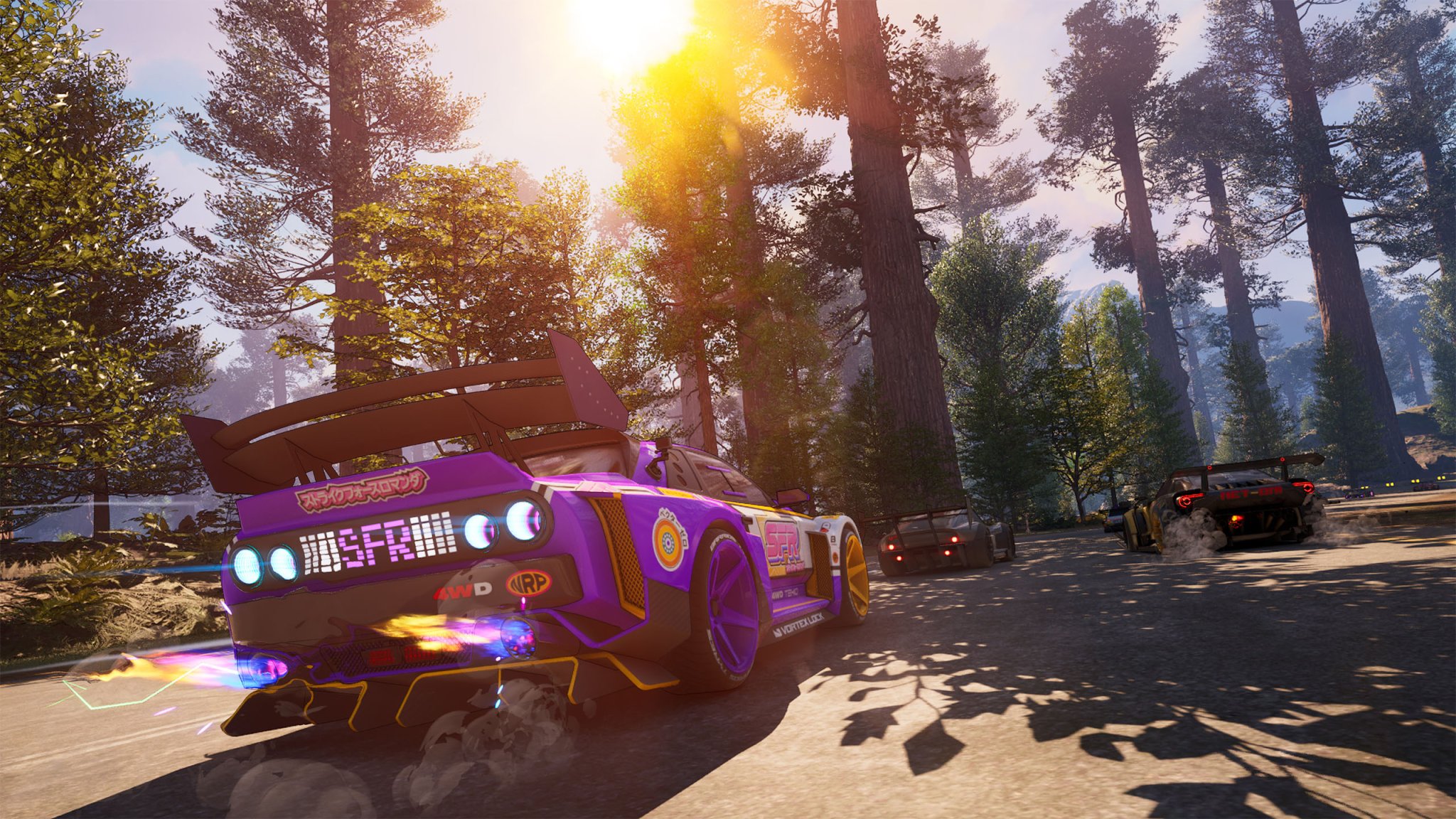
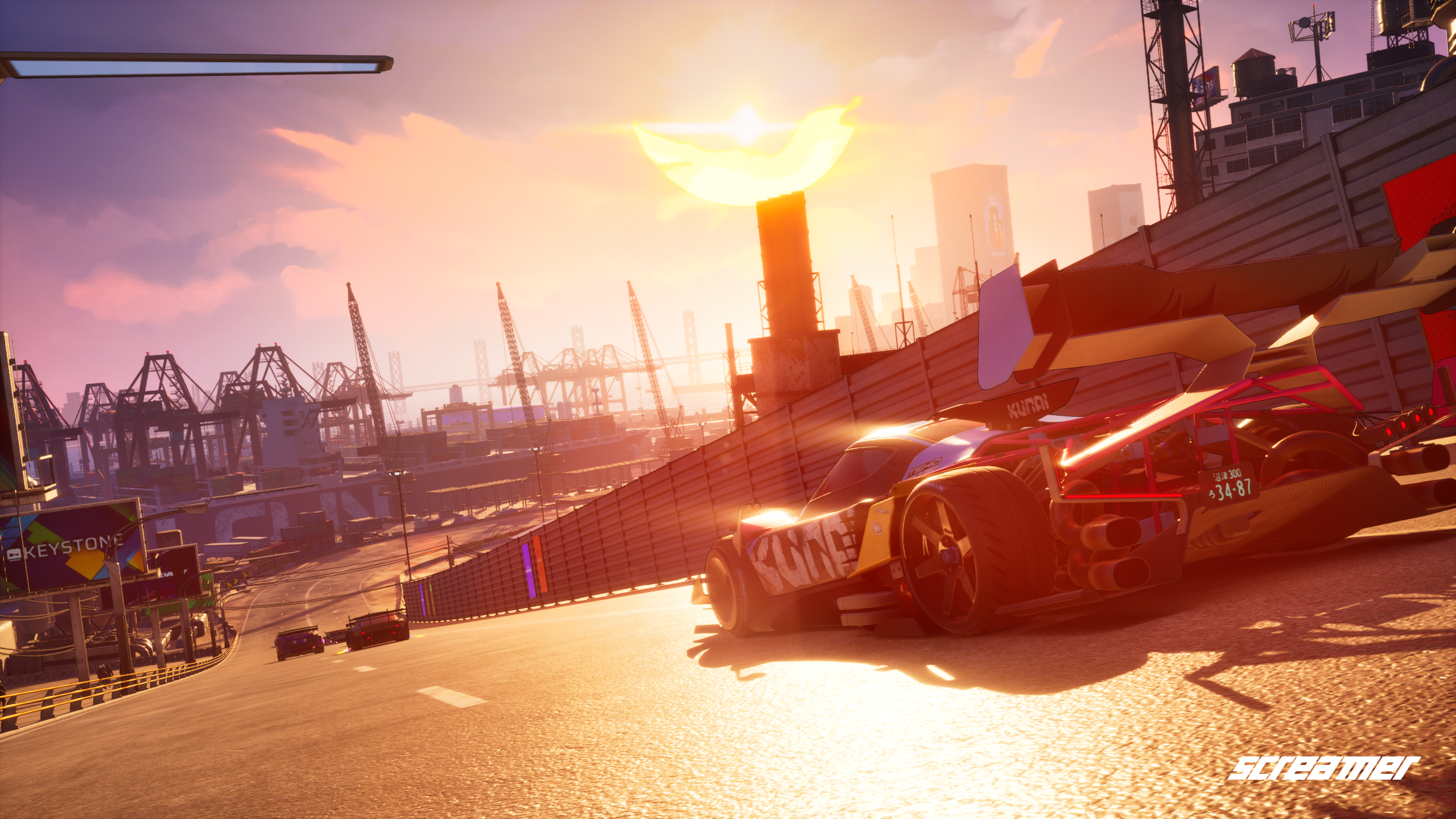
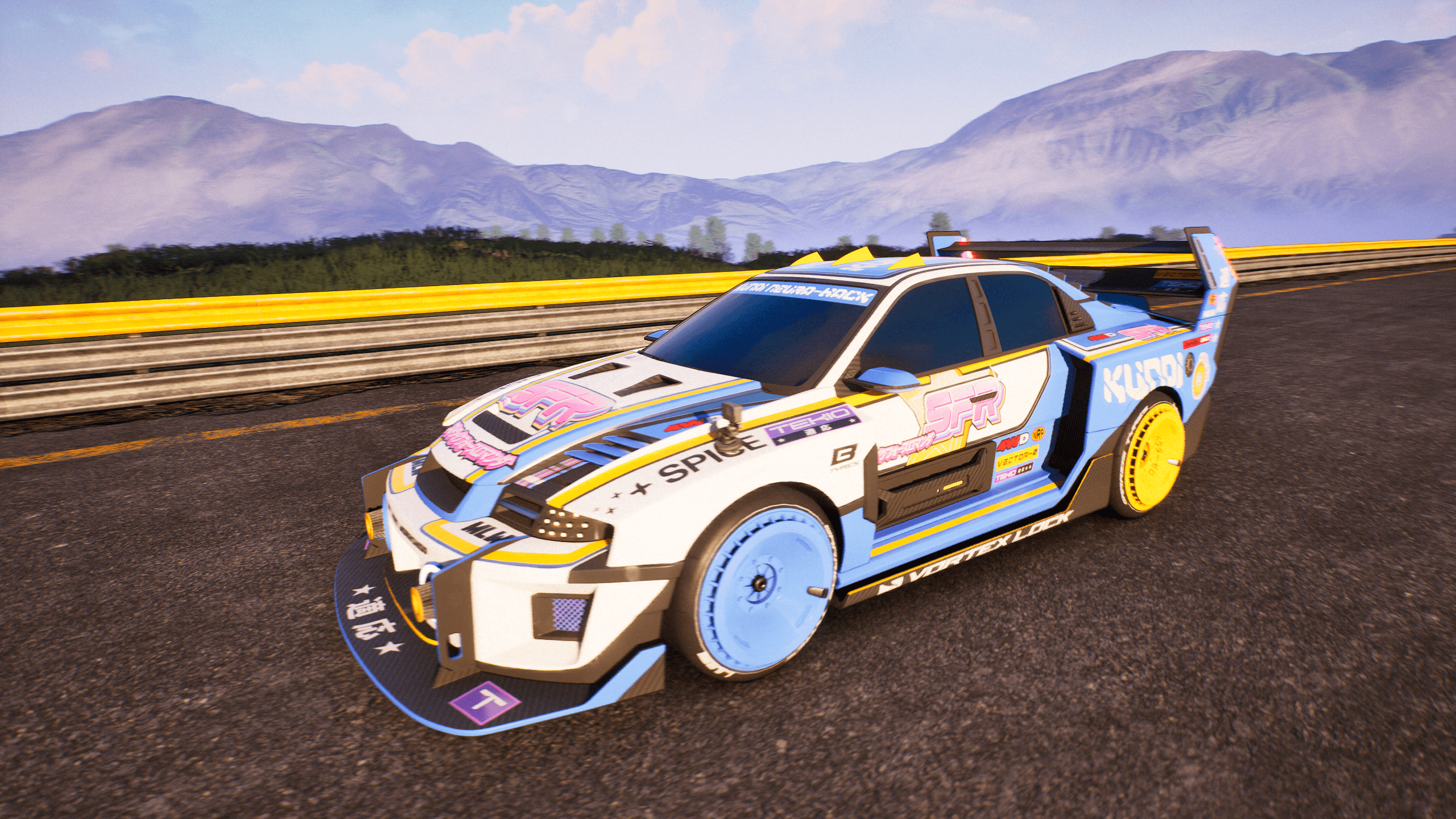
You can’t really talk about Screamer’s cars without also touching on its art style, characters, narrative, and everything else that makes it special—the stuff nobody bothers with in racing games anymore. I haven’t seen fictional cars that look this good since Ridge Racer. There are all but 15 of them, though I’m not complaining; this attention to detail is something you seldom see with unlicensed vehicles in games.
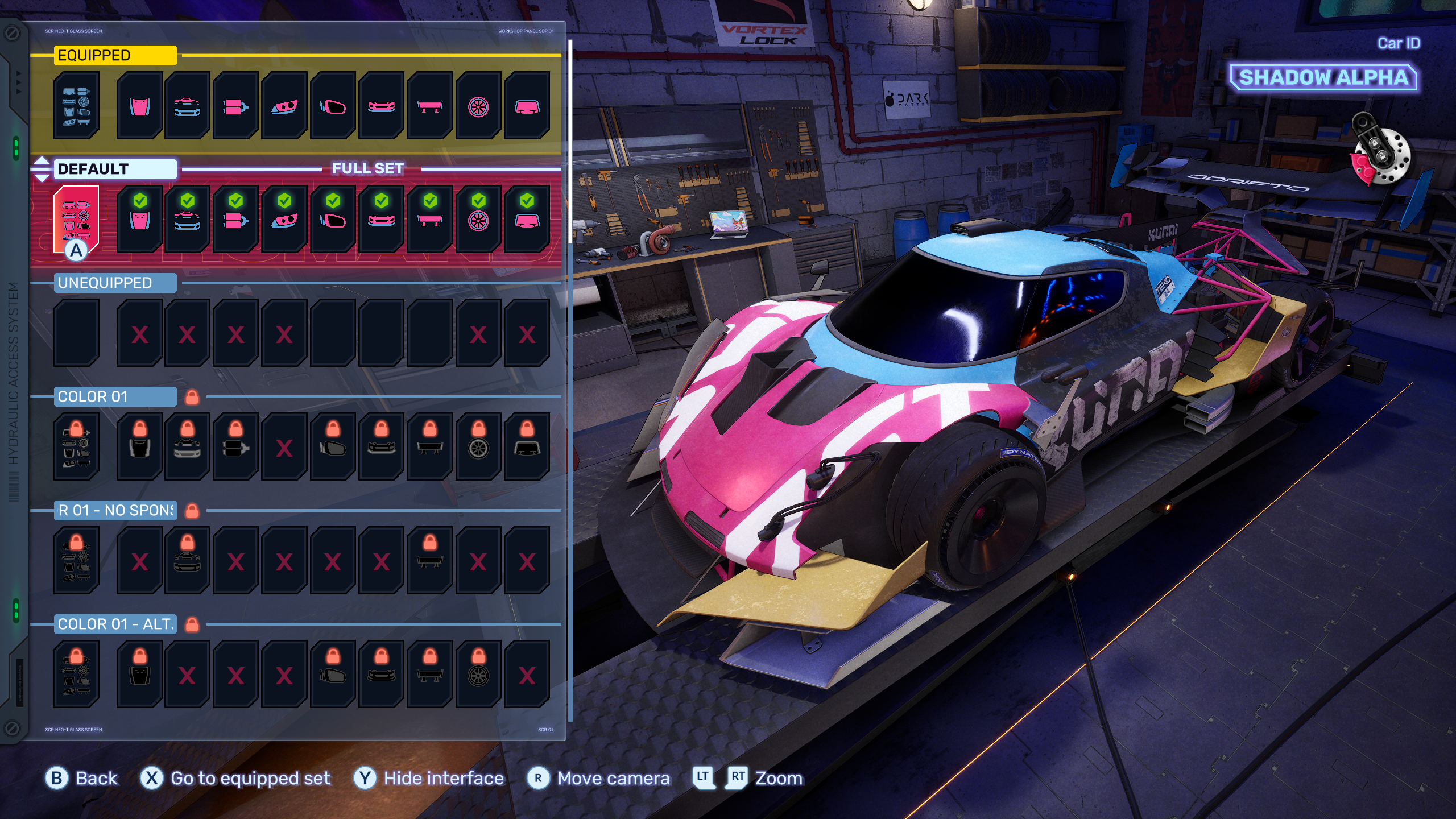
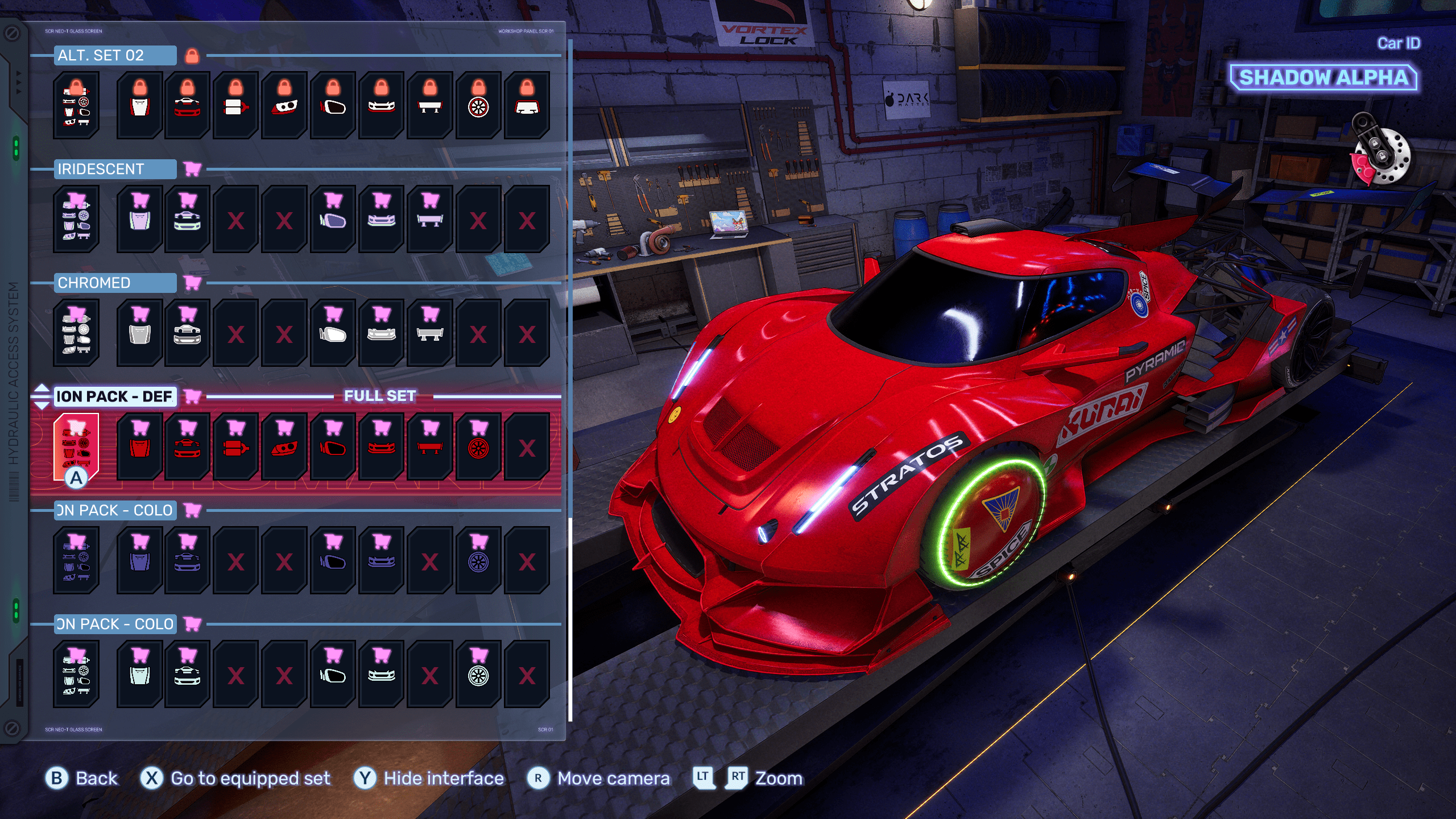
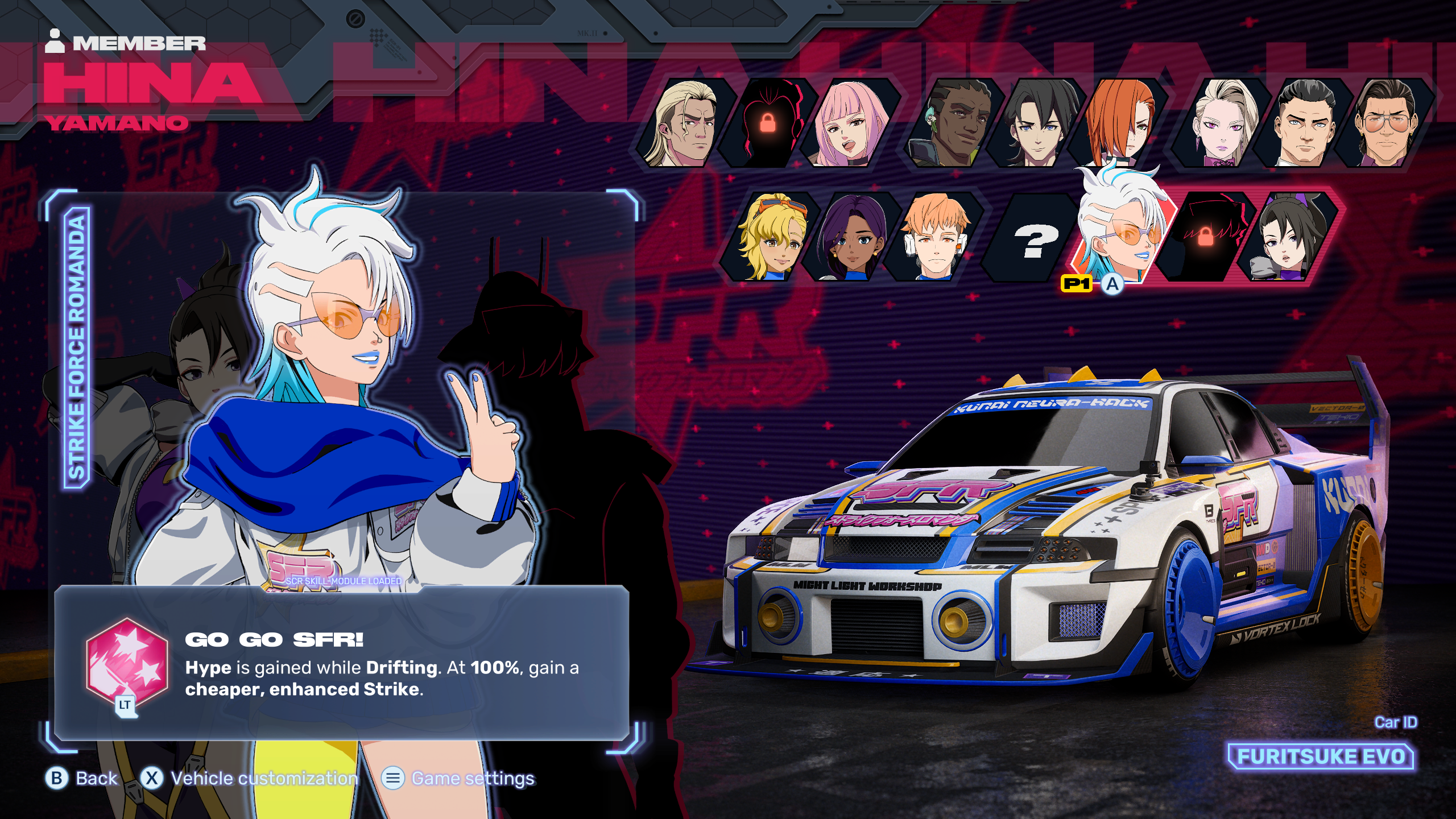
You could certainly draw allusions between some of the roster and real-life models, but the artists have been so judicious in the way they’ve cut at some portions of the bodywork and amplified others that the result doesn’t feel derivative or satirical. It just looks plain good. The same goes for the liveries, and how certain teams’ cars—hello Strike Force Romanda—utilize lighting in imaginative ways.
Because that’s the other thing about Screamer’s art direction: It’s so cohesive that each car comes off like a manifestation of the character who drives it, and they all behave vastly differently, too. The first crew you’re introduced to in the tournament, the Green Reapers, are members of a private military contractor. Their machinery is a little rough-and-tumble and classic cyberpunk in that way, compared to the very JDM-inspired, sponsor-heavy equipment of the aforementioned Strike Force Romanda squad, who are a group of pop idols. Or, the austere, black, Art Deco-tinged rides of Anaconda Corp., a monolithic megacorporation. If you have any fondness for Square’s “high-speed driving RPG” Racing Lagoon, you’ll be pleased to know that the story very much hits the same beats.

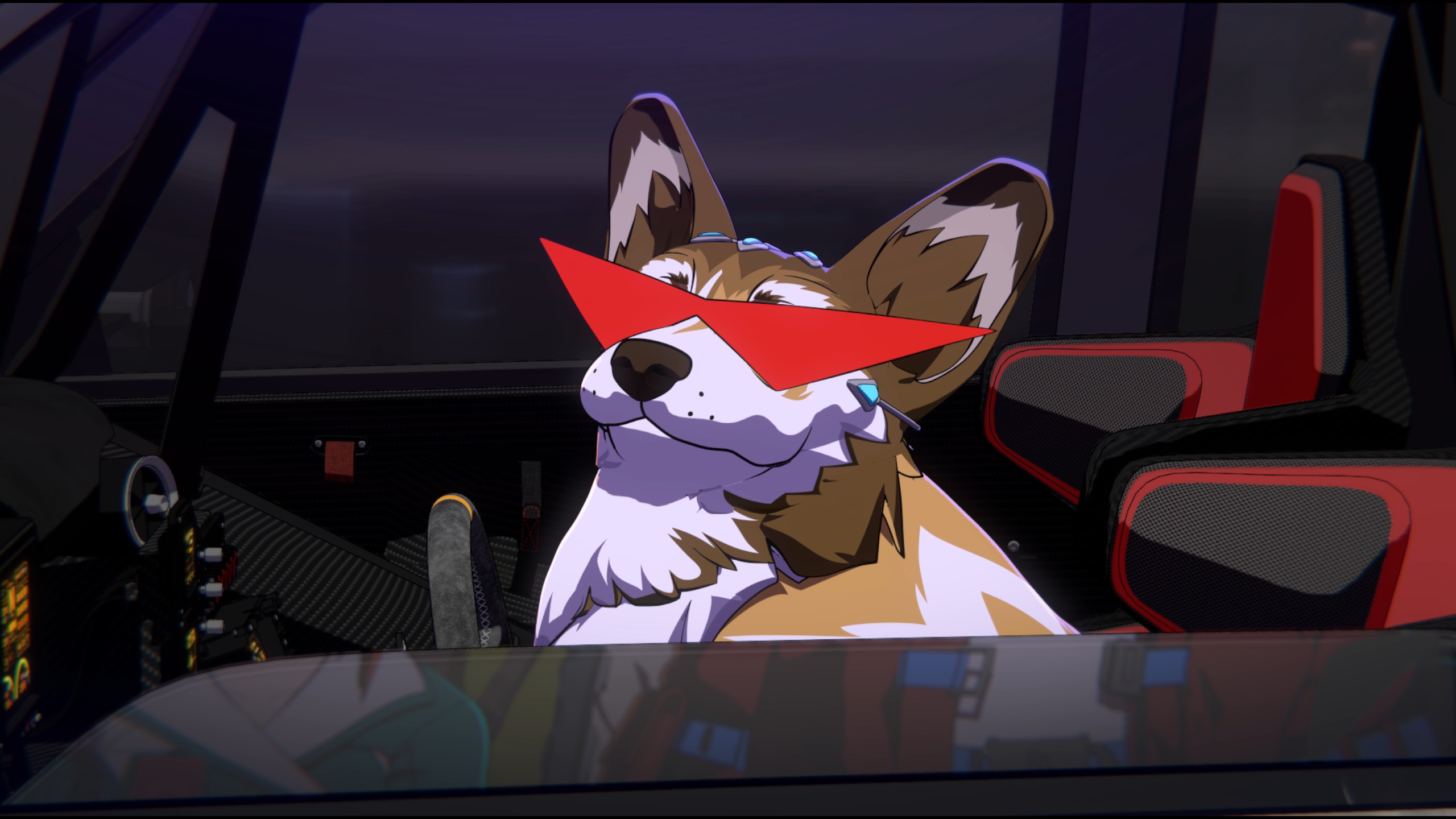
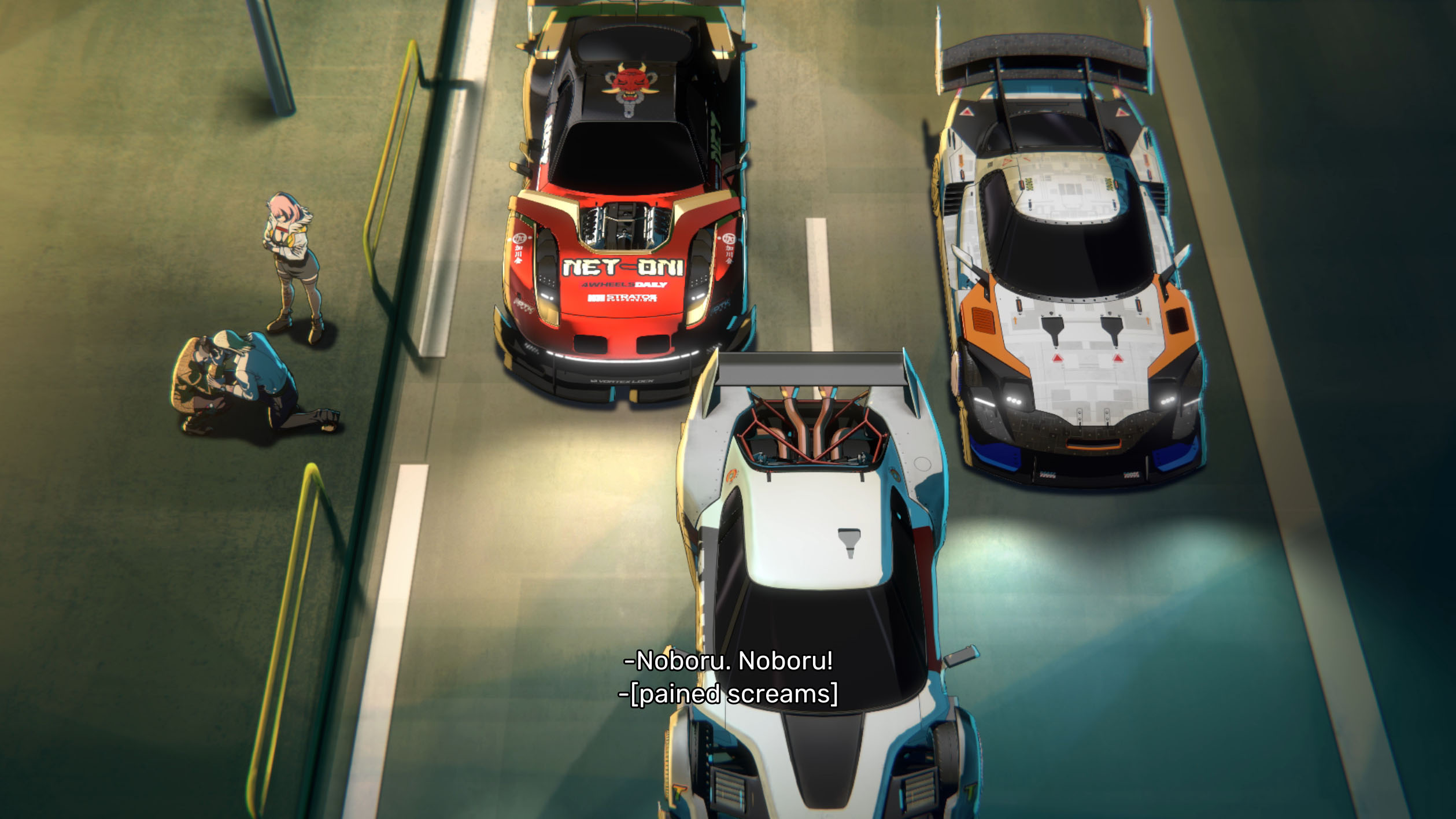
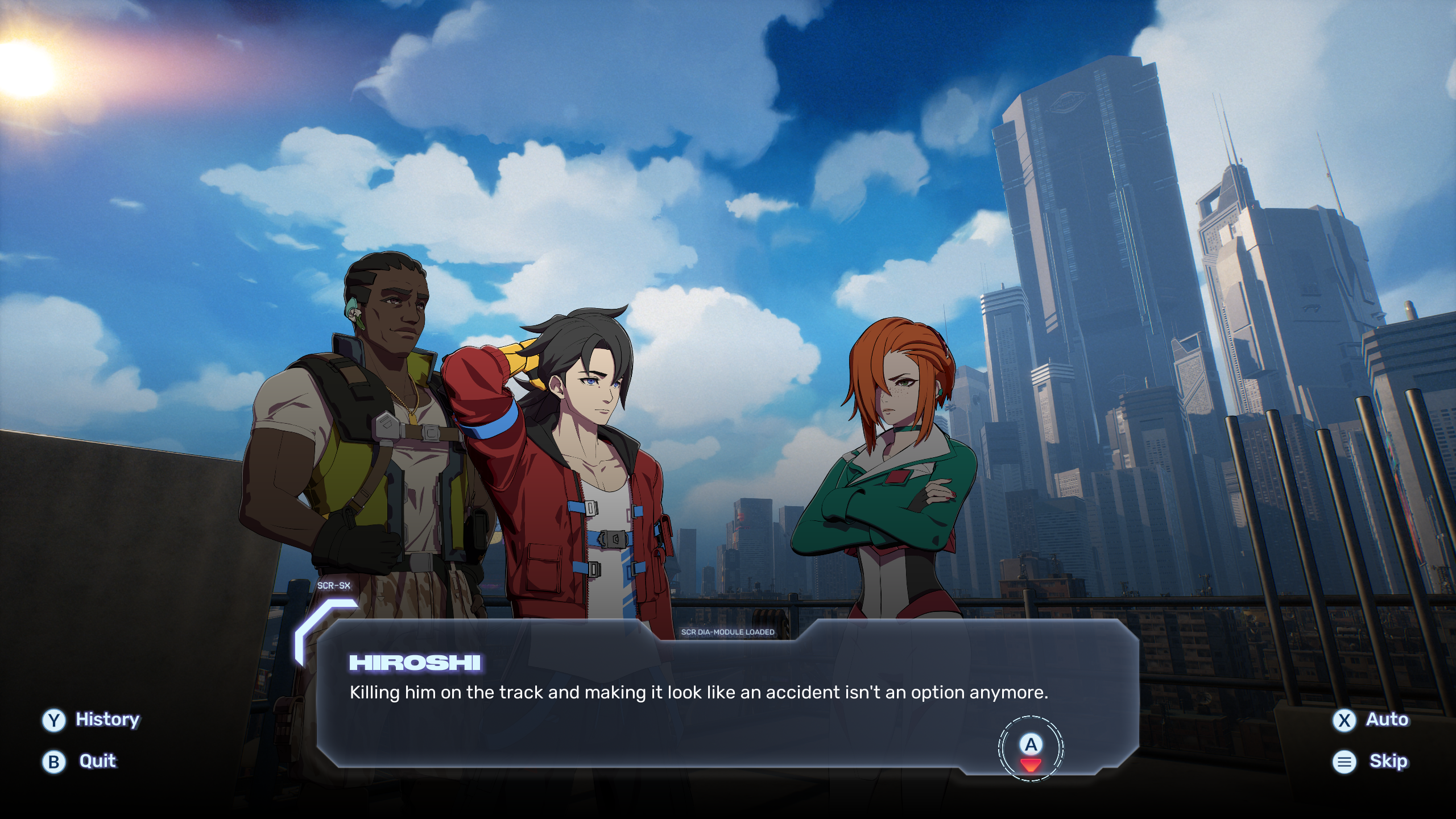
Beats of love and loss, trauma and vengeance, all in the context of shady figures and corporations doing shady high-tech shit that’s barely explained, just introduced and trusted to be assumed going forward. I wouldn’t say Screamer’s story is gripping or even good; it hits every melodramatic anime trope with a sledgehammer. (Expect plenty of “…” gasps.) But for a game like this, set in a world like this, it works. Plus, it’s made far more effective by gorgeous cutscenes peppered throughout the story, courtesy of Japanese animation studio Polygon Pictures.
I found myself always wanting more cutscenes, as the vast majority of the narrative is advanced through text interactions between characters. However, every single piece of dialogue in this game is voiced, which is impressive, because there’s a ton of it. And every line is spoken in the character/actor’s language, because in Screamer’s future, everyone understands each other no matter what they speak. Nice touch.
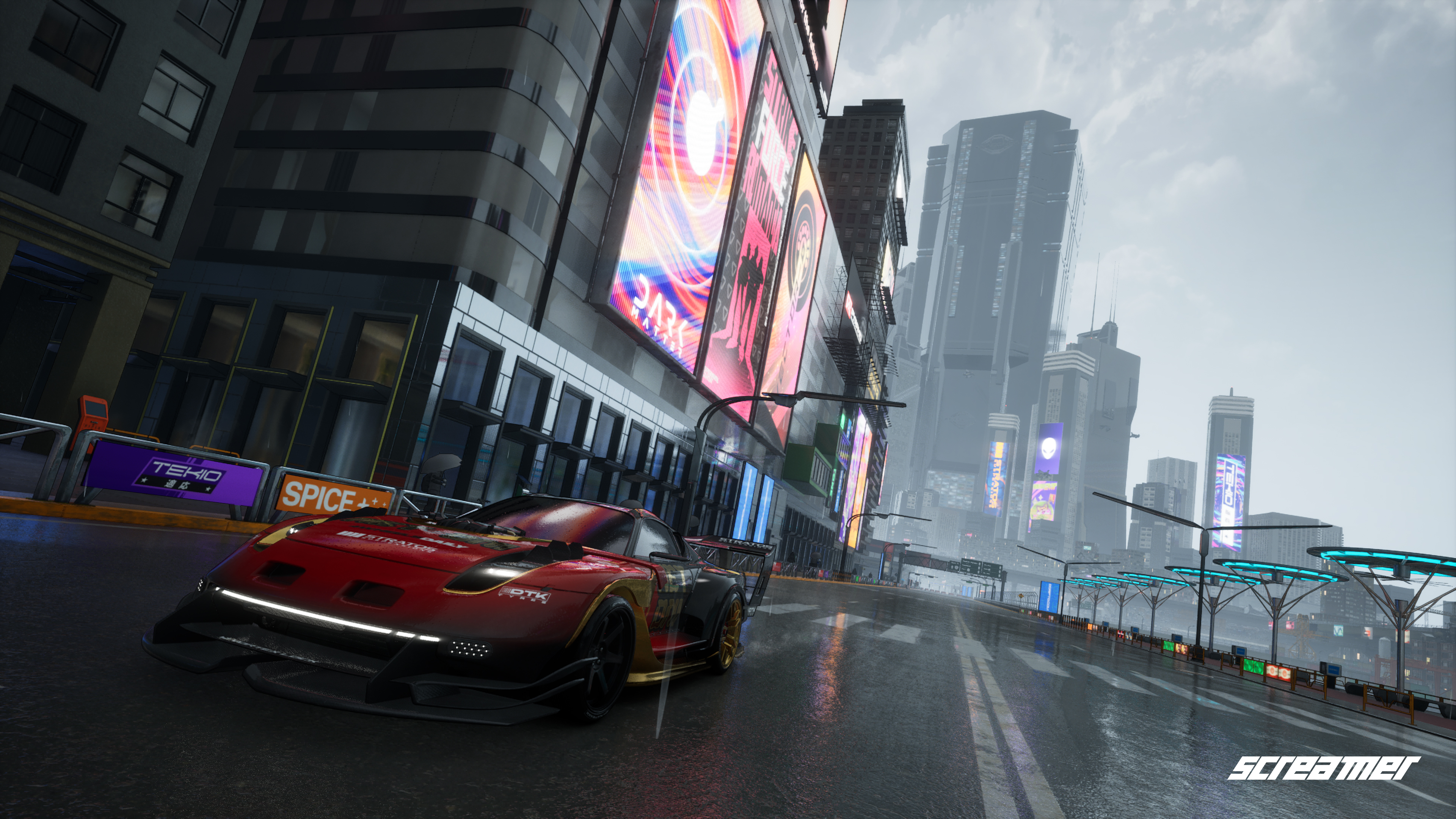
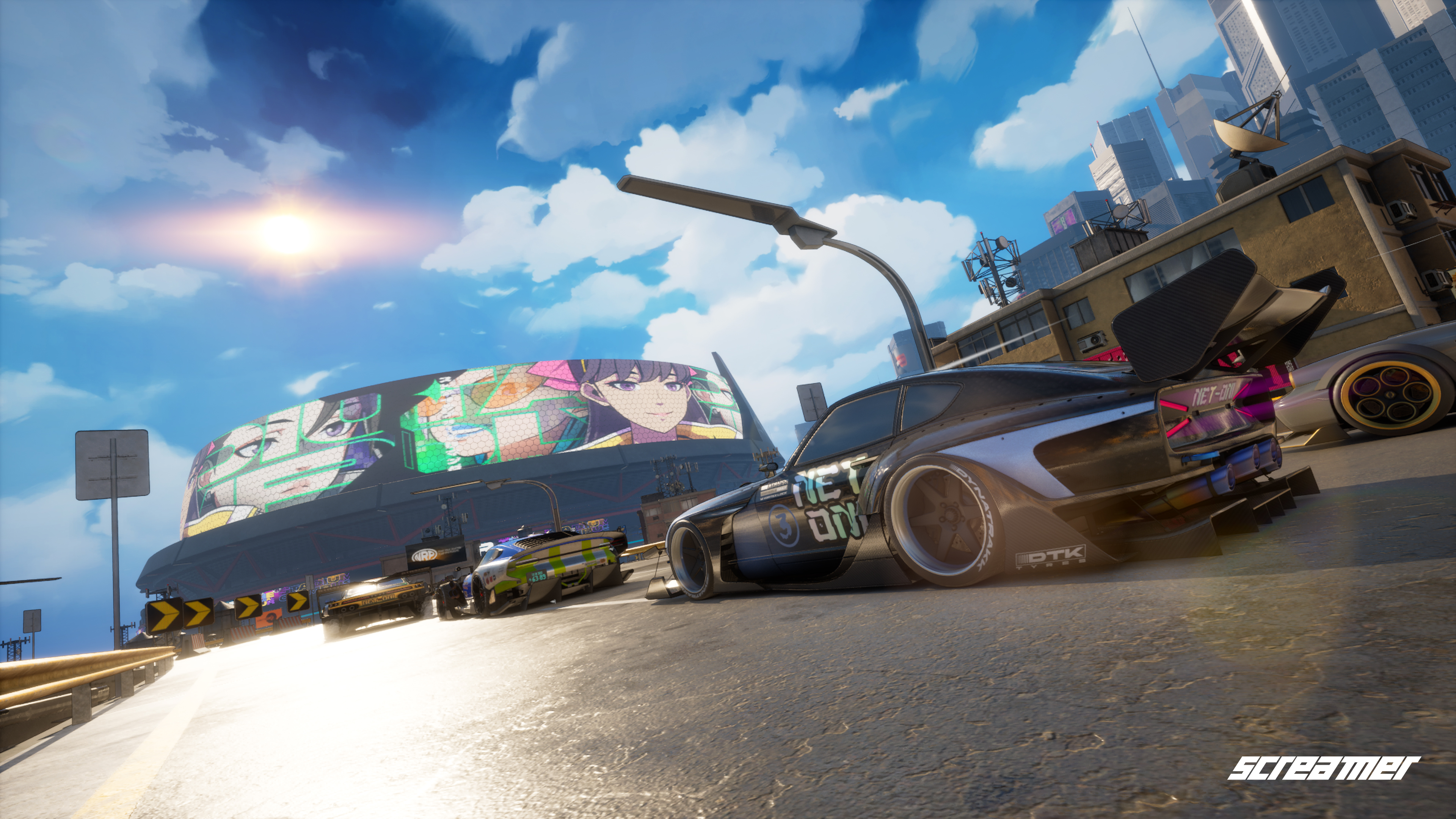
It really does feel like Milestone thought of everything, which is not something I find myself saying often about modern games that launch with debilitating bugs or missing entire modes of gameplay. The menus are slick and super-polished. The general graphical presentation and performance are great, too; this is an Unreal Engine 5 title that runs with zero stutter (!), appears to be well optimized for modest PC hardware, and looks seriously impressive at times. There’s a particular track early on in the game, set in the Neo-Ray city, that has you speeding down highways encircling a stadium in the daylight. When you get a glimpse of the sun glinting off the tops of all the buildings just beneath you, it’s just breathtaking.
It would also be deeply remiss not to shout out the soundtrack, which comprises a mix of licensed and original tunes. It’s a fact that music makes the best racing games, and I think the moment I recognized how much I was enjoying Screamer was the first time I heard one of the songs that plays during Strike Force Romanda’s portions of the story. I’ve been humming it for days.
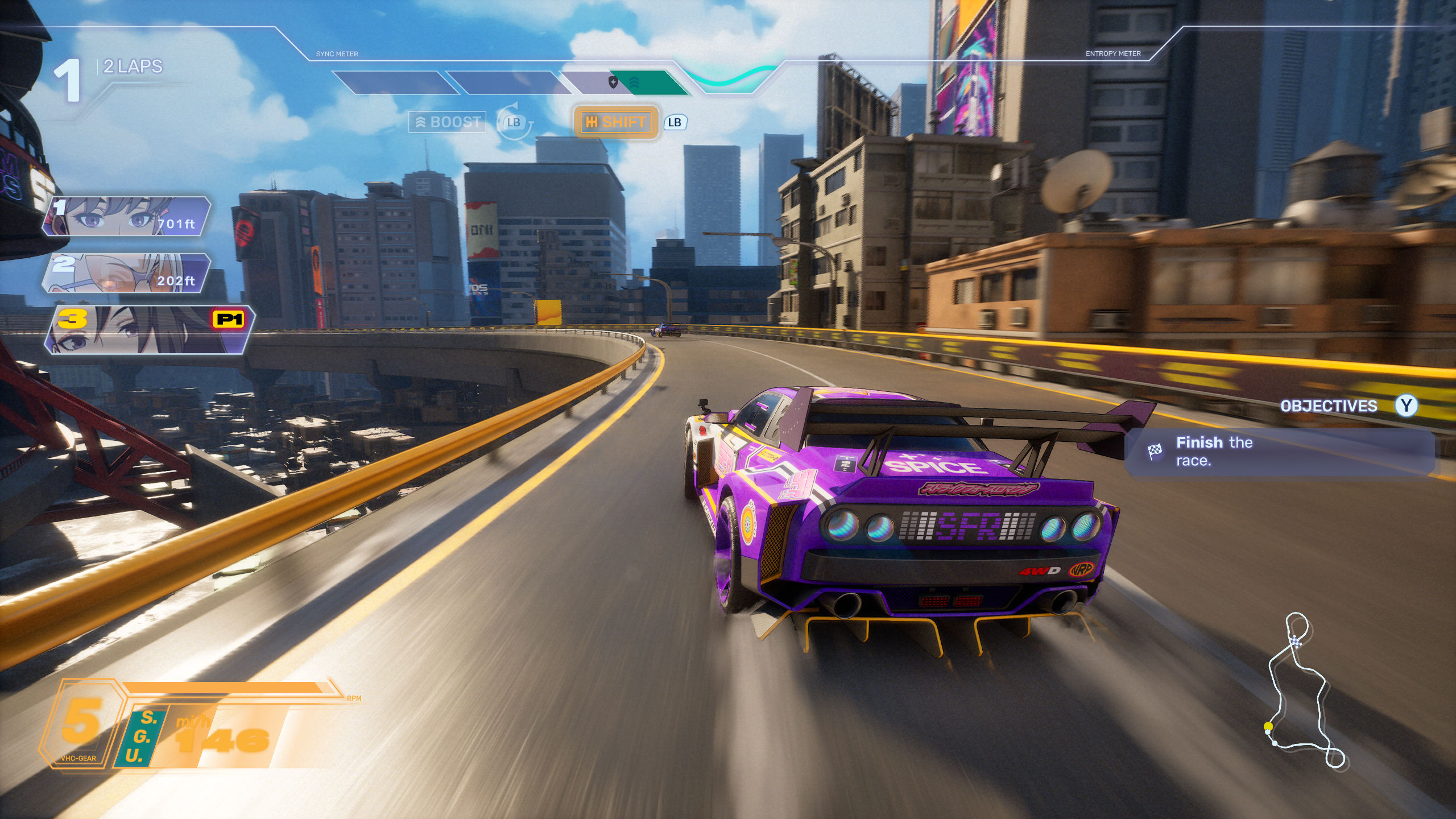
There are still a few annoyances, here and there. The win conditions in campaign events can be paradoxically frustrating, like requiring you to knock out a certain number of opponents while also finishing first, two objectives that never seem to mesh well for me in the same race. If you want to win on speed alone, you’ve got to blitz past the pack as soon as possible, and it’s hard to knock anyone out in those circumstances. And there are times when I do feel that having to reckon with all of Screamer’s mechanics and their associated timed button presses makes me a clumsier driver, and all I’d really love to do is concentrate on getting familiar with a car.
But it’s easy for me to forgive it for these flaws, because this is the most unexpectedly refreshing racing game in definitely one, probably two console generations. Look, you know Forza Horizon 6 is probably going to be great. You know what Gran Turismo is and does. They’re brilliant games, but they don’t surprise, and they weren’t designed to. Screamer is a reminder that this genre can be a vehicle for artistry, inventive gameplay, and entire narrative universes, just like any other.
Milestone provided The Drive with software before release for the purpose of writing this review.

Quick Take
Milestone has delivered a gem—a super-polished, fun, and inventive arcade racer unlike any other, that dares to reach beyond the confines of the genre.
| Screamer Specs | |
|---|---|
| Price | $59.99 ($69.99 for Digital Deluxe Edition) |
| Release Date | March 26, 2026 (Digital Deluxe Edition available March 23) |
| Platforms | PlayStation 5 | Xbox Series X and S | PC via Steam and Epic Games Store |
| Cars | 15, customizable |
| Tracks | 32 across four environments |
| Multiplayer | Up to 16 players online cross-platform | Up to four players split-screen |
| Score | 9/10 |
Email the author at adam.ismail@thedrive.com
Loading comments…
Comments couldn’t be loaded. Please refresh the page.