
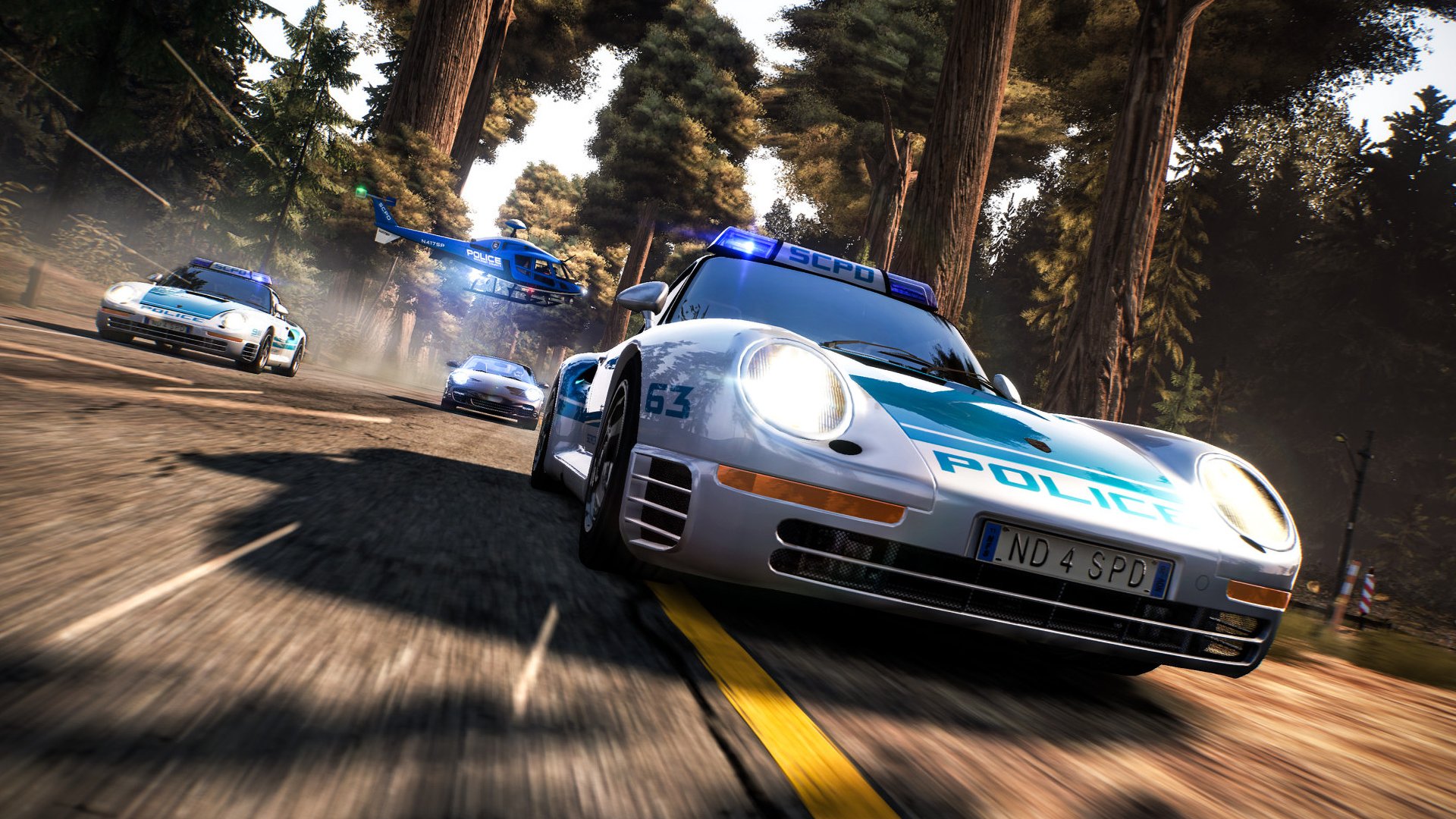
Just in case you held out any hope that EA was cooking up a new entry in the Need for Speed franchise, the boss in charge of Criterion Games, the team responsible for NFS Unbound, among other installments, has squashed that dream. A look into Criterion upon the U.K. studio’s 30th anniversary, published by IGN, makes it abundantly clear that the team is all about Battlefield now.
The story wrestles with how to recognize flashes of Criterion’s former self in what its become. This is the group that gave us Burnout and Black, and gave the industry the once-ubiquitous RenderWare engine. It injected new life into the NFS series with 2010’s Hot Pursuit reboot. That history doesn’t have a place in its walls today, though, as Rebecka Coutaz, EA’s VP and CEO of Battlefield Studios, told the website.
I’m just going to quote the article fully here, because it’s so matter-of-fact that to paraphrase it would muddy the sentiment:
When I ask whether the Burnout and Need For Speed developer’s newly established scope might include projects other than Battlefield, Coutaz is clear: “We are solely focused on Battlefield.”
As long as we’re talking about the company’s walls, though, it’s also worth noting that the logo on them now reads, “Criterion: A Battlefield Studio.”

To call this a tragedy during an already dreadful era for video game development would be putting things lightly. Studios are being closed left and right, and the ones that get to remain at big-time publishers like EA are only allowed to live if they work on the cash cow. Except, it isn’t a cash cow, because despite a very respectable launch, Battlefield 6 has struggled to retain players, thanks in no small part to the publisher’s controversial decisions around post-launch support.
So, we have another situation where a dev’s creative autonomy and the very spirit that gave them an identity in the first place has been stamped out in favor of an executive vision that’s repelling players. I didn’t love NFS Unbound; I thought it drove poorly, had a stifling economy and pursuit system, and didn’t look great, mashing unsophisticated cel-shaded characters and flourishes into an otherwise lifelike world. But it wasn’t a total failure, and losing NFS makes a shrinking genre smaller. And while Forza Horizon continues to buck trends and prove that racing games can still be blockbusters, it’s kind of the only one that gets to exist anymore (aside from Mario Kart), and so alternative expressions of arcade racers fall by the wayside.
None of this is surprising coming from EA, of course, the company that snatched up Codemasters at the start of the decade for its F1 license, then summarily shut down everything the studio did beyond F1. Beloved legacies in the racing game universe, from Need for Speed, to Colin McRae Dirt, to Grid, to Burnout—the one that’s been most conspicuously absent the longest, somehow—willfully, eagerly thrown away. The best we can hope for is that the people who made those games what they were find new homes, willing to invest in what they do so well, and what the medium is missing.
Got any info around racing games in development? Reach out to the author: adam.ismail@thedrive.com
Loading comments…
Comments couldn’t be loaded. Please refresh the page.