
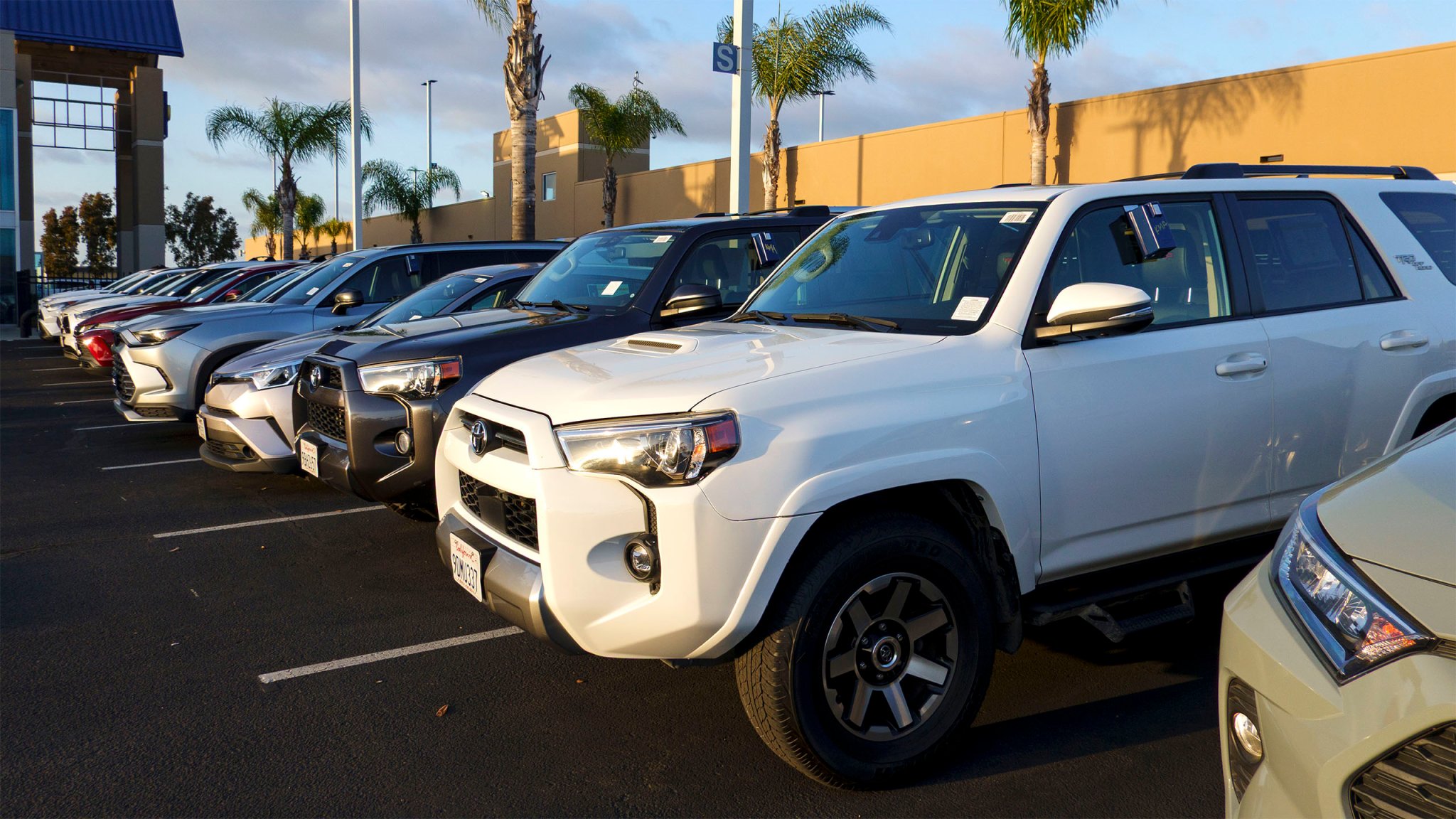
Think inflation is only a problem for people shopping new? Think again. With average new-car transaction prices hovering around the $50,000 mark, more and more shoppers are turning to the used market in search of “affordable” alternatives. This increase in demand for used cars has consequently driven prices up, and mainstream car dealers are now struggling to attract cost-conscious buyers who are instead turning to private listing services and social media marketplaces in search of better deals.
Dealers want those shoppers back, and they’re going to ever-more-extreme measures to accomplish that—including the rather novel tactic of offering up cars with branded titles. Yep, according to Automotive News, that shiny, two-year-old cream puff sitting in the middle of the showroom might have already been written off for one reason or another.
If you’re inclined to believe the worst about “stealerships,” you’re probably not impressed by this revelation, but outside of clerical errors and rare cases of fraud, most mainstream dealerships have traditionally avoided stocking used vehicles with any sort of branded title. They’re simply not worth the hassle (or potential liability), and doubly so if the shop in question lacks the equipment needed to verify the quality of a previous repair—especially one resulting from a collision or other incident that did enough damage to total the car.
But as with many things in 2026, a salvage title doesn’t mean what it once did. While the exact thresholds may vary depending on which insurer you ask, the basic math for writing off a car is pretty simple: If the cost of a repair exceeds a certain percentage of the car’s value, insurers will often total it. A branded title is then issued, and typically (though not always), the car is then sent to auction. Buyers often want these cars for parts, but some particularly enterprising operations will purchase them to fix and resell—sometimes with sketchy results. If you’ve ever wondered how a rattletrap with a salvage title ended up at a buy-here-pay-here, well…
According to AN, most mainstream dealers still draw the line at totaled cars, but will sell cars that have been damaged and previously repaired so long as they meet certain quality criteria. Others said they’re open to cars with unknown mileage (which could signal potential odometer fraud) or a lemon law buyback in its history—again, provided there’s evidence that any lingering issues have been addressed. A lemon can be just as much of a headache for a dealer as it can be for an owner.
But more and more these days, cars are being “totaled” not because they received extensive collision, flood, or smoke/fire damage, but simply because the parts needed to repair them are outrageously expensive. The cars themselves may be virtually intact, but sidelined by a missing electronic module or lighting component that is being priced into the stratosphere by a combination of constrained supply and high demand. Once these cars are fixed, they become tempting options for dealers looking to augment their new inventory with cheaper used cars, and absent any sort of serious accident history, should be relatively easy pills for bargain-hunters to swallow.
As the old saying goes, caveat emptor—let the buyer beware.
Got a news tip? Let us know at tips@thedrive.com!
Loading comments…
Comments couldn’t be loaded. Please refresh the page.