
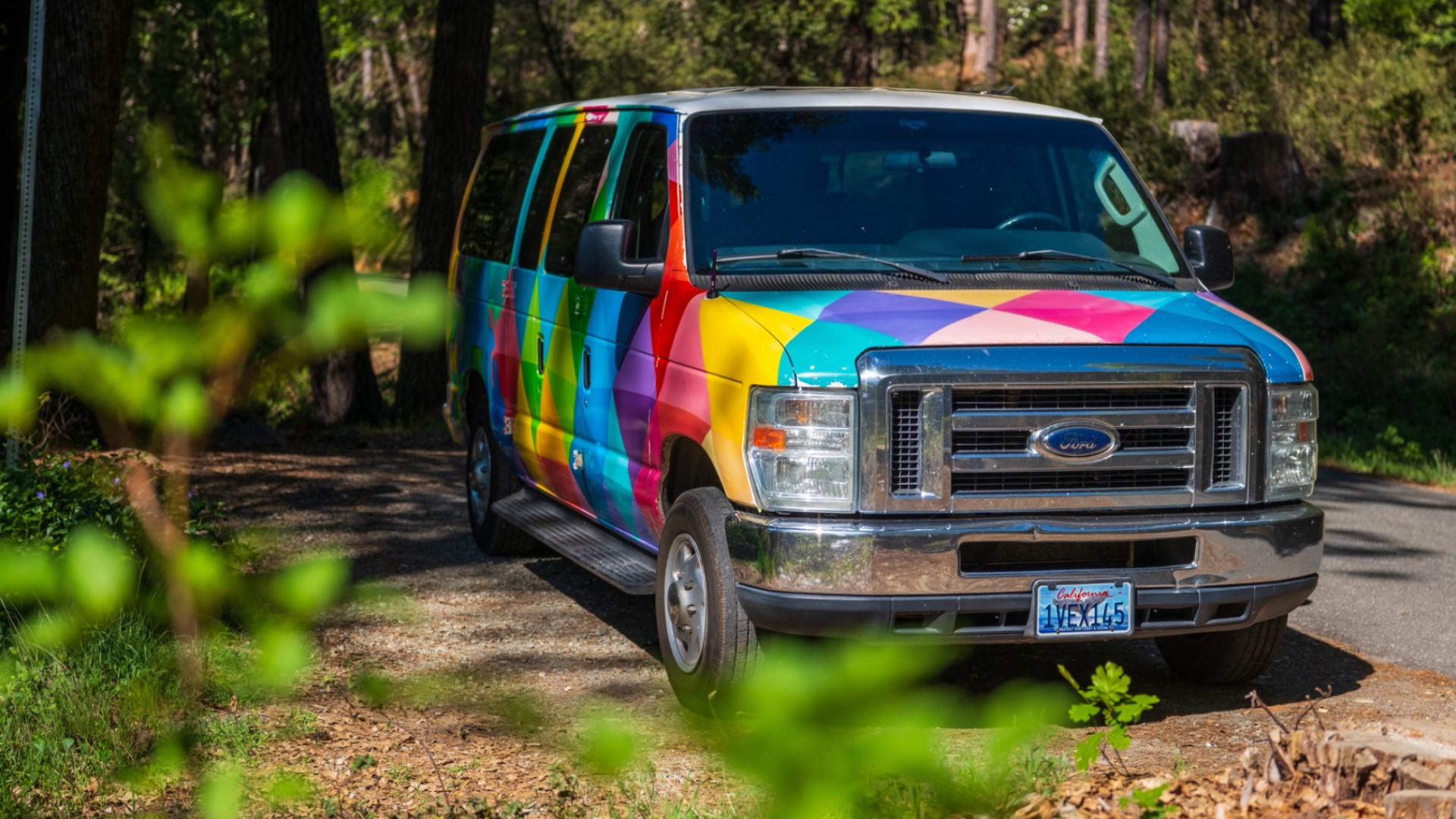
A few months back, we learned that rent-a-van outfit Escape Camper Van was going out of business and liquidating all of its assets, including the entirety of its fleet of converted rental campers. In a strange twist of fate, somebody I frequently talked cars with in a previous life happened across that post and decided, hey, a used camper van sounds kind of perfect. So he bought one.
It’s a story too boring to retell here, but in another twist, I happened across an old conversation with that same person and decided to take a lap of the internet to see what they were up to. And there it was, staring back me: the image of the same vans I’d written about last year. It took a little more sleuthing to find a way to reach out, but I fired off a message on a whim. Hey, we’d only been out of contact for 15 years. That’s nothing in the age of digital transiency.
Sure enough, he DMed me back, pleasantries (and email addresses) were exchanged, and not long thereafter, Will Angel had furnished me with a full report on “Crayola,” as Escape had named it: a 2012 Ford Econoline with a paint job (not a wrap, believe it or not) to match its name, and, of course, a customized camper interior. It also had nearly 350,000 miles on the clock.
“[A]fter seeing your story on the bankruptcy auction my wife and I had decided to grab the van to try a different kind of bopping-around,” he said. “We’d gotten it for around $4,300 after purchase, auction fees, and DMV bother, and figured that a running E-150 with a clean title and a passed smog test wasn’t going to lose us much money.”
That logic may be unique to California’s used-car market, but $4,300 for a running car with no check engine light is nothing to sneeze at these days, especially something offering this level of utility. But with its custom upgrades, Crayola appealed to a very niche subset of buyers. Angel figured he and his wife were among them.
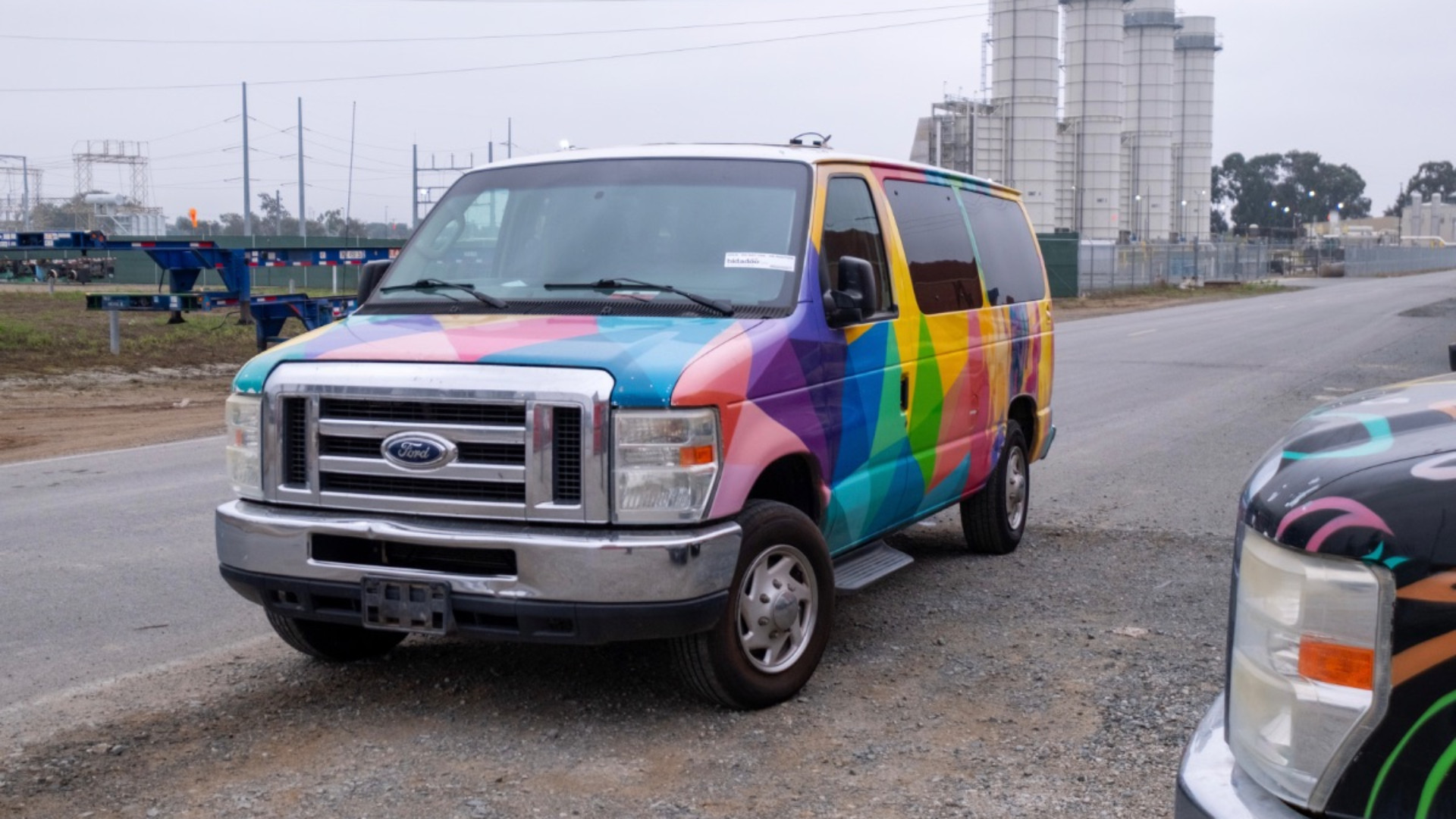
“We’d picked it up at a freight yard over in Antioch, where it’d been sitting amongst 30 or 40 other Econolines and Transits, and the drive home was curious but not terrifying,” he said. “On further inspection, it had ancient, leaking shocks, needed a ball joint, and the rear brakes were metal-on-metal (the fronts, curiously, were brand-new). Not a ton of effort beyond fluids,” he concluded.
Angel was able to swap some Yokohama Geolandars over from his previous wanderer-spec ride, a Honda Element. They happened to be the right size and load rating, so why not?
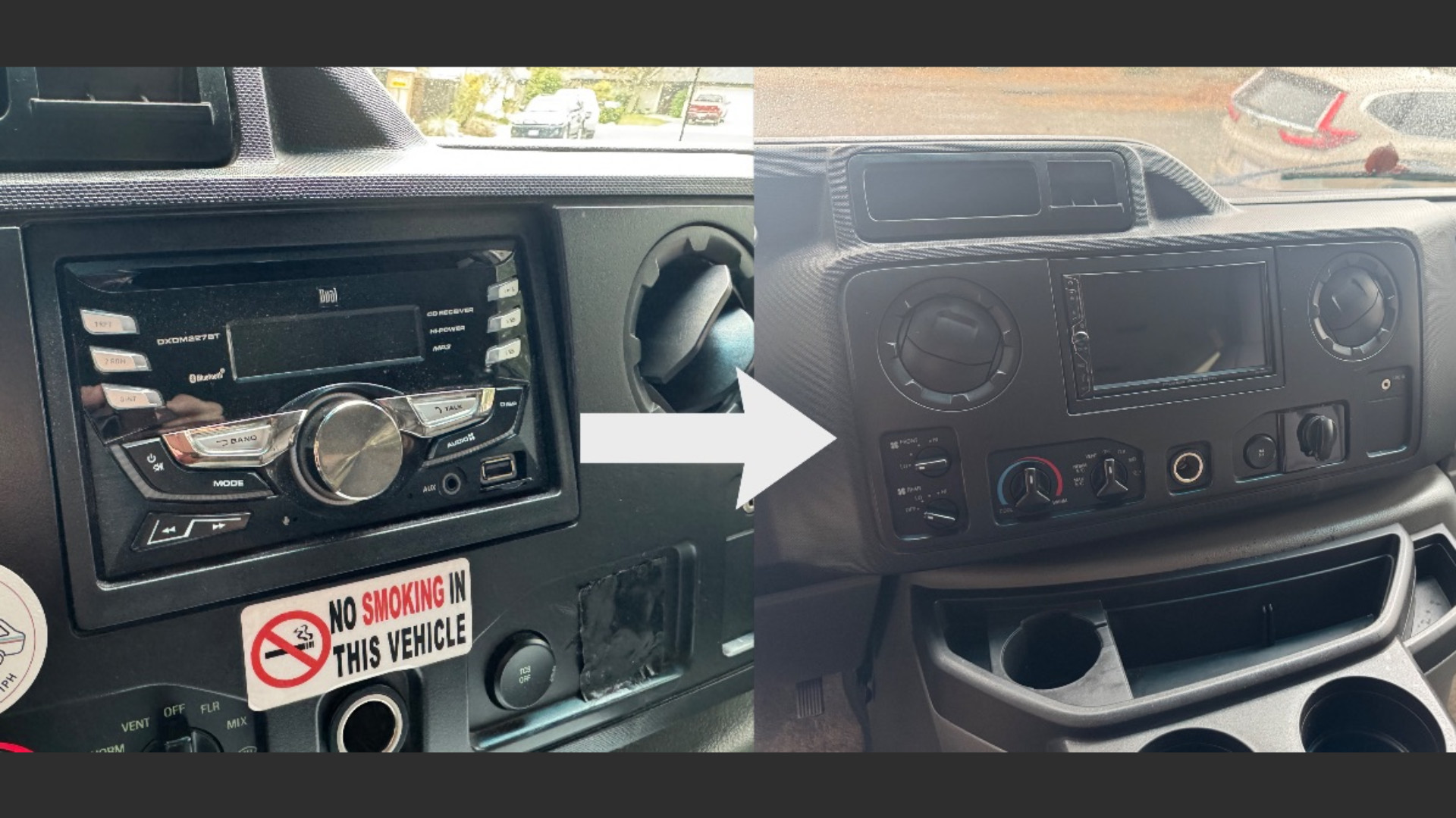
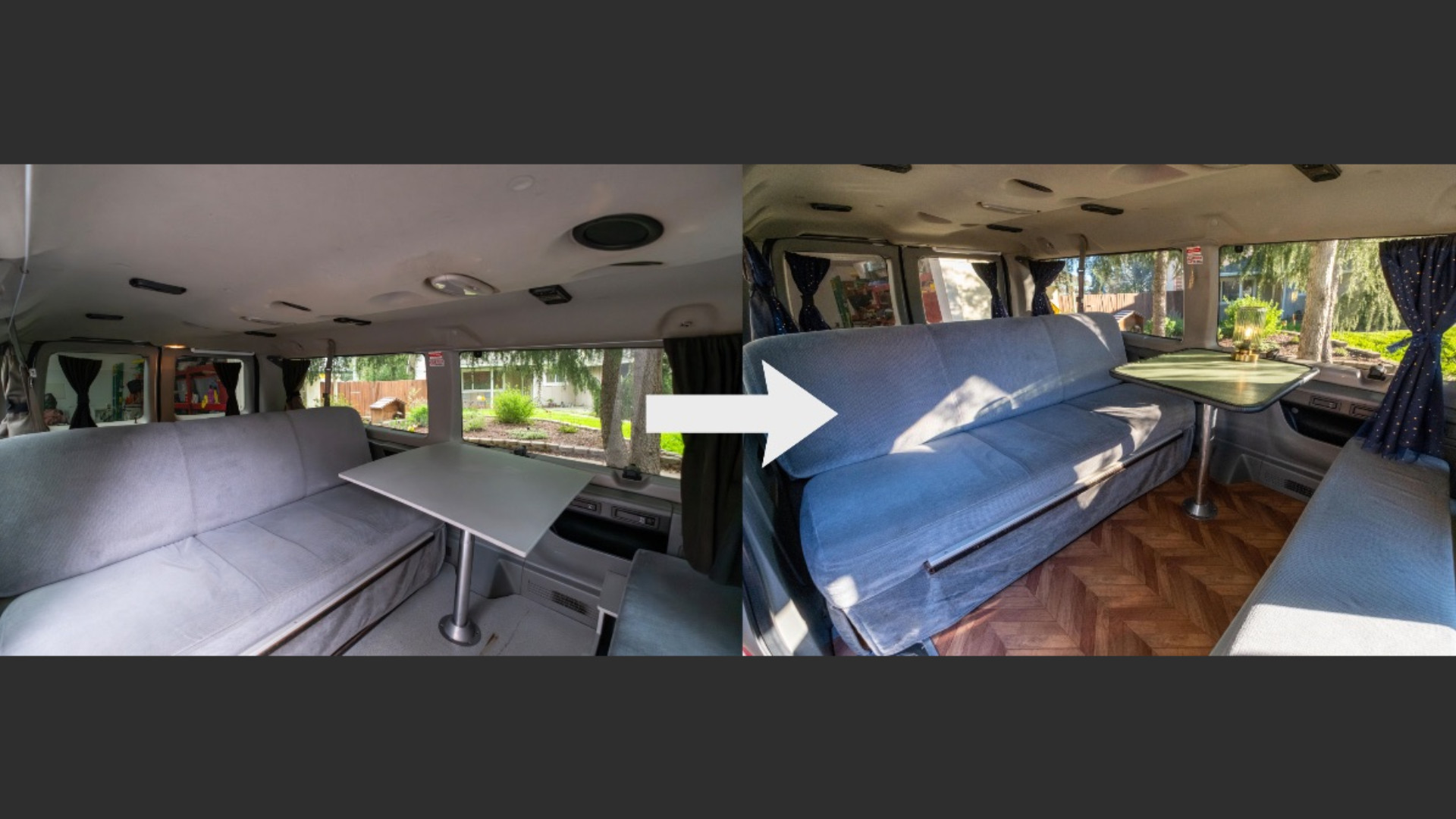
“We’d also done a bit of work to the interior, but nothing too wild—built a new table, jazzed-up the curtains, laid down wood-esque flooring, installed a cheap CarPlay head unit, and fixed some broken trim,” he told me. “Someone gave us a small raven figurine, so that plus some abalone and mussel-shell findings mean the van now has a raven shrine.”
“340k miles of lord-knows-what is a risk all of its own,” he said. “Mechanically I wasn’t too worried—our chances of finding parts for the van at a rural Montana AutoZone, unguarded fleet services yard, or freeway underpass trash dump are pretty good,” he went on.
But as many folks pointed out in response to our story, a used rental van could be hiding all kinds of secrets, not just mechanical ones.
“Where its undeniable chemical, biological, radiological, and nuclear hazards are concerned, we’d just sort of trusted in bleach, DampRid, and fresh air; it was a good excuse to take things apart, clean them, and then embrace the challenge of living up to the standards of weirdness set by the van’s previous tenants,” Angel told me. “Their goals and methods were probably not dissimilar to ours.” he pointed out.
Fair enough.
“We’re doing a California Naturalist certification before going to work for the Forest Service over the summer, so the plan was to use the van for the former and see about selling it before the latter if we didn’t fall in love with it,” Angel told me at the time.
“The longest trip we’d done was around three days; our naturalist certification had a bunch of field trips, so we’d sorta bopped around California’s north coast using it as a home base across long weekends.”
“Amidst all that, it’s just been solid fun,” Angel said. “Our collective exhaustion with #vanlifers aside, it’s been refreshing to be able to show up with a living space and place to cook all ready to go. Since it’s all shoved into the Econoline shell, we avoid the deep shame of showing up to a fire road or small coastal community with a 40’ tour bus.”
“There’s also been [fun little things] like tracking down the artist who painted it, checking in on the escapedcampervans subreddit, finding old blogs and videos from random Dutch families who drove it across the US in 2017 and whatever, and seeing kids freak out and point at the stupid rainbow van,” Angel went on.
Sure enough, the van became another member of the family.
“I’d been laughing at myself for waxing the flaking, bubbly paint and had that moment of ‘oh, right, I guess that’s love,'” Angel said.
But ultimately, life intervened.
“We decided to downsize to a single car before heading out for the Forest Service, so Van has gone, motorcycles have gone, and the Element is next,” Angel told me. “We were broken-hearted to sell Van. The vibes were so good,” he said.
In fact, there was virtually nothing else about Crayola that Angel would have changed.
“The next upgrade I’d have probably put some time toward would’ve been replacing the aged solar panel on the roof and adding an inverter,” he reflected. “Since the kitchen was intended to be accessed from the back, some means of boiling water from the inside on a cold morning could have been beneficial. I’m sure you could ask 50 people what their ideal layout for such a thing is and get 50 answers, but for me Escape sorta nailed it,” Angel said.
And now, it’s on to its next chapter.
“I’m glad we got to pick it up from the fleet yard, take care of smog and such, and give it a good push into its next, happy life,” Angel’s note ended.
Got a news tip? Let us know at tips@thedrive.com!
Loading comments…
Comments couldn’t be loaded. Please refresh the page.