
Sometimes inspiration comes from the most unexpected places. In 1973, Edwin J. Saltzman, an aerospace engineer at NASA’s Dryden Flight Research Center (now the Neil A. Armstrong Flight Research Center) was bicycling to work when he noticed how the aerodynamic wakes of passing semi trucks would first push him and his bike toward the shoulder and then suck him back toward the road. What would have been a scary moment for most cyclists was a Eureka moment for Saltzman.
As recounted in a recent post by the American Truck Historical Society, Saltzman realized that trucks were fighting airflow and brainstormed ways to help them slice through it more easily, improving fuel efficiency in the process. He recruited some colleagues and an old Ford van from the Dryden motor pool, which was transformed into a test bed—and a pretty radical-looking one at that.
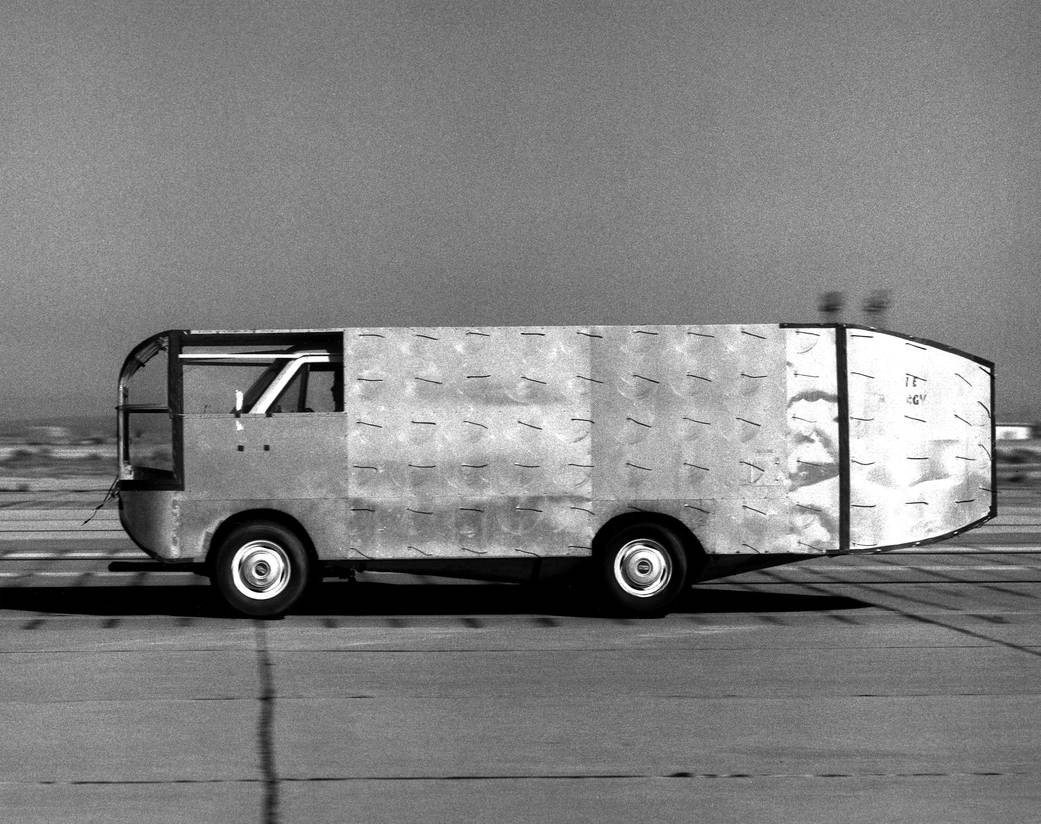
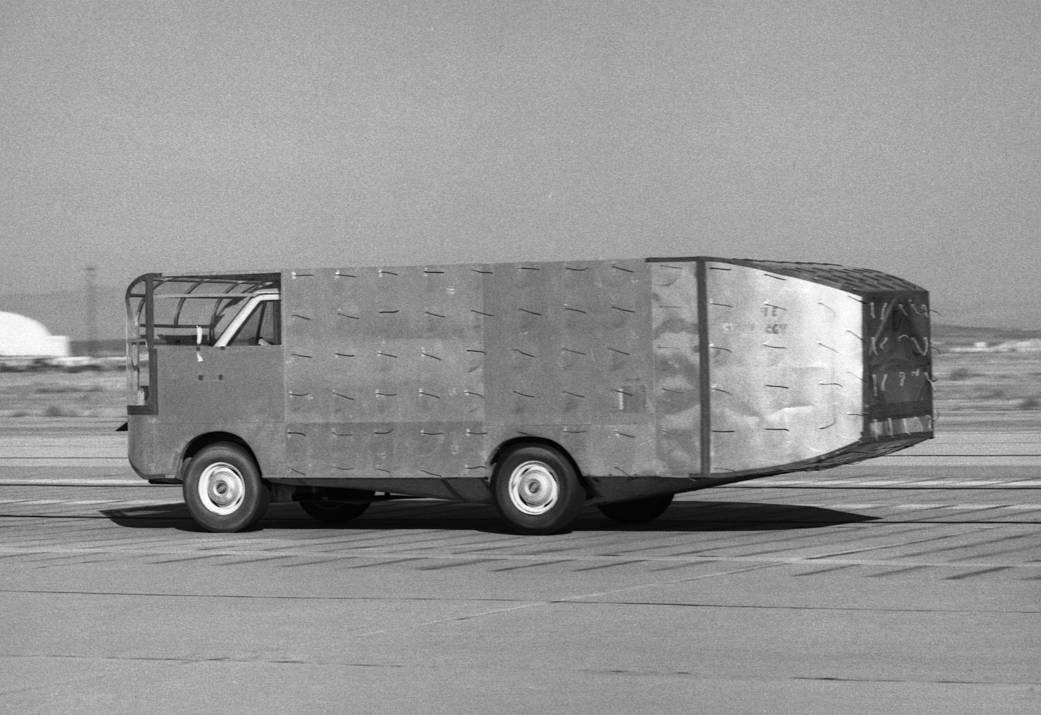
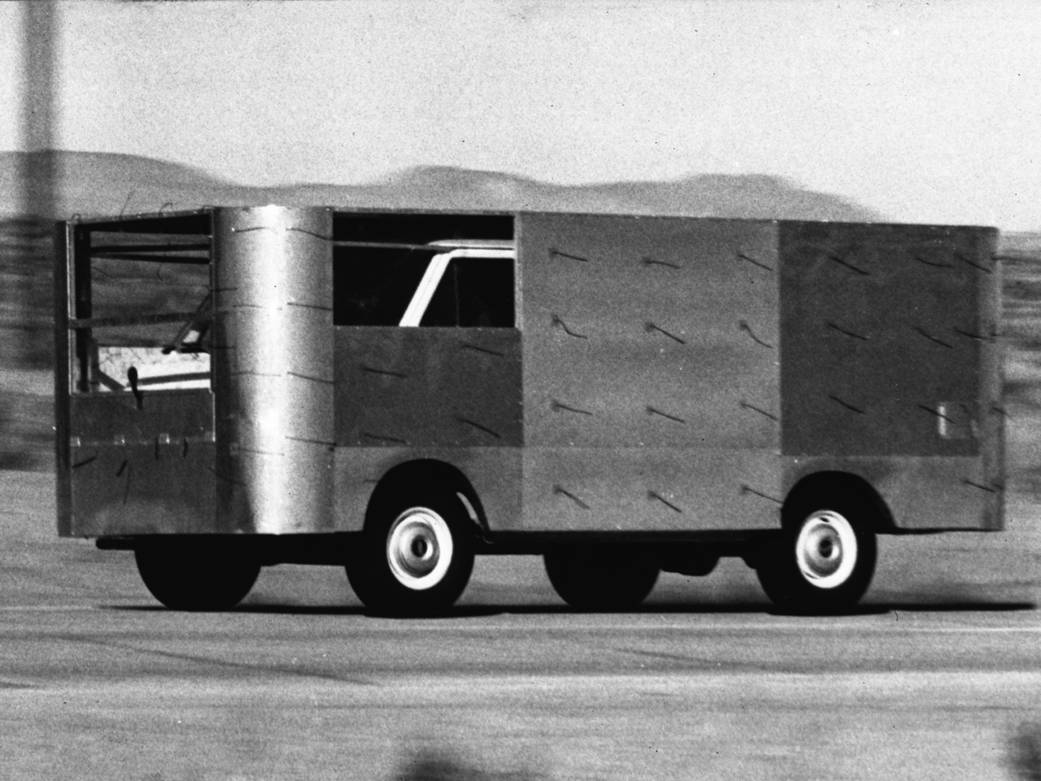
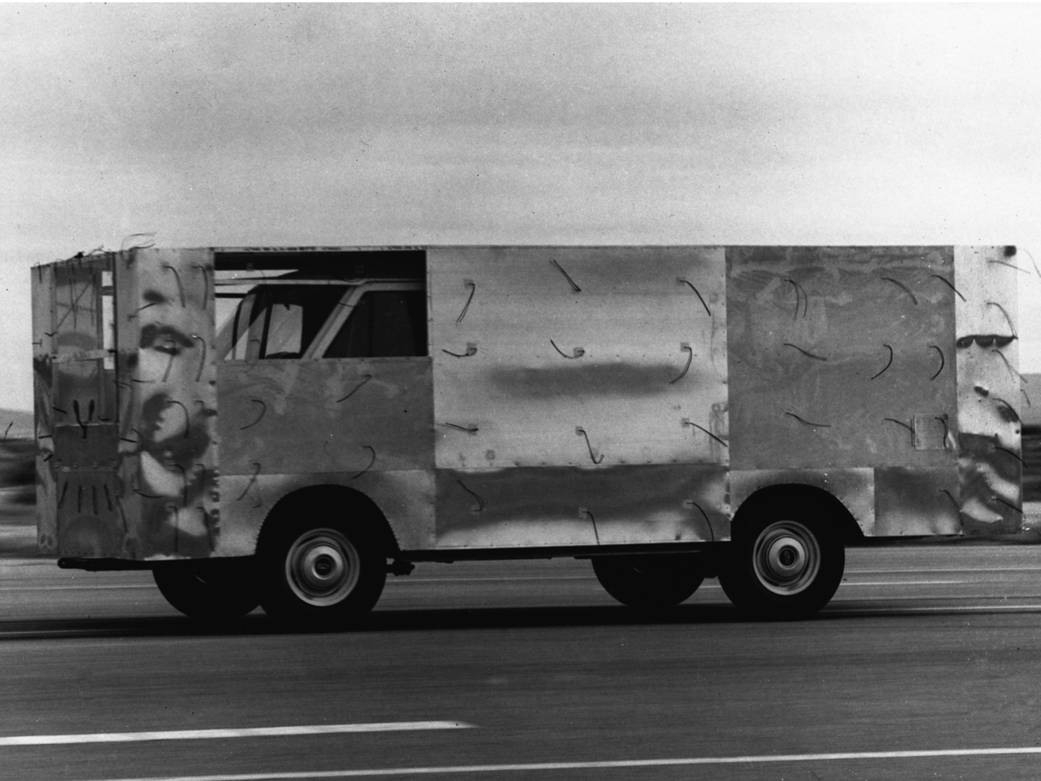
The engineers started by covering the van in flat sheets of aluminum with 90-degree corners. According to a more detailed official recounting of the project, this was to provide a baseline drag measurement while also simulating the boxy motorhomes of the period. The team then methodically altered the shape to reduce drag, first rounding off the front vertical corners, then other surfaces, and finally sealing the underside of the vehicle. These changes created a smoother path for air flowing around the vehicle compared to trucks of the period. A typical truck would plough through the air with its broad front end, leaving that air to flow around the vehicle unevenly, as well as congregate in a low-pressure area at the back—all of which created drag.
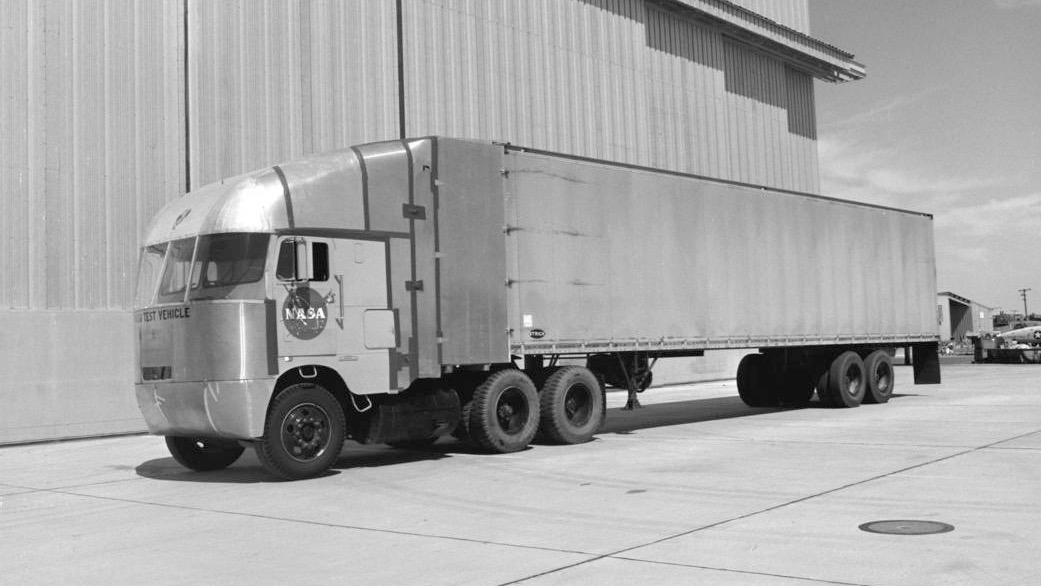
The van was retested after each modification. Engineers recorded a 52% drag reduction from rounding off all four front edges, and a further 7% reduction from sealing the van’s underside, which they estimated would increase fuel economy by 15-25% at highway speeds. Dryden researchers later tried similar modifications to a leased cab over engine semi truck. The blunt front end was smoothed with sheetmetal curves, and a fairing was added over the cab. Again, rounding off all front edges reduced drag by over 50%. Later tests with underbody fairings and a boat tail showed a 15% drag reduction.
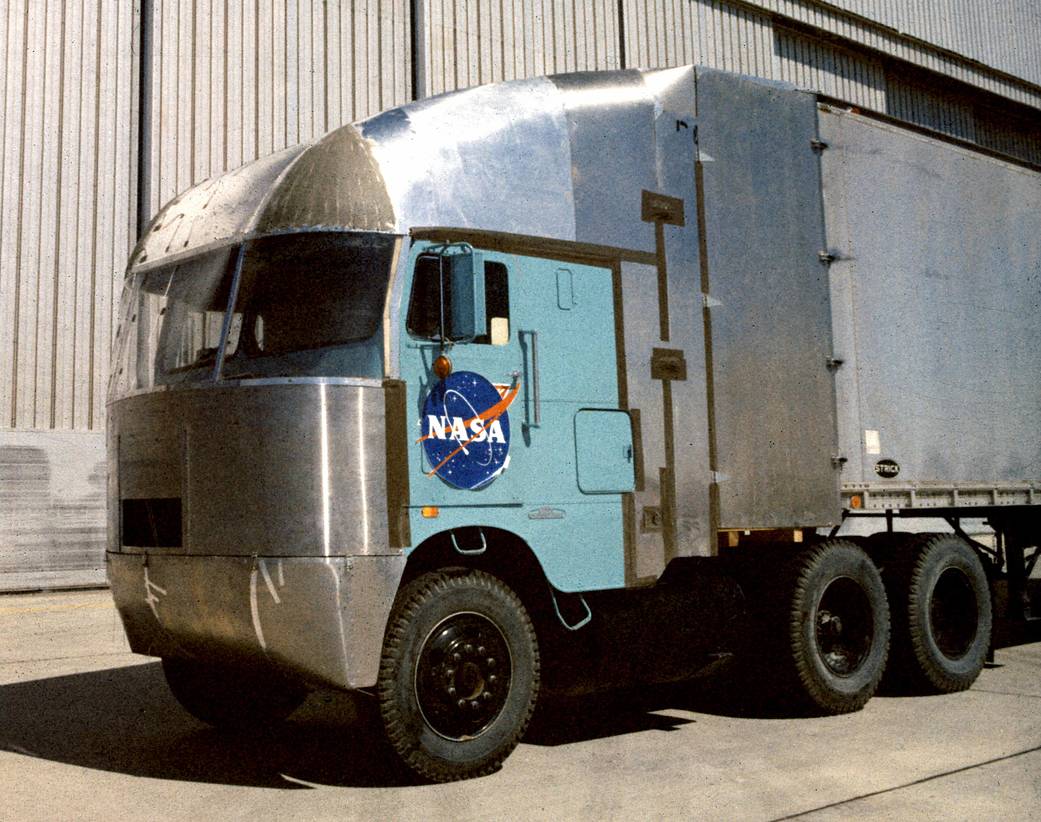
This test truck looks crude, but not any more bizarre than the products of the Energy Department’s SuperTruck program, which challenges manufacturers like Navistar and Kenworth to build more-efficient rigs. And NASA’s research has had a real impact on the shape of new trucks.
Today, aerodynamic fairings and rounded corners are common features on semi trucks. Some trucks and trailers also have Mitsubishi Lancer Evolution-style vortex generators marketed under the Airtab brand name, a direct result of later NASA research. It’s an example of how the agency’s considerable engineering resources are used for more than just space exploration.
Got a tip? Send it in: tips@thedrive.com
Loading comments…
Comments couldn’t be loaded. Please refresh the page.