
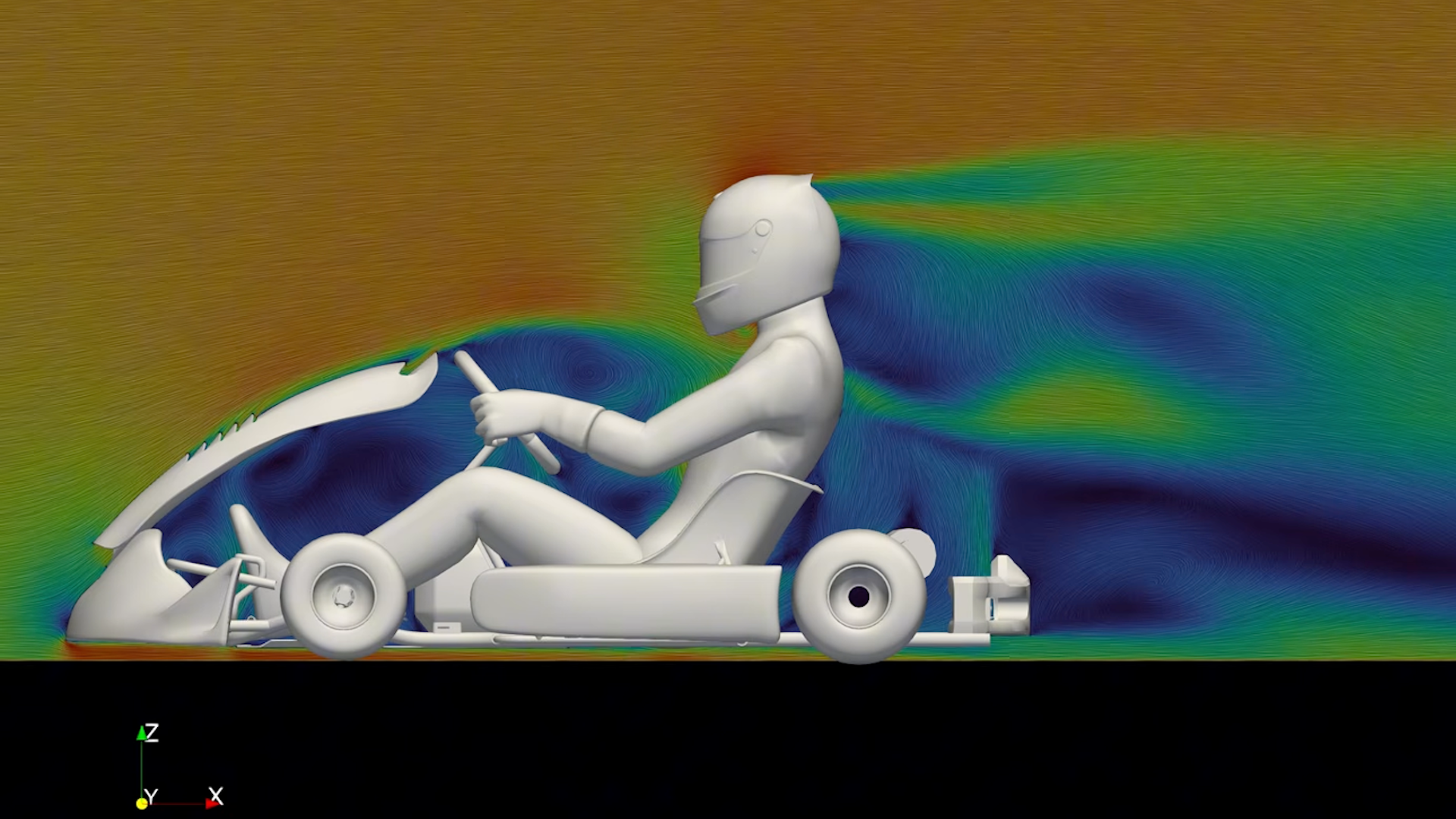
If you’ve ever competed in open-wheel racing, you’ve likely been exposed to the confusing (but kind of cool) world of helmet aerodynamics. As a former racer in the shifter kart pro circuit and with some experience in small formula cars, I very vividly remember being a teenager, pointing at a helmet with all the cool add-ons, and going: “I want that!”
But, do they actually work?
YouTuber Oskar Savicki specializes in aero analysis of many types of race cars, but primarily racing karts. I came across his helmet-spoiler video and found it very interesting—plus, I could relate to some of his findings from my own experience in this type of racing.
The specific goal of helmet aero is a bit of a crapshoot, and most people end up springing for the more expensive model because the lips and spoilers look cool, and surely they improve performance, right? As the video explains, there are a couple of areas that are actually targeted by helmet spoilers; the most important one is not drag reduction, but actually lift. Specifically, reducing lift.

Everyone Thinks This Helmet Spoiler Works…
In a nutshell, a helmet acts as a catch-all for incoming wind. If you’ve ever done 125 mph in a shifter kart, then you know how drastic this force can be. Motorcyclists can also relate to this, although a rider’s position on a bike is drastically different from that of a driver in a kart, and this has a big impact on lift and drag. Either way, the simulations shown in the video reflect that chin and rear spoilers can considerably reduce lift, negating that “suction” feeling at high speed.
The chin spoiler also helps distribute air more evenly around the head and, depending on the driver’s head position, can deflect a considerable amount of wake away from the driver’s neck. The more the driver “tucks in” behind the wheel or lowers their chin at high speed, the more effective a chin spoiler is. Meanwhile, the top/rear spoiler is working in tandem by reducing the pressure difference between the front of the helmet and the rear—or you can also think of this as the top of the helmet and the bottom. In other words, one spoiler helps reduce lift by preventing it from getting into the helmet, while the other pushes it down at the same time.
The key takeaway here is that most racers will buy a decked-out helmet thinking it will make them “slipperier” and therefore faster. Unfortunately, the aero simulations do not show any significant reduction in drag to support that. However, the data shows that there are lifting forces at high speeds, which means drivers will have clearer vision, be more comfortable, feel safer, and, at the end of the day, be able to focus on the task at hand.
Got a tip? Email us at tips@thedrive.com
Loading comments…
Comments couldn’t be loaded. Please refresh the page.