
Key Takeaways
- Transformative experience. The Pagani Utopia Roadster redefines driving with its bespoke craftsmanship and unique design.
- Engineering marvel. Features a custom monocoque and a hand-built V12 engine, showcasing Pagani’s commitment to perfection.
- Unmatched driving sensation. The car’s lightweight design and powerful sound create an intoxicating driving experience.
- Symbol of achievement. More than a status symbol, it’s a celebration of craftsmanship and personal milestones.
Bottom line: The Pagani Utopia Roadster is a masterpiece of automotive art, offering an unparalleled driving experience and embodying the pinnacle of bespoke engineering.
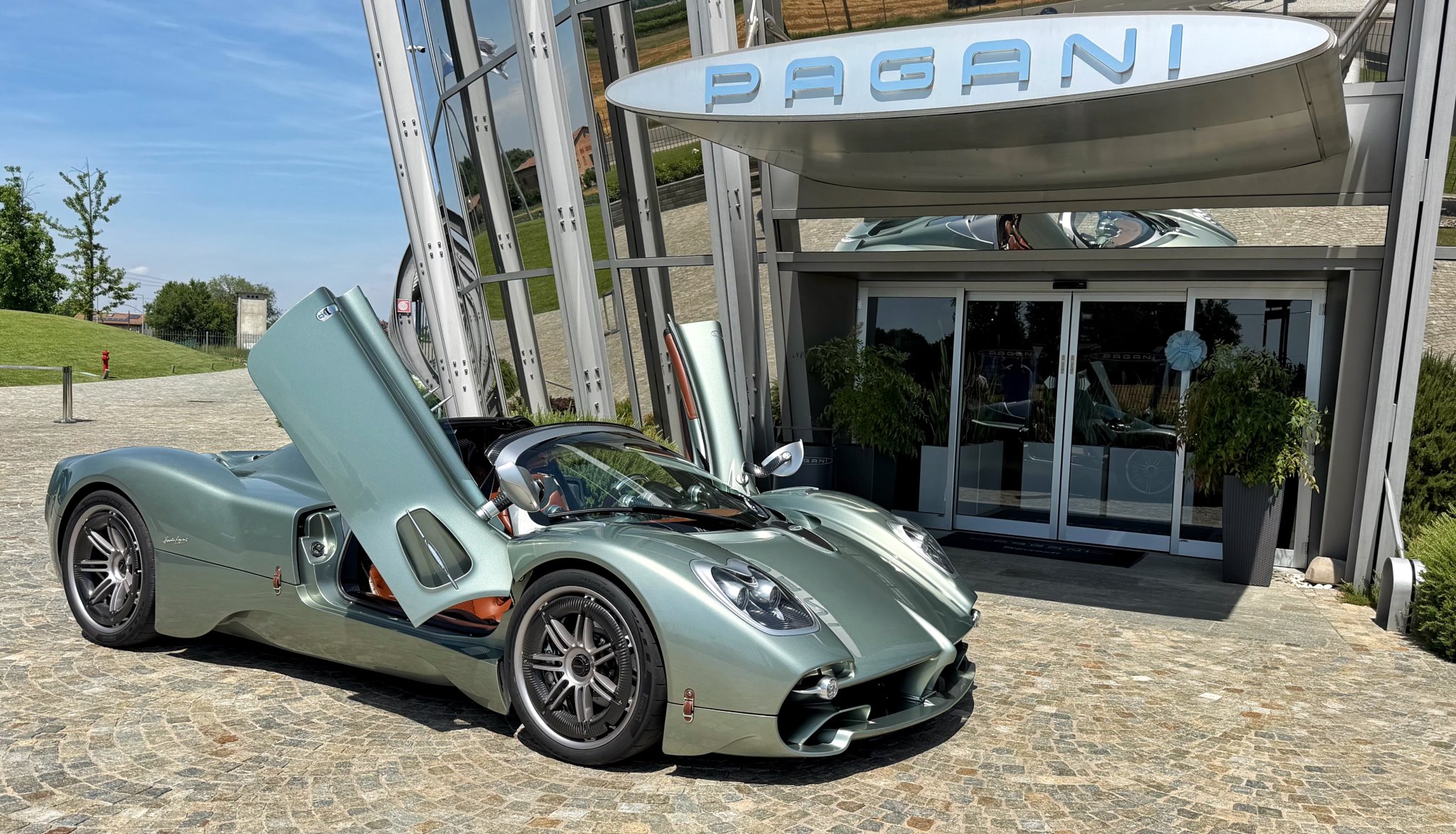
I could sum up my time behind the wheel of the Pagani Utopia Roadster in a few words; heck, maybe even one. “Magical” would be fitting, but too cliché. After all, a €3,100,000 ($3.6m) hypercar should be magical to drive. But what about organic, or epiphanic? Would that be more intriguing?
Both adjectives are fitting for the very reason that the Utopia Roadster is more than the sum of its materials, and that everything I drove before and after it will, in one way or another, be measured against it. Not in an apples-to-apples comparison, but in the sense that, after more than a decade in this profession, it was a three-hour road test (and a seven-hour factory tour that included an incredible Italian lunch in the employee cafeteria) that exposed me to what is truly the pinnacle of independent, bespoke automotive craftsmanship. But even then, simply saying that doesn’t quite embody the spirit of Pagani.
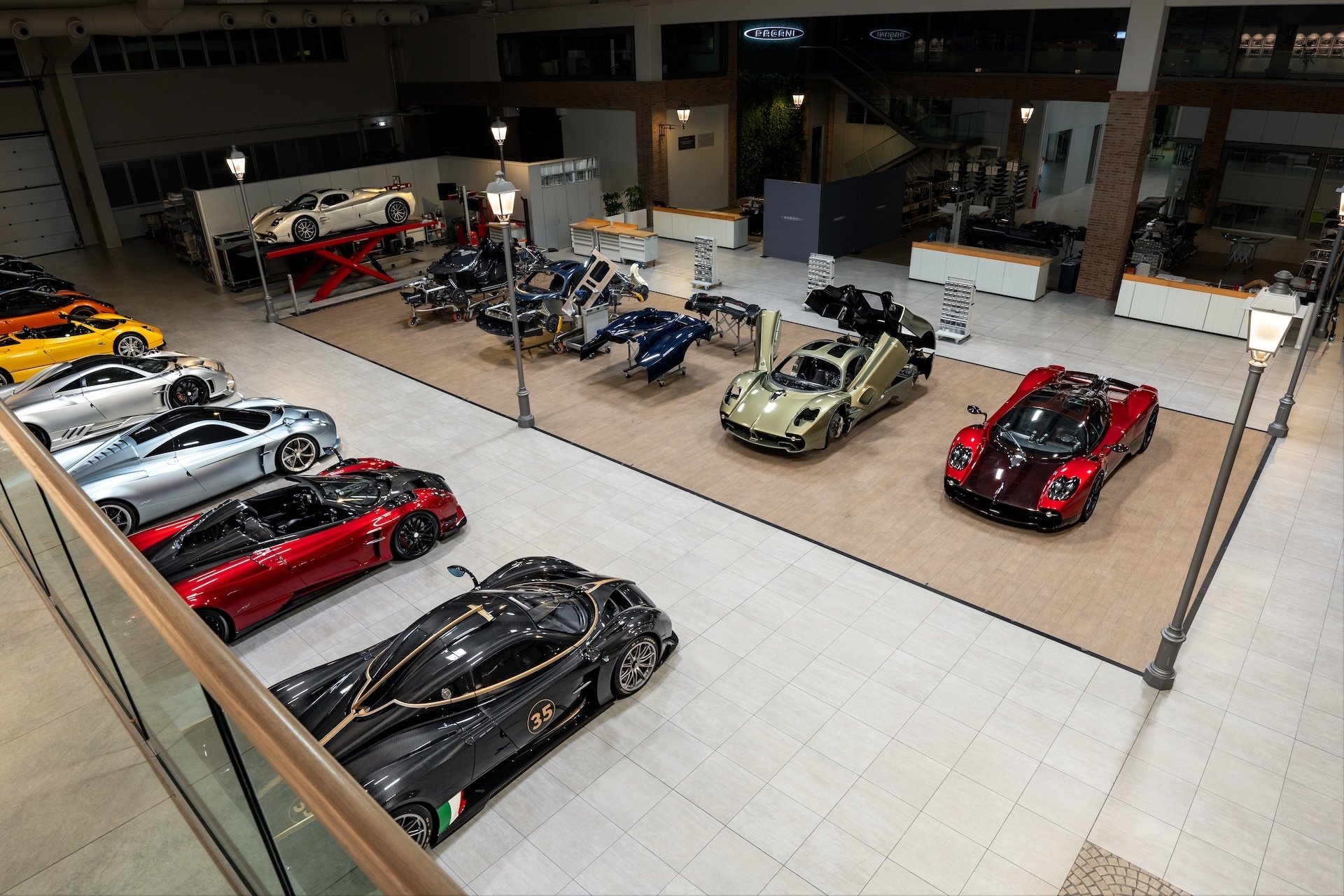
When you drive most, if not all, cars, you’re doing just that—driving. If you have the opportunity to visit a car factory, you’re witnessing a facility that a massive conglomerate built to operate a business. In comparison, the design and manufacturing ecosystem that Horacio Pagani and his family and partners have built in San Cesario, on the outskirts of Modena, feels like the result of a lifelong, ongoing dream. The cars that roll out of them, dynamic gems.
From the 6.0-liter twin-turbo Pagani V12 engine to the intricate carbon-fiber work, all done in-house, to the most exclusive personalization service in the automotive industry, driving a Utopia Roadster bearing a unique hue dear to Horacio’s heart was indeed an epiphany. I’ll do my best to put that experience into words—after all, that’s my job.
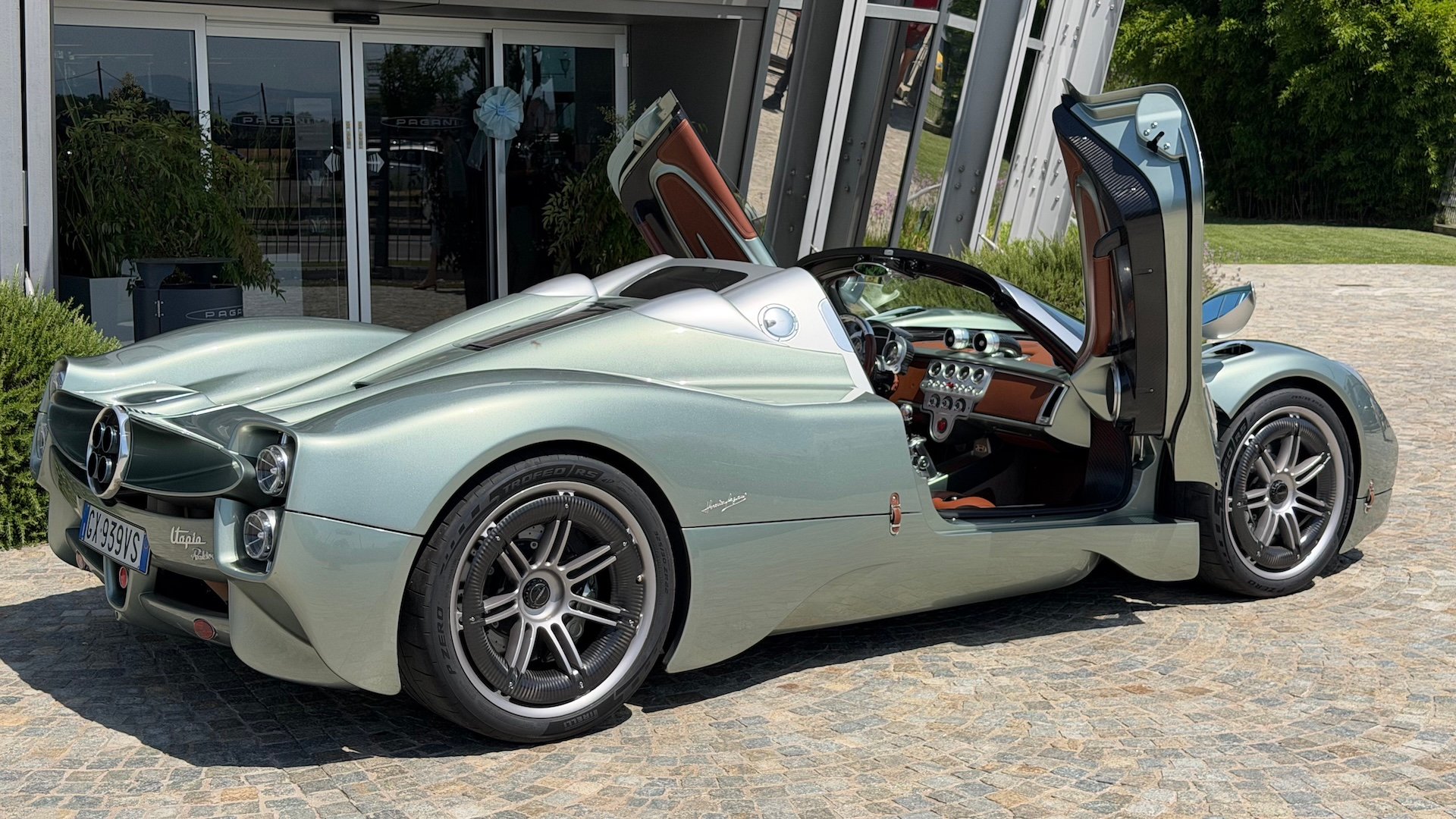
The Basics
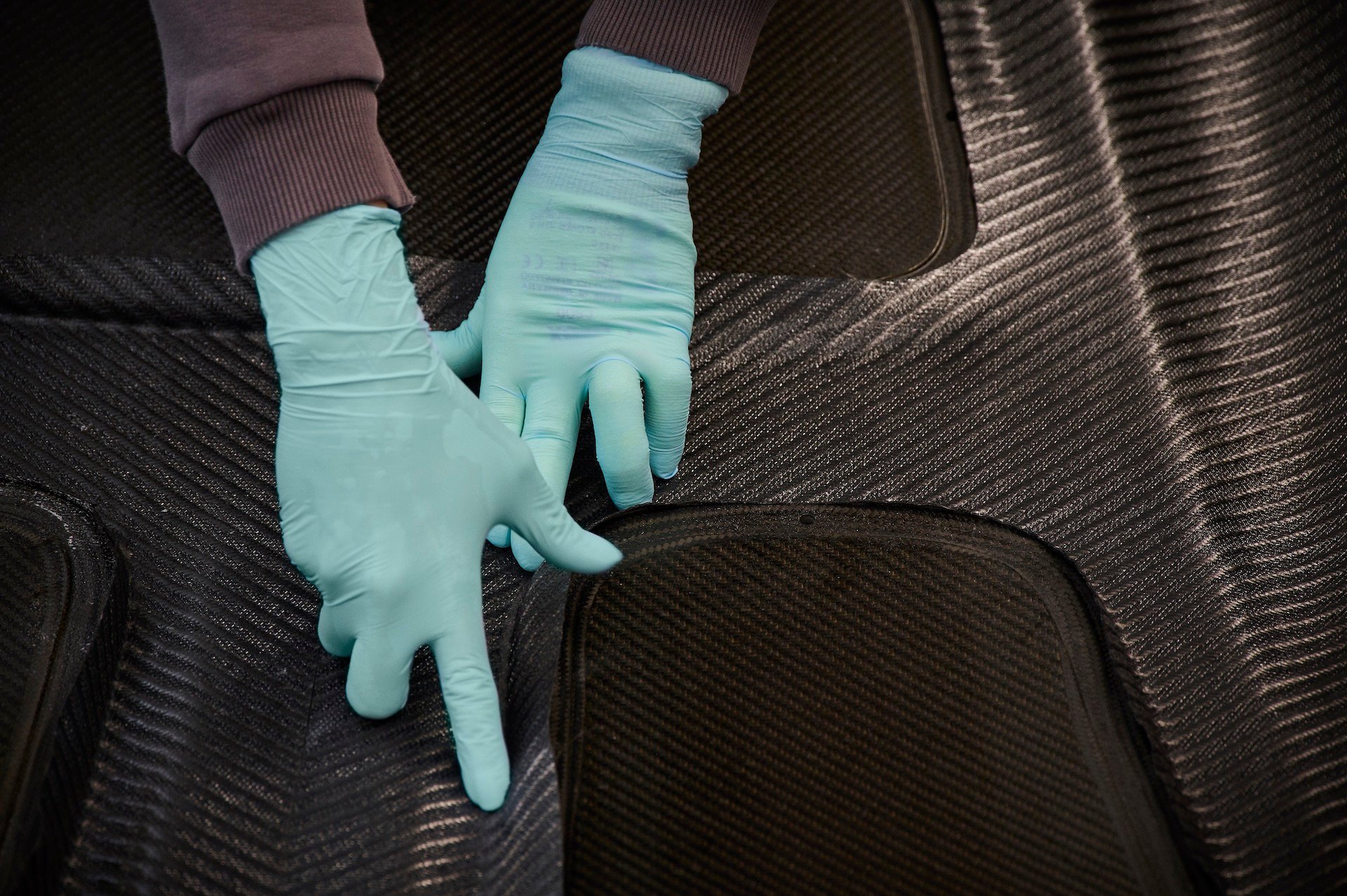
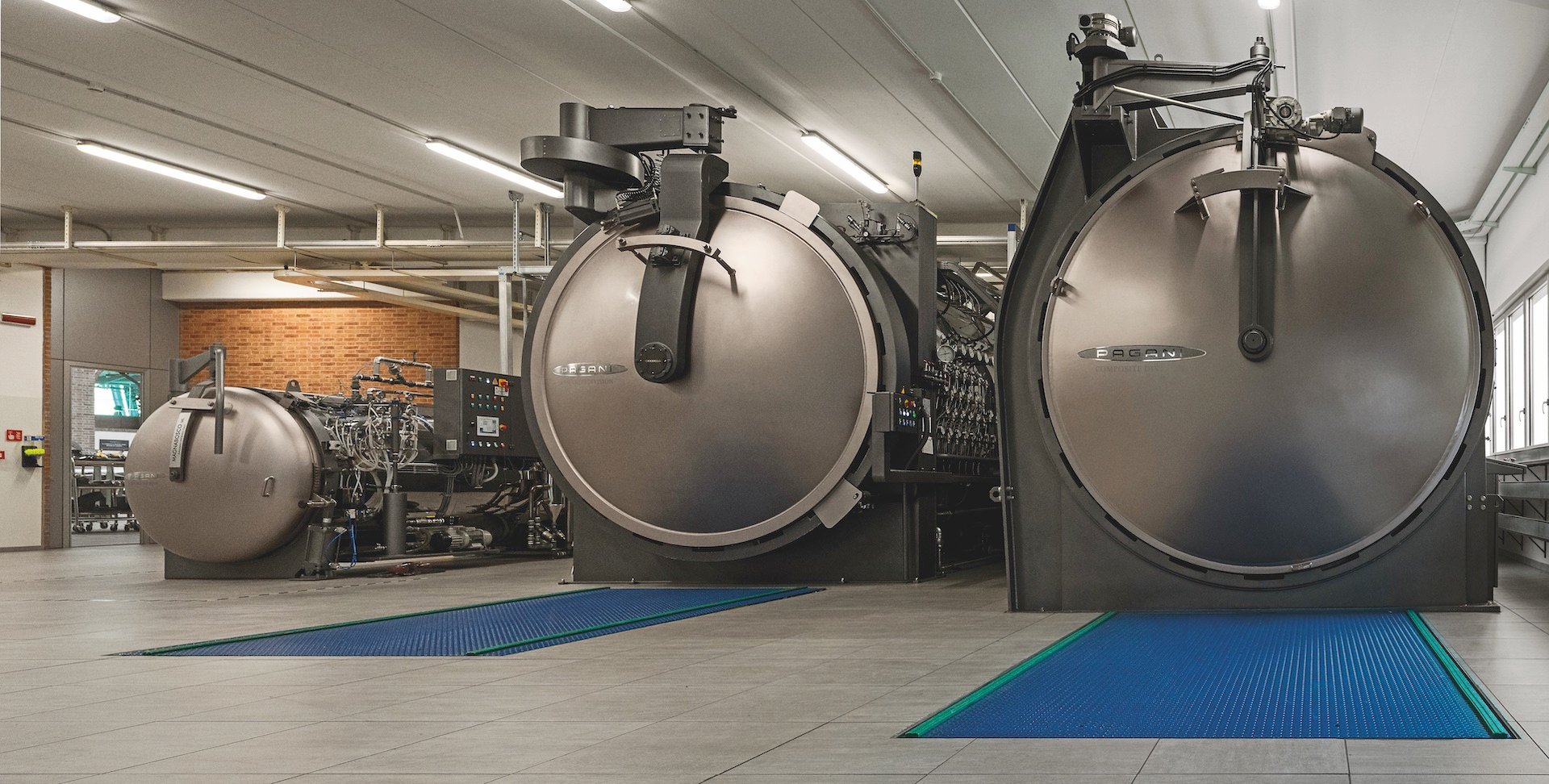
Underneath the Utopia Roadster is a custom monocoque composed of materials that sound like they were pulled down from outer space—Pagani Carbo-Titanium HP62 G2 and Carbo-Triax HP62—with front and rear tubular subframes in a CrMo alloy steel chassis. This is a special blend of materials that Pagani pioneered and patented through its design and engineering branch, Modena Design. In-house technicians, though I’d call them more like artisans, handle the entire process, from cutting the carbon-weave fabric that eventually becomes the tub and bodywork to marrying the chassis, drivetrain, and body after all those components have completed their own manufacturing journeys.
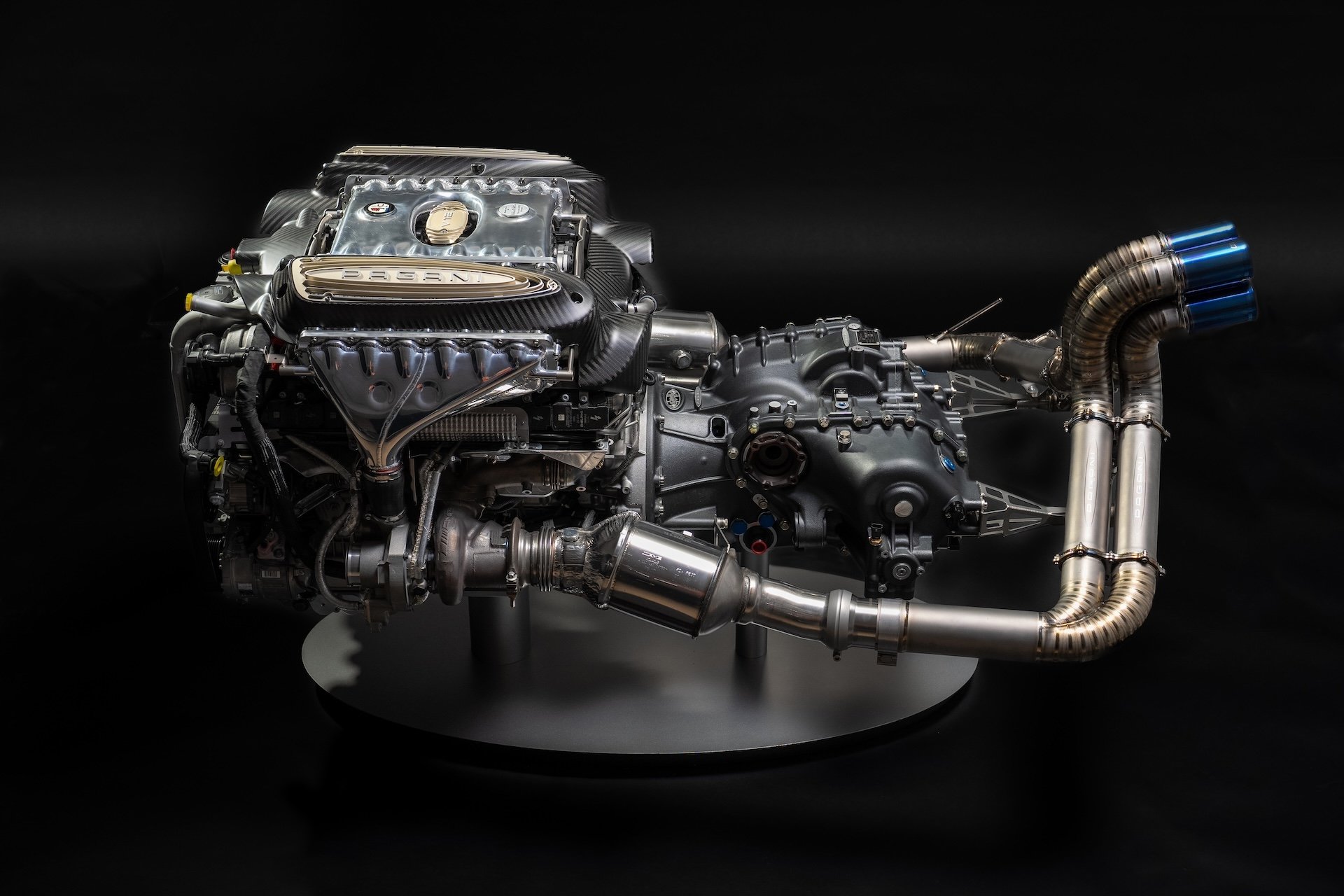
As has been the case since the company’s beginnings, the V12 engines that go into every car are built exclusively for Pagani by Mercedes-AMG. Each motor is built by hand by one person, and despite this being done to Horacio’s exact specifications and demands, some non-performance tweaks are still made to the engines once they arrive in San Cesario. Several stock components that arrive finished in various materials (for transport duty or otherwise) are quickly replaced with high-end aluminum parts perfectly milled by Pagani. And as I learned during my factory tour, it doesn’t matter that the customer will never see these parts, whether they’re plastic or metal; what matters is that every bit of a Pagani is finished in a way that embodies the company’s vision for performance and perfection.

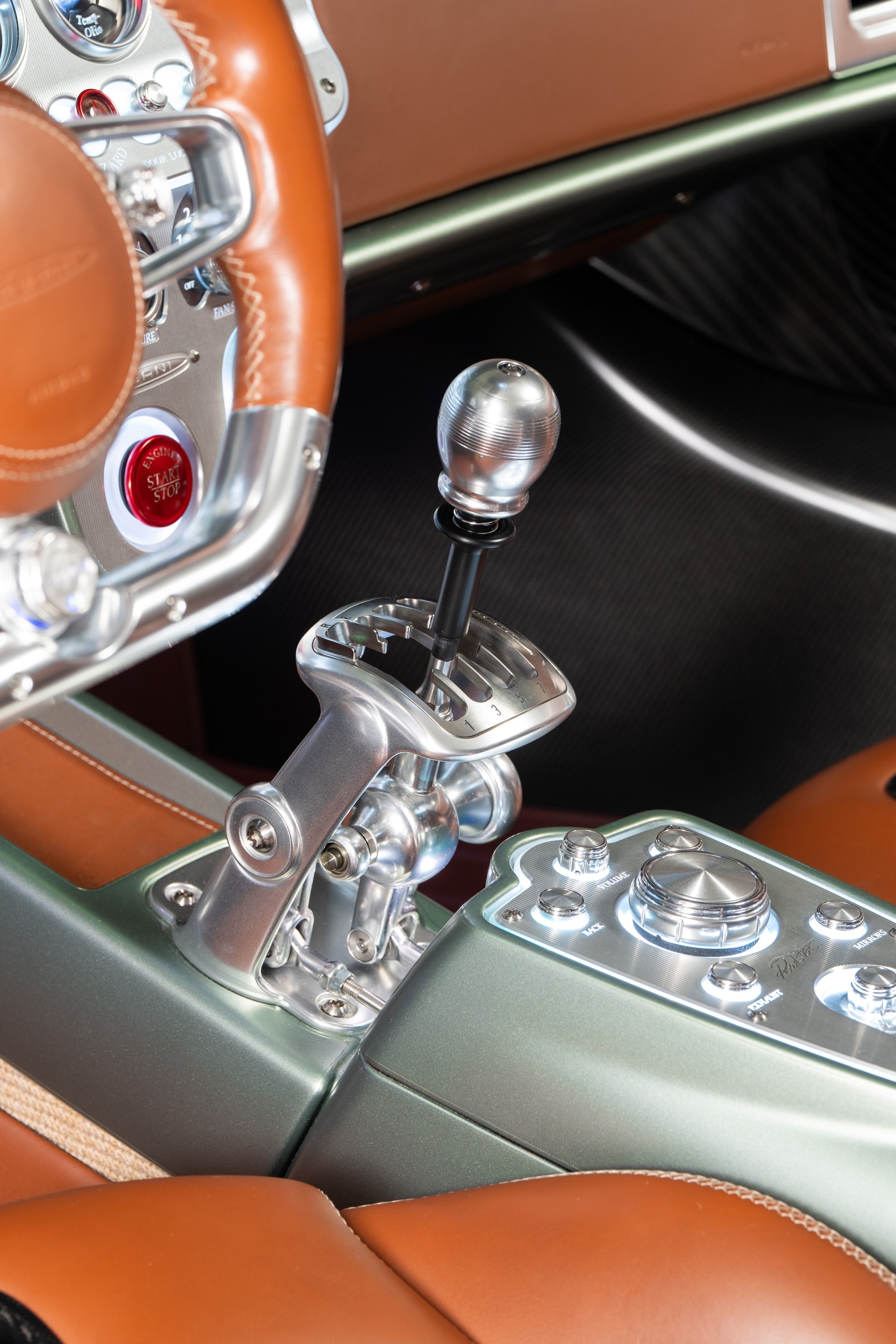
The 6.0-liter unit in the Utopia Roadster produces 864 horsepower and 811 lb-ft of torque, and in my tester it is paired with a lightweight, triple-clutch seven-speed manual transmission designed by the British specialist firm Xtrac. It’s a dog-leg manual, too, so first gear is all the way down and to the left, with second gear up and to the right. This places seventh gear where sixth goes in a traditional manual. Also, no electrification or batteries here, because as Horacio himself told me two years ago: “We have to build what the customer wants to buy,” and “no one wants a hybrid.”
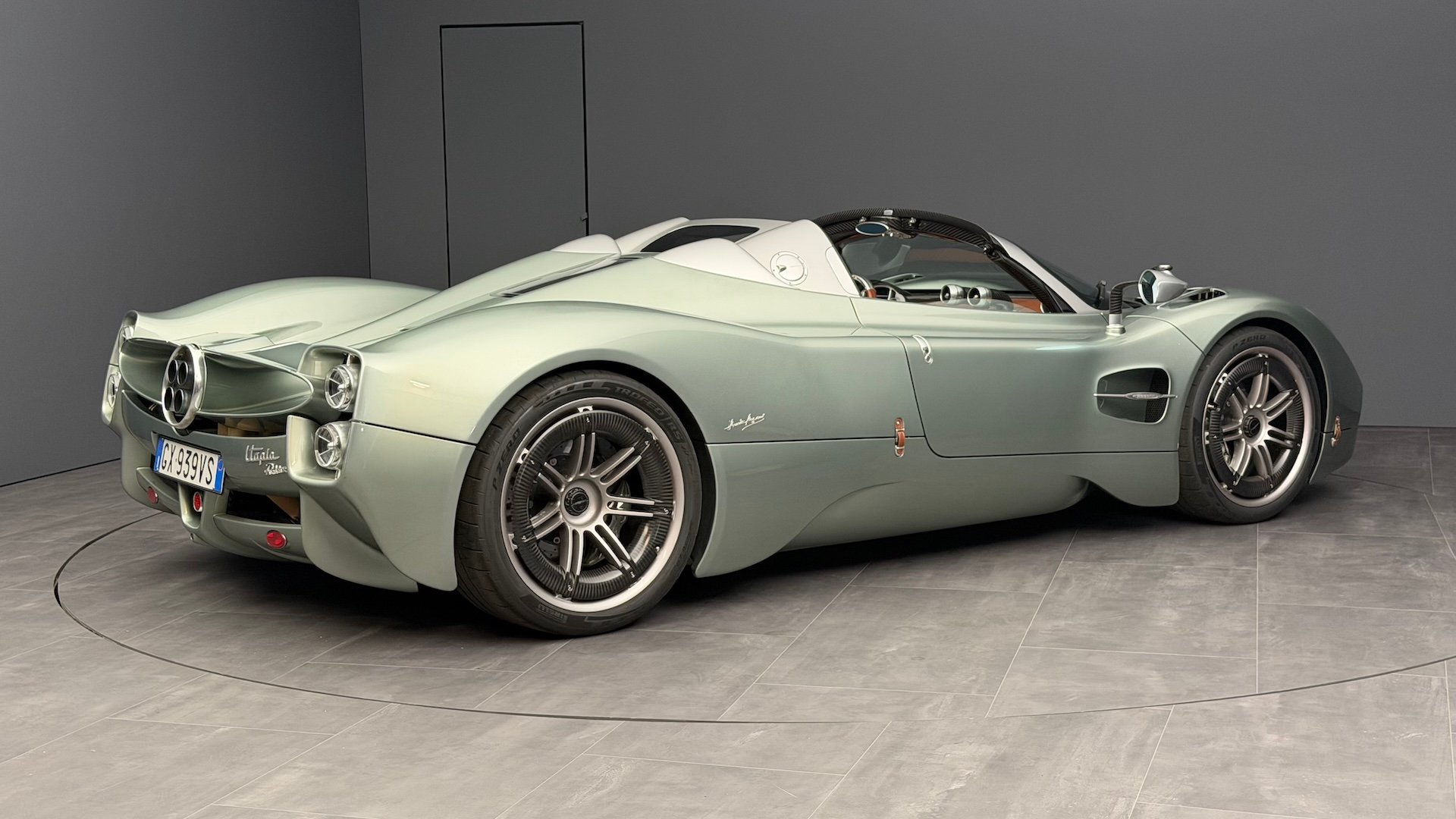
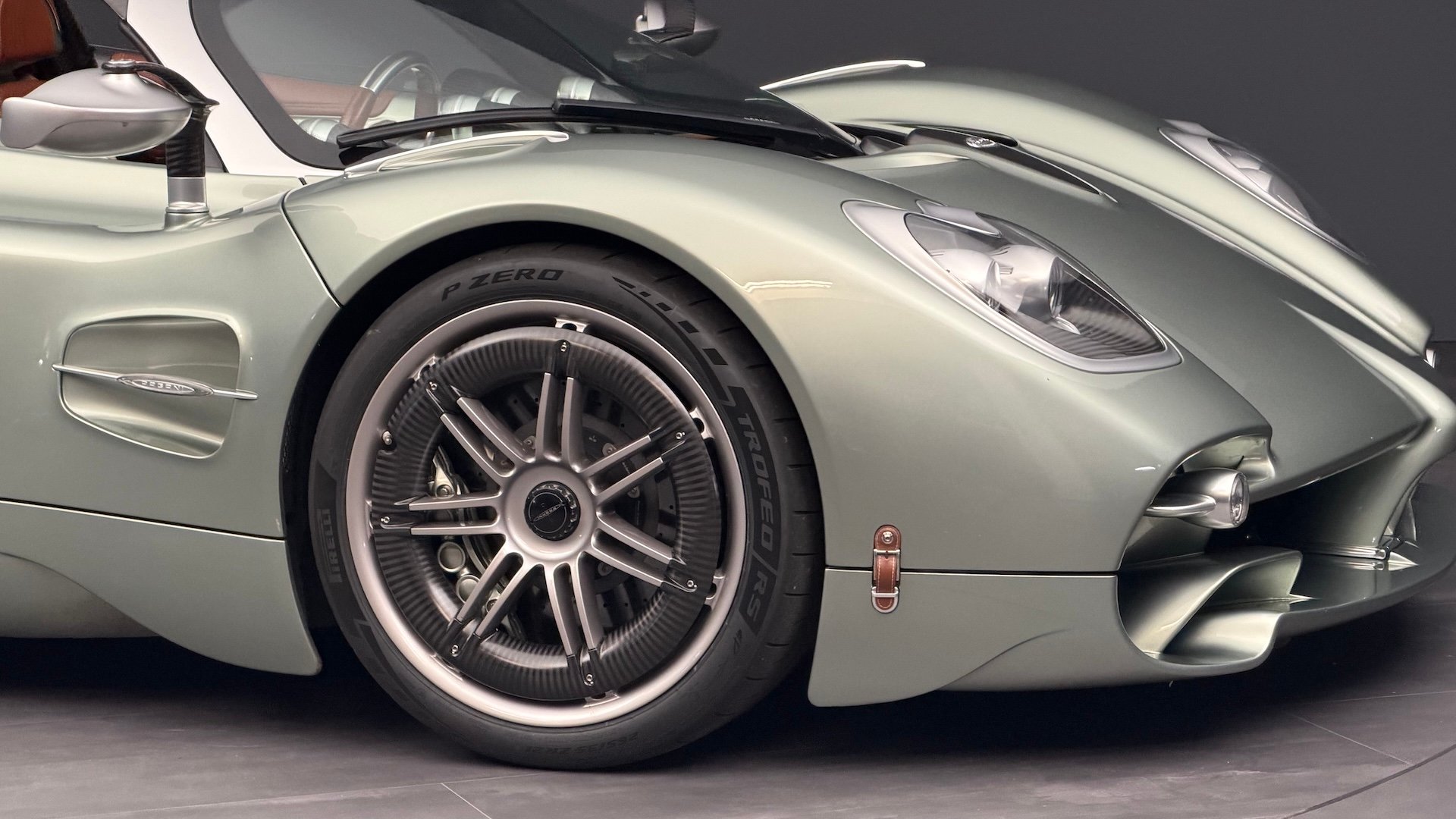
Power is sent to the rear wheels and applied to the ground via Pirelli Cyber tires, which feature built-in sensors that communicate with the Utopia’s stability control systems, including ABS, ESP, and traction control, to ensure optimal performance and safety. Compared to traditional sensors mounted inside the wheels or externally, these transmit much more specific and accurate data to the car. Specifically, these are P Zero Corsa 265/35 R21s at the front and 325/30 R22s at the rear. Pagani also offers all-season and winter tire options to suit different needs. (Ed. note: For all you purveyors of the finest art and engineering that prefer the patina of road salt.)
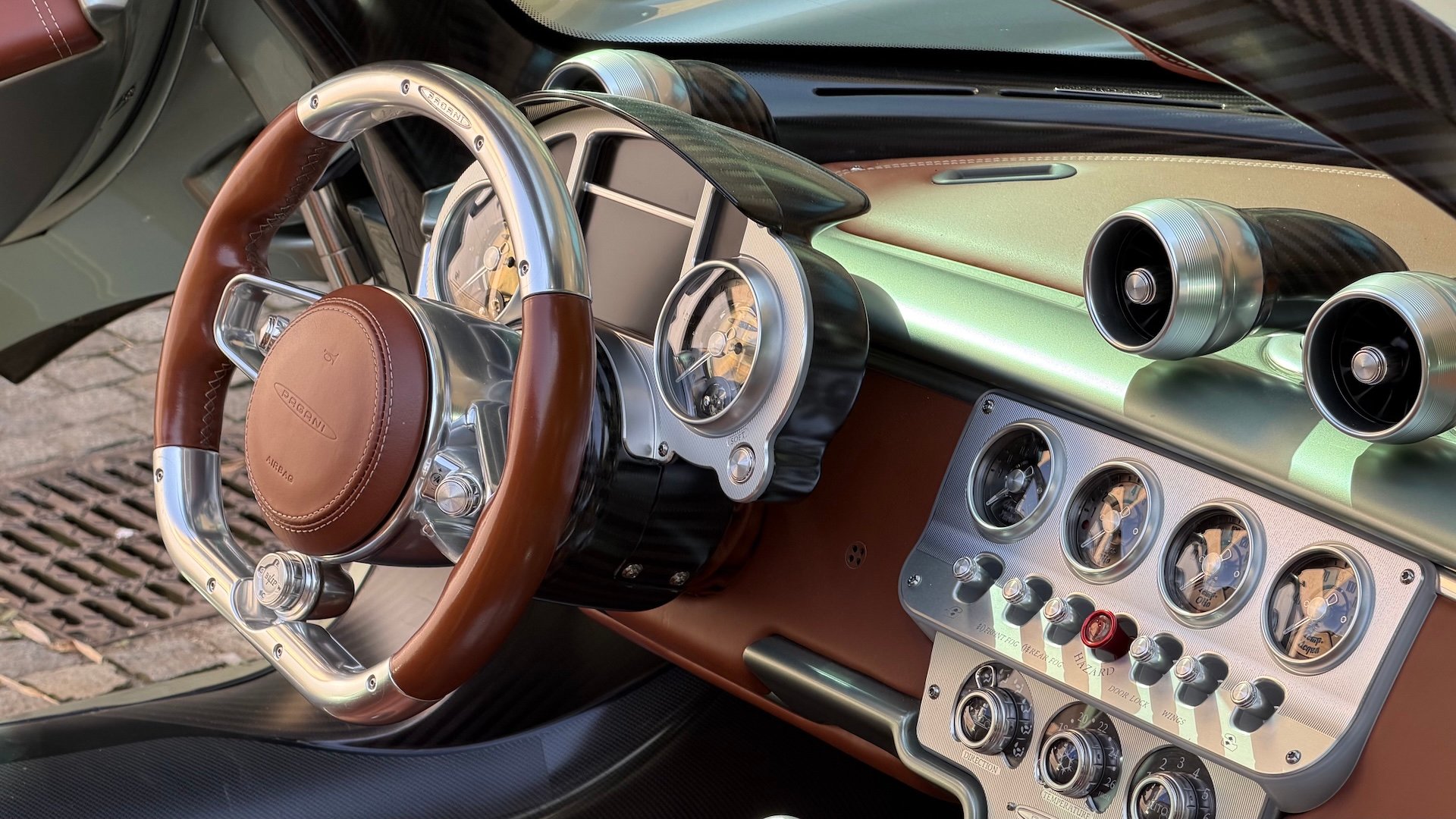
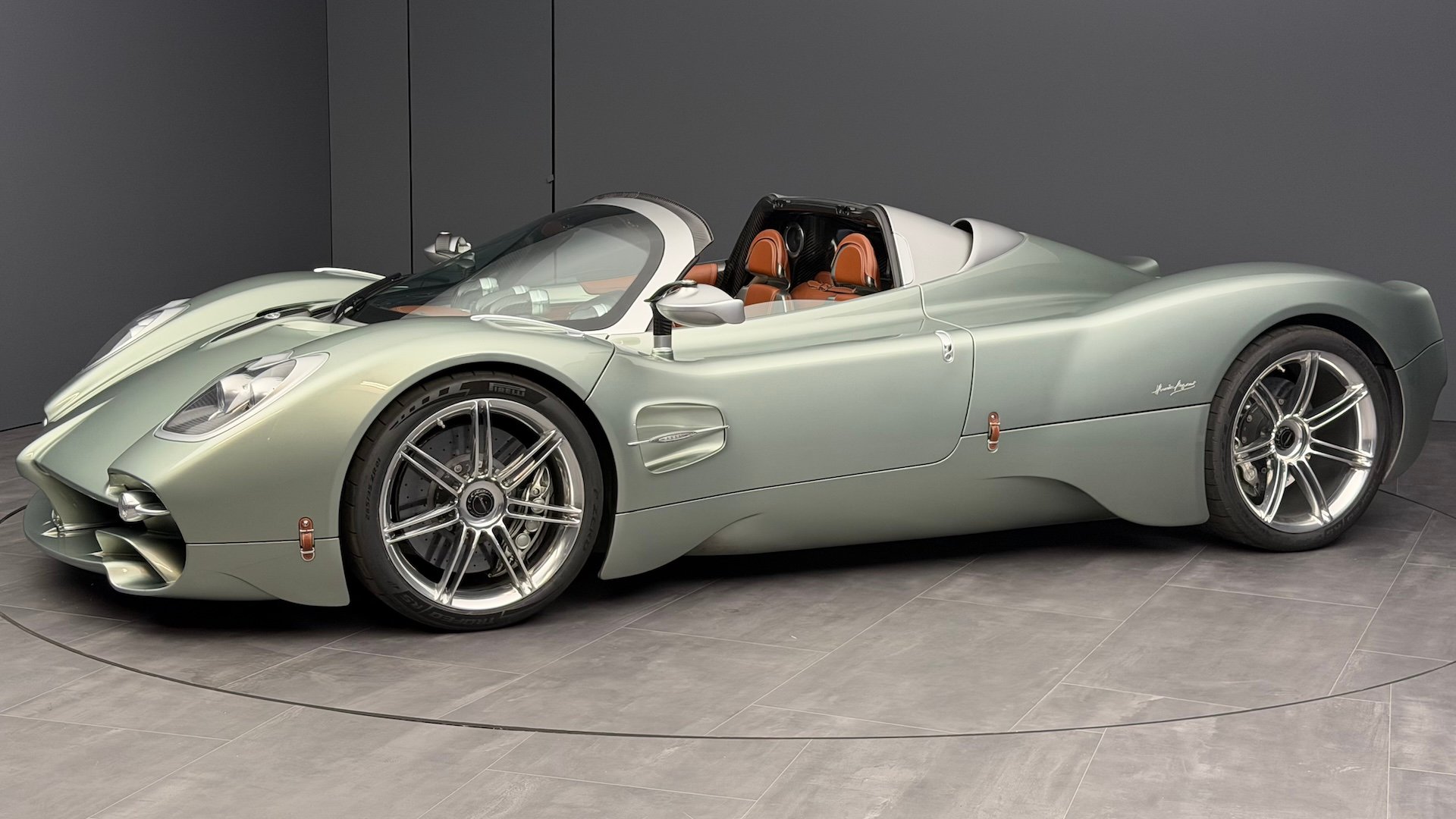
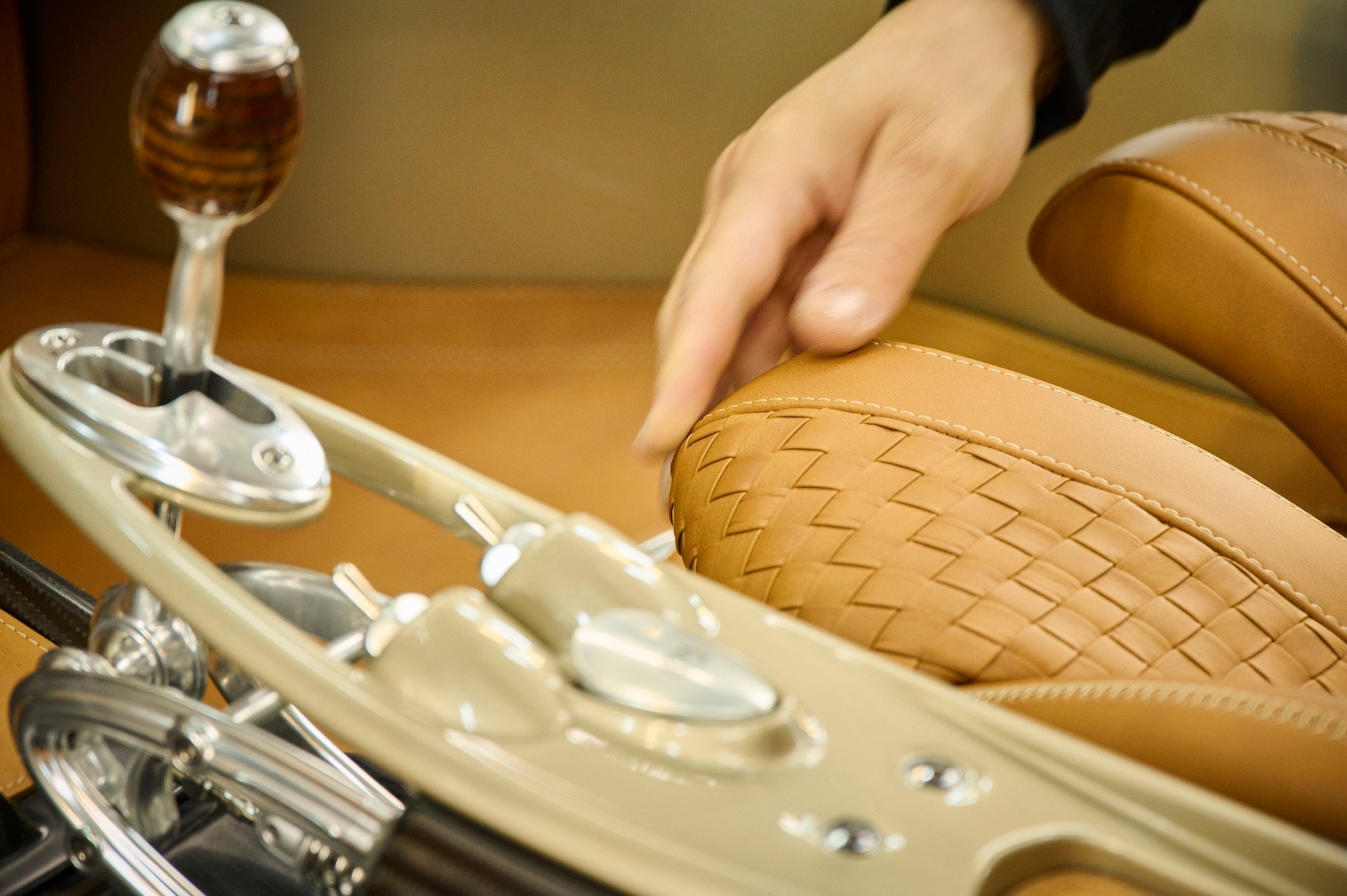
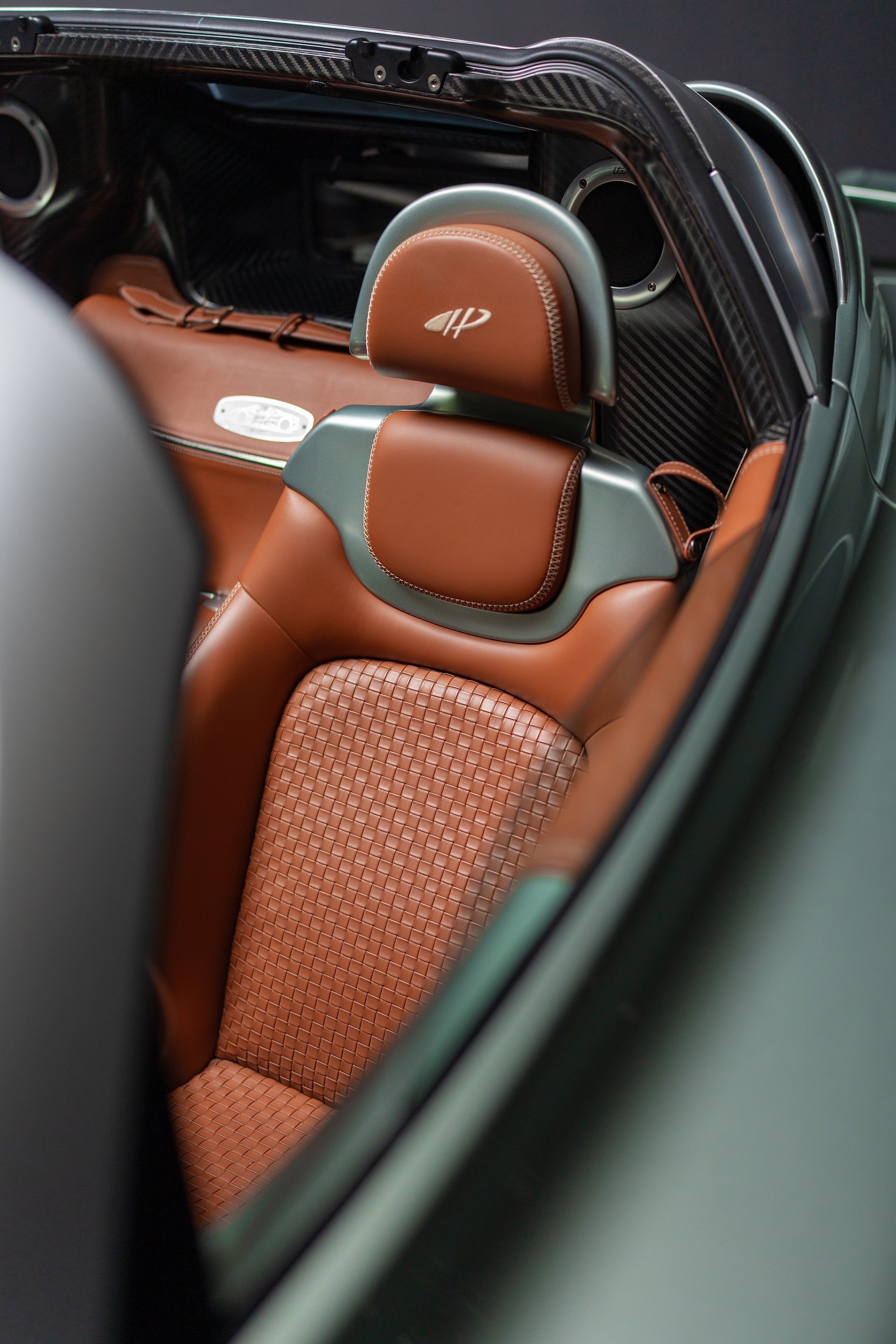
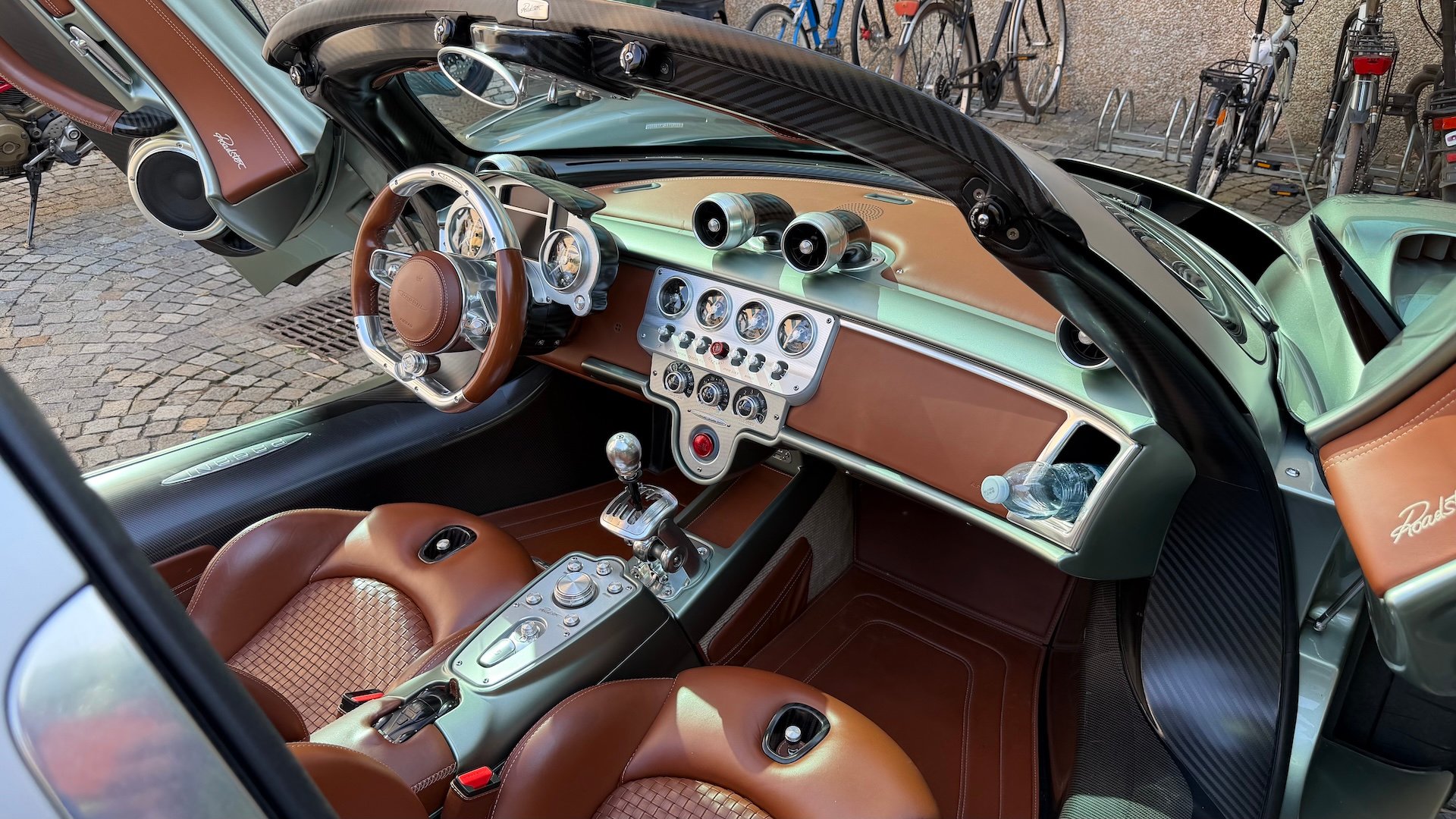
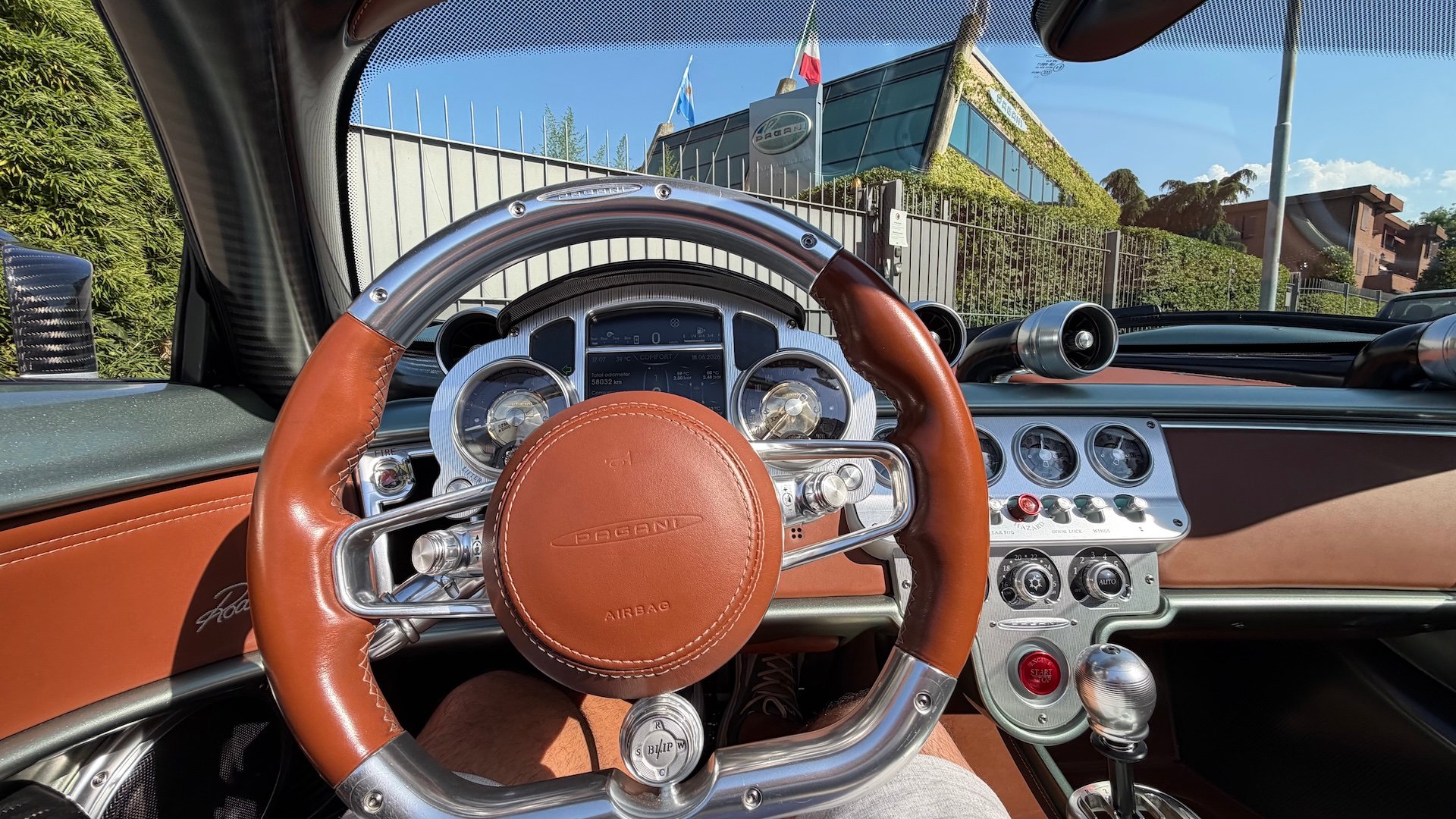
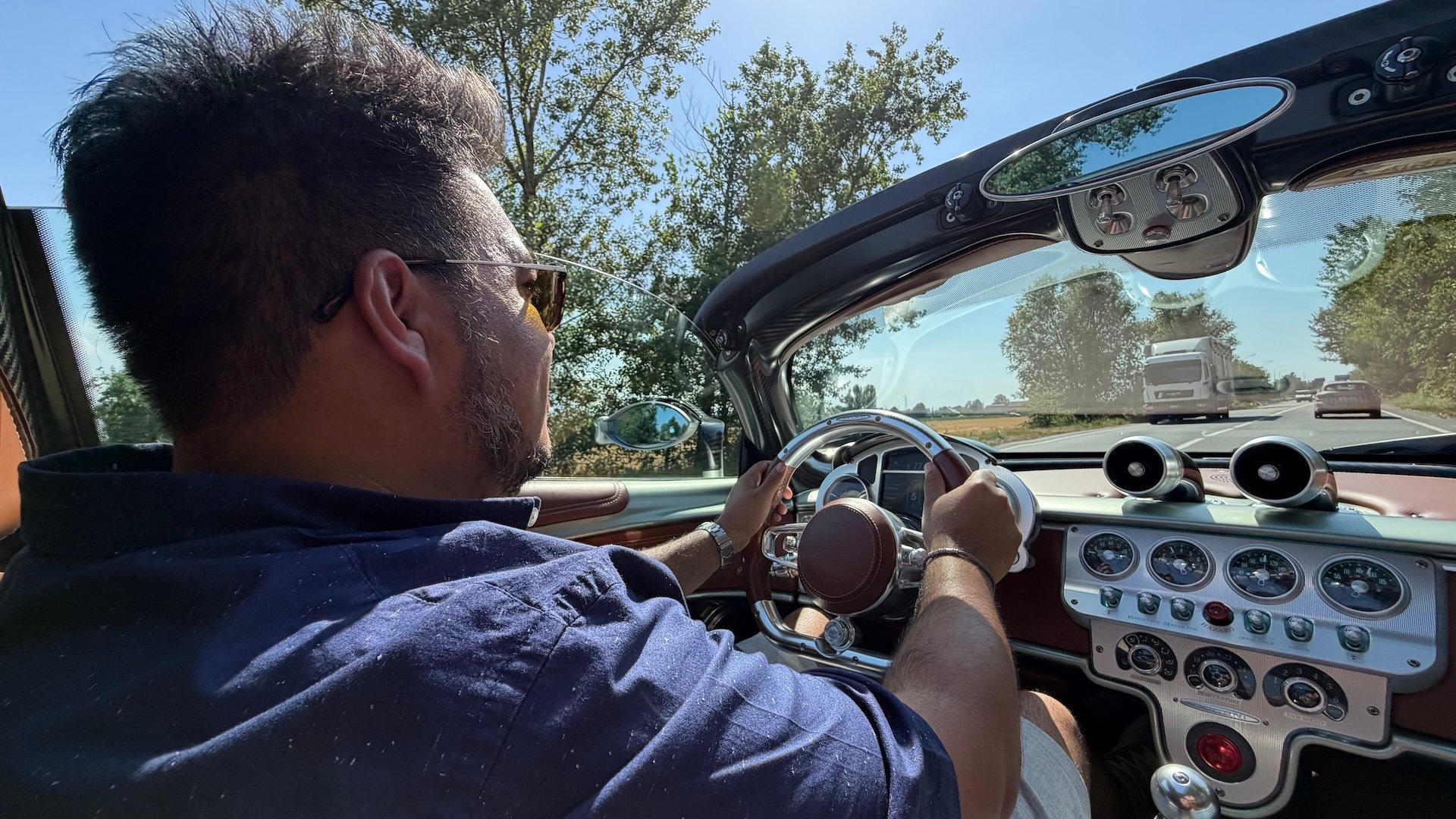
When it comes to the cabin, Pagani is famous for its somewhat steampunk interior motif with loads of switches, knobs, and levers. The steering wheel begins as a roughly 95-pound block of aluminum that, after milling is complete, becomes an elaborate wheel weighing just six pounds. The same attention to detail is applied to the smallest components in the cockpit, from the beautiful rearview mirror and sun visor to the tiny joystick used to adjust the seat position. But by far, the most impressive is the shifter assembly, proudly displayed as a work of art for everyone to admire. I also love the industrial-looking AC pipes and vents.
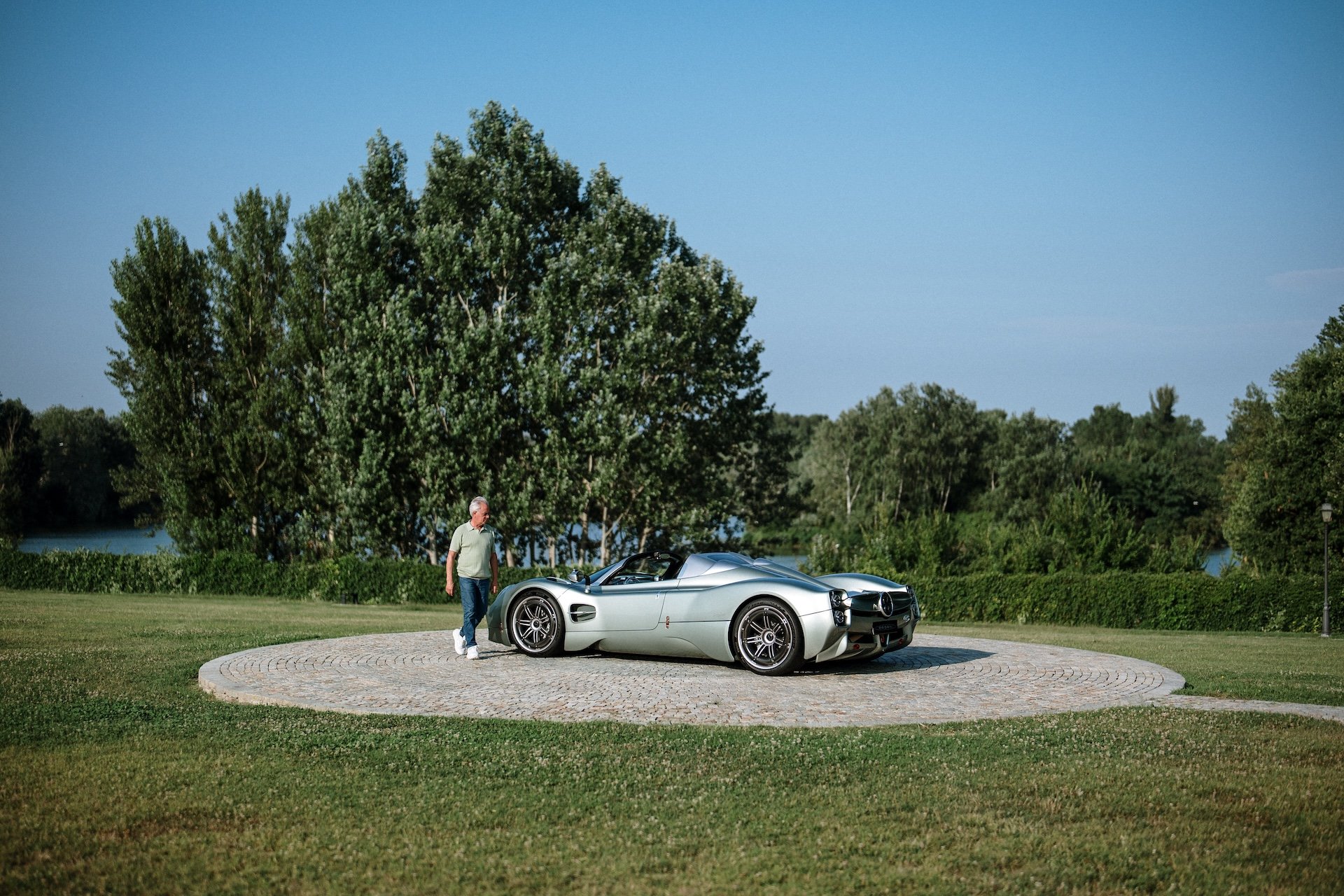
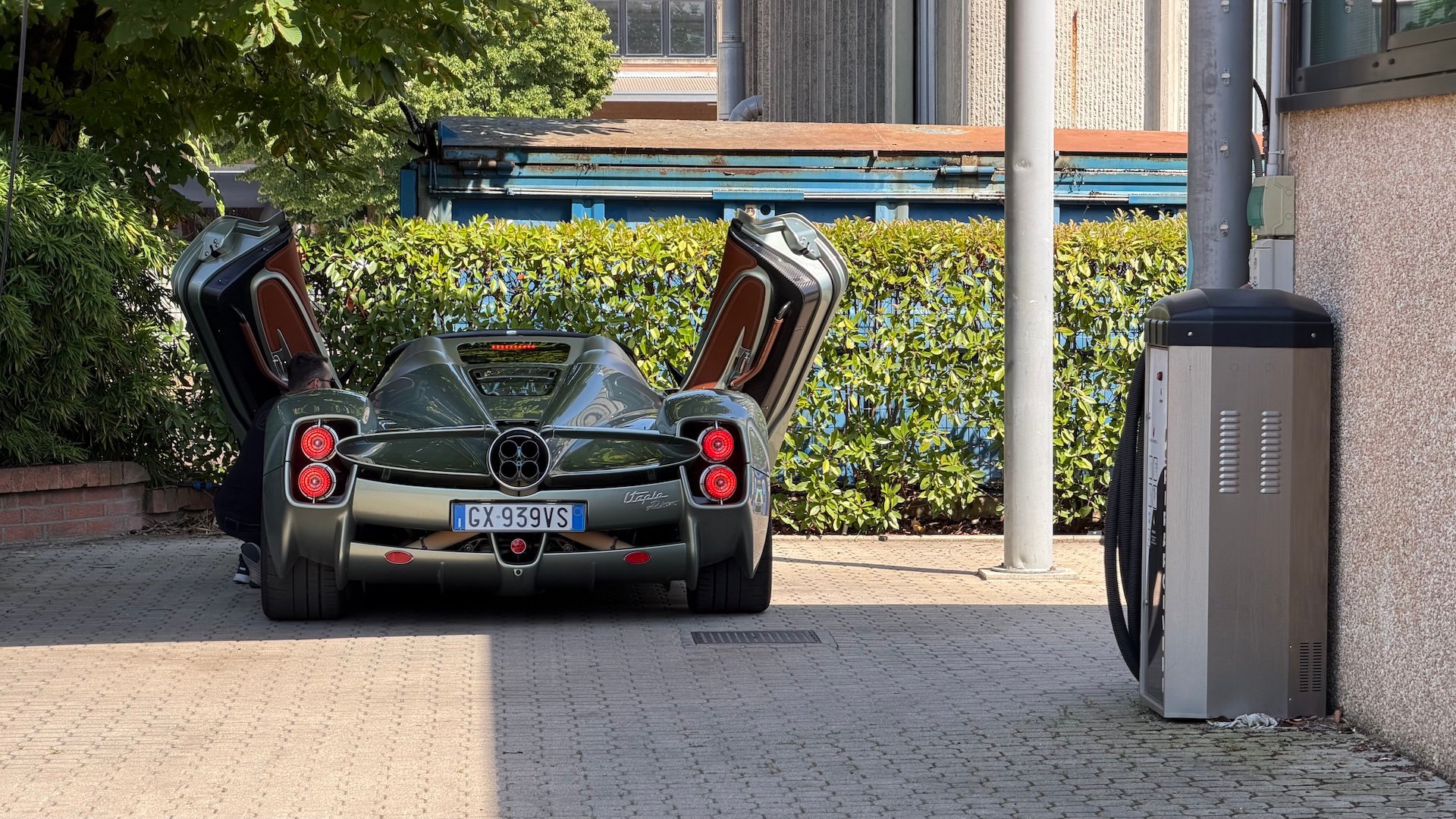
The Utopia Roadster is offered with two removable top options: a cloth top that can be stored behind the seats, or a hard top that must be left behind. My tester had the latter. The car was finished in a beautiful Verde Mara, which is the color Horacio used for his first scale car during a design exercise. It was the first time he applied it to a road-going model.
Driving the Pagani Utopia Roadster
Most cars in this realm of potency share many traits, whether it’s their acceleration, braking force, or that “hollow, lightweight” feel that’s often difficult to explain. However, when it comes to the Utopia (or any Pagani, for that matter), the one characteristic your senses aren’t prepared for is the overwhelming sound the thing makes. From the moment you push the engine start button and hear the V12 fire up to when you really give it the full tortelloni, it’s the kind of symphonic fantasy that car enthusiasts dream about—especially nowadays when so many performance cars sound like Hoovers due to their lack of cylinders, smaller displacements, or emissions regulations.
I first heard the Utopia Roadster I drove fire up while standing right behind the car, indoors. Boof. Talk about goosebumps. Later on, once I hopped into the driver’s seat, I pushed the button myself and felt the monster roar to life. Tip: if you ever find yourself in one of these and you want to rev it as high as possible while stationary, don’t do so in neutral. That’ll only let you rev to 4,000. A little secret I learned was to shift into first gear, leave the clutch in, and then stab the throttle. Now you’ve got the full 6,000-rpm spread.

After doing a little dance to shake off the jitters of driving a $3.6-million hypercar on narrow public roads during rush hour (and with the top off on a blazing 100-degree day), I set off to explore what it’s all about. My new friend and Pagani development driver Matteo was riding shotgun to make sure I didn’t get too crazy, but primarily to answer every one of the 200 questions I thought of while driving the car.
First, I had to get used to moving my hand upward to shift from first to second. Second, I had to get used to how much torque it produces, especially once the turbos spool up and thrust you forward with utter violence. Third, the sound. I know I’ve already touched on the sound, but it’s the one thing that, to this day, stands out to me the most. There is so much of it, and it’s all so intoxicating.
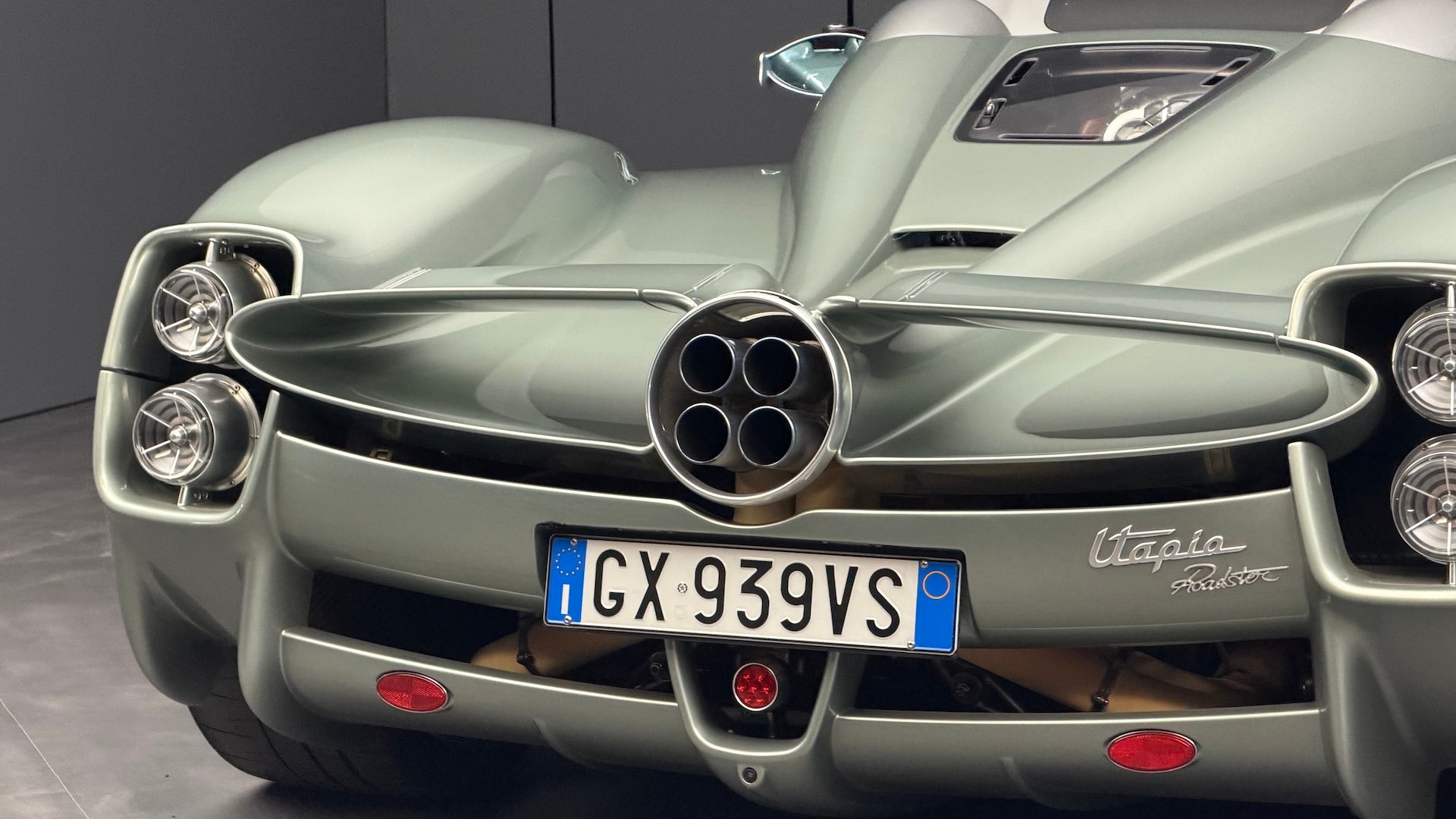
Shifting from first to second while giving the Utopia a decent amount of throttle gives you an idea of how much power you’ve got to work with, and what that feels like on the body. Listen, 864 hp is a lot, but there are many other cars out there with the same or more, and I’ve driven several of them this year—some of them gas and some of them electric. That said, the Utopia weighs considerably less: 2,822 pounds with the roof on, to be precise.
Just so you can wrap your mind around how extreme Horacio is about weight savings, here are a few really fast cars to compare it to: The Ferrari 296 Speciale I recently drove has 869 hp but weighs about 578 pounds more. Something extreme like the 1,064-hp Aston Martin Valhalla we tested earlier this year tips the scales at 3,649 pounds—that’s 827 pounds heavier than the Utopia, which is why it shares a similar 0-60 time despite having a lot more power. Lastly, I’m currently driving one of the quickest cars you can readily buy today: the 2026 Porsche Turbo S, which employs a trick all-wheel-drive system to sprint to 60 mph in 2.2 seconds. Here’s the kicker: it weighs 3,850 pounds—1,028 pounds more than the Pagani! My goal isn’t to disgrace these cars, but to highlight that only by looking at these really fast machines and comparing their power and weight do you begin to understand how bloated even the Speciales of the world really are.
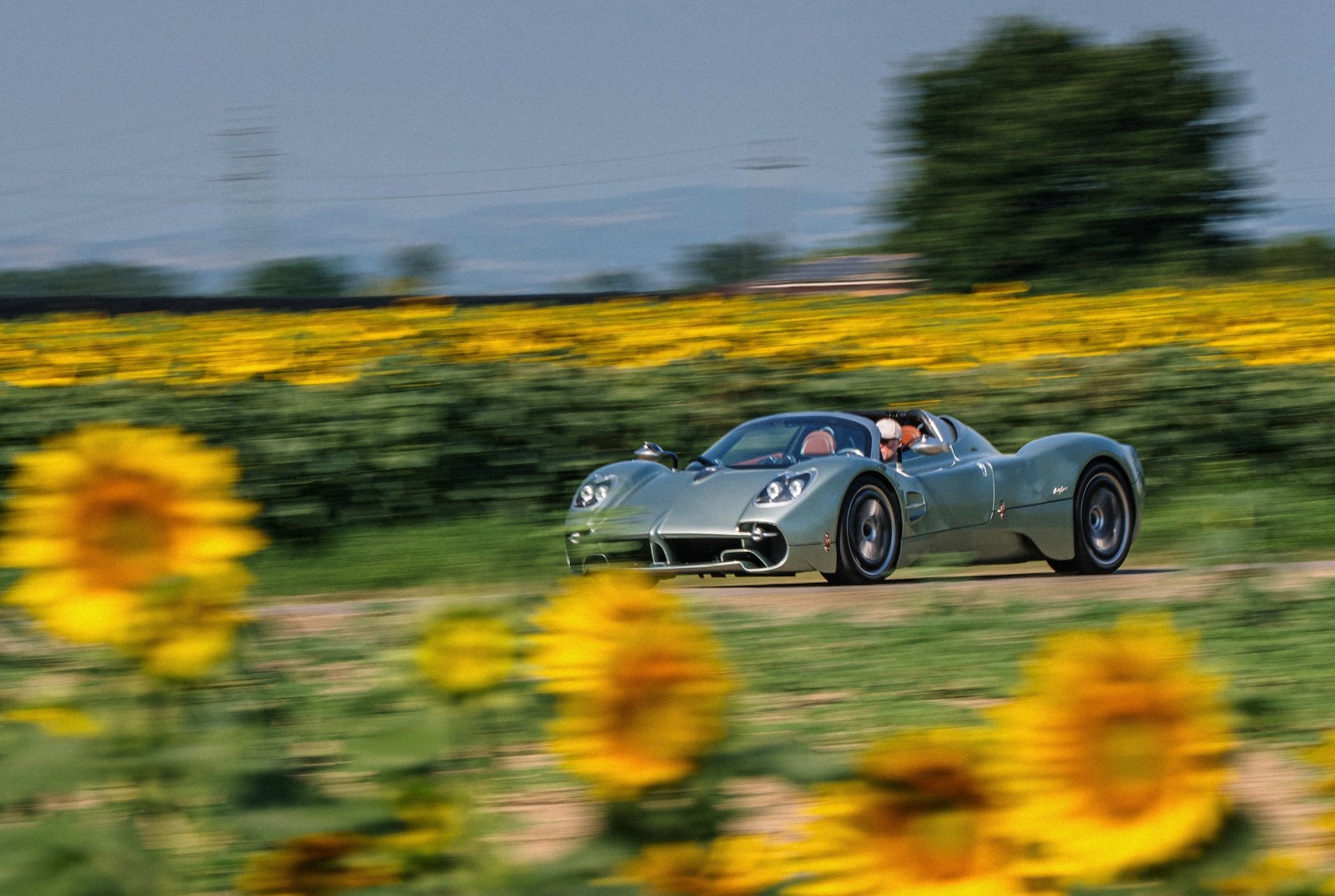

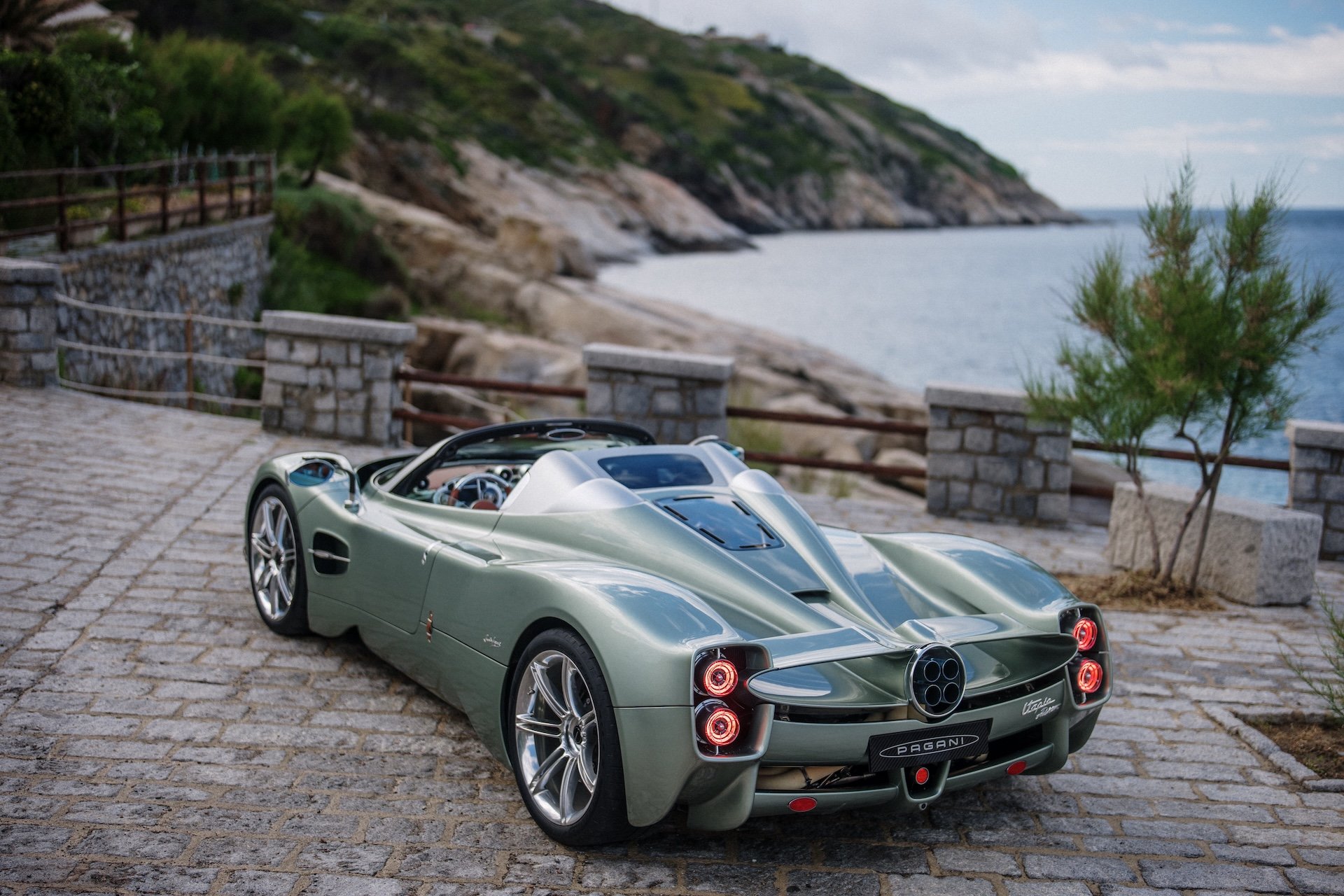
It’s this obsession that drove Pagani to stop outsourcing its air conditioning manufacturing and bring it in-house, where it could overanalyze every part of the system for weight savings. And on that hot day driving around Modena, I can confirm that it’s not only light but also quite effective. It’s a similar story in other areas, such as technology, where Pagani is also looking to expand its over-the-air software capabilities to reduce the number of wiring harnesses required. Fewer parts equals less weight, and all of Horacio’s masterminds are already working hard on 2030+ Pagani models.
On the open road, the Utopia Roadster can be as ferocious or as subdued as you want it to be, and unlike today’s software-ridden supercars, every bit of feedback you get from the car feels completely natural. While there is enough tech to keep you safe and in control in most environments, it’s easily the most analog car I’ve driven since I tracked the million-dollar Prodrive P25 a couple of years ago.
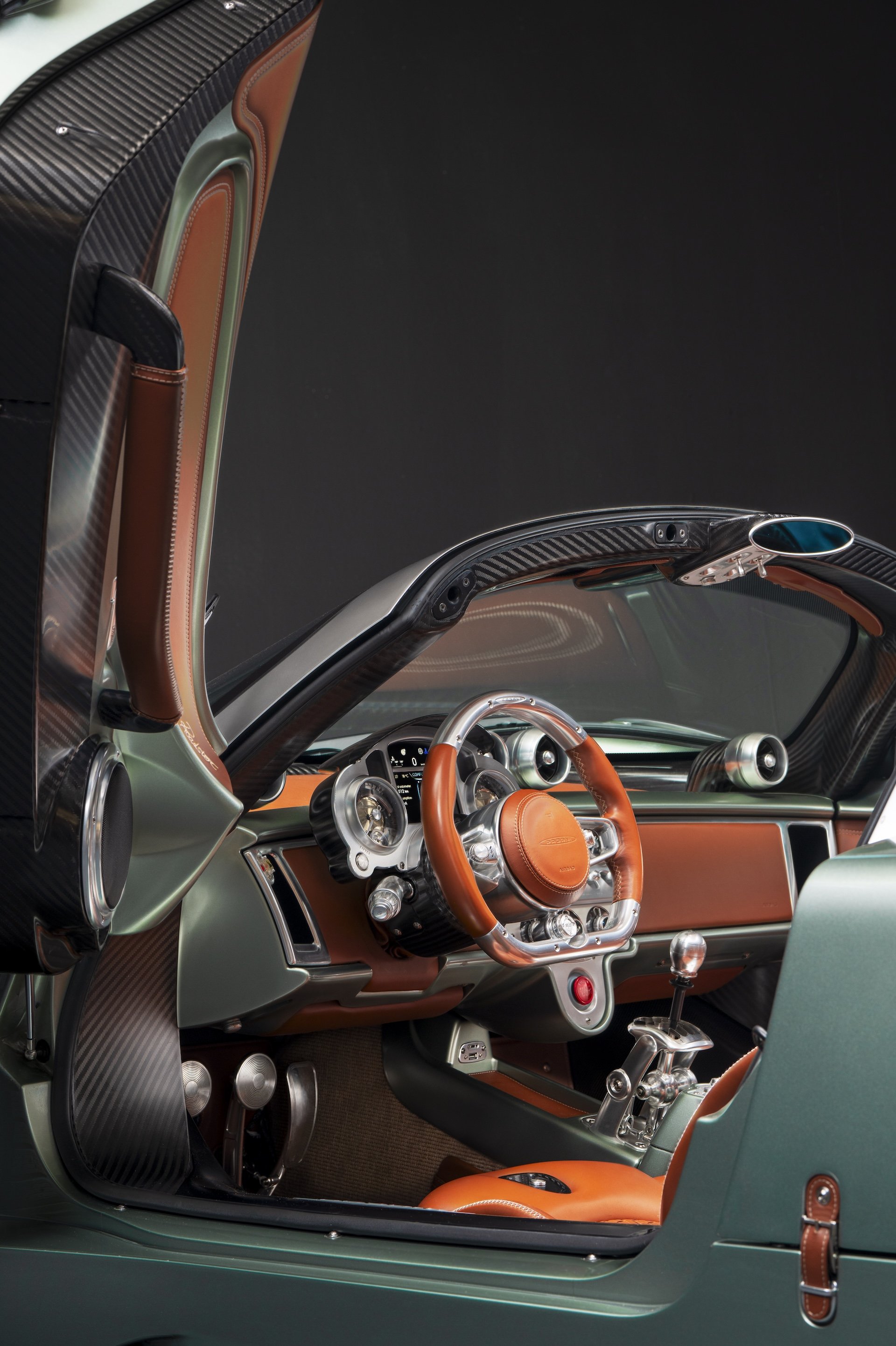
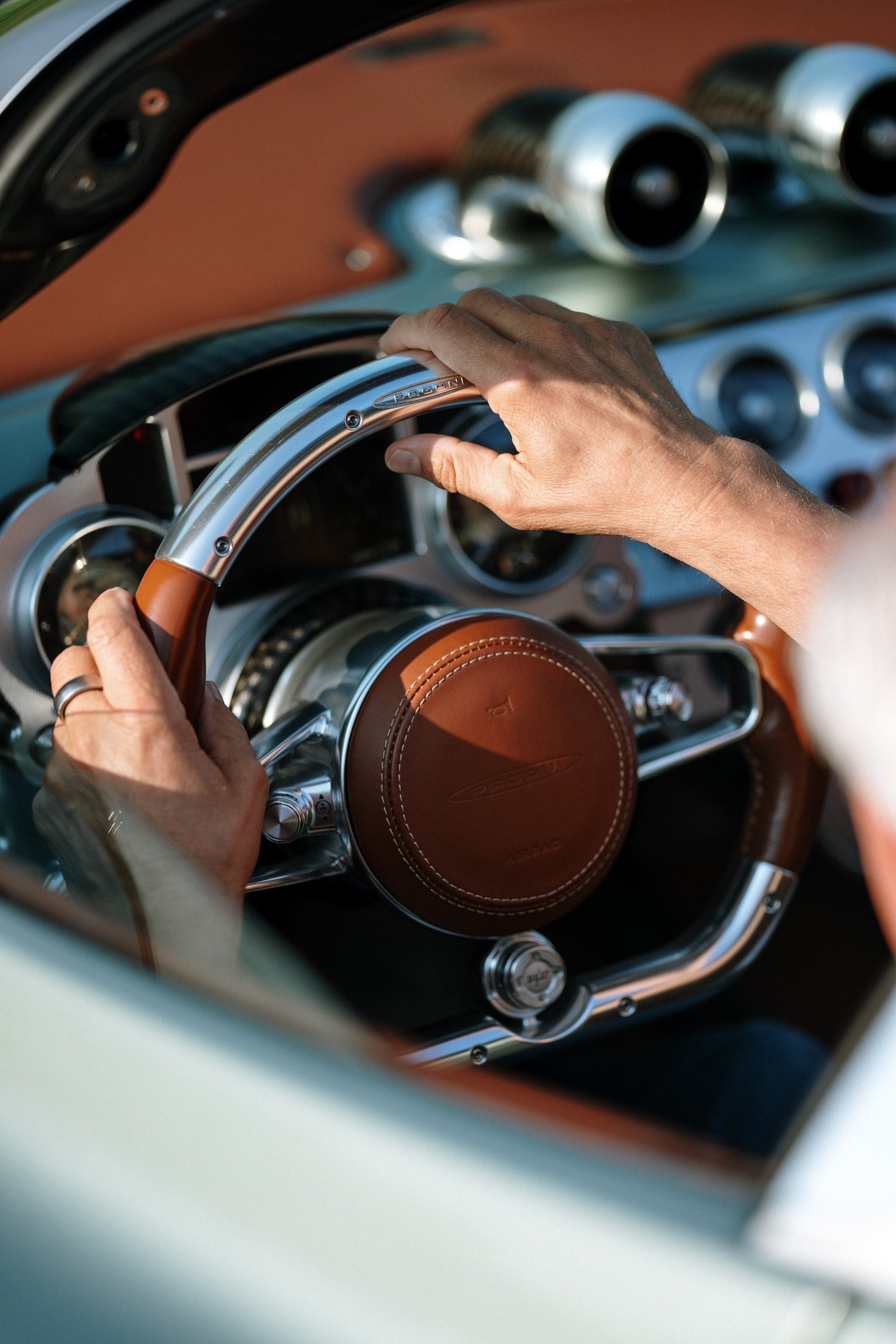
Driving through fast and flowing corners at speed feels like directing an orchestra via the steering wheel, an orchestra that plays some of the most beautiful music your ears have ever heard. Reaching for the shifter and swapping gears feels like directing the string section to play staccato bursts of high-pitched notes, while the brass section comes in loud and proud after you step on the gas once again. The Utopia is not quite a GT, but it definitely exudes some GT-like qualities.
Up the ante, and all traces of GT-ness go away, and the Utopia morphs into an angry dragon that wants nothing more than to chew you up and spit you out. It’s visceral, and did I already say that it’s loud? As you can see in the video here, you can basically hear the car breathe as it intakes air and its turbos spool up before igniting all that fuel and turning it into raw power. The tsunami of torque can make your vision a bit blurry under heavy acceleration, and nailing the gated shifts is crucial for a smooth experience.
You’d think the steering would feel a bit heavy given the hypercar’s extra-wide footprint and massive presence, but it’s not. Again, it’s all that lightness. It’s so reactive that you have to adjust your turn-in points, because it feels like the car begins to turn when you think about turning rather than when you actually move the wheel. Navigating roundabouts or S curves brings real joy just from feeling the mechanics at work, which is a benefit of its electro-hydraulic power steering compared to a fully electric one (on top of the weight savings, of course).
Combined with the hollow aluminum steering wheel, you’re not just able to feel what the tires are doing, but you can basically feel the grit of the road’s surface. Driving through typical roadside debris feels like rubbing your hand across the tarmac, taking in the textures of dirt, rubber, and other junk. It’s something else.
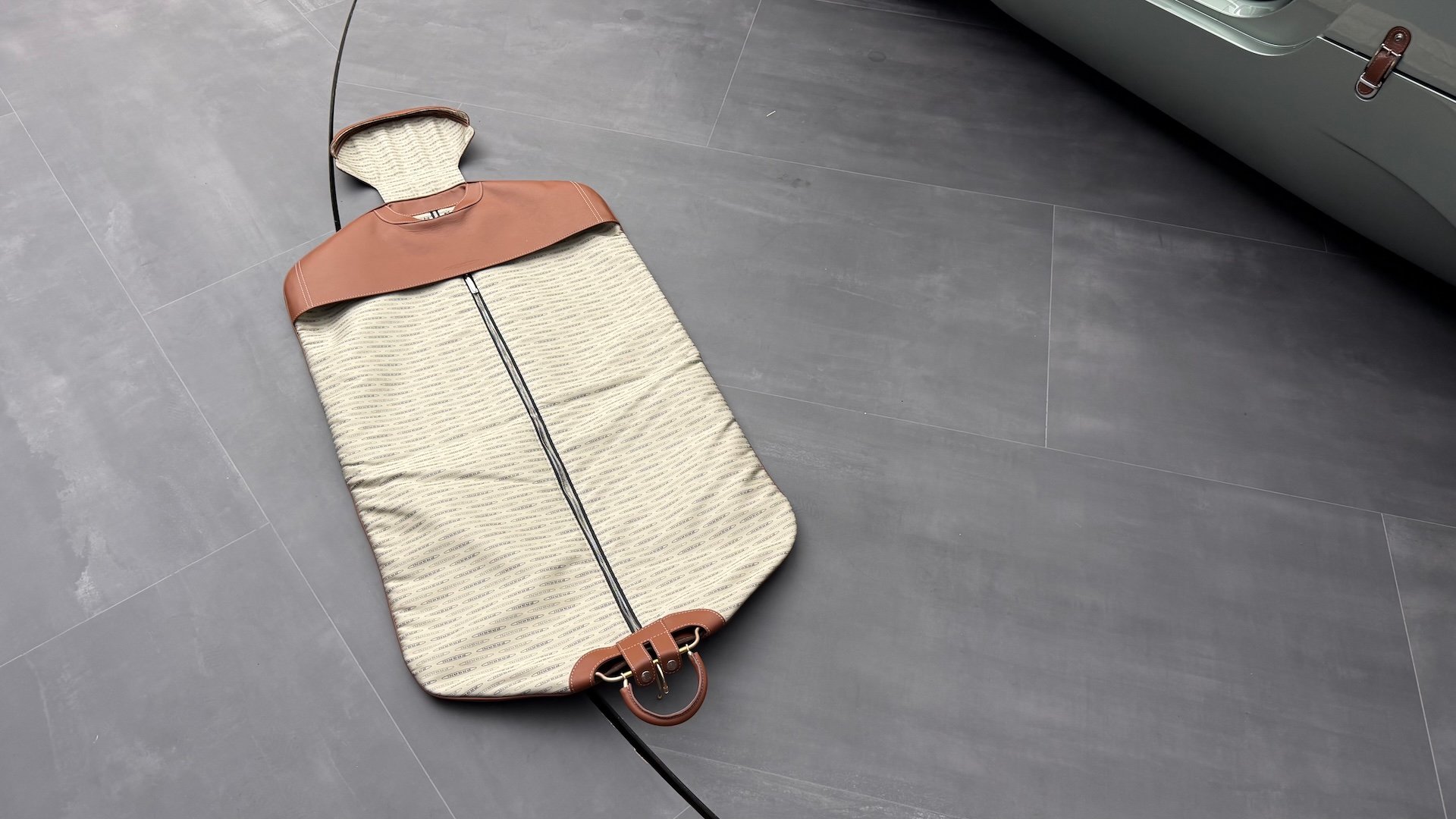
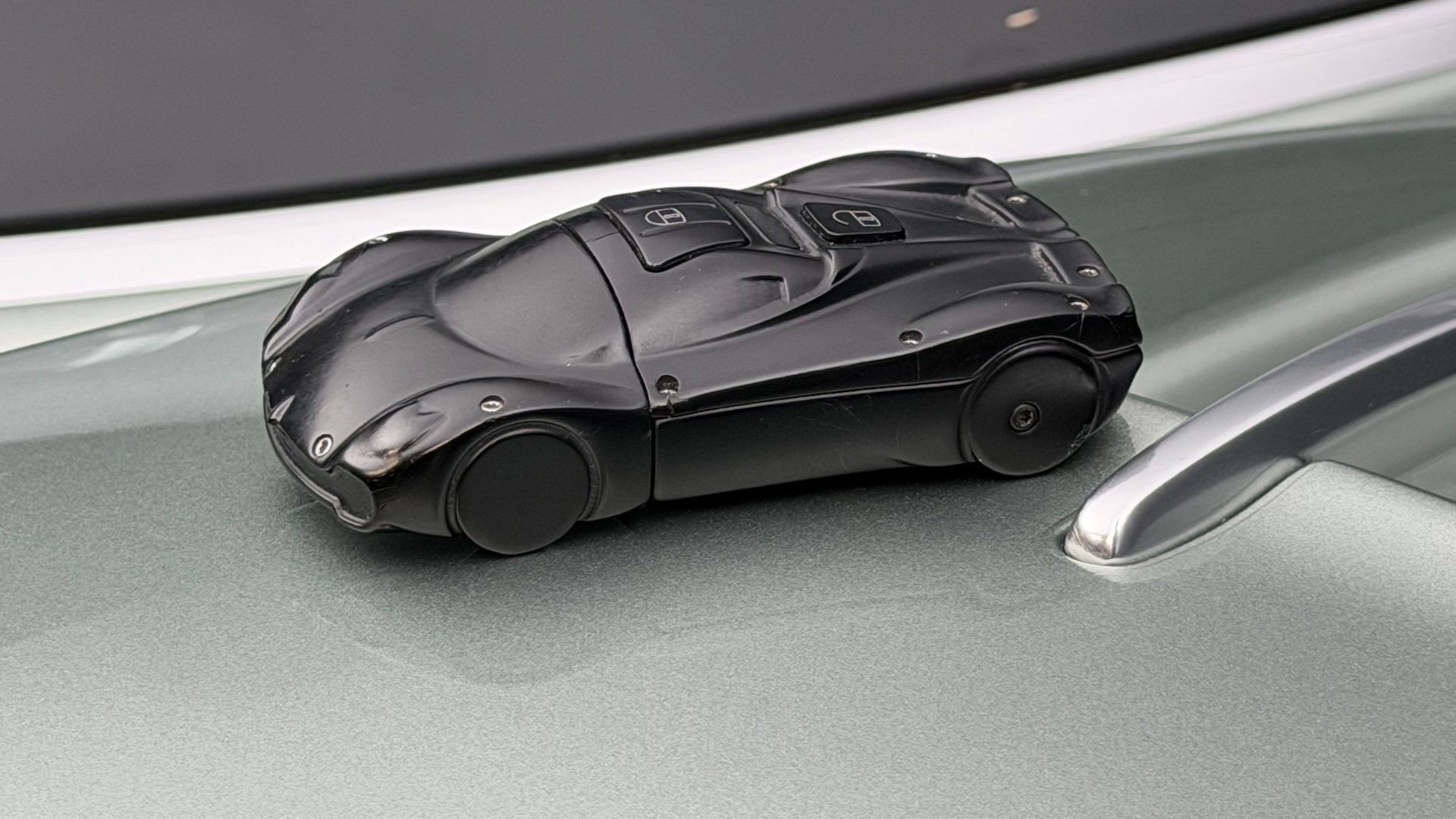
Pushing the car deeper to the right side of the speedo makes you feel like a driving hero, as if you were Juan Manual Fangio or José Froilán González, the famous Argentines who became legends by taming Silver Arrows and Prancing Horses back in the ’50s. In fact, it was the former who once introduced Horacio Pagani to Enzo Ferrari when he moved to Italy from Argentina. Later on, he also helped the young designer-engineer secure an engine deal with Mercedes-Benz AMG.
I could go on and on about the transmission, the brakes, the suspension, and the looks you get from passersby, even if those living around San Cesario technically see more Paganis on the road than a full-time Monaco resident. Their faces light up with joy and pride to see one of the world’s most exclusive cars being developed and tested in their backyards. In the end, that’s what makes these works of art so special: it’s the souls behind them. I’ll be diving more into this in a separate story about what makes a Pagani a Pagani. Spoiler: it’s the people.
Verdict
There’s no world in which I wouldn’t pick the Utopia Roadster over its fixed-roof sibling—just like there isn’t a world in which I could actually buy one of these. I don’t even play the lotto. And for those “rigidity purists,” there’s no better testament to Pagani’s extreme engineering than the fact that both the Roadster and the Coupe weigh exactly the same. Not that I would ever care about gaining a few pounds for the sake of having a little fun (have you met me?), but even if that wasn’t the case, a masterpiece like this is better enjoyed in harmony with the elements—even if those include a scorching Italian summer sun.
Many will say these are status pieces that are hardly driven by their owners, serving as trophies for their hard-earned money or investments (or other dealings), left alone to appreciate faster than any other commodity you can trade today. But the truth is that during my day at the factory, I saw many customer-owned cars in for scheduled maintenance with loads and loads of miles; from Middle Eastern to North American and, of course, European cars, they’ve all been enjoyed, they’ve all been loved. The test car I drove had a whopping 38,000 miles—some of those hard track miles.
So that brings me to my verdict. How do you summarize a car like this? Well, you don’t—or at least, I don’t. See, before I became an automotive journalist, I worked in the diamond and jewelry industry. I spent years analyzing little precious stones under a microscope and went on to work for a diamond trading company. There are many inherently bad parts of that industry, but there is one big, beautiful side to it: those shiny stones are all natural and took thousands of years to form. They’re Mother Nature’s gift to those who can afford to celebrate life’s milestones by acquiring one and wearing it proudly on their fingers, wrists, necks, or ears. It’s less about how much they cost and more about what they represent: a graduation, promotion, engagement, a family heirloom.
A Pagani is much the same. While you can’t mine a Pagani from the Earth (how cool would that be), it certainly packs in lots of raw materials that have been crafted with love and attention over thousands of hours, until they’re shaped into something that’s practically wearable. The end result is so much more than the Utopia’s multi-million-dollar price tag. The result is the celebration that you’ve made it, that you’ve acquired one of the most beautiful and enjoyable cars in the world, and no one can ever take that away from you.
Pagani provided The Drive with a one-day loan of this vehicle for the purpose of writing this review.
Pagani Utopia Roadster Specs
| Base Price | $3,600,000 est. |
| Powertrain | 6.0-liter twin-turbo V12 | 7-speed manual | rear-wheel drive |
| Horsepower | 864 @ 6,000 |
| Torque | 811 lb-ft |
| Seating Capacity | 2 |
| Curb Weight | 2,822 pounds |
| 0-60 mph | 3 seconds est. |
| Top Speed | 217 mph |
Email the author at jerry@thedrive.com
Loading comments…
Comments couldn’t be loaded. Please refresh the page.