
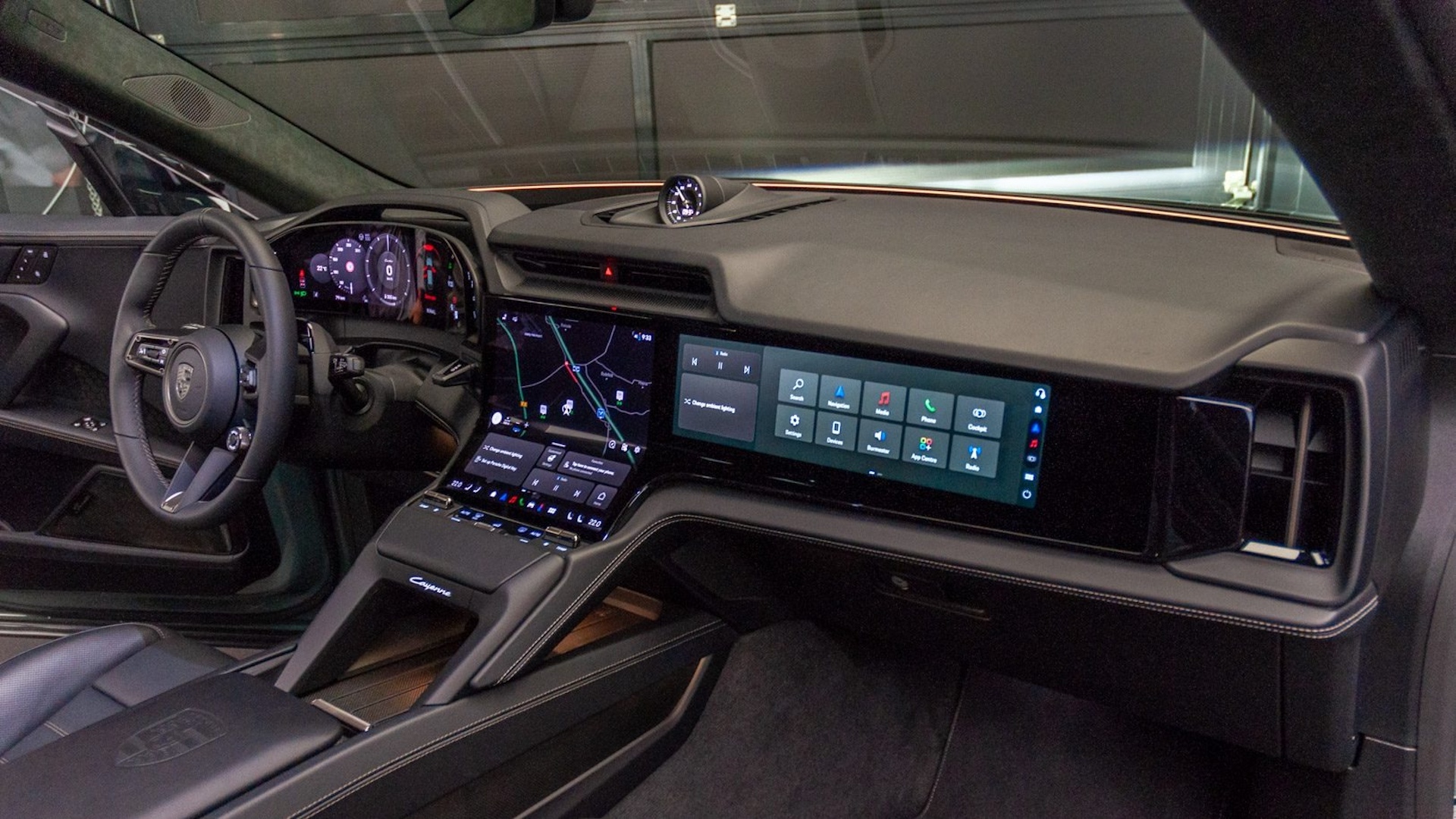
The interior manager for the 2026 Porsche Cayenne Electric proudly proclaimed that its newest EV has “50% more screens than the current Cayenne.” While clearly proud of his latest creation, I couldn’t help but think that specific tidbit won’t resonate with Porsche enthusiasts.
That’s only part of the story with the Cayenne Electric’s interior, which the automaker let me poke, prod, and play with last week in Leipzig, Germany. The new SUV features more screens, advanced technology, and innovative packaging solutions than any Porsche has to date. It also retains some toggles and knobs.
You get the feeling that Porsche has invested considerable time in thinking, designing, and engineering the Cayenne Electric for real-world buyers, not just the individual shopping for his next 911 GT3 RS companion.
Screens Galore
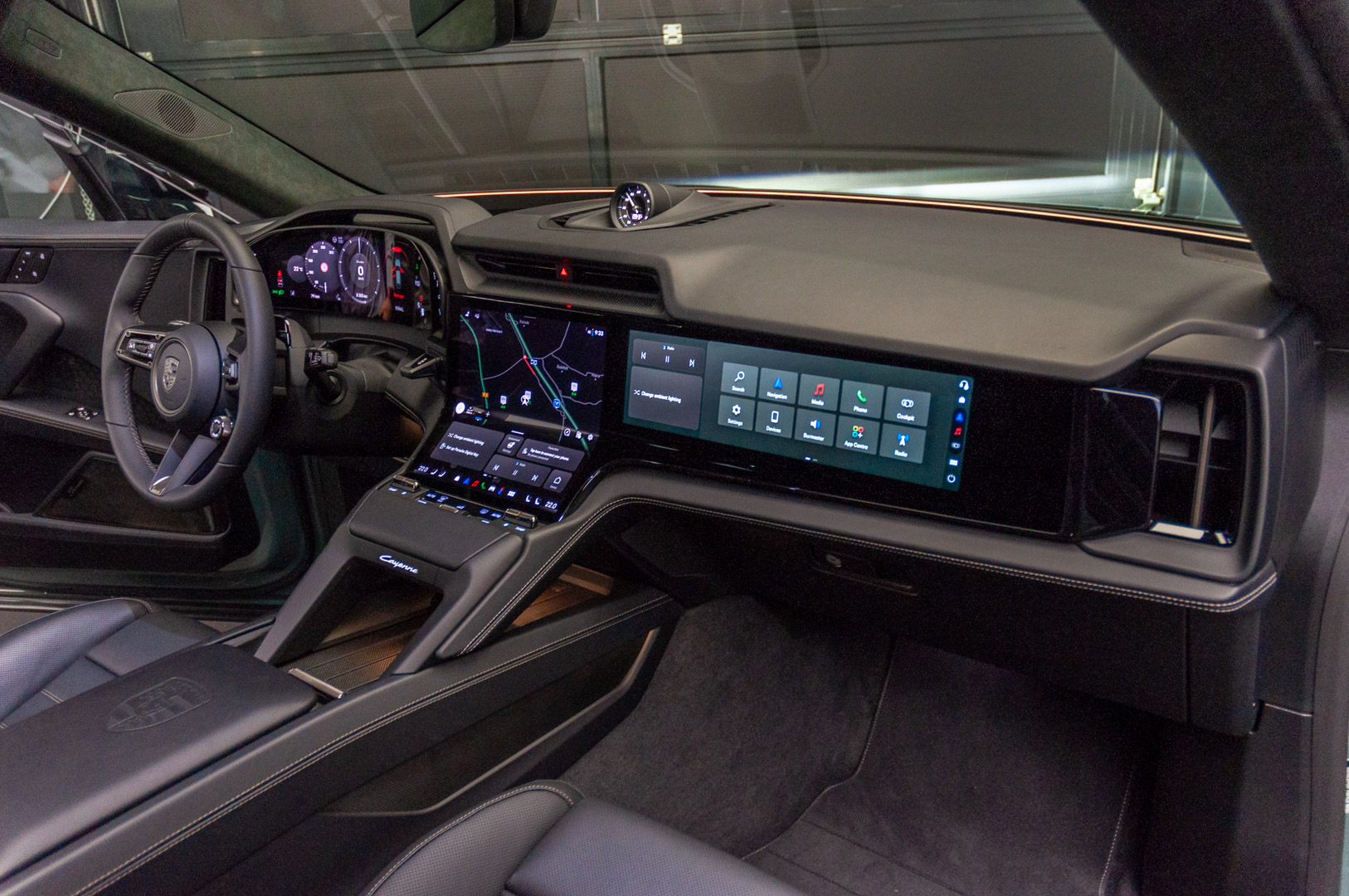
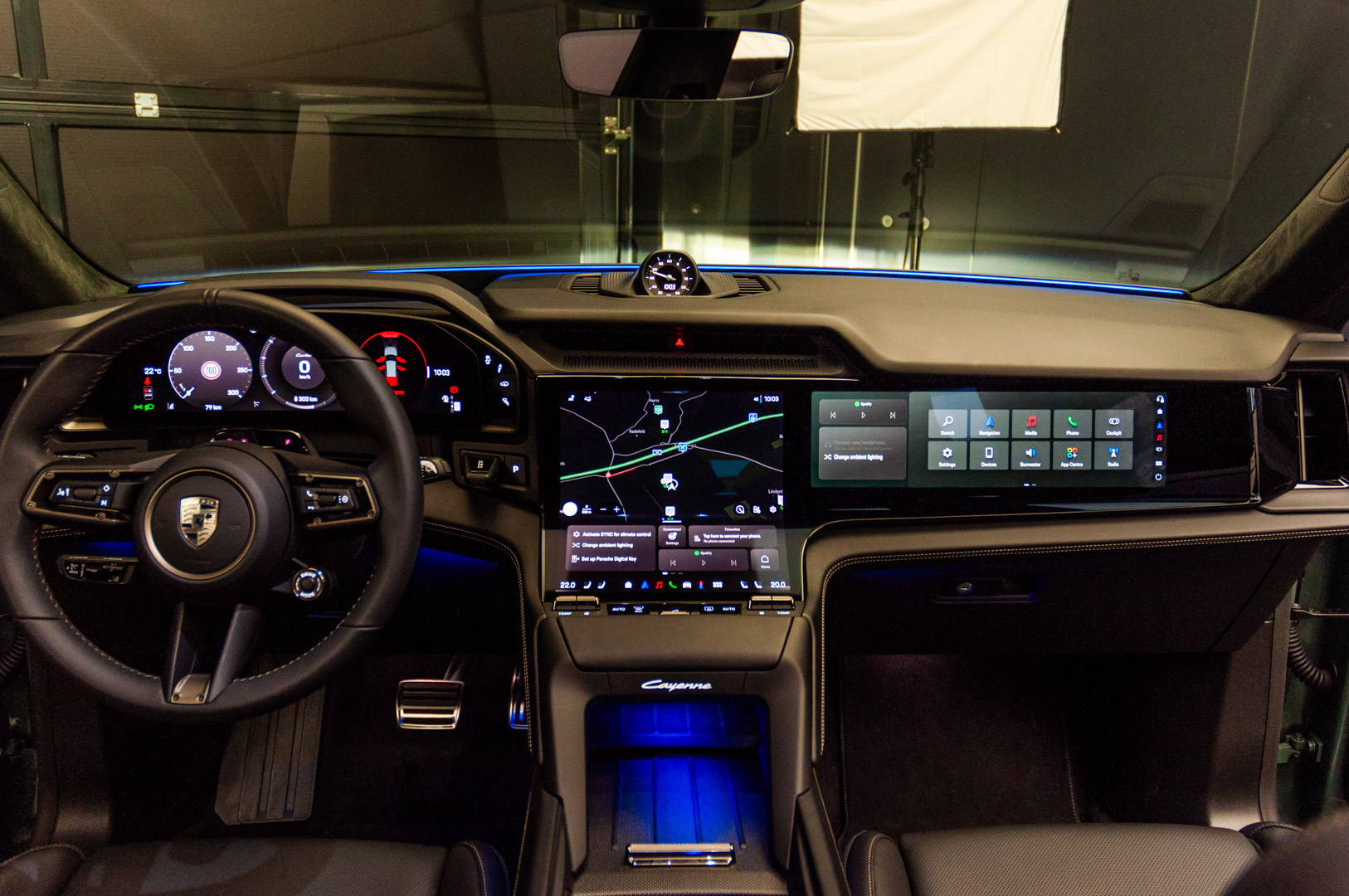
A Cayenne Electric can have up to four screens, depending on the configuration: a gauge cluster screen, a center screen, a front passenger screen, and a backseat climate screen. Every Cayenne Electric will feature a 14.25-inch OLED curved digital gauge cluster, similar to the one found inside the Taycan. The screen itself is incredibly thin, as evident from its edges. It’s reconfigurable and can have everything from a power meter to Apple Maps navigation or Google Maps.
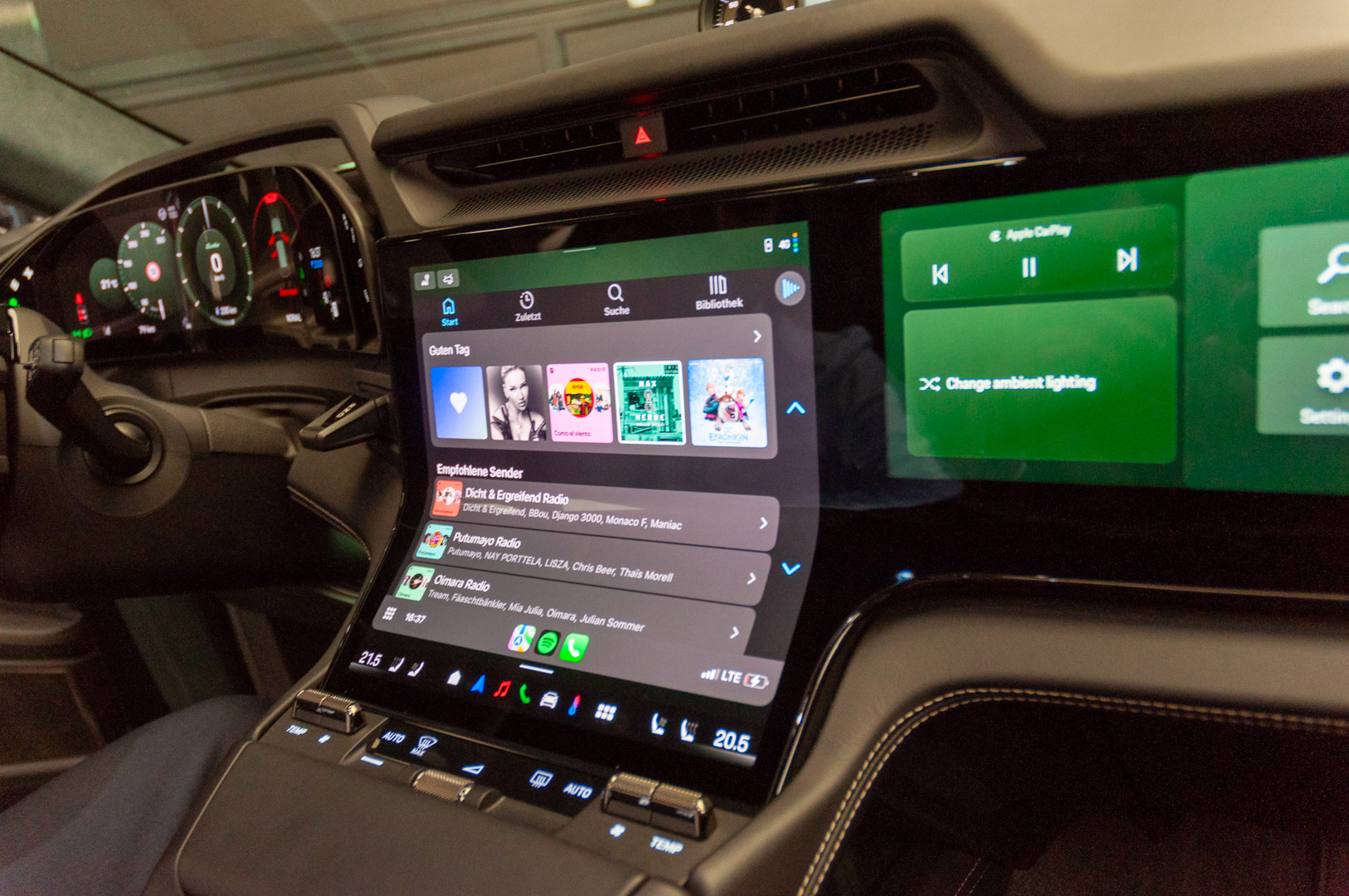
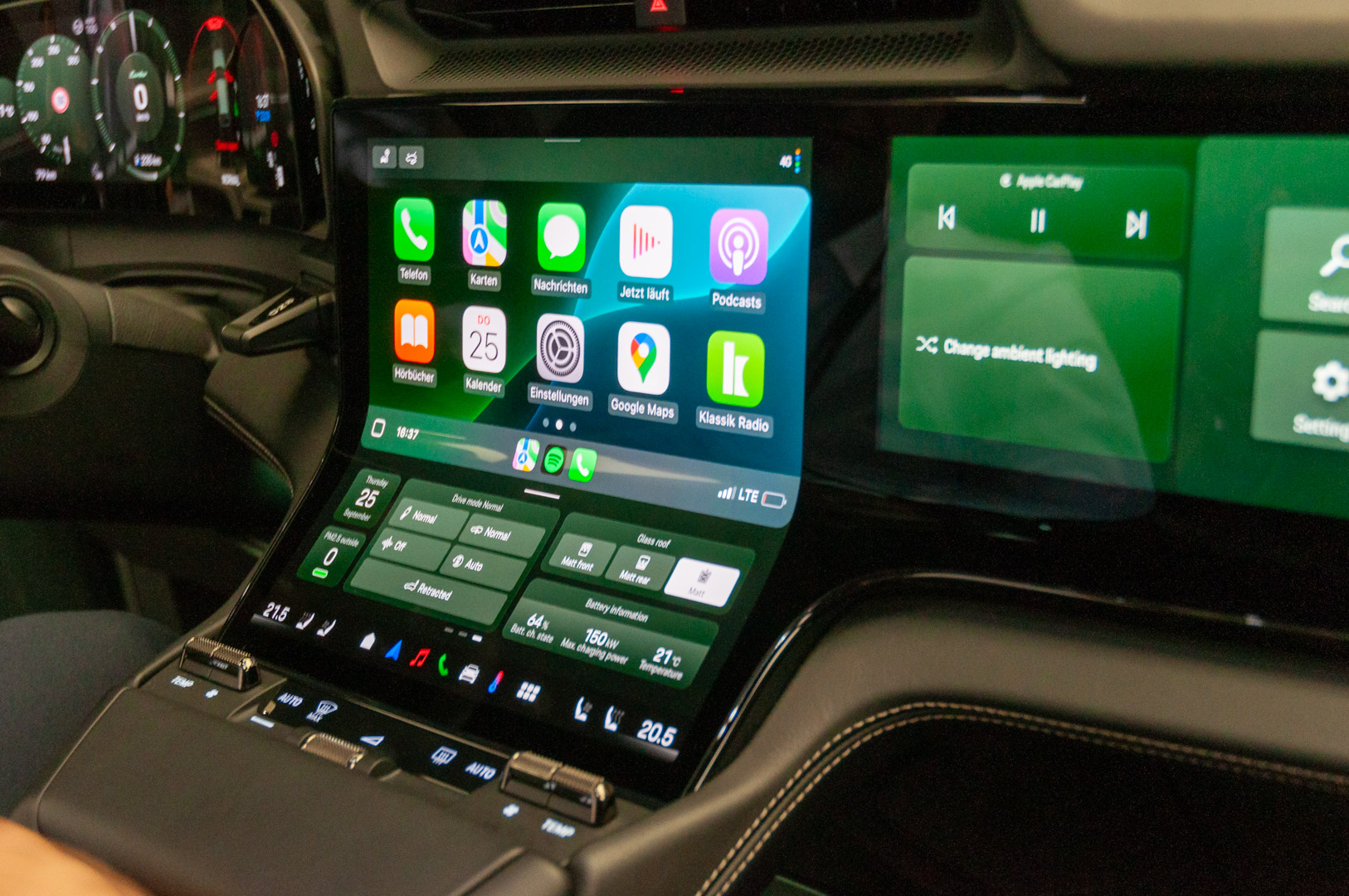
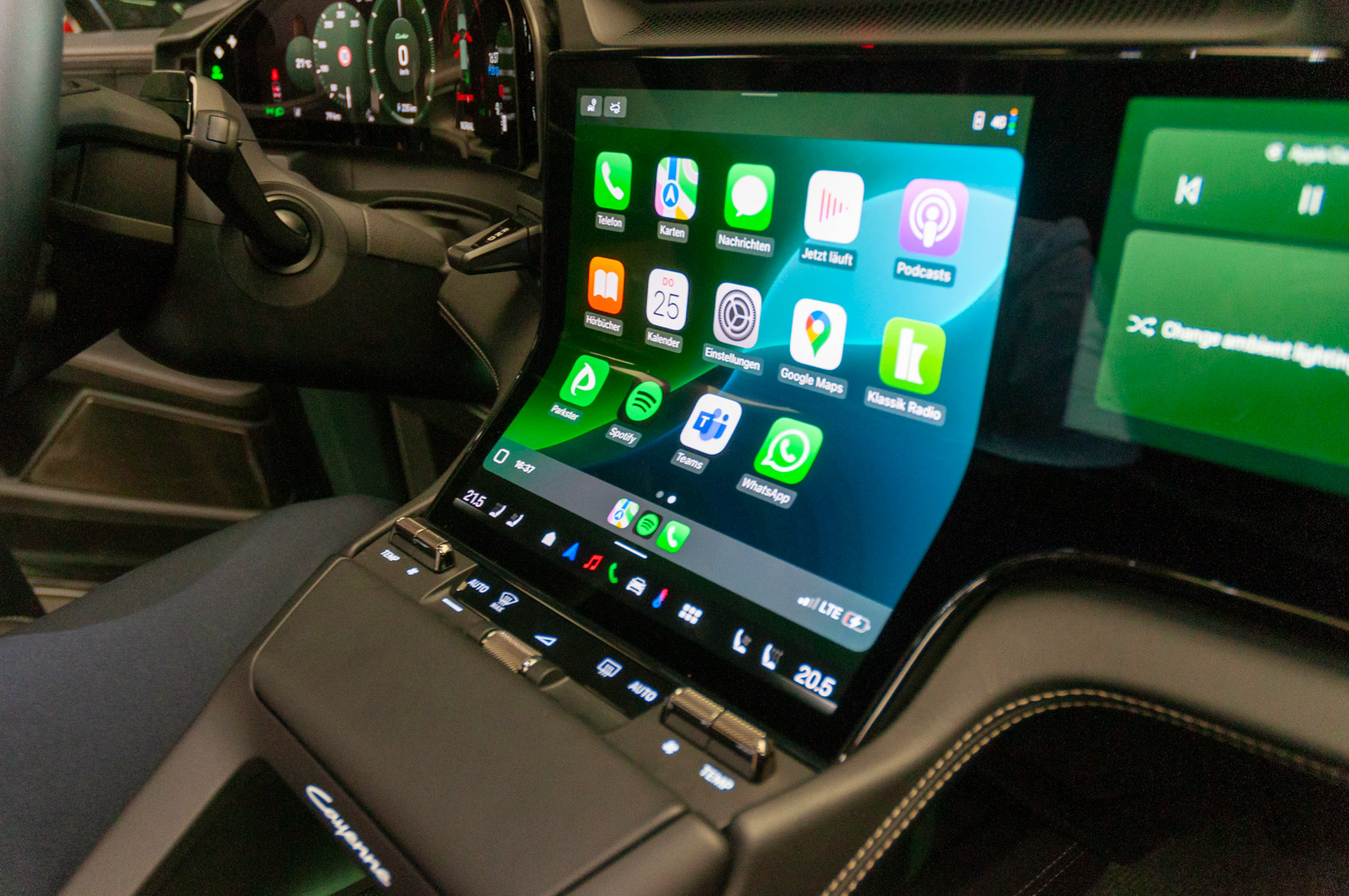
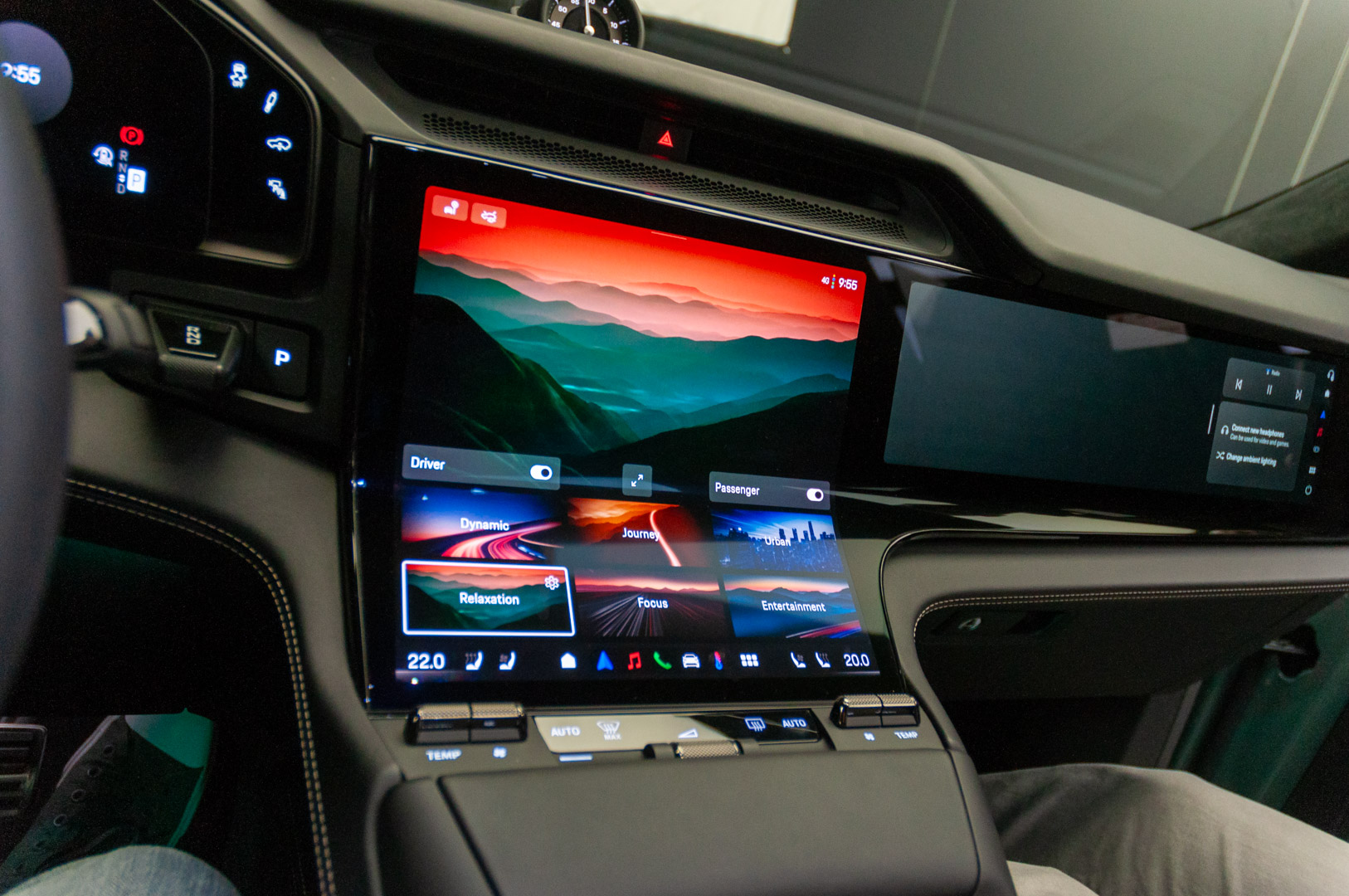
Then there’s the new 12.25-inch OLED curved center display. Absolutely mesmerizing to see from a side angle and a delight to interact with, this center display is a rare instance where an automaker got the interface right. The top half of the screen displays main functions such as navigation, audio sources, vehicle controls, and more, similar to the current Macan EV. But it’s the bottom half—the curved part—that is the new piece of hardware and software integration. It feels natural to use as there’s a wrist pad leading up to the curved screen, dubbed the Ferry Pad, which perfectly places the fingers at the screen’s bottom portion. This part of the screen houses completely reconfigurable widgets that act as hot keys to systems, functions, and controls, yet the user can set it up however suits them best. There’s a button that can be placed on the main bottom screen that brings up all the vehicle’s active safety controls, which can then be turned on or off.
Other widgets can include controls for the electromagnetic panoramic glass roof, Burmeister sound system, digital key, or even audio controls when the top of the screen is displaying navigation. Multiple panels of widgets can be set up and then swiped between with a single finger flick. At the bottom of the curved screen are locked digital hot buttons that open navigation, vehicle controls, audio, and climate controls (including digital air vent adjustment controls, similar to those found in a Tesla and Rivian). Additionally, these buttons also access phone functions. And perhaps most importantly, Porsche kept a physical volume knob and toggles for the climate control temperature and fan speed. All sit right in front of the Ferry Pad and are in perfect placement for easy usage.
A 14.9-inch LCD display is optional for the passenger side of the dash, and it seems somewhat redundant in nature. The screen shows the same interface as the main screen with iPad-like square buttons. The driver can’t see the display while driving, and it’s not the same resolution as the two other OLED displays sitting right next to it under the same sheet of continuous glass. Cayenne Electric models not optioned with this screen will come with a slab of shiny piano black plastic, which was scratched up in several test vehicles I encountered. It’s a conundrum, because the passenger screen seems useless, but the piano black panel that replaces it looks… cheap.
The fourth and final screen is for the four-zone automatic climate control. It’s designed for the rear passengers and is mounted on the back of the center console, displaying the temperature along with various heated, cooling, and temperature control functions, most of which are touch-based. It’s straight out of today’s gas Cayenne and barely counts as a screen.
Apple CarPlay and Android Auto Included
The phone projection system takes advantage of the new curved display. Apple CarPlay (and presumably Android Auto, although only CarPlay was tested and demonstrated) can be displayed on just the top portion of the touchscreen, with the bottom curved portion reserved for Porsche widgets, providing quick access to various features. Apple CarPlay’s window can be expanded all the way down and take up the entire display, enabling the scrolling of longer music lists and large map displays. It’s really neat-looking.
Creative Design
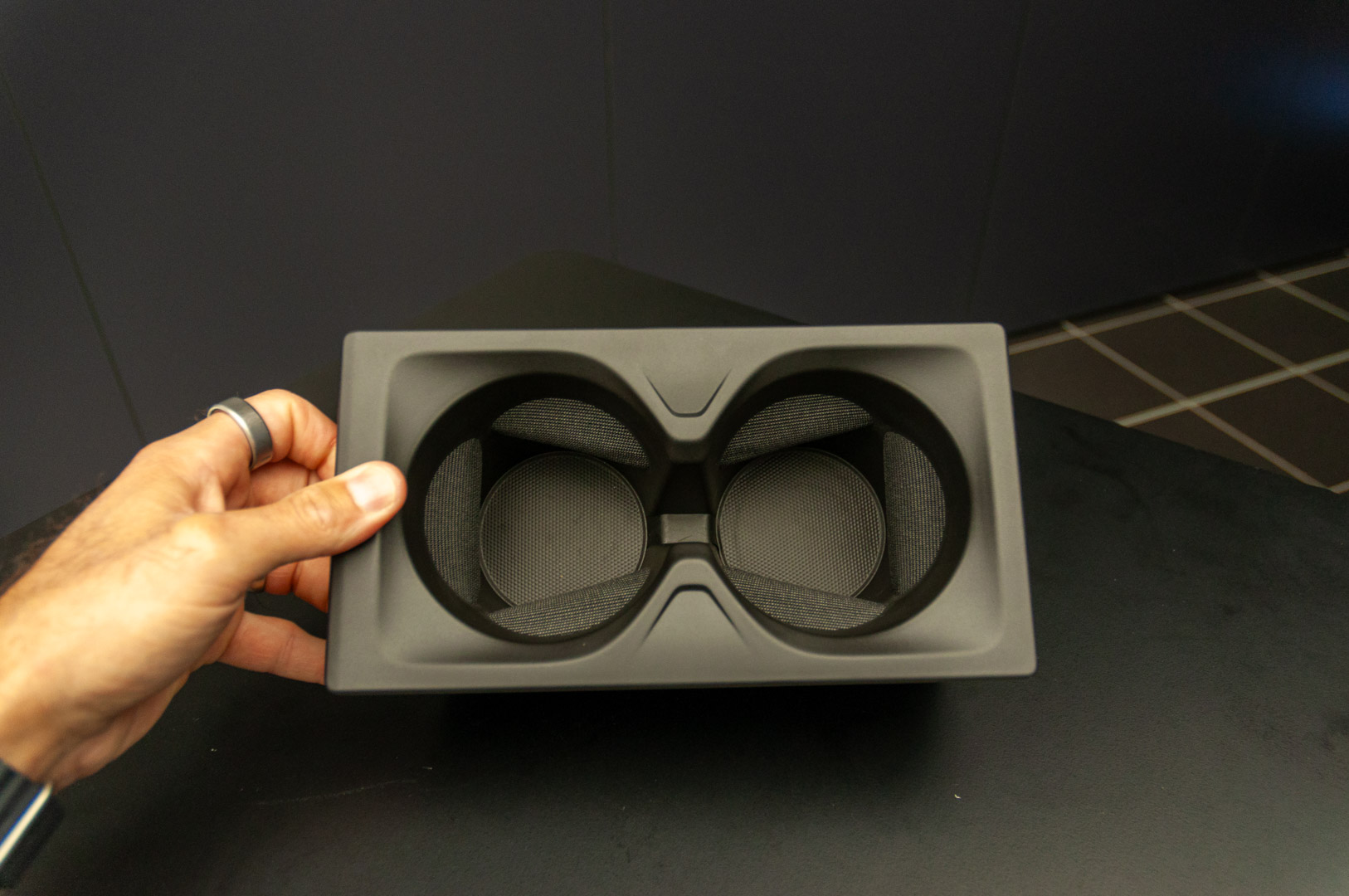
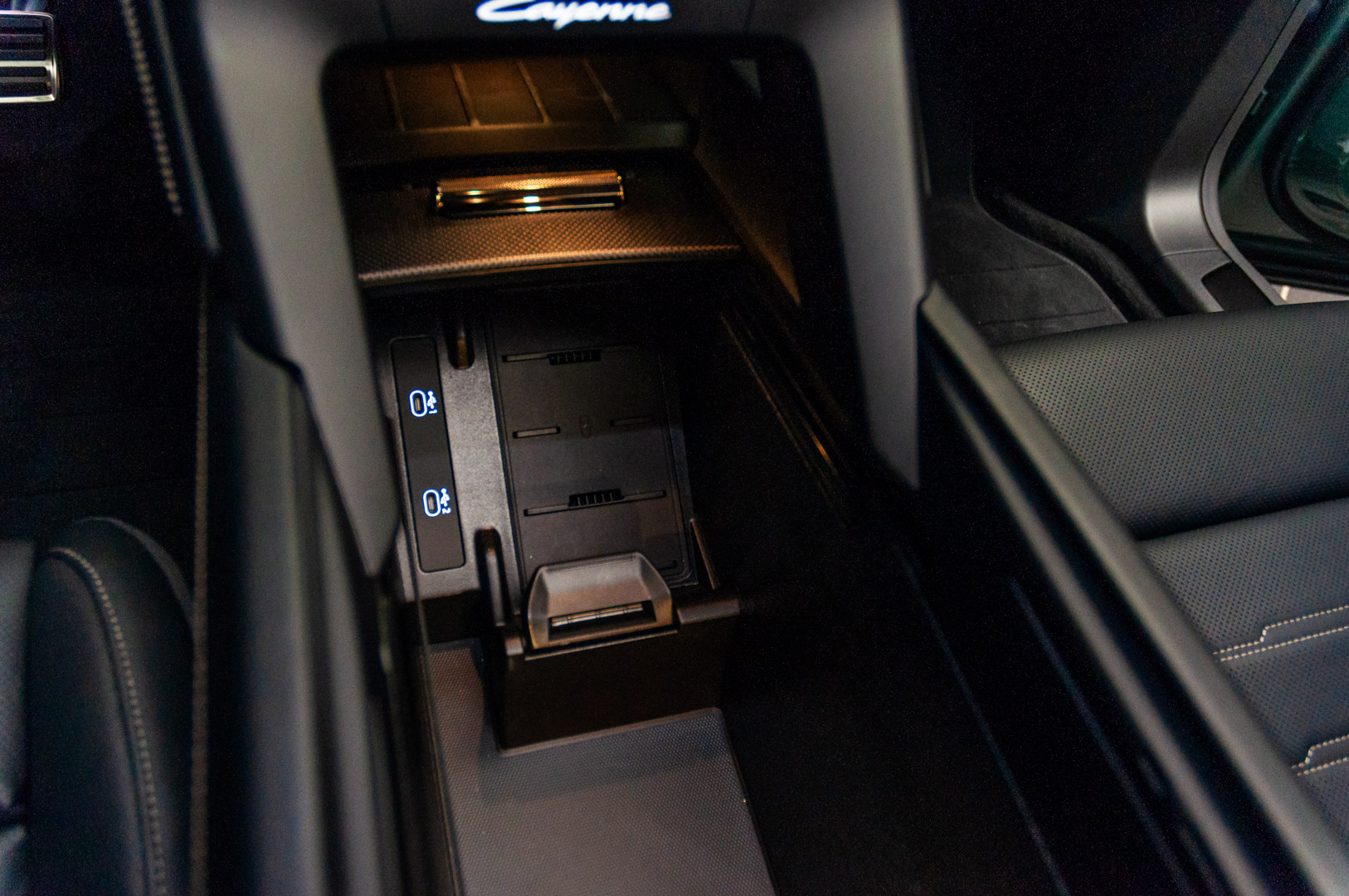
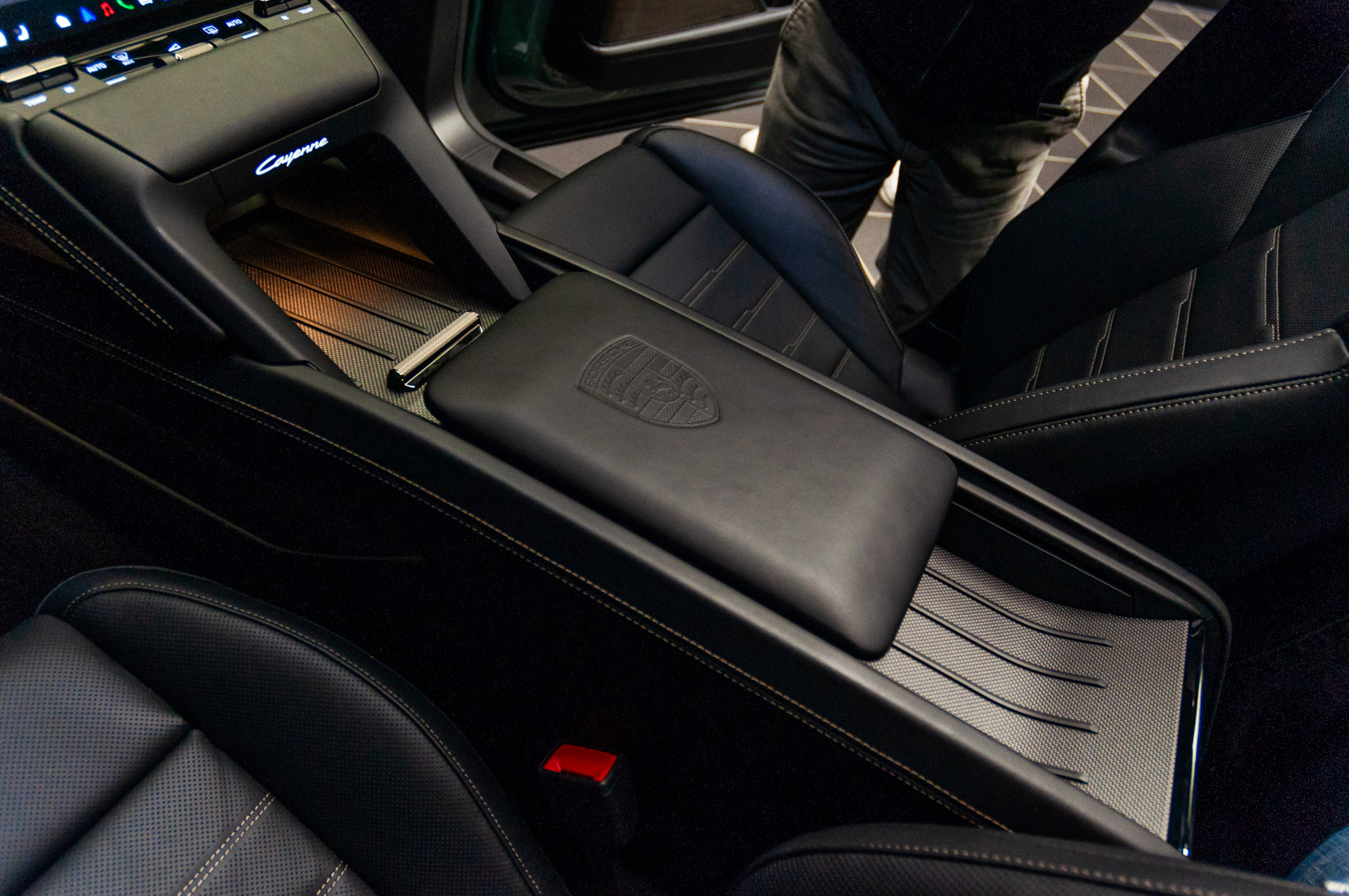
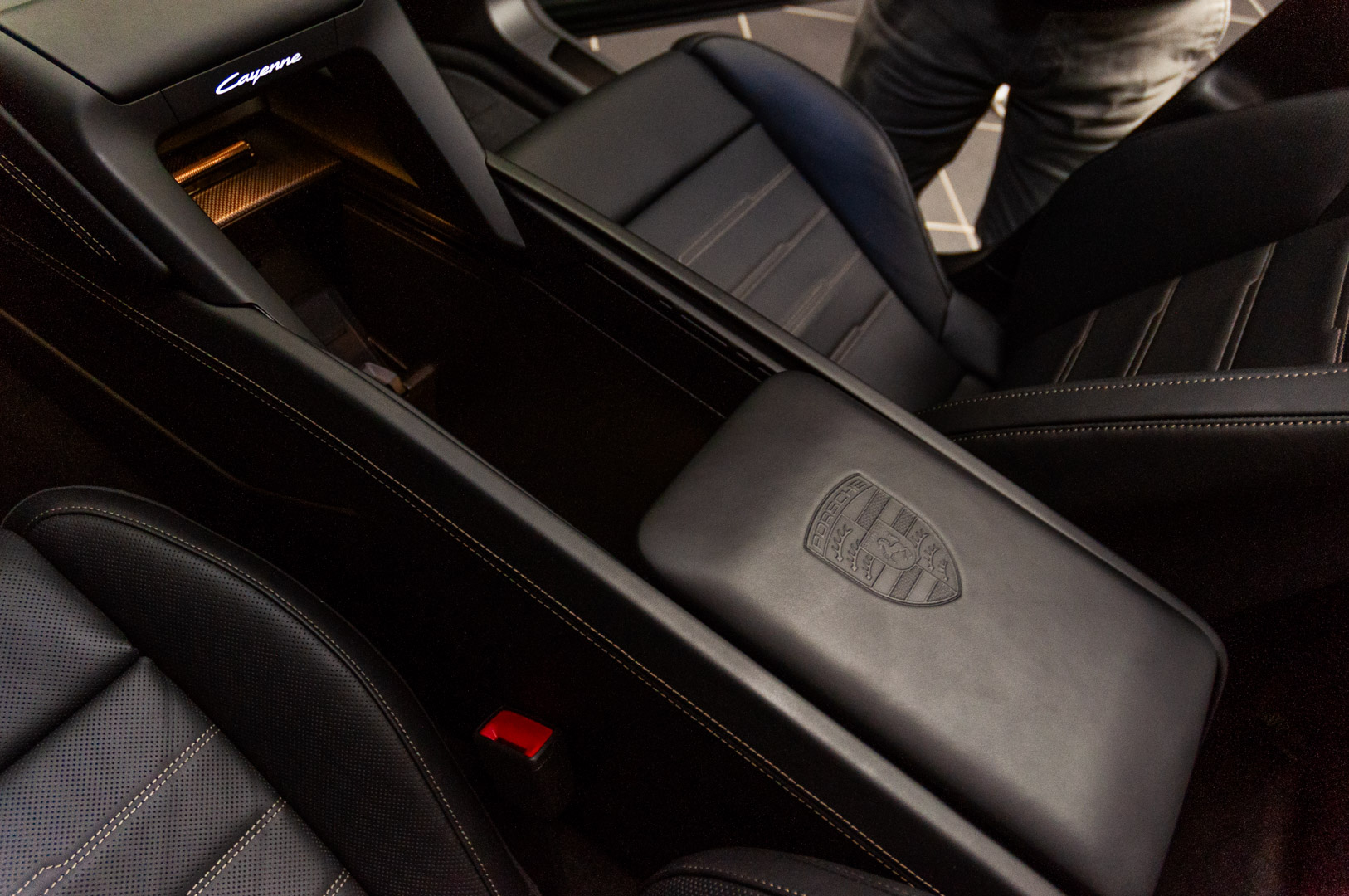
It’s clear Porsche has heard the cries of Americans and their Big Gulps not fitting in tiny cupholders. For this reason, the center console is split into sections. The front portion has permanent semi-covered storage. A piece of trim can slide back into the front section to reveal a wireless smartphone charger, which is always actively cooled using the climate control system. The center arm rest can slide back to reveal more storage, and between the two compartments there are four 100-watt USB-C ports. A removable cup holder can slide in and out of the storage compartment, and it can be flipped forwards or backwards to determine how high up the cupholders sit for various size containers. The cupholders themselves have cloth inserts rather than plastic that adapt around the size of the container placed in it.
Cayenne Electric will be available with style and grace
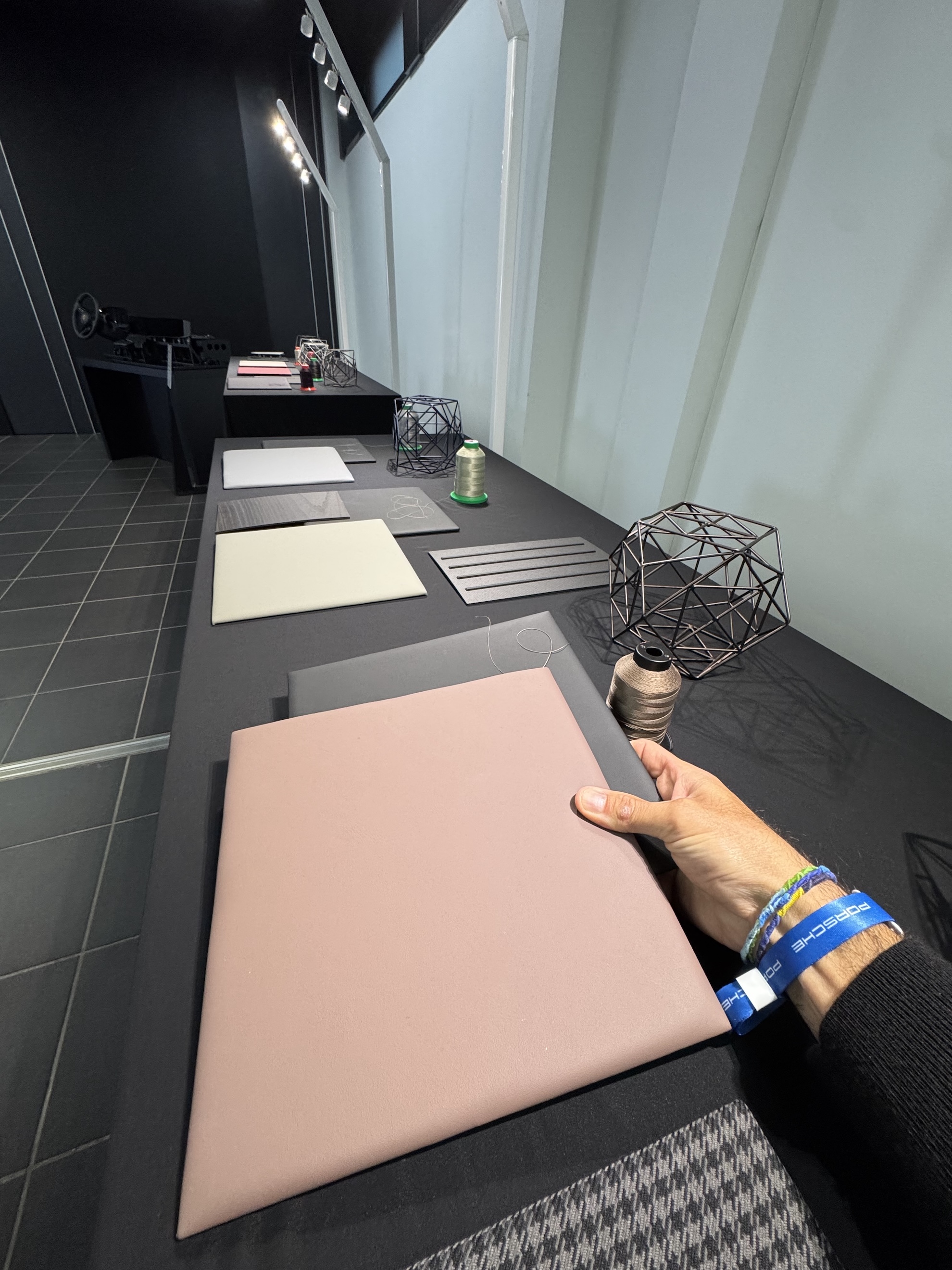
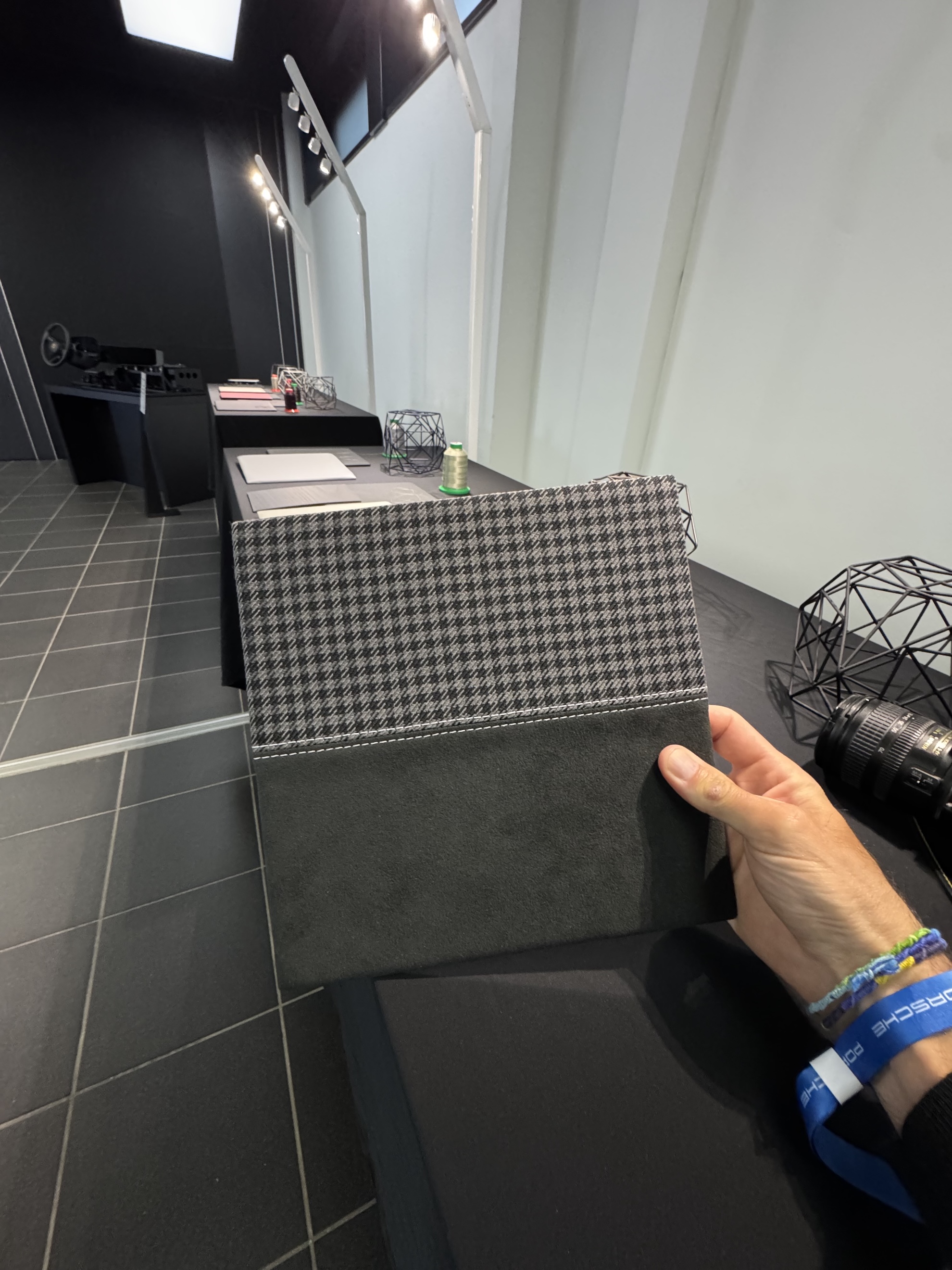
Most Porsches can be painted basically whatever color the buyer wants, it just costs a lot of money. The Cayenne Electric is going to be available with a terrific set of interior colors including trim bits, though buyers could also go for the standard black, seen in most of these photos. A Race Tex that pairs suede with houndstooth-looking cloth that is fantastic will also be available, as well as Bordeaux Red, Chalk Beige, Sage Grey, Lavender, Magnesium Grey, Espresso, and Blackberry leather options. Even the trim selection is far from boring, including Aluminum Silverberry, Summer Wood with Dark Copper, and Deep Sea Blue (the latter two are some of my favorites). One test car had the Aluminum Silverberry and Silvershade with Lavender interior, and it was not just gorgeous, it was something my daughter would fawn over.
Interior designers were proud of the available heated armrests on both the doors and the front center console. New 14-way, power-operated, heated, ventilated, and massaging front comfort seats will also be available, along with heated and ventilated power-operated rear seats. Buyers looking for a bit sportier character can opt for 18-way power front Adaptive Sport Seats.
In what feels like a move out of Lincoln’s current playbook, Porsche has created Mood Modes, which, depending on the program, can modify the seating position, lighting, climate, sound profile, and screen graphics with spa-like scenarios with the massaging front seats, to dynamic scenarios for spirited driving sessions, according to Porsche.
It Feels Like a Cayenne, Feels Like a Porsche
Sitting inside the Cayenne Electric feels like sitting inside a Porsche. The start button is mounted on the left (though it’s not necessary as a smartphone can be used as a key). The stubby toggle gear selector is to the right of the steering wheel like in the Taycan and Macan Electric. The dashboard sits low like in the Cayenne, with the center console rising to the dashboard and capped by vertical vents. Looking out from the driver’s seat, which provided support in all the right places, I saw the low hood bookended by rising fenders, just like in a 911. The rear seat had plenty of room for someone over six-foot to sit behind an equally tall driver or front passenger, and headroom is also generous.
The cargo area looked to be about the same or similar size as today’s gas-powered Cayenne, with a smidge of storage hidden under the floor. The doors open with a solid click and shut with a reassuring thunk, while the frameless windows don’t wiggle an inch when the doors open or close.
Sajjad Khan, a member of the executive board at Porsche AG Car IT division, said when the Cayenne debuted originally, “it was not just the simple SUV. It was the Porsche SUV.” After playing with the new Cayenne Electric for all too brief a time, although not driving it, it is absolutely clear that the team has accomplished the same feat as it moves the nameplate into the future.
“The Cayenne is evolving. It’s a pioneer of innovation,” Khan added. Porsche has made a futuristic, forward-thinking, well-designed, and well-packaged electric Cayenne that I’m genuinely excited about. Porsche enthusiasts, your beloved brand has created a practical EV just for you.
Got a tip? Email us at tips@thedrive.com
Loading comments…
Comments couldn’t be loaded. Please refresh the page.