
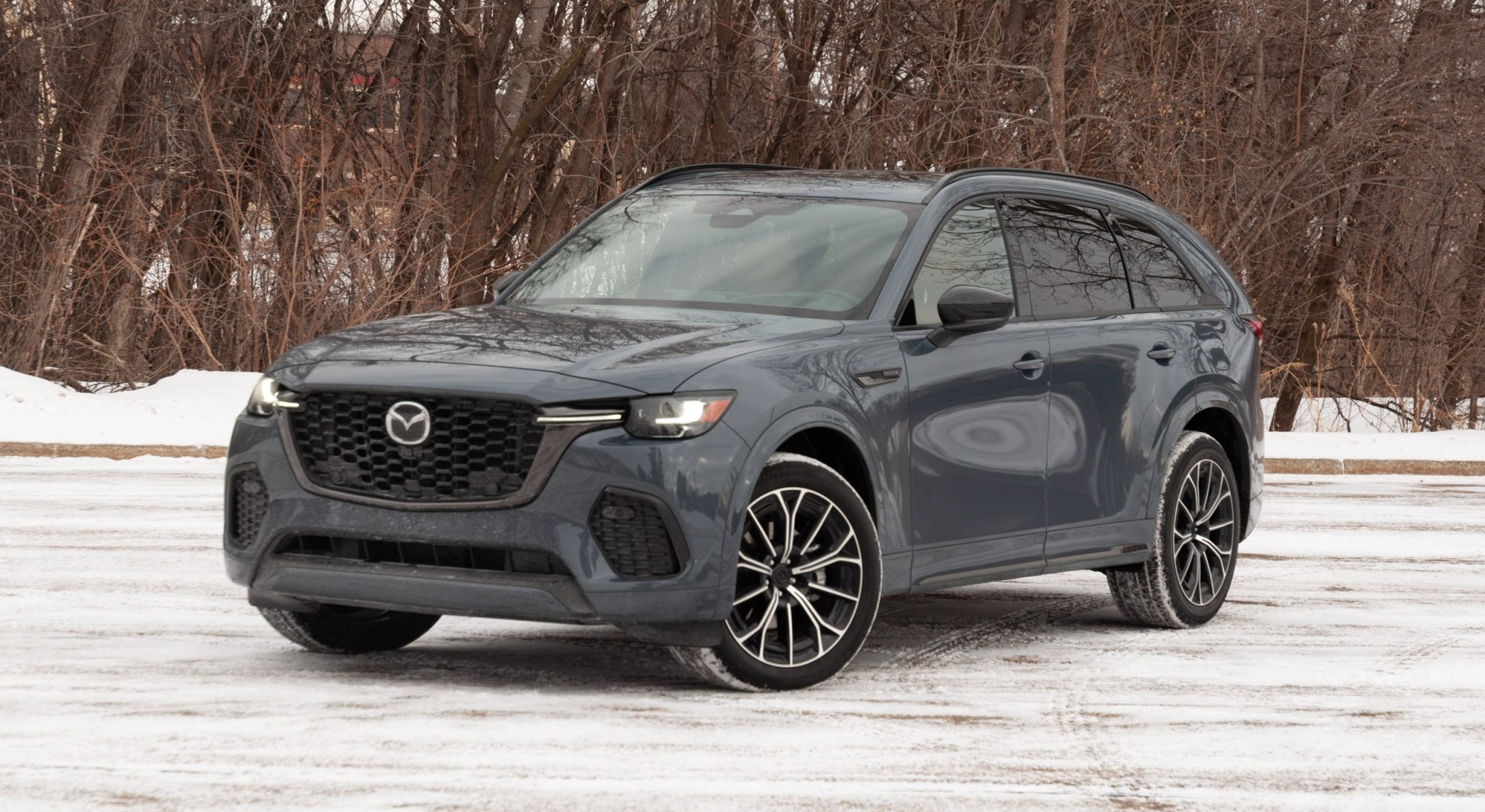
If you’ve ever thought, “I wish there was an SUV with the space of a three-row but with only two rows of seats.” Here’s the solution: the 2026 Mazda CX-70.
It might seem weird, but there must be a subset of vehicle shoppers who want more cargo room than a Ford Explorer or Jeep Grand Cherokee, but they have no need for a third row. While one might argue the third row could just be left down at all times, there is a vehicle that fits this bill.
The CX-70 delivers the space, footprint, packaging compromises, and driving dynamics of its CX-90 sibling, sans the third row. I’m still not entirely sold that this vehicle is necessary for the marketplace, but I halfway understand why Mazda is offering it after spending a week living the family life with one.
The Basics
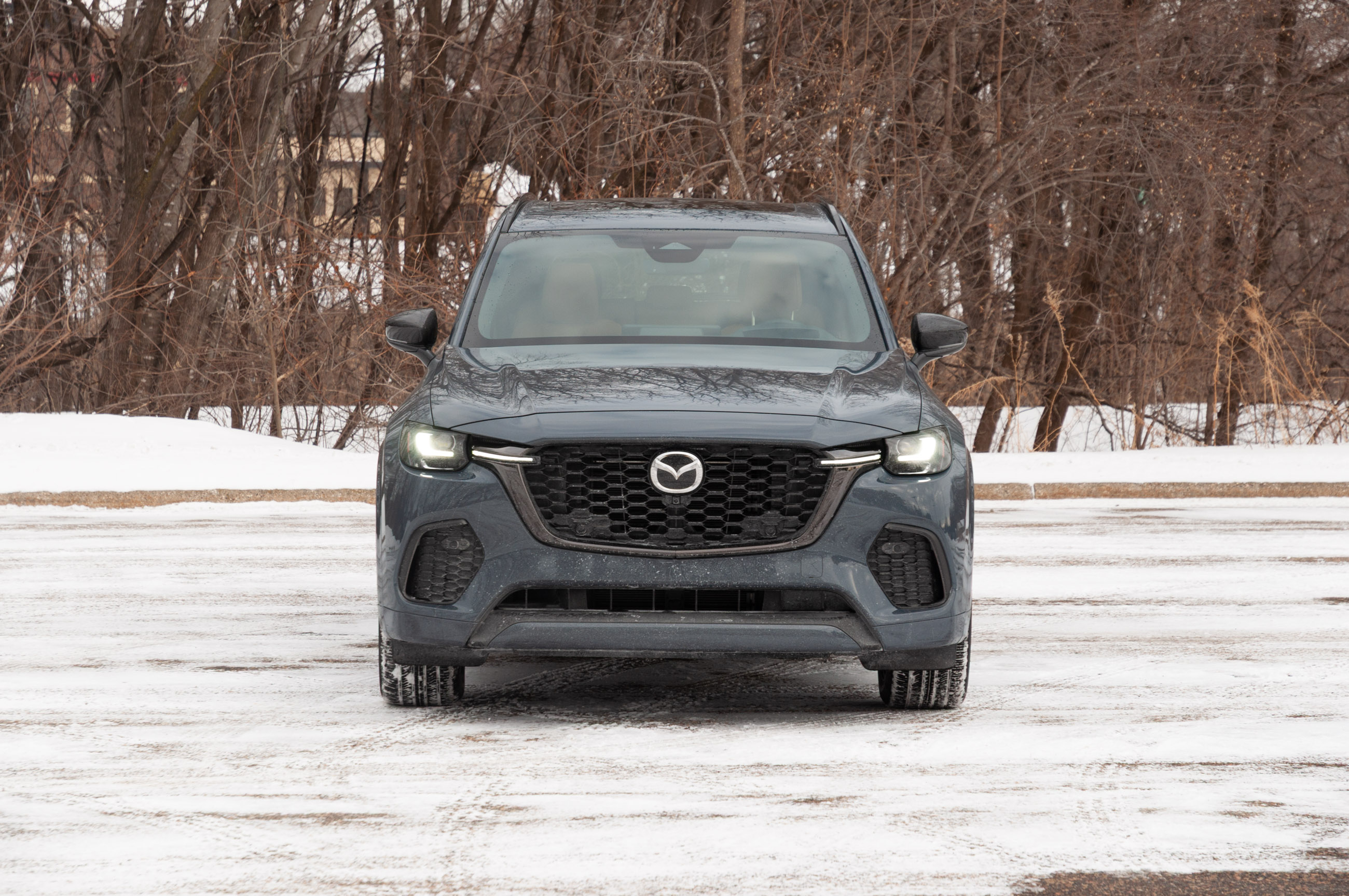
The CX-70 was introduced for 2025 and rolls into the 2026 model year with a handful of small, but meaningful updates. The plug-in hybrid model features a few extra miles of range, though that wasn’t the powertrain tested here. Base models, dubbed Preferred, now feature standard heated and cooled front seats and a heated steering wheel. And of course, with the blackout trend, the CX-70s all get gloss black Mazda emblems for 2026, so I hope you didn’t like the chrome badges.
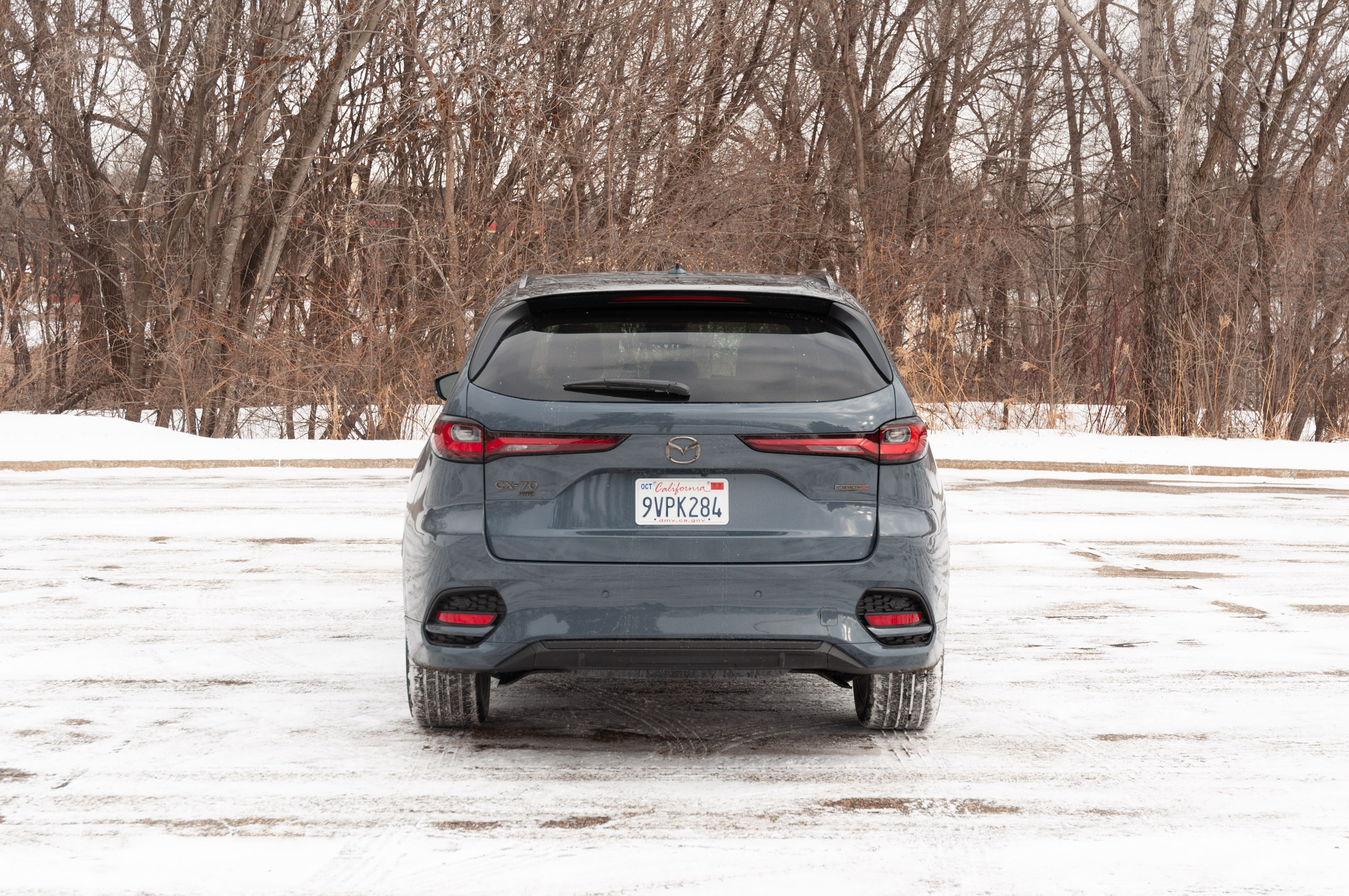
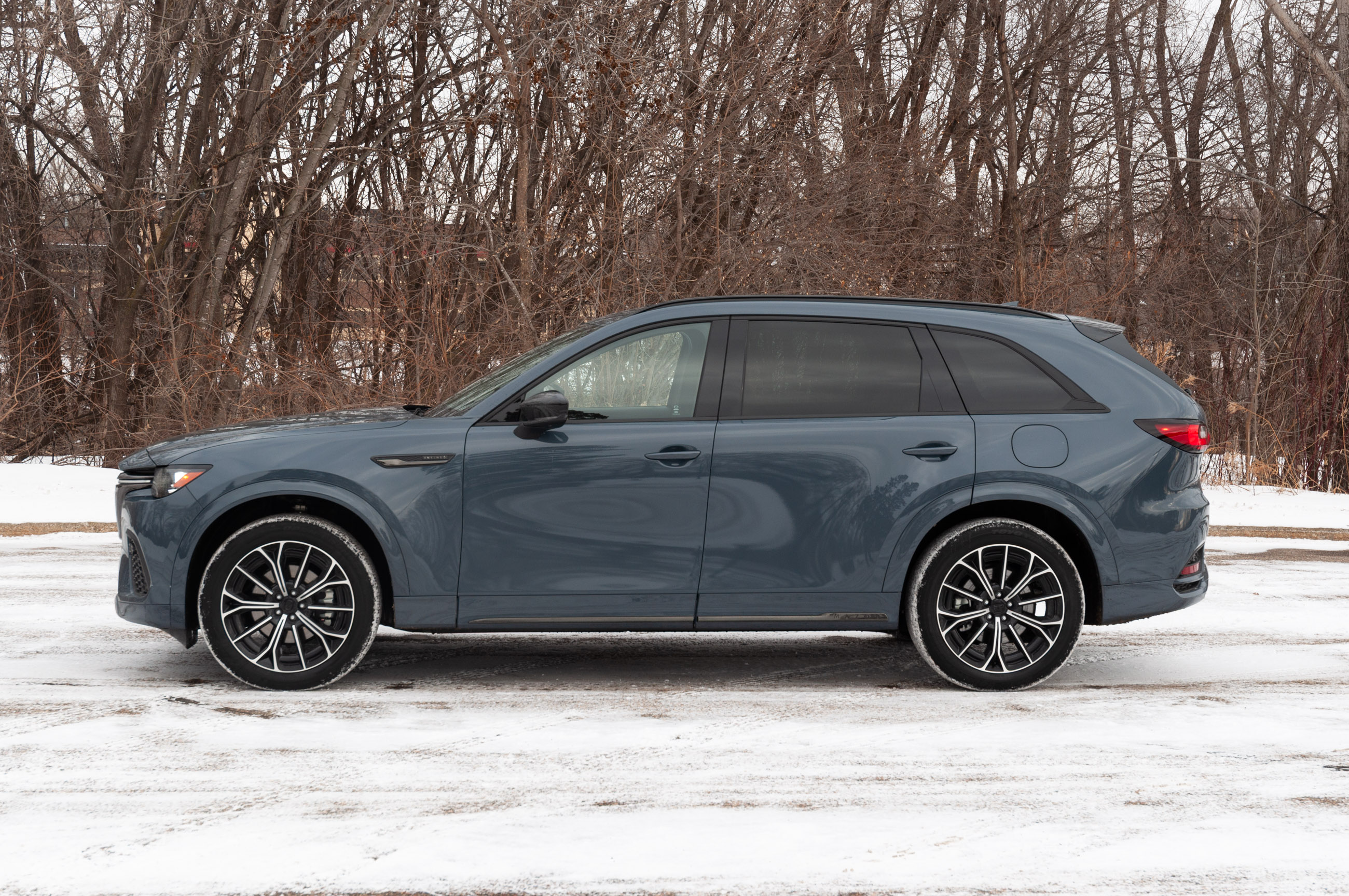
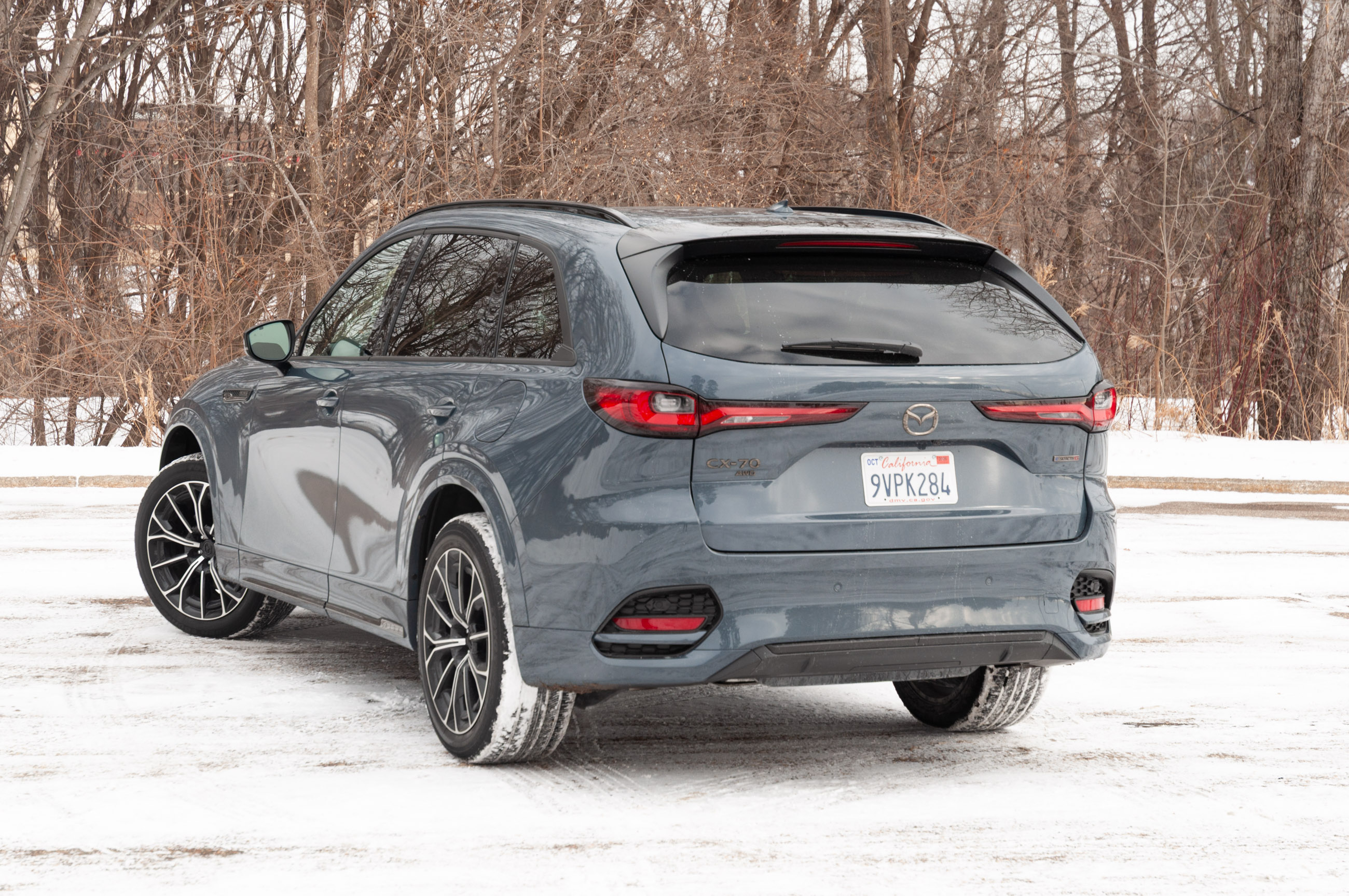
A glance at the CX-70 won’t easily distinguish itself from its three-row CX-90 sibling. That’s not a terrible thing given how gorgeous the CX-90 is with a long dash-to-axle ratio, tidy rear end, and short front overhang. It’s upscale-looking.
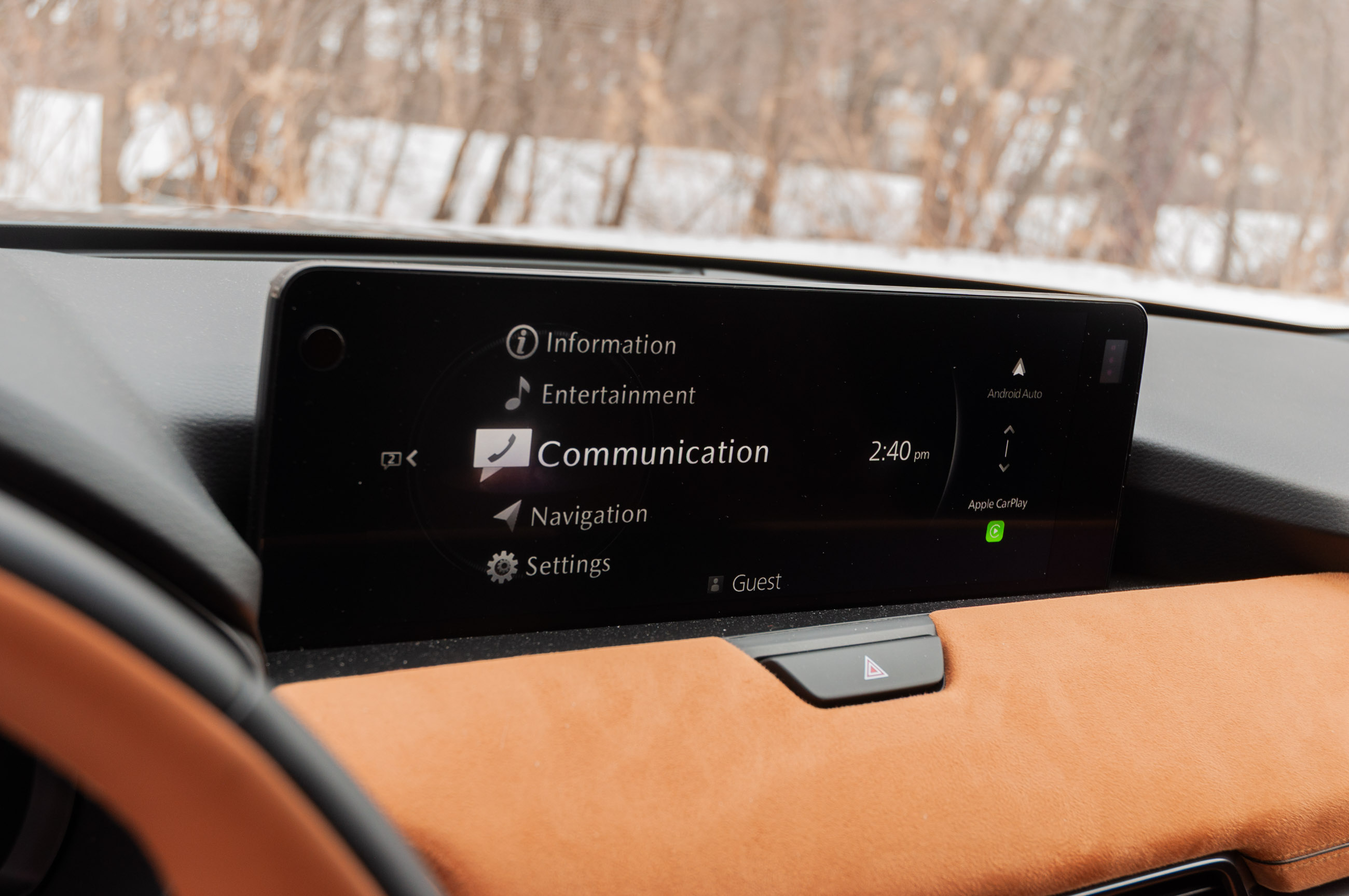
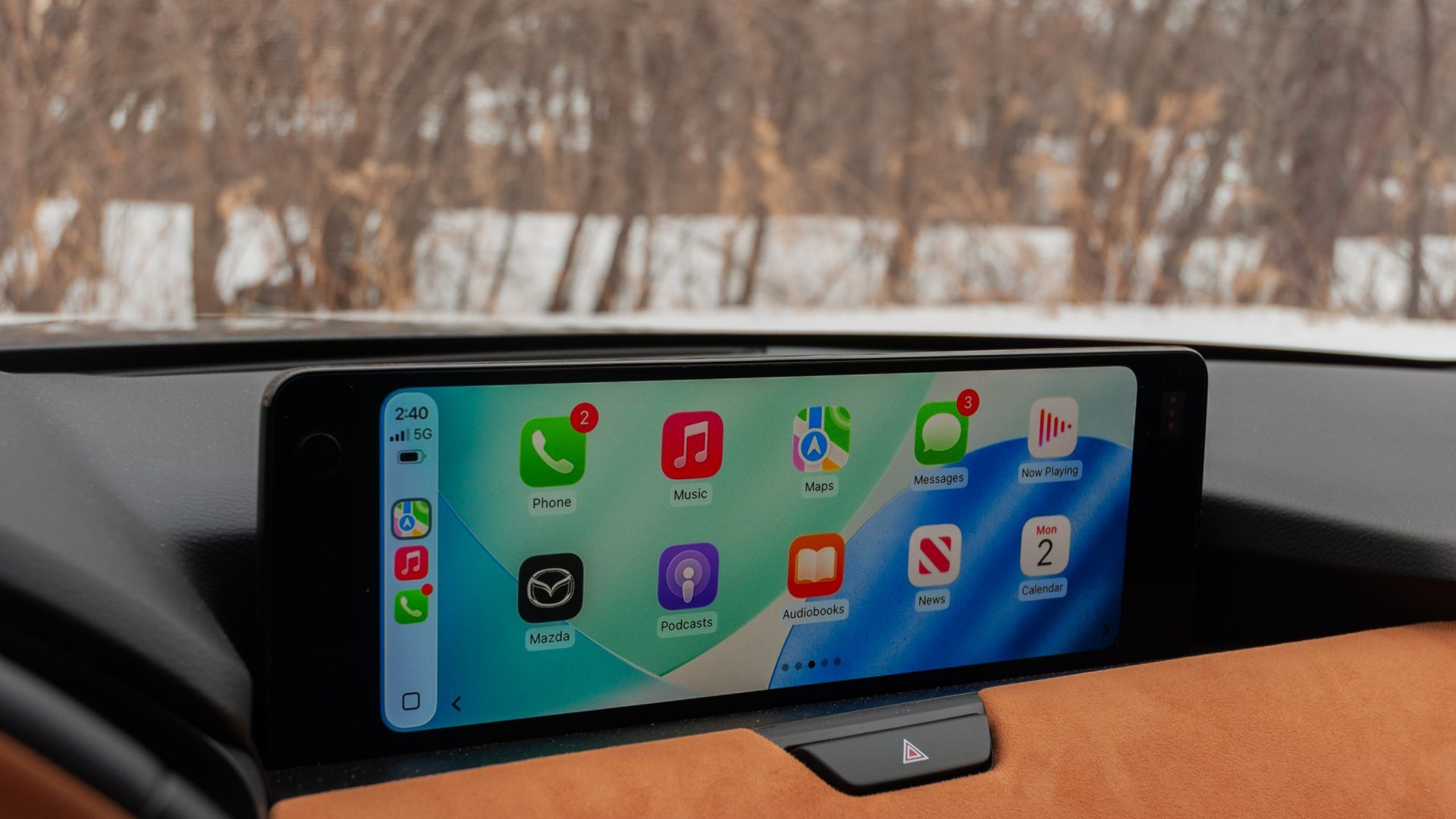
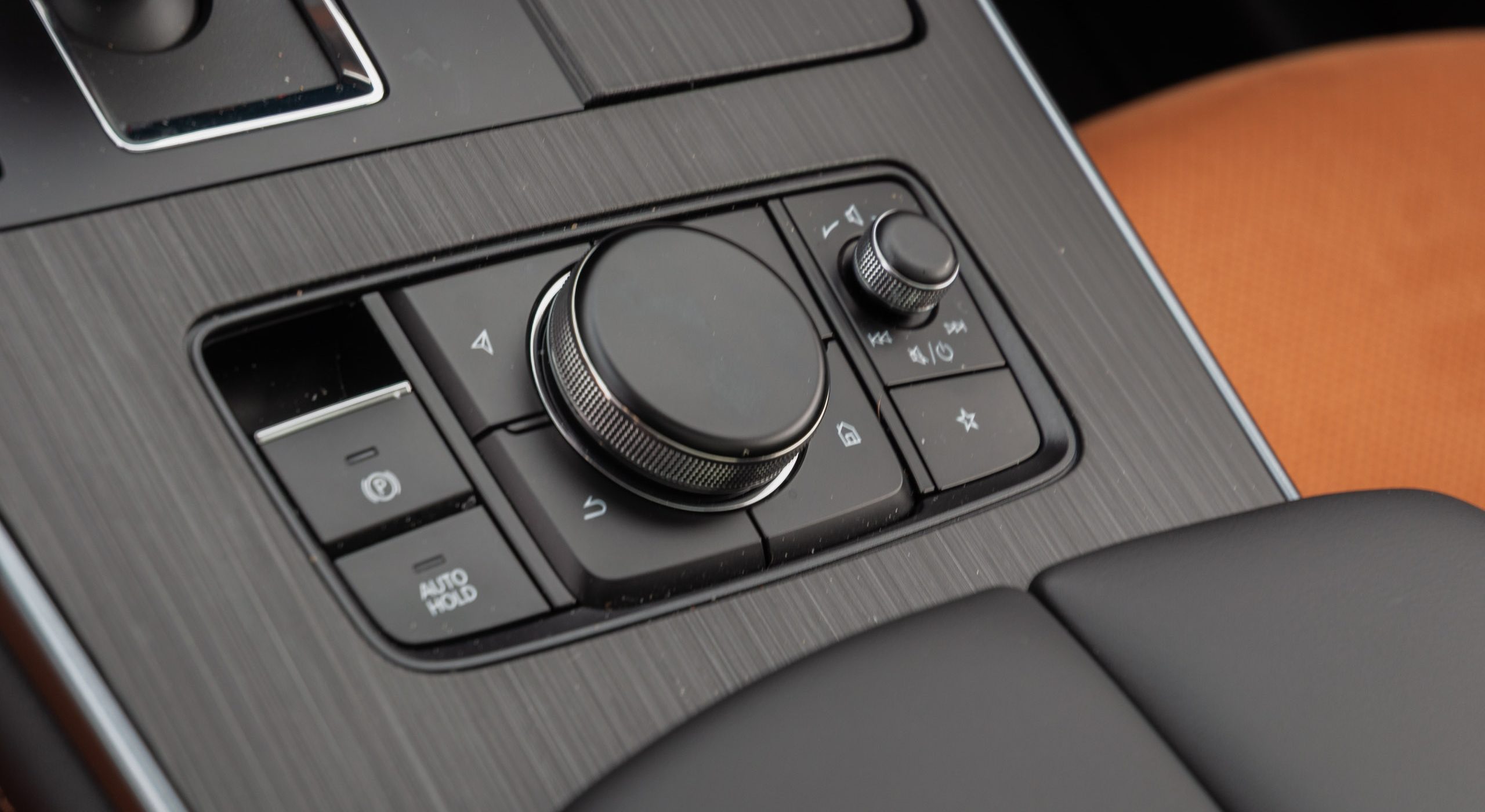
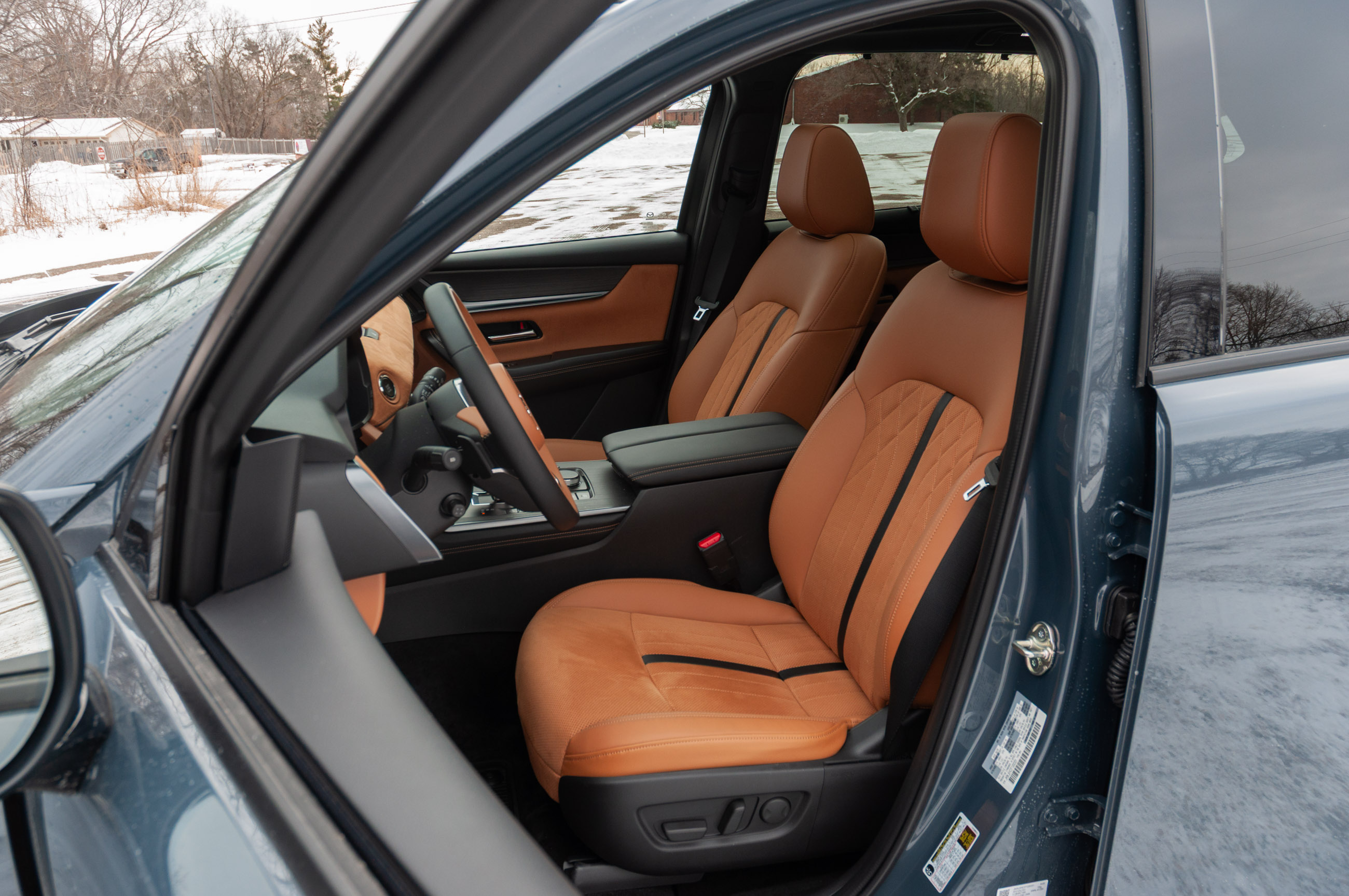
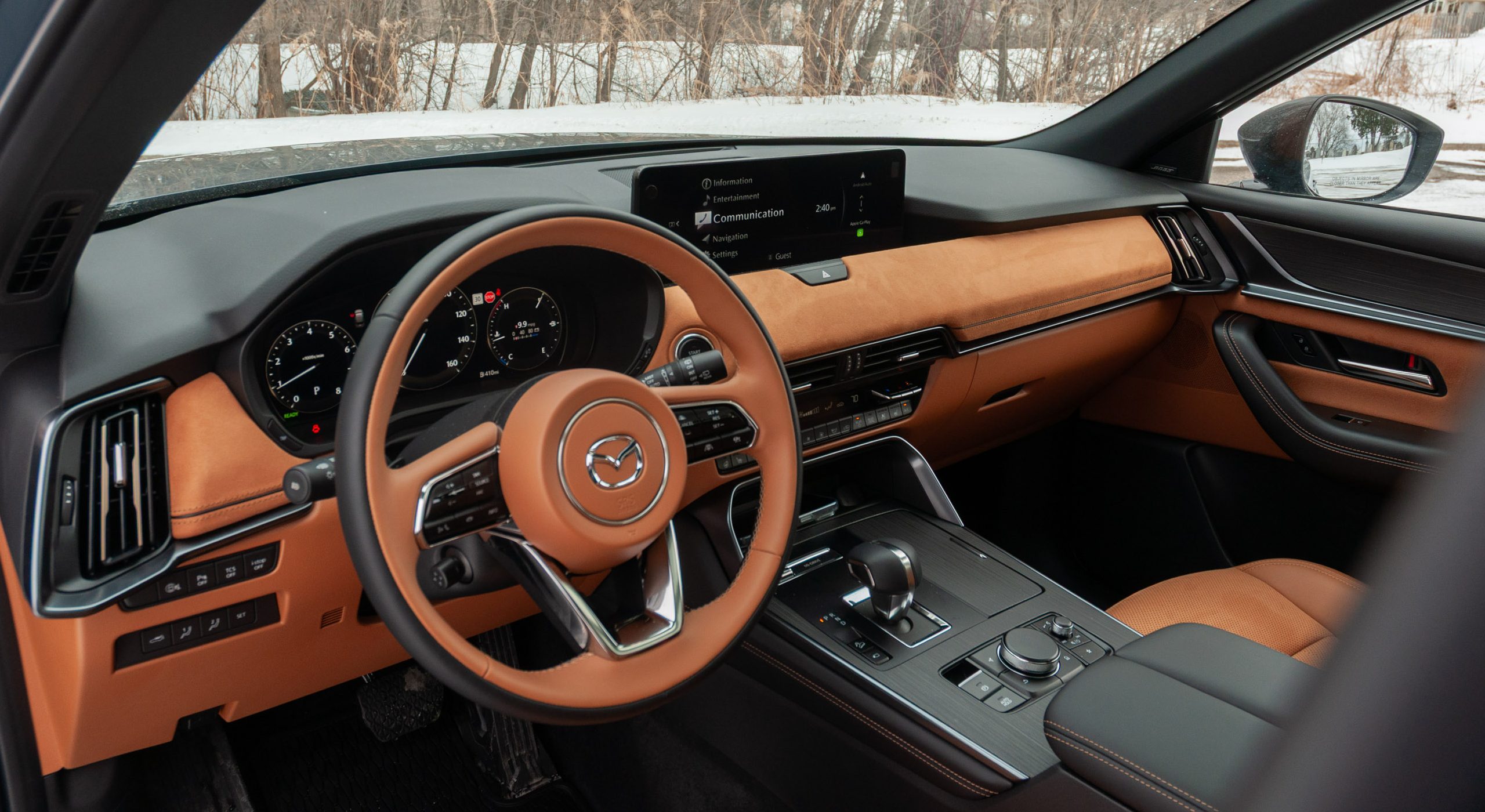
Inside the dashboard is the same as the CX-90’s, with upscale materials ranging from suede and leather to soft-touch bits and toggles or knobs that all move with precision to deliver a satisfying click. The CX-90’s 12.3-inch infotainment system, which is controlled via a scroll wheel and some hard buttons, is standard, though it can be a touchscreen when using Apple CarPlay under the right conditions. A 7-inch digital gauge cluster is standard, while a 12.3-inch digital cluster gets swapped in for Turbo Premium trims and above.
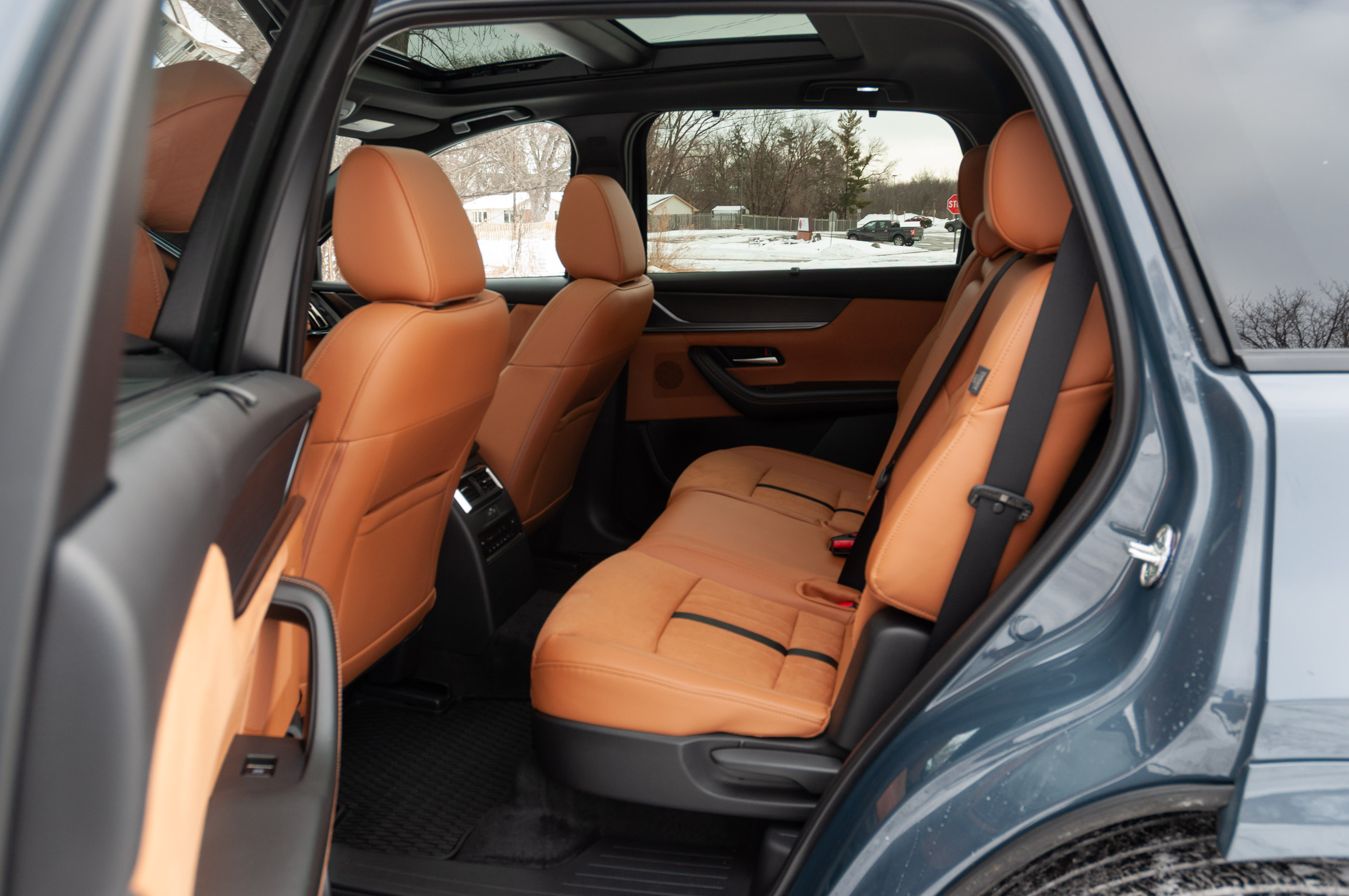
A key differentiator between the CX-70 and CX-90 is that the two-row seats five people in every configuration. A second-row bench seat is standard, and captain’s chairs are not even available. The top-trim of the CX-90 can not be optioned with a bench seat and only has second-row captain’s chairs. The two rows of seats inside the CX-70 are directly from the CX-90, which means they are comfortable and supportive, though the seat bottoms are a hair short. The rear seats are still mounted in a stadium-style configuration, with occupants looking over those sitting up front. My kids disliked this situation as did I. The setup makes you feel like a perched bird.
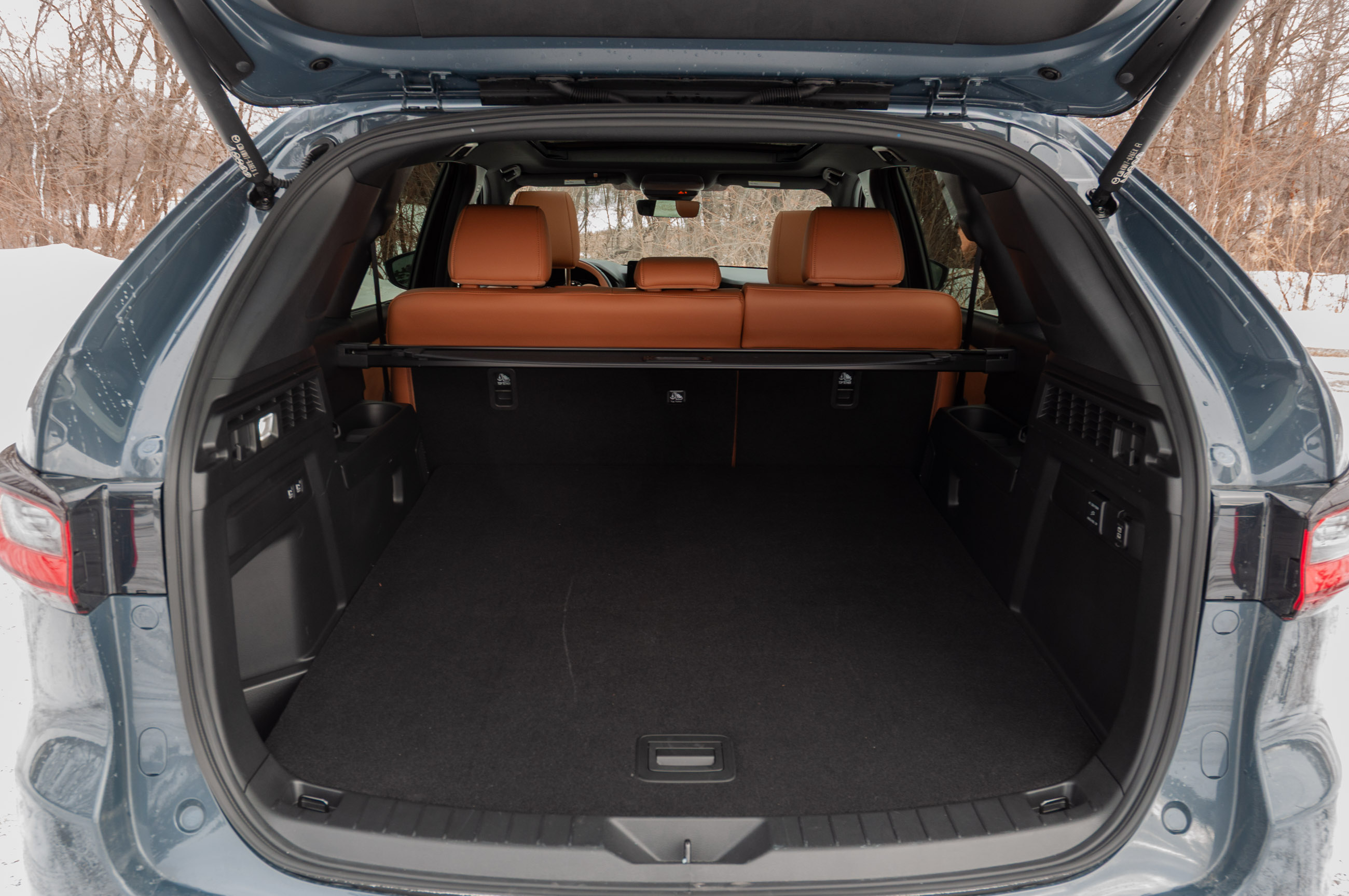
More annoying is that, despite not having the third row of the CX-90, the “flat load floor” is still sloped towards the hatch. An object could easily roll out of the back of this thing. A soccer ball might be on the right slope. This is a compromised packaging holdover from the three-row CX-90, with the placement of the available plug-in hybrid powertrain’s battery pack. Though the CX-70 does feature some underfloor storage since there’s no third row.
Driving the CX-70
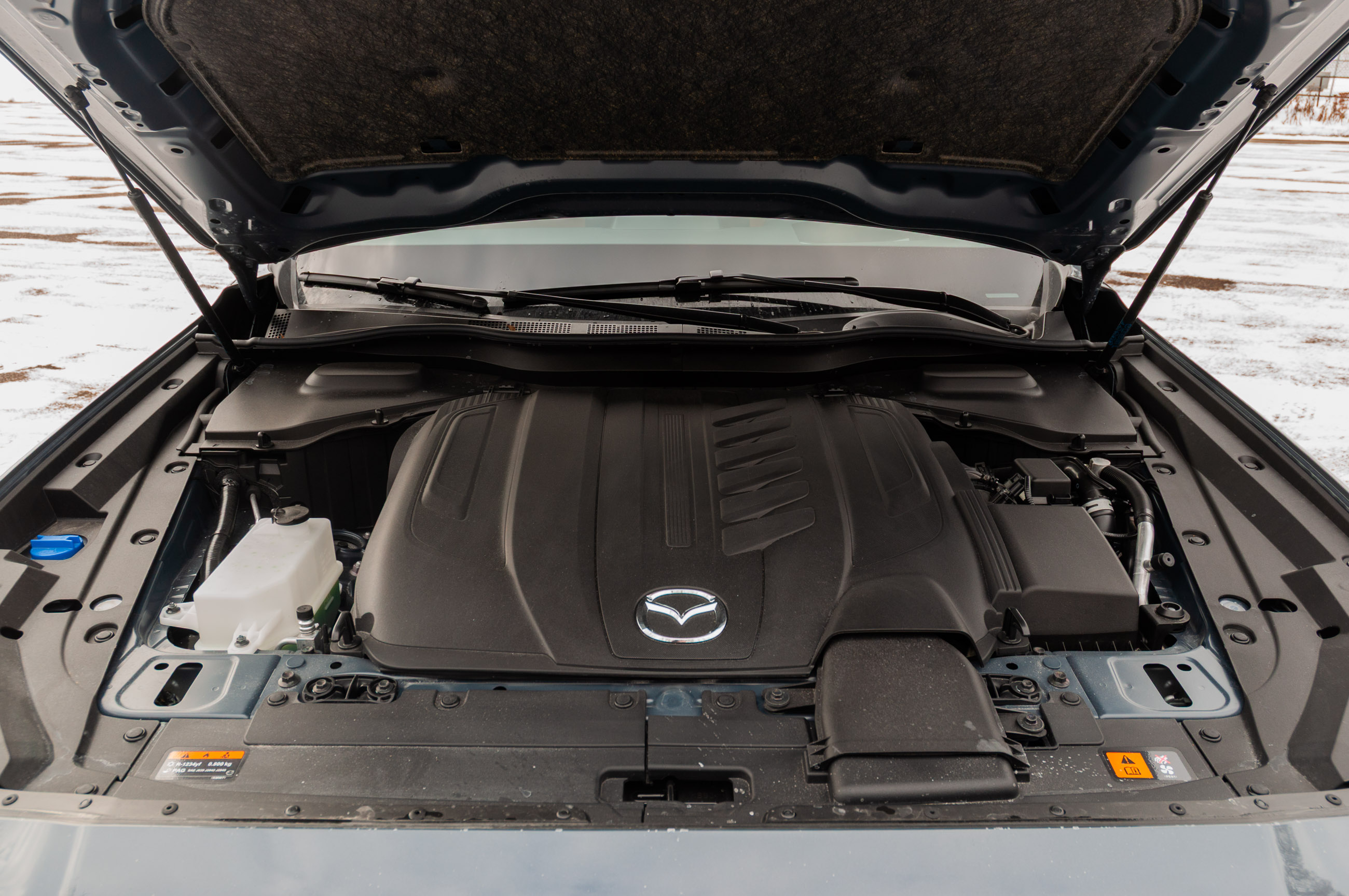
The powertrain options are the same as the CX-90, meaning buyers can choose between a turbocharged inline-six and a plug-in hybrid with an inline-four. The former was tested here with the higher output spec of 340 horsepower and 369 lb-ft of torque sent to all four wheels via an eight-speed automatic transmission. A lower output version of this engine with 280 hp and 332 lb-ft of torque is in lower trim models, while the plug-in hybrid powertrain has a combined output of 323 hp and 369 lb-ft of torque.
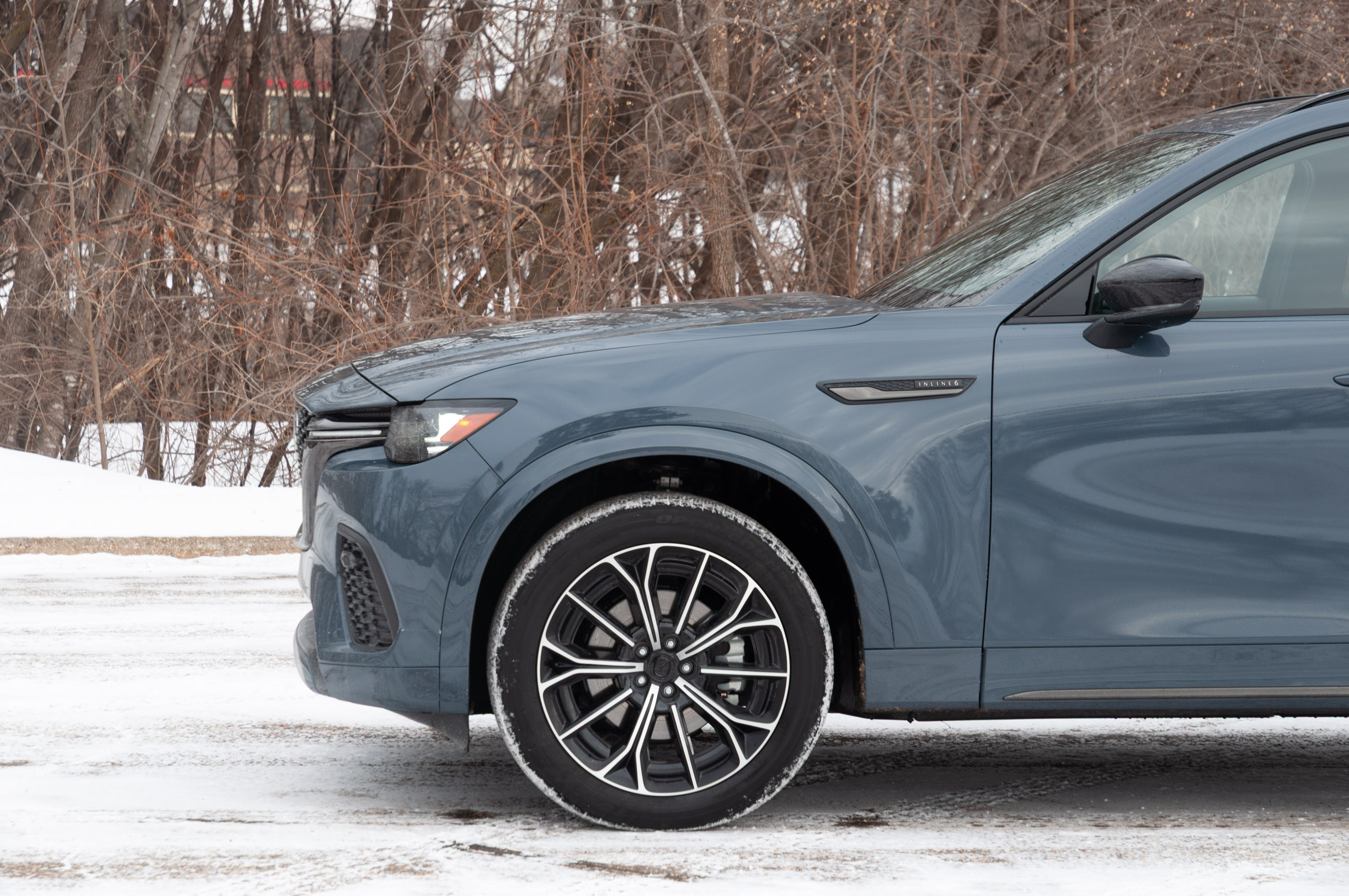
Shocking no one, the CX-70 drives like a CX-90. That’s mostly a good thing. The steering is nicely weighted, with quick turn-in and a stable feel on the highway, even in crosswinds. The suspension felt a bit harsh and lacked a hair of travel over the broken, heaving, frozen Midwest roads.
The turbo-six lacks the refinement of a straight-six from BMW or even Stellantis, with a growl that sounds grittier and deeper than other, higher-pitched inline-sixes. It’s still a gem compared to many V6s, but somehow Stellantis might’ve done it better. The eight-speed automatic transmission was designed in-house and isn’t as smooth during 1-2 or 2-3 shifts as a ZF unit in the Jeep Grand Cherokee. At times, there’s a stutter as the torque converter locks up, especially when cold.
Notably, the turbo-six is surprisingly efficient. Despite the winter temperatures, the CX-70 averaged 23.2 mpg over the course of 398 miles of mixed suburban driving. That’s in the right range with EPA ratings of 23 mpg city, 28 highway, and 25 combined.
Anyone thinking that the CX-70 must carry a weight advantage over the three-row CX-90 would be correct, but just barely. Depending on the trim, the CX-70 is anywhere from 27 to 51 pounds lighter than the CX-90. That’s less than the weight of my 10- or 12-year-old. Which is to say, you won’t feel the difference behind the wheel. In fact, a base three-row CX-90 weighs 154 pounds less than the CX-70 because it lacks a sunroof, has smaller wheels, and some power features.
Quick Verdict
The CX-70 costs $43,780, including a $1,530 destination charge. That’s about a $2,000 premium over a CX-90, but in reality, it’s only $250 more. The CX-90 has a base Select trim the CX-70 skips, and the base Preferred trim for the two-row is only $250 more than the CX-90 Preferred. It’s still somewhat odd to comprehend that in any capacity, $250 or not, the CX-70 with two rows of seats costs more than the same car with three rows of seats. That equation flips as the trim lineup moves upward, since every other CX-90 model costs about $2,000 to $3,000 more than the CX-70. The 3.3 Turbo S Premium Plus CX-70, as tested, cost $56,670, about $2,000 less than a comparably equipped CX-90, but it had a second-row bench seat.
The main argument for buying the CX-70 is that you don’t want to pay for a third row you won’t use and don’t want to haul around. If you fall into that subset, Mazda’s reaching for the margins that include you. Either way, you’ll end up with a gorgeous crossover SUV that drives better than most of the bland competition and features a more premium cabin to boot. Just don’t put anything heavy that rolls in the back cargo area and forget about it when you open the tailgate.
Mazda provided The Drive with a seven-day loan of this vehicle for the purpose of writing this review.
2026 Mazda CX-70 3.3 Turbo S Premium Plus Specs
| Base Price (3.3 Turbo S Premium Plus) | $43,780 ($56,670) |
| Powertrain | 3.3-liter twin-turbo inline-six | 8-speed automatic | all-wheel drive |
| Horsepower | 340 |
| Torque | 369 lb-ft |
| Seating Capacity | 5 |
| Curb Weight | 4,863 pounds |
| Towing Capacity | 5,000 pounds |
| Cargo Volume | 39.6 cubic feet behind second row | 75.3 cubic feet behind first row |
| Ground Clearance | 8.1 inches |
| EPA Fuel Economy | 23 mpg city | 28 highway | 25 combined |
| Score | 7/10 |

Quick Take
The 2026 Mazda CX-70 will only make sense for a subset of people, but those buyers are probably thankful.
Loading comments…
Comments couldn’t be loaded. Please refresh the page.