
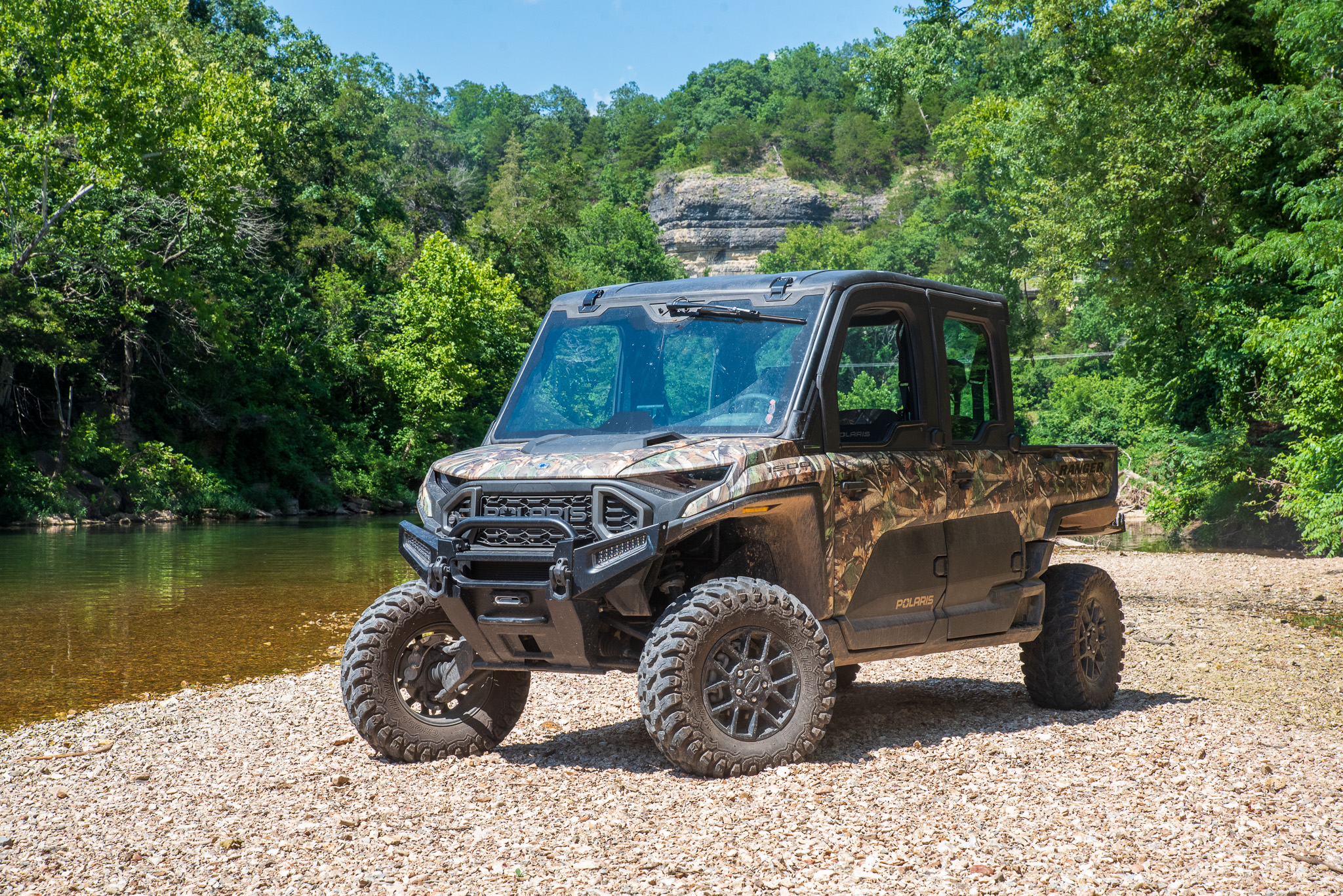
Utility terrain vehicles, otherwise known as UTVs or side-by-sides, are evolving. They’re already far beyond the primordial ooze stage, rapidly advancing to become more capable, more comfortable, and way more expensive. It wasn’t long ago that a $30,000 chore buggy seemed unthinkable—”Why wouldn’t you buy a pickup for that money?”—but we’re way past that now. The new top dog in Polaris’ work lineup is the Ranger XD 1500 Northstar, which not only boasts the largest engine and the most luxuries of any model on the market, but also the most significant price tag.
How much, you ask? The one I tested clocked in at $51,994, for real.
I spent months working the Ranger at my family’s campground in the Missouri Ozarks. Some of it was easy, such as carrying numerous full bedloads of trash bags to the dumpster, but some of it wasn’t so much. I used the Polaris like a dump truck on more than one occasion, filling the bed so full with gravel that it could barely lift. I also hauled an entire 20-foot oak tree’s worth of chainsawed wood chunks in the back from one property to the next. Seeing as “XD” stands for “Extreme Duty,” I had to make sure it was worthy of the name. Tougher yet is deciding if it’s worth anywhere near that price.
Basics
Polaris’ UTV lineup consists of four models: The RZR, Xpedition, General, and Ranger. They vary in focus from performance to utility, and the Ranger falls into the latter category. The XD 1500 model sits atop that hierarchy, and you can pick between two trims—Premium or Northstar—in three- or six-seater spec.
You can tell a Ranger XD 1500 apart from its smaller, lighter-duty counterparts by its more angular front fascia and overall size. In six-seater form, the XD 1500 is 164 inches long with a 127-inch wheelbase compared to the XP 1000’s 152-inch total length and 113-inch wheelbase. It’s also wider at 65 inches versus 62.5 inches. The pronounced hood cowl further differentiates it in the Ranger lineup, as does its larger bed.
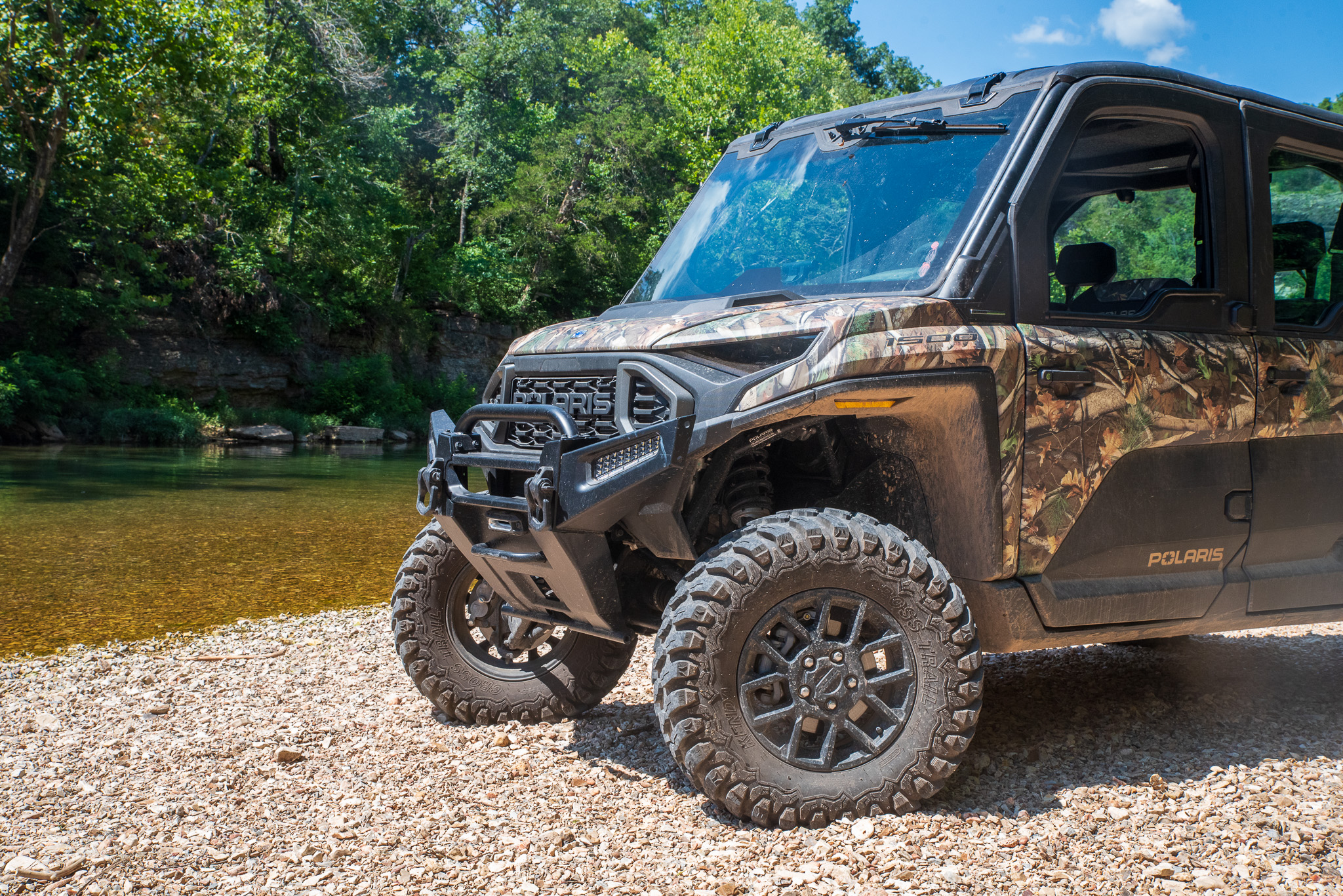
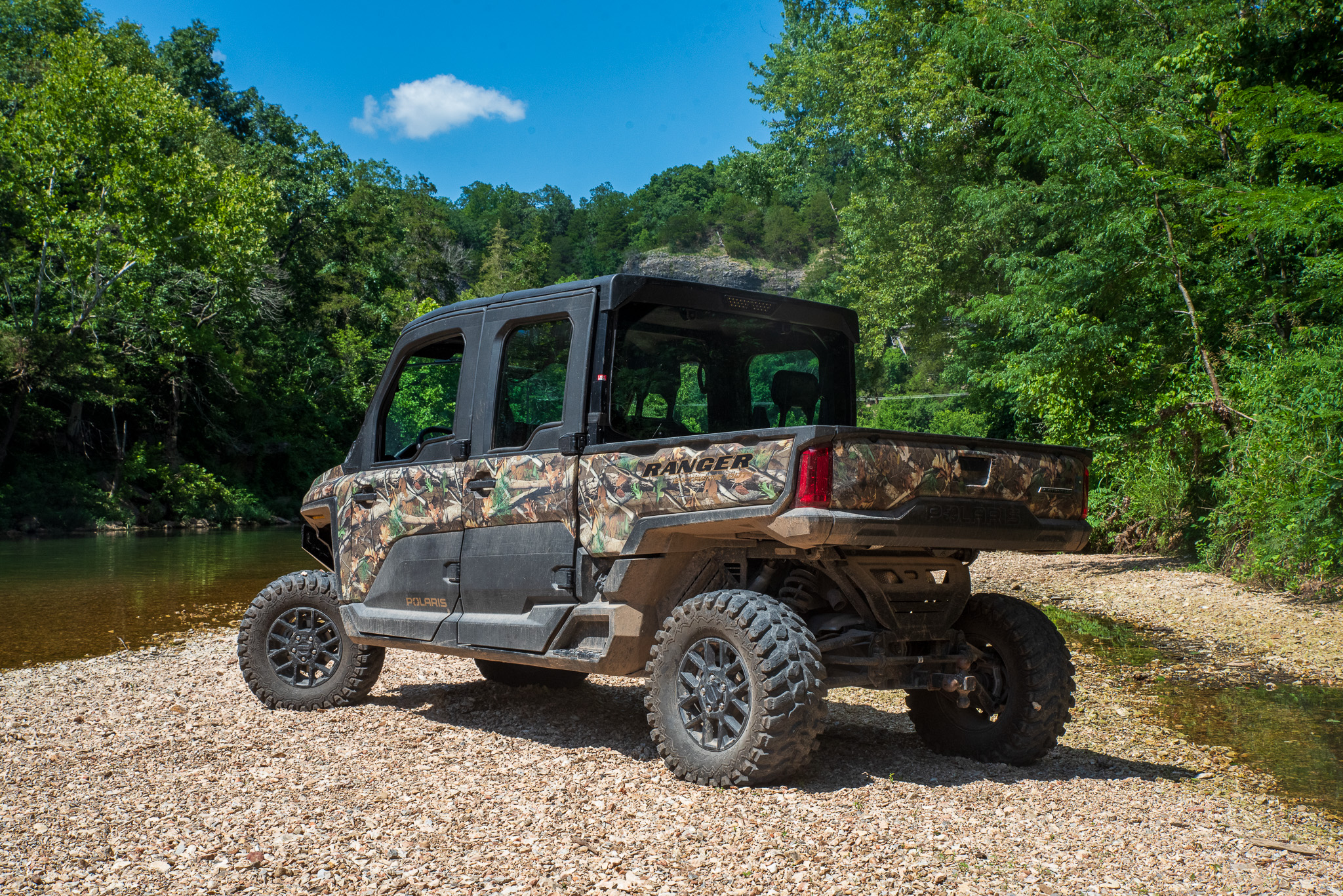
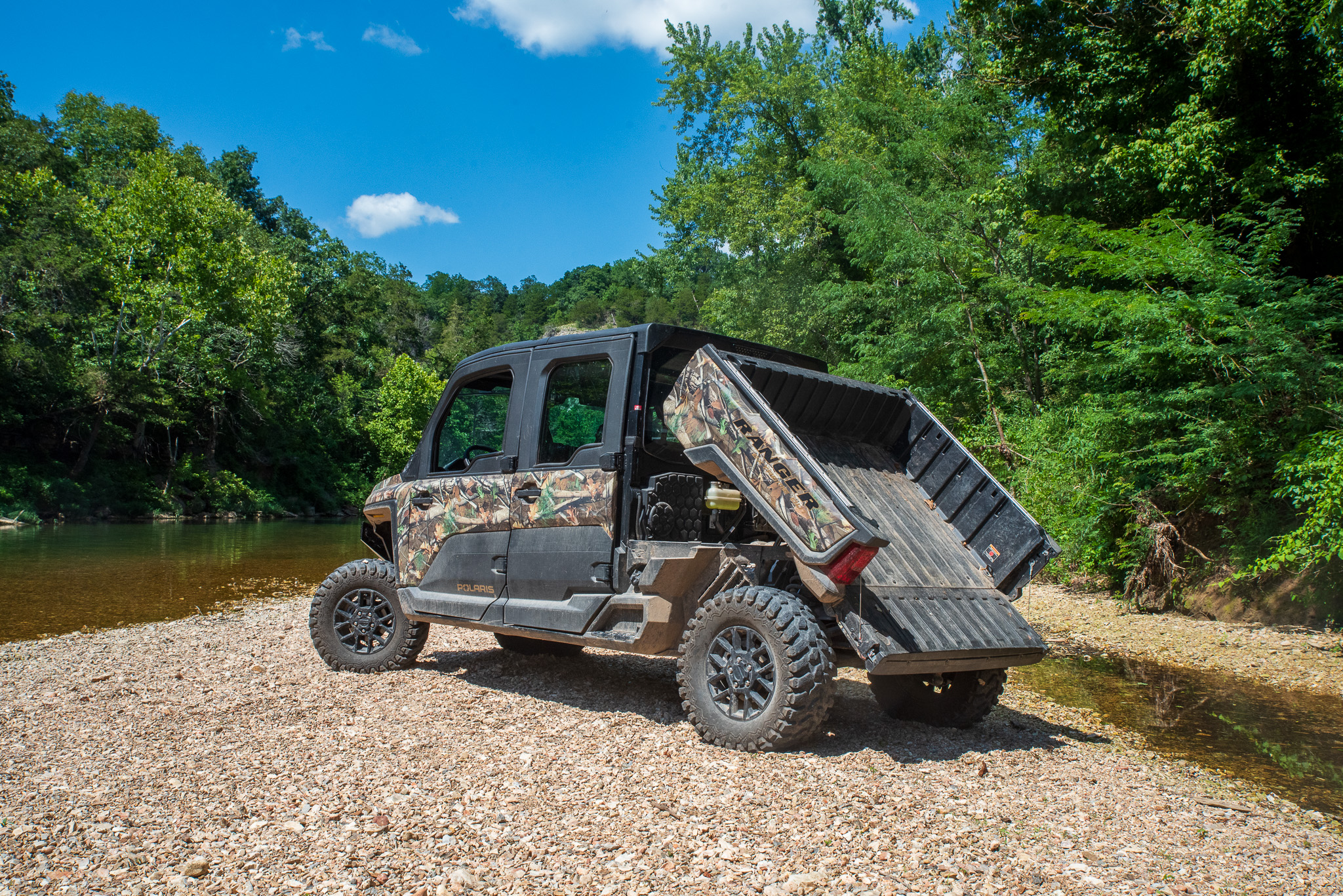
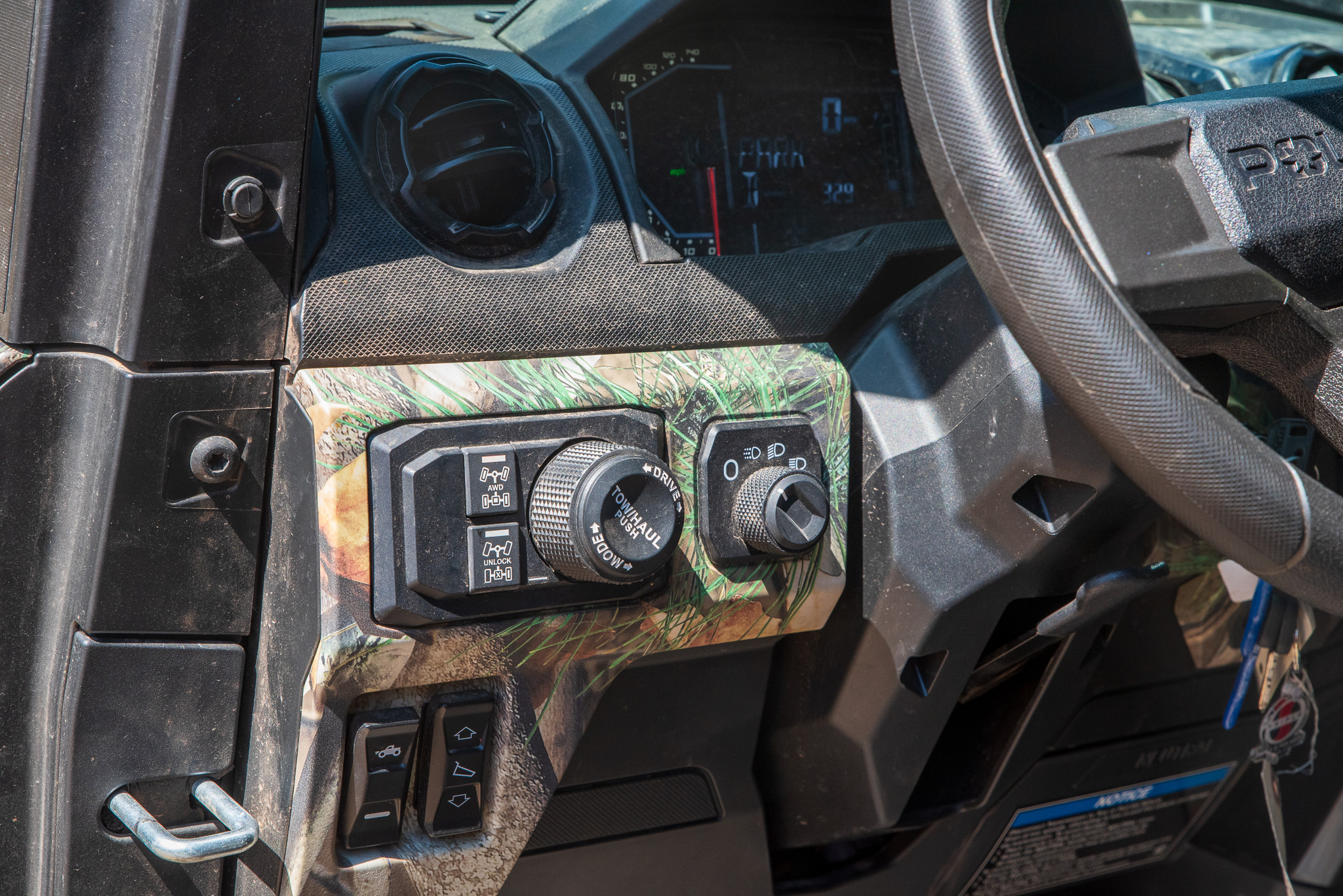
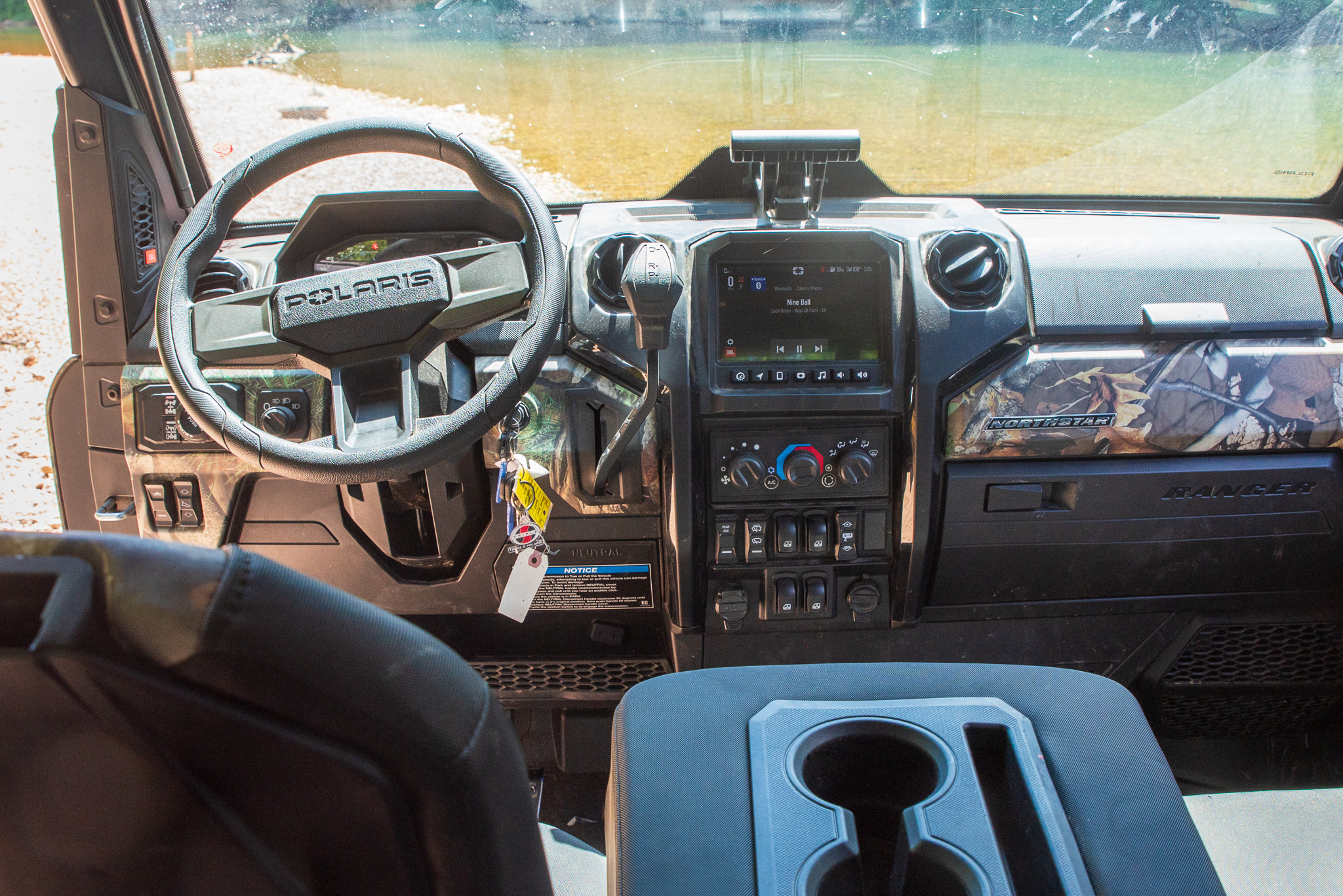
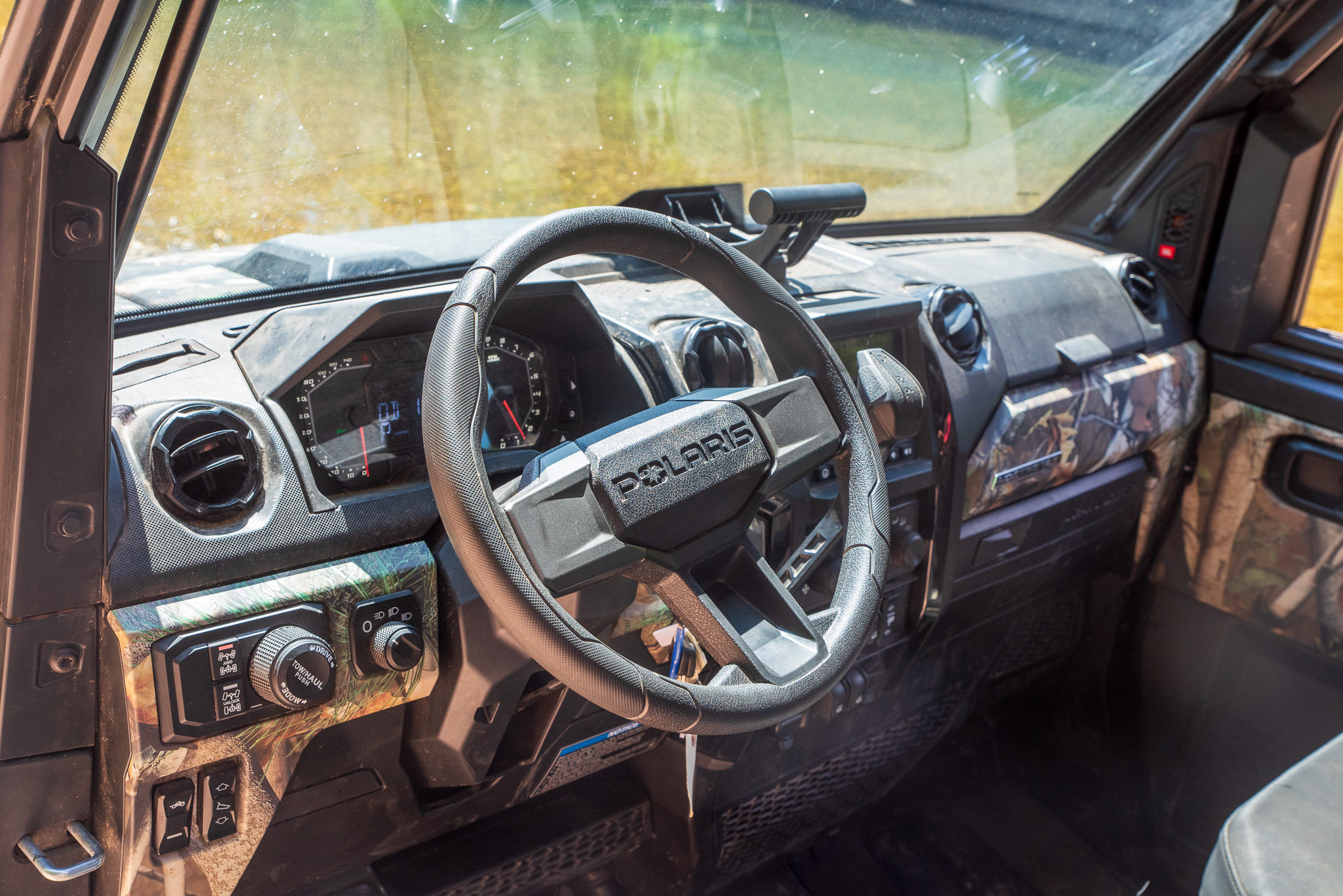
Every Ranger XD 1500 comes with the dual-overhead cam three-cylinder, making 110 horsepower and 105 lb-ft of torque. What’s more, they all run Polaris’ Steeldrive continuously variable transmission, and that CVT is arguably just as significant as the big engine because it runs a 100% steel belt rather than a rubber unit that can stretch, crack, and break. I’ll discuss that further in a bit. Selectable all-wheel drive is also standard with a locking and unlocking rear differential.
Driving the 2025 Polaris Ranger XD 1500
I started working the Ranger XD 1500 as soon as the delivery truck dropped it near my house. There was a flood cleanup to do at the campground, and that meant carrying brush and driftwood to the burn pile immediately. We skipped the formalities and got down to it.
As I climbed into the rig, I found more similarities to a new pickup than just the price tag. It has everything from touchscreen infotainment, Bluetooth connectivity, and JBL speakers to loads of switches and buttons for auxiliary lighting, a winch, and power windows. The black-and-camo seats are even heated, but I never needed that since my test spanned from late spring to late summer.
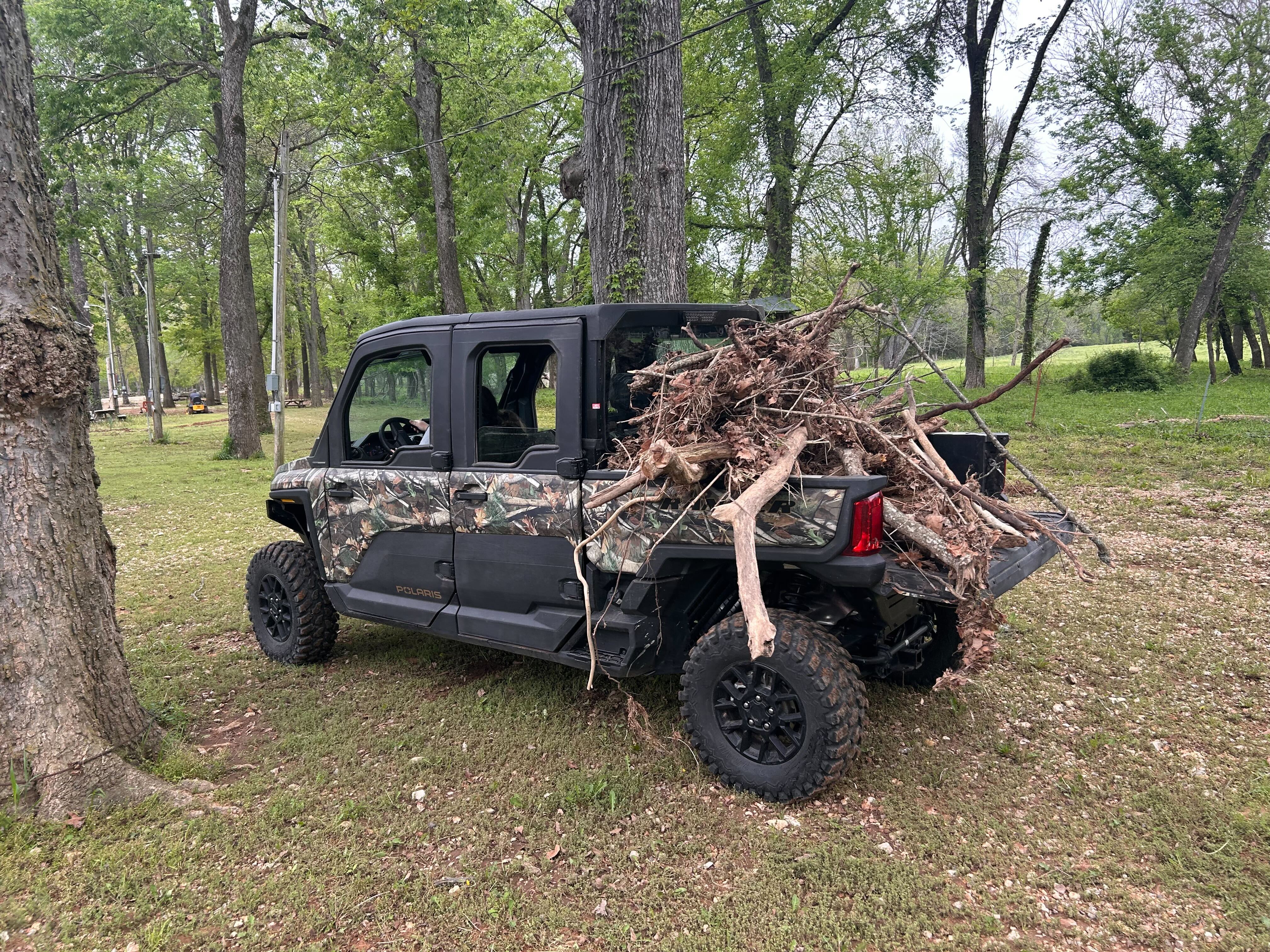
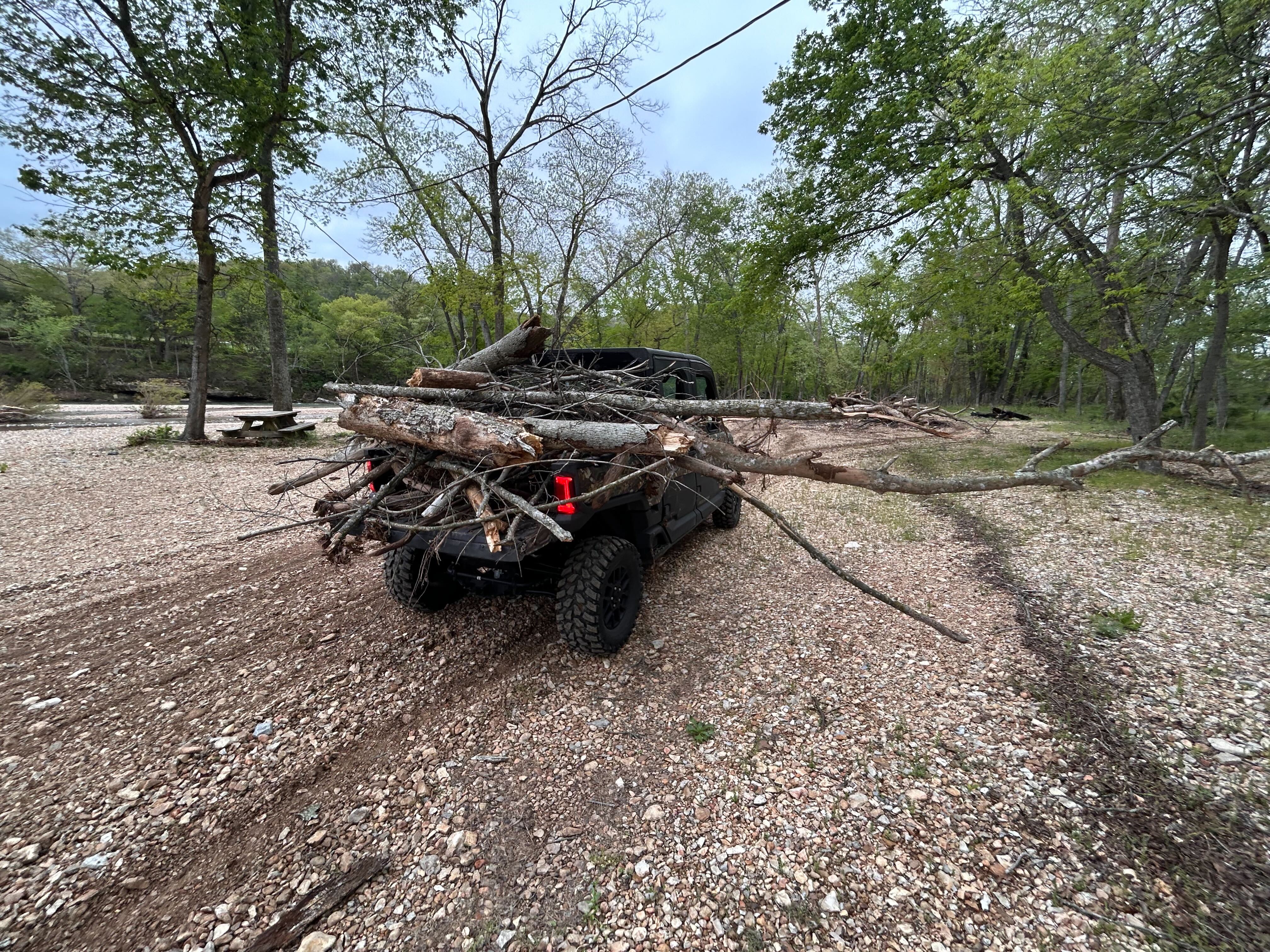
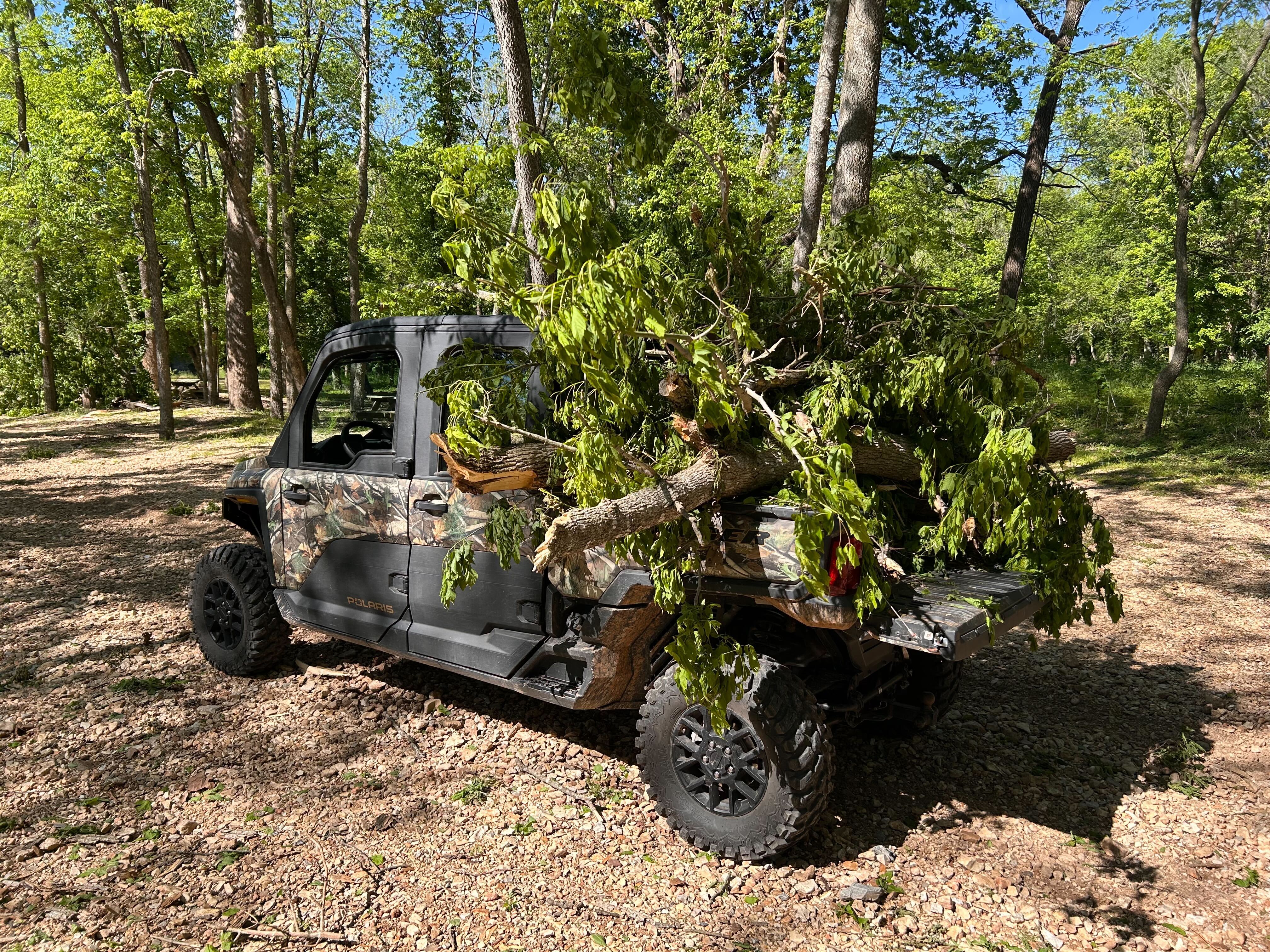
While this was a practical and realistic use case for the Ranger XD 1500, it fell short of maximizing its 1,500-pound payload capacity. The bigger bed still came in handy, however, as I was able to shove more short sticks and stumps inside while stacking the oversized branches and trunks on top. And better yet, with the electric power dump, I only had to handle ’em once.
The next chore was more hardcore. Our neighbor had some down trees on his property, and we just so happened to need some firewood. I drove the Polaris over—”Thank God I’m a Country Boy” by John Denver blaring on the stereo—with a chainsaw in the back. Rather than pulling our 16-foot utility trailer into the woods, I reversed the Ranger right up to the tree, which was more or less in the thicket. I’d never scratch a truck’s shiny paint by doing this, but since this thing is mostly plastic aside from the steel front bumper, I didn’t have to worry about it.
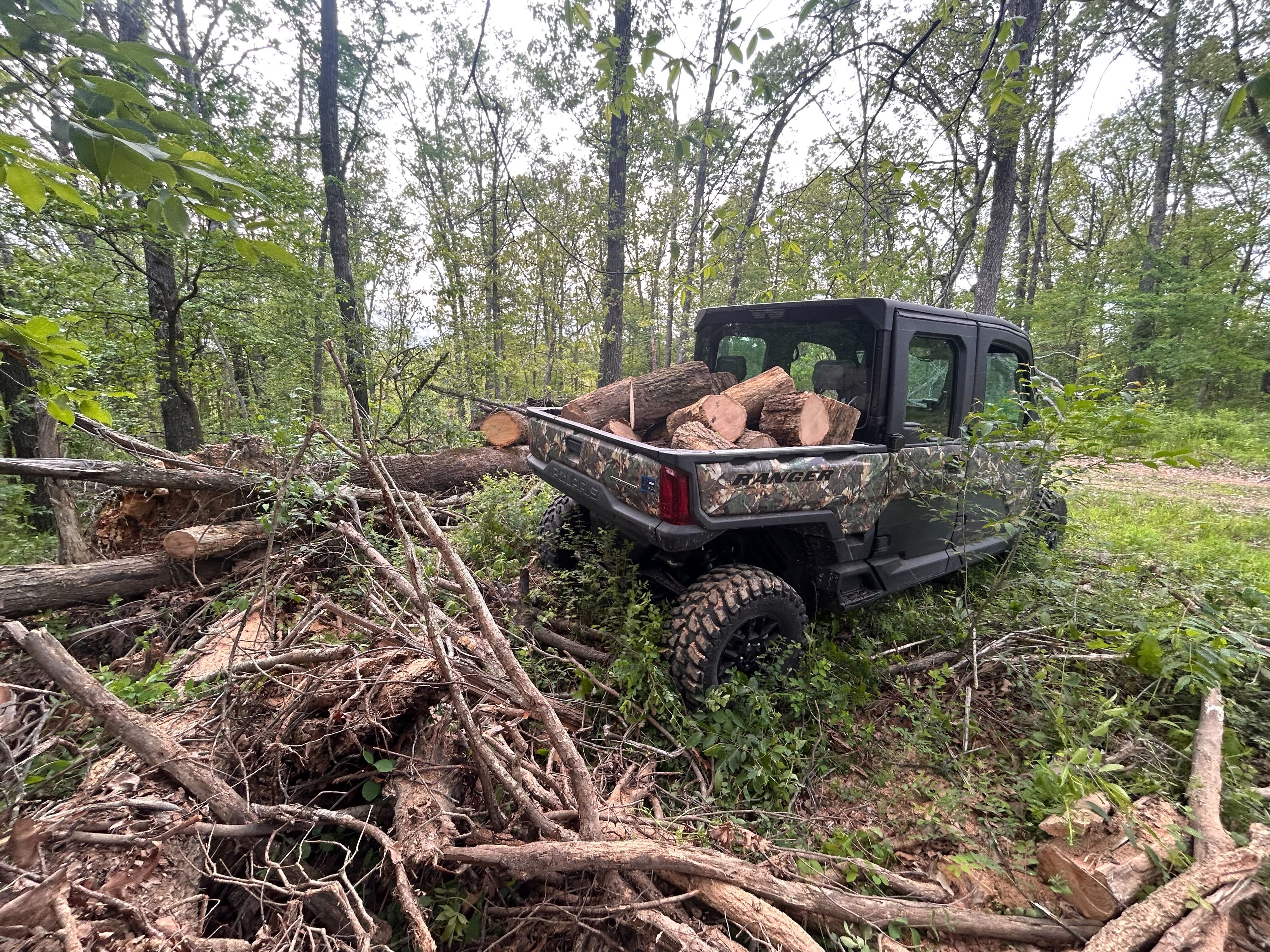
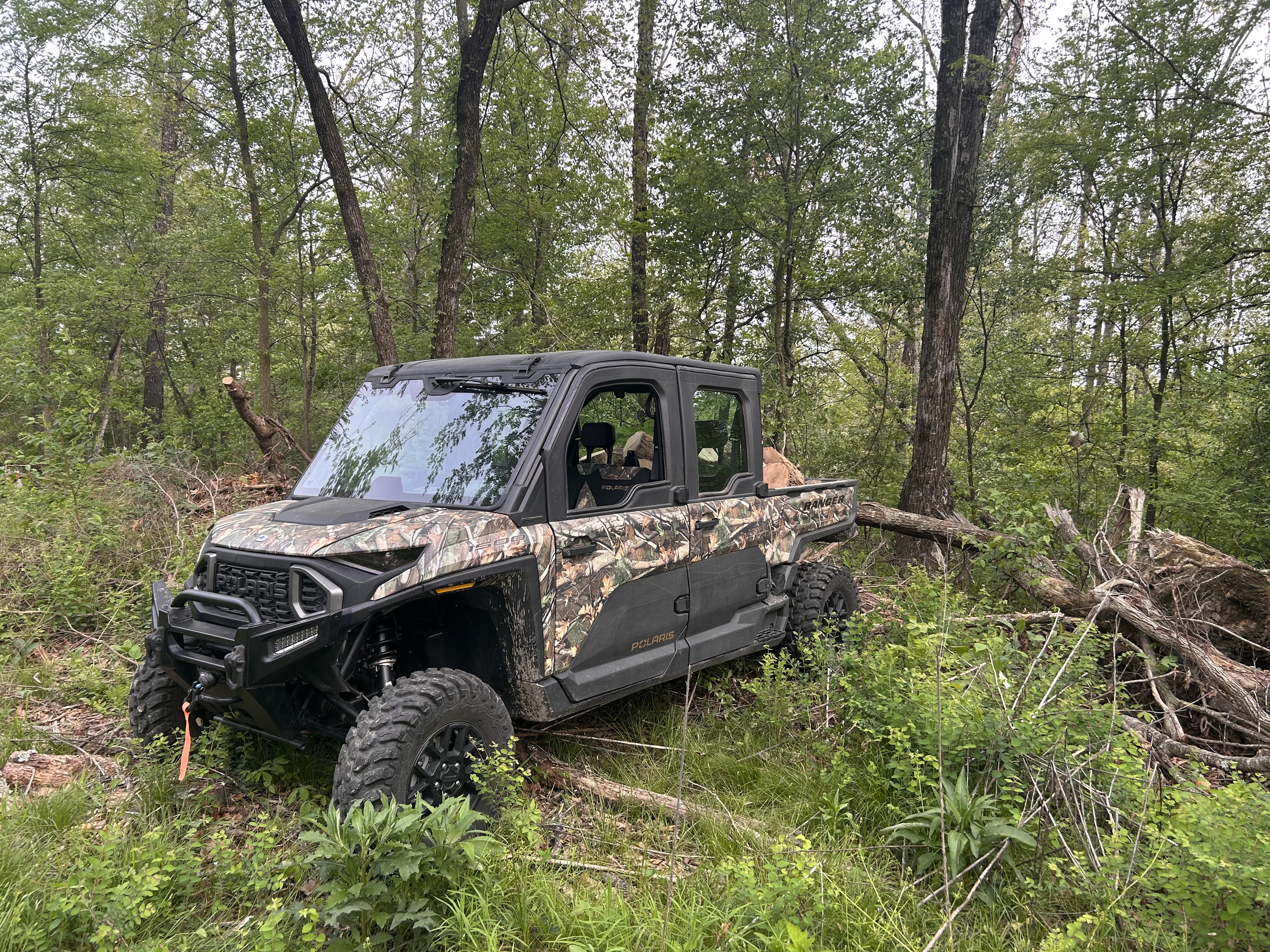
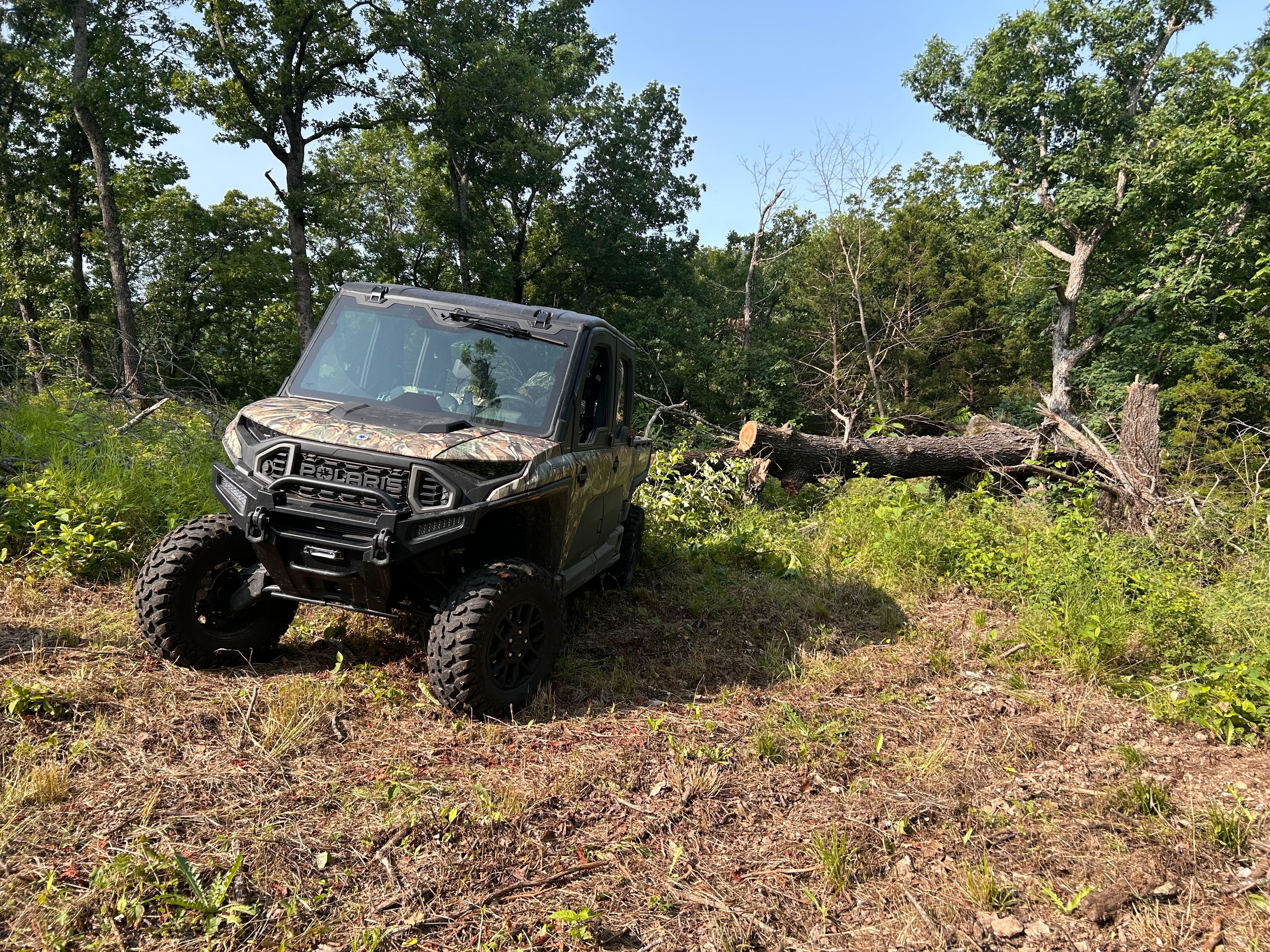
With the tree cut into pieces and loaded, I decided to try out the XD 1500’s Tow/Haul drive mode. Polaris claims that torque is maximized with the knob set to this position, and you can certainly feel the difference compared to Comfort mode, but it still leaves me with a bone to pick. The power isn’t lacking; however, Polaris treats this as a replacement for a dedicated low-range. In turn, it’s simply not as capable in specific off-road settings like short and steep climbs. The built-in preservation devices keep you from revving so high that you might break it.
I found this out for myself while dragging some trees from our beach. The Ranger handled the first few just fine, but soon, I found its limits. There was a 20-footer that proved to be too much as it dug into the loose gravel. Pretty soon after chaining up and setting off, the computer cut power as a message showed on the dashboard: “CLUTCH OVER TEMP.” I heeded the warning, and we pushed it from behind with our 44-hp Kubota tractor to get it to the pile.
On one hand, I understand why this didn’t work. There’s no telling exactly how heavy that log was, and the weight of the load only increased as it collected more gravel. But on the other hand, I can’t help but wonder if a dedicated low range would have kept the wheels turning for at least a bit longer. Regardless, this was an important point in my test as it taught me which jobs were too big for the mighty side-by-side.
And before you ask, yes, I could have hooked the 4,000-pound winch to the log. But that would have taken way too long to move it the 100 yards or however far it was to the burn pile. (I also made a dummy mistake and got the winch line bound up, which led to the synthetic cable snapping right below the hook. That was totally my bad.)
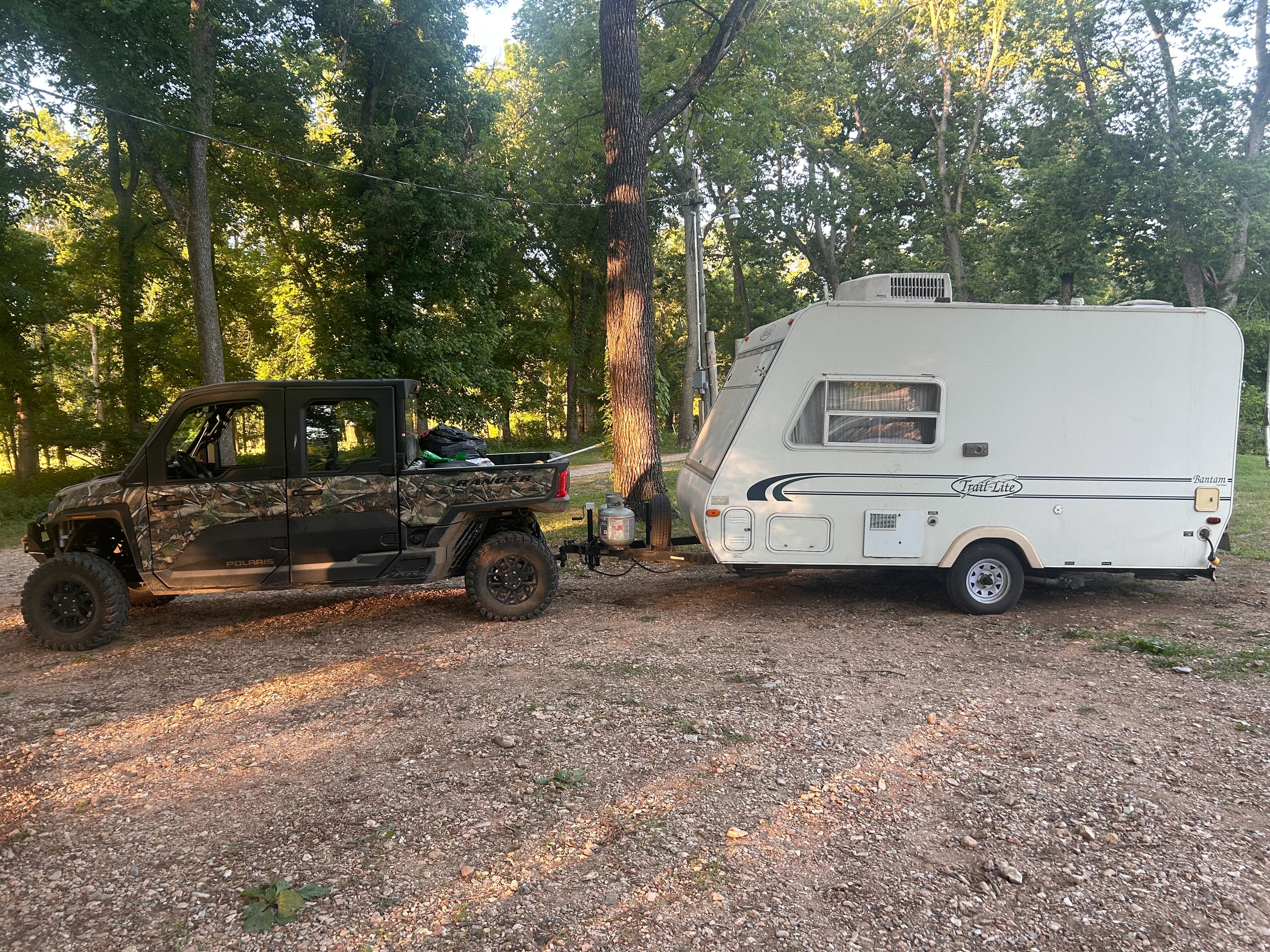
Polaris claims a max towing capacity of 3,500 pounds for the Ranger XD 1500. I came close to that a time or two with the aforementioned utility trailer, though more often than not, I used the machine to pull a fully loaded canoe trailer through loose gravel. My best guesstimate places that around 1,300 pounds, and as expected, the big UTV made light work of it.
Towing stability is stellar thanks to the XD 1500’s long wheelbase, which is only an inch and some change shorter than another Ranger—the 2025 Ford Ranger, that is. It’s no lightweight, either, as the loaded NorthStar edition tips the scales at 3,323 pounds dry.
It’s important to note that as I did all this work, I had the AC cranked and the radio playing my favorite tunes. The cabin stayed seriously cool, even during the July heat, which isn’t so easy. You’d hope for as much with a machine this expensive, but in my experience with HVAC-equipped side-by-sides, Polaris does it the best by far. And the Can-Am Defender is only just now getting a built-in stereo with trail navigation, meaning the Ranger set the standard for that, too.
All in all, the range-topping XD 1500 does more than most UTVs when it comes to comfort and work. If another rig rivals it in one category, it falls to it in the other, and that makes it hard to beat. It really comes down to whether or not you want to pay the price.
The Highs and Lows
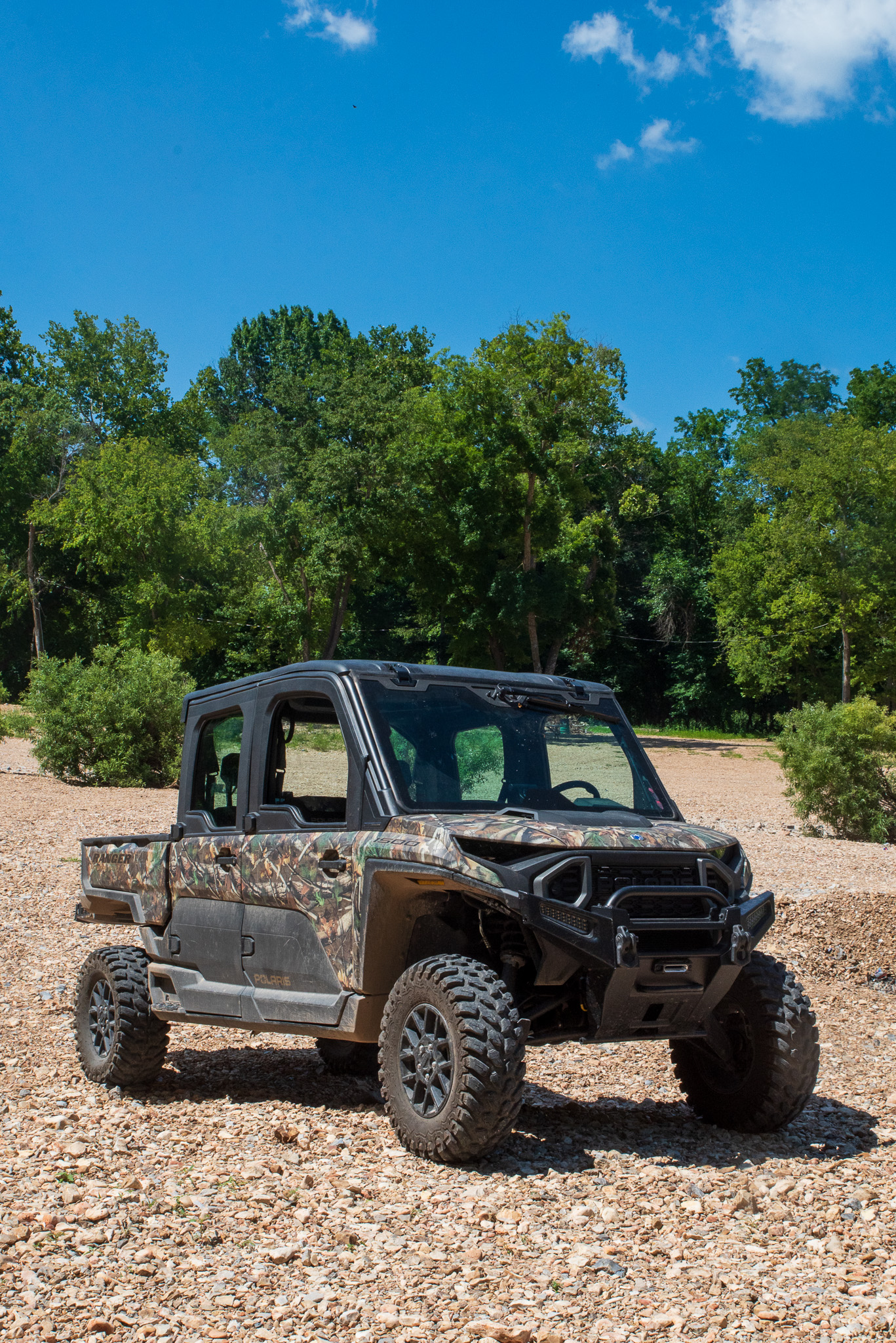
While the Ranger XD 1500 does a good job at almost everything, the NorthStar’s comfort is what sets it apart. The shifts between park, drive, and reverse are always easy—which you can’t take for granted in a UTV—while steering input is light, the suspension is well tuned, and power comes on gradually. Checking cows and fixing fence doesn’t get much cushier than this, and while it might not be highway-ready, you can traverse a lot of land in one of these even faster than you can in a full-size pickup.
I still really wish it had a dedicated low range. That would make it nearly unstoppable because it has the ground clearance, it has the traction, and heck, it has the engine power. I just couldn’t get it to climb some of the same obstacles that I’ve always taken other side-by-sides on.
Polaris Ranger XD 1500 Features, Options, and Competition
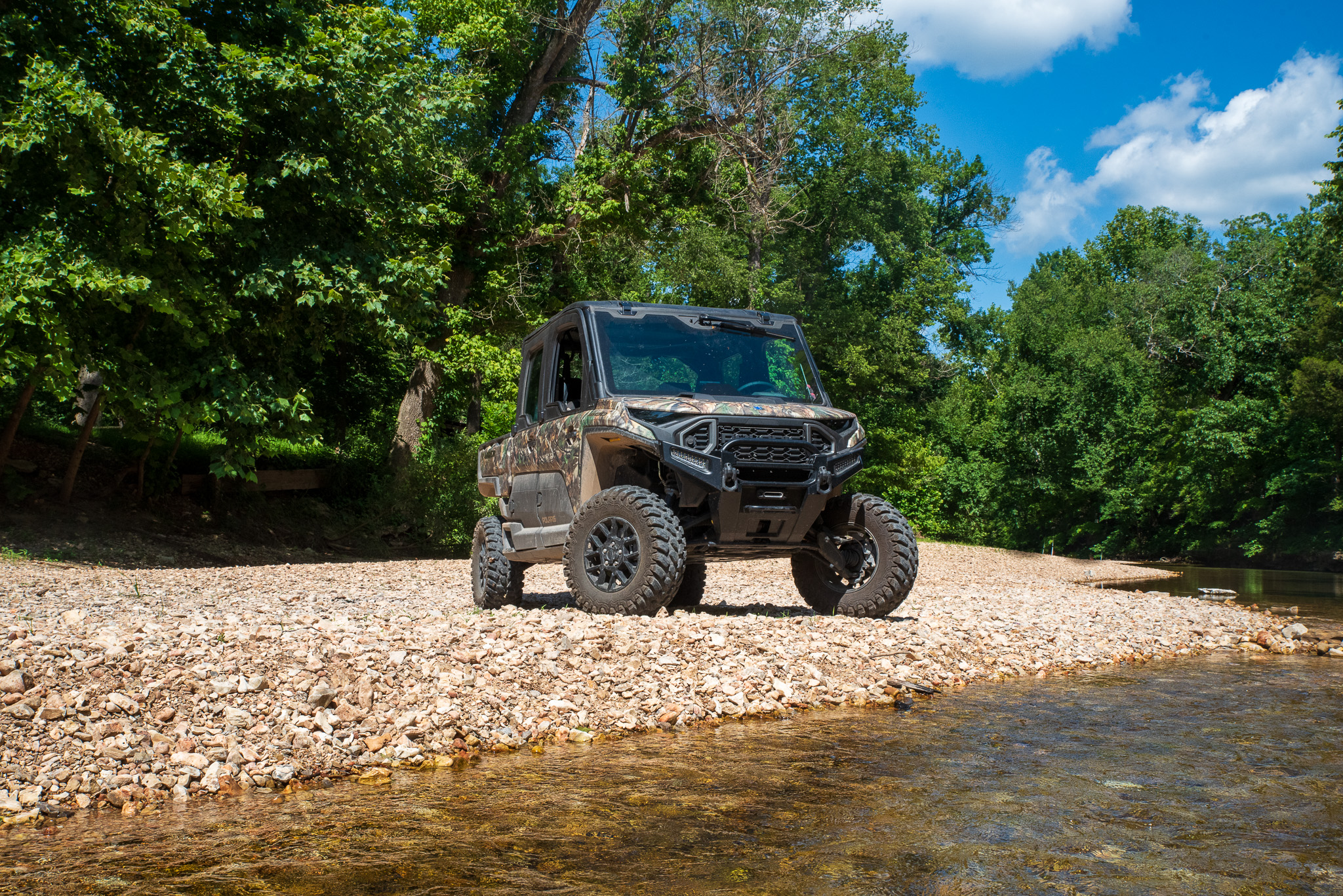
You can buy a new Ranger XD 1500 for $31,494 after destination fees if you only need three seats and mesh doors. Meanwhile, stepping up to the six-seater Premium model costs $34,394. Pricing takes a steep hike once you get into a climate-controlled NorthStar with a cab, which costs $41,994 for a two-door and $46,994 for a four-door. The most ludicrous of the bunch is the NorthStar Ultimate Edition that I tested, which adds the RideCommand infotainment with a 7-inch display, JBL audio, a flip-out windshield, heated seats, D-rings on the front bumper, and more blindingly bright LEDs. One of those will set you back $46,994 for a regular cab or $51,994 for a crew cab.
No other work UTV really plays in this space above 1,000cc of engine displacement except for the Mahindra Roxor. That packs an even larger 2.7-liter turbo diesel engine, which is down on horsepower at 55 ponies but up on torque with 144 lb-ft. Like the Ranger XD 1500, it maxes out at 3,500 pounds of towing capacity. It feels wrong to compare the two because they’re so much different in ethos, but a new all-weather Roxor stickers for roughly $32,000. Keep in mind, however, that it’s only available as a two-door.
Value and Verdict
There’s no denying that the Ranger XD 1500 is everything and a bag of chips. It works hard, it plays hard, and it makes basic utility side-by-sides feel like motorized wagons in comparison. However, I just can’t fathom spending $ 50,000 or more on one.
If you have all the money in the world and no concerns about frugality, then this is the rig for you. It’ll get the job done, whatever that job may be (within reason). More than any other UTV I’ve tested, though, it highlights the disparity between the Average Joe and the type of person who can throw new truck money at a buggy simply because it’s comfy, or cool, or what have you. Clearly, there’s a market for it; otherwise, Polaris wouldn’t make it. And that’s why it’s head and shoulders above the rest.
Got a tip or question for the author? Contact them directly: caleb@thedrive.com
Loading comments…
Comments couldn’t be loaded. Please refresh the page.