
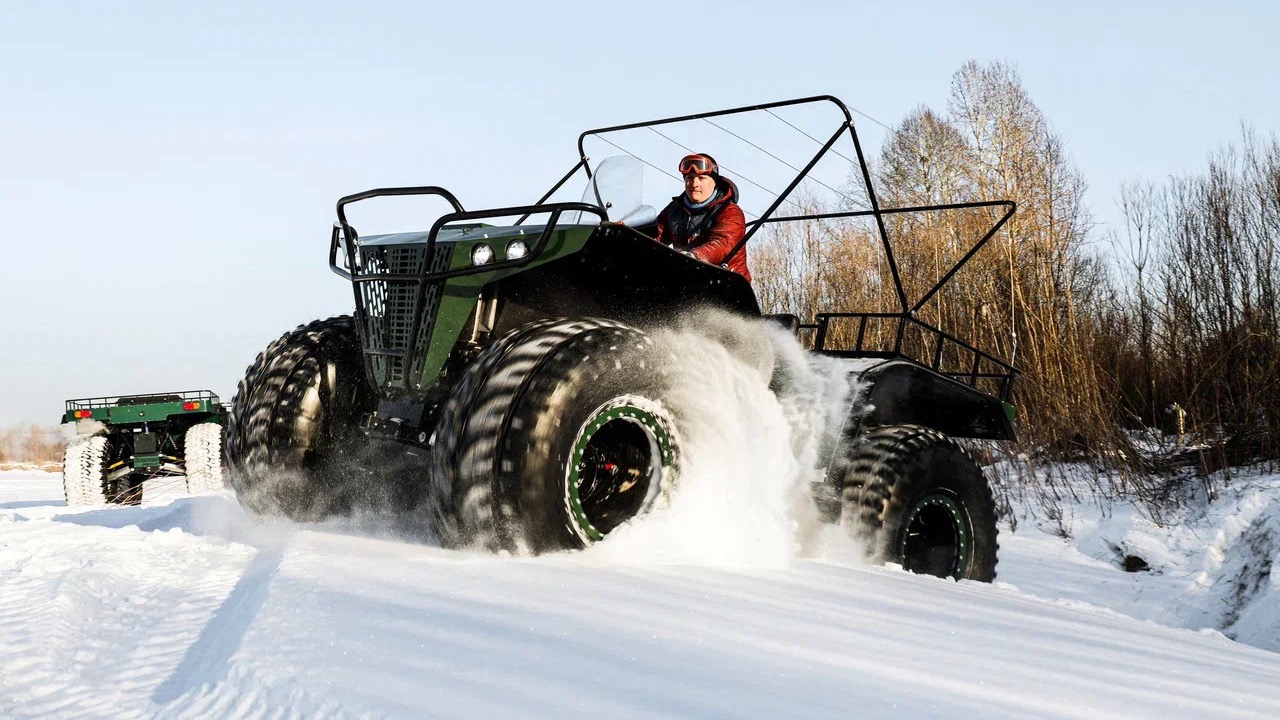
If you need to get across Siberia, a giant ATV is apparently the way to go. A couple of years ago we stumbled upon the Sokol, claimed to be the world’s largest ATV. But there’s another company called Siberian All-Terrain Vehicles giving the Sokol a run for its money.
The company offers several models priced from the equivalent of $22,216 (at current exchange rates), all with truck-size proportions but still steered with handlebars like conventional ATVs. They use a variety of Honda and Toyota-sourced engines, affording a towing capacity of up to 1,763 pounds, with Honda automatic transmissions and Mitsubishi Pajero differentials and steering gear in most cases. Tires up to 57 inches are also available.
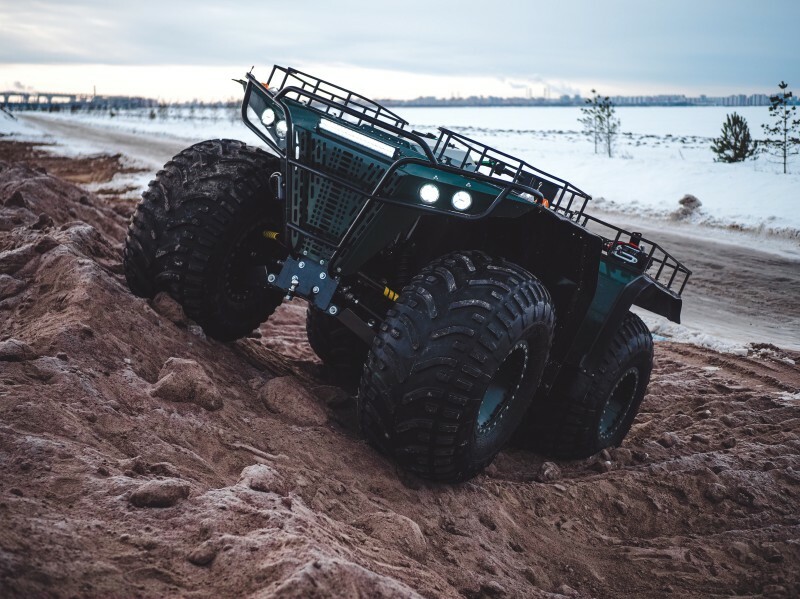
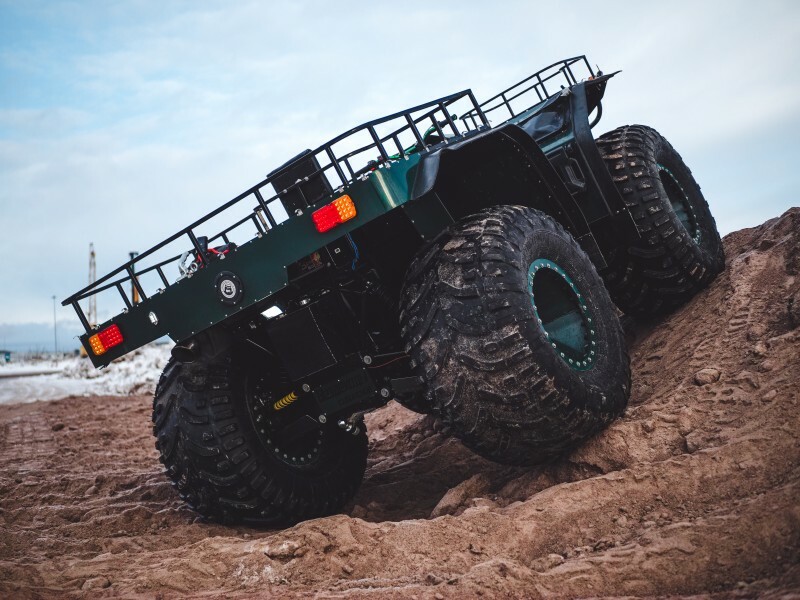
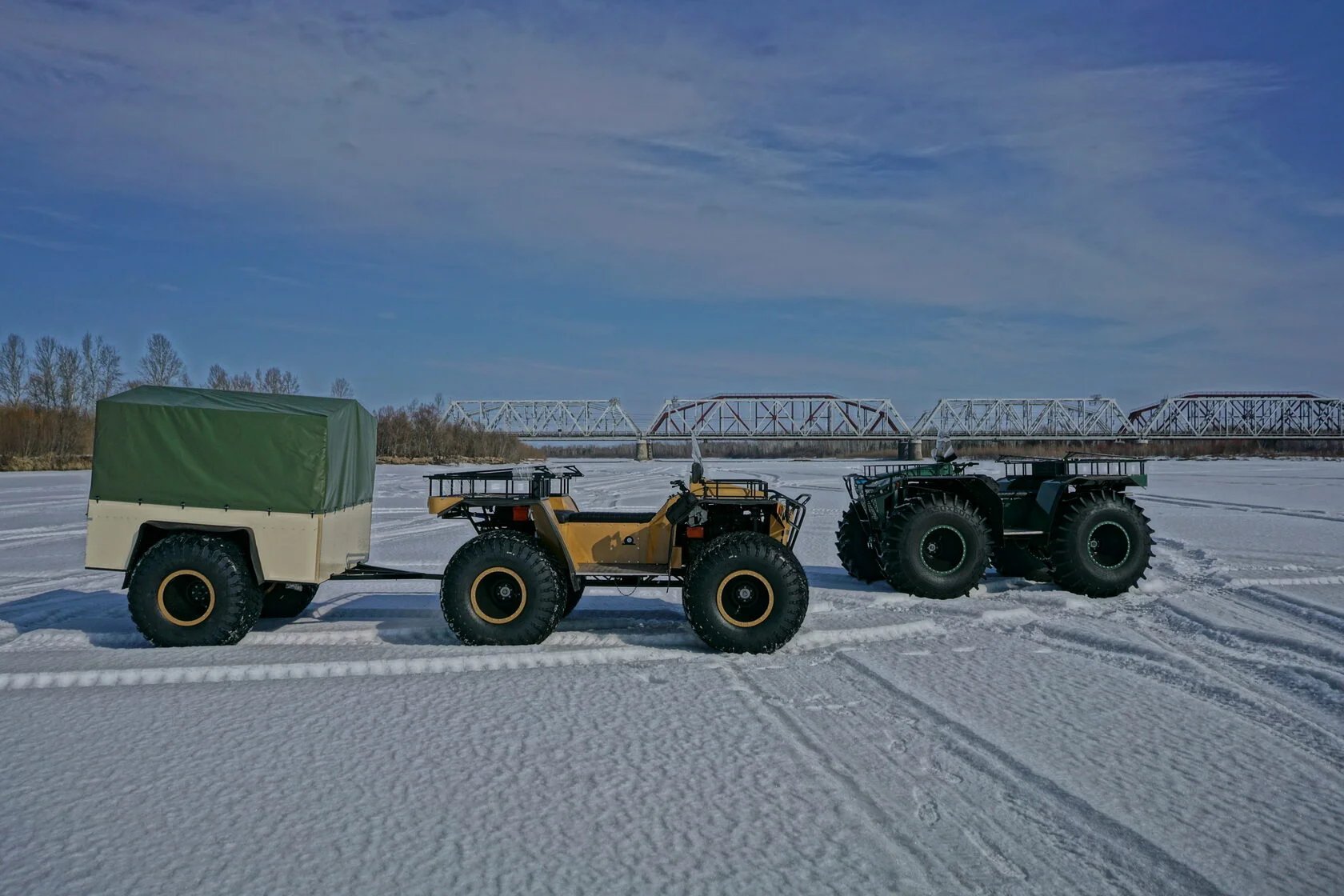
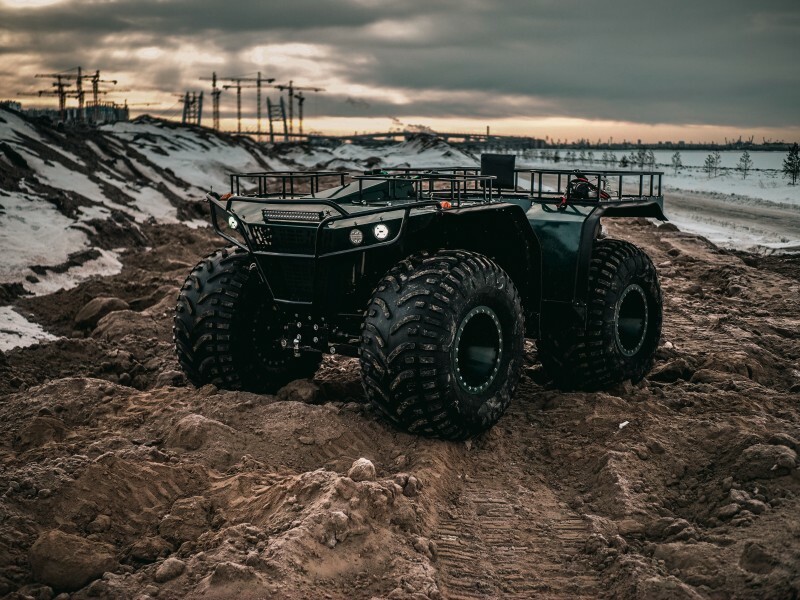
Starting at the equivalent of $40,448, the appropriately named Big Profi measures 165.3 inches long, 96.4 inches wide, and 76.7 inches tall. That’s about 51 inches longer than the Sokol, 17 inches wider and 9 inches taller than that roughly $17,000 vehicle. It weighs 3,306 pounds, which are motivated by a Honda K24A 2.4-liter inline-four making 200 horsepower and 168 pound-feet of torque. In the U.S., that engine would normally be found under the hood of an Accord.
The company fabricates the frames and other components of its ATVs, while the engines, transmissions, and driveline components are sourced from used vehicles. If you don’t want the most-enormous version, there’s also a Profi Mini that, at 145.2 inches long, is still enormous by ATV standards. Pickup and buggy versions are available as well.
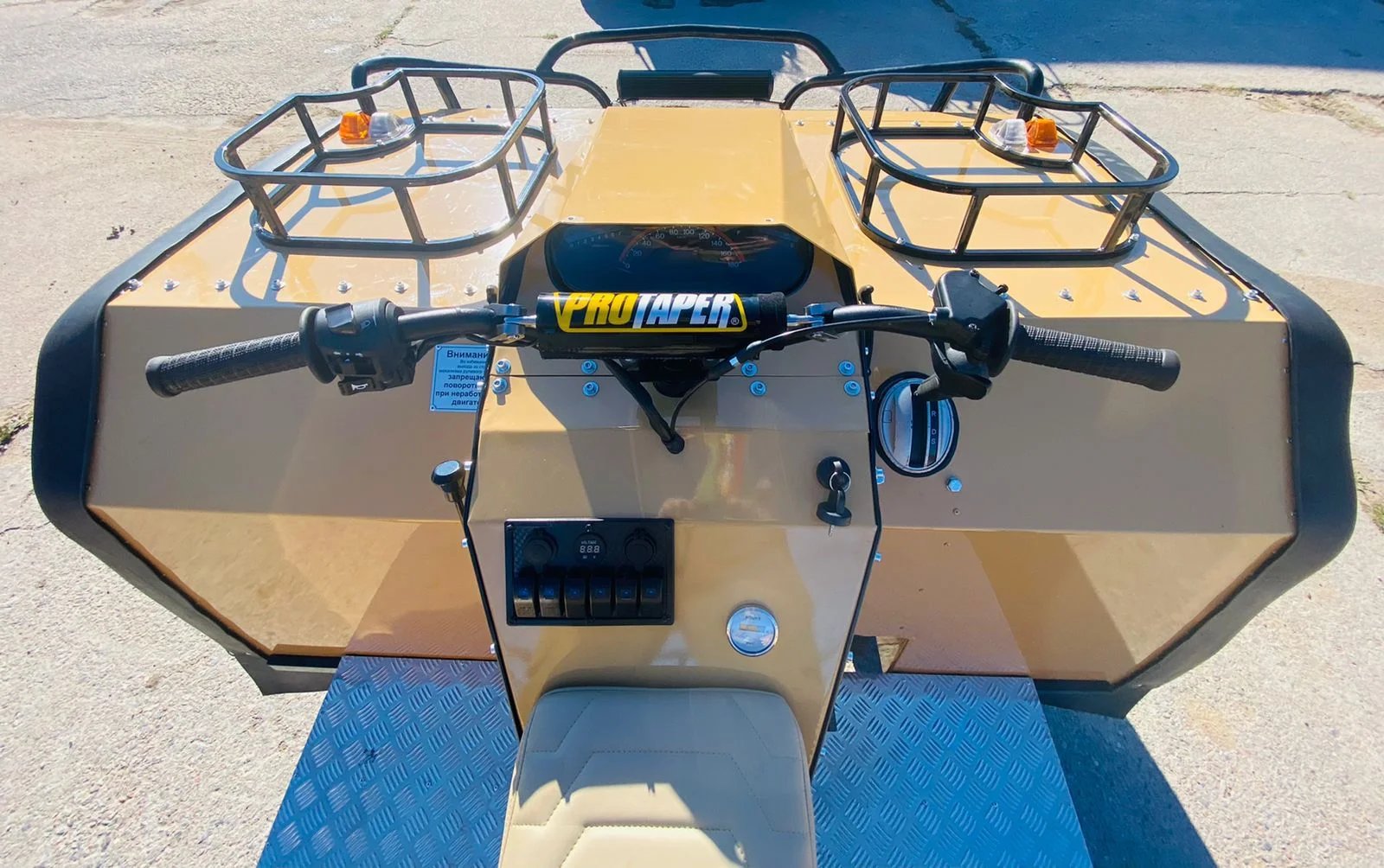
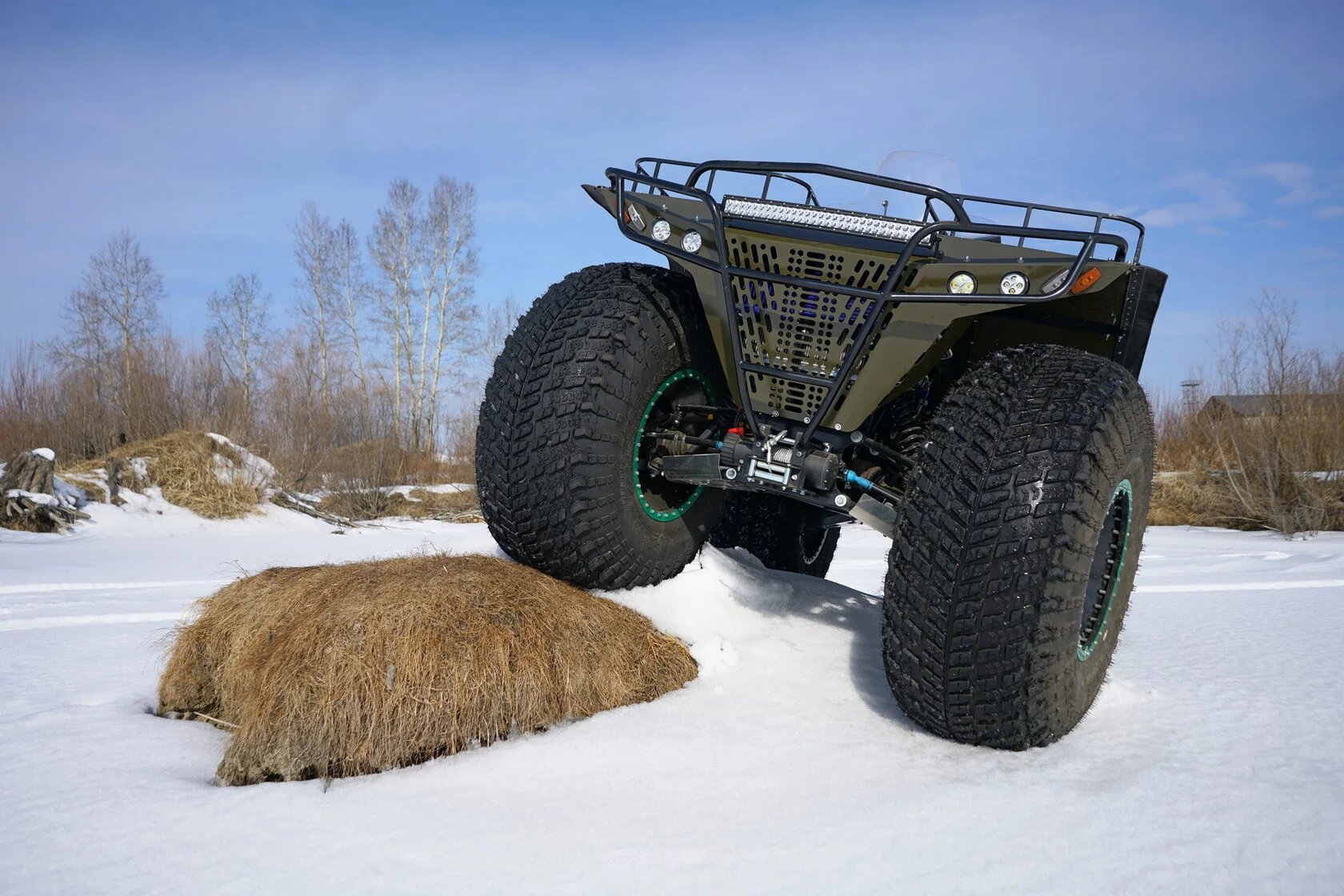
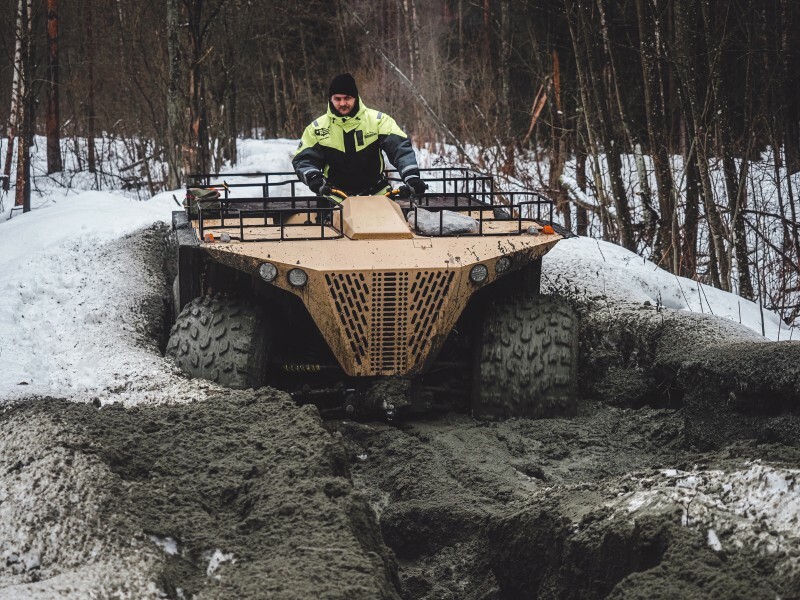
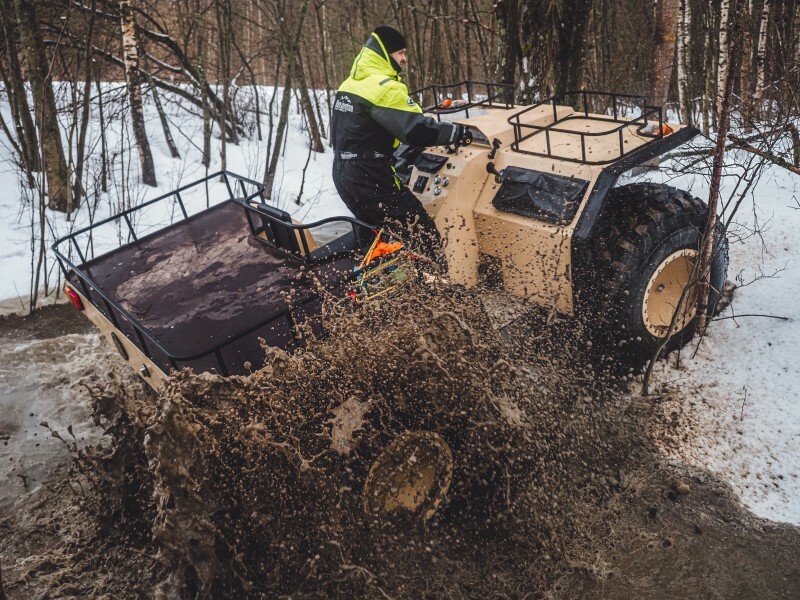
Supersized ATVs are a Russian specialty, In addition to the Sokol and Siberian All-Terrain Vehicles’ catalog, Phantom, Rosomaha, and Set offer their own versions. They certainly are scaled to the vastness of the Russian interior, which requires something as rugged as an ATV to cross. And if you’re wondering why Russians don’t simply make the switch to a truck, it’s worth remembering that they don’t have many appealing choices.
Russia’s auto industry is being strangled by sanctions owing to the country’s invasion of Ukraine, which also affect imports. The situation is so desperate that the Cold War-vintage Lada Niva went back into production in 2022.
Loading comments…
Comments couldn’t be loaded. Please refresh the page.