
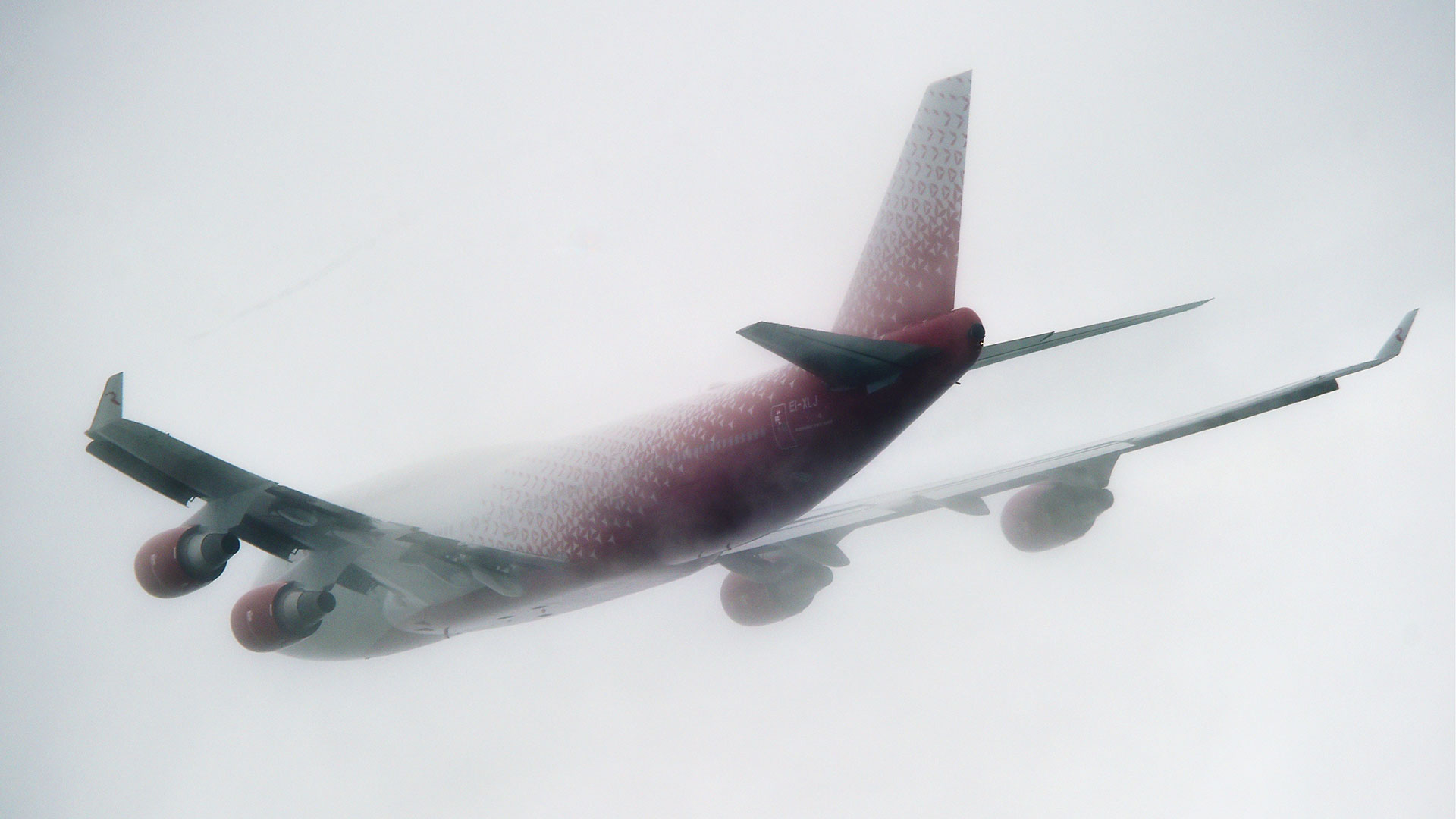
The world’s great beauties are unmistakable in profile: the Tower of Pisa’s famous tilt, Audrey Hepburn’s hint-of-a-ski-jump nose, the Boeing 747’s elegant hump. Still, despite being the aeronautic industry’s most-recognizable shape, the company has stated that, with orders reduced to a trick, Boeing may end production of the 747 in the very near future.
The company has delivered more 1,500 747s since 1970, when the model was introduced. In 2016, however, Boeing will build just six examples of the elegant jumbo jet. While that’s up from 2010’s zero orders (brought about due to the Great Recession), six planes per year won’t fly when it comes to justifying the continued production of such a massive machine.
Rumors of the four-engined, jumbo jet’s demise come from a regulatory filing Boeing made with the SEC, in which the company noted, “If we are unable to obtain sufficient orders…it is reasonably possible that we could decide to end production of the 747.” According to Boeing’s own analysis, demand for large commercial passenger and freight aircraft has been low. The 747 is a wide-body aircraft equipped with four engines: purchasing trends have veered away from such craft, with many airlines choosing to run an increasing number of smaller, narrow-body planes like the 737 or Airbus A320, or use more efficient, twin-engined jumbo jets like the 787. That shift is responsible, in part, for Boeing’s recent performance; shares in the company are down 7 percent this year, and the company lost $234 million last quarter.
But while the 747’s future looks dim, it has at least one more starring role to play: The U.S. Air Force has selected the 747-8 as the basis for the next Air Force One. Between the expected 30-year lifespan of the presidential aircraft and the hundreds of humped Boeings still plying the friendly skies for commercial airlines and cargo companies alike, the 747 will remain a familiar sight for decades to come.
Loading comments…
Comments couldn’t be loaded. Please refresh the page.