
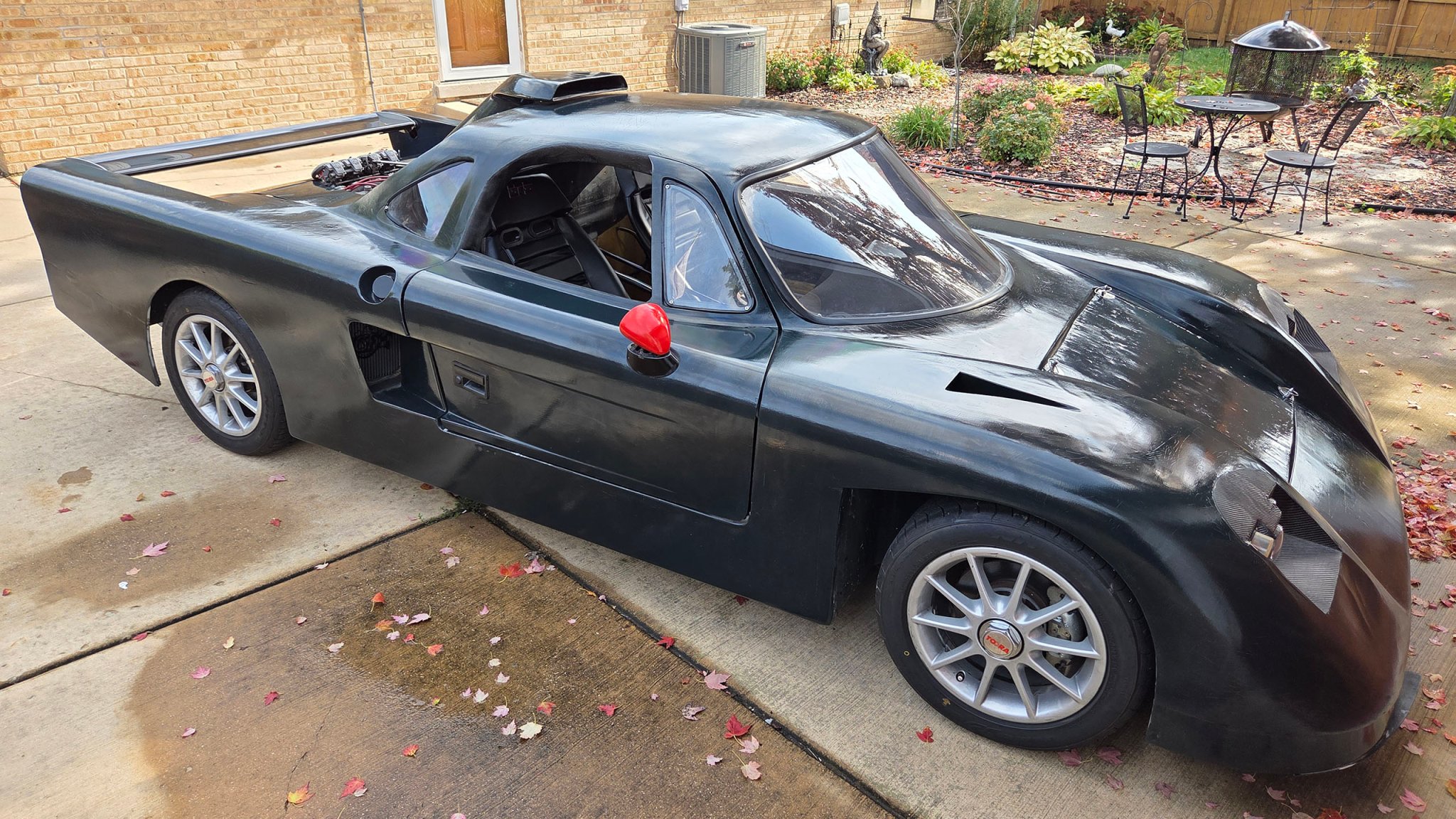
“My dad was a General Motors engineer for 13 years, and he made me swear that I would never become an engineer. ‘No, you’re gonna die poor, don’t do that.’ Which is not true—he just abhorred his own profession.” This was a small problem for André Molina. Growing up in Brazil before emigrating to the United States in 2005, André didn’t just want to drive a sports car—he wanted to create his own.
Eventually, an obscure, little-known American mid-engine coupe from 30 years ago would give Molina that opportunity and inspire him to empower other enthusiasts to do the same.
“In the ’90s, in Brazil, there was a very rich indigenous sports car industry,” he told me over the phone. “So you had those guys that were building cars out of fiberglass and Beetle platforms, Golf platforms, whatever.
“Growing up, going through middle school and then high school, you naively think that’s really how people just run these companies, they’re pumping out cars out of their own backyard garages. And it’s not like a company’s involved, and you don’t have a design team or anything like that. And that is all a one-person effort.”
Moving to the U.S. “opened the doors to a world of cars” that didn’t exist in Brazil, André told me, because the aftermarket was so much stronger. “Cars are expensive [in Brazil]. Labor is cheap, but cars are expensive.” Once he had access to projects, he got to work. André said he “didn’t have the talents,” or “the tools,” or “the ability,” but that clearly didn’t stop him.
First came a two-door Chrysler Sebring, then the obligatory Mazda Miata, “like everyone else at one point or another has.” Then he worked as a mechanic and crew chief for an SCCA race team for a decade. All valuable experiences, but none really began to scratch that lifelong itch of building something from the ground up until he plucked a 1986 Alfa Spider out of a junkyard, right around the time his dad, the ex-GM engineer, picked up a new Giulia.
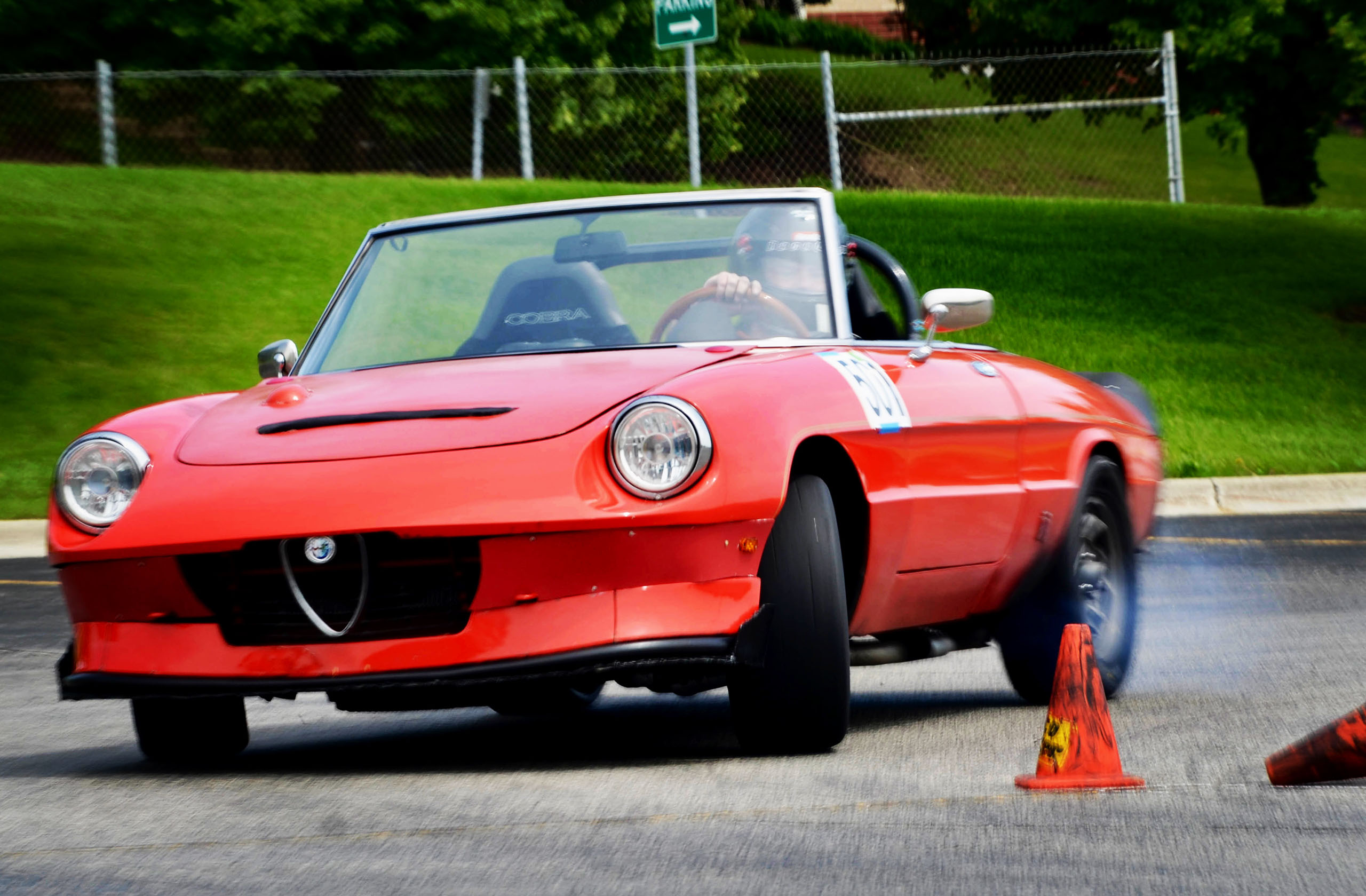
“I went crazy on the thing,” André told me. “I just went and put big slicks on it, slammed it, threw everything I knew about building cars from the SCCA time into it. Suspension was done up. Engine had big carbs on it—fell in love with the Alfa Romeo engine.” André transformed that little Spider into a veritable autocross monster, even designing an aero solution for the trunk with the help of ex-Mercedes F1 aerodynamicist JKF Consulting.
André’s dad, by now well aware that there was no rescuing his son from the rabbit hole of car building, steered him in a slightly different direction. It didn’t seem very helpful at the time, but it proved prophetic in the end.
“I remember him telling me, ‘Look, if you keep trying to build that thing into something that it isn’t, you’re going to destroy it, and you’re not going to be able to sell it. If you’re going to destroy it, sell it and buy something else. Build a kit car. Build something else. You’re going to ruin it.'”
The Start
André’s dad passed away a year later, in 2020. The Spider progressively became more extreme, he said, since his dad wasn’t there to check his impulses. And then, about two years later, he saw the Facebook Marketplace ad. He still has a screenshot of it, and he read it to me:
“Never-built Consulier GTP rolling chassis, late version with the Gen 2 dash. Yes, I have eyes, and I can see it is missing some body panels, and it has a few modifications. So let me describe what it does have: Front and rear steel suspension subframes; suspension spindles; original wheels and tires; rolls and steers; both doors with latches,” André read, before noting something about the last detail. “It was great that they listed that, because the doors were not attached to the car—they were thrown inside of the car.”
The steering column was present, but no windows, front hood, or engine bay cover—let alone an engine. “This has never been a completed car, so a lot of the body openings have not been cut up yet,” the listing warned. The asking price was $7,500; the seller ultimately let André take it for $3,000 on the condition that he pick it up that weekend, which he did.

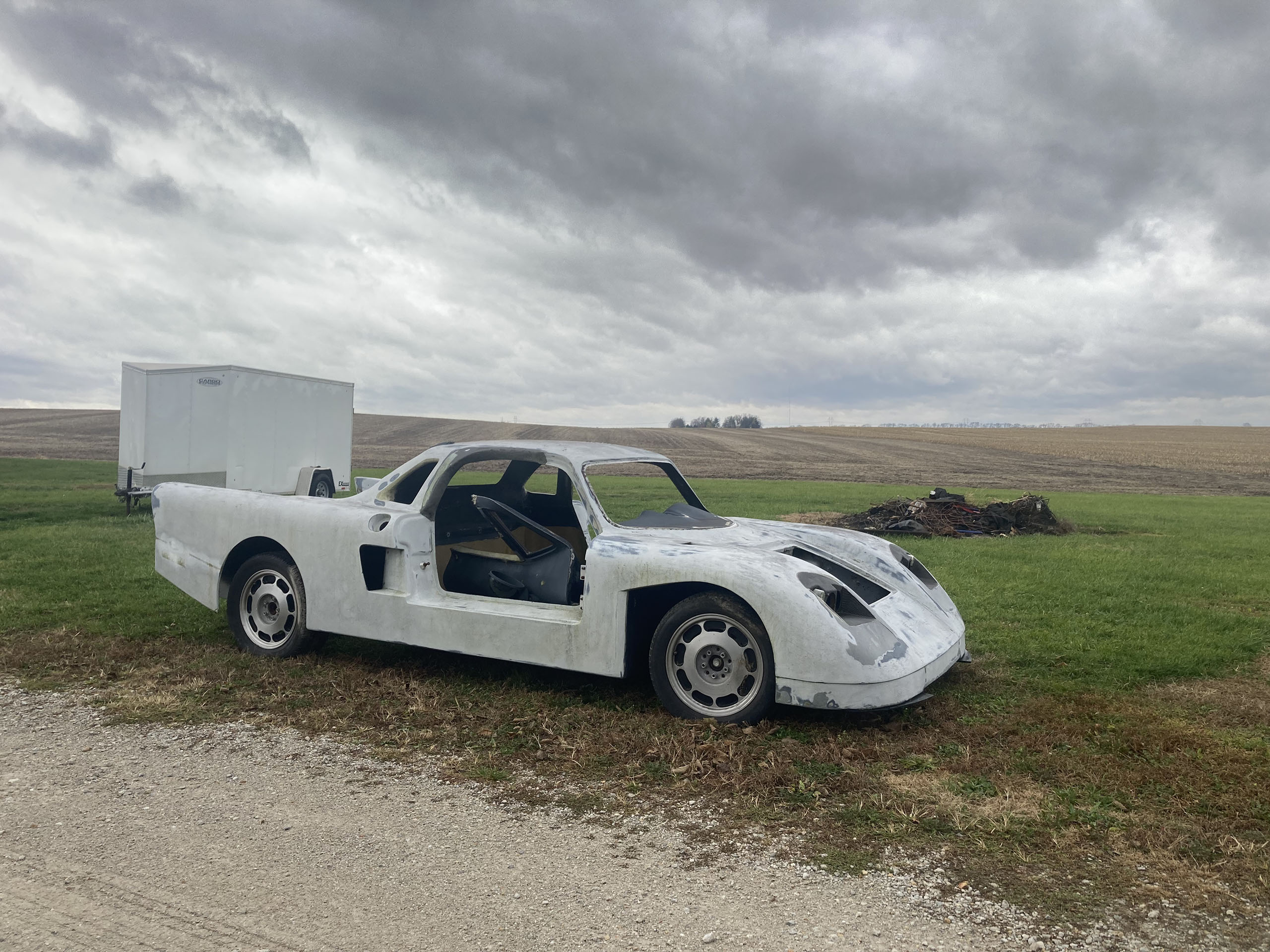
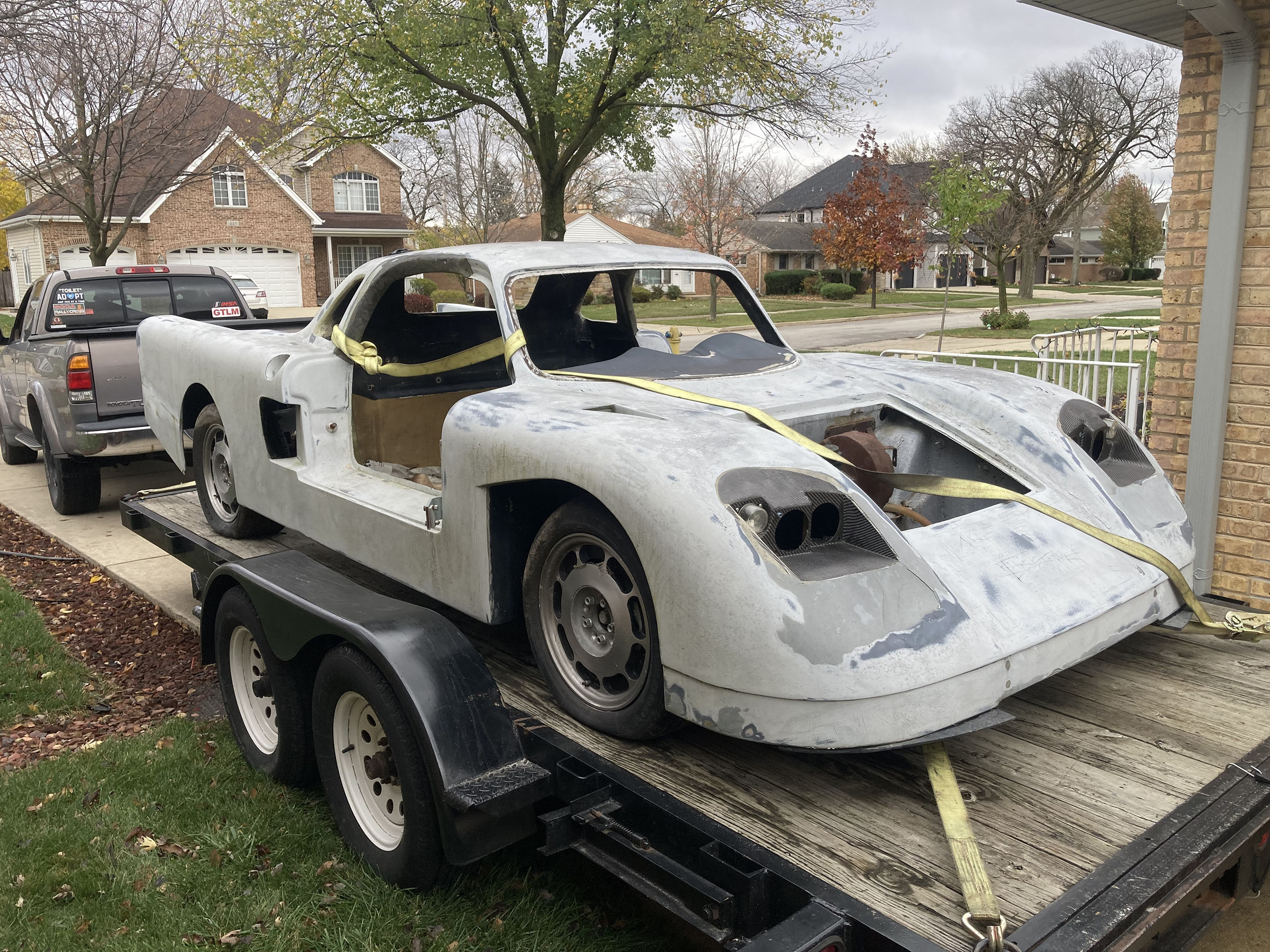
The seller told André that he purchased the monocoque from an ex-Mosler exec, and that it was among the last of its kind that the Florida-based outfit ever made, likely dating back to the mid-’90s. It was sold by its original owner with a twin-turbo Nissan VQ engine; the man who sold it to André yanked that motor out, planning to replace it with an Audi V6, but he never made headway on that, so the shell sat outside baking in the sun and freezing in the snow for six years.
“It was rough,” André said. “A lot of work needed to be done. It was in pure, raw primer. The doors were detached and inside the car. It was rolling, but had no powertrain. It needed work everywhere. And I could tell from the cracked finish outside that the exterior was too far gone to get it perfect. And knowing that it’s a composite car, it’s not like metal where you can sand down to the metal and know that it’s going to be more or less flat.”
But don’t let those red flags give you the wrong impression of André’s reaction upon seeing it in the flesh for the first time.
“I drive to the guy’s farm, and the car is there sitting on the field,” he said. “I was like, ‘Oh my god, this thing is so cool.’ Yeah, there’s a lot of work to do, but there’s so much potential. This is the canvas that I need to build something that is really as close as possible to building something new.”
The Build
André spent the first few weeks sanding the entire body down. He got in touch with Johnny Spiva, the owner of the “Barbie Car,” a specific, famous Consulier GTP with a wild history of its own. “As the owner of a Consulier monocoque, you get to join the exclusive club of the WhatsApp group with all the other known Consulier owners,” André laughed.
Everyone in that group is just doing what they can to preserve and, in many respects, uncover the nebulous history of this Chrysler K-powered lightweight sports car. Wikipedia will tell you that it’s estimated that Consulier Industries—later Mosler—built somewhere between 60 and 100 GTPs, which is a pretty wide range. However, André and his tight-knit owners club believe that when you factor in the potential that multiple VINs were assigned to individual cars, the true number is likely closer to 30.
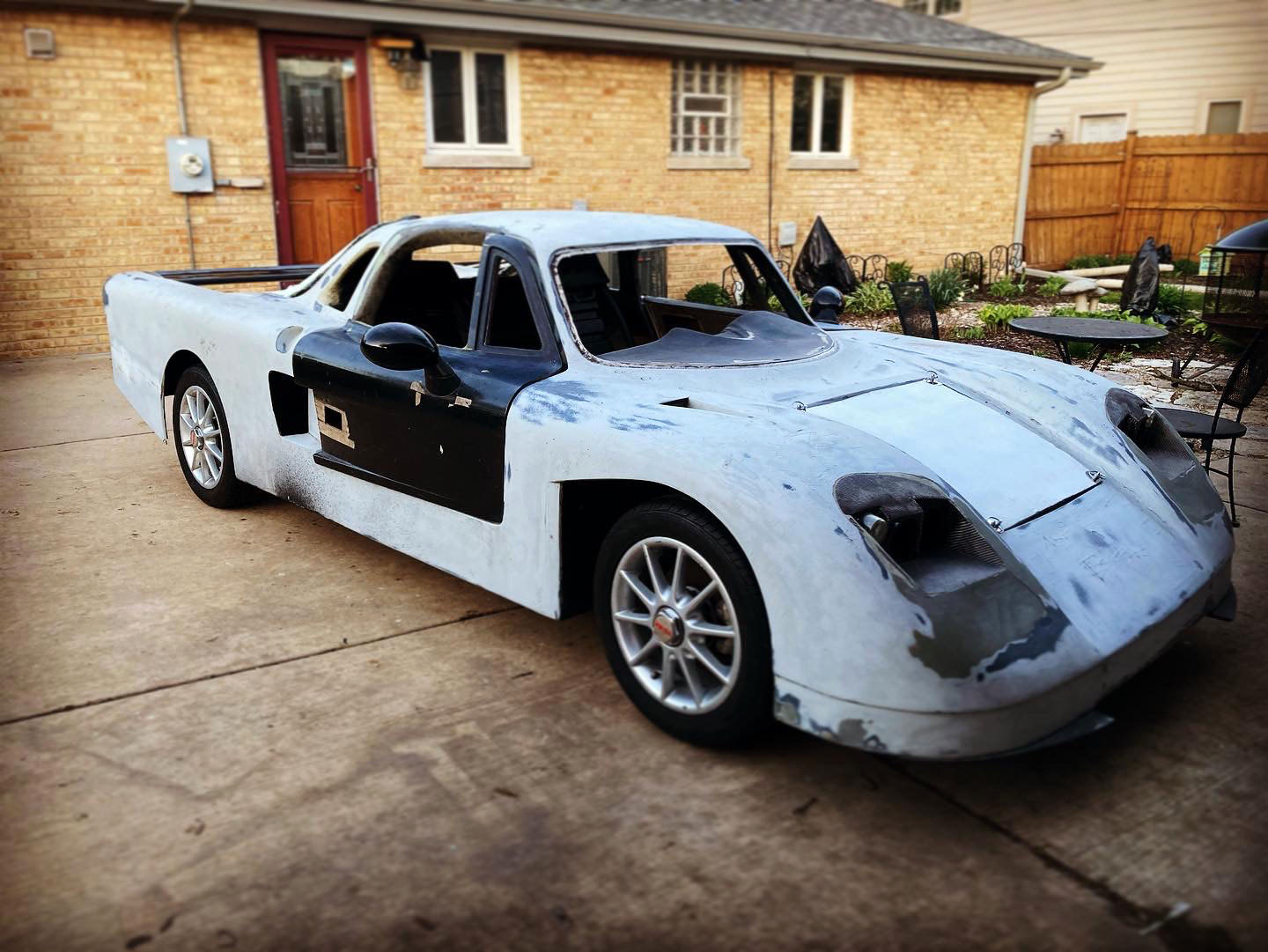
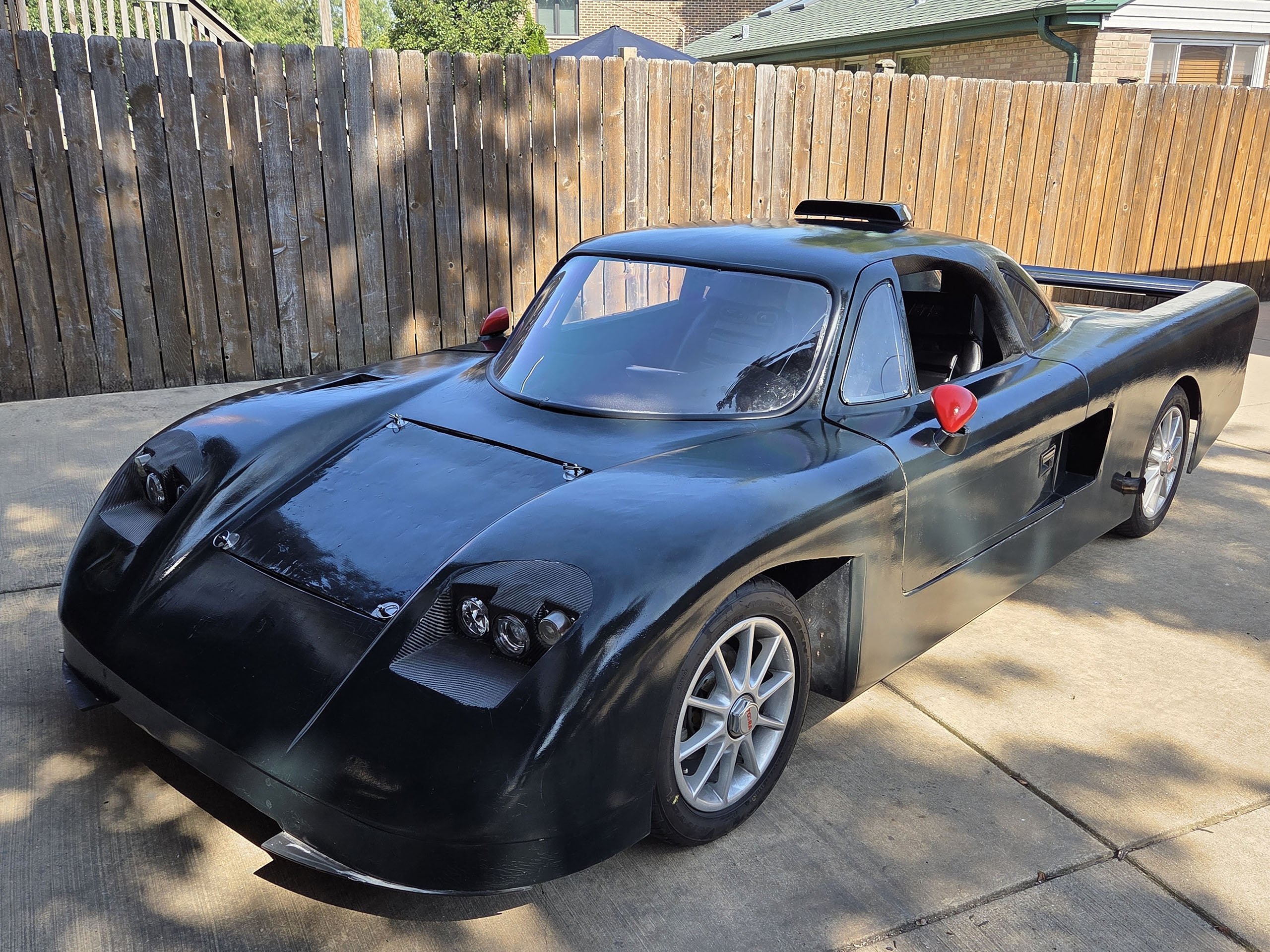
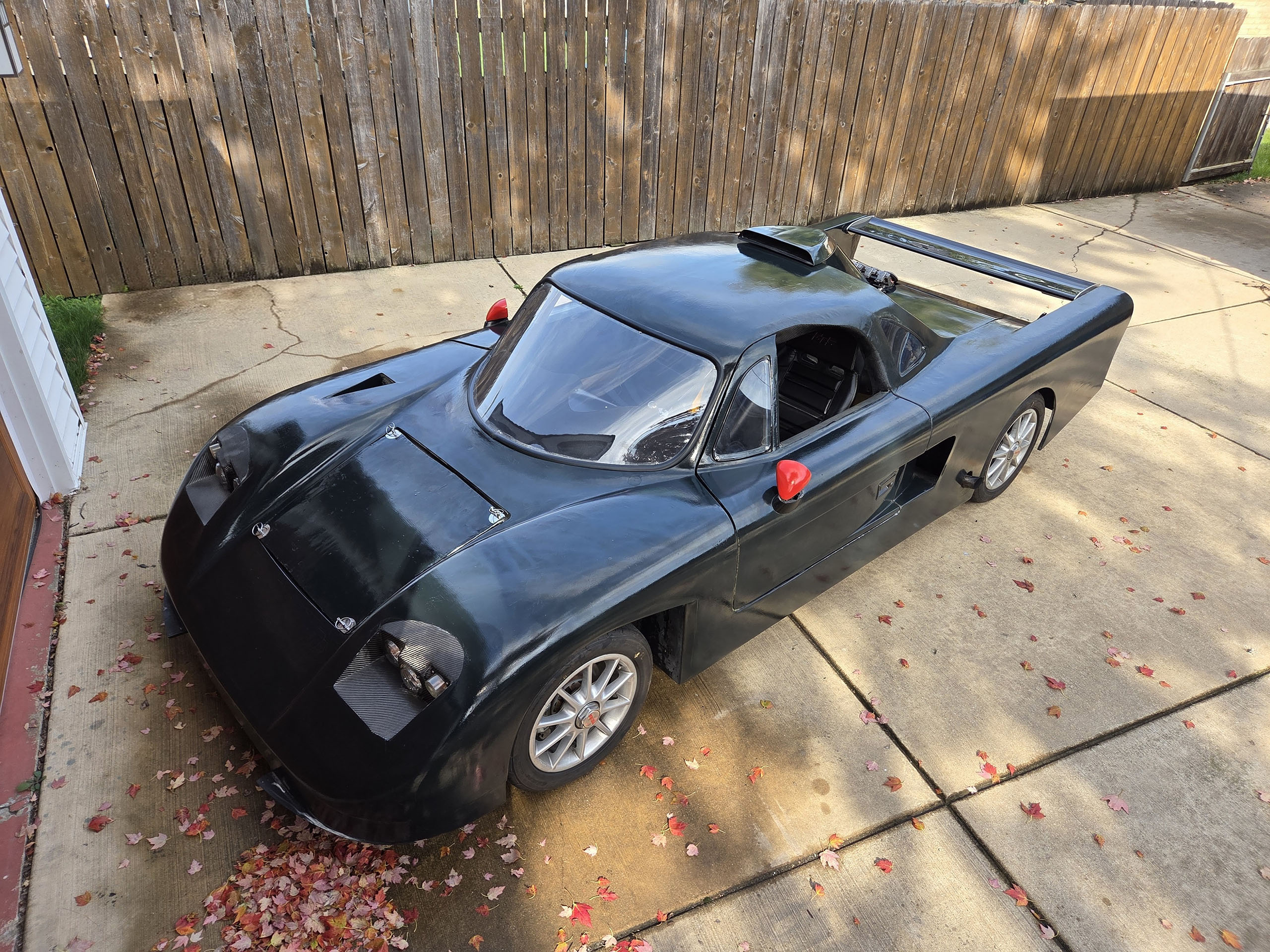
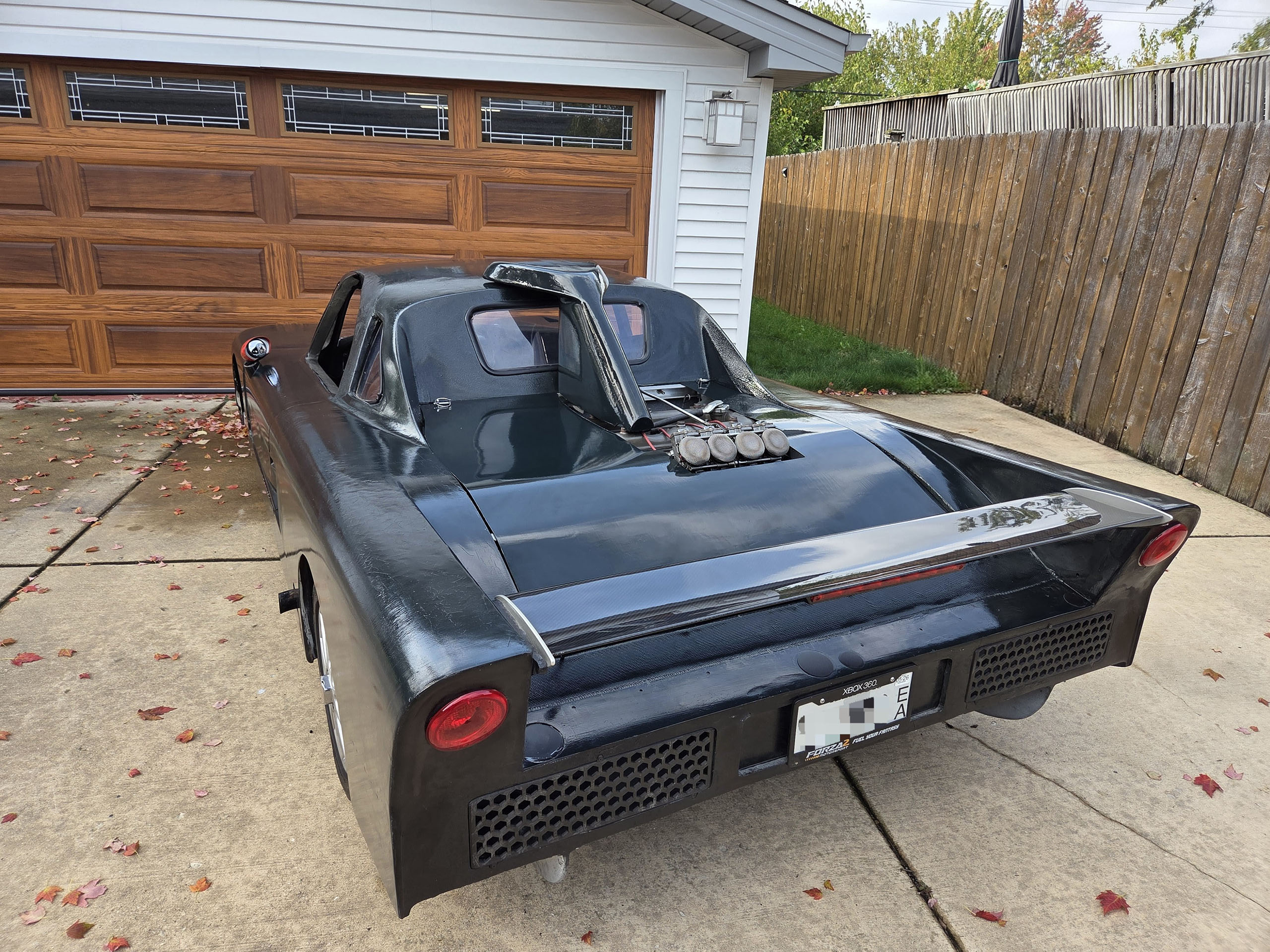
The community was, unfortunately and unsurprisingly, little help in obtaining rare parts, so André had to get creative. He designed new, custom hatches for the front and rear, incorporating a roof scoop into the engine cover. And now we get to the reason why André reached out to me, of all people, to tell this story.
“That’s when I started pulling inspiration from Ridge Racer—specifically Ridge Racer 2 on the PSP,” he said. The car was modeled after the Crinale, or “Devil Car,” from Namco’s arcade racing series. In its earliest incarnation, the Crinale kind of resembled a Group C prototype, like a short-tail Porsche 962. It evolved over the franchise’s lifespan, but the Consulier is certainly a decent real-life, streetable analog for it, despite the game version’s quad-turbo, six-liter V12 being a challenge to replicate. Even if it wasn’t, it would assuredly rip the car’s fiberglass-and-foam body to pieces.


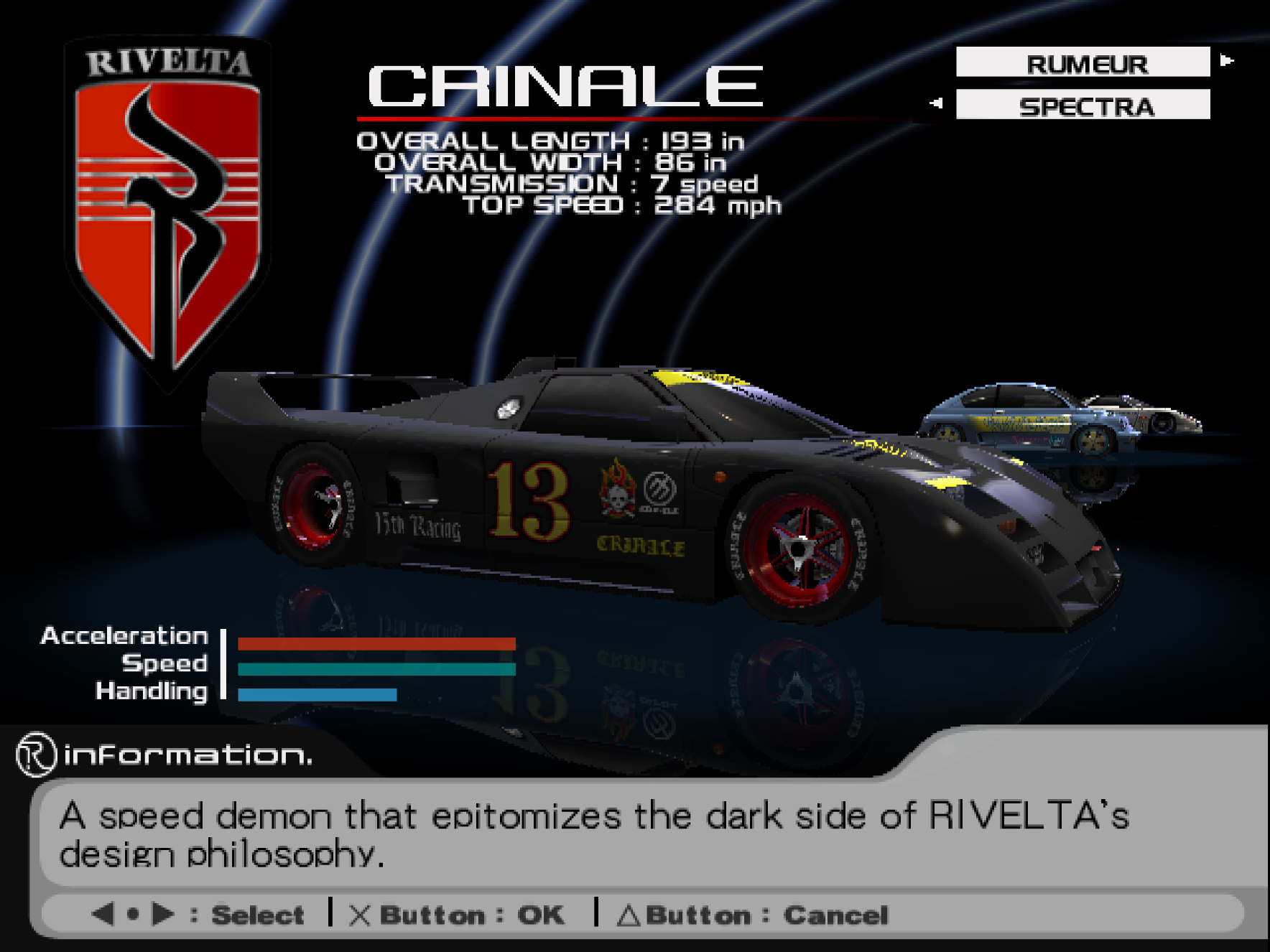
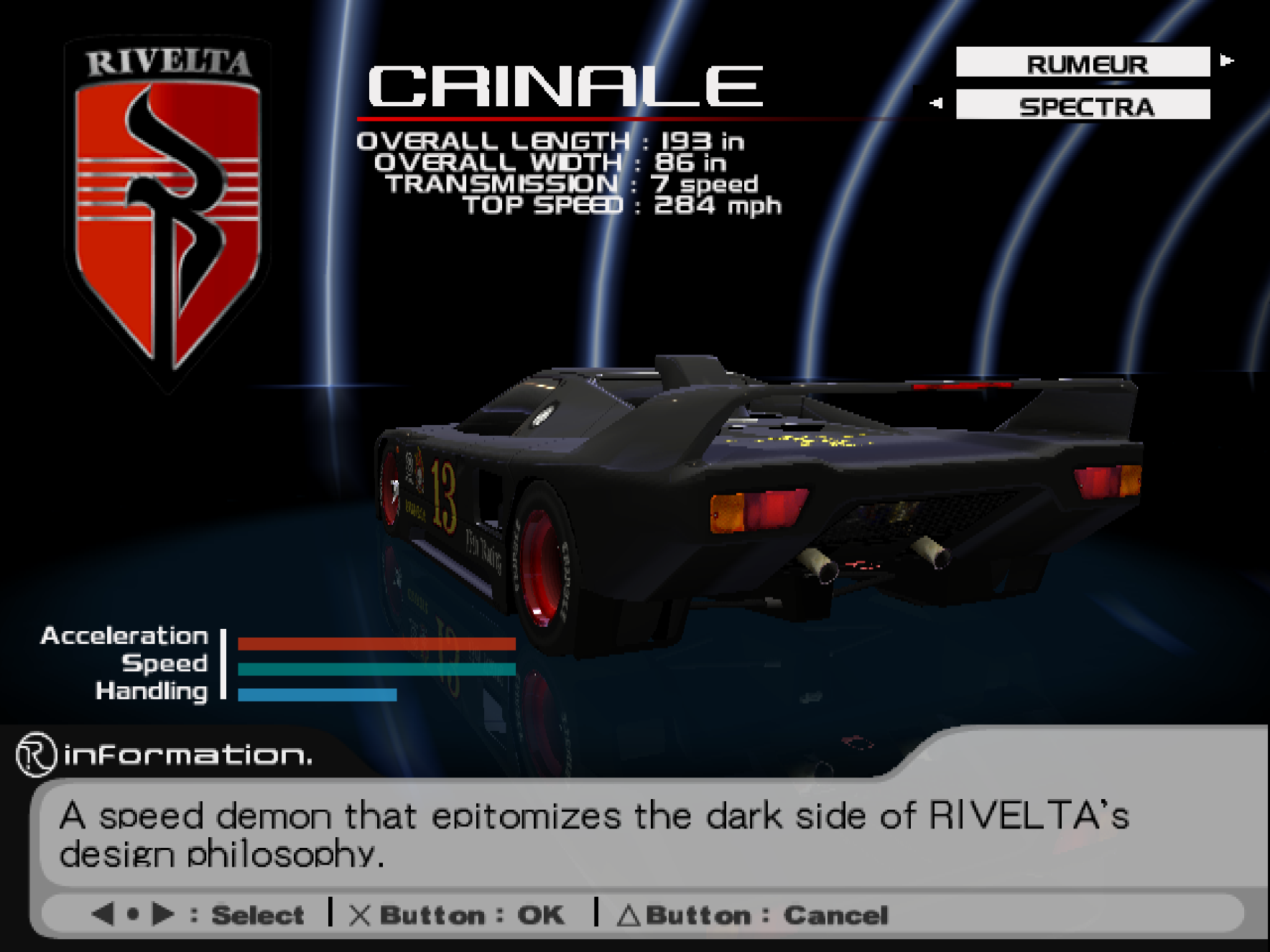
“At first, it had an enclosed decklid with a Lexan window, kind of like a Ferrari F40, so you could see the engine through it,” André said. “But I ran into problems with that creating kind of a greenhouse effect, with the heat melting the polyester resin.” All the composite work he’d done on his old, cut-up Spider was really coming into play here—along with one of its engines, which he previously relegated to coffee-table-stand status. It was fully rebuilt for duty in the Consulier and mated to a five-speed manual out of an Alfa 164.
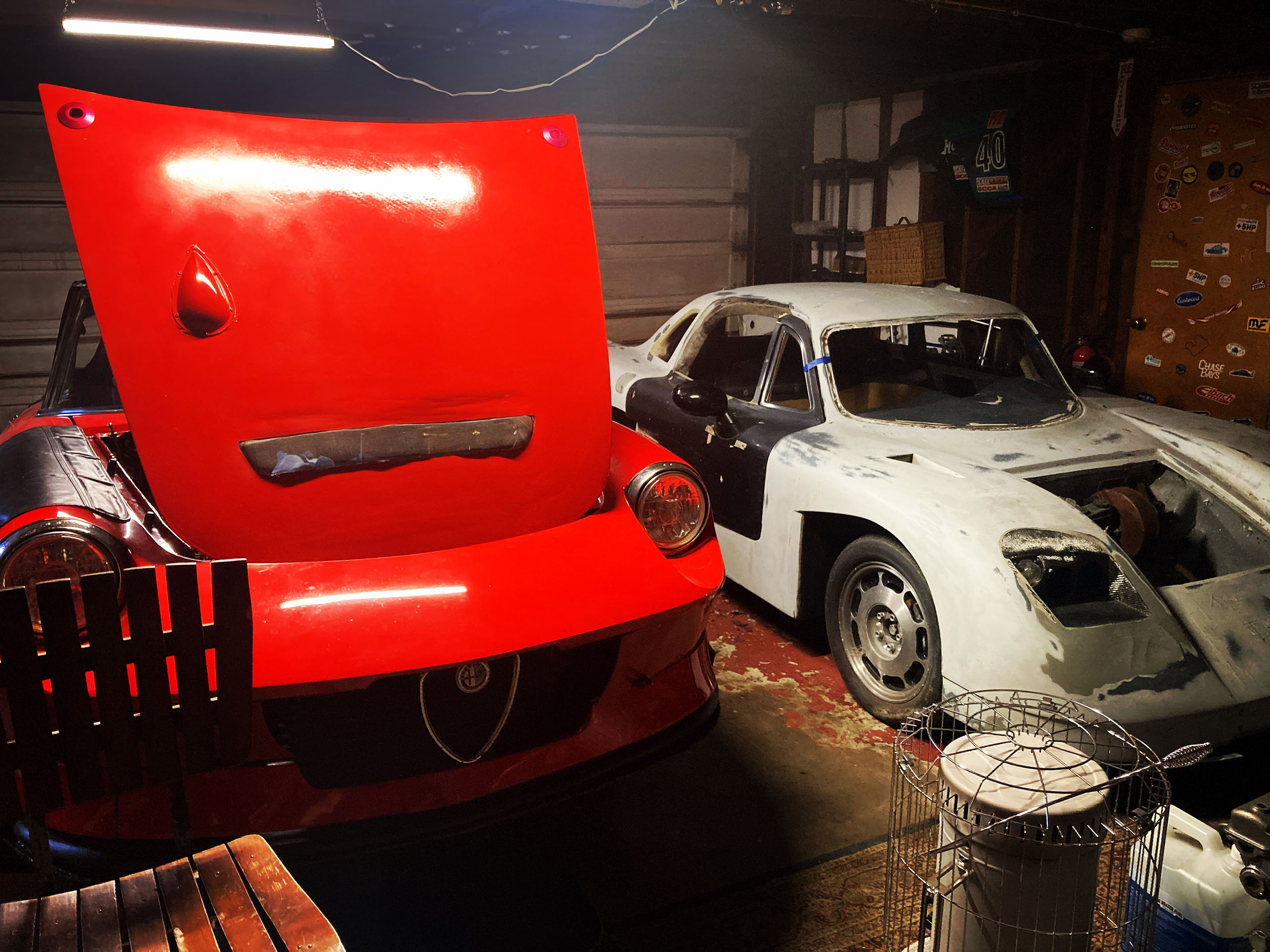
“The engine was turned,” André explained. “It’s like any other front-to-rear engine conversion if you’re using a transversal engine, right? So, I had to flip the shifter mechanism around. And then I ran a 164 reaction rod to the inside of the cabin and mounted it on the U-joint. That made the shifting mechanism really sloppy, and for me to actually get some shifter feeling back, I had no choice but to put shift gates in.”
The inner driveshaft also came from a 164, while the outer one was lifted from a Chrysler Daytona. The radiator is a CSF part intended for drag-racing Civics, because the size was “just right.” The wheels are a center-lock set from a company that no longer exists, which André found in South Africa, sold with an uncertain bolt pattern. And the paint, which looks black in pictures but is really dark green, is actually meant to be used on boats, because automotive paint and wraps refused to stick to the body. Makes sense—boats are made of fiberglass and foam, too.
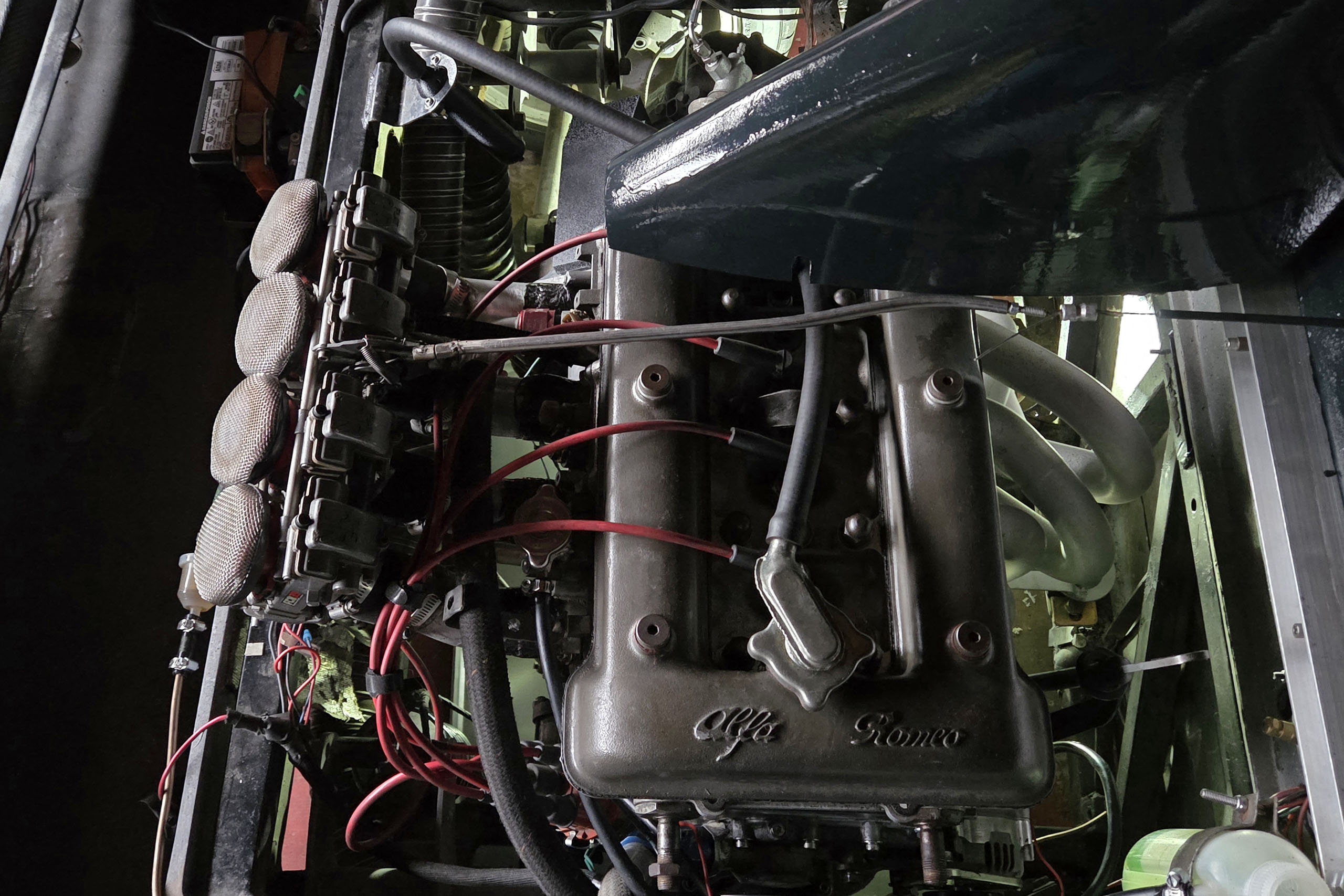
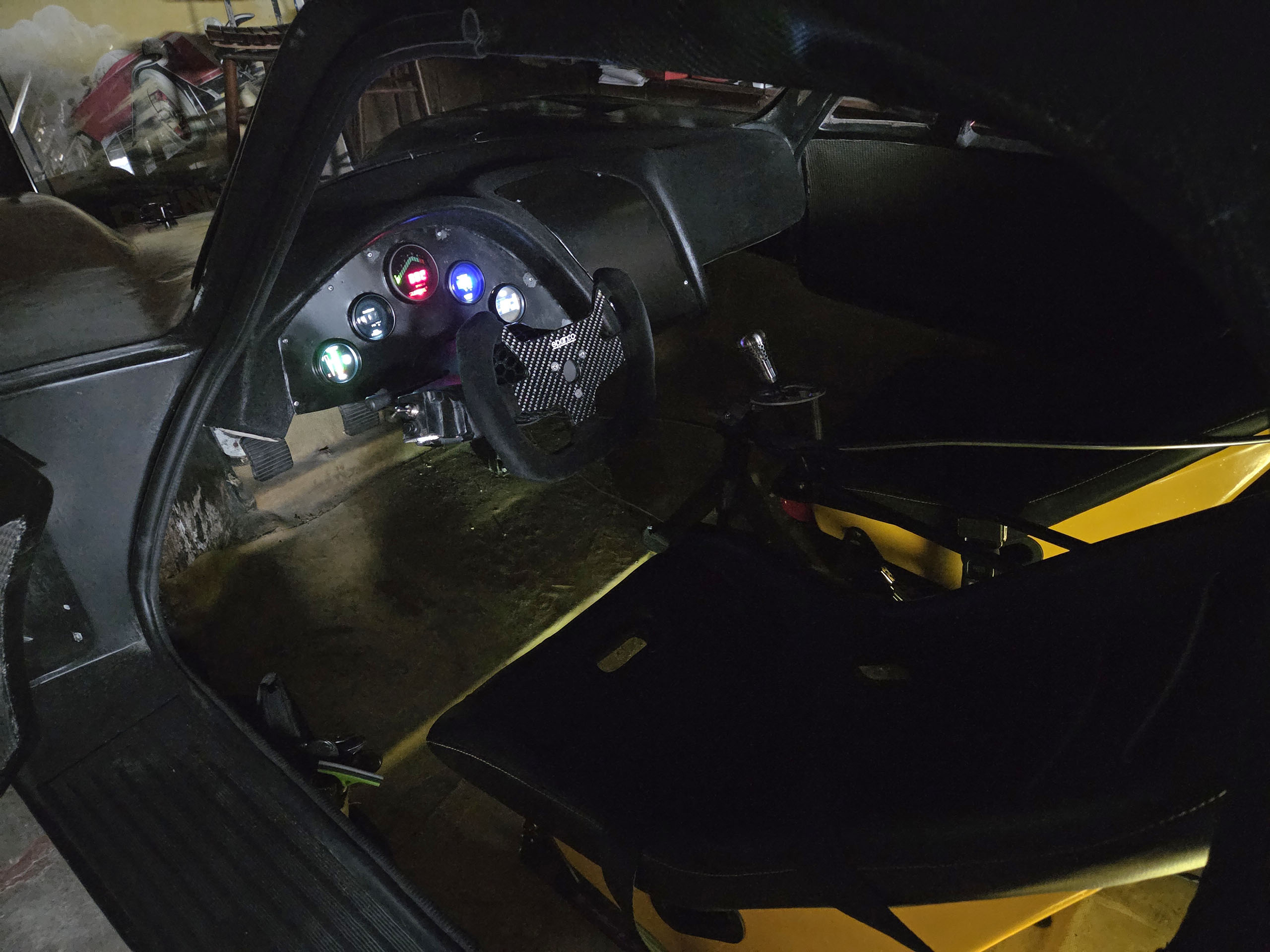

This Consulier—nay, Crinale—is truly a perfect mess of a vehicle. There’s a story behind each component. Everything’s been reappropriated from somewhere else, but it all fits together exactly right to create a truly one-of-a-kind sports car optimized for lightness, which was the builder’s childhood dream.
The GTP was already a featherweight, of course, but André’s build weighs in at 1,699 pounds—roughly 500 pounds less than the figure Mosler quoted back in the day. His conservative estimate is that the Alfa motor is producing somewhere between 170 and 180 horsepower at the crank, which coincidentally is about what actual Consuliers made from their turbocharged Chrysler 2.2-liter four-cylinders, except this one’s naturally aspirated.
The Community
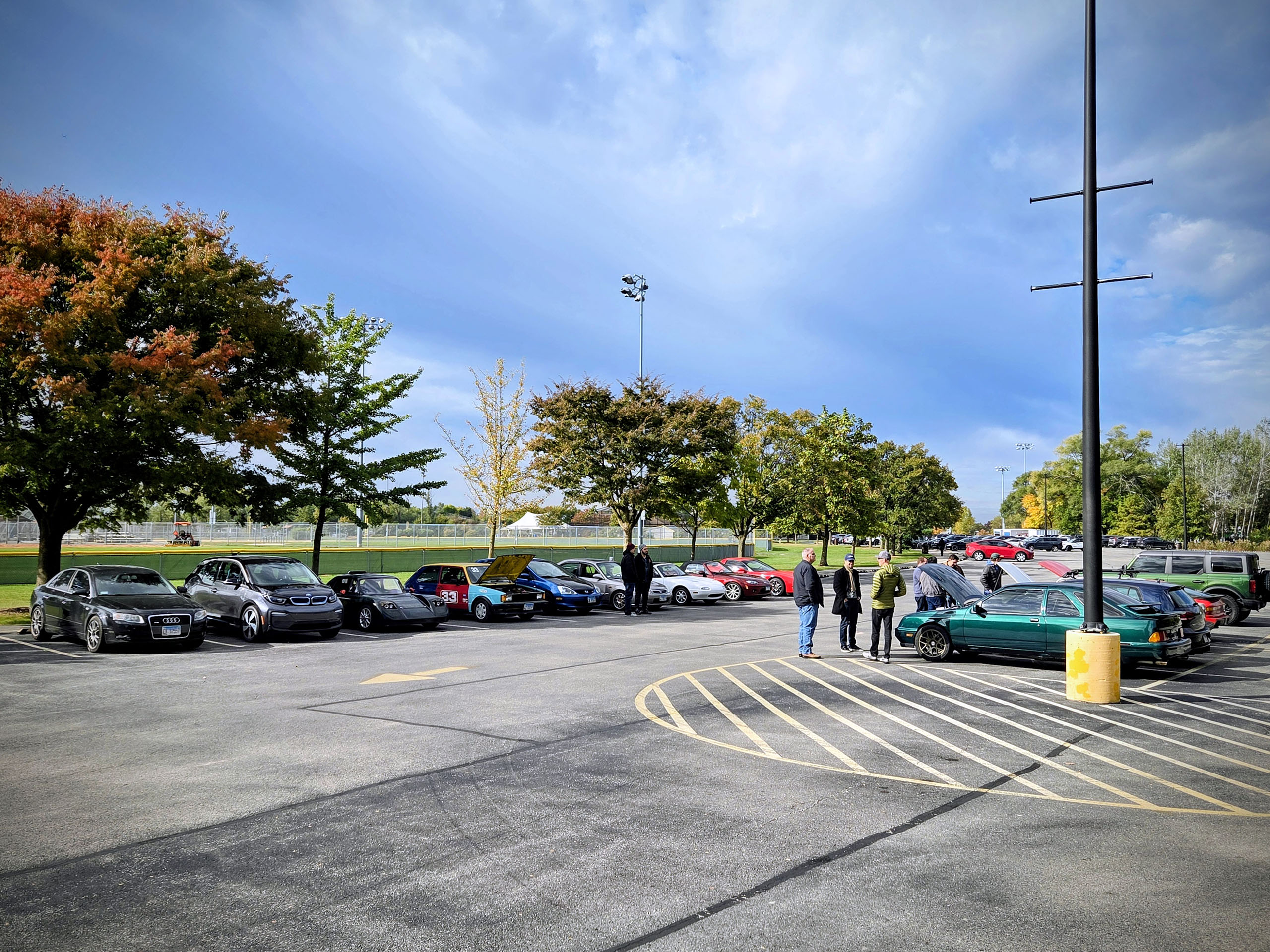
It’s not just the custom work here that’s impressive, either—it’s the speed at which it was all carried out. André told me he had this thing on the road by October 2023, less than a year after he bought it as little more than a shell. Once he proved to himself what he could accomplish, he wanted to share that joy and satisfaction. So he started a club in the West Suburbs of Illinois that not only meets on a monthly basis, but also holds workshops and gathers just to help each other with whatever dilemmas are standing in the way of their projects.
“We had a member that needed help refreshing the suspension,” André told me. “So we set up a big barbecue, and we invited everyone to come and help him wrench. And the work that he got done in a day, it would otherwise take a full week to do. Everybody had a great time, we stayed there all day long. And I had door prizes and drawings and all sorts of stuff.”
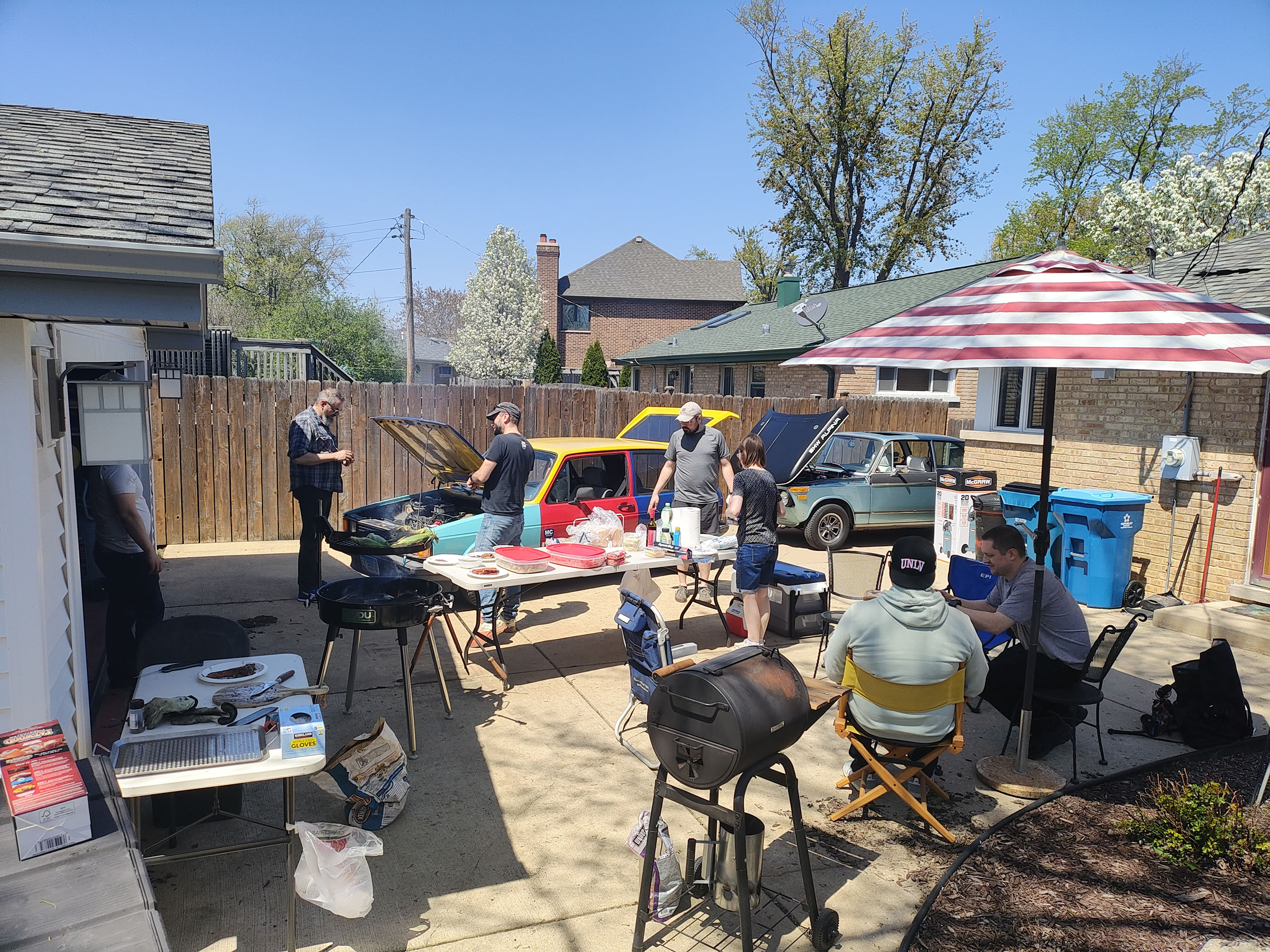
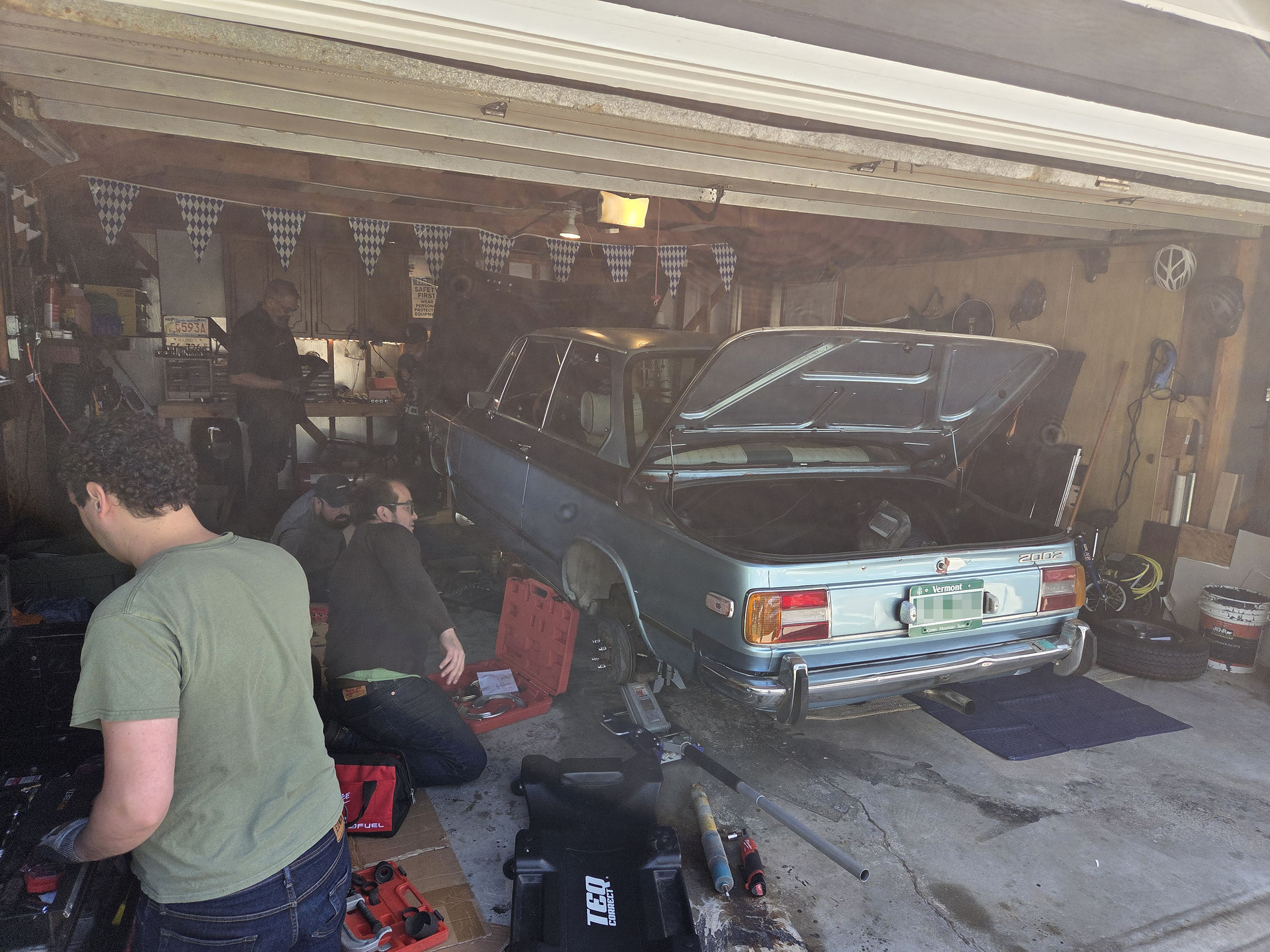
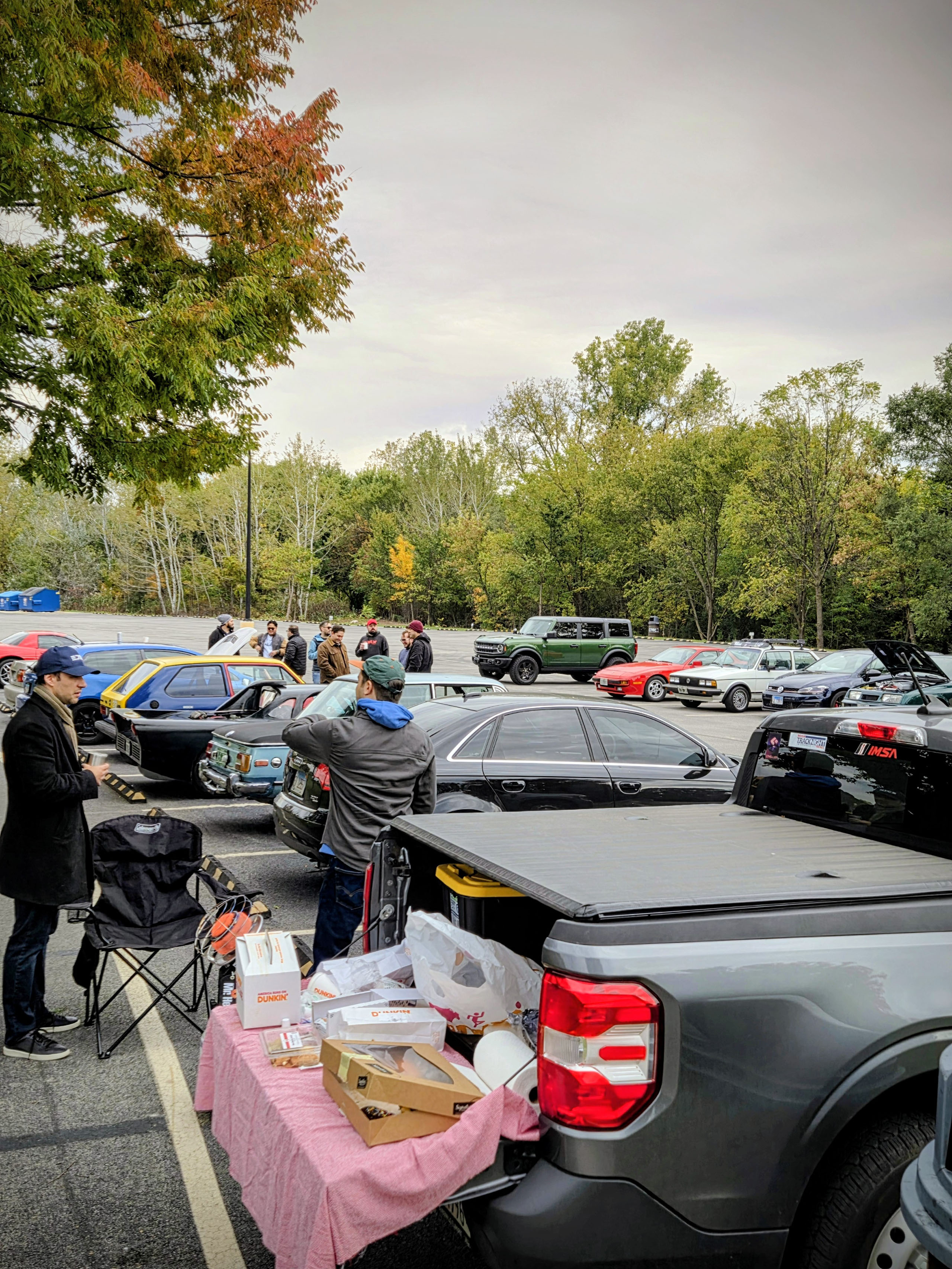

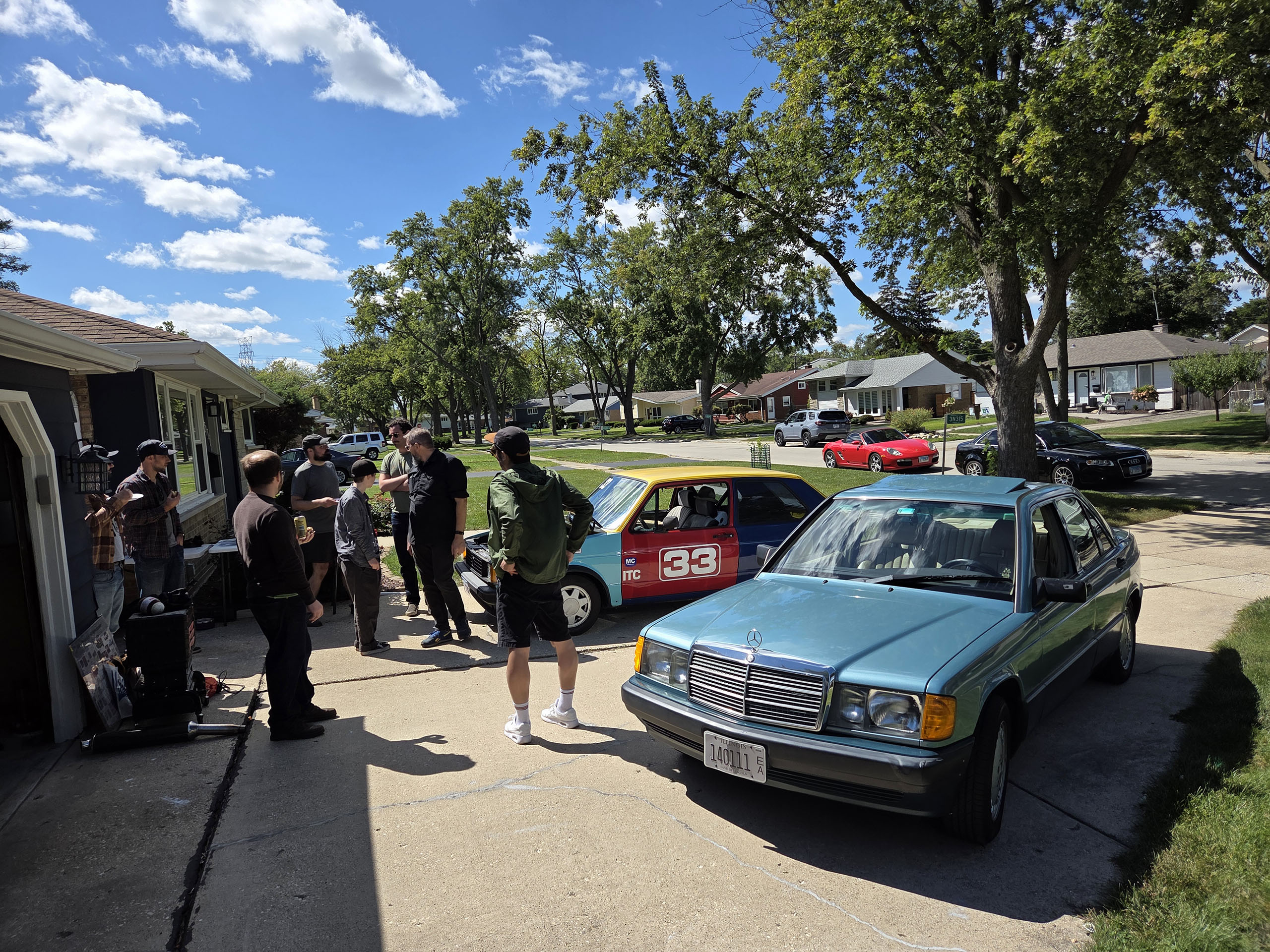
The club, called Automotive Hobbyists of Illinois, is small, but growing. André and his friend started it in 2024; they had their first meeting the weekend immediately after sparking the idea. The whole purpose is inclusiveness, encouragement, and help when members need it, a foil to the cynical “let me Google that for you” attitude that pervades some automotive circles.
As for the Crinale? It could still use some refinements here and there. André tells me the fuel tank isn’t baffled, and the oiling system still needs sorting. But it’s that romantic idea of a homegrown, backyard sports car, realized—warts and all. It’s strange and rare, and in that rarity, it begins to embody the mythical “boss car” narrative of its video-game inspiration.
“In the end, people will turn and tell me, ‘Well, the car looks unfinished, the paint doesn’t look great,’ whatever. But the bottom line is, to me, it’s kind of a symbol of what you can do. And even if it’s not perfect, it’s a lot of fun. And I want people to see in these imperfections that it’s okay for it to not be perfect, if it means that you achieved your goal, on your own.”
“It felt so good to kind of build my own dream car,” André summed up. “And I want to share that feeling with other people. I want other people to feel the same thing.”
Loading comments…
Comments couldn’t be loaded. Please refresh the page.