
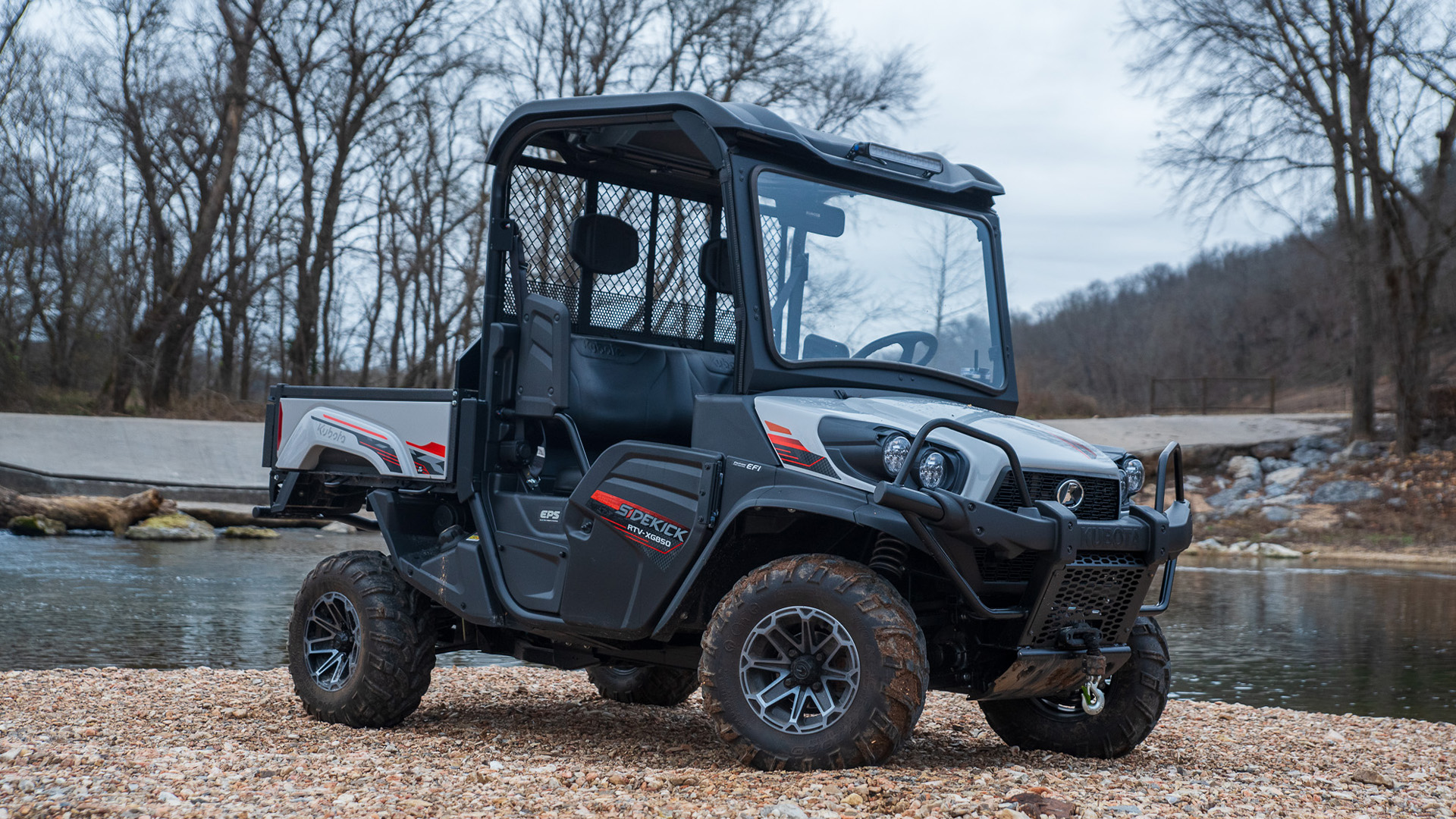
Over time, I’ve developed a pretty good set of tests for side-by-sides at our humble abode. They all have to haul wood, tow modestly sized trailers, and make chores simpler, or else they don’t cut the mustard. Fortunately, most UTVs on the market today are capable of all that and more, but the Kubota Sidekick did it differently than I’ve experienced with the rest. Or, at least, the approach was unique if not the end result, and I liked it.
The Sidekick is almost nothing like the Polaris Ranger XD1500 I reviewed a while back. It’s significantly smaller, less powerful, and yeah, a heck of a lot less expensive at $20,000 compared to nearly three times that. But you know what else? It’s made out of metal, including the dump bed, which is more than the Polaris can say.
That’s just the first hint at what Kubota values in a side-by-side compared to other manufacturers. You can tell that these guys usually build tractors, and I mean that in the kindest way possible. Not everything about the Sidekick is perfect, but I reckon it’s a solid buy if you’re looking to purchase a rig you’ll actually work with. Hopefully, you’re OK without some of the niceties like touchscreen radio.
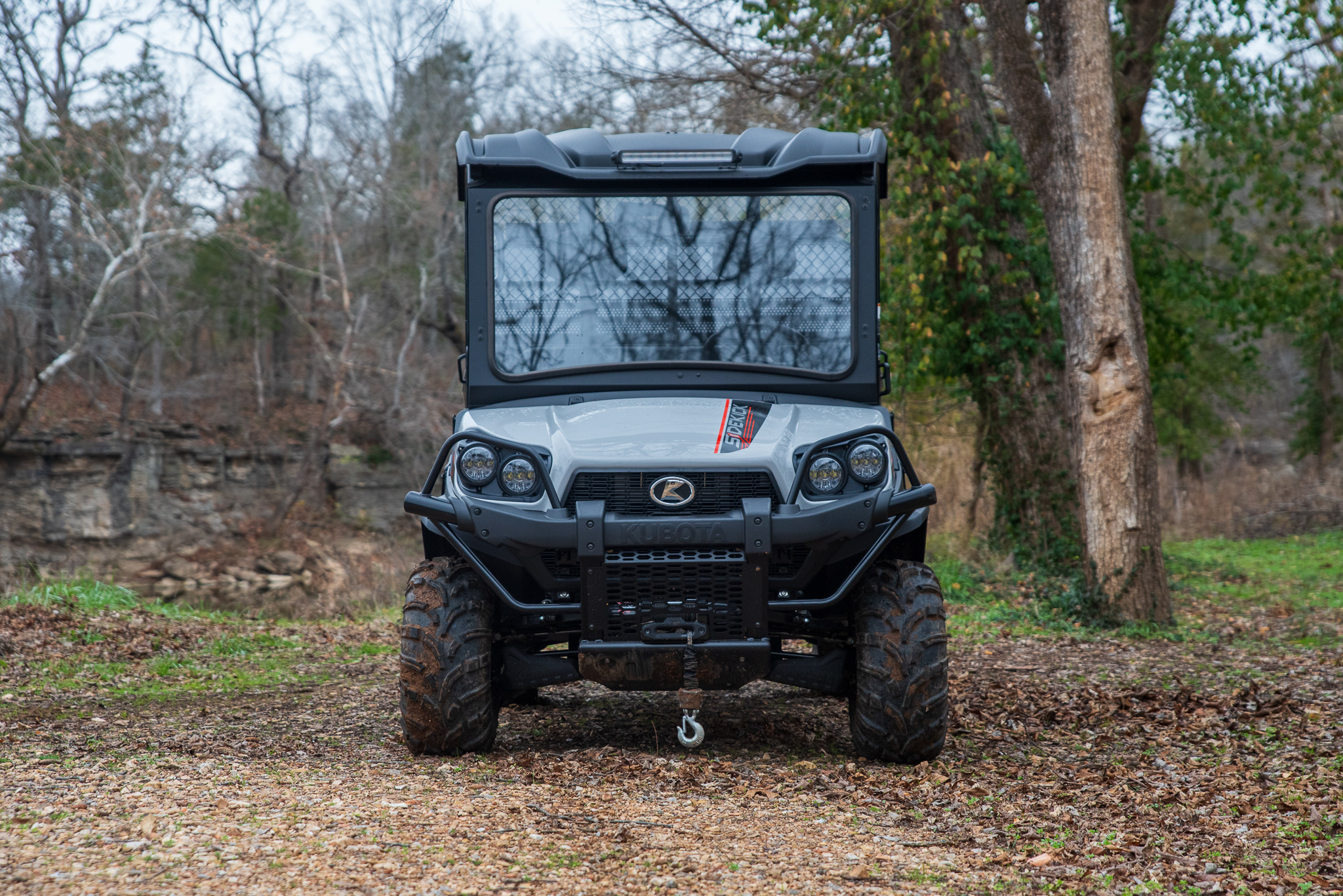
The Basics
In addition to tractors, mowers, mini excavators, and skid steers, Kubota sells a handful of UTVs. The RTV520 is the smallest, while the diesel RTV-X models are the mightiest workhorses. The full-size Sidekick 850 gas model I tested is somewhere right in the middle.
Whereas manufacturers like Can-Am and Polaris style their side-by-sides more aggressively, Kubota follows the mantra of Keep It Simple Stupid. Everything you see here serves a purpose, and it isn’t made to look fancy. That’s because it isn’t.
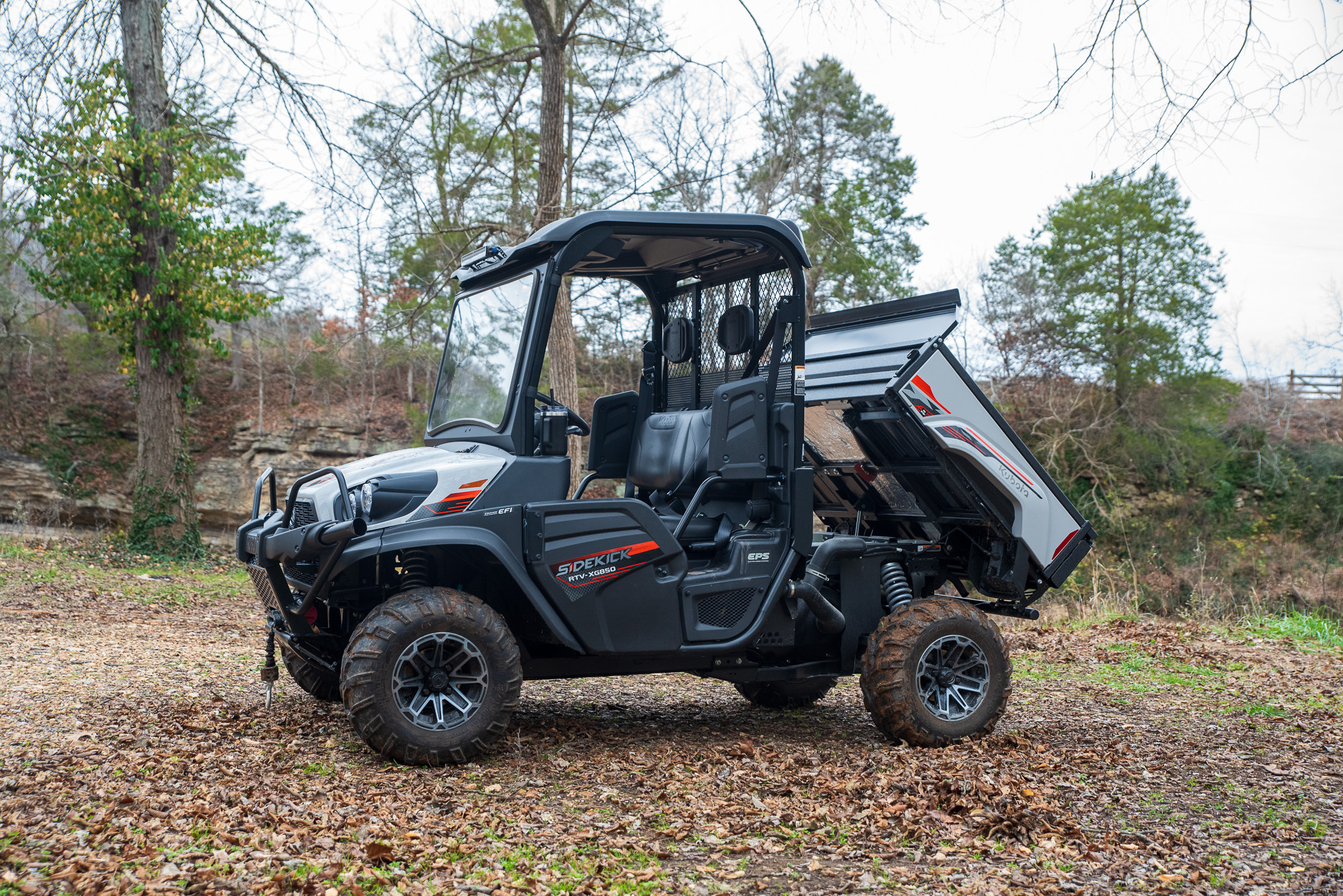
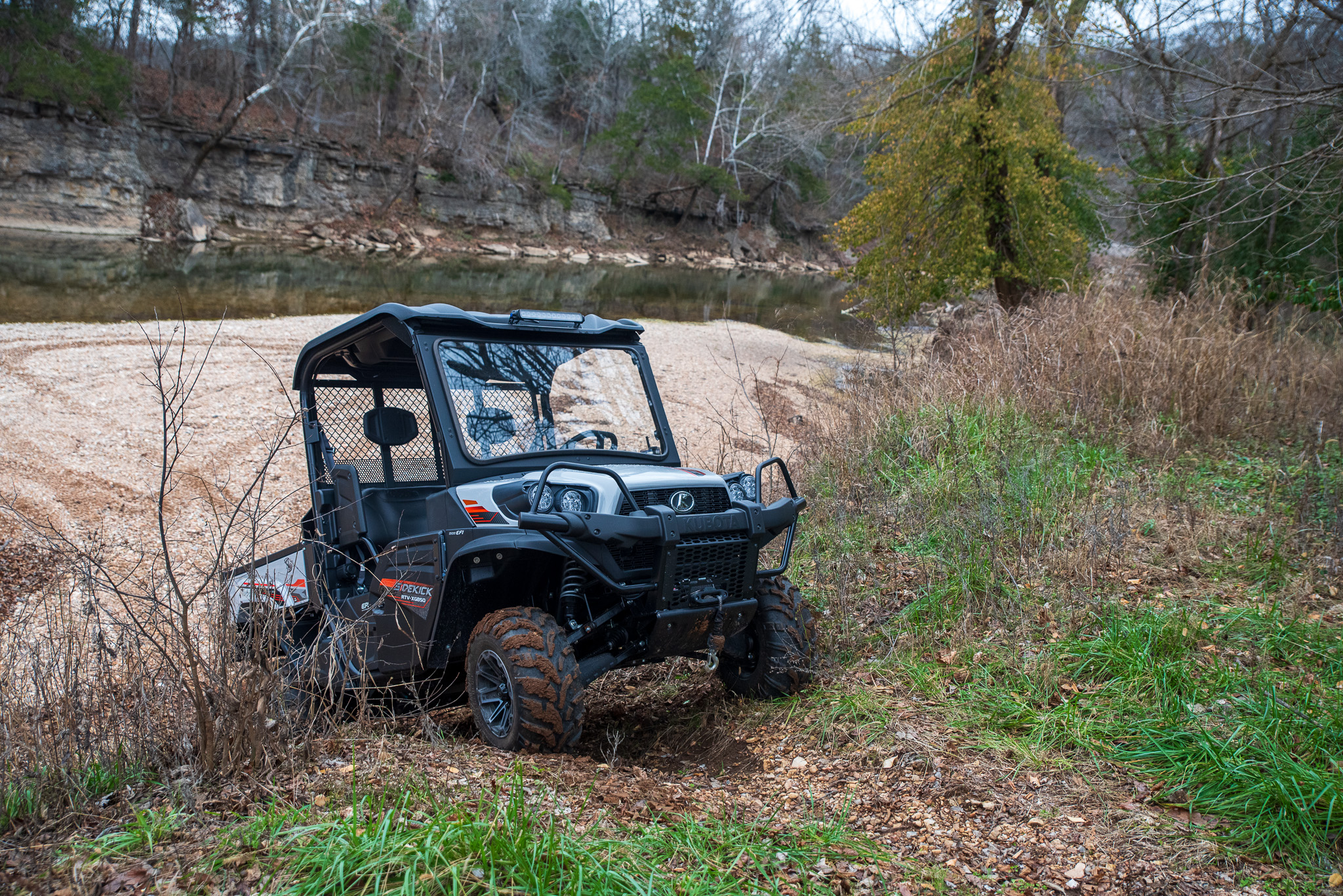
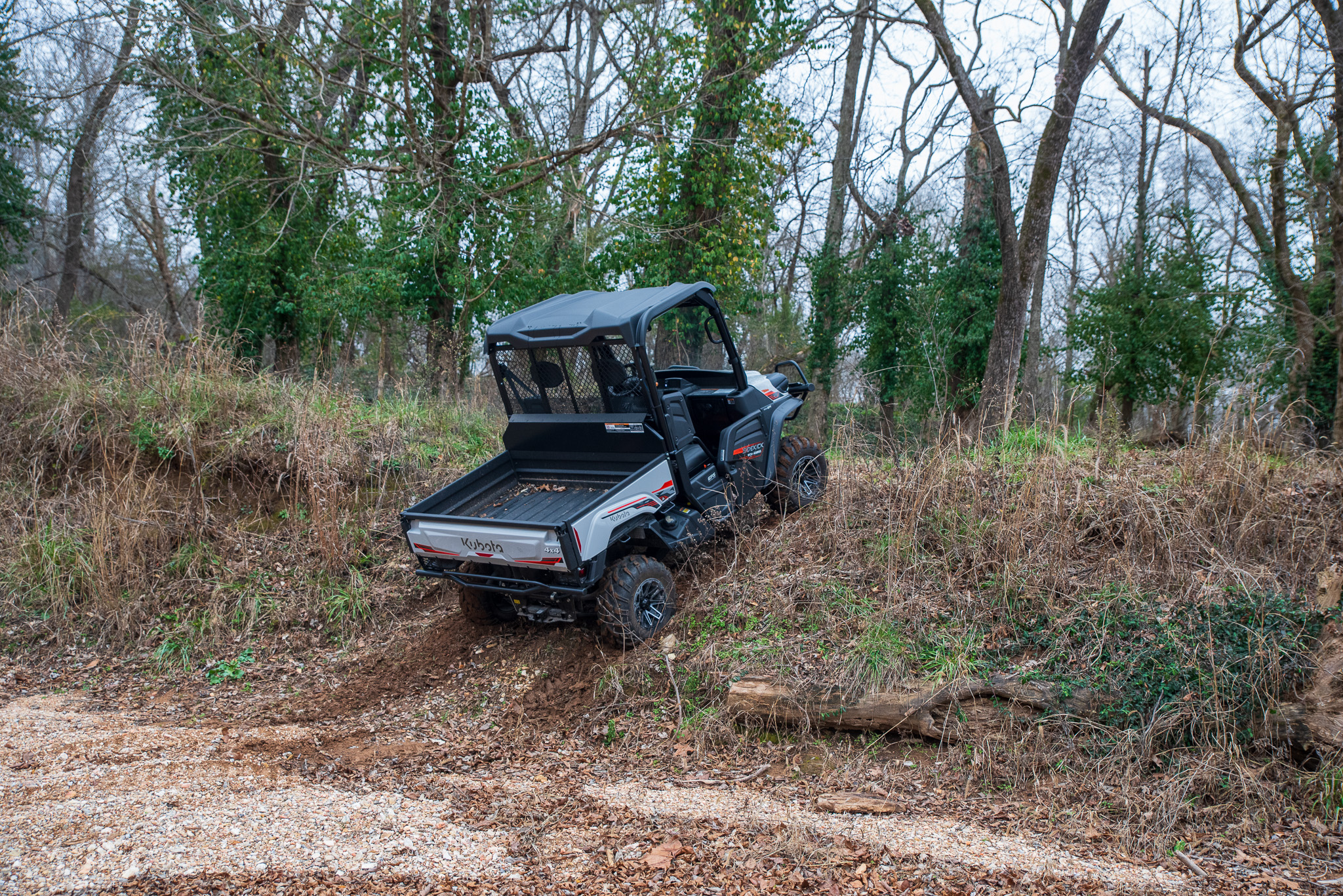
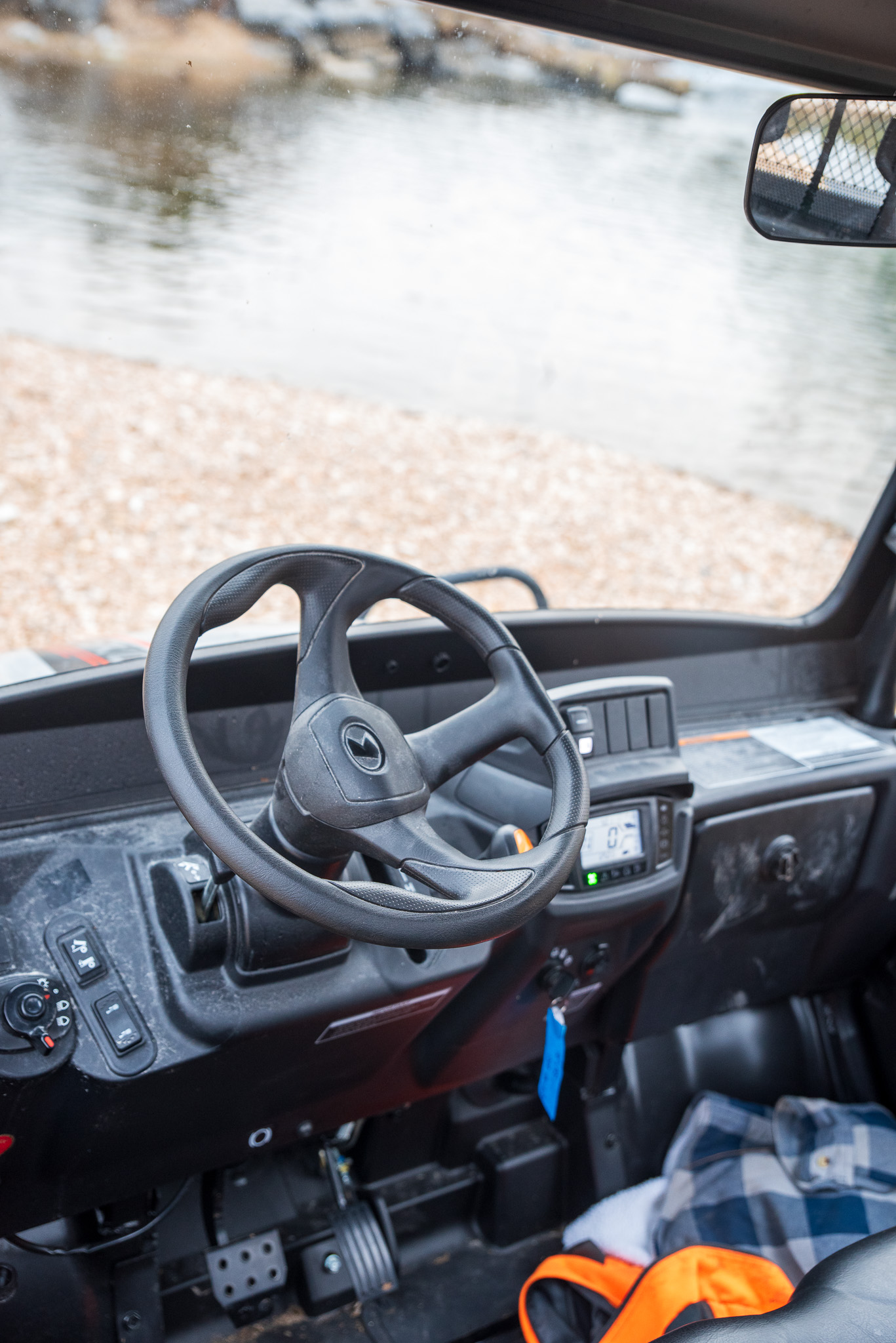
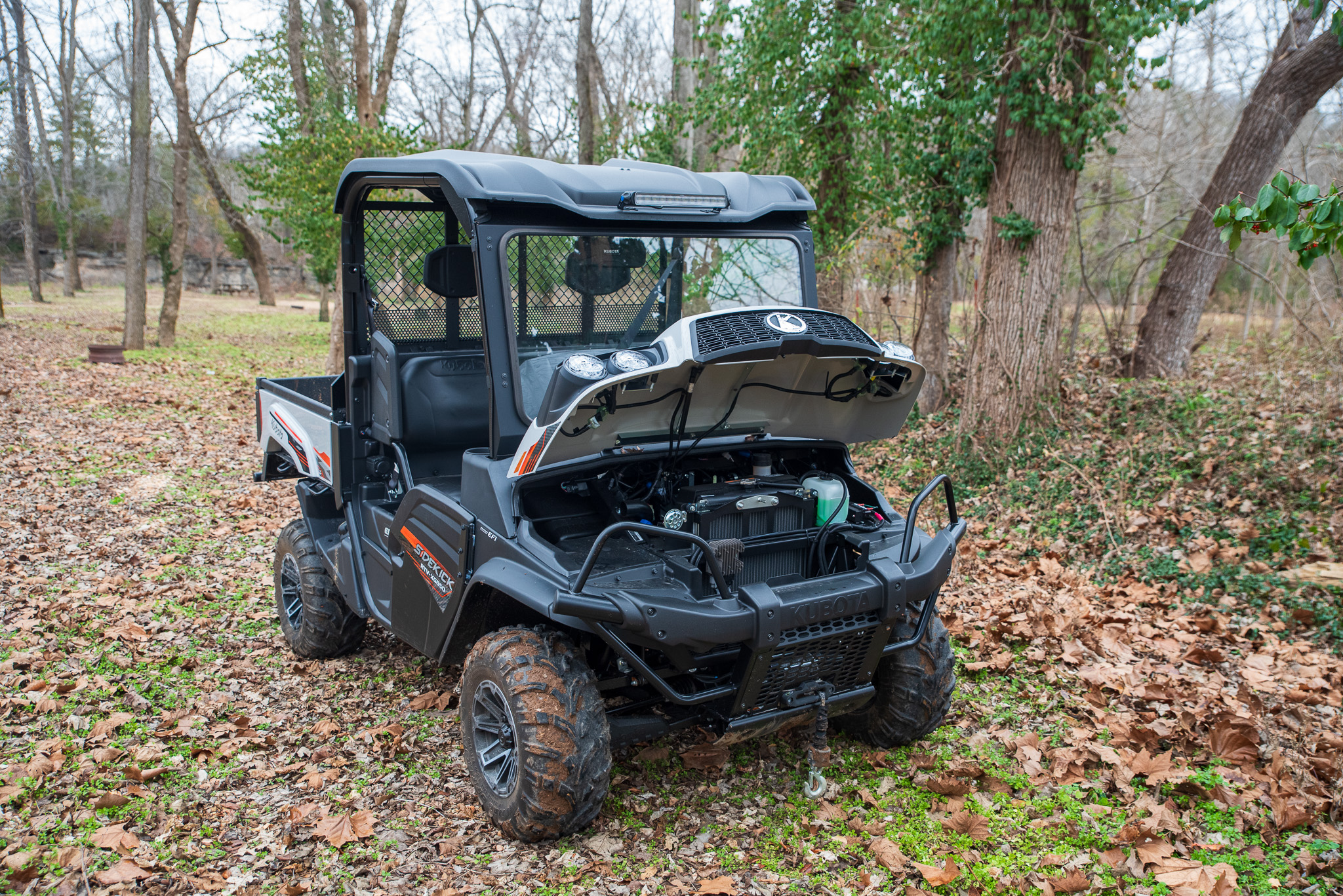
Still, there’s a laundry list of accessories you can fit to these. My tester had a steel brush guard, half-doors, and some nifty decals; others come with a full cab that features speakers in the roof. It’s up to you how many options you want to throw at it, but I’m personally a fan of K.I.S.S.
The engine is an 850cc four-stroke gasser making 54 horsepower at 5,750 rpm. Output travels through a CVT to either the rear wheels or all four, depending on the selection. The front differential is a limited-slip unit, and the rear has a foot-operated locker—just like a Kubota tractor.
Driving the Kubota Sidekick
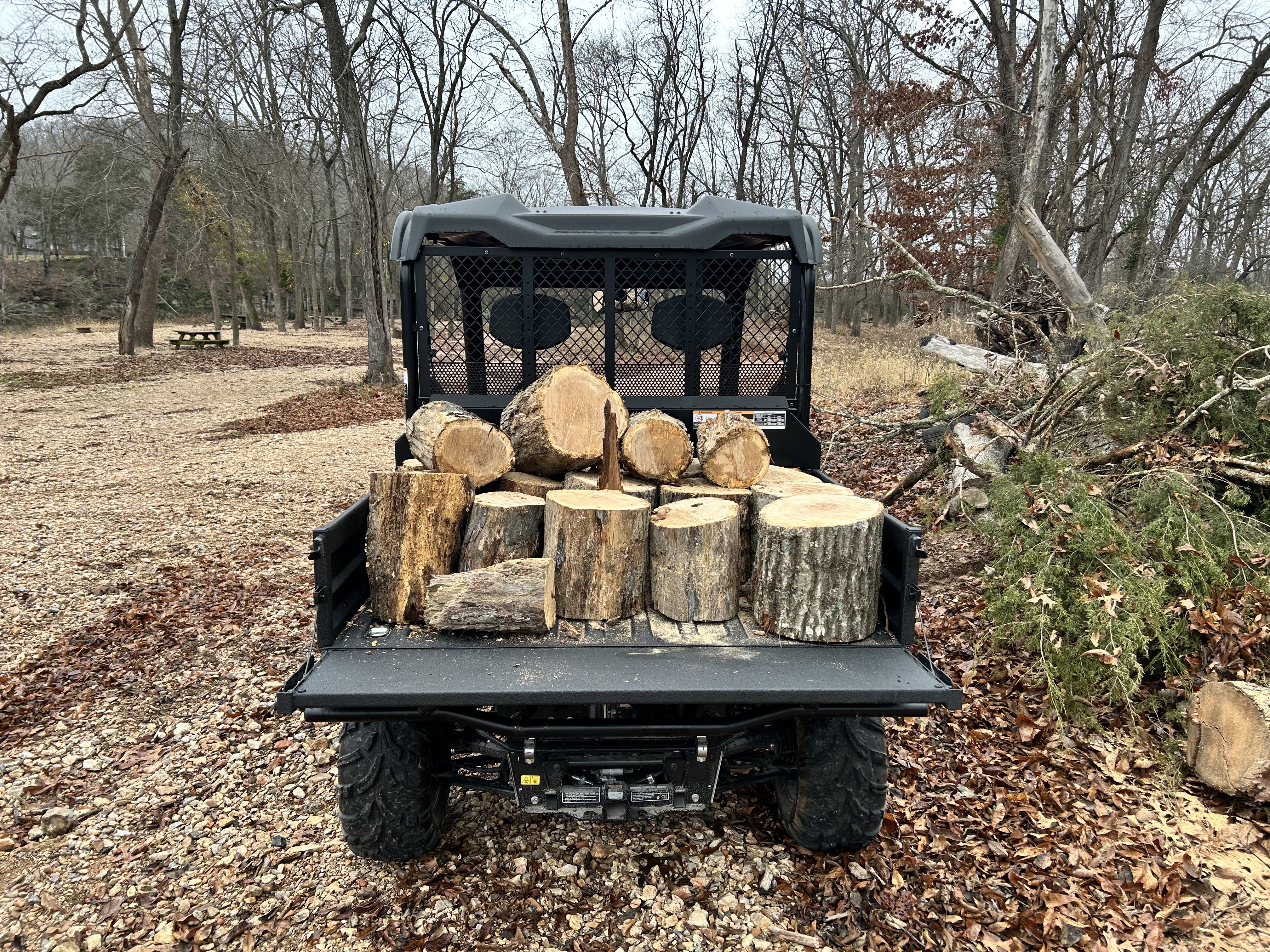
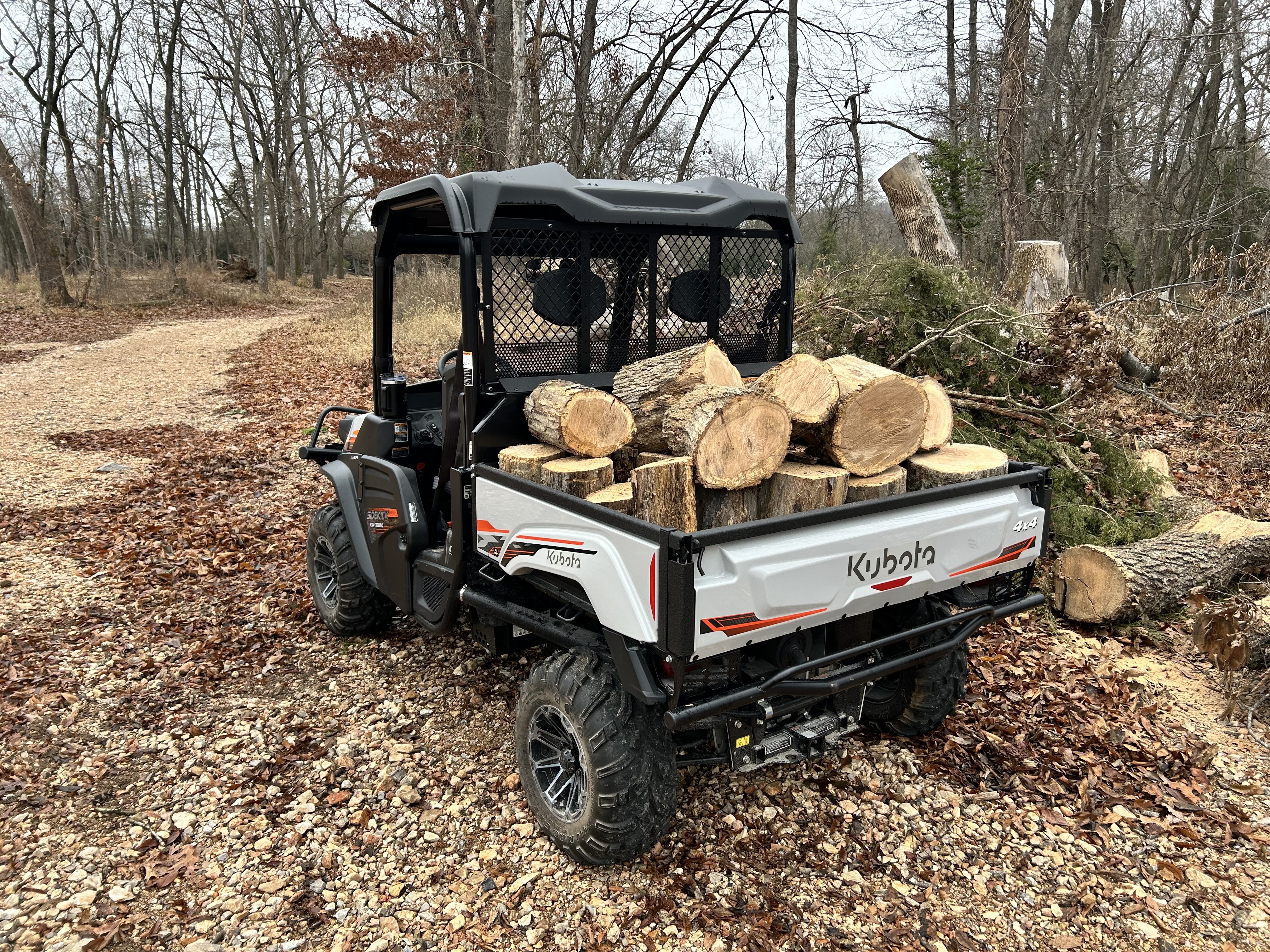
Knowing that this isn’t some high-rolling, luxury-laden machine, I approached the Sidekick with a get-it-done attitude. The bench-seat beauty’s first task was carrying firewood that I’d sawed at our family’s campground up to our house, where the log-splitter is. Not a crazy job, but a pretty typical one for anybody who might be considering one of these, I reckon.
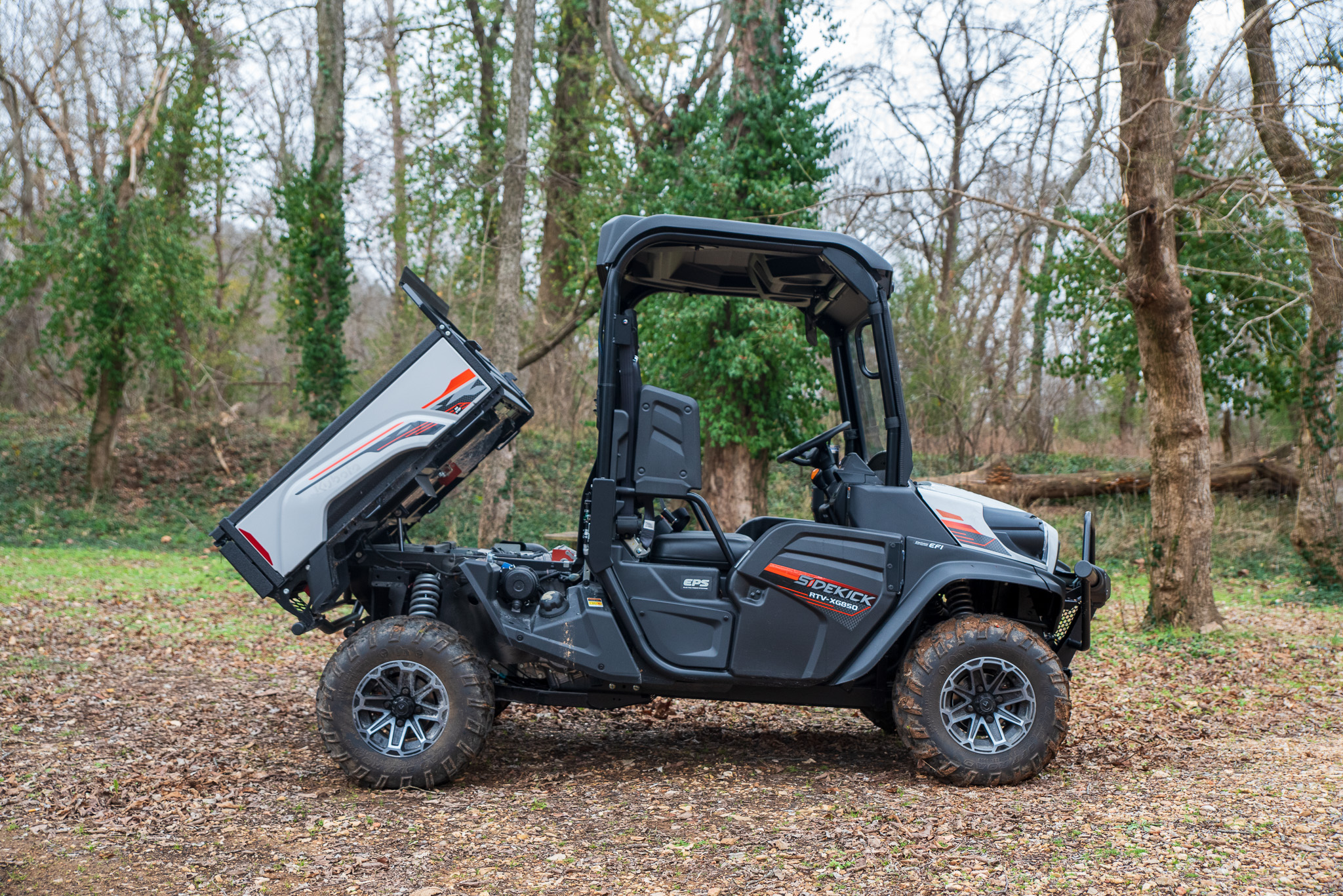
Loading the Kubota was easy because it isn’t jacked up on big tires. I’m a fairly tall guy at 6’5″, but still, the bedsides were noticeably lower than on other machines I’ve tested. That was a delight considering I had several piles of oak to work my way through. And better yet, because the bed is made of metal rather than plastic, I could huck those chunks of wood right in without worry.
Dumping the load was easy-peasy, thanks to the hydraulic bed lift. Not every Sidekick has that feature, but it’s a necessary upgrade in my eyes; there’s a good chance it might be mightier than you are with a manual dump.
Normally, I would have pulled a loaded canoe trailer with the UTV, but I tested it during the cold months. There wasn’t anybody to float—even though I enjoy the occasional polar plunge.
The Sidekick proved to be a nifty runabout from one end of the property to the other. I even put it in a few predicaments on purpose to see how it would handle them, and the drivetrain is super well-suited to getting you out of tough spots. The wheelbase is short at just 80.5 inches, so keep that in mind as you wheel around. You won’t have any trouble navigating tight spots, but it doesn’t have the same stability as a machine with a larger footprint.
I was delighted to see how well it got around our place, which is basically all creek gravel, both packed and loose. The transmission features a dedicated low range—great for working and four-wheeling—so it makes the most of its 54 hp. There was one obstacle that it failed to conquer, a long-dead tree that’s too big for us to move. The approach angle was a problem as the bumper hit the log before the tires could.
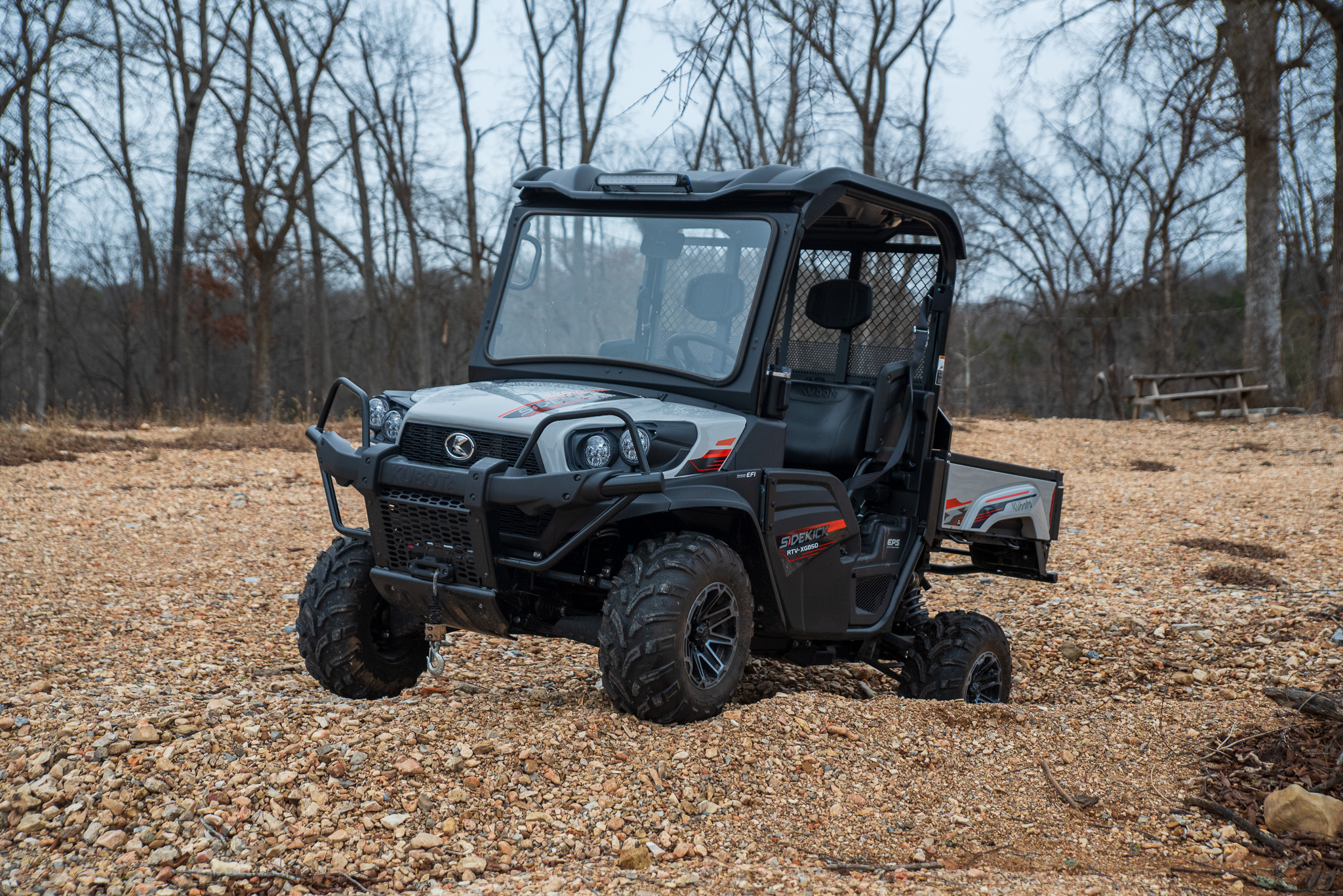
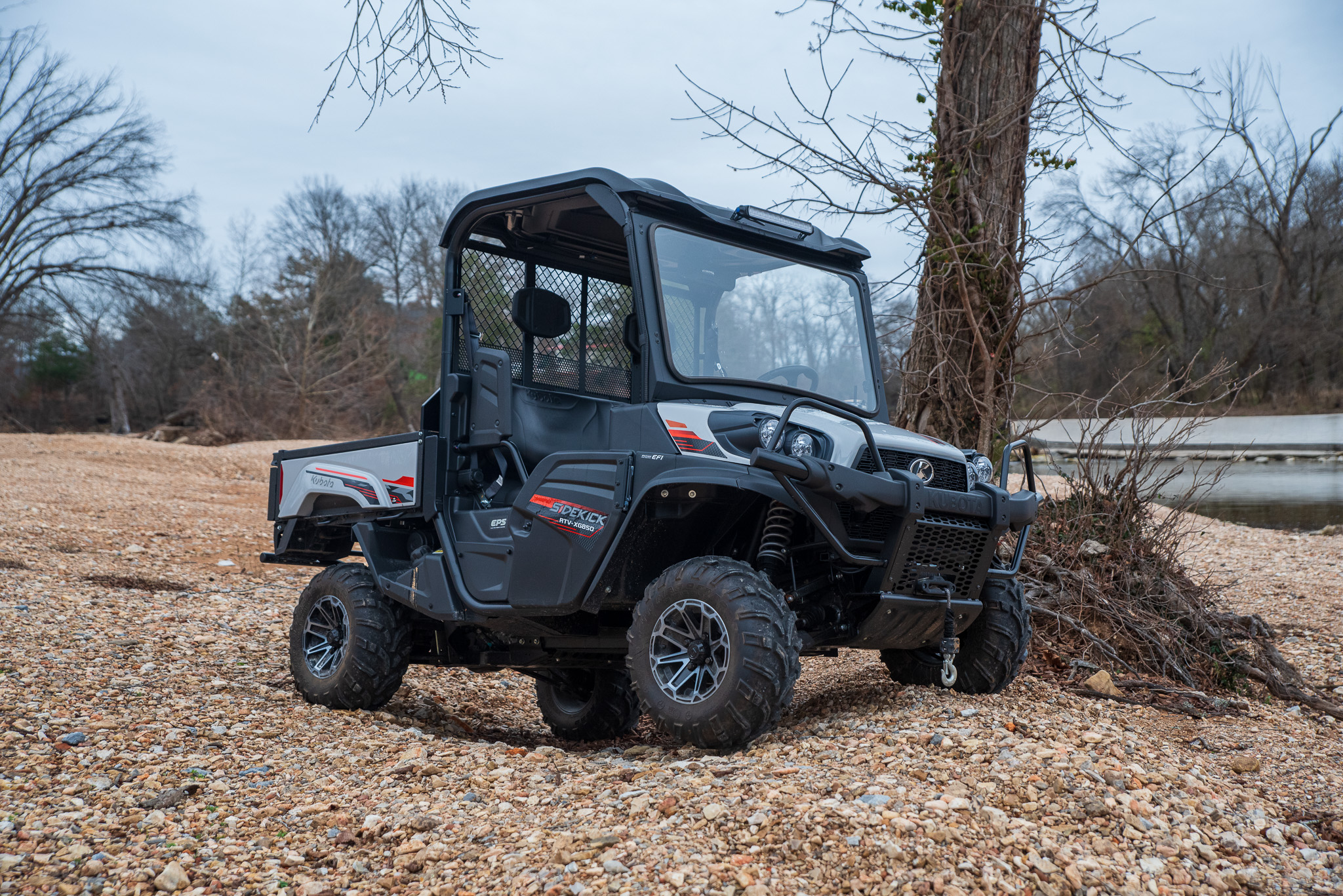
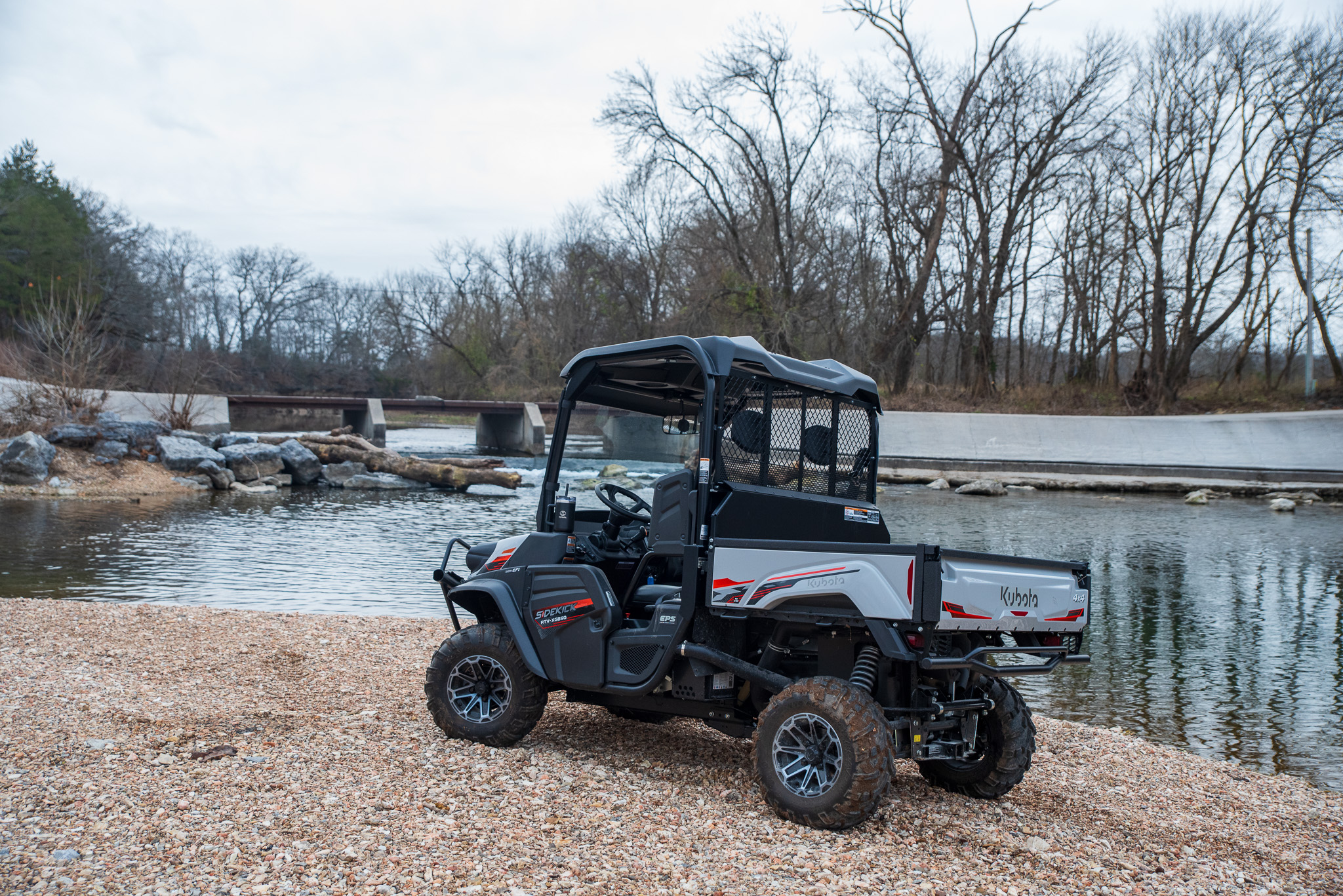
Overall, I wasn’t pushing the Kubota to the absolute max. I just used it as a normal owner would. In that sense, it did nearly everything I asked. Heck, the winch even lifted it up in a tree! (OK, maybe that’s not the most practical test, but I had to try it.)
The Highs and Lows
In an industry that’s defined more and more by excess, the Kubota Sidekick does what it says on the tin. It’s simple without being sparse on doo-dads that help you get work done. By using it, you’re increasing productivity without spending the equivalent of four years’ college tuition. And it actually feels solid!
If I had to dog one thing, it’d be the low-power number relative to other UTVs at this price point. Really, the Kubota is a bit more expensive than a similarly equipped Polaris Ranger 1000, and that machine makes 61 hp.
Kubota Sidekick Features, Options, and Competition
I almost doubt you have the time to read all the options available for the Sidekick, as they fill up several pages in the brochure. You can get a full cab with a heater, all kinds of lights and strobes, a reverse alarm—you name it. Plows? Definitely. Cargo racks and handles of all kinds? You bet. Even a premium roof radio and speaker kit that pairs with a Bluetooth stereo.
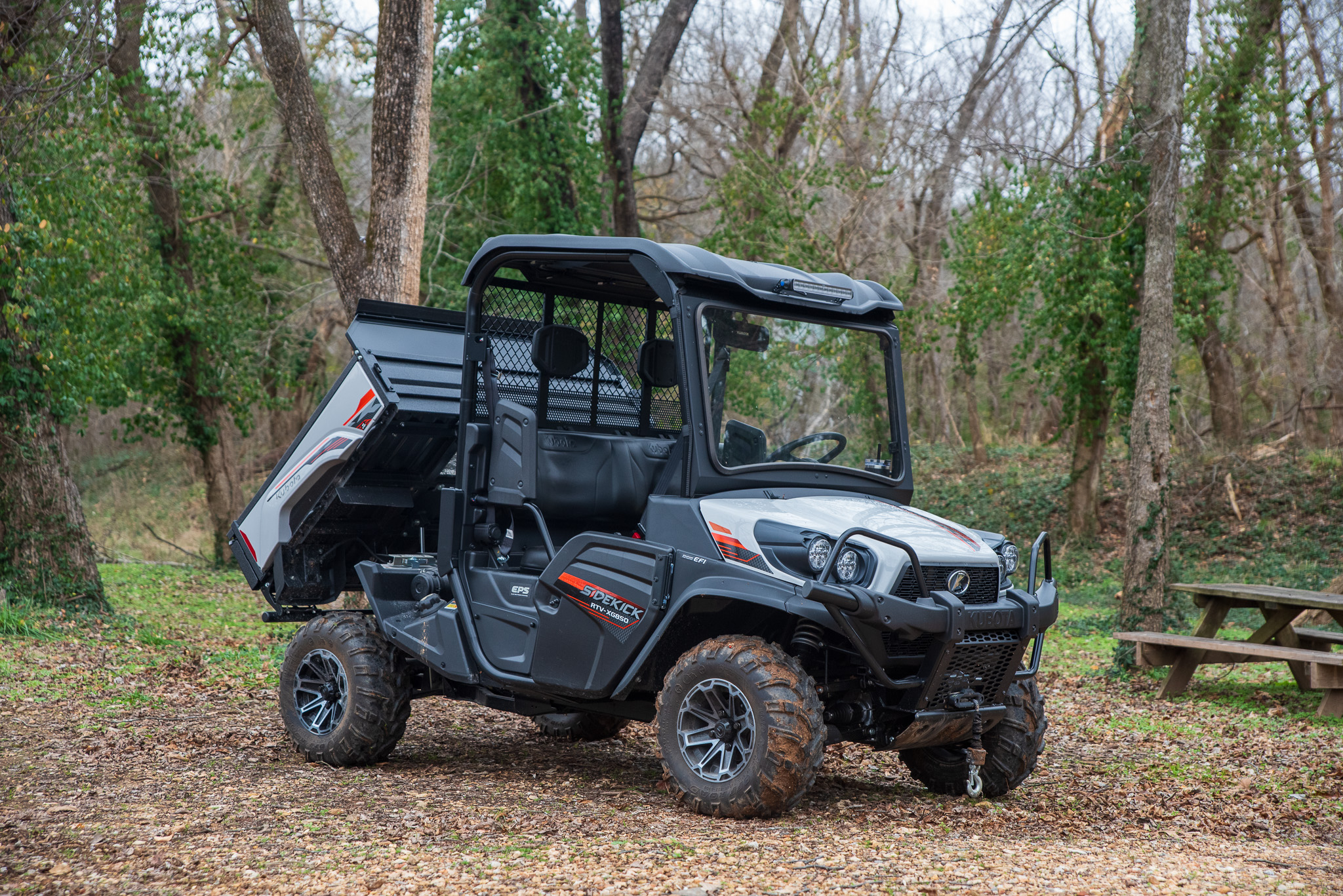
Of course, other players in the space can be fitted with those, too. John Deere makes a similarly sized Gator 845M, but I didn’t much care for the four-door I tested a few years ago. Kawasaki sells an 820cc Mule, which I’ve spent time around and was impressed by, and then there’s the Polaris Ranger 1000 that I mentioned before. Of that bunch, I’d be happy with any of them except for the John Deere, so it really comes down to two factors: Preference and proximity to the dealer.
Much like you should consider when buying farm or construction equipment, dealer support is important here. I’d almost argue that you should take that into account, just as much if not more than price. When you depend on your UTV to get work done, downtime has to be minimal, and you’ll see a lot more of it if you’re hours away from the dealer—or worse, they just plain suck.
Value and Verdict
For this money, you can get a respectable machine from a handful of manufacturers. I wouldn’t blame you for picking any of them—OK, except for maybe that daggum Gator. But where the Kubota stands out is in the heft of its materials and its hardworking pedigree.
I’d feel a lot more comfortable buying a rig that’s simpler than it is sophisticated, and sturdier than it is silly with a zillion gadgets you don’t need. You aren’t saving a ton of money up front by choosing the Sidekick, though I can’t help but think it’ll be more durable and resilient in the long run. Plus, it works just fine without all the extras.
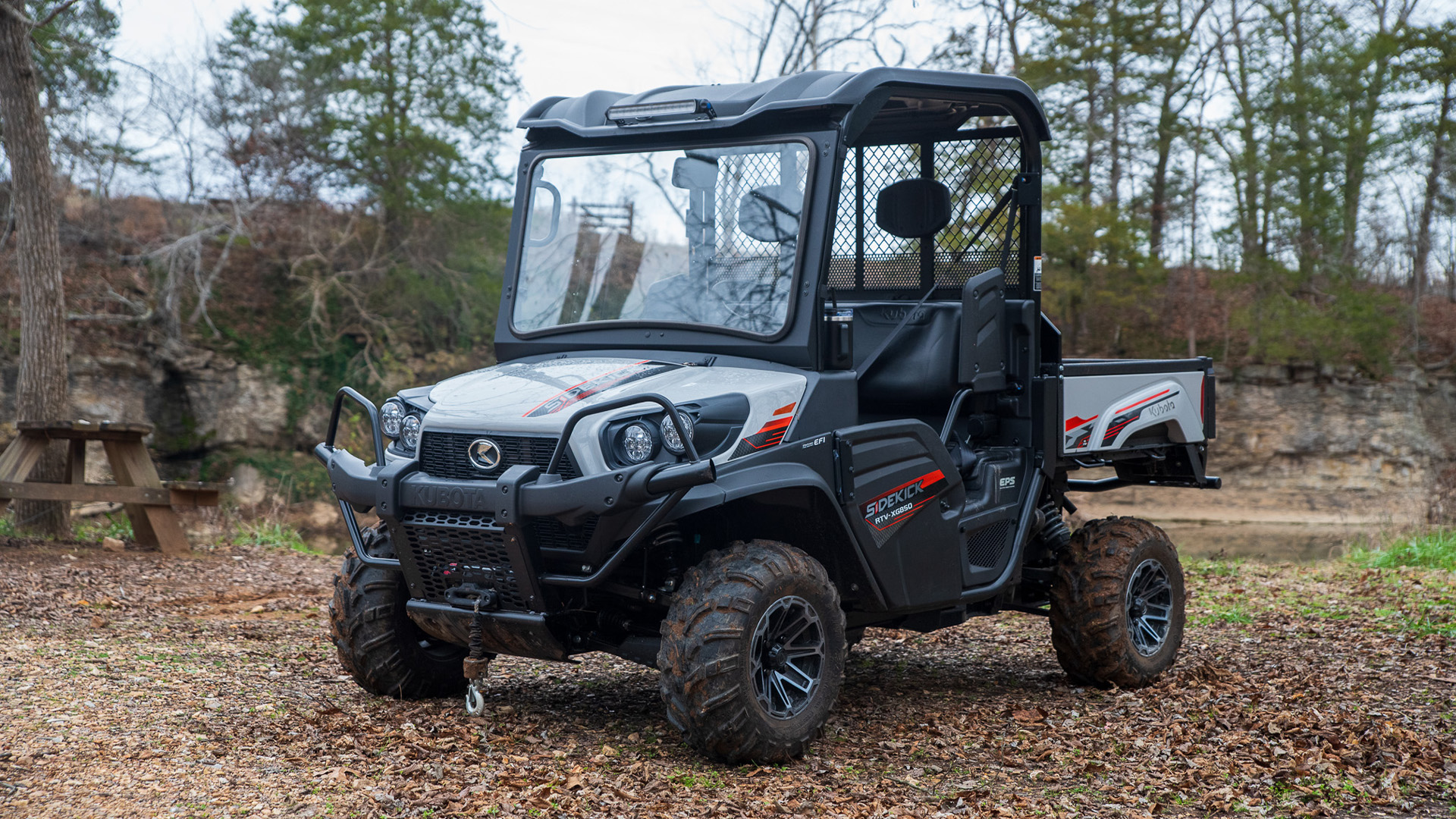
Kubota loaned this vehicle to The Drive for a month for the purpose of this review.
2026 Kubota Sidekick Specs
| Base Price (2025 Model As Tested) | $19,299 ($18,649 before add-ons) |
| Powertrain | 850cc two-cylinder DOHC | continuously variable transmission | rear-wheel drive or four-wheel drive |
| Horsepower | 54 @ 5,750 rpm |
| Max Payload | 1,455 pounds |
| Max Towing | 2,000 pounds |
| Ground Clearance (4WD) | 9.8 inches |
| Dimensions | 119.6 inches long with front bumper | 63.2 inches wide | 79.5 inches tall |
| Score | 7/10 |
Loading comments…
Comments couldn’t be loaded. Please refresh the page.