
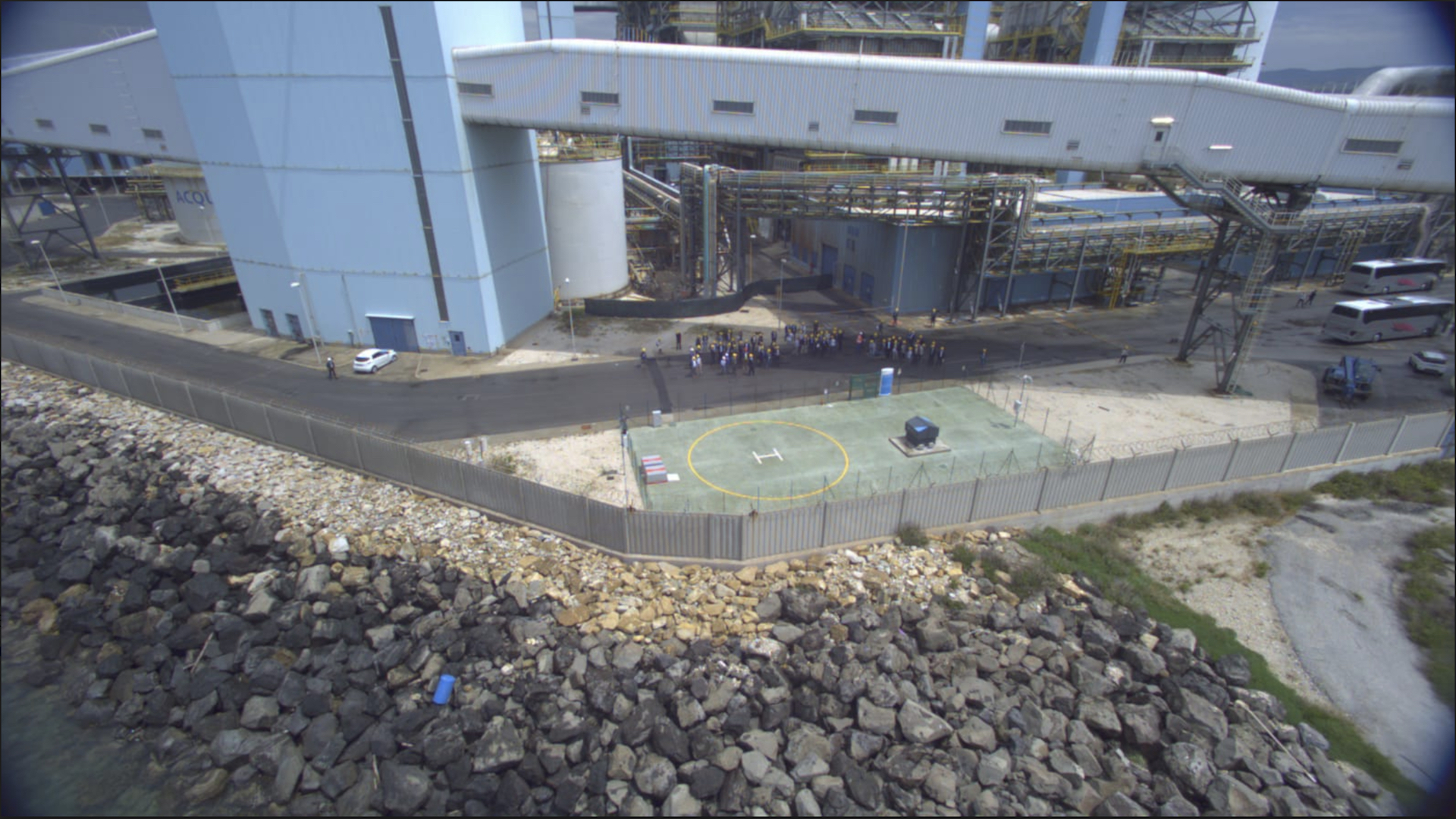
Drones have become a highly appealing choice for corporations in the monitoring, surveying, and inspection industries as their extremely cost-effective nature and high-tech sophistication provides one of the most practical and effective modern tools in business models across a large variety of trades. According to a press release from autonomous drone company Percepto, the multinational energy company Enel has opted to implement this tool and selected Percepto’s Sparrow system to monitor the Torrevaldaliga Nord power plant in Italy.
The Sparrow will be deployed in an automated mode and under the supervision of a local operator who can take over navigation at a moment’s notice, as Italy’s drone regulations don’t allow for fully autonomous UAV operations just yet. All things considered, this middle-ground of utilizing the drone’s automatic flight mode with a drone pilot on deck seems like the most practical, rational compromise.
The Sparrow’s artificial intelligence and computer vision technology will allow it to operate as independently as possible, in addition to regular, thermal, and night vision cameras providing functionality regardless of light constraints. Any collected aerial video footage, photography, and geo-positional data is transmitted to Enel in real-time.
The Sparrow drone will be stationed at a launch hub on-site of Enel’s Torrevaldaliga Nord power plant, with the Percepto Base station protecting it from harsh weather conditions, charging it, and transferring collected data to Enel personnel. While offline, the Percepto Base can even run “health checks” on the drone to ensure a long lifespan.
Let’s take a look at Percepto’s Sparrow at Enel’s power plant in action, shall we?

Energy giant Enel selects Percepto's Sparrow drone for use at power plant
“While drones are touted as the technology of the future, the ability to act autonomously unlocks their true potential, enabling them to act as a responsible, independent and smart ‘team member’ that provides not only a bird’s-eye view of facilities, but real, actionable insights,” said Percepto CEO, Dor Abuhasira. “We’re proud to be working with Enel and look forward to many years of cooperation with a company that excels in terms of generation of safe, low-cost, and environmentally-conscious energy.”
The goal here is to introduce cost-effective and practical drone support to a business model attempting to continuously refine itself. We’ve seen a slew of similar corporate decisions in fields ranging from agriculture to wind-turbine inspections. When inexpensive drones and highly-capable systems can provide the same, or improved, services than their human counterparts, companies aren’t thinking too hard about whether or not to implement them into their business models.
Loading comments…
Comments couldn’t be loaded. Please refresh the page.