
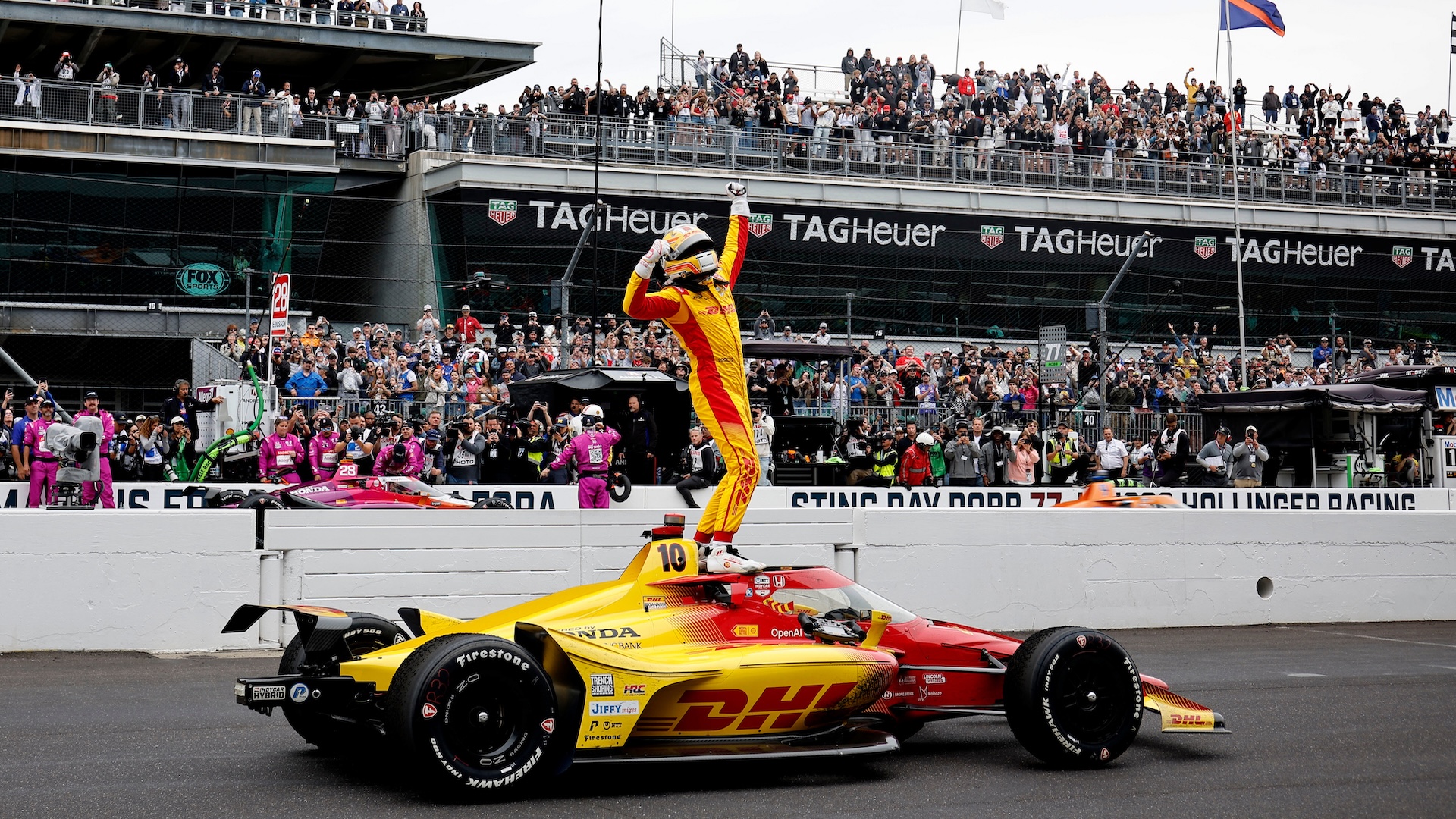
IndyCar confirmed today that Honda and Chevrolet have both inked commitments to remain the series’ engine suppliers for several years to come. Specifics regarding contract length or financials were not divulged, but it can be assumed that this partnership will last through the life cycle of IndyCar’s new chassis, engine, and rules package set to debut in 2028. Another announcement that’s equally important, if not more so, for the partnership’s long-term success was the introduction of team charters.
Per the release: “In addition to commitments made in engine development, engine supply, and promotion of the series, each manufacturer will be entitled to own a charter to be utilized beginning with the 2028 NTT IndyCar Series season.”
In a nutshell, both Honda and Chevrolet will receive one full-season entry starting in 2028. These will be cars the automaker fields, operates, and ultimately uses to further its involvement in the series. Per the rules, this new entry can only be hosted by a team that races the entire season and does not already have three entries. “Teams with three charters are not eligible to utilize a fourth charter via an OEM,” per the rules. This automatically rules out top teams like Chip Ganassi and Andretti on the Honda side or Penske and Arrow-McLaren on the Chevrolet side.
What It Means for Honda and Chevrolet
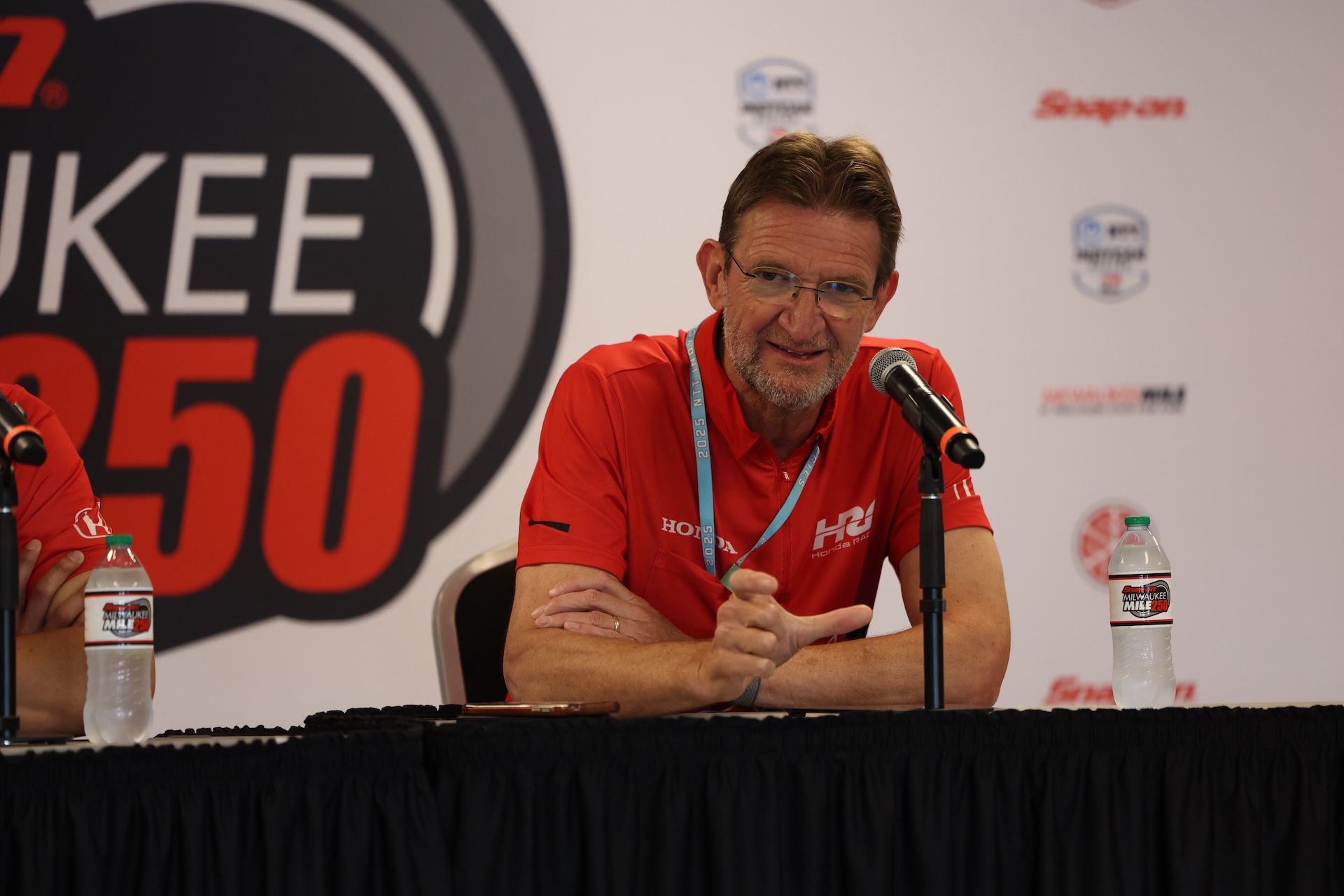
This represents an enormous opportunity to develop tech and engineering and talent acquisition, and so forth. Neither automaker went into great detail about how it would ultimately operate its charter come 2028, but during a media roundtable, both Honda Racing Corporation US President David Salters and General Motors VP of Performance and Motorsports Commercial Operations Jim Campbell praised IndyCar for the opportunity to get more involved and increase their stake in the series.
“We feel that IndyCar makes sense for our products, our associates, and our business strategy,” said Salters. “IndyCar is growing. We evaluate all series on their merit, and staying in IndyCar doesn’t preclude us from other things. We’re here to develop our people and technology, and you can see what we’re doing in IMSA with the No. 93.”
“It is an opportunity for us that is unique,” said Campbell. “The IndyCar charter is new, exciting, and the possibilities are more interesting. You can either run your own team or partner with the existing team; the benefits of this kind of learning at a fast rate, developing people; there are many possibilities there. You know, it’s the ability to learn things as a team that you can drive right to every other Chevrolet team to give them the best chance to win a race or a championship,” he added.
Salters eventually alluded to a possible partnership with Meyer Shank Racing, as it’s already doing something identical in IMSA with the No. 93 car flying under the HRC US colors. Campbell did not name any possible team partnerships.
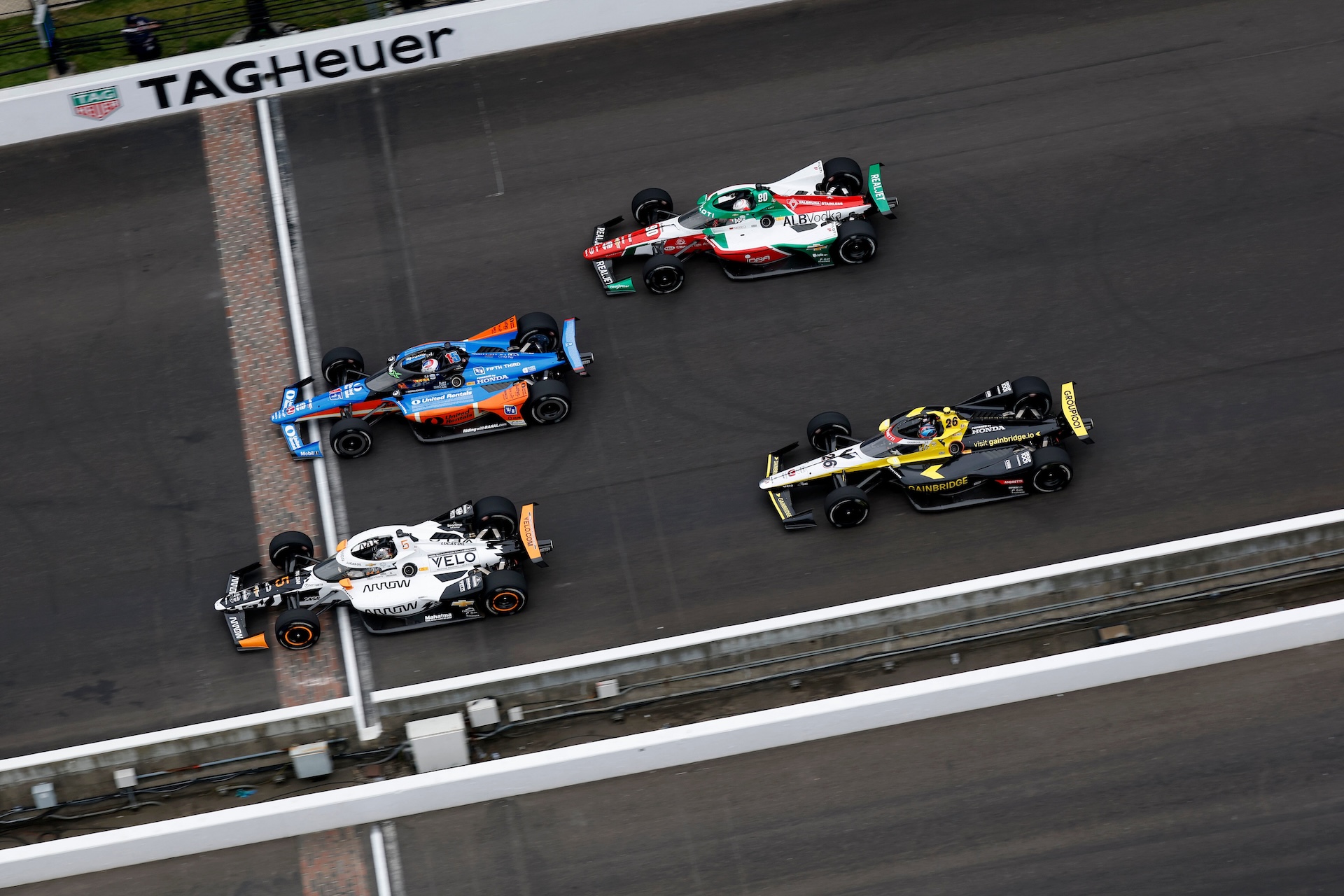
Show Me the Money
This new charter system also represents significant business upside for both automakers. And, y’know, at a time when the global economy is floundering and overall spending is down, but global viewership for motorsports is up, it’s moves like these that will help keep the lights on long term.
Racing is expensive, and expanding a company’s racing activities requires even more funding. Now more than ever, there is a strong need for racing organizations to prove their worth. Failing to do so will irritate their CEOs, and the boards will stop the flow of much-needed dollars. When that happens, teams shrink, development stops, and competition stagnates. These new charters will undoubtedly provide Honda and Chevrolet with a lifeline to get creative and improve their financial health in the near future.
Under Jon Ikeda’s leadership, the business side of HRC US has grown exponentially over the last couple of years. The No. 93 Acura IMSA prototype now attracts major sponsors like Phillips 66, which has led to an HRC-branded motor oil, and it’s generated significant merchandising opportunities. It’s even linked to the creation of a new line of performance parts for Honda and Acura cars and SUVs. This all represents crucial revenue for Honda.
If that’s what can be done with IMSA, the possibilities with IndyCar are even bigger—largely due to its newfound exposure via Fox Sports.
“Having the ability to run your own car links it further [to the core business], because we really do have the ability to have closer partnerships with people, and the whole thing becomes more of a sustainable business for us to go racing, and for us to involve our fans more and our customers more, that’s important,” Salters told The Drive.
“We have to make sure that that business is sustainable, both from an environmental point of view and an economic point of view. As we’re all aware, there are clouds on the horizon of the automotive world right now, so we have to be very cognizant of our position. We have to develop our people and our technology, but we’ve got to make this work as a business.
“Thanks to Jon [Ikeda] and his team, we look pretty amazing [in reference to the team kit], and you will see some very interesting things on [street] cars in the future,” Salters said. “That’s all coming from racing. Racing is for business, and it’s never been more so these days.”
It’s the same situation in Detroit: GM is expanding its footprint in domestic and global racing, now involved in IndyCar, IMSA, and NASCAR, among others in the U.S., as well as WEC and now Formula 1 globally. It has a long history with IndyCar and, even more so, with the Indianapolis Motor Speedway. This new charter opportunity will strengthen those ties.
The business upside is also considerable for the global automaker, which still sees the connection between winning on Sunday and selling on Monday.
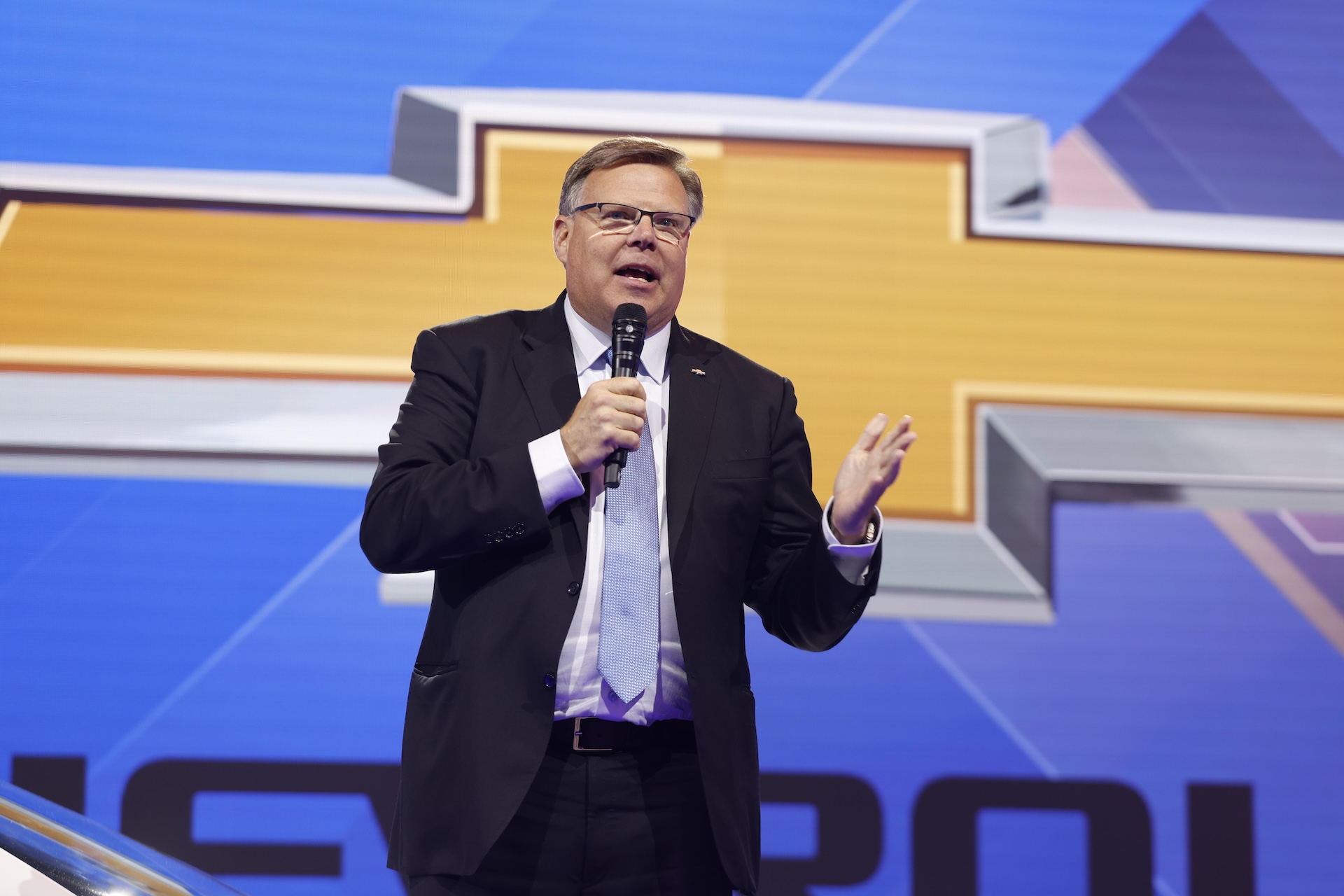
“It’s really connecting what we learn in the racetrack to what we do in our performance parts business, and then the higher performance models for our [dealer] showroom, both on track, on road, and off-road,” Campbell told The Drive. “We’ve done quite well over the years, and it’s one of the reasons why we’ve had the confidence of our leadership to continue to invest in racing as Chevrolet and our other divisions.
“We can develop people, which we do, both engineering and business-wise, and racing, we rotate them back and forth between production and racing. And we know that when we win races, when we win championships, we see a lift in the brand opinion of Chevrolet,” he added. There’s a correlation coefficient for purchase consideration. Buyers point you out at the shop more quickly when they have a higher opinion of you, and that’s what winning in racing does.
“We say this quite closely every quarter, every month: ‘Where is our brand opinion for those that are aware of our involvement in IndyCar for Chevrolet, compared to a general consumer?’ And we’ve received significant lifts in opinion and other ratings. This effect makes people put Chevrolet on their shopping list when they’re in the market for a car or truck. And also, when they’re considering technologies that we have, like Super Cruise and other things,” Campbell added.
Email the author at jerry@thedrive.com
Loading comments…
Comments couldn’t be loaded. Please refresh the page.