
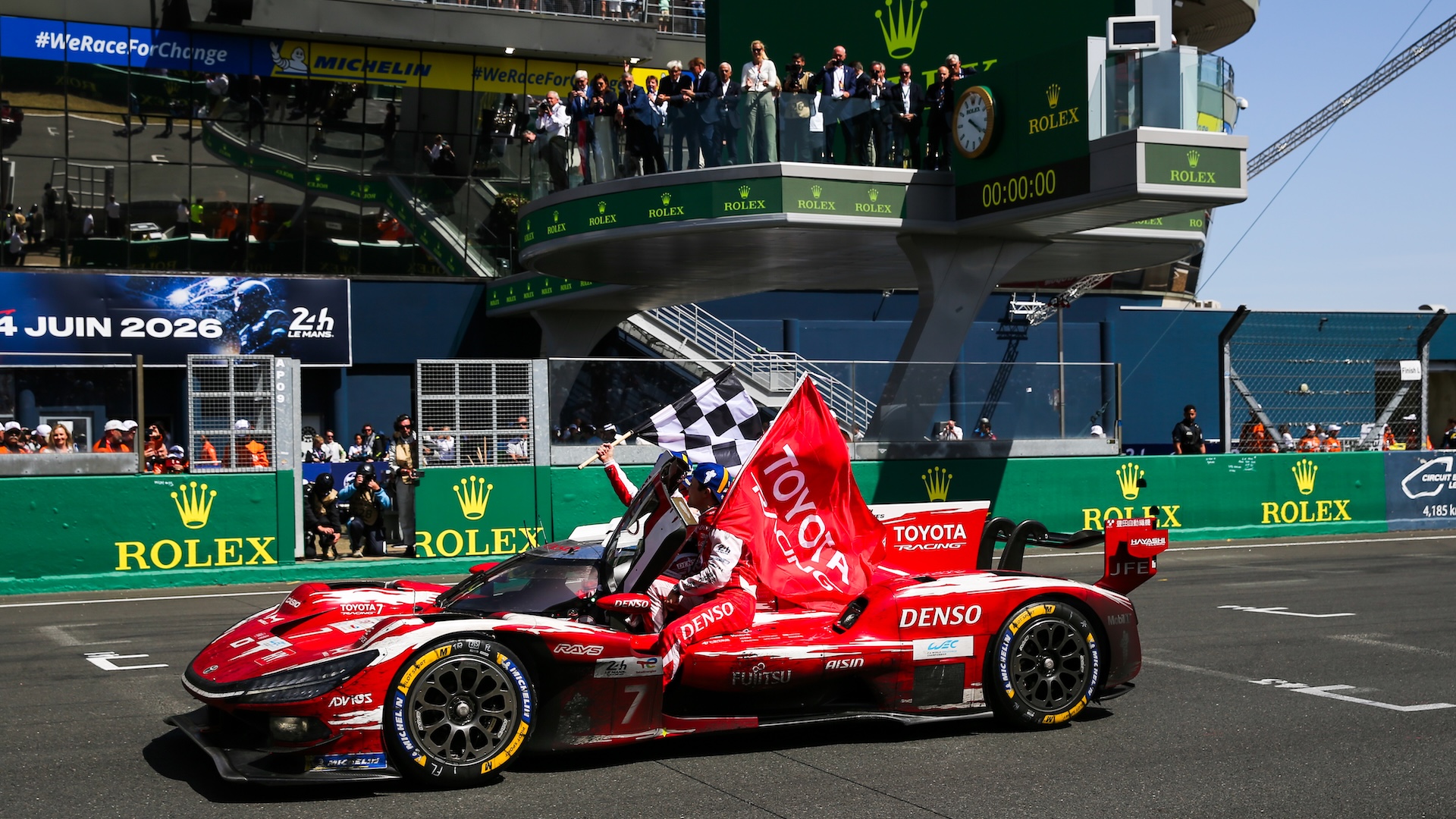
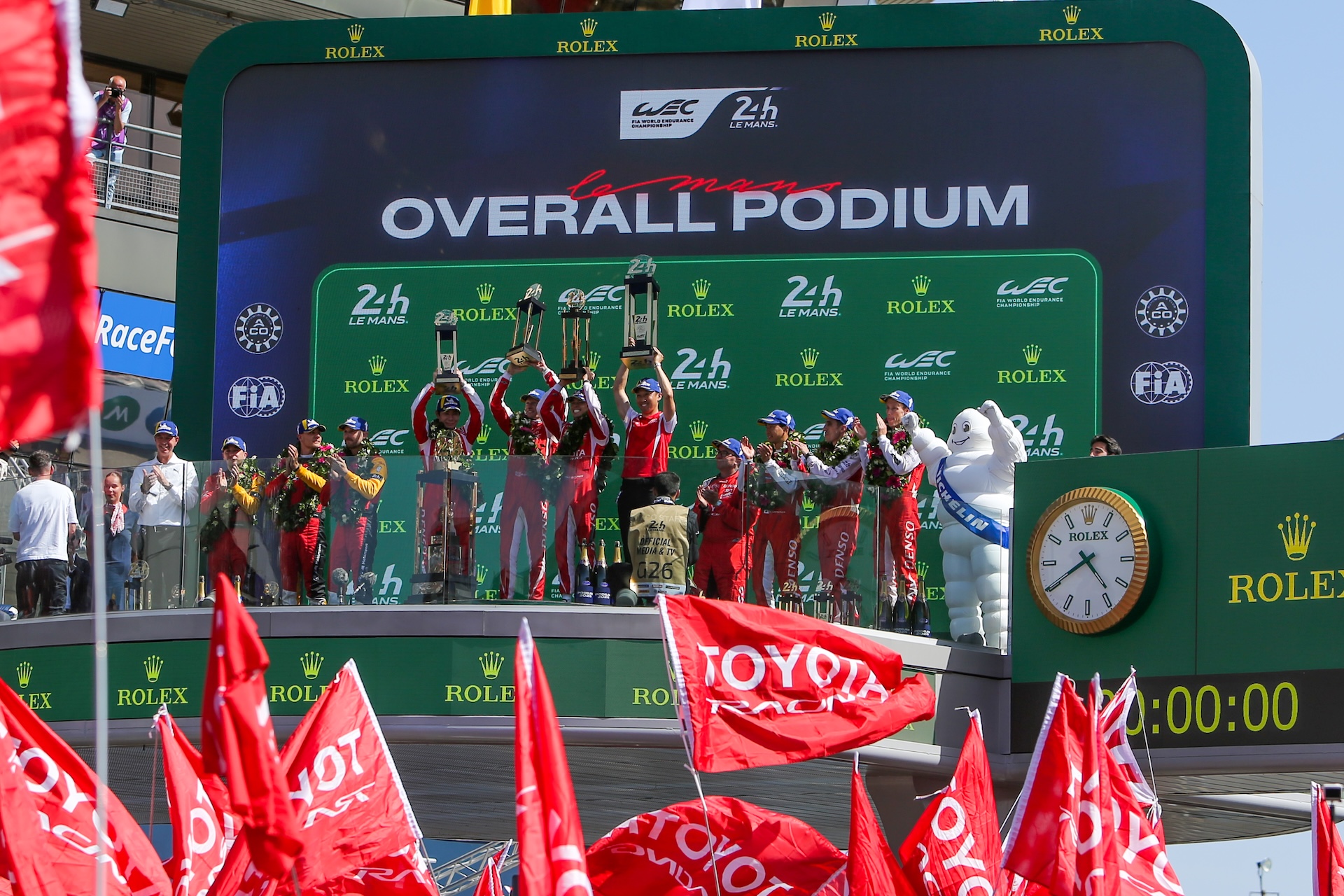
The No. 7 Toyota prototype driven by Kamui Kobayashi, Mike Conway, and Nyck de Vries emerged victorious after a long and dramatic 24 Hours of Le Mans. When it was all said and done, the red-and-white Hypercar crossed the line a brief 10.6 seconds ahead of the second-place finisher, the No. 20 BMW M Hybrid V8, while the No. 8 Toyota rounded out the podium. The gap between first and second represented the fourth-shortest in the race’s history.
Toyota last won the famed race in 2022, which officially concluded the Japanese automaker’s five-year reign at the Circuit de la Sarthe. This year’s victory marked the second one for Kobayashi and Conway, while de Vries became just the third Dutchman to win the race’s overall category. And while it may have looked dominant throughout the race, at least compared to the Ferraris, who had won the last three editions of the race, the No. 7 wasn’t the favorite Toyota to win, and it had to fight its fair share of gremlins that had plagued the crew throughout the event.
Following the race, Toyota’s technical director, David Floury, told Motorsport.com that the car had been fighting intermittent issues that kept causing it to enter “safe mode.” As a result, the leading car was losing up to 8 km/h, or nearly 5 mph, compared to its sister car. For a track as top-speed-heavy as Le Mans, that’s a big deficit that compounds lap after lap.
“The sensor was not gone completely, but it was drifting and noisy,” Floury explained. “Then, it messed up all the FIA measurements, so we had to, at some stage, go to default mode, and then the sensor came back. But even when the sensor was back, we were triggering a lot, so we had to reduce the power.”
Even before the sensor issue arose, the Toyota had started the race all the way down in 14th place, and the No. 7 crew had to accept that its No. 8 partner was highly favored to win. After the start, the car was battling tire issues, then a puncture, and later some ill-timed yellow flags and safety cars, which didn’t make the trio’s job any easier. All while the Cadillacs and BMWs were showing great pace.
“I think we had a very challenging week, and even including the race, we were not smooth enough. I mean, we had a puncture, we had a driveshaft sensor issue, so we had no power. It was very tough for us, but we made it in the end,” Kobayashi told the media after the race. “Robin made it super tense; I think Nyck was closing his eyes in his room for the last hour, hiding from everyone.”
“I was pacing around in the drivers’ room, had about 15 toilet breaks in the last 30 minutes! But we got through it, and we’re here – we did the job. I’m incredibly grateful and relieved, as well as happy,” de Vries added.
“The race was relentless. We had lots of challenges come our way but somehow, we always kept going. Frankly speaking, there were many moments that I thought we were out of contention. But somehow… they say that Le Mans chooses you to win, and I think that’s what happened for us today. I’m very happy that I got that monkey here off my back and added that to my list,” said Kobayashi.
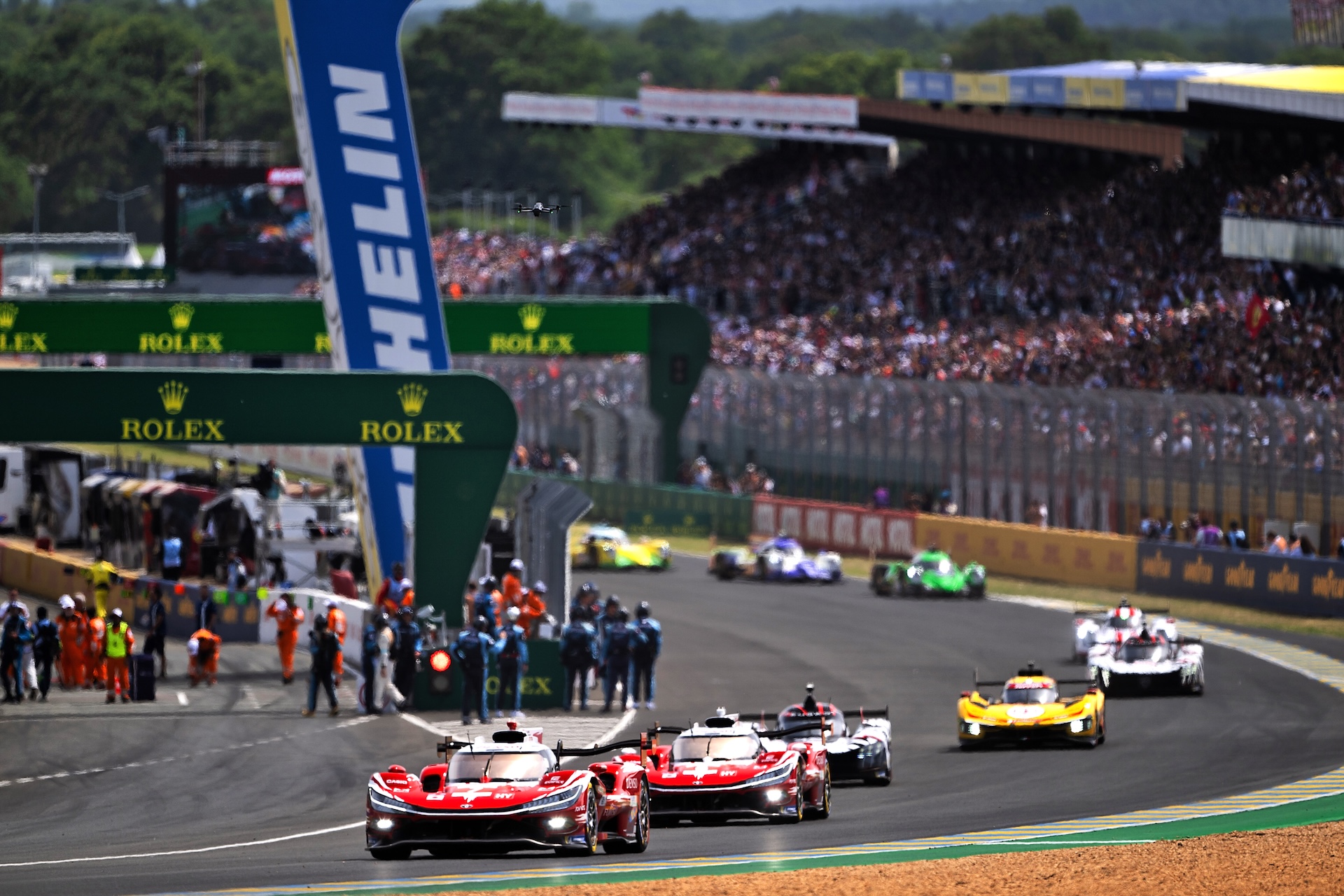
Ferrari’s endurance chief designer, Mauro Barbieri, told the outlet that the Scuderia suffered from an “unbalanced” performance, though it did not explicitly mention BoP; teams and drivers are forbidden to do so per the rules. And while the BoP data is confidential and therefore not disclosed to the public or the media, there’s probably a little (or a lot) of truth to Barbieri’s statement. It was the first time anyone saw the Ferraris struggle since the program’s debut in 2023.
“I think it was clear already since the test day, maybe even before, that the field was unbalanced and that we were not among the top performing ones,” Barbieri told the outlet.
Likewise, the Cadillacs weren’t able to capitalize on their good performance throughout the week, at least not when it mattered most. The No. 12 of Will Stevens, Louis Deletraz, and Norman Nato showed promising pace throughout the race and, at times, it really looked like they could fight for a win—though they were going to need a bit of luck. Unfortunately, that luck never came; quite the opposite, when a full-course yellow threw them off rhythm.
“It is disappointing not to be on the podium,” Nato told Motorsport.com. “Obviously, we’ve been very unlucky with the full course yellow—the last one where we’ve lost about 40 seconds. We had to do an emergency pit stop. From there, three hours before the end, it was the worst time to get this full course yellow.
“When I entered the pits, they went back to green, so we lost about 40 seconds. It really compromised our race from there, because after that there was no full course yellow or safety car or anything. So it’s basically like a pure pace if we had to come back, but we were about 20 seconds behind,” he added.
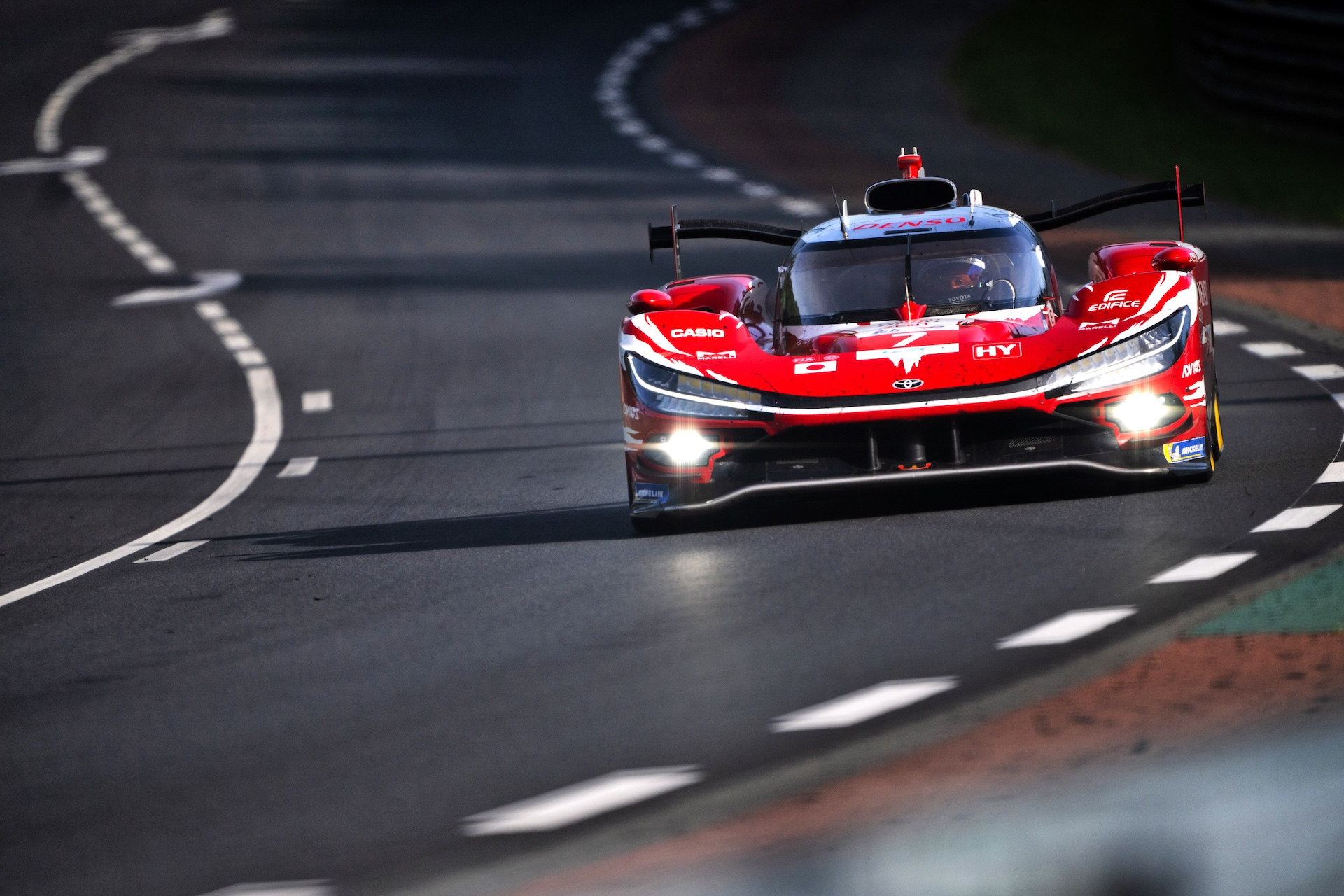
At the end of the day, the No. 7 Toyota crew showed the skills and the grit necessary to beat the odds and everyone else who came against them. Toyota’s first win in four years shows that Le Mans is an endurance challenge lasting more than 24 hours; sometimes it lasts for years. While the race itself is twice around the clock, building a team, developing a car, and fine-tuning all the processes and procedures take more than a day, more than 12 months, and even longer.
The fact that Toyota put in the time, tears, and repeated efforts to get back to the top step of the podium perfectly embraces Le Mans’ ethos. When it showed up, and it didn’t win, the board didn’t pull the plug because of the expense or the heartbreak; no, it gave the team the right tools to come back again and again and again until it got the job done. If it were easy, everyone would be a 24 Hours of Le Mans champion.
Got a tip? Email us at tips@thedrive.com
Loading comments…
Comments couldn’t be loaded. Please refresh the page.