
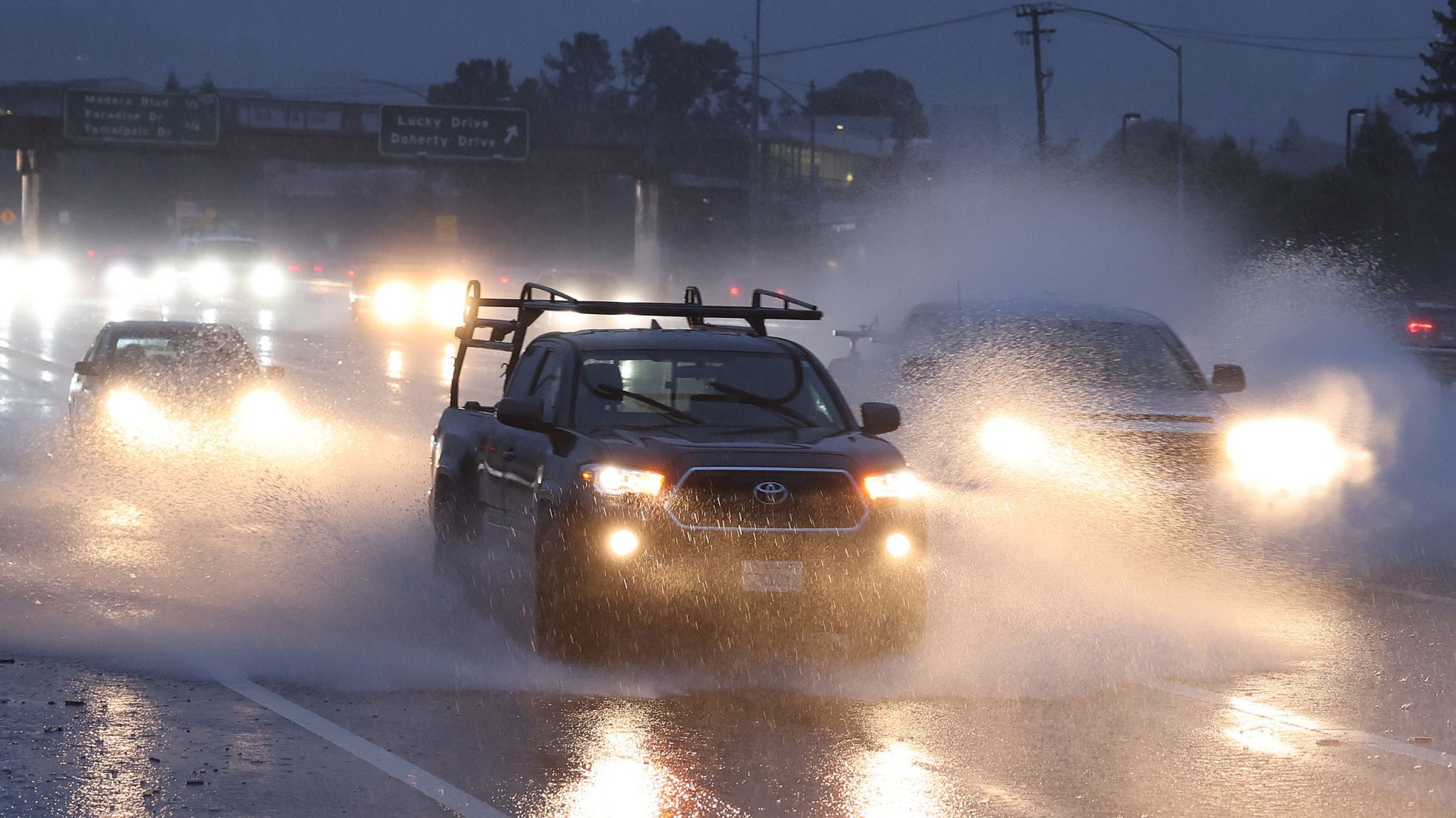
It’s no secret that this time of year means trickier commutes in many parts of the country. When snow and icy rain start falling and visibility diminishes, some drivers like to flip on their hazard lights for peace of mind. The trouble is, according to experts, doing that can actually hinder safety to the point that multiple states actually forbid it.
That last detail was surprising to me. I’m a Pennsylvania resident, and even I didn’t know before doing a little research that the state has very specific laws about when and where hazard lights are permitted. As it turns out, the Keystone State does allow them in motion, but only when the driver cannot maintain a minimum posted speed limit, or 25 mph in a “business or residence district,” causing a disruption to the flow of traffic.
Other states are more strict. California’s code doesn’t mention a carve-out for driving with hazard lights in bad weather; just “to warn other motorists of accidents or hazards on a roadway.” Otherwise, you pretty much have to be stopped. Florida was notably anti-hazards-in-motion until 2021, when its law changed with explicit mention of “extremely low visibility on roadways with a posted speed limit of 55 miles per hour or higher.” And Louisiana and New Mexico flatly disallow the practice.
So it’s clear that every state’s legislature has a different opinion on this matter and, in some cases, those opinions are changing. AAA used to have a running list of the regulations in every state (and Canadian province, for good measure), but that page was seemingly taken down roughly five years ago. You can still access it via Internet Archive, but of course it’s not current, predating more recent amendments like Florida’s.
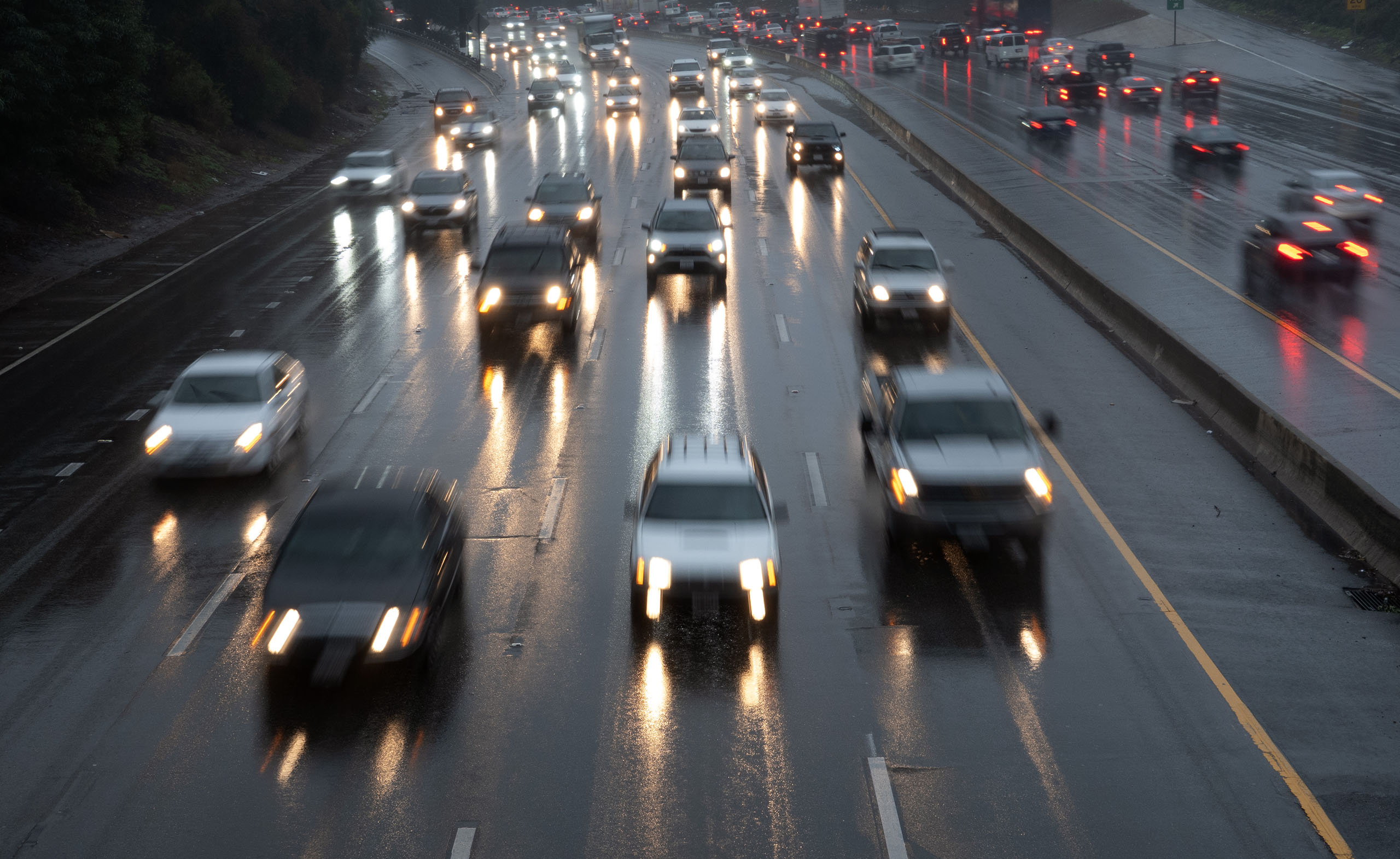
As for the question of why some states—not to mention, AAA itself—have taken a hardline stance on this, the rationale is simple. Hazard lights were originally intended to be used by stopped, disabled vehicles on a roadway, and that’s it. From a distance, you can’t tell if the car ahead, with all its signals pulsing, is standing still or moving, which is confusing. Active hazard lights also prevent drivers from signaling turns and lane changes, which is even more crucial to do when visibility is hampered.
There’s a psychological element at play, too. “People tend to drive where their eyes are looking, and you don’t want them driving towards you when your hazards [are] flashing.” Dr. William Van Tassel, AAA’s Manager of Driver Training Programs, recently told AccuWeather. Plus, the idea that you can reduce the risk of driving in inclement conditions by using your hazards could give someone false confidence.
“There’s no additional traction on their tires,” Van Tassel added. “The hazard flashers don’t affect that.”
Driving in bad weather can obviously be stressful, and it’s only natural that people will engage in behavior to reduce that stress, even if it doesn’t pose any objective benefit. Rest assured that your vehicle’s normal lights are good enough for the job of letting everybody know where you are in a storm.
Got a tip? Reach out to tips@thedrive.com
Loading comments…
Comments couldn’t be loaded. Please refresh the page.