
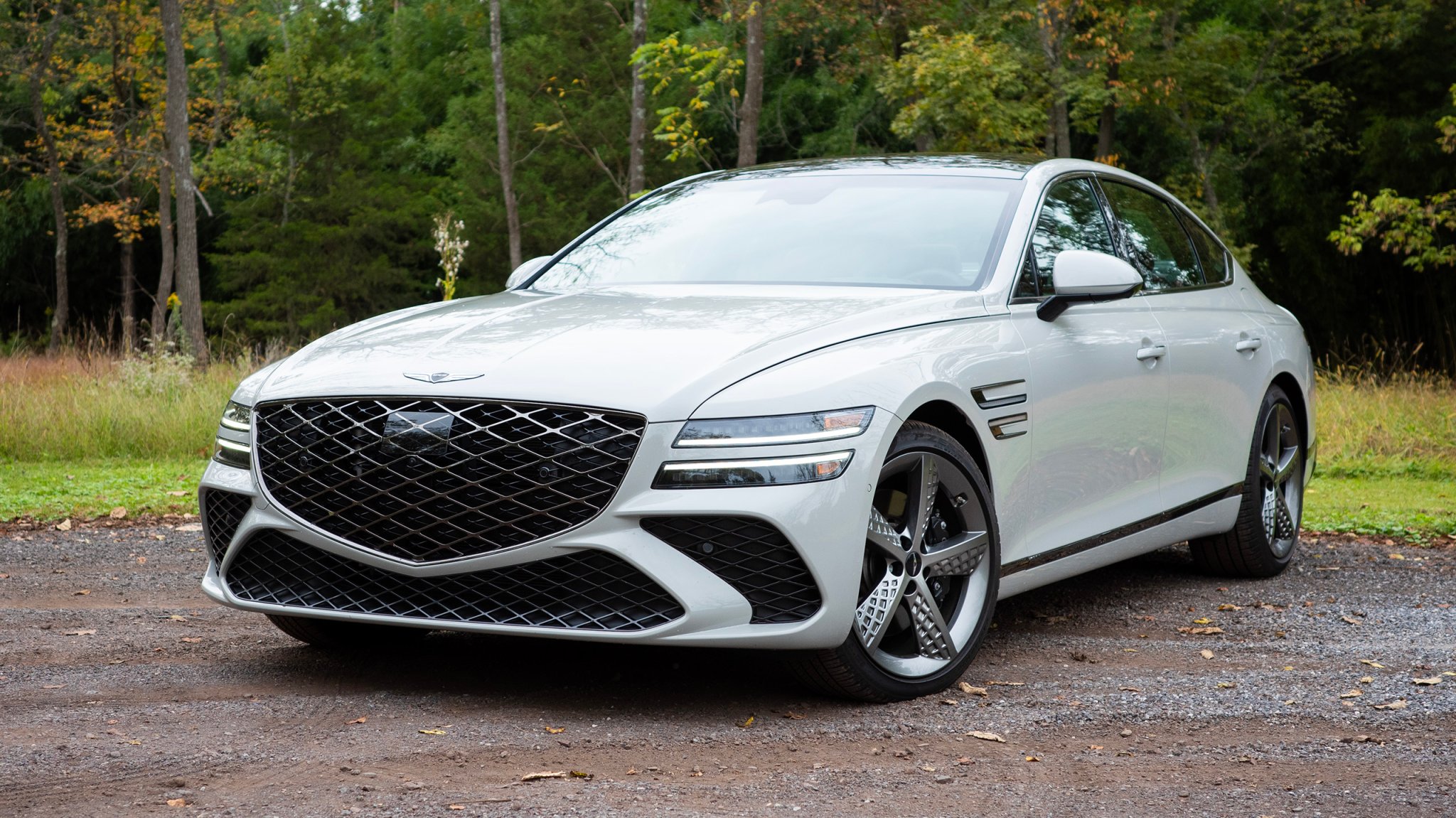
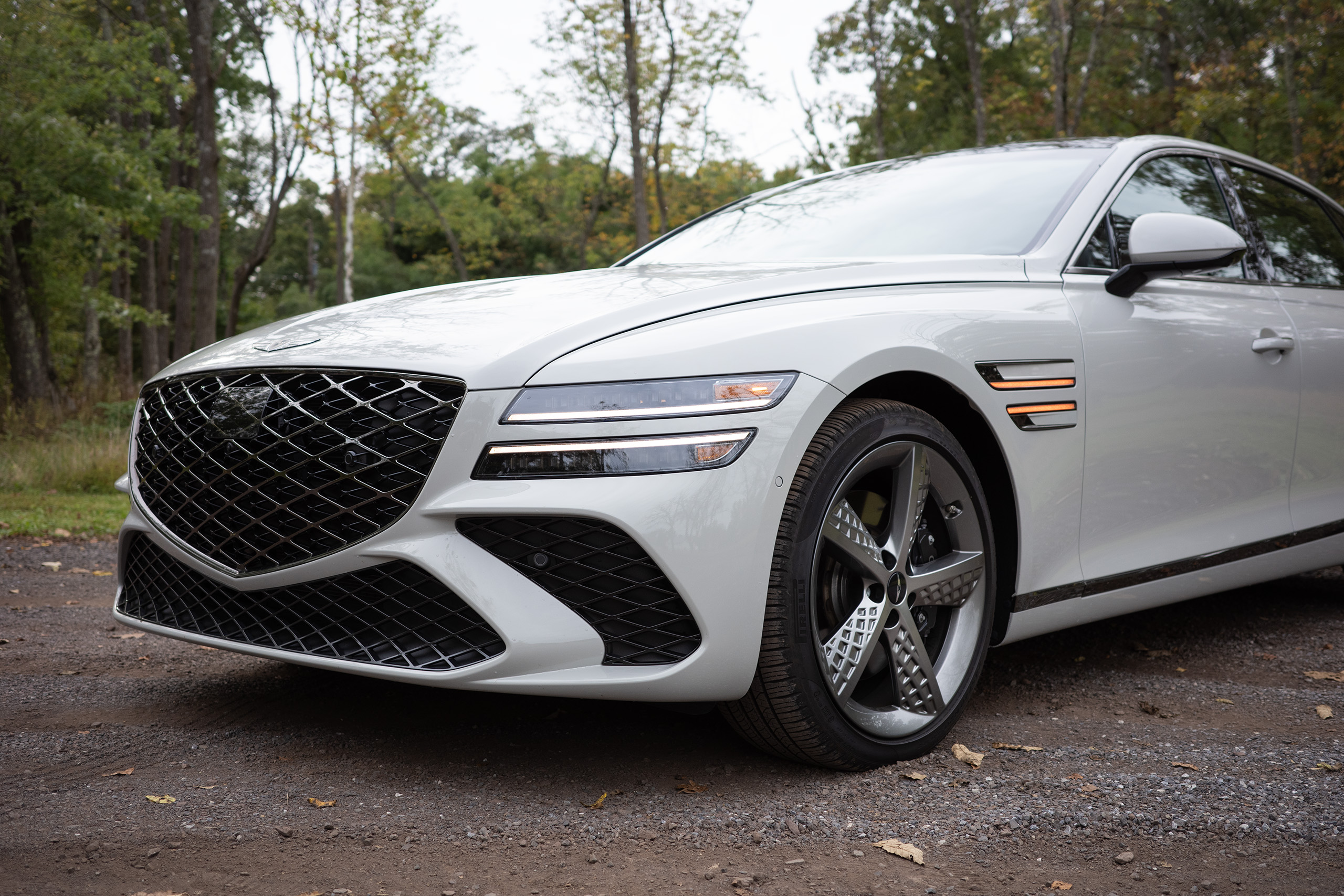
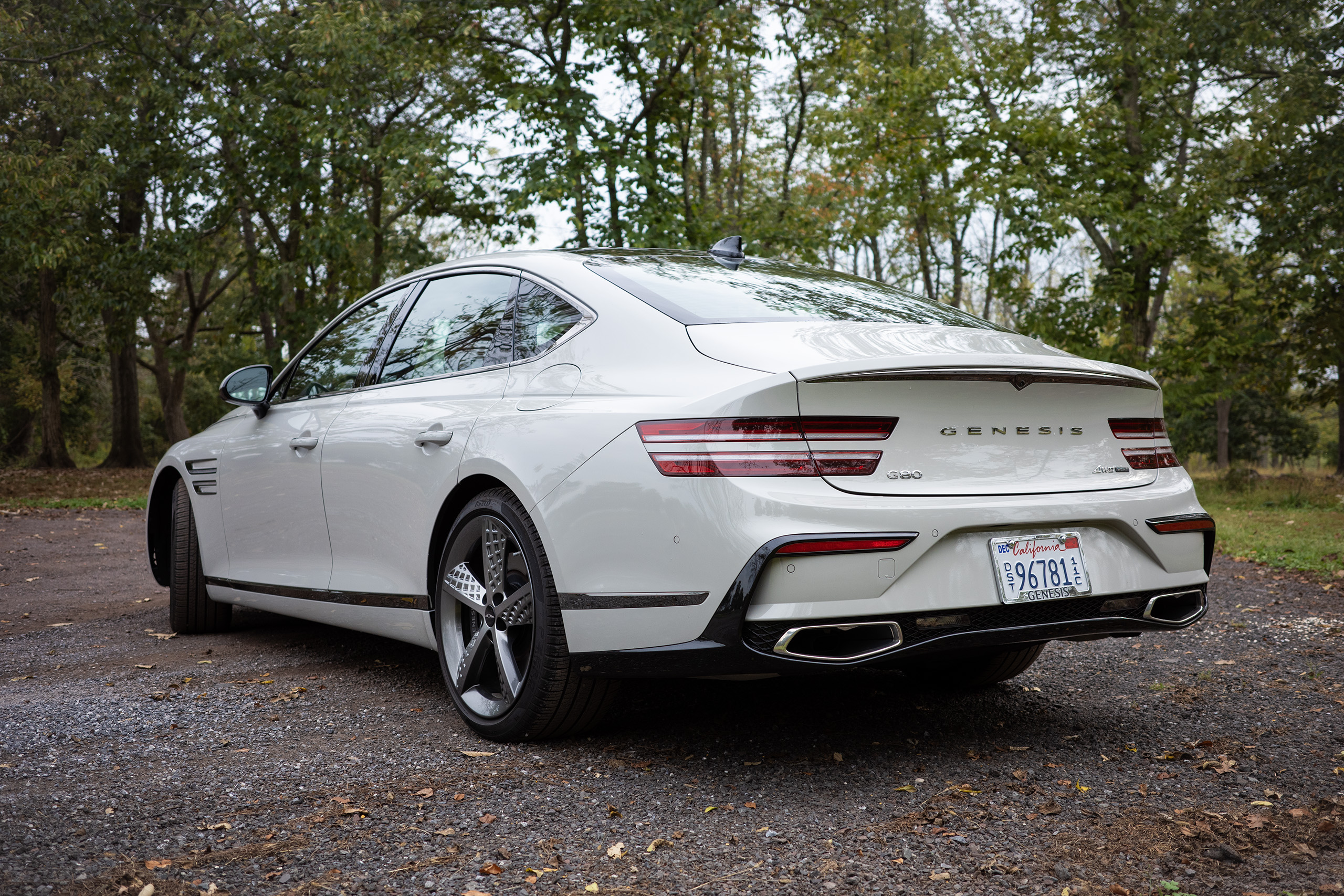
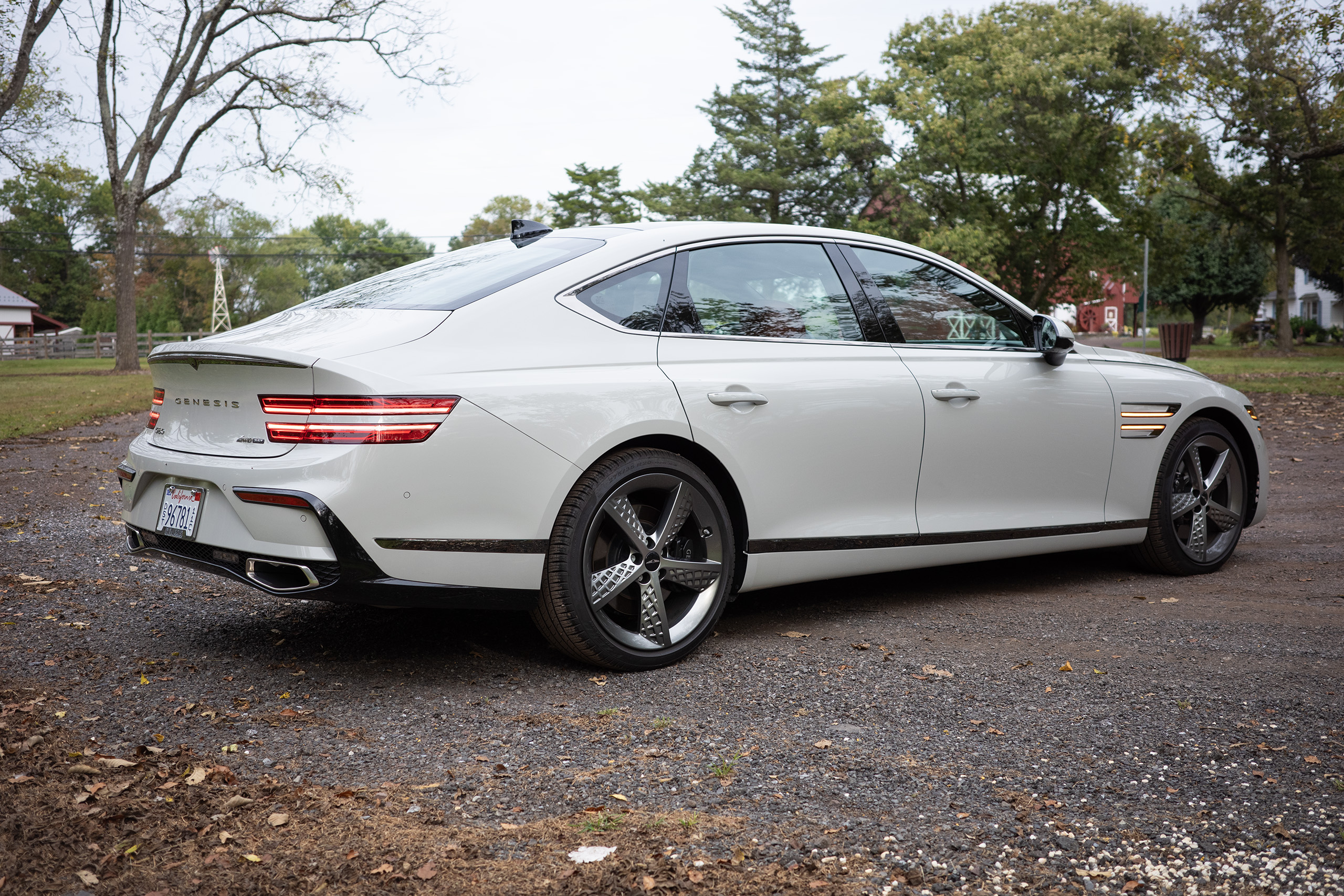
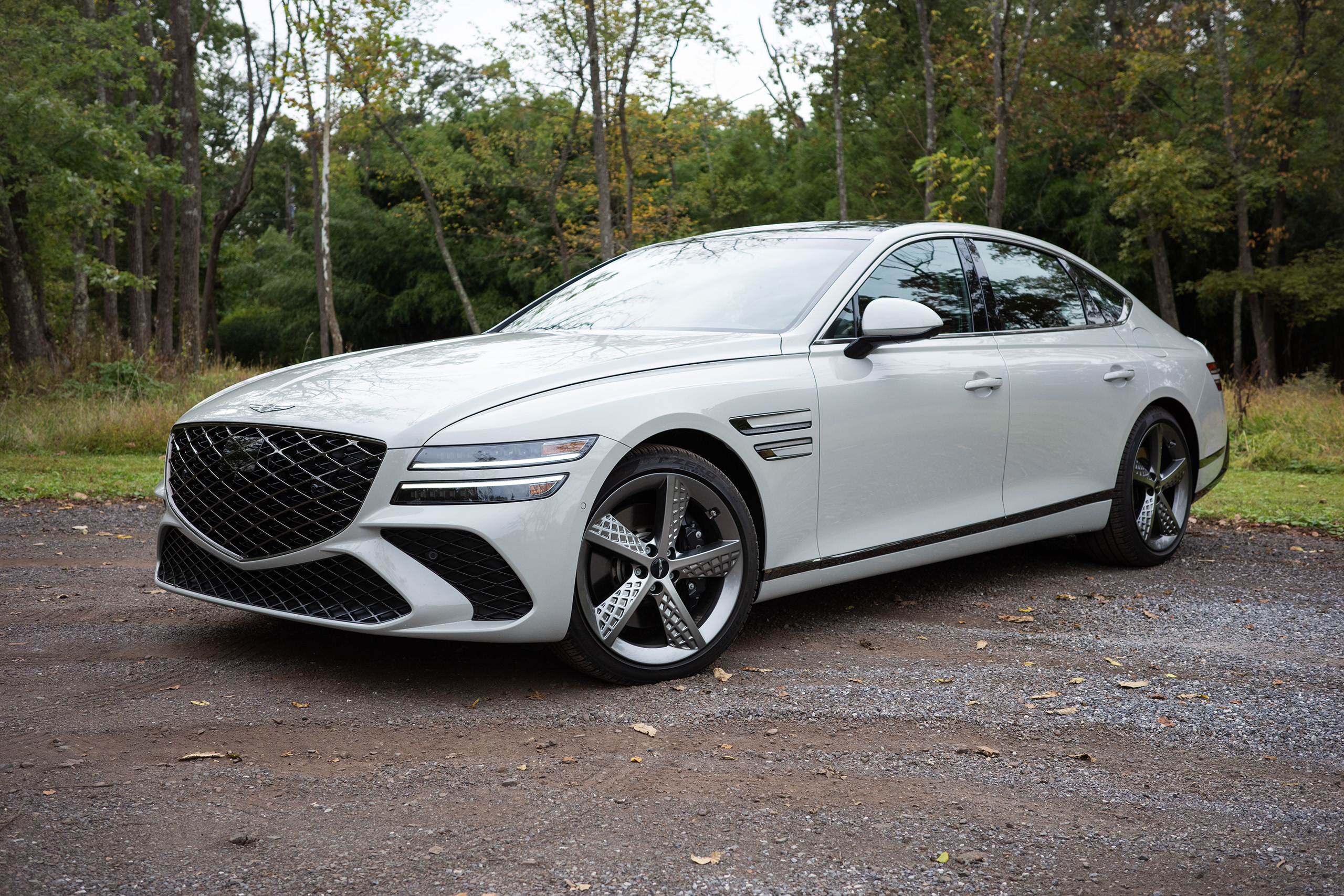
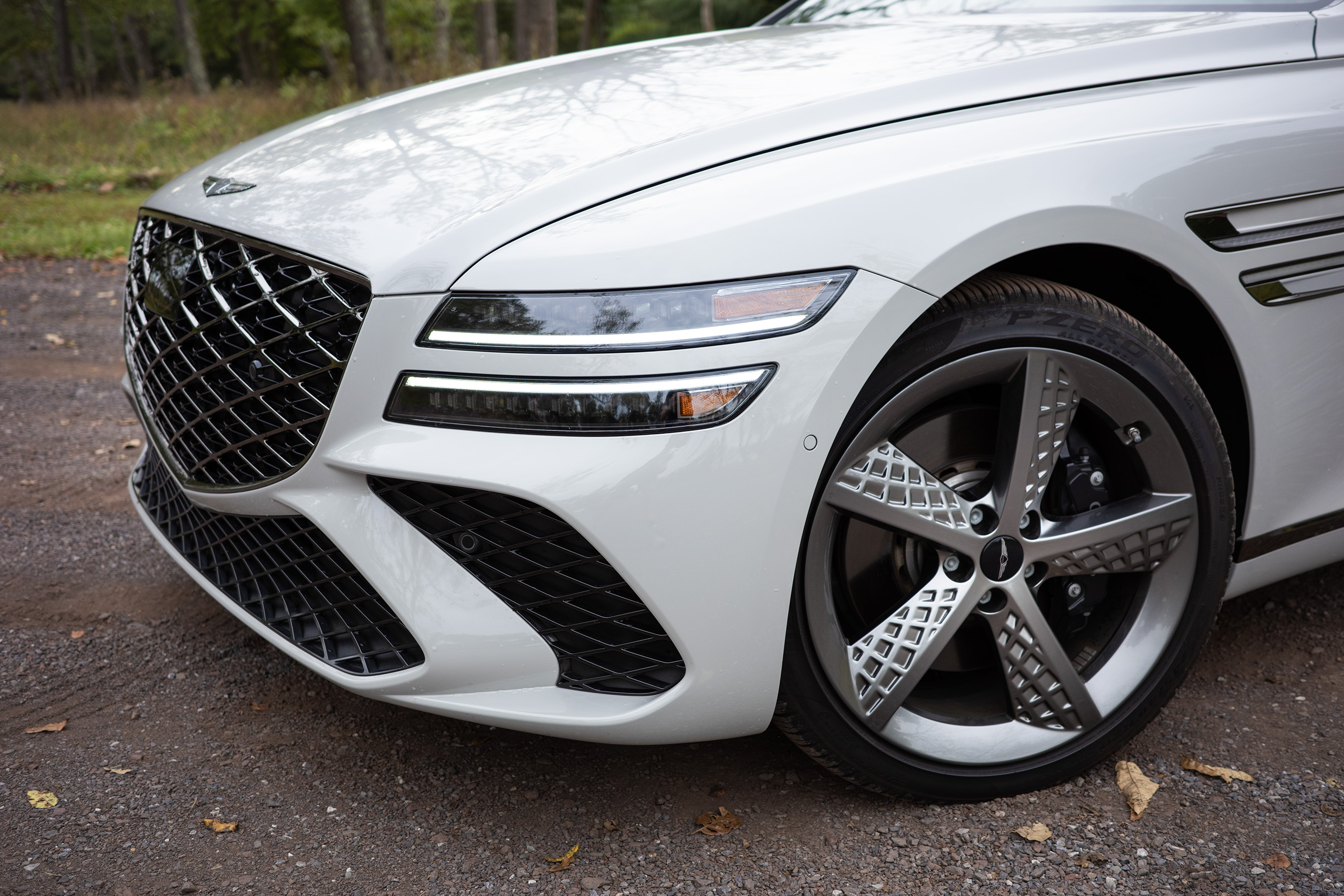
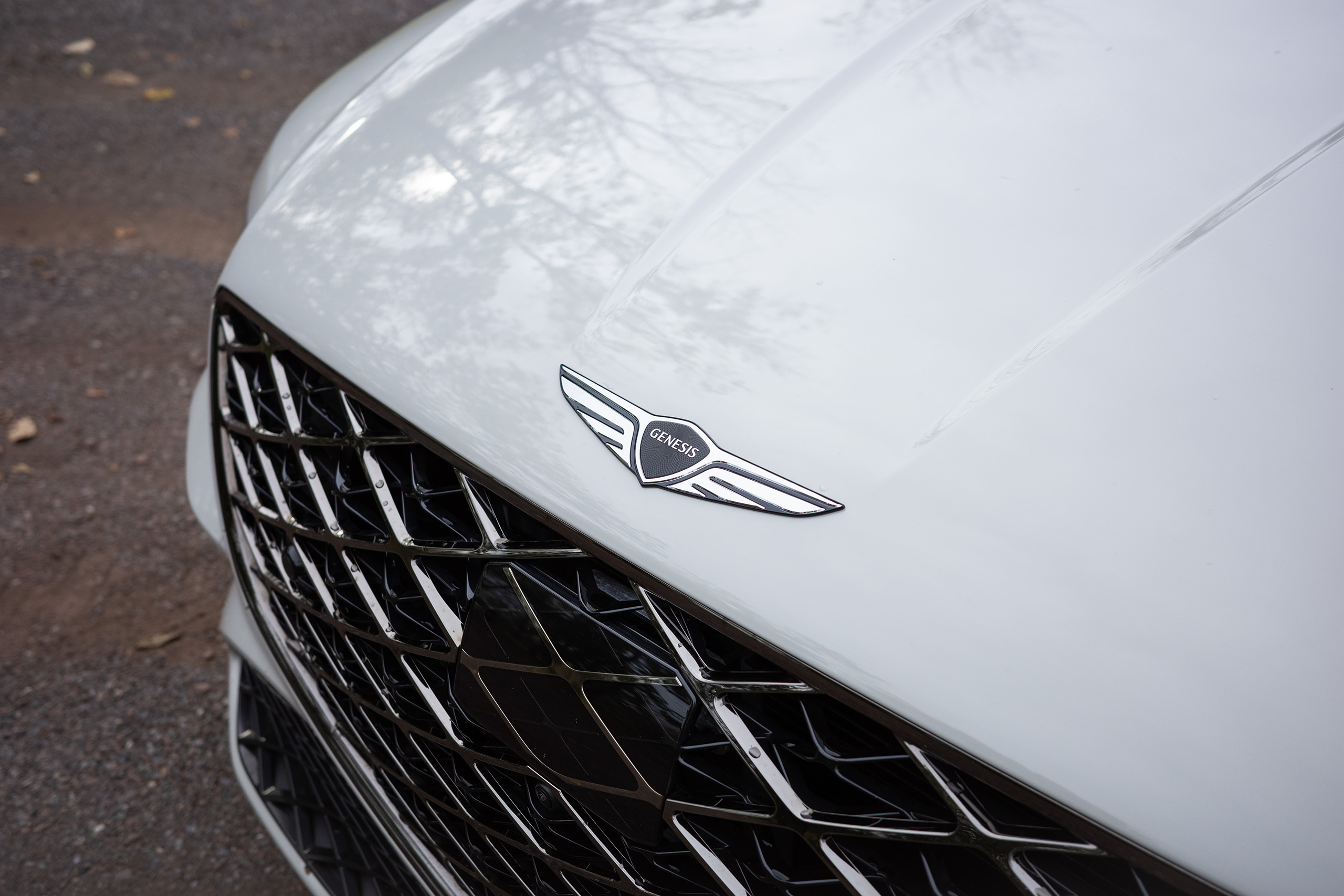
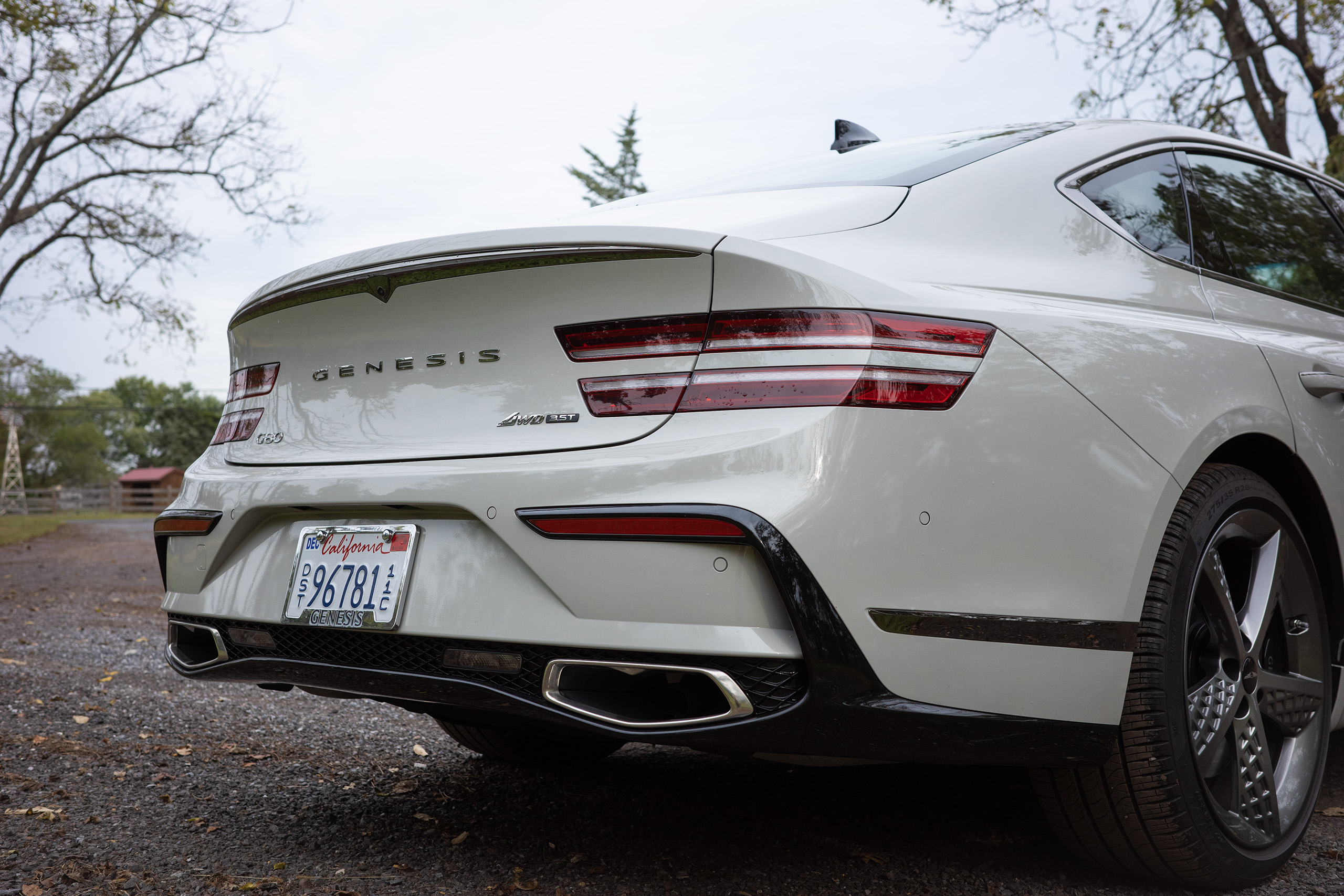
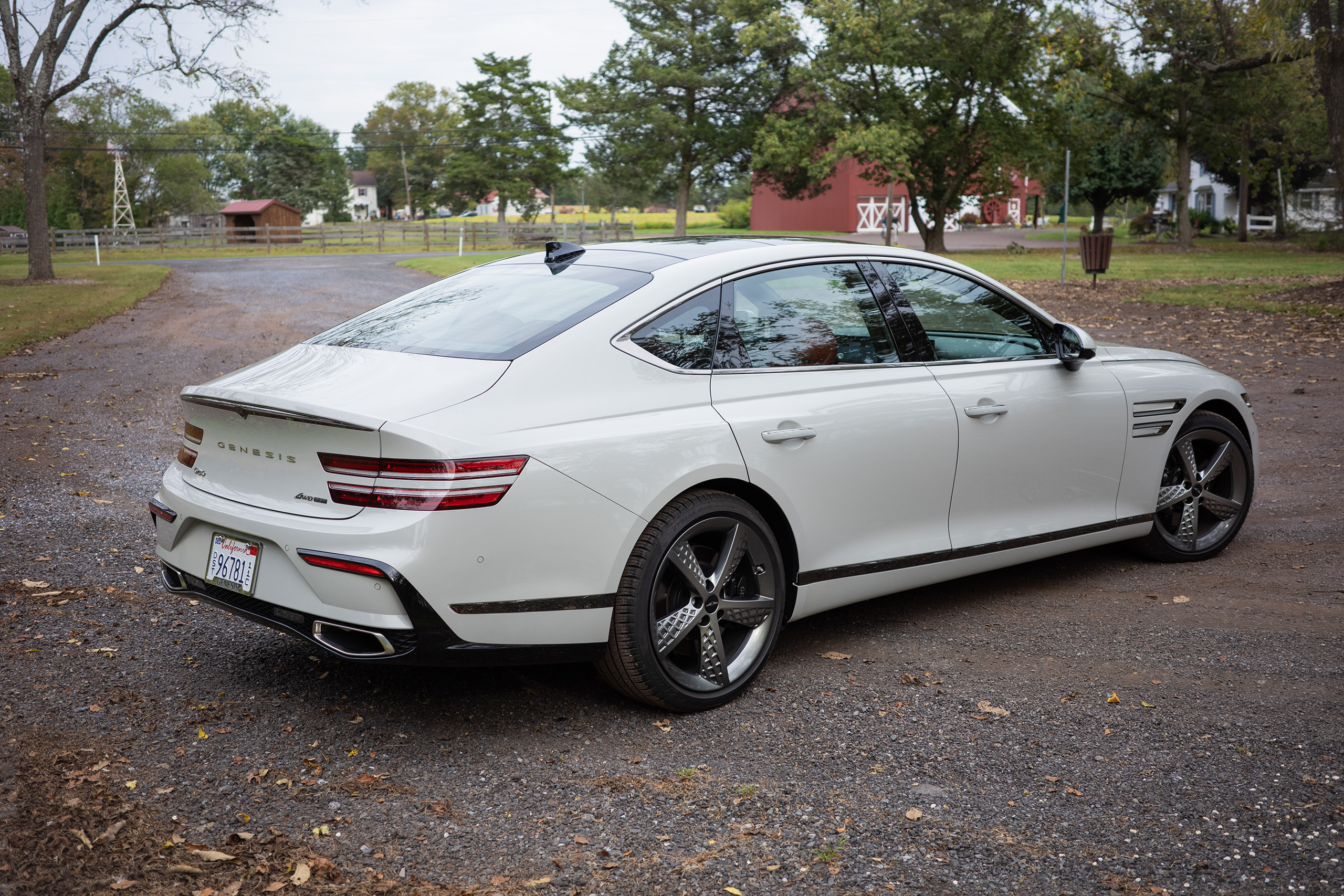
I have been wanting to drive the 2025 Genesis G80 for a long time. An automaker rarely introduces a new model or a successor to one that already exists and grabs my attention immediately upon impact, but that’s precisely what the second-gen G80 achieved when it first hit the scene in 2021. Finally, Genesis had stopped playing catch-up to its German rivals. Finally, the brand had settled on a style uniquely its own, one that people began to notice.
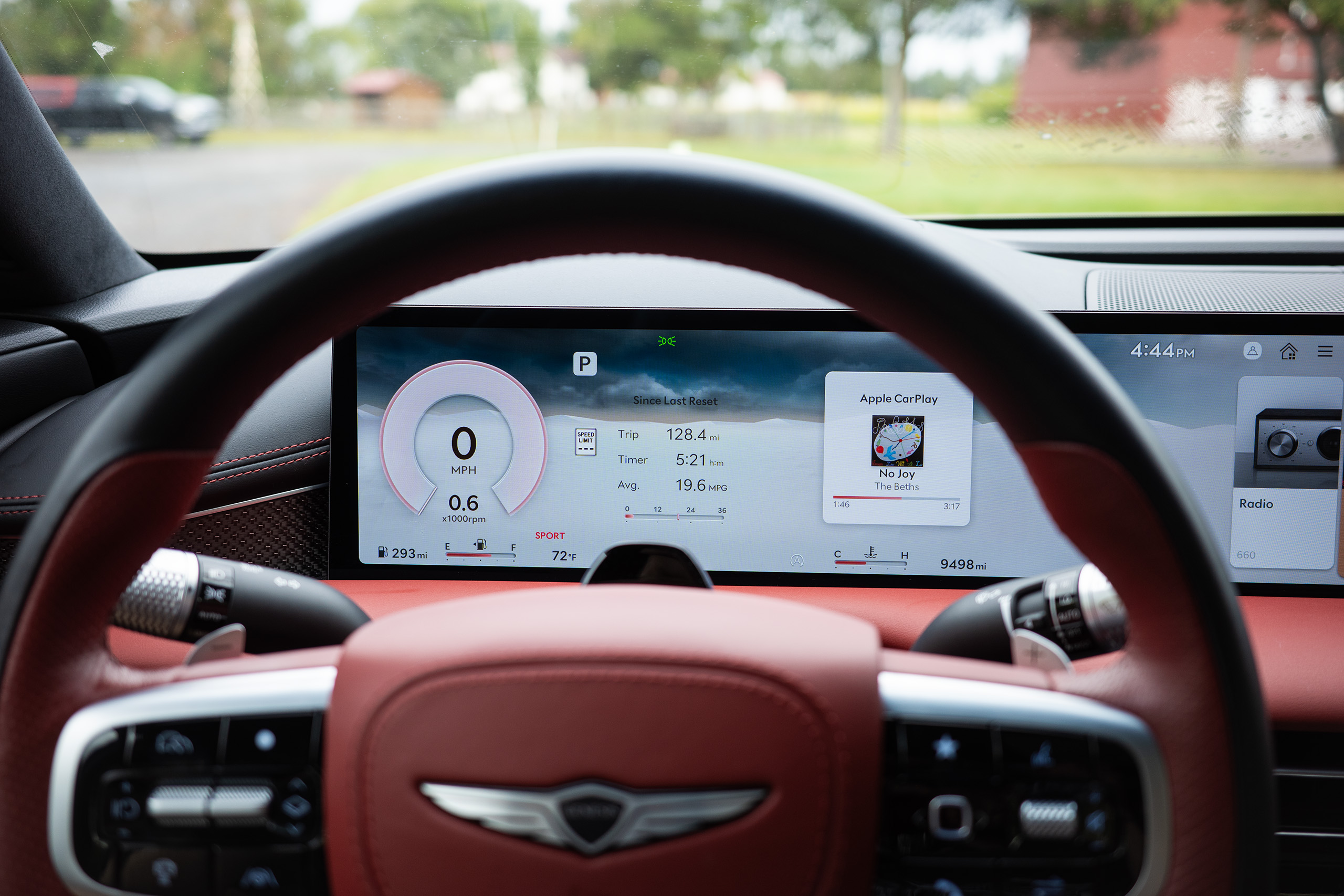
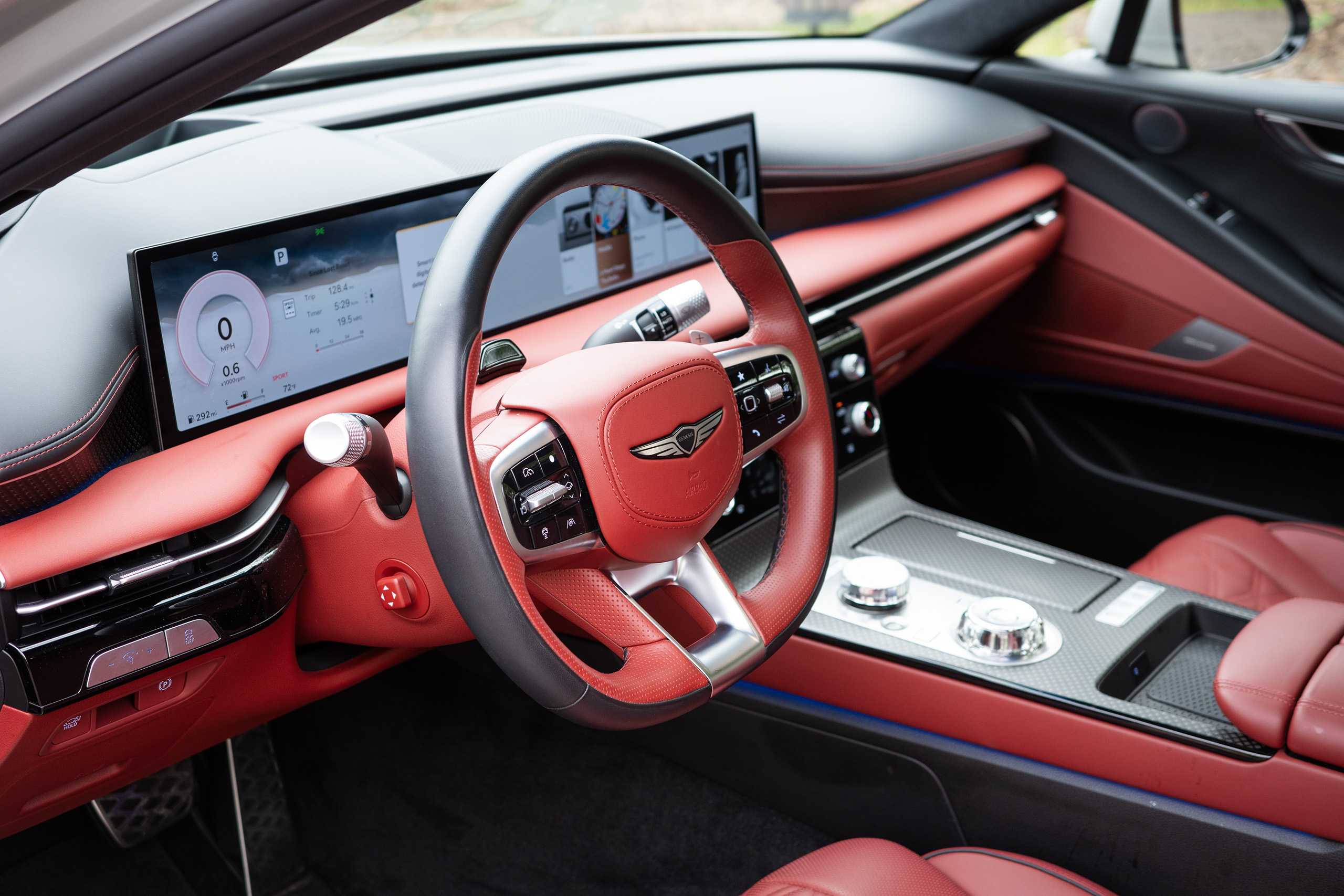
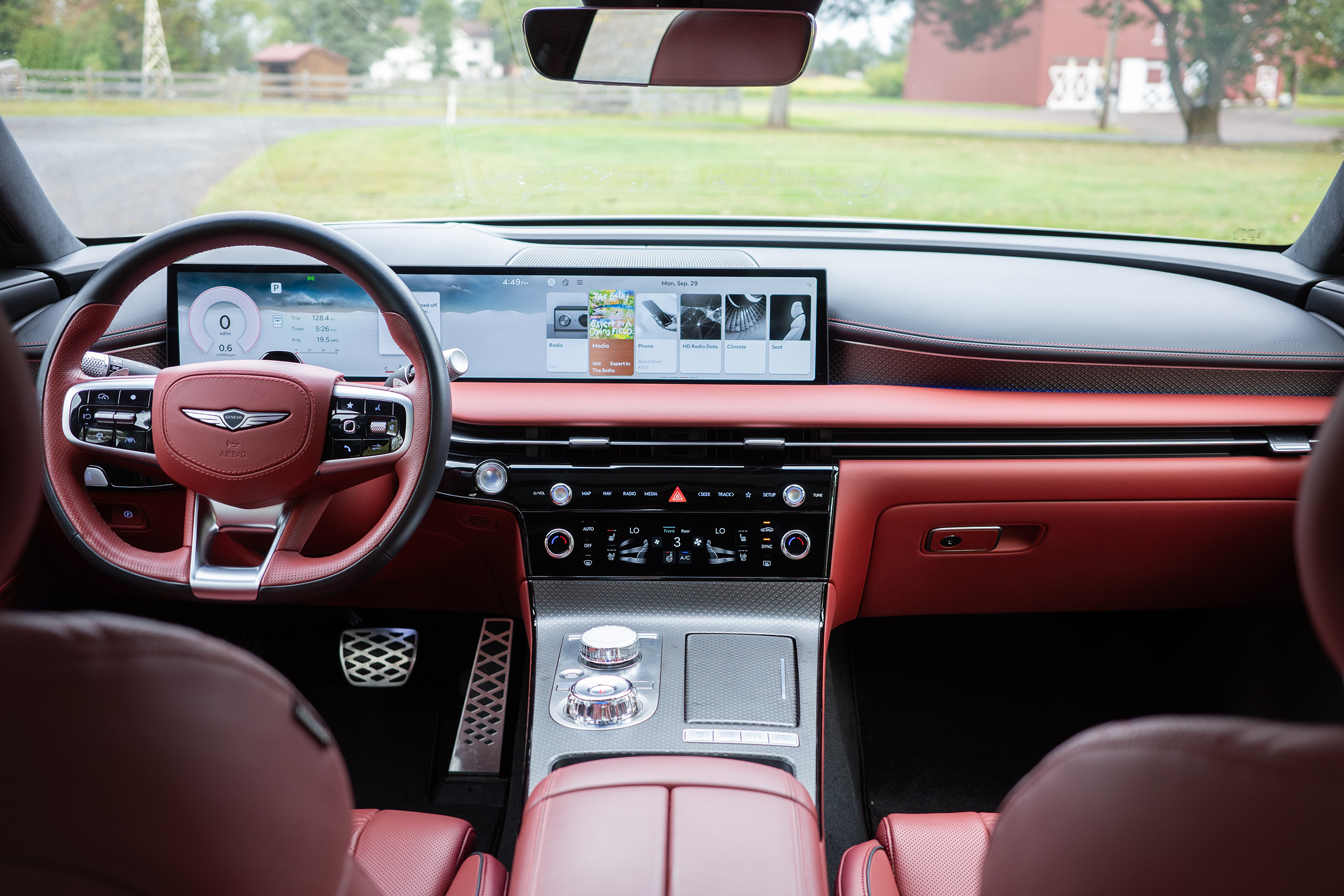
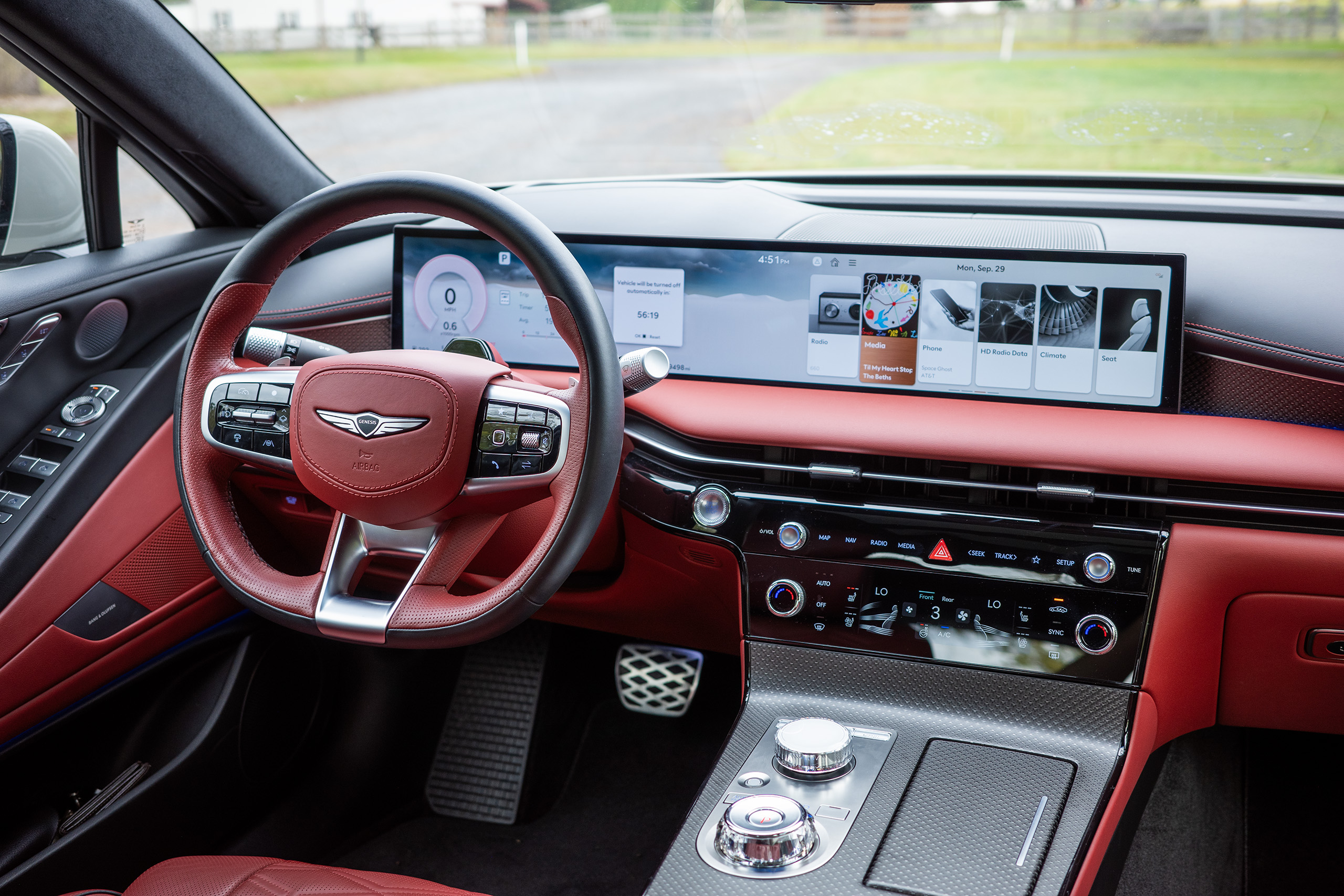
Still, time marches on, and four years later, the G80 has gotten a refresh to keep up with the competition. That interior is still special—though I’d argue a little less so, now that the instrument cluster and touchscreen have been united as one long curved panel, as is the case on practically every modern Hyundai Group vehicle. The design, the quality, and the textures are all still first-rate. This is a cruiser through and through, less so a thoroughbred sport sedan, and that’s perfectly fine. If anything could let it down, it’s that the gorgeous cabin isn’t quite as intuitive as it could be.
The Basics
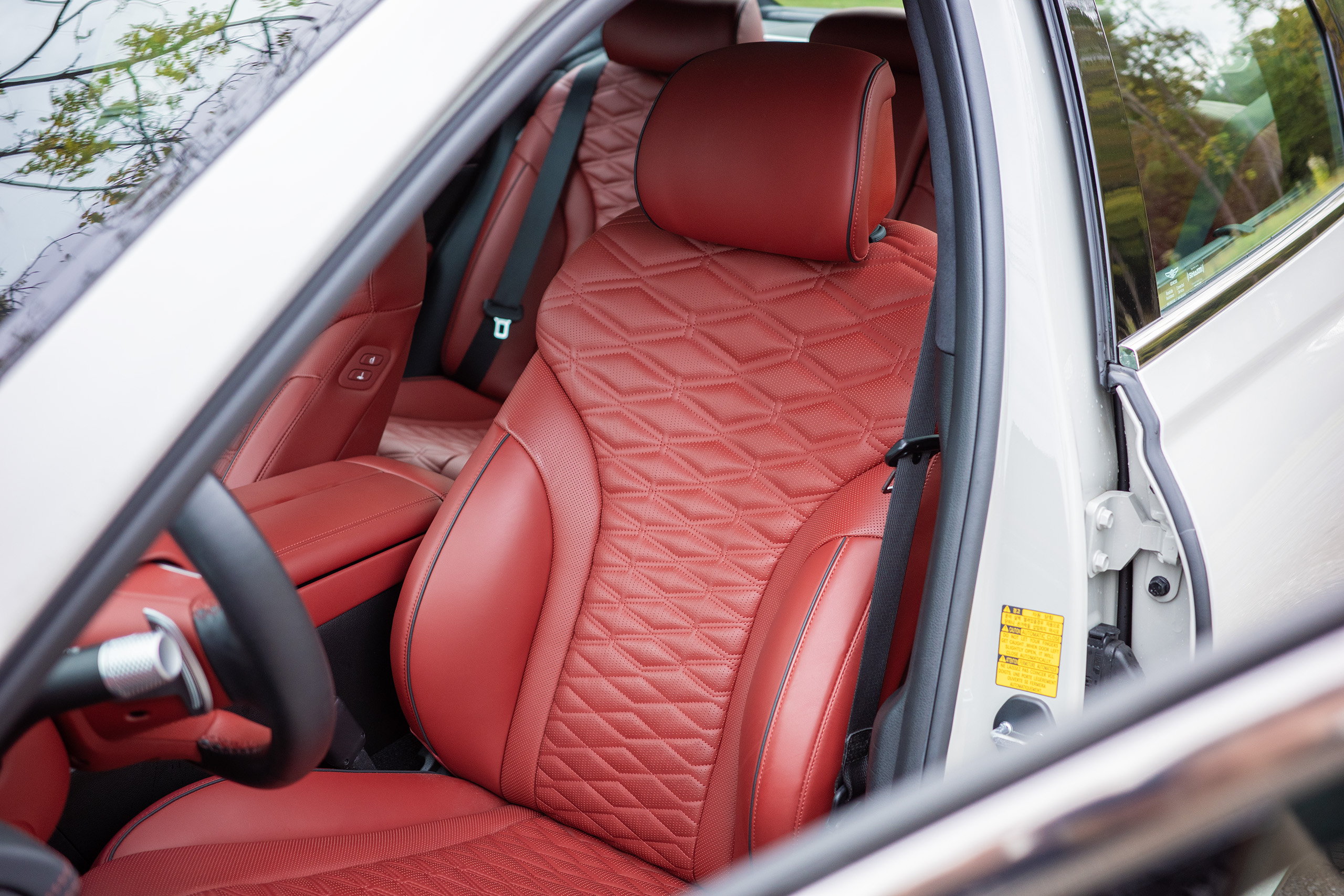
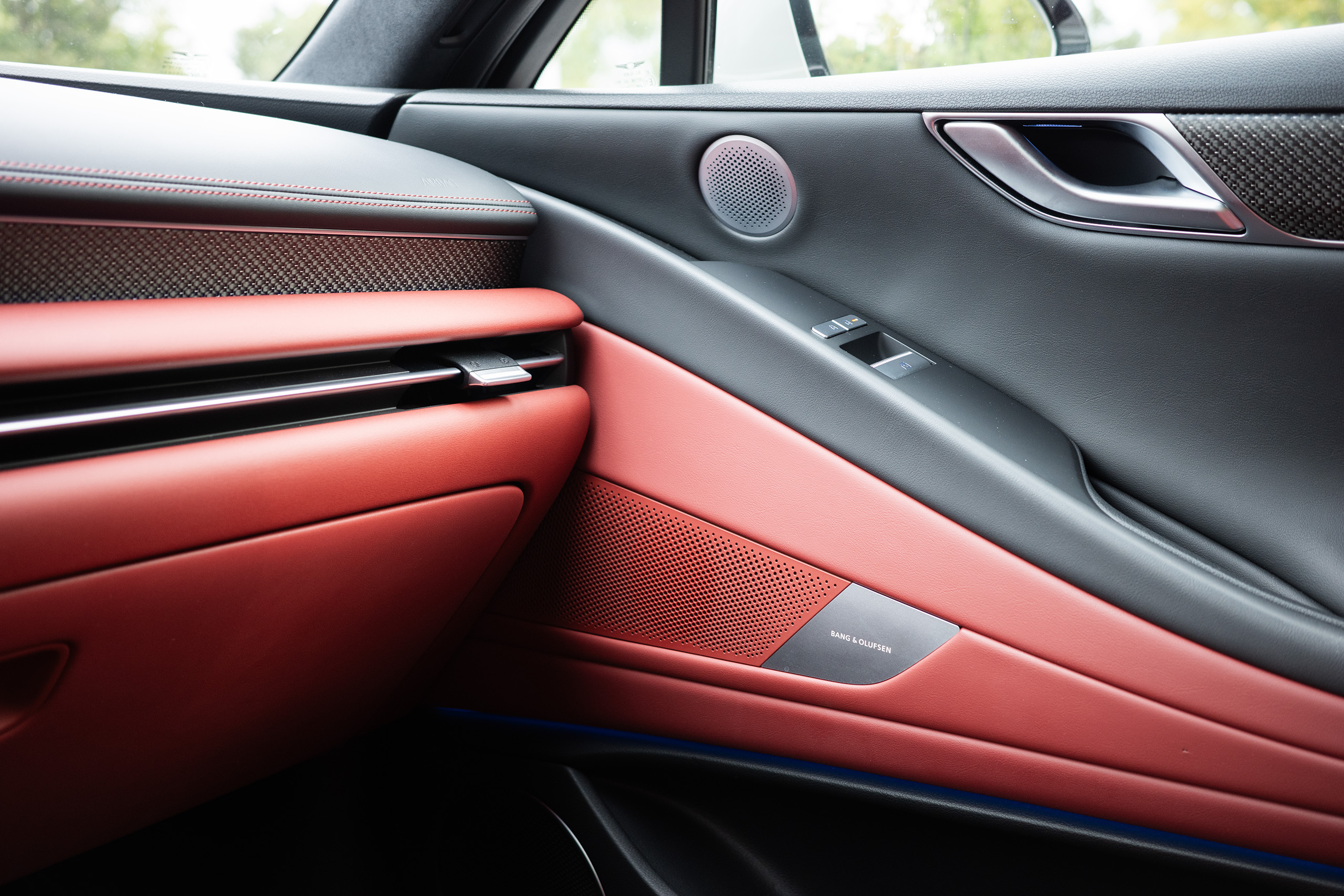
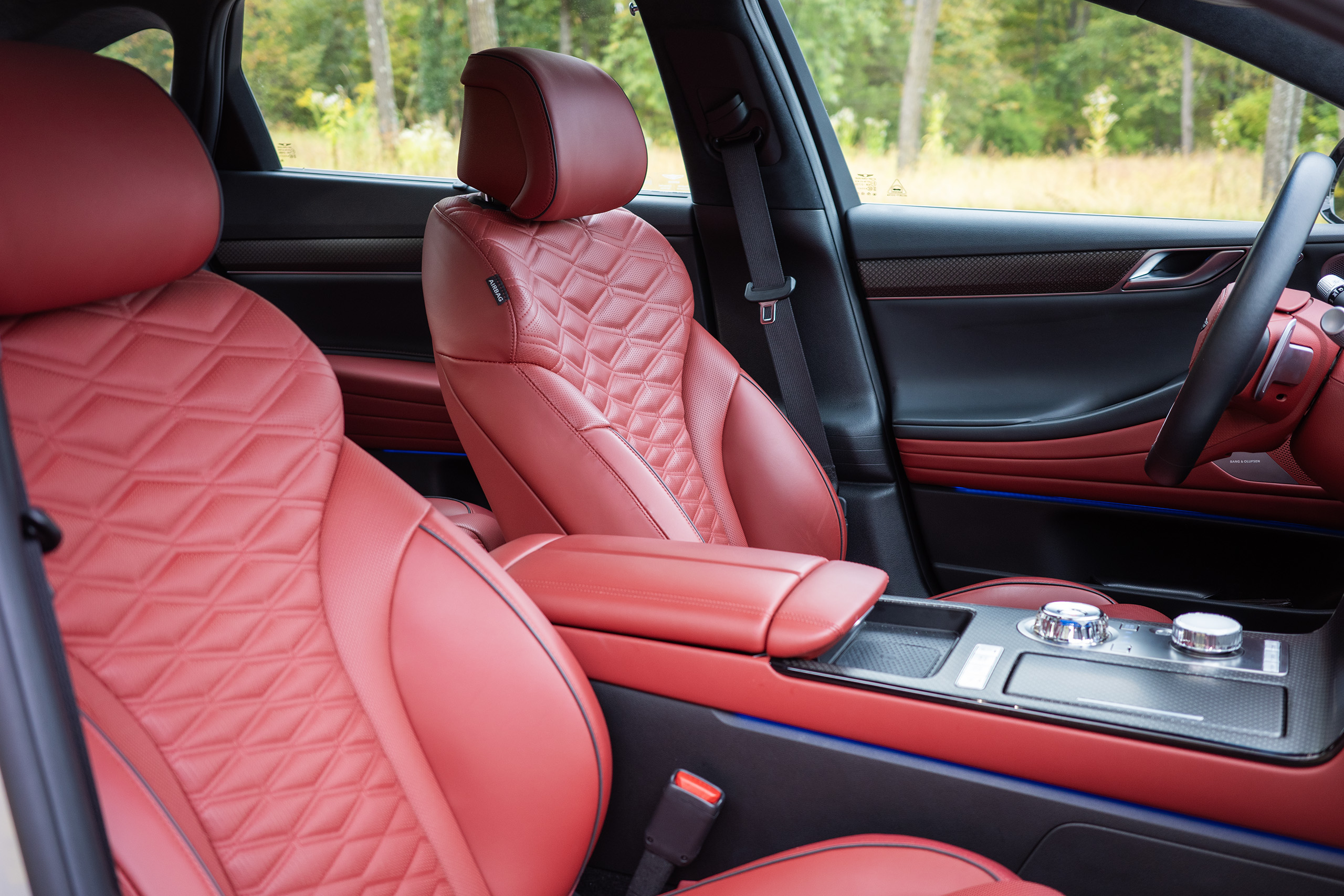
That might sound ominous, but I want to be clear about this: If I were dropping some $70K on a midsize sedan, the G80 would absolutely be on my short list. This example, a Sport Prestige AWD model with the 3.5-liter, 375-horsepower, twin-turbo V6, came to $78,495, and it’s got it all: rear-wheel steering, electronic dampers, a Nappa leather-lined interior with massage for the driver’s seat, a microfiber suede headliner, and a lavish Bang & Olufsen audio system, among many other nice-to-haves.
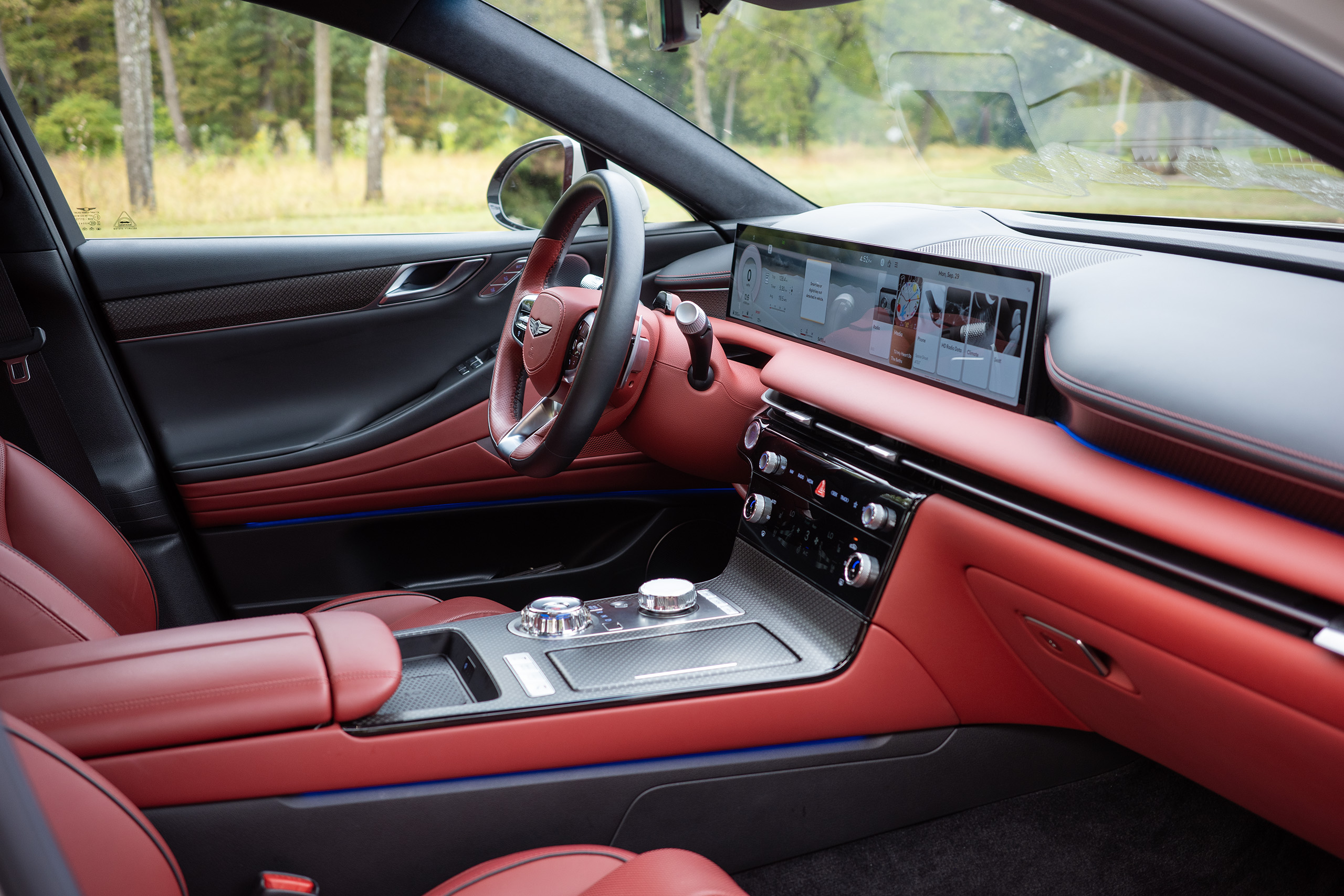
I consider the $83,400 Mercedes E350 I tested last year, and while its ride was a little comfier—hey, you don’t get much better than Airmatic—I thoroughly prefer the fit and finish of this interior more. Genesis knows what true luxury means, and it’s not RGB and another screen to stream YouTube on. Even the carbon fiber trim here looks eye-catching instead of cheap, and that’s a tall order for faux carbon fiber.
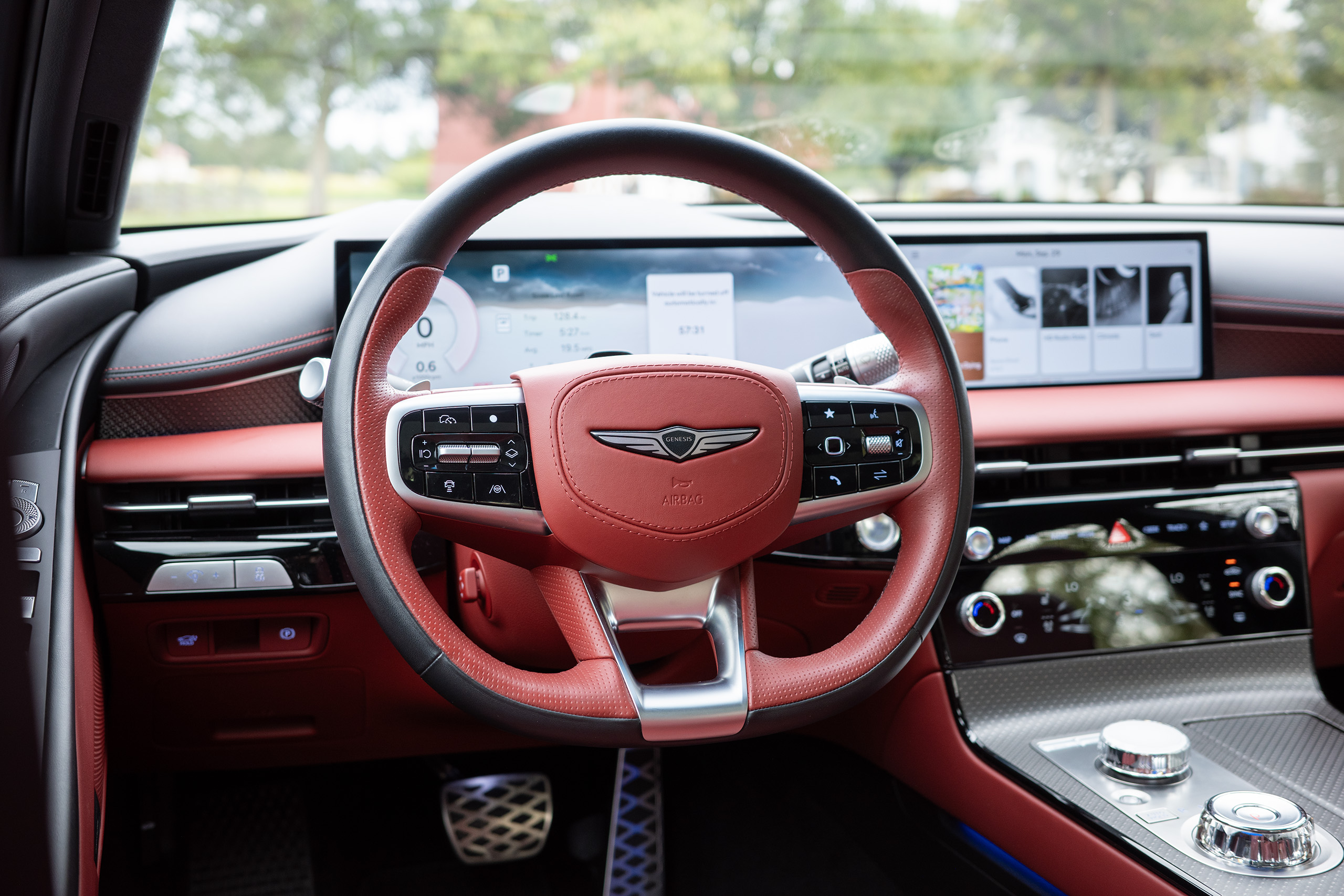
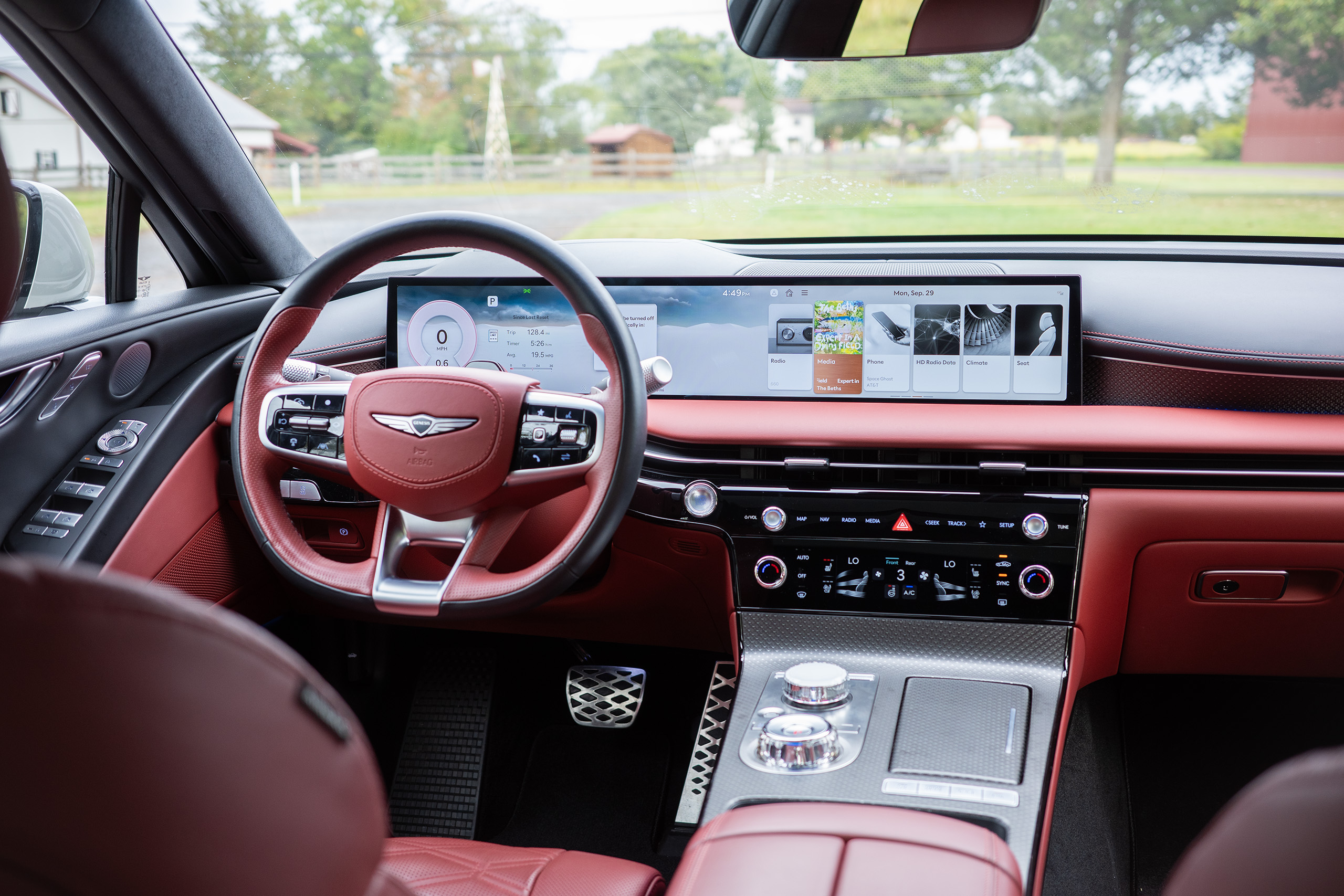
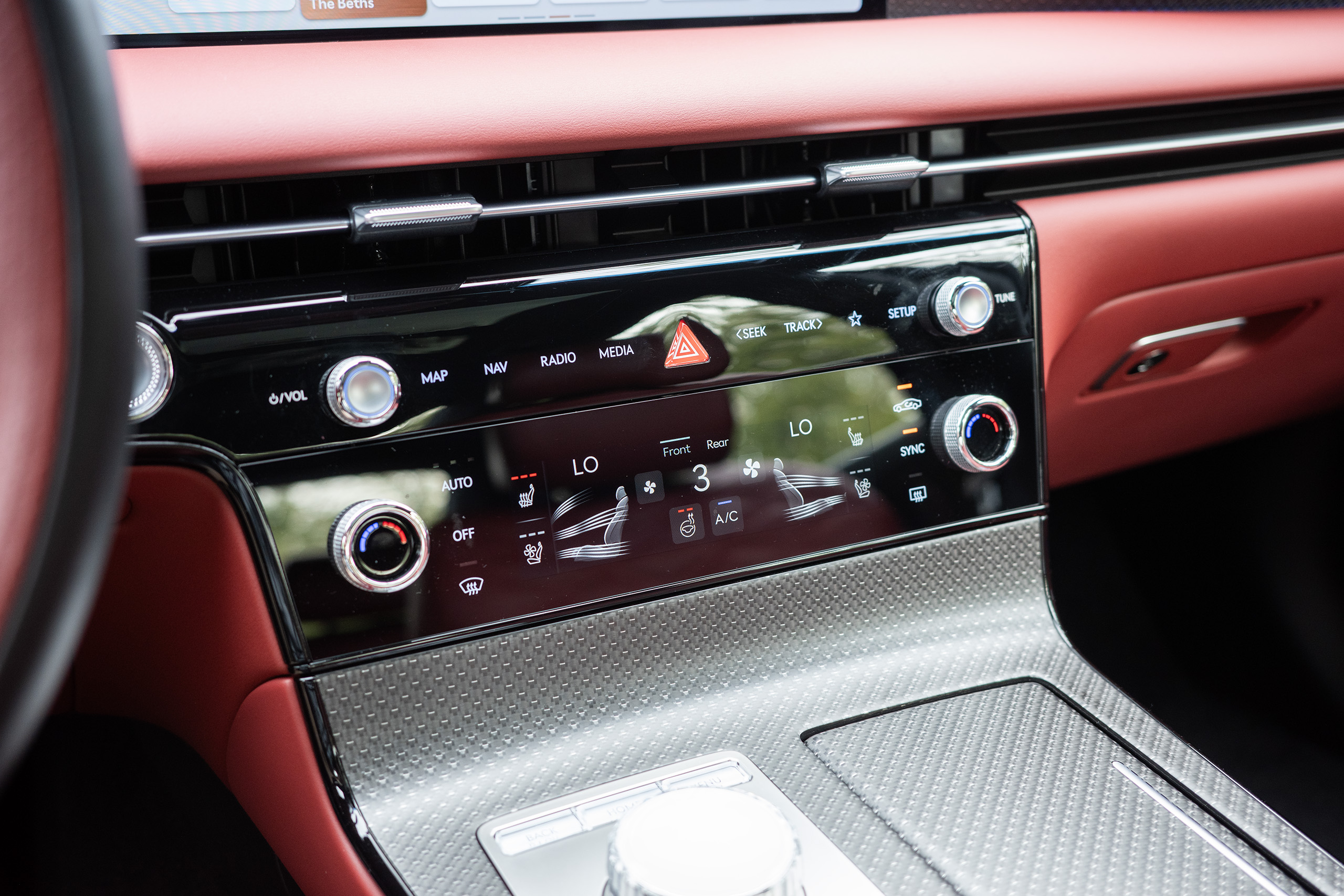
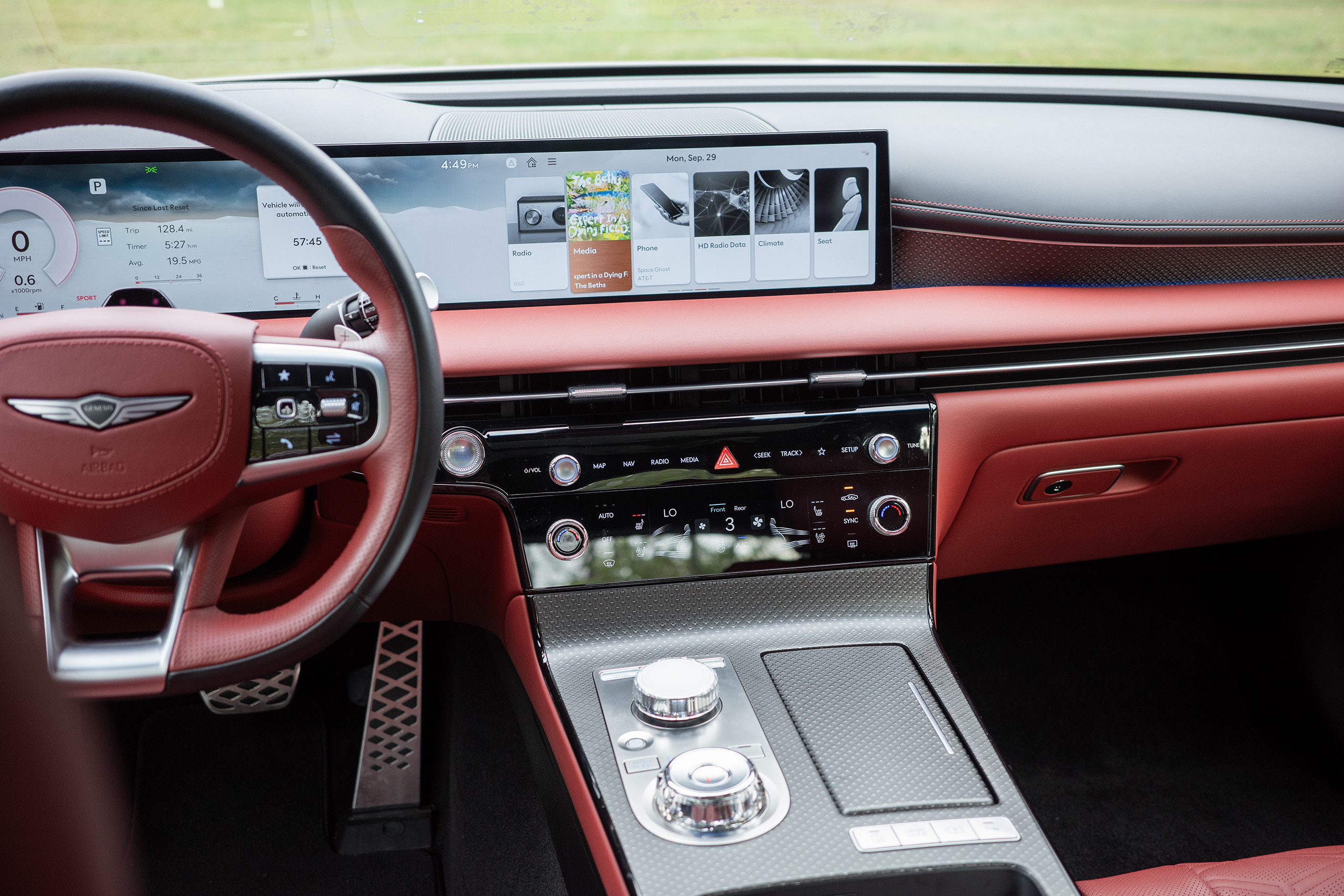
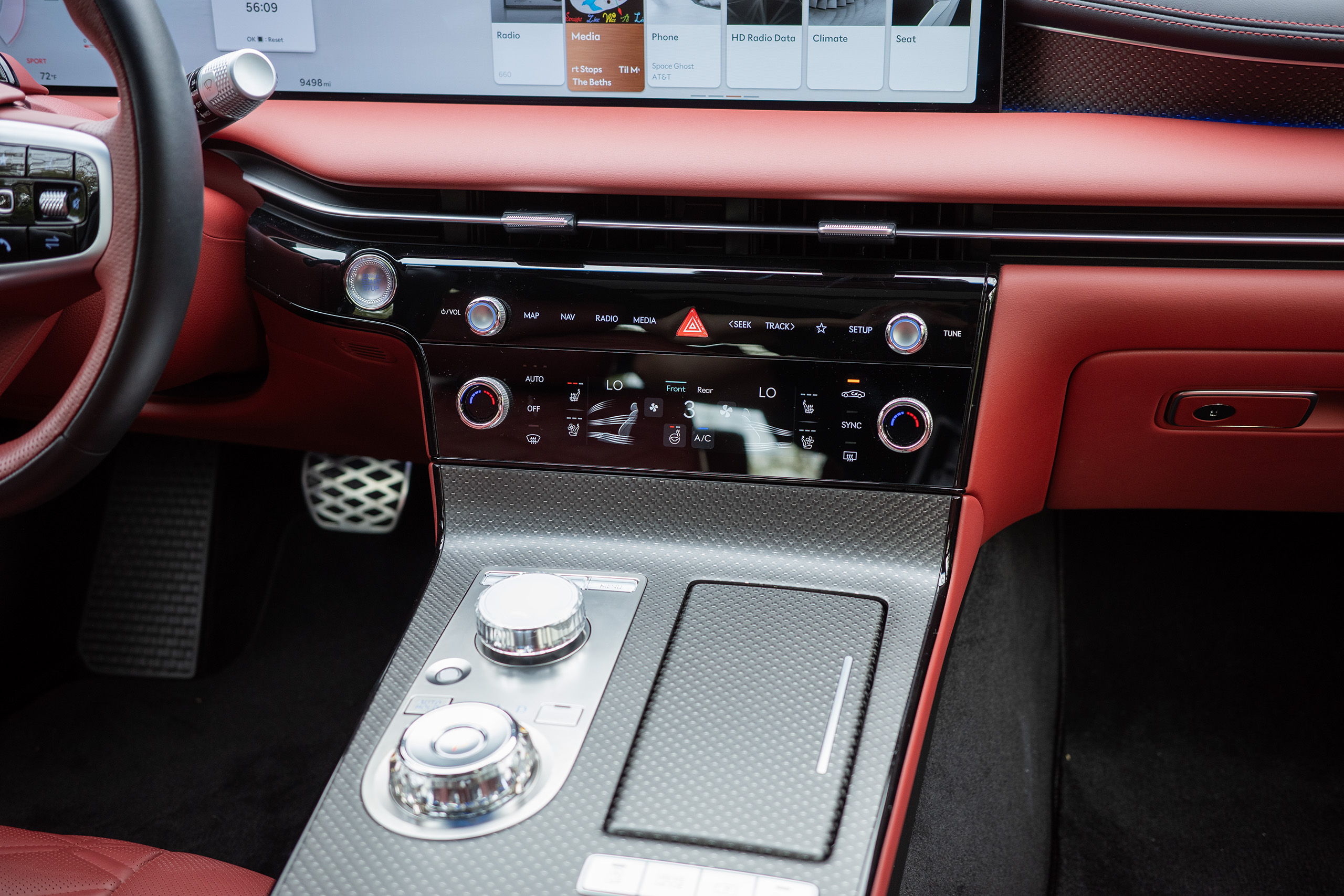
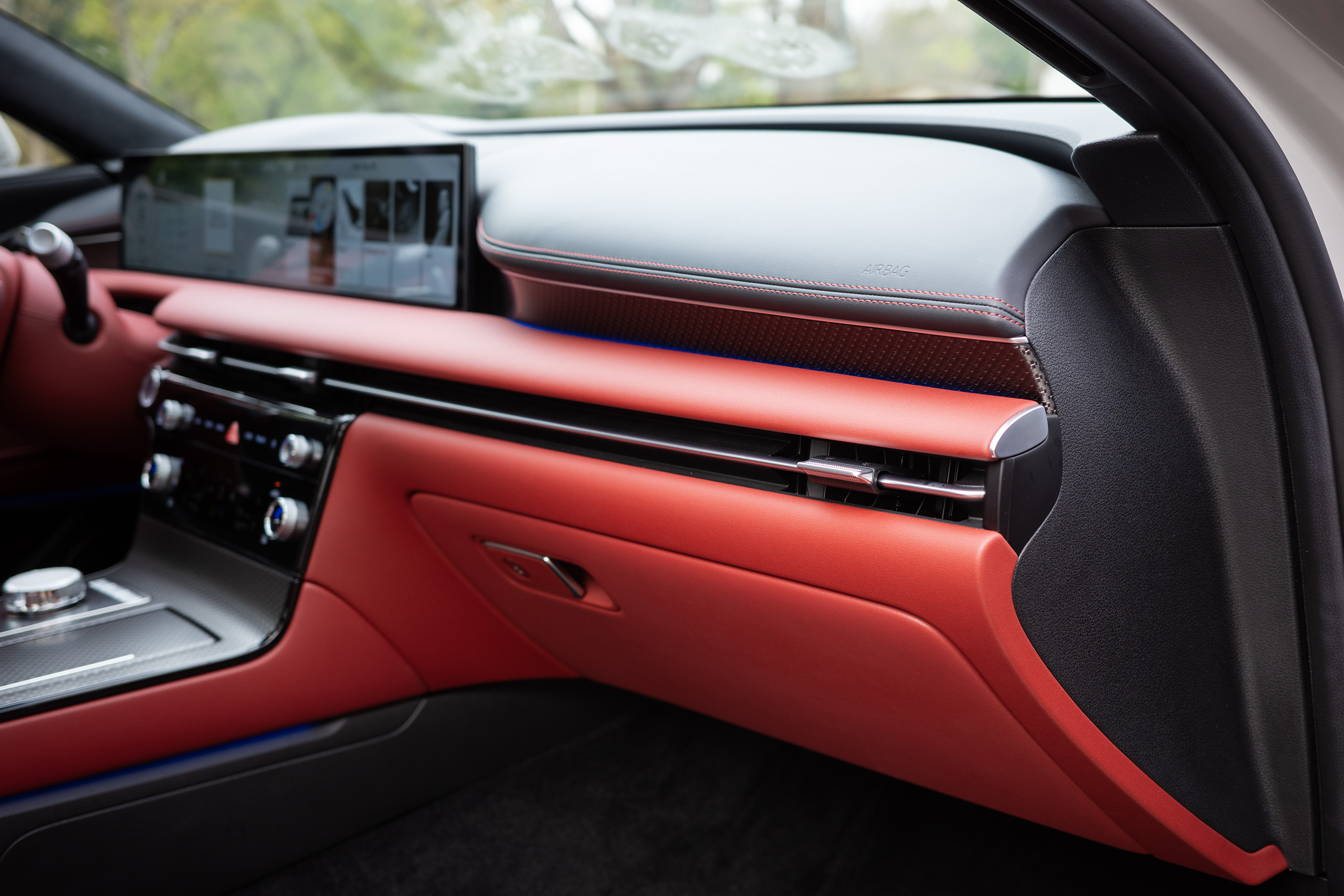
The main difference between the 2025 G80 and its predecessor is most clearly observed in the dashboard’s design, which trades some physical buttons for capacitive ones and spaces out elements on the HVAC display, so they might be a little easier to touch. The two separate upper screens are also now combined into one long OLED panel, as I mentioned earlier.
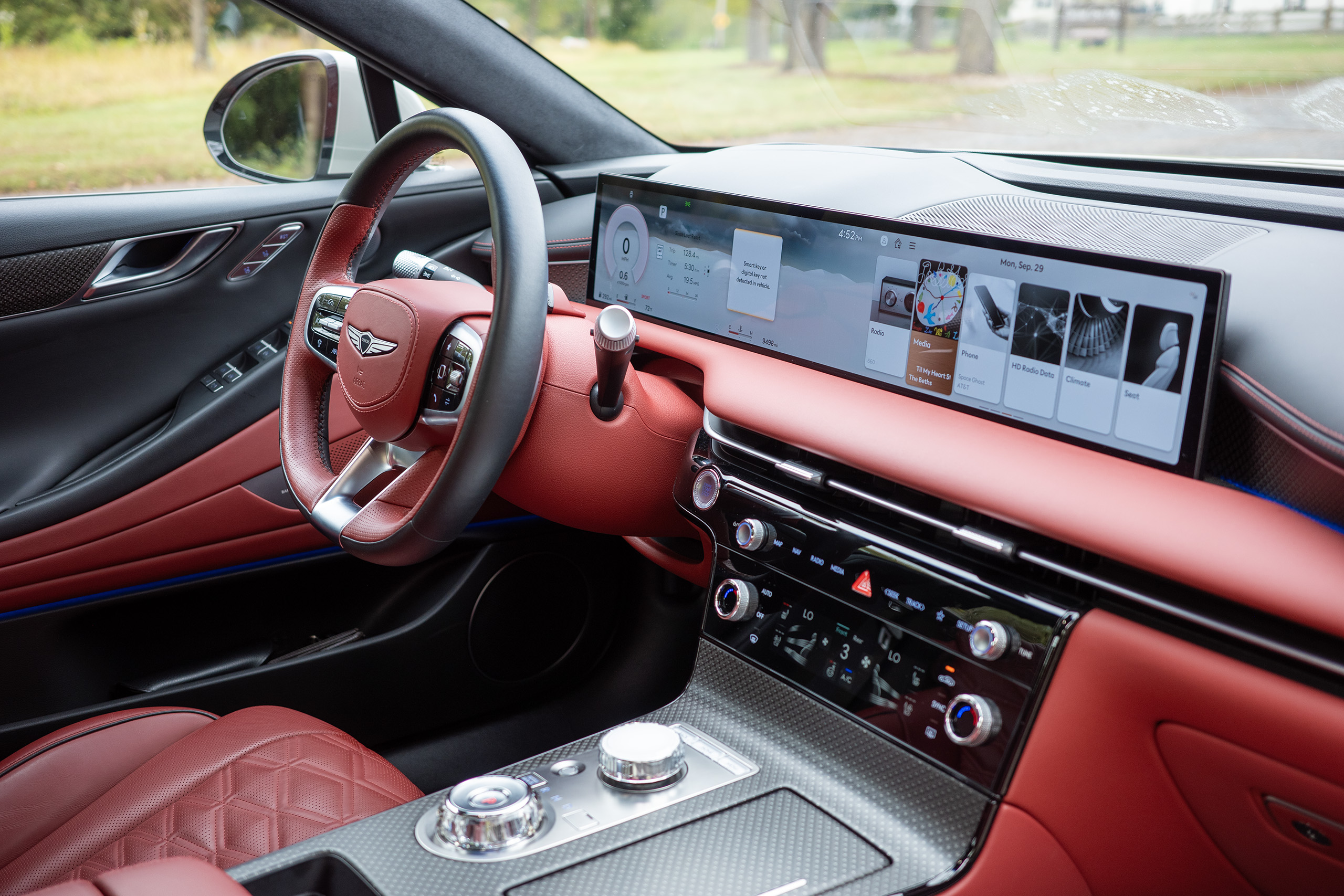
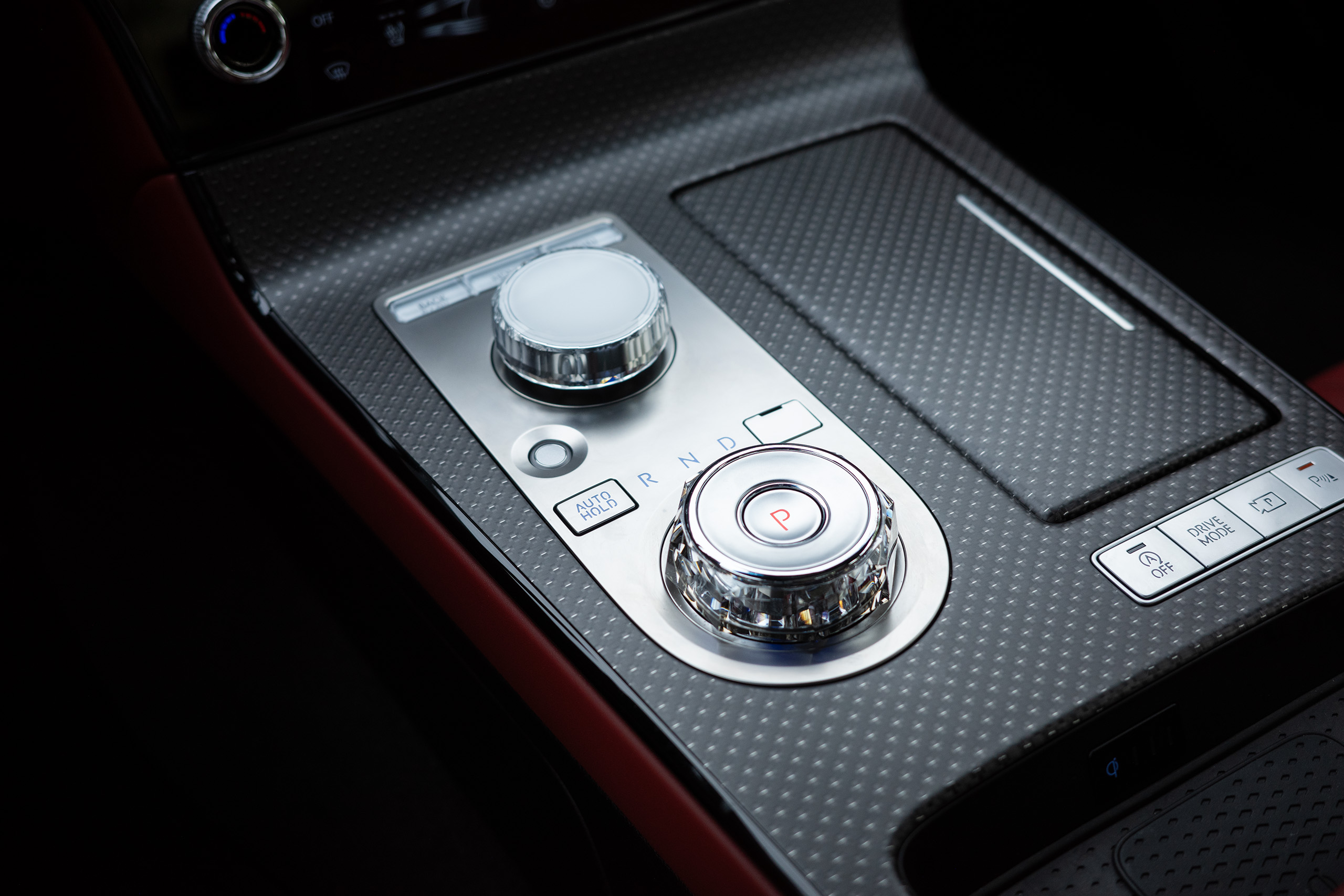
On the previous G80, the infotainment screen was really intended to be used with a touchpad because it was set so far back, though you could interact by touching it directly when the vehicle was parked. Because the new arrangement brings the screen closer to the driver, you can now operate it by touch while on the move, or use the crystalline dial that still works as a pad if you slide your finger over top of it. That’s three different navigation methods, when most cars force you to use one.
That’s probably a net gain, but every time an automaker does this—takes an inset screen that wasn’t designed to be touched and moves it forward—it makes the dash uglier. It happened with the Lexus LC, which had a stunning and streamlined center stack, only to kill it in favor of one that’s indistinguishable from most other vehicles. I’m not saying Genesis’ decision in this case wasn’t worth it, as it was made in the interest of usability, but I do think the previous look was more elegant.
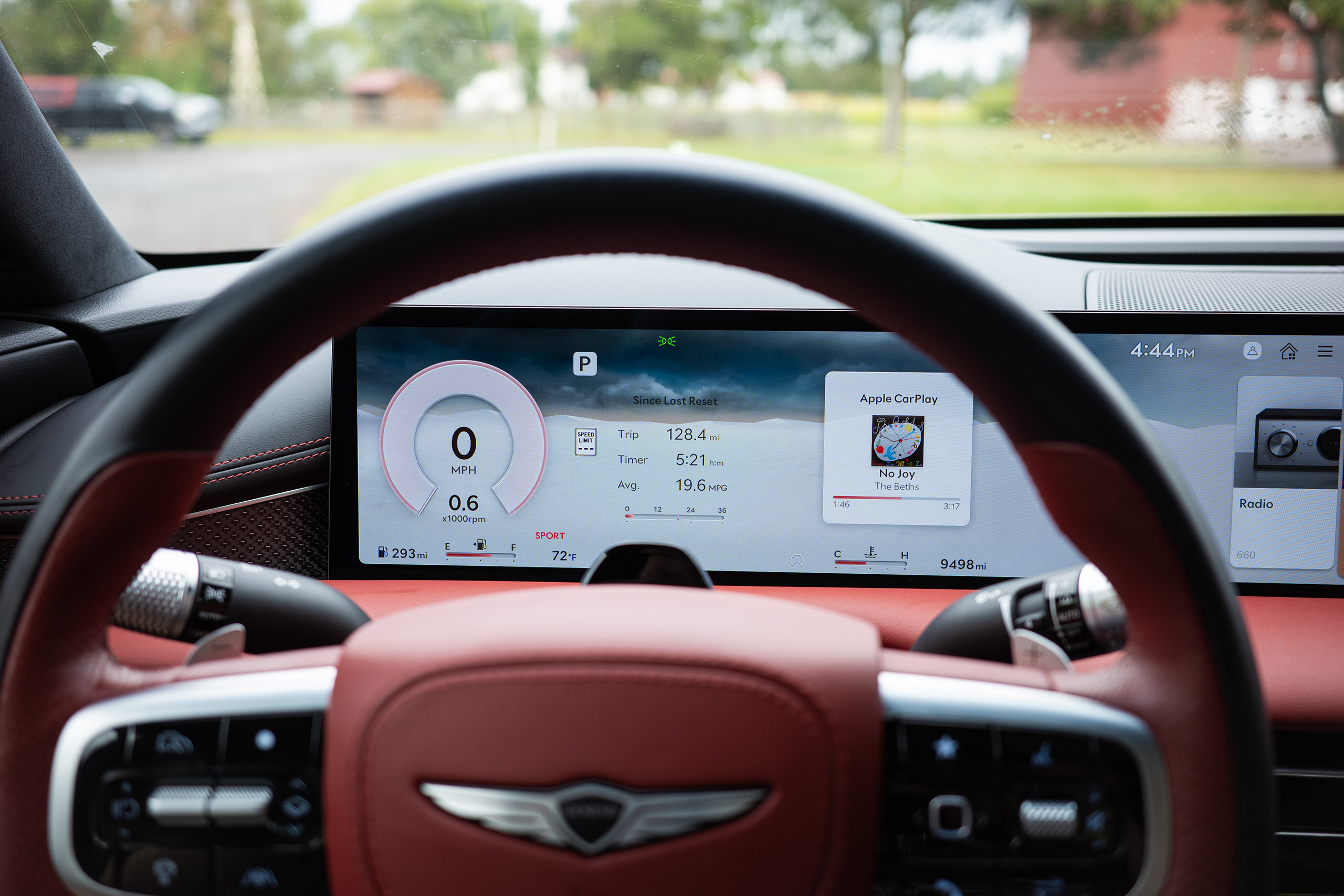
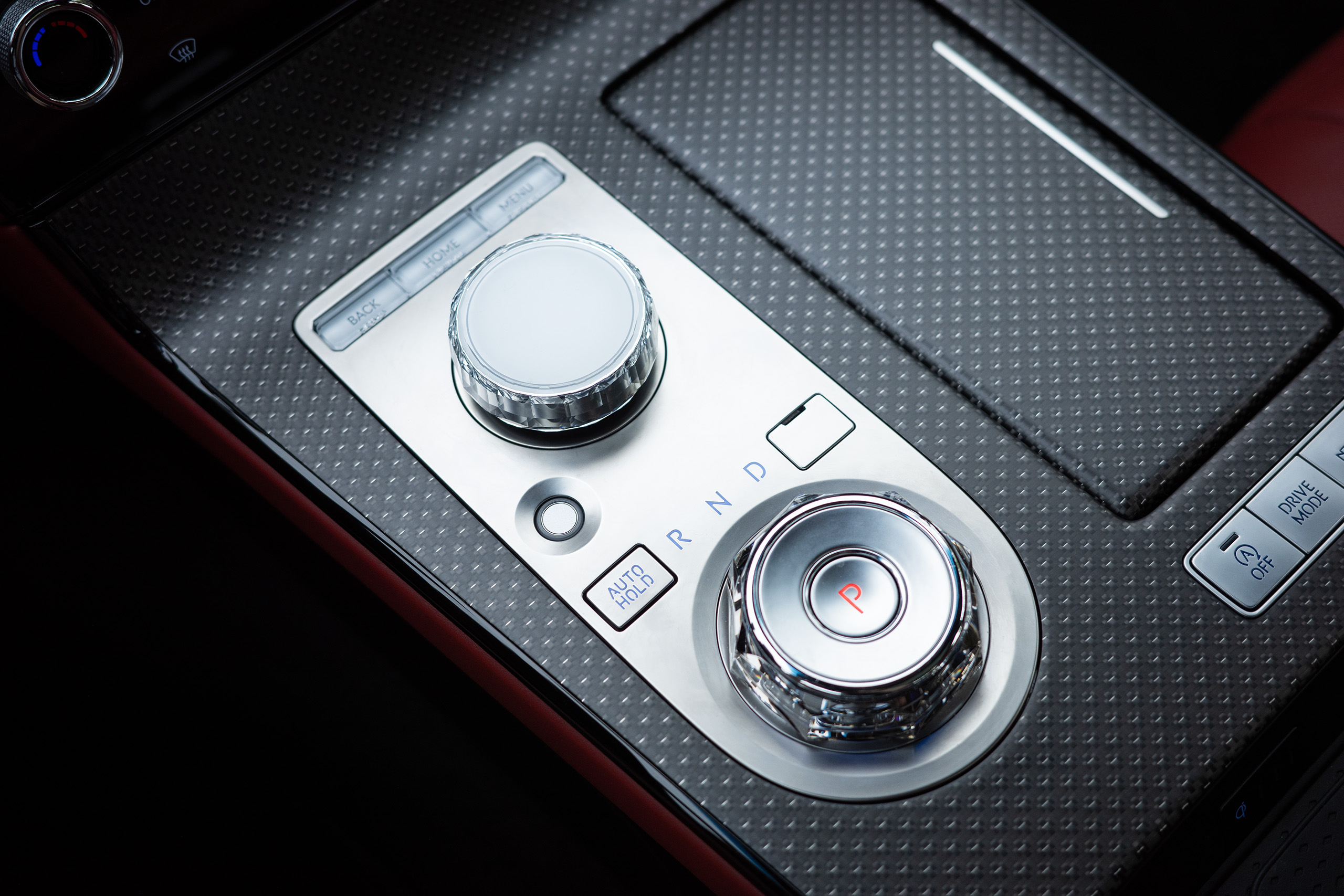
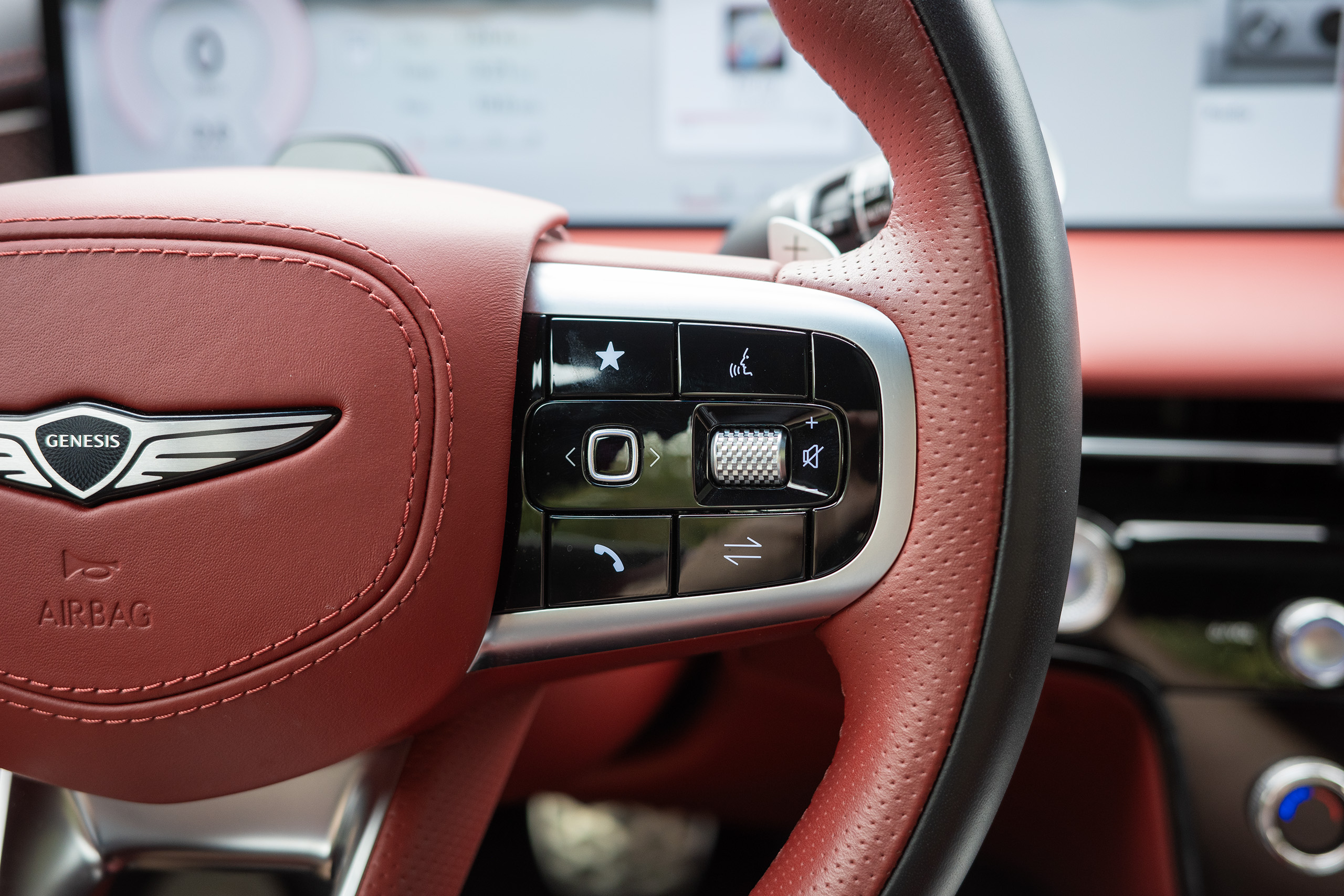
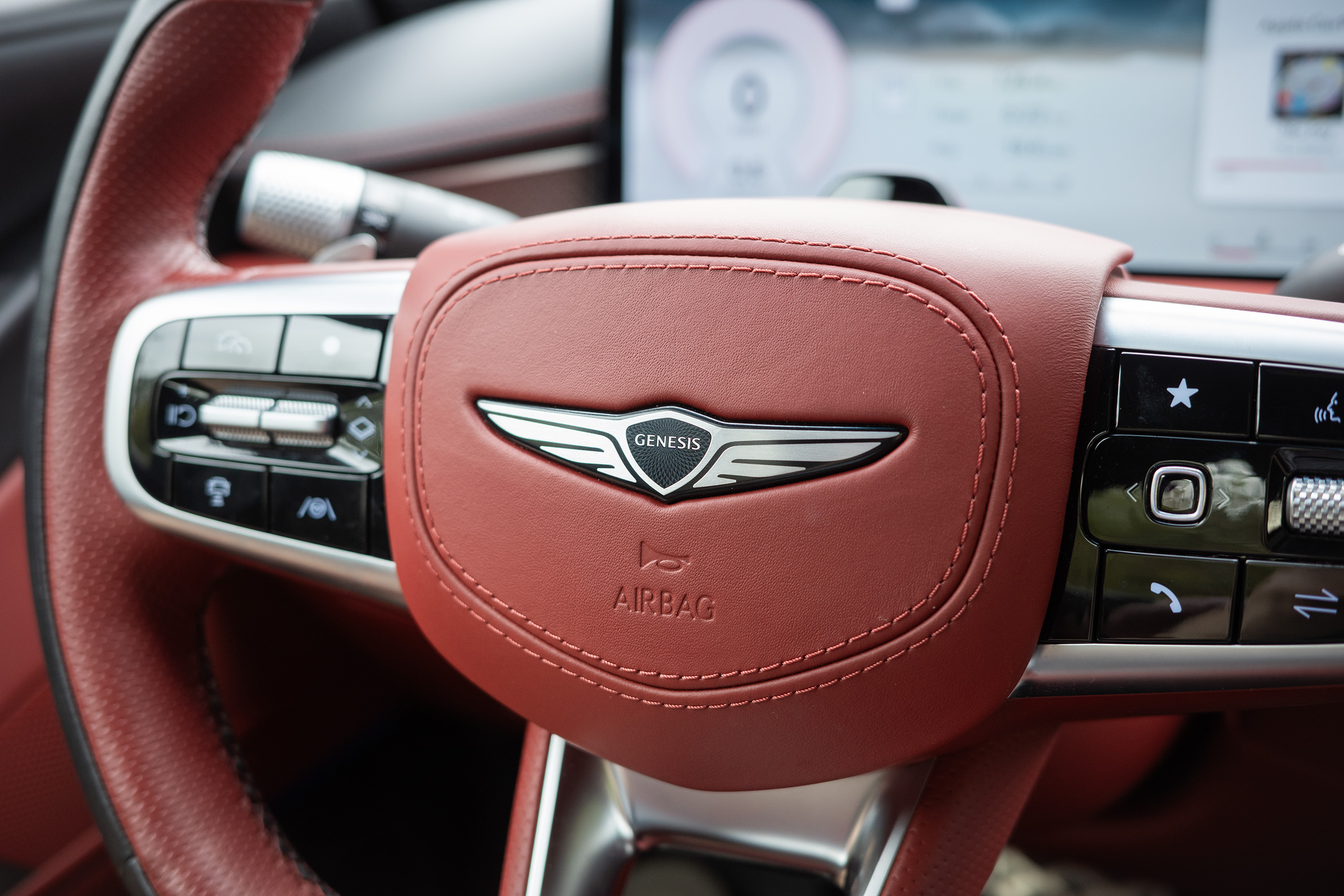
All that said, there were a few aspects of this stylish cabin that irked me. The graphics within the driver cluster animate sluggishly when flipping between views or pages of information. The little swipe-sensitive pads on the steering wheel, which are how you skip songs, simply did not respond to any of my inputs during one trip. I also dislike that the infotainment dial has a similar size and shape to the shifter dial, which is located right behind it; it’s just begging you to shift into neutral inadvertently. I’d reverse their positions and move the navigation dial closer in, because it’s the one you interact with more frequently on the move. A shifter should require more of a deliberate reach.
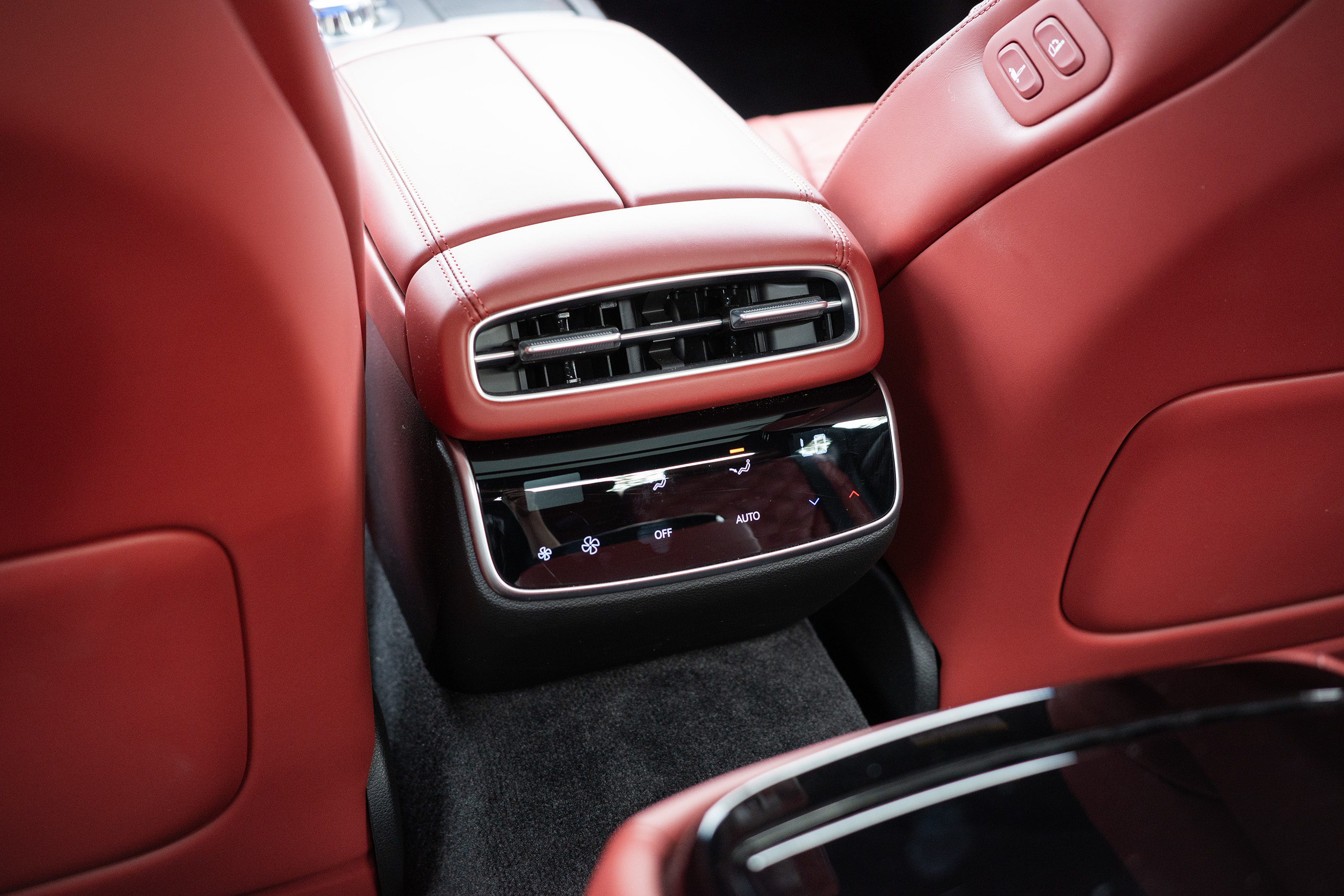
Additionally, although the HVAC situation on the pre-refresh model appeared quite cramped, this new one is no better. It is still very easy to touch the wrong icon, as they’re all packed so closely together.

Driving the Genesis G80
Thankfully, that about covers the most negative feelings I have around this car. The G80 isn’t a particularly spicy drive, even with the optional engine and electronic limited-slip diff that the Sport Prestige gives you. But it is powerful enough, and it is agile enough for anyone who’s just looking for a comfortable luxury sedan to consume highway miles by the dozen. The rear-wheel steering also makes the G80 very maneuverable at low speeds, despite its 197-inch length, and the steering is exquisitely weighted for daily driving. It even lifts wheels over incoming potholes, which is a big deal up here in the Northeast.
Of course, you’ll want to switch to the sharpest Sport+ drive mode for the most performance; that’ll sacrifice some compliance for a moderate reduction in body roll, but even then, don’t expect software to transform this 4,500-pound sedan into something it isn’t. Sport+ also allows that smooth-shifting eight-speed automatic gearbox to stay in lower gears, giving you all that 391 lb-ft has to offer. In that mode, the powertrain feels decently brisk.
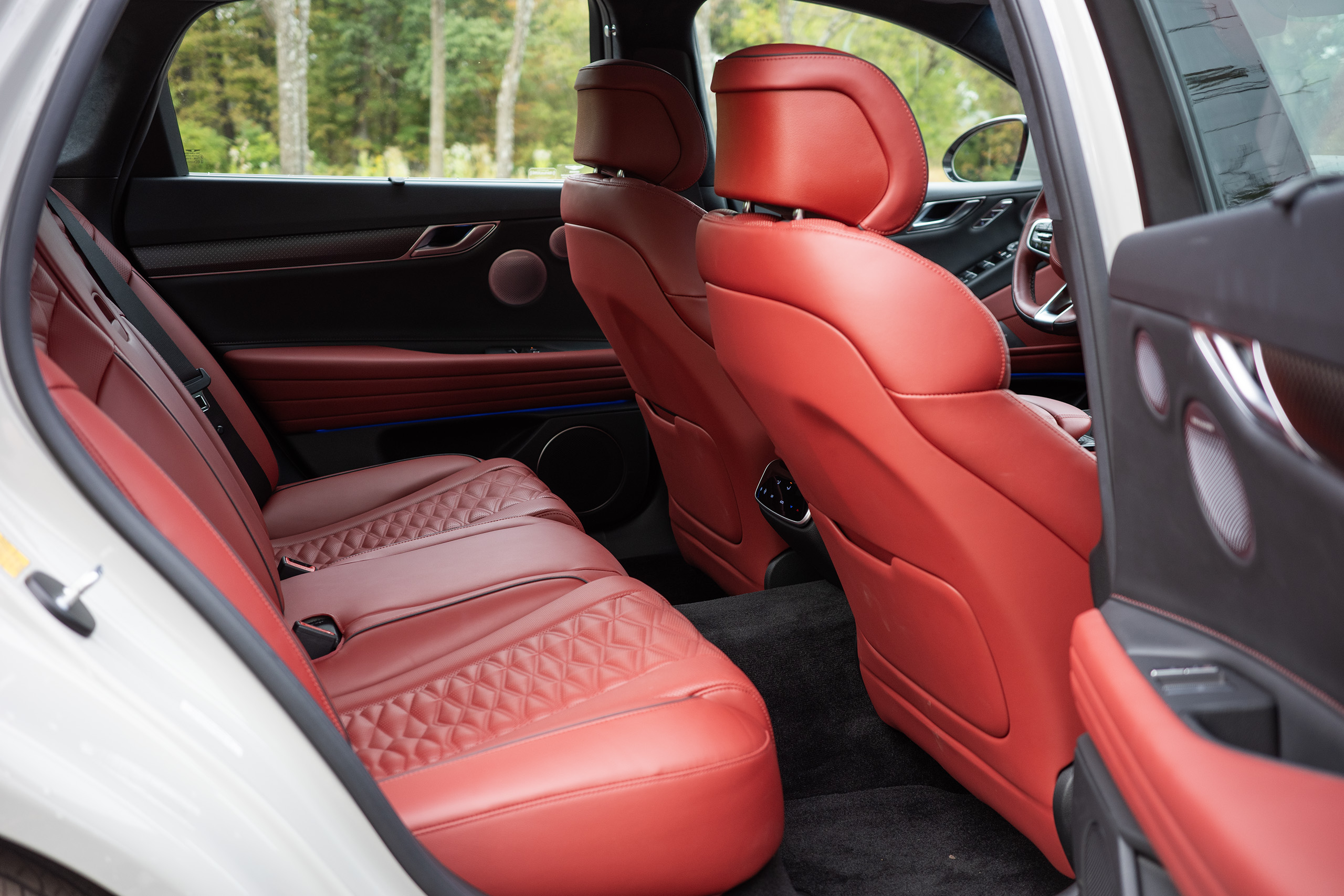
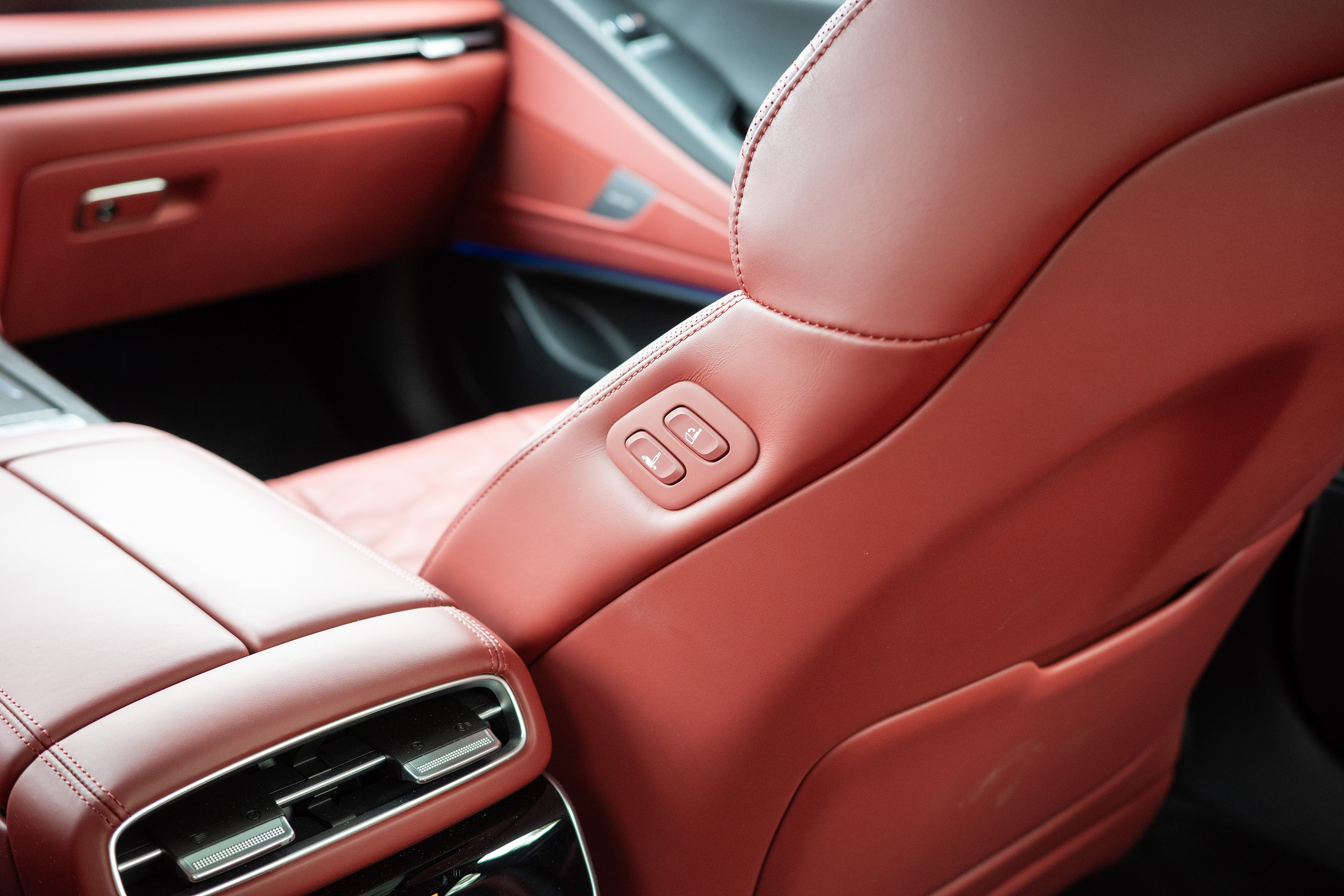
While the massaging driver’s seat won’t leave you feeling like you’ve been to a spa, it would’ve been nice for Genesis to extend the same privilege to the front passenger’s throne. That said, the G80 is comfortable no matter where you’re sitting—and that includes the back, with its considerable 38.7 inches of legroom. Genesis thoughtfully duplicated the power seat controls for the front passenger so that the driver can easily access them even when there’s nobody riding shotgun.
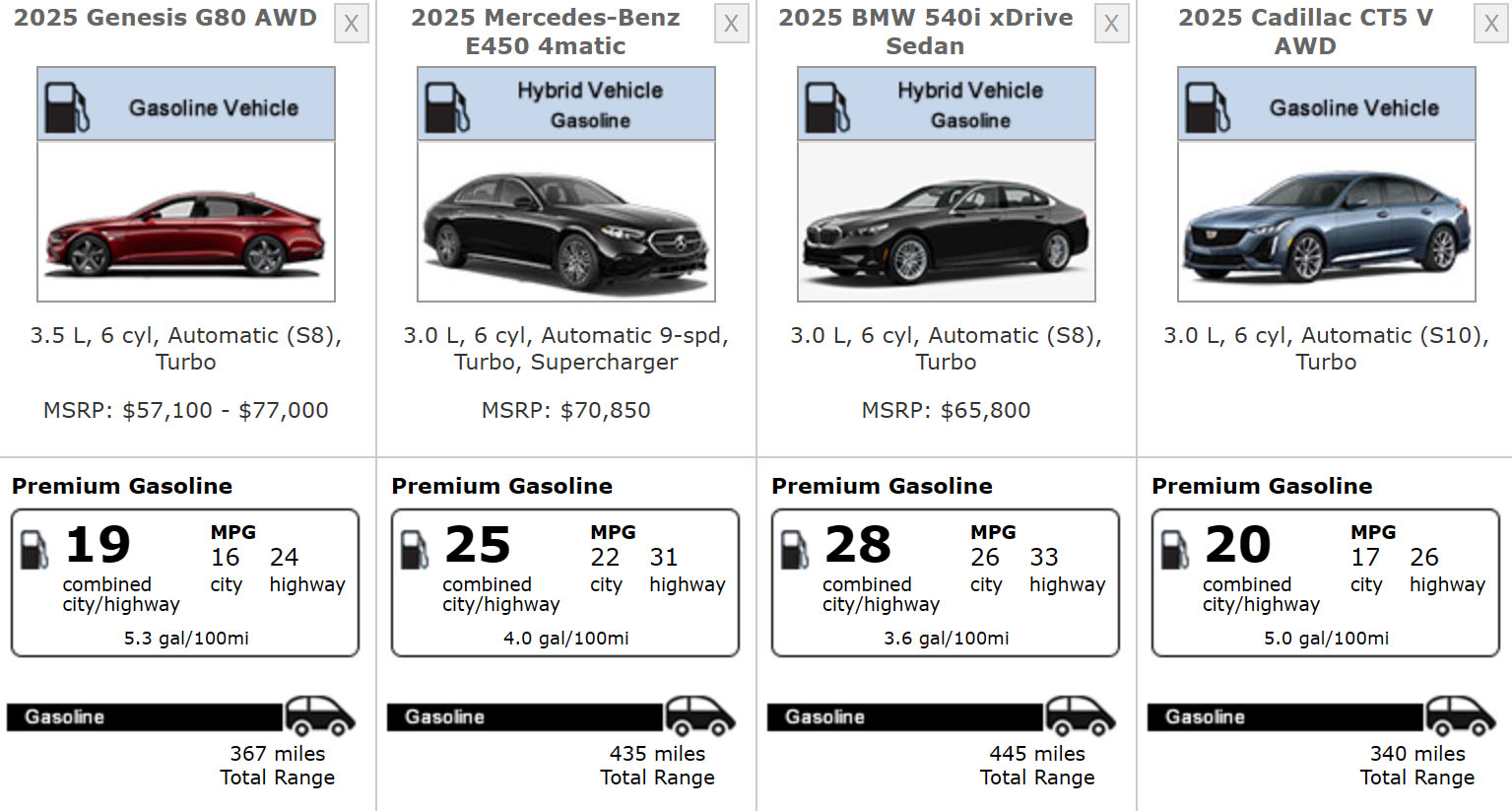
When equipped with the 3.5-liter engine, the G80 is rated to return 16 miles per gallon city and 24 highway, for a combined 19 mpg. I averaged about 20 mpg, so no disagreement there. You’ll note that the result compares somewhat unfavorably to the Mercedes E450 and BMW 540i xDrive, which produce similar power, and that’s because those sedans are hybrids. On paper, it’s also a step behind the all-wheel-drive, non-Blackwing Cadillac CT5-V, which I only included in lieu of the Lexus ES and Audi A6 because both of those sedans are currently in between generations, and we haven’t tested the new ones yet.
Value and Verdict
Most times I review an expensive car (and yes, the definition of “expensive” is expanding every day), I come away thinking that the optimal configuration is somewhere in the middle, and the returns diminish with every option box you tick. This Genesis G80 is different, though, because I wouldn’t want to give up anything here.
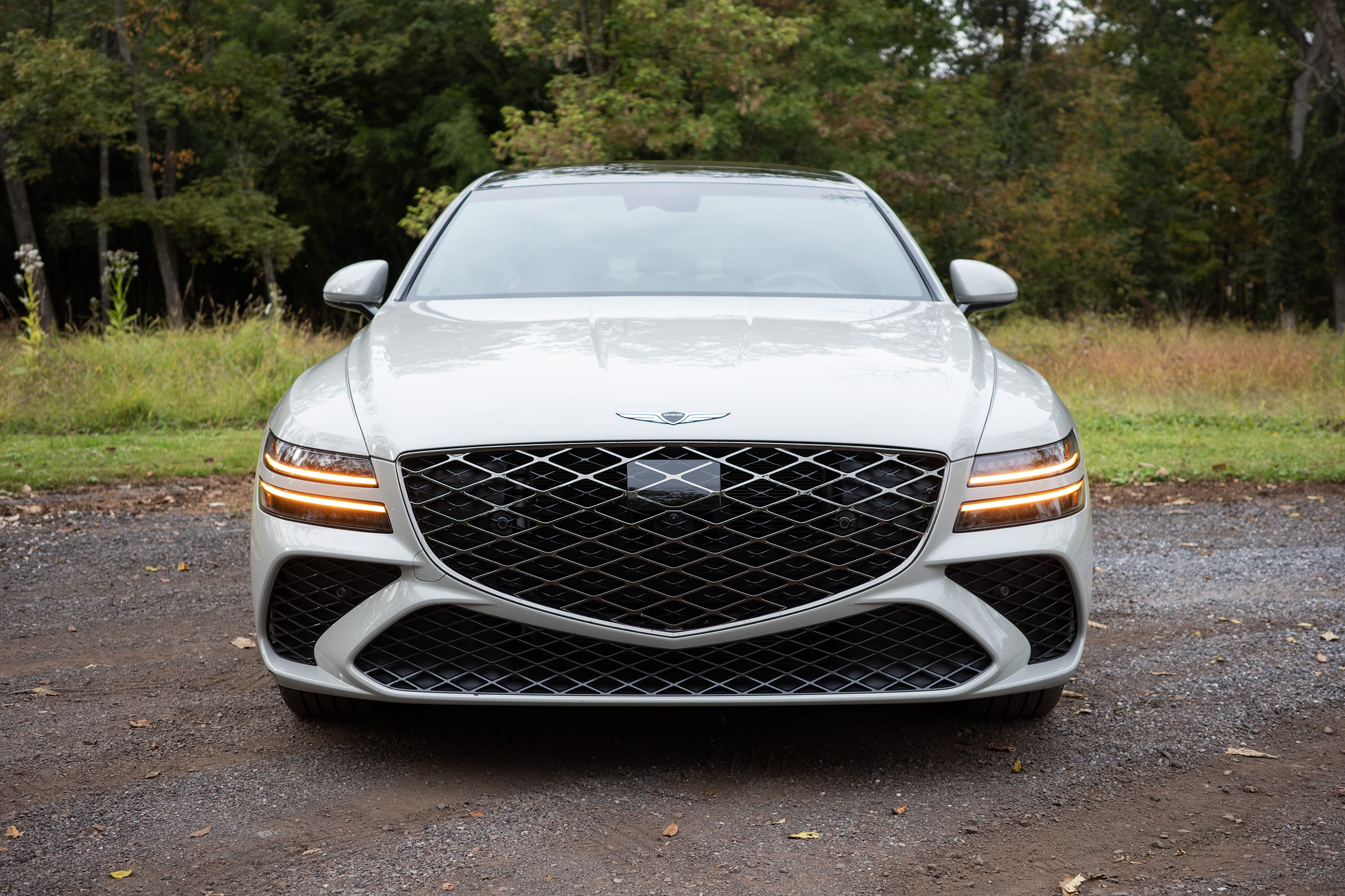
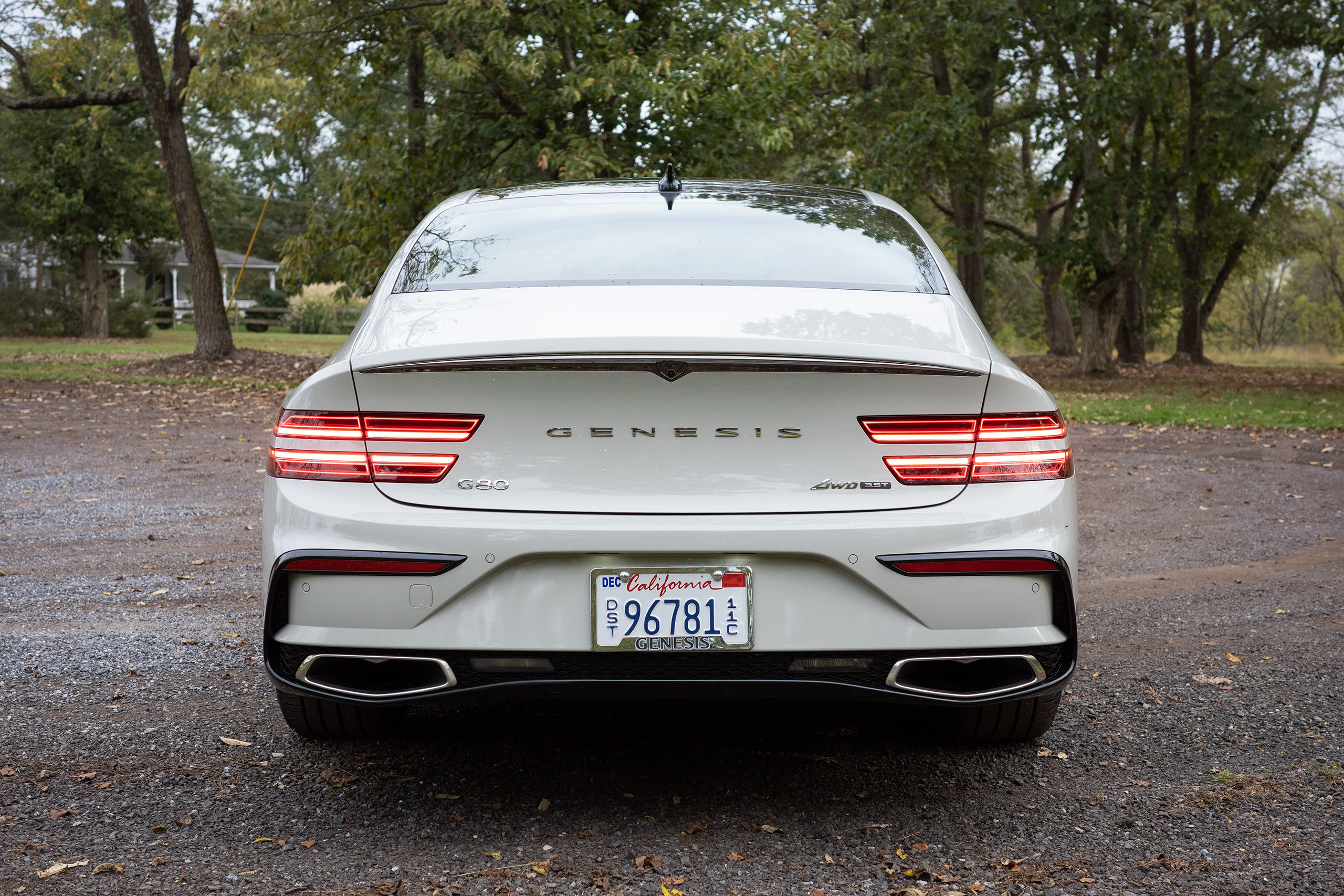
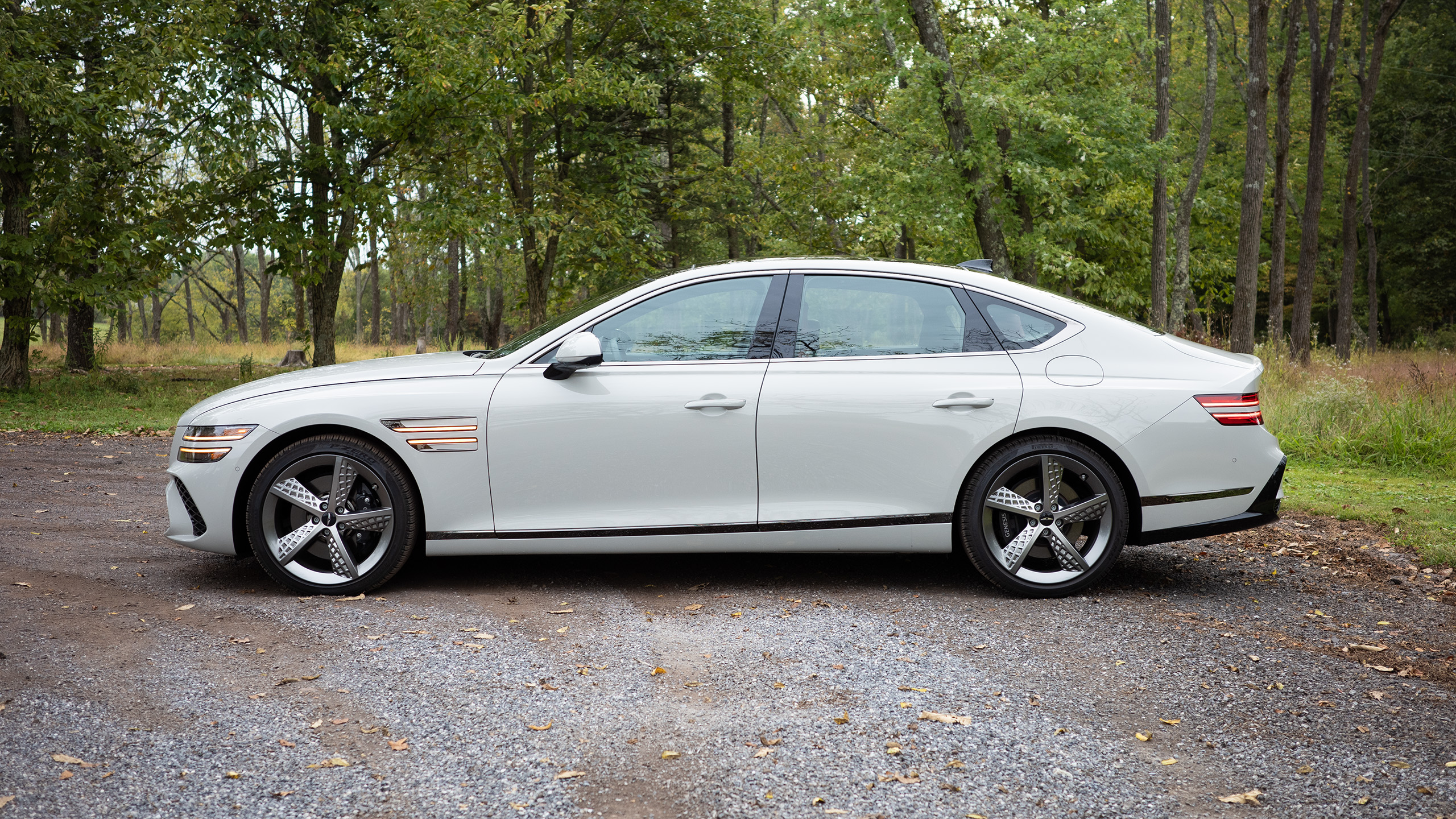
For the 2025 model year, the Sport Prestige is the higher of two trim levels that includes the V6; for 2026, it’s functionally the only one, save for the Prestige Black option, which amounts to an appearance package. Previously, you had to spend at least $71,000 to get that engine in the Sport Advanced sedan model. But for an extra $7,000 or so, the Prestige offers so much more, from its first-rate suspension and rear steer, to its top-of-the-line Nappa seats and 360-degree camera. It feels like the proper spec for the G80, and not at all frivolous.
That’s what strikes me most about this car. In an age of gesture controls and AI-powered mood lighting, the G80 is truly devoid of nonsense, or luxury for its own sake rather than yours. Practically all of its conveniences serve a definite purpose and look good doing it. Despite some user interface quirks, the G80 is perhaps the only luxury sedan that still feels like it was designed by and for rational people.
Genesis provided The Drive with a seven-day loan of this vehicle for the purpose of writing this review.
| 2025 Genesis G80 Specs | |
|---|---|
| Base Price (3.5T Sport Prestige as tested) | $58,595 ($78,495) |
| Powertrain | 3.5-liter twin-turbo V6 | 8-speed automatic | all-wheel drive |
| Horsepower | 375 @ 5,800 rpm |
| Torque | 391 lb-ft @ 1,300 to 4,500 rpm |
| Seating Capacity | 5 |
| Curb Weight | 4,486 pounds |
| Cargo Volume | 13.1 cubic feet |
| Ground Clearance | 7.3 inches |
| EPA Fuel Economy | 16 mpg city | 24 highway | 19 combined |
| Score | 8.5/10 |

Quick Take
The Genesis G80 is a thoughtfully designed cruiser that doesn’t waste your time and money with gimmicks.
Loading comments…
Comments couldn’t be loaded. Please refresh the page.