
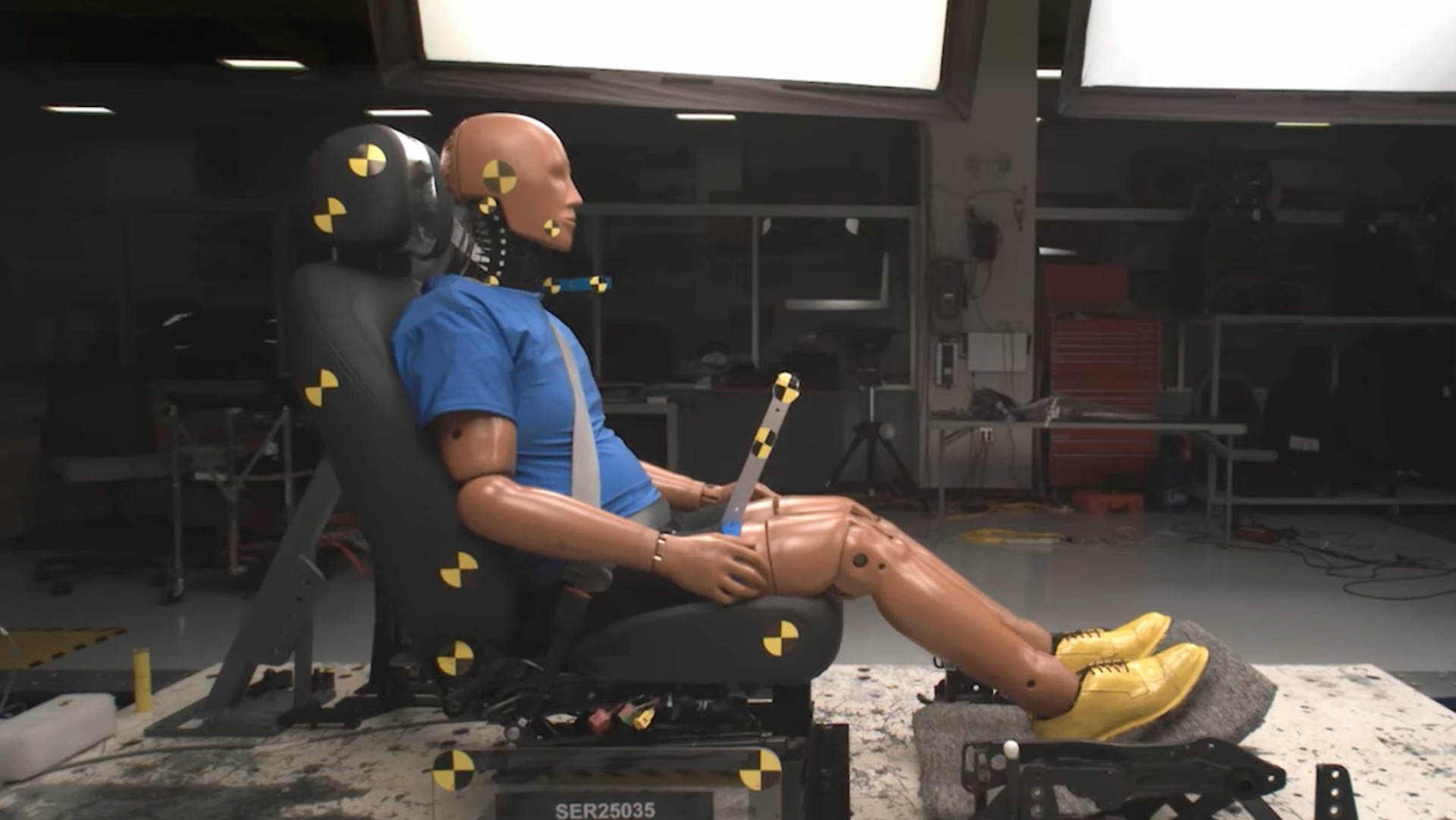
Neck strains and sprains are the most frequently reported injuries in United States auto insurance claims, so the Insurance Institute for Highway Safety (IIHS)—the nonprofit safety organization funded by the insurance industry—is introducing a more thorough test that addresses the most likely causes of these injuries.
In addition to crash tests, the IIHS began testing seats and head restraints for whiplash prevention about 20 years ago. In fact, it discontinued the original version of the test in 2022 because automakers had improved seat designs to the point where virtually every new vehicle received a top rating, the organization explained in a press release and video. But insurance-claim data showed that whiplash injuries are still occurring, and that there was still variability between different vehicles. A new test was needed.
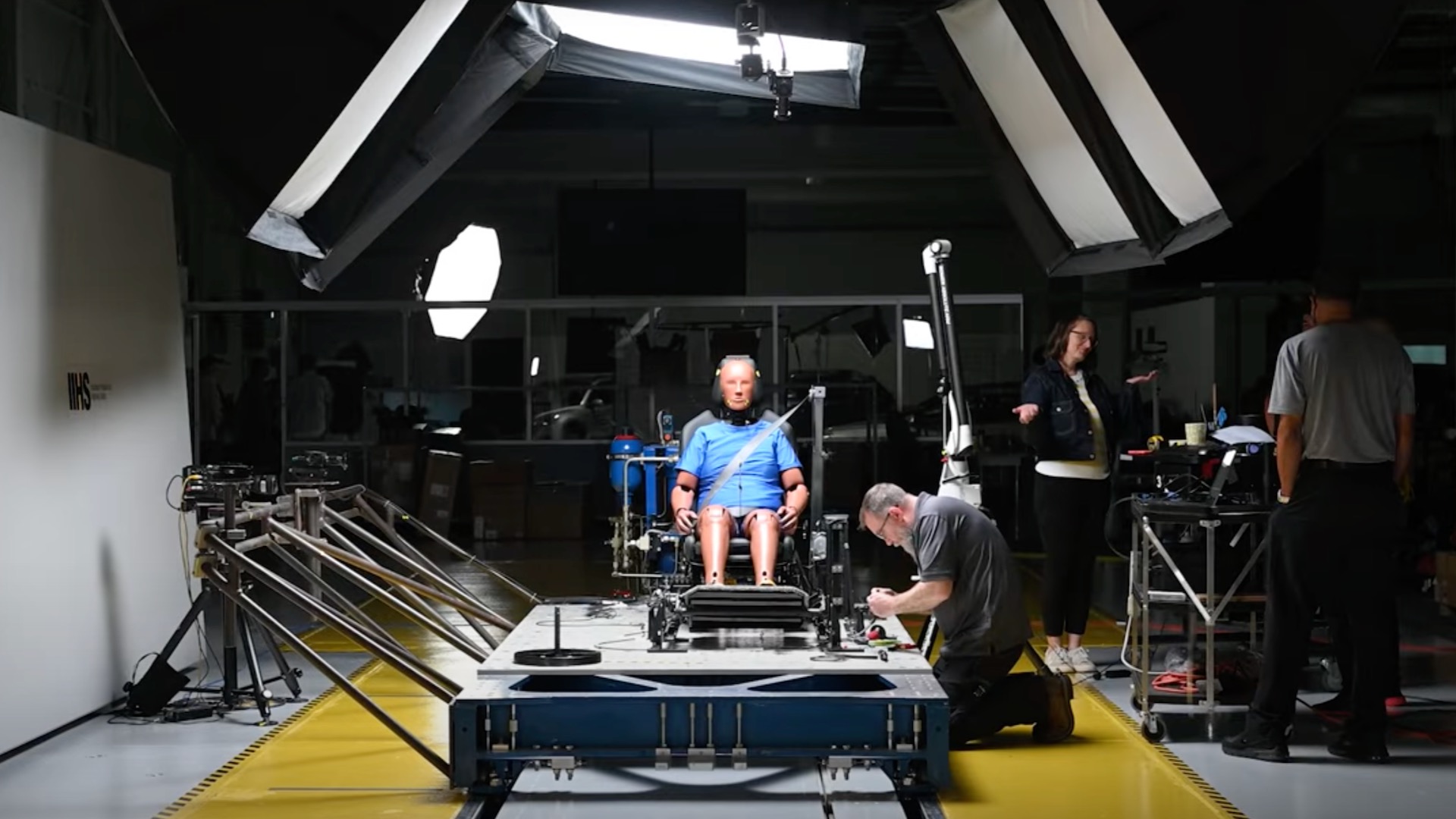
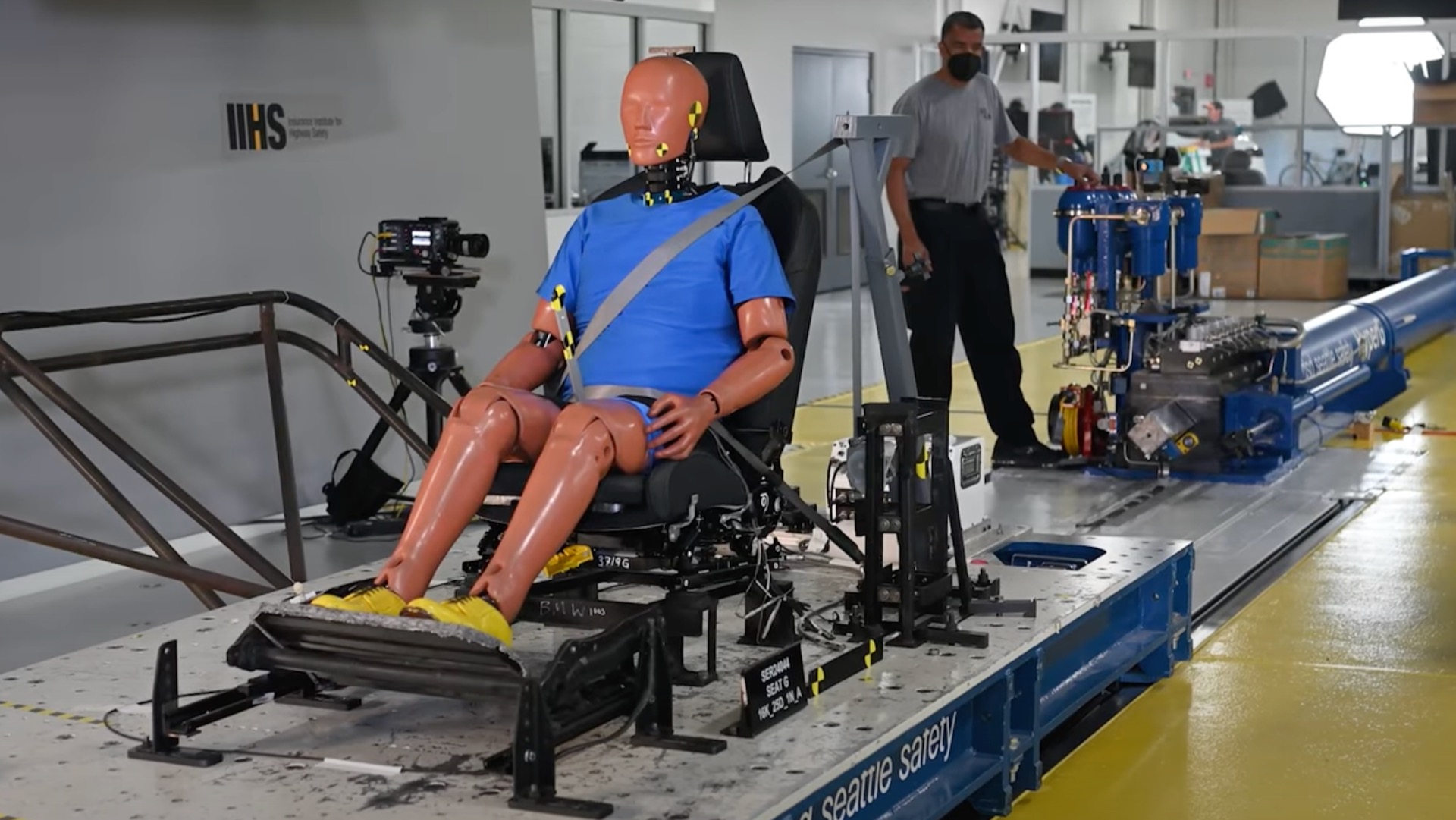
To design that test, researchers tested seats used in 36 late-model vehicles and compared data from crash-test dummies with injury-claim data supplied by the IIHS-affiliated Highway Loss Data Institute. Some criteria from the original test were retained, including the amount of time it takes for a head restraint to contact a dummy’s head, and acceleration of the T1 vertebra, the one located where the spine joins the neck. The movement of the pelvis and measures for the tilting and bending of the head relative to the neck, were also incorporated.
Like the original test, the new whiplash prevention test simulates a rear impact, as insurance data show these to be the most common. The driver’s seat is mounted on a sled that delivers pulses of acceleration to a midsize male dummy with an articulated spine. The original test simulated a rear impact at 20 mph, but the new test also incorporates a simulated 30-mph impact.
For the first round of testing with this new protocol, the IIHS evaluated 18 small SUVs. The Audi Q3, Hyundai Ioniq 5, Subaru Forester, and Toyota RAV4 (the outgoing 2025 model, not the redesigned 2026 model) received the highest “Good” score. The Ford Bronco Sport, Hyundai Tucson, and Mazda CX-50 received the lowest “Poor” score, while the BMW X1 and Nissan Rogue received next-worst “Marginal” scores. Everything else was rated “Acceptable.”
The “Good”-rated SUVs had seats that kept the dummy’s head and spine in alignment, with the spine maintaining its natural curve and the head moving a minimal amount. In the “Poor”-rated SUVs, the spine straightened and stretched, and head movement was significant. The Tucson’s head restraint pushed the chin down toward the chest, the CX-50’s let the head slide backward and upward, and the Bronco Sport’s took an abnormally long amount to time to make contact with the head.

IIHS launches new whiplash prevention test – IIHS News
They may seem more like headrests than a piece of safety equipment most of the time, but these results illustrate what those things on the tops of seat backs are supposed to do. Ideally, head restraints will catch the occupant’s head to keep it from whipping back in an impact. To ensure they work properly, it’s important to adjust them so that they’re as close to your head as possible.
It’s tougher to get a top IIHS safety rating than it is to get a five-star rating from the federal National Highway Traffic Safety Administration (NHTSA) because the IIHS has the ability to treat safety as a moving target. The more rigid federal regulations can’t be as easily changed, and the IIHS has unfettered access to insurance data to guide its testing process. Automakers are often caught out by updated IIHS tests like this one, but that prods them into developing safer cars.
Got a tip? Reach out to tips@thedrive.com
Loading comments…
Comments couldn’t be loaded. Please refresh the page.