
We may earn revenue from the products available on this page and participate in affiliate programs. Learn more ›
Whether you’re trying to buy a car from far away or moving cross-country, sometimes you need to ship a vehicle without driving it yourself. Here’s an updated guide explaining how much you can expect to pay depending on what kind of car you need to move, and how far it needs to go.
If you’re not well-versed in the world of car shipping, and there are very few who are, it might be surprising to hear that there are many options available. You’ve got your choice of company, shipping method, and several other factors. The Drive’s editors have purchased enough cross-country cars to know our way around car shipping and are here to help you get started on the right foot.
What Exactly Is Involved In Shipping a Car?
Shipping a car is surprisingly similar to shipping anything else, with the major exception being the size of the item being shipped. Several companies specialize in shipping vehicles and can move almost anything on wheels from coast to coast in the United States, or for a lot more money, overseas. In general, shipping a vehicle on an open-trailer truck is the most cost-effective way to move it from one place to another, but there are many other shipping options available.
Beyond open-air shipping, there’s enclosed shipping, freight shipping by train or ship, and even air shipping for the most special vehicles and circumstances. The widely varying costs to ship through each method depend on the type and value of the vehicle being shipped, the distance between the origin point and the destination, and the time of year.
The process of actually getting a quote and then shipping the vehicle is probably a bit different from what you’re used to. In most cases, you deal with a broker company that gives you a rough estimate. That company then takes the estimate to a group of carriers that bid on the job, the lowest of which becomes the price you pay. That carrier is then assigned to your job, and the physical process begins.
What Does Shipping a Car Actually Cost?
As you might have already guessed, shipping a car is less expensive than shipping a truck. Searching rates with RoadRunner Auto Transport, it becomes clear how distance and vehicle size affect the rates. Below, we’ve gathered shipping rates for both a 2021 Honda Accord sedan and a 2021 Ford F-150 pickup truck as examples. The estimates were gathered using an open car carrier and various routes.
2021 Honda Accord Sedan
Shipping Route: Maine to Los Angeles
| Low End | Best Value | Best Rated |
|---|---|---|
| $1,456 | $1,536 | $1,995 |
Shipping Route: New York to Miami
| Low End | Best Value | Best Rated |
|---|---|---|
| $912 | $946 | $975 |
Shipping Route: Chicago to Seattle
| Low End | Best Value | Best Rated |
|---|---|---|
| $1,022 | $1,098 | $1,155 |
Shipping Route: Austin to Denver
| Low End | Best Value | Best Rated |
|---|---|---|
| $797 | $834 | $895 |
Shipping Route: Boston to New York
| Low End | Best Value | Best Rated |
|---|---|---|
| $518 | $587 | $625 |
2021 Ford F-150 Pickup Truck
Shipping Route: Maine to Los Angeles
| Low End | Best Value | Best Rated |
|---|---|---|
| $2,165 | $2,378 | $2,575 |
Shipping Route: New York to Miami
| Low End | Best Value | Best Rated |
|---|---|---|
| $1,093 | $1,188 | $1,295 |
Shipping Route: Chicago to Seattle
| Low End | Best Value | Best Rated |
|---|---|---|
| $1,378 | $1,443 | $1,545 |
Shipping Route: Austin to Denver
| Low End | Best Value | Best Rated |
|---|---|---|
| $1,103 | $1,154 | $1,245 |
Shipping Route: Boston to New York
| Low End | Best Value | Best Rated |
|---|---|---|
| $756 | $879 | $925 |
What’s The Best Way To Ship a Car?
The best way to ship a car will depend on your car and your preferences. We can tell you to ship cheap vehicles the cheapest way possible until we’re blue in the face, but if you’re not comfortable shipping your beater on an open car trailer, choose a different path. In general, you’ll hear that paying for a closed trailer should be reserved for vehicles that need extra protection. Similarly, you should feel decent about shipping a relatively affordable vehicle on an open car carrier.
Shipping a car overseas is a bit trickier. The “best” way to get a car from one country to another is one that you can afford and that will get your car safely to its new destination. Keep in mind that not every company offers assistance actually getting the vehicle into the destination country. Many offer delivery to a port of entry at the specified country but are responsible for nothing after the vehicle is unloaded. Some offer a concierge-style service, where they facilitate entry and documentation. Your mileage may vary wildly from shipper to shipper, so it’s important to do your own research to find a company that fits your needs and destination.
How Does Insurance Work For Car Shipping?
In most cases, the shipping company is responsible for insuring for damage while the vehicle is in transit. We say “in most cases,” because that’s not always how it works. Those that do provide insurance generally require that you or the recipient thoroughly inspect the vehicle upon receipt at its final destination to find any damage that might have occurred during its ride.
Explanation of Car Shipping Terms
Knowing these terms will help you decipher the complicated car shipping language.
Free On Board
Free On Board, or FOB, means that the shipper is responsible for the item being shipped until it reaches its destination. After that, the item and any damages or liabilities are the responsibility of the person who receives it.
Bill of Lading
The bill of lading is an important document that shows who’s shipping the vehicle, where it’s going, what exactly it is, and more.
Car Carrier
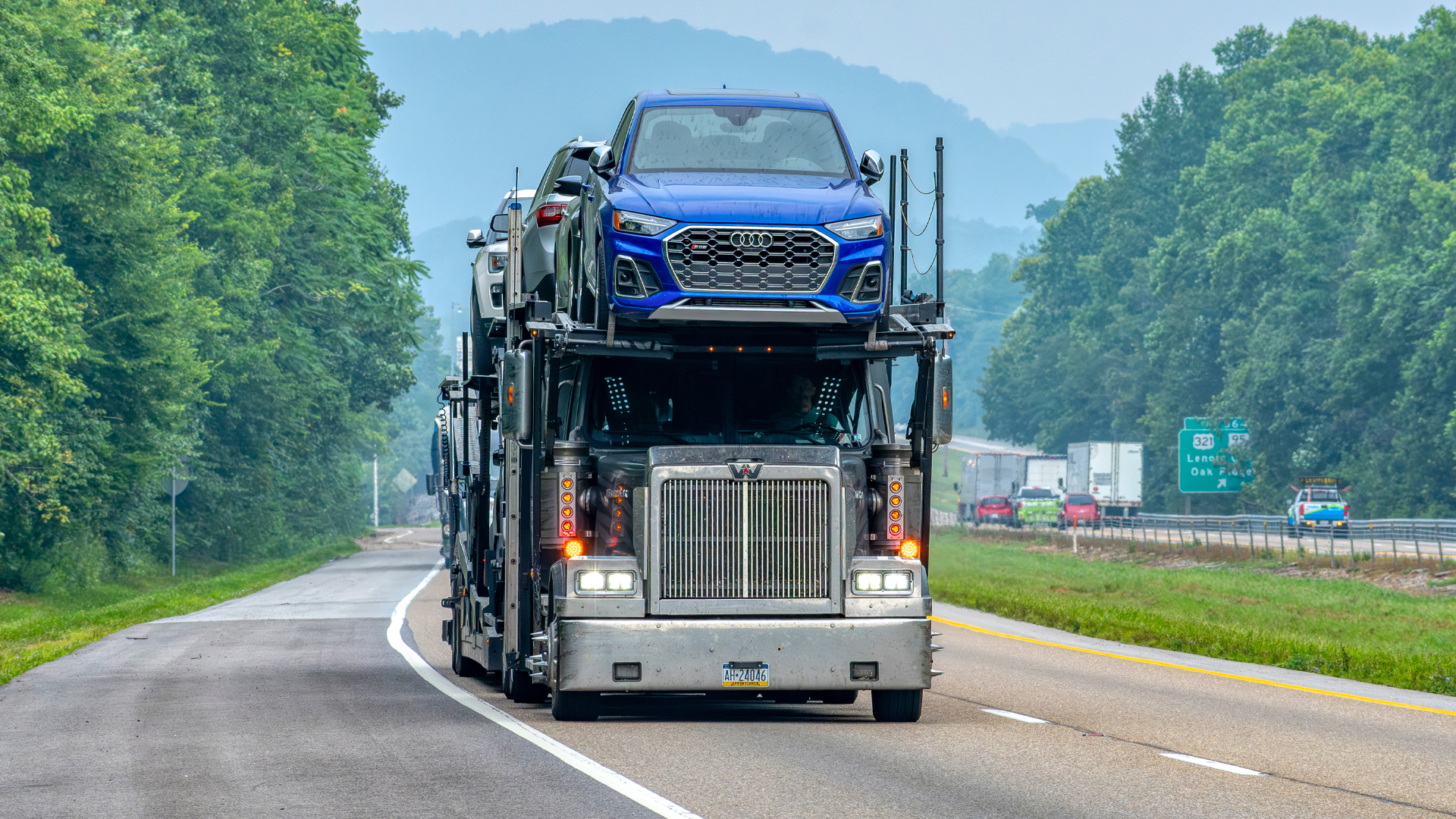
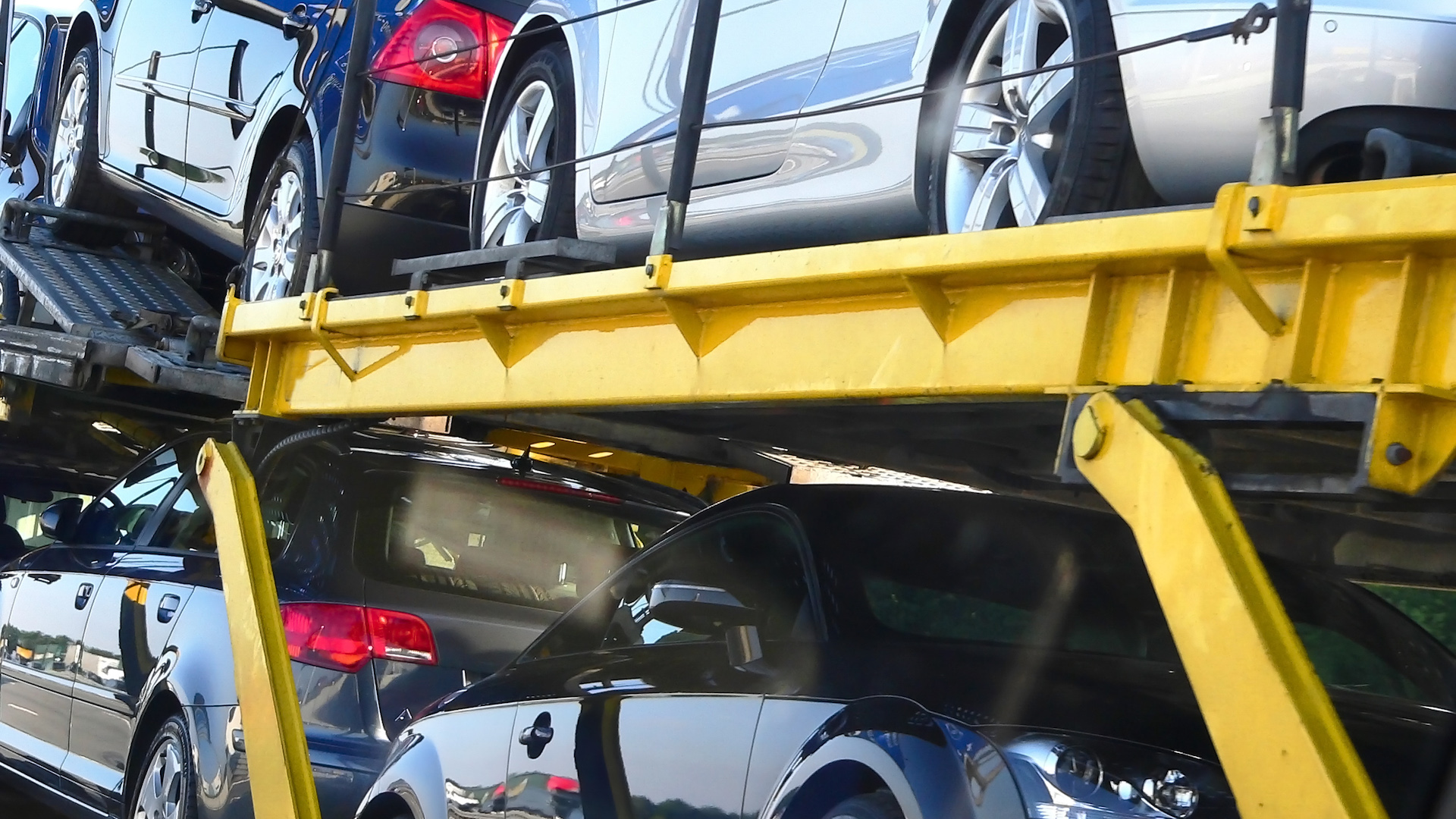
Car carriers are special trailers that are used to haul several vehicles at once. You’re probably used to seeing these trailers when vehicles are delivered to dealerships. They’re quite dramatic and offer a great visual effect, but they’re the most exposed vehicle carriers in terms of elements and debris that can be kicked up off the road. For that reason, they’re usually the most affordable way to ship a car.
Door-To-Door
Door-to-door is a shipping method in which the carrier company takes the vehicle directly from one location to the destination location. There’s no drop-off point or requirement for the shipper or receiver to meet at a port.
FAQs About Shipping a Car
You’ve got questions, The Drive has answers!
Q. How Far In Advance Do I Need To Book a Shipment?
A. Time is on your side. The earlier you can book a shipment, the less you’ll end up paying. In some cases, you’ll be able to find same-day shipping, but both your costs and selection of shipping methods will suffer as a result. In some rare cases, you might be able to wait for a carrier that needs filling, which could open the opportunity for a potential discount. Not always, though.
Q. How Long Does It Take To Ship a Car?
A. Because your car will likely end up on a trailer to its final destination, shipping times will depend greatly on how far it’s going, the weather, and the traffic. A coast-to-coast shipment can take as long as a week or more in some cases.
Q. How Do I Get My Car Ready For Shipment?
A. Even if you’re just shipping the car to yourself at a new location, you’ll want to remove as many non-essential items from the vehicle as possible. There’s always the possibility of theft, damage, or loss, so you should be working to minimize the impact of any problems. Beyond that, you should leave the car with at least a quarter tank of fuel and provide the keys to the carrier with any instructions on how to operate the vehicle.
Got a question? Got a pro tip? Send us a note at tips@thedrive.com