
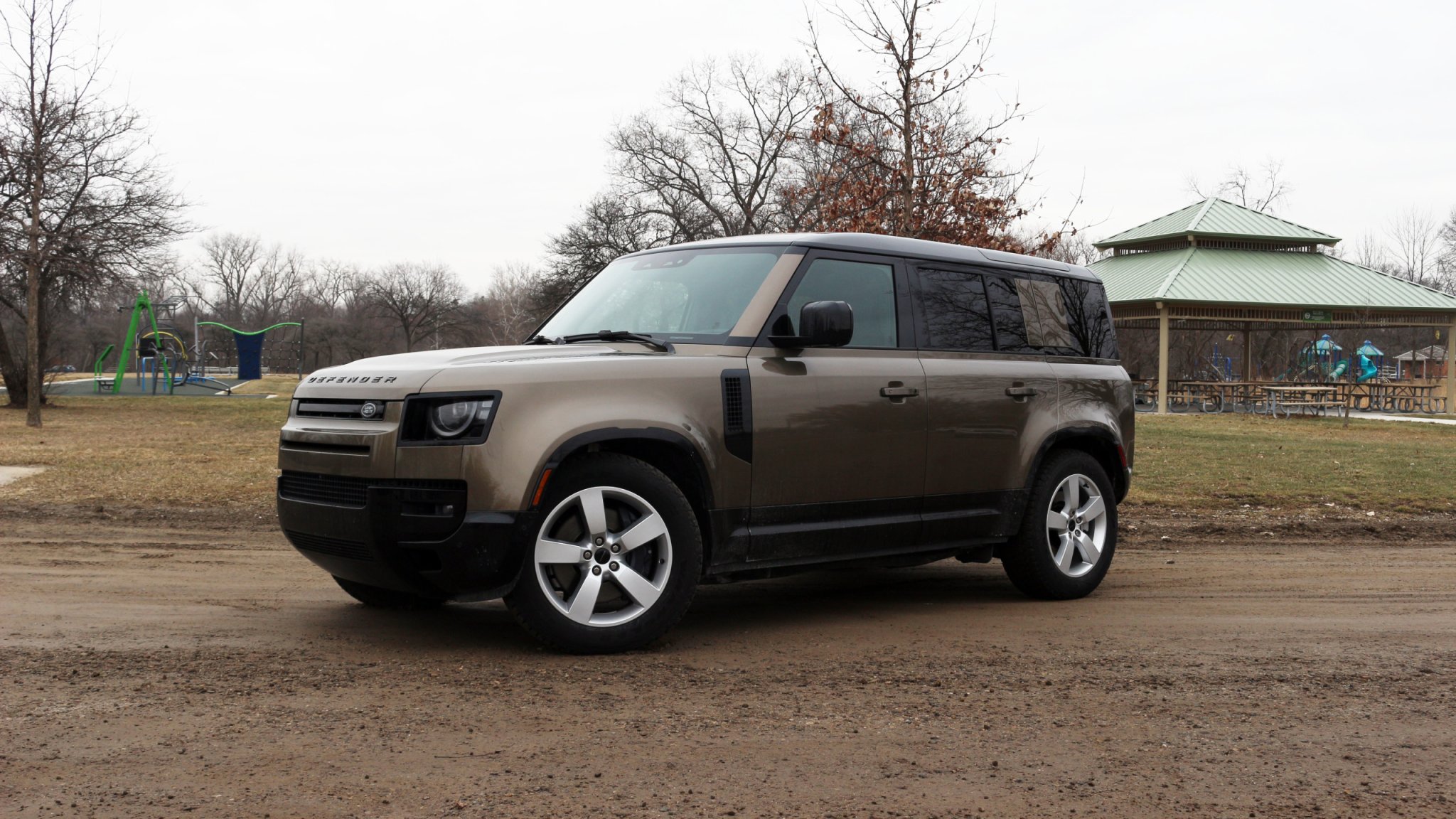
The Land Rover Defender’s reintroduction was a bit of a roller coaster for fans of the famed nameplate. It marked the first time in over two decades that the rugged SUV was available for sale in the United States. The return was hotly anticipated, to say the least, but that excitement was at least somewhat tempered by news that the Defender would ship with the company’s lineup of inline engines. No V8 to be found.
Thankfully, it didn’t take Land Rover long to remedy that. And now, we’ve got not one, but two different V8 options in the SUV’s lineup. There’s the 5.0-liter, supercharged V8 found in the models simply named “V8” and the 4.4-liter, turbocharged monster found in the Octa.
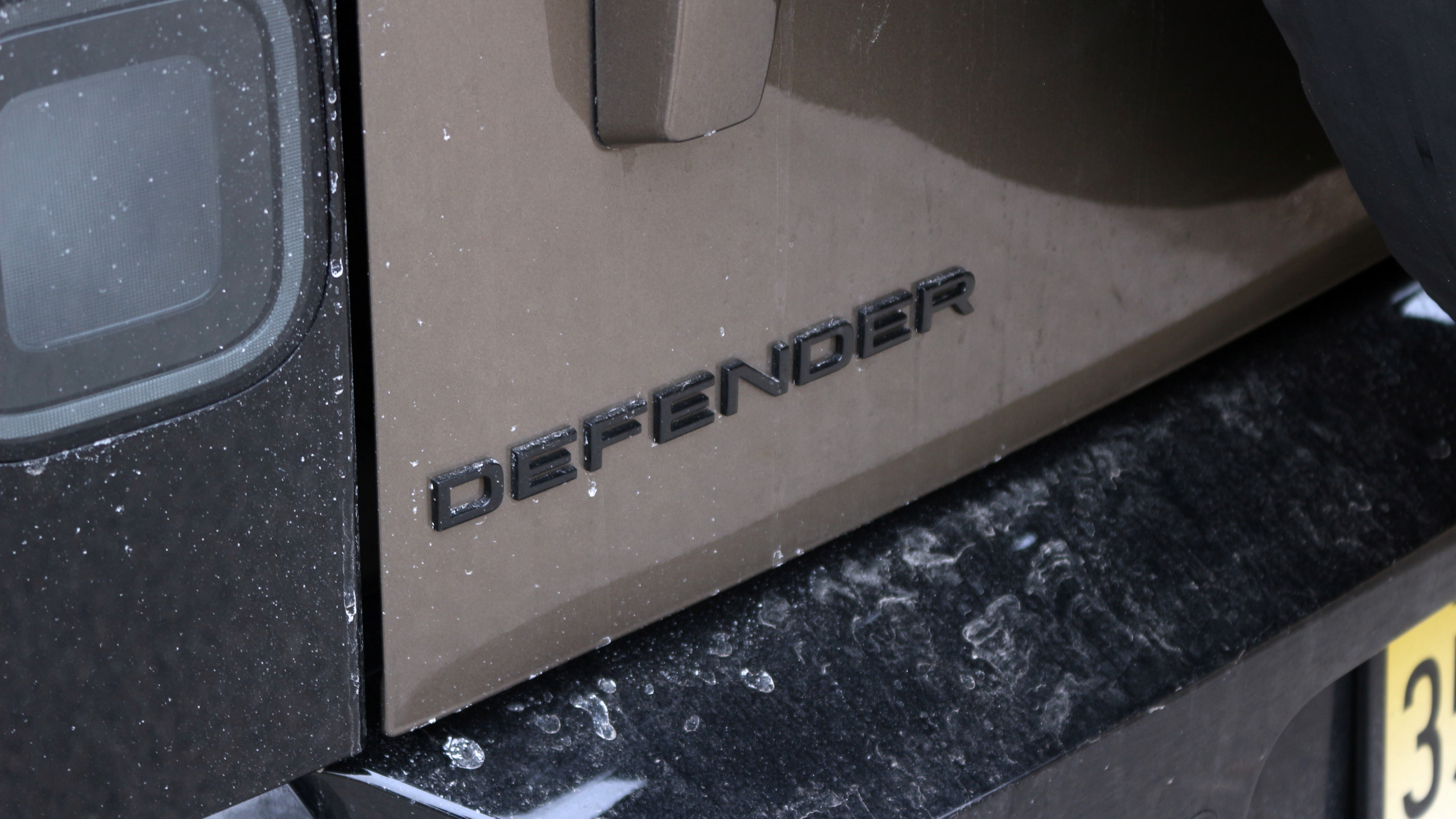
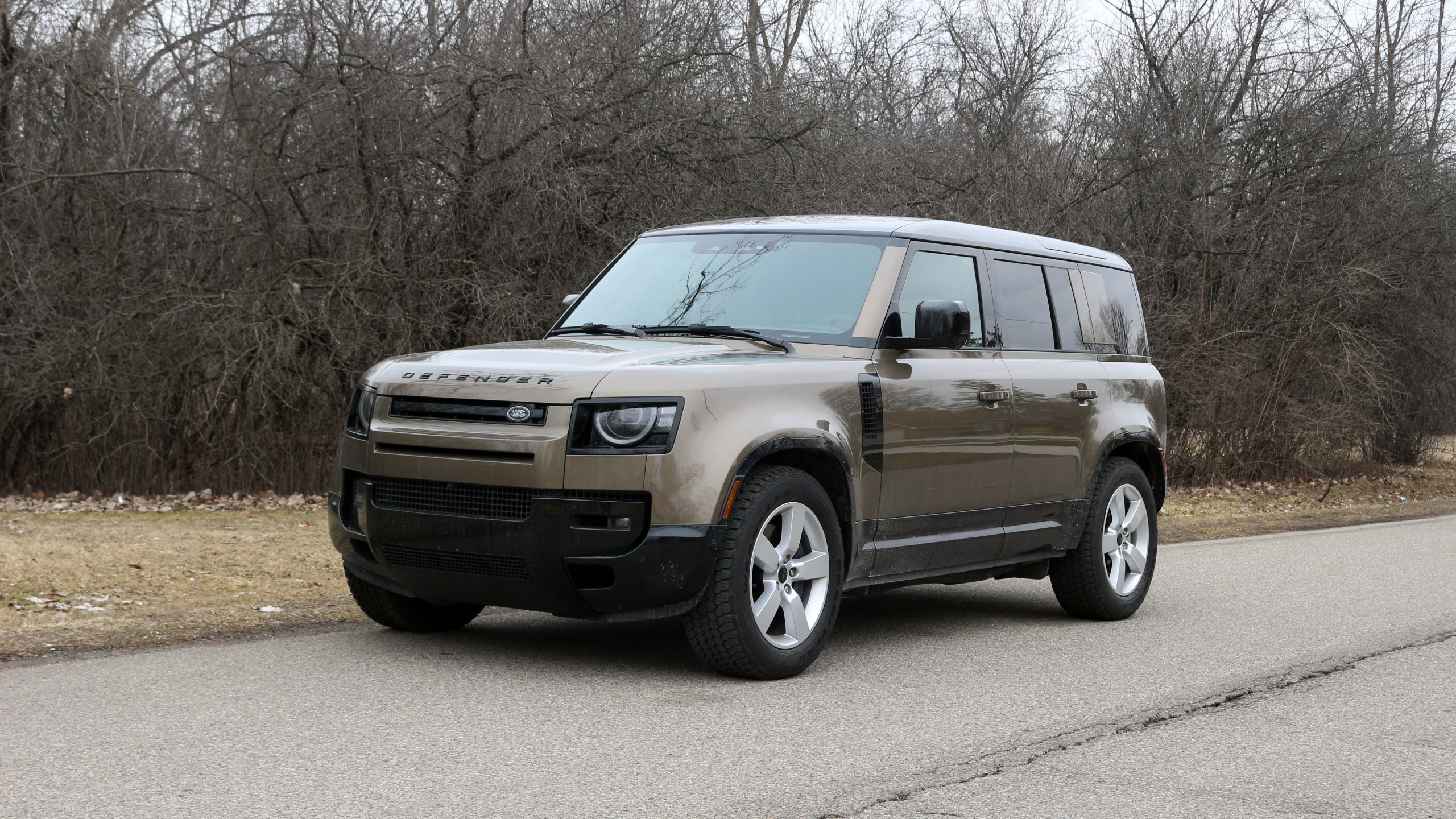
When I was offered the chance to sample one of the supercharged V8 models, I jumped at it. Though it was a previous model year (2025), it was a combination I’d not yet sampled—the mid-length 110. The verdict? Well, it’s a V8, alright.
The Basics
There was really nothing new for the Defender in the 2025 model. In fact, Land Rover seems to have leaped from one crisis to another. In prior years, the company struggled to build and import Defenders due to a series of Covid-induced supply fiascos. This time around, it’s tariffs.
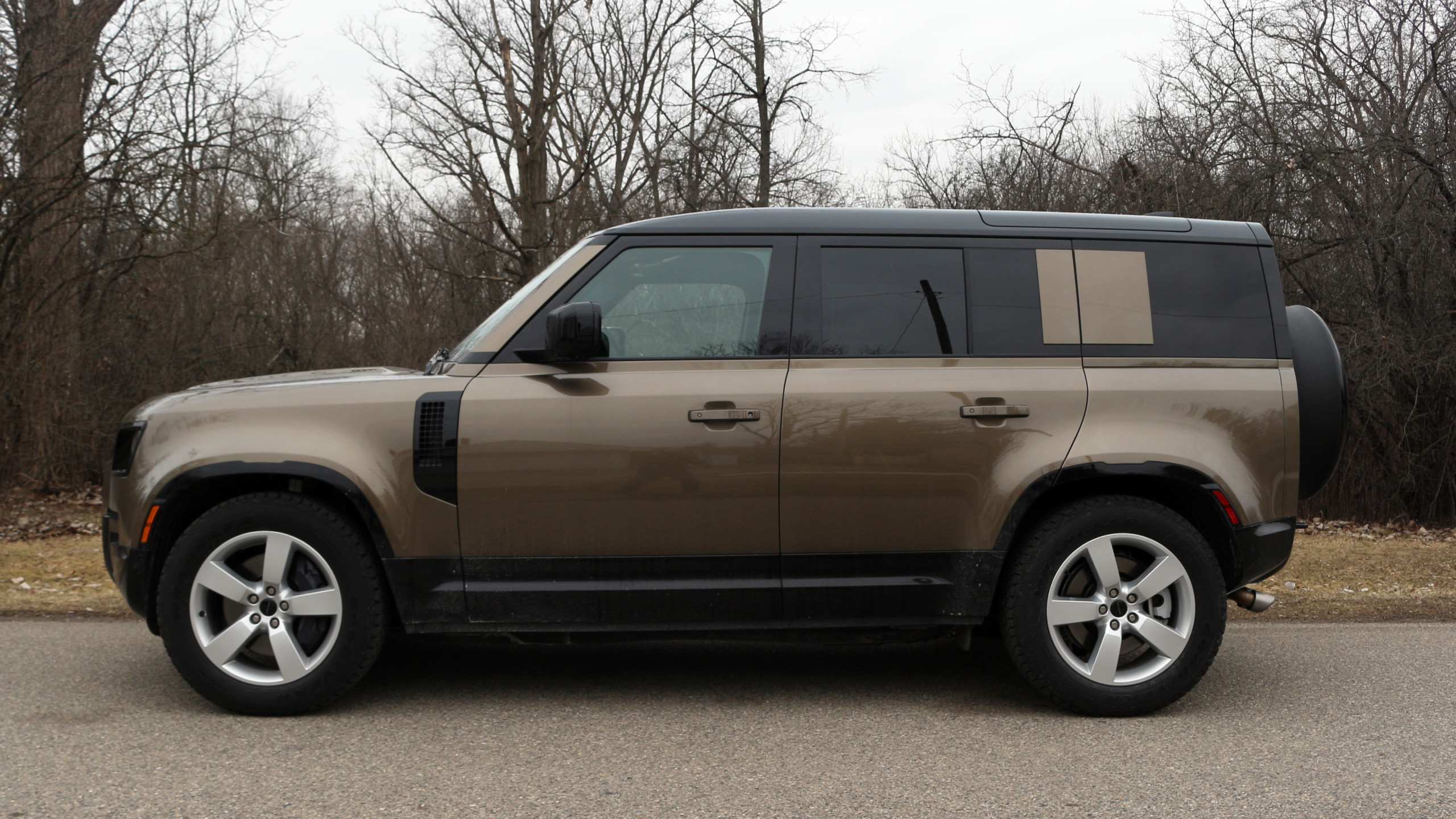
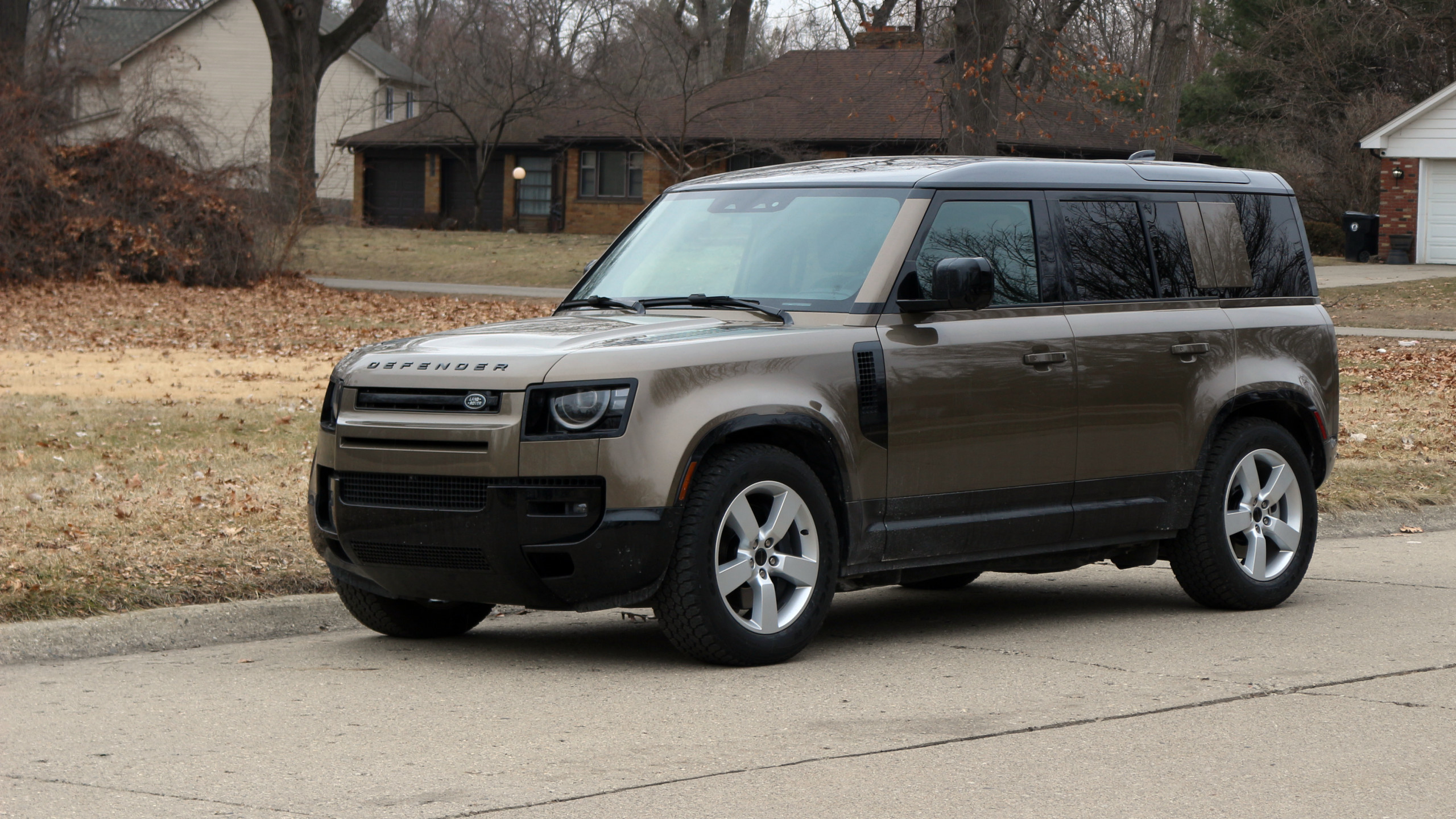
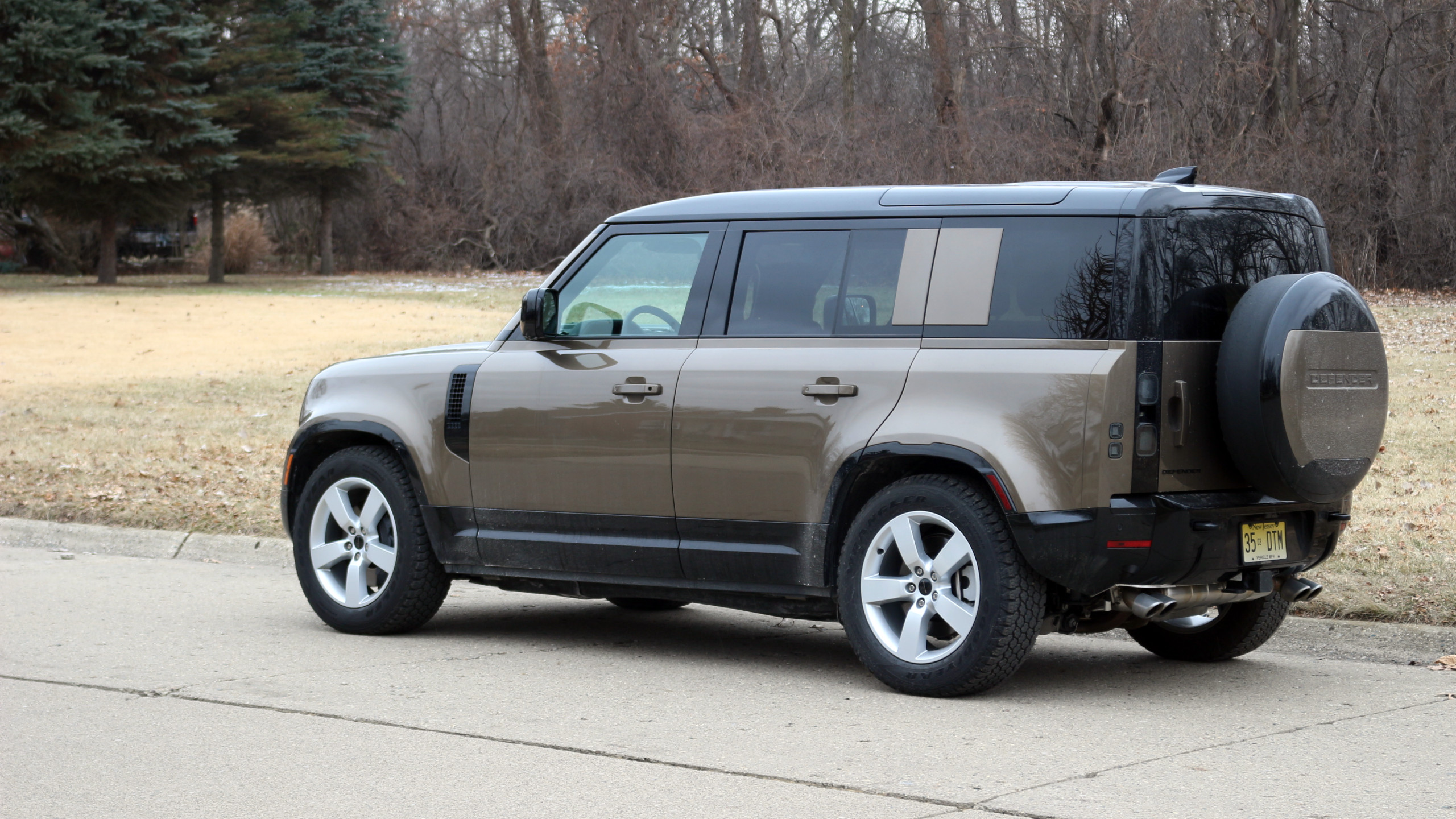
If you’re shopping for a Defender, that’s not all bad news. The only real difference between the 2025 model year I drove and the 2026 is in package availability. Don’t fall in love with the brown finish on the 110 in these photos. Land Rover only lists three finishes in the Build & Price tool for 2026: White, Black, and Grey—like a bag of bespoke millennial Skittles.
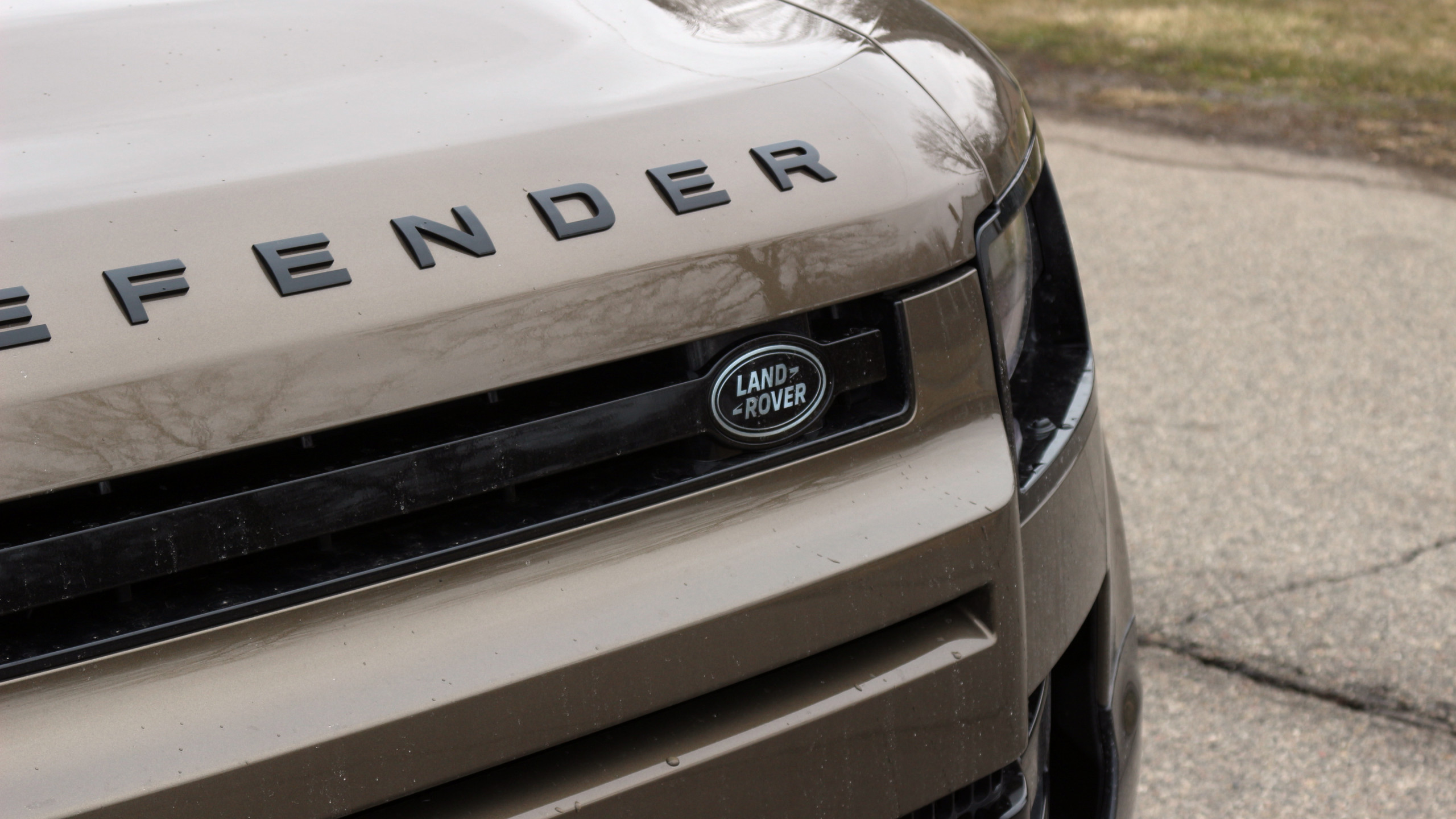
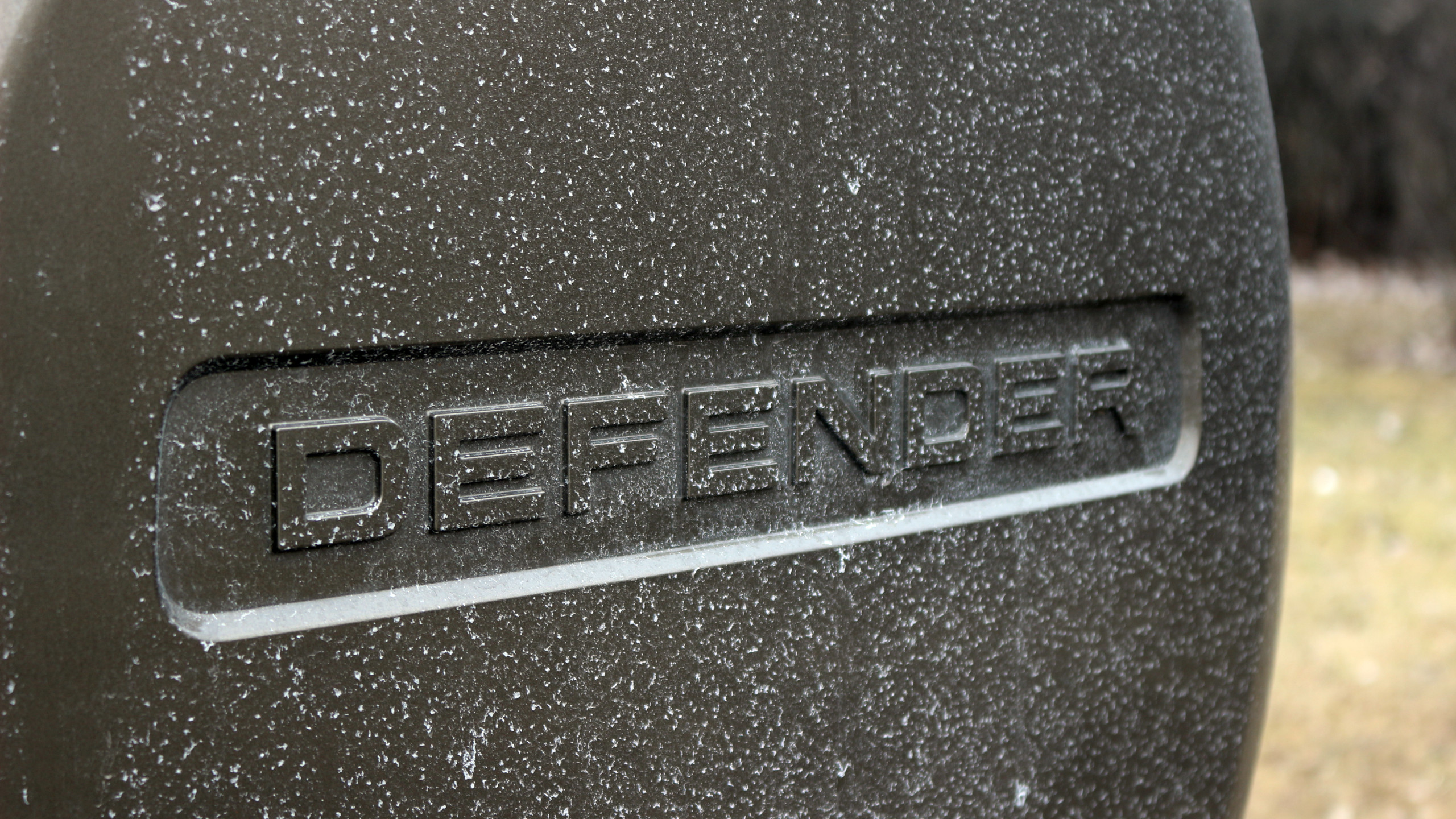
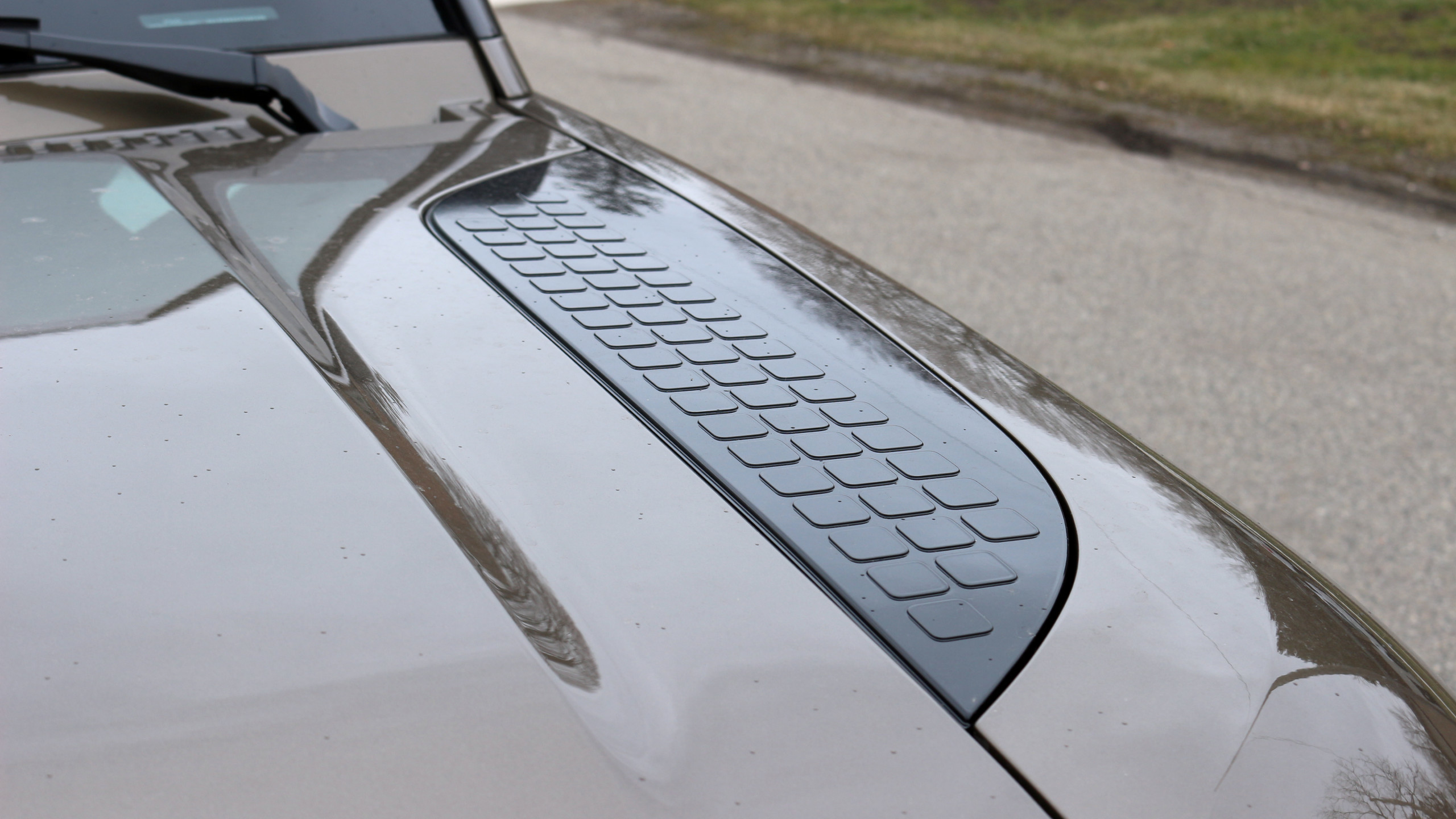
Driving the Land Rover Defender 110 V8
When you put the engine in a car’s name, you set certain expectations. Every term in “Defender 110 V8” tells you something useful—model name, wheelbase, and engine. By itself, “V8” tells you two things. First, it should be torquey; second, it should sound like NASCAR. [Ed. note: British NASCAR?]
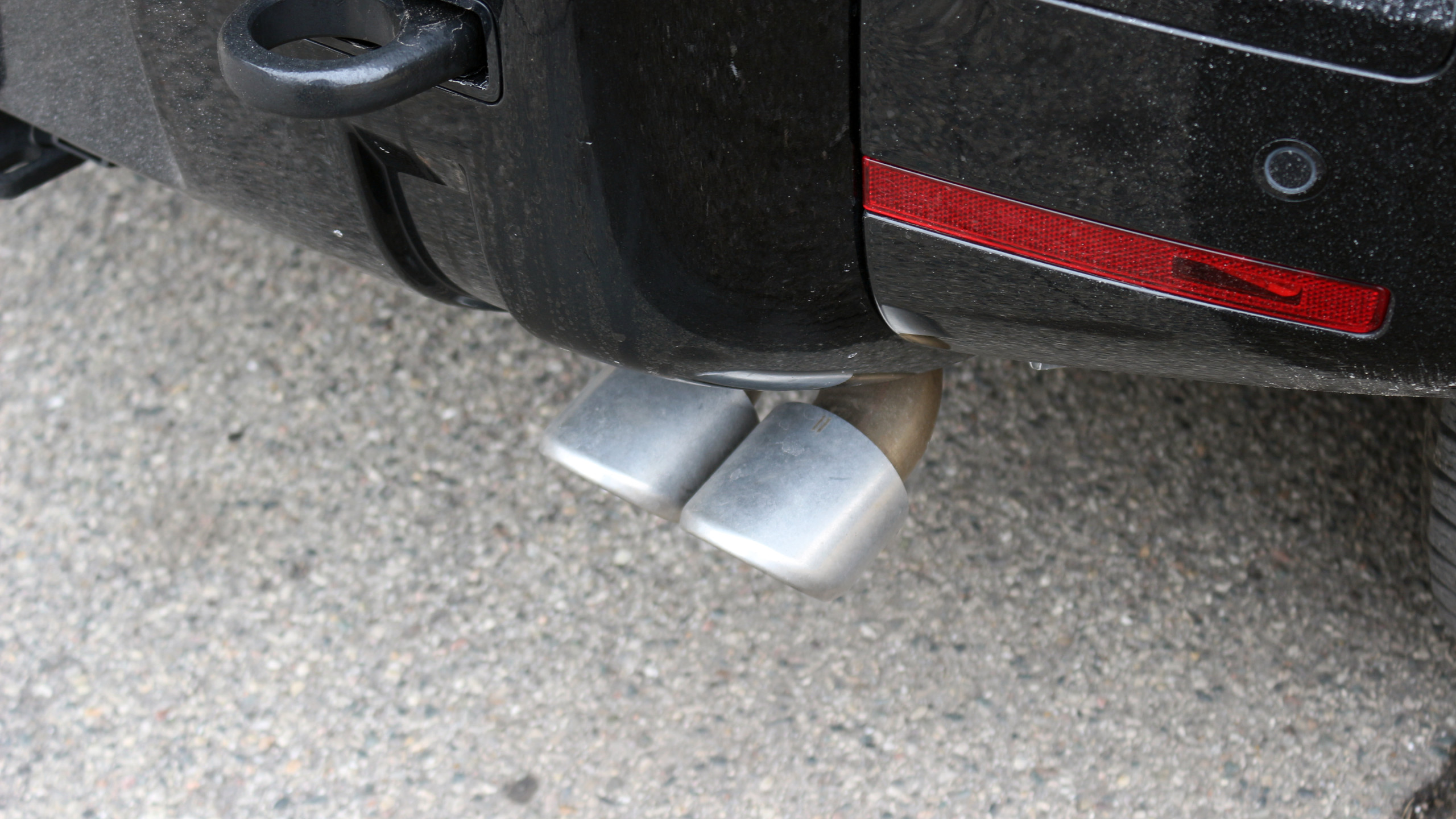
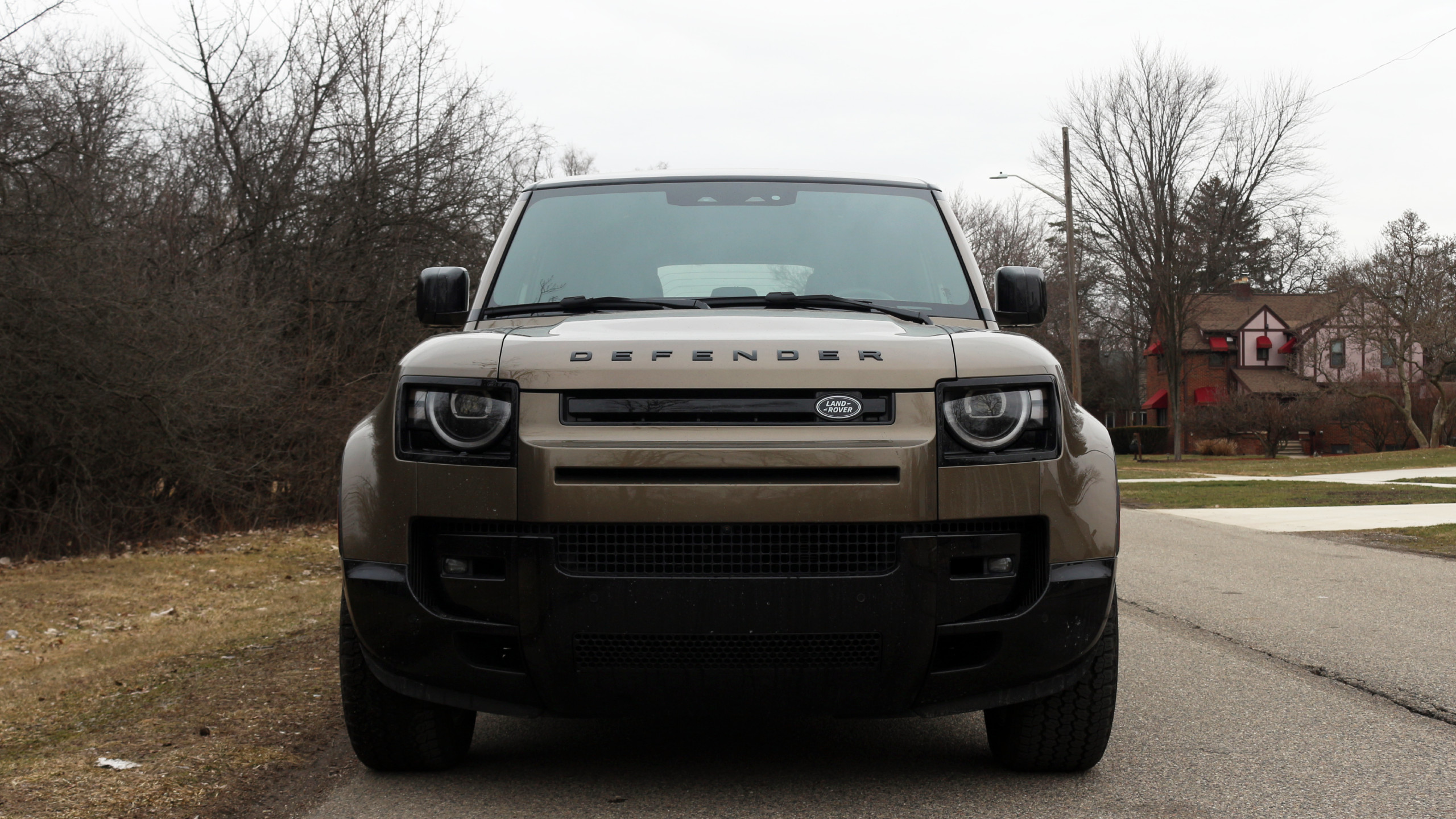
Well, check and check. The V8 makes 461 pound-feet of torque from 2,500 RPM. That’s not exactly a headline number in a world where you can walk out of a dealership with trucks producing more than double that, but it’s enough that Land Rover rated the 110 V8 to tow 8,200 pounds. And as for the noise, the 110 V8 also comes standard with a quad-outlet exhaust. It’s nowhere near as tacky as the G63’s side-exit setup, but it’s flashy for the otherwise relatively ho-hum Defender, and it sounds good too.
The Highs and Lows
The Defender’s traditional shape offers some advantages. The upright greenhouse and high seating position make it easy to see out and navigate parking lots. These tight maneuvers give the Defender the rare opportunity to shrink around the driver.
In virtually every other scenario, the 110 feels every bit of its nearly 5,500-pound curb weight and nearly 120-inch wheelbase. And why not? This is a big, heavy, somewhat luxurious SUV. And more than that, it’s not one that relies on extensive electronic suspension wizardry. The 110 V8 rides on old-fashioned steel. That means Land Rover had to settle for a one-size-fits-all suspension tune, and supercharged V8 or no, Land Rover customers still expect it to be civilized. To some, that might as well say “boring.” If you’re looking for an SUV that will hunker down when thrown into corners, look elsewhere. The V8 will certainly help you make your exit (or merge onto the next highway when you do), but if your performance needs go beyond simple straight-line performance, this is not the car you want.
Land Rover Defender Features, Options, and Competition
While it may feel like a workhorse engine, the 5.0 makes the Defender 110 the liveliest. On top of that, we live in the age of the vanishing V8, and even here in the Land Rover lineup, eight-pots are the minority. Volume comes from the six-cylinder models. In other words, this represents a premium on top of a premium, but to help sweeten the deal for the faithful, Land Rover ships the supercharged V8 with virtually every available feature standard.
Indeed, one might say the V8 is the whole point of this car. To further complicate things, the Defender occupies a weird space. It lacks the ostentatious aura of a Gelandewagen or Range Rover, but it’s also significantly more expensive (and better appointed) than something like a Jeep Wrangler, Ford Bronco, or Toyota 4Runner. The Land Cruiser has pivoted downmarket to let the Lexus GX and LX breathe; the Defender leans more toward the former than the latter.
Fuel Economy
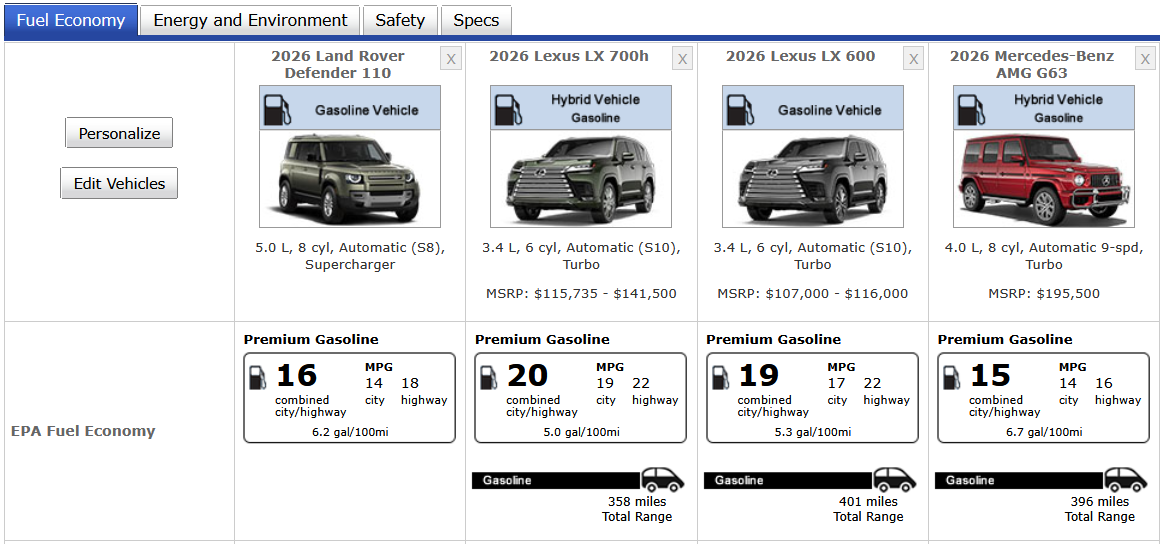
The downside to a V8, of course, is fuel consumption. The Defender 110 V8 is no outlier. It’s rated at 14 mpg city, 18 mpg city, and 16 mpg combined. We included both the LS600 and the 700h hybrid in the above to demonstrate that while a hybrid system certainly helps around town, the V8 hurts just as much on the highway.
Nobody’s buying this for the fuel economy, and if you’re already used to piloting something relatively sporty, its thirstiness probably won’t faze you.
Value and Verdict
It’s difficult to quantify the value of something like the Defender V8. This mid-length five-seater pines for the mountains; virtually any other SUV at this price will be more refined and more luxurious, and the V8 sort of stands apart from that equation. Yes, this is the most powerful standard Defender, and there’s no mistaking that noise for anything else, but at the end of the day, it’s a heavy truck with a reasonably big engine, and this is a case of the whole being exactly the sum of its parts.
If you’re looking for a four-door Defender that fits in your garage and won’t break the bank, and you simply must have it with a V8, then it’s this or nothing, and this ain’t too shabby.
Land Rover provided The Drive with a seven-day loan of this vehicle for the purpose of writing this review.
2025 Land Rover Defender 110 V8 Specs
| Base Price (as tested) | $120,250 ($129,270 est. 2026 model year pricing) |
| Powertrain | 5.0-liter supercharged V8 | 8-speed automatic transmission | 4-wheel drive |
| Horsepower | 518 @ 6,500 rpm |
| Torque | 461 lb-ft @ 2,500 |
| Seating Capacity | 5 |
| Cargo Volume | 34 cubic feet (behind second row | 78.8 cubic feet behind first row |
| Towing Capacity | 8,200 pounds |
| Curb Weight | 5,448 pounds |
| EPA Fuel Economy | 14 mpg city | 18 highway | 16 combined |
| Score | 7/10 |

Quick Take
Give me the Octa; this one is more octogenarian.
Loading comments…
Comments couldn’t be loaded. Please refresh the page.