
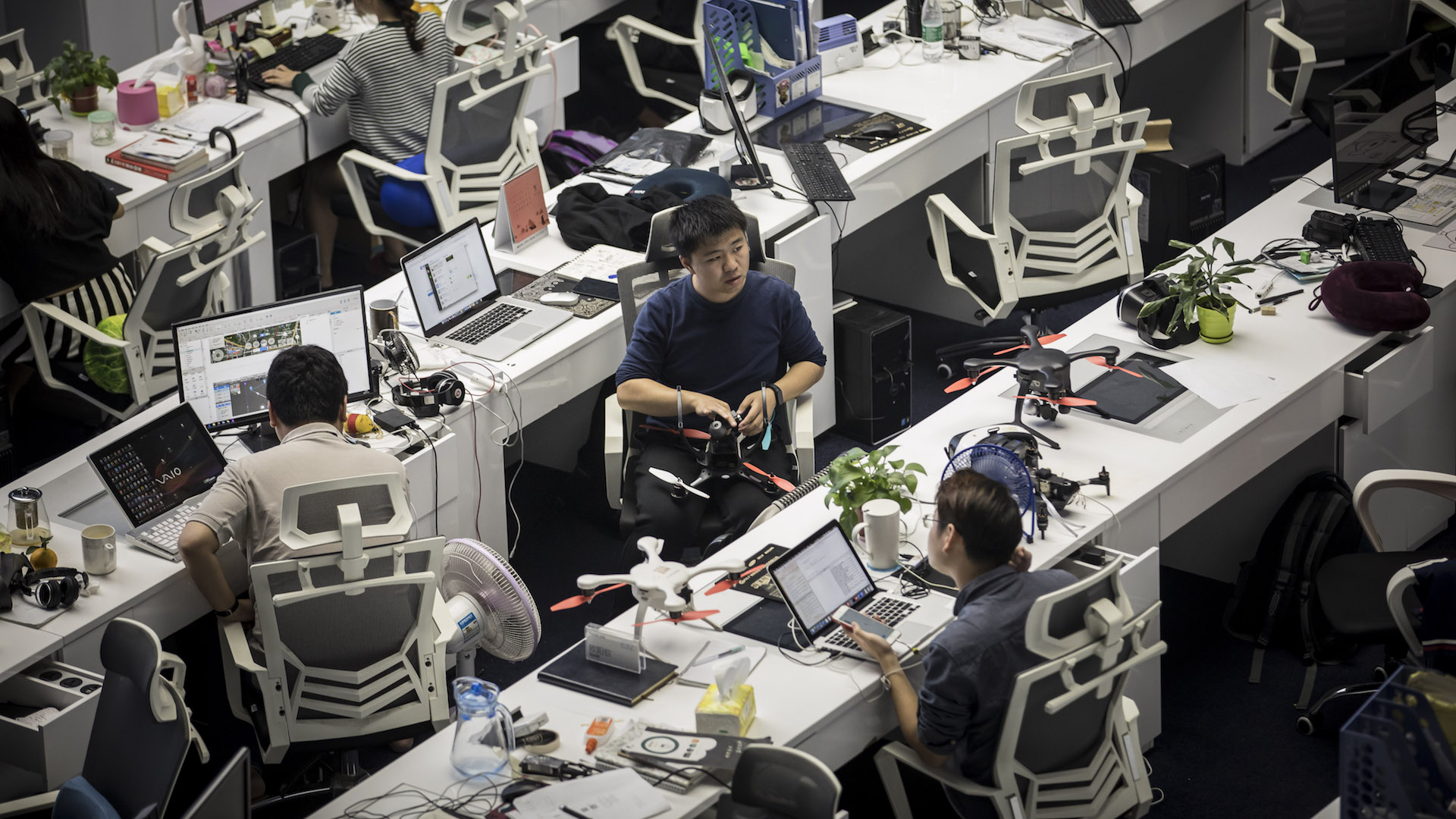
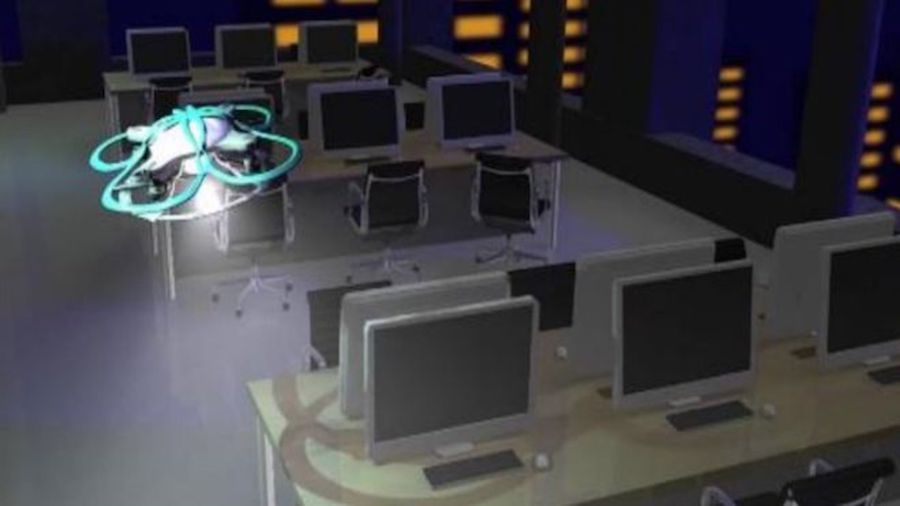
Drone manufacturer Blue Innovation, Telecommunications company NTT East, and Japanese office security and cleaning firm Taisei, are developing a drone that would fly through offices and play “Auld Lang Syne” at employees working unhealthy overtime hours in order to force them to go home. Japan’s corporate salaryman culture has long been a problem in regards to mental health and exhaustion, which has often lead to people’s deaths.
Using an unmanned aerial vehicle as a method to curb a serious issue such as this may not be the best idea. A more effective approach, presumably, would be to focus on the causes of this ingrained cultural issue, instead of applying figurative band-aids like music-playing drones as a seeming solution. On the other hand, it’s always great to see drones being considered as a tool to improve a situation. However, this may be one of those scenarios where if all you have is a hammer, everything appears to be a nail. The BBC suggests that most onlookers here tend to agree.
Experts aren’t convinced, and consider this music-playing UAV solution a “silly” idea, the BBC reports. Of course, Taisei director Norihiro Kato defends the company practice. “You can’t really work when you think ‘it’s coming over any time now’ and hear ‘Auld Lang Syne’ along with the buzz,” he told AFP.
To be frank, this seems like an extremely childish solution. If you want to improve the mental and physical health of your employees, perhaps a meeting is in order where you let them know that excessive overtime is no longer permitted. If people don’t check out, or leave their desks and exit the building, salaries will be affected. Speak to them, and foster an engaging sense of communal discussion. Producing flying robots to play music—at your employees—because the above is too complicated, is almost too absurd to process as actual reality. This might as well be a part of the world-building elements in a cyberpunk novel.
According to the BBC, professor of management and information at the University of Shizuoka, Seijiro Takeshita, said, “Will this help? The short answer is: no. It’s a pretty silly thing and companies are doing this just because they have to be seen to be doing something on the problem.” This points toward a more insidious, self-aware marketing strategy on behalf of corporations, indicating that image is more important than actual improvement. “Creating awareness is of course very important—but this is almost a hoax in my opinion,” he added.
This issue of considering the company to be family, and having to satisfy the father/boss, has plagued the country for decades. It has gotten so bad that a new term was coined: Karoshi, which literally translates to “overwork death.”
Drones are like any other tool. They can be used to improve a situation by reducing costs and maximizing efficiency, or enhancing man’s reach. They can also be incredibly misappropriated and used as gimmicks. The salaryman culture in place here will most likely not be resolved by filling offices with flying robots that play Scottish folk music. Professor of sociology at Osaka University, Scott North, agrees that this band-aid of a solution isn’t enough.
“Even if this robotic harassment gets workers to leave the office, they will take work home with them if they have unfinished business,” he told the BBC. “To cut overtime hours, it is necessary to reduce workloads, either by reducing the time-wasting tasks and tournament-style competitions for which Japanese workplaces are notorious, or by hiring more workers.” Personally, I think North is on to something here. We’ll make sure to keep an eye on this supposed solution once implemented, and report on the results.
Loading comments…
Comments couldn’t be loaded. Please refresh the page.