
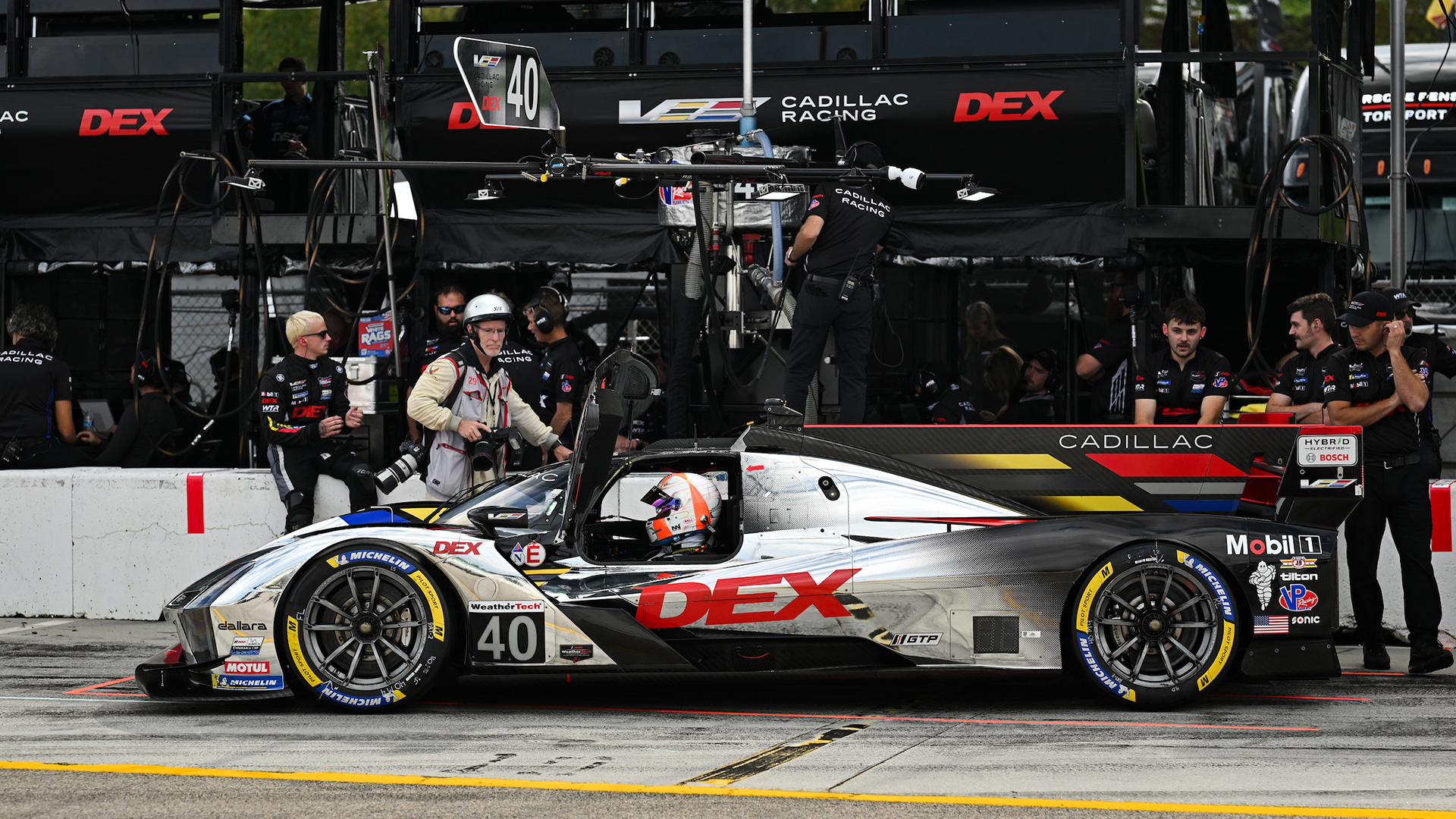
On the surface, the term sustainability doesn’t exactly scream “auto racing.” As much as we love it, motorsport is admittedly wasteful, burning fuel, rubber, other consumables, and money in the pursuit of intangible glory. But since that whole world isn’t about to slam on the brakes, what does it really look like for racing and environmental responsibility to coexist?
Maybe this is a better way to put it. In the same way that racing has created real engineering advances that have in turn made cars better over the decades, can the same obsessive efforts that squeeze out tenths of a second also be applied to renewable fuels, tire longevity, and energy efficiency? Can it prove that performance and sustainability—and fun—don’t have to be at odds?
IMSA, its tire partner Michelin, and its fuel partner VP Racing Fuels think so, and I went to Petit Le Mans at Road Atlanta last month to hear their argument for why motorsport is the ideal test lab for enthusiast-minded sustainability. It’s easy to be skeptical of big claims like Michelin making 40 percent of the 200 million tires it produces each year out of renewable materials by 2030, or VP Racing Fuels developing entirely petroleum-free race gas that performs the same as dino juice. In this case, however, the work is well underway.
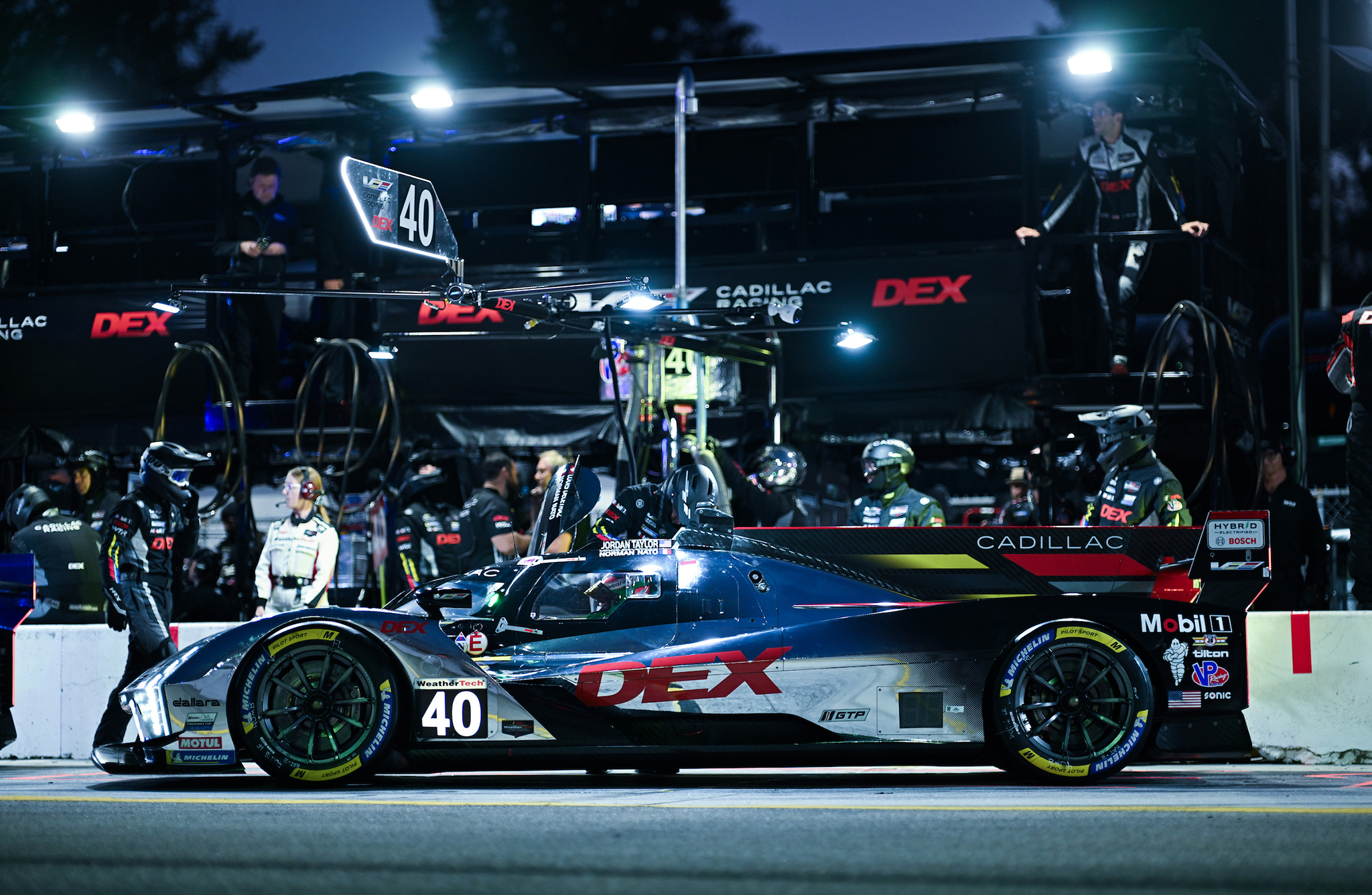
The real question is, will it lead where they say?
Big Ideas
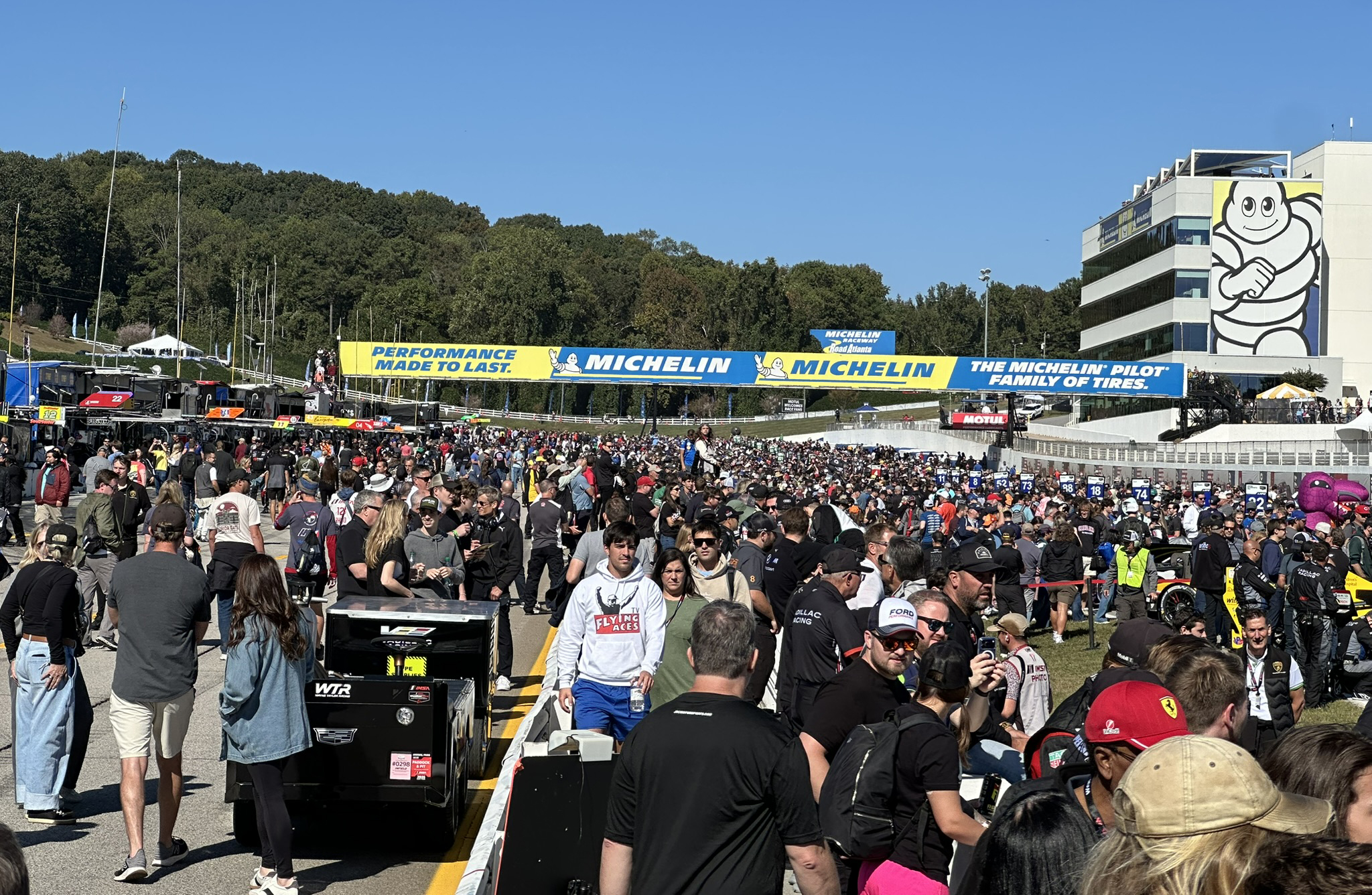
IMSA is the largest sports car racing sanctioning body in North America, Michelin is the world’s largest tire manufacturer, and the two just extended their partnership for another ten years. Along with Michelin remaining the Official Tire of IMSA through the 2035 season, both organizations have committed to improving material sustainability and reducing their carbon footprint. And they seem serious, and ambitious, about it.
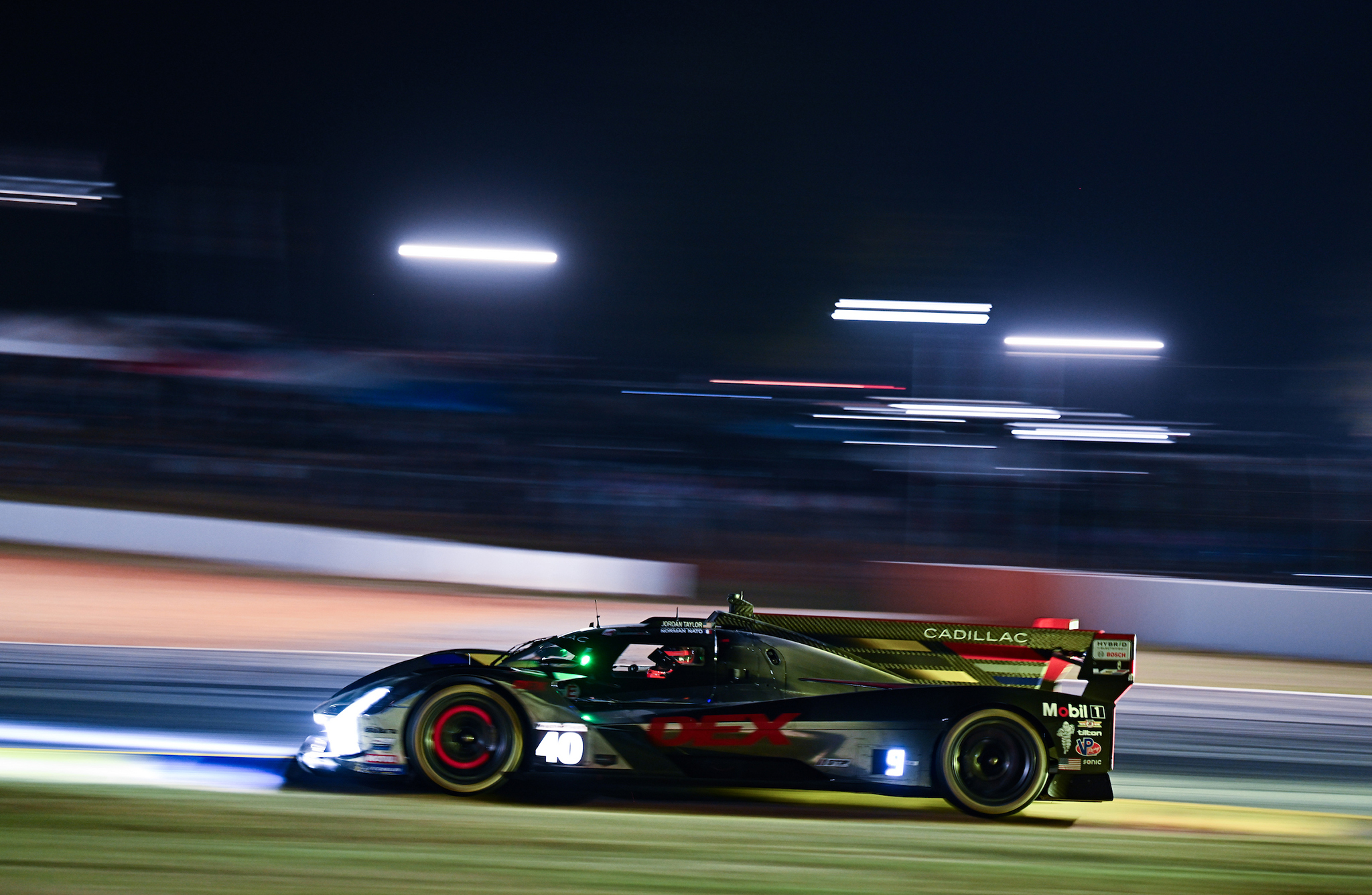
IMSA has already taken several steps to increase sustainability and reduce its reliance on non-renewable materials. It started with the 2023 debut of the hybrid-electrified Grand Touring Prototype (GTP) class, a first in professional North American motorsports to feature hybrid-powered race cars. The GTP cars are built to IMSA’s LMDh and the Automobile Club de l’Ouest’s Le Mans Hypercar regulations, making them eligible for competition in the Hypercar class of the FIA World Endurance Championship (WEC). Likewise, WEC’s LMH prototypes became eligible for IMSA’s WeatherTech Championship GTP class.
The bigger news was that the same year, IMSA switched to an eighty-percent renewable VP Racing Fuel, cutting carbon dioxide on GTP race cars by twenty-six percent compared to the previous fuel.
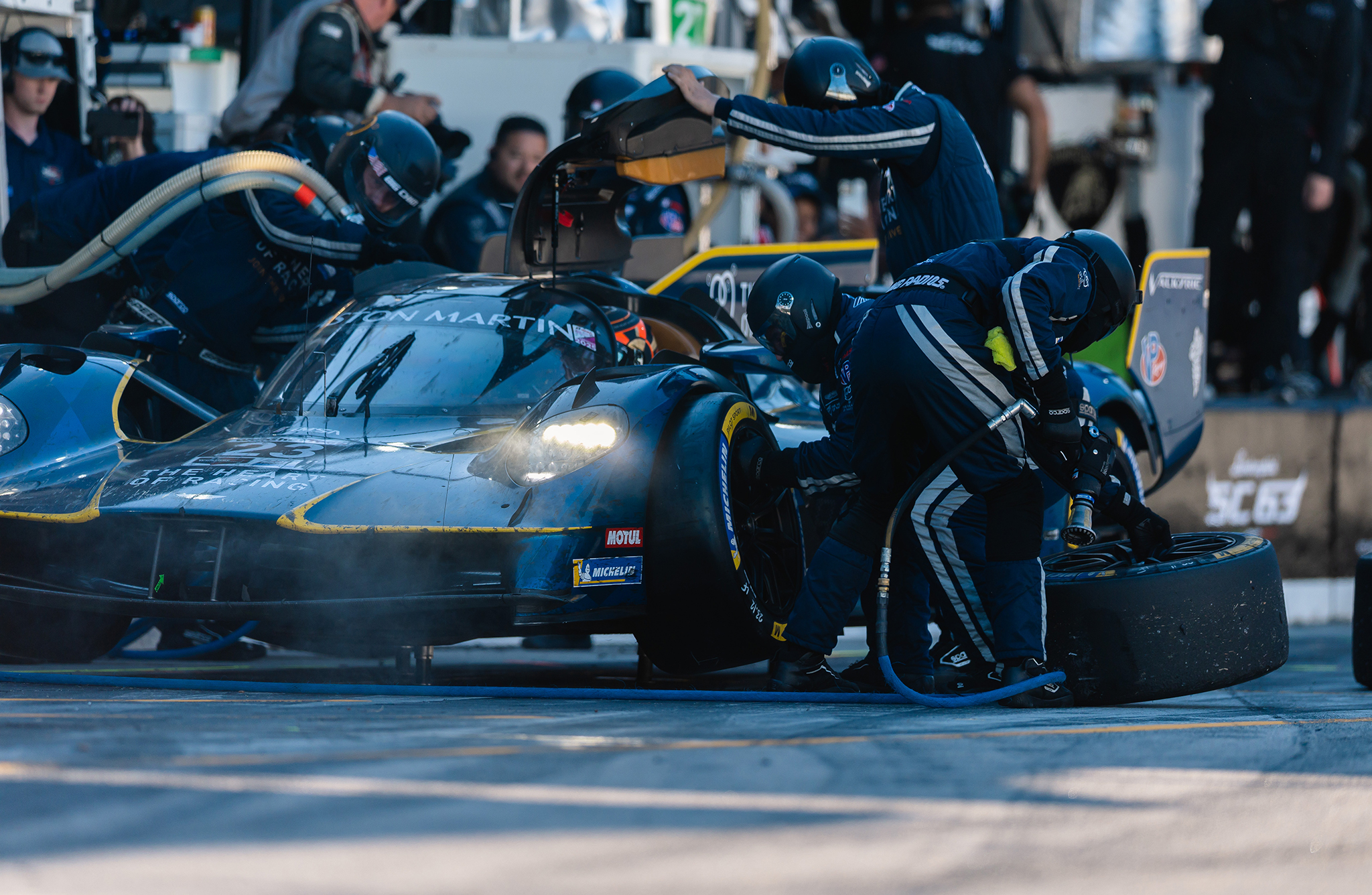
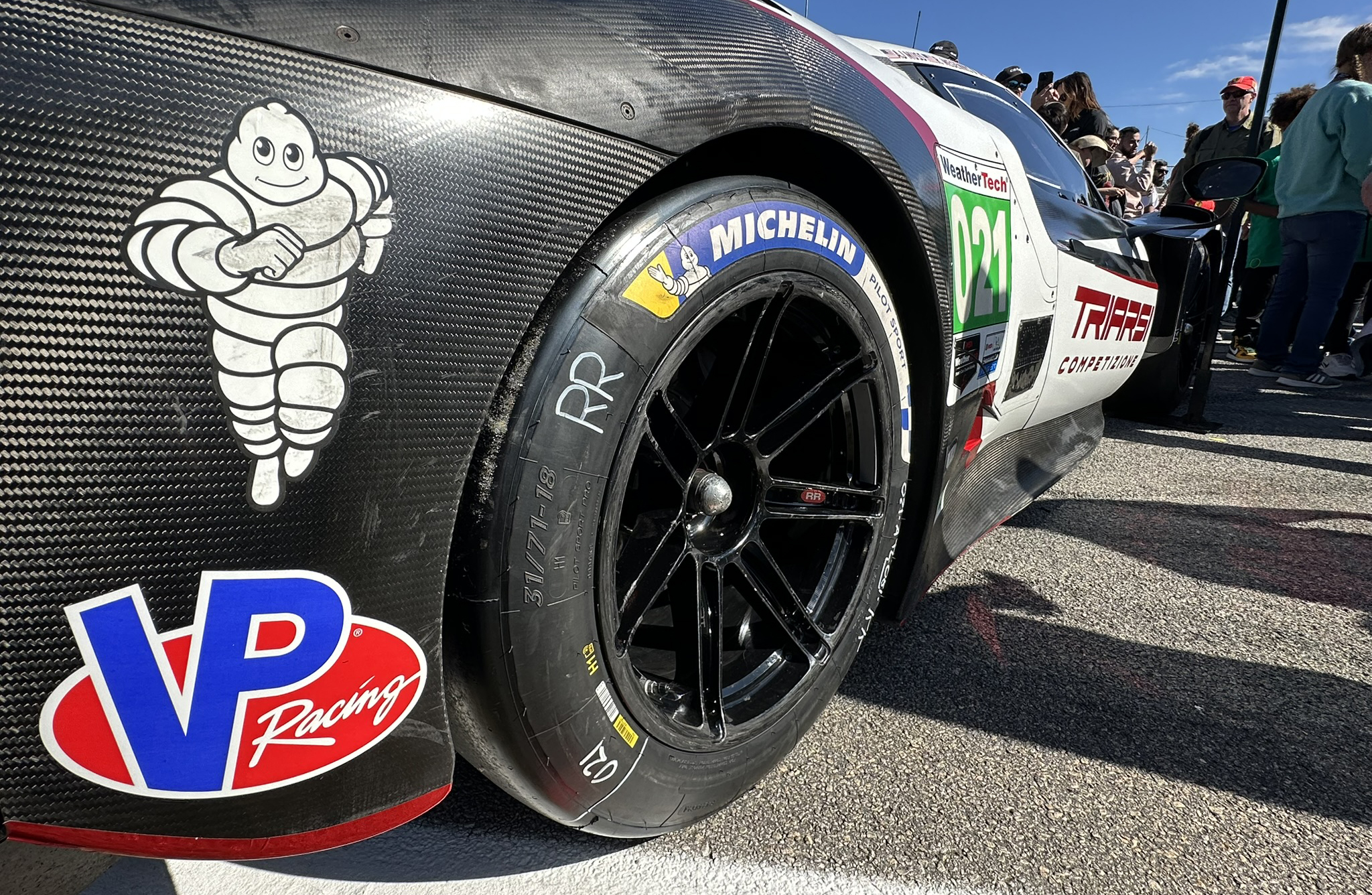
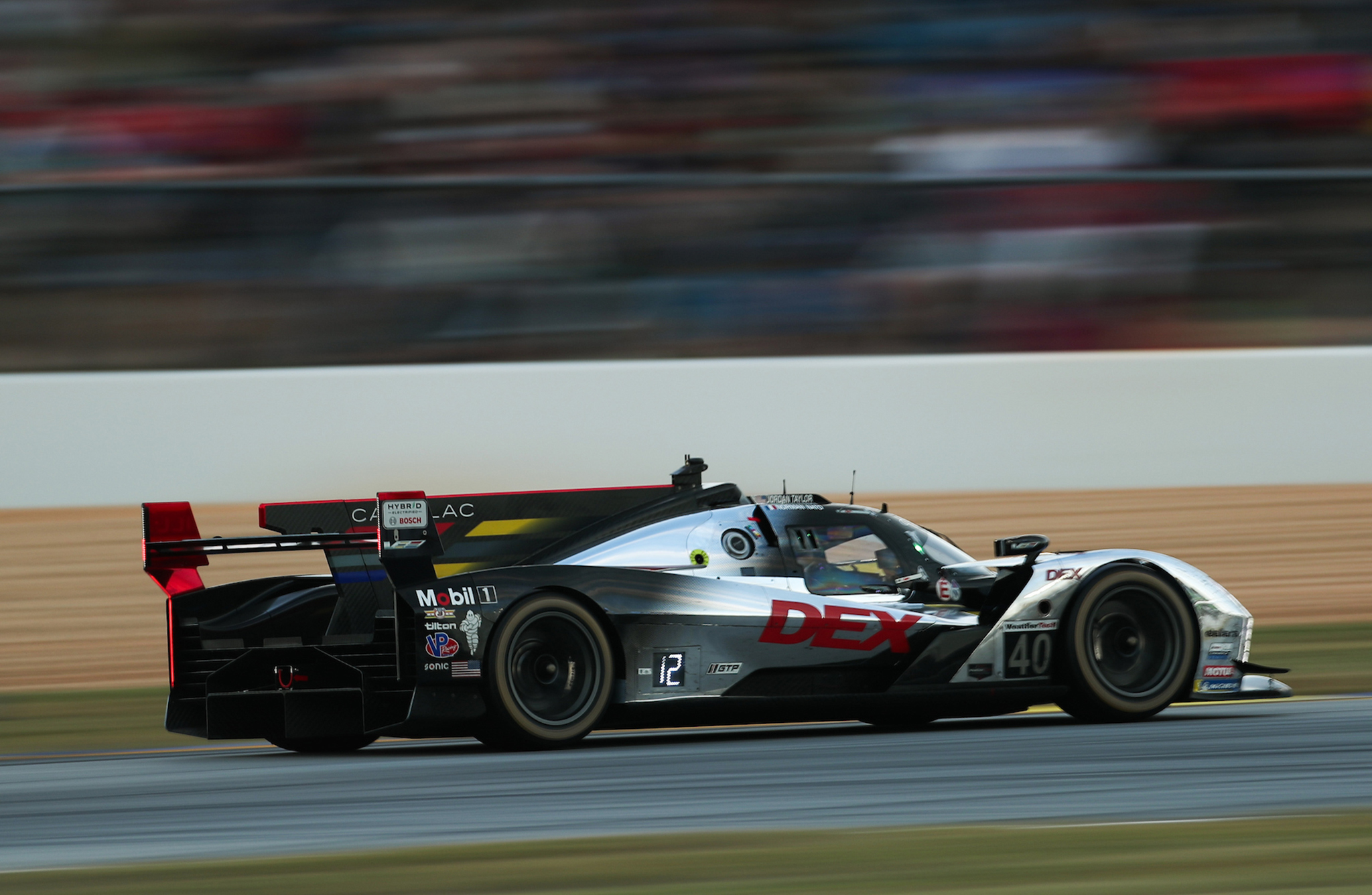
David Pettit, IMSA’s Senior Vice President of Marketing and Business Operations, pointed out that IMSA’s sustainability commitment quietly goes further than that. It continues with a reduction in on-site media production and engineering personnel thanks to more robust data connectivity. IMSA’s support trailers now carry enough solar panels to power themselves off-grid, and even charge automakers’ demo EVs and PHEVs at the track.
Likewise, in 2023, Michelin introduced new Hypercar race tires and, together with IMSA, reduced tire allocations. Combined with thirty percent more renewable content in those new tires, this led to an 18.8 percent reduction in metric tons of carbon dioxide per GTP car. On the development side, Michelin increased its use of simulators and modeling, which substantially reduced the need for track testing. By the end of 2024, sustainable materials made up thirty-one percent of Michelin’s race tires.
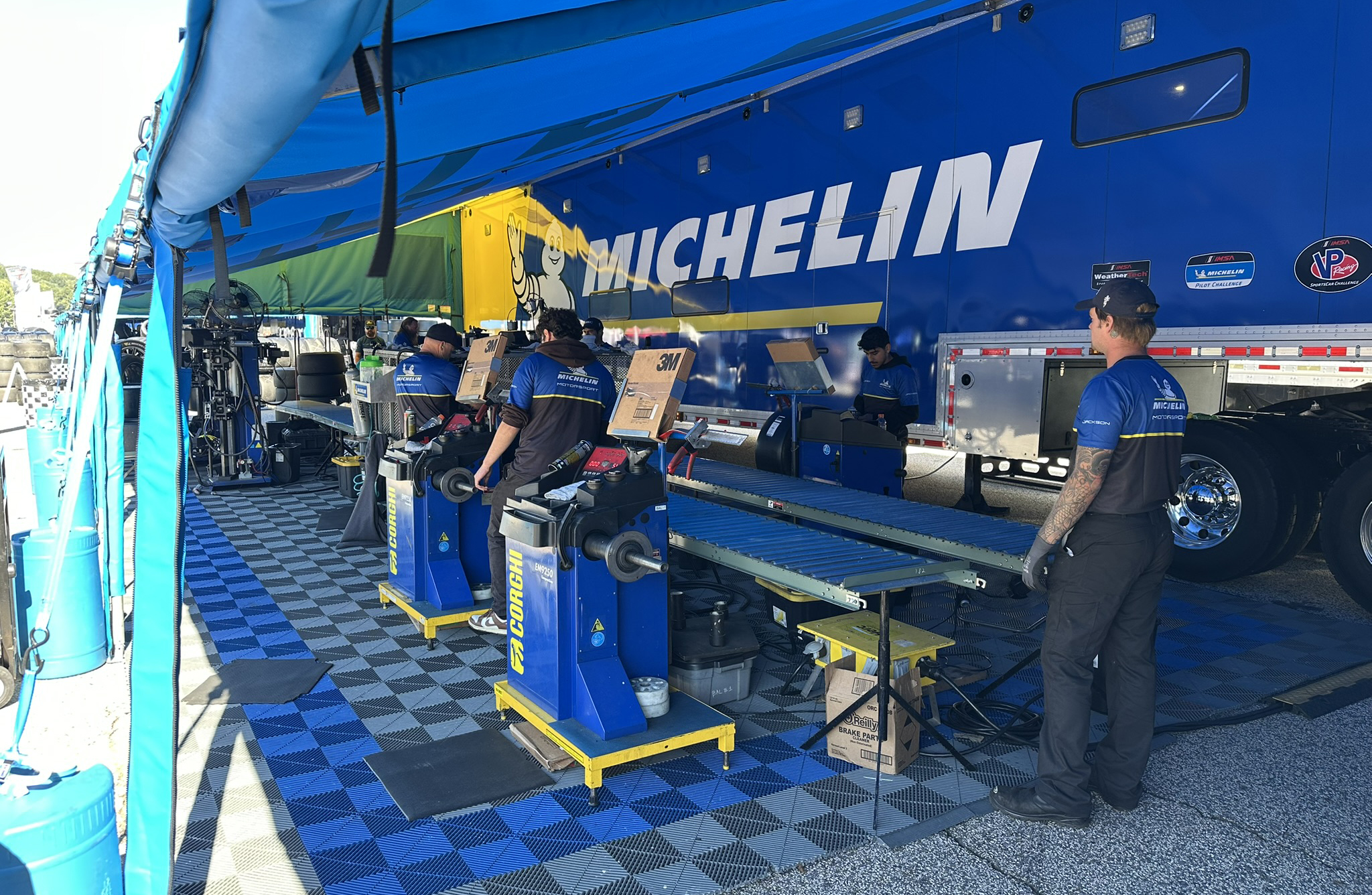
Still, it is fair to ask whether these efforts truly make a difference. Hybrid systems, like those in the new GTP cars developed by Bosch, Xtrac, and Williams Advanced Engineering, rely on lithium, nickel, and other mined metals. The mining, transport, and processing of those materials carry their own footprint. Additional support trucks and personnel now follow the series to service these systems. And among the GTP automakers, Acura, Aston Martin, BMW, Cadillac, Lamborghini, and Porsche, two do not even sell hybrids. Racing is trying to evolve, but whether fans or the environment notice that evolution remains an open question. Will race fans even notice any of this?
The Next Steps
IMSA and VP Racing Fuels, much like Formula 1, plan to introduce one-hundred percent certified sustainable fuel in 2026. Michelin has just unveiled a new generation of its Pilot Sport Endurance racing tires. The two organizations have also jointly created a Sustainability in Racing Award, which will recognize the GTP car with the highest sustainability performance at each race, culminating in a season champion.
Like the previous generation, the new Michelin Pilot Sport Endurance 2026 Range tires are designed for racing in the Hypercar class of the World Endurance Championship and in IMSA’s GTP class. The new tire features a complete redesign of compounds and processes, including extended use of simulation, which reduces track time, costs, and environmental impact. These tires will integrate fifty percent sustainable materials. The goal is to improve consistency, reach racing temperatures faster, and increase tire longevity. That seems like a fair trade-off for one extra pound per tire.
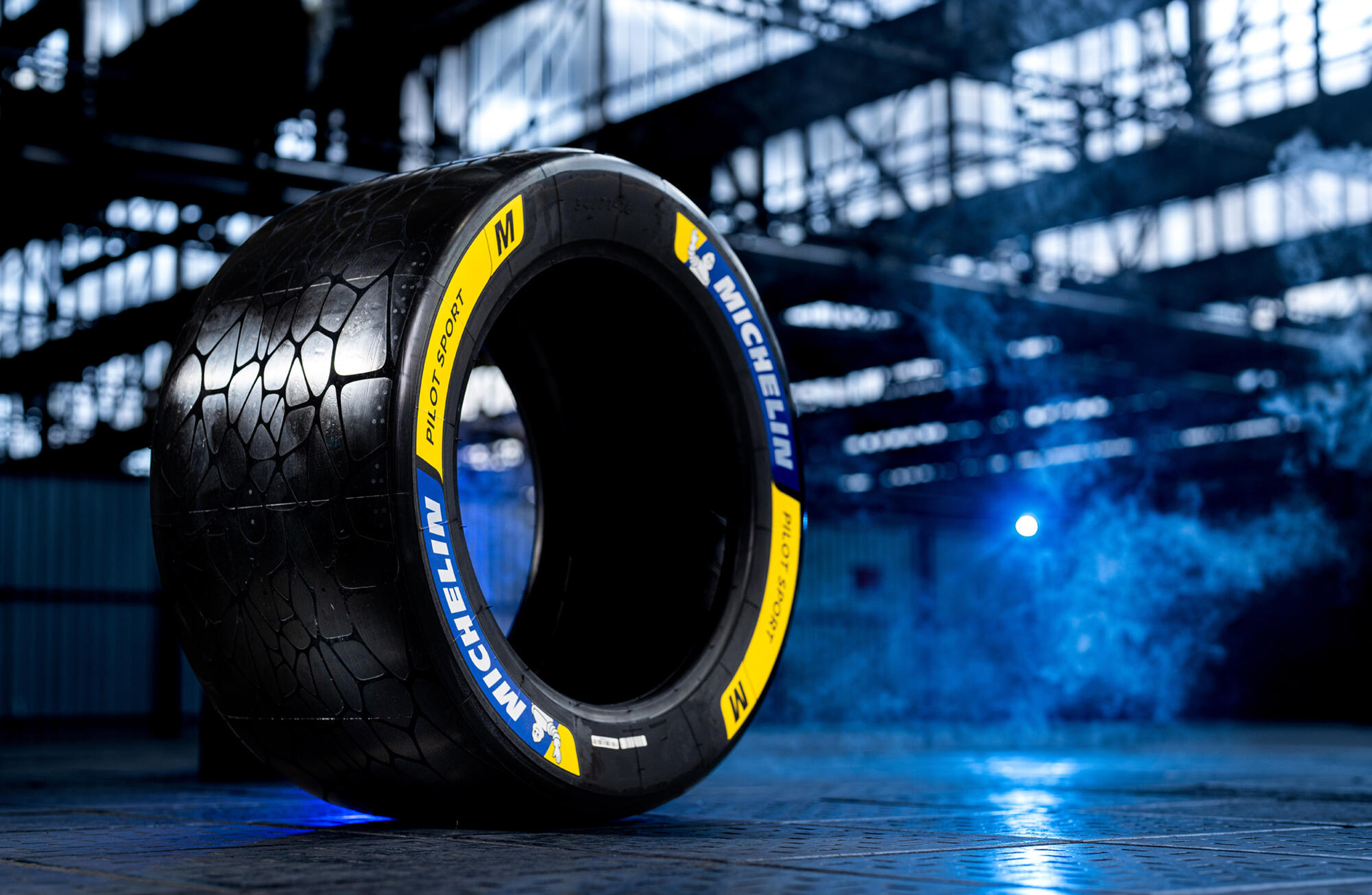
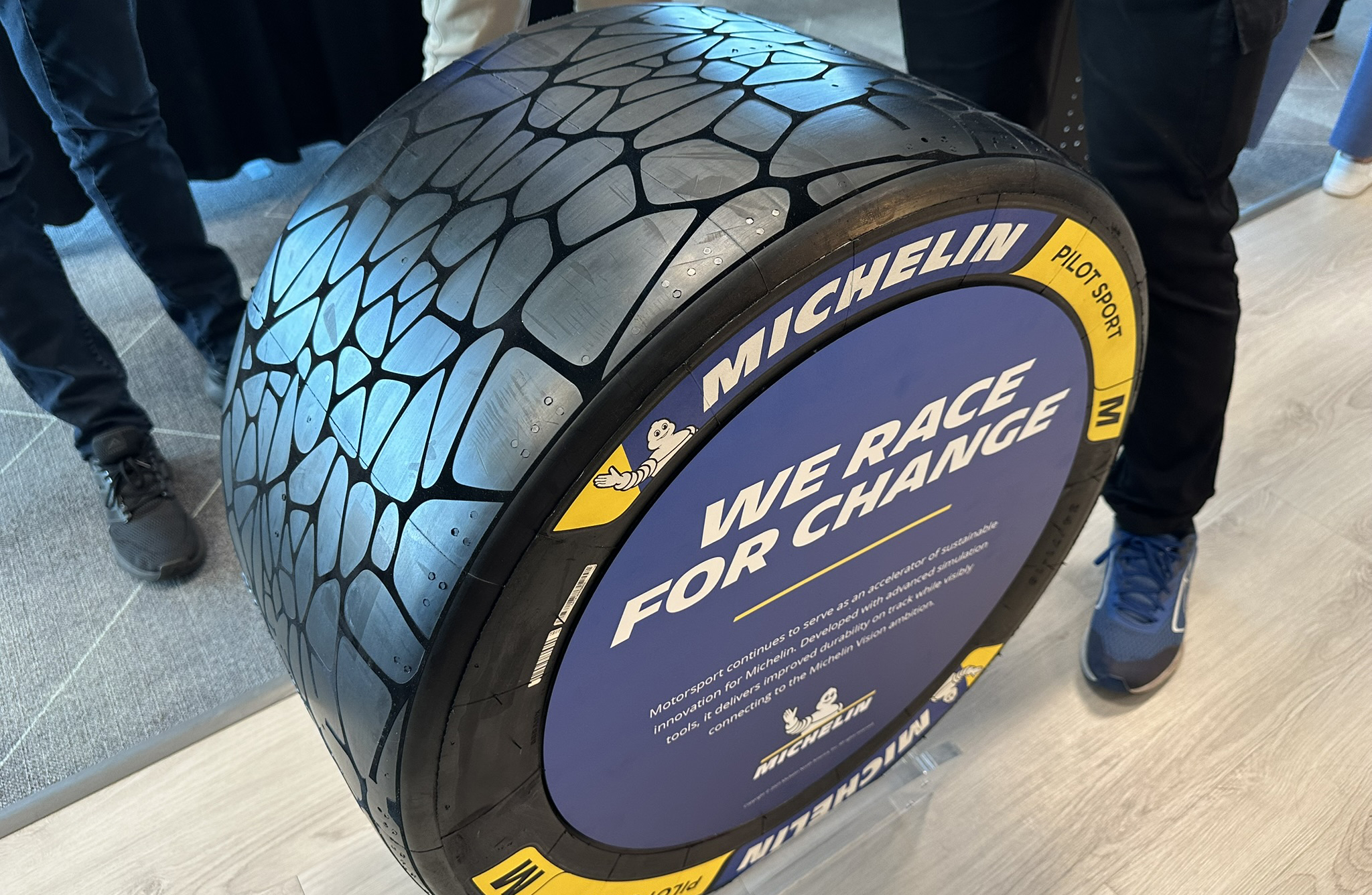
Michelin estimates that teams will use between fifteen and thirty percent fewer tires over the course of a season, though no official announcement on tire allocations has been made. As usual, three compounds will be available: soft, medium, and hard. The wet-weather version is still in development.
The new tire is easy to spot thanks to its funky surface pattern, which looks to me like the spots on a black leopard, similar to Michelin’s VISION concept tire from 2017 and the 2024 MotoE series tire. The pattern has no effect on traction and will wear off after a few laps.
Racing will never be truly sustainable, but every advancement, every material change, every gallon of cleaner fuel used under race conditions may filter into the broader automotive world. Increasing the use of sustainable materials in racing will not transform the sport, and it will not keep ice caps from melting, but it will allow us to keep racing as we know it today alive in the future.
Got a tip? Send us a note: tips@thedrive.com
Loading comments…
Comments couldn’t be loaded. Please refresh the page.